
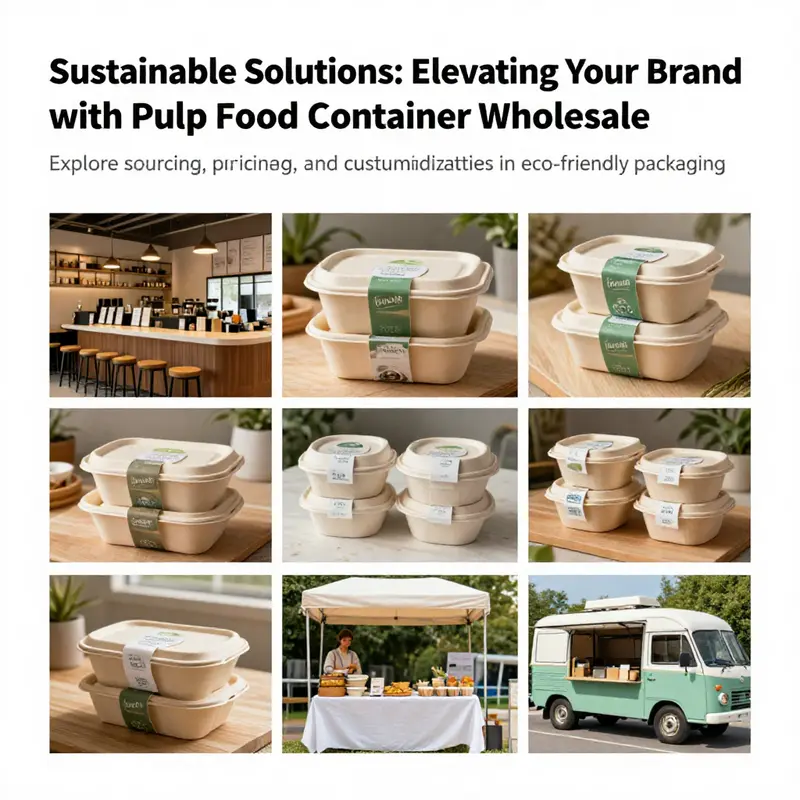
As global concerns for sustainability continue to escalate, food service industries—ranging from bubble tea shops to catering services—are increasingly drawn to pulp food containers. These packaging solutions, primarily derived from sugarcane bagasse, not only fulfill a growing demand for eco-friendly alternatives but also help businesses meet environmental, social, and governance (ESG) goals. In this article, you will uncover vital sourcing strategies for wholesale pulp food containers, understand their pricing dynamics, and discover the potential for customization and branding opportunities. Each chapter provides insights that will empower your business to adopt sustainable practices while enhancing your operational efficiency and customer appeal.
Strategic Sourcing for Pulp Food Container Wholesale: Building Resilient, Sustainable Supply Chains
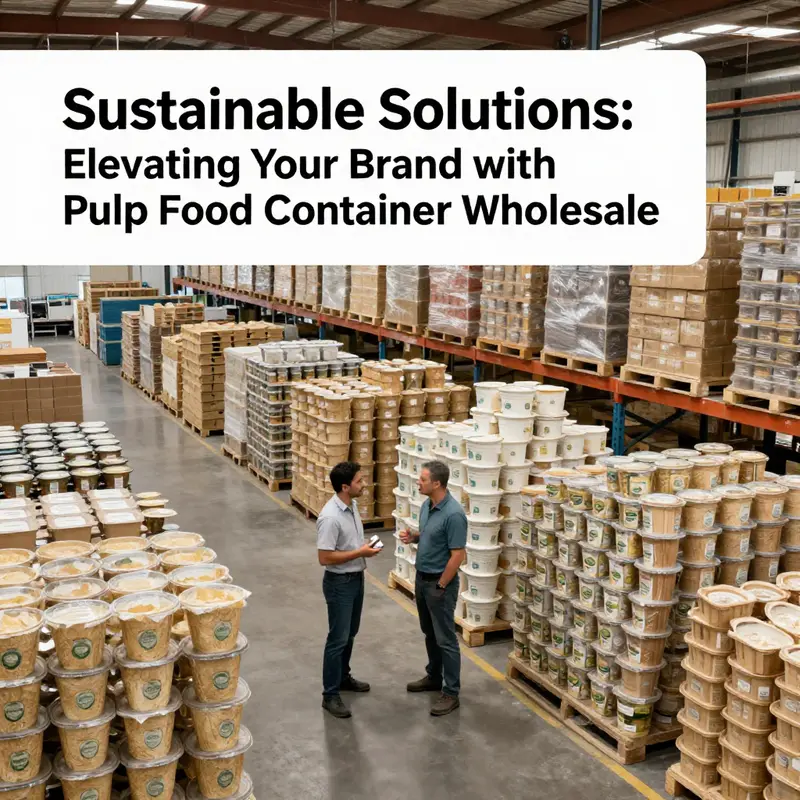
Strategic Sourcing for Pulp Food Container Wholesale: Building Resilient, Sustainable Supply Chains
Sourcing pulp food containers for wholesale requires a single-minded focus on supply chain resilience, verified sustainability, and predictable costs. Buyers who win long-term contracts balance price with material integrity, regulatory compliance, and logistics predictability. This chapter maps a clear path from market scouting through supplier selection, quality assurance, and operational scaling. It explains how to minimize risk while maximizing brand value, and it shows which sourcing levers most consistently deliver value for high-volume buyers.
Start with regional targeting. China remains the prime manufacturing base for molded pulp and bagasse containers. Within China, specific clusters excel at different capabilities. The Yangtze River Delta produces advanced formulations and rapid R&D-driven improvements. Guangdong and Guangxi excel at molded fiber production near export ports. Shandong and Hebei drive high-volume, cost-competitive runs. Targeting the right region for your priorities reduces wasted time and avoids costly compromises. If you need new barrier technologies, focus on manufacturers in R&D hubs. If you need millions of units delivered at tight margins, look to the commodity centers.
Material verification is non-negotiable. Pulp containers differ by raw feedstock and processing. Sugarcane bagasse is a renewable byproduct. Virgin wood pulp, however, can raise deforestation concerns. Ask for mill-level documentation of feedstock, chain-of-custody records, and third-party audits. For compostable claims, insist on test certificates to ASTM D6400 or EN 13432. For food safety, request FDA or LFGB reports. For chemical compliance, review RoHS or similar test results. Request complete lab test packages for heat resistance and migration testing if your products will hold hot, acidic, or oily foods. Verifying these documents up front avoids expensive market recalls later.
Price conversations must sit inside a broader cost model. Wholesale unit price matters. But total landed cost matters more. Calculate the effect of MOQs, packaging, transport mode, tariffs, and inspection fees. A cheaper EXW unit may cost more per sale after inland freight, delays, or extra inspection. Request full quotes for FOB and CIF terms. Compare volumes across different suppliers to find the true break-even points. Many manufacturers reduce price sharply at scale. For example, per-piece cost drops significantly at MOQs of tens of thousands. Factor economies of scale into initial purchase plans.
Evaluate supplier capabilities beyond price. Inspect production lines, automation level, and vertical integration. Factories that manage raw material preparation, molding, coating, and final packing reduce risk. Vertically integrated plants better control quality and avoid subcontractor blind spots. Ask about sample lead times and the supplier’s willingness to do small pilot runs. Good factories support incremental scaling, allowing you to test market response before committing to large orders. Verify their daily output, uptime statistics, and ability to handle short-notice surge orders.
Design and customization matter for brand differentiation. Most buyers need more than a commodity box. Seek suppliers who can handle custom molds, embossing, and food-safe printing. Ask for proofs of prior work and submit a clear technical brief. Specify dimensions, lid fit tolerances, stacking strength, and heat stability. Confirm that printing methods use food-safe inks and adhesives. If you use logos or distinct colors, confirm color-matching capabilities. Good suppliers collaborate to solve practical issues like lid sealing or portion control.
Quality control must be systematic and continuous. Define inspection criteria in the contract. Typical checks cover weight, wall thickness, dimensional accuracy, leak testing for wet foods, and visual inspection for defects. Use AQL standards for sampling. For higher-risk products, apply 100% leak testing or batch testing. Retain third-party inspection partners when sourcing offshore. These partners conduct pre-shipment inspections and forward defect reports directly to you. Integrate their findings into supplier scorecards and corrective action plans.
Sample approvals form a critical stage. Treat prototypes like a mini-contract. Approve samples only after laboratory validation. Run tests for heat retention, grease resistance, cold storage, and compostability. Check lid fit for hybrid lines that use separate lids. Confirm packing durability for long-distance shipping. Document sample sign-off with detailed photos and acceptance criteria. Use this signed documentation as the baseline for production acceptance.
Certifications and compliance reduce downstream friction. For compostable or biodegradable claims, demand certification aligned with your target markets’ regulations. ASTM D6400 covers U.S. compostability. EN 13432 applies in Europe. For chemical migration and food safety, retain FDA or LFGB documentation. Maintain copies of these certificates in your supplier files. If your market requires additional certifications, such as BRC or ISO 22000, prioritize factories that already hold them.
Sustainability verification goes beyond certificates. Investigate supplier processes for waste handling, energy use, and water recycling. Suppliers that use bagasse should demonstrate that feedstock would otherwise be waste. Ask for evidence of supply chain traceability. Verify how the supplier disposes of production residues. Prefer factories that minimize virgin-material inputs and that use recyclable or compostable secondary packaging. Strong sustainability practices indicate long-term cost stability and reputational protection for your brand.
Create a rigorous due-diligence checklist. Confirm legal company registration and export license validity. Cross-check factory addresses and ownership. Verify banking details for secure payments. Confirm experience with B2B export processes. Ask for references from other international buyers. Use online platforms and trade directories to identify reputable partners, but always follow with targeted verification steps. Scams still occur, and prepayment without verification is risky.
Negotiate payment terms that match risk appetite. Typical terms vary by supplier reputation and order size. New suppliers often request deposits. Established partners may offer net terms after several successful cycles. Use Letters of Credit for large, new relationships. Secure payment methods in USD reduce currency volatility. Consider escrow services for sample runs. Balance supplier cashflow needs with your risk tolerance.
Plan logistics with contingency. Choose factories near major ports if speed matters. Guangdong, for instance, gives access to multiple shipping lanes. Confirm the supplier’s experience with documentation, labeling, and customs clearance. Clarify who handles export packaging and palletization. For urgent needs, air freight is viable but expensive. For routine replenishment, negotiate monthly vessel slots to reduce lead time variability. Maintain buffer stock for peak seasons and promotional campaigns.
Protect intellectual property and design investment. Use non-disclosure agreements for unique container shapes or proprietary printing. Register design patents where applicable. Limit the number of people with access to detailed CAD files. For high-value custom tooling, use milestone payments tied to manufacturing performance. Also consider split tooling ownership arrangements for shared risk.
Build strategic R&D partnerships with forward-looking suppliers. Suppliers in R&D clusters help you stay ahead on barrier technology and compostability improvements. Use joint development agreements that outline IP ownership. Early collaboration reduces time-to-market for innovative packaging. R&D partners can also help optimize cost by suggesting design changes that reduce material while preserving strength.
Manage seasonality and order cadence. Food service demand fluctuates. Align procurement to your sales cycles. Place rolling orders with agreed minimums to lock price and capacity. Use a supplier scorecard that includes responsiveness, defect rate, and on-time delivery. Review performance quarterly and adjust order schedules accordingly.
Implement a robust sampling and batch-testing regime in-market. Even with perfect inspections overseas, product issues sometimes appear in real use. Test random batches after arrival. Monitor customer feedback closely for container failure modes. Use that data to trigger supplier corrective actions. Maintain cross-supplier redundancy for critical SKUs.
Consider local stocking and kitting. For multi-product orders, pre-assemble kits near your distribution centers. This reduces fulfillment time to your customers. Local repacking can also adapt packaging to local regulations or promotional needs. If you sell into regulated markets, use local labeling facilities to meet language and compliance requirements.
Model total cost of ownership. Include unit price, freight, duties, inspection, returns, and environmental compliance costs. Factor in the value of brand protection from verified sustainability claims. Use scenario analysis to see how demand shocks affect per-unit cost. This helps justify paying slightly higher unit costs for more reliable suppliers.
Plan for regulatory shifts. Plastic bans and compostability standards can change quickly. Build flexibility into supplier agreements to adopt new materials or coatings. Ask suppliers about their roadmap for compliance. Favor manufacturers investing in circular economy practices.
Cultivate relationships that extend beyond transactions. Long-term partnerships yield better pricing, priority capacity, and faster innovation. Invest time in supplier visits when possible. Treat your supplier as an extension of your operations. Shared KPIs and regular reviews create accountability and continuous improvement.
Finally, mitigate geopolitical and shipping risks. Diversify your supplier base across regions and factories. Maintain secondary suppliers in different provinces or countries. Keep a small emergency stock of critical SKUs. Use insurance for high-value shipments. Monitor global freight conditions and adjust reorder points accordingly.
For practical, ready-to-ship kraft bowl options that illustrate how product variety and customization match sourcing strategies, review this biodegradable take-away round kraft paper bowl offering for reference. (This example highlights the kind of supplier listing and customization options to seek.)
For a detailed sourcing reference on China manufacturing hubs and supplier evaluation practices, see: https://www.b2bchina.com/sourcing-guide-pulp-food-containers-china/
How Pricing Moves in the Pulp Food Container Wholesale Market: Drivers, Risks, and Buyer Strategies
Pricing Mechanics and Buyer Strategies in Pulp Food Container Wholesale
Understanding pricing in the pulp food container wholesale market requires looking beyond unit prices. Costs emerge from raw materials, production, logistics, compliance, and market sentiment. Buyers who grasp these intertwined drivers gain leverage. They also reduce surprises from unexpected cost swings.
At the raw material level, agricultural byproducts supply the pulp. Common feedstocks include sugarcane bagasse, bamboo, and wheat straw. These materials are seasonal and tied to crop cycles. Supply depends on harvest yields and competing uses. For example, bagasse supply fluctuates with sugar production and bioenergy demand. Bamboo and wheat straw face their own seasonal and regional constraints. When yields fall, suppliers raise prices. Buyers may see higher quotes within weeks.
Energy and process inputs add another layer. Manufacturing pulp containers requires heat, presses, water management, and sometimes thermal treatments to ensure grease and water resistance. Energy price swings raise costs across the board. When gas or electricity prices climb, processors must either absorb the increase or pass it to buyers. In recent cycles, volatile global energy markets have nudged manufacturers to index prices to fuel or power. That creates variability even when raw material prices are stable.
Labor and capacity utilization shape per-unit costs. Production lines have high fixed costs for molds, tooling, and machinery. Higher throughput spreads those costs across more units, lowering the per-piece price. Conversely, low utilization raises unit costs. Buyers who place large, regular orders enable suppliers to run lines more efficiently. That is why minimum order quantities and price breaks appear at distinct volume thresholds. Small, irregular orders almost always cost more per unit.
Customization intensifies price pressure. Printing, bespoke shapes, and specialized lids require additional tooling and longer setup. Custom logos may involve plate fees, color separations, and print runs that are not reusable across designs. Matching lids, embossed surfaces, or unusual dimensions often mean custom tooling. Those upfront costs are amortized over the order volume. When volumes are low, buyers carry a higher effective cost per piece. Standard sizes and simple one-color printing are the most cost-efficient paths.
Quality standards and certifications add both value and cost. Compostability certifications, food-contact testing, and chain-of-custody documentation require labs and audits. These validations reassure purchasers and end consumers, especially for businesses pursuing environmental targets. Certified products often command a premium. However, that premium can be recouped in market positioning and avoided compliance fines when regulations tighten.
Logistics are a major and sometimes underestimated pricing driver. Freight rates, container availability, and port congestion shift costs rapidly. For manufacturers clustered in key hubs, ocean freight is the normal export route. When freight spikes, buyers face either higher landed costs or longer lead times. Incoterms matter. FOB pricing leaves international freight to the buyer. CIF or DDP pricing includes shipping and duties, which simplifies buying but often embeds higher margins. Buyers who understand landed cost calculations can compare supplier offers fairly.
Exchange rates and trade policies affect cross-border purchases. Manufacturers pricing in local currency may raise USD quotes when their currency weakens, protecting margins. Tariffs and anti-dumping duties can add substantial charges. Buyers should monitor bilateral trade developments and consider duty mitigation, such as preferential trade agreements or local assembly options.
Inventory and working capital considerations influence supplier pricing structures. Suppliers often offer discounts for prompt payment and charge premiums for extended credit. They also price to manage finished goods inventory. High inventory holding costs may push suppliers to incentivize larger orders, while slow order flow might lead to price promotions to clear stock. Buyers able to offer predictable schedules reduce supplier risk, and can often negotiate better pricing or payment terms.
Market demand cycles and regulatory shifts change prices too. When jurisdictions announce single-use plastic restrictions, demand for pulp containers spikes. That sudden demand can create temporary shortages. Suppliers with capacity constraints will increase prices. Conversely, when demand slows, suppliers may run promotions. Forecasting and scenario planning help buyers avoid buying at peak prices.
Cost transparency is not always perfect. Raw material suppliers may bundle charges, and manufacturers sometimes fold fuel or packaging surcharges into unit prices. Buyers should request a clear cost breakdown. The most useful breakdown separates raw materials, energy and utilities, labor and overhead, tooling and setup, printing and finishing, packaging, and freight. This clarity allows buyers to identify which elements are negotiable.
Volume pricing is central. Typical market practice shows steep discounts at high volumes. For example, large global buyers may secure prices measured in fractions of a cent per piece when ordering millions. Mid-size orders, in the thousands to tens of thousands range, usually cost more per unit but allow reasonable customization. Small buyers pay a premium, and custom tooling fees can dominate their per-unit cost. When negotiating, buyers should ask how price scales at different quantity thresholds. Suppliers often list multiple tiers but remain open to intermediate pricing for multi-year commitments.
Lead time affects price and risk. Short lead times may trigger rush charges, because production schedules must be rearranged. Buyers who plan and lock in production slots receive the best rates. Conversely, long lead times can lower the per-unit cost, but amplify inventory risk. If specifications change during a long lead time, modifications may incur change fees. Buyers must weigh the cost of holding inventory against potential savings per unit.
Packaging and unitization matter. How items are packed influences damage rates and shipping efficiency. Efficient stacking, optimized carton sizes, and protective inner packaging reduce breakage and freight volume. Suppliers who design packaging for container optimization pass savings to buyers. Small incremental adjustments, such as reducing void space or consolidating inner packs, improve overall landed cost.
Sustainability claims interact with pricing. Truly circular designs—made from crop waste like bagasse—offer environmental benefits. They also align with many corporate sustainability goals. Yet, not all claims are equal. Third-party verification can justify modest price premiums by reducing greenwashing risk. Buyers should request test reports showing biodegradation times and composting conditions. A product that decomposes within 60 to 90 days under composting conditions has a measurable environmental advantage. That advantage can be marketed and sometimes offset higher purchase prices through customer willingness to pay more for sustainable packaging.
Pricing transparency also extends to service elements. Sample fees, mold deposit terms, and packaging artwork approvals often carry extra costs. Buyers should factor these into the initial purchase plan. Samples validate fit, finish, and performance. But repeated sampling due to late specification changes increases total cost. Settle critical design parameters before requesting production samples to avoid rework charges.
Procurement strategies reduce exposure to cost volatility. Long-term contracts stabilize prices, often with predetermined escalation clauses linked to raw material or energy indices. Buyers who agree to fixed volumes and schedules can obtain better base prices. Another effective strategy is forward buying. When a buyer expects a sustained need and anticipates rising prices, procuring additional stock at current rates can reduce average costs. However, forward buying ties up capital and requires storage.
Diversifying sourcing lowers risk. Single-supplier dependence magnifies exposure to local disruptions. Dual sourcing across regions mitigates risks from weather, strikes, or regulatory changes. When manufacturers concentrate in a single geographic cluster, buyers may trade off cost for resilience. Near-shoring is another option for buyers prepared to accept somewhat higher unit costs in exchange for lower lead times and reduced logistics risk.
Standardization reduces cost. Adopting a smaller set of container sizes and finishes increases order frequency and volume per SKU. That improves supplier line utilization and reduces the impact of one-off tooling fees. Where brand distinctiveness is not critical, standard SKUs are a pragmatic cost-saver.
Negotiation tactics that work in this market follow a few principles. Be clear on total landed cost, not just ex-factory price. Request a detailed cost breakdown to identify negotiation levers. Offer predictable demand in exchange for improved pricing. Consider multi-year agreements with annual review clauses tied to transparent indices. Use comparative quotes from diverse regions to maintain leverage, but avoid hostile tactics that damage supplier partnerships. Remember that suppliers invest in tooling and capacity; fair terms encourage collaboration and continuous improvement.
Risk management includes contingency planning. Maintain a buffer stock for critical SKUs. Track lead times and set reorder points that account for seasonal port delays. Use contractual remedies for significant schedule failures. Include clauses for force majeure, but define expectations for communication and mitigation.
Smaller buyers can access cost benefits through group purchasing. Cooperative buying pools consolidate demand across businesses. This achieves volume discounts without forcing any single party to buy excessive stock. Another option is framework agreements with call-off orders. These lock preferred prices while allowing flexible delivery schedules.
Price sensitivity varies by market segment. Quick-service restaurants and large caterers prioritize low unit cost and reliability. Premium food services prioritize appearance and sustainability. Buyers who position their product as premium can pass higher packaging costs to the customer. Others must compete on cost. Understand your clientele and price elasticity before committing to higher-cost, high-certification options.
Operational design choices affect price too. Minimizing requiring lids by offering splash guards or designing containers with integrated closure reduces cost. Choosing simple, high-efficiency shapes over complex molded profiles simplifies manufacturing. Where liquid retention matters, evaluate options such as thin film coatings or specialized pressing techniques. Each adds cost. Assess whether the functional benefit justifies the expense.
Finally, measure total cost of ownership. Compare purchase price with waste management fees, disposal regulations, and customer perception. A more expensive biodegradable container may reduce waste fees and regulatory compliance costs. It may also increase brand value and reduce future transition costs when regulations become stricter.
Buyers who combine demand predictability, standardization, transparent negotiations, and appropriate certification can manage pricing dynamics effectively. Strategic procurement and collaborative supplier relationships turn cost volatility into manageable risk. When creating tender specifications, include clear cost breakdown requirements and realistic lead times. When evaluating offers, look past headline prices and calculate the full landed cost across the product life cycle. Embed these practices into procurement routines to keep unit prices stable while capturing the sustainability and market benefits that pulp-based packaging provides.
For a deeper, data-driven look at pricing trends, forecasts, and market drivers in the pulp food container sector, consult the comprehensive industry outlook here: https://www.marketsandmarkets.com/Market-Reports/pulp-food-container-market-257962243.html
For a practical example of a commonly used SKU, consider a kraft paper bowl with lid as an example of how sizing and packaging choices affect price and logistics: https://greendispopack.com/product/disposable-kraft-paper-bowl-for-food-package-with-lid/
null
null
Final thoughts
In summary, the shift toward pulp food containers reflects a broader commitment to sustainability within the food service industry. By employing effective sourcing strategies, understanding the pricing dynamics, and exploring customization options, businesses can successfully navigate the wholesale market while enhancing their brand and appealing to eco-conscious customers. As you consider your packaging needs, remember that investing in pulp food containers isn’t just about meeting regulatory demands, but about taking a proactive stance in reducing environmental impact. Embrace these opportunities to elevate your business and support a greener future.