
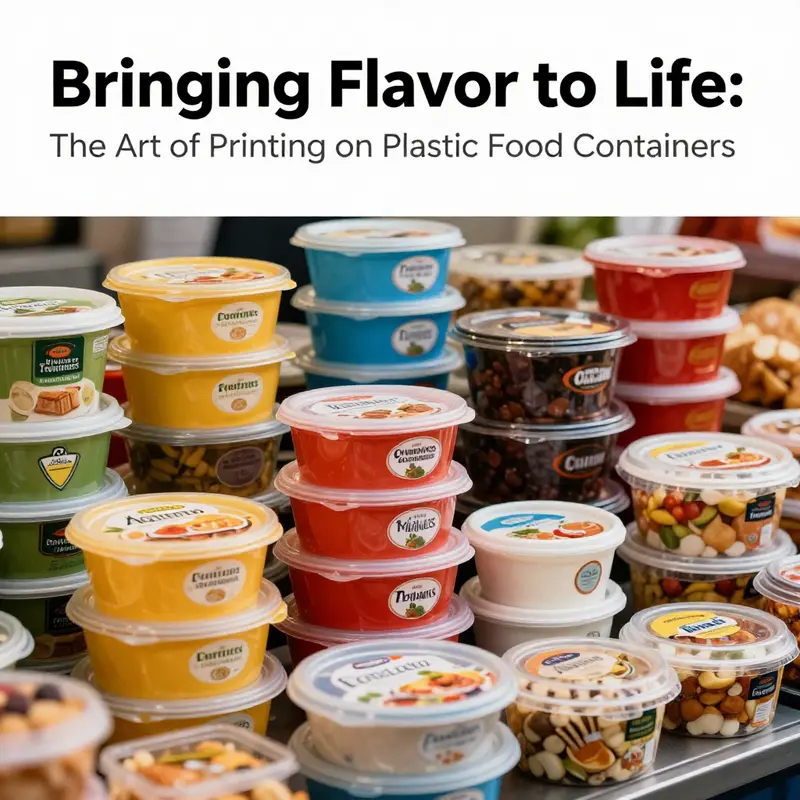
As competition intensifies in the food industry, the visual appeal of products becomes more crucial than ever. Printing on plastic food containers not only enhances product presentation but also strengthens brand identity. Each chapter in this guide underscores the pivotal role of technological advancements, market trends, and environmental impacts related to this innovative printing method. By understanding these elements, bubble tea shops, beverage chains, restaurants, food trucks, catering services, event planners, and corporate procurement teams can harness these insights to improve their packaging strategies seamlessly.
Curved Surfaces, Clear Impressions: The Rise of High-Definition Printing on Plastic Food Containers
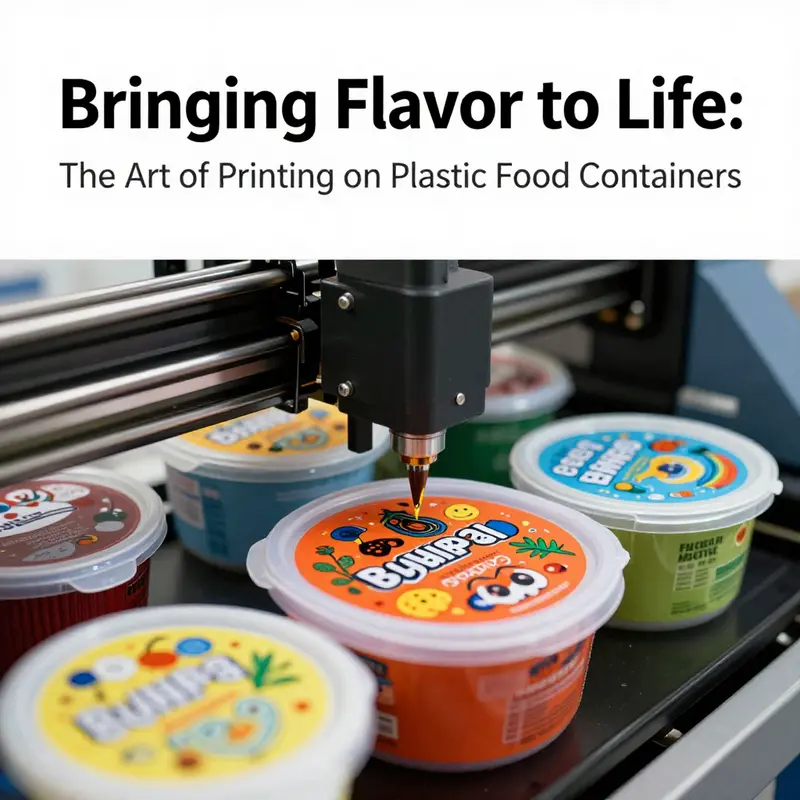
Printed graphics on plastic food containers have evolved from simple branding to become a core driver of consumer perception. The graphics wrap around curved forms, and the printing process must balance aesthetics, adhesion, and safety. Today’s high-definition methods deliver rich color, sharp detail, and durable performance on nonflat surfaces, enabling packaging that communicates brand identity while respecting food-contact requirements. The control of ink placement at fine resolutions, droplet sizes from 10 to 200 microns, and multi-color registration allows imagery and typography to remain faithful from batch to batch, even as the container curves distort lines. With heads oriented to maintain near-perpendicular proximity to the surface, ink lands with minimal distortion, ensuring crisp edges and uniform coverage across rounds and corners. Surface preparation—surface energy modulation, primers, corona or plasma pretreatment—enhances wetting and adhesion, while carefully chosen inks and coatings tolerate refrigeration, heating, or moisture exposure. Flexographic printing remains a workhorse for high-volume runs, using flexible photopolymer plates and fast-drying inks that maintain color fidelity on polyolefins such as PP and PET-based materials. In parallel, high-speed multi-color systems enable complex brand storytelling with fast throughput and automated color management, register checks, and adjustments that keep colors aligned as temperatures shift across long runs. Beyond established methods, researchers are exploring extrusion-based and binder-jetting approaches to embed functional textures or barrier enhancements into the surface—signaling a future where the print does more than decorate. Aesthetically, modern packaging blends layered inks with protective coatings designed for UV resistance, moisture barriers, and readability on curved surfaces. The use of eco-friendly inks, reduced-VOC formulations, and energy-efficient curing aligns color ambition with sustainability goals, helping brands minimize environmental impact without sacrificing shelf impact. From production floor to consumer kitchen, printing lines are increasingly integrated, with inline metrology, color libraries, and standardized color management enabling consistent reproduction across plants and continents. This consistency empowers marketing teams to push bold designs and photographic imagery, knowing the result will be faithful wherever the product is manufactured. Looking forward, smart packaging concepts may introduce interactive elements via printed inks, while ongoing advances in materials science and coatings promise even more robust durability and recyclability. In sum, high-definition printing on plastic containers is reshaping packaging by marrying curved-surface aesthetics with reliable performance, sustainability, and brand storytelling across the product lifecycle.
Brand Identity on Everyday Shelves: The Digital Transformation of Printing on Plastic Food Containers
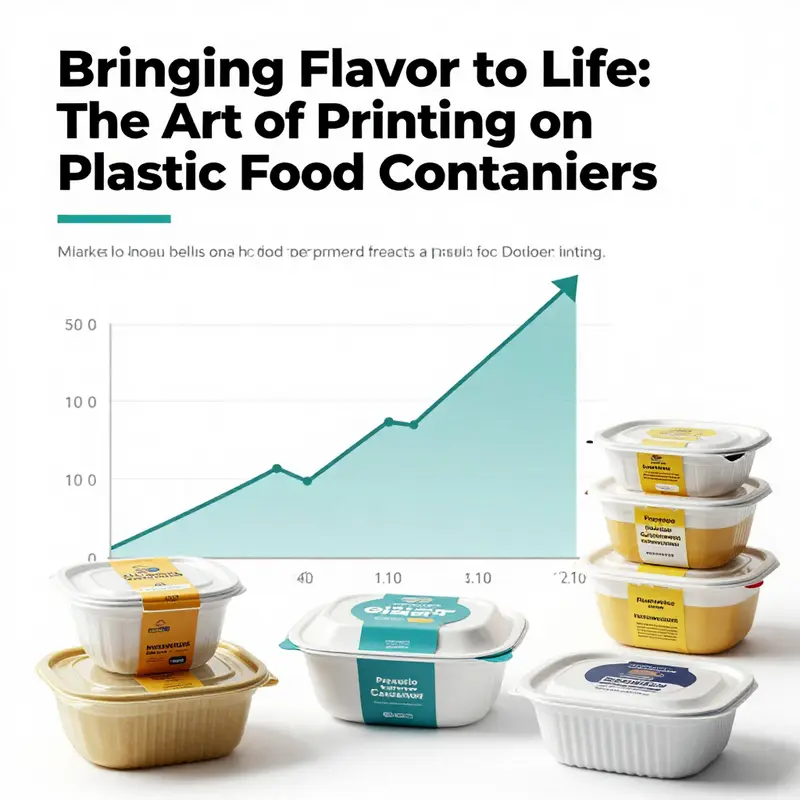
Printing on plastic food containers has evolved from a niche capability into a core driver of brand expression on the most commonplace of consumer goods. The surface of a container is no longer a passive barrier to preserve freshness; it has become a dynamic canvas where design quality, regulatory compliance, and consumer engagement converge. At the heart of this shift is digital printing, a technology that can lay down vibrant, full-color graphics with precision on curved, non-flat substrates. The process relies on ink droplets whose diameters span a broad spectrum, typically from 10 to 200 microns, with the potential to lay down as many as 1200 drops per inch. This capability translates into unprecedented image clarity, smooth gradients, and the ability to reproduce complex photographic content directly on the container. What makes this approach particularly compelling is not merely the resolution; it is also the way print heads can maintain a perpendicular orientation relative to the container’s irregular outer surface. This control reduces distortion and ensures a consistent ink laydown, even as the substrate flexes with heat, humidity, or handling. The resulting quality sets a new standard for on-pack graphics and makes the container a persuasive extension of a brand’s storytelling, not just a protective vessel.
Under the hood, the choice of substrate remains critical to the success of digital printing on plastic containers. Materials such as polypropylene, polystyrene, polyethylene terephthalate, and BOPS offer surface characteristics that tolerate the rigors of onboarding ink, curing processes, and the rigors of consumer use. These polymers balance surface energy, barrier properties, and mechanical reliability so that the printed image adheres strongly without cracking or dulling under everyday conditions. The compatibility between digital inks and these substrates enables a spectrum of packaging formats—from disposable meal prep containers to multi-compartment lunch kits and portion-controlled packaging that must survive chilling, freezing, and microwave reheating without compromising print integrity. In a broader sense, this compatibility forms the backbone of scalable manufacturing; it allows for rapid design iteration, reduced setup times, and the flexibility to run short runs that test new branding or seasonal campaigns without incurring prohibitive costs.
The manufacturing ecosystem that supports this capability has expanded to include dedicated printing lines within established packaging facilities. Such specialization ensures that the imprint layer can be tuned separately from the molding or forming process, which improves overall process stability. A facility might employ inline inspection and post-print finishing steps to guarantee that color fidelity remains consistent across batches. By separating the printing from the primary forming workflow, producers gain the latitude to optimize each stage for durability, food-safety compliance, and speed. This separation also supports sustainability initiatives, as it enables more precise material usage and waste reduction through real-time monitoring and data-driven adjustments. Digital printing thus does not exist in isolation; it is integrated with broader production strategies, including automated handling, quality control, and traceability, all of which are essential for large-scale food packaging operations where millions of units move through the line each day.
Design and execution in this space demand a balance between aesthetic ambition and practical constraints. The vividness of a printed image must be tempered by the realities of food-contact safety and regulatory compliance. Inks and coatings used in direct-to-substrate printing must meet stringent standards for non-toxicity and stability under varied storage conditions. The color management workflow becomes especially important when printing onto curved surfaces, where light plays off the container differently along its radius. Designers tackle this by crafting wraparound artwork that anticipates distortion and by leveraging color profiles that predict how hues will shift when applied to plastic versus paper or metal. The goal is not only to capture a striking image but also to ensure that the final appearance remains consistent across batches, lighting conditions, and consumer perception. In practice, this means teams must invest in meticulous proofs, color measurement protocols, and calibration routines that align digital previews with the tangible product.
Beyond the visual, the capabilities of digital printing open fresh avenues for brand differentiation. Brands can explore high-gloss finishes for premium products, matte effects for a contemporary feel, spot varnishes that draw attention to key elements, and even embossing techniques that provide a tactile cue at the moment of hand-to-eye contact. These surface treatments are not mere embellishments; they function as sensory signifiers of quality and care, guiding consumer choice in a crowded marketplace. The integration of these effects into digital workflows requires careful coordination with coatings technology and substrate selection. The result is packaging that communicates values—whether sustainability, indulgence, or practicality—through a harmonized combination of imagery, texture, and finish. In practice, printing on plastic containers thus becomes part of a larger brand narrative, one that can be refreshed with new campaigns, limited editions, or region-specific designs without sacrificing production efficiency.
The market dynamics driving this transformation are shaped by several converging forces. Digital printing has achieved a dominant position because it offers high-quality, full-color graphics at short run lengths, enabling brands to respond quickly to market shifts and to test new concepts without enduring the financial burden of traditional plate-based methods. This agility is particularly valuable for campaigns tied to seasonal flavors, limited-time promotions, or product line extensions, where proofing and iteration cycles must stay tightly aligned with consumer feedback. In addition, consumer demand for personalization has grown, and digital printing makes it feasible to incorporate variable data on each container—personalized messages, batch numbers, or regional QR codes—without sacrificing efficiency. While the technical capability is compelling, it is the strategic flexibility that truly differentiates the value proposition for brands seeking to build a continuous dialogue with consumers.
Sustainability considerations are inseparable from these capabilities. In an era when packaging choices influence perceptions of environmental responsibility, the industry is increasingly embracing inks and coatings that are non-toxic and compatible with recycling streams. There is a concerted push toward minimizing virgin plastic usage and integrating recycled content into container materials, a shift that requires printers to adapt without compromising print quality. Ink chemistry and curing processes must tolerate a wider array of substrates and recycled content, which can alter surface energy and adhesion dynamics. The goal is to maintain robust print durability while supporting circular economy goals. As a result, the conversation around packaging design now includes material life cycles, recyclability metrics, and end-of-life pathways. The printing stage becomes a bridge between product identity and sustainable stewardship, ensuring that the act of branding does not undermine the container’s eventual recyclability or compostability.
A related frontier in this space is the rise of functional and smart packaging. Digital print surfaces are increasingly used to embed scannable and interactive features directly onto containers. QR codes, NFC tags, and RFID chips are being printed in precise alignment, enabling product traceability, authentication, and enhanced consumer engagement. For brands, this means more than a novelty; it is a path to richer data collection, improved supply-chain transparency, and robust anti-counterfeiting measures. The printing process, once confined to color and gloss, now participates in information architecture at the point of sale and beyond. This progression demands a holistic approach to design, data security, and user experience, ensuring that the printed element harmonizes with digital interfaces while preserving the integrity of the physical container.
Process excellence remains central to achieving consistent results at scale. Automation and data-driven workflows are increasingly integrated with printing operations, creating a more reliable, traceable, and responsive production environment. Digital twins and analytics enable operators to simulate changes in design, substrate, or ink formulations before committing to a run, thereby reducing downtime and waste. Inline inspection systems monitor print alignment, color accuracy, and surface quality in real time, allowing for immediate adjustments. This level of operational insight translates into predictable lead times, reduced scrap, and more sustainable use of materials. In this context, the container ceases to be a static object and becomes a node in a sophisticated manufacturing network designed to optimize outputs end-to-end—from design intent to final packaging delivery.
As the capability matures, the interplay between design feasibility, print quality, and consumer perception becomes more nuanced. A designer may push the envelope with a photographic image spanning the full container surface, or experiment with multilevel finishes that catch light at precise angles. The printer then translates those intentions into scalable production steps that respect regulatory constraints and the realities of mass production. This requires a collaborative culture where packaging engineers, designers, ink formulators, and quality managers co-create the final product. The outcome is not simply a container that holds food; it is a brand statement that travels with the consumer from shelf to kitchen, influencing behavior, recall, and loyalty. In this sense, digital printing on plastic containers is less about art for art’s sake and more about strategic storytelling embedded in everyday use.
Looking ahead, the trajectory points toward even greater integration of design, data, and material science. Advances in multi-material printing, ink formulations tailored to recycled content, and predictive maintenance for print heads promise to push print quality even further while preserving or improving sustainability metrics. Real-time feedback loops and digital-twin simulations offer the potential to shorten development cycles, enabling brands to bring new graphics to market with confidence and speed. The broader packaging ecosystem is likely to see tighter integration between the printing line and downstream processes, including supply-chain planning, distribution, and even consumer engagement platforms. In this environment, the plastic container becomes a sophisticated interface—one that communicates product attributes, supports brand values, and participates actively in a smarter, more connected packaging landscape.
For readers who want to explore related considerations beyond the immediate scope of on-container graphics, consider the broader field of eco-conscious packaging materials and the role of design in reducing waste. The literature on sustainability highlights how choices made at the point of packaging design—such as selecting materials with high recycled content, opting for non-toxic inks, and aligning with recycling streams—can significantly influence environmental outcomes. While the primary focus here is the capability to print with clarity and durability, the downstream implications of those choices matter just as much. A thoughtful approach to design, printing technology, and material selection can yield packaging that not only tells a compelling brand story but also supports responsible consumption and end-of-life stewardship. To connect these ideas with broader industry insights, external perspectives on today’s trends in food packaging offer context on how digital printing fits into a larger movement toward smarter, more sustainable packaging solutions. External resource: https://www.tetrapak.com/insights/today-trends-food-packaging. For readers seeking deeper dives into sustainability-focused packaging implementations, a related internal reference on eco-friendly paper packaging can provide complementary viewpoints on how brands extend their environmental commitments across packaging formats. You can learn more through a related internal resource that discusses eco-friendly printed-logo paper cups with lids: eco-friendly printed-logo paper cup with lid.
Printing with a Footprint: Environmental Realities and Sustainable Paths for Plastic Food Container Graphics
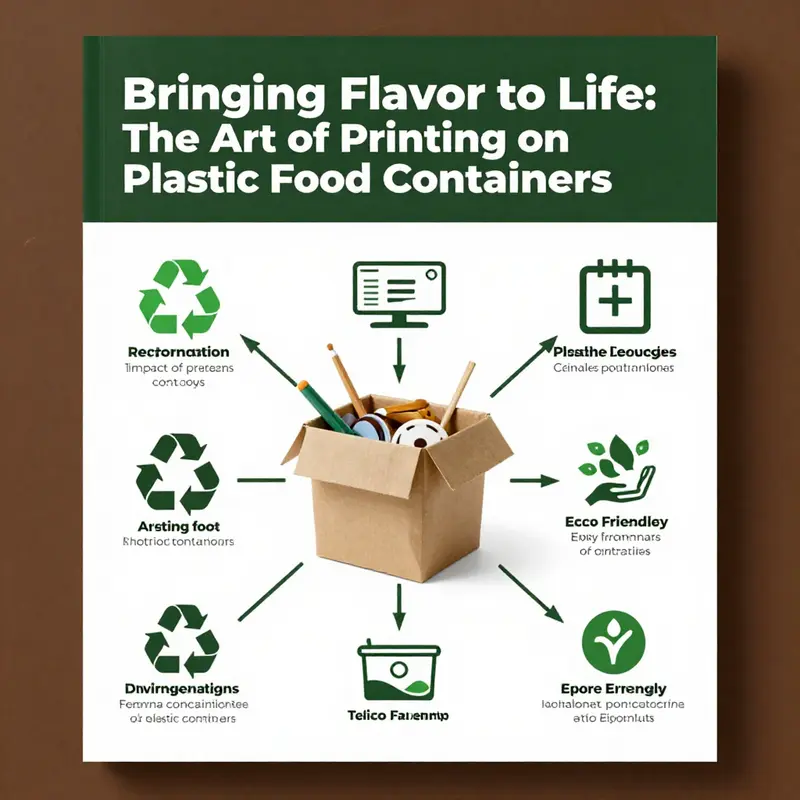
The glossy finish that makes a plastic food container feel premium often hides a more complex story about its environmental footprint. Printing graphics onto plastic packaging, especially for food, is not just an effort to attract a consumer’s eye; it is a sequence of choices about chemistry, energy use, and end-of-life consequences. As food brands push for bolder, more photorealistic imagery on compact, disposable, or reusable containers, they must also contend with the environmental realities that come with ink chemistry, solvent management, and the durability demands that such packaging requires. This chapter follows the thread from ink formulation to landfill fate, tracing how each decision in the printing chain can ripple through ecosystems, waterresources, and the broader sustainability goals of the packaging industry.
At the heart of the environmental conversation around printing on plastic containers are volatile organic compounds, or VOCs. VOCs are most closely associated with solvents used to carry inks and facilitate their flow onto surfaces. They are released not only during the manufacturing and curing stages of printing but also, to a lesser extent, from heat sealing and surface treatments that may accompany the finished product. In a factory setting, VOC emissions contribute to indoor air quality concerns for workers and can complicate compliance with air quality regulations that govern manufacturing environments. But the environmental reach of VOCs extends beyond the walls of the plant. When containers enter landfills at the end of their useful life, residual solvents can migrate through the plastic matrix and potentially leach into surrounding soils and, over time, groundwater. The long-term hydrological implications become especially significant in areas where landfill containment is stressed or where leachate is not efficiently collected and treated.
The literature on printing inks also calls attention to heavy metals that linger in some pigment systems. While modern formulations strive to minimize toxic metals, trace amounts of lead, cadmium, chromium, and related elements have historically appeared in certain inks or colorants. In a controlled manufacturing context, these elements are tightly regulated; in practice, however, the end-of-life pathway remains a concern. If ink layers are not fully stabilized or if inks degrade in the environment, metals can accumulate in soils and sediments, entering food webs in ways that are difficult to trace and mitigate. The persistence of such pollutants, coupled with the sheer volume of plastic packaging in circulation, underscores why heavy-metal content remains a key focal point for both researchers and policymakers who seek safer, more recyclable packaging ecosystems.
Beyond the chemical composition of inks, the geometry of the container itself shapes environmental outcomes. Most consumer packaging in the plastics family presents curved, non-flat outer surfaces. The development of printing heads that maintain a perpendicular orientation to these curved surfaces—while continuing to deposit consistent, precise dots—has been a technical advance with meaningful environmental implications. When printheads struggle to maintain uniformity, wastage increases. Misprints lead to scrap material, wasted ink, and additional drying time, all of which translate into higher energy use and more solvent emissions per unit of finished packaging. The perpendicular printing approach reduces distortion and minimizes ink skew on a curved substrate, thereby improving yield. That improvement matters because higher yield means less waste, fewer reprints, and a smaller per-container embodied footprint for the printed artwork. In other words, modest gains in print accuracy, enabled by improved head geometry, can cascade into tangible environmental benefits by curbing energy consumption and reducing material waste.
The materials selected for the container—polypropylene, polystyrene, PET, and certain barrier layers like BOPS—also influence the environmental calculus tied to printing. These materials offer surface characteristics that are compatible with digital printing and stable under the conditions of ink curing, whether through solvent evaporation, UV curing, or infrared drying. Yet compatibility alone does not tell the whole story. The recyclability of a plastic packaging stream is partly dictated by how inks and surface coatings behave in post-consumer processing. In some recycling environments, inks can complicate sorting or affect the purity of the recovered resin. Manufacturers increasingly pursue monomaterial designs and ink systems that are easier to remove or integrate into recycling streams. The aim is to preserve the integrity of the resin while still enabling vibrant branding. The tension between achieving high-resolution graphics and maintaining recyclability often drives innovation in ink chemistry and surface treatment. In practice, this means that some lines of digital printing invest not just in color fidelity but in chemistry and process design that harmonize with a circular economy mindset.
From a life-cycle perspective, the environmental footprint of printing on plastic containers reflects a constellation of decisions made across the supply chain. The choice of printing technology—digital inkjet, UV-curable inks, water-based inks, or solvent-based systems—carries distinct energy profiles, waste streams, and potential emissions. Digital inkjet and UV-curable approaches tend to reduce solvent emissions relative to traditional flexographic or gravure processes, particularly in clean-room or controlled-environment facilities. However, even these modern approaches require energy for curing, ink recovery systems, and precise nozzle maintenance. The energy intensity of the curing process, the rate of throughput, and the efficiency of ink usage collectively shape the overall environmental impact. A line that wastes less ink, reuses solvent streams where feasible, and relies on energy-efficient curing can significantly lower the material and energy intensity per finished container.
The end-of-life stage remains a robust arena for environmental assessment. Paper and plastic packaging are at once distinct and entwined in consumer perception of sustainability. It is tempting to universalize the idea that plastic packaging is inherently worse for the environment than paper-based alternatives. Yet this juxtaposition misses important nuance. In some contexts, plastics deliver superior barrier performance and durability, enabling longer shelf life and reduced food waste. In others, paper-based packaging offers lower chemical complexity and simpler disposal pathways. When printing inks are involved, the dialogue shifts toward ink chemistry, substrate compatibility, and how the entire system can be optimized for recyclability or compostability without compromising food safety. The presence of printed inks can complicate recycling streams, especially if inks are not easily separable from the polymer. In some systems, post-consumer plastics are reprocessed with careful control of residual inks to minimize contamination; in others, the presence of certain pigments or solvent residues can necessitate additional processing steps or limit the resin’s reuse value. These operational realities drive the industry to pursue inks that can be more easily removed or stabilized during recycling, and to explore surface coatings that preserve barrier properties while reducing the potential for ink migration during processing.
Consumer expectations are another driver of environmental performance. Today’s shoppers increasingly connect packaging aesthetics with environmental responsibility. They may not always distinguish between the ink system and the base resin, but they respond to the visible cues of sustainable practice: reduced emissions in manufacturing, safer chemistry, and clear pathways to reuse or recycling. This consumer awareness exerts pressure on brands to disclose, and then reduce, the environmental footprint of printed packaging. A growing body of life-cycle assessments emphasizes that while the graphic appeal of packaging matters for brand perception and food safety is non-negotiable, the environmental virtue of the packaging is judged across its entire life cycle—from raw material extraction and processing to end-of-life handling and potential reuse. In this light, the choice of ink, curing method, and substrate is not merely a production detail; it becomes a strategic element in communicating sustainability to a more informed audience.
The pathway toward more sustainable printing on plastic containers is not a single leap but a sequence of incremental, evidence-based improvements. Inks formulated to minimize volatile solvents, with pigment systems that avoid elemental heaviness or that minimize heavy-metal use, represent one axis of progress. An additional axis is the refinement of digital printing that yields high-resolution images with tight control of ink deposition, thereby reducing waste and energy use per graphic. A third axis challenges the packaging designer to consider post-consumer handling from the outset: selecting substrates that respond well to ink without compromising recyclability, choosing barrier coatings that do not unduly complicate processing, and designing graphics that survive cleaning and recycling operations without degrading resin quality. Each axis interacts with market demands, regulatory expectations, and the practical realities of manufacturing floors, where maintenance cycles, solvent recovery, and energy management programs can be the determinant between a hypothetical ideal and a realizable outcome.
If we zoom out to consider alternatives that illustrate the broader sustainability landscape, we can observe opportunities to diversify packaging ecosystems beyond conventional plastic containers. The transition toward more eco-friendly packaging formats—such as paper-based bowls and composite materials designed for recyclability—offers a contrast that helps illuminate potential best practices in ink chemistry and surface engineering. For organizations exploring such transitions, the idea of maintaining a strong brand presence while pursuing environmental gains can be supported by integrating printed graphics in ways that align with the material’s end-of-life story. This perspective does not negate the need for high-performance plastic packaging in many applications but invites a thoughtful assessment of where and how to apply ink-based branding most responsibly. A practical, if cautionary, example lies in the realm of eco-friendly paper packaging, where designs can be vibrant yet easier to separate from the substrate during recycling. For a contrasting example of eco-friendly packaging options, consider eco-friendly-printed-logo-single-wall-paper-cup. By examining such alternatives, the industry can calibrate its own ink and surface strategies to align with a broader sustainability trajectory, rather than viewing printing as a stand-alone function detached from environmental outcomes.
The external scholarly perspective that informs this discussion emphasizes the need for rigorous assessment of inks, solvents, and processing conditions. A growing body of research highlights how printing inks and processes contribute to environmental burdens, including solvent emissions, heavy-metal exposure potential, and the fate of pigments in waste streams. The overarching objective is to reduce these burdens without compromising the functionality, safety, and appeal of packaged foods. A practical implication for manufacturers is to adopt safer, lower-emission ink chemistries, to invest in process controls that minimize waste, and to design container systems that retain essential performance characteristics while enabling more straightforward recycling. This approach demands collaboration across disciplines: chemists who develop inks, process engineers who optimize deposition and curing, packaging designers who balance aesthetics with end-of-life considerations, and supply-chain professionals who account for environmental costs in decision making. In this sense, environmental responsibility becomes an integral criterion in the evaluation of digital printing capabilities on plastic containers, not an add-on considered after scale and speed have been established.
Ultimately, the journey toward environmentally responsible printing on plastic food containers rests on transparent measurement and honest reporting. Benchmarks that quantify VOC emissions during production, the contribution of inks to the recyclability of plastics, and the resilience of printed images under typical consumer handling are essential. Without such data, claims of sustainability risk becoming marketing rhetoric rather than grounded practice. The call is for more integrated life-cycle thinking, more cross-disciplinary collaboration, and more emphasis on materials science that aligns high-fidelity branding with a lower-toxic, lower-wod-susceptibility footprint. It is a call that does not diminish the artistry or the engineering behind digital printing on curved surfaces but rather elevates it by insisting that beauty and responsibility go hand in hand. In this evolving landscape, every choice—from the chemistry of a single pigment to the design of a print head—counts toward a future in which packaging remains integral to food safety and brand communication while reducing its environmental footprint.
External Resource (for further reading): https://www.ncbi.nlm.nih.gov/pmc/articles/PMC10827459/
Final thoughts
The journey through the printing of plastic food containers reveals a blend of art and technology essential for engaging food businesses. With advancements making it easier to create stunning product packaging, businesses can enhance their visibility in a crowded market. Awareness of market trends helps inform smarter choices, while a commitment to environmental impact fosters better practices. By prioritizing these factors, organizations can lead their fields with quality packaging that not only captivates consumers but also aligns with sustainability goals.