
Understanding the pricing structure and influencing factors for plastic food container storage boxes is crucial for businesses in the food service industry. From bubble tea shops to catering services, every organization requires the right type of storage solution for efficiency and cost-effectiveness. In this guide, we will explore the pricing structure of these containers, highlighting factors that influence prices, comparing various market rates, examining trends that impact pricing, and discussing how bulk purchases can lead to substantial savings. By the end, you’ll possess a comprehensive overview, empowering your decision-making process in selecting the right containers for your business needs.
Pricing Dynamics Behind Plastic Food Container Storage Boxes: Volume, Material, and Global Sourcing
Pricing the spectrum of plastic food container storage boxes is less about a fixed sticker price and more about a dynamic equation. The same box can cost a fraction or a fortune depending on who buys it, in what quantity, and under what conditions. In practice, buyers discover that unit costs fall as orders grow, but the shape of that decline depends on several levers: material choice, degree of customization, geographic location of the factory, and the supplier’s logistics network. Across the market, the most immediate takeaway is that scale matters. A 200 ml basic box, for instance, may be priced in a tight band that looks almost negligible at first glance, yet the true value of such a product emerges only when it is sourced in bulk for a meal-prep operation, a catering business, or a retailer network. The pricing maps an industry where efficiency and volume converge to deliver competitive per-unit costs, while design and material choices push the price in either direction.
Volume-based pricing, or economies of scale, is the most visible driver. Market data from major B2B platforms through early 2026 shows a clear pattern: as order quantities climb, the price per piece drops, sometimes sharply. Consider the family of disposable trays and boxes used for quick-service packaging. Sushi-tray formats, for example, exhibit tiered pricing from roughly five and a half cents per piece at lower mid-volume, down to around five cents and below as orders cross into the hundreds of thousands and into the millions. More general disposable food boxes show a baseline around nine cents per piece for modest bulk, slipping toward six to seven cents with very large volumes. Reusable storage boxes, though less common in the same bulk markets, demonstrate how different business models yield different economics; even there, the price can begin around a dollar plus per piece, then comfortably decline with volume, though the absolute scale and margins differ from single-use items.
The second major determinant is material and quality. Basic plastics—PP, PS, and HDPE—are the workhorses of cost-conscious packaging. They deliver dependable durability at a low price point, which explains why many bulk deals center on these materials. But the market also segments premium resins such as Tritan™, PET, and certain high-clarity acrylics. These materials command higher prices because they offer advantages that matter in specific contexts: better transparency, enhanced odor and stain resistance, and greater resistance to impacts and-temperature stress. In display applications or premium retail environments, these properties can justify a price premium that persists even at moderate MOQs. The choice between a humble, budget-friendly core and a higher-end, feature-rich option thus becomes a strategic decision tied to the product’s intended use and the brand promise surrounding it.
A third crucial factor is the manufacturing region and the associated logistics. China remains a central hub for plastic container production, particularly in clusters where polymer sourcing, molding technology, and export logistics are tightly integrated. The proximity to ports, and the scale of output these hubs offer, translate into markedly lower unit costs and shorter lead times. In some cases, economies of scope allow factories to push unit prices toward minuscule levels for simple designs when the volume is truly massive. The flip side is that lead times, minimum order quantities, and the availability of customization can shift in favor of the buyer who can tolerate longer wait times or who is seeking a standard, non-customized SKU. In short, the geography of production matters as much as the engineering inside the box.
Against this backdrop, buyers who chase the lowest cost should pursue high-volume orders of standard materials produced in China’s well-established industrial zones. This path aligns with the deepest economies of scale and the most favorable logistics. Those who need premium features—line-up with clear, shatter-resistant materials, odor control, or specialized lids and seals—will pay a higher price, but they gain durability, aesthetics, and performance that can translate into reduced replacement cycles, improved customer experience, and stronger brand perception. The pricing narrative, then, is not only about the sticker price in a catalog but also about total cost of ownership, reliability, and the strategic fit of the box within a broader packaging and supply chain strategy.
Within this landscape, the boundaries between plastic storage boxes and other packaging options blur. For cost-conscious buyers exploring alternatives, the broader packaging ecosystem offers silhouettes of trade-offs. A paper-based or recyclable packaging option may carry a different pricing curve but can still compete on environmental metrics, supply chain resilience, or consumer perception. For those who want to explore adjacent packaging formats, a representative example can be found in the broader catalog of paper-based packaging, such as kraft-paper boxes used in take-away settings. For reference, see the discussion around disposable boxes in a kraft-paper packaging context: disposable-octagonal-box-restaurant-food-kraft-paper-packaging. This link anchors a wider conversation about cost, design, and sustainability across packaging types, even as the focus here remains squarely on plastic.
As buyers map the price terrain, the decision calculus expands beyond the unit price. Volume discounts can be substantial, but the MOQs required to unlock them vary by supplier and by the complexity of the product. The data indicates that the minimum order quantities often scale with the size or complexity of the container. A simple, small-capacity box may demand a high-volume commitment, while larger, more complex containers with special features may require even larger MOQs to reach the most favorable price points. This dynamic invites a strategic approach: negotiate around MOQs, consider staged order plans to bridge initial demand to the next pricing tier, and evaluate whether a mixed SKU strategy could balance assortment breadth with total landed cost. When a supplier’s price grid aligns with a buyer’s demand curve, the result is a predictable, scalable cost structure that supports growth without eroding margins.
Another layer concerns customization and branding. Basic, no-frills containers will typically offer the most aggressive pricing, serving as the default for high-volume foodservice operations, cafeterias, and bulk-packaged goods. If a brand requires logo imprints, color-coding, or unique lid configurations, the added value must be weighed against incremental costs. Customization can turn a commodity into a premium product, but it also means smaller runs and higher per-unit costs, particularly when materials must be matched to stringent specifications. Stored alongside the decision on material choice and volume, customization makes the pricing landscape even more nuanced, underscoring the importance of a well-structured procurement strategy that aligns design intent with supplier capabilities.
In practice, the pricing structure of plastic storage boxes is a moving target shaped by three core forces: scale, material performance, and the efficiency of manufacturing and logistics networks. Buyers who aim for cost efficiency should anchor their strategy in high-volume, standard-material SKUs produced in mature industrial zones with established export channels. Those for whom performance or aesthetic requirements are non-negotiable will accept higher unit prices in exchange for enhanced durability, clarity, or brand differentiation. And as markets evolve toward greater emphasis on sustainability, the conversation about price will increasingly include lifecycle costs, recyclability, and end-of-life disposal considerations, alongside the traditional metrics of price and performance.
The broader market context also suggests that buyers should keep an eye on how shifting freight costs, currency fluctuations, and supply-chain disruptions can reconfigure the price landscape from quarter to quarter. While the core principles remain stable—volume drives down unit cost, materials determine price bands, and regional advantages compress or extend lead times—the exact numbers can move in response to macro conditions. In a highly globalized supply chain, even small changes in resin pricing, labor costs, or port tariffs can ripple through to the per-unit price of basic storage boxes. Therefore, purchasing strategies that combine long-term supplier relationships, diversified sourcing, and transparent total-cost-of-ownership calculations tend to weather price volatility more effectively than strategies anchored to short-term spot quotes.
External reference and further reading can provide additional perspectives on how global sourcing affects packaging pricing. For a broader view of marketplace dynamics, see the insights from major global trade platforms, which highlight the role of volume, region, and material in shaping price. External links can complement the chapter’s focus by offering comparative data and case studies across packaging formats and regions.
External resource reference: https://www.alibaba.com
The Hidden Equation: How Material, Size, and Design Determine the Price of Plastic Food Container Storage Boxes
Price seldom sits alone in a catalog. It is the outcome of decisions—from raw material to design details that promise a user-friendly experience. When buyers compare plastic food container storage boxes, they are purchasing a balance of safety, durability, practicality, and cost. The price emerges from three dominant levers: material type, size and capacity, and design features, with manufacturing process and market context influencing them as well. These levers interact to produce a spectrum of price points that are visible even before a quote is requested.
Material type starts the run. Food-grade plastics like HDPE and PP carry a premium because they must meet safety standards and endure repeated use. Materials chosen for odor resistance, stain resistance, and predictable performance across cold to warm environments add cost. Compliance with FDA or EU safety regulations can raise the price further. Lower-grade or recycled materials may reduce upfront costs but can affect long-term durability and odor control. The broader implication is that material choice influences lifecycle, user experience, and ease of cleaning across many cycles.
Size and capacity drive economies of scale. Smaller boxes around a few hundred milliliters typically have lower unit prices in bulk but may require higher MOQs. For example, a 200 ml model can price in the low pennies per unit range with large-volume orders. Mid-range containers in the 460–1800 ml range often land in the $0.72–$1.76 per piece band, with MOQs around 120 units. Very large capacities, such as 6 liters, can push unit costs toward the $3.73 mark, with MOQs around 300 pieces. Thus, size matters for both material use and tooling, and buyers should forecast usage to choose the most cost-effective option over the product’s lifetime.
Design features are the third pillar. Simple lids and stackable forms are baseline, while locking lids, built-in compartments, or specialty seals raise the cost due to more complex molds and longer assembly times. Certifications such as BPA-free status, microwave-safety, or leak-proof labeling broaden market reach and justify higher prices for buyers who value safety and performance. A design with extra features can offer stronger reliability and longer replacement cycles, potentially reducing total cost of ownership in institutional settings.
Manufacturing processes also shape price. Injection molding provides precision and repeatability but comes with higher tooling and setup costs. Simpler production methods may lower per-unit costs for small runs but risk higher defect rates at scale. The lightweight nature of plastic helps reduce transportation costs, and sustainability considerations can influence the overall cost calculus. Markets increasingly reward recyclability and energy-efficient processes, which can raise initial costs but reduce disposal costs and align with sustainability goals over time.
Finally, the market context completes the price picture. Plastic food storage containers hold a dominant market share due to versatility and efficiency. Buyers balance the lure of the lowest upfront price against durability, regulatory compliance, and long-term performance. The price landscape is dynamic, shifting with material science advances, regulatory developments, and evolving consumer expectations. For procurement teams, the right choice often hinges on projected usage, storage constraints, and a willingness to invest upfront for reliability or trade some performance for initial savings. In short, price is a strategic decision tied to value: ensure material choices, design features, and capacity align with intended use, and negotiate with suppliers on total value rather than unit price alone.
Prices on the Tray: How Size, Material, and Volume Shape Costs for Plastic Food Container Storage Boxes
Prices for plastic food container storage boxes vary widely across markets, driven by size, material, capacity, order quantity, and supplier strategy. The data gathered from supplier listings up to February 2026 show a spectrum that can look like a price ladder. At one end are tiny, basic boxes in the vicinity of a few dozen milliliters, sold in bulk for institutional buyers at fractions of a penny per piece. At the other end are large, high-volume packaging solutions that price per unit in dollars, not cents, but still unlock immense savings when orders stretch into the millions. This juxtaposition is not an accident. It reflects the same market dynamics that affect nearly all consumables that hinge on plastics: the cost of feedstock, tooling, and quality controls; the efficiency of the molding process; and the sheer economics of scale. Taken together, the figures illuminate how buyers should think about value, not just price. A lower unit price is meaningful only when it aligns with the product’s intended use, durability, and lifecycle, whether it will be discarded after one service or reused for years.
In practical terms, the smallest category often appears as a baseline cost-per-piece that loses significance only when thrown into the calculus of a large operation. For instance, a 200ml base model may price between roughly $0.046 and $0.050 per piece, contingent on bulk purchases of hundreds, sometimes thousands, of units. The implication for a catering service or a large cafeteria is clear: if your daily needs run into the thousands, the per-piece savings from buying in bulk can quickly convert a modest advertising spend into a measurable bottom-line improvement. The same logic applies to even mid-size options, such as containers with a 460–1800ml capacity. These middle-ground products tend to sit in a broader price corridor, roughly $0.72 to $1.76 per unit, with minimum order quantities (MOQs) commonly set around 120 pieces. This tier captures a balance between reuse potential, sealing capability, and ease of stacking in a crowded kitchen or pantry. It is not unusual for retailers or distributors to prefer such mid-range items when they want a product that handles daily meal prep, portioning, and simple reheating without requiring more expensive structural features.
The higher end of the spectrum reflects the practical realities of large-volume supply and specialty design. Large-capacity boxes, such as those in the 6-liter range, typically hover around the $3.73 mark per unit, with MOQs around 300. The higher price signals more robust plastic formulations, larger molds, reinforced lids, or more complex stacking and nesting geometries. For buyers who prioritize durability, long service life, or compatibility with automatic warewashing, those premium materials and features can be cost-effective over time. In many cases, the calculus depends on whether the containers are intended for single-use, repeated reuse, or a hybrid model that emphasizes portion control, resilience to freezer or microwave conditions, and reliable sealing to prevent leaks. Closely related is the fact that some specialized designs—such as boxes with latching or locking lids—can present a further premium. In the dataset, this category often sells for around $0.35 per unit with higher MOQs, a price point that makes sense when the design demands tighter tolerances and more sophisticated manufacturing steps. The combined effect of design complexity and tooling costs can push the unit price higher, even if the material remains a common plastic like PP or PET.
To comprehend these price bands, it helps to consider a few ancillary benchmarks that frequently surface in supplier listings, including regional currency differences and micro-variations in material science. Across markets, transparency about the material and the presence or absence of microwave compatibility, airtight sealing, and stackability distinguishes one option from another. A simple, transparent, square or rectangular container might be priced in local currency equivalents that convert to modest numbers in some markets and substantially higher numbers in others. For example, a compact, transparent storage solution made from PET might be offered at a premium if it features airtight lids and a clamshell or snap-lock mechanism designed to endure repeated opening and closing. Conversely, an entry-level disposable tray created for high-volume food service can achieve exceptionally low per-unit costs when produced at scale and sold through bulk channels, which is partly why the best price-per-piece stories typically appear in the million-unit range.
The overarching narrative is that quantity begets leverage. The data show striking cases where the same product type can cost as little as a few hundredths of a dollar per unit when the batch exceeds several million pieces, yet rise into the dollar range for small orders of a few hundred. This reality underscores a fundamental sourcing principle: the value of a plastic storage solution cannot be divorced from the scale of the purchase or the longevity of the use-case. A disposable tray optimized for quick service and short lifespans serves a different economic and operational purpose than a reusable, stackable container that supports daily meal-prep routines and repeated washing. Each is priced according to its expected lifetime, its material durability, and the level of manufacturing precision required to meet the performance standards buyers demand.
From a strategic vantage point, price alone is insufficient guidance. Buyers must weigh how the container’s size aligns with portion control, how the lid’s sealing performance sustains freshness, and how the container’s weight affects transport and waste. The raw price can be less meaningful than the total cost of ownership: the number of cycles a reusable container can endure, the ease of cleaning and maintenance, and even the environmental considerations that influence consumer preference. In markets where sustainability metrics carry heavy weight, the slightly higher upfront cost of a more durable container can translate into lower long-run costs, fewer replacements, and reduced waste disposal charges. The contrast with single-use trays highlights the broader narrative of how plastic packaging competes with alternatives, where lifecycle economics and operational efficiency increasingly guide procurement choices.
These price dynamics are not static. They shift with the mix of product types buyers demand, the cadence of orders, and the evolving capabilities of molding and sealing technologies. They also reflect regional supply chain realities: the availability of raw resins, the proximity of manufacturing hubs, and the presence of suppliers that offer customization or branding options. A nuanced buyer will map their own use-case to the price tiers, recognizing that a lower per-unit price often accompanies higher MOQs or limited design flexibility. Conversely, a smaller business or a school program that needs fast delivery and moderate quantities may find significant value in mid-range options that balance cost with reliability and the convenience of quicker lead times.
In practice, this means that a buyer should first outline the intended lifecycle of the container. Is the aim to minimize cost per use in a one-off meal service, or to maximize durability for a weekly meal-prep routine? Next comes volume planning: estimate 3–6 months of needs, then apply the MOQs and unit prices to derive a total cost of ownership. Because the data show such wide swings based on order size, procurement teams should run multiple scenarios, including a low-volume forecast and a high-volume forecast, to understand how price sensitivity behaves under real-world demand. This exercise helps to identify the magical cost-per-use threshold where a more premium design becomes financially sensible, versus sticking with a simple, disposable option for times of peak demand.
To illustrate the scale of price differences across the market, consider the extreme example of ultra-high-volume packaging. At the bottom end of the spectrum, a recyclable PET plastic container can fall to around $0.04 per piece when orders reach as high as 2.5 million units. This starkly demonstrates how mass production compounds economies of scale, channeling manufacturing and logistics efficiency into a minimal unit cost. The same logic applies to other categories, where a 0.04-dollar unit price can be the difference between a supermarket’s private-label line and a mid-tier brand’s packaging costs. On the flip side, smaller, specialty designs with locking lids or multi-compartment structures can hover around a few tenths of a dollar per unit, even at bulk quantities, because the added features and more demanding tolerances require greater process control and more expensive materials.
For researchers and practitioners who track these markets, the takeaway is clear. Any price comparison must be anchored not only in the nominal price per unit but also in the expected usage, the lifecycle costs, and the supplier’s MOQs. The same product category can serve a festival canteen one day and a family’s weekly meal-prep routine the next, yet the financial calculus will differ markedly. This is why, when evaluating options, buyers should translate unit prices into total costs over the projected usage window, incorporating cleaning, reusability, and potential waste. In a broader sense, the data reaffirm the central idea of the article: plastic remains the dominant material in the packaging landscape because it offers a broad spectrum of forms, from ultra-cheap disposables to durable, reusable systems. The final choice hinges on aligning product features, price points, and purchase quantities with the specific operational goals of the buyer.
For readers exploring related packaging choices, the context extends beyond plastic alone. While plastics dominate by value and volume, there are compelling alternatives in the market, including kraft paper and other sustainable materials. Notably, wholesalers and retailers often present mixed-category assortments where a buyer can compare a low-cost, high-volume plastic option with a more ecologically oriented packaging solution. This possibility invites a broader conversation about how to design a packaging program that balances cost, performance, and environmental impact. In the end, the right decision emerges from a careful synthesis of product requirements, supplier capabilities, and total life-cycle economics rather than from unit price alone.
Internal link reference: disposable-octagonal-box-restaurant-food-kraft-paper-packaging. See how different packaging formats are positioned in the same distribution channel and how this affects procurement decisions. disposable-octagonal-box-restaurant-food-kraft-paper-packaging
External resource for further context: a representative example of ultra-low per-unit pricing at massive scale can be found in the following external listing, which documents a price point of roughly $0.04 per piece for 2.5 million units and highlights the scale required to achieve such costs. https://www.alibaba.com/product-detail/Transparent-Packaging-Recyclable-PET-Plastic_1600747153612.html
Pricing Under Pressure: Market Trends Steering the Price of Plastic Food Container Storage Boxes
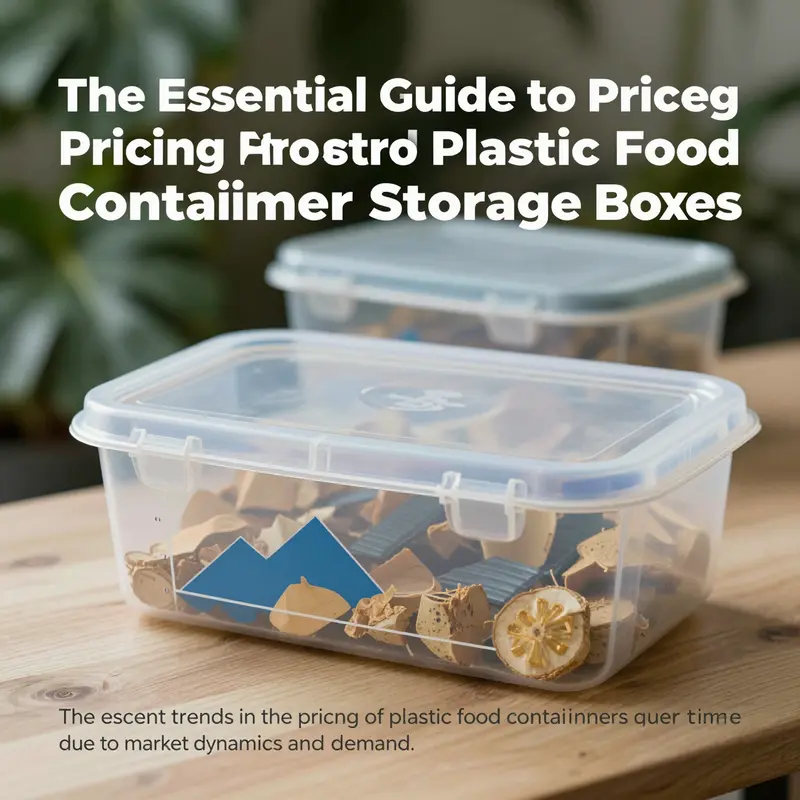
The price of plastic food container storage boxes does not rest on a single lever. It moves with the rhythm of raw materials, production zones, demand cycles, and the evolving rules that govern food-grade packaging. To understand how price is shaped, one must follow the chain from resin to retail, tracing the subtle shifts that add or shave pennies from a unit price even as buyers negotiate larger gains from bulk orders. At first glance, the numbers may seem precise and isolated. A closer reading reveals a fabric of correlations, where a small change in resin costs, a regional cost advantage, or a regulatory hurdle can tilt the cost curve for a broad range of products—across tiny 200ml boxes, mid-sized 460–1800ml containers, or specialized designs with locks and seals. In this narrative, price is less a fixed tag than a dynamic signal of supply, technology, and consumer preference converging in a single category of everyday packaging.
Raw material costs are the most visible, and often the most variable, influence on price. The workhorse resins for food-grade containers are polypropylene (PP) and high-density polyethylene (HDPE). When the price of PP or HDPE rises, the baseline cost of nearly every container follows suit. Conversely, when resin markets soften, manufacturers gain room to adjust margins or to offer more aggressive pricing in promotional periods. Geography amplifies this effect. Production hubs near feedstock sources can push unit costs down through lower transport and logistics burdens. In particular, certain manufacturing belts in China enjoy material input advantages that can amount to around 18% lower costs compared with western regions. That kind of regional delta can translate into meaningful differences for buyers, especially when MOQs—minimum order quantities—are not trivial. A supplier situated near primary resin streams can sustain lower per-piece costs at modest volumes, while the same product sourced farther away might only become affordable through larger orders or extended lead times.
Market demand adds another layer of pressure. The global market for plastic food storage containers has been expanding, and the forecast is for continued growth. From a baseline around USD 170.87 billion in 2025, projections point toward roughly USD 254.57 billion by 2033, marking a compound annual growth rate of about 4.91%. In 2025, plastic packaging is expected to command a dominant share of roughly sixty-one percent of the food container market. Such scale affords efficiencies in manufacturing, enabling economies of scale that can stabilize or even reduce unit costs under specific conditions. Yet demand momentum also creates price ceilings—particularly during peak seasons or when supply lines are disrupted by transportation snarls or regional events. In other words, even a strong market that supports growth can squeeze margins if supply cannot keep pace with demand.
Regulatory compliance adds a steady, sometimes stubborn, layer to the pricing equation. For food-grade applications, there is a premium attached to ensuring safety and purity. Many buyers expect virgin polypropylene rather than recycled content to meet strict health standards. Certifications, routine testing, and third-party verifications all carry costs that are embedded in the production process. While these measures are essential for market acceptance and for legal compliance, they inevitably show up as higher unit costs, especially for products positioned as premium, premium-plus, or custom with stricter performance guarantees. This regulatory tailwind helps explain why even basic, no-frills storage boxes can command different prices across regions, MOQs, and supplier profiles.
Technology and manufacturing engineering also reshape pricing in meaningful ways. The industry has layered in features that add value but require higher upfront investment. UV stabilization, anti-static additives, and design innovations—such as specialized bottom geometries that aid fermentation or drainage—demand more sophisticated formulations and tooling. The costs of premium materials, more complex molds, and tighter tolerances are folded into the price of the final product. And the manufacturing technology itself matters: thermoforming lines with synchronized forming plates, precision cooling cycles, and automated quality checks increase capital expenditure but deliver higher protection standards and a more polished product. When buyers seek enhanced durability, barrier properties, or heat resistance, the price signal strengthens, even as the same family of products remains within reach for large-volume buyers.
Within this broader landscape, an intuitive price framework emerges. Small, basic boxes with volumes around 200ml tend to be priced in the low cent range, often 0.0459 to 0.0499 USD per piece in high-volume contexts (think orders of 500 units or more). These are price-sensitive offerings designed for standard storage or portion-control needs, where the physical constraints of size and the run-capacity of a factory can be exploited to minimize unit cost. Mid-size variants, spanning roughly 460–1800ml, typically land in the higher tenths of a dollar up to about 1.76 USD per piece, with a common minimum order quantity around 120 units. The jump in price from small to mid-sized containers reflects both the increased material usage and the added complexity in design and tolerances for a wider range of storage tasks. Large-volume formats around 6 liters push further toward three-plus dollars per piece, with MOQs around 300 units. And for specialty designs—such as boxes with locking lids or other security features—the per-piece price may hover near 0.35 USD but comes paired with MOQs around 2,000 units. The scale and specialization behind these figures illustrate the trade-off between product features, manufacturing efficiency, and the purchasing power of the buyer.
While USD pricing is a helpful baseline, it is common to encounter other currency references in supplier catalogs and regional negotiations. For instance, a compact transparent square snack storage jar might be cited in RMB terms around 2.7 yuan per unit, while a microwave-safe kids’ lunch box could be listed near 4.7 yuan per piece. The exchange-rate dynamics and local cost structures mean that the same functional category can appear cheaper in one market and pricier in another, even when the user’s functional requirements align. Nevertheless, the overarching pattern remains consistent: price per unit falls as order quantity rises, thanks to manufacturing efficiencies, spreading of fixed costs, and better negotiation leverage with suppliers who can commit to longer production runs.
This nexus of materials, volume, and compliance makes supplier selection a strategic exercise. Buyers increasingly gauge suppliers not only by base price but by the total cost of ownership, including lead times, reliability of supply, and the risk management that accompanies raw material volatility. A sourcing decision is rarely about the lowest number on a price list; it is about a balance between price, quality assurance, and the predictability of supply over a product’s life cycle. Short-term price dips can be outweighed by longer-term risks if a supplier faces resin price spikes or new regulatory hurdles. Conversely, a supplier with steady resin access and robust quality programs can offer stable pricing through negotiated baskets, even in periods of broader market instability. This approach aligns well with the growing emphasis on strategic sourcing in packaging—an emphasis that helps teams weather raw material shocks without compromising food safety or performance.
For buyers tracking trends and planning procurement, the interplay between price bands and MOQs is particularly instructive. Consider the tiered framework: small basic boxes at roughly five cents each, mid-range volumes near a dollar or less, and large or special designs at several dollars apiece—each tier accompanied by minimums that ensure manufacturing viability and cost recovery. These patterns reflect more than arithmetic; they reveal how vendors coordinate product development, tooling investment, and capacity planning with the purchasing rhythms of retailers, food service operators, and industrial end-users. A buyer who understands these dynamics can negotiate with sharper leverage, pushing for blended orders that mix standard containers with select premium designs, achieving a portfolio that suits both shelf space and supply chain resilience. In practice, this means contemplating not just the unit price but the totality of cost drivers—lead times, storage space, waste, return on investment for reusable options, and the environmental and regulatory pathways that increasingly shape packaging economics.
For readers seeking a deeper dive into the market shape and long-run forecasts, broader industry research provides corroborating context. Market analyses project sustained expansion with an eye toward material innovation, safety standards, and efficiency gains that collectively influence price trajectories. The price dynamics discussed above fit within that larger narrative: a market that grows, rationalizes through scale, and remains attentive to the regulatory and technological currents that elevate or temper unit costs over time. To appreciate the full arc—across resin markets, regulatory changes, and process innovations—a comprehensive market forecast offers a structured view of where costs may head in the next few years. External resources lay out the underlying assumptions and scenarios that can influence pricing decisions for buyers and suppliers alike. External resource: https://www.researchandmarkets.com/reports/6524324/global-food-storage-container-market-size-share-forecast-to-2033.
As a closing reflection, the price story of plastic food container storage boxes is less a single trend than a convergence of forces. Raw material costs, regional advantages, demand growth, regulatory rigor, and technological progress all leave their fingerprints on the final price. Buyers who recognize these patterns—and who engage in disciplined supplier evaluations and strategic sourcing—can navigate price volatility with greater confidence. In this ecosystem, price is not merely a number to be negotiated; it is a lens through which the broader economics of packaging, consumer habits, and manufacturing capability are visible. The most successful procurement paths will be those that align cost, quality, and risk across the full lifecycle of the boxes that organize, protect, and dispense food in kitchens, cafeterias, and retail spaces around the world, while also remaining adaptable to future shifts in materials science, regulation, and consumer expectations. To that end, the conversation about price must stay tightly coupled with the ongoing evolution of packaging technology and supply networks, ensuring that price signals remain honest indicators of value rather than simple incidentals of market noise.
Internal link note: For readers exploring related packaging formats and how design choices influence perceived value in storage solutions, see the packaging example linked here: octagonal Kraft paper packaging.
Economies of Scale in Plastic Food Container Storage Boxes: How Bulk Purchases Drive Down Prices
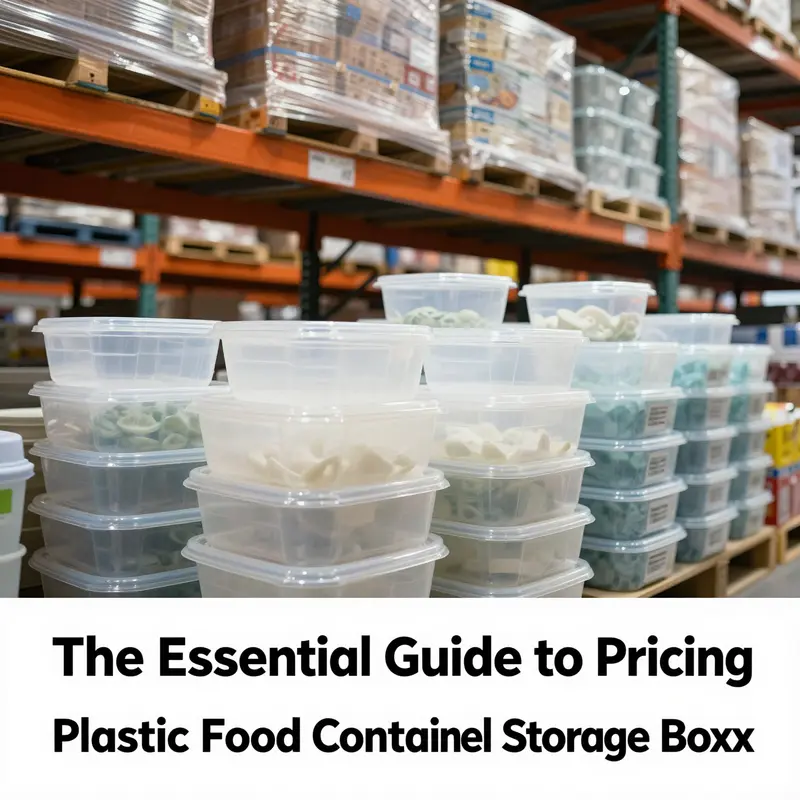
Pricing for plastic food container storage boxes is a layered story rather than a single number. It unfolds across size, material, capacity, and the scale of the order. When buyers shift from small runs to bulk purchases, the unit price tends to fall, sometimes sharply. This is not merely a graphic of discounts; it reflects a fundamental economic principle. Fixed costs that underpin production—tooling, molds, packaging, quality checks, and administrative overhead—can be spread over a larger number of units as volume increases. In practical terms, a factory can schedule production more efficiently, fill a complete production line, and reduce the per unit handling and setup time. The result is a lower price per piece and a more predictable, dependable supply chain for buyers who plan ahead and commit to larger orders.
Across the spectrum of product specifications, the impact of volume is clear. For compact, foundational boxes around 200 ml, current price ranges sit between roughly 0.046 and 0.050 USD per piece, but this band becomes meaningful mainly when ordered in hundreds or thousands of units. For mid range containers with capacities spanning roughly 460 to 1800 ml, the price per unit sits in the 0.72 to 1.76 USD band, with a minimum order quantity typically around 120 pieces. Large capacity options, such as 6 liter boxes, hover near 3.73 USD per piece and require MOQs around 300. Special designs, for example boxes with locking lids, can sit around 0.35 USD per unit but usually demand bulk volumes on the order of two thousand pieces. Taken together, these figures illustrate how scale moves the price curve across the entire product family. The greater the volume, the greater the opportunity to push price per piece down and to secure more favorable terms across the entire procurement cycle.
Beyond the raw unit price, regional and currency dynamics remind buyers that price is not universal. Local market conditions—tariffs, freight, duties, and currency exchange—shape the landed cost of boxes sourced from abroad. In a parallel strand of data, smaller, easily accessible references show the same scale effect in different currencies. A transparent square snack jar priced in local RMB sits around 2.7 yuan per unit, while a microwaveable kids lunch box comes in around 4.7 yuan. These points highlight that the same family of products can carry different price ladders in different markets, a reminder that bulk purchasing strategies must account for total landed cost, not just the sticker price in one market. For global buyers, this means integrating freight terms, currency hedging, and supplier lead times into the procurement calculus alongside raw unit costs.
The strategic appeal of bulk buying aligns with a broader market trajectory. The plastic storage container sector has grown into a sizable market with substantial demand from households, retailers, and food service operators who seek modular, durable, and reusable storage options. As consumer habits tilt toward organized kitchens and efficient meal preparation, the market’s growth supports a wider base of suppliers and a more intense price-performance competition. In practical terms, this translates to more aggressive price tiers for larger orders, improved terms for longer contract horizons, and opportunities to standardize SKUs to consolidate production runs. When a vendor can offer a single production run that covers multiple sizes or lid configurations, the resulting cost efficiencies travel straight to the buyer in the form of lower per unit costs and more reliable delivery windows.
Data from supplier tiers underscores the mathematics of bulk pricing. When a category is described as FDA certified storage containers, the price often falls as the quantity rises. For example, a tier with 100–299 units might be priced around 8.80 USD per piece, but increasing the order to 1,000 or more pieces reduces the price to about 7.80 USD per piece. The effect is not a fluke but a pattern observed across many categories within the broader storage and organization space. Stackable kitchen organizers mirror this trend, dropping from 7.22 USD per piece in the 1,000–2,399 range to 6.88 USD per piece at 2,400 or more. Even eco friendly folding storage boxes demonstrate the same discipline, sliding from 8.80 USD to 7.80 USD as volumes cross the 1,000 unit threshold. These specific numbers illuminate a central point: fixed costs recast themselves as variable savings for the buyer when the order size crosses critical thresholds. The practical takeaway for managers and buyers is that higher-volume contracts can substantially improve margins when forecast accuracy supports steady demand.
For businesses, the implications extend beyond the lower unit price. Bulk purchasing reduces the frequency of purchase orders, simplifies quality control cycles, and can improve supply reliability if the supplier’s production plan is aligned with forecasted demand. This creates a smoother operational rhythm: fewer administrative tasks, less time spent chasing multiple vendors for small runs, and more predictable inventory turns. However, this strategy also carries risk. Overestimating demand or failing to align SKU assortment with actual consumption can lead to overstock, tying up capital and storage space. The prudent course is to couple bulk pricing with robust demand forecasting, a clear view of which sizes and lid configurations are most often required, and contingency plans for sudden changes in usage patterns. In other words, bulk pricing works best when procurement planning treats volume as a strategic asset rather than a tactical workaround.
The market context reinforces the case for bulk purchasing as a core cost-management tool. A rapidly evolving landscape of suppliers, materials, and design innovations means price transparency is increasingly valued. As competition intensifies, the incentive to consolidate orders into larger, more uniform shipments grows. This is especially true for businesses that rely on durable, reusable containers across multiple meal prep workflows or retail displays. When buyers can rely on a standard set of sizes and a consistent lid system, production efficiency improves, and margin protection becomes more feasible. The implication for procurement teams is clear: align sourcing with a cohesive product family that supports high-volume, repeatable demand, and negotiate terms that reward long-term predictability.
In interpreting these dynamics, it helps to keep one eye on broader macro trends that influence pricing over time. Market analyses show that price transparency and standardized MOQs are shaping how buyers compare offers. They also emphasize how shifting macro factors—global supply chain pressures, raw material costs, and currency movements—can alter the total landed cost even when the base unit price appears favorable. Buyers who monitor these signals while negotiating MOQs can optimize not just today’s price but the trajectory of costs across a packaging program. The net effect is a procurement strategy that uses bulk purchasing not as a blunt instrument but as a calibrated tool to balance price, lead times, quality, and long-term supplier relationships.
The narrative of price and volume within plastic food container storage boxes dovetails with a simple, enduring rule of thumb. If a department or business buys dozens to hundreds of units each month, bundling purchases into bulk orders typically yields more tangible savings than chasing the cheapest price on a single SKU. For retailers and caterers who operate at larger scales, the opportunity to unlock price breaks through bulk purchasing translates into meaningful margins when demand forecasting is accurate and inventory is managed carefully. Yet the value extends beyond the invoice line item. A bulk strategy also strengthens procurement discipline, fosters supplier collaboration, and supports more stable, scalable packaging programs that can adapt to evolving consumer preferences and sustainable packaging goals.
In closing, the price dynamics around plastic food container storage boxes reveal a consistent logic: volume drives value. As margins hinge on a delicate balance between unit costs, lead times, and demand certainty, bulk purchasing emerges as a practical, strategic approach rather than a speculative bet. For buyers who plan with precision, the reward is a more economical, resilient storage solution ecosystem that can sustain growth, support operational efficiency, and enable better shelf and pantry management over time. External data and ongoing market analyses continue to illuminate the specifics of this trajectory, helping purchasers calibrate orders to evolving product families, supplier capabilities, and the ever-shifting landscape of global manufacturing. External resource: https://www.marketsandmarkets.com/Market-Reports/plastic-food-storage-container-market-288179287.html
Final thoughts
In summary, navigating the pricing landscape of plastic food container storage boxes is essential for any food service business. By understanding the pricing structure, factors influencing prices, and the comparative analysis across different markets, businesses can make informed purchasing decisions. Additionally, recognizing the impact of market trends and the advantages of bulk purchases can lead to significant savings and efficiency. Equip yourself with these insights, and you’ll be prepared to select the best storage solutions for your operational needs.