
In the bustling world of food service, the choice of takeaway packaging is crucial, especially for businesses like bubble tea shops, restaurants, food trucks, and catering services. Tesco, a notable leader in grocery and takeaway food retail, offers a variety of plastic containers that cater to the increasing demand for convenient meal options. This article delves into Tesco’s plastic takeaway food containers, focusing on their variety, regulatory frameworks, environmental initiatives, consumer attitudes, and market trends. Each chapter will incrementally deepen your understanding, allowing businesses in the food and beverage industry to make informed packaging choices that align with both operational needs and sustainability goals.
Turning the Takeaway Tide: Tesco’s Transition from Plastic Toward Paper-Based Packaging
Across modern retail, the shift away from single-use plastics has become a defining thread in how major chains frame their responsibility and their customers’ experience. Tesco, as one of the largest supermarket networks in the United Kingdom, sits at the intersection of consumer demand for convenience and the mounting pressure to reduce environmental impact. The broader regulatory and cultural currents—tightening restrictions on disposable plastics in the UK and the European Union, alongside rising public awareness—have pressed retailers to rethink how takeout and ready-to-eat food are packaged, delivered, and disposed of. This chapter traces Tesco’s response to those currents, not as a mere compliance story but as a fundamental reimagining of what a takeaway container can be when it is designed with both performance and planet in mind. The narrative that emerges is not a simple swap of one material for another; it is a carefully choreographed evolution that touches product design, supply chains, consumer behavior, and the evolving infrastructure that handles packaging waste. In this sense, Tesco’s packaging journey offers a lens into how a large retailer navigates scale, safety, cost, and environmental commitments in tandem, while still preserving the ease and reliability customers expect from their shopping experience.
From the outset, Tesco acknowledged that eliminating unnecessary plastic packaging is a key component of reducing its overall environmental footprint. This stance sits within a wider corporate pledge to cut plastic waste and to pursue recyclable, reusable, or compostable alternatives wherever feasible. The core logic is straightforward but challenging in practice: if packaging serves to protect a product, preserve safety, and provide convenience, it should do so while minimizing its end-of-life impact. The practical implication of this logic is that the containers used for takeaway and ready-to-eat meals must be compatible with existing recycling or composting streams, even as they remain sturdy enough for transport, heating, and user handling. In this frame, the transformation Tesco pursued in the early 2020s—moving away from conventional plastic takeaway boxes toward paper-based or compostable options—reads as a bold, system-wide attempt to align business operations with environmental objectives without sacrificing customer satisfaction.
The key changes can be summarized as a deliberate move away from plastic takeaway containers toward materials that are more readily recyclable, compostable, or otherwise capable of circular reuse. The strategic intent behind this transition is not merely to reduce plastic waste at the end of life; it is to reengineer the packaging system so that what ends up as refuse has a clearer, more practical path back into production or into natural processes. Achieving this, however, requires juggling several constraints simultaneously. First, the packaging must still perform its primary functions: it must protect contents, enable heating or safe consumption, keep moisture and odors in check, and be user-friendly. Second, the materials chosen should be compatible with in-store recycling or composting streams so that households, recycling facilities, and municipal compost programs can process them effectively. Third, the solutions must scale across thousands of stores and online platforms, ensuring consistency, reliability, and cost-effectiveness in procurement, logistics, and shelf-life management.
In 2021, Tesco publicly signaled a major step in this direction by replacing plastic takeaway containers with recyclable paper-based or compostable alternatives across its UK stores. This decision did more than signal a material preference; it reflected a strategic stance that packaging choices must be aligned with ambitious environmental goals, including a broader aim to reach zero waste to landfill by 2030 and to curb plastic waste throughout the supply chain. The design challenge embedded in this shift was substantial. Paper-based and compostable packaging must withstand the same handling, stacking, and temperature exposures that plastic boxes endure. They must also be compatible with the variety of foods Tesco offers, from hot meals to chilled items, and they must maintain food safety standards, including moisture control and barrier properties. Importantly, the transition was not a one-off product replacement; it required changes to sourcing, supplier standards, and quality assurance protocols to ensure uniform performance across locales and seasons.
From the consumer perspective, the move toward paper-based and compostable options has nuanced implications. Convenience remains central: shoppers expect containers that are easy to open, keep contents warm and intact during transit, and do not leak or degrade before consumption. At the same time, there is a growing expectation that packaging should be environmentally responsible and that it should be simpler to separate packaging waste from food waste once the product has been consumed. Tesco’s stated aim to minimize unnecessary plastic packaging resonates with this expectation. Yet the transition invites questions about end-of-life pathways. Paper-based and compostable materials often rely on specific industrial processes to break down effectively. In many communities, curbside composting or dedicated recycling streams determine the ultimate fate of packaging. This reality highlights a broader truth: the environmental benefits of packaging innovations depend not only on the material itself but also on local waste-management infrastructure and consumer participation.
The design and material decisions behind Tesco’s packaging overhaul are, therefore, intrinsically linked to the broader packaging ecosystem. The movement toward recyclable paper-based or compostable containers signals a push toward materials that can more readily re-enter the production cycle or return to organic cycles, rather than persisting as persistent refuse. It also reflects a growing recognition that, beyond single-use, retailers must consider how packaging is collected, sorted, and processed after use. This is where the packaging industry’s evolving toolkit becomes relevant. Market offerings—ranging from recyclable Kraft paper solutions to compostable bowls and boxes—illustrate a trajectory toward form factors that balance usability with environmental performance. For instance, the market has begun to present options such as kraft-based bowls and lids, or octagonal and rectangular paper packaging designed with liners and barrier coatings that enable safer heating and longer shelf life while remaining compatible with recycling or composting streams. In this wider context, retailers like Tesco explore a spectrum of packaging choices to identify those that deliver the right mix of practicality and sustainability.
A practical thread running through this narrative is the ongoing effort to harmonize packaging with circular economy principles. If a container is made to be recycled or composted, it must be possible to close the loop efficiently. This involves supplier standards, material traceability, and clear consumer guidance on disposal. It also invites collaboration across the value chain—from material scientists and packaging designers to waste managers and municipal authorities—to ensure that the chosen solutions do not fail at the very moment they are most needed: in real-world disposal environments. The outcome is not a single perfect solution but a portfolio of packaging options designed to meet varied needs while maximizing recoverability. Being able to offer a consistent, environmentally aware packaging option across thousands of stores is a nontrivial achievement, one that depends on robust supplier relationships and an adaptable logistics network.
As Tesco’s packaging strategy evolved, it also opened space for market innovation beyond conventional containers. A growing body of paper-based and recyclable packaging formats—such as kraft paper bowls and lids, or paper-based takeaway boxes with careful barrier design—illustrates how the industry is rethinking form and function without compromising safety and convenience. This is where the idea of a thoughtful, market-informed approach becomes especially relevant to readers who are considering their own packaging choices. A container that performs well in a busy takeaway environment while still aligning with environmental goals embodies the kind of pragmatic optimism that will likely characterize packaging choices in the years ahead. For readers curious about practical packaging options that reflect this shift, one example of the kinds of non-plastic, paper-based designs appearing in the market can be seen in the disposable octagonal box for restaurant food kraft paper packaging. This option showcases how a structurally sound, aesthetically simple design can fulfill both functional needs and sustainability criteria. disposable octagonal box for restaurant food kraft paper packaging.
The broader takeaway from Tesco’s experience is that environmental commitments need not be at odds with operational efficiency. The transition away from plastic containers is not a rejection of performance but an invitation to reconfigure how performance is achieved. Materials science plays a central role here, as does process engineering. For instance, paper-based and compostable options must be engineered to carry heat, resist moisture, and survive transport, then be disposed of in a way that makes sense for the intended end-of-life pathway. Achieving this balance requires R&D investment and rigorous supplier scrutiny, but the payoff is a packaging system that remains reliable for the consumer while reducing the potential environmental footprint. The corporate narrative thus becomes less about a single material choice and more about a coherent strategy that threads packaging design, sustainability goals, and customer expectations into a consistent, scalable approach.
Of course, the road to fully implementing such a strategy is not without hurdles. The interplay between packaging materials and waste infrastructure means that regional differences in recycling and composting capabilities can affect how effective a given solution is in practice. Cost considerations, supply chain resilience, and the need for clear consumer disposal guidance add layers of complexity. Yet Tesco’s public framing of the transition—emphasizing recyclable or compostable alternatives and a pledge toward zero waste to landfill by 2030—signals a long-term, governance-driven commitment. It also invites ongoing dialogue with policymakers, suppliers, and customers about how best to achieve sustainable outcomes at scale. In this evolving landscape, the packaging choices a retailer makes become a message about priorities and a catalyst for broader market shifts, encouraging suppliers and competitors to pursue similarly rigorous environmental standards.
As readers consider the implications for their own practices or business models, the Tesco example underscores a simple but powerful point: sustainability in packaging is not a one-time adjustment but a continuous redesign that must stay aligned with consumer needs, waste-management realities, and the economics of scale. For those exploring related design and material options, the wider market offers a spectrum of paper-based and recyclable packaging formats that aim to maintain the reliability customers expect while advancing environmental goals. This is not merely a trend but a systemic transformation shaped by policy, technology, and collective action. For readers seeking more detail on Tesco’s official position and the progression of its packaging strategy, the corporation’s public update provides a factual anchor to the broader narrative of environmental stewardship and operational adaptation in the takeout era. In the language of ongoing industry development, the shift toward paper-based and compostable containers represents a practical, forward-looking step in aligning retail packaging with a circular economy, one that invites continued collaboration across sectors and disciplines.
External resource for further context: Tesco’s official statement on removing plastic takeaway containers can be found here: Tesco Announces Removal of Plastic Takeaway Containers.
Beyond the Box: Tesco, Regulation, and the Move Toward Paper-Based Takeaway Packaging
In the United Kingdom, the rules around plastic take-away packaging have moved from footnotes to the headlines that shape every shelf, label, and lid. For a nationwide retailer with thousands of outlets, the regulatory tide is not a nuisance to dodge but a framework within which product design and supply chain decisions must operate. The current trajectory emphasizes safer, simpler, and more recyclable options, pressing packaging away from complicated multi-material constructs and toward structures that can be captured in recycling loops or composted after use. The implications go beyond the immediate appearance of packaging; they touch consumer trust, supplier contracts, and the long-term viability of the brand’s packaging portfolio.
The legal backdrop is unequivocal on certain aspects. Since 2023, a broad policy movement has restricted the use of some single-use plastics, with polystyrene food containers and cutlery among the targeted items. The aim is to prevent waste from entering landfills and, crucially, from leaking into rivers and oceans. The regulation strategy does not suggest an instant wholesale replacement of every packaging element; instead, it encourages products that are easier to recycle, that use recycled content, or that can be reused in closed-loop systems. For retailers, the message is clear: if a material cannot be effectively recovered at scale, its future in the product line is at risk. This is where the design philosophy begins to tilt away from the default of convenience toward the more deliberate choices that align with environmental policy and consumer expectations.
Against this regulatory backdrop, Tesco has framed its response as a systematic shift away from problematic plastics toward a packaging ecosystem that prioritizes recyclability, compostability, or reusability. This is not solely about meeting a regulatory checklist; it is about aligning with a broader social mandate to reduce plastic leakage and to support a circular economy. In practice, the retailer’s efforts translate into decisions at the sourcing table, the factory floor, and the point of sale. Packaging teams are tasked with choosing materials that maintain food safety and product integrity while also fitting into established recycling streams. The emphasis on clarity about end-of-life outcomes is as much a consumer trust strategy as an environmental one.
A central pillar of this transition is the material strategy for takeaway containers. Across the sector, there is growing interest in using paper-based packaging derived from recycled content. This approach serves several purposes. It reduces dependence on virgin wood pulp, contributes to lower energy use in production, and provides a surface that is familiar to consumers as recyclable. Yet the chemistry of packaging is not so simple. Paper and cardboard must resist heat, moisture, and grease for hot meals, and they must do so without becoming a contamination risk to recycling streams. The answer lies in carefully engineered barrier coatings and select laminates that minimize the scope of non-recyclable elements. For Tesco, the objective is to maximize recyclability even when the product is heated in a consumer oven. The outcome is a packaging portfolio that leans on outer layers of kraft or carton, with minimal reliance on complex multi-layer plastics, and with coatings that are compatible with standard paper recycling. These design choices reflect a broader shift in the industry toward materials that are sourced from post-consumer streams and designed for return to the recycling system, rather than being difficult to disassemble after use.
The supply-chain implications of such a shift are tangible. New supplier relationships must be forged with companies capable of delivering high-quality recycled-content paper packaging, compatible coatings, and reliable barrier performance. Manufacturing lines require retooling, so converters can produce the right thickness, stiffness, and heat resistance without compromising recyclability. Labeling must support downstream sorting, with clear, machine-readable cues that allow recyclers to separate components where needed. In parallel, waste-management infrastructure—local recycling facilities and composting streams—needs to be able to handle the revised material mix. Regulatory drivers accelerate these changes, but the market’s competitive dynamics also exert pressure: packaging that cannot be recycled at scale risks obsolescence, while suppliers that can offer recycled content at scale hold a strategic advantage.
In this environment, consumer expectations are climbing. Shoppers increasingly equate packaging with environmental responsibility and are more attentive to disposal guidance. The role of clear instructions and straightforward recycling messages cannot be overstated. When households know what goes where, recycling contamination declines and the rate at which the packaging returns as valuable material improves. Retailers like Tesco therefore invest in not just the mechanics of packaging redesign but also the communication around it. The cost and complexity of new packaging must be balanced against the value of higher recovery rates and the reputational uplift that comes with demonstrable environmental stewardship. This is a shifting equilibrium, where sustainability, safety, and affordability must co-exist in a way that keeps products accessible without compromising ecological goals.
The ambition is explicit: a future where all packaging is reusable, recyclable, or compostable. Tesco has publicly articulated a 2025 target along those lines, a benchmark that anchors internal programs, supplier negotiations, and market-facing messaging. Reaching that target demands more than swapping out plastics for paper; it requires a holistic approach to the life cycle of packaging. Recycled content must be credible and traceable, and the recycling streams must exist, be economically viable, and be widely understood by consumers. It also requires ongoing assessment of risk—changes in regulations, shifts in consumer certainty, and the realities of international supply chains. The retailer’s packaging strategy, therefore, becomes a continuous loop of testing, learning, and adjusting, with sustainability metrics feeding procurement and product development decisions.
The broader environmental implications extend beyond the boundaries of a single retailer. By steering toward paper-based, recycled-content packaging, the industry can reduce the environmental footprint associated with virgin pulp production and the energy demands of traditional plastic manufacturing. The circular economy framework becomes more attainable when more packaging can be captured in recycling loops and less ends up as litter. Yet the transition also raises questions about the trade-offs between durability, moisture resistance, shelf-life implications, and the logistics of recovery. The balancing act is not trivial; it requires collaboration across multiple stakeholders, from farmers and pulp suppliers to recyclers and municipal authorities. In this sense, policy design and commercial strategy become co-authors of the packaging narrative, each shaping the other in real time.
From a policy standpoint, the UK’s approach illustrates a nuanced mix of restrictions, incentives, and measured transition timelines. While the polystyrene ban and other single-use plastics policy outlines the trajectory, it also supports a staged adjustment that allows retailers to optimize packaging choices without imposing undue costs on consumers. This incremental approach is essential to maintaining food safety standards and ensuring that the end product remains accessible for households across income groups. It also invites ongoing dialogue with regulators, manufacturers, and waste-management entities to address unforeseen bottlenecks or infrastructure gaps. In this way, regulatory design and industry practice converge, producing a more streamlined path toward sustainable packaging without abrupt discontinuities in product availability or price.
To connect these threads to concrete market signals, imagine a packaging design that couples a sturdy kraft paper container with a thin, strategically applied moisture barrier. The aim is a container that can safely carry hot dishes, is accepted by local recycling streams, and does not rely on non-recyclable composites. Such a direction aligns with policy intent and retailer strategy in many markets concerned with packaging waste. Industry observers note that the most enduring transitions happen when design thinking, procurement incentives, and waste-management capacity evolve in harmony. This harmony is exactly what regulators seek and what major retailers strive to demonstrate in their annual sustainability disclosures. For readers seeking deeper technical or supplier perspectives, the kind of packaging that aligns with this approach can be found in industry offerings such as disposable octagonal boxes crafted from kraft paper packaging. disposable octagonal box restaurant food kraft paper packaging
The next chapter broadens the lens further, turning to how consumer behavior, recycling infrastructure, and policy reassessment intersect to shape practical outcomes on the ground. It will explore how sorting guidance, local facility availability, and regional recycling maturity influence the viability of paper-based take-away packaging across diverse communities. Meanwhile, the regulatory core and corporate adaptation described here form the backbone of a larger shift toward packaging that supports a cleaner, more circular economy in the food-on-the-go sector. External resources offer additional context on the policy framework guiding these changes, including official government guidance on single-use plastics that frames what is permissible and what remains a work in progress. External resource: https://www.gov.uk/government/publications/ban-on-single-use-plastics
Greener by Default: Tesco’s Journey Toward Sustainable Plastic Takeaway Containers
A chapter of tension and transformation unfolds when a major retailer reconsiders the humble plastic container that carries a quick takeaway meal from shop to home. Plastic takeaway containers have long epitomized a conflict between convenience and environmental impact. Yet in the current climate of tighter regulations, rising public scrutiny, and evolving consumer expectations, a leading retailer has begun to reshape how its own-brand packaging is conceived, produced, and disposed of. The trajectory is not a single product redesign but a systemic push—an integrated effort to shrink plastic usage, boost recyclability, and encourage reuse—while preserving food safety, transport efficiency, and the reliability customers expect from their everyday shopping experiences. At the heart of this shift lies a clear ethical and business wager: sustainable packaging can go hand in hand with sustained value for the supply chain, and with reduced environmental cost for communities where packaging ends up after its use.
This strategic push rests on a robust sustainability framework that frames plastic containers as a material system rather than a one-off design problem. Ambitious targets for waste reduction and energy efficiency are not cosmetic statements but performance metrics that tie into bonuses for senior management. The emphasis on measurable outcomes signals a recognition that packaging decisions have cascading effects—from the supplier network that sources raw materials to the consumer who reuses or recycles a box, to the municipal recycling streams that handle mixed plastics. When a corporation links executive incentives to sustainability performance, it is signaling that the stakes extend beyond quarterly earnings. It is a proportionate response to the mounting external pressures to minimize plastic leakage into landfills and the natural environment. The timeline referenced in recent disclosures points to an ongoing, evolving program as of early 2026, one that is designed to adapt as technologies improve and as regulatory landscapes shift.
In the broader policy context, the agenda aligns with regulatory steps that are reshaping how single-use plastics are treated in retail and hospitality settings. Ultra-lightweight bags, for example, have faced bans or prohibitions in many jurisdictions because of their propensity to become litter and their limited utility in a circular economy. While the bag is a different product category, the underlying logic is consistent: if a system tolerates cheap, hard-to-recycle packaging, it will also struggle to achieve long-term waste reduction goals. Retailers are increasingly pressured to minimize not only plastic bags but all form factors of packaging that do not align with recyclable or reusable pathways. The company’s approach has thus expanded beyond bags to consider the entire packaging portfolio—tackling the durability of containers, the recyclability of materials, and the potential for reuse where feasible.
One of the most consequential commitments is the pledge to make all own-brand packaging recyclable or reusable by a target year that has been publicly stated. This is not a mere statement of aspiration; it is a roadmap that requires rethinking material choice, supply chain collaboration, and end-of-life logistics. In practice, this means moving away from non-recyclable plastics toward materials that can re-enter the circular economy with minimal downcycling. It also means re-evaluating the coatings and laminates that protect food, the barrier properties that preserve quality during transit, and the adhesive systems that keep components intact without complicating recycling streams. The shifts are not incremental; they involve retooling manufacturing lines, reengineering packaging specs, and sometimes redesigning the consumer experience around how containers are opened, reused, and disposed of.
These packaging choices do not occur in a vacuum. They reflect the realities of a highly competitive retail environment where takeout demand—whether for ready meals, prepared foods, or collaborative food-service offerings—has grown markedly. Packaging must be sturdy enough to travel safely, withstand a range of temperatures, and keep contents intact during handling and stacking. Yet it must also be compatible with recycling facilities and consumer behavior. A growing portion of the packaging portfolio is therefore being oriented toward materials that balance moisture and aroma barriers with high recyclability. In some cases, this includes selecting standards that exceed minimum regulatory requirements, pushing suppliers to achieve higher performance thresholds so that the final product can be widely accepted by recycling streams.
From a design perspective, the challenge is to retain the convenience customers rely on while reducing environmental costs. The company has explored opportunities to reduce plastic in its takeout and delivery packaging by substituting with lighter yet durable alternatives, increasing the proportion of post-consumer recycled content where practical, and adopting design features that facilitate disassembly and sorting after use. This is not simply a material switch but a packaging architecture problem: how to hold hot meals securely, prevent leaks, and provide an easy pathway to separation of components for recycling or reuse. In some instances, the company has also looked at whether certain formats can be repurposed for multiple uses or reused through in-store or community take-back programs, aligning with broader shifts toward circularity.
The consumer dimension is critical. A successful packaging transition must be visible in the product experience, not hidden in corporate press releases. Customers expect packaging that protects food during transport and preserves freshness, yet they also want assurance that the container will be responsibly disposed of or readily recycled after its use. Transparent labeling about recyclability, clear guidance on disposal, and consistent packaging experiences across product lines help build trust. At the same time, consumer education remains essential. People vary in how they sort waste, and confusion about which plastics are accepted in local facilities can undermine even well-intentioned packaging changes. Therefore, the most effective strategies combine packaging redesign with clear, simple consumer instructions and strong collaboration with local authorities and waste-management partners. The result is a practical system in which progress is measurable, tangible, and aligned with the realities of daily life.
Within this broader transformation, the organization also acknowledges the role of packaging aesthetics and product presentation. A container is more than a barrier to spoilage; it is a signal about value, care, and responsibility. The shift toward recyclable or reusable options often coincides with surfaces and coatings that can be cleaned and repurposed, or with packaging that encourages reuse as a serving vessel, a lunchbox, or a storage container. While the specifics of any single reform may seem modest, the cumulative effect across thousands of SKUs and millions of packaging instances can be substantial. Even small improvements—slightly thicker walls to resist crushing, adhesives that can be easily separated in recycling streams, or a more consistent shape that stacks efficiently during transport—translate into meaningful reductions in waste, material loss, and energy use in downstream processing.
A practical example of the type of packaging consideration that becomes a focal point in planning discussions concerns a common takeout vessel used for multiple meals and occasions. The choice of a robust, recyclable bowl or tub can influence the frequency with which recyclable streams are contaminated and the rates at which packaging is diverted from landfill. At times, the decision involves a straightforward material swap; at other times, it requires a more nuanced approach to coatings and barrier layers so that the container remains food-safe without hindering recyclability. The aim is not to eliminate plastic altogether but to reframe plastic as a resource that can be efficiently looped back into production cycles rather than relegated to waste. This reframing, in turn, informs supplier selection, manufacturing specifications, and how the retailer communicates with customers about disposal and reuse.
As this chapter progresses, readers may encounter references to specific packaging formats, including the broader family of kraft-based solutions that have gained traction for their perceived recyclability and compostability advantages. For those curious about practical examples in the market, consider a 700ml Kraft paper take-out octagonal/rectangle bowl, which illustrates how a single product can embody multiple design goals: functional performance, aesthetic appeal, and a pathway toward better end-of-life outcomes. For more context on such packaging options, you can explore a supplier-focused example that highlights disposable Kraft paper bowls and lids as part of an overall green-packaging strategy. External readers can explore these updates to understand how policy signals and corporate strategy converge to influence everyday packaging choices in the takeout ecosystem. External link: https://greendispopack.com/product/disposable-700ml-kraft-paper-bowl-take-out-octagonal-rectangle-paper-bowl/
The dialogue between policy, technology, and consumer behavior continues to shape the roadmap for plastic takeaway containers. Regulators and industry bodies push for standardization and higher durability within packaging, while manufacturers and retailers push for innovations that reduce material use without compromising safety or user experience. At the same time, consumer demand for convenience remains strong, creating a powerful incentive to design out waste in the packaging system rather than simply managing it after use. The result is a dynamic equilibrium: one where packaging becomes an active part of a closed-loop strategy, rather than a passive by-product of the takeout economy. In this context, the retailer’s publicly stated goal of recyclable or reusable packaging by a defined milestone is not only a regulatory alignment; it is a strategic posture that signals to suppliers, waste-management partners, and customers that sustainability is an operational priority, not a marketing aspiration.
For further reading on the regulatory and strategic backdrop that informs these packaging decisions, see the official sustainability resources published by the retailer, which detail progress on plastic container reductions, recyclable packaging targets, and related performance metrics. External readers can explore these updates to understand how policy signals and corporate strategy converge to influence everyday packaging choices in the takeout ecosystem. Tesco’s sustainability page provides the most up-to-date view on how the company evaluates material choices, supplier engagement, and end-of-life outcomes for its own-brand packaging, including ongoing work to minimize waste and improve recyclability. External link: https://www.tesco.com/sustainability
Seeing Green: Consumer Readings of Plastic Takeaway Containers in a Major Retail Packaging Shift
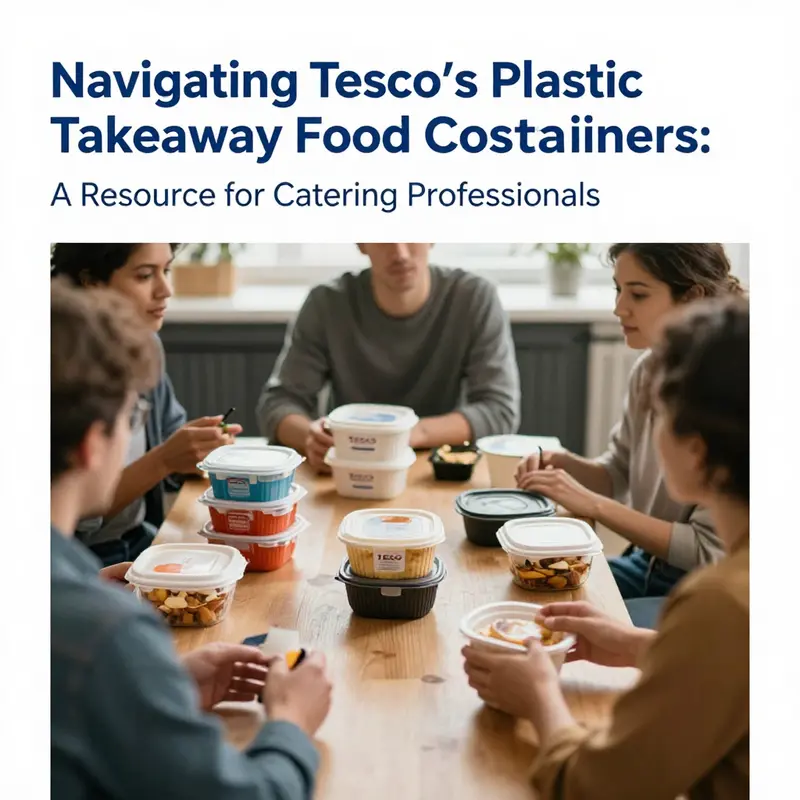
A shopper stands before a crowded shelf, and the perception of how a package is made can tilt the decision more than the actual mechanics of its materials. In the realm of plastic takeaway containers, this dynamic is not simply about the resin or the lid, but about a visual message that a product sends at the moment of choice. When a plastic container carries a visible paper component—whether a sleeve, a label with recycled-paper imagery, or a cardboard wrap—many consumers interpret the packaging as more environmentally friendly. A 2023 study found that even when the underlying material composition changes little, the mere presence of paper elements tends to lift the perceived eco-credentials of the package. The mind makes a quick heuristic: paper is recyclable, thus the whole package looks greener, simpler to recycle, and easier on the planet in the eyes of the observer. This is not merely a matter of aesthetics; it feeds expectations about disposal, recycling, and even the overall footprint of the product. The psychology at play here is subtle but potent. It shapes how people compare options on the shelf, how they talk about the brands they trust, and how they respond to new packaging formats announced by large retailers.
Designers and category managers know this. In a tight competitive landscape, packaging is not passive; it performs as a communication tool, signaling values and stewardship. The effect is often magnified when a major retailer begins to shift away from pure plastic toward a more mixed or paper-forward presentation. The industry has observed this transition across several product lines, where the same meal, same content, and similar storage performance are now wrapped in cartons, sleeves, or paper-laminate structures rather than in traditional polyethylene or PET solutions. The practical reality behind these shifts is complex. While a paper-sleeved or partially paper-wrapped container might improve public perception, the actual environmental benefit depends on life-cycle considerations—how the material is produced, how it is recycled, and what happens during cold-chain and transport. The perception of greenness must translate into real environmental gains to satisfy both policy goals and consumer expectations.
From the perspective of a large retailer undertaking a packaging overhaul, the challenge is twofold. First, there is the economic and logistical balance. Paper-based alternatives can carry higher production costs, require new supply chains, and demand changes in the logistics chain to maintain shelf life and heat resistance. Second, there is consumer practicality. Paper components need moisture resistance, heat tolerance, and reliable sealing to ensure r esilience during transit and in-store handling. These constraints often force compromises. The result can resemble a careful compromise: retain the performance of a plastic core for safety and hygiene, but wrap it in a paper-lean presentation intended to communicate responsible packaging to shoppers. The aim is not merely to reduce plastic but to recast the packaging narrative so that shoppers feel they are participating in a recycling- and waste-reduction effort with every purchase.
This narrative has entered the discourse around one of the sector’s most visible players. The retailer has signaled a broader push toward cutting plastic packaging and encouraging the use of recyclable, degradable, or reusable alternatives. The emphasis is not only on the material choice but on the entire system surrounding it—how items are displayed, how packaging is labeled for recycling, and how end users can participate in proper disposal. In practical terms, this means more packaging that can be easily separated at the consumer level, clearer recycling instructions, and a willingness to accept trade-offs in cost and performance when it serves a sustainability objective. The conversation is not simply about whether a container can hold a hot meal or resist moisture; it is about whether that container can be part of a circular economy where recovery and reuse are more than theoretical options.
Communication with shoppers also happens online and in trade commentary. Industry voices have highlighted that while changing packaging to paper-forward formats is broadly welcomed as a signal of environmental intent, it also invites scrutiny of the real-world implications. Cost increases may be passed along in various forms, including higher product prices or changes in product weight and packaging density that affect transport efficiency. There are also questions about cold-chain stability, shelf life, and consumer acceptance of new shapes or textures in packaging. A pragmatic takeaway for retailers and suppliers is that the perceived eco-advantage must be supported by demonstrable improvements in the full life cycle, not just a cosmetic shift. When shoppers see a packaging change, they will form opinions about whether the retailer truly prioritizes sustainability or merely signals it.
To illustrate how perception can be shaped by packaging cues, consider how a single retailer’s packaging redesign—emphasizing natural textures, matte finishes, and earth-toned labeling—can influence perceived value and environmental quality. The packaging can influence not only the immediate purchase decision but also post-purchase behavior, such as whether customers keep the packaging for future reuse or recycling. In this context, the design language matters: typography, color palette, and the presence or absence of recycling icons all work in concert to communicate a message about responsibility and accountability. The consumer, in turn, uses these cues to categorize the retailer’s brand in relation to sustainability benchmarks that have become central to modern shopping, particularly among urban, environmentally aware populations who rely on packaging to signal ethical commitments.
Practically speaking, shoppers are not only evaluating the package in isolation. They are sensing a broader corporate stance toward plastics, packaging waste, and waste-management infrastructure. The UK and EU policy landscapes have increasingly curtailed single-use plastics, pushing retailers to test recyclable or reusable options and to optimize packaging to minimize waste. In this pressured environment, a retailer’s packaging strategy becomes part of a larger narrative about how the business aligns with public policy and community expectations. Consumers respond to these signals in ways that can either reinforce or undermine sustainability goals. When a shopper sees a container that looks recyclable but finds it challenging to separate or recycle in their local system, confusion can emerge and undermine the intended effect. Clear labeling and consistent recycling guidance thus become essential complements to any structural packaging change.
The literature on consumer perception underscores another important nuance: the context in which packaging is encountered shapes interpretation. In a busy grocery setting, shoppers may process a quick impression rather than a detailed material audit. A paper-labeled sleeve over a plastic core can be enough to evoke a positive impression of environmental stewardship, even if the overall lifecycle cost remains uncertain. This insight has practical implications for how retailers communicate with customers. It argues for transparent labeling about material composition and end-of-life options, along with consumer education on recycling best practices. Without such guidance, perception can outpace understanding, leading to well-intentioned but misplaced optimism about sustainability outcomes. The real challenge lies in aligning perception with practice—ensuring that the packaging is not only seen as greener but truly performs through the entire disposal chain as a responsible component of the product’s life cycle.
For readers curious about the evidence base that informs these observations, consider how the literature frames consumer attitudes toward disposable plastic packaging under broader waste-management regimes. The cited research highlights the role of packaging cues in shaping environmental judgments and demonstrates how perceptions can escalate or attenuate interest in certain packaging formats. This chapter’s focus on a major retailer’s packaging strategy is thus a practical lens on how perception intersects with policy context, supply-chain decisions, and consumer behavior. It is a reminder that packaging is a systemic artifact, bridging production and disposal, marketing and ecology, design and behavior. As retailers navigate the path toward more sustainable presentation without sacrificing function, the shopper’s reading of those choices will continue to be a decisive variable in whether packaging changes translate into meaningful environmental outcomes.
Further reading on consumer attitudes toward disposable plastic packaging can be explored through the following resource that investigates public attitudes toward packaging in the context of recycling programs: https://www.ncbi.nlm.nih.gov/pmc/articles/PMC9785685/.
Internal link note: for an example of eco-friendly paper-based packaging options that align with the broader discussion of plastic avoidance and recyclability, see the discussion of disposable octagonal kraft paper packaging in this supplier showcase: disposable octagonal kraft paper packaging. This link serves as a concrete reference point for readers exploring practical packaging implementations that blend paper and plastic concepts without losing track of end-of-life considerations.
As packaging strategy continues to evolve, the question remains: how will consumer perception align with actual environmental performance? The answer depends on transparent communication, robust recycling infrastructure, and packaging designs that cohere with real-world disposal practices. When those elements come together, shoppers can both sense and believe in a sustained commitment to reducing plastic waste while preserving the convenience and safety that modern takeaway packaging must deliver.
Shaping Convenience: Market Currents and Tesco’s Plastic Takeaway Packaging in a Changing Regulatory Era
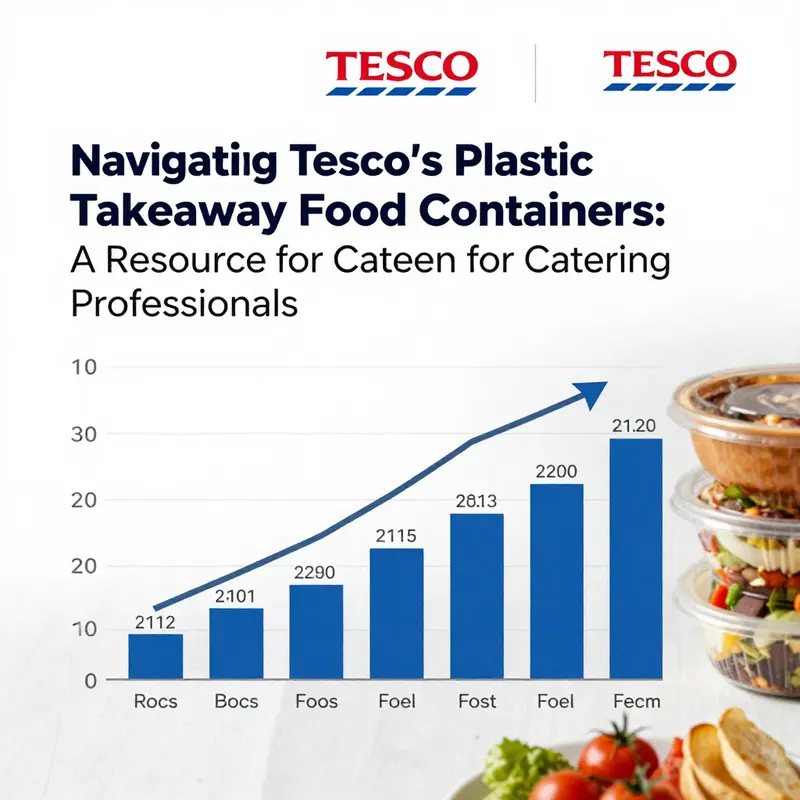
The takeaway packaging landscape in Europe is evolving at a pace that blends convenience with responsibility. The broader market for flexible plastic packaging used to transport and protect meals is projected to grow from about 60 billion USD in 2026 to roughly 68.3 billion USD by 2031, a CAGR of around 2.5%. Those figures reflect a sector that remains essential for quick service and home meal solutions, yet is increasingly shaped by shoppers who want safer, more sustainable packaging and by regulators who tighten rules on single-use plastics. In this environment, a major retailer operating in a dense, competitive market must balance speed, cost, and reputational risk with a clear eye on future policy and consumer sentiment. Tesco, as a leading grocery and convenience retailer, embodies this tension. Its packaging choices are not merely about keeping meals intact during transit; they signal a broader stance on waste, recyclability, and the ability to adapt quickly to shifting norms. The market context helps explain why Tesco and similar retailers are pursuing a multi‑layered strategy that blends traditional plastic packaging with progressive material options while leaning into design features that support safety and performance during transport. The result is a narrative of incremental change rather than a single dramatic pivot, a pattern that aligns with regulatory trajectories and the evolving demands of a diverse customer base.
What drives this nuanced stance is a combination of consumer expectations and policy dynamics. On the one hand, shoppers prize packaging that protects food, preserves warmth, and prevents leaks, ensuring a pleasant experience from shelf to plate. On the other hand, lawmakers in the UK and across the European Union are increasingly restricting single-use plastics and promoting recycling, composting, and the use of materials with recycled content. Retailers like Tesco are thus navigating a path that preserves the perceived safety and convenience of takeout while preparing for a future in which waste streams are more tightly regulated and more tightly audited. In this sense, the current market is less about choosing one path and more about stitching together a portfolio of options that can be scaled, reconfigured, and updated as rules evolve and as consumer preferences mature.
Within this framework, Tesco’s approach resembles a broader industry pattern: a shift toward sustainable materials where feasible, without sacrificing the core attributes that customers expect from takeout packaging. Suppliers and product developers are increasingly asked to deliver packaging that can withstand the stresses of real-world delivery—vacuum-packed meals, hot dishes, spontaneous detours, and occasional rough handling—while still meeting targets for recyclability or compostability. This emphasis on durability and insulation is not incidental. It reflects a practical recognition that the packaging must perform under real-world conditions, protecting both food safety and quality while reducing waste and contamination in recycling streams. There is a natural tension here between performance and end-of-life outcomes, and the most resilient strategies are those that address both ends of the lifecycle in tandem. The outcome is a packaging ecosystem that favors materials with known performance characteristics, where feasible reduced plastic content is paired with mechanisms to increase recyclability, reuse, or compostability.
Cost remains a central driver of decision-making. In a highly competitive retail environment, the material cost per unit of takeaway packaging often sits within a broad, low-to-mid cent range, while customization, branding, or adoption of greener materials can push prices upward. The general spectrum observed across the sector places standard, non‑specialized single-use packaging at the lower end, while eco-friendly or high-performance variants frequently command a premium. This dynamic matters for a retailer like Tesco, which must balance price sensitivity with long-term value, including waste reduction, supplier partnerships, and customer goodwill. The economics extend beyond the label on a box; they shape store-level assortments, supplier negotiations, and promotional calculus. If the base packaging is cheap but fragile, the cost of returns, waste, and customer dissatisfaction can erase any upfront savings. Conversely, investing in more robust designs that minimize leaks and keep meals hotter longer can support a stronger brand promise, even if unit costs are higher. The net effect is that packaging becomes a strategic lever, not merely a cost center.
Material choices are at the heart of Tesco’s strategic responses. The market has witnessed a broad move toward sustainable alternatives, including materials with recycled content as well as plant-based or biodegradable options. The challenge lies in reconciling sustainability claims with real-world end‑of‑life behavior. In some regions, industrial composting facilities are more accessible than home composting, which complicates consumer expectations about compostability. Retailers are increasingly transparent about what can be recycled and how, helping to reduce confusion at the point of disposal. In practice, Tesco and its peers are testing blends that deliver necessary barrier properties and heat resistance while enabling better outcomes for recycling streams. The goal is to minimize plastic waste and to present customers with clear guidance on disposal. For some categories, lightweight yet sturdy paper-based or pulp-based alternatives are gaining traction, offering tangible reductions in plastic usage without compromising food safety or integrity.
The packaging design imperative extends beyond materials to the architecture of the box, tray, or lid. Secure seals, leak resistance, and thermal stability are non-negotiables for a takeaway portfolio that includes hot and cold items delivered over varying distances. Packaging must withstand holding temperatures during transit, resist deformation, and survive stacking and transport without compromising the contents. Aesthetics, while important for brand differentiation, must be aligned with functionality. The most effective solutions combine intuitive tamper evidence, clear labeling, and straightforward disposal messaging, enabling customers to act on sustainability without sacrificing convenience. In this regard, the packaging strategy mirrors the broader operational challenge: deliver reliable, high-quality meals while aligning with a policy environment that rewards recyclability and waste reduction. The result is a portfolio of packaging options that can be adapted to different product lines, store formats, and geographic markets while preserving a consistent standard of safety and performance.
The retailer–supplier dynamic is another critical layer. Private-label packaging programs, supplier diversity, and the ability to negotiate volume, lead times, and standards are decisive in determining what ends up on shelves and in takeaway bags. The conversation often centers on how to balance standardization with customization—how to harness economies of scale while allowing for market-specific adaptations in materials, sizes, and closure systems. This balance can influence the speed at which new materials and designs are brought to market, a factor that matters as regulatory timelines tighten and as consumer preferences shift toward greater sustainability. The implications are clear: the most successful packaging strategies are those that can be rolled out quickly across a broad footprint, while still accommodating local recycling infrastructure and consumer expectations.
As looped improvements accumulate, retailers are also exploring formats that extend beyond single-use disposability. Reuse schemes, take-back programs, and returnable packaging concepts are increasingly discussed in boardrooms and supplier briefings as long-term strategies. While widespread adoption remains a work in progress, the industry’s trajectory is toward smarter design that reduces waste, improves end-of-life outcomes, and preserves the essentials of convenience. In practice, this often means selecting materials and designs that minimize total environmental impact while delivering tangible value in the hands of customers. A practical takeaway from this evolving landscape is the growing relevance of non-plastic or reduced-plastic formats, not as a marketing ploy but as a strategic response to policy signals, consumer attitudes, and the realities of waste management. For readers who want to explore non-plastic packaging options further, a practical example is the kraft paper packaging option catalogued by a packaging solutions provider, which shows how non-plastic formats can align with retail packaging ambitions and customer expectations. kraft paper packaging options
In the broader market context, the evolution of takeout packaging is inseparable from regulatory and environmental considerations. Retailers who succeed in this space will be those who can articulate a clear value proposition: strong performance during transit, transparent labeling, achievable disposal pathways, and a credible commitment to waste reduction. The industry’s growth prospects remain solid, driven by convenience and safety, but the pace of change is tempered by cost realities and the practicality of supply chains. For those seeking a wider, external lens on the market dynamics, industry analyses emphasize how flexible plastic packaging remains central to the transportation and protection of meals, even as players search for greener solutions. External context helps frame Tesco’s ongoing journey as part of a larger transition rather than a one-off strategic adjustment. External resource: https://www.grandviewresearch.com/industry-analysis/flexible-plastic-packaging-market
Final thoughts
As the food service industry continues to evolve, the role of packaging becomes increasingly significant. Tesco’s plastic takeaway containers offer practical solutions for caterers, restaurants, and food vendors. Understanding the regulatory landscape, embracing sustainable practices, and responding to consumer expectations can enable food businesses to thrive while minimizing their environmental impact. Ultimately, the right choice in packaging may not only enhance customer satisfaction but also strengthen a brand’s initiative towards sustainability.