
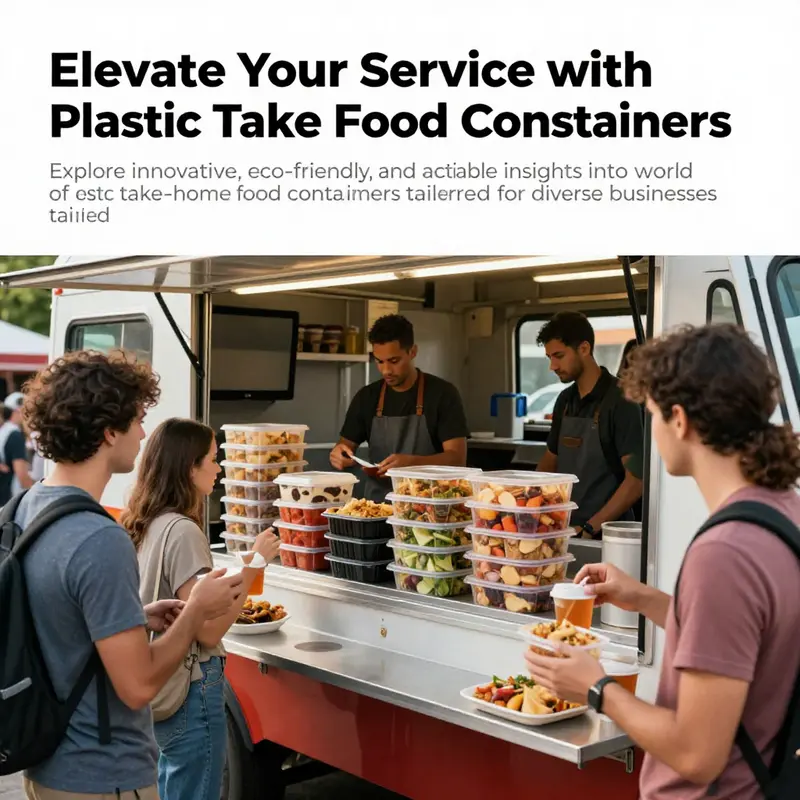
In the catering industry, presenting food in an appealing manner while ensuring its safe transport is crucial. Plastic take-home food containers are not just convenient; they are a key part of operational success for bubble tea shops, restaurants, food trucks, and catering services. These versatile containers facilitate meal prep and provide a hygienic way to serve customers, enhancing their overall experience. In this exploration, we’ll delve into the innovations transforming plastic take-home food containers, address significant environmental considerations, and highlight the latest market trends that can shape your procurement strategies and elevate your service offerings.
Beyond the Seal: Innovations in Plastic Take-Home Containers that Redefine Convenience, Safety, and Sustainability
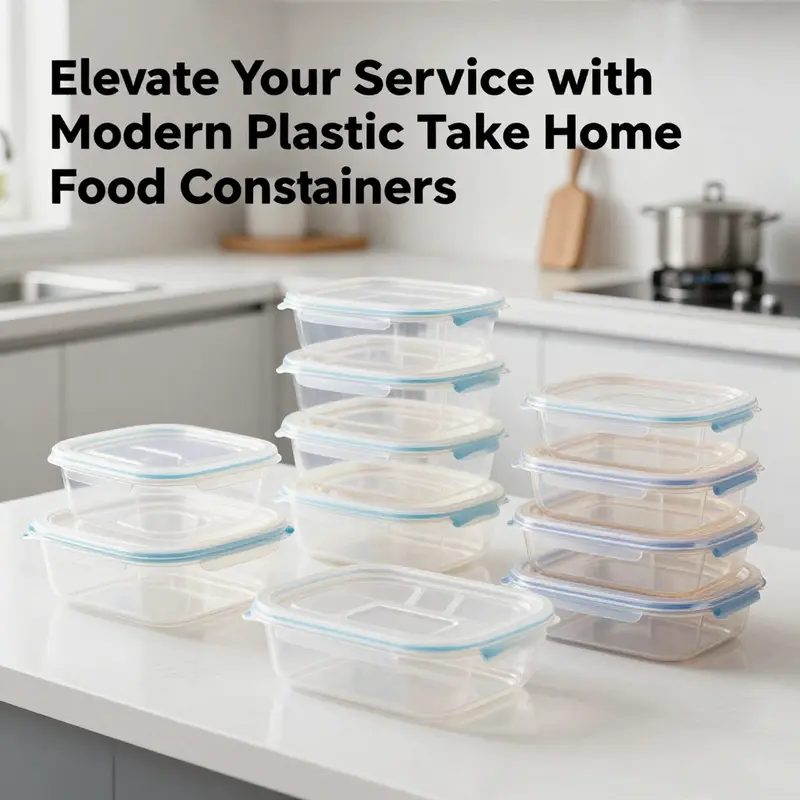
Plastic take-home containers have long stood as silent workhorses of modern eating culture. They carry meals from kitchens to offices, from homes to park benches, and back again through the circular rhythms of daily life. The chapter that follows treats these containers not as mere vessels but as dynamic systems shaped by material science, design thinking, consumer expectations, and regulatory landscapes. It is a story of how a product often seen as utilitarian can evolve to meet the twin demands of performance and responsibility without surrendering the traits that made it indispensable in the first place: durability, clarity, and practical ease of use. The innovations being pursued today arise from a precise balancing act. On one side is function—how the container holds up during transit, how well it preserves food, how reliably it can be reheated, and how easily it can be cleaned and recycled. On the other side is responsibility—how to reduce waste, minimize environmental impact, and align with evolving guidelines for food contact materials. The tension between these forces is not a contention but a catalyst, pushing designers, manufacturers, and users toward smarter choices that can be adapted across a broad spectrum of meals, from simple salads to more complex multi-component dishes. In practice, this means containers that are not only tough enough to endure the bumps of a commute but also intelligent enough to signal safe storage conditions, and transparent enough to help cooks and eaters alike keep track of ingredients, portions, and freshness without unnecessary guesswork. The result is a product category that feels more precise, more trustworthy, and more aligned with a future that prizes reuse and responsible waste management as much as it values convenience. The core of this transformation can be traced to three converging strands: material innovation, design refinement, and information-enabled features that connect users with essential food-safety guidance in real time. Each strand helps solve a set of persistent problems—leaks and spills in transit, uneven reheating, contamination risks during stacking or transport, and the nagging challenge of waste management in kitchens that serve thousands of meals every day. Although the discussion centers on plastic take-home containers, the broader arc touches the entire ecosystem of takeaway packaging, including paper-based and composite options, all of which compete to deliver the same promise: a reliable, safe, and sensible solution for moving meals from there to here and back again. The practical benefits of improved sealing, for example, are not merely about keeping sauces in place; they translate into real-world reductions in food waste and spoilage. A better seal preserves flavor and texture, but it also keeps oils, dressings, and moisture from migrating between compartments. In multi-compartment designs, this separation is crucial because it helps maintain the integrity of each component—protein, starch, vegetables, or sauces—so that reheating yields a meal that tastes like it was prepared as a single plate rather than assembled in a rush at the office. In a world where microwaves are common in workplace kitchens and homes, materials that can withstand repeated heating cycles without degrading become essential. Polypropylene, a staple of many containers, offers a balance of heat resistance and chemical stability that makes it a practical baseline. Yet even with a trusted workhorse like PP, ongoing research seeks to push performance further—improving rigidity under load, reducing warping, and extending clarity of lids that enable quick content identification without opening the container and compromising temperature or hygiene. Transparency in lids is not merely a convenience; it reduces the cognitive load of meal planning, cutting down on unnecessary opening and exposure. In busy households, seeing what is inside a box without removing the lid can save time, prevent cross-contamination, and help families coordinate meals more efficiently. And when a user is managing multiple meals in a crowded refrigerator, clarity becomes a small but meaningful contributor to reducing food waste. The design dialogue extends beyond the shell of the container to the interactions around it—the way lids snap, the strength of the seals, and the ease with which shelf space is utilized. Modern take-home solutions often embrace modularity, allowing stackable shapes to nest securely while maintaining a seal that resists leaks during transport. Shape, size, and compartment configuration are not merely aesthetic choices; they are functional decisions that dictate how well a meal can be portioned, stored, and subsequently reheated. In parallel with these mechanical refinements, there is a growing emphasis on sustainability that does not simply trading off functionality for eco-credentials. Biodegradable materials and compostable technology are being explored for certain lines of containers, offering a more sustainable end-of-life option when disposal occurs in appropriate facilities. These innovations are designed to degrade under composting conditions, thereby reducing persistent waste. This approach, however, must align with the real-world behavior of consumers—whether they have access to composting streams or proper waste separation infrastructure. The industry recognizes that environmental progress is most meaningful when it integrates with existing waste-management systems and consumer habits. Biodegradability is therefore not pitched as a universal replacement for recycling; rather, it is another instrument in a layered strategy. The nuanced truth is that not all environments are equally suited to breakdown processes, and this has guided manufacturers to design materials that are both high-performance and recyclable, where feasible. The conversation about recyclability extends to the entire value chain, from raw material selection to end-of-life recovery. Recyclable thermoplastics benefit from well-established logistics and infrastructure, allowing recovered material to re-enter production cycles rather than ending up in landfills. In facilities with advanced sorting and processing capabilities, recyclability becomes a clear pathway to reducing environmental impact over the long term. This is where the conversation about lifecycle thinking becomes essential. Take-home containers are not isolated decisions; they interact with the broader patterns of consumer behavior, restaurant operations, and municipal waste programs. The industry increasingly voices a pragmatic optimism: innovations that enhance safety, preserve food quality, and extend life cycles can coexist with responsible disposal. To grasp how these ideas cohere in real-world settings, it helps to consider the practical realities of today’s market. Wholesale buyers face pricing pressures and procurement cycles that reward performance, durability, and predictability. In many cases, the economics of scale make higher-utility designs more accessible to large food-service providers, enabling them to standardize containers across menus and service formats without sacrificing quality. Slightly more expensive components or more complex seals can translate into lower spoilage, fewer mishaps during transit, and improved customer satisfaction—benefits that, when tallied, justify the investment. At the same time, small-scale operations, meal-prep services, and households that prioritize sustainability are seeking options that align with micro-level budgets and values. The market’s responsiveness to these demands has spurred a spectrum of offerings—from simpler, robust designs that emphasize core performance to more sophisticated lines that integrate with smart devices or labeling systems. In practical terms, this means a container may come with a temperature-sensitive indicator that changes color if it has been exposed to heat beyond a safe threshold. It could also feature a QR code on a lid or label that, when scanned, presents the user with storage recommendations, reheating guidelines, and best-by information. These features are not merely novel; they support responsible consumption by reducing improper storage and overheating, which can compromise both safety and taste. They also enable operators to demonstrate a commitment to food safety and quality, an increasingly important differentiator in a crowded marketplace. The design and material choices reflect a graded approach to the many contexts in which takeaway packaging operates. A container destined for a high-volume restaurant-to-go workflow may prioritize leak resistance and easy stacking, while a container aimed at home meal-prep audiences might emphasize compartmentalization and microwave safety. The objective is not a single “one size fits all” solution but an ecosystem of compatible formats that together cover a broad range of meals and service styles. It is in this ecosystem that one sees the broader implications of innovations: fewer product failures, clearer communication of storage instructions, and the emergence of packaging that helps orchestrate a smoother, safer dining experience for more people. The ongoing evolution is also a narrative about responsibility and transparency. As consumer awareness grows, so too does the demand for packaging that aligns with shared values—recyclability, reduced single-use waste, and materials chosen with human health as a priority. Regulatory standards governing materials in contact with food, migration limits, and reporting requirements continue to shape how containers are formulated and marketed. In this milieu, innovation is often the result of a careful negotiation among performance, safety, and environmental stewardship rather than a simple race to the most novel feature. The market insights emerging from industry platforms underscore this trend. They note that modern plastic containers are designed not only for convenience but also to meet evolving consumer demands for eco-conscious packaging solutions. The emphasis on sustainability does not downgrade the importance of reliability; rather, it elevates the standard for what constitutes a responsible choice in meal storage and transport. The practical takeaway for practitioners—whether chefs, caterers, or home cooks—is that innovation in this space yields benefits across several dimensions: reduced waste through better portion control and longer shelf life, improved food safety through clearer labeling and temperature indicators, and enhanced user satisfaction through more intuitive design. For researchers and designers, the clear lesson is that breakthroughs will most likely emerge at the intersection of material science and system-level thinking. Advances in biodegradable formulations must be matched with stable processing, predictable performance under heat and pressure, and compatible recycling pathways. Sealing mechanisms must evolve to deliver both reliability and ease of use, without introducing new hazards through sealants or adhesives that could migrate into food. The user experience cannot be sacrificed in pursuit of engineering elegance; rather, it must be uplifted by it. When an industry moves toward greater sustainability, it benefits from a holistic approach that considers the entire life cycle of a product—from raw materials to end-of-life recovery. In practice, this means designers working with recyclers, waste-management partners, and even policymakers to ensure that new materials can be monetized through recovery streams and that consumer education accompanies shifts in packaging composition. Such alignment reduces the friction often seen when new packaging enters the market and helps realize the intended environmental benefits. The conversation around innovations in plastic take-home containers therefore rests on a simple, powerful premise: performance and responsibility are not opposing forces but complementary goals. The most successful innovations are those that make the everyday act of taking a meal home safer, more predictable, and more considerate of the world that recipients will inherit. The future will likely bring more intelligent labeling, more precise heat-tolerance data, and more options that blend recyclable, reusable, and biodegradable pathways. It is a future in which the container itself becomes a reliable partner in the kitchen—one that speaks to the cook, not just the consumer, and that quietly contributes to a more sustainable practice of eating on the go. As these developments unfold, it becomes increasingly important to acknowledge the broader ecosystem that supports them. Restaurant platforms and supply networks play a critical role in disseminating new designs, communicating performance expectations, and lowering barriers to adoption for food-service operations of different scales. In this way, innovations can travel from concept to common use, crossing borders between industries and geographies, and expanding the choices available to anyone who needs to store, transport, and reheat meals with confidence and care. For readers seeking further context on the practical and strategic dimensions of these trends, a thorough synthesis of industry perspectives is available through industry-focused literature and expert roundups. External resources such as the Restaurant Supply Blog offer deeper dives into how contemporary containers are evolving to meet shifting consumer demands and regulatory frameworks. Restaurant Supply Blog This chapter’s exploration emphasizes that the true value of innovation lies not in a single breakthrough but in a coherent, adaptable system that supports safe, efficient, and sustainable takeaway experiences. To illustrate one facet of this broader movement toward eco-conscious alternatives, consider how the industry is experimenting with compostable and recyclable options that align with real-world waste streams. For example, biodegradable eco-friendly Kraft paper bowls represent a different path for consumption contexts where paper-based packaging can be accepted within the local waste ecosystem. While not a wholesale replacement for plastic in every situation, such options demonstrate that packaging ecosystems can be diversified without sacrificing user convenience or safety. This diversification can be particularly meaningful for venues seeking to differentiate themselves through clear commitments to environmental stewardship while maintaining the high standards of reliability that customers expect. In sum, the innovations described here are not abstract exercises in material science. They are practical responses to the needs of cooks, caterers, and families who rely on containers to manage meals with care and confidence. The next chapters will build on this foundation by exploring how organizations adopt these innovations in real-world settings, how consumer education threads through product design, and how policy developments might steer future research toward ever-safer and more sustainable packaging solutions.
Rethinking the Plastic Take-Home Container: Environmental Realities, Reuse, and the Road to Smarter Packaging
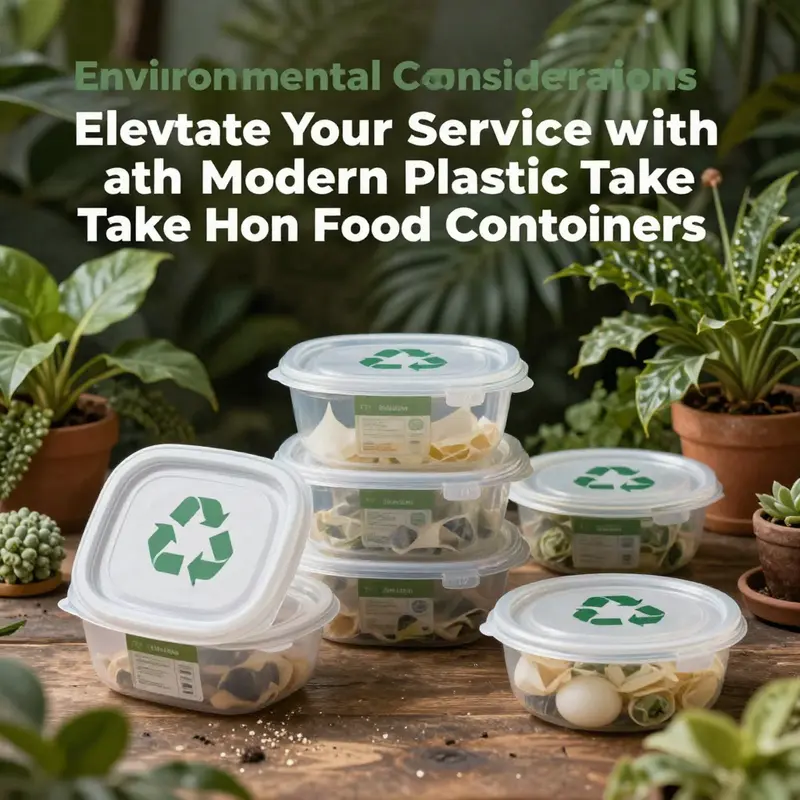
Plastic take-home food containers sit at the intersection of convenience, safety, and consumer habit, shaping how families stock, transport, and reheat meals, and they do so with an efficiency that often hides a more complex environmental footprint. The everyday practicality of these containers—transparent lids that reveal contents, secure seals that prevent leaks, and the resilience to withstand microwave reheating and freezer storage—has driven their ubiquity in restaurants, catering services, mass meal-prep operations, and households. Yet when the lid is closed, a broader system opens up: the lifecycle of the plastic, the fate of the materials after a single use or a handful of reuses, and the cascading effects that arrive long after a meal has been eaten. To understand what these containers mean for the environment, it helps to trace the lifecycle, acknowledge the real performance of recycling systems, and consider how design choices influence both waste streams and food safety. Polypropylene, the workhorse material behind many take-home containers, offers a mix of toughness and temperature tolerance that supports reuse and reheat, but its end-of-life story is not fully within the control of producers or consumers. The very features that enable practical use—rigidity, clarity in the lid, a gas- and liquid-tight seal—also contribute to a packaging system that consumers entrust with hot soups, acidic sauces, and multi-item meals. In this sense, the containers are not merely passive vessels; they participate in an infrastructure that includes supply chains, municipal recycling streams, and household habits about cleaning, sorting, and discarding. The environmental considerations, therefore, demand a holistic look that moves beyond surface assessments of convenience and toward a systems view of reuse, durability, and waste management.
A central environmental concern is recyclability. Across many municipal and national systems, plastic waste exhibits a surprisingly low recycling rate, with research indicating only about 9% of plastic waste is recycled. The majority ends up landfilled—roughly 50%—while a notable portion is mismanaged, at about 20%, which leads to leakage into the environment and broader pollution challenges. These figures illuminate the challenge of turning everyday packaging into a circular resource, particularly when food residues, toppings, sauces, or labels contaminate waste streams. The complexity of plastic types, the presence of additives, and the prevalence of multilayer or coated structures can hinder recovery, even when the material could in principle be reprocessed. Contamination from food waste further complicates sorting and processing, reducing the likelihood that containers can be effectively recovered and reused or recycled. In practical terms, this means that even though a container might be made of a material believed to be recyclable, the practical reality of waste management can undermine that potential. The result is a paradox: the same containers that enable safe, tidy meal transport can, in aggregate, contribute to significant environmental harm when disposal and recovery do not align with ideal circular economy models. The numbers are not merely abstract statistics; they translate into landscapes of polluted soils, overwhelmed recycling facilities, and the persistence of plastics in ecosystems for decades or centuries.
Even when containers are discarded responsibly, their environmental footprint is shaped by what happens after they leave the kitchen. Plastic can persist for a very long time in the environment, slowly degrading over an estimated 100 to 1,000 years depending on exposure, with fragmentation into microplastics that permeate soils, waterways, and even food webs. This slow breakdown becomes a precautionary tale: small fragments can travel far, accumulate in sediments, and become part of the matrix of microplastic pollution. The smaller the particles, the more insidious their potential to be ingested by organisms, and by extension, possibly by humans through the food chain. Microplastics smaller than about 3 micrometers have raised particular concern because of their ability to pass through natural protective barriers and to interact with biological systems in ways that are not yet fully understood. The potential for exposure is not just a distant environmental risk; it translates into public health considerations that warrant careful attention as societies continue to rely on disposable plastics for daily meals and on-desk dining. In this context, debates about the material type alone—PP versus PS or bioplastics—must be paired with questions about how packaging is used, how waste is collected, and how thoroughly containers are cleaned and sorted for recycling.
A growing thread in the environmental assessment of plastic take-home containers is the tension between single-use convenience and the benefits of reuse. While single-use packaging often draws criticism for contributing to litter and waste streams, reuse strategies can offer meaningful environmental gains if implemented with robust systems for cleaning, collection, and redistribution. The key insight from lifecycle assessments is that reuse only delivers environmental benefits when it reduces overall resource use and emissions across the product’s lifetime. In practice, this means that a durable container is advantageous only if it is actually used many times, if it is kept clean enough to avoid contamination that complicates recycling streams, and if the logistics of returning, cleaning, and redistributing the container are tightly managed within a well-coordinated system. When these conditions are met, reusable plastic containers can outperform single-use alternatives such as certain polystyrene or paper-based systems, particularly when the latter generate more waste per unit of food delivered and require frequent replacement. In other words, the environmental verdict hinges on behavior and process as much as on material choice. The takeaway is not a simple preference for one material over another; it is a call to design, manage, and use packaging in ways that maximize the value of every reuse cycle and minimize the energy and emissions tied to cleaning, transporting, and finally disposing of the container.
From a product-design perspective, the path to lower environmental impact involves reducing weight where possible, improving durability, and ensuring compatibility with recycling streams. Lighter containers consume less energy in production and transport, which translates into reduced greenhouse gas emissions per meal. Yet weight reduction should not come at the expense of performance; a container must protect food integrity, prevent leaks, and withstand the rigors of microwaving, freezing, or dishwasher cycles as needed. The tension between lightening the footprint and maintaining performance calls for smart material choices and thoughtful design features. For instance, avoiding multilayer laminates or coatings that complicate recycling can improve end-of-life outcomes, while still delivering the necessary barrier properties for food safety and shelf life. The broader sustainability conversation thus invites manufacturers to innovate along the lines of material simplicity, standardized components, and modular designs that facilitate sorting and processing in recycling facilities. The aim is to align the practical attributes of containers with the realities of post-consumer waste management, so that the packaging system can contribute to waste reduction rather than becoming a hurdle within the recycling stream.
In this context, consumer habits and municipal policies exert a powerful influence on environmental outcomes. Food safety regulators enforce material composition and performance standards to ensure that food contact materials do not leach harmful substances, especially under heating conditions. These regulatory safeguards, while essential for protecting public health, can also constrain the range of practical options available to food service operators and households. The challenge is to balance safety with sustainability: to permit materials that are safe and effective while encouraging end-of-life pathways that maximize recovery. Public and private sector actors can work together to create incentives for the adoption of reusable systems and for the adoption of packaging designs that simplify recycling. This might include standardized container shapes, clear labeling to support sorting, and the development of reliable collection networks that reduce the risk of contamination and loss to mismanagement. When packaging is designed with end-of-life in mind, facilities can process it more efficiently, which in turn improves recycling rates and reduces environmental leakage.
The practical implication for businesses that rely on take-home containers is to adopt a systems mindset: to view packaging as an integral component of the meal experience, not as an add-on. A business can reduce its environmental footprint by selecting containers with simpler material constructions, promoting reuse programs among customers, and implementing take-back or curbside recycling partnerships that ensure containers are collected and reprocessed rather than left to accumulate as litter. Moreover, the environmental calculus can be influenced by alternatives that blend user-friendly design with sustainability goals. For example, some packaging options foreground eco-friendly, recyclable pulp-based designs that maintain the convenience of take-away meals while offering a more straightforward end-of-life option compared to multi-material plastic systems. Such alternatives can be positioned as part of a broader strategy to reduce plastic waste without compromising food safety, shelf stability, or user experience. A practical pathway for those who want to explore this direction is to consider packaging options that are explicitly designed for recycling or composting and to assess whether the entire lifecycle—from production to end-of-life—aligns with local waste-management capabilities. In this spirit, a move toward alternative materials or hybrid designs that simplify recycling can help shift the narrative from plastic as a catch-all solution to packaging as a component of sustainable food systems. For readers seeking concrete alternatives, one example of a forward-looking option is the eco-friendly recyclable pulp cup holder, which demonstrates how packaging can support reuse and recycling in a cohesive way. eco-friendly recyclable pulp cup holder.
Ultimately, the environmental story of plastic take-home containers is not doom-laden or purely celebratory. It is a nuanced account of how materials, design, consumer behavior, and waste-management infrastructures interact to shape outcomes. The key takeaway is not to vilify plastic per se but to recognize that environmental impact is shaped by usage patterns, the efficiency of the recycling system, and the degree to which packaging helps or hinders food preservation and waste reduction. If a plastic container is well-designed for durability, properly cleaned, and repeatedly reused within a well-organized system, its environmental footprint can be lower than that of less durable single-use options. Conversely, if reuse is sporadic, cleaning is inconsistent, and recycling streams are contaminated or undersupported, the same container can contribute disproportionately to waste and pollution. A pragmatic way forward is to fuse safety, convenience, and sustainability through design and policy that encourage reuse, improve recyclability, and reduce packaging weight where possible. As consumers, chefs, and facility managers become more attuned to the full lifecycle of the packaging they rely on, they can demand solutions that marry performance with responsibility, choosing materials and programs that align with local capabilities and are scalable across the supply chain. The goal is a packaging ecosystem that preserves the integrity of meals while reducing environmental harm, a goal that requires collaboration across manufacturers, waste managers, and policymakers and a shared commitment to continuous improvement in both design and behavior. For those seeking broader evidence about how such systems perform in practice, the ScienceDirect analysis provides a comprehensive view of the trade-offs involved and the potential pathways toward more sustainable packaging. See https://www.sciencedirect.com/science/article/pii/S0959652618312375 for further reading about lifecycle considerations and the environmental footprint of packaging choices.
Beyond Convenience: Sustainability, Performance, and Brand Identity Shaping Plastic Take-Home Containers
The modern take-home food experience has evolved from a simple, practical solution for transporting meals to a strategic intersection of convenience, sustainability, and brand storytelling. In kitchens, cafeterias, and home pantries, plastic take-home containers are no longer assessed only by their ability to hold, protect, and rehear food. They are evaluated against a broader set of criteria that includes environmental impact, end-of-life pathways, and how well they reinforce a restaurant’s or meal service’s identity. The market narrative now reads as a convergence of engineering, ethics, and consumer empathy, where the most successful products must perform reliably while aligning with a circular economy and a transparent supply chain. Within this landscape, the containers themselves become a material expression of values as much as they are tools for daily routines. A single clamshell, a multi-compartment tub, or a stackable lid can signal a commitment to durability, to waste reduction, or to brand integrity, depending on how the design is conceived and communicated.
The shift is visible in materials strategy. For decades, polypropylene (PP) dominated the take-home category for its balance of heat resistance, light weight, and cost efficiency. Yet the conversation around packaging has broadened toward materials that can be recovered, reused, or composted with minimal environmental downside. Biobased options, such as polylactic acid (PLA), derive from renewable resources and are often pitched as compostable under industrial conditions. While PLA and similar polymers offer tempting sustainability narratives, their real-world performance depends on the recycling and waste management infrastructure that surrounds them. In practice, industry players are increasingly integrating recycled content—rPET and rPP—in new designs, pursuing closed-loop systems where containers, once emptied at the consumer level, are collected, processed, and transformed into usable feedstock again. This approach is not just about reducing virgin material input; it is a deliberate step toward circularity, where the material’s life cycle becomes traceable and largely self-contained within a brand’s ecosystem.
To the consumer, the promise of sustainability often translates into tangible features. Modern take-home containers emphasize robust leak-proof seals, which are essential when sauces, soups, or gravies are included in a meal kit. The ability to withstand microwave and dishwasher cycles without warping or degrading is frequently tested under real-world conditions, ensuring that reheating at home or in the office remains safe and convenient. Equally important is stackability and space efficiency. In households and kitchen pantries, where space is at a premium, containers that nest neatly save room and reduce clutter. In commercial settings, where the throughput of meals matters, stackability translates into faster service and better inventory management. The design choices—whether a lid design that clicks into place securely or a container with reinforced corners—become a form of performance engineering aimed at reliability across thousands of cycles. The result is a product category that looks straightforward on the surface yet embodies a sophisticated balance of material science, environmental responsibility, and user-centered design.
Customization has moved beyond color and size to include branding and functionality that can differentiate a provider in a crowded market. For many food-service operators, the container is part of the brand’s visible language. Custom printing, shapes, and even specialized compartment layouts can reinforce a business’s identity and help customers recognize their meals at a glance. In some niches, the packaging itself becomes a touchpoint for digital engagement: QR codes or scannable markers linked to digital menus, nutritional information, or loyalty programs can be embedded on the lid or exterior surface. While these smart features are still a niche, they illustrate how packaging can extend the consumer experience beyond the food, turning a container into a portable piece of brand architecture. Within this trend, the material choice—PP, recycled content, or compostable alternatives—must harmonize with printability, surface finish, and the durability required for repeated handling during a busy service period.
The multi-compartment designs that have become common in meal-prep and deli contexts illustrate a practical convergence of utility and consumer expectations. Separate compartments keep proteins, grains, vegetables, and sauces distinct, preserving texture and flavor while reducing the chance of cross-contamination. This organizational function is not merely about convenience; it also supports portion control and nutritional transparency, which are increasingly important to health-conscious consumers and institutions alike. When combined with microwavable safety and leak-resistance, multi-compartment containers deliver a performance envelope that aligns with contemporary dining norms: meals that can be prepared in advance, stored, transported, and reheated without compromising quality.
From a regulatory standpoint, the standards that govern food-contact materials remain central to product design. Containers must meet material composition and performance criteria ensuring no harmful substances migrate into food, especially when heated. The testing regimes—encompassing heat resistance, chemical stability, and structural integrity under expected conditions—serve as the quiet backbone of consumer confidence. The regulatory framework also influences material choices. For example, when a brand emphasizes recyclability or compostability, it must ensure that the end-of-life options are genuinely viable within its regional waste-management network. The gap between a sustainability claim and real-world outcomes has become a focal point for consumer scrutiny and investor diligence, prompting manufacturers to be more transparent about the lifecycle of their packaging and the actual performance of their recycling streams.
As the conversation broadens to include environmental stewardship and circularity, the market is also responding to consumer demand for authentic environmental responsibility. The shift toward recycled content and closed-loop systems is not just a moral stance; it is a strategic maneuver to differentiate products in a market where raw material costs can be volatile and where consumer loyalty hinges on credible sustainability commitments. Brands that invest in traceability, clear labeling for recyclability, and verified claims about recycled content tend to build stronger trust and repeat business. The industry’s trajectory is toward packaging that not only protects and transports food but also communicates a credible commitment to waste reduction and resource stewardship.
Market dynamics reflect this evolution in measurable ways. Market researchers have projected robust growth across the broader plastic container category, with the global plastic container market anticipated to expand substantially in the next decade, driven by demand in food packaging, among other applications. The forecast adds context to the strategic significance of plastic take-home containers in the broader packaging ecosystem. The numbers underscore not only continued demand for convenient, reliable packaging but also the opportunity—and the challenge—of integrating sustainability across the value chain. In this environment, companies that can harmonize performance with responsible material choices and transparent end-of-life pathways are well positioned to capture a larger share of a dynamic, evolving market. This is not merely a tale of growth; it is a narrative about responsible scale, where efficiency, brand value, and environmental accountability reinforce one another.
The affordability and scalability of production remain critical. For bulk buyers, wholesale pricing often improves dramatically with volume, a factor that influences procurement strategies across large operations, from restaurants to catering services to meal-prep businesses. The ability to secure favorable unit costs as order sizes increase can drive adoption of standardized packaging solutions across menus and services. Yet price is only one side of the equation. The total cost of ownership—considering durability, reusability, and end-of-life handling—often proves decisive in long-term planning. In some contexts, brands are exploring reusable designs and rental models that align more closely with circular economy principles, further expanding the strategic dimension of container selection beyond mere per-unit cost. In practice, successful decisions hinge on a nuanced assessment of product performance, material sustainability, and the operational realities of the customer base.
The trend toward customization and branding dovetails with the broader push for smarter, more connected packaging. Smart features like QR codes linking to digital menus or nutrition information can turn a simple container into a gateway for consumer engagement. This capability supports transparency, enabling brands to communicate allergen information, sourcing stories, or sustainability metrics directly to the consumer. In a market where trust is earned through consistent performance and credible communication, packaging that supports such storytelling can become a differentiator. While the core function remains to protect food and prevent leaks, the container now also carries a narrative payload—one that reinforces a brand’s values and invites customers to participate in a larger conversation about food, waste, and responsibility.
In summary, the market trajectory for plastic take-home containers reflects a broader transformation: from a single-use convenience product to a multi-purpose, brand-enhancing, life-cycle-conscious solution. The industry is learning to balance the imperative of durability and practicality with the equally important goals of recyclability, reusability, and responsible resource use. This balance is not purely tactical; it is strategic, shaping product development, manufacturing investments, and marketing narratives alike. As manufacturers refine materials, streamline production, and expand customization, the containers themselves become instruments of environmental stewardship and brand integrity. For those navigating this space, the key takeaway is clarity: deliver performance that consumers can trust, support that performance with transparent, credible sustainability claims, and offer packaging solutions that fit within a real, accessible waste-management ecosystem. In doing so, plastic take-home containers will continue to fulfill their role in daily life while contributing to a more responsible, circular packaging landscape.
For a concrete example of how packaging design can reflect brand identity and practical needs, see this octagonal kraft paper bowl: octagonal kraft paper bowl. This reference illustrates how even a single vessel type can communicate a brand’s commitment to sustainability and practical functionality, while also hinting at the broader design possibilities that arise when form and function are harmonized. As the industry advances, the interplay of material science, consumer expectations, and corporate accountability will continue to shape a smarter, more sustainable take-home packaging ecosystem.
External resource for broader industry context: https://www.fortunebusinessinsights.com/industry-reports/plastic-packaging-market
Final thoughts
Plastic take-home food containers are more than mere storage solutions; they embody innovation, sustainability, and current market practices tailored for businesses in the food service industry. As bubble tea shops, restaurants, food trucks, and catering services adapt to evolving customer demands and regulatory standards, selecting the right type of container can significantly enhance meal appeal, reduce waste, and meet contemporary sustainability standards. By staying informed of innovations and environmental considerations, businesses can not only elevate their offerings but also contribute positively to a healthier planet.