
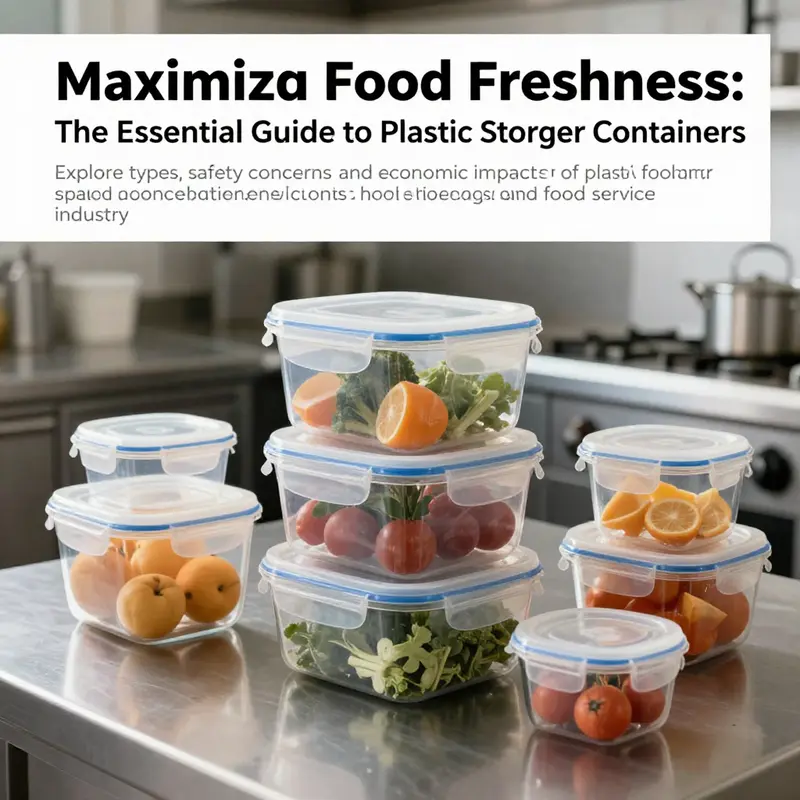
Plastic storage containers for food play a crucial role in maintaining the quality and safety of food products, especially in bustling environments like bubble tea shops, restaurants, food trucks, and catering services. Their durability, lightweight nature, and versatility make them a staple choice for storing and transporting food items. This guide aims to delve into the different types of plastic storage containers available, address the significant safety concerns regarding degradation and chemical leaching, and explore the economic impact and environmental considerations associated with their use. By understanding these key areas, beverage chains and food service providers can make informed decisions that enhance efficiency and safety in their operations.
null
null
Between Convenience and Caution: Understanding Degradation and Leaching in Plastic Food Storage Containers
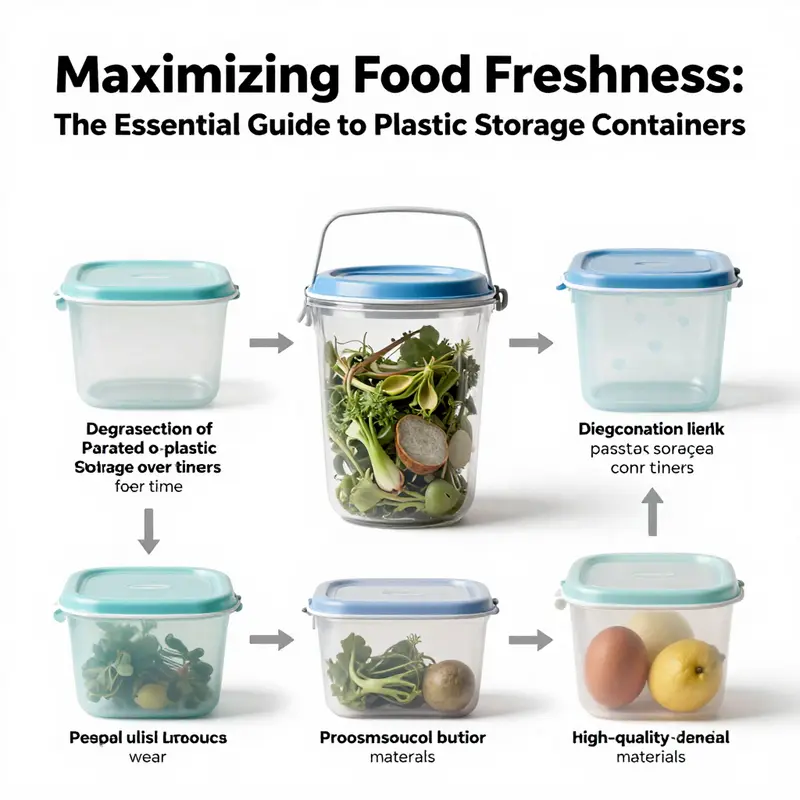
Plastic storage containers for food have become almost invisible in everyday life, slipping into the background as we rush to store leftovers, pack lunches, or organize a busy pantry. Yet the ease they provide comes with safety questions that aren’t always obvious until a container looks worn or a label promises more than it can guarantee. The same traits that make plastics attractive for food storage—lightness, affordability, and resilience—also create concerns about leaching and degradation. When heat, friction, or contact with acidic or fatty foods is added to the mix, the plastics that seemed inert can begin to release substances into the foods they hold. This isn’t just theoretical: it sits at the intersection of consumer behavior, product design, and public health, and it invites a careful look at how containers age, how materials are formulated, and what steps people can take to reduce risk without sacrificing convenience.
To understand the safety landscape, it helps to know what these containers are made from and how they are used. Most home-grade options are commonly manufactured from polymers such as polypropylene (PP) and high-density polyethylene (HDPE). These materials are chosen for chemical resistance, relatively high melting points, and stability under typical refrigerator and pantry conditions. In commercial settings, other plastics such as PET, polystyrene (PS), and various blends are used, each selected for performance traits like clarity, rigidity, or moisture barriers. The appeal is convenience: containers fit standard shapes, stack neatly, and tight lids help preserve freshness. But the same properties that support usability can complicate safety.
Thermal stress from heating or hot storage can initiate subtle changes in polymer chains. Over time, these changes may increase the likelihood that additives or residual monomers migrate into food. The risk is not uniform: it depends on the chemical makeup of the plastic, how long the food stays in contact, the temperatures involved, and the foods themselves. Acidic, fatty, or spicy ingredients can accelerate migration, and repeated heating can intensify it. Even labels like microwave-safe reflect performance under specific test conditions, not a guarantee of perpetual safety.
Degradation of containers is another key concern. Reuse and cleaning can create micro-scratches and abrasions that increase surface area and provide sites where residues accumulate. Microplastics can shed into foods through such wear, a topic that has attracted growing attention from researchers and clinicians. The combination of heat, detergents, and mechanical wear can lead to cracks and, in extreme cases, fragmentation. The cumulative effect is a shifting safety profile that evolves with use.
Practical implications start with thoughtful material choices and mindful use. Many experts advocate diversifying storage materials: glass and stainless steel for heating or long-term storage, silicone for flexible, non-rigid uses, and plastics for short-term, non-heated storage. Look for containers with durable seals, avoid heating in unapproved plastics, and cool hot foods before transferring to safer vessels. Regularly inspecting containers for cloudiness, odors, warping, or cracks and replacing those that show wear reduces risk. When in doubt, transfer to a container that’s known to be inert for the intended use.
Beyond individual choices, the ecosystem around packaging is evolving. Some households partition by material type to minimize heat exposure and chemical interactions, and there is growing interest in certified packaging and safer materials with clearer testing. While plastics aren’t disappearing, understanding where they are the safest helps maintain convenience while protecting health.
Finally, practical pivots can reduce risk without sacrificing routine. Consider moving hot foods to glass or stainless steel for reheating, using parchment or paper-based options for certain servings, and reserving plastics for short-term storage of non-heated items. Always follow manufacturer guidelines for dishwasher and microwave use, but do not assume repeated exposure is risk-free. Ending with a simple habit—auditing containers periodically and retiring those that show signs of wear—can make a meaningful difference.
For readers seeking deeper context, look to NIH-supported reviews and independent assessments that compare materials, migration rates, and safety considerations. While no label guarantees absolute safety across a lifetime of use, ongoing research helps refine recommendations and encourage safer packaging choices.
Convenience, Cost, and Consequences: Unpacking the Economic and Environmental Footprint of Plastic Food Storage
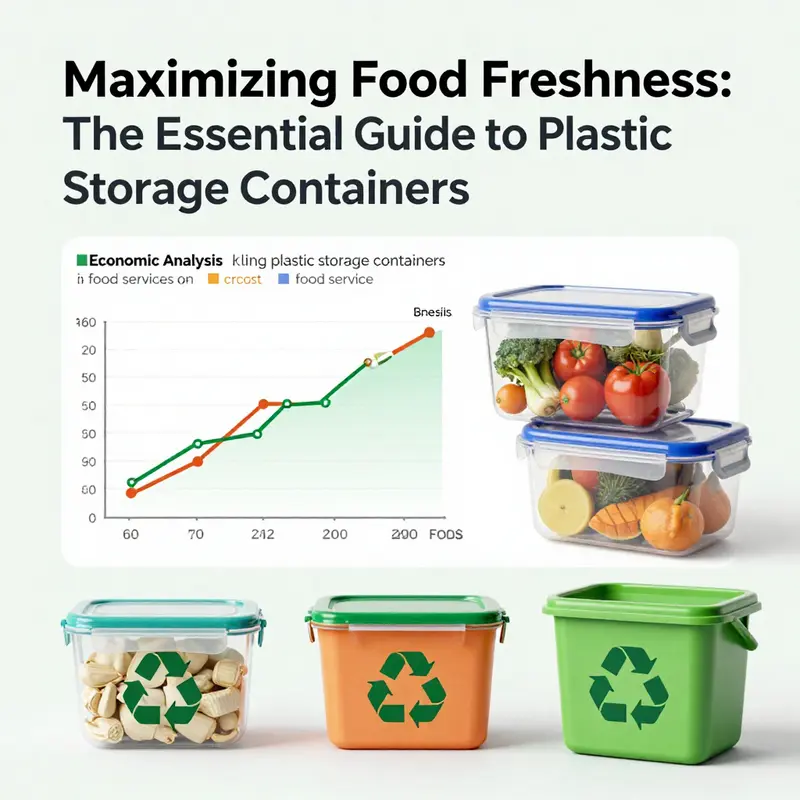
Plastic storage containers for food have become a near-ubiquitous feature of modern kitchens and food operations, prized for their light weight, durability, and the savings they promise in time, space, and money. Yet beneath the everyday practicality lies a web of economic and environmental dynamics that few users fully consider. The same attributes that make plastic containers attractive—their low production cost, their resilience, and their modular designs—also shape how they circulate through households, commercial kitchens, and the broader economy. They influence decisions about what is stored, how leftovers are managed, and the ways meals are planned, prepped, and transported. To appreciate the real value and the hidden costs of plastic food storage, it helps to follow the life cycle from cradle to grave, tracing where savings occur and where costs accumulate, not only in dollars but in ecological and health burdens that accumulate across societies and generations.
From a purely economic perspective, plastics offer impressive advantages. They are cheaper to manufacture at scale than many competing materials, and their lightweight nature reduces transportation energy and handling costs. In many settings, the cost of a stackable, airtight container is modest enough that households can maintain an extensive system of meal prep and refrigeration without straining budgets. In commercial contexts, standardized containers help streamline workflows, enable precise inventory control, and cut labor time in handling and portioning. These factors compound to lower overall operating costs, particularly when scaled across large kitchens, catering operations, or food service chains. The savings extend beyond the container itself. By enabling portion control, predictable storage, and efficient cold chain management, plastic containers can lower food waste, which remains a substantial economic burden in retail and hospitality sectors alike. In this sense, plastics contribute to a leaner, more efficient supply chain, where every gram saved in packaging and every minute shaved off in prep translates into improved margins, better throughput, and more predictable cash flows.
But the economics do not end with the purchase price or the immediate labor savings. The downstream costs of plastic storage accrue across public budgets, households, and ecosystems. The global plastic pollution challenge imposes mounting expenses for waste management, litter cleanup, and environmental remediation. Municipalities bear the brunt of collecting, sorting, and processing discarded plastics, costs that can be substantial and persist long after a container has served its useful life. Taxpayers ultimately cover these expenditures, whether through higher municipal fees, elevated taxes, or redirected public funds that might otherwise support education, health, or infrastructure. The financial picture grows more complex when health considerations come into play. Microplastics—the tiny fragments that break off from larger plastic items—appear in air, water, and food and are increasingly recognized as a potential route for exposure to a variety of additives and contaminants. The economic dimension of this exposure manifests in healthcare costs, regulatory actions, and the need for ongoing monitoring and research. In the context of plastics used for food storage, the potential for chemical leaching becomes a topic not just of consumer anxiety but of policy concern and risk assessment, especially as containers age or are subjected to repeated cycles of freezing, heating, or abrasion.
A striking point in the literature about plastics and health is the concern that even “BPA-free” or otherwise labeled food-contact plastics may release other additives under certain conditions, particularly when degradation pathways are activated by heat, stress, or extensive wear. This nuance underscores why labeling alone cannot guarantee safety over a long horizon; it is a reminder that the life of a plastic container is not simply a one-way journey from shelf to recycling bin. It is a loop that can, under some circumstances, contribute to cumulative exposure through multiple channels. The economic implications of this reality are not only direct health costs but also costs tied to consumer confidence, product stewardship, and liability considerations for manufacturers and retailers. When producers and regulators acknowledge these complexities, they may pursue safer formulations, clearer guidance, and more robust lifecycle assessments that quantify not only upfront costs but long-term implications for public health and environmental integrity.
From the environmental side, the footprint of plastic storage containers begins with the origin of the raw materials and the energy embedded in production. The majority of plastics relied upon for food storage — polymers such as polypropylene, high-density polyethylene, and related materials — are derived from fossil fuels. The extraction, refining, and polymerization processes release greenhouse gases and consume substantial energy. Even when efficiency improvements reduce per-unit emissions, the sheer scale of global consumption means that cumulative emissions from production are significant. The energy intensity of manufacturing plastics is complemented by the energy costs that ensue during transportation and distribution. Plastic containers are typically more lightweight than glass or metal equivalents, which lowers transport emissions for consumers and supply chains. Yet that advantage is balanced by the reality that plastics are designed for repeated use and long service life only if they are managed properly at end of life. Without effective recycling streams and circular economy practices, the same containers that cut emissions during use can contribute to long-lasting pollution and resource depletion after disposal.
The environmental case against plastics grows more acute when we consider end-of-life pathways. Plastics often end up in landfills, where they persist for hundreds to thousands of years. Even in well-run waste systems, the reality is that not all plastics are recycled, and the mix of materials complicates recycling. When plastics leak into the environment, they become visible reminders of their persistence: litter on streets and beaches, fragments in soils, and microplastics in waterways. Microplastics are especially troubling because they can be ingested by wildlife and humans through various routes—from seafood and drinking water to airborne particulates in some environments. Studies and synthesis reports have highlighted alarming exposure, with estimates suggesting that humans may ingest tens of thousands of microplastic particles annually, with inhalation contributing to the total burden. The health implications are still under intense study, but the potential for disruption to endocrine systems, metabolism, and other physiological processes has sparked precautionary policy responses and consumer concern.
This environmental narrative is not a simple indictment of plastic. It is a call to understand the tradeoffs embedded in everyday choices and to align those choices with broader societal goals. Plastics offer remarkable advantages in terms of durability, modularity, and cost, features that have supported advances in meal planning, batch cooking, and food safety when used correctly. The key challenge lies in designing and using these materials in ways that reduce risk and environmental harm while preserving the benefits that enable modern, efficient food systems. The path forward requires a mix of design innovation, policy incentives, and consumer practices that emphasize longevity, repairability, and responsible end-of-life management. The literature points toward several core strategies: maximize the useful life of containers, ensure clear labeling about suitability for freezing, microwaving, or dishwasher use, and invest in recycling-compatible designs that facilitate material recovery without compromising food safety.
A practical dimension of these strategies is the tension between durability and safety. The freezer presents a particularly demanding environment. Repeated freeze–thaw cycles can cause some plastics to become brittle, increasing the risk of cracking or breakage. In response, higher-quality polymers and formulations — carefully engineered for cold tolerance and chemical resistance — offer more reliable performance, but at a higher upfront cost. The consumer decision, then, is not merely about price but about expected life, maintenance needs, and the probability of ending up with a degraded container that may perform poorly or pose concerns about leaching under cumulative stresses. In contrast, silicone containers have gained traction as a flexible, temperature-resistant alternative. They tolerate a broad range of temperatures and are less prone to brittle failure, which makes them appealing for households and some commercial settings seeking longevity. Yet silicone also carries its own environmental considerations, including production energy, end-of-life processing, and the realities of recycling or repurposing when devices reach the end of their life. In many contexts, plastic remains the dominant choice, in part because it balances cost with reusability and space efficiency. The question, then, is how to preserve those advantages while shrinking the environmental and health costs through smarter design, responsible use, and robust end-of-life pathways.
If economics and ecology are to align, design choices become central. A durable, multi-use container that can withstand freezer temperatures, repeated washing, and rugged handling reduces both the economic and environmental costs of replacement. The design also matters for recycling. Monomaterial constructions that rely on a single resin type are easier to recycle than multi-layer or mixed-material systems. Clear, consistent labeling about food contact safety and permissible conditions for heating or freezing helps users avoid accelerated degradation that could increase leaching risks. In addition, circular economy principles urge producers to adopt take-back schemes, remanufacturing options, and closed-loop recycling where feasible, as well as to explore alternative feedstocks with lower life-cycle footprints. These structural shifts require coordination among manufacturers, retailers, waste managers, and policymakers, but they promise a more sustainable balance between the convenience of plastic storage and the health and ecological protections that societies expect.
From the consumer’s perspective, choices at the kitchen counter can tilt the balance toward better long-term outcomes. A practical approach starts with recognizing signs of wear: cloudiness, discoloration, warping, or persistent odors can indicate polymer breakdown and potential changes in performance or safety. In such cases, replacement is prudent. It is also wise to follow manufacturer guidelines about what each container is designed to endure. Containers explicitly designed for freezing, microwaving, or dishwasher use are more likely to retain their integrity over time if those conditions are followed. Importantly, the labeling caveats extend beyond safety to encompass reliability. A container labeled as BPA-free does not guarantee that it is free from other additives that may be of concern if, for example, the material degrades and migrates into food when exposed to heat or abrasion. For households aiming to minimize risk while maintaining practical functionality, a layered strategy works well: prioritize containers with demonstrated performance in cold storage and gentle dishwashing, replace worn items, and use the lowest-energy, least hazardous configuration that still meets storage needs.
An important dimension of this deliberation is the availability of alternatives that can reduce reliance on plastics without compromising convenience. In some scenarios, reusable alternatives such as glass or stainless steel offer superior longevity and inertness. For some dry goods or bulk storage, especially when travel or transport is involved, other packaging systems—such as durable, recyclable paper-based options—can be integrated into a broader storage strategy. The shift toward these alternatives does not imply abandoning the benefits of modular storage; rather, it calls for a thoughtful blend of materials that optimize safety, cost, and environmental performance for specific use cases. The broader ecosystem also benefits when storage solutions are designed with recyclability in mind, enabling smoother recovery and reuse at end of life. In practice, this means ongoing collaboration across the value chain to ensure that containers, no matter the material, fit into a circular economy where materials are kept in productive use and waste is minimized.
To acknowledge a concrete example within the broader landscape of packaging alternatives, consider how households and businesses can explore compact, stackable, and cleanable options beyond traditional plastic. For certain applications, kraft paper storage bowls and other paper-based food storage solutions can serve as viable, lower-impact alternatives, especially for short-term storage, meal-prep, or consumer-facing service settings. These options illustrate a practical principle: different storage contexts demand different material choices. In a kitchen sequence that includes both cold storage and ready-to-eat service, a thoughtfully designed mix of materials can optimize safety, cost, and environmental performance. This approach is not about abandoning plastics across the board but about selecting the right tool for the right job, balancing reuse, recyclability, and lifecycle impacts. For readers curious about those alternative packaging avenues, one resource detailing wholesale kraft paper storage options provides a useful touchpoint for understanding how paper-based systems can be integrated into broader storage strategies. See wholesale-custom-print kraft paper food-storage salad-noodle bowls for a concrete example of how paper-based storage products are marketed and positioned within a circular economy framework.
The overarching message is not a negation of plastic but a call for smarter use, continuous improvement, and an acknowledgment of tradeoffs. Plastics will continue to play a central role in many storage scenarios because of their resistance to oils and solvents, their light weight, and their affordability, especially in bulk or institutional settings. Yet as populations grow, as health and environmental safety become more prominent policy concerns, and as waste management systems evolve, there is increasing pressure to tighten the identification and enforcement of best practices. Consumers and organizations alike should demand materials that meet explicit food-contact safety criteria, encourage longer service lives through robust design, and support end-of-life options that minimize environmental leakage. In parallel, policymakers and industry leaders can promote standards that make recycling easier, ensure better labeling, and incentivize innovations that reduce the energy intensity and material demand of storage solutions.
Finally, the broader context of this discussion centers on information, transparency, and responsibility. The decision to use plastic storage containers is not a simple binary choice but a spectrum of practices. It is about balancing the everyday benefits of convenience and efficiency against the long-term costs borne by communities and ecosystems. It is about recognizing that the fastest path to a solution is rarely the most sustainable one, and that progress often comes from incremental improvements—improved materials, clearer guidance, better waste systems, and consumer habits that favor longevity and repair over quick replacement. For researchers, policymakers, and everyday users alike, the real work is to align economic incentives with environmental health, so that the containers we rely on tomorrow are designed, managed, and used in ways that protect both our plates and our planet.
External context that informs this discussion underscores the urgency of action. The United Nations Environment Programme highlights the global scale of plastic pollution and the necessity of shifting toward a circular economy, which emphasizes reuse, recycling, and responsible production and consumption patterns. This broader frame helps connect the micro decisions made in kitchens and storage rooms with macro-level policy and market dynamics, reminding readers that individual choices contribute to a larger transition that can reduce risk, conserve resources, and improve public health over time. For readers seeking authoritative context, the UNEP Global Plastic Pollution Crisis report offers an extensive synthesis of the challenges and proposed pathways forward.
In sum, plastic storage containers for food deliver undeniable economic value through reduced weight, ease of use, and cost efficiency, while their environmental and health footprints prompt deeper consideration about how, when, and where to use them. The implications extend beyond households to manufacturers, retailers, waste managers, and policymakers who shape standards, incentives, and infrastructures. By embracing durable design, clear safety guidance, and principled end-of-life management, the food storage ecosystem can continue to support modern living while progressively reducing its environmental burden. For those who wish to explore alternatives in parallel with plastics, the option to consider paper-based storage solutions demonstrates that practical sustainability often rests in a diversified toolkit rather than a single material choice. The path forward is collaborative and iterative, requiring ongoing innovation, measurement, and consumer education to ensure that convenience does not come at an unacceptable cost to health or the environment.
For a broader, global perspective on the scale of the plastic challenge—and the policy shifts that can help address it—see the UNEP Global Plastic Pollution Crisis report: https://www.unep.org/resources/report/global-plastic-pollution-crisis
Final thoughts
In summary, plastic storage containers are indispensable for effectively managing food freshness and safety across various food service sectors. Understanding the diverse types of containers available, being aware of safety concerns regarding material degradation, and considering the economic and environmental implications can help establishments make informed choices that enhance both service quality and sustainability. Embracing these practices not only ensures that businesses maintain high standards but also positively contributes to the industry’s ongoing commitment to food safety and environmental responsibility.