
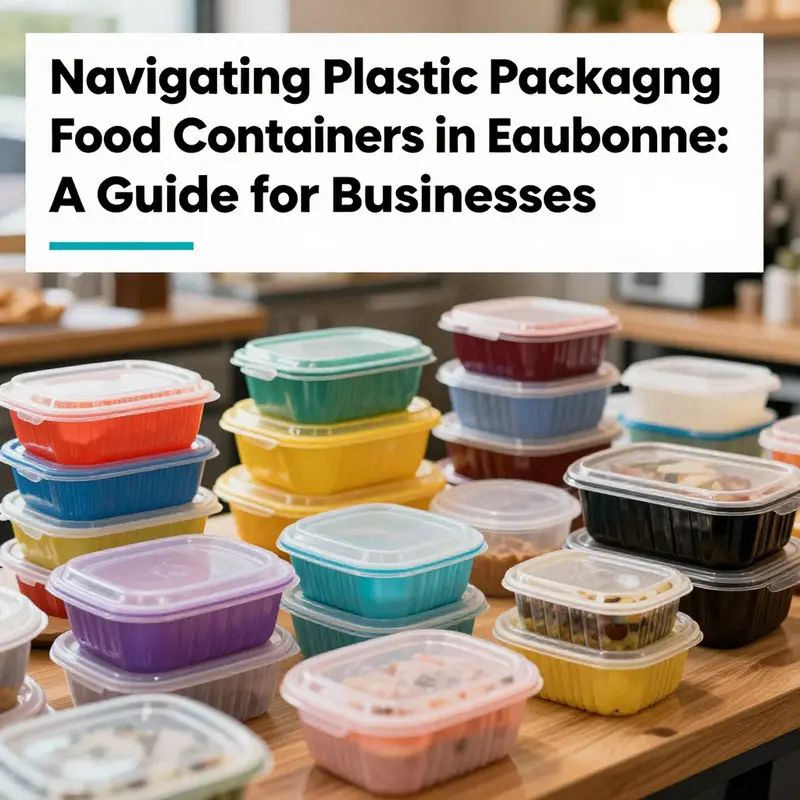
Plastic packaging is a vital component for businesses like bubble tea shops, restaurants, and catering services, especially in vibrant locales such as Eaubonne, France. As the demand for safe and appealing food storage solutions increases, understanding certification standards, safety requirements, and finding reliable suppliers is critical. This article delves into the intricacies of plastic packaging for food, aimed specifically at event planners, corporate procurement teams, and the food service industry. We’ll explore essential certification standards necessary for compliance in the European market, the performance testing that ensures safety and functionality, and effective strategies for sourcing reliable suppliers. By the conclusion, you’ll have a comprehensive understanding of the landscape surrounding plastic food packaging in Eaubonne.
Towards Safer Packaging: Certification Standards for Plastic Food Containers in Eaubonne
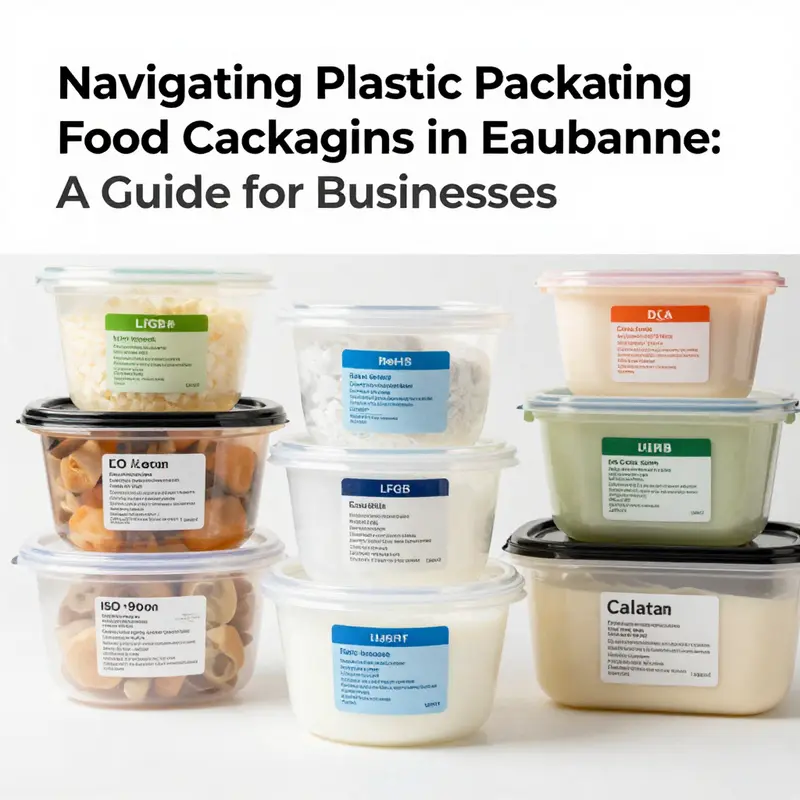
In Eaubonne, manufacturers navigate a complex regulatory landscape for plastic food contact materials. The core aim is to ensure safety, traceability and purity from raw materials to finished packaging. Regulation 2025/351 introduces a high purity standard for substances used in packaging that contacts food. Substances must meet identity and purity requirements, with acceptable trace levels either listed in Annex I, Table 1, or justified by a risk assessment, a toxicological evaluation, or complete migration testing. When migration is the path chosen, limits such as 0.05 mg per kg of food apply. Only substances on Annex I may be used, while other inputs may be allowed only as additives under national law. The emphasis on traceability means that each batch carries documentation linking materials to suppliers and to conformity proofs. Companies align ISO 9001 quality management with EU rules to support supplier qualification, change control and recordkeeping.
Migration testing follows EU standardized methods and simulates realistic use conditions, including temperature ranges for microwave use or freezing. The goal is to ensure that migrating substances stay within the specified limits under practical use. Compliance is ongoing rather than a one time event, requiring up to date declarations, batch level certificates and third party validation. Cross border procurement becomes a risk management exercise, selecting partners with robust substance data, migration results and traceability capabilities. In practice this fosters smoother audits, fewer recalls and more confidence among retailers and consumers.
Local practice is also shaped by broader trends such as scalability of migration data, digital batch records, and careful management of biocidal ingredients. Practitioners should invest early in detailed declarations, design migration programs that cover changing formulations and maintain dashboards that trace inputs to finished goods. While Regulation 2025/351 provides the framework, continuous improvement through ISO 9001 and supplier collaboration remains essential. The chapter in Eaubonne ultimately illustrates how safety, visibility and trust intersect to support a resilient packaging supply chain for food.
Readers seeking practical guidance are advised to secure comprehensive substance declarations, build scalable migration testing plans, and embed traceability as a core capability. This combination reduces uncertainty, supports audits, and helps ensure that packaging entering the food chain is safe, compliant and fit for purpose.
Safe by Design: Performance Testing and Regulatory Pathways for Plastic Food Containers in Eaubonne, France
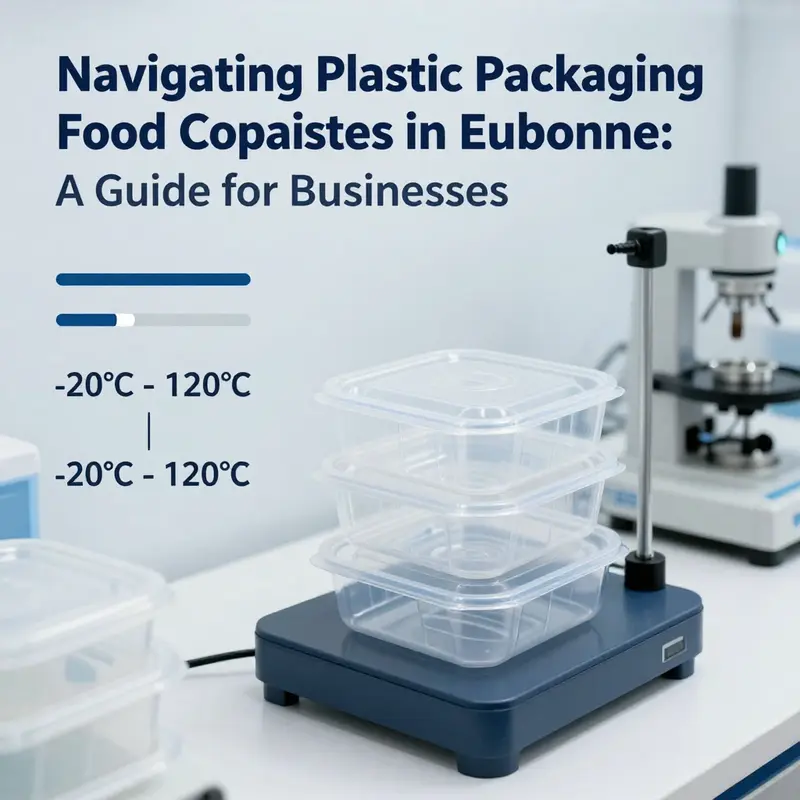
In Eaubonne, as in the broader currents of France and the European Union, choosing plastic food containers cannot rely on instinct alone. The stakes are tangible: packaging that touches everyday meals must guard health, preserve taste and texture, and minimize environmental impact. When buyers in this region evaluate containers for microwavable meals, chilled dishes, or pantry staples, they encounter a web of standards that defines what is acceptable, how performance must be demonstrated, and what documentation accompanies a purchase. This chapter traces the core framework buyers rely on to separate design from danger, performance from mere appearance, and trust from guesswork. It is a narrative of safety built into every seam, every seal, and every migration study that accompanies a batch of material destined for contact with food. While local flavor and market conditions vary, the underlying rules are European at their core, anchored in regulations that seek to prevent harmful substances from entering food, ensure that usage conditions do not compromise safety, and provide a traceable, verifiable chain from raw material to consumer plate. The practical upshot for practitioners in Eaubonne is a clear path: identify compliant suppliers, demand a robust quality management system, insist on rigorous testing, and insist on traceability that travels with the product along the supply chain.
At the heart of the regulatory landscape lies EC No 1935/2004, a landmark framework governing all materials and articles intended to come into contact with food. This regulation establishes a simple, yet powerful premise: any packaging must not transfer substances into food in a way that could endanger health or alter the properties of the food. It is less about a single test and more about a continuous assurance that governs materials throughout their lifecycle. A companion rule, EC No 282/2008, drills into the specifics for plastic food contact materials. It maps out permissible monomers and additives, outlines conditions for production processes, and sets limits for migration. The general and specific migration limits are the practical tools by which compliance is assessed. General migration provides an overarching ceiling for any unidentified substances, while specific migration focuses on defined substances known to pose risk at particular thresholds. Together, they form a sieve through which every plastic component intended for food contact must pass before it can be marketed in the EU.
The European Food Safety Authority (EFSA) plays a pivotal role in this ecosystem. EFSA is the science arm that interprets toxicological data, assesses the safety of substances used in packaging, and informs regulatory updates. The authority’s opinions and risk assessments are consulted when EU-wide guidance is updated or when new materials and additives enter the market. For buyers and suppliers in Eaubonne, EFSA’s work translates into a predictable scientific standard that helps calibrate internal testing programs and ensures that the claims made on certificates align with current scientific consensus. In practice, this means that a supplier cannot rely on outdated or unverified data. The supply chain must reflect a living body of knowledge that evolves with new risk assessments and methodological advances. As a result, documentation such as a Declarations of Conformity (DoC) and third-party test reports carry more weight when they are anchored in EFSA-supported interpretations and compliant with EC 1935/2004 and EC 282/2008.
The testing regime for plastic containers is both rigorous and multi-faceted. Migration testing is the centerpiece of safety verification. It simulates how materials will interact with different foods under realistic conditions. The process varies with the type of food matrix—acids, fats, and foods with high moisture can all influence the extent to which compounds migrate from plastic into food. Tests are designed to mimic actual usage: short or extended contact times, elevated temperatures, and a range of pH levels. There is no one-size-fits-all result; rather, each combination of material and intended use yields a migration profile that must remain below the thresholds set by EU rules. The distinction between general migration and specific migration becomes particularly important here. A container used for fatty foods at high temperatures may require more stringent scrutiny for particular substances than one used for dry goods at room temperature. Across the EU, these migration tests serve as a practical translation of legal limits into laboratory outcomes that industry can rely on when certifying products for sale.
Physical performance testing accompanies migration studies to assure structural integrity throughout the product’s life. Containers must withstand the mechanical rigors of transport, stacking, and handling, while maintaining barrier properties that limit oxygen ingress and moisture transfer where appropriate. In constant motion from freezer to microwave to shelf, a container must not deform, leak, or lose its sealing capability. Thermal properties are scrutinized for both hot and cold use cases. Containers marketed for microwave use need to demonstrate safe performance up to typical consumer temperatures, while those intended for freezing must remain robust at sub-zero temperatures and resist cracking or becoming brittle. The input materials should not degrade in a way that would compromise barrier properties, create off-odors, or migrate new compounds into food beyond the permitted limits. Physical testing is empathetically pragmatic: it asks whether a product will endure the realities of everyday use with the same reliability that manufacturers promise during procurement talks.
Microbiological safety is another essential pillar. The production environment for packaging must be controlled to prevent microbial contamination that could later transfer to food contacting the surface. While the primary objective is preventing contamination during manufacturing, the finished container must not become a vehicle for microbial growth when kept under typical storage conditions. This dimension of safety is often underappreciated by consumers, yet it is a practical necessity for grocery stores, institutions, and households alike. Packaging facilities implement cleanroom-like controls, validated sanitization programs, and routine environmental monitoring. The consequence of lapses can extend beyond consumer risk; it can trigger supply chain disruptions, recalls, and reputational harm. Accordingly, microbial testing sits alongside chemical migration and physical tests as a baseline assurance that a container is fit for purpose across the life cycle.
In practical terms for Eaubonne buyers, the regulatory framework translates into a set of concrete expectations from suppliers. First, the packaging supplier should provide traceability information for every batch. This means a clear record of raw material origins, processing conditions, and a batch identifier that can be traced forward to end-use packaging. Traceability is not merely a bureaucratic requirement; it is a safety mechanism that allows rapid investigation and recall if a problem arises. Second, suppliers should supply third-party laboratory test certificates that document migration test results, physical performance metrics, and microbial safety assessments. Third, the Declarations of Conformity and certificates of compliance should clearly reference EC 1935/2004, EC 282/2008, and, where applicable, EFSA interpretations or opinions that underpin the testing logic. When a supplier can present this suite of documentation—validated by independent labs and aligned with EFSA’s risk assessments—a buyer’s confidence in the packaging’s safety and compatibility increases substantially.
It is also essential to connect these EU-wide requirements to the specific context of Germany and the broader European market. For products destined for Germany, LFGB compliance often enters the conversation, signaling a country-specific reinforcement of safety expectations. While LFGB is distinct from EU-wide rules, many manufacturers who supply multiple European markets will implement LFGB-equivalent or harmonized testing protocols to facilitate cross-border sales. Similarly, RoHS compliance becomes relevant whenever the packaging integrates electronic components or temperature sensors or labeling devices containing restricted substances. ISO 9001 certification of a manufacturer adds a systemic layer of assurance; it signals that a robust quality management system underpins product design, material sourcing, production, and testing. For municipal procurement in the Île-de-France region and for regional distributors, these certifications enable more predictable performance across batches and reduce the risk associated with supply interruptions or variations in material quality.
Beyond the formal tests and certifications, buyers often rely on a broader, more practical set of evidence when evaluating suppliers in Eaubonne. The typical procurement checklist includes a clear mapping of intended use, a documented testing plan that reproduces real-world conditions, batch-specific traceability data, and access to third-party lab results that corroborate the migration and physical performance claims. The best suppliers also maintain an ongoing dialogue about evolving regulatory expectations, recognizing that the regulatory environment is not static. As EU regulators revisit migration thresholds, as EFSA updates scientific opinions on new substances or additives, and as new testing methodologies emerge, the most resilient manufacturers adapt their testing regimes and align their documentation accordingly. In procurement discussions, this adaptability translates into a supplier’s willingness to re-test or augment documentation when justified by regulatory developments or new product lines.
From a buyer’s perspective, the interplay between testing and supplier capability shapes the risk profile of a purchase. A container that passes migration tests but fails to meet mechanical integrity under repeated washing and stacking could still be unsuitable for certain distribution channels. Conversely, a container that is mechanically robust yet exhibits migration above permitted limits would be unacceptable for any EU market. The ideal supplier offers a holistic demonstration of safety and performance: migration profiles that stay within limits across relevant food types, physical performance data that mirrors real-world handling, microbial safety assurances, and a transparent, up-to-date DoC. In a region like Eaubonne, where local retailers, caterers, and households expect reliable packaging for diverse culinary practices, such a comprehensive verification becomes a practical minimum rather than a theoretical ideal.
Another layer of rigor emerges through the concept of “traceability and third-party verification.” The requirement for batch-by-batch traceability ensures that if a safety anomaly appears in a given run of containers, investigators can identify the precise materials, suppliers, and production conditions involved. This traceability is complemented by third-party laboratory testing, which adds an impartial layer of validation to manufacturer claims. For buyers, third-party verification reduces the friction of compliance audits and accelerates due diligence during supplier selection. It also fosters a culture of continuous improvement within production lines, as recurring test outcomes can be tracked across multiple batches to reveal trends that may indicate process drift or material substitution that has altered performance characteristics. In sum, the regulatory framework is designed not merely to prohibit risk but to create a continuous feedback loop that elevates safety and quality over time.
To connect these principles to the daily realities of Eaubonne’s packaging ecosystem, it helps to summarize how a compliant packaging program can be built and sustained. Start with the regulatory map: align product design and material selection with EC 1935/2004 and EC 282/2008, ensuring that the migration limits and overall safety architecture are wired into product development from the outset. Then implement a testing strategy that mirrors end-use conditions—migration testing with representative food simulants, temperature cycling that includes microwave and freezer scenarios, and physical tests for sealing integrity and drop resistance. Announce microbially safe handling practices within the production environment and maintain ongoing environmental monitoring. Require batch-level documentation, including material certificates, processing records, and the DoC, so that every lot communicates reliability and traceability. Finally, cultivate supplier partnerships that value transparency and rapid responsiveness to regulatory updates, because safety standards are not static and consumer expectations are not forgiving when packaging fails to meet them.
In terms of practical guidance for professional readers in Eaubonne, the emphasis should be on building a supplier-verified ecosystem rather than chasing a single, perfect spec. A well-qualified supplier will not only supply a container that performs under test conditions but will also provide the supporting evidence that buyers need to satisfy regulatory authorities, retailers, and end users. The synergy between EU-level requirements and market-specific expectations in France creates a resilient standard for safety and performance that serves as a reliable baseline for procurement decisions. It is this alignment—between policy, science, and everyday practice—that ultimately makes plastic packaging safer, more reliable, and better suited to the demands of modern consumption.
As regulatory science evolves, the ongoing challenge for Eaubonne buyers is to maintain this alignment. The critical point is to treat testing, documentation, and supplier capability as living components of a compliant packaging program. The best practice is to integrate migration data, physical performance metrics, and microbial safety assessments into supplier selection and contract language. Buyers should also insist on the availability of independent test reports and ensure that the documentation reflects current regulatory interpretations rather than historical assumptions. In this way, the packaging that arrives on shelves in Eaubonne is not only compliant at the moment of purchase but remains compliant as standards advance and as new products enter the market. The result is a more trustworthy supply chain and a safer experience for consumers who rely on plastic containers to preserve the quality and safety of their food.
External resource: https://ec.europa.eu/growth/sectors/food-contact-materials_en
From Eaubonne to Europe: Sourcing Safe, Compliant Plastic Food Containers with Confidence
In the quiet streets of Eaubonne, a town that sits close to the heart of Île-de-France, procurement decisions for plastic food containers are rarely just about price or appearance. They hinge on a careful alignment of safety, traceability, and regulatory confidence that travels far beyond the city limits. For teams sourcing packaging in France and exporting to broader European markets, the pathway begins with rigorous supplier evaluation and ends with a chain of verifiable assurances that every batch of containers will perform under heat, cold, and time without compromising food safety. What may seem like a straightforward choice—selecting an off-the-shelf container—unfolds into a landscape of standards, certifications, and documentary proof that turns supply into a trustworthy process rather than a brittle exchange of promises. In this landscape, the emphasis is on trust built through certification, testing, and transparent reporting, rather than on a single feature such as a design or a price point. The task, therefore, is to identify suppliers who can navigate European requirements and stand behind their products with the kind of documentation that reduces uncertainty for buyers and end-users alike.
A practical starting point is to situate European regulatory expectations alongside the specific assurances European buyers tend to demand. While LFGB certification is a German standard associated with food-contact safety and aroma testing, many European buyers look for equivalents or explicit confirmations that products conform to EU frameworks for materials in contact with food. In practice, this means seeking suppliers who can demonstrate compliance through recognized certifications and traceable testing data. RoHS compliance becomes relevant when packaging involves electronic components or additives that could introduce restricted substances into the supply chain. For most plastic food containers intended for microwave use, freezing, or refrigeration, robust thermal performance data is non-negotiable: products must remain structurally stable and chemically inert from -20°C to 120°C. In short, the safety and reliability of containers under real-world kitchen conditions depend on both a sound materials standard and a credible performance record.
Alongside regulatory labels, many manufacturers pursue ISO 9001 certification as a signal of mature quality management practices. ISO 9001 is not a guarantee of flawless products, but it stands as a visible commitment to consistent processes, traceability, and continual improvement. For European buyers, an ISO 9001 badge is frequently considered a baseline expectation when forming long-term supplier relationships. The combination of a formal quality system, robust testing, and third-party validation becomes a practical means of de-risking procurement. In the absence of direct on-site audits, the availability of third-party laboratory results and batch traceability reports can often substitute for a physical visit, allowing teams to assess risk without interrupting production schedules.
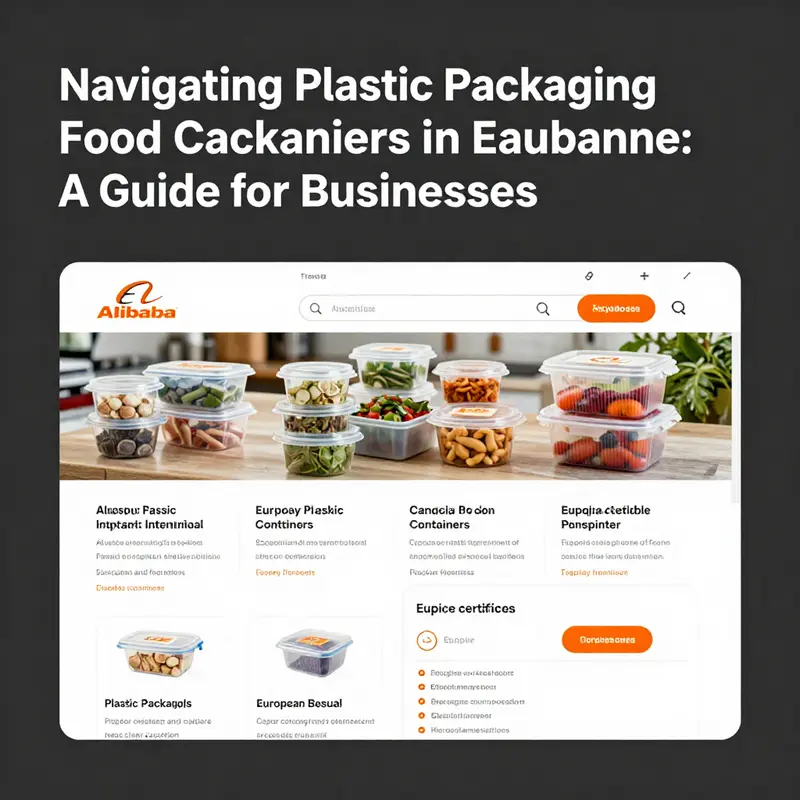
Translating these expectations into a concrete supplier search involves turning to platforms that aggregate verified manufacturers and exporters while offering filters tailored to food-contact safety. Global B2B platforms—well known in European procurement ecosystems—provide the tooling to screen suppliers by material type (such as PET, PP, and HDPE), intended use (storage, microwavable, or freezer-ready), and, crucially, the presence of certifications like FDA, EU food-contact compliance, or ISO 9001. These platforms also expose real-time data on supplier ratings, production capacity, lead times, and customization options—information that can make the difference between a supplier who can ship next week and one who cannot fulfill orders for several months.
For buyers in Eaubonne and across France, the role of such platforms is not to replace local supplier relationships but to augment them. Local procurement teams may maintain a preferred list of nearby manufacturers and distributors who understand French labeling requirements, packaging regulations, and logistical realities. Yet the most discerning buyers also recognize that European demand for scale often compels collaboration with international partners who can consistently deliver conforming products at a reliable cadence. This is where Alibaba’s marketplace logic becomes particularly relevant. The platform does not typically list suppliers by a single French town, but it does offer robust search and screening tools that align with European safety expectations. By filtering for material safety, food-contact compliance, and recognized certifications, buyers can quickly assemble a shortlist of high-quality suppliers who meet European standards and can produce at the scale required by a growing retail network.
The practical upshot is straightforward: a sourcing strategy centered on safety and traceability will typically begin with a documentary audit rather than a cursory visual inspection. Buyers should request current certificates, recent third-party test reports, and batch-level traceability data that can be matched to the supplier’s production records. In the domain of frozen and microwavable containers, it is essential to obtain temperature tolerance data that demonstrate the material’s stability and safety throughout its intended lifecycle. The presence of a credible quality management system, such as ISO 9001, is not just a ritual certification; it is a qualifier for capacity to maintain consistent product quality as production scales or as customer specifications evolve. In this sense, the supplier’s documentation becomes part of the product itself—a primary evidence trail of safety, reliability, and performance.
To locate these suppliers at scale, buyers often consult a curated section of a global marketplace dedicated to plastic packaging for food. This resource enables a buyer to search by the material family, the intended end-use, and the regulatory landscape the product is designed to meet. The ability to view a supplier’s certifications, review their laboratory testing history, and access batch-specific documentation helps buyers move beyond price or color options to a more meaningful, risk-aware decision framework. The framework is not purely theoretical: it translates into concrete supplier selection criteria that guide vendor outreach, sample requests, and negotiation levers around lead times, minimum order quantities, and the availability of co-pack solutions or branding options.
In the context of Eaubonne and its connection to broader European markets, one practical advantage of consulting global marketplace ecosystems is the ability to prompt suppliers to demonstrate readiness for European distribution. While a supplier may produce to a standard that satisfies a domestic requirement, European buyers often require additional assurances for cross-border shipments. A credible supplier will, therefore, be able to furnish not only the core material safety data and testing reports but also batch traceability documentation that spans the complete supply chain—from resin input to finished container. This tendency toward full traceability aligns with quality management expectations and with buyers’ need to audit suppliers remotely in an era where travel is often constrained or costly. It also dovetails with the broader corporate emphasis on sustainability, where traceability can support environmental reporting and end-of-life considerations for packaging.
As you broaden your search to capture a diverse pool of suppliers, one practical signal of readiness stands out: the ability to provide comprehensive documentation on demand and the willingness to share data that supports conformity with European food-contact regulations. A trustworthy supplier will anticipate questions about migration, stability, and compliance and will respond with a documented history rather than a series of assurances. The most dependable partners often pair their responses with third-party laboratory verifications and a serially traceable production log that can be cross-checked against batch numbers and manufacturing dates. In an industry where a single batch can be the difference between a compliant shipment and a recall, the stability and transparency of a supplier’s documentation are not peripheral details; they are central to successful procurement.
For teams operating in Eaubonne and across France, the practical workflow thus becomes a blend of local relationship-building and global supplier screening. Start by confirming that the supplier can meet EU food-contact safety expectations and, where relevant, LFGB-like risk assessments or equivalent EU declarations. Then, verify RoHS considerations if any electronics or restricted substances could be involved in the packaging system. Next, insist on ISO 9001 alignment, plus accessible third-party testing results and batch-level traceability. Finally, simulate a procurement cycle by requesting samples and evaluating their performance under -20°C to 120°C conditions, and by checking the durability of the seal and lid during repeated thermal cycles. A robust supplier will present a dossier that integrates all of these elements, enabling a transparent, risk-conscious decision that supports both local distribution needs and broader European market access.
In this broader play of standards and partnerships, an internal reference point can help the team accelerate its vetting process. Global platforms provide a built-in lens into supplier capabilities—an orientation that can save weeks of hesitation when time-to-market is critical. For organizations that want to operationalize this approach quickly, a curated supplier hub can be a first-pass filter to identify candidates who already demonstrate a track record with food-contact compliance and quality management practices. The next step is to engage these candidates in a structured information exchange: request certifications, confirm the scope of the QA system, and establish a framework for ongoing compliance verification as orders scale.
A practical note on locality should not be overlooked. While the European market favors suppliers who can certify compliance and assure traceability, proximity still matters for many buyers in the Paris region and nearby departments. The ability to coordinate sampling, to negotiate customization with design flexibility, and to align on packaging specifications can reduce the risk of rework and shorten the approval cycle. In many cases, national or regional manufacturers may offer advantages in labeling requirements and logistics that align with French and European retail networks. Yet even with strong local ties, adopting a global sourcing mindset—one that emphasizes documentation, testing, and continuous improvement—ensures resilience in an increasingly complex and competitive packaging landscape.
To summarize the approach in a single frame: identify suppliers who can demonstrate explicit food-contact safety compliance, provide batch-level traceability, and share third-party testing results; confirm their ISO 9001 quality management status; validate their thermal performance data for -20°C to 120°C; and structure a documentation-driven due-diligence process that can be repeated across multiple supplier relationships. This is how sourcing professionals in Eaubonne turn a potentially overwhelming field into a predictable, auditable supply chain. Platforms that host supplier profiles and documentation—paired with direct outreach for test reports and certificates—turn the search from a guesswork exercise into a methodical, test-driven evaluation. The result is not just a container but a reliable, scalable solution that supports high-quality food packaging across European markets.
In this context, the practical value of a global marketplace lies in its ability to surface suppliers who meet these criteria and to make the documentation readily shareable. Buyers should leverage the platform’s filters for material safety, certifications, and production capacity to converge on a shortlist that can be tested through samples and pilot orders. A well-structured process, supported by a few well-chosen platforms, helps maintain the balance between cost, compliance, and performance, ensuring that the final choice — whether for a local Eaubonne facility or a wider European distribution network — is poised for reliability rather than risk.
Internal hyperlink reference for further exploration can be useful as a quick orientation point for readers who want to see how such supplier ecosystems function in practice. For a curated marketplace experience that emphasizes food-contact compliance and certification visibility, you can browse the following supplier hub: plastic-food-packaging-container.html.
External resource for broader context: https://www.alibaba.com/showroom/plastic-food-packaging-container.html
Final thoughts
Throughout this guide, we’ve explored the crucial aspects of utilizing plastic food packaging containers in Eaubonne, tailored for businesses within the food industry. From understanding vital certification requirements that ensure safety and compliance to identifying reliable suppliers that meet these standards, every point has been designed to enhance your procurement strategy. Keeping these insights in mind will not only help elevate the quality of your offerings but also maintain your commitment to safety and customer satisfaction. Armed with this knowledge, you are now better equipped to make informed decisions for your business.