
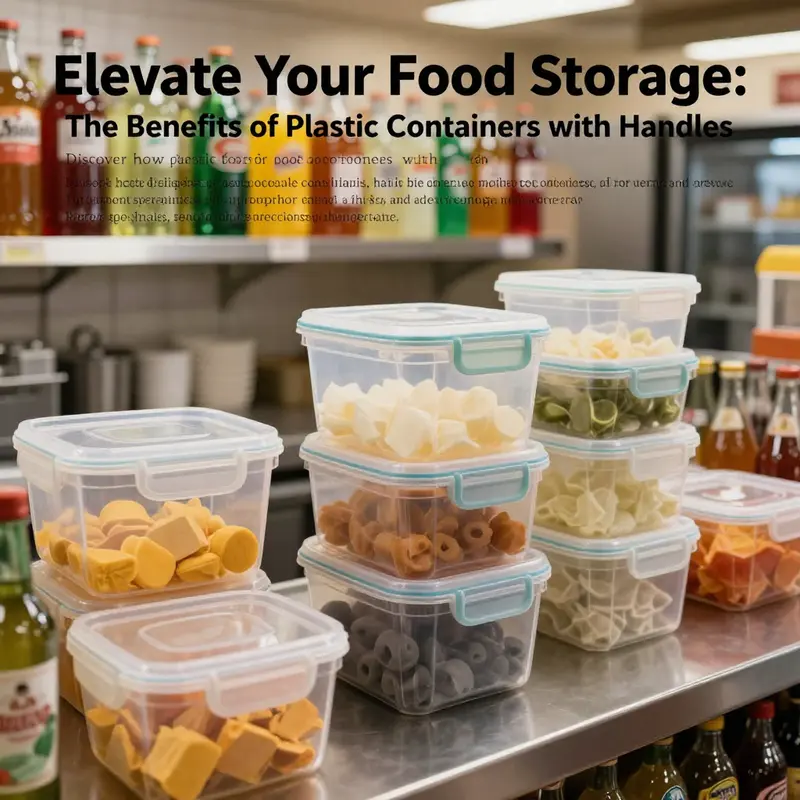
Efficient food storage is crucial for beverage chains, restaurants, and catering services. Plastic food storage containers with handles offer a practical solution for organizing ingredients, transporting food, and maintaining freshness. Designed for convenience, these containers are user-friendly and versatile, making them a must-have for any food-based operation. This article explores key features, common use cases, material and safety standards, market trends, and a comparison of popular brands. Together, these insights will guide procurement teams in making informed choices that enhance their food storage practices.
Carrying Confidence: The Design Science Behind Plastic Food Storage Containers with Handles
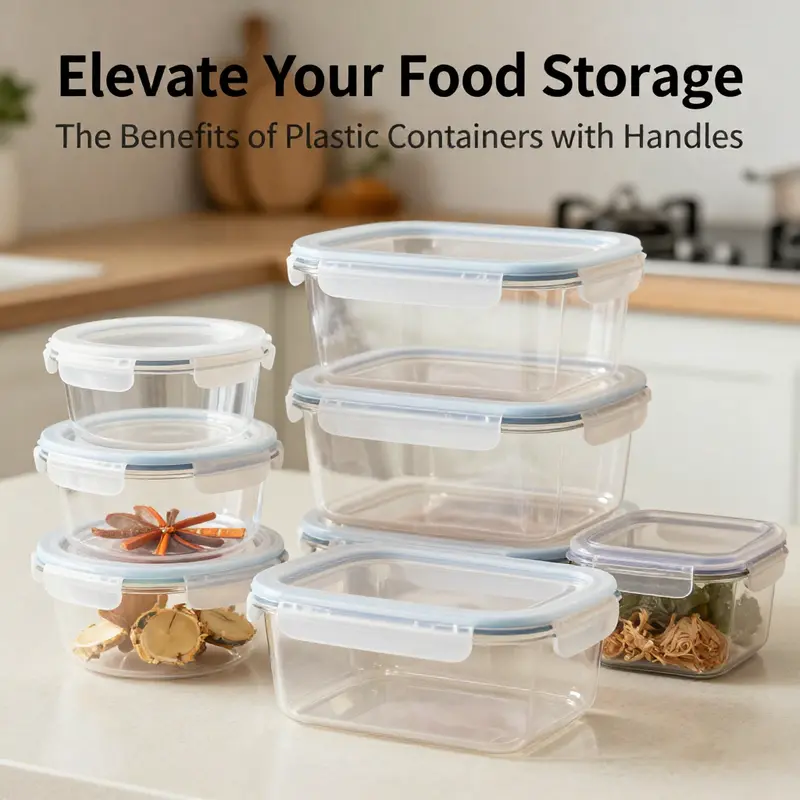
A plastic food storage container with a handle may look like a simple, everyday tool, but its design is a careful balance of safety, ergonomics, and efficiency. The presence of a handle reframes how we interact with food storage, turning a bulky bottle or tub of leftovers into a portable, reliable unit that can move from fridge to pantry, from kitchen counter to car trunk, without compromising contents or care. The handle is not just a grip; it is a unity of form and function that signals confidence to the user. When a container is easy to lift, secure to carry, and stable on a shelf, it reduces the cognitive load of meal planning and reduces the risk of spills. It invites people to transport meals for work, school, or travel and to rethink what should be stored together, what deserves airtight protection, and how space in a fridge or cabinet can be used most efficiently. The chapter that follows is thus less about a single product and more about a system of features that, working in concert, elevate routine storage into a dependable, everyday habit.
Ergonomics anchors the practical value of these containers. Built-in handles are reinforced and contoured to fit the natural grip of an adult hand. They distribute weight evenly and minimize finger fatigue, which matters when a full container holds heavy staples like lentils, rice, or bulk leftovers. A well-designed handle also helps reduce the risk of awkward, sudden slips that can occur when a container is awkwardly shaped or the lid is loose. This is especially important in real-world settings—moving between a crowded kitchen, a crowded fridge, or a crowded trunk on a weekend trip. In such environments, the tactile feel of a sturdy handle matters as much as the container’s capacity. The ergonomic relationship between grip and lid is part of a broader design language that prioritizes predictable handling, balanced weight distribution, and a sense of control over what is stored and where it travels next.
Another foundational pillar is the material itself. Containers are typically made from food-grade plastics such as polypropylene, a choice celebrated for durability, impact resistance, and resilience to temperature changes. The BPA-free label is more than a safety badge; it is a response to consumer demand for materials that are compatible with a wide range of foods and preparation practices. The material choice also informs compatibility with common kitchen routines: many PP containers tolerate a range of temperatures that now extend from freezer conditioning to short microwave bursts and dishwasher cycles. This versatility is essential when meals are prepped in advance and saved for later use, when sauces are divided into portions, or when ingredients like fresh herbs or chopped vegetables are stored for later cooking. While PP is a frequent standard, the landscape includes other food-grade plastics such as PET and HDPE, each with its own touchpoints for clarity, rigidity, and recyclability. The emphasis on safety and recyclability reflects a growing awareness that everyday containers have a lifecycle and should be chosen with care for both health and environment.
Lids play a central role in preserving freshness and keeping contents secure. The 4-sided locking or twist-lock closures—often paired with a gasket or seal—create an air-tight barrier that slows moisture exchange and blocks odors from migrating into the fridge or across adjacent items. This sealing capacity is essential when storing ingredients that are sensitive to air exposure, such as cut fruits or ready-to-heat meals, and it also minimizes spill risk during transport. The robust seal is complemented by considerations of leak-resistance, especially when containers are transported with liquids or semi-thick sauces. In practice, this means a lid that is easy to align, secure with a simple snap or twist, and resistant to wear after repeated cycles in the dishwasher or freezer. The overall effect is a practical sense of reliability: you know the lid will hold, contents will stay contained, and odors will remain contained within the box rather than filling the entire fridge.
Transparency is another subtle but powerful feature. Clear or translucent plastic allows a quick assessment of what’s inside without opening the container. This visibility reduces door-opening, helps with meal planning, and minimizes food waste by making it easier to track leftovers, prepped components, or pantry staples at a glance. When combined with stackable geometry, visibility becomes a cornerstone of an organized system. Containers can be arranged in ways that maximize vertical space, with taller bins encouraging a clean, grid-like configuration in the fridge or pantry. Visibility also extends to labeling and portioning: easy-to-read size cues on the exterior can guide users about appropriate reheating times, defrost durations, or whether a portion should be used tonight or saved for tomorrow.
The shapes and sizes available for these containers contribute to their versatility. Rectangular and square profiles optimize shelf and fridge real estate, while circular or tall cylindrical options can suit specific items like soups, sauces, or bulk grains. A broad capacity range—from small snack sizes to larger family portions—ensures that almost any food type has a compatible home. The wide variety of shapes makes it possible to assemble a cohesive storage system where different foods live in appropriately sized vessels, reducing the tendency to overfill or to squeeze items into awkward, ill-fitting containers. This attention to form translates into practical benefits: it becomes easier to purge the pantry of mismatched lids, to keep sets together, and to maintain a neat and predictable kitchen ecosystem.
Ease of cleaning and maintenance also matters. Smooth interior and exterior surfaces, along with removable seals, simplify washing and drying. Most high-quality containers are dishwasher-safe, though it’s common to remove lids or to wash them on a gentler cycle. Grooves in the lids require careful attention during cleaning to prevent the buildup of bacteria, and avoiding abrasive tools helps maintain the integrity of the plastic over time. A design that anticipates routine cleaning reduces the friction of daily use and extends the life of the container, supporting long-term sustainability by encouraging repeated, reliable reuse.
In the era of heightened environmental awareness, eco-friendliness has become a design imperative. Reusable plastic storage containers with handles offer an alternative to single-use packaging by enabling durable, multi-season storage. The choice of recyclable plastics, and the possibility of a future recycling pathway at end of life, matters to consumers who want to minimize waste while maintaining food safety and convenience. The market also reflects a shift toward more sustainable design practices, with manufacturers pursuing greater longevity, easier disassembly for recycling, and reduced reliance on materials with higher environmental footprints. As a practical matter, the reuse of well-made containers can dramatically cut down on disposable packaging in both home kitchens and commercial settings, reinforcing an ethic of mindful consumption.
Some models push the envelope further with what might be called smart or enhanced features. Modern containers may include tight leak-proof seals, integrated measuring marks on the interior for portion control, or even color-changing indicators that signal spoilage or safe reheating windows. These features add layers of utility and safety, turning a simple storage vessel into a small, data-informed tool for managing groceries and meals. While not every user needs every feature, the availability of enhancements offers options that can blend into different routines—from meticulous meal-prepping to quick, grab-and-go lunches.
In practice, the utility of a plastic storage container with a handle emerges most clearly in the everyday choreography of kitchen life. At home, it simplifies fridge organization, helps keep pantry shelves tidy, and supports meal prepping by making it easy to portion, seal, and transport. In commercial and industrial settings, the same design principles translate into products that can store bulk ingredients for distribution, maintain safety and freshness during transport, and integrate into standardized packaging workflows. And for recreational use—camping trips, picnics, or road trips—the portability of a sturdy container with a secure lid expands what foods can travel safely and stay appetizing.
To illustrate how these principles translate into real-world packaging options that complement the plastic containers with handles, consider an internal resource that highlights wholesale kraft-paper food storage options. This page demonstrates how other materials can be used to organize and transport food in ways that harmonize with plastic storage systems, offering a broader perspective on how handles, seals, and visibility contribute to efficient food management. Wholesale custom kraft paper food storage salad noodle bowl.
Thinking ahead to daily practice, the design decisions behind these containers encourage thoughtful use. A user who selects a container with a secure seal, a comfortable handle, and a transparent body gains a reliable ally for organizing meals across the week. The combination of features—ergonomic handles, durable materials, secure lids, temperature tolerance, stackability, and easy cleaning—creates a storage system that is more than the sum of its parts. It supports healthier eating by reducing spoilage, saves time during meal preparation and cleanup, and contributes to a calmer kitchen environment by eliminating the chaos of mismatched containers and leaks.
For readers seeking deeper exploration of practical storage solutions and related packaging options, an external resource offers further insight into the durability and safety considerations that underlie modern plastic food storage. External resource: Learn more about plastic food storage containers with handles on Amazon. https://www.amazon.com/dp/B0BZQKJW2R
Carrying Freshness: The Everyday Roles of Plastic Food Storage Containers with Handles
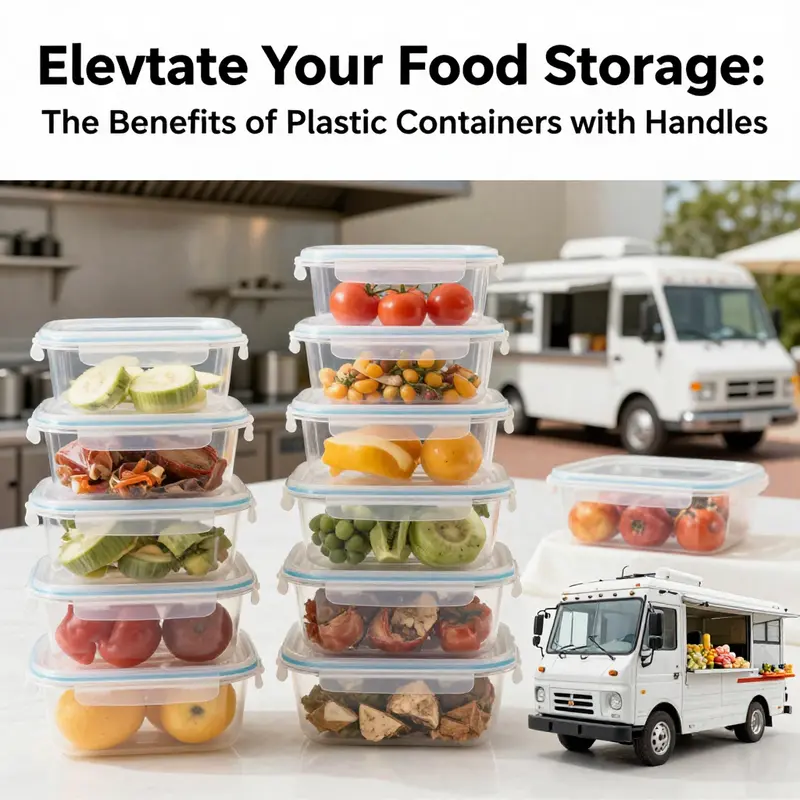
A plastic food storage container with a handle is more than a simple box for leftovers. Its silhouette, built around a sturdy grip and a secure lid, embodies a practical philosophy: the easiest, most reliable way to protect, transport, and organize food is to keep it close at hand, while keeping it safe and easy to manage. The materials are chosen with food safety in mind—food-grade plastics that resist staining and odor transfer, with translucence that reveals what lies inside without opening. The handle is not just a detail; it is the point of contact between containment and movement. When you lift a filled container, the weight is balanced by a reinforced grip, designed to reduce strain on the wrist and sides. The lid, often four-sided and locking, becomes a seal that preserves freshness and prevents leaks during transit. In daily life, those elements come together to change how we store, carry, and even think about meals and ingredients.\n\nIn the kitchen, the layout of a home benefits greatly from containers that invite motion rather than hinder it. Leftovers can be tucked away without a fuss, yet retrieved quickly when a craving or a schedule demands. Prep work—chopped vegetables, marinated proteins, sauces—can be portioned into individual containers and stacked in the fridge or freezer, ready to be grabbed with a single, predictable grip. The clear plastic lets you scan the contents in a glance, so you don’t have to open multiple lids to confirm what’s inside. The ergonomic handle supports a natural hand position, whether you’re bringing a tray from the counter to the fridge or pulling a stack of containers out of a crowded cabinet. This blend of visibility, grip, and seal makes everyday storage less of a chore and more of a fluid part of routine meal management. And when you start to move beyond the kitchen, the same design logic scales up to more ambitious tasks.\n\nMeal prep is where the handle’s value often becomes most evident. When you plan for the week, you typically portion out meals into single-serving containers. The handle makes it easier to transport these portions for work, school, or travel, without spilling or worrying about slip hazards. You can pre-fill a few containers with different components of a balanced meal—protein, starch, vegetables—and keep them aligned in the refrigerator so that, come morning, you only need to grab a single container for a quick-and-clean lunch. These containers also support the idea of a smart pantry, where bulk ingredients like rice, beans, or grains can be stored in clearly labeled, stackable units. The clarity of the container helps you identify what’s inside at a distance, and the stacking efficiency reduces the footprint of pantry storage by optimizing vertical space. In this way, the handle becomes less of a physical aid and more of a facilitator for organization, reducing friction and waste in everyday cooking.\n\nOutdoor outings reveal another strength of handle-equipped containers: responsibility and reliability on the move. Picnics, barbecues, or road trips demand a transport system that minimizes spillage while maximizing the amount of food that can be moved at once. A container with a secure, four-sided locking lid serves as a portable food locker, shielding contents from the wind, curious hands, and accidental bumps in a car trunk or on a campsite table. The ability to carry several containers in a single trip means fewer trips to the car and less time spent managing loose items. The stackable design further improves portability, enabling you to load several units into a cooler or tote without sacrificing accessibility. When meals are meant to be shared, the waiter’s or host’s job becomes easier; the containers can be passed along with a steady grip, reducing the risk of spills and making it simple to maintain portion control for a group.\n\nIn professional kitchens and catering settings, the practical advantages of these containers are magnified. Buffets, catering stations, and food distribution points rely on sturdy, reliable equipment that can be sanitized and reused. The handle enables servers to carry multiple units at once with confidence, while the airtight lids preserve the integrity of dishes from the kitchen to the table or buffet line. The suitability for bulk storage means that bulk ingredients can be portioned and transported with minimal handling. The transparency of the material aids quickly identifying contents during service, which is essential when timing and accuracy matter. In such environments, the containers reduce the physical strain on staff who would otherwise carry and swap many individual dishes, thereby improving efficiency and safety in high-pressure settings.\n\nFor daily lunch routines at school or work, these containers offer a practical balance of safety, portability, and ease of use. A secure lid keeps drinks and sauces from leaking into backpacks or briefcases, while the handle allows students or professionals to carry a full set of meals without discomfort. The durability of the plastic stands up to repeated opening, closing, and washing, which suits the frequent use required in busy households. And because the material is typically clear, you can keep an eye on contents without opening every container. This visibility helps with planning and reduces the chance of waste as leftovers are quickly identified and repurposed. The interior organization can also be enhanced when used with related storage ecosystems—containers that stack neatly with a consistent rim height allow for a tidy, predictable stacking pattern that saves space and time when searching for a specific item.\n\nIn refrigeration and freezing, the design demonstrates another layer of practical value. Food-grade plastic containers are intended to withstand temperature variations, enabling safe storage of a wide range of items—from soups and stews to frozen vegetables and single-serving meals. The ability to seal tightly prevents moisture loss and protects flavors during long storage. With a stackable format, you can maximize cold storage capacity, which is especially valuable in smaller kitchens or busy households that rely on batch cooking. The transparent walls help with inventory control, so you know at a glance what needs to be used first. This visibility, combined with the carrying handle, supports a simple workflow: remove the needed portion from the freezer, transport it to the counter for defrosting, and then transfer it to the fridge or oven with minimal effort. The interplay of these features makes freezer management feel less like a chore and more like an integrated step in a thoughtful weekly routine.\n\nReheating and serving can also be smoother when the container is designed with user safety in mind. Some models are microwave-safe, allowing you to reheat meals directly in the container without transferring to a dish. In those cases, the handle’s insulation and the lid’s tight seal reduce the risk of burns when removing hot containers from the microwave. Even when reheating is not part of the plan, the ease of transport remains a constant benefit. You can move hot, freshly prepared foods from the kitchen to the table with fewer steps and less mess, thanks to a secure grip that won’t slip in sweaty hands. The lid, again, plays a critical role in maintaining heat, preventing odors from escaping and keeping other items in the kitchen free from accidental splashes. This combination of hygiene, convenience, and safety helps explain why such containers have become a commonplace feature in households that value efficiency and reliability.\n\nTravel and on-the-go storage are perhaps where the practical design reveals its best capabilities. Small and medium-sized containers fit easily into bags, totes, or car consoles, while the handles provide a quick and stable way to grab one or two containers at a time. The probability of leaks is minimized by the four-sided locking mechanism, which ensures that liquids remain contained even during bumpy transit. For people who rely on prepared meals to maintain a busy schedule, the ability to move food safely from home to work or school without packing fragile, spill-prone containers is a meaningful advantage. The containers’ adaptability extends beyond food to small utensil organizers or pantry staples, offering a simple, consistent approach to keeping kitchen items within reach wherever life takes you.\n\nThe environmental impact of reusable plastic containers is a factor that savvy buyers consider. Reusability is at the heart of sustainable storage, reducing the need for disposable wraps and bags and curbing waste over time. Transparent, durable containers encourage long-term use and careful handling. Yet, it is important to recognize that not every local recycling stream accepts every type of plastic, and some designs are easier to recycle than others. This nuance matters for households seeking the best balance of practicality and environmental responsibility. The conversation about materials does not end at convenience; it extends to how a family’s routines align with local waste management practices and personal commitments to sustainability. When choosing these containers, many people look for clear indicators of food-grade safety, compatibility with freezers and microwaves, and a design that supports ongoing reuse in varied contexts—from kitchen to campsite.\n\nSafety and standards underpin every practical consideration. The path from container design to daily use is guided by regulations that define what materials can come into contact with food and how they should be tested for safety. Certification labels reassure users that the container will not release harmful substances into foods under typical storage conditions. Food-grade plastics, and the absence of harmful additives, are essential for any container intended for meals, sauces, or liquids. The lid mechanism, too, should be robust enough to withstand repeated opening and closing, and capable of maintaining its seal over time. The handle must remain secure even after repeated cycles of cleaning. In short, the everyday act of lifting a filled container carries with it considerations about safety, hygiene, and the long-term integrity of the storage system. These factors combine to form a trustworthy platform for cooking, organizing, and sharing food.\n\nWhen selecting a plastic container with a handle, there are a few guiding principles that help translate broad practical benefits into a reliable personal system. Look for a BPA-free, food-grade material that is proven to meet safety standards. Favor a four-sided locking lid for maximal spill resistance and airtightness. Prioritize a sturdy, reinforced handle that remains comfortable even when the container is full. Favor transparency for quick identification of contents, but balance visibility with the potential for staining or odor retention. Consider a stackable design that makes efficient use of vertical space in the fridge, freezer, or pantry, and ensures compatibility with other storage elements you own. Finally, keep in mind the broader ecosystem of storage materials you use. There is value in comparing plastic containers with other formats, such as paper-based or alternative materials, depending on context, but the core advantages of a handle-enabled plastic storage system lie in mobility, reliability, and the confidence that comes from a well-sealed interior.\n\nFor a broader perspective on related storage options, you can explore wholesale custom packaging choices such as the Kraft paper storage solutions that also emphasize modularity and transportability in different contexts. Wholesale Custom Print Kraft Paper Food Storage Salad Noodle Bowl offers a reminder that durability and practicality are not unique to one material class; they are principles that shape how we move food from place to place. The essential idea remains the same: a container that combines safe materials, an ergonomic carry method, and a secure lid can transform how you think about storing, carrying, and serving food across diverse settings. This integrative approach reinforces the sense that the humble plastic container with a handle is more than a tool—it is a practical partner in everyday life, capable of supporting healthy eating, efficient organization, and thoughtful, sustainable routines. External guidance on food-contact safety remains an important touchstone to consider as you adopt or adapt these containers into your home or business practices.\n\nExternal resource: https://www.fda.gov/food/food-contact-materials/food-contact-materials-and-regulations
null
null
Carrying Toward Convenience and Confidence: Market Trends Shaping Plastic Food Storage Containers with Handles
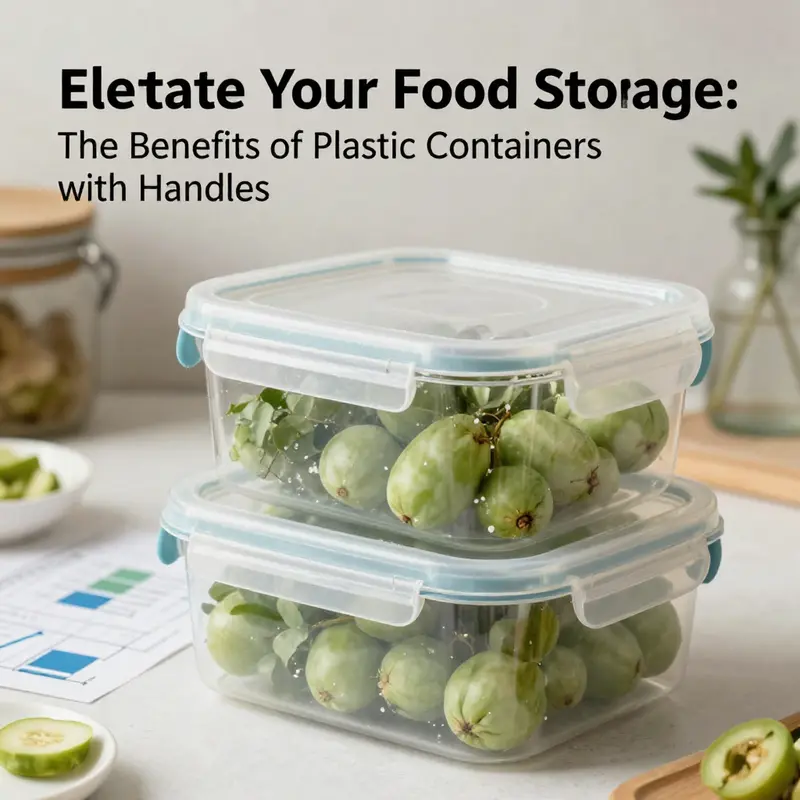
The handle on a plastic food storage container is more than a design flourish; it is a daily promise of portability, reliability, and ease of use. In kitchens, pantries, and even in busy commercial units, a well-shaped handle turns what could be a cumbersome lift into a controlled, secure action. This practical advantage underpins a market that is expanding not just in volume, but in the sophistication of what that portability communicates: safety, organization, and efficiency. The numbers backing this shift are telling. The overall plastic containers market—an umbrella that includes these storages with handles—has been forecast to grow significantly, with global projections showing a rise from roughly USD 2,296.7 billion in 2025 to about USD 4,209.7 billion by 2035, a compound annual growth rate around 6.2 percent. Within this broad arena, the segment dedicated to food containers is expected to climb from about USD 1,637 billion in 2024 to roughly USD 2,273 billion by 2032, reflecting a healthy 4.19 percent CAGR. These figures illuminate a momentum that blends everyday practicality with larger, ever-evolving consumer expectations. Consumers increasingly seek products that deliver not just space and containment, but assurance—assurance about safety, hygiene, and the integrity of what they store and transport. The emphasis on health and hygiene has sharpened into a strong preference for containers that are explicitly designed for food safety. BPA-free labeling has moved from a niche concern to a baseline expectation. This is not merely about compliance; it is about confidence. When a container is marketed as BPA-free and certified for food contact, it communicates a clear commitment to reducing exposure to potentially leaching substances. This is especially important for households that store acidic or fatty foods, and for those who freeze, thaw, or reheat meals in the same vessel. The result is a consumer base that gravitates toward products that have clear, verifiable safety assurances, and that translates into higher perceived value and brand loyalty for manufacturers who invest in rigorous testing and transparent labeling. Alongside safety, accessibility and ergonomics remain central to the appeal of containers with handles. Reinforced handles deliver a secure grip, which matters most when carrying heavier contents—bulk grains, soups, stews, or frozen items. A sturdy handle reduces the risk of slippage and spills, an outcome that resonates with households and food-service operations alike. When combined with an ergonomic design that distributes weight evenly, these containers become reliable tools for daily routines, from meal prep to weekly inventory checks. The relationship between form and function here is reciprocal: as handles grow more robust, lids and closures respond with equally precise engineering. Airtight or four-sided locking lids are now standard in many high-quality models, a feature that preserves freshness, prevents odors from escaping, and provides a barrier against pests. The lid mechanism is more than a seal; it is a control point that guards against leaks and contamination during transport, in transit meals, or messy fridge reorganizations. In tandem with this, the rise of stackable designs speaks directly to modern space constraints. Space efficiency is no longer a marginal benefit; it is a core determinant of choice. Many containers are engineered to nest and stack with predictable alignment, enabling refrigerators, freezers, and pantry systems to be more organized and accessible. Reports and specialist commentary consistently highlight the incremental gains of stackable solutions—often touted as up to 20 percent more space-efficient than traditional round containers. Transparency remains a key lever in consumer decision-making. A clear, translucent plastic enables quick visual verification of contents, reducing the need to open multiple containers during the day. This visibility is particularly valuable for busy households and commercial kitchens alike, where time is spent hunting for ingredients or prepared items. It is easy to overstate the impact of a simple attribute like transparency, but in practice it reduces waste and streamlines workflow, which in turn reinforces the value proposition of these products. Beyond the pieces of design—the handle, the lid, the transparency, the stackability—the market is increasingly defined by the breadth of use cases and the willingness of manufacturers to tailor solutions to specific needs. The classic kitchen role is obvious: cereals, baking ingredients, snacks, leftovers, yogurt, or even ice cream can be stored in a single, well-fitting module. But the reach extends into commercial and industrial settings where bulk storage and distribution require containers that are robust, easy to transport, and easy to sanitize. In these contexts, the integration of multi-use capabilities becomes a differentiator. Containers with handles are chosen for their ease of carrying in crowded kitchens, catering environments, and distribution centers where every gram of weight saved and every second of handling time saved translates into tangible savings. The outdoor and camping sectors are another compelling angle. Lightweight yet durable containers are favored for travel and field use, where the balance between weight, strength, and resilience to temperature shifts can determine whether a trip runs smoothly or runs into logistical hitches. In short, a handle is not a single feature; it is a signal of the broader design philosophy that these products are increasingly expected to embody: safety-first, user-centric, and adaptable to a spectrum of environments. Sustainability and material choices are now as visible as the handles themselves. Recyclable materials—primarily food-grade PET or HDPE—remain standard, and manufacturers are pushing further into circular economy principles. The push toward bio-based resins and recycled-content plastics is not merely a marketing angle but a strategic response to consumer demand for responsible packaging. Some suppliers have rolled out fully biodegradable buckets made from plant-based materials, signaling a willingness to experiment with compostable options while preserving the safety and performance needed for food contact. Yet every environmental advantage must be balanced with durability, cost, and compatibility with various food types. The trade-offs are real, and the best-path strategies involve a mix of recycling streams, durable design, and consumer education about end-of-life disposal. In the mid-range to long term, customization is becoming a primary avenue for differentiation. Consumers and businesses alike want bespoke solutions: tailor-made sizes, handles optimized for specific loads, and modular stacking systems that enable highly organized storage. This trend aligns with a broader movement in packaging toward personalization and modular design, letting kitchens scale their storage with confidence. The role of technology in this evolution should not be overlooked. Smart containers, equipped with RFID tags or QR codes, are making early inroads into industrial and supply-chain applications. Inventory control, traceability, and product safety records can be read at a glance, which streamlines operations in large kitchens and during food distribution. While such features are not yet ubiquitous in every home kitchen, their adoption is expanding as supply chains seek greater transparency and efficiency. Innovation in weight reduction continues to be a focal point as well. Engineers are testing thinner walls, smarter ribbing, and optimized geometry to reduce material use without compromising impact resistance or heat performance. The aim is to deliver containers that remain sturdy under everyday use but are easier to lift, carry, and store. One notable example in industry circles is a lightweight variant of food-grade containers that achieves a notable weight reduction while preserving high impact strength, a combination that pays dividends in transport costs and user fatigue over the long run. These technical strides are complemented by the demand for practical, everyday reliability. Consumers want containers that can withstand the rigors of daily life, from fridge and freezer cycles to drop tests in busy retail environments. The market response to this demand is a spectrum of products that mix safety, durability, and convenience into cohesive designs. When these elements converge—food-grade safety, airtight closures, ergonomic handles, clear visibility, stackable efficiency, sustainable material choices, customization, and optional smart features—the result is a family of containers that feels engineered for modern living. The market outlook embedded in the latest research confirms that manufacturers who balance safety, sustainability, and user-centric design will capture the most value. The growth figures, while numerical, symbolize a shift in consumer expectations: people want packaging that protects their food, respects their health, and helps them organize life more efficiently. As a practical note for readers seeking concrete ways to align product development with these trends, consider the linkage between design choices and everyday use cases. For instance, a product family that emphasizes a versatile handle design, secure locking lids, and modular stacking will resonate with busy households and commercial buyers alike, offering both immediate usability and long-term cost savings through reduced waste and improved shelf management. In the broader landscape of packaging innovation, this convergence of health priorities, customization, sustainability, and smart features marks a durable path forward. To illustrate how packaging evolution translates into real-world examples, see a customized eco-friendly 1300 ml kraft soup and salad paper bowl with lid, which demonstrates how designers are balancing environmental considerations with practical usability in adjacent packaging formats: https://greendispopack.com/product/customized-design-eco-friendly-1300ml-kraft-soup-salad-paper-bowl-with-lid/. External market dynamics also shape these products. The Fortune Business Insights forecast places the global plastic containers market on a growth trajectory through the mid-2030s, while the food container segment within that market continues to rise as households seek more organized, safer, and efficient storage solutions. For a broader market outlook and context, see the external resource: https://www.fortunebusinessinsights.com/plastic-containers-market-101898
In Hand, In Use: A Practical Guide to Plastic Storage Containers with Handles
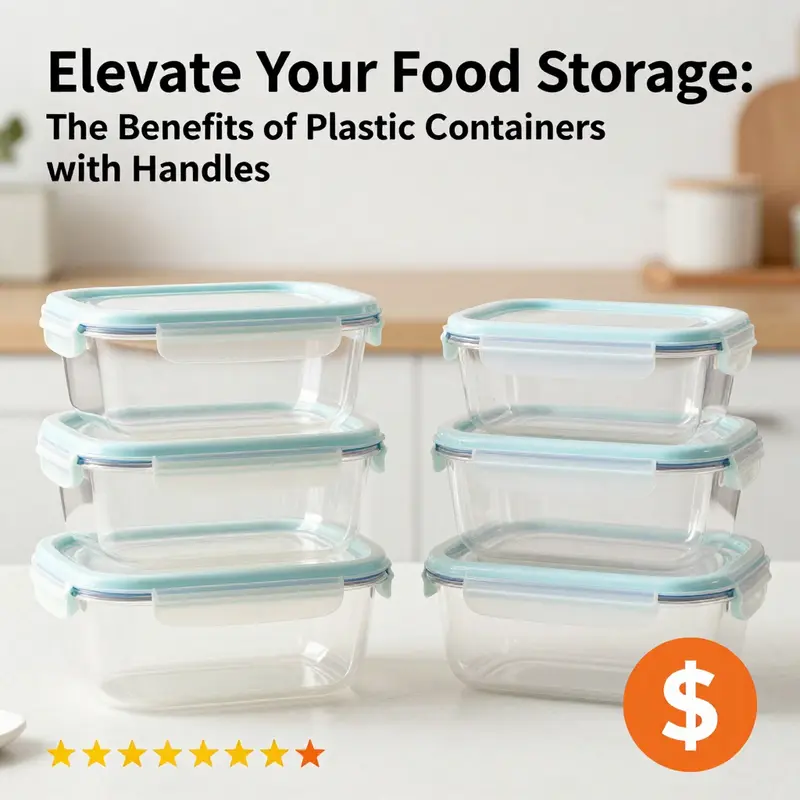
The kitchen is a workshop of small, constant decisions, and the choice of a plastic storage container with a handle is one of those decisions that quietly compounds into daily ease or friction. A good container does more than hold contents; it becomes a portable extension of the meal, a buffer against spoilage, and a modular tool for organizing a fridge, a pantry, or a catering station. When we compare containers across brands and retailers, the differences are rarely dramatic in a single feature but accumulate across material quality, ergonomic design, sealing performance, and compatibility with how people actually store, reheat, and transport food. The result is a spectrum where some options reliably support freshness and practicality for most household needs, while budget lines may cut corners on durability or seal integrity, introducing small but real risks of spills, odors, or uneven preservation over time. The overall message from this landscape is simple and practical: if you know what to look for, you can prioritize safety, ease of use, and long-term value without overpaying for features you’ll never use.
Material choice is the first lens through which these containers should be evaluated. Food-grade plastics that are BPA-free or made from safer resin families such as polypropylene or Tritan are the baseline. These materials resist staining and odors better than many generic plastics and tend to withstand repeated use. Yet not all plastics are created equal. The more robust resins in higher-grade ranges offer better heat resistance, improved impact strength, and less propensity to warp under load. That translates into better handle stability, fewer cracks around the lid edge, and more durable latching or locking mechanisms. Handle design itself matters deeply. An ergonomic grip that remains stable when the container is fully loaded reduces the chance of slips and accidental spills. A reinforced, broad handle that distributes weight across the palm is preferable to slender, thinly attached grips that flex or detach with heavier contents. In practice, you notice these differences during daily tasks: lifting a full bulk container of grains, transferring a frozen pile of leftovers from the freezer, or simply carrying a stack from the shelf to the counter. The most reliable implementations balance a comfortable grip with a sturdy attachment and a wall thickness that leaves room for the cap or lid’s locking features to preserve a seal.
Lids and seals are a crucial juncture between convenience and food safety. In the best designs, a four-sided locking or tamper-evident lid forms a true barrier against air exchange and leakage. This is where the practical performance often diverges most clearly between premium lines and the more economical offerings. A dependable lid should press evenly around the rim, resist warping after repeated cycles in the dishwasher or microwave, and provide a clearly audible or tactile seal when closed. The better models also incorporate gasket materials that remain flexible at low temperatures and can endure frequent opening without cracking. In the absence of a robust seal, even a container with great material quality will struggle to keep odors contained or to prevent moisture loss, which accelerates staling in dry goods and accelerates freezer burn in frozen items. The design of the lid—whether it uses a snap-on mechanism, a twisting seal, or a hinged cap—matters for compatibility with everyday routines. For users who rely on quick, one-handed access, a lid that can be secured with a simple press or click without pinching fingers becomes a decisive advantage. In contrast, poorly fitted lids often result in misalignment, spill risk during transport, and repeated resealing, which erodes confidence in the container’s ability to protect contents over time.
Another layer of comparison lies in transparency and stackability. Clear or translucent walls let you identify contents at a glance, reducing the cognitive load of pantry management. When shelves are crowded, stackable designs can transform a cramped kitchen into an organized system that frees counter space and simplifies meal planning. The benefit of stackability is not merely cosmetic; it translates into real storage efficiency, especially in refrigerators and cabinets. Shelves that nest and containers that fit within one another enable a higher density of usable space and easier inventory management. The practical upshot is that, when you can see what’s inside and know a container will nest securely with its peers, you waste less time rummaging and less food withering at the back of the fridge.
Performance across brands and retailers often reflects a balance between cost and intended use. Across the spectrum, high-quality plastic containers with handles tend to outperform lower-grade options in longevity and safety. The most durable lines tend to employ sturdy wall construction, reinforced handles, reliable locking lids, and materials with proven heat and chemical stability. In contrast, lower-cost models frequently cut corners on wall thickness, gasket resiliency, or latch strength. The consequence can be a higher incidence of lid failure under load, warping after dishwasher cycles, or gradual seal degradation that allows air and moisture to seep in. This is not merely a matter of consumer perception; it is measurable in how a container maintains its seal integrity and how well it preserves the freshness of different foods as cycles accumulate. User feedback tends to highlight the stability of handles during transport and the resilience of the coupling between lid and body as critical determinants of long-term satisfaction. When handles loosen, hinges wobble, or lids pop open with a light bump, the routine becomes more burdensome and less reliable for everyday tasks like transporting leftovers to work or packing a salad for a picnic.
No discussion of plastic containment would be complete without acknowledging inherent limitations that plastics carry, even in their best forms. A recent study highlights a subtle but important reality: plastics, even when labeled as food-grade, exhibit measurable oxygen transmission rates. That means a tiny, gradual exchange of gases can occur over time, subtly affecting the internal environment and potentially modestly impacting the shelf life of sensitive foods. Glass, by contrast, demonstrates negligible oxygen transmission, offering a different baseline for long-term preservation. The practical implication is not that plastic is unusable for storage, but that expectations should align with the material’s physics. The advantages of plastic—lightweight, portable, dishwasher-friendly, and often cost-effective—still hold for most day-to-day scenarios, especially when used for refrigerated meals, snacks, or bulk dry goods. The key is to select containers with robust seals and a design that minimizes air exchange within the practical shelf life of the contents.
Equally important are evolving safety concerns tied to chemical leaching, which continue to inform brand selection. Recent work indicates that even BPA-free formulations can release trace amounts of compounds when subjected to high temperatures, acidic foods, or aggressive cleaning cycles. The implication for consumers is clear: material stability matters as much as the absence of a single chemical tag. Premium lines tend to invest in more chemically stable resins and stricter testing protocols, delivering containers that remain safer across a broader range of everyday uses. This is a reminder that while price points and brand loyalties will always color shopping choices, the most sustainable approach is to prioritize safety credentials, resistance to heat and acidity, and evidence-based testing for the plastics chosen.
In practice, selecting a plastic container with a handle means identifying what you value most in your kitchen workflow. If your day revolves around quick meal prep, frequent refrigeration, and the need to move containers between home and office, prioritizing ergonomic handles, airtight seals, and clear walls pays dividends in reduced waste and increased convenience. If you operate in a professional setting or regularly handle bulk ingredients, a heavier-duty build with reinforced lids and strong, stable handles can reduce the risk of spills and product loss. For those balancing cost with durability, a mid-range option that combines a sturdy lid with a resilient gasket and a comfortable grip often delivers the best all-around value, especially when used across the fridge, freezer, and pantry. In all cases, looking for certifications that attest to food safety and for compatibility with common appliances—microwave, dishwasher, freezer—can help ensure the container serves well across a spectrum of activities without compromising freshness or safety.
To connect practical use with a concrete example of an integrated storage approach, consider how a durable, multi-use container can facilitate a pantry or a kitchen’s everyday rhythm. For a practical example of how storage design translates into everyday use in a pantry context, you can explore Wholesale Custom Print Kraft Paper Food Storage Salad Noodle Bowl. This link illustrates how storage systems are designed for visibility, accessibility, and modularity—principles that apply across material families and price points, even when the product category is not a direct plastic container with a handle. By focusing on the core attributes—material safety, handle ergonomics, lid integrity, transparency, stackability, and appliance compatibility—consumers can make informed choices that align with their specific cooking and storage routines while avoiding common pitfalls that degrade performance over time. The takeaways are humble but practical: select materials that perform under your heat and use profile, ensure the lid can keep a seal when you need it, and favor designs that ease carrying and stacking without compromising safety or freshness. In the end, the container you choose should feel like a natural extension of your kitchen habits—reliable, comfortable to use, and trustworthy enough to keep food at its best from the moment you seal it to the moment you serve it. External resource: https://www.jfoodsci.com/article/10.1016/j.jfda.2025.10.003
Final thoughts
As beverage chains, restaurants, and event planners strive for operational efficiency, understanding the features and values of plastic food storage containers with handles becomes essential. Their design not only promotes ease of use but also aligns with safety and storage needs. By choosing the right containers, businesses can enhance food preservation, reduce waste, and ensure safety in food handling. Investing in high-quality containers will streamline operations and contribute to overall customer satisfaction.