
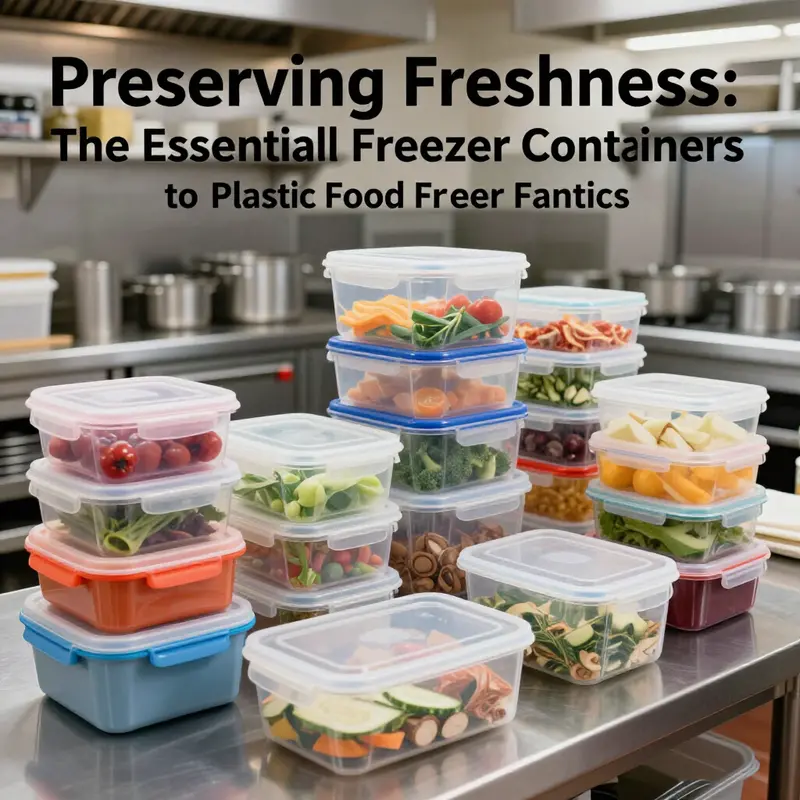
Food service professionals understand the nuances of maintaining quality and freshness in their offerings. For bubble tea shops, restaurants, food trucks, catering services, and event planners, effective food storage is a crucial aspect of their operations. Plastic food freezer containers serve as a practical solution for preserving ingredients and prepared meals, with their durable and stackable designs providing efficient storage options. This guide will delve into the durability and safety of these containers, outline best practices for their use, and address environmental considerations and alternatives, equipping you with the knowledge to optimize your food storage strategies for maximum efficiency and safety.
Durability in the Freezer: How Plastic Food Storage Containers Stand Up to Cold, Heat, and Time
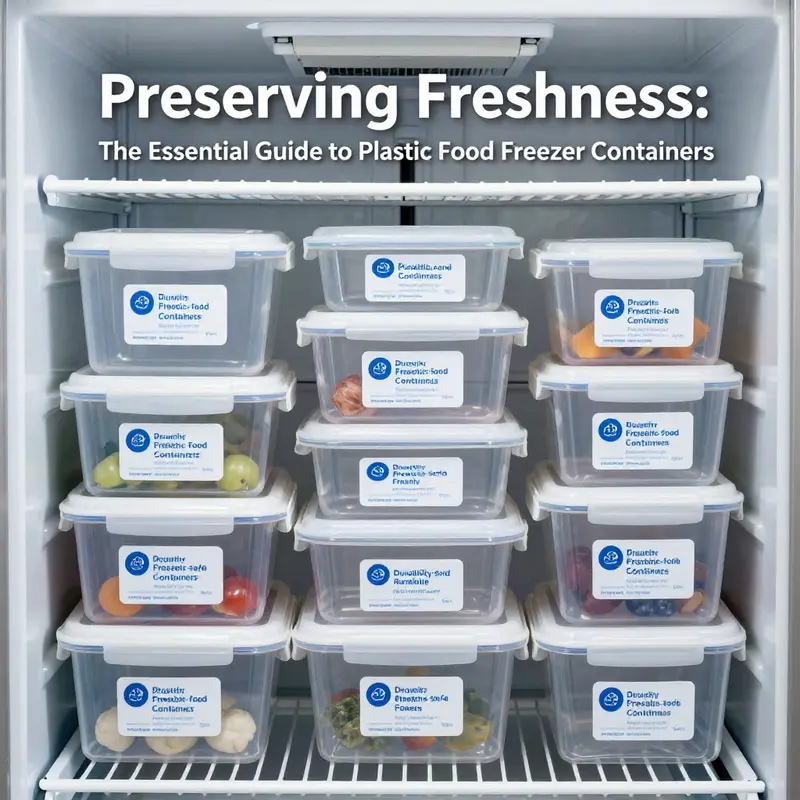
In the quiet hum of a kitchen freezer, plastic food storage containers perform a daily feat of balance and reliability. They carry everything from leftover soups to prepared meals, and they do so with a quiet confidence that belies the careful physics and engineering that keep them in service. This chapter threads together the practical realities of durability, the safety expectations attached to long-term use, and the everyday choices that influence how well these containers perform over months and even years. The conversation begins with material composition, because the way a container is made largely determines how it behaves when the temperature inside it drops, and when it rebounds again to room temperature. Most plastic freezer containers are built from polypropylene, the #5 plastic, prized for its heat resistance and chemical stability. PP resists softening when hot foods are added, and it maintains its form without becoming brittle at typical freezer temps. It is not a magic shield, but it is a robust baseline that supports long-term use in frozen storage. Alongside PP, many modern options advertise BPA-free construction, with a popular alternative being Tritan copolyester. Tritan is marketed for safety and impact resistance, features that appeal to households juggling kid-focused lunches, meal prep routines, and the need to avoid cracking or shattering if a container is dropped or knocked against a shelf. Tritan’s reputation rests on clarity, resilience, and a claim of safer repeated use across temperature swings. Its labeling often falls under the broader umbrella of “recycling code #7,” the catch-all category for plastics that do not fit neatly into the conventional codes. It’s important to recognize that a #7 designation is not a single material; it is a family of plastics that includes Tritan and others. The bottom line is that a container’s immediate safety in contact with food depends on being BPA-free or otherwise labeled as safe for repeated use, but the long arc of performance hinges on the microstructure of the plastic and how it reacts to repeated thermal cycling.
Durability, however, is not simply about what the plastic is made from. It is also about how it is used. A container that is handled gently, stored upright, and snapped closed with a reliable lid will outlast one that is dragged across the bottom of the freezer, subjected to rough cleaning, or exposed to direct heat from hot foods. The phenomenon of thermal cycling—moving between extremes of freezing and room temperature—can gradually stress plastic. In practice, this means that while a container may survive dozens of cycles, the same process can foster microfractures, subtle clouding, and, over a long horizon, a degree of brittleness that was not evident in the first months of use. The physical processes at work here are straightforward, even if their consequences can feel invisible. Temperature changes expand and contract the plastic at slightly different rates depending on the material and the presence of any reinforcing layers, such as thick walls or reinforced corners. If a container is exposed to brute temperature shifts—say, transferring a batch of hot soup directly from the stovetop into a freezer drawer—the strain is greater than if the liquids have cooled to room temperature first. That is why many guidelines stress letting hot foods cool before sealing and freezing. The same principle applies when you consider the shape and design of the container. A design with sharp corners or intricate grooves does not merely look neat; it can trap food, create cleaning challenges, and become a point where stress concentrates during freezing. From a safety standpoint, such edges can also become sites for uneven heat transfer or for micro-scratches to form after repeated cleaning. These scratches might seem minor, but they can harbor bacteria and, in combination with heat during later reheating, potentially increase the likelihood of surface contamination. The practical consequence is that durability is not a single attribute but a blend of material integrity, design simplicity, and mindful use.
When we talk about safety, the conversation must include regulatory and labeling realities. Containers that carry explicit assurances of being BPA-free, microwave-safe, and freezer-safe are signaling adherence to standards that respond to real consumer concerns. Food-contact safety is a baseline expectation, and compliance with food-safety standards helps provide a level of confidence that what is stored will not introduce unwanted substances or hazardous interactions with foods. Even with these assurances, the long-term performance remains contingent on the quality of the batch, the environment in which the container is stored, and the care with which it is cleaned and handled. Overheating risks are particularly important. A container placed directly on a heating element or exposed to high oven temperatures can warp, deform, or soften, compromising the seal and inviting leaks or spillage. The lesson here is pragmatic: avoid direct placement on heat sources and allow foods to cool before freezing. A well-timed step like this reduces stress on the container walls and minimizes the chance of denaturing the gasket that keeps liquids contained. Speaking of gaskets, the lid system is a crucial, often underappreciated element of durability. Airtight seals with silicone or similar gasket materials help preserve freshness and suppress freezer burn by limiting air exchange. A robust seal contributes to a container’s perceived durability because it reduces the number of times a user must inspect the contents for freezer burn, helps maintain the sensory and flavor integrity of the food, and minimizes the need to transfer contents to another vessel mid-storage. An intact seal also means less moisture loss and less chance that odors will permeate the surrounding freezer space. In other words, durability is not merely about the container’s walls; it is also about the reliability of its lid and seal.
From a practical standpoint, the best path to durable, safe use is one that balances the initial quality with realistic, everyday behavior. The research landscape emphasizes choosing containers that clearly label themselves as BPA-free or using polymer families with documented safety profiles for repeated use. It also highlights the virtue of water- and chemical-resistant surfaces that maintain their integrity with regular cleaning. Harsh detergents or abrasive scrubbers can create micro-scratches that become micro-havens for bacteria and sites where chemical leaching could, in theory, become more likely when the plastic is heated later in the process. So the advice is not to avoid cleaning, but to clean with care: mild detergents, soft sponges, and a careful eye for any loss of clarity or a rough texture on the surface. The visible indicators of aging—clouding, dullness, or slight warping—should be read as signs to replace older containers rather than to press them into service for longer cycles than they were designed to endure. In real-world kitchens, people often accumulate containers across seasons, accumulating wear that a single batch cannot mimic. The real measure of durability, then, is not merely how a container looks when new, but how it acts after a year of weekly use, how it holds up after multiple dishwashing cycles, and whether it continues to seal, resist odor transfer, and perform safely when it next meets hot liquids.
One point that bears repeating is the caution around long-term performance compared to alternatives such as glass or silicone. Glass offers exceptional chemical inertness and stability under freezing and heating, with a different risk profile focused on breakage rather than shattering. Silicone has its own advantages, including excellent flexibility and resilience in extreme cold, though it may present different challenges in terms of heat transfer and weight. Plastic, by contrast, is lightweight, inexpensive, and highly versatile, features that drive its widespread use in meal-prep routines, portion control, and families managing busy schedules. The decision to use plastic containers for freezing often comes down to a balance between convenience and risk management. If one’s freezer contains a mix of plastic and glass, the careful use of each format according to the food type and portion size can maximize safety and longevity. For example, liquids and soups benefit from generous headspace to accommodate expansion, a practice that reduces stress on the lid and minimizes the chance of leaks. This headspace is a small but meaningful detail that can preserve the container’s integrity over many cycles. Avoiding complex shapes and sharp corners that complicate cleaning and expanding food contact surfaces can further reduce risk and help maintain a container’s pristine state for longer.
The broader takeaway is that durability cannot be reduced to a single metric. It is a culmination of material science, thoughtful design, and mindful usage. A high-quality plastic container that is clearly labeled for freezer and microwave use, matched with careful handling and an emphasis on maintaining a proper headspace for liquids, will perform well in the short term and likely through a substantial portion of the product’s life. In the longer term, if the container begins to cloud, warp, or lose its seal, it may be time to consider a replacement that offers more durable performance in the exact conditions you regularly encounter. The option to move toward glass or silicone exists not as a rejection of plastic but as a measured response to durability concerns, especially for households that face frequent, heavy use, frequent freezing of liquids, or a desire to minimize the risk of leaching. At the same time, plastic remains the most practical choice for many people, because it blends lightweight practicality with sufficient safety when used as directed. The key is to recognize what is involved in making a durable plastic container work well: material choices that favor stability, a thoughtful lid design that preserves freshness, and disciplined daily practices that protect the container from heat shocks, aggressive cleaning, and needless wear.
From a consumer education perspective, the conversation about durability and safety should emphasize clear labeling and adherence to guidelines that help users understand how to maximize performance. Consumers should look for indicators of freezer safety, microwave safety, and gluten-free or food-safety certifications where applicable, all of which signal that a container has met certain standards. Attention to the shelf life of the plastic itself—what it can withstand across repeated freezes and thaw cycles without losing its protective function—can inform practical decisions about when a container should be retired. This approach acknowledges the realities of modern kitchens where time, space, and budget play central roles, and it respects the fact that the best storage solution is often one that aligns with a user’s specific cooking style and freezing frequency.
In sum, the durability and safety of plastic freezer containers emerge from a careful interplay of material science, product design, and consumer behavior. The polypropylene base provides a sturdy framework for everyday use, while BPA-free expressions of safety, including materials like Tritan, offer additional peace of mind about repeated contact with foods. Yet durability remains contingent on avoiding extreme heat exposure, maintaining good cleaning practices, and choosing containers with reliable lids and seals. The practical benefits—stackability, light weight, and a broad range of sizes—continue to make plastic containers a fixture of freezer strategy for many households. As with any kitchen tool, the most satisfying outcomes come from understanding both the strengths and the limits of the tool at hand, and applying that understanding to a routine that respects the science while remaining adaptable to the realities of daily life.
External resource for further reading: For a comprehensive evaluation of plastic food storage containers, including durability, safety certifications, and real-world performance across freezing, microwaving, and dishwasher use, see the Consumer Reports overview at the following external source.
External resource: https://www.consumerreports.org/plastic-food-storage-containers/a123456789
Preserving Freshness and Safety: Mastering Best Practices for Plastic Food Freezer Containers
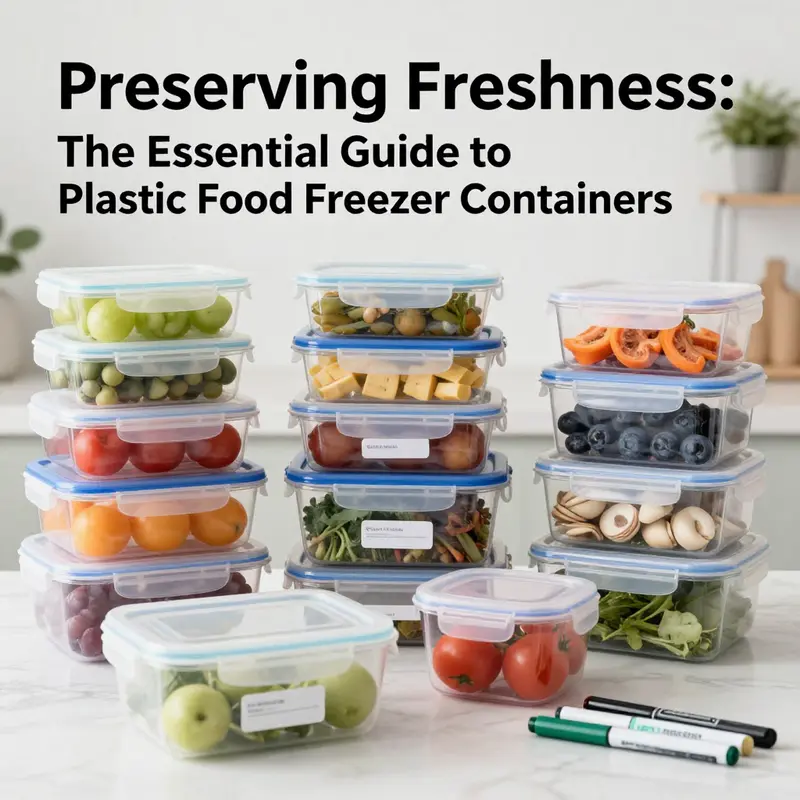
Plastic food freezer containers offer a reliable, everyday way to extend the life of ingredients and meals. They are lightweight, convenient, and designed to withstand the rigors of freezing, stacking, and often even reheating. Yet convenience alone does not guarantee safety or quality. A thoughtful approach to selection, use, and maintenance can dramatically improve how well these containers protect both the food you store and the container itself over time. The core idea is simple: treat the freezer as a controlled environment where small decisions—about material, filling, sealing, and care—compound to preserve texture, flavor, and safety for months rather than weeks. Read through the practical principles below as a single, integrated practice rather than a checklist. The aim is a seamless routine that becomes second nature, smoothing the path from kitchen to freezer to plate without compromising safety or quality.
First, the foundation rests on choosing the right containers for freezing. Not all plastics are created equal in the cold. The label freezer-safe is more than marketing jargon; it indicates that the material has been tested for low temperatures and repeated thermal cycles. Among the materials commonly recommended for freezer use are high-density polyethylene (HDPE) and polypropylene (PP). These polymers tend to resist becoming brittle in the cold, maintaining structural integrity through cycles of freezing and thawing. Some container designs rely on BPA-free versions of what is sometimes categorized as #7 plastics, with the material chosen to minimize chemical migration when in contact with food. The emphasis here is safety during storage, not just during use. Even materials deemed freezer-safe can degrade over time if subjected to extensive freeze-thaw cycles, fluctuations that are almost inevitable in a busy household. Microfractures or slight clouding can develop with repeated exposure to extreme cold and rapid changes in temperature; these signs should prompt a careful reassessment of whether to continue using that container or gradually transition to a different option.
This is where the long view matters. Plastic’s appeal lies in its balance of cost, durability, and convenience, but it is not a panacea for long-term storage. Over the course of several months, a container’s wall might endure countless cycles of freezing and room-temperature exposure. Even when the material remains physically intact, micro-damage can subtly alter how well it seals and how easily it can be cleaned. Warping can compromise the lid’s fit, while microfractures may harbor bacteria in tiny crevices that are hard to reach during washing. The upshot is not just about food safety in a vacuum; it is about practical performance in the kitchen. If a container begins to show signs of wear—scratches, dullness, or a persistent odor absorbed from previously stored foods—that is a signal to retire it from freezer duty. In such cases, moving to a fresh container reduces risk while preserving the quality of stored foods.
A guiding principle in practice is to respect headspace. When freezing liquids, sauces, soups, or smoothies, leaving 1 to 2 inches of headspace accounts for the expansion that occurs as water turns to ice. Without adequate headspace, you may end up with leaks, cracked lids, or even ruptured containers. This simple rule can dramatically reduce messes in the freezer and the need to defrost to salvage spilled contents. It also helps preserve the container’s integrity and prevents the formation of ice crystals that can affect texture and taste over time. In addition to headspace, the shape and design of the container matter. Containers with sharp corners or complex interior geometries can trap food, complicate cleaning, and create uneven freezing. If possible, choose rounded corners and straightforward interiors that promote even freezing and easier cleaning. The ease of cleaning, in turn, reduces the risk of bacteria growth after thawing, because residues and odors are less likely to linger in crevices that are hard to reach.
Sealing is another pivotal piece of the puzzle. An airtight lid minimizes exposure to air, a major contributor to freezer burn. Freezer burn can rob food of moisture and flavor, producing dry, leathery surfaces and altered textures. A solid seal helps maintain the intended moisture balance, preserving the aroma and mouthfeel of foods. It is also sensible to label containers with the contents and the date of freezing. Clear labeling supports efficient meal planning, helps prevent the mis-storage of leftovers, and ensures frozen foods are consumed within a reasonable window. When you stack containers in the freezer, ensure lids are securely in place and avoid placing heavy items directly on top of lids, which can distort edges and jeopardize the seal over time. A well-sealed, properly labeled container becomes part of a dependable system for reducing waste and maintaining the quality of frozen meals.
From a practical standpoint, not every container is intended for reheating. Some plastic freezer containers are microwave-safe for reheating, but it is essential to verify the labeling before applying heat. The reheating guidance is not universal; even containers marketed as microwave-safe may have limits about temperature, duration, or the type of food they can safely heat. When in doubt, remove the contents to a microwaveable dish before reheating, and use a thermometer to ensure the food returns to a safe temperature evenly throughout. Heating food inside a container that was not designed for microwaving can cause deformation, uneven heating, and potential migration of additives into the food. Ensuring the label explicitly confirms microwave compatibility reduces risk while expanding convenience.
The life of a plastic freezer container is ultimately defined by its condition. Regular inspections are a simple, practical habit. Look for cracks, warping, clouding, or odor absorption, all of which signal that the material has begun to lose its barrier properties or is harboring residues. Scratches can harbor bacteria and scratch-prone surfaces are harder to sanitize thoroughly. A worn container is no longer a reliable barrier between your food and the outside environment. If any sign of damage appears, retire the container and replace it with a new one. This approach protects both food safety and the consumer’s peace of mind. It might feel counterintuitive to refresh containers periodically, but the payoff is the reduction of potential contamination and a clearer sense of control over the stored contents.
Careful maintenance of plastic freezer containers also entails thoughtful cleaning. Dishwasher compatibility varies across designs; some containers tolerate heat and aggressive detergents, while others do best with hand washing to preserve the seal and coloring. Always follow the manufacturer’s guidance for washing, drying, and storage. A habit of letting containers dry completely before reassembly helps prevent moisture entrapment, which can contribute to odor retention and microbial buildup. When drying, a vertical air-dry approach with lids separated can be more effective than stacking while damp. In addition, avoid placing containers in direct sunlight or near heat sources when not in use. Ultraviolet exposure and heat can accelerate material degradation, particularly in recycled or lower-grade plastics, shortening the life of the container and potentially affecting its performance in the freezer environment.
A broader consideration is sustainability and the ongoing debate between plastic, glass, and silicone options for freezer storage. Each material brings its own tradeoffs. Glass maintains rigidity and is less prone to leaching when used correctly, though it is heavier and can break if mishandled. Silicone, known for flexibility and good cold resistance, handles expansion without cracking and can be a strong partner for long-term storage. For those aiming to minimize chemical exposure risks, especially with fatty foods or long-term storage, choosing glass or silicone for certain items can reduce the cumulative likelihood of leaching and preserve texture and flavor more reliably over many months. Still, plastic remains a workable option for many households when used with discipline: selecting freezer-safe materials, avoiding overfill, maintaining seals, and retiring damaged containers promptly. In a well-managed system, the strengths of each material can be leveraged according to the storage scenario, kitchen workflow, and the frequency of use.
Implementing best practices also means aligning with broader food-safety principles. For instance, cooling hot foods before freezing helps protect the container’s integrity and prevents the internal temperature of the freezer from rising, which could affect other stored items. Rapid or uneven cooling can create conditions that favor bacterial growth in the very moments food is transitioning from hot to cold. A practical approach is to allow foods to reach room temperature briefly, then refrigerate them before transferring to the freezer in appropriately sized portions. Portion control is another advantage of plastic freezer containers. By dividing large quantities into smaller servings, you reduce the time required for freezing and thawing, and you improve consistency in texture and moisture retention. When portions are ready, label them with clear content descriptions and dates. This habit not only helps with meal planning but also minimizes the risk of keeping forgotten leftovers. A thoughtful labeling system—perhaps using a simple, legible handwriting or a standardized label—can cut down on guesswork and ensure that you eat the food within a safe timeframe.
Beyond the home kitchen, there is a personal choice dimension: how long you expect to rely on plastic containers versus whether you want to transition to glass or silicone for certain uses. For frequent or extended freezing, many households find that glass or silicone options offer more durable performance under repeated cycles, especially when you anticipate frequent reheating or longer storage times. This does not negate the convenience of plastic; it simply reflects a strategic approach to selecting the right tool for the job. When you build a system that uses plastic for everyday, quick-freeze tasks but reserves glass or silicone for more delicate items or longer-term storage, you gain both efficiency and confidence in protecting your food’s safety and quality. Over time, this balanced approach can reduce waste and help maintain the sensory properties of frozen foods, avoiding the subtle alterations that can accompany long stretches in plastic alone.
In closing, the best practices for using plastic food freezer containers revolve around mindful selection, careful filling, secure sealing, and ongoing assessment. They are about recognizing that plastic, in all its convenience, is also a material subject to wear and aging. The goal is to keep your food safe, your containers functional, and your kitchen routine smooth. With these principles in place, you can store a wide range of foods—from soups and sauces to cooked grains and pre-portioned proteins—while preserving their flavor, texture, and nutrient integrity. The freezer becomes not a mystery box but a predictable stage in your cooking life, where food remains accessible, safe, and ready when you need it. If you seek further authoritative guidance on what materials are approved for food contact and how they interact with storage practices, the U.S. Food and Drug Administration offers questions and answers that address food-contact materials and safety considerations, including how to interpret labeling and what to look for when choosing storage options: https://www.fda.gov/food/food-contact-materials/food-contact-materials-questions-and-answers
Reframing Freezer Storage: Environmental Footprints and Viable Alternatives to Plastic Containers
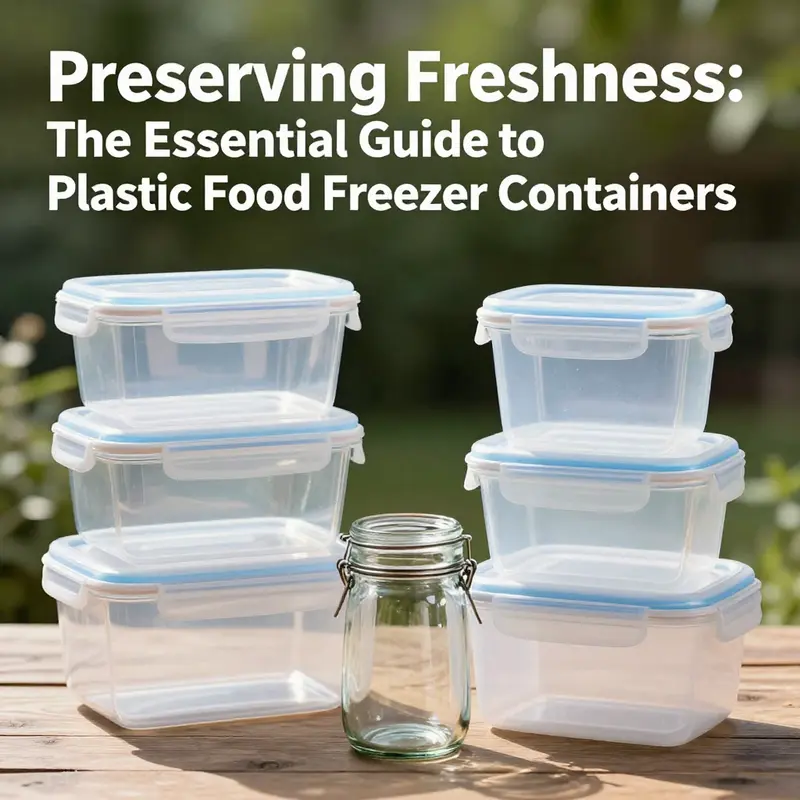
Plastic food freezer containers have become a mainstay of modern kitchens, offering convenience, portion control, and the promise of long-term food preservation. Yet the chapter this discussion belongs to invites readers to look beyond the immediate utility and ask a more fundamental question: what are the broader environmental footprints attached to these common vessels, and what practical, safer, and longer-lasting alternatives exist for the freezer? The answer sits at the intersection of material science, waste management, and everyday judgment about how we store, re-use, and eventually dispose of our meals. To understand why this question matters, it helps to trace the lifecycle of typical freezer plastics—from raw feedstocks to production, use, and end-of-life fate. Most freezer-safe plastics are derived from fossil fuels, and their production consumes energy and emits greenhouse gases. Once in our homes, these containers endure repeated thermal cycling as items are moved from cold storage to room temperature for thawing and reheating. Over years, this cycling can lead to microfractures, warping, or clouding, especially when containers bear sharp corners or intricate shapes that trap residue or are hard to clean. While these materials are designed to be durable and dishwasher- or microwave-safe, their performance in the long haul under extreme cold and frequent temperature swings remains less certain than that of alternatives such as glass or silicone. This is not a plea to abandon plastic storage entirely but a call to recognize both its conveniences and its limits, particularly when the goal is to reduce environmental impact while maintaining food safety and quality.
From a broad ecological perspective, the most pressing concerns are less about a single use and more about a pattern of consumption and disposal. Plastics used for food storage—often polypropylene (PP) or polycarbonate—originate in fossil-fuel systems and tend to degrade slowly in landfills, sometimes taking a century or longer to break down fully. During that slow degradation, plastics can fragment into microplastics that migrate into soil, waterways, and, ultimately, the food chain. The presence of microplastics has been detected in drinking water, seafood, and even human blood, raising important questions about chronic exposure and cumulative effects. While the exact health implications remain the subject of ongoing research, the precautionary impulse is clear: reducing reliance on persistent plastics for long-term storage can help minimize a suite of environmental and public health concerns.
In light of these realities, many households explore eco-friendly options that pair safety with a gentler environmental profile. Two materials emerge most prominently as durable, reusable, and freezer-appropriate alternatives: glass and silicone. Glass containers are inert and non-toxic. They do not leach chemicals under repeated cycles of freezing and reheating, and their integrity endures when properly cared for. Importantly, glass is infinitely recyclable and, in practice, can function for decades with minimal functional loss if dropped or chipped infrequently. The durability of glass translates into lower long-term waste and a more straightforward path toward a circular economy, especially when households adopt a practical system for cleaning, storage, and safe handling. The main caveat is weight and breakage risk. In a busy kitchen or a family home with small children, glass demands careful handling, frequent inspection for chips, and dedicated storage solutions to prevent accidents. Yet when durability and chemical inertness are prioritized, glass stands out as a long-term environmental winner, assuming one can manage its practical constraints.
Silicone, made from silica (sand), presents a flexible, resilient middle ground between glass and plastic. It remains stable across a broad temperature range, from about -40°C to as high as 230°C, which covers freezing and reheating needs without compromising structure or safety. For many households, silicone freezer containers can seal tightly, resist crimping, and maintain a pliable integrity even after repeated thermal cycles. They are non-toxic and generally avoid chemical leaching, contributing to safer food storage over time. While silicone is durable, it is not as easily recyclable as glass, and some programs that do recycle silicone require specialized streams or take-back initiatives from manufacturers. However, its combination of flexibility, temperature tolerance, and reuse potential makes silicone a compelling option for households seeking to reduce plastic waste without sacrificing practicality in the freezer.
A thoughtful comparison reveals the key trade-offs in choosing among these alternatives. Glass containers offer the strongest case for lifecycle sustainability due to high reuse potential and near-zero risk of chemical migration. They do, however, demand more careful handling and heavier storage, particularly for larger families or households with limited space. Silicone provides a flexible, resilient option that can handle a wide range of sizes and shapes, often with leak-resistant lids and collapsible forms that save space when not in use. Yet its end-of-life options may be less straightforward than glass’s, given recycling pathways that vary by locality. Traditional plastics, especially when they are high-quality BPA-free varieties, still deliver convenience through lightness, stackability, and often broad compatibility with microwaves and dishwashers. The decision at hand, however, is less about a single superior material and more about aligning the choice with the user’s values, storage needs, and willingness to invest in a long-term system for food safety and waste reduction.
Beyond material choice, responsible freezer storage also hinges on how we use space and how we handle liquids. A recurring practical note is to leave adequate headspace when freezing liquids; this headroom accommodates expansion and reduces the risk of container pressure buildup, lid leakage, or seal failure. Shape matters, too. Containers with complex geometries or sharp corners can trap residual food or ice, making cleaning harder and encouraging microbial growth if not cleaned promptly. In short, the best freezer container is one that minimizes the likelihood of cracks, leaks, and stubborn residue while maximizing the container’s lifespan through mindful use and proper care.
Importantly, even as households adopt glass or silicone for future storage, plastic does not vanish from most kitchens overnight. It remains convenient for certain tasks—bulk storage of dry goods, kid-friendly portioning for school lunches, or quick-mcoopmeal prep where weight and space are critical. The challenge is to balance those conveniences with a broader commitment to reducing environmental footprints where possible. For example, when non-freezer uses are in view, some households explore paper-based packaging options that can be reused or recycled, particularly for dry goods or serving. A case in point is the kraft paper packaging family, which has evolved to include bowls and containers designed for take-away use and lids that help preserve freshness during transport. While not a direct substitute for freezer-safe containers, these options illustrate a broader trend toward materials that can be repurposed or recycled with less long-term environmental consequence. For readers curious about a concrete example of paper-based storage packaging, you can explore a disposable kraft paper bowl intended for food packaging with lid. disposable kraft paper bowl for food package with lid.
If the reader is weighing the practicalities of broader household waste and is considering the full life cycle of the storage system, it helps to pause and reflect on a widely cited, overarching framework. The long-term ecological footprint of plastics hinges not just on a single use but on the cumulative effect of manufacture, disposal, and microplastic dispersion into the environment. This is why many waste management and environmental assessments emphasize the benefits of reusing durable materials like glass and silicone rather than relying on disposable plastics for routine storage. The zero-waste ethos finds its strongest allies in durable, inert containers that can be cleaned and reused countless times, while still offering the everyday convenience that makes meal prep and freezer organization feasible. It is a shift that invites us to reimagine how we approach everyday storage: from an impulse purchase of a stackable plastic set to a considered system that prioritizes materials with favorable recycling profiles, predictable safety for repeated use, and the flexibility to adapt to changing household needs over many years.
In drawing these connections between material choice and environmental outcomes, it is also useful to situate the discussion within the broader regulatory and policy context. Government and industry programs increasingly encourage or require safer, more sustainable material choices and end-of-life stewardship. These shifts can influence what is readily available to consumers, the viability of take-back programs, and the development of recycling streams that can handle diverse materials—from glass to silicone to various forms of plastic. The upshot for the informed consumer is a practical, nuanced approach: favor glass or silicone for long-term storage and high-frequency use, be intentional about the types of plastics kept for occasional or short-term storage, and look for products that offer robust warranties and clear guidance on cleaning and care. It is not merely a question of personal preference but of a broader responsibility toward resource stewardship and a more circular economy in which materials are reused rather than discarded after limited lifespans.
To support this shift, consumers should also consider the full spectrum of disposal options that align with local capabilities. Glass has the advantage of long life and straightforward recycling where available, while silicone, although not as widely recycled, can be retained and repurposed within household use for many years. Plastic containers, when chosen, should be high-quality, BPA-free variants used within recommended temperature ranges and replaced once signs of wear appear. The aim is not to sanctify one material over another but to cultivate a storage system that minimizes waste, safeguards food quality, and respects the realities of daily life in a busy household.
The environmental argument here is not a simple dichotomy but a spectrum of considerations that blend science, consumer behavior, and local infrastructure. It invites readers to experiment with configurations, perhaps starting with a glass container set for weeknight meals and a silicone option for batch freezing of sauces, soups, and casseroles. It also prompts a mindful look at the sources of energy used in production, the ease with which the material can be repaired or replaced, and the potential for end-of-life programs that support responsible disposal. Across these choices, the guiding principle remains clear: the most sustainable freezer storage system is the one that reliably protects food, minimizes waste, and can be maintained over many years with practical effort.
For readers who want a broader reference on plastics and the environment, the U.S. Environmental Protection Agency provides authoritative context on plastics’ lifecycle, degradation, and environmental impacts. This resource can help illuminate the long-term stakes involved in plastic production and disposal, reinforcing the case for sustainable alternatives where feasible. https://www.epa.gov/learn-about-plastics/plastics-and-the-environment
Final thoughts
In the realm of food service, understanding the correct storage solutions is essential for maintaining freshness and safety. Plastic food freezer containers are an excellent choice for short- to medium-term use, offering both convenience and adaptability. By embracing best practices, you can maximize the effectiveness of these containers in your kitchen operations. However, it’s equally important to consider the environmental impact and explore alternative storage solutions for long-term use. With the insights provided in this guide, you are now well-equipped to optimize your food storage strategies, ensuring quality and sustainability in your service offerings.