
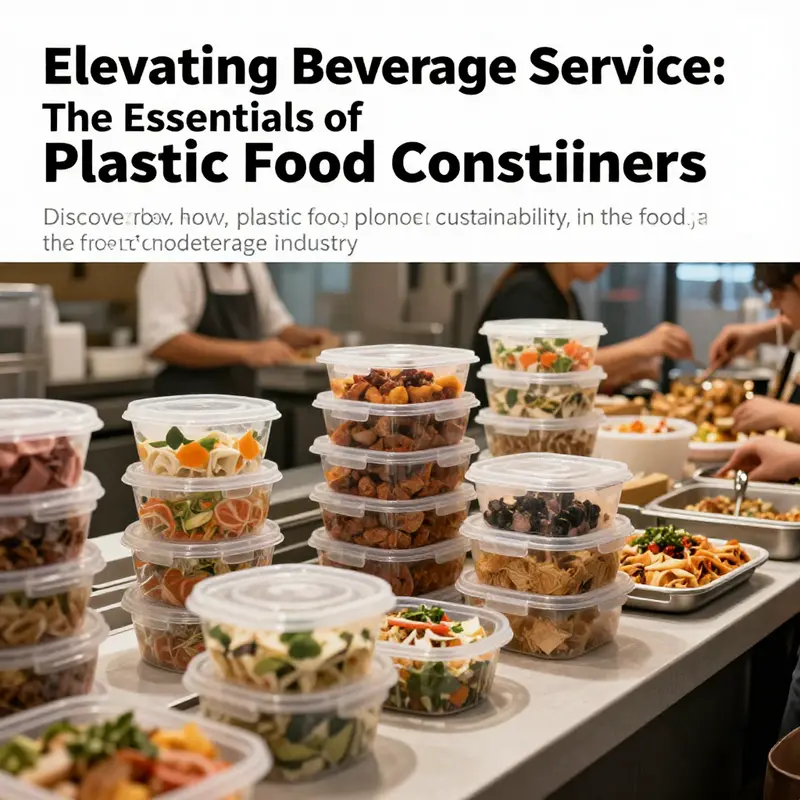
Plastic food containers are a fundamental element in the operations of bubble tea shops, restaurants, and catering services. As these businesses rely on efficient, affordable, and safe packaging, understanding the composition and materials of these containers, addressing health and safety concerns, analyzing their economic impact, and recognizing sustainability challenges becomes essential. This comprehensive guide will delve into each of these aspects, providing valuable insights tailored for food and beverage professionals.
Between Clarity and Conscience: The Materials That Define Plastic Food Containers
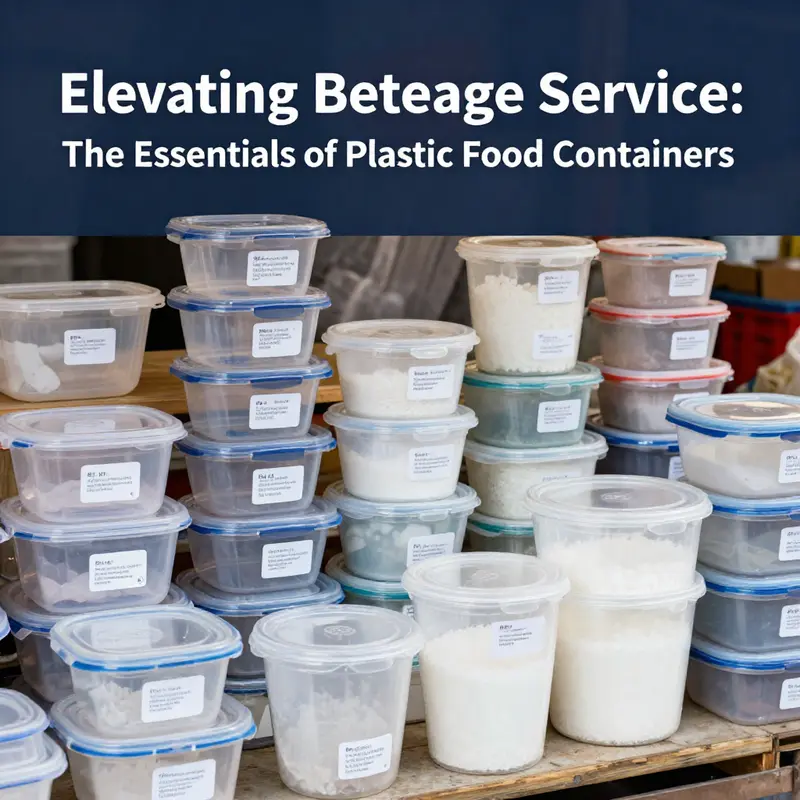
Plastic food containers are not mere shells for meals; they are carefully engineered platforms where chemistry, design, and daily habits converge. The chapter you’re about to read traces the through-line that connects everyday convenience with the tangible properties of materials science. Behind every transparent lid and every rigid box lies a choice about durability, heat tolerance, barrier performance, safety for food contact, and the ultimate fate of the container after its use. Those choices are not arbitrary. They map to how meals stay fresh, how easily a dish can be reheated, and how the packaging system fits into broader questions of waste and resource use. The backbone of this story is the family of thermoplastics—polymers that soften when heated and harden as they cool, ready to be reshaped and reused in countless forms. Each polymer brings a different balance of strength, flexibility, chemical resistance, and safety for food contact, and each has a place in the ecosystem of modern food storage and transport.
Among the most familiar is polyethylene, which exists in two main guises: high-density polyethylene and low-density polyethylene. HDPE containers are renowned for their chemical resistance and toughness. They are sturdy enough to hold dairy and pantry staples, and they can withstand temperatures that make them practical for cold and cool storage. Their heat tolerance, while not limitless, is enough to handle everyday handling and household use, often up to around 110 degrees Celsius. This resilience is a boon to households that need reliable, reusable storage that can survive repeated washing cycles. HDPE’s strengths extend to its barrier properties, which help protect contents from moisture and some aromas. The material’s recyclability is a central selling point; HDPE is identified by recycling code #2, a label that signals to recycling streams that the plastic is widely accepted in many municipal programs. Yet, the story of HDPE also includes a reminder: performance in practice hinges on how a container is used, reused, and eventually disposed of. The reality of recycling rates varies by region and system, and even the most robust polymer can become waste if it is not properly collected and processed.
LDPE, the other face of polyethylene, moves in a different direction. It is the flexible workhorse of packaging, used for film wraps, bags, and other pliant forms that protect delicate contents while offering the ability to seal in freshness. Its heat tolerance sits at a different point—slightly lower than some rigid plastics—and this soft character translates into limitations: LDPE is typically not the material of choice for microwave heating or hot liquids. Yet in the chain of packaging options, LDPE remains indispensable for its conformability and its light touch on consumers’ daily routines when a bag or wrap is all that is needed to preserve a product’s integrity during transit and storage.
Polypropylene represents another pillar in the landscape of plastic food containers. It sits at a fortunate junction of heat resistance, chemical stability, and durability. PP’s high melting point—well over 160 degrees Celsius—makes it a favorite for containers intended for microwave use and repeated reuse. Its resistance to acids, bases, and organic solvents further widens its applicability, from takeout boxes to reusable food storage vessels. The combination of rigidity, clarity, and the capacity to withstand multiple heating and cleaning cycles makes PP a versatile backbone for kitchens that demand reliable, everyday performance. At the same time, repeated exposure to heat can gradually wear PP, so users and designers alike tread a careful line between convenience and longevity.
PET, or polyethylene terephthalate, is best known for its role in single-use beverage bottles, where its clarity and strength are valued. PET’s barrier properties against moisture, oils, and gases help keep beverages fresh and carbonated until the package reaches the consumer. However, PET’s heat resistance is relatively modest, and it is not typically recommended for microwaving or for hot foods. This temperature ceiling is a defining constraint that has shaped both consumer behavior and product design. PET’s appeal is magnified by its recyclability and light weight, which contribute to lower transport energy and waste when recycling systems are functioning well. In many market contexts PET remains the dominant choice for beverages and some single-use meal containers, precisely because it delivers an effective balance of visibility, barrier performance, and cost.
A note on polycarbonate completes the quartet of commonly discussed materials. PC is valued for its strength and optical clarity, making it an attractive option for clear, impact-resistant containers. Yet concerns about bisphenol A and potential leaching have prompted a shift away from PC in many food-contact applications, especially for products intended for infants or repeated use. This caution underscores a larger point: even when a polymer performs well from a purely physical standpoint, safety considerations can reshape its market trajectory and drive the development of safer alternatives.
There are other materials that surface in more specialized contexts, including certain forms of vinyl or PVC. While these plastics can offer specific advantages in terms of barrier properties or rigidity, they also raise concerns about toxic additives and degradation at higher temperatures. In food packaging, the trend has been toward minimizing exposure to additives that might migrate into foods, especially under heat. The broader consumer and regulatory landscape has thus helped steer design toward materials that present fewer health risks while still delivering the practical benefits that users expect from modern containers.
The choice of material is rarely a single decision. It is a synthesis of the intended use, heating method, durability expectations, and end-of-life considerations. For hot foods or liquids, PP often takes precedence because of its high heat tolerance and proven safety for repeated heating. For cold storage or non-heating uses, HDPE and PET provide the strong barrier properties and clarity that many products depend on. The decision also hinges on how long a container is expected to last, how many times it will be washed, and whether the consumer values transparency and aesthetics as part of the packaging experience. In this sense, the materials are not simply raw ingredients; they are the active parts of a conversation between manufacturers, retailers, and households about safety, sustainability, and practicality.
Alongside the chemistry, there is an ever-present question of safety and standards. The labels on containers—food-grade certifications, reinforcing signage from safety authorities, and recycling codes—act as the practical interfaces through which users translate material science into everyday decisions. For example, the triangle recycling symbol with a number communicates not just the resin type but also how a container should be disposed of or recycled in many locales. Consumers who understand these cues can make choices that align with both personal health and environmental stewardship. This is where information and practice converge: choosing the right material for a given purpose reduces the risk of chemical migration, maintains quality during heating, and supports responsible waste streams when the packaging reaches the end of its life cycle.
For businesses, the material story extends into supply chains and compliance. Industrial users increasingly rely on food-grade polymers that meet international safety standards, such as FDA or EU regulations, to guarantee that products in their care do not introduce contaminants into food. In large-scale operations, suppliers offer customizable options, ranging from heat resistance profiles to barrier performance and even OEM services designed to meet exacting specifications and production scales. Yet even at this level, the material narrative remains anchored in the same core questions: Will the container protect the food from external factors? Will it withstand the heating or cooling processes it will encounter? How will it be disposed of after use, and how much of its material can be recovered and reintroduced into the cycle?
The environmental dimension remains central to the discussion. Plastics like PET and PP offer attractive performance when recycled, but real-world recycling rates do not always reflect their theoretical potential. In many regions, infrastructure, consumer participation, and market demand determine how much of the plastic packaging stream actually completes the recycling loop. Alternatives—glasses or biodegradable materials—are gaining traction in markets with strong sustainability commitments, yet plastics retain dominance in part because of their cost-effectiveness and versatile performance. The challenge is not simply to replace plastics across the board but to optimize their use so that the benefits of convenience, safety, and durability do not come at an unsustainable cost to the planet. Consumers, researchers, and policymakers alike are recognizing the value of design for end-of-life as a fundamental criterion in product development, rather than an afterthought.
Ultimately, the chapter of material composition in plastic food containers is a chapter about balance. It is about respecting the needs of hot and cold foods while protecting health and safety. It is about ensuring that a container can function in a fast-paced service environment without compromising the consumer’s trust. It is also about acknowledging the limitations of any single material and making informed choices that consider the full lifecycle—from manufacturing and use to disposal or reuse. As markets evolve, the dialogue around plastics in food packaging continues to refine its shared vocabulary: barrier properties, heat resistance, structural integrity, and recyclability are not just technical terms but the levers by which we optimize everyday meals and the systems that surround them. For readers navigating this landscape, the practical takeaway is clear: understanding the material undergirds better decisions, from kitchen drawers to factory floors, from home meal prep to the policies shaping our waste streams. For a regulatory perspective on safety, see the FDA Plastics and Food Contact resource, which provides context on how these materials are evaluated for food contact and how that evaluation translates into real-world use.
null
null
The Economic Pulse of Plastic Food Containers: How Lightweight Packaging Drives Markets, Costs, and Choices
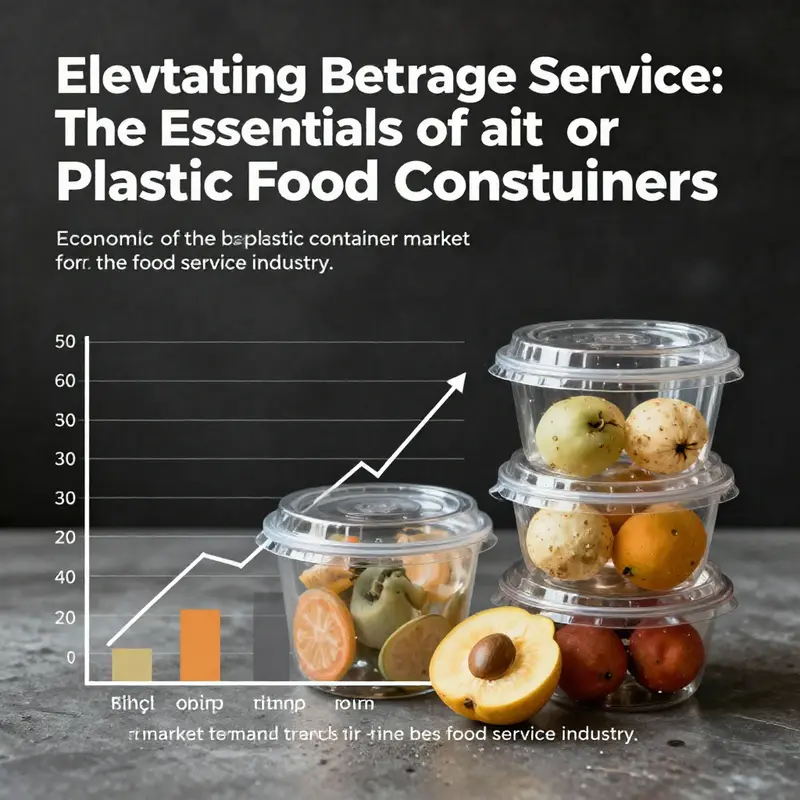
The economic pulse of plastic food containers runs through kitchens, warehouses, and checkout counters even when the word ‘packaging’ rarely makes the final receipt. These containers are not mere wrappers; they are a critical piece of the logistics architecture that carries value from producer to consumer with minimal loss and maximum convenience. In mass markets, the appeal of plastic packaging lies in its low weight, resilience under variable handling, and the ability to tailor shapes, sizes, and barrier properties to fit a staggering variety of foods. This simplicity of material and design belies a complex economic calculus. Manufacturers optimize not just for a single unit, but for millions of units aligned with production schedules, shelf life targets, and the precise rhythms of commerce. The result is a market that moves with deliberate speed and measurable impact on price, availability, and waste.
Consider the market’s scale. In 2019, the global plastic container market was valued at about USD 220 billion, a figure that has grown ever since as consumer demands tighten their grip on availability, affordability, and packaging performance. Projections extend well into the 2030s, driven by a broad spectrum of applications—from food and beverage to personal care and household goods. The expansion is not driven by fashion alone; it reflects a pricing and performance reality. Plastic containers enable long supply chains to function with fewer spoilage incidents, lower breakage rates, and a level of standardized production that supports mass distribution and uniform consumer experiences across regions.
One of the most persistent drivers is cost efficiency. Plastic packaging reduces supply chain costs in several concrete ways. First, its light weight lowers freight expenses, a factor that compounds as shipments scale globally. Second, its shatter resistance and tight seals protect products against damage and leakage, reducing returns and waste. Third, the design flexibility of plastics allows manufacturers to optimize fill lines, storage density, and warehouse space, all of which lower operating costs and improve cash flow. In retail terms, a more economical packaging solution means lower minimum order quantities, more aggressive promotions, and the possibility of offering fresh formats at accessible price points to a broader audience. Cumulatively, these savings ripple through the entire value chain, enhancing margins for producers, retailers, and, ultimately, consumers who pay lower relative prices for convenience and freshness.
Safety and quality constitute the second pillar of this economic case. Plastics act as barriers against moisture, oxygen, and oils that can accelerate spoilage or alter taste and texture. When these barriers perform well, they help preserve product integrity during transit, storage, and display. Fewer spoilage incidents translate into lower write-offs and less waste at every stage of distribution. For foodservice operators, reliable packaging means standardization in portion control, easier cold chain management, and consistent customer experiences. In markets with strict food-safety expectations, selecting a food-grade polymer that complies with international standards is not merely a regulatory checkbox; it is a strategic investment in brand trust and product quality. The efficiency gains from improved safety feed directly into the bottom line, reinforcing the argument that packaging is not a luxury but a fundamental control point in profitability.
Outside the walls of the factory, e-commerce reshapes the economics as surely as any production line. Online shopping demands packaging that can endure multiple handling events, resist moisture and crushing, and yet remain cost-effective. The rise of direct-to-consumer and click-and-collect models has intensified the need for protective packaging that also communicates product claims, nutrition facts, and branding in a compact footprint. In many economies, this convergence of convenience and protection has elevated plastic containers from background components to strategic assets in online retail. The same logic underpins the broader trend toward standardized, ready-to-fill formats that streamline fulfillment, reduce return rates, and speed up last-mile delivery.
From a materials perspective, the choices between PET and PP illustrate how chemistry maps onto economics. PET provides strong moisture and gas barrier properties and clarity that enhance product appeal on shelf and in transparent display. It is widely recyclable, which supports circular economy narratives when end-of-life streams are well managed. PP, by contrast, offers higher heat resistance and durable performance, making it a staple for reusable or microwave-safe storage. Its resilience also supports stackability and space efficiency in cold storage and transport. For many applications, the balance between PET and PP—and sometimes blends or multilayer structures—determines whether a package is intended for single-use convenience or longer-term reuse. In the context of a 200 ml round PET container used for meal prep and catering, heat distribution during pasteurization or reheating is more uniform, which can improve process efficiency and consumer experience while also influencing waste generation and recycling choices. These material distinctions are not merely technical notes; they steer procurement decisions, regulatory compliance, and the design of entire product families.
Yet the economic calculus must reckon with cautionary notes about reuse and lifecycle integrity. Containers that are reused beyond their design specifications risk scratches, warped lids, and weakened seals. Such degradation creates crevices where bacteria can harbor and where heat penetration can become uneven, potentially compromising safety if hot foods are stored, heated, or cleaned improperly. Even containers that appear clean may harbor residues or micro-life if not properly maintained. This is not merely about consumer behavior; it is about the design of a system that supports safe reuse, appropriate cleaning cycles, and timely replacement. The consequences—emerging food-safety incidents, product recalls, and reputational damage—carry tangible economic costs that can erode the advantages of plastic packaging if mismanaged. In this sense, the market incentivizes both robust packaging design and responsible consumption practices, aligning micro-level behaviors with macroeconomic health.
Environmental realities add another layer to the economic narrative. Plastics, particularly PET and PP, are technically recyclable, but real-world recycling rates vary widely by region and infrastructure. Many markets struggle to collect, sort, and process post-consumer packaging at scale. In eco-conscious segments, glass and biodegradable materials gain traction for certain product categories, creating competition for share of mind and shelf space. Yet plastics remain dominant where cost, durability, and performance are decisive. The economic logic is not simply about the material but about the entire system: how manufacturers select resins, how converters optimize processes, and how municipalities collect and recapture materials. In this landscape, improvements in sorting technology, advances in recyclable resin systems, and clearer labeling all contribute to raising end-of-life performance without sacrificing the price-performance balance that underpins market growth.
Beyond the factory floor, the economic benefits radiate into consumer spending patterns. Packaging affordability expands access to fresh and packaged foods, supporting daily routines, meal planning, and impulse purchases alike. For families managing tight budgets, cost-effective packaging helps stretch grocery dollars while maintaining product quality. For foodservice operators, reliable packaging reduces waste and spoilage, enabling lower prices for customers while preserving operator margins. In industrial settings, predictable packaging costs support budgeting for large fleets of prepared meals, catering services, and institutional programs. Every incremental improvement in packaging efficiency—whether through lighter materials, smarter shapes, or better protective features—can translate into meaningful gains across thousands of outlets and millions of end users.
From a strategic standpoint, the packaging ecosystem exhibits a painstaking blend of specialization and scale. While raw material costs—plastics, resins, and additives—fluctuate with crude oil markets and feedstock dynamics, converters, molders, and finalizeers have built a disciplined set of processes to extract maximum value from material under constraints of food safety. Compliance with safety standards—such as food-contact regulations in major markets—determines not only legal admissibility but also market access. For large operators, this means diligent supplier selection, traceability, and often contract manufacturing arrangements with customization options to fit menu formats, portion sizes, and brand aesthetics. The ability to offer scalable, compliant solutions with dependable lead times becomes a competitive differentiator, especially in fast-moving sectors like ready meals, take-out packaging, and meal-kit ecosystems.
Within this framework, alternative packaging formats are not simply ‘either-or’ options; they are part of a broader portfolio decision. As restaurants, retailers, and meal-prep services optimize margins and carbon footprints, they experiment with combinations of plastics, glass, and fiber-based materials to balance cost, safety, and sustainability. A glance at the packaging landscape reveals a growing incidence of paper-based and biodegradable solutions in formats where consumer perception favors eco-friendliness or where the environmental footprint is under scrutiny. For example, wholesale custom print kraft paper food storage salad noodle bowl demonstrates a dimension of the packaging spectrum that some operators are exploring for certain menus, events, or service models. Wholesale Custom Print Kraft Paper Food Storage Salad Noodle Bowl. This link illustrates the practical reality that packaging ecosystems are not monolithic but layered, with plastics continuing to lead in many segments while alternative materials carve out niche advantages.
Regionally, growth is uneven but coherent with urbanization and rising demand for convenient meals. In mature economies, the rate of packaging innovation slows as the market saturates and recycling infrastructures mature. In emerging markets, rapid urban growth, expanding retail networks, and the shift toward packaged foods propel demand for efficient, compliant packaging at scale. The result is a global market that, while centered on plastic resin technology, evolves through better end-of-life strategies, smarter logistics, and more tailored formats—smaller portions, multi-compartments, and microwavable features that fit busy lives. The economic effect is thus not a single score but a spectrum of impacts: from capital investment in extrusion lines and molding equipment to the subtle changes in in-store product placement and promotional deals that hinge on reliable packaging.
For readers seeking a deeper analytic framework, the Ken Research forecast offers a structured view of market trends and forecasts through 2030, highlighting how demand drivers intersect with policy shifts, consumer preferences, and the roll-out of recycling programs across regions. The narrative is not static; it reflects ongoing adaptation as manufacturers seek to balance performance, safety, and sustainability while keeping packaging costs aligned with consumer expectations. This balance—the interplay between efficiency, safety, and environmental responsibility—continues to shape investment decisions, supplier strategies, and the evolution of packaging standards across the globe. For a deeper forecast, see Global Plastic Container Market | 2019 – 2030 – Ken Research.
null
null
Final thoughts
Understanding the dynamics of plastic food containers is crucial for bubble tea shops, restaurants, and catering services. By considering the composition and materials, addressing safety and health concerns, evaluating economic impacts, and recognizing sustainability challenges, these businesses can make informed decisions that enhance their service quality while contributing to a responsible environmental footprint. The continued innovation in packaging solutions offers exciting opportunities for businesses to align their operations with modern consumer expectations.