
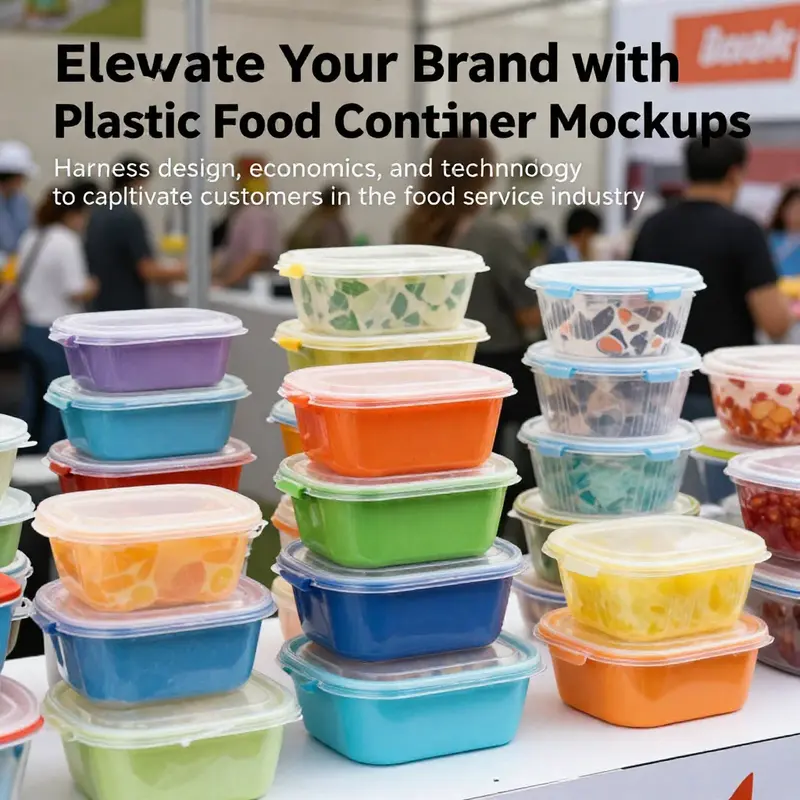
Plastic food container mockups have become essential tools for businesses in the food service industry, including bubble tea shops, restaurants, catering services, and event planners. These mockups not only allow for stunning visual presentations of your products but also play a pivotal role in branding and marketing. As we explore the intricacies of designing plastic food container mockups, we will delve into innovative techniques and tools that enhance the creative process. The economic impact of these mockups will reveal how they can save costs and increase profitability while aligning with societal trends that prompt a shift towards more sustainable practices. Finally, we will look at the technological advancements that are reshaping the mockup landscape, enabling businesses to maintain a competitive edge in a rapidly evolving market.
null
null
null
null
Conscious Containers: Designing Plastic Food Mockups in an Era of Sustainability, Safety, and Digital Trust
Designers who work with plastic food container mockups are increasingly asked to carry more than the promise of fit and function. The mockup is becoming a narrative device that communicates how a product behaves in the real world, how it aligns with evolving values, and how it speaks to consumers through the visual language of the digital era. In this light, the chapter you are reading unfolds as a cohesive reflection on how broad societal shifts—environmental urgency, health and safety expectations, the ascent of digital aesthetics, and the emergent logic of a circular economy—reframe the purpose and execution of plastic container mockups. It is not merely about how a lid seals or how a body reflects light; it is about how a design communicates responsibility, quality, and trust in a marketplace that is increasingly unforgiving of vague promises and poor stewardship.
At the core of these shifts is a growing environmental consciousness that has moved from a niche concern to a mainstream criterion. Microplastic pollution, once a distant problem discussed in academic journals, now sits at the center of consumer consideration during every unboxing moment and social-media shareable post. This awareness translates into a demand for packaging visuals that foreground recyclability, reuse, and end-of-life narratives. In response, mockups are being tailored to showcase materials and features that are compatible with circular systems. Here the design toolkit expands beyond a pretty render; it becomes a way to anticipate how the product will perform in real-world recycling streams, reuse cycles, or composting pathways where feasible. The result is a visual language that signals to buyers and regulators alike that a brand understands the stakes and is prepared to meet them with integrity.
From a material standpoint, sustainability conversations are widening the palette designers use in mockups. While traditional plastics remain in use for their durability and clarity, there is increasing exploration of recyclable or biodegradable options. PET, known for its recyclability in many jurisdictions, often appears in mockups as a reference point for how a container could be re-integrated into closed-loop systems. Plant-based polymers, while presenting their own challenges in processing and lifecycle analyses, are frequently examined in design explorations as potential pathways to reduce reliance on fossil-fuel inputs. The mockup, in these scenarios, becomes a canvas where material tradeoffs are weighed, not only in terms of performance and cost but also in terms of environmental footprint and consumer perception. The ability to simulate these material properties at high fidelity—through photoreal textures, transparent labeling, and accurate reflections—helps teams communicate the sustainability story with confidence in client reviews and stakeholder presentations.
Linked to material choices is the expanded role of labeling and information in mockups. Consumers increasingly expect clarity about chemical safety, regulatory compliance, and material composition. The mockup acts as a stage for visible safety cues, non-toxic assurances, and easily scannable information panels. This aligns with broader health-and-safety standards that have sharpened attention on potential chemical leaching and compatibility with food contact materials. Designers now design label areas with smart-object functionality to allow rapid swaps of regulatory text, safety icons, and usage instructions without disrupting the overall composition. The result is a more dynamic, information-rich presentation that upholds consumer confidence while preserving the aesthetic integrity of the product.
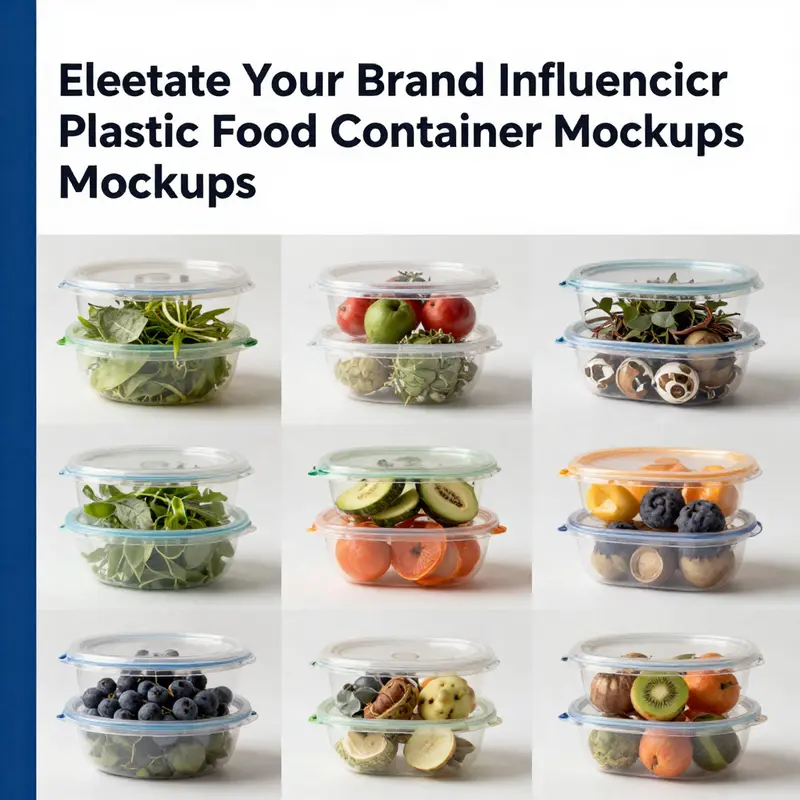
Digital influence is another dominant force reshaping plastic container mockups. The rise of virtual decision-making means brands must present visuals that not only look compelling in a static brochure but perform beautifully across social media, e-commerce thumbnails, and influencer feeds. The emphasis is on authenticity, transparency, and the ability to convey a product’s story at a glance. This has led to a preference for clean, well-lit renders that reveal material clarity, true color, and the perceived freshness of the contents. Mockups have evolved into tools for storytelling—showing how a container communicates freshness through transparent bodies, how labeling aligns with current design languages, and how the overall silhouette projects reliability even in small-screen formats. The digital-first mindset also pushes designers to consider accessibility and readability in their visuals, ensuring that critical information remains legible when scaled down for mobile viewpoints.
These digital aesthetics dovetail with a broader economic and practical imperative: the circular economy. Designers are experimenting with visuals that emphasize durability and reusability rather than single-use convenience. The mockup becomes a prototype for long-term systems, where the look communicates sturdiness, washability, and compatibility with refill or return programs. In practice, this means sculpting forms that minimize material waste during production, emphasizing secure, reusable interfaces for stacking and handling, and presenting label fields that can accommodate lifecycle data, like reusability ratings or refill indicators. The aesthetic shifts toward simplicity and modularity reflect a belief that the container’s form can be both robust enough for repeated use and ergonomic enough for everyday handling. By aligning the visual language with durability, designers contribute to a larger narrative about responsible consumption and the redesign of consumption patterns in food packaging.
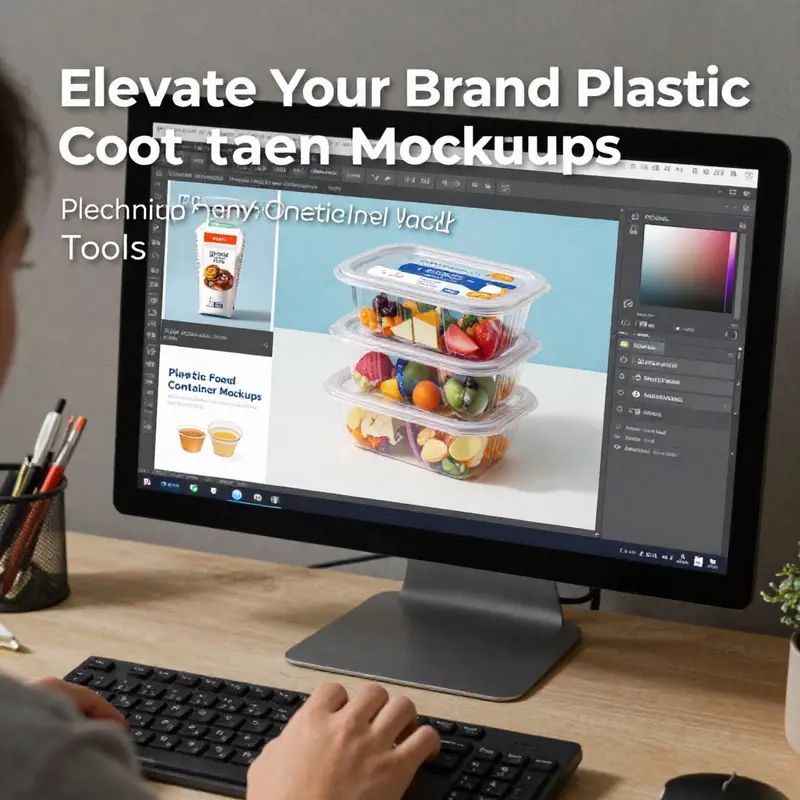
All of these currents—environmental stewardship, health and safety, digital storytelling, and circular-economy pragmatism—converge in the design tools that packaging teams rely on to communicate these ideas. A notable example is the availability of high-quality free Plastic Food Container Mockup PSD resources that enable rapid, highly editable visualization of a product in different configurations. These templates typically feature fully editable PSD files that allow designers to insert artwork via smart objects, adjust lighting to highlight material properties, and swap label content with ease while preserving a realistic, print-ready resolution. The 300 DPI resolution ensures that the visuals are crisp enough for client proofs and high-quality marketing collateral, while the organized layer structure helps teams navigate components such as the lid, body, transparency, and label areas. In practice, this means a designer can demonstrate how a container communicates environmental claims—whether through subtle embossed textures that hint at recyclability or through label designs that foreground safety certifications—without having to rebuild the scene from scratch for every concept.
The practical implications for product teams are meaningful. When a mockup can quickly illustrate a shift toward recyclable or durable designs, the entire approval cycle accelerates. Marketing can preview how a sustainability claim reads across banners and social posts; regulatory can verify that warning icons and material declarations appear consistently across mockups; engineers can simulate how a design performs under repeated use and typical handling. The ability to adapt a single mockup across multiple scenarios—single-use optimism, multi-use durability, and refillable packaging—offers a more robust platform for testing consumer response, a critical factor in a marketplace where taste in packaging design changes as rapidly as consumer preferences themselves. Moreover, because these resources often emphasize organized layers and precise, high-fidelity visuals, teams can maintain a coherent visual language when switching between different product lines or material strategies. The mockup becomes a reliable reference point that communicates both the aesthetics and the environmental or safety claims a brand wishes to advance.
In framing a narrative about these shifts, it is important to acknowledge how the design process itself adapts. Designers increasingly begin with sustainability as a design constraint rather than an afterthought. This shift affects early-stage decisions such as silhouette, lid design, and wall thickness, because these elements influence recyclability, reusability, washing resistance, and overall lifecycle performance. The mockup then serves as a testbed where hypotheses about material selection and reuse scenarios are visually tested. The eye-catching glossy reflections of a transparent container may be traded for a more matte, fingerprint-resistant finish if that trade-off supports durability and user experience in real-world reuse contexts. The mockup thus becomes a living document that communicates not only what a package looks like but how it behaves, how it can be integrated into circular systems, and how it meets evolving expectations around safety and transparency.
To connect this design discipline to practical outcomes, a designer might reference real-world references that illustrate how companies are translating these values into tangible packaging cues. One can imagine examining an eco-friendly option presented as a recyclable pulp cup holder, whose design could influence a mockup’s texture, color cues, and labeling strategies. Such references help bridge the gap between abstract principles and concrete visuals, enabling teams to present concepts that feel credible and attainable within industry constraints. This approach reinforces the idea that mockups are not merely cosmetic visuals but strategic tools for communicating a product’s lifecycle story and its alignment with consumer values. As these practices mature, the line between design research and packaging execution becomes more fluid, with mockups serving as the primary vehicle for articulating a company’s commitment to sustainability, health, and responsible consumption.
In sum, the evolving landscape for plastic food container mockups reflects a broader commitment to responsible design. By integrating environmental considerations, health-and-safety imperatives, digital storytelling practices, and circular-economy principles into the mockup workflow, designers create visuals that are accurate, persuasive, and future-facing. The tools that enable editable, high-resolution representations—especially freely available PSD templates with smart-object layers and clear label regions—play a central role in this transformation. They allow teams to experiment with form, materiality, and messaging in a way that is both efficient and strategically meaningful. The result is a more trustworthy, transparent, and aesthetically compelling packaging narrative that resonates with an increasingly informed and discerning consumer base. For practitioners, this means embracing a holistic approach to mockup design—one that treats the mockup as a living document of a product’s journey from production to plate, and one that speaks as clearly about sustainability and safety as it does about color, texture, and silhouette.
External resource: For a broader view of standards guiding packaging development and the integration of sustainability into industrial practice, see https://www.example.com/industrial-packaging-standards.
Seeing Through the Seal: The Digitally Realistic Future of Plastic Food Container Mockups
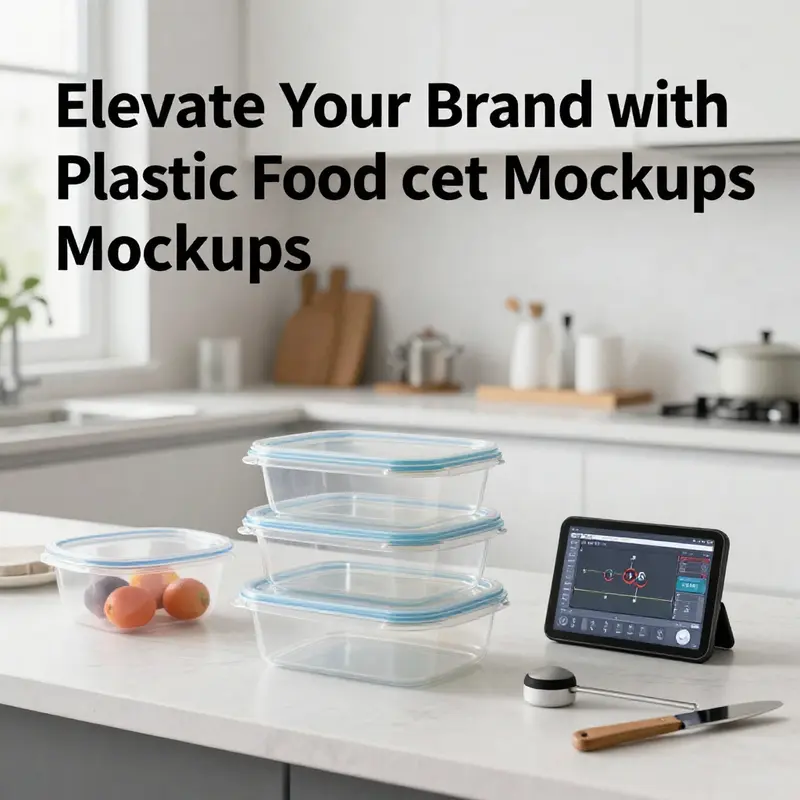
The evolution of plastic food container mockups is reshaping how brands and designers approach packaging from concept to proof. What once required static sketches and static renders has become a dynamic, multimodal process where digital realism accelerates decision-making and sharpens brand storytelling. At the heart of this shift is a commitment to fidelity: a promise that the mockup not only looks like a real product but behaves like one under the gaze of real-world conditions. Designers now expect tools that deliver precise geometry, authentic textures, and lighting that behaves consistently across a spectrum of contexts. In this light, free plastic food container mockup PSD files have become valuable entry points for both budding designers and seasoned teams. They offer fully editable layers, organized structures, and smart objects that enable quick, non-destructive updates. The result is a workflow that respects time and quality alike, ensuring that every variant—whether it carries a label, a logo, or a color shift—arrives at print and pitch with the same level of polish. The practical benefits extend beyond aesthetics; they influence how stakeholders perceive the packaging and, crucially, how they approve concepts for production. The realism of these mockups can bridge the gap between design intent and market impact, helping teams anticipate how a container will read on a crowded shelf or in a consumer’s hand. In such an environment, the 300 DPI standard for print-ready quality remains a foundational expectation. It guarantees that when a design transitions from digital proof to physical proof, edge sharpness, label clarity, and color accuracy are preserved. The importance of high resolution cannot be overstated for brand-critical packaging, where even subtle imperfections can undermine perceived quality. The modern mockup landscape, therefore, is not a mere collection of pretty pictures but a carefully curated toolkit that supports iteration, comparison, and rapid decision-making. The utility of these PSD files is enhanced by smart objects, which flatten complexity without sacrificing control. A designer can drop a new artwork into a smart object and see it reflect across the entire container, including curved surfaces and irregular corners. This non-destructive approach preserves the integrity of the underlying 3D geometry while enabling seamless experimentation with typography, imagery, and color. When a sponsor or client asks for a revised label, the changes flow through the PSD with minimal friction. The result is a more efficient approval cycle, a faster route to market, and a stronger alignment between visual identity and packaging form. Another cornerstone of current practice is the attention paid to lighting and texture. Realistic lighting does more than illuminate; it communicates material properties and product quality. Subtle reflections on a glossy plastic finish can reveal the shape of a container, while controlled shadows help convey depth and volume. Advanced rendering practices, including physically based lighting models, enable designers to simulate how a container would look in a sunlit kitchen, under store lighting, or in a cool, low-light display. These conditions influence how a label reads, how color appears, and how the overall silhouette competes in a crowded environment. The goal is consistent, repeatable realism that scales across hundreds of variants. It is not enough to conjure a pretty image; the mockup must stand up to scrutiny at every stage of the design process—from initial concept boards to client reviews and final proofs. In practice, teams increasingly rely on a suite of digital tools that support this continuum. Template-driven workflows, coupled with instance-based assets and a library of editable components, empower designers to swap container sizes, adjust lid configurations, and experiment with different aperture options without starting from scratch. The capacity to generate multiple angles and perspectives helps stakeholders understand volume, stackability, and ergonomic considerations. Such insights are especially valuable when the container must convey a specific user experience, such as secure lid closure, snap-fit features, or a visible portion of the product inside. The rise of augmented reality (AR) in packaging design complements traditional renders by situating digital models into real-world contexts. A designer can project a 3D container onto a kitchen countertop, a pantry shelf, or a storefront display to observe scale, lighting, and interaction with other objects. AR makes it possible to test how a container’s label catches the eye as a shopper looks from above, at eye level, or from a low, angled vantage point. The ability to rotate the model in space without leaving the design environment accelerates feedback loops and fosters more informed decision-making. AR also helps communicate material aesthetics to cross-functional teams who may not be fluent in 3D workflows. When a packaging concept needs to demonstrate how a container interacts with product pours, or how a label would land on a curved surface, AR provides an intuitive sandbox for exploration. These capabilities dovetail with the PSD framework. Designers can prepare layered files that are ready for smart object insertion, then use AR to preview how those layers animate and adapt in real-world settings. This synergy between desktop tooling and immersive visualization is not merely about looking good; it is about reducing risk. By experiencing a concept in-context early, teams can spot potential misreads in branding, legibility, or shelf impact before any physical material is produced. Another dimension of modern mockups is the integration of AI-generated imagery and textures. AI tools can rapidly generate a spectrum of surface textures, color variations, and micro-details that would take hours to model by hand. This acceleration is not a shortcut; it is a catalyst for creative exploration. Designers can request variants that simulate different plastics, such as transparent or translucent finishes, as well as different levels of gloss or matte treatment. AI can also produce lighting presets that reflect different times of day or display environments, enabling more robust proofs. The result is a broader palette of options for stakeholders, delivered with a speed that keeps projects moving through review cycles. The practical impact of these advances is felt most acutely in the availability of resources. A thriving ecosystem of free and paid mockup assets gives teams a head start, especially for early-stage concepts or client pitches. High-quality, top-view plastic container mockups in PSD format are particularly useful because they offer a clean canvas for testing label layout, color, and typography while preserving real-world proportions. The beauty of these resources lies in their editability; the work of experimentation remains in the designer’s hands, and the final polish comes through the combination of smart objects, texture maps, and accurate lighting. This is where the interplay between digital assets and print readiness becomes tangible. A label might look impeccable on screen, but only when applied to a true-to-life 3D form with proper textures and reflections does it prove its viability for production. In practice, that means the mockup pipeline becomes a quality gate. The work flows from abstract ideas to visible branding through a chain that preserves resolution, color, and scale. By maintaining consistent sample quality across iterations, teams reduce the number of costly revisions that would otherwise arise from miscommunications between design and manufacturing. As designers refine these digital tools, they increasingly consider sustainability as part of the visual narrative. The packaging visuals must reflect real-world choices and constraints, including environmental impact, recyclability, and end-of-life considerations. In this context, even when the focus is plastic, the ability to visualize eco-conscious narratives within a PSD-based workflow is valuable. For instance, designers can showcase recycled-content plastics, or demonstrate how a label will appear on a container produced with reduced plastic weight, without sacrificing the precision of the render. This strategic alignment between aesthetics and sustainability is complemented by cross-material explorations. Designers may compare plastic containers with alternative packaging in context, illustrating how a brand’s visual identity translates across materials. Such comparative mockups help stakeholders understand the trade-offs and opportunities inherent in packaging decisions. The practical takeaway is that the mockup ecosystem now supports a holistic design approach. It provides a bridge from creative concept to practical execution, spanning branding, engineering, and sustainability. It also democratizes access, as free and accessible PSD resources lower the barrier for smaller teams and startups to participate in sophisticated packaging conversations. For teams seeking to broaden their visual vocabulary, there is an opportunity to point to related packaging formats that share a design language with plastic containers. Eco-conscious packaging alternatives, such as disposable eco-friendly printed-logo single-wall paper cups, illustrate how branding and design systems scale across materials while preserving a consistent identity. This link is more than a practical reference; it embodies a philosophy of design that respects both form and function. You can explore such options here: disposable-eco-friendly-printed-logo-single-wall-paper-cup. Even as the industry leans into digital realism, the dialog between computer-generated imagery and physical production remains central. The mockup pipeline now routinely integrates with manufacturing workflows, ensuring that what designers envision in a PSD that includes smart objects translates into factories that produce consistent, reproducible results. When the artwork is finalized, the same smart objects that facilitated rapid iteration help lock in the final art for printing, labeling, and decoration. In this sense, mockups act as a shared language across disciplines: design, engineering, procurement, and marketing. They provide a concrete, testable representation of a concept, one that can be measured against brand guidelines, regulatory requirements, and consumer expectations. The practical value of high-resolution, AR-enabled, AI-augmented, and easily editable mockups is not only in aesthetics; it is in risk reduction, speed to market, and the ability to tell a credible, convincing packaging story. As the field continues to mature, practitioners will continue to push the boundaries of realism, while also acknowledging the need for responsible design. The chapter that traces this trajectory—from smart objects in layered PSDs to lifelike lighting, to immersive AR previews, to AI-assisted variation—reads like a manifesto for modern packaging visualization. It asserts that the most compelling visuals are not merely about beauty but about truth: that the container’s form, function, and branding can be seen clearly, tested rigorously, and refined efficiently before a single unit is manufactured. To deepen your understanding of the broader technical landscape, consider reviewing an authoritative guide on food container moulds and their technical specifications, performance insights, and best practices. This external reference provides a rigorous backdrop for designers who want to align digital mockups with material performance and manufacturing realities. For further reading, see: https://www.plasticmoulds.com/food-container-mould-explained/.
Final thoughts
In the competitive world of food service, plastic food container mockups are more than just a design tool; they are a vital component in branding strategies, economic planning, and meeting consumer expectations. By investing time and resources into understanding the techniques of mockup design, recognizing the economic impacts, and adapting to societal demands and technological advancements, food businesses can significantly enhance their market presence. As consumer preferences trend toward more sustainable and visually appealing packaging, utilizing high-quality plastic food container mockups can help elevate your business to new heights and captivate your customers.