
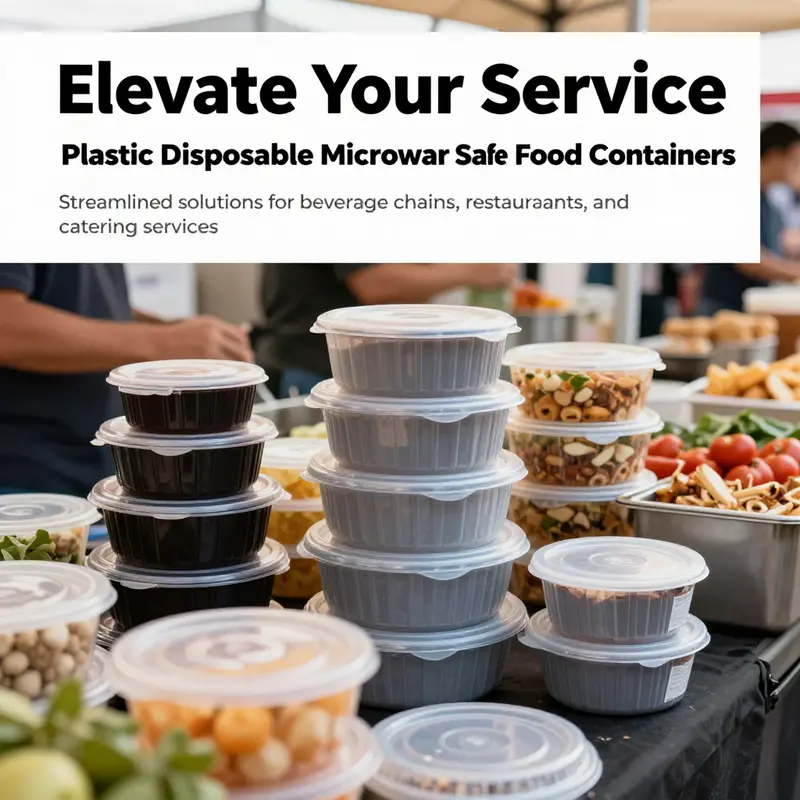
In an ever-evolving food service landscape, convenience, safety, and sustainability are vital for success. Plastic disposable microwave safe food containers offer a practical solution for businesses, catering to the needs of bubble tea shops, restaurants, food trucks, and corporate catering services. These containers, made from durable food-grade materials, not only ensure that food remains safe and fresh but can withstand heating, making them indispensable for meal prep and takeout. This article explores five critical dimensions of plastic disposable microwave safe food containers: material safety, unique features and benefits, environmental impact, current market trends, and best practices for effective usage. By delving into these areas, your business can make informed decisions, enhance operations, and better satisfy customer expectations.
Microwave-Safe Plastic Containers: Real-World Safety Beyond the Label

Most disposable microwave-safe containers are polypropylene (recycling code 5), chosen for heat resistance and relatively low chemical migration under typical conditions. However, the safety label reflects tested limits, not an absolute guarantee. Real kitchen use—fatty or acidic foods, longer reheating cycles, and aging plastics with microcracks—can alter migration patterns in ways that lab tests may not capture. Endocrine-disrupting compounds in some plastics have drawn attention, and even BPA-free substitutes like BPS and BPF can migrate under heat. The practical takeaway is to minimize exposure when possible: limit heating duration, avoid reusing cracked containers, and consider transferring food to glass or ceramic for reheating, especially for fatty meals or repeated cycles. For frequent reheating, portion meals to reduce cumulative exposure. The packaging choice should be guided by a balance of convenience, safety, and sustainability, recognizing that ‘microwave-safe’ is a cautious, scientifically informed label rather than an absolute guarantee. In parallel, exploring alternatives like kraft paper packaging illustrates a broader move toward sustainable options, though performance under heat and end-of-life pathways must also be considered. Ongoing research and transparent testing are essential to improve guidance for consumers and businesses alike.
Microwave-Safe Plastic Disposable Food Containers: Safety, Design, and Use

Overview of microwave-safe polypropylene containers used for food service. These containers are typically made from food-grade polypropylene (PP), chosen for stiffness, heat tolerance, and lightweight handling. They are marketed as microwave-safe, freezer-safe, and often dishwasher-safe, making them versatile for storage, reheating, and transport. Key design features include lids that seal securely to prevent leaks, rigid walls that resist deformation, and stackable geometries for efficient storage. The lid may be snap-on, seal-tight, or vented to allow steam release during heating. A vented lid reduces pressure buildup; a tight seal minimizes leaks during transport. Tolerances are controlled so containers nest and stack reliably, even when frozen or chilled. Clear walls help staff identify contents, while labeling and allergen information improve safety. Eco-conscious claims such as recycling options or plant-based materials are common, but performance in heating, sealing, and hygiene must be assessed for the intended use. Consumers should inspect for scratches or cracks, avoid heating highly acidic or fatty foods for extended periods, and consider transferring to a glass container for longer heating or higher temperatures. In high-volume operations, reusable options and compatible dishwashers may offer sustainability and cost benefits, but disposal should align with local programs. Finally, stay informed about evolving research on microplastics and nanoparticle release, and choose products with robust safety and disposal information.
Microwave Moments, Lasting Footprints: Reframing the Environmental Cost of Plastic Disposable Food Containers
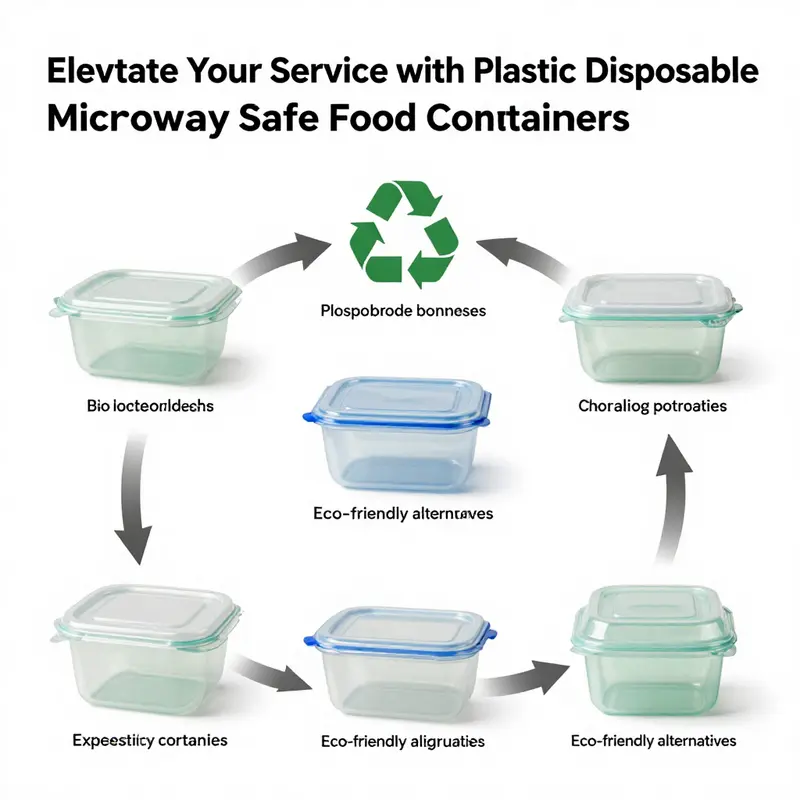
Every day, millions of meals ride in a familiar, convenient shell: a plastic disposable container designed to go from freezer to microwave and back into the fridge or trash with minimal fuss. These vessels, often made from food-grade polypropylene and other plastics, are engineered to withstand heat, resist leaks, and stack neatly for storage. Their appeal lies in the simple math of convenience: a single container spares multiple dishes, lids secure meals during a commute, and the price tag makes them accessible for households, schools, and busy kitchens alike. When viewed through the lens of the broader food system, this convenience frames a quiet but persistent debate about resource use, contamination pathways, and the ultimate fate of the packaging that holds our meals. The chapter that follows invites readers to walk through that debate with a focus not simply on performance in the kitchen, but on what happens after the meal is finished. It asks how the same properties that enable microwaving and leak-proof transport can also complicate waste streams and ecosystems, and it asks what choices, at scale, can tilt the balance toward a more sustainable rhythm of daily eating.
The materials science behind microwave-safe containers hinges on polymers chosen for their stability under heat. Polypropylene, for instance, is favored for its resilience and relatively inert surface, which reduces the likelihood of immediate chemical leaching during typical reheating. This practical reliability has earned these containers a place in home kitchens and professional settings alike because it minimizes risk during heating and helps preserve the sensory qualities of food. Yet this same durability becomes a double-edged sword when considering end-of-life outcomes. In the waste hierarchy, the engineering emphasis on heat resistance, seal integrity, and stackability translates into a packaging design that resists rapid degradation in the natural environment. The metaphoric clock that starts ticking when a meal is finished may tick much longer for plastic containers than for some compostable or reusable alternatives, especially when waste management systems are not aligned to separate and process packaging with care.
The environmental footprint of disposable microwave-safe containers extends beyond their shells. The production phase, often powered by fossil fuels, contributes greenhouse gas emissions and energy use that accumulate across billions of units. Even when the raw materials are marketed as “food-grade” or certified for microwave use, the upstream energy and materials involved in manufacturing still translate into tangible climate impacts. In addition, the life cycle does not end at the recycling bin. Recycling systems face substantial hurdles with plastics, including mixed resin streams and residues from food. Contamination reduces the feasibility of reclaiming high-purity feedstock, and the separation of different plastics in municipal programs is rarely trivial. As a result, many disposable containers end up in landfills or informal burning sites, where slow degradation and incomplete containment release pollutants and microplastics into surrounding soils and waterways. This is not merely a distant problem; microplastics from degraded packaging have been detected in soils and waters, and there is growing concern about how these particles interact with food webs and human health over time.
Beyond the product-container relationship lies a more intricate web of consumer behavior, supply chain practices, and municipal infrastructure. In many markets, the return to a circular economy hinges on robust collection, cleaning, sorting, and processing facilities that can handle a mix of resins and residues. Unfortunately, contamination from food residues and the presence of multiple resin types in a single package complicate mechanical recycling and often reduce its viability. When recycling rates lag—often well south of ideal targets—the environmental advantage of disposable containers erodes. The result is a paradox: containers that promise convenience can contribute to long-lived waste streams, aligning poorly with ambitious sustainability goals that rely on reduced material throughput and higher recovery rates.
A countervailing thread in this narrative is the emergence of more sustainable material solutions and end-of-life pathways. Some manufacturers have explored bio-based alternatives, including polylactic acid (PLA) derived from corn starch. PLA is frequently marketed as compostable or biodegradable, yet its effectiveness depends on industrial composting facilities that reach specific temperature and moisture thresholds. In many communities, such facilities are scarce or unevenly distributed, leaving PLA to persist in ordinary landfills where heat, moisture, and microbial activity are insufficient to guarantee timely breakdown. The reality is nuanced: even “biodegradable” or “compostable” designations hinge on context, and misalignment between product labeling and local disposal capabilities can mislead consumers or undermine proper end-of-life channels.
Against this backdrop, the notion of reuse takes on renewed significance. Reusable containers—glasses, stainless steel, or sturdy borosilicate options—offer a different environmental calculus because their impact is spread over many cycles. When people reuse durable vessels, the energy and materials embedded in a single unit are amortized over dozens or hundreds of uses, potentially yielding a smaller footprint per meal than a single-use alternative. The key, of course, is that reuse requires behavior, infrastructure, and incentives. It demands clear guidance on safe reheating practices, cleaning protocols, and the maintenance of seals and vents. It also presupposes reliable storage and easy access to dishwashing or sterilization processes. For households and institutions that can support these requirements, the environmental argument for reusables grows stronger, especially when paired with robust waste separation and recycling where feasible.
In the meantime, consumers and leaders can explore a continuum of options that reduces environmental impact without sacrificing safety or convenience. One practical pathway is to consider fiber-based or paper-based packaging where feasible, especially for short-term takeout or single-serve meals. These designs can be engineered to handle the rigors of transport and brief reheating while offering a more favorable end-of-life profile if they are compostable in appropriate facilities or easily recyclable in the local system. The challenge remains to ensure that composting or recycling actually happens, rather than ending up in a general waste stream. At the same time, brands and institutions can pursue consistent labeling and education that helps users distinguish which paths are viable in their region. This alignment between product design, disposal infrastructure, and consumer action is essential to moving from a convenience-centric model to a responsible-materials economy.
An informed choice begins with a clear understanding of trade-offs. For example, the feasibility of recycling disposable containers depends not only on the material composition but also on how well the packaging is cleaned and separated from other waste streams. Even minor food residues can render an entire batch unrecyclable, which is why some programs advise rinsing containers before disposal or sorting them into dedicated recycling streams. However, rinsing itself uses water and energy, and if it is not accompanied by reliable recycling capacity, the net benefit can be muted. The same logic applies to microwave heating: while many containers are labeled microwave-safe, the repeated heating process can alter the polymer surface, potentially increasing the release of microplastics if the structure begins to break down under repeated stress. The 2024 Environmental Science & Technology study by Chen and colleagues—though focused on broader takeout packaging—offers a sobering reminder that the interaction of heat, packaging, and repeated use can influence microplastic formation and cytotoxic responses in human intestinal cells. The implications extend beyond the kitchen to the integrity of food systems themselves, signaling a need for precaution and continued research as we refine both materials and practices.
To bridge the gap between efficiency and responsibility, some advocates point toward a hybrid model: keeping the ease of microwave reheating for daily meals while pushing for higher rates of recovery through design-for-recovery principles. This means creating containers that are easier to disassemble, label clearly for recycling, or that use resin types more readily separated by curbside programs. It also means investing in consumer education that explains how to reduce waste, how to choose safer options based on local facilities, and how to participate in programs that extend the life of packaging across multiple uses. In practice, this can resemble a carefully choreographed system where consumers select packaging with a clear end-of-life path, retailers provide alluring takeout options with lower environmental footprints, and municipalities support the necessary collection and processing infrastructure. When these pieces align, the argument for single-use plastic containers begins to shift from a default convenience to a deliberate, sustainable choice that respects both food safety and ecological integrity.
For readers seeking concrete alternatives within a sustainability-forward framework, consider packaging options that lean toward fiber-based solutions or recyclable designs. These pathways not only reduce reliance on conventional plastics but also invite a reimagining of how meals travel from oven to table. If you are exploring fiber-based packaging that still honors the practicality of quick service, you may encounter designs that balance rigidity, heat tolerance, and moisture management in ways that integrate with existing waste streams. In this sense, the transition is not an abandonment of convenience but a reallocation of design priorities toward environmental stewardship. A practical entry point is to examine packaging that integrates strength with recyclability or compostability, and to compare how regional waste systems handle different materials. A single decision at the point of purchase—whether to choose a compostable option, a reusable alternative, or a recyclable package—can ripple through supply chains and influence the broader trajectory of waste management.
For readers who want a concrete example of how sustainability goals can intersect with packaging design, a fiber-based option such as a kraft paper takeout container demonstrates the potential for compatibility with existing recycling streams and composting infrastructure in some regions. The idea is not to pretend that one packaging class is universally superior, but to highlight how choices can align with local capabilities and environmental ambitions. When products combine thoughtful material selection with clear consumer guidance and an accessible end-of-life path, they contribute to a more resilient food system. The broader lesson is that small, informed decisions—paired with robust municipal infrastructure and industry-wide commitments to transparency—can transform the life cycle of a disposable container from a one-way ticket into a route toward circularity.
For readers who want to explore related packaging innovations and sustainability options, see the broader dialogue around fiber-based alternatives such as the kraft paper packaging shown in various design configurations and packaging formats. This approach emphasizes not only the material’s functional properties but also its potential to integrate with composting and recycling programs where they exist. disposable-octagonal-box-restaurant-food-kraft-paper-packaging provides a window into how shape, rigidity, and sealing technology can be adapted to meet the needs of fast-casual dining while keeping in mind end-of-life considerations. To ensure a balanced understanding, it is essential to recognize that no single solution will resolve all challenges; instead, a portfolio of approaches—reusables, fiber-based disposables, and recyclable plastics—offers the most durable path forward for reducing the environmental footprint of microwave-safe food containers.
Ultimately, the conversation about plastic disposable microwave-safe containers should be framed not as a dismissal of their usefulness but as a call to integrate safety, convenience, and stewardship. Our meals arrive in containers that are designed to protect, heat, and transport with minimal fuss. The science and policy community, alongside manufacturers and consumers, must collaborate to ensure that the end-of-life outcomes of these containers align with a sustainable future. By embracing reuse where feasible, choosing materials with more favorable recovery prospects, and supporting disposal systems that can process different resins responsibly, we can retain the benefits of microwave-friendly packaging while reducing the risks of microplastics and waste leakage into ecosystems. The path forward may be incremental, yet it holds the promise of turning everyday choices into meaningful environmental gains.
External resource for further reading: The Environmental Impact of Single-Use Plastics in Food Packaging. https://www.nationalgeographic.com/environment/article/environmental-impact-of-single-use-plastics-food-packaging
Microwave-Ready and Market-Driven: The Evolution of Plastic Disposable Containers in Modern Foodservice

Every day, kitchens, offices, and grab-and-go outlets rely on a simple, often overlooked technology: the plastic disposable container that can withstand the heat of a microwave. The demand for these products is not merely about convenience; it reflects a broader shift in how people plan meals, how quickly they want to eat, and how services deliver those meals to pockets of time that feel compressed. The market for disposable microwave safe plastic food containers has expanded in step with rising urbanization, the proliferation of online food orders, and the growing appetite for ready-to-eat options. Consumers increasingly expect packaging that is lightweight, durable, and adaptable to a range of meal formats, from compact snacks to family-sized portions. In response, manufacturers have pursued a blend of performance and efficiency: materials that endure heating without degrading, designs that protect taste and texture, and forms that travel well from kitchen to consumer with minimal risk of leaks or spillage. This confluence of demand drivers has pushed packaging beyond a simple vessel for food to a strategic element of the dining experience, capable of shaping perceived value, restaurant operating costs, and even waste streams connected to disposal and recycling habits. The tension between convenience and responsibility has become a defining feature of modern packaging discourse, and nowhere is that tension more evident than in the choices surrounding microwave ready plastic containers.
At the heart of the conversation is material choice. For decades, polypropylene, particularly in grades that garner the label microwave-safe, has dominated the landscape because of its heat resistance, chemical stability, and relative cost efficiency. The ability to heat food directly in the container reduces handling steps for both households and commercial kitchens, simplifying workflows and enabling faster service. Yet the very property that makes these containers attractive—heat compatibility—also invites scrutiny. When plastic is heated, there is potential for chemical migration, and consumer safety concerns have grown as regulators, researchers, and brands seek confidence that heating environments do not compromise health. A growing body of research has highlighted that even containers marketed as microwave-safe can release a range of substances under heating, prompting a shift toward more rigorous testing, clearer certifications, and more transparent labeling. This evolution is not a rejection of polypropylene per se, but a maturation of how safety is demonstrated and communicated to end users.
Alongside safety, sustainability remains a core pressure point shaping design and material selection. Traditional plastics offer affordability and practicality, but policymakers, retailers, and consumers alike demand greater accountability for environmental impact. As a result, the industry has seen a wave of experimentation with bio-based and biodegradable options, including materials derived from plant sources that aim to reduce reliance on fossil fuels and lower end-of-life burdens. These materials promise to align with growing environmental consciousness while preserving the microwave resilience that users expect. However, the transition is not merely a matter of substituting one polymer for another. It requires validating that new materials meet stringent performance benchmarks for heat tolerance, barrier properties, and safety under typical consumer practices. In practice, this has driven a tiered market where conventional polypropylene remains predominant for cost-sensitive applications, while eco-friendly alternatives gain traction in segments oriented toward sustainability, premium positioning, or regulated environments that seek lower ecological footprints.
The shape of the market today also reflects significant design innovations. Containers now frequently feature leak-proof or vented lids, which preserve freshness and prevent disruptions during transport. Compartmentalized interiors help with portion control and dish organization, especially for meals that combine main courses with sides or sauces. There is also an emphasis on stackability and dimensional precision, with tolerances often measured in millimeters, enabling secure nesting that saves space in home cupboards and commercial coolers alike. A growing subset of designs integrates heating compatibility with consumer safety and convenience in mind, allowing users to reheat without removing contents or transferring to a second dish. These design advances are not merely about function; they are about reducing waste by maintaining portion integrity and reducing instances of food damage during transit. The result is a packaging landscape that is increasingly deliberate about how form and function reinforce each other in daily life.
The conversation about material safety and design would be incomplete without acknowledging the regulatory and consumer scrutiny that numbers these years have intensified. The research community has highlighted that labeled microwave-safe containers can still exhibit detectable chemical migration when heated, a finding that has encouraged regulators to demand more robust testing and clearer labeling. In response, manufacturers are pursuing explicit certifications, third-party testing, and traceable supply chains to reassure buyers—both home users and food service operators—of the safety of reheating practices. The dialogue does not end with safety alone; it intersects with environmental policy, waste management infrastructure, and circular economy initiatives. When packaging is designed with end-of-life in mind, it becomes easier for consumers to separate materials for recycling or reuse, thereby closing loops that were once assumed to be linear. The industry thus faces a dual mandate: deliver reliable microwave performance while facilitating responsible disposal or recycling after use. These imperatives shape not only product specifications but also how brands communicate risk and value to a diverse audience.
The market’s trajectory toward customization is another defining feature. Modern packaging is increasingly tailored to the needs of meal prep services, food-delivery platforms, and family-size takeout orders. Customization can manifest as interior layouts that accommodate multiple items, as venting solutions engineered to handle steam without leakage, or as branding opportunities that ink a consumer journey from purchase to consumption. In tandem, supply chains are becoming more responsive. The 2026 landscape in major manufacturing hubs emphasizes not just faster production but smarter sourcing of materials, with an eye toward both performance and sustainability. Companies are investing in materials innovation that aims to deliver the same heat resilience and durability while reducing environmental impact. All of this points to a marketplace that rewards suppliers who balance cost, safety, and ecological responsibility, and who can demonstrate that their products perform under real-world conditions across a spectrum of cuisines and reheating scenarios.
From a consumer behavior viewpoint, the daily decision to reuse or dispose of a given container is influenced by a blend of convenience, perceived safety, and environmental consideration. Consumers increasingly want clear signals about what a package can handle and how to dispose of it responsibly. This has reinforced the demand for transparent labeling, easy-to-understand heat guidelines, and accessible disposal instructions. It has also accelerated interest in alternatives that carry lower life-cycle burdens, whether through bio-based formulations, post-consumer recycled content, or designs that maximize recyclability with straightforward sorting. In practice, brands may offer a tiered portfolio where cost-effective standard options coexist with higher-end lines that emphasize sustainability credentials, user experience, and reliability in reheating. Within this dynamic, consumer education remains essential. For many people, microwave safety is not merely a feature; it is a confidence-building factor that influences choices about meal planning, portion control, and even the selection of delivery services.
As the chapter closes on today’s packaging landscape, it is clear that the future will be shaped by ongoing material science breakthroughs, stricter safety benchmarks, and a more explicit alignment between convenience and responsibility. The industry will likely see more hybrid materials that combine heat tolerance with improved barrier properties and lower environmental impact, paired with smarter lid designs that reduce leaks and spill potential. Certification regimes and standardized testing protocols will become more robust, helping to harmonize expectations across households, schools, offices, and food service operations. The core tension—how to deliver microwave-ready convenience without compromising health or the planet—will continue to push researchers, manufacturers, and users toward more thoughtful choices. The evolving story of plastic disposable microwave safe containers thus reflects a broader narrative about how modern life negotiates speed, safety, and stewardship in a busy, interconnected world. For readers exploring safer packaging alternatives, see this resource on eco-friendly options: eco-friendly-recyclable-pulp-2-4-cups-coffee-take-away-cup-holder. External research continues to illuminate the path forward, including industry analyses that map market size, growth projections, and emerging technologies in the disposable food packaging sector: https://www.globalmarketinsights.com/industry-reports/plastic-food-container-market
Microwave-Safe, Mindful Habits: Safely Using Plastic Disposable Food Containers in a Busy Kitchen

Disposable plastic microwave-safe containers are common in busy kitchens because they offer convenience and affordability. When used correctly they can safely heat many meals, store leftovers, and help with batch prep. The safety of these containers hinges on more than a microwave safe label. Look for the official microwave safety mark and understand that it indicates testing under typical heating, not immunity to every situation. Fatty and acidic foods can interact with plastic, so for high fat or acidic sauces consider transferring to glass or ceramic for heating. For everyday reheating, keep to containers that are specifically rated for microwave use and avoid heating highly fatty or sugary sauces in older or scratched containers. Reuse can degrade the polymer and increase the chance of leaks or migration, so use disposable containers for single meals or inspect for cracks before reuse. If you must reuse, do a quick check for warping cloudiness or cracks and stop using if you notice any damage. Heating time matters too. Follow the manufacturers suggested times, use lower power settings if possible, and stir or rotate food to promote even heating. Vent the lid when reheating to let steam escape and prevent pressure buildup that can deform the lid or container. For frequent reheating, many people prefer glass or ceramic containers. They are inert to migration and generally more durable for repeated cycles, though they may be heavier and less convenient for on the go. When working with greasy or tomato based sauces, consider transferring to a non plastic container for heating to minimize potential migration of additives. Always ensure lids and seals are compatible with the material and vent when needed. In terms of disposal and sustainability, explore options such as plant based or biodegradable containers where appropriate, but keep in mind performance under repeated heating may vary. Align your practices with local guidelines for recycling or composting and separate containers accordingly. The bottom line is to treat microwave safe labeling as a baseline guideline rather than a guarantee, inspect containers regularly, minimize heat exposure, and prefer safer materials for regular use. This mindful approach supports reliability of reheating, preserves food quality, and helps reduce waste in a busy kitchen.
Final thoughts
In summary, plastic disposable microwave safe food containers are not just a convenience; they are a vital element in enabling food service professionals to deliver quality, safety, and sustainability to their customers. Understanding microwave material safety, the unique features these containers offer, their environmental impact, and ongoing market trends equips businesses to make informed choices. Adopting best practices in using these containers will not only streamline operations but also enhance customer satisfaction. Embrace these solutions today to elevate your service and perform efficiently while meeting customer expectations.