
Plastic cup holders for disposable cups are more than just practical storage solutions; they are a vital component of the beverage industry, especially for bubble tea shops, restaurants, catering services, and event planners. Understanding their functionality and the market’s evolving needs can significantly enhance customer experience and operational efficiency. This article will delve into the workings of these cup holders, highlight advancements in design, discuss current market trends, explore sustainability considerations, and examine customization options to cater to specific business needs. Each chapter builds on the previous one, creating a comprehensive guide to integrating plastic cup holders into your service model for maximum benefit.
Grips, Hygiene, and Flow: The Hidden Mechanics of Plastic Cup Holders for Disposable Cups
A cup holder for disposable cups is never just a simple accessory. In the bustle of a cafe line, a corporate cafeteria, or a crowded event, it quietly orchestrates a sequence of actions that users perform almost automatically. The device must secure a variety of cup shapes and sizes, grant easy access, and protect contents from contamination—all while withstanding the vibrations of a vehicle, the humidity of a kitchen, and the occasional heady rush of a peak service period. From the outset, the design challenge is practical: it needs to be light enough to move, sturdy enough to resist daily wear, and forgiving enough to welcome both a slim soda can and a wider travel mug without losing grip. Materials are chosen with those needs in mind. Polypropylene and high-density polyethylene form the core in many designs, delivering moisture resistance, heat tolerance, and impact resistance. These plastics resist spills as cups are picked up or replaced, a small but meaningful safeguard against accidents that can disrupt service, create waste, or soil surfaces. In some compact configurations, designers turn to transparent ABS and polycarbonate components. The combination offers a clear view of the stack’s status while providing a rigid, durable channel for the upper portions of the dispenser. A typical tube diameter around 8.5 centimeters serves as a practical standard, balancing the ease of use with stability for a broad range of cup bodies. The tube’s interior geometry, along with surrounding grips, becomes the first line of defense against unwanted dislodgment when a person tugs at the cup or when the unit vibrates in a parked delivery vehicle. The result is a device that feels almost invisible in use, yet performs a critical job in preventing spills and preserving hygiene. In many real-world deployments, the most noticeable feature is not a flashy mechanism but a dust cover that seals the top of the stack. The cover acts as a barrier against dust, splashes, and airborne contaminants that can settle on cups between uses. A dust cover also reduces the frequency with which staff must clean the interior—an operational advantage in high-traffic environments where time is of the essence. Capacity ranges are another important design decision. A compact unit might hold as many as sixty cups, while larger, busier setups can accommodate around seventy. The number is not arbitrary; it reflects a balance between minimizing maintenance trips to the dispenser and ensuring that refilling remains practical during peak moments. The core idea across capacities is to keep cups readily reachable and clearly arranged, so users do not have to rummage through clutter to grab a drink. The functional objective extends beyond mere containment. Modern cup holders are increasingly multi-functional, offering more than a fixed row of cups. Some models are designed with optional features that transform them into lightweight trays or organizers. In such configurations, you might find shallow rests for a snack, a space for a smartphone, or compartments for napkins and lids. A subset even includes portability aids, such as belt clips or shoulder straps, making them suitable for mobile staff, event crews, or crowded environments where caregivers, vendors, and attendees all interact with the same stewarded space. This broader capability reinforces the idea that a cup holder can contribute to the overall ergonomics of a workplace, not just to the simple act of dispensing a drink. The appeal of these devices is magnified when we consider the contexts in which they operate. In vehicles, the design must resist the jolts and turns that could otherwise topple a cup or spill its contents. In offices, calm, clean lines and dependable grip promote a sense of order during busy mornings. At large gatherings, reliable throughput matters as much as appearance. In all cases, the material choice, the grip mechanism, and the stacking geometry work together to deliver a predictable user experience, so people can grab a beverage with one hand and continue their tasks safely. Despite these strengths, no design is flawless. Grip security can falter with very small or oversized containers, forcing users to adjust their grip or to lean on the dispenser’s edges for stability. Repeated use can wear down spring-loaded clamps or flexible grips, gradually loosening the hold and introducing a risk of tipping. Extended exposure to heat, especially from hot beverages, can cause deformation in lower-grade plastics, altering the fit around cups and diminishing the seal that keeps contamination at bay. In environmentally conscious settings, there is growing attention to the life cycle of these products. Recyclability becomes a key criterion when choosing materials or opting for designs with replaceable components. Biodegradable or recycled-content variants are increasingly explored, yet performance and cost remain central considerations for many buyers in hospitality and logistics. The trade-offs between durability, cleanliness, and sustainability shape purchasing decisions across markets. Color, too, matters. Neutral finishes such as white, black, grey, and silver align with many interiors and with the expectations of institutional buyers, while custom colors offer branding opportunities for event organizers or corporate spaces that want a cohesive aesthetic. The decision matrix expands further as buyers think about installation and integration. Some units are configured for wall mounting, others rest on sturdy legs, and a few are designed to be mounted magnetically or with screws for semi-permanent installations. Each mounting option has implications for accessibility, airflow, and cleaning routines. In every case, the goal remains the same: a device that supports a clean, efficient, and hygienic drinking experience without becoming a conspicuous obstacle. Given these considerations, procurement often hinges on a mix of material standards, durability expectations, and cost constraints. For venues that require bulk orders, wholesale channels and scalable production become important. Buyers weigh the reliability of suppliers, the consistency of part dimensions, and the availability of replacement components. Even small discrepancies in diameter tolerance can translate into a perception of looseness or a persistent jam when staff attempt to load or retrieve cups. When the design brief emphasizes flexibility, engineers may incorporate adjustable clamps or adaptable grip systems that accommodate a spectrum of cup diameters—from slim beverage cans to wider travel mugs—without forcing users to resort to using a different dispenser. A carefully balanced design can achieve this adaptability while keeping the unit compact enough to fit on a desk, in a vehicle console, or against a loading dock wall. The conversation around materials also intersects with environmental goals. The search for recyclable or biodegradable plastics grows louder as companies reassess packaging ecosystems and waste streams. Designers experiment with blends and formulations that resist heat and moisture while still enabling efficient recycling at end of life. In some cases, alternative materials or composite structures offer improved rigidity without adding bulk, which helps keep the footprint of the dispenser small in busy spaces. The ongoing challenge is to deliver performance at a reasonable cost, with predictable manufacturing processes and a supply chain capable of meeting mass-demand timelines. The landscape of options continues to expand as suppliers respond to demand for customization, including color options and mounting accessories. The capacity to tailor a unit to a venue’s exact dimensions means that a dispenser can blend into environments—from minimalist corporate lobbies to high-energy event halls—without compromising function or cleanliness. For readers seeking practical exemplars of this design philosophy, a closer look at compact, multi-material configurations reveals how the interplay of grip geometry, tube diameter, and enclosure details determines the feel of everyday use. In practice, a well-designed cup holder delivers more than containment; it provides a predictable tactile experience, a sense of order, and a hygienic barrier that supports staff and guests alike. Such devices earn their keep in the spaces where disposable cups are most heavily used, contributing to smoother service, safer handling, and cleaner, more organized workstations. The best designs anticipate future needs as well—evolving to accommodate new cup formats, alternative materials, and emerging hygiene practices. This forward-looking adaptability is what keeps plastic cup holders relevant as consumption patterns shift and volume grows. Ultimately, the effectiveness of these devices rests not on a single clever feature but on the harmony of materials, grip mechanics, stacking geometry, and user-centered placement. When those elements align, the dispenser becomes almost invisible in use—one more routine that helps people focus on the task at hand while the cup remains secure, accessible, and clean. For readers who want a tangible example of ongoing innovation in this space, consider exploring a model described as an eco-friendly, user-friendly option designed to hold multiple cups with ease. This reference illustrates how sustainable materials, thoughtful geometry, and practical functionality converge in a single product concept. External resource: https://www.plasticsindustry.org/insights/understanding-plastic-cup-holders-and-their-role-in-modern-consumer-lifestyles
null
null
Holding the Line: The Quiet Evolution of Plastic Cup Holders in a Growing, Greener Disposable Cup World
In a stream of attention focused on the cups themselves, the holder sits in the background yet acts as a hinge between hygiene, convenience, and waste. Plastic cup holders for disposable cups are not merely accessories; they are structural pieces that shape how customers experience a beverage—from the moment they take a cup to the last drop. In busy cafes, offices, and events, these dispensers quietly impact turnover, cleanliness, and even perceived quality. The holder’s design must balance durability with ease of use, ensuring that a roomful of cups can be accessed quickly while staying clean enough to reassure customers that what they’re handling is sanitary. The best holders not only align with the needs of high-traffic environments but also anticipate a future where environmental considerations increasingly influence every consumer touchpoint. As such, the chapter below traces how demand for disposable cups—a market segment projected to grow steadily—drives an accompanying evolution in cup holders, moving from simple stacks to smarter, more sustainable, and more adaptable systems.
Industry observers consistently note a robust growth trajectory for disposable cups themselves, with a broad market expansion that encompasses a range of beverage formats. Yet there is a parallel, even more intentional, push toward sustainability that shapes how accessories like cup holders are imagined and produced. The trajectory is clear: even as the overall disposable cup market expands, sustainability goals are reframing material choices, weight and form factors, and the end-of-life story for the entire cup-and-holder combination. When designers consider the lifecycle of a disposable cup, the holder becomes a critical partner—one that can either complicate recycling streams or smooth them, depending on its construction and compatibility with existing waste streams. The trend toward eco-friendly packaging and accessories signals that a successful holder must perform reliably while minimizing environmental impact.
From a functional standpoint, the evolution of cup holders mirrors the changing rhythms of modern consumption. A compact, transparent holder with a defined tube diameter illustrates how form follows function in a practical way: a fixed width, a clear path for visibility, and a stable base. An eight-and-a-half-centimeter diameter tube that can accommodate up to sixty cups demonstrates how designers optimize space without sacrificing access. In high-traffic settings, where speed is essential and mistakes are costly, a dispenser’s grip, release mechanism, and loading ease become deciding factors for operators. The ability to pull a cup smoothly, without jamming, reduces façade breaks in service and helps staff maintain steady flow at peak times. At the same time, such designs must resist contamination, offering features like dust covers or controlled exposure to the environment. These elements—visibility, ease of loading, and protection—are no longer luxuries; they are baseline expectations that influence decision-making for managers and procurement teams alike.
The sustainability thread runs deeply through the material choices for both cups and their holders. Consumers increasingly favor eco-friendly options, which in turn pushes manufacturers to consider biodegradable or recyclable materials for holders as well as the cups themselves. The emergence of high-clarity, eco-friendly plastics for cups—used widely in sectors like tea and specialty beverages—raises a tangible question: how can cup holders be designed to support circularity? The answer often lies in choosing materials that are compatible with recycling systems and, where possible, in using recycled content or bio-based alternatives that do not compromise strength or hygiene. In practice, this means looking for holders that can be disassembled for separate recycling streams, or that are made from materials that march in step with the cup’s own environmental profile. As the market leans toward greener cups, holders that can share in that sustainability narrative—whether through source material, end-of-life options, or modular design—gain traction with buyers who increasingly view packaging ecosystems as a single, integrated system.
Another layer of evolution comes from the user experience itself. The on-the-go consumption pattern forged by coffee shops, corporate cafeterias, and event venues creates a demand for portable, user-friendly, and aesthetically pleasing solutions. A well-designed holder offers more than just containment; it enhances ergonomics, reduces the risk of spills, and provides a sense of order in cluttered service areas. Aesthetics matter, too, as operators seek a cohesive look across their beverage environment. Subtle color options, clean lines, and the option to mount or freestand are features that enable operators to harmonize the dispenser with their interior design and brand tone. In parallel, innovations in grip texture, insulation around the tube, and lightweight yet sturdy construction respond to the real-world needs of staff who must refill, clean, and reposition units repeatedly across a shift. Taken together, these design considerations illustrate a shift from purely functional to thoughtfully integrated solutions that enhance efficiency without compromising hygiene or sustainability.
The supply chain and market dynamics surrounding cup holders reinforce the sense that this is a strategic product category, not a mere add-on. In wholesale and bulk contexts, buyers look for configurations that can accommodate varying cup diameters and volumes, while also offering flexibility in placement. Whether a unit is wall-mounted, free-standing, or magnetically mounted for quick repositioning, the decision hinges on how well the holder integrates with the workspace and the broader service workflow. Customization—within sustainable material options and color schemes—also plays a role in meeting brand standards and operational needs. While large-scale suppliers provide a range of standard designs, buyers increasingly expect modular, adaptable solutions that can grow with their venues and their evolving sustainability targets. Such expectations incentivize manufacturers to develop interchangeable components, so a single dispenser can handle a spectrum of cup sizes or be reconfigured for different events without a full replacement.
Within this broader landscape, a particular emphasis emerges on the potential for linking cup holders to greener packaging ecosystems. The idea is to pair cups with holders that reinforce the environmental narrative, whether through recyclability, reduced material usage, or the use of responsibly sourced inputs. For those seeking practical examples of environmentally conscious design, one can find offerings that highlight recyclable pulp-based materials for cup holders, aligning with circular economy principles. This approach reflects a growing conviction that the most effective environmental strategy is not merely about choosing greener cups but about building a packaging system that can be responsibly managed from cradle to cradle. For readers interested in this eco-conscious direction, a representative example of the kind of product that pairs with sustainable cups can be explored through a dedicated page that emphasizes an eco-friendly recyclable cup holder. eco-friendly recyclable cup holder.
As brands continue to pursue efficiency and responsible stewardship, the convergence of form, function, and sustainability in cup holders will become more pronounced. The market’s growth trajectory, alongside environmental concerns, gives designers and operators a framework for imagining what comes next. Expect further refinements in materials—where plastics may be replaced or complemented by bio-based or compostable options—and in geometry that improves loading and retrieval while minimizing waste. Insulation and spill resistance are likely to advance in tandem with aesthetics, blurring the line between utility and experience. The result is a dispenser ecosystem that not only serves a practical purpose but also communicates a brand’s commitment to responsible consumption. In practical terms, this means a future where a single, well-designed holder can reduce contamination risk, speed service, and support sustainability—in short, where the humble cup holder becomes a visible indicator of a broader ethical stance.
In sum, the story of plastic cup holders for disposable cups is a story about efficiency, hygiene, and environmental accountability—three strands woven together in ways that reflect the evolving expectations of today’s consumers and operators. The ongoing market expansion for disposable cups provides a fertile backdrop, while sustainability concerns push for smarter materials, modular designs, and better end-of-life outcomes. The best holders will be those that embrace this dual mandate: they must be rugged and reliable enough for busy venues, yet flexible enough to align with green initiatives and recycling infrastructures. As the disposable cup ecosystem continues to mature, so too will the systems that accompany it, with cup holders quietly playing a starring role in how we drink and dispose of beverages with responsibility and intention. For readers seeking broader context on the market drivers behind these shifts, a comprehensive industry analysis is available in external research resources that chart the evolving landscape of disposable cups and their accessories.
External resource: Global Disposable Cups Market Size, Share & Trends Analysis Report (2024-2030): https://www.grandviewresearch.com/industry-analysis/disposable-cups-market
Guardians of the Cup: Reimagining Sustainability in Plastic Cup Holders for Disposable Cups
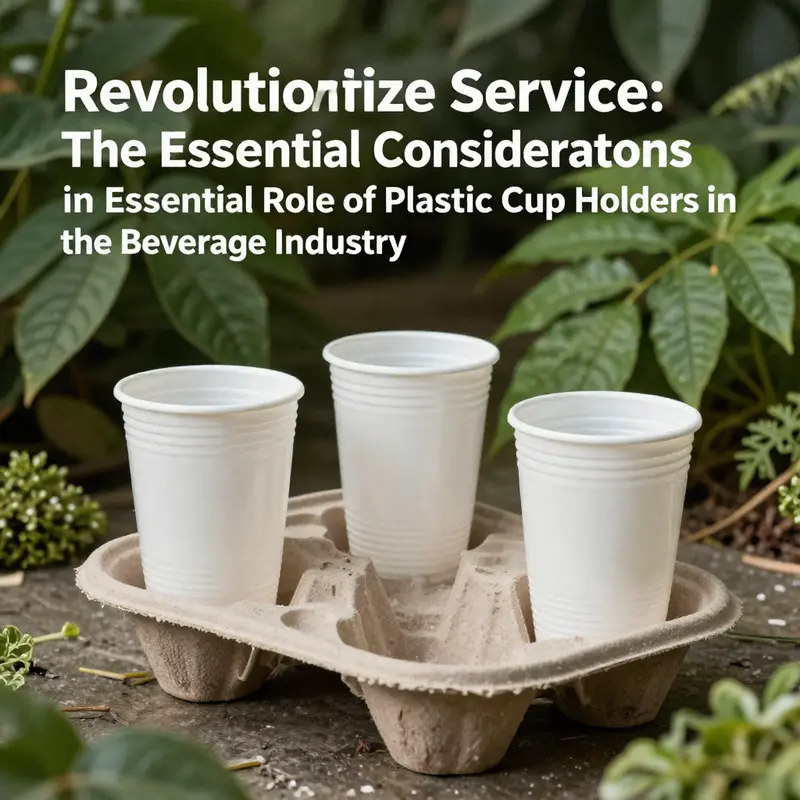
Every day, in countless cafes, offices, and events, a simple plastic cup holder quietly performs a crucial job: it catches the flow of cups, guides them into ready-to-use stacks, and helps staff keep lines moving. Yet that quiet efficiency sits at the edge of a larger conversation about sustainability. The holder’s own material life matters as much as the disposable cups it stores. If the holder becomes a waste problem, the benefit of faster service can be offset by enduring environmental costs. In other words, the device that seems almost invisible can become a node in a broader waste stream if its design and materials are not chosen with the end of life in mind.
Design variability mirrors its practical role. A typical compact option uses an 8.5 cm diameter tube and can store around 60 cups, with a transparent body sometimes crafted from a blend of ABS and polycarbonate to balance clarity, strength, and ease of cleaning. A sturdier, higher-capacity alternative may hold up to 70 disposable cups and often includes a dust cover to keep contents clean in busy environments. Four stainless steel legs provide stability, and mounting options range from magnetic brackets to screw fixtures, allowing flexible placement on walls, counters, or service islands. These design choices—capacity, visibility, hygiene features, and mounting versatility—are not cosmetic; they reflect operational priorities like speed, cleanliness, and staff ergonomics. Yet each decision also frames the product’s ecological footprint, from material selection to end-of-life possibilities.
The material question sits at the heart of sustainability. Most plastic cup holders today are molded from virgin plastics such as polypropylene (PP) or polystyrene (PS). These materials are durable, light, and inexpensive, which suits high-traffic venues but comes with an environmental cost. They are not biodegradable and can persist for hundreds of years if they escape proper waste streams. Their production consumes fossil fuels and releases carbon emissions, contributing to the climate impact of a single-use culture. The lifecycle footprint, therefore, hinges not only on how many cups a holder can dispense but on how the holder itself is manufactured, used, cleaned, stored, and ultimately disposed of or reclaimed.
Facing these realities, some manufacturers are bending the curve by integrating recycled content. In certain models, up to about 30% post-consumer recycled plastic is used in the body of the dispenser. This reduces the demand for new raw material and lowers the overall carbon footprint. The PCR content, however, introduces its own design considerations: the material must retain strength after cleaning, resist cracking from repeated sanitization, and maintain a surface that is easy to wipe and keep hygienic. The move toward recycled content is a meaningful step, but it does not automatically solve the end-of-life puzzle. Recycling mixed plastics can be technically challenging, and facilities may not readily separate components such as the tube, housing, and mounting hardware. Still, the trend signals a broader shift toward circular thinking in a sector historically centered on disposability.
Design efficiency emerges as a practical lever for lowering environmental impact. Compact, wall-mounted, or pull-type dispensers reduce bulk and minimize the amount of plastic in circulation. A streamlined form factor can lessen material use without sacrificing stability or service speed, which matters when a unit serves thousands of cups through a busy week. At the same time, durability should not be sacrificed for the sake of compactness. A well-made dispenser that endures through frequent cleaning and handling in a sanitation-heavy environment can outlive many of the cups it stores, thereby spreading the environmental cost over a longer period. This balance—space-saving geometry paired with robust construction—moves sustainability from abstract aspiration to tangible practice.
Despite these advances, a core paradox remains. The very purpose of a cup holder is to support a disposable system; consequently, many designs remain optimized for durability rather than reusability. When a venue upgrades or changes its cup sizes, or when a unit reaches the end of its service life, the disposal decision becomes a likelihood rather than a possibility. Without formal take-back or recycling programs, the post-use fate of a dispenser often mirrors that of the cups it holds: low-value plastic that might end up in landfills or ecosystems instead of contributing to a closed loop. End-of-life management is thus a critical piece of the sustainability puzzle, shaping whether a seemingly humble accessory becomes a sustainable asset or a missed opportunity for material recovery.
To move beyond this stalemate, the industry is beginning to imagine a spectrum of solutions that blend durability with recyclability and reinvention. Reusable cup holder systems, constructed from stainless steel or high-grade recycled plastics, present a clear path for repeated use across events and institutions. A modular design enables on-site maintenance and component-level replacement rather than wholesale disposal. When parts wear or break, a unit can be upgraded with new ends, levers, or mounts instead of being retired entirely. Such an approach aligns with facility management practices that prize longevity, predictable maintenance, and predictable environmental performance across the lifecycle of a product.
Another strategic thread is the integration of smart dispensing mechanisms that curb overuse. A one-cup-at-a-time feature reduces waste at the source, particularly in self-serve areas where human behavior can lead to indiscriminate cup retrieval. The impact scales with volume: fewer cups end up in waste streams, less plastic proliferates in landfills, and the event footprint shrinks in tandem with the savings on cleaning and waste handling. Realizing these benefits requires reliable sanitization protocols, consistent calibration, and a service model that treats the dispenser as a hygiene-critical asset rather than a disposable convenience. In other words, the sustainability payoff is contingent on trustworthy operations and ongoing maintenance.
The procurement and lifecycle strategy for cup holders also matters. Bulk orders and standardized configurations offer economies of scale, but they can obscure long-term environmental costs if the purchasing decisions overlook end-of-life pathways, recyclability, and the potential for upgrades. A thoughtful program recognizes that material choices, product life expectancy, and retirement options are not ancillary details but central to environmental performance. In practice, this means weighing the tradeoffs between a robust, long-lasting metal or high-grade recycled-plastic unit and newer, recycled-content or bio-based alternatives. It also invites consideration of how facilities collect, sort, and process these components after use, and whether manufacturers support take-back schemes or recycling partnerships that maintain resource value within the economy rather than letting it slip into waste.
As sustainability conversations evolve, some buyers actively explore alternatives that blend familiar functionality with greener materials. A notable option is a pulp-based cup holder described as eco-friendly and recyclable, illustrating a pathway toward lower environmental impact while preserving essential dispensing capabilities. This kind of approach enriches the conversation by offering practical, on-the-ground choices that can be tested alongside traditional plastic designs. It also helps brands and facilities articulate a spectrum of options to stakeholders, employees, and patrons who increasingly expect responsible behavior from the organizations they support. The goal is not to force a single solution but to enable a portfolio of compatible, scalable options that collectively reduce the footprint of disposable cups.
All of these threads—material choices, recycling pathways, design efficiency, durability, and intelligent dispensing—must be understood in the wider context of policy, infrastructure, and consumer expectations. The EPA’s guidance on sustainable disposal and recycling practices for single-use tableware provides a framework for thinking about end-of-life strategies, recycling capabilities, and the broader systems that support a circular economy. By integrating lifecycle thinking into every stage—from material selection and product design to installation, cleaning, and retirement—organizations can ensure that each cup holder acts as a responsible guard for the cup it preserves, rather than merely a temporary stopgap in a disposable chain. For broader guidance on sustainable disposal and recycling practices for single-use tableware, see the EPA publication on sustainable disposal and recycling practices for single-use tableware.
Brand on Demand: Customization and Scale in Plastic Cup Holder Manufacturing for Disposable Cups
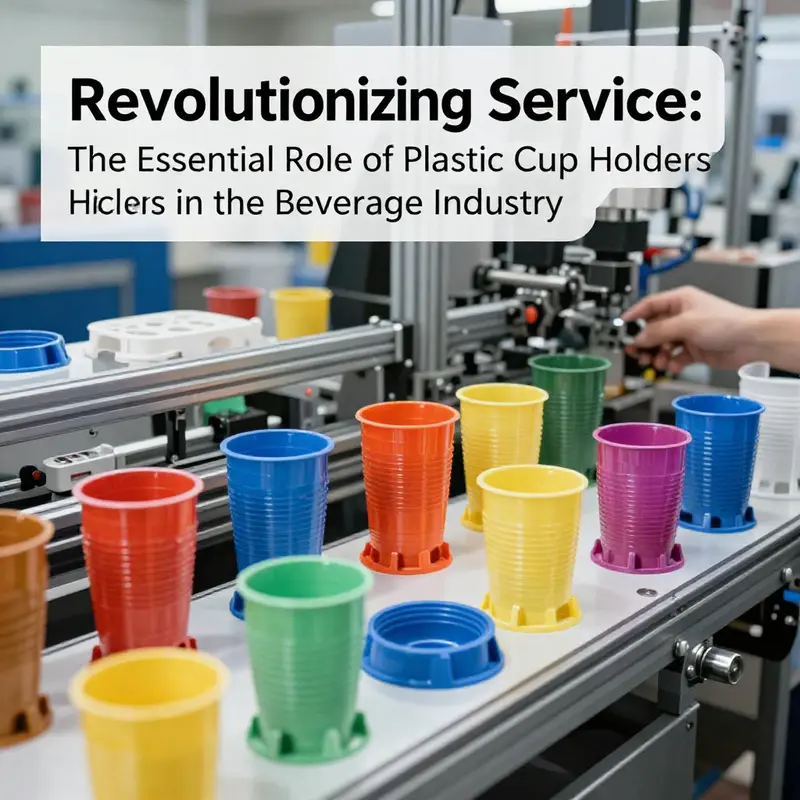
Across busy cafes, offices, conferences, and events, plastic cup holders for disposable cups do more than organize and dispense. They act as coordinated components of a broader system where design, branding, and manufacturing efficiency intersect to shape user experience, marketing reach, and cost-per-unit. This chapter follows that trajectory, tracing how customization turns a functional dispenser into a strategic asset, and how scalable production methods keep quality consistent as demand grows. In doing so, it weaves together threads from branding practice, manufacturing science, and sustainability considerations to sketch the full arc of modern cup holder development.
Customization begins with a simple premise: every interaction with a disposable cup is a brand touchpoint. When a business chooses a cup holder, it is not just selecting a container for beverages; it is selecting a visible extension of its identity. Logo placement, color coordination with corporate palettes, and even distinctive silhouette features can transform a utilitarian object into a tangible expression of the brand. The capability to tailor these aspects hinges on two linked realities: design flexibility and predictable production. Modern customization leverages modular design concepts that preserve functional reliability while allowing customers to choose logo placement, color finishes, and surface textures. In practice, this means a holder can be produced in multiple colorways and logo configurations without retooling the core mechanism. Beyond aesthetics, designers explore functional nuances such as cup-diameter tolerance, refill intervals, and ergonomic access, ensuring that customization does not compromise speed or hygiene in high-traffic settings.
A notable dimension of customization is the emergence of promotional or advertising cup concepts. These are not merely about holding cups; they are tools for mobile, on-the-go messaging. A 2026 industry snapshot describes promotional advertising cups that integrate features like rotating displays or music-triggered visuals to capture attention during service moments. While a dispenser remains stationary, its branding payload travels with the cup, multiplying exposure beyond a single slice of the customer journey. In practice, this means that a cup holder can be engineered to accommodate promotional cup sleeves, integrated display rails, or modular inserts that frame campaigns without obstructing the dispensing action. The result is a marketing device that coexists with the beverage experience, extending the reach of campaigns while preserving the efficiency of service.
But customization is not only about the surface. It also includes the internal geometry and material choices that determine durability, safety, and performance. For instance, the selection of polymers such as polypropylene (PP) or polycarbonate (PC) and, in some cases, Tritan, reflects a careful balance between rigidity, impact resistance, chemical compatibility, and food-safety considerations. The design must contend with a spectrum of cup diameters, typically ranging in a way that accommodates common disposable formats while leaving headroom for stable retention and straightforward removal. The capacity of the dispenser—whether it holds around sixty or up to seventy cups—illustrates how modularity in the internal tube or hopper can be paired with outer shell customization to achieve both aesthetic appeal and practical performance.
Scale, on the other hand, is the logistical counterweight to customization. The most consequential driver of scalable production is injection molding, a process that can yield consistent, repeatable results at volume. Tool steel and alloy steel molds provide the precision and longevity needed for thousands or millions of cycles. In the mid-2020s, technical guides emphasize that cycle time, temperature, and injection pressure are not abstract parameters; they are the levers that determine throughput, part quality, and dimensional stability across runs. When coupled with automation—robotic pick-and-place systems, inline inspection, and automated mold temperature control—these processes enable a seamless path from prototype to mass production while preserving the integrity of tight tolerances that ensure compatibility with a range of cup sizes.
Material selection remains a central thread in scalable manufacturing. PP stands out for its balance of cost, chemical resistance, and safety, while PC offers clarity for visibility in compact dispensers and added stiffness for durable housings. Tritan, a newer class of copolyester, is valued for optical clarity and toughness in more demanding environments. The combination of these materials with robust tooling supports predictable results across thousands of units. A highly durable mold, designed to resist wear over long production runs, is essential for maintaining consistent inner dimensions that accommodate cup diameters without jamming or wobbling. The role of automation in process control cannot be overstated: automated temperature profiles, pressure regulation, and cycle-time optimization reduce variability and improve yield, a crucial factor when demand spikes during promotions or seasonal peaks.
The reliability of scale also hinges on how a company communicates and enforces standards for safety and sustainability. As markets increasingly demand verifiable claims, the perception of eco-friendliness can shape buyer confidence. Industry observers warn that some biodegradable labels are deceptive or misleading in real-world composting scenarios. A 2026 report highlights a starch-based plus PP combination that failed to degrade even after twenty days of composting testing. This underscores the necessity of transparency and third-party certifications when promoting green credentials. For manufacturers, the implication is clear: materials must be vetted, tested, and documented, with lifecycle data available to customers who want to understand the environmental footprint of a cup holder from cradle to downstream recycling streams.
This emphasis on credible sustainability dovetails with the service ecosystem around scalable manufacturing. Forward-looking suppliers offer end-to-end support that begins with prototype design and mold development and extends through to high-volume production runs. This lifecycle approach helps clients translate brand aspirations into molded parts that meet strict functional criteria, environmental expectations, and budget constraints. The result is a holistic pipeline where design decisions ripple through to cost per unit, production lead times, and the ability to respond rapidly to market shifts. In practice, this means a brand can iterate on a customized geometry, test it in a pilot line, and then scale up to full production with minimized risk and predictable pricing. The integration of design, tooling, and manufacturing capabilities reduces the friction that often accompanies the transition from concept to supply in crowded marketplaces.
Beyond the technical and marketing implications, the strategic value of customization and scale is seen in how cup holders fit into broader packaging and hospitality trends. Market analyses emphasize the enduring demand for durable, lightweight, and cost-efficient packaging solutions in plastic, which informs choices about hollow structures, wall thickness, and surface finishes. The capacity to mass-produce with consistency while offering bespoke branding positions cup holders as versatile platforms for corporate storytelling, loyalty programs, and event-specific campaigns. In environments where speed of service and hygiene are non-negotiable, the alignment of design with manufacturing discipline becomes a competitive differentiator. A well-executed dispenser supports rapid, contact-light operation, cleanable surfaces, and compatibility with a variety of cup formats, thereby reducing the cognitive load on staff and improving the overall customer experience.
To illustrate how these ideas translate into concrete options, consider the accessibility of branded, eco-conscious variants. An industry-standard approach combines a neutral base with branded accents—colored housings, engraved logos, and finish textures that can be swapped between campaigns or seasonal promotions without the need for a complete redesign. The same philosophy underpins the idea of a modular insert system, where a core dispensing unit remains constant while promotional modules change. The result is a scalable platform that maintains reliability while expanding marketing opportunities. For organizations exploring greener routes, there is a growing interest in removing unnecessary packaging layers and adopting materials and finishes that are compatible with recycling streams. A practical takeaway is to prioritize materials and processes that enable high-volume manufacture while preserving end-of-life recyclability.
For readers interested in a concrete example of eco-friendly options, consider exploring a category of cup holders built from recyclable pulp with optimized geometry for disposable cups. This approach demonstrates how a sustainable core can be paired with branding opportunities without compromising performance. eco-friendly recyclable pulp cup holder serves as a useful reference point for designers and buyers who seek balance among durability, appearance, and environmental responsibility. While the detailed features of every dispenser vary by project, the underlying principles—modular customization, robust injection molding, and credible sustainability—remain consistent across successful programs.
Finally, the broader market context reinforces why this combination matters. Large-scale plastic container manufacturing, as analyzed in major industry reports, emphasizes that durability, lightweight design, and cost-efficiency drive adoption. These factors lead to a preference for repeatable production processes and materials with well-characterized performance. In practice, companies invest in tool steel molds and advanced automation to secure precision; they select materials that pass safety and compatibility tests; and they build supply chains that can absorb fluctuations in demand while delivering on branding promises. The result is a family of cup holders that can be customized to reflect a brand, scaled to meet promotional bursts, and sustained by data-driven quality controls. External resource: https://www.fortunebusinessinsights.com/plastic-containers-market-104989
As this chapter closes, the core lesson is clear: successful plastic cup holders for disposable cups are not solitary machines. They are design-driven, scale-ready systems that blend aesthetics with engineering discipline, marketing potential with ethical considerations, and brand storytelling with responsible production. The best practices emerge when teams align product geometry, material choice, and process control with an explicit plan for customization and a realistic roadmap for growth. In the next chapter, we will turn to usability and hygiene metrics, exploring how user interaction data informs iterative improvements while ensuring that customization does not erode the reliability demanded by high-volume service environments.
Final thoughts
In conclusion, plastic cup holders for disposable cups play a critical role in enhancing service efficiency and hygiene in the beverage industry. By understanding their functionality, embracing innovative designs, and considering market trends and sustainability, businesses can effectively improve their consumer offerings. Customization options further allow brands to highlight their uniqueness while catering to specific service needs. As the industry evolves, integrating the right plastic cup holder solution will undoubtedly elevate service quality across various retail environments.