
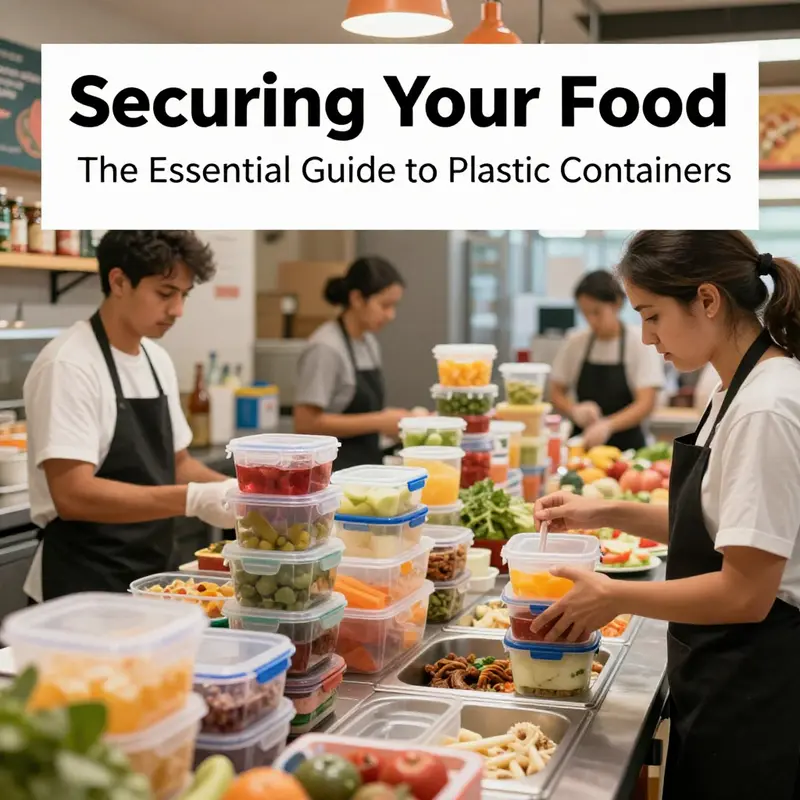
Choosing the right plastic containers for food storage can significantly impact safety and quality, especially in the food service industry, where health regulations are paramount. Understanding the safety standards for plastic containers is vital; it ensures compliance and protects customers. This article will delve into critical aspects, starting with safety regulations that govern the use of plastic containers in food settings. Next, the focus will shift to the material composition, emphasizing how various types contribute to food safety. Finally, practical guidelines on using plastic containers safely with food will round out the discussion, providing you with the knowledge needed to make informed decisions for your business’s food storage solutions.
Between Polymers and Pantries: Decoding Safety Standards for Plastic Food Storage
In kitchens around the world, the everyday act of storing and heating food is deeply shaped by the containers we reach for. Plastic, with its lightness, versatility, and low cost, has become a default solution for keeping leftovers, packing lunches, and preserving ingredients. Yet that convenience rests on a network of safety standards, regulatory oversight, and material performance that many consumers never contemplate. Understanding how those standards work—and what they mean for what ends up on our plates—is essential for turning the simple act of storage into a habit that supports health rather than undermines it. The foundation rests on a set of interlocking principles: the material science of common plastics, the labeling and use directives that guide daily practices, and the performance tests and regulatory frameworks that ensure containers do not contaminate food under typical household conditions. When these elements align, plastic containers can play a positive role in food safety and convenience. When they are misread or misapplied, they can become a source of risk, particularly for vulnerable populations or during high-heat or long-storage scenarios. This chapter traces those threads, offering a cohesive portrait of how safety standards shape consumer choices and how everyday use can either reinforce or erode the safeguards built into modern food packaging.
The starting point is the basic premise of safety standards for food contact materials. In many jurisdictions, including the one that informs this discussion, plastic containers intended to hold and store food must carry clear labeling that signals their suitability for such use. Marks like “食品接触用” or equivalent indications are not decorations; they encode compliance with general safety requirements for food contact materials and articles. These requirements are codified in comprehensive standards that govern composition, labeling, and performance. The intent is straightforward: materials should be safe for contact with food, should not migrate hazardous substances into the food, and should maintain their integrity under realistic use conditions. In practice, that means a container should not worsen the taste or odor of the food, should not release toxic components at levels that pose a risk, and should stay intact through routine handling, washing, heating, and storage. The emphasis on compatibility—no unintended chemical migration, no alteration of food properties—helps protect consumers while preserving the functional benefits of the container.
A focal point of the conversation is the material choices that dominate food-grade plastics. The primary resins used in consumer-grade food containers—high-density polyethylene (HDPE), polypropylene (PP), and polyethylene terephthalate (PET)—are selected for their chemical resistance, durability, and their behavior under temperature extremes. HDPE is valued for its strong resistance to acids and solvents and its UV stability, making it a common choice for storage bottles and rigid containers. PP is prized for heat resistance and clarity in certain applications, enabling some containers to be used in microwaves or steam heating when specifically labeled for that purpose. PET is widely used for its clarity and barrier properties, supporting both packaging and some reusable containers. The category of plastics labeled with resin identification codes (#2 for HDPE, #4 for LDPE, #5 for PP, and so on) reflects a broader risk–benefit calculus: certain resins are more suitable for repeated use, certain additives are more stable, and certain temperature ranges are more forgiving. In practice, many consumers rely on the codes and on explicit use instructions to decide how a container can be used—whether it is safe for microwave heating, whether it should not be used with acidic or fatty foods, and whether it is appropriate for long-term storage.
But labeling and codes capture only part of the story. The science of plastic additives reveals why “BPA-free” often does not equate to “no risk.” Bisphenol A (BPA) has been a focus of concern because of its endocrine-disrupting potential. In response, many manufacturers substituted BPA with alternatives such as BPS or BPF. While these substitutes may reduce BPA exposure, emerging research suggests they can share similar endocrine-disrupting behaviors. The implication for consumers is nuanced: a container marked BPA-free should not be assumed to be wholly risk-free. It is prudent to consider the overall chemical profile of the resin system, as well as the conditions under which the container is used. The migratory behavior of plastic additives depends on temperature, storage duration, and the composition of the food itself. Acidic foods—such as tomato products or citrus-based preparations—can act as solvents that increase the rate at which additives migrate into the food. High-fat foods similarly pose a risk, because fats can facilitate the leaching of certain additives. Prolonged heating further amplifies these effects. Thus, many guidelines emphasize minimizing high-temperature exposure, avoiding repeated use of single-use containers after they have carried hot foods, and favoring containers designed and labeled for microwave or steam use only when such use is intended.
From a consumer safety perspective, the key practical guidance is straightforward: choose containers explicitly designed for food contact, and follow the manufacturer’s directions for heating, microwave, or dishwasher use. The emphasis on “food contact use” is not a mere label; it signals that the container’s composition, sealing properties, and surface characteristics have been evaluated for contact with consumables. It also means the container has undergone certain performance tests that assess its ability to resist physical and chemical stressors encountered in daily life. The guidance also invites vigilance: inspect containers for wear, cracking, or discoloration; broken or aged plastics can behave differently and may release more additives than pristine material. When in doubt, replace aging containers rather than continuing to reuse them, especially after exposure to heat or strong acids.
Navigating the use of plastic in the kitchen must also consider the broader regulatory landscape that governs safety. In the United States, the FDA regulates food contact materials under Title 21 of the CFR. The aim is to ensure containers labeled as food-grade do not transfer substances to food at levels that would pose a risk or alter the food’s sensory properties. Within this framework, HDPE and PP are among the resins commonly approved for various food contact applications because of their demonstrated resistance to chemical migration and their ability to withstand the temperatures associated with everyday food handling. The FDA also offers guidance on identifying safe plastics through resin identification codes, pointing to the safer options for repeated use and long-term storage: namely #2 (HDPE), #4 (LDPE), and #5 (PP). This guidance is not a blanket guarantee of safety for every imaginable use; rather, it helps consumers understand which materials are more likely to perform safely under common conditions and which use cases require caution.
Internationally, standards such as the EU’s Regulation (EC) No 1935/2004 codify a “no migration” principle, requiring that materials in contact with food undergo rigorous testing for extractables and migratory substances. This approach underscores a central public health objective: to limit any chemical transfer from packaging into food to the lowest feasible levels. The emphasis on migration testing reflects a broader precautionary stance, recognizing that even trace amounts, if accumulated over time or combined with certain dietary patterns, could have health implications. While these standards share a common goal with those in the United States—protect consumers from exposure to hazardous substances—the paths they take to achieve that protection can differ, reflecting distinct regulatory traditions, testing methodologies, and risk assessment frameworks.
In China, compliance with standards such as GB19270.1 and GB19270.2 is central for manufacturers and suppliers dealing with packaging materials intended for handling dangerous goods, but the surrounding safety ecosystem also informs food-contact practices. In this context, the standards emphasize labeling, sealing integrity, and structural stability during transport, along with specific test methods. Notably, tests such as drop testing (GB/T4857.5), static load stacking (GB/T4857.3), and gas-tightness testing (GB/T17344) are part of the toolbox used to ensure container integrity even under harsh conditions. While these tests address transport safety and container robustness, they also provide indirect assurances about the durability of food-contact containers in real-world use. The practical takeaway for consumers and manufacturers alike is that a robust container should not fail under routine handling or accidental impact, which in turn reduces the risk of leakage or contamination during storage and distribution.
No discussion of safety standards would be complete without acknowledging the growing body of consumer safety research that informs these standards. Recent studies highlighted by NIH sources suggest that most modern food-grade plastics are safe under ordinary use, but there are caveats. Prolonged exposure to heat, sunlight, or acidic foods can degrade polymer chains over time, increasing the potential for chemical migration. This line of evidence reinforces several core recommendations. First, avoid heating plastic containers that are not explicitly labeled as microwave-safe. Second, do not rely on the assumption that a container marked BPA-free is entirely risk-free; consider the overall formulation and its potential substitutes. Third, replace containers showing visible wear—scratches, cloudiness, color changes, or deformations—since aging can alter barrier properties and migration profiles. Fourth, avoid reusing disposable plastic containers for hot foods or oily, fatty foods, where the concentration gradient driving migration can intensify.
The practical upshot for households is clear. The safest path is to prioritize containers that are explicitly labeled for food contact and, where heating is involved, labeled microwave-safe or heat-tolerant. Use these containers within their designed temperature ranges, and avoid exposing them to direct sunlight, high heat, or prolonged storage of highly acidic or fatty foods. Keep in mind that even with safe materials, the cumulative effect of repeated use, aging, and exposure to stressors can alter performance. A gentle rule of thumb is to retire containers after a reasonable period of use, especially if you notice scratches, clouding, or any odor development. When feasible, favor reusable containers crafted from high-quality resins and designed for repeated use, and view plastic packaging as a component of a broader strategy that includes safe storage practices and mindful heating.
A particularly public-facing dimension of this topic is the option to reduce reliance on plastic where safety concerns are pronounced or where alternatives exist. For those seeking effective, safe alternatives to traditional plastic containers, durable paper-based options and other materials can offer compelling benefits. For example, consider disposable kraft paper bowls and their take-away variants designed with lids for secure transport. These products illustrate how packaging design can support food safety without relying on plastic alone. For readers interested in exploring such alternatives, one relevant example is the disposable kraft paper bowl take-away kraft paper salad bowl with pet lid, which demonstrates how paper packaging can be tailored to meet accessibility and safety expectations while reducing plastic usage. This example also serves as a reminder that packaging safety is a spectrum; plastic is not the only answer, and thoughtful design can achieve the goals of hygiene, convenience, and sustainability without compromising health. See an example here: disposable kraft paper bowl take-away kraft paper salad bowl with PET lid.
In sum, the safety of plastic containers for food storage rests on a triad of material science, regulatory oversight, and consumer practices. The resins most commonly used for food contact—HDPE, PP, and PET—offer a combination of chemical resistance and temperature tolerance that underpins everyday use when containers are appropriately labeled and maintained. Yet the landscape is nuanced: substitutes for certain additives may carry similar health concerns, and migration is a function of temperature, time, and the food matrix. The global regulatory architecture—spanning the United States, the European Union, and China—reflects a shared commitment to minimize chemical transfer into foods while acknowledging different testing strategies and risk assessment paradigms. For households, translating these insights into daily habits means being selective about what to store, how to heat, and when to retire a container. It also means recognizing when alternatives to plastic may better align with personal health goals or environmental considerations. The story of plastic in the kitchen is not a simple narrative of risk or safety alone; it is a dynamic interplay between materials, policy, and practice that shapes what we eat, how we prepare it, and how we care for our health over the long term.
To round out the picture, consider the broader implications for the environment and for consumer education. Reusing high-quality, durable containers that comply with recognized standards can reduce waste and support sustainability goals without compromising safety. Conversely, the repeated use of single-use containers—especially after they have carried hot foods or oils—poses avoidable risks, both to health and to the integrity of the food itself. This is not a call to abandon plastic where it is appropriate, but a call to use it thoughtfully, in combination with other packaging options, guided by the best available standards and evidence. As research continues to refine our understanding of additives, migration dynamics, and the long-term effects of different storage conditions, the practical rules for home use remain relatively stable: store foods in labeled containers, avoid overheating unless explicitly permitted, replace aging containers promptly, and be mindful of the type of food you store in each container. The aim is a kitchen that leverages the strengths of modern packaging while minimizing potential risks, preserving both flavor and health for everyday meals and for the life of the family.
External resource for further reading: https://www.fda.gov/food/food-contact-materials
Chemistry in the Kitchen: How Plastic Container Materials Shape Food Safety
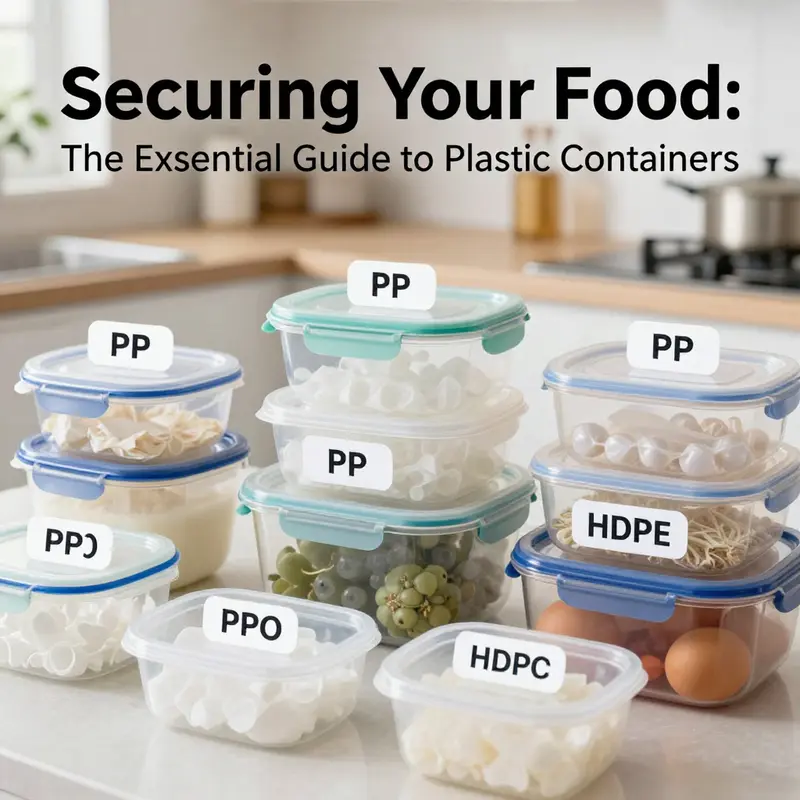
Choosing a container for food is not just about color, shape, or lid design. It is a decision rooted in polymer science, regulatory standards, and daily habits that together determine what, if any, substances migrate from the container into the food we eat. The chapter you are reading treats material composition as a bridge between manufacture and health, showing how the make-up of plastic containers—beyond their basic mold and form—can influence flavor, safety, and long-term well-being. The interplay of resin types, additives, and usage conditions creates a dynamic landscape in which even products labeled as “safe” can pose risks if used outside their intended scope. This is not a categorical warning against plastics; it is an invitation to understand how to navigate materials with care, to acknowledge that safety depends on design as well as behavior, and to recognize that everyday choices—how we store, heat, and reuse containers—accumulate over time into tangible health outcomes.
At the heart of this discussion lies the spectrum of plastic types chosen by manufacturers. Each resin has a characteristic set of properties, including melting point, clarity, rigidity, and permeability, which in turn govern how suitable it is for contact with different foods and how it behaves under heat or long storage. The widely used resin identification codes (1 through 7) label these families and provide a shorthand for safety and performance expectations. Among them, some are celebrated for their stability and usability in food contact, while others raise persistent questions about migration of additives or degradation products. In practice, most households encounter several of these plastics in day-to-day life: rigid PET bottles for cold drinks, HDPE jugs for dairy, LDPE wraps for produce, PP containers for leftovers, and polystyrene trays for takeout. Each material whispers its own cautionary tale when heated, fatty foods are involved, or the container ages.
Petroleum-derived polymers are not neutral players. When the polymer matrix is formed, it is not just a backbone of repeating units; it carries a suite of additives designed to alter flexibility, color, stability, and processing behavior. Plasticizers, stabilizers, antioxidants, colorants, and processing aids all ride along as part of the final product. Some of these compounds are tightly bound within the polymer; others exist in small amounts that can migrate into adjacent food, especially under stress. The migration phenomenon is why the safety of a plastic container is not solely about the base polymer but about the entire system—the polymer, the additives, the food matrix, and the conditions of use.
A commonly cited risk axis involves additives and their potential to migrate. Plasticizers such as phthalates have historically been used to impart flexibility to polymers. Although many phthalates have faced regulatory restrictions, concerns persist about replacement chemicals that may behave similarly in the human body. In foods that are high in fat or heated, these substances are more prone to diffuse into the food, potentially altering taste, aroma, and, in more severe cases, the hormonal balance in exposed individuals. Another family of additives—stabilizers and antioxidants—serves as guardians against degradation but can themselves break down under heat or prolonged storage, releasing substances that were not intended to reach the consumer. Some older formulations also relied on materials like heavy metals as stabilizers in PET production; although modern practices have changed, the history of such additives remains part of the broader conversation about safety.
The concern about chemical migration becomes even more intricate when considering the issue of microplastics and nanoplastics. The physical breakdown of plastics can generate particles that are far smaller than a grain of sand, and research has begun to detect these particles in biological samples, including blood and organs. Microwaving containers or exposing them to heat can accelerate the release of such particles, and while the full implications for health are still under study, the presence of nanoscale and microscale plastics in the human body invites precautionary thinking about long-term exposure.
Food safety, therefore, is not a single checkbox about a material’s label. It is a dynamic assessment of how material composition and usage patterns converge over time. For instance, while polypropylenes (PP) are widely regarded as among the safer choices for food storage and heating when labeled as food-grade, there is ongoing vigilance around BPA-free designations. Some alternative compounds used to replace BPA, such as BPS or BPF, have raised questions of their own due to potential endocrine-disrupting effects that may resemble BPA’s inaction on hormone signaling. The conversation around safety thus moves beyond a binary “safe or unsafe” to embrace a spectrum of considerations that include alternative plastic chemistries and the ways these chemistries interact with real-world usage.
Heat is the most powerful driver of chemical migration. The moment a plastic container encounters a hot environment—whether in a microwave, a simmering pot, or a hot car on a sunny day—the diffusion of additives can accelerate. Fatty foods pose a particular challenge because fats can act as solvents for hydrophobic additives, easing their passage into the food. Highly acidic foods can also influence migration by altering the surface chemistry of the container or by facilitating the breakdown of protective coatings used in some products. Here, the biology of routine life intersects with materials science in a tangible way: the more we rely on plastic for holding, heating, and storing food, the more important it becomes to understand when and how those materials can contribute to what ends up on our plates.
On a structural level, the category of resin codes helps consumers and regulators navigate this complexity. PET, HDPE, PVC, LDPE, PP, PS, and other polymers each carry distinct risk profiles. PET is common for single-use cold containers and has a relatively favorable stability profile under normal, non-heated storage. However, even PET is not without caveats. Some studies have reported that, under certain storage conditions and times, trace leachates can appear, and though the risk of significant health effects at typical exposure levels remains a topic of debate, the principle remains: storage duration and environmental conditions matter. HDPE is widely praised for its chemical resistance and robustness, making it a frequent choice for dairy and other food-contact applications. Yet, no polymer exists in perfect isolation from its environment; UV light exposure, mechanical wear, and aging can alter physical properties and potentially affect barrier performance.
PVC has long posed concerns because of the spectrum of additives used in its production, including plasticizers that can migrate into foods. The story of PVC thus serves as a case study in why transparency in labeling matters, and why consumers should be attentive to the “food contact” designation and the specific uses indicated on packaging. LDPE and PP often show up in flexible wraps and reusable containers, respectively. While LDPE can offer relatively stable performance in certain settings, its behavior under microwave heating is a practical constraint; many LDPE-based products are not recommended for microwave use. PP—especially when marketed as microwave-safe—has become a favored default for heated applications because of its higher melting point and general barrier properties. Nevertheless, the presence of heat or acidic conditions can still drive migration, and “microwave-safe” labels should be interpreted within the broader framework of safe handling and intended use. PS, used in some disposable food-service items, presents concerns about styrene migration into hot or fatty foods and, in some contexts, the release of microplastics when subjected to mechanical stress or heat.
The “other plastics” category (code 7) encapsulates a range of more complex resins, including polycarbonates that may contain bisphenol A (BPA). Even as manufacturers move toward BPA-free formulations, substitutes are not automatically risk-free. The safety profile of resins in this category can vary widely depending on the specific chemistry and manufacturing processes. Consumers thus face a layered message: while certain plastics can be compatible with everyday food use when employed within the guidelines, absolute safety is never guaranteed, especially when the material is pushed beyond its design envelope through high heat, prolonged storage, or repeated reuse beyond its intended purpose.
From a practical perspective, then, the path to safer use of plastic containers hinges on understanding both material composition and the conditions of use. The standard embodies this dual awareness. Textbook compliance with general safety requirements, as reflected in national standards for food contact materials, emphasizes clear labeling, suitable processing conditions, and boundaries for use. In particular, containers intended to hold or store food must carry explicit labeling such as “food contact” or equivalents that signal their intended purpose. This is not merely bureaucratic ritual. It is a signal that the container’s chemistry has been assessed against the real-world challenges of food contact, including temperature ranges, contact duration, and the nature of the food itself. In many regulatory contexts, the use of non-food-grade plastics for food storage—especially for raw or high-fat foods, or for long-term storage—will be restricted or discouraged, precisely because of the migration risk that this chapter outlines.
The evidence gathered from laboratory studies and regulatory reviews also highlights a broader social dimension. The transition away from certain materials as science evolves is not a condemnation of a single polymer. It is a process through which safer alternatives are identified, tested, and adopted where appropriate. For households, this translates into practical choices: favor containers labeled for food contact, avoid heating plastics that are not explicitly rated for heat, and be mindful of the aging process. Dye colors and surface coatings, sometimes used to improve aesthetics or extend shelf life, deserve equal attention because additives can be unevenly distributed within the polymer and may migrate differently depending on the food matrix. A container that looks identical to another may behave differently under the same food, simply because the supplier used different additives or processing methods.
If one asks how to translate this nuanced science into daily practice, the answer lies in a blend of knowledge, caution, and simple habits. Do not assume that a single label—such as “BPA-free”—is a guarantee of safety. Some substitutes may have endocrine-disrupting potential of their own, or may be less well-studied in the context of long-term consumption. Always check for explicit guidance about heat tolerance, microwave compatibility, or dishwasher use. When in doubt, pivot toward non-plastic options for heated or long-stored foods. Glass, ceramic, and stainless steel offer stable, inert environments that are less likely to introduce any migration concerns into foods or drinks.
A beacon of practical guidance that anchors this discussion is the overarching requirement that containers used for food storage be clearly labeled for their intended use and meet recognized safety standards. This standardization reduces ambiguity and helps consumers avoid accidental misuse, such as heating fatty or acidic foods in non-food-grade plastics or reusing single-use containers beyond their designed lifetime. The path to safer practices is not simply a matter of choosing a material; it is about using the right material for the right task, understanding how heat and time alter the material’s behavior, and recognizing that no material operates in a vacuum. In this sense, safe containment is a negotiation between chemistry, regulation, and daily routine.
To illustrate how these ideas translate into real-world choices, consider the spectrum of packaging and container types that people encounter in everyday life. For beverages, bottles and cups often rely on PET for cold applications and HDPE for certain liquid products. For food storage, PP containers with clear labeling are common choices for leftovers that will be reheated. When selecting packaging for take-out or delivery, many consumers encounter disposable materials designed for quick service. In some cases, these items are accompanied by guidance on whether they are microwave-safe or suitable for hot foods. The conversation is not solely about safety in isolation; it is about how safe options align with convenience, sustainability, and culinary needs. A practical observation flows from this: when a container is used within its specified boundaries, it is less likely to contribute to unwanted chemical migration or microplastic exposure. When used beyond those boundaries—such as heating in a non-microwave-safe plastic or storing hot oils in a container with limited heat tolerance—the risk of migration increases.
For readers who want to explore safer, non-plastic options in certain contexts, there are compelling alternatives that balance functionality with reduced chemical exposure. Paper-based and pulp packaging, for instance, has gained popularity in takeaway settings as a potentially lower-risk option, particularly when designed to withstand moisture and heat without relying on synthetic additives that migrate readily. The choice of material—paper, glass, ceramic, or metal—enters a broader conversation about sustainability and consumer behavior. While not every paper-based option aligns perfectly with every food scenario, some products are engineered to handle hot contents with lids and insulative properties that keep foods at safe temperatures while minimizing the migration concerns associated with plastics. The evolving packaging landscape thus presents a spectrum of options, each with its own trade-offs, and invites readers to consider both health and environmental dimensions when selecting containers for food.
In this context, it is useful to anchor the discussion in a representative example of consumer options that sit at the intersection of safety, usability, and sustainability. A disposable takeaway kraft paper cup with lid, for example, represents a packaging category that emphasizes compostable or recyclable pathways while avoiding many of the direct heat and fat-related migration challenges associated with some plastics. Consumers who prefer to minimize plastic contact with hot beverages or hot foods can consider these alternatives as part of a broader strategy to reduce exposure while maintaining convenience. For readers who want to examine concrete product options, one such example can be explored through a dedicated product page that highlights design features and usage guidelines. disposable-takeaway-paper-cup-custom-logo-kraft-coffee-cup-with-lid. This link is not a universal solution, but it illustrates how packaging design and material choice can reflect different safety priorities and environmental considerations.
Ultimately, the material composition of plastic containers matters because it is the interface where chemistry meets daily life. It informs what is likely to migrate into our food, how long a container can safely hold hot contents, and what happens to a container as it ages. It shapes not only the safety of a single meal but the cumulative exposure from repeated use, storage, and heating over weeks, months, and years. The practical takeaway for households is clear: read and respect labeling, prefer containers designed for the specific food and heat conditions you encounter, minimize long storage of highly acidic or fatty foods in plastics, and be willing to switch to safer materials when the situation demands it. The goal is not to demonize any material but to empower informed choices that balance safety with practicality.
For readers seeking further information on the regulatory frameworks that undergird these standards, and for readers who wish to verify the alignment of consumer practices with official guidance, it is worth consulting the general safety advisories published by national authorities. The standards and recommendations evolve as science advances, and keeping pace with official guidance helps ensure that everyday habits remain aligned with current best practices. The dialogue between science, policy, and consumer behavior is ongoing, and each leap in understanding invites a corresponding adjustment in how we choose and use plastic and other packaging materials.
In the broader arc of this article, the chapter on material composition serves as a lens through which to view the entire lifecycle of plastic containers in relation to food. It connects the chemistry of plastics to the safety of meals, to the design of packaging that respects both health and environmental imperatives, and to the everyday decisions households make when selecting, heating, and storing food. The next sections will build on this foundation by turning attention to the implications for kitchens, schools, workplaces, and food service operations, where the compatibility between container materials and food matrices becomes a practical toolkit for safer, more trustworthy food handling. As you navigate grocery aisles, kitchen cabinets, and take-out counters, you can carry with you a clearer sense of how material composition translates into real-world safety, and how thoughtful choices—such as opting for food-grade plastics, avoiding repeated reuse of single-use items, and favoring glass or steel for heated or long-stored foods—can meaningfully reduce exposure risks without sacrificing convenience or taste.
External resource: https://www.who.int/news-room/fact-sheets/detail/food-safety
Smart Choices for Storing Food in Plastic: Materials, Temperatures, and Safer Habits
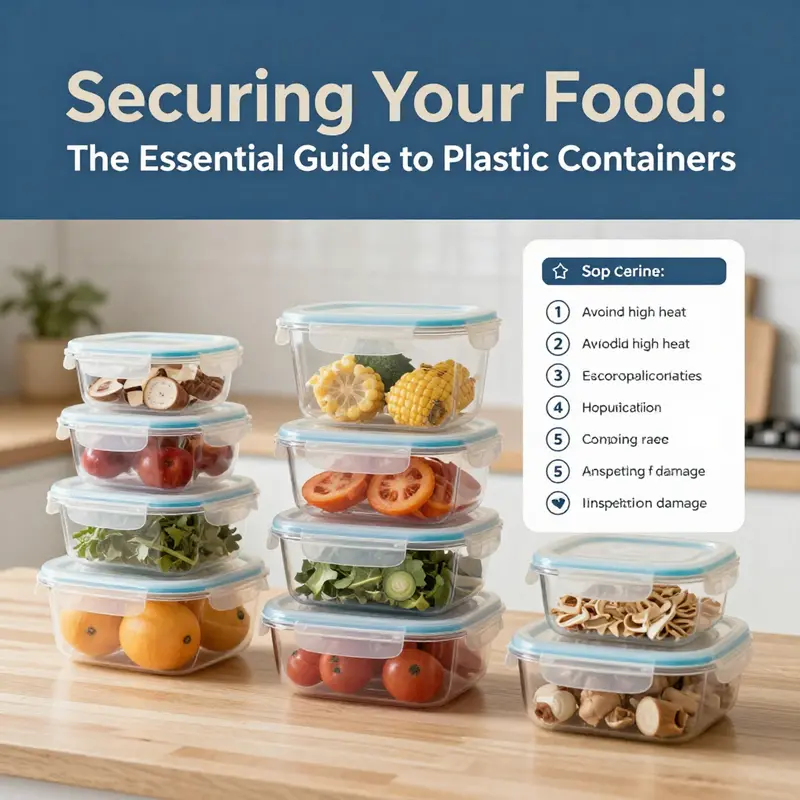
Practical rules for safe use and safer alternatives
Using plastic containers for food is a daily habit for many households. Yet safety depends on choices made at purchase, how containers are used, and how food is stored. This chapter lays out a single, cohesive set of guidelines that cover materials, temperature, storage duration, cleaning, and safer alternatives. The aim is simple: reduce chemical migration, slow spoilage, and keep food tasting as it should.
Start with the material. Not all plastics are equal for food contact. Choose containers explicitly labeled for food contact. Among common polymers, polypropylene (PP) and high-density polyethylene (HDPE) are reliable choices. They resist heat better and are less likely to release additives into food. Containers made from these plastics are often marked with recycling codes 5 (PP) and 2 (HDPE). In contrast, avoid plastics marked with codes 3 (PVC), 6 (PS), and 7 (other) for storage of hot, oily, or acidic foods. These materials can contain softeners, unknown additives, or other compounds that increase the risk of migration into food.
Labeling matters beyond the recycling code. Look for explicit statements such as “food-contact safe,” “microwave-safe,” or “dishwasher-safe.” These labels are not guarantees of perfection, but they show that the product was manufactured and tested with food use in mind. Even when a container is marked “BPA-free,” bear in mind that replacement chemicals such as BPS or BPF may still have endocrine activity. That means the safer course is to pair labeled materials with safe handling practices.
Temperature and heat exposure are central risk factors. High temperature accelerates chemical migration. Never place plastic intended only for cold storage into a microwave. If a container is not clearly marked as microwave-safe, transfer food to a microwave-safe dish before reheating. Avoid heating plastic in direct contact with food. Keep plastic away from open flames, hot stovetops, and continuous exposure to sunlight. Heat accelerates both chemical breakdown and physical aging of polymers, which creates microscopic fissures. These micro-damage sites increase the surface area from which additives can migrate.
The type of food matters. Acidic foods such as tomato-based sauces and citrus dressings can accelerate polymer breakdown. High-fat or oily foods attract and dissolve lipophilic additives, increasing the transfer of plasticizers into the food. Hot soups, stews, and greasy stir-fries are poor candidates for long-term storage in plastic. Raw meats are also risky. Proteins and enzymes can accelerate spoilage when trapped in plastic, and plastics may promote unwanted flavor transfer. For raw or cooked meat, glass, stainless steel, or well-wrapped paper are preferable for both refrigeration and freezing. Dairy, egg-based dishes, and fermented foods deserve extra caution because plastics can create micro-environments that encourage bacterial proliferation or off-flavors.
Contact time and storage duration influence exposure. The longer food sits against plastic, the greater the opportunity for migration. For takeaway meals, transfer food to non-plastic containers quickly. Let hot food cool to room temperature before sealing in plastic. Cooling first reduces steam and pressure, and lowers the thermal stress that promotes migration. Do not store food in plastic for longer than necessary. Short contact minimizes risks and often preserves taste better.
Single-use plastics have a limited lifespan. Containers designed for one-time use lose structural integrity after repeated cleaning, heat cycles, or scratches. Avoid reusing disposable takeout boxes or plastic bags for hot or oily foods. Repeated use increases the chance of microcracks and surface abrasion. These damage spots not only harbor bacteria but also provide points for chemical leaching. When you must reuse single-use items briefly, restrict them to dry, cold items and inspect them closely before each use.
Cleaning and maintenance reduce both microbial and chemical hazards. Wash food-contact plastics with mild detergent and warm water after each use. Avoid harsh or abrasive scrubbers that create scratches. A scratched surface increases both bacterial attachment and chemical migration. Use labeled dishwasher-safe containers in the dishwasher; but remember dishwashers cycle through higher temperatures and detergents that can accelerate aging. When in doubt, hand wash with a soft cloth.
Inspect containers regularly. Signs of aging include cloudiness, discoloration, warping, and persistent odors. If a container becomes sticky, brittle, or takes on a rancid smell, discard it. Scratches and surface abrasions also justify replacement. Clear containers with cracks should be retired, even if they are small. The cost of replacing degraded containers is small compared with the health and quality risks of continued use.
Avoid storing certain classes of foods in plastic whenever possible. These include high-fat condiments, long-cooked stews, acidic sauces, and raw or cooked meats intended for longer storage. For these, prefer glass jars, stainless steel, or well-lined paperboard designed for food. Glass is chemically inert and resists staining and odor absorption. Stainless steel is durable, heat-resistant, and suitable for hot or oily foods. Paperboard and kraft paper bowls with food-grade coatings can be good short-term alternatives for takeout and single servings. If you want a ready-made paper alternative for soups and salads, consider options designed for food use, such as disposable kraft paper bowls with lids that are built for liquids. These provide practical protection and avoid many risks associated with plastic.
When moving food between containers, use safe transfer methods. Transfer hot items to a bowl or metal pan to cool slightly. Stir to release steam and reduce pressure if the food is thick. If you receive takeaway in plastic, open it and move the contents to a safe storage container. This step reduces time in contact with potentially unsuitable packaging and often improves taste and texture. Also, label and date stored foods. Proper labeling reduces the chance of keeping items past safe storage times.
Microwave use deserves its own discipline. Only heat food in containers marked microwave-safe. Even then, avoid heating fatty or sugary foods for long periods in plastic. Use a ceramic or glass dish with a microwave-safe cover when reheating. When microwaving in plastic, leave a vent or use a cover that prevents splatter but still allows steam to escape. Avoid placing plastic directly on top of heated food or using plastic wraps that are not explicitly microwave-rated. When reheating liquids in plastic, take extra care, since superheating sometimes occurs and can cause sudden boil-overs that stress the container.
Freezing in plastic is common, but certain precautions reduce risks. Use containers designed for freezing or heavy-duty freezer bags labeled for food. Avoid cheap plastic bags or industrial-grade sheets that are not intended for food. When freezing, leave headspace in rigid containers to allow expansion. For long-term freezing of meats or fatty foods, consider wrapping in paper or using glass with proper lids. Repeated freeze-thaw cycles can accelerate polymer degradation. If a container loses its seal or shows frost damage, replace it.
Ventilation and sunlight affect plastics. Do not leave plastic containers in direct sunlight for prolonged periods. UV radiation breaks down polymer chains. Over time, UV exposure causes discoloration, brittleness, and increased migration potential. Store containers in cool, shaded areas away from heat sources. Avoid keeping plastics near stoves or ovens. Even ambient heat in a closed car or a sunny shelf can raise temperatures enough to accelerate aging.
Practical habits cut risk significantly. Use a checklist when you buy or evaluate a container: is it labeled for food contact, does it have a clear recycling code, is it free of visible defects, and does it include user instructions? Maintain a rotation so containers are not used indefinitely. Replace containers on a schedule—every one to two years for frequently used plastic storage that sees heat cycles. For items that see heavy use and frequent heating, consider replacing more often.
For households with infants, pregnant persons, or people with hormonal sensitivities, be extra cautious. These groups are more vulnerable to endocrine-disrupting chemicals. Prefer glass, stainless steel, or approved paperboard alternatives for baby food, formula storage, and warmed foods. If you must use plastic, choose only high-quality, food-grade containers with appropriate labeling.
Safe disposal and recycling matter. When a plastic container has reached the end of its life, dispose of it according to local guidelines. Recycling helps, but only if the item is accepted by local programs. Contaminated containers, for example those with grease or food residue, often cannot be recycled and should be composted if compostable, or thrown away. Avoid incineration of plastics when possible, since this releases pollutants.
Consider alternatives when practical. Glass jars with tight-fitting lids work well for sauces, pickles, and refrigerated leftovers. Stainless steel lunchboxes and food jars are excellent for hot dishes. Compostable or coated kraft paper bowls are a practical substitute for single-use plastic containers for on-the-go meals. They handle hot liquids and oily foods better than many thin plastics and avoid some risks tied to plastic additives. If you are sourcing disposable alternatives frequently, evaluate certified food-grade paper bowls with lids for convenience and reduced plastic exposure. For example, a disposable kraft paper bowl designed for food packaging provides a straightforward alternative for takeout soups and salads when convenience is essential. If selecting a disposable bowl, choose one designed for liquids and labeled accordingly, rather than a generic paper product.
Balance convenience and safety. Plastic remains a practical choice in many contexts. The key is choosing the right polymer, respecting temperature limits, limiting contact time, and keeping containers in good condition. Transfer food quickly from non-food-grade packaging, avoid reheating in unsuitable plastics, and prefer glass or stainless steel for long-term storage and hot items.
Finally, stay informed. Standards and scientific understanding evolve. National and international regulators publish updated guidance on food-contact materials and testing procedures. Checking reputable sources helps maintain good practices and informs buying decisions.
For a practical resource on regulatory expectations and safety assessments for food-contact materials, consult the U.S. Food and Drug Administration’s food contact materials guidance and regulations.
For an eco-friendly disposable option designed for food service, consider a purpose-built kraft paper bowl made for food packaging: https://greendispopack.com/product/disposable-kraft-paper-bowl-for-food-package-with-lid/
External resource:
U.S. FDA Food Contact Materials: https://www.fda.gov/food/food-contact-materials-industries/food-contact-materials
Final thoughts
In conclusion, understanding the importance of safety standards, material composition, and safe usage guidelines for plastic containers is essential for any food service business. Making informed choices about the containers used not only complies with regulatory requirements but also ensures the health and safety of your customers. By prioritizing quality and adhering to the outlined best practices, you elevate your establishment’s reputation and enhance customer trust. Always stay updated with industry standards and continuous education on safe food practices.