
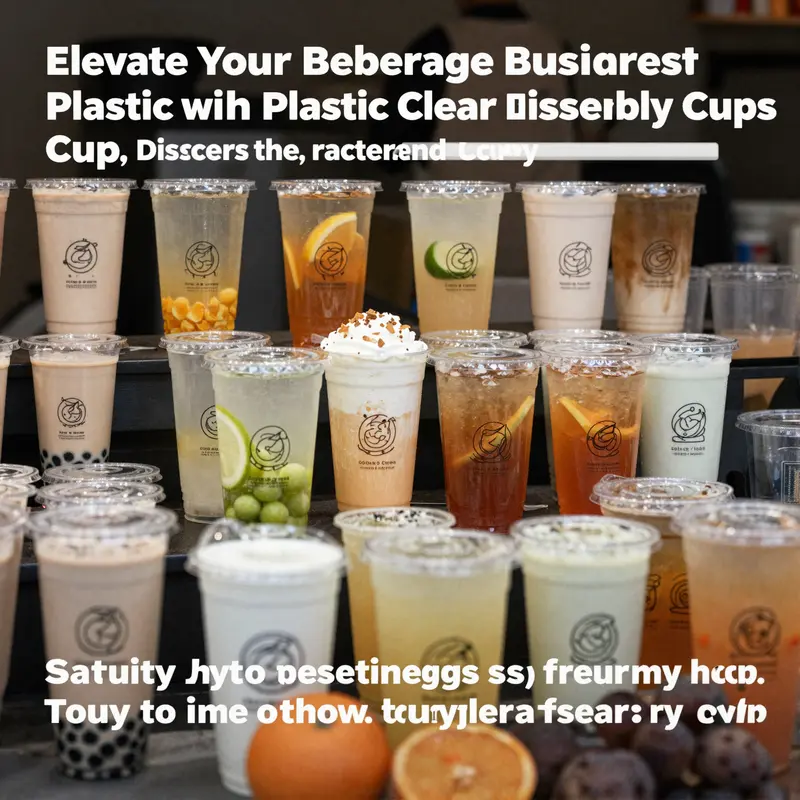
Plastic clear disposable cups have become indispensable in food service, catering, and event planning. Their lightweight, transparent design meets the needs of beverage chains, restaurants, and food trucks while providing a practical solution for takeaway services. Additionally, the wide selection of materials—including durable Polypropylene (PP) and eco-friendly Polylactic Acid (PLA)—is tailored to various applications, ensuring that your business can provide the perfect cup for every drink or dish. Throughout this article, we will explore the material composition, various applications, market trends and pricing strategies, customization opportunities for branding, as well as the environmental impact of these disposable cups. Together, these insights will equip you to make informed choices that align with both operational needs and sustainability goals.
From Polymer to Pour: How Material Choices Shape the Clarity and Performance of Clear Disposable Cups
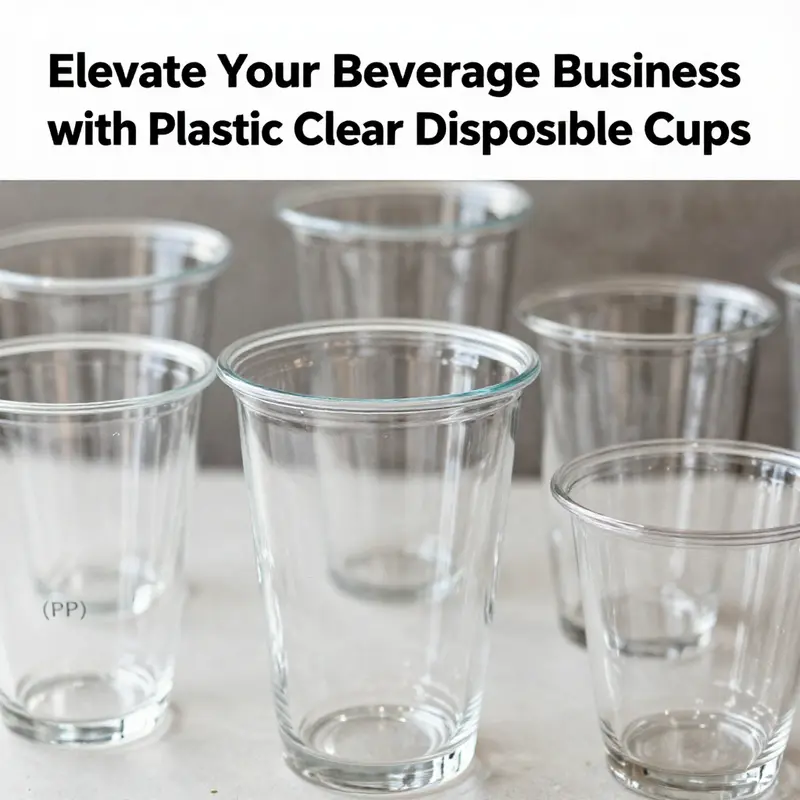
The clear disposable cup is often taken as a simple vessel, but the material behind its smooth, unbroken surface governs nearly every aspect of how it behaves in use and how it ends its life. In the world of single-use drinkware, two polymers dominate the landscape: polypropylene and polystyrene. Each brings a distinct set of strengths and trade-offs, and understanding those differences helps explain why a business might choose one option over another for a given service, event, or menu. When we peel back the surface, we find a story about heat tolerance, clarity, rigidity, and the sometimes uneasy balance between performance and the environment into which the cup will be released after its brief, busy life behind a counter or at a catered gathering.
Polypropylene, often identified by its versatility and resilience, is a workhorse for cups intended for hot and cold beverages alike. Its heat resistance can reach up to about 130°C (266°F), a threshold that matters when a barista hands over a cup of steaming coffee or a hot chai latte. This thermal cushion is not just about comfort for the drinker; it matters for the integrity of the cup itself. A polypropylene cup holds its shape, resists deformation from internal pressure, and remains usable when the beverage is sipped through a lid. The material’s surface can stay clear enough to showcase a layered drink or a colorful crema, while the walls remain stiff enough to stack and transport in bulk without collapsing under modest loads. For operators, the endurance of PP translates into reliable performance during busy service, reduced risk of leaks from slight flexing, and lower likelihood of cracking when dropped in a bustling environment.
In practice, the choice of polypropylene often aligns with a broader emphasis on durability and a wider temperature range. It holds up under microwaving for reheating purposes, which means cafés and caterers can reuse or reheat drinks in a manner that keeps the cup intact and reduces spill risk. From the user’s perspective, this is the kind of predictability that matters: a hot drink in a rigid, clear cup that remains intact from the moment it leaves the steam wand to the moment a customer sets it down on a table. On the environmental side, PP is recyclable in many regions. The production footprint tends to be lower than some other plastics, particularly when considering energy use and emissions in certain manufacturing contexts. These attributes—thermal stability, mechanical resilience, and recyclability in various locales—help explain why PP clear cups have become a staple for both hot and cold beverage service.
Polystyrene, by contrast, is celebrated for its crystal-clear appearance and its lightweight, almost foam-like texture in certain formulations. The optical clarity of PS is a defining trait. When a customer looks into a cold drink, the glassy, bright transparency of PS can showcase the beverage with an almost premium feel. The material’s rigidity and low weight contribute to a sense of economical value in short-term use, which is why PS cups proliferate for cold drinks and for events where a sleek, presentable cup is desired without escalating costs. PS also provides good insulation for cold beverages, helping to keep a drink cooler for longer as it sits on a tray or at a table, even in warm environments. These performance qualities make PS a cost-effective option for many providers whose primary concern is a sharp, clean look and minimal price per unit.
Yet the same traits that make PS attractive also raise flags about its end-of-life footprint. Environmental concerns associated with polystyrene, including persistence in landfills and the potential for chemical leaching when heated, have led many regions to scrutinize or phase out PS-based disposables. Even though PS is technically recyclable in theory, the practical reality is that recycling infrastructure for PS is uneven at best. When contaminated with food residues or when the stream is mixed with other plastics, PS often becomes non-recyclable in practice. This mismatch between recycling potential and real-world handling has pushed many operators to weigh the benefits of PS against the long-term implications for waste streams and landfill capacity.
The discourse around these two materials is not merely a tale of heat resistance and clarity. It extends into the broader conversation about sustainability and lifecycle thinking. PP cups tend to offer a more favorable combination of recyclability and mechanical integrity, which many proponents interpret as a pathway to a more responsible end-of-life outcome, especially in regions with established PP recycling streams. PS cups, while offering superior clarity and the lowest unit cost in many cases, occupy a more fragile position in the sustainability conversation because of limited practical recycling and the pollution concerns associated with persistent plastics. For consumers who care about compostable or biodegradable alternatives, PLA-based cups are often presented as an eco-friendly option. PLA is plant-based and marketed as compostable, but it introduces another set of complexities, including cost considerations and the need for industrial composting facilities to realize its environmental benefits. In practice, many event organizers and quick-service operators still rely on PP or PS because they align more predictably with local waste infrastructure and business budgets.
The choice between PP and PS is rarely about a single characteristic. It is a balancing act among thermal performance, visual appeal, structural robustness, cost, and end-of-life realities. PP’s advantages in heat tolerance and recyclability in many jurisdictions are counterbalanced by PS’s advantages in clarity, insulation for cold drinks, and lower unit costs. A food-and-beverage operation that serves hot beverages at scale may prioritize PP for its durability and safety in hot conditions. A venue that emphasizes a crystal-clear presentation of cold drinks and a brief, one-off service window might opt for PS to maximize visual appeal and minimize upfront costs. In both cases, the decision is shaped by the realities of the local recycling framework, the brand narrative around sustainability, and the logistical demands of moving thousands of cups through a service line each day.
Environmental stewardship is not a one-size-fits-all proposition. Some operators pursue a mixed approach, using PP for hot offerings and PS for certain cold-draw scenarios where the customer’s perception of clarity matters most. Others expand the conversation to include alternatives beyond these two polymers, exploring PLA, PET, or barrier-coated variants that aim to resolve the tension between performance and end-of-life options. In any case, the practical takeaway remains consistent: material composition governs how a cup feels in the hand, how it performs under pressure, and how it can be responsibly managed after its moment of use. This is why manufacturers and buyers alike pay attention to the small details—crystal clarity, lid compatibility, wall thickness, and the specific feedstock used—as much as they observe the bigger headlines about recyclability and waste reduction.
For readers considering non-plastic routes or complementary packaging, a related category worth exploring is disposable single-wall Kraft coffee cups with lids. They offer a different experience in terms of feel, aesthetics, and end-of-life options, and they can illuminate how a product choice extends beyond the cup itself. disposable single-wall Kraft coffee cup with lid. While the focus here stays with polymer materials and their clear disposables, understanding the trade-offs across formats can inform smarter decisions about branding, customer experience, and environmental impact.
The thread tying all these considerations together is the recognition that a clear cup is not merely a container. It is a performance envelope that translates customer expectations into material choices, and then into waste streams that communities must manage. When cups are used responsibly and end-of-life systems are aligned with the material’s properties, the apparent simplicity of a disposable cup becomes a nuanced decision point that blends science, design, and sustainability. In the end, the most successful cups are those that offer dependable performance for the drink while fitting within the waste-management realities of the end user’s region. The material claims behind PP and PS—heat resilience, clarity, insulation, cost, recyclability—are not abstract facts; they are the levers that shape how a brand shows up in the real world, how a service line runs on a busy night, and how a city moves toward a more efficient, more thoughtful packaging ecosystem.
External resource for broader context and ongoing developments in plastics packaging sustainability: https://www.plastics.org
Clear in View: The Applications and Uses of Plastic Clear Disposable Cups
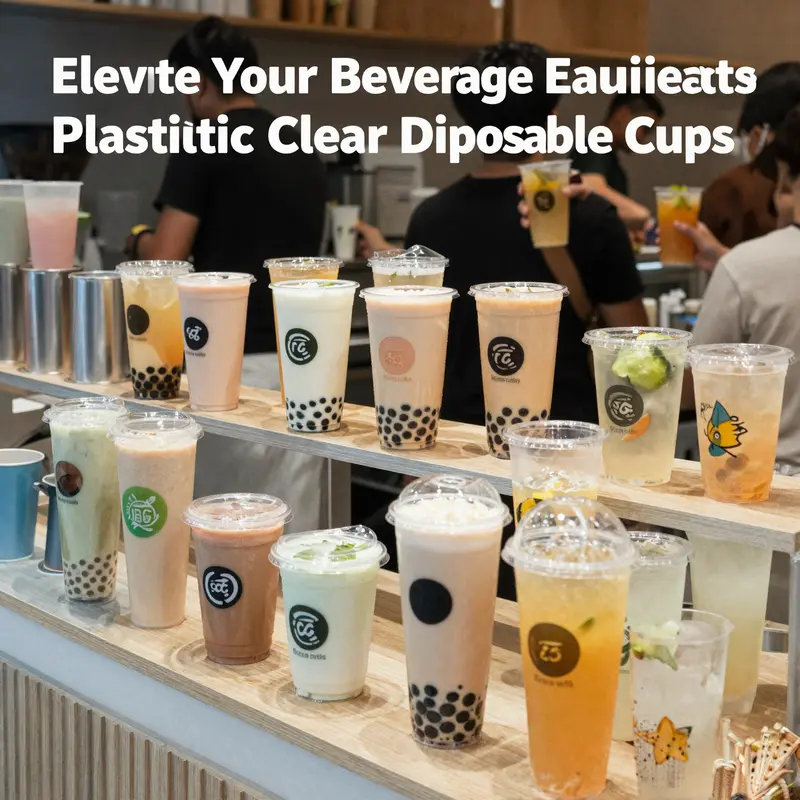
Clear plastic disposable cups do more than hold beverages; they act as a transparent stage for the liquid inside, shaping how a product is perceived and how a moment is experienced. In a world of rapid service, a cup’s clarity invites inspection and anticipation alike. The cups themselves are designed from a spectrum of plastics, each chosen to balance visibility with function. Among the most common options are PETE and PP, materials that bring different strengths to the same purpose: to present, protect, and transport with minimal effort from the user.
When it comes to visibility and performance, the material matters. PETE cups excel in showing off carbonated drinks with their strong gas barrier and shatter resistance. They feel trustworthy in a crowded display, where customers judge freshness by the hue and foaming at the rim. Polypropylene, by contrast, offers a steadier ally for temperature and stability. It handles cold beverages with ease and maintains form under moderate heat, which makes PP a sensible choice for budget-conscious takeout or self-service stations. And for initiatives that emphasize sustainability, PLA cups enter the conversation, presenting a plant-based option that is marketed as compostable. The tradeoffs are real: PLA can carry an eco-story, but performance and cost can differ from traditional fossil-based plastics. The takeaway is that the choice of material is a strategic decision, not just a logistic one, because it defines what customers will experience from the first look to the final sip.
Sizes and shapes expand the spectrum of applications. Everyday venues commonly stock 8, 12, 16 and 24-ounce options, enough to cover a quick sip and a longer, more leisurely drink. For bubble tea or milkshakes, larger, curved forms offer a comfortable grip and an eye-catching silhouette. Some designs feature a distinct rim or a reinforced edge that adds a hint of elegance for events, while others emphasize a clean, utilitarian profile ideal for fast-paced service. The shapes range from straightforward straight-sided tumblers to more specialized U-shaped variants, each tailored to a particular beverage experience. The physical form is more than aesthetics; it influences stacking efficiency, heat transfer, and even how a lid fits. A correctly chosen cup reduces spill risk, simplifies handling, and supports a smoother workflow in busy settings.
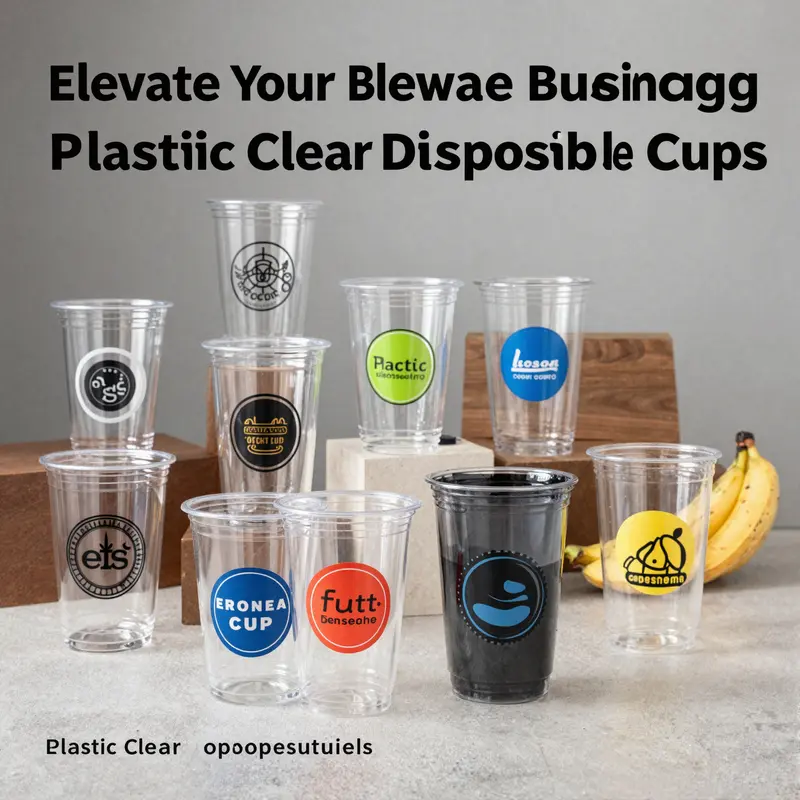
Lids and accessory options complete the cup’s utility. Lids with built-in drinking holes, sip lids, and even small handles can transform a disposable cup into a practical tool for transport and on-the-go consumption. In venues with line loads or mobile service, such features can cut the time customers spend at a counter while maintaining hygiene and portion control. Customization is a major selling point here; brands can print logos or designs on cups and lids, tying a disposable container to a broader brand experience. Customization is not merely decorative. It reinforces identity, communicates quality, and signals care for the guest’s experience. This is where a plain cup becomes part of a larger marketing narrative, a moving billboard that travels with the customer from the counter to the event floor.
The use cases span several sectors, each drawing on the same core strengths—transparency, lightness, and cost efficiency—yet each leveraging them differently. In the food and beverage arena, clear cups are a staple for cold drinks like water, juice, soda, iced tea, and smoothies. The visibility of color and texture enhances appeal, making beverages look fresh and inviting. For carbonated beverages, PETE’s resilience helps prevent cracks or leaks during service and transport, a crucial consideration for vending machines, self-service stations, and catered events. In retail and hospitality settings, the lightweight design reduces handling fatigue for staff and simplifies inventory management. PP cups are often favored in these environments because they handle cold beverages reliably and can be produced in bulk without excessive expense.
Events and parties rely on the aesthetic and practical values of clear cups. A clean, minimal look complements diverse themes, while disposability lowers cleanup and labor costs after hours. For many event planners, the decision to use disposable clear cups is as much about logistics as it is about presentation. The ability to serve rapidly without sacrificing hygiene helps maintain a steady tempo for guest service, which in turn supports overall guest satisfaction. In medical and laboratory contexts, clear cups are used for non-sterile fluid handling and temporary storage where visibility is essential. The clarity provides an immediate read of liquid level, color, and any sediment, reducing the chance of misidentification during routine tasks.
Beyond function, there is the marketing dimension. The capacity to print logos, names, or simple designs directly onto the cup or its lid turns a common item into a powerful branding tool. Even subtle branding can reinforce a theme, a product line, or an event’s identity. The practical appeal of such customization lies in its ability to deliver a consistent brand touchpoint at scale, especially for venues that operate with high volumes and frequent turnover. The choice to customize can align with broader packaging strategies, creating a coherent customer experience that begins at the cup and travels through the service journey.
Alongside these operational advantages, the chapter of environmental consciousness continues to unfold. PLA, as a plant-based option, presents an appealing narrative of sustainability. Yet, the reality is nuanced. The biodegradability or compostability of PLA cups hinges on industrial facilities and precise disposal practices. In many markets, consumer waste streams either do not reach the appropriate composting infrastructure or do so irregularly, which can complicate environmental claims. In contrast, PP and PETE cups are generally recyclable, but recycling rates depend on local programs and market demand for recycled material. This creates a tension between presenting a product as eco-friendly and ensuring that its end-of-life behavior truly aligns with that claim. The modern buyer increasingly expects clear labeling, accurate certifications, and transparent guidance on disposal. In practice, successful programs often blend a responsible material choice with an efficient waste management plan and clear customer communication.
To navigate these choices, businesses weigh several factors: the expected temperature range, the beverage type, the desired level of aesthetic appeal, the required level of durability during transport, and the overarching sustainability goals. Costs are a loud guide here. PP cups tend to be affordable in bulk, which makes them attractive for large-scale takeout or event service. PLA cups can command higher prices due to material costs and the added value of a compostable story, but they require careful planning around disposal. Suppliers and manufacturers also surface improvements in design—such as thinner walls that preserve clarity while reducing material usage, or rims that provide a premium feel without adding bulk. The market remains competitive, with global producers offering a range of standard and customized options, and with safety and quality standards corresponding to international certifications that reassure buyers about consistency and safety.
An additional layer of practical consideration appears when thinking about bulk logistics and supply chain reliability. The product ecosystem includes minimum order quantities, lead times, and the potential for customization at scale. For event planners, cafés, and caterers, timely delivery and predictable quality are non-negotiable. The ability to source a reliable supply of clear cups in the needed sizes, with compatible lids or sleeves, reduces the risk of service disruption. As with any disposable packaging, the decision to standardize on a particular cup format may come down to a balance of performance, cost, and the degree to which the cup supports the intended guest experience—from the first glimpse of the beverage to the last sip.
For readers curious about practical examples of complementary packaging, one avenue worth exploring is how many operators pair clear cups with lid designs that reflect their brand’s identity. A dedicated option exists for those seeking eco-conscious, printed-lid solutions that align with sustainability and visual branding goals. This pairing can elevate a basic takeout experience into a cohesive, recognizable moment for customers. eco-friendly printed-logo cold beverage paper cup with lid illustrates how even a paper-based pairing can demonstrate a commitment to design and environmental responsibility, offering a useful point of reference for teams weighing similar branding strategies in the plastic cup category.
The broader takeaway is simple: clear disposable cups are not one-size-fits-all tools. They are adaptable components that enable a wide spectrum of beverage presentation, service models, and environmental considerations. The selection process should align with the beverage itself, the service environment, and the brand’s overall promises to customers. It is a balancing act among visibility, durability, temperature tolerance, cost, and end-of-life outcomes. In practice, a thoughtful approach combines material science with operational realities, while staying mindful of consumer expectations about cleanliness, transparency, and responsible disposal. For anyone building a cohesive packaging and service strategy, the cup remains a surprisingly influential instrument—one that reminds us how much a small, clear vessel can communicate about quality, care, and the fragrance of a moment just poured.
External resource: For a technical overview of disposable plastic cups and their performance features, see the following external reference: https://www.benjaminross.com/disposable-plastic-cups-pakistan-guide-performance-technical-features-and-applications-explained/.
Transparent Economics: Market Trends, Materials, and the Pricing Landscape of Plastic Clear Disposable Cups
Clear plastic disposable cups sit at a curious intersection of practicality and perception. They are simple, transparent vessels that align with fast service, high throughput, and the visual appeal that makes a drink look as good as it tastes. In the broader food service ecosystem, events, and takeaway hospitality, these cups have become a reliable, scalable solution. What makes the current chapter of their story notable is not just how many are produced or sold, but how pricing, material choices, and consumer expectations are converging to shape purchasing decisions across segments. The market’s pulse is driven by a mix of hygiene imperatives, convenience, and the economics of mass production. Companies choose clear cups because they enable customers to evaluate the product at a glance—the color, the contents, the level of remaining liquid—while keeping costs predictable and procurement straightforward. As a result, the conversations around these cups tend to orbit around three interlinked themes: price discipline achieved through scale, evolving material preferences that balance performance with sustainability, and the practical design innovations that extend their use beyond a simple beverage carrier into a branding and guest experience tool.\n\nPricing remains the most conspicuous driver in supply negotiations for clear cups. Across the market, a wide price range persists, reflecting buyer volume, material selection, and supplier capabilities. In bulk, the economics are stark in favor of volume: units can drift from the low pennies to a few tenths of a dollar depending on the order size and the raw material. For modest orders—think thousands rather than tens of thousands—typical pricing hovers in the range of a few cents per cup. As order quantities climb into tens of thousands or more, the per-unit cost often compresses further, sometimes moving toward two cents or even below, when procurement is paired with efficient logistics and robust supplier terms. This affordability underpins why clear cups remain a default choice for casual dining, catering for large events, and retail take-out operations where margins are sensitive and volume is the lever that makes sense.\n\nYet price is never the sole consideration. The material from which a clear cup is formed—commonly polypropylene for its durability and heat tolerance, or polystyrene for high clarity and rigidity—comes with its own cost dynamics and performance trade-offs. Polypropylene cups are typically favored for hot and cold beverages alike, offering resilience in handling and a favorable balance of cost and durability. Polystyrene cups, prized for their crystal clarity, support premium visual appeal but can come with slightly higher material costs and environmental considerations. A notable current trend is the increasing availability of BPA-free and plant-based biodegradable alternatives. These options respond to a growing consumer and regulatory emphasis on sustainability, but they often carry a higher price tag and different performance profiles. For many operators, the calculus is about aligning the drink experience with environmental goals without sacrificing reliability or inflating the total cost of ownership. The result is a marketplace that feels both familiar and evolving, where the baseline affordability of traditional plastics persists, but with a deliberate widening of the options to placate budget-conscious buyers who still want to signal responsibility to customers and guests.\n\nThe material story feeds directly into product design and innovation. A notable shift is toward specialized formats that address niche needs within the broad category of clear cups. Skinny, tall designs—often reaching 15 to 20 centimeters in height and holding 400 to 700 milliliters—have gained traction for smoothies, bubble tea, and slushies. These designs demand not just clarity and rigidity but a careful balance between a slender profile and structural integrity, particularly as drinks become denser or more viscous. Rim and lip designs are also being refined to improve sip-ability and reduce leakage when lids are applied. Lids themselves have evolved from simple closure components to more nuanced add-ons with built-in drinking holes, sip-through options, and sometimes integrated handles or sleeves that aid transport for on-the-go customers. The result is a family of clear cups that can be tailored to beverage type, service channel, and brand narrative, while still delivering the straightforward economics that underpin mass distribution.\n\nThe market is not static, and a significant portion of pressure on pricing comes from supply chain dynamics and procurement practices. The same sources that once offered basic, one-size-fits-all solutions now deliver a spectrum of choices with varying tolerances for dimensional accuracy and sealing integrity. Suppliers emphasize specifications such as dimensional accuracy within tight tolerances and the reliability of sealing interfaces when lids are used, all of which influence waste rates, leakage risk, and customer satisfaction. In markets that rely on rapid turnover and high-volume service, even small deviations in capacity or clarity can cascade into noticeable cost implications. Buyers who optimize their cup selection by aligning with supplier capabilities—such as consistent wall thickness, rigid rims, and consistent transparency—tocket premium on performance and preempt costly returns or replacements.\n\nSourcing platforms and globalization add another layer to the pricing narrative. The market has historically benefited from competition among manufacturers in major manufacturing hubs, with bulk wholesale channels enabling access to a wide range of options. For buyers, this translates into the ability to negotiate favorable terms, lock in steady supply during peak demand periods, and manage inventory with a more predictable price curve. The procurement process is frequently supported by supplier guides and safety certifications that reassure buyers about quality and compliance, from dimensional tolerances to packaging and storage standards. Although the core appeal remains the cost advantage of scale, the practical reality is that buyers increasingly factor sustainability credentials, traceability, and quality-control metrics into their supplier selection. The market’s trajectory suggests this will continue to be a differentiator, even as price remains a primary lever for volume-driven sales.\n\nFrom a business perspective, the decision to choose clear cups is rarely about a single factor. It is a balanced equation that weighs unit price, reliability, and the ability to integrate branding and guest experience. Customization has become a practical hallmark of modern cup procurement. The ability to print logos or brand names on cups, pair them with printed lids or sleeves, and align with packaging ecosystems speaks to the value placed on consistency and memory in consumer encounters. For cafés and event planners, the capacity to turn an ordinary disposable cup into a brand extension—without sacrificing the convenience of single-use service—illustrates how a simple SKU can contribute to the larger marketing and guest-relations strategy. Even as sustainable and compostable alternatives rise in visibility, the core calculus remains one of delivering a predictable drink experience at scale, with cost efficiency that supports profitability across high-volume contexts.\n\nIn the broader picture, regional patterns matter as well. The ongoing diffusion of disposable tableware reflects different consumer cultures, regulatory landscapes, and hospitality norms. Regions with established dine-out and takeaway habits often exhibit stable demand coupled with tight price competition. In places where disposable culture is deeply ingrained, the pressure to maintain low per-unit costs while ensuring consumer trust around safety and hygiene remains intense. Yet the sustainability conversation is increasingly global. The market is adjusting to consumer expectations around recyclability and biodegradability, which can influence the selection of materials and the lifecycle footprint of a cup—from production to end-of-life handling. In this sense, pricing and trends are not simply about the cheapest option but about the best value for a given use case, balancing function, appearance, and environmental considerations.\n\nTo navigate this landscape, buyers increasingly rely on a blend of market intelligence and accessible procurement knowledge. Platforms that connect buyers with a spectrum of manufacturers provide not only price points but also critical details about certification, storage conditions, and quality-control procedures. A practical takeaway for operators is to view cup selection as a structured decision rather than a purely price-driven choice. A small premium for a more stable supplier relationship, stronger quality assurances, or better performance with specific beverages can translate into reduced waste, improved customer satisfaction, and a smoother service flow during busy periods. This is where the economics of clear cups intersect with the realities of hospitality operations: the right cup, chosen with attention to material performance, designed for the beverage, and sourced from a partner capable of consistent delivery, yields value that extends beyond the price tag per unit.\n\nAs the market continues to mature into 2026 and beyond, the relationship between price, material choice, and product design will likely shape not only what cups are used but how they are perceived by customers. The relentless drive for efficiency will coexist with a heightened sensitivity to environmental impact, pushing some buyers toward compostable or bio-based options even as others optimize for cost and reliability. In this evolving context, clear plastic disposable cups remain a practical, versatile tool—an affordable canvas for beverage presentation and brand storytelling, a conduit for hygienic service, and a focal point in the ongoing conversation about sustainability in everyday packaging. For anyone sourcing cups at scale, the lesson is clear: price signals must be interpreted alongside material performance, design flexibility, and the expectations of both operators and guests. When these elements align, the familiar sight of a transparent cup becomes not just a mode of service but a symbol of accessible quality in a fast-moving industry.\n\nExternal resource: For a detailed overview of supplier options and typical pricing data, see the external resource on Disposable Clear Plastic Cups: https://www.alibaba.com/product-detail/Disposable-Clear-Plastic-Cups-Price-999_1600187276567.html
null
null
null
null
Final thoughts
Plastic clear disposable cups are more than just utilitarian items; they are a significant aspect of branding and sustainability for businesses in the beverage and food service industries. By understanding the materials, applications, and market dynamics, you can make choices that not only fulfill operational needs but also align with customer preferences and environmental goals. Whether opting for affordable PP cups or eco-friendly PLA alternatives, embracing the wide array of options available can enhance your service delivery while paving the way for impactful branding. Let these insights guide you to maximize the benefits of plastic clear disposable cups in your operations.