
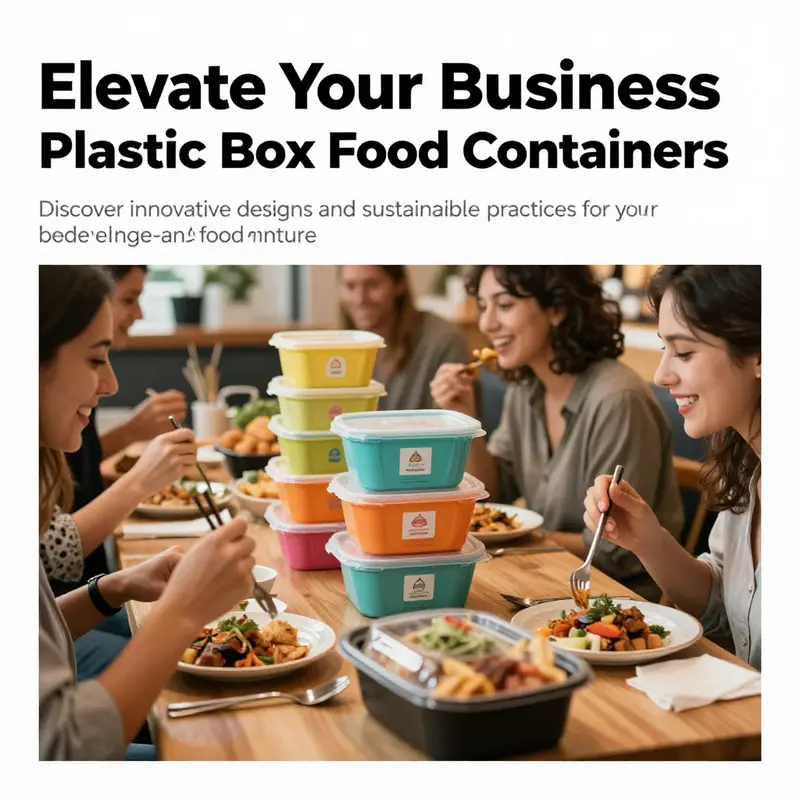
In the competitive landscape of food and beverage service, the choice of packaging plays a crucial role in not only preserving food but also enhancing brand image. Plastic box food containers are emerging as a favored solution among bubble tea shops, restaurants, food trucks, catering services, and event planners. These containers offer convenience, durability, and customization options that cater to a variety of needs—from meal prep to attractive food presentation. This article delves into the different types and materials of plastic food containers, the latest design innovations shaping the market, and the dynamics of sustainability that are crucial for today’s eco-conscious businesses. As we explore these chapters, you’ll gain insights that will help you choose the right solutions to meet your specific needs while appealing to environmentally-aware customers.
Shape, Substance, and Safety: The Types and Materials of Plastic Box Food Containers
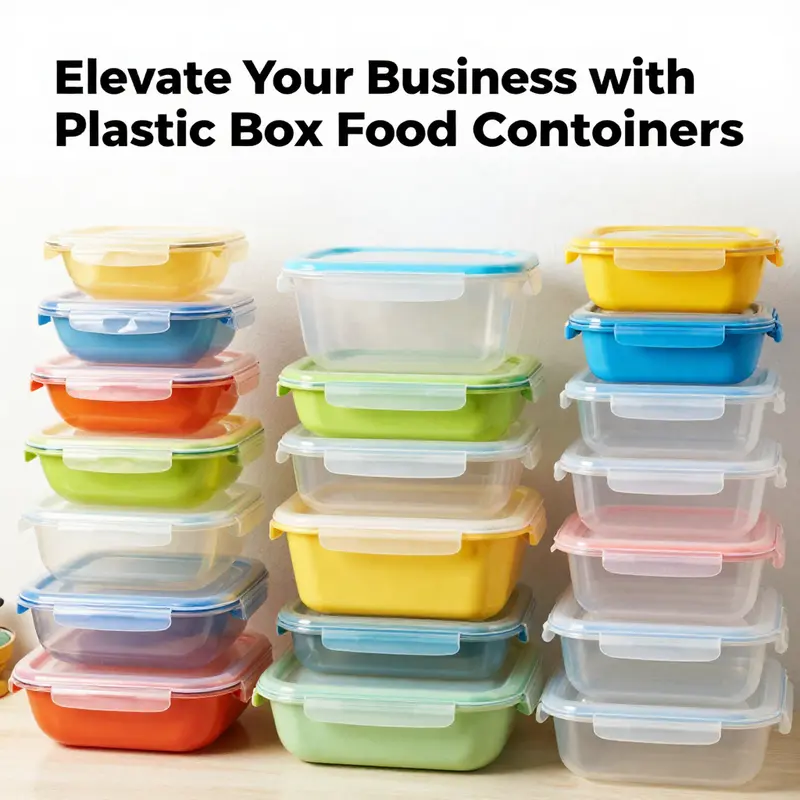
Plastic box food containers occupy a central place in kitchens, cafeterias, and delivery workflows because they combine resilience with flexibility. The story of these containers begins with shape and ends in safety, weaving through how form and material interact to meet the needs of storage, preparation, transport, and eventual disposal. A single box can serve as a meal-prep vessel, a refrigerator organizer, a takeaway package, or a portion-control tool, and each use case nudges the design toward a distinct balance of features. Rectangular and square boxes, with their flat, stable bases, dominate meal-prep cabinets. Their geometry makes efficient stacking and space saving straightforward in both refrigerators and pantries. When a cook plans a week of lunches, these straight-edged boxes simplify portioning, layering protein, grains, and vegetables without tipping or mixing. The more curved, round containers, on the other hand, find their strength in containment of sauces or spices, where the circular profile helps minimize spillage by guiding contents toward the lid. The variety in shapes is not mere whimsy; it is a practical language of portion control, spill prevention, and user experience. In professional settings, modular and interlocking designs extend this logic. Lids with secure seals, venting mechanisms, and tight-fitting rims transform a simple box into a reliable barrier against leaks, odors, and contamination. A multi-compartment layout can separate different components within a single meal, preserving textures and flavors. In all cases, the exterior silhouette and the lid system must negotiate two realities at once: the need for ergonomic handling and the pressure to minimize bulk for storage and transit. The middle ground is often found in stackable configurations, where lids nest neatly, and bases align with precise tolerances to create a compact, organized shelf or cooler. The design vocabulary also embraces specialization. Some containers adopt removable ice packs for salads, an idea that keeps perishables crisp during delivery or warm-weather storage. Others incorporate features like built-in utensils or curved bottoms to cradle particular foods. The result is a spectrum of products designed to optimize efficiency across home and commercial workflows, while maintaining a visual simplicity that makes them convenient to label, reuse, and recycle when appropriate. The choices of materials are inseparable from these design goals, because the resin determines how a container withstands heat, how it resists chemicals, and how long it can be reused before replacement becomes necessary. The most widely used resins in reusable and disposable containers fall into a short but critical taxonomy, each with distinct strengths and caveats. Polypropylene, or PP, is the front-running material for reusable food storage. It offers robust heat resistance, tolerating brief microwave exposure and hot fills, while staying surprisingly light and durable. Its chemical stability makes PP a staple in lunch boxes and meal-prep containers that are designed to be washed and reused. This combination of heat tolerance and resilience supports a practical cycle of use and cleaning, which reduces the frequency of replacement. For families and workplaces aiming to reorganize their routines around daily meals, PP-based containers provide a dependable backbone for reheating leftovers, portioning soups, and carrying warm or room-temperature fare without dramatic deformation. PET, or polyethylene terephthalate, is a common material for single-use containers and beverage packaging. It shines with clarity, enabling appetizing presentation and product visibility. PET is strong for its weight and resists shattering, which makes it a natural choice for takeaway packaging that relies on visual appeal. However, PET is generally intended for limited reuse or single use, particularly when exposed to high temperatures or aggressive cleaning regimens. Repeated heating or long-term contact with hot foods can lead to degradation and, in some cases, leaching concerns. HDPE, or high-density polyethylene, brings rigidity and chemical resistance to the table. It is widely used for food-grade packaging where durability and a higher resistance to solvents are valued. HDPE is a sturdy option for containers that endure repeated handling, freezing, or cold storage, though it can be more challenging to clean thoroughly after long uses. LDPE, or low-density polyethylene, is known for flexibility and ease of sealing. It appears in many bags and some wrap-like packaging and is less favored for heated foods due to lower heat resistance. When exposed to oil-rich or hot contents, LDPE can deform and release unwanted substances, underscoring why many users reserve LDPE for non-heating tasks. Polystyrene, PS, shows up in disposable coffee cups and some takeout boxes. Its translucent clarity and light weight make it appealing for single-use scenarios. Yet PS is notorious for limited heat resistance and potential leaching of styrene when exposed to hot foods or liquids. For this reason, it is generally advised to avoid heating hot contents in PS containers and to consider alternatives for reheated or long-duration use. The broader “other plastics” category, often labeled as #7, includes a variety of materials, including polycarbonate in older products. This category can contain substances of concern, such as bisphenol A (BPA) in older formulations, although BPA-free variants exist. In practice, this group is viewed with caution by many users who prioritize safer, more predictable chemistry in food-contact applications. Among these materials, PP (#5) stands out as the preferred choice for reusable containers meant to store and reheat foods. The claim rests on a combination of heat tolerance, chemical stability, and a favorable safety profile for repeated use. Consumers who prioritize durability and reliability often select PP-based containers for daily meal prep and pantry organization. They withstand thermal fluctuations from fridge to microwave, and their resilience reduces the likelihood of cracking or warping after many cycles. While PP shines in the reusable segment, the landscape of plastic food containers remains diverse, and the choice is seldom universal. The decision often hinges on the intended use: a household that wants a sturdy, reusable lunch box may favor PP; a single-use service that needs clear visibility for display and quick disposal might prefer PET or PS for its price and presentation. In many markets, supply chains and manufacturing ecosystems reinforce these preferences. Large producers, especially those with bases in regions known for plastics manufacturing, emphasize customization and scalable production. They offer options that range from standard shapes and sizes to OEM and ODM services, with capabilities like logo printing, color customization, and special features such as interlocking lids or modular compartments. This customization capability is particularly relevant for commercial and catering contexts, where containers must align with branding, service style, and operational workflows. The economics of plastic containers are shaped by material selection, production scale, and the complexity of the design. Suppliers with high-volume capacities can offer economies of scale that push per-piece prices down—sometimes to a few cents for simple, large-quantity orders. As complexity increases, or as eco-friendly or premium features are added, prices rise accordingly. A key takeaway is that the market is highly segmented: basic storage boxes and lunch boxes in PP can be remarkably inexpensive when bought in bulk, while premium, branded, or highly specialized designs can command higher unit costs. Environmental considerations increasingly color these decisions. Recyclability, the potential for reuse, and the presence of environmentally preferable alternatives all influence consumer choices and corporate procurement policies. In this context, many stakeholders weigh the total lifecycle of a container—from raw material extraction to manufacturing, use, cleaning, and end-of-life disposal. A growing segment emphasizes recyclable plastics and even biodegradable variants, though the majority of standard containers remain single-use or multi-use with varying degrees of washability. For those navigating this landscape, the choice of material is inseparable from how the container will be used. A reusable household or office setting benefits most from PP’s durability and heat tolerance, while a takeout operation often prioritizes a balance of clarity, cost, and safety, where PS or PET may be employed for certain lines of disposable packaging. The industry also benefits from a robust manufacturing backbone in regions with established plastics production capabilities. Founders and manufacturers who can scale up production while maintaining quality controls and consistent temperature performance are well-positioned to meet the diverse demands of food service, retail, and household use. This convergence of form, function, and safety underlines a broader truth: the container is a practical interface between food and the eater. The best choice respects the type of food, the method of storage, and the expected lifecycle of use. It respects the temperatures that will be encountered, the cleaning regimes that will be used, and the regulatory expectations that govern food contact materials. When the packaging design succeeds, it quietly supports the meal: it keeps contents contained, preserves freshness, and communicates a sense of care to the user. It is small as a box, but it carries a larger responsibility—ensuring that the shape, the material, and the design work in harmony to deliver a safe, convenient, and sustainable experience. In considering these factors, one encounters a practical crossroad: the constant tension between single-use convenience and reusable durability, between optical clarity and opaque safety, between cost and long-term value. The modern container seeks to reconcile these tensions by offering options tailored to different roles in the food system. It is not merely a receptacle; it is a designed component of a larger workflow that includes storage planning, meal preparation, transport logistics, and ultimately, responsible disposal or recycling. Within this framework, the choice of material matters as much as the choice of shape. The conversation about plastic box containers thus unfolds as a conversation about habits as much as about hardware. It asks what kind of meal culture a kitchen wants to support: quick service and disposable convenience, or reusable routines that emphasize durability and reuse. It asks how a user balances safety with practicality: which temperatures are routine, which foods are likely to be heated, and which cleaning standards must be met. And it asks where responsibility lies in a supply chain that spans raw material suppliers, manufacturers, distributors, restaurants, households, and recycling streams. The answers are not always uniform, but they are guided by core principles—predictable performance under the conditions of use, clear labeling for temperature and reuse, and compliance with safety standards that govern food contact materials. For those who want to read more about how safety guidelines shape these choices, the federal guidance provides a foundational baseline. In practice, this means checking the recycling code on the bottom of a reusable container, consulting temperature guidelines for reheating, and understanding the nuances of leaching risks for specific materials. The overall takeaway is straightforward: the right container for a given food scenario hinges on a thoughtful pairing of shape, material, and intended lifecycle. If a lunch box is meant to endure daily use and occasional microwaving, polypropylene emerges as the most sensible default. If a clearly visible, single-use container is required for a to-go order, PET or PS may be appropriate under strict handling and temperature constraints. In every case, designers and users alike benefit from a clear sense of the container’s limits and its opportunities for reuse or recycling. For readers who want a practical gateway to eco-conscious options, one relevant path is to explore alternatives that emphasize recyclability and low environmental impact, such as the eco-friendly-recyclable-pulp-2-4-cups-coffee-take-away-cup-holder, which demonstrates how packaging ecosystems can diversify beyond plastics while still serving the core needs of food safety and convenience. This broader perspective helps institutions and households weigh trade-offs with greater clarity, ensuring that each choice aligns with both current operations and longer-term sustainability goals. In closing, the landscape of plastic box food containers is defined less by a single material than by the careful alignment of purpose, performance, and prudence. The shapes, the resins, and the design features coevolve to meet the practical demands of real-world use, while ongoing attention to safety, labeling, and end-of-life options helps to ensure that these humble boxes remain reliable partners in everyday meals. External resources further illuminate the safety framework that underpins these decisions, offering guidance on how plastics interact with food and the regulatory expectations that govern their use. For an authoritative overview of food-contact materials, see the FDA’s plastics and food packaging guidelines: https://www.fda.gov/food/food-contact-materials/plastics-and-food-packaging
From Multi-Compartments to Smart Lids: Design Innovations Recasting Plastic Box Food Containers
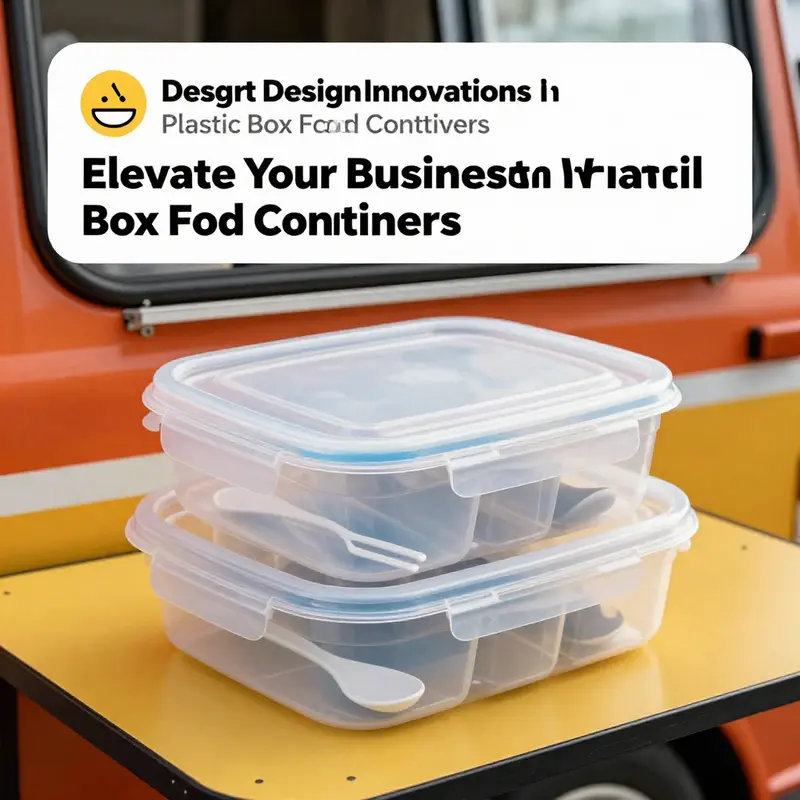
Plastic box food containers have become essential interfaces between people and their meals. They move from kitchen to fridge, pantry to desk, and restaurant pass-through to home delivery, carrying practicality, safety, and presentation. The design language now balances compactness with capacity, resilience with lightness, and simplicity with ingenuity that makes daily tasks smoother. Materials anchor this balance: polypropylene for heat tolerance and light weight; high-density polyethylene for strength and chemical resistance; polystyrene for clarity in premium or disposable variants; PET for transparency and added rigidity. Each material carries trade-offs, driving designers to tailor containers to specific workflows. Beyond raw materials, compartmentalization enables meal-prep culture by keeping proteins, starches, and vegetables separate to preserve flavor and texture and support portion control. Lids and seal integrity are central to reliability, with gasket-equipped closures reducing leaks and extending shelf life. Sustainability remains a driver, pushing lightweighting, recyclability, and durable reusability. The commercial landscape emphasizes customization and scale, while the consumer experience focuses on ease of use, cleanliness, and trust. Looking ahead, smart packaging ideas and simple indicators could guide portions or freshness, making containers active participants in daily routines.
Between Convenience and Conscience: The Market Dynamics and Sustainability of Plastic Box Food Containers
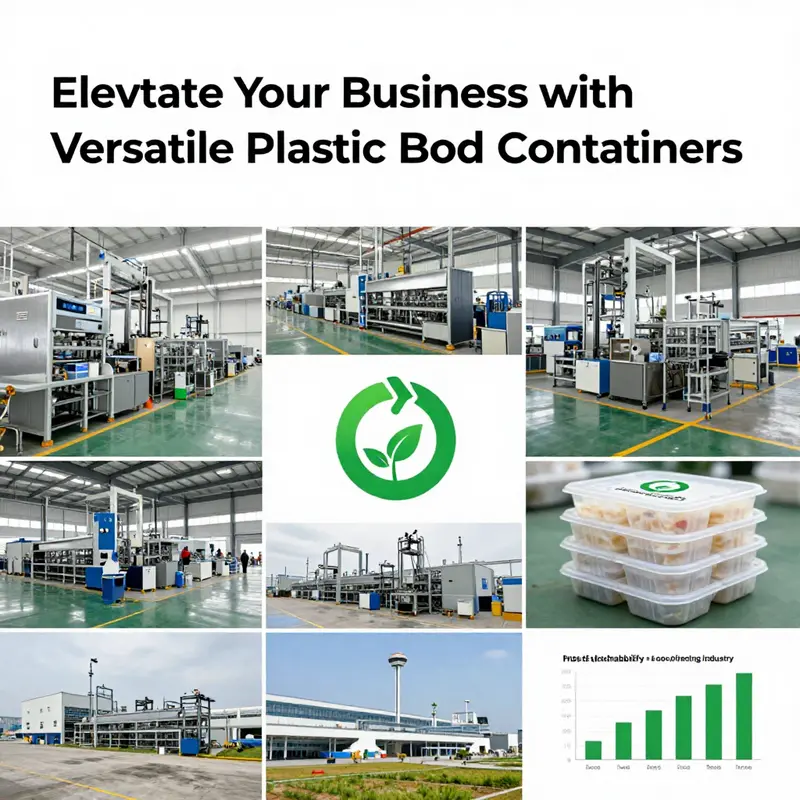
Plastic box food containers have become embedded in the daily routines of households, foodservice operations, and retail packaging alike. They symbolize a practical equilibrium between durability, affordability, and convenience, while also Marking the edge of a broader societal conversation about environmental responsibility. The chapter that follows views these containers not merely as inert vessels but as dynamic instruments in a market that is both evolving and contested. The latest market intelligence reveals a landscape that is growing in value yet girded by regulatory scrutiny and shifting consumer expectations. In 2024, the global market for plastic food containers was valued at approximately US$37.01 billion, a figure that belies the underlying tensions between demand for disposable, ready-to-use solutions and the growing demand for sustainability. Projections place the market at about US$51.6 billion by 2034, implying a compound annual growth rate around 3.5 percent over the coming decade. These numbers sketch a trajectory that is neither explosive nor static but steady, shaped by the needs of modern dining while pressed by the promises and constraints of responsible production.
At the heart of the market’s momentum lies a straightforward driver: the food service industry. Restaurants, hotels, supermarkets, meal-prep services, and takeout-and-delivery networks rely on plastic containers to preserve, transport, and present food with efficiency. Each segment contributes a distinct demand profile. Quick-service and on-the-go dining emphasize portion control, leak resistance, and user-friendly lids that minimize spills during transit. Meal-prep services demand multi-compartment configurations that keep ingredients separated and preserve texture and flavor during refrigeration. Supermarkets lean on sturdy, stackable designs that maximize shelf space and reduce handling. In all cases, the value proposition rests on predictable performance, cost-effectiveness, and the ability to scale—from a single café to a multinational catering operation.
A notable feature of the supply side is the regional concentration of manufacturing capability. Much of the current capacity and innovation pipeline for plastic food containers is anchored in the Guangdong and Shandong provinces of China. These regions benefit from advanced plastics technology, integrated supply chains, and a culture of rapid prototyping that supports tight lead times for clients seeking to test new designs or custom features. For many buyers, the ability to move from concept to samples within five to ten days represents a meaningful competitive advantage that can shape sourcing decisions and accelerate go-to-market timelines. This accessibility helps explain why regional suppliers have earned a foothold in a market defined by speed, reliability, and flexibility. The production ecosystems in these provinces often offer full customization—OEM/ODM development, logo printing, color variants, and specialized geometries—allowing buyers to align packaging with brand identity and product positioning. What seems a simple container on the outside becomes a tailored packaging solution on the inside.
Yet, this drive for customization and cost-effectiveness sits within a broader frame of sustainability concerns that now intersects every tier of the supply chain. The environmental footprint of plastic food containers is a central consideration for policymakers, retailers, and end-users alike. Common materials such as polypropylene (PP) deliver durability, heat resistance, and low unit costs, but they also contribute to environmental pollution if disposed of improperly. The life cycle of a typical single-use container—from resin production to end-of-life management—can involve significant energy use and emissions, particularly when proliferation of litter or improper waste management undermines recycling streams. Consumer awareness has grown in parallel with regulatory attention. Shoppers are more likely to question the convenience of single-use plastics when alternatives promise lower environmental impact or greater end-of-life clarity. This shift in consumer behavior translates into demand for recyclable and compostable alternatives, as well as for clearer labeling that helps people sort waste correctly. Regulations are tightening in many jurisdictions, nudging manufacturers toward solutions that can be integrated into circular economy models and waste-management systems.
The market’s current reliance on conventional plastics is thus a product of both historical momentum and practical realities. The established manufacturing base, proven performance, and robust supply chains have kept PP and related materials in the mainstream. Cost advantages matter, especially for large-volume buyers and sectors that operate on tight margins, such as food-service outlets and catering operations. In the context of growing sustainability concerns, this reliance is evolving rather than erasing. Companies that once prioritized raw speed and minimal price points are increasingly weaving environmental considerations into design and sourcing decisions. The challenge is formidable: to sustain profitability while delivering packaging that aligns with evolving environmental standards and consumer expectations.
Against this backdrop, industry leaders are pursuing a mix of approaches to reconcile profitability with sustainability. One strand involves material substitution and process innovation aimed at reducing the environmental footprint of conventional plastics. For example, researchers and manufacturers are exploring polymer blends, enablement of more efficient recycling streams, and designs that optimize material use without sacrificing performance. Another strand focuses on end-of-life management: expanding access to recycling infrastructure, promoting return-and-recycle programs, and supporting systems that can collect, sort, and reprocess containers rather than letting them contribute to waste. A third strand looks toward alternative packaging formats that either complement or compete with plastic containers. Compostable materials, biodegradable options, and paper-based or bioplastic substitutes are being piloted and adopted in various markets where the regulatory and consumer appetite are strongest.
In practice, the evolution toward sustainability is not a single switch but a portfolio strategy. Companies that balance profitability with environmental responsibility often pursue a combination of design optimization, improved recyclability, and partnerships that advance closed-loop solutions. A notable case in point is a major regional player that emphasizes the dual goals of profitability and environmental stewardship by investing in systems that support compostable packaging lines alongside conventional plastic product families. This is not simply about replacing PP with a greener option; it is about expanding the range of choices available to customers and enabling a more adaptable and resilient supply chain that can respond to both price pressures and policy shifts. The implication for market participants is clear: while the near-term demand for durable, inexpensive containers remains robust, the long-term path points toward packaging ecosystems that integrate material choices with end-of-life pathways and product stewardship.
The potential for innovation is reinforced by consumer-facing trends that reward transparency and sustainability. Market participants increasingly recognize that design decisions—such as multi-compartment configurations, sturdy leak-proof lids, and stackable shapes—do more than improve convenience. They can reduce waste by supporting portion control, reducing cross-contamination, and enabling better хранение during transport and storage. Multi-compartment containers, for example, help separate proteins, grains, and vegetables to maintain texture and flavor, which, in turn, reduces discard due to spoilage or compromised quality. At the same time, secure lids and air-tight seals mitigate leaks, helping to lower ancillary waste from spoiled or spilled contents during delivery. The net effect is a packaging solution that can deliver both performance and reliability while contributing to waste reduction in practical use-cases.
The continued growth of the plastic container market, then, is intricately tied to the broader packaging ecosystem’s experimentation with sustainability. This includes a willingness to reexamine the materials themselves, the logistics around collection and recycling, and the design principles that make a container adaptable to diverse foods and services. In a region where production and prototyping cycles are short, suppliers can respond to evolving standards quickly, offering new material formulations, testing protocols, and certification pathways that reassure buyers about safety, performance, and environmental credentials. The interplay between regional manufacturing capacity and global sustainability agendas creates a dynamic where market participants must stay agile, informed, and aligned with policy trajectories to remain competitive.
One practical touchpoint for buyers navigating this landscape is the increasing availability of customizable packaging solutions that are designed with end-of-life in mind. Some suppliers highlight eco-friendly options that incorporate recyclable materials, enabling clearer recycling streams and reducing contamination of otherwise recyclable plastics. Others are pursuing compostability for select product lines, paired with labeling and guidance that help end-users understand how to dispose of containers responsibly. The market’s sophistication in this area is still developing, but the direction is unmistakable: packaging that performs at the point of sale while contributing to a more sustainable post-consumer journey is poised to become a differentiator for brands seeking to balance convenience with responsibility. This evolution is not about a single breakthrough; it is about a shift in expectations that will reward packaging ecosystems that can address both use-phase efficiency and end-of-life outcomes.
To illustrate how these dynamics manifest in practice, consider the role of regional suppliers that combine strong cost structures with rapid development capabilities. In an era of heightened sustainability scrutiny, these firms can offer both standard and customized solutions tailored to the client’s environmental objectives. The ability to deliver samples quickly, coupled with the flexibility to iterate designs based on feedback, is particularly valuable for brands aiming to test eco-friendly formats or to pilot closed-loop processes. It is precisely this balance between scalability and adaptability that keeps the Guangdong and Shandong manufacturing hubs central to the contemporary packaging conversation. They serve as both builders of today’s reliable containers and incubators for tomorrow’s more sustainable packaging solutions.
The market’s future will also depend on how regulatory pressures translate into practical outcomes. Stricter rules around single-use plastics in many regions create a channel for innovation, spurring investment in research and development of alternatives that can meet the same level of performance at a comparable cost. While this does not erase the appeal of conventional plastics in the near term, it does set a trajectory in which sustainable attributes—recyclability, compostability, and plant-based or recycled-content materials—are increasingly factored into procurement decisions. In this context, the interplay between policy design, industry standards, and consumer expectations becomes a pivotal driver of change. When regulations encourage or mandate more responsible packaging, manufacturers and buyers alike are compelled to rethink packaging architectures, supply chains, and business models.
From a strategic viewpoint, what emerges is a market that rewards clarity, reliability, and a demonstrated commitment to reducing environmental impact without sacrificing performance or cost competitiveness. The decision to pursue sustainable packaging is not merely a compliance exercise; it is a business strategy with potential to unlock new value—whether through improved brand perception, reduced waste disposal costs, or enhanced resilience against price volatility in raw materials. In the same breath, the reality remains that the transition will unfold in stages, as companies weigh up capital investments, supplier readiness, and the practicalities of consumer behavior in different markets. The path forward will require a careful orchestration of product design, supply-chain collaboration, and policy engagement to translate environmental ambitions into measurable, economically viable outcomes.
For readers seeking concrete illustrations of how sustainability and market dynamics intersect, consider the broader context of packaging ecosystems that are increasingly oriented toward sustainability from concept to end-of-life. The growing attention to recyclability and compostability is not just about replacing plastics with new materials; it is about rethinking packaging as a component of a circular system. This reimagining encompasses material science, product design, logistics, consumer education, and post-consumer waste management. The packaging industry, continuously pressed by both cost and conscience, is learning to operate as a networked system in which improvements in one area—such as reclosable lids or multi-compartment designs—can ripple across waste management, consumer satisfaction, and regulatory compliance. In such a system, suppliers and buyers who embrace collaboration, experimentation, and transparency are better positioned to navigate the uncertainties of policy shifts, market volatility, and evolving consumer preferences.
Ultimately, the market’s direction will hinge on the ability of producers and buyers to integrate performance with responsibility. The trend toward more sustainable packaging is not a zero-sum game where one must win at the expense of the other. Rather, it is a spectrum of options that can meet varied needs—from high-volume foodservice operations requiring robust, leak-proof, easy-to-store containers to smaller businesses exploring eco-friendly lines that align with sustainability commitments and brand narratives. The choices made today will influence the pace of innovation, the shape of procurement strategies, and the nature of competitive advantage in a market that remains fundamental to how people store, transport, and enjoy food. In this sense, the plastic box food container market is not merely a passive reflector of consumer habits; it is an active arena where convenience, cost, design, and environmental stewardship converge, charting a course for packaging that is both reliable in use and thoughtful in outcome. For those who seek deeper context and sector-specific data, a detailed industry report provides a broader, data-driven view of size, shares, and trends across materials, applications, and regions.
Internal link note: As sustainability considerations gain prominence, many readers are drawn to packaging options that align with eco-conscious goals. One resource that explores versatile, eco-friendly packaging formats in a comparable space is kraft paper packaging options. This example highlights how traditional alternatives can be integrated into a packaging strategy without sacrificing usability or brand impact. You can explore such options here: kraft paper packaging options.
External resource: For a broader, market-wide perspective on size, share, and long-term trends in plastic food containers, see the detailed external analysis by Grand View Research. https://www.grandviewresearch.com/industry-analysis/plastic-food-containers-market
Final thoughts
In conclusion, understanding the various types and materials of plastic box food containers, alongside the design innovations and market trends, is crucial for any food service business. Selecting high-quality containers not only aids in effectively preserving food but also supports a brand image that values convenience and sustainability. As the market evolves towards eco-friendly options, businesses that align their packaging choices with these trends will likely stand out in a competitive landscape. Embrace the power of versatile plastic box food containers to enhance your service quality and resonate with your environmentally conscious customers.