
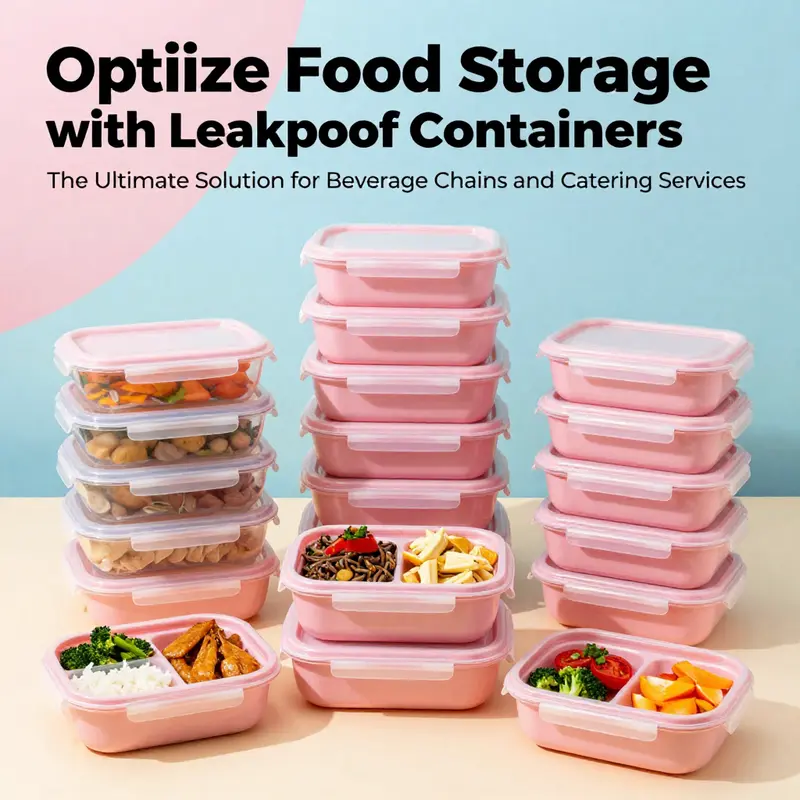
In the competitive landscape of food and beverage services, effective storage solutions are essential. Pink leakproof plastic food containers with dividers offer a perfect blend of practicality and style, catering to various service demands. Understanding their features, applications, market insights, and comparisons with traditional storage solutions positions businesses to enhance their operations. This article navigates these key areas to showcase how these containers can elevate meal prep, transportation, and customer satisfaction.
Pink, Practical, and Precisely Planned: The Design and Features of Leakproof Plastic Food Containers with Dividers
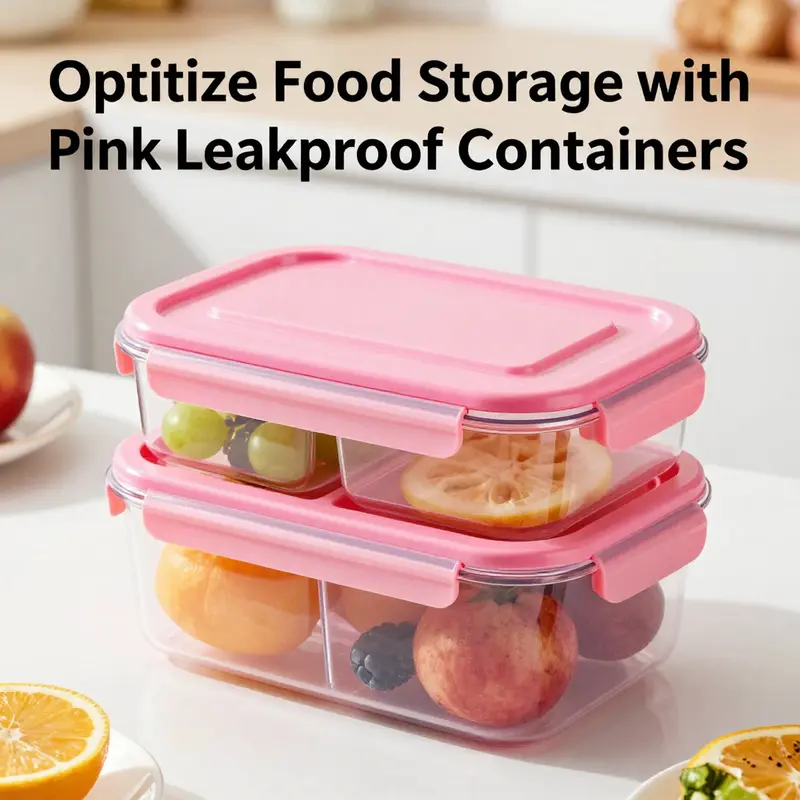
The pink leakproof plastic food container with dividers stands at the intersection of everyday practicality and thoughtful design, where color is more than a cosmetic flourish and the arrangement of space speaks to how people plan, store, and transport meals. At its core, the container is crafted from food-grade polypropylene, a material chosen for its durability, chemical resistance, and safety in contact with food. Polypropylene’s resistance to oils, acids, and common kitchen cleaners helps ensure that flavors and textures stay true to the original preparations rather than being altered by the container itself. The choice of material also supports the high reuse cycle that modern households seek, encouraging families and individuals to transition away from single-use packaging toward durable, washable solutions. The BPA-free guarantee is essential for a device designed to endure heating, freezing, and repeated dishwashing, reinforcing confidence that the storage process will be clean and safe across a range of foods and sauces. The color—pink—turns a practical item into a cheerful visual anchor in a crowded fridge or packed bag. It is not merely about aesthetics; it is a cue that helps users locate and recognize a dedicated meal container in a sea of containers, lunchboxes, and snack cups. The pink hue can make the act of meal planning feel more inviting, which matters because the success of a meal-prep routine often hinges on small psychological nudges that turn intention into action. The material choice, the safety assurances, and the color together establish a foundation on which more nuanced design decisions can build. When users pick up such a container, they expect more than a pretty exterior; they expect a reliable system that respects the integrity of the food, protects its flavors, and travels well from kitchen to car to desk to table. In this sense, design is not merely about appearance but about the choreography of daily routines. A well-made pink container signals that the meal inside is important enough to be stored with care and transported with confidence, whether it is a simple leftovers lunch or a carefully portioned dinner for a family on the go. The emphasis on design thus begins with material selection and proceeds to the mechanisms that keep food secure and accessible when needed. The lid, for example, is a critical element that must seal tightly to prevent leaks and spills during movement. A sturdy lid often relies on a tight-fitting rim and a sealing gasket or a well-engineered snap or twist mechanism that accommodates the pressure changes that occur during refrigeration, freezer storage, and reheating. The goal is to minimize the chance of a liquid or sauce escaping at the worst possible moment, such as during a commute or a crowded lunch hour. The safety of reheating is equally important. A sleek, well-sealed lid allows users to place the container directly in a microwave or, in some cases, a conventional oven for a brief reheat, provided the manufacturer’s guidelines are followed. In many designs, the container’s body and lid are engineered to withstand repeated cycles of heating and cooling without warping, cracking, or losing a seal, which speaks to the durability of polypropylene under typical kitchen conditions. The responsibility for leak resistance does not lie solely with the lid. The interlock between the lid and the container’s lip, the geometry of the sealing surface, and the thickness of the walls all contribute to dependable performance. The design team typically tests multiple seal configurations to ensure that the first twist, snap, or click remains airtight under real-world use. It is this emphasis on a robust seal that makes a pink container genuinely leakproof rather than merely leak-resistant, a distinction that matters when delicate sauces, soups, or liquid-based components are involved. The bag or tote that carries a meals-ready container should feel like a natural extension of daily life, not a risky cargo hold. The multi-compartment structure is another defining feature that elevates these containers beyond simple one-chamber storage. The compartments can be arranged in two primary ways: fixed dividers or removable dividers. Fixed dividers bring a sense of structural solidity and predictability; they demarcate stable zones within the container so that once you portion your meal, the boundaries stay in place. This stability is particularly valuable for people who prepare meals with distinct sections of protein, grains, vegetables, and dessert, because the fixed partitions minimize inadvertent mixing and help preserve the integrity of each component’s flavor and texture. Removable dividers, by contrast, offer customization. They enable the user to adjust the container’s internal geometry to accommodate larger portions or odd shapes, or to convert a multi-compartment container into a simpler, more task-specific storage solution. The removable option can be a boon for households that cycle through different meal plans, enabling quick reconfiguration without purchasing new containers. The combinations of compartment count and divider type influence how someone approaches portion control. For some, a 3-compartment layout helps allocate protein, starch, and vegetables in a balanced way, supporting nutrition goals and mindful eating. For others, a 2-compartment setup may be perfect for sauces and sides, ensuring that two distinct flavors can coexist without cross-contamination. The weight, thickness, and overall heft of the container also contribute to perceived value and practicality. A pink container that feels sturdy in hand tends to inspire trust during daily use. At the same time, the container must remain light enough to be carried easily by children or adults who travel with it in a backpack, gym bag, or tote. The balance between durability and portability is a central design consideration, especially given the frequent need to stack containers in tight spaces like backpacks, lunch bags, or small kitchen cabinets. A well-planned design also emphasizes space efficiency. The container should be stackable without taking up excessive space, both when full and when empty. This stackability is achieved through uniform dimensions, smooth exterior surfaces, and a lid that nests predictably with the base. The goal is to maximize storage density in the fridge or freezer, enabling households to prepare more meals without clutter. It is also important that the containers be easy to clean, because the combination of complex dividers and lids can create niches where food residues accumulate. Cleaning performance hinges on several factors, including the smoothness of the interior surfaces, the accessibility of the divider joints, and the ease with which lids can be disassembled for thorough washing. A well-designed container makes it possible to rinse away sauces and oils without leaving stubborn films behind. Some designs intentionally reduce the number of deep grooves or tight corners that can trap residue, making manual cleaning simpler and supporting dishwasher safety. In theory, dishwasher compatibility is a strong selling point, but it is not universal. The most dependable products specify which parts are dishwasher-safe and whether the lid should be placed on the top rack to protect seals from excessive heat. Microwave safety is similarly conditional; many containers are suitable for reheating in short intervals, but the user must remove any divider or use a microwave-safe lid to prevent splatter and ensure even heating. When thinking about this class of pink, multi-compartment containers, it is impossible to ignore the operational realities of busy kitchens and chaotic weeknights. The design must respond to real-life constraints—limited time, messy sauces, and a desire to keep flavors distinct—without sacrificing safety or ease of use. The aesthetic dimension is not incidental. The pink color is more than a superficial choice; it contributes to an overall experience that makes storage visually appealing and approachable. Color can serve as a mnemonic, a cue that a particular container is designated for a household’s daily meals or a specific family member’s lunch. The brightness of pink can improve visibility in dim drawers and on crowded shelves, reducing the chance of leaving containers behind or rediscovering the same item repeatedly. Aesthetics and function can work in tandem to encourage sustainable behavior; a container that looks inviting is more likely to be reused, washed, and kept in circulation rather than abandoned. Durability and longevity are central to any discussion of sustainability. Reusability reduces waste, but only if the container remains in good condition through repeated cycles of use, wash, and transport. The polypropylene structure, when properly cared for, resists cracking or warping under normal kitchen temperatures. The lid remains a critical point of durability; a poor seal can undermine confidence and lead to the disposal of otherwise usable containers. That is why many designs emphasize a precise fit, edge geometry that resists staining after repeated contact with spices and oils, and a gasket or seal that remains pliable after many cycles in a dishwasher. The overall design also considers daily micro-rituals—how a user opens the lid, places food into each compartment, and closes the lid with a decisive twist or snap. Those small motions, executed consistently, translate into predictable performance. The transition from a home kitchen to a backpack or car tray is another realm where design matters. The container must resist tipping, the lid must hold under motion, and the dividers must stay in place even when the container is jostled or turned upside down for brief periods. These criteria are not merely convenience features; they reflect an understanding of how people actually use meal-prep systems in a world that moves quickly and frequently changes plans. To accommodate different dietary needs and meal formats, designers often provide a range of sizes and shapes beyond a single 32-ounce or 16-ounce model. Capacity variety helps families calorie-track, portion-control, or tailor portions to individual energy needs. It also supports diverse meal formats—one day a protein-forward lunch, the next day a vegetarian bowl with multiple components, or a snack-friendly container that keeps fruit or nuts separate from dips and sauces. The design language employed in pink leakproof containers with dividers communicates reliability and care. The bright pink exterior signals a product that embraces both function and personality, inviting users to engage with meal planning as a positive, doable act rather than a chore. Yet beauty alone would not sustain a practical workflow. The real value lies in how the container supports consistency, cleanliness, and adaptability across a week’s worth of meals, across family members with different preferences, and across errands that require food to be ready at a moment’s notice. Because the design aligns with these everyday needs, users can plan ahead with confidence. They can create a batch of balanced meals, portion them into the appropriate compartments, and store them in the freezer for later reheating. They can pack a lunch with proteins, grains, and vegetables separated to preserve textures and flavors. They can even separate snacks to avoid mixing sweet and savory components. In this sense, the design becomes a daily companion that reduces decision fatigue and helps maintain nutritional integrity. For readers who want to explore related packaging options and broader take-away solutions, a related resource on disposable and heat-safe alternatives provides a broader context for how containers of all sorts compete for attention in a crowded market. Disposable custom double-wall hot paper cups with lid. While these paper cups are not the same category as a plastic, multi-compartment storage system, they illustrate how lid technology, heat tolerance, and reusable design principles travel across packaging formats, reinforcing the idea that robust seal mechanisms, thoughtful dividers, and user-friendly shapes are universal needs in modern food packaging. When considering future improvements, designers might explore even tighter integration of dividers with snapping mechanisms that resist gradual wear, as well as improvements in gasket materials that extend seal life without compromising safety or cleanability. Innovations in lid geometry could yield better venting for hot foods or easier one-handed operation, while a wider range of pink hues and finishes could offer users more personal expression without sacrificing functionality. The ongoing conversation about sustainability may also push for smarter designs that allow easy disassembly for thorough cleaning, as well as clearer labeling about microwave and dishwasher suitability and recycling guidance. Ultimately, the design of pink leakproof plastic food containers with dividers embodies a careful balance of safety, practicality, and personality. It is a product category built not only to hold food but to support the rituals of meal preparation, storage, and nourishment in a modern lifestyle that prizes efficiency, reliability, and a touch of color that makes everyday routines a little brighter. For a broader view of how such containers fit into contemporary packaging ecosystems, consider the external resource linked here to gain insight into product structures, consumer reviews, and real-world performance in contexts ranging from home kitchens to on-the-go lifestyles.
Organizing Flavor and Function: Real-World Applications of Pink Leakproof Containers with Dividers
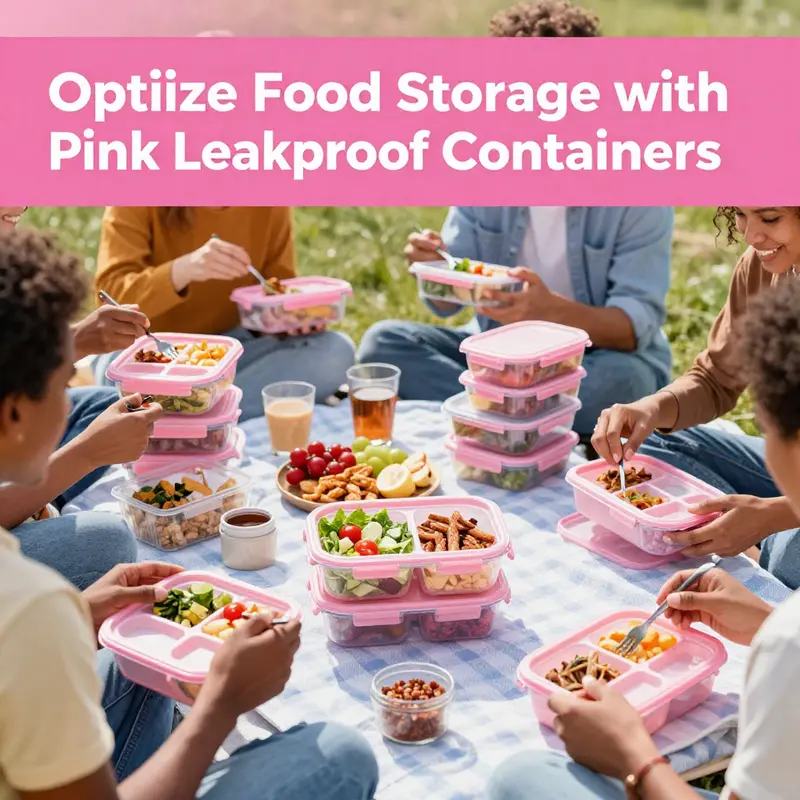
A bright hue can be more than a decorative choice; in the realm of food storage, pink leakproof containers with dividers signal a blend of practicality and personality that resonates with how people eat and move through their days. These vessels are not just cute additions to a kitchen shelf; they are designed to be reliable workhorses for nourishment on the go, everyday meal prep, and deliberate organization. The core idea behind them is deceptively simple: keep foods separate, preserve textures and temperatures, and prevent spill-prone journeys from turning into mess-filled memories. The result is a versatile toolkit for anyone who wants to eat well, save time, and reduce waste, all without sacrificing convenience or safety. Their value grows from the way they are built—primarily with food-grade, BPA-free polypropylene that stands up to the rigors of reheating, freezing, washing, and stacking. A secure lid with a tight seal makes all the difference between a sauce that travels in confidence and a sauce that travels in defeat, while dividers inside the lid or body help maintain discrete compartments so flavors and textures do not blend into an unappetizing compromise. This combination of leakproof stability and compartmentalized design makes pink containers with dividers especially attractive to people who want to plan meals carefully but also need the flexibility to adapt plans in real time.
The practical applications begin with meal preparation, a discipline that has grown from a trend into a daily habit for many households. The logic of meal prep rests on balance and variety: proteins that support muscle maintenance, hearty grains for sustained energy, an array of vegetables for micronutrients, and room for snacks that prevent oversized cravings. In containers with dividers, each component can maintain its own integrity—proteins stay clammy-free, grains stay fluffy, and vegetables retain a crisp bite. The lid’s seal adds an extra layer of confidence when sauces or dressings are involved, ensuring that a grain bowl or a noodle dish arrives intact without the risk of soggy or spilled elements. For people who micro-manage portions for a balanced diet, the dividers also serve as a built-in way to practice mindful eating: each section acts as a visual cue for a specific portion size and food group, helping to pace meals and maintain variety across the week.
The narrative of these containers becomes even more compelling when applied to school and office environments. Kids need meals that are easy to open, hold their temperature, and travel well in backpacks or lunch boxes. The multi-compartment approach keeps items separate, so a peppery snap of raw veggies doesn’t wilt with a humidified sandwich, and a small yogurt sauce doesn’t mingle with crackers in the same chamber. Adults benefit too: a compact, stackable unit slides into a tote or briefcase with the same ease as a water bottle, and the same design ensures a portable lunch that stays professional in appearance and clean in practice. In workplaces and schools, these containers can serve as dependable carriers for a rotating menu of comfort foods, fresh salads, or grain-forward meals that stay vibrant from home to desk or classroom. The ability to seal in freshness and prevent spills helps minimize disappointments and builds a reliable routine around nutritious choices.
For those with higher caloric needs or more demanding days—outdoor labor, endurance training, or extended shifts—the value of a well-designed, multi-section container becomes even more pronounced. A single unit can hold a protein portion, a complex carbohydrate, a generous serving of vegetables, and a small snack or fruit without requiring multiple separate containers. This consolidation reduces clutter in bags and reduces the likelihood of forgetting essential items. The dividers allow a clear arrangement of macro opportunities, enabling a practical approach to protein-forward meals, fiber-rich grains, and colorful vegetables that collectively support energy, recovery, and satiety. The leakproof capability is crucial in these contexts: a sauce or broth won’t leak across compartments, and a soggy compromise won’t ruin an important workday or outdoor adventure. This reliability makes such containers especially appealing to athletes traveling between practice fields, construction sites, or office spaces where access to fresh meals is intermittent and the need for dependable storage is constant.
Beyond individual use, these pink, divider-equipped containers support family meal sharing and communal cooking practices. Families often prepare large batches of meals with the goal of distributing portions across several days or family members. The dividers simplify this process by keeping components discrete—think of a nurturing mix of protein, grain, vegetables, and a small fruit section—that can be portioned and taken to different days or different members’ routines. When a parent makes a large batch of a one-pot dish, the containers can be used to recreate balanced plates later in the week, maintaining flavor separation and texture integrity. In this scenario, the stackable nature of the containers becomes more than convenience; it becomes a strategy for reducing food waste and maintaining culinary gains. If leftovers are more likely to be reused, the leakproof seal ensures that the cold environment remains stable, protecting flavors and textures as the week unfolds.
The design and materials of these containers address a broad spectrum of safety concerns and daily chores. The BPA-free guarantee is central to the peace of mind many families seek when storing and reheating meals. The ability to move seamlessly from freezer to microwave to dishwasher creates a workflow that mirrors modern life: you can freeze a meal ahead of time, reheat it at work or school, and then simply place the container in the dishwasher after a light rinse. The robustness of polypropylene in this context matters because it resists cracking and maintains its shape through repeated cycles, a practical attribute for busy households that rely on durable, reusable packaging instead of disposable solutions. Yet no product is perfect in every context, and some designs with dividers may demand a bit more attention during cleaning. The interior dividers can be recessed or grooved, which sometimes invites leftover food to cling to corners or seams. A careful wash, especially around the junctions where dividers meet the container walls, helps sustain long-term performance. Still, the overall life cycle advantage—reusability, reduced waste, and lower recurring cost—often offsets these minor maintenance considerations for almost every type of user.
The choice between fixed versus removable dividers is more than a preference; it shapes daily routines. Fixed dividers offer predictable layouts and can simplify stacking and storage, especially when you know you will consistently separate three or more food groups in a single meal. Removable dividers provide flexibility; you can reconfigure a single container for two large compartments on some days or for three on others. This adaptability supports evolving dietary plans, such as days when you skip a starch or when you want to focus on plant-forward meals. When choosing between options, people tend to align the divider strategy with their typical meals, the ease of cleaning, and how often they plan to reassign compartments. A well-chosen divider system reduces the friction of meal prep, encouraging more consistent planning and, by extension, healthier eating patterns.
Size and capacity also matter, and the market reflects a spectrum of choices. Compact 16-ounce options can be excellent for light lunches, kids’ meals, or single-meal snacks, while 32-ounce variants offer more generous portions and are better suited for heartier meals or families who share containers across activities. Some users opt for two-compartment setups for simple protein-and-starch combinations, while others prefer three or more sections that can hold vegetables, grains, proteins, and dressings separately. The capacity of a container, combined with the tightness of the lid seal, often determines how reliably it travels in a bag, across a classroom, or into a gym bag. In practice, the most satisfying configurations are those that feel proportional to one’s typical meals and travel demands. A container that is too large can tempt overeating or wasted space, while one that is too small can undermine the ability to include all the essential components in a single carrying unit.
Care and longevity deserve a moment of attention, especially as users map long-term value. The material’s resistance to staining, odor retention, and ease of cleaning influence how appealing the containers remain after months of use. While most models are designed for dishwasher-safe operation, some users might find that longer cycles or aggressive detergents can affect the finish around seams and dividers. A gentle approach—rinsing promptly after meals and avoiding harsh abrasive cleaners—helps preserve the appearance and performance of both the walls and the dividers. Occasionally, users may notice minimal odor transfer after reheating certain sauces, a reminder that even the best containers require a routine of thorough cleaning and occasional air-drying. The upside is clear: interventions are simple, and the payoff is a durable, reusable solution that continues to support organized eating and a cleaner kitchen environment over time.
From a broader perspective, pink leakproof containers with dividers symbolize a shift toward intentional packaging that respects time, taste, and health. They represent a deliberate counterweight to rapid, single-use options by offering a structure that supports portion control, freshness, and a calm, organized eating routine. The color palette may be playful, but the practical advantages are robust: modular, easy-to-clean, and ready for the realities of modern life—from early-morning meal prep sessions to late-afternoon commutes and weekend family meals. In this light, these containers become more than mere vessels; they become enablers of a lifestyle in which nutrition, convenience, and environmental mindfulness intersect.
For readers who want to explore adjacent packaging ideas while staying focused on sustainability and practicality, there is a natural bridge to related take-away and consumer packaging options. For households considering a broader shift toward eco-minded choices in daily routines, you can explore disposable-eco-friendly-custom-paper-coffee-cups-with-lid. This internal link points to a resource that expands the conversation beyond plastic containers to other reusable and disposable packaging considerations, encouraging readers to think holistically about how packaging choices fit into daily habits. You can click the link here: disposable-eco-friendly-custom-paper-coffee-cups-with-lid. By viewing a broader range of packaging options, readers can weigh the trade-offs between reusability, convenience, and environmental impact across the entire food-access chain.
As with any consumer choice, the right container depends on a mix of priorities: durability, safety, ease of cleaning, and how it aligns with one’s daily rhythms. The pink leakproof option with dividers offers a compelling blend of aesthetics and functionality, turning everyday meals into thoughtfully organized experiences. The ability to keep foods separate without sacrificing reheating convenience makes these containers suitable for a range of lives—students balancing classes, professionals managing long days, athletes fueling recovery, and families coordinating weeknight meals. The end result is a product category that, while visually distinctive, earns its keep through reliability, flexibility, and a disciplined approach to storage and reusability. Whether you’re packing a colorful grain bowl, a protein-forward lunch, or a simple snack-and-salad combination, the divider system helps ensure each bite remains intentional, fresh, and appetizing as it reaches its destination.
External resource: https://www.amazon.com/dp/B0CQZKJYVX
Pink in the Pantry: Market Currents Shaping Leakproof Plastic Food Containers with Dividers
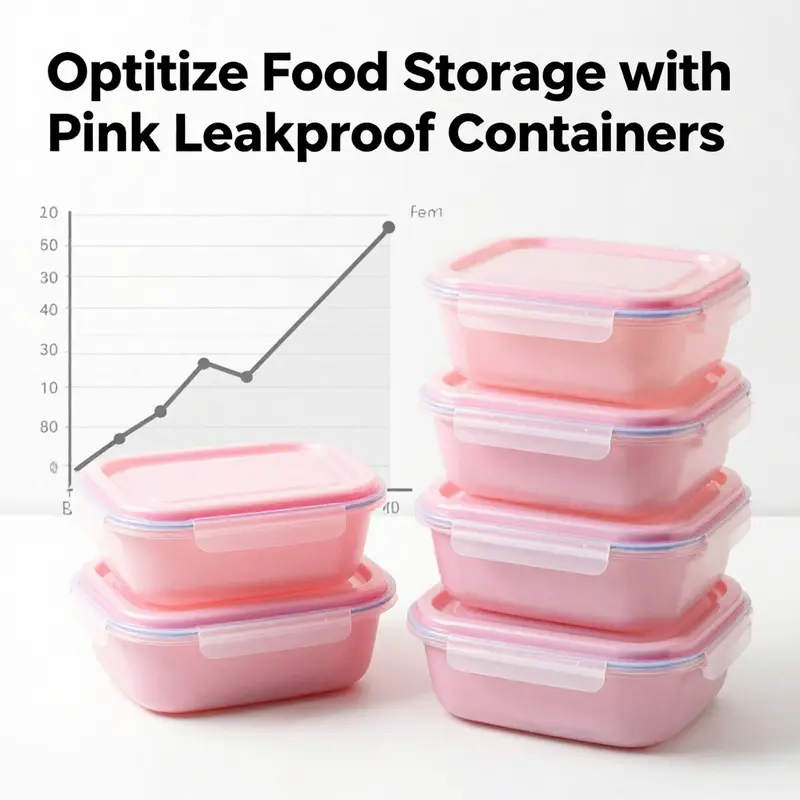
The rise of pink leakproof plastic food containers with dividers marks a convergence of practical engineering and personal expression in modern kitchens. These containers are not merely vessels for holding meals; they are a microcosm of how people balance health, convenience, and presentation in a world where time is scarce and choices abound. In markets that prize portability and portion control, the color pink has evolved from a mere aesthetic cue to a signal of style without sacrificing function. The market narrative around these containers blends design sensibility with measurable needs: safe materials, reliable sealing, modular interior layouts, and compatibility with the cooking and storage workflows that define contemporary living. Taken together, these factors explain why pink, leakproof, dividers, and microwave-safe features have become a durable set of attributes that resonate with a broad spectrum of users.\n\nFrom a consumer perspective, the appeal is cognitive as much as it is tactile. Health-minded individuals seek tools that support meal prep and nutritional accountability; students and professionals need reliable carry options for meals that stay fresh through commutes and long days; gym-goers and dieters want clear portioning to align with macros; families look for containers that simplify lunch packing for children and busy parents alike. The color palette matters because it signals a personality alignment with a lifestyle—one that values organization, ease of use, and a dash of optimism in daily routines. The pink tone often pairs well with other kitchen accessories, enabling households to curate a coordinated system rather than a random assortment of bowls and lids. In a way, the market for these containers mirrors a broader trend toward personalization within mass-produced goods, where standardized shapes and sizes are married to color choices that reflect the wearer’s or the user’s identity.\n\nMaterial safety remains a non-negotiable cornerstone of market confidence. The core offering typically relies on food-grade plastics, with polypropylene emerging as a preferred base due to its balance of rigidity, resilience, and heat tolerance. The absence of bisphenol A (BPA) is repeatedly cited as a key assurance for consumers who heat, store, or reheat meals in these containers. This emphasis on safety dovetails with the practical need for containers that can withstand microwave use, freezer storage, and dishwasher cycles without compromising structural integrity or leaching any undesirable compounds. In markets where regulatory scrutiny is high and consumer expectations are even higher, brands that foreground safety alongside aesthetic appeal tend to build more durable relationships with buyers. The insistence on leakproof lids, often achieved through well-engineered seals and locking mechanisms, addresses a fundamental pain point: the risk of spills during transit, which can ruin repositories, clothing, bags, and workspaces. A tight seal also helps preserve flavors and moisture levels, ensuring that a compartment’s contents do not mingle with others and that delicate items—such as dressings or purees—retain their texture and aroma until mealtime.\n\nThe hallmark feature set—leakproof design, dividers, and multi-function compatibility—transforms these containers into versatile tools for daily routines. Dividers enable deliberate meal composition, enabling users to separate proteins from carbohydrates, vegetables from sauces, or snacks from desserts. These can be fixed in place or removable, offering a modularity that accommodates different meals and changing dietary goals. The ability to tailor the interior layout is attractive for those who prepare meals ahead for the workweek or who shuttle meals between the home, office, or gym. When coupled with a reliable lid system, the result is a container that can travel through a busy day without the fear of leaks or cross-contamination. For many, this means fewer single-use containers, fewer messy incidents, and a cleaner, more sustainable approach to meal storage and transport. The practical implications extend beyond the kitchen: reduced waste, lower grocery runs, and simpler shopping lists, as families settle into repeatable, reliable meal-prep habits.\n\nMarket demand is not limited to households. It extends into workplaces, schools, gyms, and even healthcare settings where meal management, portion control, and easy clean-up play important roles. Large families may adopt multi-pack configurations—such as bulk sets with several compartments—to streamline lunch routines while keeping costs predictable. People who commute long distances often require compact stacking designs that maximize carry efficiency and minimize clutter in bags and desk drawers. In hotel or corporate catering contexts, sets with multiple compartments can improve service efficiency and reduce spillage during delivery. In each case, the product’s value proposition rests on a simple equation: more predictable meals, less mess, and greater convenience, delivered through a combination of sealing technology, interior flexibility, and food-safe materials.\n\nVolumetric packaging and price sensitivity are central to market dynamics. Acknowledging the need for quantity and cost efficiency, many buyers gravitate toward bulk options and multi-pack configurations that offer substantial per-unit savings. A 50-pack with three compartments or a 150-pack with two compartments, for example, illustrate how consumers and institutions optimize for both economy and capacity. These formats appeal to meal-prep enthusiasts who must feed more mouths or who want a ready supply for employees, students, or gym members. Yet, price perception also hinges on perceived durability and safety credentials. When a brand demonstrates consistent performance across daily microwaving, freezing, and machine washing, buyers develop a sense of trust that extends beyond one-off purchases. In turn, word-of-mouth recommendations reinforce growth in segments like wellness communities and student cohorts, where budgets are tight but the value of reliable meal storage is highly valued.\n\nThe competitive landscape for pink leakproof containers with dividers is notable for its breadth despite the absence of a single dominant innovator. Market dynamics are shaped by a mix of value-focused producers and design-led brands that emphasize aesthetics alongside performance. One set of brands prioritizes affordability and a straightforward feature package, often appealing to learners, budget-conscious families, and first-time buyers who want to try a system without a heavy upfront investment. On the other end, lifestyle-oriented lines emphasize color, finish, and tactile quality, courting buyers who view kitchen gear as an extension of personal style. Across this spectrum, the core functional attributes remain consistent: reliable sealing, durable materials, safe reheating compatibility, and thoughtful interior layouts. The absence of brand specificity in conversations about these products does not diminish the importance of quality signals—the seal integrity, the stability of the divider modules, and the long-term resistance to staining and wear all serve as practical metrics that influence purchasing decisions.\n\nFrom an analytics perspective, consumer search behavior offers a revealing glimpse into how demand is evolving. In the early part of 2026, searches combining terms like “pink,” “leakproof,” “dividers,” and “microwave safe” surged in tandem, with year-over-year increases surpassing the 45 percent mark. This trend suggests that buyers are not only seeking function but are also attracted to the distinctive aesthetic that pink provides—an aesthetic that, when paired with high-performing features, creates a compelling value proposition. The digital signals align with brick-and-mortar observations: demand clusters around product lines that promise easy storage, simple cleaning, and dependable performance in real-world scenarios—whether a student’s dorm room, a professional’s commuter tote, or a family kitchen that needs to feed several mouths efficiently.\n\nOne practical challenge that emerges in the real world is the balance between complexity and cleanliness. Containers with multiple compartments and various lid interfaces can be highly functional yet difficult to clean thoroughly. Small crevices, hinges, and seals may harbor food residues, requiring careful attention or specialized cleaning tools. This reality motivates ongoing design refinements in the broader category: better gasket materials, fewer seams, and more modular designs that can be disassembled for deep cleaning. Durability is another axis of attention. Repeated exposure to high temperatures from microwaving, or repeated cycles in the dishwasher, can, over time, affect the integrity of the seal or the clarity of the container walls. Color saturation may also pose a cleanliness challenge; lighter pink hues can show staining more readily when dealing with sauces or strongly pigmented foods. These practicalities underscore a continuous design-and-iteration process where user feedback becomes a critical input for product development teams trying to balance policy, aesthetics, and performance.\n\nLooking forward, market forecasts point to several converging trends. First, there is a clear appetite for materials and processes that address sustainability without compromising performance. Brands are increasingly exploring options such as recycled polypropylene or bio-based plastics that still meet safety and heat-resilience requirements. Second, there is growing interest in modular and customizable configurations that allow buyers to mix and match divider types, lid styles, and sizes to fit unique routines. Flexible packaging concepts, including stackable kits and tiered storage solutions, may become standard features in mid-range and premium lines. Third, the integration of digital tools, even if in a limited form, could enable better inventory tracking or meal planning. Simple tabulations or moisture indicators could help users optimize storage and reheating times, turning a basic lunch box into a small, responsible part of a holistic eating plan. While the pace of this technological infusion remains measured, it is evident that the market is trending toward products that harmonize safety, durability, and style with increasingly personalized usage patterns.\n\nFor retailers and manufacturers, the implications are clear. Stocking decisions should reflect a balanced mix of color options, compartment configurations, and lid architectures that satisfy the most common use cases while leaving room for niche preferences. Clear, consistent safety labeling and performance demonstrations help reassure first-time buyers and bolster repeat purchases. Education around cleaning best practices, including recommended tools and routines for maintaining seals and avoiding staining, can reduce post-purchase dissatisfaction and improve long-term loyalty. Marketing messages should emphasize the full life-cycle value of these containers: the ease of portioning for nutrition, the cost savings from reusable meal solutions, and the environmental benefits of reducing disposable packaging. In a market where aesthetics can attract attention but performance sustains trust, the strongest offerings will be those that deliver a credible combination of chic design and unambiguous reliability.\n\nThe chapter’s broader takeaway is that pink leakproof plastic food containers with dividers occupy a unique position at the intersection of function and fashion. They are not a single-use trend but a reusable solution anchored in safety, practicality, and daily rituals. As consumer routines become more structured and as people increasingly choreograph meals around health goals, these containers serve as tangible enablers of a more organized, intentional approach to eating. The market will continue to reward products that earn trust through durable materials, robust sealing technologies, adaptable interior layouts, and positive, visually appealing design cues. In this sense, pink is not merely a color; it is a cue that signals a lifestyle choice grounded in planning, portability, and personal care in the kitchen. The ongoing evolution of this segment will likely be shaped by how well brands translate consumer desires into tangible features, how they balance cost with quality, and how they respond to the rising demand for sustainability without sacrificing the everyday ease that makes meal prep and on-the-go dining practical and enjoyable.\n\nExternal resource: https://www.amazon.com/BAUM-Fest-Pink-Lunch-Box-Containers/dp/B0B8VXZKJQ
Beyond the Pink: A Deeper Look at Leakproof Divided Plastic Containers and Their Place Among Everyday Storage Solutions
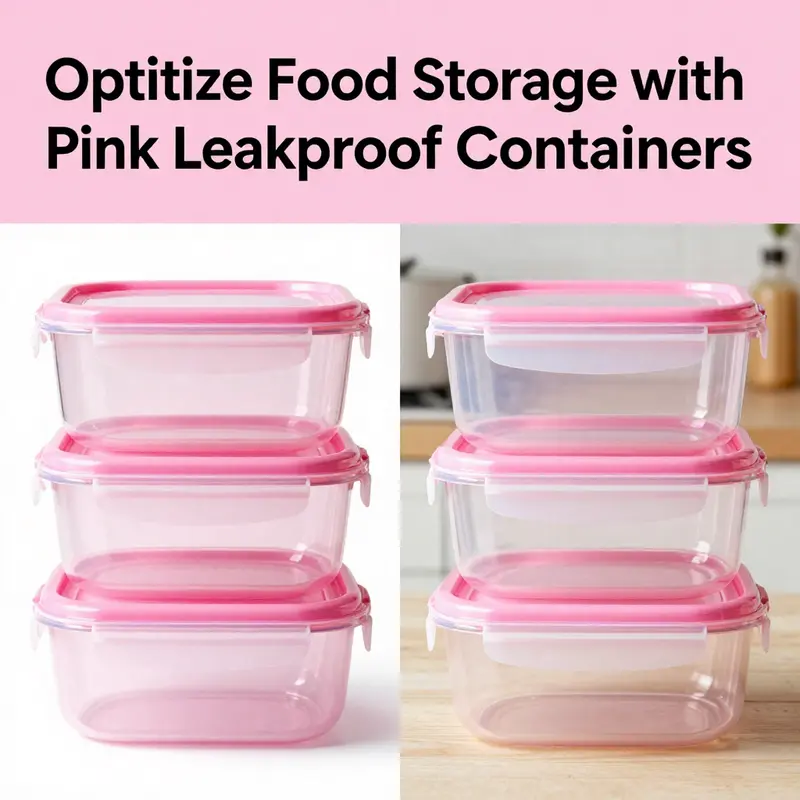
The ordinary lunchbox has evolved far beyond its early, simple form. A pink, leakproof plastic container with dividers embodies a convergence of practical engineering and daily habit, a small miracle of design that can transform how people plan meals, store leftovers, and even transport snacks. When you pick up a container of this type, you are not just purchasing a receptacle for food; you are choosing a compact system that promises safety, organization, and ease of use in a world that often prizes speed over precision. The color, while cheerful, is more than a cue for quick recognition in a crowded kitchen or a busy lunch bag. It signals a lineage of materials chosen for safety, clean lines that accommodate busy routines, and a lid that locks in confidence as the container moves from home to car, desk, gym bag, or backpack. The value proposition is not solely about keeping sauce from leaking or keeping carrots from touching quinoa; it is about reducing friction in everyday routines. In a culture that prizes meal planning and portion control, the pink container with dividers becomes more than a vessel. It becomes a deliberate tool for shaping healthier choices, better energy balance, and less waste, provided it remains a reliable partner across a week of rehearsed routines—prepping, reheating, and redistributing meals as circumstances change.
From a materials science perspective, the practical appeal rests on a reassuring blend of safety, durability, and adaptability. The typical composition—food-grade polypropylene (PP)—is chosen for its stability under repeated heating and cooling, its resilience to everyday wear, and its resistance to the kinds of chemicals that can migrate from some plastics. BPA-free formulations are now standard in these containers, reducing concerns about leaching even when meals are reheated in the microwave. This combination of safety and resilience makes such containers particularly well-suited to the rhythm of modern life, where food often travels with you through several environments before being enjoyed. The same PP base also positions the container well for freezer storage, where a robust polymer needs to withstand temperature fluctuations without becoming brittle or losing its seal. The hinge, the lid’s seal, and the divider system together create a multi-part ecosystem; a small fault in any one component can undermine the whole performance. Yet, when all parts work in concert, the result is a trustworthy performance that rivals more rigid options while offering the flexibility that on-the-go cooking and eating demand.
The environmental and health benefits weave a parallel, but equally important, thread through the narrative. Plastic does not inherently signal environmental virtue, but the reuse and reframing of plastic storage in a modern context can contribute meaningfully to waste reduction. The pink container stands out in two ways: its reusability and the compartmentalization that helps with portion control. The dividers—whether fixed or removable—enable a practical separation of foods that otherwise might mingle and compromise texture, flavor, or nutritional goals. For someone tracking macronutrients or simply trying to ensure a balanced plate, the dividers offer a cognitive cue to keep proteins apart from starches, vegetables from sauces, and snacks from entrees. The ability to separate components can promote higher adherence to dietary plans and less temptation to compromise on quality when time is earned back through efficient meal prep.
As with any discussion of household storage, the comparison with alternatives is essential to a well-rounded judgment. Glass containers, for example, are chemically inert and can offer excellent long-term taste preservation and a sense of premium durability. They often withstand repeated dishwashing and can feel more “future-proof” to some users, particularly those prioritizing a glass-on-glass aesthetic or the sense of material longevity that glass conveys. On the other hand, glass weighs more, breaks more readily, and can be less forgiving on the go. The pink plastic option, by contrast, emphasizes lightness, compactness, and a forgiving tolerance for imperfect handling. For daily commutes, school lunches, or fieldwork that bends toward hustle rather than ceremony, a stackable, light container with reliable seals proves its worth. The comparison to metal options—stainless steel, which can be exceptionally durable and resilient to staining—also matters. Steel boxes may excel in heat retention and structural integrity but often come with higher cost, reduced lid sealing precision in some designs, and heavier bulk that makes them less convenient for people who walk or ride public transit daily. Each material carries its own trade-offs, and the pink leakproof container often sits at a sweet spot where portability, safety, and budget converge.
Leaking is the nemesis many people fear most in portable storage. In practice, the secure seal plays the starring role here. The lid-and-rim interface in well-designed pink containers uses a tight gasket or seal to resist moisture escape, reducing the risk of spills when tossed into backpacks or purses. Still, no lid is entirely foolproof; improper closure, a damaged gasket, or overfilling can all introduce tiny leaks, particularly when the container carries liquids or sauces. The internal dividers contribute to performance in two crucial ways: they maintain separation, which prevents cross-flavor contamination, and they support the lid’s sealing geometry by providing a structured interior that resists warping under pressure. The result is a reliable solution for transporting meals that include sauces or dressings, a common scenario for people who prepare meals in advance. The trade-offs are nuanced but navigable with proper care. Regular inspection of seals, occasional replacement of worn gaskets, and mindful filling practices can significantly extend the life of the container and preserve its leakproof reputation.
In evaluating convenience and usability, the portable nature of the pink container becomes particularly significant. It is designed to be light enough to carry without fatigue, yet sturdy enough to withstand the daily rigors of a busy life. Dishwashability is another major factor. A container that is dishwasher-safe reduces the friction of cleanup and makes daily reuse easier, a critical factor for people juggling work, school, and family life. Yet, the reality remains that multi-part systems—lids, seals, and dividers—present crevices and joints that can trap food particles. Cleaning becomes a habit, a small skill developed through routine, rather than a one-off chore. Users who adopt a disciplined approach to cleaning will find these packs—and their interiors—hold up well over time. Those who cut corners in cleaning may experience odors or lingering stains, underscoring the importance of maintenance in keeping the product performing as designed.
Another dimension worth weighing is the practical economy of large-scale use. The rise of bulk packs and multi-pack offerings makes a pink container with dividers a particularly attractive option for families with multiple meals to prepare or for meal-prep enthusiasts who must stock a variety of meal components. The ability to buy in bulk often translates into a favorable per-unit cost, which, for a family or group, translates to real budgetary relief. Yet affordability does not exist in a vacuum. The upfront price is balanced against long-term value: durability, the likelihood of replacement parts like gaskets, and the container’s ability to endure repeated dishwashing cycles without clouding or staining. In contexts such as schools or workplaces that demand uniform, dependable lunch solutions, these containers can be a practical standard, especially when the objective is consistent portion control and predictable meal planning. In such environments, the pink model’s balance of lightness, seal performance, and compartmentalization becomes a practical asset rather than a mere aesthetic preference.
The environmental footprint of plastic storage is a frequent topic of discussion. In life cycle terms, recycled or recyclable PP contributes a smaller footprint than single-use disposables, and many programs accept this material for recycling at the end of its usable life. It is not a perfect solution, and the footprint is still larger than that of glass or stainless steel in some life-cycle analyses. However, the real-world implication for households is clearer: choosing a reusable plastic container reduces the volume of disposable packaging that would otherwise contribute to waste streams and litter. The pink container thus embodies a pragmatic approach to sustainability, offering a path toward lower cumulative waste when used consistently over time. For individuals who want to pursue greener habits but still need practicality in daily life, this type of container provides a middle ground where reuse and reasonable environmental impact can coexist with convenience and affordability.
A broader consideration is the cultural and behavioral shift that such containers help enable. When a household uses a dependable, widely available system for packing meals, it fosters routine and predictability. People learn to plan, portion, and label meals with greater clarity, which can reduce food waste and improve nutritional outcomes. For those who prepare meals for others—children, spouses, teammates—the predictable performance of a pink container with dividers becomes part of a larger habit loop: plan, pack, reheat, and repeat with confidence. The emotional reassurance that comes from a well-sealed, neatly divided container should not be underestimated; it reduces the cognitive load associated with meal planning and acquisition, making healthy choices more accessible in a cluttered world. The net effect is a small but meaningful shift toward efficiency, cleanliness, and order in daily routines.
In considering the most appropriate storage choice, it helps to acknowledge the subtle interplay of material science, user behavior, and environmental consequence. Plastic offers agility, cost-effectiveness, and a broad ecosystem of compatible lids, dividers, and accessories. Glass offers inertness, optical clarity, and a long-standing perception of durability for some users. Stainless steel embodies strength and heat resistance, especially for those who want to preserve the flavor and temperature of foods without worry. Each option has a story to tell about how people live, eat, and move through their days. The pink leakproof container with dividers tells a story of playful practicality, a design that makes daily meal routines feel manageable rather than burdensome. It is a reminder that good storage is not merely about preserving food but about enabling better choices, healthier meals, and calmer days.
This narrative remains anchored in a simple, concrete truth: the best storage solution is the one that aligns with a person’s real-life patterns. If a family’s mornings hinge on speed and reliable packing, the pink container’s speed and seal quality may be the decisive factor. If a person values minimal weight and maximal stacking efficiency for a backpack, those same properties hold significant weight in the decision. And if a consumer seeks a middle ground between cost and performance, the divided, leaktight plastic option often emerges as a pragmatic compromise. In this sense, the container is not an isolated gadget but a small, consistent ally in the broader practice of cooking, eating, and sustainable living. It stands at the intersection of engineering and everyday life, reminding us that the simplest tools—when thoughtfully designed—can have outsized effects on how we nourish ourselves and how we treat the resources we consume.
To sum up, the pink leakproof plastic food container with dividers offers a compelling blend of material safety, functional reliability, and everyday usability that resonates with the rhythms of modern life. Its advantages—lightweight portability, effective separation through dividers, and compatibility with common kitchen appliances—make it a strong default choice for many households. While it cannot claim to be the ultimate solution for every situation, it delivers real value where convenience, budget, and routine intersect. When compared with glass or metal alternatives, it presents a distinct set of trade-offs that many users will find favorable for daily use. And when balanced against consumer demand for sustainable options, it remains clear that reuse, responsible care of components, and mindful disposal at the end of life are essential to maximizing its benefit. The decision ultimately rests on how a person eats, moves, and organizes the week ahead—and the pink container with its smart dividers can be a dependable partner in that ongoing calculation.
For readers seeking broader context about packaging choices beyond plastic, consider exploring resources that address eco-friendly materials and consumer safety. eco-friendly recyclable pulp cup holder offers a perspective on alternatives that share a common goal with divided plastic containers: facilitating practical, responsible on-the-go solutions while reducing environmental impact.
External resource: For safety standards and material guidelines related to food-contact materials, consult established regulatory and standards bodies that provide rigorous, science-based information on what makes a container safe for reheating, freezing, and long-term storage. See the FDA’s guidance on food-contact materials for authoritative details: https://www.fda.gov/food/food-contact-materials/food-contact-materials-and-substances
Final thoughts
In summary, pink leakproof plastic food containers with dividers present a beneficial option for businesses needing reliable, efficient, and stylish food storage solutions. With various applications—from catering to daily meal prep—they stand out in versatility and functionality. By understanding their design, applications, market trends, and how they compare with other storage solutions, food service providers can make informed choices that enhance their efficiency and client satisfaction.