
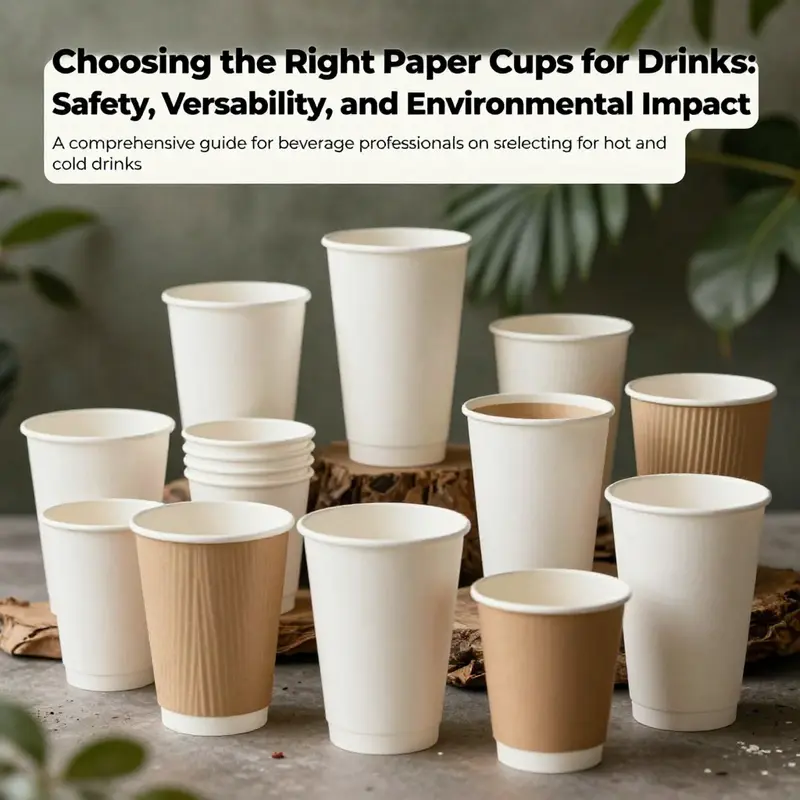
As beverage shops and food service providers navigate the world of disposable packaging, understanding the right types of paper cups for hot and cold drinks is essential. With numerous options available, it’s critical to comprehend the differences in construction, intended uses, safety considerations, versatility, and environmental impact of these cups. This guide will explore these facets, equipping businesses with the knowledge needed to make informed choices that enhance customer satisfaction while safeguarding health and the environment.
Between Wax and Heat: The Silent Engineering of Paper Cups for Hot and Cold Beverages
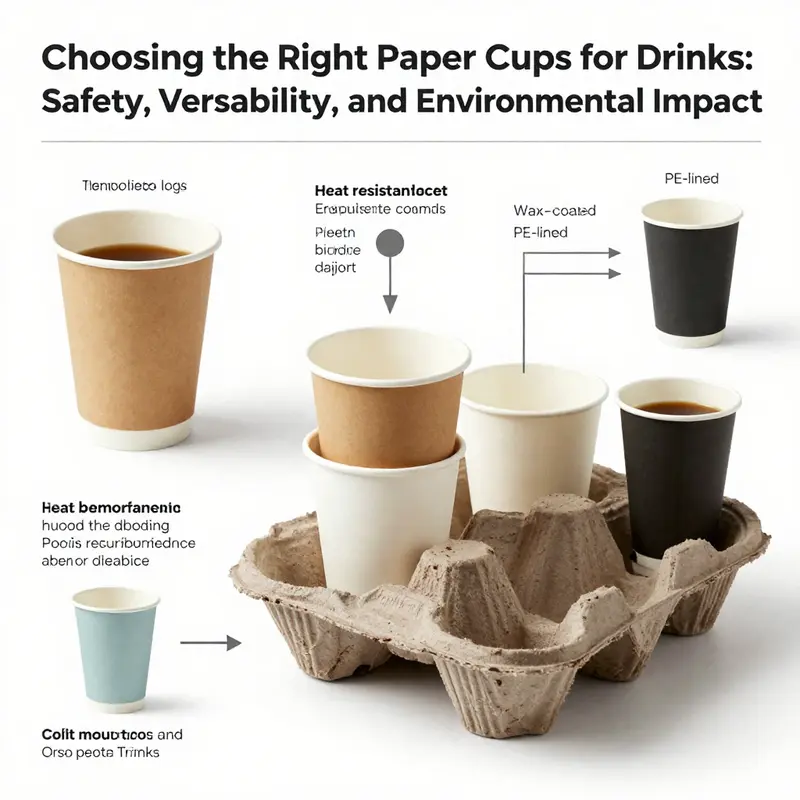
The moment a drink meets a cup, a quiet alliance forms between two materials and a coating. What looks like a simple vessel is, in fact, a precisely engineered system designed to keep liquids from leaking, to maintain the drink’s temperature, and to keep the experience untainted by unintended flavors or contaminants. When you examine a standard paper cup, you are witnessing a careful combination of base stock, barrier layers, and finishes that together determine whether the cup will cradle a scorching latte or a chilled juice without fail. The knowledge behind this setup is not only about keeping liquid in or out; it is also about safeguarding health and guiding consumer behavior in ways that often go unseen. This chapter pulls those layers apart in a narrative that remains true to the everyday realities of serving hot and cold drinks, while staying grounded in the research that explains why certain cups are safe for hot beverages and others are not, and why some are designed to be used for both without compromising integrity.
At the heart of every cup is its base material, the paper stock that forms the sheet upon which everything else is built. The stock is typically a form of white paperboard produced from chemical wood pulp, sometimes blended with other plant fibers to achieve a balance of strength and smoothness. The choice between pure wood pulp and blends matters. Wood pulp generally provides better strength and barrier properties, particularly important for hot drinks where the liquid can press into the cup’s walls. In contrast, some lower-cost options may rely on blends that trade a bit of impermeability for reduced material use. This is not merely about cost; it is about the cup’s ability to resist soaking through when it faces repeated contact with steam and heat, or when bold, high-temperature beverages are held for longer periods. The cup’s internal geometry—whether a single-wall construction or a double-wall design—also plays a decisive role in insulation and grip. A double-wall configuration, sometimes reinforced with a corrugated or ripple-wall pattern, creates a tiny air cushion that slows heat transfer to the exterior and reduces the risk of the cup becoming too hot to hold. In environments where customers are sipping quickly, the insulation might feel less critical than the need for a sturdy, non-slip surface. Yet the same double-wall structure that provides heat retention for hot drinks can become a misfit for cold beverages if the outer layer is not designed to manage condensation or if the inside coating is not compatible with cold liquids. These subtle decisions, often invisible to the user, have a direct impact on safety and experience.
The barrier layer at the core of the cup’s function is what most people think of when they picture the difference between hot and cold cups. For cold drinks, many cups rely on a wax coating applied to the interior surface. This wax, often a paraffin-based formulation, is excellent at blocking liquid from seeping through the paper when the beverage is cold, typically in the range of 0°C to 5°C. It acts as a barrier that prevents quick leakage and keeps the material from becoming waterlogged. However, the same wax that blocks cold leakage becomes a liability when heat is introduced. If a hot beverage is poured into a wax-coated cup, the temperature can push the wax toward its melting point. As the wax softens or melts, it can migrate into the beverage, carrying with it concerns about chemical migration and contamination. The hazard here is not merely a questionable mouthfeel or an unpleasant oily sheen; there is a legitimate health consideration. Melting wax can release compounds such as polycyclic aromatic hydrocarbons (PAHs) under certain conditions, and while many wax formulations are designed to minimize risk, the possibility of thermal degradation or leaching remains a public health concern that must be acknowledged and managed.
To address heat directly, the industry turned to plastic film coatings, most commonly polyethylene (PE), for hot drinks. A PE inner lining withstands higher temperatures, commonly up to 100°C or more under normal use. The PE layer is designed to prevent soaking through the paper while keeping the liquid safely separated from the paperboard. It provides thermal stability and reduces the likelihood of the barrier breaking down under the heat of coffee, tea, or hot chocolate. These PE-coated cups are often described as single-sided PE-laminated when the PE is applied only to the interior, but there are also double-sided PE-laminated cups that offer more versatility, allowing some cups to be used for both hot and cold liquids without the risk of the barrier melting or the paper beginning to wick. The presence of PE inside is not just about heat; it also influences how the cup feels in hand, how it behaves when stacked, and how it performs in a dispenser. The inner plastic barrier reduces the risk of paper fibers migrating into the beverage while preserving the cup’s structural integrity during handling.
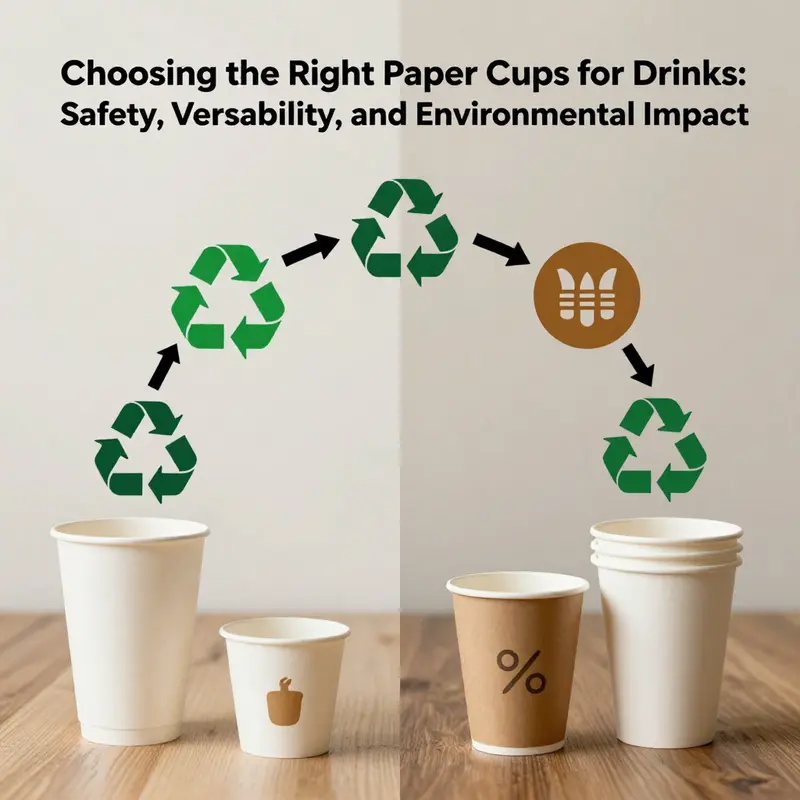
In recent years, a trend toward more sustainable materials has emerged, driven by environmental concerns and consumer demand for greener options. Polylactic acid (PLA), a biodegradable polymer derived from renewable resources such as corn starch, has entered the conversation as an eco-friendly alternative to traditional PE coatings. PLA offers barrier properties and temperature resistance comparable to PE in many daily-use scenarios and can decompose under industrial composting conditions. The practical takeaway is that PLA-coated cups can deliver hot-drink performance while offering a more favorable end-of-life profile. Still, PLA is not a universal solution. Its compostability depends on the presence of appropriate industrial facilities, and its performance in cold applications, as well as its interaction with certain inks and sleeve materials, can differ from PE. The drive toward PLA is part of a broader shift toward sustainability that seeks to minimize the environmental footprint of disposable cups without compromising safety or functionality. The balance between performance and compostability remains a dynamic space, with ongoing research into coatings and substrate treatments that can deliver both culinary safety and responsible disposal.
As the interior barrier determines what temperature a cup can safely withstand, the outside layer also matters—especially for cold drinks. When heated beverages demand a barrier, the interior PE layer handles the job; but the exterior can also be printed with various inks and finishes. Printing is more than decoration. It communicates brand, informs users about contents, and can even provide safety notes. Inks used on cup exteriors are typically food-safe and must meet regulatory standards for migration. The printing process often employs water-based inks for environmental reasons, though solvent-based inks are still used in some cases for durability or color richness. One practical constraint with printing is the regulatory rule that prevents ink from being too close to the rim or the base of the cup. A band of clear spacing around the rim—often about 15 millimeters—prevents ink from contacting the drink directly should there be a minor leak or splashing. A similar margin near the bottom, typically around 10 millimeters, minimizes any risk of ink entering the beverage during a misalignment or stacking. These rules, while seemingly minor, are part of the disciplined attention paid to food-contact safety in the packaging industry.
The structural design extends beyond the barrier and the printing ink. The classic single-wall cup is still widely used for a broad range of beverages, but many operators prefer a double-wall or insulated model for hot drinks. The insulation keeps the beverage hotter for longer and, just as important for user comfort, protects the hand from the heat of the liquid, encouraging longer sipping and a more satisfying experience. The trade-off is cost: double-wall cups require more material and more precise manufacturing, which can influence pricing and waste management decisions for a café or event. Some cups incorporate a corrugated or ripple-wall pattern, which boosts rigidity and grip without a proportional increase in material thickness. This can be particularly valuable in busy service settings where cups are stacked, moved, and picked up repeatedly. The ripple-wall design demonstrates how a seemingly simple object can incorporate geometry as a functional ally, preserving strength and reducing the chance of leakage or deformation under hot liquids, even when condensation on the outside of a cold beverage is a factor.
The choice between hot and cold cups, and the possibility of a two-in-one option, is guided by more than the beverage temperature. It is shaped by safety, performance, and the practical realities of service contexts. The safest general rule is straightforward: use cold drink cups for cold drinks and hot drink cups for hot drinks. The wax-coated cold cups should be avoided for hot beverages because of the risk of wax melting and leaching into the drink. Conversely, PE-coated hot cups are optimized for heat and can handle the steam and warmth without the barrier failing, though they are not inherently ideal for cold drinks due to condensation and potential deformation of the cup under damp conditions. Where conditions require versatility, a PE-lined cup marketed as suitable for both hot and cold can be appropriate, provided the label clearly indicates its intended use and the consumer follows the recommended guidelines. The labeling, in turn, serves as a reminder that the product has been engineered with a defined purpose in mind and that deviating from that purpose can compromise safety or performance.
In practical terms, vendors and diners alike benefit from reading the packaging and understanding what the cup is designed to do. The guidance that emerges from the research is simple yet important: always check the label. The labeling is not a mere marketing tool; it is a safety indicator that tells the user whether the cup is appropriate for hot beverages and whether it can be used with colder drinks without risk of leakage or degradation. The market’s shift toward transparent labeling reflects broader demands for consumer safety and environmental accountability. While a growing segment of cups emphasizes sustainability with PLA or other biodegradable barrier options, the functional imperative remains clear. A well-chosen cup should resist leakage under its intended use, avoid harmful migration of substances into the beverage, and deliver a reliable user experience whether the drink is hot or cold. Three-no products, as some quality-conscious suppliers term cups without clear labeling, should be avoided precisely because the absence of essential information about temperature tolerance and material composition makes it impossible to assess safety.
The conversation about paper cups sits at the intersection of materials science, food safety, and consumer experience. When a barista pours a steaming cup of coffee into a cup built for hot drinks, the chemical and physical boundaries of the container are engaged in a silent performance: the liquid is contained, heat is managed, and the cup maintains its shape, grip, and integrity. The wax barrier, if misused, fails by melting and risking contamination. The PE interior, when used appropriately, provides a steady barrier against leakage and a predictable thermal envelope that protects both the user and the beverage. The environmental dimension—whether through the use of PLA or other renewables—adds a layer of responsibility that cafés, restaurants, and packaging manufacturers must bear as they respond to climate concerns, landfill constraints, and consumer demand for greener options. The evolution toward more responsible coatings does not cancel the need for rigorous safety standards; rather, it integrates them into the lifecycle of the cup from production to disposal. In this conceptual landscape, choosing the right cup is less about a single feature and more about a holistic assessment of the beverage, the service context, and the end-of-life scenario.
To illustrate how these principles translate into everyday decisions, consider the practical path a café might follow. A hot beverage program would prioritize cups with interior PE coatings and, ideally, a double-wall construction for a more comfortable hold during busy mornings. The same program would ensure that labels clearly mark the cup’s hot-drink suitability and that staff are trained to avoid the cross-use of cold-only cups for hot drinks. If a venue intends to emphasize sustainability, it might explore PLA-coated options and partner with waste management services that can handle industrial composting facilities capable of processing PLA-based disposables. This alignment of product design, labeling, and end-of-life logistics creates a coherent system that respects safety, user experience, and environmental considerations. In a sense, the cup becomes a microcosm of how modern packaging must function: performant, safe, and responsible.
For readers seeking a concrete example of a hot-drink-ready solution that emphasizes internal barrier integrity and user comfort, consider the approach represented by a hot-oriented, double-wall cup option. A careful examination of such designs reveals how the combination of a robust stock, a heat-tolerant PE interior, and a thoughtful outer geometry can deliver a dependable, comfortable, and safe drinking experience across a broad range of hot beverages. This is not merely about keeping liquid inside a cup. It is about creating a reliable interface that respects health guidelines, delivers a consistent experience for customers, and aligns with evolving environmental expectations. In the end, the question is not whether a cup can hold a drink, but whether the cup can safely and effectively fulfill its trip from counter to mouth, no matter the temperature.
To connect this discussion to practical resources, a widely used reference point in hot-cup design and safety emphasizes the importance of selecting cups labeled for hot use and avoiding those without explicit guidance. When in doubt, seek confirmation from the packaging label and, if possible, rely on products whose coatings are documented for heat resistance and food safety. For readers who want to explore a real-world example of a hot-drink cup design and its performance characteristics, a widely available option is described in available product information that highlights the heat-resistant interior barrier and insulated exterior design. This example underscores the broader principle that the right cup is defined by its intended use, its material composition, and its adherence to safety standards across the beverage’s entire lifecycle. The overarching message remains simple and powerful: safety and performance arise from deliberate material choices, correct labeling, and a well-considered balance between heat resistance and environmental responsibility.
External resource: https://www.fda.gov/food-safety
Guardians of Temperature: How Coatings, Labels, and Careful Design Safeguard Paper Cups for Hot and Cold Drinks
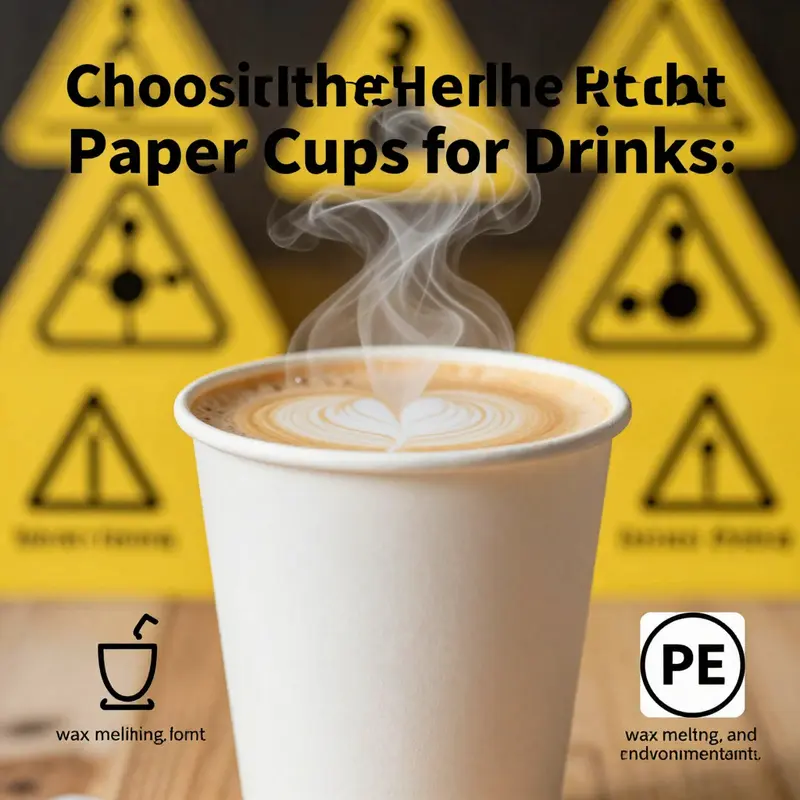
Choosing a paper cup is not merely a matter of size or color. It is a decision that sits at the intersection of safety, practical use, and the everyday rituals of drinking. A cup is a boundary between a beverage and the person holding it, and that boundary is defined as much by chemistry as by cardboard and glue. The most crucial distinction in this boundary, one that quietly governs how a cup behaves in the hand and at the lip, lies in its coating and intended temperature range. If cold drinks ride in a wax-coated vessel, or hot drinks in a PE-lined form, the cup’s performance changes in ways that matter for safety, flavor, and comfort. In this chapter, we trace that boundary with care, linking the science of coatings to the everyday choices that consumers and retailers make when they select cups for hot and cold beverages.
Cold drink cups are typically lined with a food-grade wax on the inside. The wax acts as a barrier so the liquid does not soak through the paper when the drink stays near or below room temperature, roughly in the 0° to 5°C range. This setup is practical for chilled beverages, enabling a cup to hold a cold drink without the liquid wicking through the paper and staining surfaces or weakening the cup’s structure. Yet the same wax that protects against seepage at cold temperatures becomes a liability when heat is introduced. Once a hot liquid—especially one that climbs beyond about 62°C—enters such a wax-coated cup, the wax can soften and melt. The melted wax can migrate into the beverage, and with it, traces of substances like polycyclic aromatic hydrocarbons, PAHs, which have raised public health questions in various contexts. The risk is not only chemical migration but also compromised cup integrity. A melted boundary invites leaks, burns, and spills, turning a simple beverage into a hazard and a mess.
Hot drink cups, in contrast, are designed for warmth from the first pour. They are typically lined on the interior with a heat-resistant polymer film—commonly polyethylene, though other food-safe plastic films are used as well. This interior coating resists deformation and dripping up to temperatures around 90°C or higher. In practice, that means a hot cup can safely contain coffee, tea, or soup that would soften or break a wax-lined cold cup. The polyethylene lining keeps the liquid from soaking through, preserves the cup’s structure under heat, and, crucially, reduces the likelihood that any coating material will migrate into the drink as long as the beverage stays within typical serving temperatures. However, this heat-resistant lining is less forgiving in the cold. Condensation can form on the outside of a hot cup when a cold drink is poured into it, leading to a wet surface that can cause the cup to become slick or even deform in some cases. The two designs—wax for cold and polymer film for hot—embody a practical compromise: each is optimized for its temperature range, and using the wrong one invites avoidable risk.
There is also a growing category described in industry literature as the two-in-one cup. These are commonly the PE-lined varieties that can handle both hot and cold liquids with a single cup. They offer convenience for venues that serve a mixed menu, but the safety caveat remains essential: always check the product label to confirm the cup’s intended use. The label is not a mere marketing tag; it is a safety statement that communicates the temperature limits, the coating materials, and any care instructions for handling, storage, or disposal. The presence of a clear, legible label reduces the chances of accidental misuse, such as trying to reuse a wax-lined cold cup for a hot beverage or microwaving a cup not designed for high heat.
Within the landscape of everyday practice, the issue of labeling and material transparency becomes even more critical for those who operate at scale. The warning to avoid what some call the three-no products—cups that lack explicit labeling, manufacturer information, or a recognized quality certification—speaks to a broader truth: the safety of a cup is not guaranteed by appearance. A plain exterior may hide an interior that is not suitable for the intended beverage. Consumers and operators should insist on cups that clearly state whether they are designed for hot or cold liquids. In this way, the boundary remains intact and predictable, and the public health risk associated with material migration or structural failure is minimized. When a cup is flagged for hot use, it should also carry guidance about microwave safety, oil exposure, and potential condensation effects. When a cup is flagged for cold use, it should carry guidance about melting risk if exposed to high heat and about storing or dispensing practices that minimize temperature extremes.
The practical implications of these material choices extend beyond safety into flavor, texture, and the drinking experience. Wax coatings, while excellent barriers to moisture at cool temperatures, can interact unfavorably with certain oils. In particular, oily foods and high-fat items stored or transported in wax-coated cups can cause the wax to soften more quickly, increasing the probability of chemical migration. This is not a universal danger, but it is a risk that warrants attention from food service operators who want to preserve both flavor integrity and consumer safety. On the hot side, the heat-resistant film helps prevent leakage but can create condensation on the outside of the cup if a hot cup is left in a cooler environment or holds a very cold liquid for an extended period. While this condensation does not alter the beverage itself, it can affect the handfeel and grip, contributing to a less pleasant user experience and, in some contexts, to slight deformation in delicate or thin-paper cups.
The decision framework for choosing cups, then, rests on a careful reading of temperature ranges, coatings, and labeling. A cold drink cup deserves a wax coating only when it will be used for beverages kept cold and kept within the narrow 0° to 5°C window. Once heat enters the picture, the wax is a liability, not a safeguard. A hot drink cup, with its polymer interior, should be reserved for beverages served hot and kept within the temperatures typically encountered in cafés, offices, or homes, where the beverages rarely exceed about 90°C. Yet for those moments when a cafe worker needs to offer both hot and cold options in quick succession, the two-in-one cup provides a practical option, provided its labeling is explicit and its temperature tolerance is clearly documented by the manufacturer. In all cases, the onus is on the user to verify that the cup they pick is fit for purpose. This is a matter of safety and taste, not mere preference.
For operators who manage shelves of cups, the guidance is straightforward but essential. Always check the product labeling before purchase, and maintain a habit of matching the cup type to the beverage. Do not assume a cup is safe for hot drinks because it looks similar to a hot-cup design; a misread label can lead to a melt, a leak, or a risk of scalding. The label should also indicate whether the cup is suitable for use in a microwave, whether it is sealed or lined, and whether it carries any certifications that reflect quality safety standards. In practical terms, this means training staff to distinguish between cold and hot cup designs and to avoid using cold cups for hot beverages or leaving hot cups near oils or textiles that could influence migration or absorption. It means also checking storage conditions. Paper cups must be stored in a cool, dry, and clean environment to maintain their integrity and to limit any inadvertent deformation caused by humidity, temperature swings, or contaminants.
The science behind these cups is not static. Food-contact materials are subject to ongoing review by regulatory bodies and researchers who evaluate coatings, migration limits, and the effects of repeated use. While the current consensus supports wax coatings for cold use and PE or similar films for hot use under ordinary conditions, it remains best practice to observe the explicit guidance provided by manufacturers and food safety authorities. Consumers and operators alike benefit from transparency about the materials in contact with their beverages. When a cup carries a clear statement about its intended use, its temperature tolerance, and its safety certifications, the consumer can focus on enjoying the drink rather than worrying about the boundary between cup and liquid.
In this light, the choice of a cup becomes a small but meaningful act of safety. It reflects a commitment to predictable performance, to the avoidance of unnecessary chemical exposure, and to a steady hand in a fast-moving service environment. For those who wish to explore options that emphasize responsible design and clear communication, there are examples of cups that emphasize eco-friendly design and transparent labeling for cold beverages. See an example of an eco-friendly, printed-logo cold beverage cup for a visual sense of how labeling and design can support safety and user experience: eco-friendly-printed-logo-cold-beverage-cup-paper-cup-with-lid.
As this discussion unfolds, it becomes clear that safety is not merely a set of rules, but a continuous practice of choosing appropriate materials, reading labels, and applying common sense in handling and storage. The ideal cup for a hot coffee is markedly different from the ideal cup for a cold iced tea, and the best approach in any setting is to respect those differences without exception. By keeping the temperature boundaries in view, by respecting coating materials, and by relying on explicit labeling, both consumers and professionals can reduce risk, improve the reliability of service, and preserve the taste and integrity of the beverages they pour. The boundary between cup and drink, once understood, becomes a quiet guardian of health and comfort rather than a mystery to be navigated in haste.
For further, authoritative guidance on the safety standards that underpin these materials in the broader context of food contact packaging, consult official regulatory resources such as the FDA guidance on paper and paperboard packaging, which outlines temperature-specific performance standards and acceptable coatings. This external reference provides a framework for understanding how coatings, barrier properties, and consumer safety interact in practice. FDA guidance on paper and paperboard packaging.
Bridging Heat and Chill: The Subtle Engineering Behind Dual-Use Paper Cups
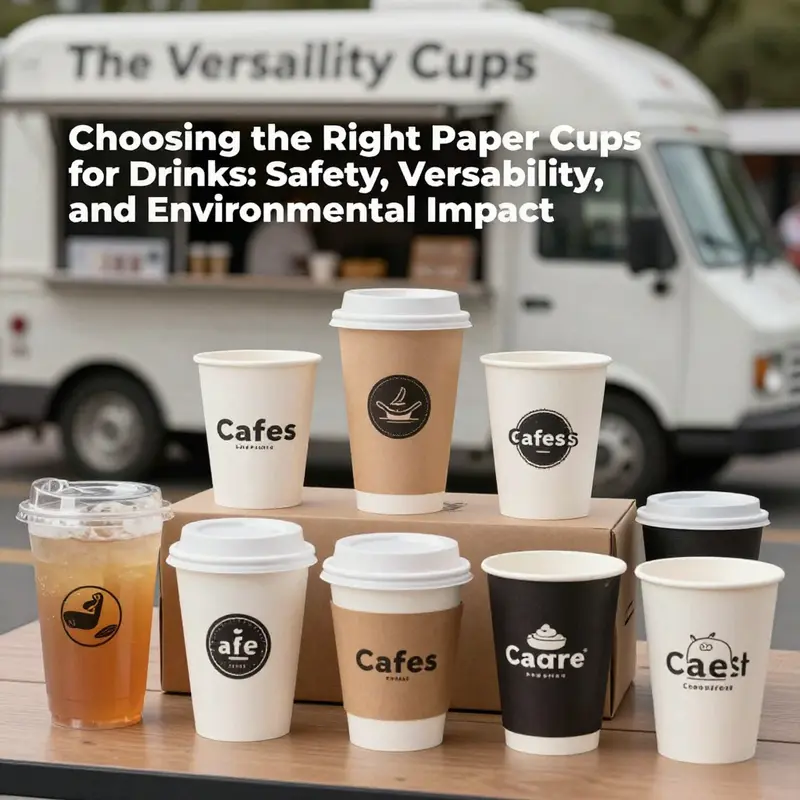
Asked to imagine a single cup that faithfully carries a piping hot latte or a frosty smoothie without a hint of compromise, most people would assume a trade-off is inevitable. Yet the truth is more nuanced. The everyday paper cup is the result of deliberate engineering—an intersection of materials science, safety standards, and practical design choices that determine whether a cup thrives with hot liquids, cold ones, or both. The narrative of these cups is not just about keeping drinks at the right temperature; it is about preserving the integrity of the vessel, protecting the consumer, and acknowledging the environmental realities that shape the marketplace. When you pick up a cup, you are not merely choosing a container. You are selecting a technology that has been tuned to navigate the physics of heat transfer, the chemistry of coatings, and the social expectations of hygiene and convenience.
Central to this story is the material heart of cold drink cups. These vessels are built on food-grade pulp paper that has been tailored to resist the assault of cold liquids. A key feature is the internal and sometimes external polyethylene (PE) film that coats the paper. This dual coating creates a waterproof barrier, so a cold beverage does not wick into the paper and compromise structural integrity. The result is a cup that remains sturdy and leak-free at temperatures ranging roughly from 0°C to 5°C. The coating steels against the chill, but it is not designed to tolerate heat. In fact, when a hot liquid—think coffee or hot tea—strays into this crowd of cold cups, the temperature surge can challenge the coating. The consequences are not purely cosmetic; the wax-like residues from older or lower-quality wax coatings can melt, leading to potential contamination. And while the wax prior practice might seem quaint, the risk of introducing substances such as polycyclic aromatic hydrocarbons (PAHs) into a beverage is not trivial. This is why the cold cup’s strength is intimately tied to the cold realm and why using it for hot drinks is rightly discouraged.
On the other side of the temperature spectrum lies the hot drink cup. These are crafted with a different purpose in mind: they must maintain performance as the liquid they cradle climbs toward and occasionally surpasses the boiling point of water, while remaining safe for repeated handling. The solution most commonly employed is a heat-resistant PE coating, or an alternative plastic liner, applied to the inside of the cup. This interior layer acts as a thermal shield and a moisture barrier, ensuring the liquid does not soak into the paper and warp the cup’s form. Hot cups typically accommodate temperatures up to around 90°C or higher, and especially in the case of beverages like tea and coffee, this protection is indispensable. A correctly designed hot cup prevents leaching of undesirable substances and holds its shape even when a drink is steaming. Yet this strength comes with a caveat: the same design that makes hot cups reliable for heat can make them less than ideal for cold use. Condensation on the exterior can form when a hot cup is exposed to colder surroundings, and that moisture layer can cause the cup to feel damp, soften at the rim, or become slick, which is less than desirable in a busy service setting.
The contemporary market has evolved a thoughtful compromise—the so-called two-in-one cup. These are predominantly the PE-lined variants that can safely accommodate both hot and cold beverages, provided they are used within the product’s stated temperature range. The capability to juggle heat and chill in a single vessel offers operational simplicity: a single stock line, fewer SKUs, and streamlined recycling streams. However, the important caveat remains primary in every consumer-facing packaging manual: always check the product label for intended use. The promise of “two-in-one” ought not to be assumed. A cup may be marketed as suitable for both regimes, but reliability hinges on adherence to specifications and proper handling. This is why the labeling on cups is not merely a formality but a crucial safety signal for kitchens, cafés, and event settings.
Beyond the raw materials, the modern cup is a convergence of safety ethics and regulatory alignment. The guidance surrounding food-contact materials emphasizes that what touches the drink should be inert, non-toxic, and stable under expected conditions. The industry has responded to these demands with a spectrum of standards, certifications, and clear labeling. Consumers and operators alike benefit from this clarity, because it translates into predictable behavior under a range of everyday conditions. The old worry that a wax layer might melt and contaminate a hot beverage has given way to a more nuanced confidence in PE-based systems—when products are used as intended. In practice, this means that hot cups with inner PE linings do not melt or leach harmful chemicals under normal operating conditions, and cold cups with PE coatings can resist cold liquids without losing form. The separation of functions—wax-based designs for certain legacy cold cups versus robust PE-laminated hot cups—remains foundational to ensuring these vessels perform as expected in real-world environments.
The decision to use a particular cup in a given setting often hinges on more than temperature alone. Condensation management, mechanical strength, and the likelihood of cross-use all play into practical choices. A hot beverage served in a cold cup risks deformation or leakage as the paper’s structure is stressed by heat. Conversely, a cold beverage in a properly designed hot cup should not alter the beverage’s temperature dramatically or compromise the cup’s integrity; however, condensation on the exterior of a hot cup may present handling challenges and surface-conditioning concerns in dense settings like busy coffee shops or outdoor events. These practical realities are why many operators prefer the specialty hot cups for hot drinks and reserve cold cups for cold drinks, especially in high-volume environments where performance margins matter.
The flexibility of modern PE-lined cups cannot be overstated, though. The same plastic barrier that protects hot beverages also helps keep cold drinks from soaking through, enabling a consistent user experience across temperature ranges. This compatibility—paired with strong, recyclable materials—contributes to a compelling narrative about sustainability and efficiency. The packaging ecosystem recognizes this, promoting single-supply solutions that reduce waste and simplify procurement without sacrificing safety. In the real world, a business that uses PE-lined cups for both hot and cold beverages can reduce inventory complexity, minimize the risk of cross-contamination, and uphold hygiene standards with greater ease. Yet this is not to say that there are no costs or trade-offs. The environmental footprint of plastics, even when used in thin layers and designed for recyclability, remains a consideration. The industry continues to balance performance with responsible disposal and encourages ongoing improvements in materials science to render cups more recyclable and less impactful to the planet.
From a consumer experience perspective, the choice of cup influences more than safety. The temperature stability of a drink, the ease of handling, and the perceived quality of the vessel all factor into customer satisfaction. A hot drink should feel secure in its cup—the cup should not deform, leak, or transfer heat in a way that makes the experience uncomfortable. A cold drink should arrive with crisp condensation-free sides until the moment it reaches the mouth. The best cups deliver an experience that feels almost invisible; they hold the drink’s essence without announcing their own limitations. Such seamless performance is a testament to the careful harmonization of pulp paper, PE coatings, and protective design layers that engineers and manufacturers work with every day.
In practice, the modern café or event space often relies on a few guiding principles anchored in both science and policy. Always verify the label to confirm whether a cup is suitable for hot drinks, and avoid any product that lacks clear labeling or recognized quality certification. This “three-no” approach—no clear use indication, no manufacturer traceability, no quality certification—remains a simple yet effective guardrail against subpar products that could compromise safety. The idea is not to frighten customers into overthinking every sip but to foster a culture where proper usage becomes second nature. When cups are selected with intention, the routine of serving hot or cold beverages becomes a streamlined, dependable process rather than a risky guess.
One practical upshot of this careful design is that modern PE-coated cups, when used as intended, support a broad spectrum of environments. An office break room, an outdoor festival, a campus stall, or a busy cafe can all benefit from a reliable, versatile cup. The convenience of a single product line that serves multiple temperature needs helps teams manage inventory, reduce waste, and maintain consistent hygiene standards. The environmental argument strengthens when these cups are designed for recyclability and minimize the use of non-renewable resources. Informed sourcing decisions can steer operations toward cups that meet safety standards while aligning with sustainability goals. This alignment is not a mere trend; it is a practical, measurable path toward more responsible consumption and more efficient service.
To illustrate how the broader ecosystem supports these choices, consider the availability of resources that emphasize safety and environmental responsibility. For readers seeking real-world examples of eco-conscious cup options and labeling practices, a relevant product page demonstrates how a brand communicates its commitment to sustainability while offering a versatile cup for multiple beverage types. The page highlights an eco-friendly approach to printed-logo cold beverage cups with lids, underscoring the importance of clear labeling and responsible design choices. Such resources can help buyers navigate not only the functional aspects of hot and cold use but also the environmental narratives that accompany modern cup manufacturing. For additional context on the broader standards guiding food-contact materials, agencies such as the U.S. Food and Drug Administration provide official guidance about what is permissible in food-contact situations. This framework ensures that the market continues to evolve in ways that protect health while enabling practical, everyday use.
In sum, the dual-use capability of modern paper cups is a product of purposeful engineering. The cold cup’s waterproof interior, the hot cup’s heat-tolerant lining, and the careful calibration of labeling and packaging standards come together to create a reliable, hygienic, and, increasingly, sustainable solution for a world accustomed to fast service and varied beverages. The choice between hot and cold, or the decision to adopt a versatile PE-lined cup, reflects a balance between safety, convenience, and environmental stewardship. As consumers, when we understand the engineering behind these vessels, we gain a deeper appreciation for the cup in our hands. It is more than a vessel for liquid; it is a designed interface between temperature, material science, and the shared expectations of safety and sustainability that define modern food service.
For readers who want to explore related topics about eco-friendly packaging and how labeling can guide safer use, you can learn more through the following resource that discusses environmentally conscious cup options: eco-friendly-printed-logo-cold-beverage-cup-paper-cup-with-lid. This example illustrates how packaging messaging and material choices intersect to support safer, more sustainable beverage service in real-world settings. As with any packaging decision, the best practice remains to use cups for the purpose they are labeled for, to verify temperature tolerances, and to consider the broader environmental impact of the supply chain. When these elements align, the humble cup becomes a reliable partner in delivering a consistent, safe, and satisfying drinking experience.
External reference: For formal safety standards and guidance on materials that contact food, consult the FDA’s official materials on Food Contact Substances. https://www.fda.gov/food/food-contact-materials
null
null
Final thoughts
Selecting the appropriate paper cups for hot and cold drinks is not merely a matter of aesthetic choice; it encompasses safety, practicality, and environmental sensibility. Understanding the materials, safety risks, and versatility of these cups will allow beverage professionals to provide superior service while minimizing potential health hazards and environmental harm. This holistic approach to cup selection can significantly enhance customer experience and reinforce a commitment to sustainability.