
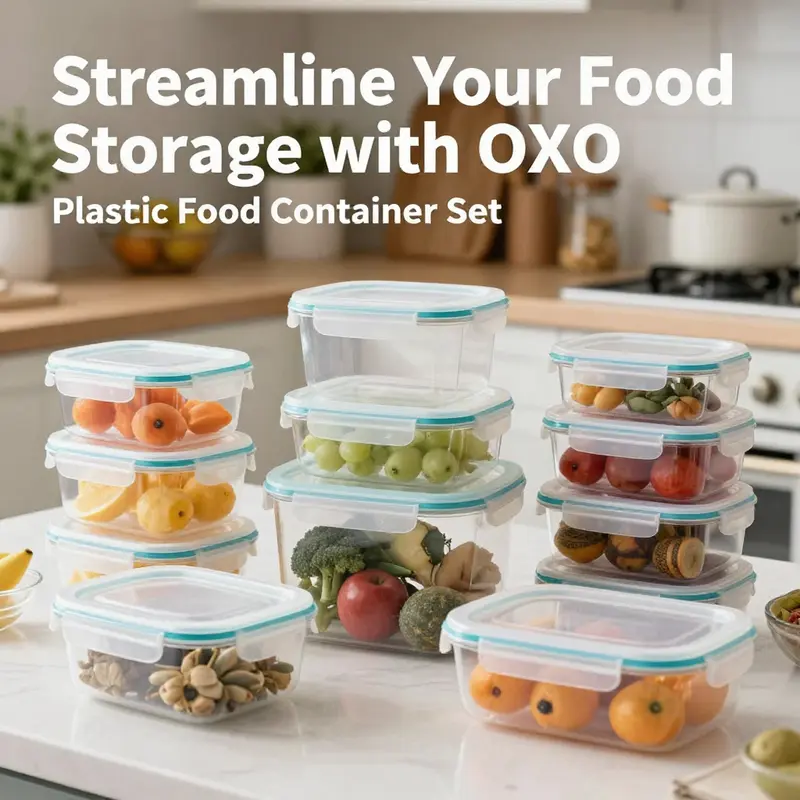
In the bustling environment of food service, whether you’re managing a bubble tea shop, running a food truck, or handling corporate catering, effective food storage is paramount. OXO plastic food container sets have emerged as a go-to solution for these industries, offering the perfect blend of durability, safety, and convenience. This article explores the innovative design features that make these containers a staple in any kitchen, examines the safety standards regarding the materials used, and provides market insights that reveal their economic advantages. Each chapter is geared towards enhancing your understanding of why investing in OXO containers can transform your food storage practices.
Engineering Freshness: The Design Features Behind BPA-Free Airtight Plastic Storage Sets
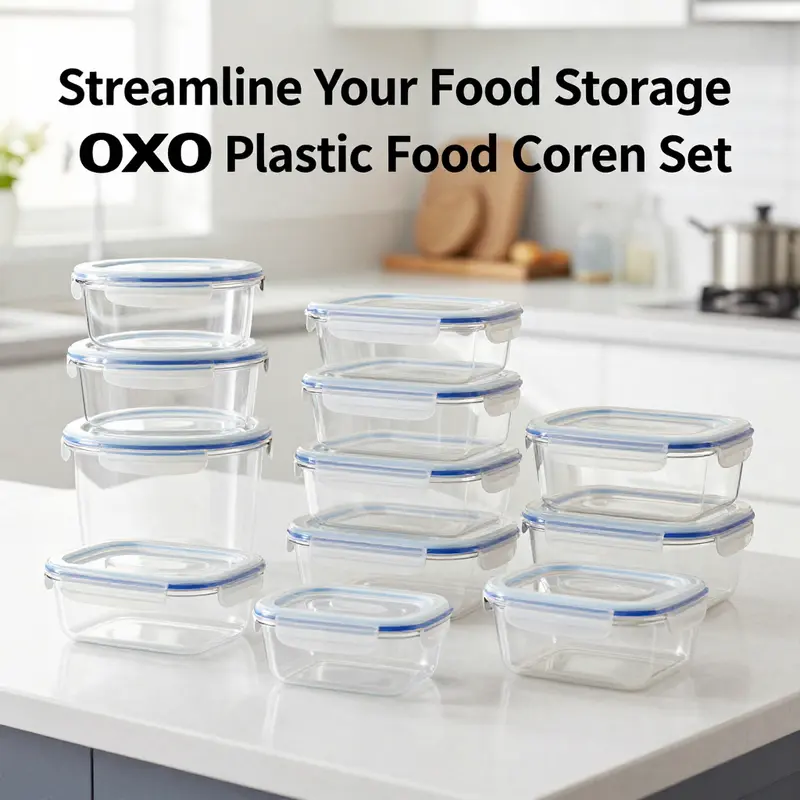
A kitchen is a narrative of materials, motion, and ritual. It is where the choices we make about safety, ease, and efficiency translate into daily routines. When a plastic storage set is designed with care, it becomes a quiet partner in that ritual, helping to preserve flavors, reduce waste, and free up mental space as we navigate a busy day. This chapter delves into the design features that distinguish BPA-free, airtight plastic containers as practical fixtures in a modern pantry. It is not merely the presence of a seal or a clear wall that matters; it is the orchestration of ergonomics, visibility, adaptability, and care that makes a set truly useful. We begin with the hand that reaches for the container and then move outward to how the container sits in a shelf, a cupboard, or a refrigerator. The result is a coherent system where the form serves the function, and the function in turn sustains a healthier, calmer kitchen life.
Ergonomics is the first principle you notice when you pick up a well-designed storage set. The containers often feature soft, non-slip handles that feel natural in the hand and stay secure even when they are full. The grip is not merely a matter of comfort; it is a matter of practical safety. For anyone with arthritis, reduced hand strength, or simply the fatigue that comes with a long day, an easy-grip design makes a meaningful difference. It reduces the strain of lifting, pouring, and transferring contents, turning what could be a sticky, awkward moment into a smooth, controlled action. The handles are not extraneous flourishes; they are anchors for reliability. When you pour out flour for a recipe or scoop sugar for a late-night tea, the tactile confidence that a secure grip provides translates into fewer spills and a sense of calm in the kitchen. The same logic applies to the lid’s operation. The lid is designed to align precisely with the base, so fastening becomes intuitive rather than fiddly. In practical terms, this reduces the cognitive load required each time you seal a container. You know at a glance whether the seal is engaged, and you know that you can trust the container to stay closed through daily handling and the occasional jostle of a crowded pantry.
The sealing mechanism is the heart of any airtight storage set. In the most effective designs, a signature press-to-seal action characterizes the lid’s closure. When you press the lid down, a reassuring tactile cue—often a subtle click or a change in the lid’s surface—signals that the seal is secure. This is more than a sensory detail; it is a practical guarantee of freshness. The seal’s integrity protects dry goods from air and moisture, which are the primary enemies of texture and aroma in a pantry. For flours and grains, the difference between a container that breathes and one that locks in humidity is measurable. It means fewer clumps in sugar, less stale odor in cereal boxes, and a longer window of usable flavor for every staple. The mechanism also helps maintain a barrier against pantry pests by limiting the air exchange that pests rely on to find a home inside a jar. Designers understand that a reliable seal changes the way households manage food over weeks and months, not just minutes after a purchase. The result is a sense of long-term order rather than quick-fix storage strategies.
Visibility is a deceptively simple virtue with outsized impact. A clear plastic body lets you read at a glance what sits inside, which in turn reduces the number of times you open containers to check contents. When you can see it, you use it more efficiently. The transparency also supports a straightforward inventory approach: you can identify when a bag of pasta or a sack of rice is running low without pulling every item out of the cabinet. This seemingly small feature becomes a strategic ally in reducing waste and planning meals. In a well-designed set, the plastic is not merely clear; it is BPA-free and engineered to resist staining from typical pantry items. The absence of BPA is not a marketing flourish; it is a safety assurance that aligns with growing concerns about how materials interact with food. BPA-free construction also reduces the risk of any chemical transfer that could alter flavor or safety, particularly when you store acidic or oily ingredients for extended periods. The clarity extends beyond material safety: it reveals the shape and size of the contents, allowing you to gauge portioning and to stack with confidence. A visible, uniform interior makes it easier to practice consistent scooping and measuring, which helps with recipe accuracy and reduces prep time during busy evenings.
Storage efficiency often grows from the geometric harmony of the set. A defining feature of many contemporary designs is the emphasis on stackability and nesting. The containers are shaped to stack neatly, aligning edges and corners so that their weight and footprint are minimized when stored. This is especially important in smaller kitchens where every inch of space matters. When containers nest within one another, you gain the luxury of an uncluttered shelf or cabinet. The result is a pantry that feels larger than its physical dimensions, because vertical and horizontal space are used with intention. The geometric consistency extends to the lid and base pairing as well. Uniform shapes—square or rectangular profiles that fit together without wasted gaps—create a visual and practical system. In such a system, you can arrange containers by size and use, with a predictable footprint. The practical payoff is steady access to the items you use most, with fewer misfits and less time spent wrestling containers from crammed shelves. This design choice also contributes to a calmer kitchen atmosphere. When you open a pantry and see a tidy, modular arrangement, you experience less stress and more motivation to maintain organization.
A wide mouth is another functional hallmark that often appears in well-considered container sets. Wide openings make the act of filling and cleaning easier and faster. When you transfer a bag of rice or a mound of oats into a container, a broad mouth reduces spills and makes the process more precise. The same wide mouth that smooths filling can also ease cleaning, as you can reach the interior with a sponge or brush and scrub away clinging residue. This is not a mere convenience; it is a daily reliability feature. Easy access to the interior reduces the friction that can derail a cooking session, especially when you are in a hurry or missing a crucial tool. The practical advantage translates into better hygiene and better food handling habits, since cleaning becomes less of a chore and more of a routine step that you actually perform regularly.
Care and maintenance are inseparable from design. The dishwasher-friendliness of containers is often highlighted, yet practical use requires nuance. Most components of modern storage sets are deemed dishwasher safe, but design guidance typically recommends hand-washing the lids, particularly around the silicone seals. Lids and seals can be susceptible to wear from high heat or aggressive detergents, which may degrade their flexibility over time. By design, lids may be the part that warrants more attentive care to preserve the seal’s integrity and to maintain a long-lasting airtight performance. This approach reflects a broader philosophy: create products that are easy to care for, while also encouraging habits that extend their life. The result is a set that remains reliable for years, rather than becoming a disposable convenience after a few months of use.
Beyond the practicalities of use, there is a subtle aesthetic that accompanies good design. A modular, uniform look—whether in a square, rectangular, or compact form—appeals to the eye and to the habit of organization. The visual order supports a sense of control, which in turn reinforces consistent behavior. When every container matches and stacks into a tidy block, it becomes easier to maintain dietary routines and portion discipline. This aesthetic consistency is not superficial. It communicates durability and care, signaling to the user that the design was conceived with real kitchen life in mind. The effect is psychological as much as functional: a well-ordered pantry invites you to cook with confidence, to plan ahead, and to reuse leftovers instead of letting them fade away in unseen corners of the fridge or pantry.
In real-world use, these design features interact with the rhythms of home life. A family with a busy schedule finds that an ergonomic grip reduces the time spent searching for a container in the morning rush. A student cooking a week’s worth of meals appreciates the airtight seal that locks in the integrity of dry staples, preserving their texture and aroma through weeks of use. An older adult benefits from the gentle, predictable lid action that minimizes strain during routine kitchen tasks. The clear, BPA-free plastic provides reassurance about safety, while the transparent body supports quick checks and mindful food management. The stackable, nestable architecture reduces clutter, making it feasible to keep a well-stocked pantry without sacrificing accessibility or flow. In each case, design decisions ripple through daily behavior, shaping how people shop, store, and prepare food.
Affordability and value are also rooted in thoughtful design. A set that minimizes waste—by preventing moisture intrusion, reducing spills, and curbing the need to replace containers frequently—delivers long-term savings. While the upfront cost may be comparable to other durable storage options, the ongoing benefits accumulate through steadier organization, improved food safety, and easier cleaning. The perception of value grows when the user experiences fewer damaged goods and less time spent managing the kitchen space. A well-made set, designed with an eye toward everyday use, becomes a dependable partner in a healthy, organized lifestyle. The goal is not to chase novelty but to build a cohesive system that supports consistent habits and reliable performance over time.
Looking ahead, the principles behind BPA-free airtight plastic container sets have implications beyond the pantry. The same design logic—ergonomic handling, secure seals, clear visibility, modular stacking, wide openings, and mindful maintenance—translates to other household storage challenges. From refrigerator organization to kids’ lunch prep and even travel storage, the core ideas offer a blueprint for durable, user-centered design. In a world where efficiency and safety increasingly intersect with lifestyle choices, these containers stand as a practical example of how form and function can align to make everyday tasks more manageable. They remind us that better kitchen design is not a luxury but a quiet, ongoing commitment to health, convenience, and clarity in the spaces where we cook, eat, and gather.
For households seeking an efficient, cost-conscious way to upgrade their food storage, a well-designed BPA-free, airtight set is often worth considering. The value lies not only in the individual containers but in the system they create: a pantry that breathes less, a fridge that stays organized, and a kitchen that supports repeated, mindful cooking rather than frantic improvisation. As you evaluate different sets, focus on the essentials that support your routines. Ask how easy it is to grip, how clearly you can see contents, how the lids seal, and how the shapes fit your shelves. These questions help you choose a collection that remains useful as your cooking needs evolve. The best designs anticipate a lifetime of use, offering a tangible balance between practical mechanics and everyday comfort. In that balance, flavor, freshness, and order can flourish together, turning a simple storage decision into a reliable backbone for healthier eating, more efficient meal preparation, and a kitchen that truly supports the people who use it.
External resource: https://www.amazon.com.au/OXO-Good-Grips-Pop-Square-Storage/dp/B07CZ1TQY6?th=1
Guardians of Freshness: Understanding Safety, Material Composition, and Everyday Use of Plastic Food Storage Sets
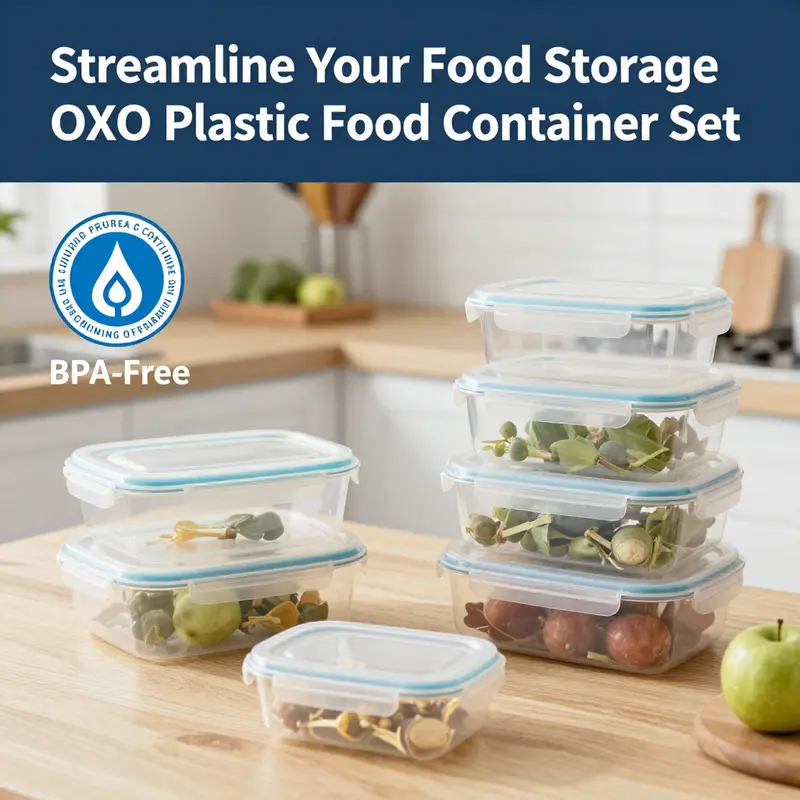
The everyday kitchen often treats storage containers as mere afterthought, a utilitarian box to hide yesterday’s leftovers or to portion out today’s lunches. Yet the interface between safety, material science, and practical design in plastic food storage sets is anything but trivial. When we open a lid, seal a clip, or slide a container into the freezer or microwave, we are witnessing a careful negotiation among durability, chemical stability, heat management, and user-friendly ergonomics. A modern storage system is built not simply to hold contents but to preserve their quality, protect meals from contamination, and simplify routines in a way that feels almost invisible. In this light, the most advanced plastic storage sets reveal themselves as small but meaningful acts of kitchen engineering—quiet guardians of freshness, organization, and health.
At the heart of these products lies a thoughtful choice of materials. Many contemporary containers are molded from food-grade plastics such as polypropylene (PP) or polyethylene (PE). These polymers are celebrated for their chemical stability, meaning they resist degradation when confronted with a broad range of substances that accompany ordinary cooking and storage. They also boast heat resistance that allows for practical versatility: containers can be used for cold storage, and many are designed to withstand mild reheating or warm serving conditions when used within specified limits. Clear or translucent plastics help users quickly identify contents without opening lids, reducing the frequency of handling and exposure. The combination of visibility with sturdy, snap-on lids creates a reliable seal that minimizes air exchange, reduces moisture loss, and constrains the migration of odors between stored items.
Beyond visibility, the official story of these containers emphasizes safety through two intertwined threads: material composition and regulatory compliance. The primary materials—PP and PE—deliver excellent resistance to oil and grease, a critical attribute for dry goods and pantry staples as well as meals that might include fats. This grease resistance is not a cosmetic feature; it translates into a practical advantage: oils and fats are less likely to permeate the container walls, which can otherwise lead to surface staining, lingering odors, or accelerated degradation of the plastic over time. The heat resistance of these materials is equally important, as everyday use often involves temperatures that push a container from the fridge to the microwave or oven briefly. A well-designed set remains dimensionally stable, resisting warping or softening under normal usage, while maintaining its seal and structural integrity.
Material choices also influence what users can safely store and how they should handle containers in conjunction with cooking or meal prep. The ongoing conversation about safety in food contact materials emphasizes limits on substance migration: the extent to which certain additives or contaminants can move from plastic into food. In practice, reputable storage sets are crafted to minimize such migration under typical conditions—storage of dry goods, refrigerated meals, and even short microwave reheating within the manufacturer’s recommended temperature range. This alignment with safety standards gives households a reliable foundation for organizing diverse foods—from flour and sugar to grains and pasta, from leftovers to pre-prepared meals. The transparent design, often paired with clearly legible measurements on the container walls, also supports precise portioning and inventory management, reducing waste by making it easy to see what’s on hand before new purchases are made.
To connect these design features with real-world requirements, it helps to consider the overarching safety landscape that governs food contact materials in many jurisdictions. A recent framework in a national standard recognizes the need to regulate migration of chemical substances from plastics into food and to require labeling that communicates maximum safe usage temperatures. When a consumer sees a maximum temperature indicator on the lid or base, they gain a practical guideline for reheating, storage, and even dishwashing. Respect for these temperature boundaries helps prevent accelerated material degradation, maintains seal performance, and minimizes the risk of unwanted interactions between food and container. For households, this translates into a simple rule of thumb: use the container within the temperature ranges specified by the producer, avoid exposing the container to heat beyond those limits for extended periods, and transfer hot contents to a more heat-tolerant vessel if necessary.
A well-designed storage set also embodies convenience through thoughtful engineering. The lid mechanism is typically a snap-on design that locks securely and resists accidental opening during movement or stacking. Such a feature supports both home kitchens and more demanding settings like small-scale catering or busy offices where containers are frequently transported. The ability to withstand dishwasher cycles, freezer sessions, and occasional microwave use broadens the range of scenarios in which a single set can remain functional. Aesthetics, utility, and safety converge when a transparent body with crisp markings aligns with a leak-proof lid, creating a system that takes less time to manage and less space to store. The stacking geometry further enhances organization, enabling pantry shelves and cabinet drawers to accommodate more items without sacrificing access or visibility. When space efficiency and reliable sealing are fused, daily meal prep and storage become less chaotic and more predictable, enabling families to plan healthier meals with less effort.
Yet safety is not only about materials and mechanics. It also involves discernment about how containers are used in real kitchens and how choices interact with dietary habits and long-term health considerations. Expert voices remind us that even well-made plastics have limits. Prolonged exposure of any plastic container to high-fat foods, repeated heating, or aggressive cleaning agents can, in some circumstances, influence surface properties or promote minor migrations of additives. While reputable materials minimize such risks, adopting prudent practices remains prudent: avoid heating fatty foods in plastic containers for extended periods, minimize the reheating in a container that isn’t specifically designed for microwave use, and consider transferring hot meals to heat-tolerant glass or ceramic dishes when possible. These cautions do not undermine the value of modern storage sets but rather illuminate a balanced approach rooted in practical safety. They encourage mindful habits, such as letting hot food cool briefly before sealing, avoiding long-term storage of highly fatty or acidic foods in plastic, and delegating tasks that demand high-temperature resilience to containers that are explicitly designed for such use cases.
In a broader sense, these design principles and safety considerations feed directly into how households organize their kitchens. A set that remains clear of staining, retains its lid seals over time, and shows secure stacking reduces the cognitive load required to manage weekly meal-prep cycles. The result is a kitchen that operates with fewer interruptions—no more rummaging for mismatched lids, no more guessing whether a bag of rice has absorbed flavors from a previous container, and no more fear about mystery leaks when a container is jostled during a trip to the pantry or the lunch box for a child’s school day. In such a space, routine becomes reliable, and reliability—more than novelty—builds trust in the materials we choose for everyday life.
Practical care and maintenance also shape the long-term safety and performance of plastic storage sets. Following the manufacturer’s guidance regarding washing and sterilization is essential. Dishwasher-safe claims are valuable because they support consistent cleaning without manual scrubbing that could degrade edges or loosen seals over time. However, repeated cycles should be paired with careful loading to prevent nicks on rims or compromised clamps that could reduce leak resistance. For those who prefer hand washing, using mild detergents, warm water, and non-abrasive sponges helps preserve the surface finish and the integrity of any printed measurement markings that aid portion control and recipe scaling. When it comes to freezing, the compatibility of container materials with cold temperatures is another piece of the safety mosaic. Freezing can induce minor brittleness in some plastics, so it is wise to avoid sudden temperature shocks, such as pouring very hot liquid directly into a frozen container. Allowing a brief cooling interval before sealing is a small but meaningful habit that protects both the material and the contents.
From a policy perspective, the conversation about safe storage extends beyond the kitchen and into the broader landscape of consumer safety standards. National guidelines and industry practices converge around a core idea: that plastic materials intended for food contact should be designed and labeled with clarity about their safe use. For families, this means that the best practice is to choose products whose materials meet recognized standards for food safety, that carry explicit temperature usage information, and that avoid ambiguous or vague claims about safety. This alignment between product design and regulatory expectations creates a predictable environment in which households can make informed choices, confident that the containers they rely on daily support not only convenience and organization but also health and peace of mind.
In guiding readers through these considerations, it is useful to reflect on how the everyday act of storing and reheating food intersects with broader health and environmental narratives. Plastic materials chosen for storage play a part in reducing food waste by extending the freshness window and enabling efficient portioning. They also interact with concerns about microplastics and chemical exposure, though well-regulated products with robust material formulations mitigate these risks when used as intended. Complementary practices—such as rotating pantry items, labeling contents, and using a dry, cool storage area—reinforce the benefits of a well-designed container system. In turn, such systems contribute to healthier eating patterns by making it easier and more enjoyable to plan, prepare, and reheat meals with confidence. While the science behind material stability may feel abstract, its practical upshot is tangible: fewer spoiled ingredients, less mess, and more time to focus on nourishing meals with the people who matter most.
To connect this discussion with the broader ecosystem of packaging and storage solutions, consider how comparable products in related categories handle the same challenges. The durability of a container is not only about resisting dents or cracking; it is about maintaining a safe barrier between food and the environment across a range of use scenarios. Whether you are packing a dry staple for pantry storage, refrigerating a batch of leftovers, or reheating a prepared meal, the container’s performance hinges on a precise alignment of material choices, process controls, and clear usage guidance. The result is a dependable system that supports efficient kitchen workflows and fosters confidence in meals served at home, at work, or on the go.
As you explore your own storage needs, you may find it helpful to examine related packaging discussions that address how durable, stackable, and safe containers extend beyond the kitchen’s four walls. For instance, wholesalers and manufacturers often highlight storage solutions designed for busy environments where multiple foods share a common container platform. The emphasis remains consistent: materials that resist chemical migration, seals that stay intact through frequent handling, and temperature guidance that prevents misuse. These considerations are not merely technical footnotes; they shape the everyday experience of cooking, storing, and sharing meals with care.
Internal link for further reading: Wholesale-Quarter-Salad-1100ml-Take-Out-Kraft-Bowl
For readers seeking a broader regulatory context and official guidelines, the following external resource provides a comprehensive reference on safety standards for food contact materials. It offers foundational details about how standards address chemical migration, labeling requirements, and safety limits across different jurisdictions, helping readers understand how the material choices discussed here are anchored in formal regulatory science: https://www.sac.gov.cn
In Stock and In Demand: The Economics and Availability of BPA-Free Airtight Food Storage Sets

Market availability and the economics of kitchen storage are not merely about where a product sits on a shelf. They reveal how households weigh efficiency, safety, and convenience in daily life, and how those choices echo through the retail ecosystem. A widely recognized BPA-free airtight plastic storage collection has become a touchstone in contemporary pantries, not only for its core function—keeping dry goods fresh and vermin-free—but for how it integrates with routines, space, and budget. In recent market snapshots, this type of container system shows a steady pulse of activity in the United States and the United Kingdom, where online retailers have amplified exposure to a broad spectrum of sizes, configurations, and price points. The numbers, in turn, illuminate consumer priorities: predictable performance, visible contents, and the capacity to scale storage as families grow or reorganize their kitchens for efficiency.\n\nAs of February 2026, the landscape is characterized by a spectrum of offerings that share a core commitment to safety and practicality. The most popular subsets tend to be compact, stackable sets that combine several quart-level containers with a few mid-sized options. This combination makes sense for households managing a pantry that includes a mix of rice, beans, flour, pasta, and snacks. The best-selling six-piece value sets, each with roughly comparable capacities, consistently appear in top rankings within major e-commerce platforms’ kitchen and dining categories. The appeal is not merely in the number of pieces, but in the way the set invites a practical system: one that aligns with shelving geometry, makes daily measuring easier, and reduces the friction of cooking and meal prep. The price signals here are telling as well. A typical six-piece unit, sold individually or as part of a bundle, often hovers around a few dollars per piece when purchased as a set. In the current market, that unit price is frequently around the low single digits—an indicator of high value for families that seek durable, long-lasting storage that can be used repeatedly across years of cooking and organizing tasks.\n\nBeyond the six-piece configurations, larger ensembles of containers—sometimes totaling twelve pieces or more and featuring larger quart capacities—also consistently gain prominence in best-seller lists. These bigger sets are particularly attractive to households that routinely stock large volumes of dry goods or that want to replace older, leaky canisters with a single, uniform system. The marketing logic here is straightforward: when a family buys a large set, it reduces future friction, simplifies inventory decisions, and reinforces a cohesive look across the pantry. The larger containers are especially valued for bulk staples such as bulk flour or sugar, which can be stored in straightforward, clearly labeled units that minimize the risk of spills and pest intrusion. The visibility of the contents through clear plastic, coupled with precise measurement markings, supports a user-friendly experience that translates into time savings during grocery planning and recipe execution.\n\nFrom the design standpoint, the durability and safety of these containers are central to their market performance. BPA-free construction is now a baseline expectation for many buyers, reflecting a broader health-conscious orientation in consumer purchasing. The materials themselves are typically lightweight yet sturdy enough to withstand day-to-day handling, which is an important factor for households with children or elderly adults who may need easier access and less resistance when opening or closing a container. The sealing mechanism—often a push-button or latch-style interface that secures an airtight closure—plays a crucial role in preserving freshness and keeping pests out. This feature addresses a practical fear among households: that dry goods lose their quality faster than anticipated or that pantry pests breach a storage system. When a container set delivers a reliable seal, it reduces the need for frequent replacements and lends households a sense of security about their investment.\n\nThe economic appeal of these storage systems also rests on their versatility. A well-designed set is not only about storage efficiency; it is about enabling a broader kitchen workflow. The clear, transparent walls allow quick content checks, reducing the time spent searching for items in a crowded cabinet. The extension of clear graduations or measurement marks helps cooks portion ingredients with confidence, which translates into less waste and more precise meal planning. In turn, this aligns with a larger consumer trend toward mindful shopping and better stock management—habits that contribute to lower food costs over time and a smaller environmental footprint. The ergonomic aspects, such as comfortable grips and easy-to-operate lids, are more than conveniences; they support inclusivity for users who may have reduced hand strength or dexterity. Such features broaden the addressing of family needs and make the containers a practical centerpiece in the kitchen, rather than a fragile accessory.\n\nFrom a market dynamics perspective, the ongoing visibility of these storage solutions on major online marketplaces signals a blend of brand reliability and consumer trust. Recurrent best-seller status often correlates with consistent performance in real-world use, as buyers share experiences about how well a system seals, stacks, and resists cracking under daily wear. Reviews frequently correlate durable construction with long-term value: even when price points rise, customers perceive the purchase as a long-term investment that pays for itself through preserved freshness, reduced waste, and easier meal planning. In this sense, value is not purely about the sticker price; it is about the perceived lifetime cost of ownership. A set that remains airtight and leak-resistant after years of use offers a favorable return on investment that transcends a single shopping season.\n\nIndustry commentary and expert testimony, even when distilled from broader food-safety and consumer behavior research, reinforce this interpretation. A respected food-safety researcher has highlighted that the design features contributing to reliable seals and clear content visibility are critical for consumer satisfaction and practical effectiveness. The insight is simple and powerful: when storage solutions perform consistently in real kitchens, households develop a sense of trust in the product lineage, which translates into durable brand loyalty and repeat purchases. This is the kind of trust that retailers and manufacturers strive to cultivate through a combination of durable materials, straightforward maintenance, and transparent information about safety and recyclability. In parallel, the market responds to a growing consumer emphasis on sustainability by favoring products that are lightweight, reusable, and ultimately recyclable where possible. While plastic remains the material of choice in many households for its price-to-performance ratio, the emphasis is increasingly on recyclability and longevity—factors that buyers weigh alongside sealing performance and ease of use.\n\nMarket observers also note that availability extends beyond the domestic market to international platforms, with similar patterns of demand in regions that value efficient pantry organization. The universality of the core needs—keeping food fresh, organizing space, and simplifying daily routines—means these storage systems are well-suited to a range of kitchen sizes and cultural cooking practices. Buyers in different markets bring their own expectations about size variety, lid design, and labeling methods, yet the underlying preference remains clear: a cohesive system that reduces mess and preserves flavor, with a trusted seal that minimizes air exposure. The resulting market equilibrium tends to favor sets that offer a balance of compact sizing for small apartments and larger volumes for households that prefer bulk storage. This equilibrium is reflected in the way retailers curate assortments: a mix of compact six-piece configurations and more expansive twelve-piece collections, often priced to incentivize multiple-purchase decisions or to act as a practical starter kit for someone reorganizing an entire pantry.\n\nOn the consumer side, the motivations for purchasing such a storage system are multifaceted. Some buyers want to standardize their shelves for improved aesthetics and ease of labeling, recognizing that uniform containers with consistent lids help reduce the cognitive load of meal planning. Others focus on the practical needs of bulk storage and the desire to prevent pantry pests from infiltrating dry goods. Still others cite the convenience of dishwasher-safe cleaning, which simplifies maintenance and supports busy lifestyles where cooking and cleaning are performed in quick succession. The marketing narrative around these products often emphasizes not only freshness and pest protection but also the long-term value of a modular system that can adapt to evolving kitchen spaces. A set that can be easily expanded or swapped into larger configurations provides a sense of adaptability, which is a strong driver of repeat purchases as families grow or hobbies change, such as shifting from bulk rice storage to more varied snack and cereal storage once children are involved in meal preparation.\n\nFrom a strategic perspective, the pricing dynamic across sets of varying sizes helps explain observed purchasing patterns. The six-piece value sets frequently appear with price-per-unit figures in the region of a few dollars, making them accessible entry points for new users who want to test the system. The larger twelve-piece sets, while offering greater volume, deliver a different value proposition: they encourage buyers to replace multiple disparate containers with a single, uniform lineup, which reduces decision fatigue and enhances kitchen organization in the long term. Retailers recognize that the perceived savings from buying in bulk can outweigh the higher upfront cost, especially when the system promises durability and a clean aesthetic that remains consistent through routine use. In this way, price, perceived value, and design coherence converge to shape market trajectories and consumer satisfaction in a way that extends beyond any single season.\n\nLooking ahead, the market is likely to continue balancing two forces: a straightforward demand for dependable, safe storage that protects pantry staples, and a growing expectation that products align with broader sustainability and convenience goals. The former reinforces the value of airtight seals, clear walls for quick inventory checks, and ergonomic design that remains accessible to all family members. The latter nudges manufacturers toward more sustainable materials, better labeling, and clearer guidance on care and recyclability. Taken together, these trends suggest that the most successful storage systems will not merely fill space; they will enhance the daily rhythm of cooking, shopping, and meal planning, becoming an integral part of how households approach food, health, and time management.\n\nIn sum, the availability and economic dynamics of BPA-free airtight storage sets reveal a market that prizes reliability, clarity, and adaptability. They reflect a consumer ecosystem that wants to see its pantry not only organized but also future-proof—ready for changes in family size, shopping habits, or cooking styles. The best-selling configurations—compact, scalable, and easy to maintain—signal a durable value proposition: a kitchen organizer that pays for itself in reduced waste, faster meal preparation, and a sense of order that lasts. For readers who want a practical reference point, the current retail landscape underscores that well-designed storage can be both a modest upfront investment and a long-term contributor to home efficiency. External perspectives from industry and consumer research corroborate this view, highlighting the importance of safety (BPA-free materials), reliability (airtight seals), and usability (ergonomic handling) as the cornerstones of a successful pantry system that both modern households and modern retail networks support and sustain.\n\nExternal reference: https://www.amazon.com/dp/B07V5PQZ6F
Final thoughts
Integrating OXO plastic food container sets into your food service operation can significantly enhance the efficiency and safety of your food storage. Their innovative design caters to both functionality and user convenience, ensuring that your ingredients stay fresh and well-organized. Furthermore, with their commitment to safety and compliance, OXO containers assure you of quality and dependability. As you enhance your catering services with these effective solutions, remember that smart storage translates to better management and ultimately increased satisfaction for your customers.