
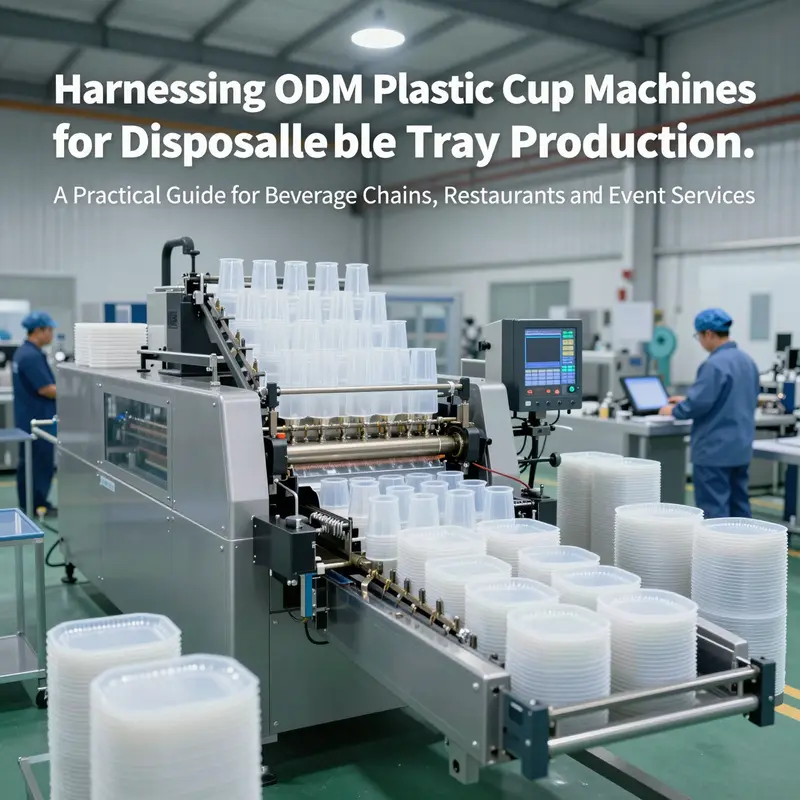
Disposable trays have become essential in the food and beverage industry, supporting seamless customer experiences in bubble tea shops, restaurants, food trucks, and event catering. Selecting the right manufacturing equipment directly impacts operational efficiency, product quality, and cost management. ODM plastic cup machines tailored for disposable trays offer a reliable production pathway, delivering precision and versatility to meet various business needs. This overview will introduce the key concepts behind these machines, follow with an exploration of their prominent features and technical specifications, and conclude by analyzing their market relevance and economic benefits. Together, these chapters equip business operators and procurement teams with critical insights to make informed decisions about tray production technologies.
Forging Flexibility at Scale: The Role of ODM Plastic Cup Machines in Disposable Tray Production
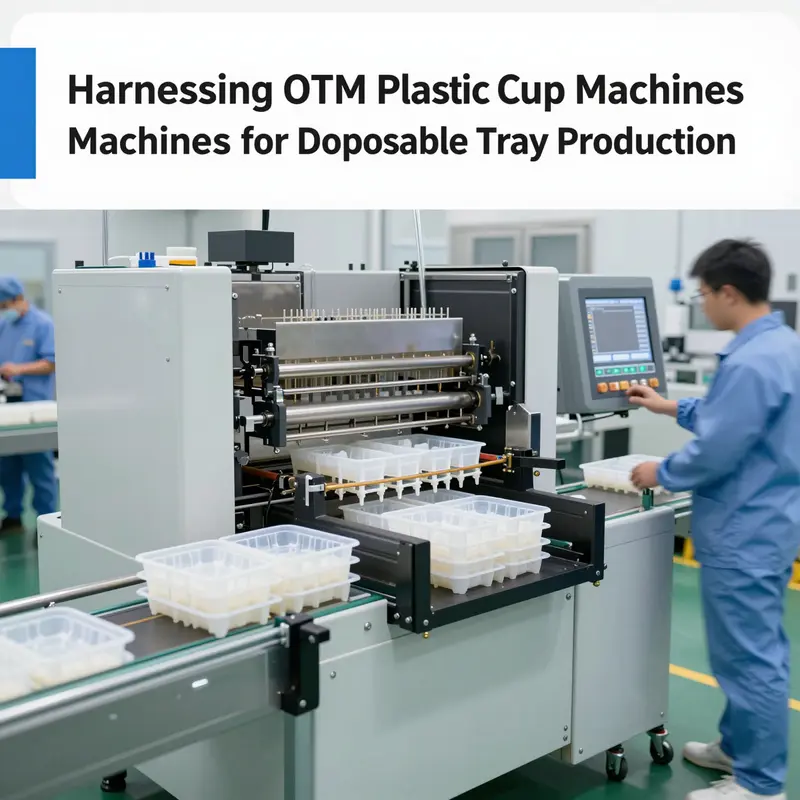
The landscape of modern packaging for food service hinges on the ability to blend design freedom with manufacturing discipline. Original Design Manufacturer (ODM) plastic cup machines sit at the intersection of creativity and capability, offering a path for producers to move beyond off-the-shelf configurations toward tailored equipment that can shape, form, and finish disposable trays and cups in a way that fits specific applications, brand identities, and regulatory environments. In this chapter, we explore how these machines function, what makes them valuable for tray production, and why their integration into a broader production line matters for manufacturers seeking both reliability and differentiation. The essence of an ODM thermoforming system is not simply the ability to press plastic into a shape. It is the capacity to translate a design brief into a repeatable, scalable process. A thermoforming line designed for take-away containers and trays uses sheets of thermoplastic material, feeder and preheating units, forming stations, and trimming or punching actions to produce finished parts. The logic that binds these components together is commonly controlled by a programmable logic controller (PLC), which orchestrates material handling, heating profiles, vacuum and air pressure sequences, and synchronize movements across multiple stations. The result is a closed loop of precision that minimizes scrap while maximizing consistency across tens of thousands of units per shift. The ODM approach stands out here because it foregrounds design freedom. Instead of forcing a customer to fit into a standard, the machine can be configured to accommodate a range of tray morphologies—from shallow, stackable meal trays to deeper, leak-resistant soup cups with integrated rims or lids. The level of customization extends to dimensions, wall thickness, radii, and even the presence of branding elements that can be applied during post-forming steps or via in-mold labeling. In practice, this means a producer can request a line that forms trays with exact inner dimensions for a given food portion, a specific venting pattern to control moisture, or a particular edge geometry that improves stacking efficiency on retail shelves. Such capabilities are not merely about aesthetics; they influence packing density, material usage, and transport efficiency, all of which feed into a business’s bottom line. The material palette supported by these machines is broad, although certain common thermoplastics dominate. Polypropylene (PP) and polystyrene (PS) remain popular due to their clarity, rigidity, and heat resistance. High-impact polystyrene (HIPS) adds durability, while polyethylene terephthalate (PET) brings dimensional stability and clarity for consumer-facing trays and cups. Some ODM solutions are also tackling newer materials like bioplastics, including polylactic acid (PLA), and recycled-content blends. The goal is not simply to process different inputs but to maintain consistent performance across materials that have distinct forming temperatures, stiffness profiles, and barrier properties. The capability to switch materials without a crippling downtime is a tangible measure of an ODM line’s flexibility, and it directly affects a manufacturer’s ability to respond to shifts in demand or regulatory expectations about sustainability. Customization is a core driver of value in ODM configurations. The ability to tailor designs to branding and functional requirements allows producers to create trays that carry logos, color accents, or textures that align with a brand’s identity. It also enables functional features such as secure, leak-proof rims, optimized seal regions for lids, and improved stackability to reduce warehouse footprint. When a tray or cup is part of a larger ecosystem that includes lids, sleeves, and packaging, the geometry of one component can influence the performance of others. ODM solutions recognize this interdependence. They enable iterative design cycles, meaning a customer can prototype a tray shape, test its performance under real-world handling, and refine its geometry with minimal production risk. The result is a faster time-to-market for new packaging concepts, a critical advantage in a market where consumer expectations for convenience and presentation are continually evolving. The automation layer, typically built around PLC control, is the backbone of consistency. It governs heating profiles for sheet plastic, the timing of the forming cycle, vacuum levels, and air pressure during forming. It also coordinates material feeding, sheet alignment, and trimming, ensuring that every tray leaves the line within a narrow tolerance window. Such precision is essential when trays must nest efficiently in cartons or when they must support automated pick-and-place systems in downstream packaging stages. Speed is another practical consideration. ODM-forming lines often operate at rates ranging from roughly 10 to 35 cycles per minute, depending on the material and the tray geometry. This range represents a meaningful throughput for mid- to high-volume production while still allowing for customization efforts. For a facility that produces a mix of tray sizes and configurations, this bandwidth supports a diverse product portfolio without forcing a manufacturing bottleneck. The affordability of this technology is not solely tied to purchase price. A typical ODM-equipped line is complemented by warranties and certifications that reassure buyers. CE certification, for example, signals compliance with European health, safety, and environmental standards. A standard warranty period—often around one year—adds a layer of risk management for plant operators, who depend on serviceability and replacement parts to prevent unplanned downtime. The combination of automation, material flexibility, and compliance creates a compelling case for manufacturers looking to expand their offering of disposable food service items, including trays and cups. Yet the decision to adopt an ODM line is not purely technical. Strategic considerations shape the investment as well. A primary factor is alignment with branding and product strategy. In a market where private-label brands compete on both price and visual appeal, the ability to mold trays to specific dimensions and surface treatments can become a measurable differentiator. Companies can tailor the thickness and stiffness of a tray to optimize heat retention and transport stability, which, in turn, reduces breakage and customer complaints. The integration aspect is equally important. ODM machines do not exist in isolation. They are typically designed to integrate with upstream material handling and downstream finishing lines. Conveyors, robotic pickers, and packaging machinery can be synchronized with the forming cycle, reducing manual handling and improving overall line efficiency. This alignment is critical when introducing new tray formats to an existing production environment. A well-integrated line can shift from one product family to another with minimal downtime, enabling manufacturers to respond to seasonal demand, event-driven promotions, or regional preferences without overhauling the entire plant. Sustainability considerations increasingly influence ODM choices as well. While plastics remain practical for many tray applications, the industry is under growing pressure to justify environmental performance. ODM providers have started to emphasize material flexibility toward more sustainable inputs, including recycled content and bioplastics, and to design tooling that minimizes waste. Even when working with traditional plastics, process optimization and better trimming strategies can yield material savings and less scrap. The broader packaging ecosystem is also shifting, with customers seeking packaging systems that minimize total environmental footprint. In practice, that means designers and manufacturers may evaluate a tray’s full life cycle—from resin sourcing through end-of-life options like recycling or composting. The ODM approach supports such evaluation by allowing multiple configurations to be tested and compared under real production conditions, rather than relying solely on theoretical material properties. In drafting a business case, manufacturers often weigh the up-front capital expenditure against the long-run gains in throughput, yield, and product differentiation. An ODM line can command a premium for design flexibility and faster time-to-market while delivering lower unit costs through standardized tooling and reduced downtime. This balance matters when a plant is targeting a broad customer base, including large national chains and smaller regional operators who require consistent quality but vary in packaging sizes and aesthetic preferences. The economics are further influenced by the total cost of ownership. Energy consumption, maintenance frequency, and the availability of spare parts all contribute to the long-term value of an ODM investment. In practice, operators assess not only the upfront price but also the expected lifespan of the line, the ease of upgrading components to accommodate new materials, and the reliability of local service networks. A robust ODM option thus becomes a strategic asset rather than a one-off purchase. To illustrate the practical implications, consider a hypothetical scenario in which a manufacturer seeks to expand into a branded disposable tray line while preserving the ability to produce standard, non-branded trays for everyday use. An ODM system would permit this dual approach: a customized forming suite for branded trays with unique geometry and surface characteristics, alongside a more generic configuration optimized for cost-efficient, high-volume production of standard trays. The operator could switch between configurations with minimal retooling, ensuring that seasonal campaigns or market shifts do not require a full plant reconfiguration. The potential ripple effects extend beyond the factory floor. When a company can bring branded trays to market quickly, it gains an advantage in shelf appeal and in-store promotions. A packaging line that reliably delivers trays with exact dimensions and consistent quality reinforces consumer trust and supports faster fulfillment of large orders. In turn, strong performance on the line can encourage customers to consolidate packaging choices with a single supplier, creating a more stable revenue stream and simplifying vendor management. The ODM model also invites broader collaboration with ecosystem partners. Tooling can be shared or adapted for related items such as cups, lids, and sleeves. The same forming principles that shape a tray can be extended to other food service items, enabling a modular approach where production lines are reused for multiple products with minimal capital outlay. While the core technology remains thermoforming, the flexibility to add features—such as heat-transfer labeling on trays or integrated venting to manage steam during hot-fill operations—expands the range of possible applications. It is this spirit of adaptability that drives many ODM projects forward. The practical takeaway for decision-makers is that the value of an ODM plastic cup machine for disposable tray production lies not only in what the machine can do today, but in how readily it can accommodate the packaging ambitions of tomorrow. When evaluating options, teams should examine the degree of customization offered, the ease of material switching, the sophistication of control software, the quality assurance framework, and the supplier’s capacity to support ongoing optimization. They should also consider the environmental and regulatory contexts in which the trays will be used, since compliance with food-contact standards and regional packaging regulations is a baseline expectation for any serious production line. In the broader sense, ODM lines represent a convergence of design thinking and manufacturing discipline. They acknowledge that packaging is not merely a disposable product but a touchpoint of brand experience, a conduit for food safety, and a driver of supply chain efficiency. The future of disposable trays and cups will likely hinge on even tighter integration with digital manufacturing tools, enabling real-time monitoring of yield, material usage, and line health. Smart sensors and data analytics can reveal patterns that human operators cannot detect at scale. As the industry pushes toward more sustainable choices, ODM providers will be challenged to offer configurations that minimize total environmental impact without compromising performance or consumer convenience. That tension—between customization, cost, and sustainability—will shape the evolution of plastic cup machines for disposable trays in the years ahead. For stakeholders who manage procurement, engineering, and operations, the message is clear: ODM capability is not a luxury; it is a strategic instrument for aligning product design with production reality, brand goals with regulatory requirements, and market timing with operational resilience. In practice, choosing an ODM line means choosing a partner who can translate a packaging concept into a reliable manufacturing process and then continue to evolve that process as needs shift. The ongoing collaboration may involve design refinements to tray geometry, testing with new materials, and incremental upgrades to control software that improve efficiency and traceability. It also implies a shared commitment to quality assurance and compliance, so that every batch meets safety standards and every tray performs as expected in the hands of consumers. The result is a production environment that not only yields trays and cups but also reinforces the brand’s promise of consistent quality, responsible sourcing, and dependable service. As markets continue to demand versatility and speed, ODM plastic cup machines stand ready to support a spectrum of packaging strategies—from lean, low-cost lines for everyday meals to premium trays that carry a brand story and a premium experience. The path forward is not merely about the machines themselves; it is about the systems, the people, and the processes that turn a conceptual design into a thriving, scalable packaging operation. For readers who want to explore adjacent packaging options or who are assessing how to connect tray production with eco-friendly goals, a thoughtful, modular approach to equipment selection can yield dividends in flexibility, efficiency, and sustainability. The aspiration is not to choose one fixed solution but to craft a line that can grow with the business, adapt to evolving consumer preferences, and continue to deliver reliable performance across changing regulatory landscapes. The journey toward optimized ODM tray production is, in essence, a journey toward packaging that looks, feels, and performs as intended—every time. The broader takeaway is that ODM plastic cup machines for disposable trays embody a philosophy of manufacturing that prizes design freedom without sacrificing process rigor, a combination that supports innovation while keeping operations predictable, scalable, and compliant. For those who navigate this field, the payoff is clear: a capability to design, produce, and scale custom disposable trays and cups that align with brand strategy, customer expectations, and the evolving demands of a circular economy. Biodegradable eco-friendly take-away ODM OEM round Kraft paper bowl serves as a reminder that packaging ecosystems increasingly embrace material alternatives, even as plastics continue to play a central role in many markets. External context about manufacturing automation in disposable packaging can be found here: https://www.alibaba.com/product-detail/Brand-New-Automatic-Disposable-PP-Plastic_1600794238334.html
From Mold to Market: How ODM Thermoforming Equipment Turns Custom Disposable Trays into Everyday Containers
The stretch of modern packaging is defined by the quiet precision of an engineering system that sits behind the scenes, turning raw thermoplastic sheets into the everyday trays, bowls, and take-away containers that populate kitchens and delivery apps alike. When a brand pursues a truly original packaging solution, the choice of equipment matters as much as the material and the design. An ODM approach to plastic cup and tray production centers on a complete, end-to-end production solution. It emphasizes customization without sacrificing reliability, and it positions the factory to respond rapidly to changing consumer preferences. At the heart of this capability is a thermoforming system with robust automation, designed to form, trim, and quality-check disposable items in a continuous, highly repeatable cycle. The value proposition goes beyond producing a single shape or size. It is about creating a flexible platform that can evolve with a brand’s needs—dimensions, wall thickness, base geometry, and even integrated features such as handles or lids—without forcing a costly retooling or a halt in production. The ODM mentality treats the machine not as a one-off tool but as a production cell that can be tuned and expanded in line with demand, with an emphasis on repeatability, traceability, and fast response to design changes.
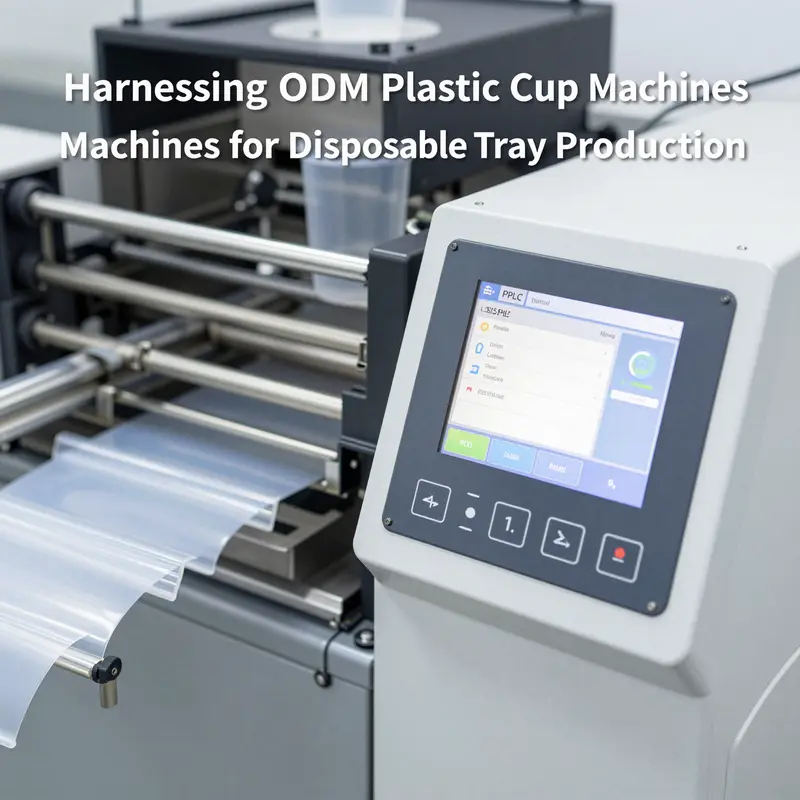
Automation lies at the core of this capability. Modern thermoforming systems designed for disposable trays rely on fully automatic operation guided by a PLC, a controller class that provides precise control over temperature, forming pressure, dwell times, and cutting sequences. In practice, this means a device that can operate at significant throughputs—typically in the range of 10 to 35 cycles per minute, depending on the size of the tray, the material being used, and the complexity of any added features. Those numbers translate into real-world benefits: shorter production runs that reach market faster, lower unit costs due to higher utilization of material and energy, and the capacity to scale up as a business grows. The automation also improves consistency from cycle to cycle, which is essential when brands rely on uniform appearance, predictable stacking behavior, and reliable sealing with lids or films.
Material versatility is another cornerstone of the ODM approach. The same thermoforming platform that can produce disposable trays can often accommodate a spectrum of common thermoplastics—PP, PS, PET, and HIPS—each bringing its own blend of clarity, rigidity, heat resistance, and recyclability. For brands seeking to emphasize sustainability, the ability to process recyclable materials or to switch between materials without major tooling changes is a competitive advantage. The choice of polymer affects wall thickness, base geometry, and even the feel of the surface, which in turn influences consumer perception and product performance. For example, a tray might require a slightly thicker wall to resist deformation during transport, or a thinner profile to improve stacking efficiency in a compact distribution system. An ODM-equipped line makes these adjustments part of a controlled engineering package, not ad hoc experimentation.
Customization in this context is not merely about changing sizes. It is about shaping the user experience at the point of sale and in the hand of the consumer. The ODM route supports bespoke tray dimensions, wall thickness profiles, base contours, and shaping features that address specific use cases. Some brands demand integrated features such as ergonomic handles for hot foods or vented bases for steam release, while others prioritize lids that snap securely or reseal with a simple press. The beauty of the approach is in the design-library mentality: the core forming and trimming processes remain stable, while the external geometry and accessory interfaces can be adapted through software updates and minor tooling changes rather than a full re-engineering cycle. The result is a packaging system that can morph in response to product launches, seasonal offerings, or shifting consumer expectations, all while maintaining the efficiency and predictability that characterize high-volume manufacturing.
Quality control, in this paradigm, is integrated rather than appended. A thermoforming line built for ODM production commonly incorporates in-line inspection capabilities that check dimensions, wall thickness, surface finish, and post-form trimming accuracy in real time. This reduces the incidence of defects that can disrupt downstream packing lines or lead to customer returns. Real-time monitoring enables rapid adjustment if a material batch begins to drift or if a forming station shows signs of wear. In practice, operators gain a window into the entire production process: a dashboard that displays cycle time, temperature profiles, and clamp pressures, along with trend data that helps predict when a die or a heater element needs maintenance. Such visibility is indispensable when a client relies on consistent geometry for reliable stacking, sealing with lids, or compatibility with automated filling lines. It is the difference between a hand-off to downstream equipment that is smooth and one that triggers jammed conveyors or misaligned modules.
Compliance is more than a checkbox; it is a baseline that guides every decision in an ODM thermoforming setup. European CE certification, for example, signals adherence to safety, health, and environmental standards that matter for export and for consumer confidence. Beyond certification, ongoing compliance entails traceability of materials, documented maintenance histories, and clear records of energy use and emissions during production. Warranties, typically around one year for standard configurations, reinforce a partnership mindset: the supplier is there to support performance, not merely to sell a machine. This is critical when a brand is scaling production to meet a growing footprint of stores or when it needs assurance that the line can operate reliably through multiple shifts. The implication for the OEM-turned-ODM partner is a continuous improvement loop: feedback from logistics, packaging, and quality teams informs equipment tweaks that reduce downtime, improve yield, and shorten time-to-market for new tray designs.
The physical footprint of these systems matters, particularly for brands migrating from small workshops to dedicated production floors. The ODM approach emphasizes modularity and space efficiency without compromising performance. A compact model can fit in smaller facilities, while larger configurations deliver higher throughput in expansive plants. Power requirements are typically three-phase industrial feeds, with careful attention paid to cooling and energy management. In many cases, the line is designed to minimize heat load in the workspace, a practical consideration in environments where human operators spend long hours near hot forming stations. The layout is planned to minimize material handling time: feed piles or magazines hold the raw sheets, a pre-heating zone conditions them for forming, and a downstream cut-and-trim section produces the finished, stackable trays. The end-to-end design aims to minimize operator intervention while preserving flexibility for quick changeovers, so budgets for personnel can be redirected toward quality oversight and continuous process optimization.
From the design perspective, working with an ODM partner means engaging in a collaborative development process. Instead of a one-size-fits-all machine, the team maps out tray designs, material selection, and cycle timing in a stepwise plan that yields tangible milestones. The process often begins with a material-suitability assessment: what polymer works best for the tray’s intended food type, whether it requires microwavable compatibility, and how it degrades in recycling streams. Engineers define the forming window, including the temperature gradient across the sheet, the vacuum and pressure curves during forming, and the trimming sequence that ensures clean edges. The goal is to achieve high yield with minimal scrap, while enabling features like textured surfaces that improve grip or glossy finishes that enhance product presentation. Design-for-manufacturability principles guide this development so that the final tray geometry can be produced consistently at scale, with predictable tool wear and straightforward maintenance.
In practice, an ODM project is as much about process discipline as it is about the physical machine. The equipment is designed to be robust against minor variations in sheet material, ambient temperature, and even operator technique. Standardized control software can accommodate different formats through parameter sets rather than requiring hardware changes. When a new tray geometry is introduced, the team may implement a digital twin of the process to simulate how the material will behave under forming conditions, thus reducing the risk of costly trials. The traceability that comes with PLC-based control supports this approach: every batch, every cycle, every material lot can be logged and reviewed to isolate issues and confirm performance. That level of transparency is a meaningful advantage in today’s supply chains, where customers demand both reliability and responsibility from manufacturers.
A central advantage of this ODM model is the ability to go to market more quickly with branded packaging solutions. Brands that seek to differentiate often want fast iteration cycles—from initial concept to a first production run—that preserve high quality while enabling experimentation. ODM partners can provide design-for-packaging services in addition to machine customization, helping align tray geometry with the downstream activities in the supply chain, including labeling, branding, and shelf-ready presentation. A single sourced solution reduces integration risk: the same team that finalizes the tray design can also monitor repeatability on the line, adjust precision tolerances, and align the automation with downstream bottlenecks in filling and packaging stations. In other words, the ODM pathway makes it feasible to deliver a complete packaging solution, not merely a machine that crafts a reusable component. The result is a cohesive system where the tray’s aesthetics and function are inseparable from the efficiency and reliability of its manufacture.
For brands exploring this space, considerations extend to sustainability and end-of-life scenarios. Material choices, the weight of the tray, and its recyclability are all part of the decision matrix. An ODM line that is designed with recyclability in mind can swap polymers or adjust wall thicknesses to reduce material usage without compromising strength. In addition, the packaging ecosystem surrounding the tray—such as lids, seals, and even secondary packaging—can be designed to minimize waste and to facilitate sorting in recycling streams. The strategic value is clear: packaging that reduces waste and simplifies recycling not only aligns with evolving regulatory expectations but also resonates with a growing segment of environmentally conscious consumers. This alignment underscores why an ODM thermoforming system, coupled with thoughtful material selection and integrated quality control, is more than a manufacturing solution; it becomes a platform for responsible brand storytelling through packaging.
The market context for these capabilities is evolving quickly. Food service brands, delivery platforms, and retailers increasingly demand packaging that performs reliably under the varied conditions of storage, transport, and consumer handling. The ODM model supports this demand by offering adaptable line configurations, fast changeovers, and robust after-sales support that includes training and spare parts. In parallel, the integration with other packaging workflows—such as hot-cold separation, barrier coatings, and label application—becomes more seamless when the thermoforming equipment is designed as part of a broader packaging line rather than as a standalone unit. The result is a production system that can keep pace with the speed of product innovation while preserving the integrity of the trays and bowls that carry the brand’s message.
Ultimately, the choice to pursue an ODM thermoforming solution for disposable trays is a decision about long-term capability. It is about investing in a platform that grows with the business, that makes design and manufacturing decisions in concert, and that treats quality assurance as a continuous, integral discipline rather than a late-stage check. It is about enabling a cross-functional team—designers, process engineers, quality managers, and supply chain professionals—to collaborate on a single, shared objective: to deliver packaging that looks and performs as intended, at the right cost, and with predictable timelines. The result is not only a container for food but a reflection of the brand’s values and a driver of consumer satisfaction. As brands look to evolve their take-away offerings, the ODM thermoforming approach provides a resilient foundation—one that can embrace new materials, new shapes, and new consumer behaviors without sacrificing the dependable efficiency that underpins profitable scale.
For readers curious about how adjacent packaging formats are evolving and how ODM partners approach cross-material compatibility, there is an adjacent perspective worth exploring. For brands exploring sustainable, paper-based packaging complements, consider this example of a disposable takeaway paper cup with a customized logo and lid: disposable-takeaway-paper-cup-custom-logo-kraft-coffee-cup-with-lid. This link offers a sense of how branding and packaging design are converging in multi-material ecosystems, highlighting that the packaging conversation extends beyond a single material or a single machine. It emphasizes the broader objective: to create packaging that supports brand storytelling, consumer experience, and end-of-life considerations while maintaining manufacturing efficiency and scale.
As the industry continues to advance, the potential for ODM thermoforming to support truly customized, high-throughput production lines will grow. The ability to tailor tray geometry, adapt materials, and align every stage of the process with a brand’s strategic goals positions ODM-equipped facilities as more than manufacturing partners; they become co-creators of packaging ecosystems that define how consumers encounter and use food on the go. The trajectory suggests a future where lines can be reconfigured rapidly to support new product launches, seasonal promotions, and evolving regulatory standards—without sacrificing the reliability or quality that customers expect. In that sense, the ODM thermoforming platform is less a fixed machine and more a flexible, intelligent system designed to translate a design brief into a tangible, scalable, and responsible packaging solution. And that translation—from mold to market—defines the most compelling narrative in modern disposable packaging.
External resource for further context on industry capabilities and market offerings can be found here: Source: Alibaba Disposable Plastic Cup Manufacturing Machinery.
From Molds to Margins: Economic Realities and Strategic Shifts in ODM Plastic Cup Machines for Disposable Trays
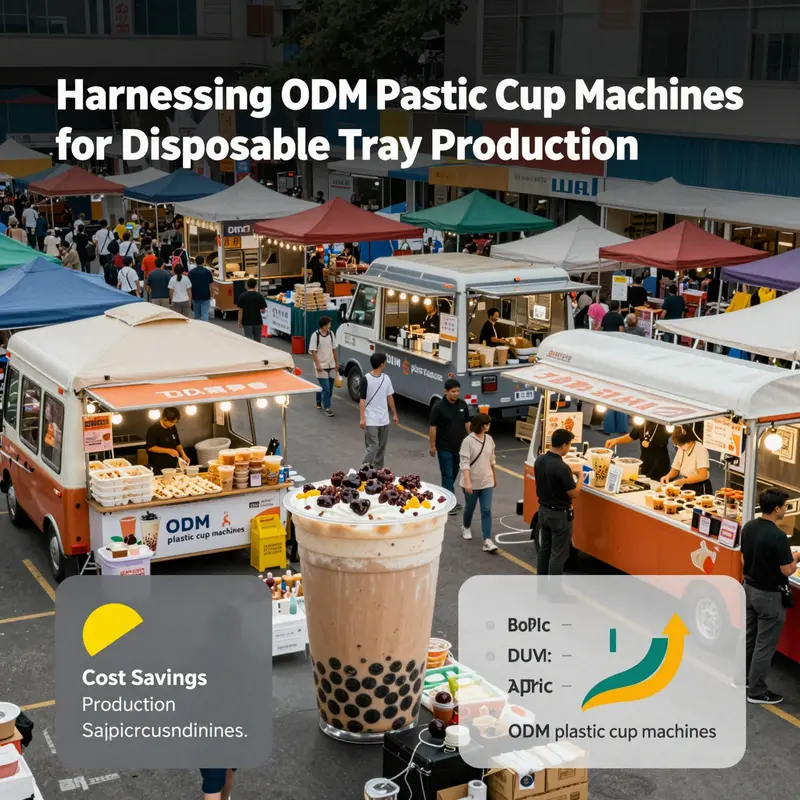
The journey of an ODM plastic cup machine designed for disposable trays begins with a simple premise: automation can convert thermoplastic sheets into a steady stream of food-service containers. Yet the true narrative unfolds in a landscape where technology, demand, and policy intersect to shape profitability, resilience, and opportunity. In this chapter, we examine how the market for ODM thermoforming lines—machines that form take-away trays, bowls, and related utensils from polymers such as PP, PS, PET, and others—operates within China’s dynamic economy. We trace how a large, fragmented market becomes both a proving ground for innovation and a pressure cooker for price competition. We also explore how manufacturers can move beyond commodity production to deliver value-added solutions that align with evolving consumer expectations, environmental norms, and the realities of long-term sustainability.
The core of the ODM model in this sector is the ability to provide a complete production solution—design, tooling, process control, and ongoing optimization—while allowing brands to outsource design and volume production. In practice, this translates to highly automated thermoforming lines equipped with programmable logic controllers, servo-driven forming stations, and integrated quality-control loops. Such systems are designed to handle a spectrum of common thermoplastics, enabling producers to switch between materials as market demands shift or regulatory constraints tighten. The technology affords precision in forming, flash removal, and trimming, along with consistent cycle times that can range from roughly ten to thirty-five cycles per minute, depending on tray geometry and material. This throughput, when paired with robust automation and predictive maintenance, can yield meaningful gains in output and material utilization, which are essential when margins are under pressure. Yet even as the machinery promises efficiency, the business landscape surrounding ODM plastics remains tightly linked to macro forces that can either amplify or erode those gains.
From the outset, the Chinese market for disposable trays formed by ODM equipment presents a picture of scale tempered by fragmentation. The size of the market is substantial, buoyed by the explosive growth in segments such as specialty coffee and tea-by-the-glass, where take-away packaging is a critical link in the value chain. However, the supply landscape is highly dispersed, with a lack of dominant incumbents capturing meaningful market share. The latest assessments reveal that the top five players account for a small slice of total capacity and demand, underscoring a market that prizes volume and flexibility but struggles with concentration and standardization. This fragmentation intensifies competitive dynamics on price and service, particularly as downstream buyers with chain-store networks leverage centralized procurement to negotiate lower terms and extended payment schedules. For ODM manufacturers, this combination of high demand and dispersed supply creates both opportunity and risk: opportunity to capture niche competencies and scale, and risk of thin margins and cash-flow volatility when working through lengthy terms and raw material price swings.
The geographic focus of production further informs the business calculus. More than seventy percent of capacity concentrates in the two leading coastal zones—the Yangtze River Delta and the Pearl River Delta—where dense ecosystems of suppliers, logistics, and industrial clusters create tangible economies of scale. Proximity to resin suppliers, ancillary equipment, and packaging converters reduces lead times and lowers the transactional friction that often accompanies cross-regional manufacturing. For ODM operators, that regional concentration represents a clear signal about where capabilities cluster and how to structure partnerships for tooling, mold-making, and post-forming processes. Yet even within these hubs, overcapacity in basic products persists as a systemic challenge. In this environment, the emphasis naturally shifts from simply expanding output to enhancing product differentiation, process stability, and service depth.
Economically, the picture is dominated by margin compression, volatility in feedstock inputs, and an evolving balance of power between large downstream clients and smaller manufacturers. The cost structure of disposable-tray production is highly sensitive to the price movements of major resins such as polypropylene and polystyrene. A recent analysis highlights that resin prices can swing by more than twenty percent in a short period, driven by global supply-demand imbalances, crude oil trends, and trade policies. When raw material costs spike, the OEM/ODM producer faces a dilemma: absorb the increase, implement price rises, or accept a temporary reduction in output to protect cash flow. In many cases, large buyers wield procurement platforms that enable centralized negotiation, forcing suppliers to operate with narrowed gross margins. The resulting financial regime is characterized by gross margins in the modest double digits and, in more stressful periods, in the single digits. It is not unusual for the cash cycle to tighten as payment terms lengthen—a reality that compounds the challenge of keeping machines running efficiently and maintaining investment in upgrading tooling and control systems.
Within this economic frame, the ODM value proposition must stretch beyond the mere delivery of a thermoforming line. The most viable path to resilience lies in the development of a broader, value-added ecosystem that integrates design assistance, material sourcing guidance, process analytics, and customized packaging solutions. In practice, this means moving toward a “product plus service” model where customers are offered not only the hardware but also the process recipes, performance benchmarks, and ongoing optimization support that reduce waste, extend tool-life, and accelerate time-to-market for new tray designs. In addition, the smart-manufacturing trend—enabled by sensors, connectivity, and cloud-based analytics—offers the potential to slash downtime and calibrate energy use to match changing production mixes. Predictive maintenance, remote monitoring, and digital twins can transform a capital-intensive asset into a living system that learns and adapts to demand patterns, seasonal fluctuations, and raw-material volatility.
Sustainability increasingly sits at the heart of both market expectations and policy levers. Materials science is expanding the palette beyond traditional thermoplastics to include heat-resistant, high-barrier variants and, in some contexts, bio-based or biodegradable alternatives. For disposable trays that travel through cold and heat, or that need to maintain product integrity over a given shelf life, material selection becomes a strategic decision with both cost and reputational implications. Adoption of sustainable practices is not simply a regulatory compliance exercise; it is a market differentiator that can support premium pricing in certain segments and for specific clients who prioritize ESG credentials. In this regard, ODM suppliers are encouraged to cultivate capabilities around material compatibility checks, barrier-performance validation, and end-of-life considerations. The result is a more robust value proposition that can coexist with a market still dominated by price competition in broad, low-margin segments.
Against this backdrop, many manufacturers pursue strategic pivots that align with long-term profitability rather than short-term volume gains. One such pivot is vertical integration, where a supplier offers a more complete packaging solution, covering design, toolmaking, process engineering, and the selection of compatible materials. This approach helps stabilize margins by capturing more of the value chain and reducing dependence on any single node of the ecosystem. A second pivot is specialization—developing capabilities to serve specific applications such as medical packaging, premium catering, or institutional food service. By tailoring tray geometry, barrier properties, and heat resistance to niche needs, ODM partners can command higher prices and foster deeper customer relationships. A third pivot is material innovation: the shift toward biodegradable or bio-based plastics and compostable coatings, when regulatory environments allow and when end users are prepared to pay for sustainability. While these materials may entail higher raw-material costs and more complex processing, they can unlock green premiums and align with corporate ESG commitments, creating a more defensible margin profile over time.
In parallel, research and market data underscore an essential strategic truth: the future value of ODM plastic-tray production lies not only in machine capability but in the intelligence embedded in the process. Smart lines that monitor temperature profiles, sheet feed alignment, dwell times, and trimming accuracy can reduce scrap rates and improve yield. Data-driven process control helps standardize output across different resin lots and machine operators, mitigating the risk of quality variability that plagues a highly fragmented, low-margin market. The operational backbone of such capability blends well with the broader push toward digital manufacturing in China, where factories increasingly deploy cloud-connected equipment, modular control architectures, and standardized interfaces that support rapid reconfiguration for new tray designs and materials.
From the perspective of ODM suppliers, the strategic implication is clear. The sector rewards those who couple equipment capability with a disciplined operating model that emphasizes reliability, service responsiveness, and the capacity to co-create with customers. Instead of competing on price alone, the most resilient players offer a portfolio that includes customizable tooling, scalable automation, data-enabled performance analytics, and sustainable-material options. They also invest in building partnerships with resin suppliers, co-developing material-ready tooling, and conducting joint trials with potential customers. This ecosystem-centric approach has the potential to reduce lead times, improve first-pass yields, and build trust with large buyers who demand stable supply and transparent pricing.
To illustrate the broader packaging context that shapes ODM plastic-tray decisions, consider adjacent packaging modalities such as kraft-paper bowls and other paper-based containers. While not a substitute for plastic in every application, these products occupy a comparable strategic space for brands seeking to diversify their packaging portfolio in line with consumer preferences for sustainability and recyclability. The integration of paper-based options within an ODM framework can facilitate cross-collaboration on design, testing, and supply-chain planning. The potential for a shared knowledge base around forming technologies, surface finishes, and finish quality—whether the material is a thermoplastic or a high-density paper composite—can yield synergies in tooling development, process optimization, and lifecycle assessment. For readers exploring these cross-material opportunities, a practical touchpoint lies in examining the disposable kraft paper bowl for food package with lid, which highlights how packaging ecosystems can be designed holistically rather than as isolated product lines. disposable kraft paper bowl for food package with lid.
The economics of this evolving landscape demand careful attention to the cash-flow dynamics that accompany long-term capital investments. The capital-intensive nature of thermoforming lines means that buyers evaluate total cost of ownership alongside unit-price economics. Even when a line achieves high utilization, the downstream squeeze from procurement terms can erode profitability in the early years. Vendors that offer flexible commercial terms—such as staged payments aligned with milestone production outputs, bundled maintenance, and access to training—are more likely to attract customers who are balancing pressure from a few large clients with the need to scale. The most successful ODM players will be those who can demonstrate a credible path to profitability under various scenarios: continued price pressure, resin volatility, evolving regulatory requirements, and shifts in consumer demand toward premium or sustainable packaging.
The regulatory and environmental axis cannot be ignored. China, like many other jurisdictions, is accelerating the push toward packaging that is recyclable, reusable, or compostable. In practice, manufacturers face a complex calculus: selecting materials and coatings that meet safety standards and performance expectations while remaining within environmental guidelines and within budget. The compliance dance is more manageable when the production line itself is designed for material flexibility and quick form-changeovers, enabling a fast response to new specifications without significant downtime. For ODM manufacturers, embedding compliance-aware design and testing into the early stages of product development can shorten time-to-market for new trays and reduce the risk of costly post-launch modifications. In this way, the machine becomes not only a tool for manufacturing but a bridge to responsible packaging practices that resonate with customers and regulators alike.
As the industry contends with these forces, it is worth highlighting the implicit shift in the value equation. The market’s most enduring winners are likely to be those who convert price competition into price-performance advantage. They do this by delivering stable, predictable output, coupled with a transparent ability to scale and adapt. They also invest in data capture and analytics that reveal where inefficiencies hide—whether in sheet feeding, heating profiles, forming depth, or edge trim quality. By turning data into action, they can optimize resin use, reduce waste, and adjust for changes in demand without sacrificing quality. In turn, customers gain more reliable supply, faster prototyping for new formats, and the assurance that changes in the market will not destabilize their packaging lines. The most advanced ODM operators, therefore, treat their lines as platforms for continuous improvement, not as one-off assets with a fixed set of capabilities.
The broader narrative suggests a future where ODM plastic-tray production is less about choosing between low-cost or high-end and more about integrating design, materials science, and digital intelligence into a coherent offering. The path toward profitability lies in building capabilities that can adapt to new materials, new tray geometries, and new sustainability standards, while maintaining service levels that downstream clients depend on. For those who can orchestrate this blend, the payoff can extend beyond financial metrics to stronger customer partnerships, deeper intellectual-property advantages around process optimization, and a more resilient business model that can weather cycles of resin price volatility and demand shifts. The market may remain large and fragmented, yet within that fragmentation lies a spectrum of niches where expertise, quality control, and rapid iteration can command premium willingness to pay.
In closing, the ODM plastic cup machine segment for disposable trays sits at a crossroads of technology, demand, and policy. The machines themselves promise automation, consistency, and material flexibility. The market environment, however, tests these promises with intense price competition, supply-chain fragility, and evolving environmental expectations. The convergence of smart manufacturing, vertical integration, and sustainable materials points toward a future where ODM providers no longer merely supply machinery; they supply end-to-end packaging solutions that can be tailored to specific applications, regulated with confidence, and scaled with clarity. The evolution will favor players who can translate engineering capability into measurable business value—through yields, uptime, energy efficiency, and the ability to bring novel tray formats to market quickly. For readers seeking a more detailed data-driven view of market size, price dynamics, and forecast scenarios, the following external resource provides a structured analytical framework: https://www.example.com/2026-plastic-cup-market-report.
Final thoughts
ODMs specializing in plastic cup machines designed for disposable tray production offer a strategic advantage for businesses across the food and beverage spectrum. These machines bring precision, speed, and material versatility that align seamlessly with the demands of bubble tea shops, restaurants, food trucks, and catering services. The integration of automated PLC control ensures consistent quality and scalable output, supporting business growth while managing costs effectively. As consumer expectations and hygiene standards evolve, investing in such advanced thermoforming technology positions businesses to meet market demands confidently, enhance operational efficiency, and maintain sustainable production practices. Selecting the right ODM plastic cup machine translates into a competitive edge, enabling service providers to deliver reliable, safe, and attractive disposable tray products that resonate with their customers and operational goals.