
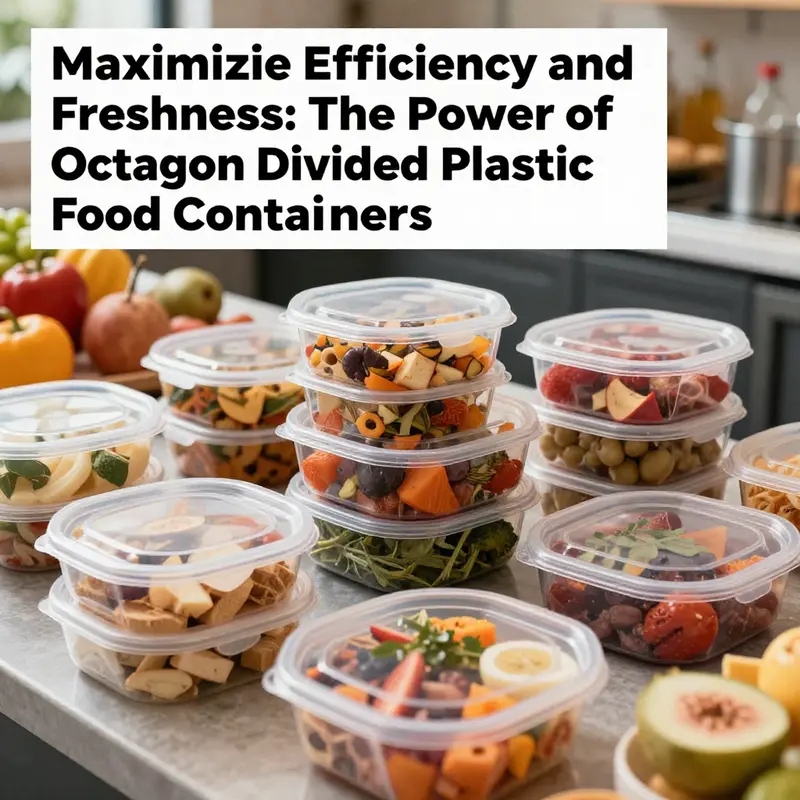
In the competitive landscape of food service, maximizing efficiency and ensuring freshness are crucial. Octagon divided plastic food containers offer a versatile solution for Bubble Tea Shops, Beverage Chains, Restaurants, Food Trucks, Catering Services, and Event Planners. These containers provide multiple compartments within a single unit, allowing for efficient organization and transportation of various ingredients and meals. Throughout this article, we will explore the unique benefits of these containers, delve into the materials that ensure their durability, analyze market trends influencing their use, and discuss sustainable options that cater to the growing demand for eco-friendly solutions in the food service industry.
Shape, Space, and System: The Quiet Efficiency of Octagon Divided Plastic Food Containers
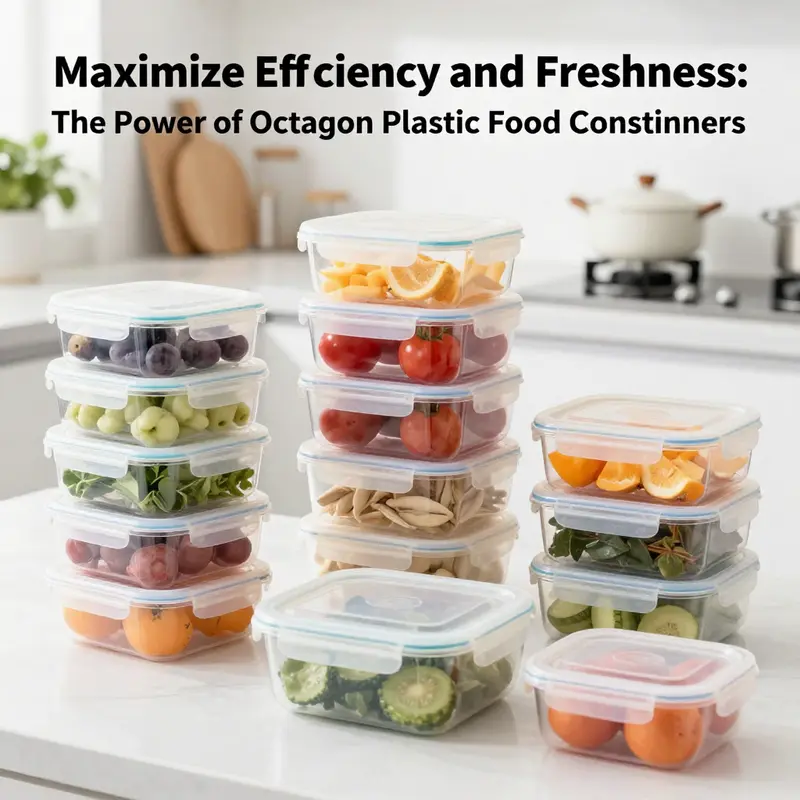
The kitchen is a stage for organization, where every dish, snack, and ingredient has its place and purpose. In this quiet theater, the octagon divided plastic food container performs a remarkably practical and often overlooked role. Its seven or eight flat edges, the internal walls that carve the space into neat compartments, and the way the unit sits when filled all contribute to a single, simple truth: a well-designed container can rewrite the choreography of daily meals. When you reach for a portion for lunch, a snack, or a kid’s after-school plate, you are not just grabbing a box—you are selecting a system that minimizes chaos and maximizes clarity. The octagon’s geometry matters here. Its flat sides create stable contact with a shelf or a lunchbox, reducing the wobble that round divisions sometimes invite. In a crowded refrigerator, that stability translates into easier stacking and faster retrieval, a small but meaningful gain in the ritual of food management. A single, well-ordered container can streamline a week’s worth of meals, especially for households juggling school schedules, work shifts, and weekend activities. The octagon’s shape, with its balanced angles and soft symmetry, feels intuitive to the hand and the eye, reinforcing a habit as much as a storage solution. The compartments inside do more than separate foods; they foster a mindful approach to portions and variety. When a protein—whether grilled chicken, tofu, or beans—occupies one pocket, grains or starchy sides claim another, vegetables rest in a third, and a sauce or dip finds a snug corner away from moisture migration. This physical separation helps preserve flavor integrity, a practical reassurance that each component will taste like its intended self when the lid is finally lifted. Such partitioned design also lends itself to meal prepping, a practice that rewards predictability. A family that plans five dinners a week can pre-allocate portions with confidence, knowing that the architecture itself prevents cross-flavors from leaching and mingling across compartments. This is not merely a convenience; it is a discipline that supports healthier choices. When foods stay visually distinct, it is easier to balance nutrition, monitor portions, and avoid unnecessary food waste, because the contents are clearly visible through transparent plastics and can be evaluated at a glance before they leave the fridge for work or school. The transparency is more than aesthetic; it is practical discipline. In a busy kitchen, time is often the most valuable ingredient. The octagon’s straightforward silhouette makes contents legible without opening the container, and the interior dividers reduce the need to rummage through mixed bowls or bags to assemble a single meal. A quick glance tells you whether there is enough cooked vegetables for a side, whether the grains need a touch more heating, or if a sauce has separated from its companions, signaling the need for a light shake or quick stir before serving. The result is less temptation to overindulge in a drive-through or takeout because the home-prepped options look ready and appealing, right at hand. Materials play a crucial supporting role in this narrative. The best octagon divided containers are constructed from durable, food-grade plastics that are BPA-free and designed to withstand the daily rhythms of kitchen life. PET and Tritan-like formulations often serve as reliable baselines because they balance clarity with strength. They resist cracking when dropped on a counter, tolerate the rigors of a busy dishwasher cycle, and maintain their shape after repeated cycles in the freezer or microwave. The reassurance here is twofold: safety and convenience. Safety first means using plastics that do not leach chemicals under typical household temperatures, while convenience means products that can go from freezer to microwave with minimal fuss and without compromising taste or texture. A secure, leak-proof lid is the other essential element. When a container is transported in a bag, backpack, or tote, the risk of spills becomes a constant worry. Locking mechanisms, airtight seals, and robust gaskets keep soups, sauces, and dressings contained, preserving freshness and protecting other items in transit. This is particularly valuable for meal prep, where portioned items may sit in the fridge for several days. A well-sealed container reduces the likelihood that a sauce will migrate into grains or that a vegetable’s moisture will soften a crisp element before it is eaten. The octagon’s internal walls work in tandem with these lids to create a more forgiving storage system. Even if a seal is not perfectly tight, the walls keep different foods from mingling, and the lid minimizes moisture exchange with the outside environment, which guards against freezer burn and staling. The result is a versatile tool for busy households and professional kitchens alike. The design also lends itself to practical efficiency in crowded spaces. In pantries or lunchrooms, stacking is a common challenge; the octagon’s geometry, combined with the right lid profile, can create a neat tower that occupies less horizontal footprint and more vertical real estate. This is a real advantage in compact apartments, student dorms, or catering setups where every inch of shelf space matters. The ability to nest or stack without sacrificing lid integrity translates into tangible space savings: a small win that compounds across dozens of containers over a month or a season. It is not just space that is saved but time. When compartments are easy to identify and the lids snap on with a confident snap, the ritual of packing lunch becomes a quick, almost automatic routine rather than a chore. For families, this can translate into more efficient mornings and less stress as everyone heads out the door. For meal services, the reliability of a compartmented, leak-resistant container translates into predictable handling, safer transport, and better presentation upon arrival at the table or the client’s doorstep. Yet the conversation surrounding octagon divided containers cannot ignore sustainability, a thread that runs through the fabric of modern home life and professional practice. Reusable containers challenge the disposable cycle, offering a durable alternative to single-use options that contribute to waste streams. When people embrace long-term reuse, they reduce not only the environmental footprint but also the cumulative cost of daily meals. The octagon’s sturdy build is well-suited to repeated use, and its repairability—whether through simple part replacements or easy cleaning—encourages a longer lifecycle than more fragile designs. In discussions about sustainability, the narrative shifts from “throw away” pressures to a broader view of waste reduction, reuse, and responsible disposal. Materials that are recyclable or made from recycled content can further strengthen this cycle, aligning with consumer demand for products that support a circular economy. The culinary journey within an octagon divided container is more than just containment; it is a interface between nourishment and mindfulness. It whispers a daily reminder that meals can be assembled with intention, that flavors can be kept discrete without sacrificing convenience, and that organization is not a luxury but a practical habit. There is also an ecosystem dimension to this design that extends beyond the kitchen. Packaging types with octagonal geometry appear in related formats, such as boxes and bowls, that serve restaurants and takeout vendors seeking space-efficient, robust containers for short-term use. A related octagonal packaging option, for example, shows how the same geometric logic travels across materials and contexts, from rigid plastic to paper-based systems. If you imagine the broader packaging landscape, the octagon motif continues to offer stability, visibility, and a modular approach that can be adapted to a range of dietary needs and operational requirements. This cross-context relevance helps explain why octagon-divided formats have persisted as a practical choice even as other shapes have come and gone. The core appeal remains the same: a stable base, clear compartments, and a lid that locks in freshness. For readers considering a switch or upgrade, the emphasis should be on three core attributes: durability, containment, and ease of use. Durability ensures that the container stands up to daily wear and tear, repeated cycles of washing and reheating, and the rigors of transport. Containment guarantees that sauces, liquids, and moisture do not escape into neighboring compartments or the bag. Ease of use translates into straightforward opening, reliable sealing, and a design that makes portion control intuitive rather than burdensome. When these elements align, the octagon divided container becomes more than a storage solution; it becomes a facilitator of healthier choices, time savings, and reduced waste—all integrated into the everyday cadence of meals, snacks, and shared meals with family or coworkers. For those who want to explore related packaging options that share the same underlying logic, there are octagonal designs in paper-based formats that echo the same benefits of visibility, stability, and modularity. This broader perspective underscores the versatility of the octagon as a form factor that can adapt across materials while preserving the core advantages that make divided containers so appealing. The conversation about safety standards anchors the discussion in a practical reality: any plastic food storage product should be compatible with common food-contact regulations and labeled to help users make informed choices about usage. The FDA’s guidance on food-contact materials provides a framework for understanding which plastics are appropriate for different temperature ranges, how they should be handled during heating, and how to interpret labeling for consumer safety. This external benchmark serves as a reminder that even as design choices drive convenience and organization, protection of health and safety remains paramount. As you consider the broad spectrum of octagon-based storage options, it is worth noting that the design’s appeal extends beyond the kitchen. The same principles of compartmentalization, stability, and clear visibility can inform other contexts where organized separation is valuable, from school projects to hobbyist meal-prep workshops. The octagon’s eight equal sides become a metaphor for balance: space allocated for variety, weight distributed across compartments, and everyday routines simplified by a product that respects both form and function. For readers who wish to learn more about related packaging options and to explore how such designs are marketed and used in different settings, a related reference point is available in octagonal paper-based packaging discussions that echo the same modular thinking, while offering a sustainable alternative for certain applications. In the end, the draw of the octagon divided container lies not in novelty but in reliability. It is a practical instrument that fits into real-life schedules and real-world kitchens, providing predictable performance that families and professionals can count on day after day. The gentle geometry supports a disciplined approach to food storage, while the clear compartments invite a more thoughtful, intentional mindset about what we eat and how we store it. When the lid closes, when the contents are stacked neatly in the fridge, and when a single portion is pulled for lunch, the octagon container embodies a quiet efficiency that makes ordinary meals feel a little more organized, a little less wasteful, and a little easier to enjoy. External reference: https://www.fda.gov/food/food-contact-materials/fda-food-contact-labeled-plastics
Contours of Choice: How Materials Shape the Octagon Divided Plastic Food Container
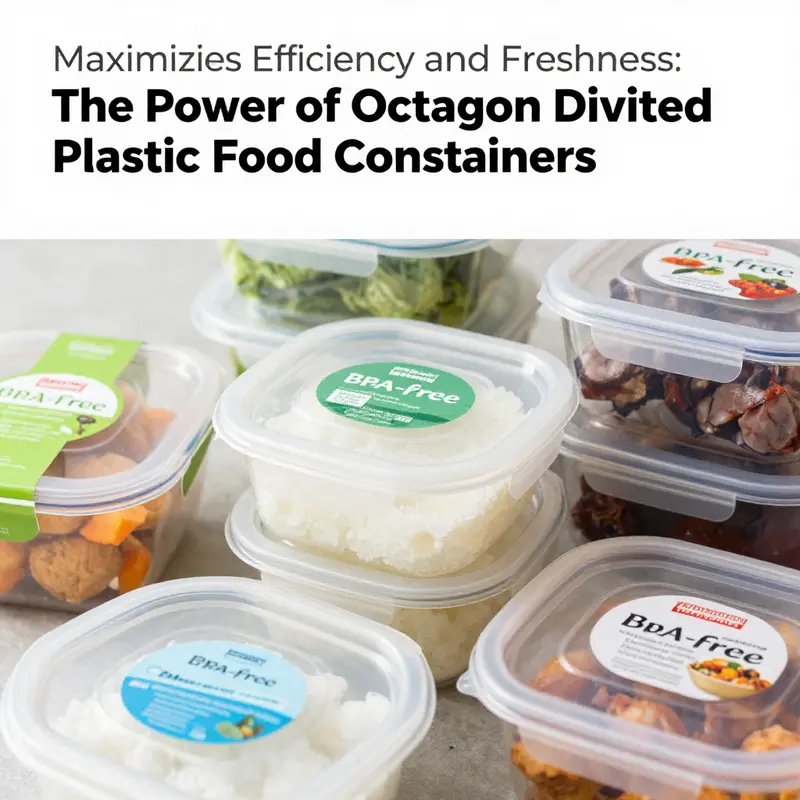
The octagon shape brings stability to a divided plastic container and supports practical use in kitchens and on the go. Its eight equal sides create predictable stacking, clear compartment boundaries, and a compact footprint that fits in bags and lunch boxes. Material choices further define durability, safety, and environmental impact. In practice, a divided container must resist leaks, tolerate daily handling, and keep contents fresh without imparting flavors or chemicals.\n\nPET, polypropylene (PP), polylactic acid (PLA), and polystyrene (PS) are common families used in these products. PET offers clarity and stiffness and is widely recycled; it typically serves cold or room temperature foods and is often BPA-free. PP provides higher heat resistance, enabling reheating and sturdy reuse, with good chemical stability and dishwasher compatibility. PLA offers renewable sourcing and compostable options, appealing to sustainability goals, but its heat tolerance is lower and end-of-life facilities matter. PS can be inexpensive and transparent but is more brittle and often used for short-term, non-hot applications where high reuse is not required.\n\nThe geometry interacts with lids, seals, and walls. Thick walls help resist bulging from liquids, while a tight seal at the lid prevents leaks and preserves portion integrity during transport. Material selection influences gap tolerances, gasket behavior, and how well the container stands up to repeated opening and closing. Manufacturers also consider regulatory safety: food-contact compliance, migration limits, and labeling guidance such as microwave safety when appropriate.\n\nFrom an environmental perspective, recyclability and end-of-life pathways differ by material. PET and PP are commonly recyclable in many communities, while PLA requires industrial composting infrastructure to achieve its environmental promise. PS recycling is more challenging in many regions. The best choice depends on how the product will be reused, the temperature range of expected foods, and local disposal options. In practice, the octagon’s geometry is a means to organize contents efficiently; the material choice completes the story by delivering the necessary strength, safety, and lifecycle outcomes.
The Octagon’s Edge: Market Trends Shaping Divided Plastic Food Containers in a Sustainability-Driven Era
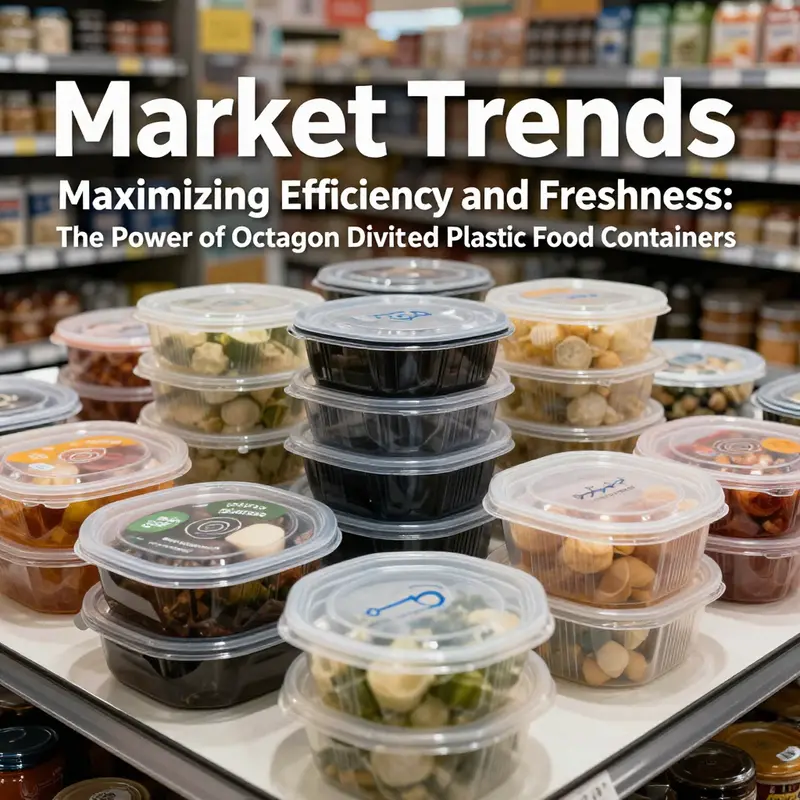
From a functional standpoint, the octagon’s geometry provides an efficient tessellation of space. In tight storage environments such as refrigerators and lunchboxes, the flat sides create tighter packing density than many curved, multipocket containers. Consumers frequently report that such shapes help them plan meals with greater precision, supporting routines around protein portioning, grain balance, and vegetable variety. When the containers are not in use, their modular nature allows for nested or interlocked stacking, a trait that reduces clutter and makes the act of packing less time-consuming. The design also tends to offer better grip during extraction from a crowded lunch bag, a practical benefit for people who commute on foot, bike, or transit, where shedding a container mid-ride would be inconvenient or messy. In daily use, this translates into a straightforward, repeatable practice: pre-portion meals, seal them with durable lids, and place the units in a cooler or bag for transport. The outcome is a reliable routine that helps households manage dietary goals, reduce waste, and streamline food preparation for busy weeks. The sense of order these containers provide contributes to a broader cultural shift toward intentional, methodical meal planning, especially among households that value time efficiency as a key ingredient of healthy eating.
Material choice anchors much of this practicality, and the standard plastic variants are usually made from BPA-free polymers such as Tritan or reinforced polypropylene. These materials raise a set of expectations about safety, durability, and versatility: they resist cracking under light impact, tolerate a wide range of temperatures, and perform across microwaving, freezing, and dishwasher cycles. The practical implications are clear. Users can reheat components in their container without transferring to a separate dish, which saves cleanup time and minimizes the risk of mishandling hot, uncooled ingredients. However, even as these materials meet safety and performance criteria, the broader market is watching regulatory developments and evolving consumer preferences with a sharper eye. Governments around the world have begun to tighten rules on single-use plastics, pushing manufacturers to consider life-cycle impacts, end-of-life disposal, and material substitutions that can lower environmental footprints. The European Union’s Single-Use Plastics Directive, along with parallel regulatory movements in various U.S. states and other regions, signals a lengthy, persistent trend toward alternatives that degrade more readily in appropriate conditions or at least leave a smaller post-use imprint. In practice, this means that the octagon stored in a refrigerator may soon be part of a family of packaging options that includes biodegradable, compostable, or reusable blends designed to minimize waste while maintaining the performance users expect from a practical container.
The sustainability push also shapes consumer expectations. Younger generations, in particular, demonstrate a willingness to invest in packaging that aligns with green values. This preference manifests not merely as a preference for recycled content, but as a broader demand for responsible sourcing, lower carbon footprints, and end-of-life clarity. Brands that respond by designing for reuse, repair, or recycling create a virtuous loop: durable, versatile shapes like the octagon provide the reusability backbone, while the surrounding packaging ecosystem evolves to support responsible disposal or repurposing. The combination of functional reliability and environmental accountability can translate into a premium perception where consumers are willing to pay more for packaging that embodies these values. Yet price sensitivity remains a reality, especially in the mass-market segment that relies on cost-competitive solutions for daily lunches and snack packs. This tension between durability, sustainability, and affordability drives a deliberate design conversation: how can manufacturers maintain performance while reducing environmental impact and controlling production costs?
Material innovation is central to this conversation. The industry is cultivating hybrid materials and bioplastics that aim to deliver the same strength, heat resistance, and leak-proof sealing users expect, but with a lower environmental cost. Polylactic acid (PLA), derived from renewable feedstocks such as cornstarch, represents a notable trajectory, especially when advanced processing allows it to function under industrial composting conditions. Yet the integration of such materials into octagon-divided designs is not without challenges. PLA can be more sensitive to heat and moisture than traditional plastics, which requires thoughtful lid design, edge sealing, and barrier engineering to preserve freshness and prevent leaks. The result is a balancing act: the container must withstand daily handling, support safe reheating, and remain compatible with existing kitchen appliances, while a growing portion of the supply chain strives to ensure compatibility with composting or recycling streams. In practice, this often means exploring combinations of durable inner polymers with outer shells or lids crafted from more sustainable alternatives, all engineered to meet rigorous food-safety standards and perform under real-world use conditions.
Beyond the material mix, the aesthetic and tactile aspects of packaging remain influential. The octagon’s distinctive silhouette continues to catch consumer attention in retail contexts, and its ability to be instantly recognized as a modular, organized solution gives it a shelf presence that many designers find appealing. Even as materials evolve, the appeal of a unique, easily recognizable shape endures. For merchandising, the octagon’s geometry offers opportunities for clear labeling, visible content through transparent sections, and cohesive presentation when multiple compartments are used in a single unit. This combination of visibility, stability, and intuitive use helps foster consumer trust, a critical factor in markets where food storage products live up to daily routines and fast-moving lifestyles.
Innovation in design goes hand in hand with production efficiency. The manufacture of octagon-shaped components presents challenges that drive investment in molding technology and automation. Complex geometries can require higher tooling precision, advanced cooling cycles, and tighter quality control to ensure consistent wall thickness and reliable lid fit across thousands of units. In response, manufacturers are adopting more sophisticated molding techniques, precision robotics, and streamlined assembly lines that reduce cycle times without compromising performance. The net effect is a more efficient supply chain: better tolerance control supports consistent sealing, easier stacking, and fewer returns due to leakage or warping. This efficiency is crucial as the market seeks to balance rising material costs with consumer expectations for affordable pricing and dependable quality.
The market’s trajectory is not limited to interior kitchen use. Hospitality, catering, and institutional food service increasingly rely on robust, compartmentalized packaging to streamline portioning and service. In such contexts, the octagon shape can function as a familiar module for cold dishes, snacks, or sauces that travelers or attendees carry with them. The adaptability of the compartment walls makes it possible to tailor configurations to specific menus or meal plans, preserving the integrity of each component while offering a compact, portable unit. This adaptability is particularly valuable in settings where space is at a premium and efficiency is prized, from school cafeterias to corporate catering programs. The broader implication is that the octagon divided container, once a niche product, is becoming a versatile platform for diverse applications, driven by a combination of functional advantages, aesthetic appeal, and an expanding ecosystem of materials and production technologies.
As the sustainability conversation intensifies, some designers and manufacturers are exploring non-plastic alternatives that can maintain the same functional advantages. Kraft paper-based octagonal bowls and other pulp-derived options illustrate the potential for a different material paradigm that aligns with circular economy principles. These designs aim to retain the modular, multi-compartment concept while swapping the plastic surface for a paper or pulp-based structure, sometimes reinforced with internal barriers or coatings to repel moisture and preserve freshness. The rationale is straightforward: if a consumer values a container with a lower environmental footprint, a paper-based octagon may offer a compelling blend of form, function, and end-of-life clarity. It is important to note that such options are still navigating questions of barrier performance, heat tolerance, and recyclability in diverse waste streams. The ongoing research and iterative testing reflect a market that is not resisting the octagon’s benefits, but rather reevaluating the material envelope that carries its promise.
In the midst of these developments, the value of clear information remains high. Consumers want to understand not only how a container performs today but how it fits into an evolving waste-handling landscape. Brands that communicate product stewardship—whether through recyclability metrics, composting guidance, or post-use impact disclosures—build credibility with buyers who are weighing choices in crowded marketplaces. The octagon shape, with its recognizable structure, serves as a stable canvas for presenting such information in a straightforward, digestible way. It can carry labels and icons that explain safe reheating practices, storage guidelines, and the container’s intended end-of-life pathway, which reduces confusion and improves adherence to recommended disposal methods.
For readers seeking tangible context on current offerings without surfacing product names, it is helpful to recognize how the category operates in real time. The market contains a spectrum of options, from food-grade plastic variants designed for everyday use to more sustainable packaging concepts that aim to minimize environmental impact. The octagon’s design, with its multi-compartment interior and stable exterior, remains a compelling solution for people who value organization, portion control, and portability. The challenge for manufacturers is to balance the enduring functional advantages with evolving expectations around safety, durability, and sustainability. The path forward likely includes continued refinement of materials—blending performance with eco-conscious properties—alongside smarter production processes that reduce waste and lower costs. The industry’s trajectory suggests that octagon-divided containers will continue to adapt, not only to satisfy current needs but to anticipate a future in which packaging is judged by a broader standard of responsibility and circularity.
As a final reflection on this moment in the market, the octagon’s edge lies in its ability to harmonize organization with intention. Consumers seek products that help them manage daily routines efficiently while also aligning with personal and planetary health goals. The container’s form supports that ambition by enabling precise portioning, reducing cross-contamination, and streamlining storage. The stories embedded in its design—stability on a shelf, easy grip during transit, and clear visibility of contents—converge with larger industry narratives about waste reduction, material innovation, and responsible consumption. In this sense, the octagon is more than a geometric curiosity; it is a practical vessel for modern living, evolving through regulatory expectations, consumer tastes, and advances in materials and manufacturing. Its future, shaped by sustainability imperatives and the desire for efficient, reliable packaging, will likely continue to balance a familiar utility with new forms and smarter, more transparent lifecycle choices. To explore related packaging design options beyond traditional plastics, see the disposable octagonal box for restaurant food packaging.
null
null
Final thoughts
Octagon divided plastic food containers embody the perfect blend of efficiency, functionality, and sustainability that modern food service operations demand. Their unique design maximizes space while keeping food components organized and fresh, catering precisely to the needs of Bubble Tea Shops, Restaurants, Food Trucks, Catering Services, and more. As the market trends shift towards eco-friendliness, adopting these containers not only enhances your operational effectiveness but also aligns with consumer expectations for sustainability. Choosing the right storage solutions is essential for maintaining quality and satisfaction in your offerings, making octagon divided plastic food containers a valuable addition to your business arsenal.