
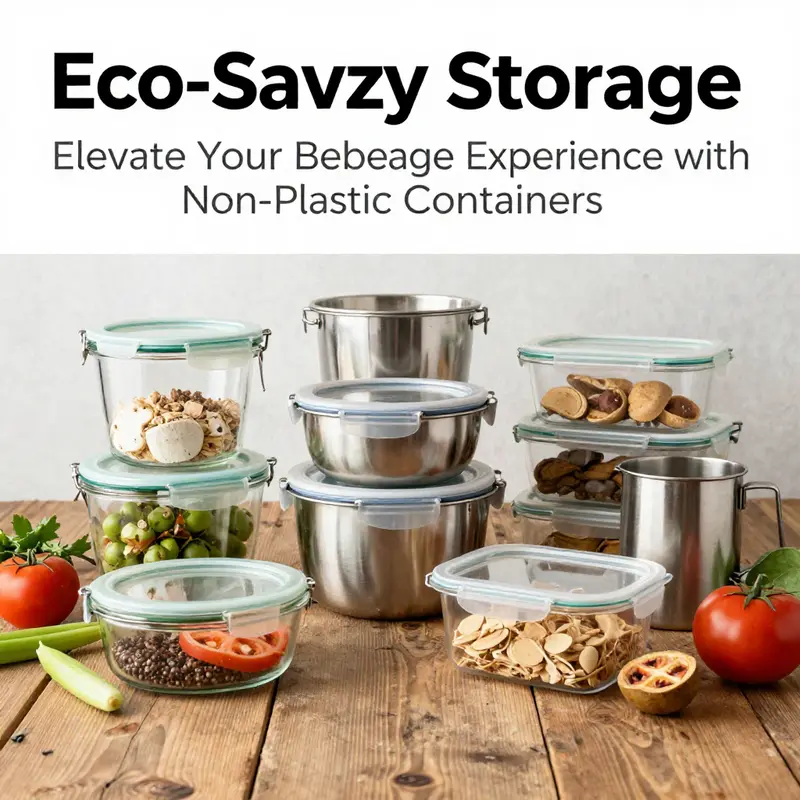
With growing concerns about plastic waste, businesses today are keen to implement sustainable alternatives in their food storage solutions. For beverage chains, food trucks, and event planners, opting for non-plastic food containers not only reflects environmental responsibility, but also enhances organization and efficiency. Three standout options are glass storage containers, stainless steel food containers, and plant-based fiber containers – each offering unique advantages in terms of durability, usability, and environmental impact. This guide explores these options to help you choose containers that are not only easy to store but also align seamlessly with your sustainability goals and service standards.
Glass Storage Containers: Durable, Space-Saving Non-Plastic Solutions for Easy, Clutter-Free Kitchen Storage
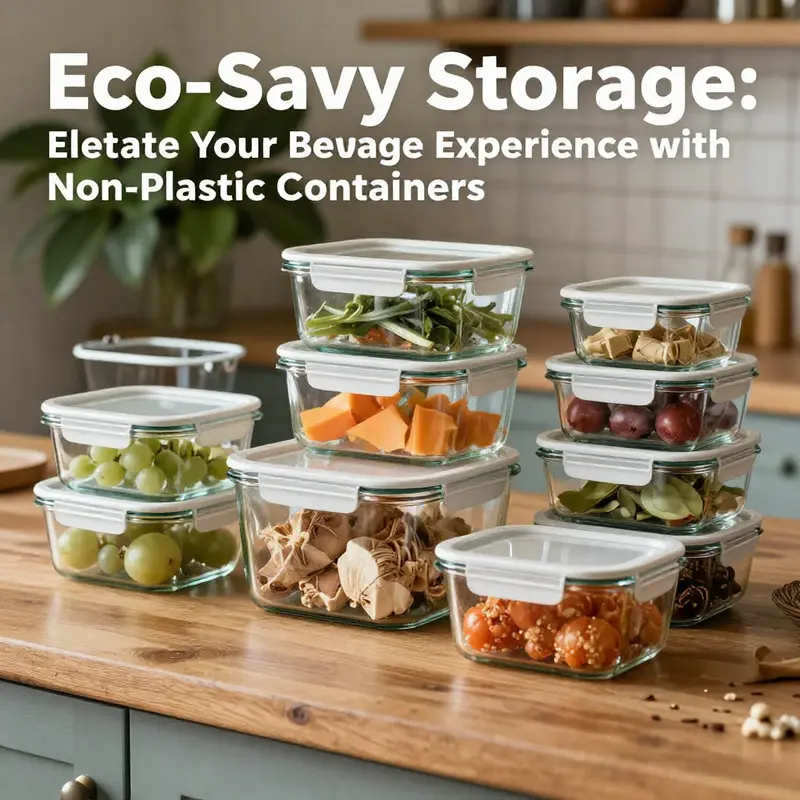
Glass storage containers have emerged as a cornerstone in any kitchen aiming to move away from plastic without sacrificing practicality. They represent more than a material choice; they embody a philosophy of long-term usefulness, clean design, and careful attention to how food is stored, moved, and even reheated. The appeal lies not just in their transparency or their ability to showcase leftovers in a neat lineup, but in how they perform day after day, year after year, while receding from the clutter and anxiety that often accompanies a crowded pantry and a crowded mind. When we seek non-plastic options for easy-to-store-away containers, glass stands out for its combination of durability, space efficiency, and safety. Its advantages become clearest when we look at the specifics of how glass behaves in everyday use and how those behaviors translate into real-world advantages in a modern kitchen.
Durability sits at the heart of glass’s appeal in non-plastic storage. Most high-quality glass containers are made from tempered borosilicate or soda-lime glass, materials chosen for resilience under temperature variations and for keeping their structure intact through repeated cycles of use. The ability to withstand thermal shock means you can transition from fridge to freezer to reheating with less worry than you might have with other materials. Glass remains non-porous; it does not absorb flavors, odors, or oils from previous meals. This inertness is a quiet yet profound advantage, especially when you regularly store potent ingredients like garlic, onion, turmeric, or fish. The absence of odor retention makes glass a reliable workhorse for meal prepping, batch cooking, and freezing liquids—the food tastes stay true to their origin without cross-contamination from past storage experiences.
From the perspective of taste and safety, glass has another considerable strength. Its non-reactive surface means it does not leach chemicals into food, a concern some plastics raise after years of use. While many consumers worry about what happens to food when stored in plastic, glass offers a reassuring simplicity: the material itself largely disappears from the consumer’s attention, allowing the focus to stay on what’s inside. This is especially valuable when storing fruit juices, sauces, or dairy products, where any off-flavor or trace chemical can become noticeable over time. In practical terms, this inert quality translates to a more predictable storage experience. It means fewer surprises when you finally open the container after days of chilling or freezing, and it supports a more confident approach to freezing liquids and storing leftovers with minimal risk of taste alteration.
Space efficiency is another domain where glass shines, particularly today when kitchens must balance function with the constraints of small urban spaces or shared living environments. The latest glass designs emphasize practical geometry. They often feature rectangular or square shapes with flat sides that fit tightly alongside one another on shelves, in drawers, or within refrigerator shelves. The geometry is more than aesthetic; it’s functional. Flat sides mean fewer awkward gaps and less wasted space when you arrange containers by size. Rectangular shapes also nest neatly when not in use, allowing empty containers to slip inside one another. In fact, well-designed glass sets can reduce overall storage volume by a meaningful margin, something that translates into more room for groceries, more accessible meal prep, and less mental clutter when you’re rummaging for the right size to store a week’s worth of leftovers.
The cost equation for glass is often misunderstood. Premium glass sets can carry a higher upfront price, typically in the range of fifty to one hundred dollars for a complete set. Yet this is not merely a price tag—it’s an investment in durability and long-term savings. Glass lasts for years, often well over a decade with proper care, which means the lifecycle cost can be substantially lower than continually replacing plastic containers every few years. The comparison becomes more compelling when you tally the recurring costs and the environmental footprint associated with producing and disposing of cheaper plastic options. While plastic may seem cheaper at the moment, the repeated purchases, the depletion of resources, and the ongoing waste often tilt the balance toward glass for households prioritizing sustainability and ease of storage over the medium term.
Beyond durability and space, the convenience and safety features of glass storage contribute materially to its appeal. Many glass containers come with airtight lids or gasket-sealed lids that protect contents from moisture, dust, and air exposure. Such seals help preserve freshness and limit contamination, which is especially valuable for batch-cooked meals, soups, or sauces that you might portion out for the week. Some models even include locking mechanisms to keep contents secure during transport, a practical feature for take-out meals or picnics where you want to avoid leaks and spills. These design details address common pain points—spillage, odors, and the loss of moisture—while maintaining a clean and organized kitchen aesthetic. The lids themselves are often BPA-free and inert, ensuring that the storage system remains health-conscious from the moment you seal a container to the moment you open it again.
Of course, even the most robust glass requires respectful handling. The potential for breakage remains a consideration, especially with rapid temperature changes. While glass can be microwave-safe, the general guidance is to avoid extreme, sudden temperature shifts. A cold glass container should not be placed directly into a hot oven or microwave. Instead, let it come to room temperature if you plan to reheat, or consider transferring the contents to a glass container that has not been chilled to help minimize the risk of thermal stress. The practical implication of this caution is straightforward: when in doubt, plan ahead. If you bought a batch of leftovers that you know you will reheat, you may choose to reheat using a dedicated reheating dish rather than moving directly from cold to hot in the same container. This reduces the chance of breakage and preserves the container’s longevity, which in turn protects your long-term investment in a glass-based storage system.
Another dimension of safety involves the environmental and health implications of heating. Even when glass is labeled microwave-safe, reformulations and evolving testing standards remind us that it’s prudent to transfer from plastic to glass for reheating whenever possible. The rationale is simple: while plastic-matrix materials may be designed for microwave use, the long-term narrative—especially with repeated heating and exposure to various food types—remains unsettled for some consumers. A small behavioral shift can yield big benefits: separate your reheating tasks by moving foods to glass before warming, particularly when leftovers contain acidic, spicy, or sulfurous elements. This practice aligns with broader kitchen safety principles and supports a consistent standard across meals and storage sessions.
The practical implications of glass extend into the way you manage your kitchen routine. When you design a storage system around glass, you naturally cultivate an orderly approach to leftovers and meal prep. The visible nature of glass helps with inventory awareness; it’s easier to glimpse what you have and what you’ll need without pulling out a notebook or opening every container lid in pursuit of an elusive crumb. The transparency reduces decision fatigue, a common source of waste. You can easily see how many servings you’ve stored, what needs to be used first, and where a certain dish might fit within your weekly plan. This visibility is a quiet but powerful ally for anyone trying to minimize waste, maximize efficiency, and keep refrigerator space organized for the long haul.
In the broader arc of a kitchen that seeks non-plastic storage, glass is not a solitary choice but one pillar in a larger ecosystem. It complements other non-plastic options, each bringing its own strengths to the table. Stainless steel containers, with their rugged durability and metal-lid reliability, perform well for transport and hot foods, while plant-based fiber containers offer a lighter, compostable option for certain applications. The choice often comes down to context: you might reach for glass for fridge storage of leftovers, for freezing liquids, or for precise meal-prep portions, while steel might handle hot meals on the go, and plant-based fibers could serve as a convenient, disposable-leaning alternative for one-off events. The overarching idea is not to pick one solution and worship it but to craft a flexible system that blends multiple non-plastic options to fit diverse meals, spaces, and routines.
Within this context of a balanced system, glass storage containers also support a disciplined approach to kitchen organization. Because the containers nest and stack with care, you can eliminate unnecessary bulk without sacrificing accessibility. You can align sizes in a way that mirrors your weekly cooking patterns, which reduces the time spent searching for mismatched lids or mismatched bases. The psychological payoff is meaningful, too: decluttering the countertop and cabinet space reduces cognitive load, making it easier to plan and execute meals. The result is a kitchen that feels lighter, more coherent, and more predictable in terms of what’s stored where and for how long. In a world increasingly attentive to plastic waste and its consequences, glass storage presents a practical, aesthetically pleasing, and logically coherent path toward a more organized and sustainable kitchen routine.
As a concluding reflection for this chapter, the case for glass storage containers rests on a careful balance of durability, space efficiency, and ease of use. A well-chosen glass set offers a long horizon of performance: it endures, it fits neatly into the vertical and horizontal dimensions of small spaces, and it remains a simple, non-toxic interface between your cooking and your daily life. For households aiming to reduce plastic while still preserving the experience of fresh leftovers, glass provides a core framework—one that harmonizes with thoughtful design, mindful cleaning, and a kitchen that feels as orderly as it looks. The story of non-plastic storage does not hinge on a single material; it grows stronger when glass anchors the system, layered with steel for transport and fiber-based options for occasional, more disposable needs. In this integrated approach, the goal remains clear: a kitchen that stores well, stays clean, and supports a sustainable lifestyle without compromising the everyday joy of cooking, eating, and sharing meals.
For readers who want to explore a broader spectrum of non-plastic serving and storage options beyond glass, consider non-plastic serving ware such as kraft paper bowls designed for durable, eco-friendly use. These serve as a reminder that the non-plastic path is not monolithic but a family of practical choices that together reduce waste and simplify storage. You can learn more about these options here: biodegradably sourced Kraft paper bowls that are designed for take-away and serving needs.
In the larger arc of this article, the exploration of glass as a storage solution sets up a natural transition to the broader family of non-plastic containers. While glass handles the fridge, freezer, and pantry with quiet efficiency, stainless steel and plant-based fiber containers extend the conversation to routes that emphasize portability, weight considerations, and compostable end-of-life options. The next chapter will delve into stainless steel containers, examining how their rugged build, leak-proof designs, and temperature resilience complement glass in creating a complete non-plastic storage toolkit. The discussion will remain anchored in the shared goal of easy-to-store-away systems that streamline organization, reduce clutter, and support sustainable kitchen practices over the long term.
External safety and food handling guidance corroborate the general principles discussed here. Prospective readers may consult authoritative resources on chemical safety and food storage practices to deepen their understanding of the risks and best practices involved in storage materials and reheating. For a robust overview of chemical safety in relation to food handling, the following resource provides context and depth: https://www.cdc.gov/niosh/topics/chemicals/chemicals.html
null
null
Fiber-Formed Containers: Easy-Store, Eco-Friendly Solutions for Modern Kitchens
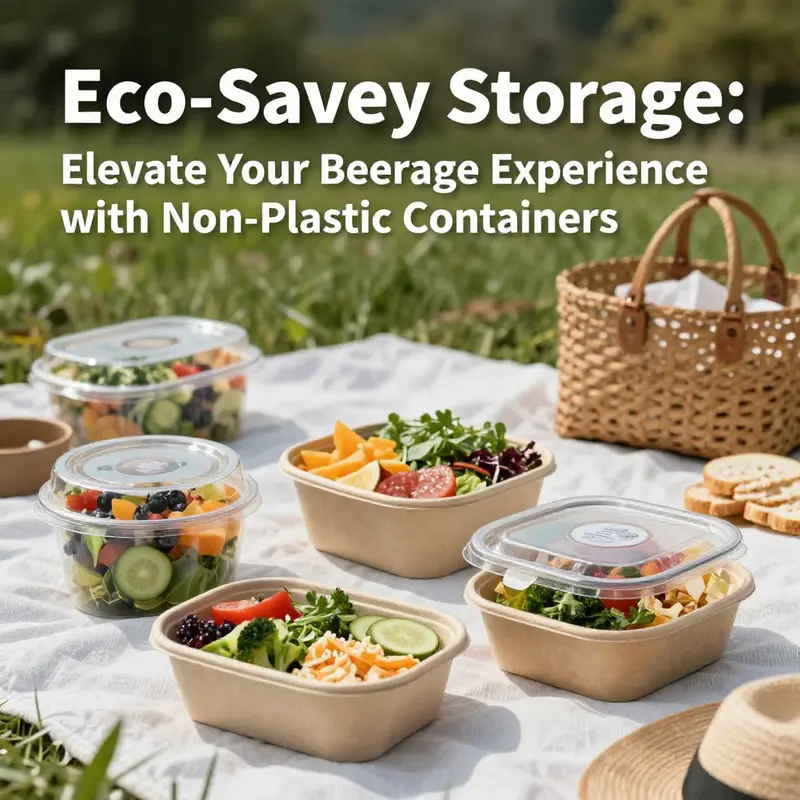
In the evolving landscape of kitchen storage, plant-based fiber containers offer a bridge between convenience and responsibility. They arise from renewable agricultural byproducts such as bamboo, sugarcane, and wheat straw, materials that once ended up as waste or burned in fields. Today, they are transformed into containers that hold, protect, and refrigerate food with a minimal footprint on the planet. The appeal of these fiber-based options lies not only in their biodegradability but in their everyday practicality. They are designed to be light enough to lift with one hand, robust enough to withstand routine handling, and adaptable enough to fit into crowded shelves and tight refrigerators without adding clutter. This combination makes them particularly well suited to households and professional kitchens aiming to reduce plastic dependence while maintaining smooth, worry-free storage routines.
The core idea behind plant-based fiber containers is straightforward: replace the polymer-heavy profile of conventional plastics with a material that is renewable, compostable, and capable of performing well under typical kitchen conditions. The materials themselves—the bamboo fibers, sugarcane pulp, and wheat straw—are not simply decorative. They contribute to a lifecycle that, when managed responsibly, leaves a lighter imprint on the environment. In many cases, these containers are designed to be used repeatedly for a period, then disposed of through industrial composting streams where available. Even when disposal options are limited, the end-of-life pathway tends to be less persistent in the environment than that of single-use plastics, which can linger for hundreds of years. This shift in lifecycle thinking is more than a minor ecological preference; it reflects a broader reorientation toward materials that align with circular economy principles while still meeting the storage needs of busy kitchens.
A hallmark of plant-based fiber containers is the balance they strike between durability and disposability. Their durability is often underestimated because the appeal of these containers is so closely tied to their eco-credentials. Yet when you handle them in a typical kitchen—or in a pantry stacked alongside other containers—you notice that the fibers woven into the structure provide resilience against cracking, bending, and rough handling. They are often more resistant to impact than some consumer plastics that rely on thin walls to save weight. This durability is crucial for storage because it means containers can be stacked or nested with confidence, reducing the space they claim in a crowded cabinet. In terms of heat tolerance, these containers are engineered to cope with a surprising range of temperatures. Many fiber-based designs tolerate reheating or warm storage, a feature that broadens their utility beyond cold storage or brief reheating. This makes them suitable for prepped meals, leftovers, and lunches that need to be warmed gently without transferring heavy metals or hazardous additives into food. For families and workplaces that rely on packed meals, the ability to reheat directly in a container—without the fear of warping or releasing unpleasant compounds—adds a layer of convenience that plastic alternatives sometimes fail to deliver.
Another essential attribute is moisture and grease resistance. Because food moisture and oils are natural enemies of plain paper or uncoated fibers, most plant-based containers incorporate a plant-derived coating, often PLA (polylactic acid), that creates a barrier against dampness and greasiness. PLA lamination or similar biobased coatings play a crucial role in keeping foods from soaking through or staining the container’s surface during storage or reheating. Importantly, these coatings are chosen to preserve compostability in industrial facilities, with ongoing research and certification frameworks guiding their end-of-life outcomes. The practical upshot is a container that can handle sauces, oils, and moist dishes while still aligning with eco-conscious disposal options. The trade-off, as consumers evaluate options, centers on the balance between price, availability, and the specific end-of-life pathway for their community.
Storage and design considerations are where the user experience becomes most tangible. Plant-based fiber containers are inherently lightweight, which translates into easy handling when transferring meals from one place to another, from the refrigerator to the office, or from the kitchen to the car for a picnic under a clear sky. The lightness also lends itself to efficient transport and shipping for manufacturers and retailers, enabling a broader reach for households that want to reduce plastic purchases without sacrificing storage quality. In terms of space, these containers are typically designed with stackability in mind. A well-designed fiber container nests neatly with others of its same family, yielding a compact stack that minimizes the footprint in cupboards, pantries, or even the bottom of a tote bag. That stackability extends to the lids as well, where snug-fit lids prevent spills during transit and storage, yet are easy enough to remove with a simple twist or lift. The aesthetic is another practical dimension. The natural texture and earth-toned hues of plant-based containers contribute to a kitchen that looks aligned with sustainable living, a subtle reminder of the choices that help keep more space free and more earth intact.
The market reality for these fiber-based options reflects a growing demand for sustainable packaging solutions that can serve both consumer homes and commercial food service operations. Manufacturers are increasingly offering customizable options to accommodate different portion sizes, cooking needs, and branding preferences. The ability to tailor shapes, sizes, and coatings allows restaurants, caterers, and households to align container choices with their specific storage and reheating protocols. For instance, certain sizes are optimized for salads, grains, or soups, while others are crafted to be compatible with standard kitchen appliances or to function as takeaway vessels for busy workers. This adaptability reinforces the practical theme of the chapter: storage ease is not just about how a container sits on a shelf, but how it integrates into daily routines, from meal prep to leftovers to plated servings.
From the consumer perspective, cost and availability are meaningful dimensions alongside performance. Plant-based containers often emerge as a cost-competitive option when compared to premium plastics or glassware that offers similar storage and heating performance. While material costs and production methods vary, the overall value proposition lies in the combination of reduced plastic waste, support for renewable resources, and the potential for long-term reuse and efficient disposal. It is this broader value proposition that resonates with households seeking to declutter their kitchens while maintaining reliable storage. In markets where there is robust collection and processing of compostable materials, the end-of-life experience can be especially satisfying: a container that can be composted at an industrial facility, returning nutrients to the soil rather than persisting as litter, can complete a cycle that starts in a field and ends in a field.
For anyone exploring these options, the design and material choices matter as much as the daily use of the containers themselves. Bamboo fibers bring a natural strength that can support repeated use without cracking, while sugarcane pulp offers a smooth surface that resists staining and is easy to clean. Wheat straw, with its fibrous composition, can contribute to containers that feel sturdy despite their light weight. The combination of these materials with a plant-based coating represents a careful synthesis of form and function. However, durable performance must be balanced with safety considerations. Food-contact compliance, safe coatings, and predictable behavior under reheating conditions are crucial to ensuring that plant-based containers meet the needs of health-conscious households. In this sense, the fiber-based option is not merely a fashionable alternative; it is a tested approach to storage that respects both consumer convenience and environmental responsibility.
The accessibility of these containers in the broader market has expanded in tandem with consumer interest. As more people look to reduce single-use plastics, suppliers have responded with a wider range of sizes, shapes, and finishing options that can be adapted to kitchen drawers and pantry shelves. For food-service operations, these containers offer a scalable solution that supports sustainability goals while maintaining the efficiency and reliability required for busy service periods. The possibility of customizing designs, whether for portion control, branding, or compatibility with specific storage systems, makes plant-based fiber containers a versatile tool in both household and professional environments. The practical benefits extend beyond storage alone. They encourage mindful food management: the more efficient a container is to store, the more easily leftovers can be identified, portioned, and reused, reducing waste and elevating the household’s or business’s overall food stewardship.
In comparing plant-based fiber containers with other non-plastic options discussed elsewhere in this broader article, the distinctions become clearer. Glass storage containers provide excellent reuse potential and inert aesthetics but may be heavier and more fragile, demanding more careful handling and storage. Stainless steel offers impressive durability and heat resistance yet can be comparatively expensive and heavier, which may influence how people organize and move containers around a kitchen. Plant-based fiber containers sit in a complementary space. They offer a lighter touch in daily use and a lower environmental footprint, while still delivering the necessary performance for storage and reheating. They are particularly well suited to households seeking to reduce clutter through nestable designs and to commercial venues trying to streamline storage areas without sacrificing environmental commitments. The synergy among these various non-plastic options lies in the understanding that a single solution is rarely optimal for all needs. A practical kitchen may pair glass, steel, and plant-based fiber containers to accommodate a spectrum of foods, temperatures, and space constraints. In this way, the broader goal of easy-to-store, non-plastic solutions becomes a flexible framework rather than a rigid prescription.
The discourse on plant-based fiber containers also touches on lifecycle conversations that often accompany sustainable packaging discussions. While the end-of-life story depends on local waste management infrastructure, the intent behind these containers is clear: to minimize persistent waste and to offer a viable alternative that preserves food quality and storage convenience. When communities have access to industrial composting facilities or advanced recycling streams that can handle biobased coatings, these containers contribute to a circular narrative where materials are repurposed rather than discarded. In places where such facilities are less accessible, the containers still present a meaningful reduction in plastic exposure for homes and eateries that otherwise rely on single-use plastics. The environmental impact thus becomes a gradient rather than a binary condition, inviting readers to consider not only the material itself but the broader system in which it is produced, used, and disposed of.
From a design perspective, the challenge for manufacturers is to maintain performance while keeping production scalable and cost-effective. Achieving that balance requires careful material engineering, optimized coatings, and intelligent packaging strategies that minimize waste both in manufacturing and in consumer use. The result is a family of containers that can be stored efficiently, served reliably, and disposed of with a clear path toward recovery, whether through composting or a well-managed waste stream. The consumer experience, in turn, benefits from clarity about usage: which foods perform best in fiber-based containers, how to reheat safely, and what storage conditions extend the container’s life. Clear guidelines help prevent unnecessary waste—such as using a fiber container for foods that might degrade its surface or cause leakage in ways that reduce its reusability—while preserving the container’s integrity for as long as needed.
Market development reflects these practical dynamics. A growing subset of suppliers offers customizable, sealable, biodegradeable plant fiber food containers laminated with PLA, signaling an industry-wide move toward scalable eco-friendly packaging. While the price point can vary by size, finish, and order volume, figures cited in market listings illustrate that these containers can be accessible to a wide range of buyers, including restaurants, caterers, and environmentally conscious households. The accessibility of these products is important, not only as a matter of consumer choice but also as a driver of a broader shift away from disposable plastics in everyday storage. The more widely available such options become, the more households can experiment with different shapes and sizes to suit their particular storage patterns and nutritional habits. That experimentation, in turn, feeds into more resilient kitchen ecosystems, where leftovers are easier to organize, portions are clearer, and the act of cooking and storing feels aligned with a sustainable ethos.
In this sense, plant-based fiber containers do more than offer a green alternative; they encourage a reconsideration of how we approach kitchen organization. The nature of the materials invites a tactile, mindful relationship with food storage. The lightness makes them easy to transport, the nested designs reduce bulk, and the natural textures offer a sensory cue that reinforces a careful approach to leftovers and portion control. When combined with smart labeling, clear lid designs, and compatible sizes for common refrigerator compartments, these containers become more than containers: they become a simple and elegant system for reducing waste, improving organization, and supporting a calmer, more deliberate kitchen workflow.
For readers who want to explore market options directly, the landscape offers a breadth of choices. Customizable options on major supplier platforms enable buyers to select sizes that perfectly fit their family’s meals, adjust for volume in meal-prep routines, and tailor the aesthetic to suit home or commercial branding. In practice, this means a family can select a set of fiber containers optimized for prepped lunches, while a café might order a larger suite of sizes to handle soups, salads, and take-away bowls. It also means that sustainability can scale with need, from a single home cook experimenting with eco-conscious storage to a restaurant instituting a broader policy to minimize plastic use across all take-away packaging.
To reflect on the practical narrative: these containers are not a silver bullet that instantly solves every storage challenge. They are a thoughtful, adaptable tool that integrates with how people live and cook. They require a little planning around end-of-life options and a basic understanding of how coatings behave under heat and moisture. Yet with these considerations in mind, plant-based fiber containers offer a compelling blend of ease, efficiency, and ecological mindfulness. They help compress the often sprawling, clutter-prone storage zone into a lighter, more navigable space where leftovers are more likely to be retained, labeled, and reused rather than forgotten and discarded. This is where the true value lies: in a kitchen system that moves away from single-use plastics without compromising on convenience, safety, or speed.
From a practical standpoint, the ongoing adoption of plant-based fiber containers is also about resilience. Kitchens that depend on a predictable, repeatable storage solution tend to perform better when the containers are stable in size, stackable, and compatible with routine reheating. The fiber-based approach provides that stability while maintaining a close relationship with the source materials from which they are produced. By prioritizing renewables such as bamboo, sugarcane, and wheat straw, manufacturers are aligning with agricultural cycles that can be renewed each season. This seasonal rhythm supports a sense of stewardship that goes beyond the act of purchasing and using a container. It invites a broader reflection on how our daily routines intersect with land, labor, and the choices we make about waste.
In closing, the trajectory of plant-based fiber containers points toward a kitchen future where ease of storage and environmental responsibility walk hand in hand. The containers’ lightness, stackability, and heat-tolerant performance meet the practical demands of modern living. Their moisture resistance and compostable coatings address real-world conditions, from sauces to reheats, without compromising safety or ease of use. And their market growth—driven by demand from homes and service providers alike—signals a meaningful shift in how households and businesses approach packaging and storage. The result is a coherent, scalable pathway that helps reduce plastic waste while preserving the practical rhythms of cooking, meal prep, and daily nourishment. For readers intent on exploring tangible options, the pathway is clear: consider plant-based fiber containers as part of an integrated approach to non-plastic storage that values both ease of use and ecological integrity. A practical takeaway is to evaluate size, lid integrity, coating quality, and end-of-life options in your region. By doing so, you can create a storage system that is not only efficient and tidy but also aligned with a broader commitment to sustainability. And as this category continues to mature, the potential for customization and broader adoption only grows, allowing more kitchens to experience the balance of performance and responsibility that these containers promise.
For those curious about market examples and to see how these products are positioned in real-world commerce, a representative listing illustrates the scale and accessibility of plant-fiber, PLA-laminated, biodegradable containers. Such listings underscore the ongoing industry momentum toward durable, convenient, and eco-conscious packaging that can be integrated into both home and professional workflows. External resource: https://www.alibaba.com/product-detail/Plant-Fiber-Food-Container-Biodegradable_1600584374695.html?spm=a2700.100194.0.0.7a6f1b7dYmZKqj
Internal link for readers seeking practical purchasing options: a relevant product page offers a direct example of fiber-based, sealable containers designed for takeaways and home storage. See: Disposable takeaway kraft paper bowl with lid.
Final thoughts
Transitioning to non-plastic food containers like glass, stainless steel, and plant-based fiber options opens the door to a sustainable future for beverage shops, restaurants, food trucks, and event planners. These containers not only facilitate efficient storage and organization but also reinforce your commitment to the environment. By embracing these solutions, businesses can reduce plastic waste while enhancing their service offerings, creating a positive impact that resonates with eco-conscious consumers. Make the shift today for a cleaner, greener tomorrow.