
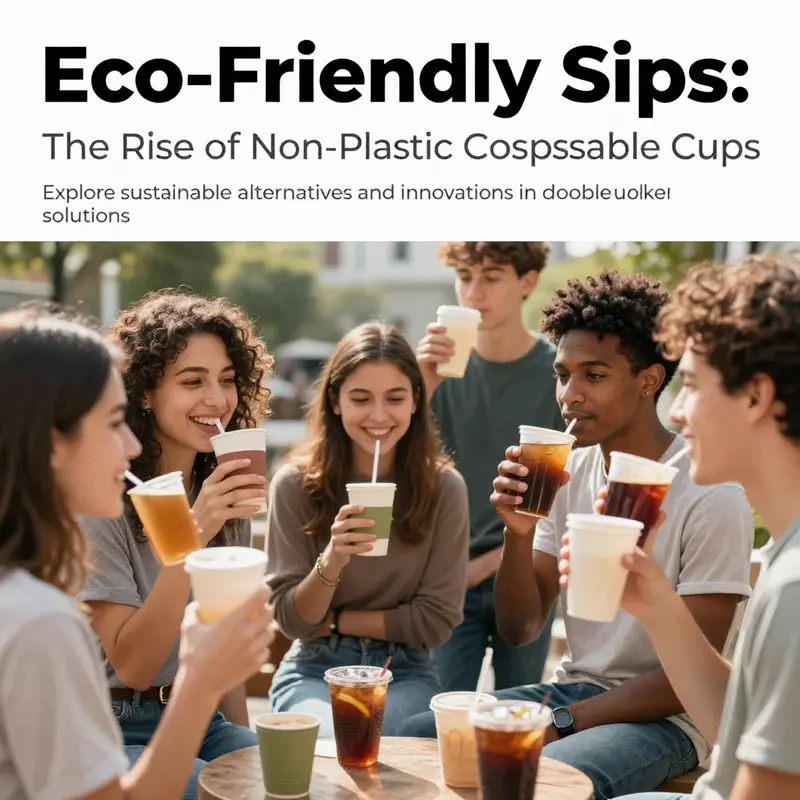
As businesses increasingly seek to align with environmental responsibility, non-plastic disposable cups have emerged as a frontrunner in sustainable alternatives. These eco-friendly solutions, crafted from biodegradable materials such as paper or plant derivatives, ensure that your beverages are served without compromising the planet. This article delves into several critical aspects of non-plastic disposable cups, from their material innovations and environmental benefits to the evolving regulatory landscape. We’ll explore consumer demand driving the shift towards sustainable practices, current market trends, and what the future holds for these innovative products. Each chapter will guide you through understanding why investing in non-plastic disposable cups is not just beneficial—it’s essential for your business’s sustainability strategy.
Rethinking the Cup: Material Innovations and the Promise of Non-Plastic Disposable Solutions
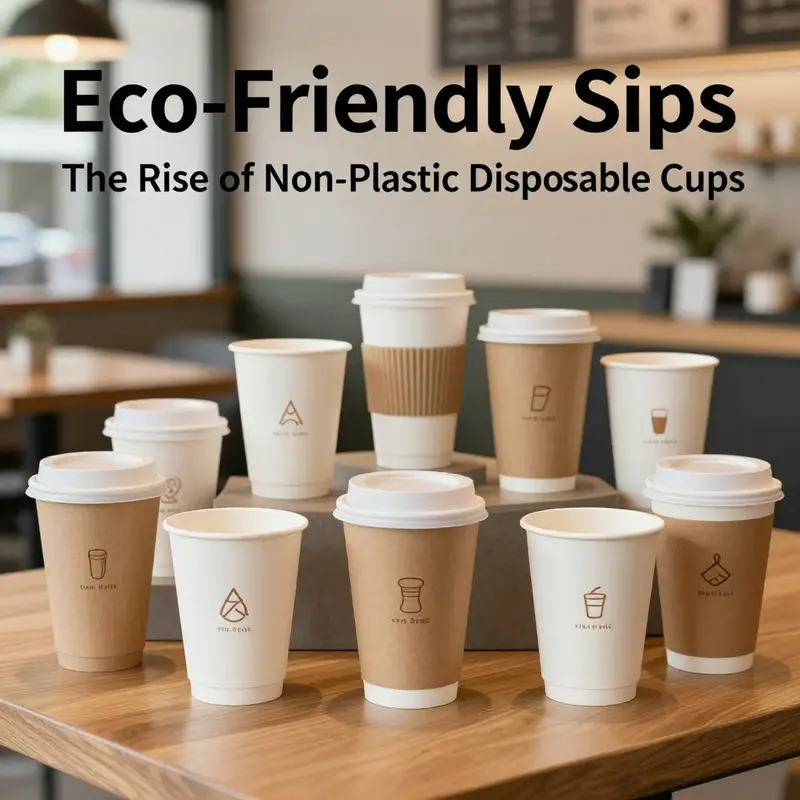
The search for alternatives to conventional plastic cups has become a broader inquiry into how everyday packaging can align with ecological realities without sacrificing convenience. Non-plastic disposable cups emerge not as a single solution but as a family of approaches that reimagine materials, processing, and end-of-life pathways. These cups are built from renewable, biodegradable, or compostable substrates designed to perform under real world use while minimizing environmental footprints. The aim is simple: keep liquids contained and transported, but reduce the burden of persistent plastic waste in oceans and landfills.
Foundational materials include paper with bio-based coatings, powered by coatings that resist leaks while enabling recycling or composting. Traditional paper cups often rely on polyethylene linings that hinder end-of-life options. The push toward fully compostable or recyclable coatings—derived from bio-based feedstocks such as cornstarch or other natural polymers—seeks to unlock more complete lifecycle circularity. This is not just substituting one polymer for another; it is rethinking recycling and composting boundary conditions. The ideal cup can handle hot or cold beverages, resist leaks, and still break down in the right facilities without leaving residues that disrupt processing. Certifications from recognized bodies, like industrial compostability standards, become essential signals in a crowded market.
Beyond paper, plant-based bioplastics such as PLA offer options for rigid, transparent cup designs that resemble traditional plastic. PLA’s compostability under industrial conditions aligns with facilities designed to manage organic waste streams, but its end-of-life story depends on access to industrial composting rather than home composting. Its production traces to agricultural feedstocks, raising questions about land use and water. Other materials come from agricultural byproducts like bamboo and bagasse (sugarcane residue). Bagasse can be used with natural-fiber composites and may be carbon-negative in some processing scenarios. Bamboo provides natural resistance to microbes, but performance depends on coatings to withstand heat and beverage contact.
Sugarcane bagasse stands out as a byproduct opportunity to close loops. The strongest demonstrations of bagasse cups come when blended with natural fibers to improve durability and moisture resistance. A portfolio approach, combining substrates to tailor cups for hot drinks, iced beverages, or specialty settings, can align with service context and waste infrastructure. The aim is to design for end-of-life from the outset, not as an afterthought.
Coating technologies differentiate non-plastic cups: water-based or plant-derived barriers aim to provide robust liquid resistance while preserving recyclability and compostability. Coatings should reduce permeability without forcing non-degradable chemistry. Temperature stability, leak resistance, and shelf life are important. The challenge is to achieve a high barrier without fluorinated chemistries. Removal-friendly coatings or matrices integrated into compostable fibers can ease post-consumer processing.
Policy and infrastructure shape adoption. The EU directive on reducing single-use plastics motivates demand for alternatives but needs clear standards and robust certification to prevent greenwashing. A cup that looks sustainable on the shelf must be collectable and processable after use. Standardized labeling and third-party audits help consumers and regulators. Without them, marketing claims can mislead.
Market dynamics show a growing cadre of certified compostable or reusable non-plastic cup systems. Material choices must match waste management realities: availability of industrial composting facilities, post-consumer collection, and processing capacity. Even biodegradable cups can harm if end up in landfills. GotCups overview 2025 highlights options from PLA to paper with bio-based coatings and fiber-based alternatives; they fit different applications, including hot or cold beverages. For scale, investment in collection networks, consumer education, and transparent labeling is essential.
For practitioners, non-plastic cups should be seen as part of an adaptable packaging system. Choose materials aligned with local infrastructure, ensure coatings and fibers are compatible with facilities, and communicate end-of-life expectations to customers. Real value comes when design considers end-of-life, when infrastructure exists to capture and process material, and when consumers participate in proper disposal pathways. The horizon is a spectrum of compositions and collection practices that reduce plastic leakage and support circular economy goals while preserving convenience and hygiene.
The synthesis points forward: invest in lifecycle analyses and standardized certification; foster collaborations among scientists, waste operators, policymakers, and consumer groups to align product design with disposal options. When these elements converge, non-plastic disposable cups can become a durable component of a sustainable packaging future. This is not simply about replacing plastic; it is about reimagining how everyday packaging fits within a circular economy.
Internal link note: A related approach to sustainable cup systems can be found through industry resources that discuss eco-friendly paper cups and related serving ware. See for instance the collection of product pages detailing eco-conscious, disposable paper solutions that align with compostable and recyclable pathways. eco-friendly printed-logo single-wall paper cup.
Biodegradable Choices and Real-World Outcomes: How Non‑Plastic Disposable Cups Break Down — or Don’t
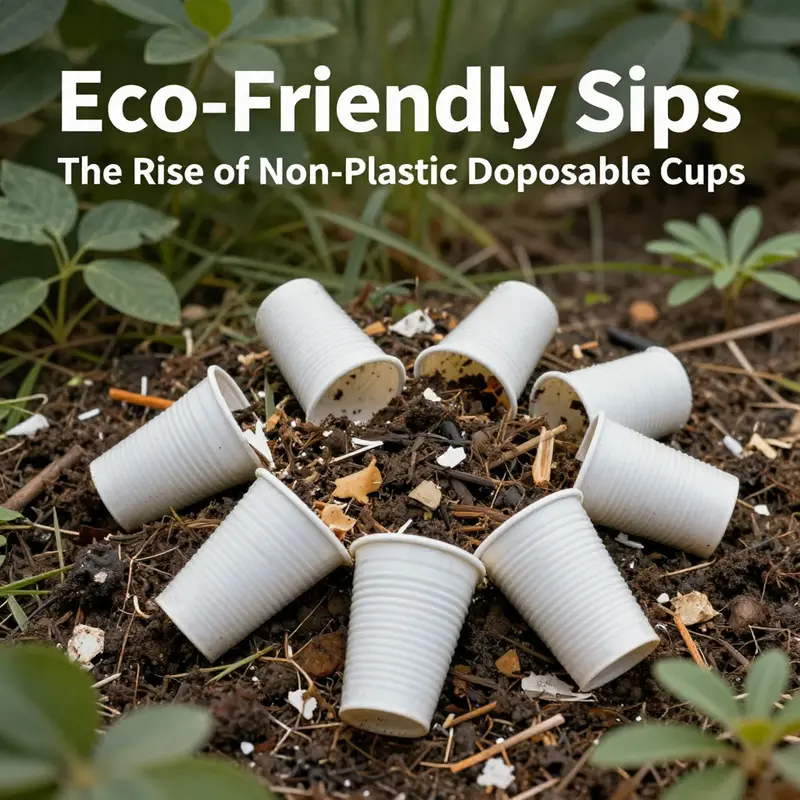
How biodegradability and compostability shape environmental outcomes
Non-plastic disposable cups promise a cleaner alternative to petroleum-based plastics. Yet their real environmental value depends on material choices, end-of-life conditions, and the systems that receive them. Understanding how different non-plastic cups break down clarifies when they reduce harm and when they simply shift impacts elsewhere.
Cups labeled non-plastic cover a spectrum of materials, from paper with coatings to plant-derived polymers and fibrous agricultural residues. Plain paper cups are familiar, but many contain an internal lining to hold liquids. That lining may be a thin plant-based polymer or a petroleum-derived film. Bagasse — the fibrous residue from sugarcane processing — and molded pulp products are another group. These rely on natural fibers and require minimal additives to perform well with hot or cold foods. Bamboo-based disposable cups are made from rapidly renewable grass resources and can offer strength without heavy coatings. Polylactic acid (PLA), a plastic derived from fermented plant sugars, often appears as a lining or as a standalone cup material; it behaves like conventional plastic in many environments, but it is chemically different in how it degrades.
Biodegradability and compostability are related but distinct claims. Biodegradable simply means a material can be broken down by microorganisms under some conditions. Compostable means the material breaks down into benign substances within a composting process, leaving no toxic residue, and often meeting specific time and temperature criteria. Certifications and standards give practical meaning to these claims. Third-party certifications from organizations such as the Biodegradable Products Institute (BPI) or compliance with EN 13432 and ASTM D6868 indicate a product will compost under industrial conditions within a defined timeframe. These standards require tests for disintegration, biodegradation, and the absence of harmful residues.
Industrial composting facilities expose waste to sustained heat, oxygen, and microbial activity, accelerating breakdown. Many compostable cups are formulated to disintegrate and biodegrade in those systems within weeks to months. Yet industrial composting access is uneven. Where such infrastructure exists and is used properly, compostable cups can return nutrients to soil and significantly reduce long‑term litter and persistent microplastics. Without that infrastructure, the advantages shrink.
Landfills are a different environment. They are compacted and low in oxygen, which slows aerobic decomposition and can cause anaerobic breakdown. When biodegradable organics decompose anaerobically, methane can form. Methane is a potent greenhouse gas, with far greater near-term climate forcing than carbon dioxide. Thus a compostable cup that lands in a conventional landfill may still contribute to greenhouse gas emissions unless landfill gas collection systems capture and destroy the methane. The takeaway is stark: materials designed to compost don’t automatically reduce climate impacts if they end up in anaerobic disposal systems.
Contamination and mixed waste streams complicate outcomes further. Paper cups with small plastic or PLA linings may be technically compostable under industrial standards, but if they enter recycling systems they can cause contamination. Likewise, a compostable cup mixed with conventional plastic or food-contaminated recyclables can reduce the value of a recycling batch. Properly labeled products, clear disposal instructions, and separated collection streams are essential to avoid these conflicts.
Consumer behavior is the bridge between product design and environmental performance. Choosing a compostable or biodegradable cup is only the first step. The next is ensuring it follows a correct disposal route. When consumers assume a material is eco-friendly and discard it in general waste, the intended benefits are lost. Effective labeling helps. A clear, simple message such as “Industrial compost only” or “Home compostable” prevents confusion. Labels should also indicate whether a lid or sleeve is compatible with composting, since multi-material assemblies often sabotage compostability.
Design for the entire lifecycle matters. Lightweighting reduces material use but can affect composting performance if fibers are too thin to break down cleanly. Avoiding non-compostable additives and adhesives helps. For example, water-based coatings and PLA linings are preferable over conventional polyethylene linings when the goal is industrial compostability. Bagasse and molded pulp cups often require minimal coatings and therefore perform well in both industrial and home compost systems when formulated correctly. Bamboo-based cups decompose naturally and leave few residues, assuming any adhesives used are biodegradable.
Infrastructure and policy shape what materials make sense at scale. Municipal investments in industrial compost facilities, combined with commercial composting for restaurants and campuses, create demand for compostable packaging. Regulations that limit single-use plastics drive businesses to adopt non-plastic alternatives. However, policy must be paired with collection systems. A mandate to use compostable cups without parallel investment in composting can produce perverse outcomes. Conversely, visible community programs that accept compostable cups increase the value of compostable design.
Material choice also affects lifecycle emissions beyond end-of-life. Producing paper from recycled fiber tends to use less energy than virgin fiber, and agricultural residues like bagasse divert waste streams into useful products. PLA production requires fermentation and processing, which have distinct energy and water footprints. Sourcing renewable feedstocks responsibly is an additional consideration; land use, fertilizer, and water impacts vary across crops and regions. A circular perspective—where raw materials come from by-products or responsibly managed sources—reduces upstream impacts.
Practical recommendations emerge from connecting design, infrastructure, and behavior. Prefer materials that are demonstrably compostable within commonly available systems: bagasse and certain molded pulp products often meet that test, as do many bamboo fiber options. When using paper cups, choose variants with water-based coatings or certified compostable linings. Avoid mixing compostable and non-compostable materials in a single assembly. Implement clear labeling and staff training in cafes and food services to guide disposal. Where possible, create or connect to dedicated compost collection streams for foodservice waste. For businesses seeking immediate, low-friction solutions, moving to paper cups that are plastic-free and compatible with existing compost programs is effective; for example, switching to certified plastic-free single-wall paper cups can reduce contamination risk when matched to a composting partner (see this option for an example of a plastic-free paper cup).
Finally, transparency matters. Certifications, clear disposal instructions, and supply-chain diligence allow buyers and users to assess claims. Independent testing and evidence that a product breaks down in realistic conditions are more meaningful than marketing alone. When non-plastic disposable cups are selected and managed thoughtfully, they reduce persistent pollution and can return organic matter to soils. Absent that system-level thinking, their potential remains unrealized.
For a deeper look at how plant-based materials break down in composting environments and how different standards define compostability, see the guide: Compostable Cups: The Ultimate Guide to Sustainable Drinkware (https://www.gotcups.com/compostable-cups-guide/).
From Waste to Opportunity: How Consumer Demand Is Transforming the Non-Plastic Disposable Cup Market
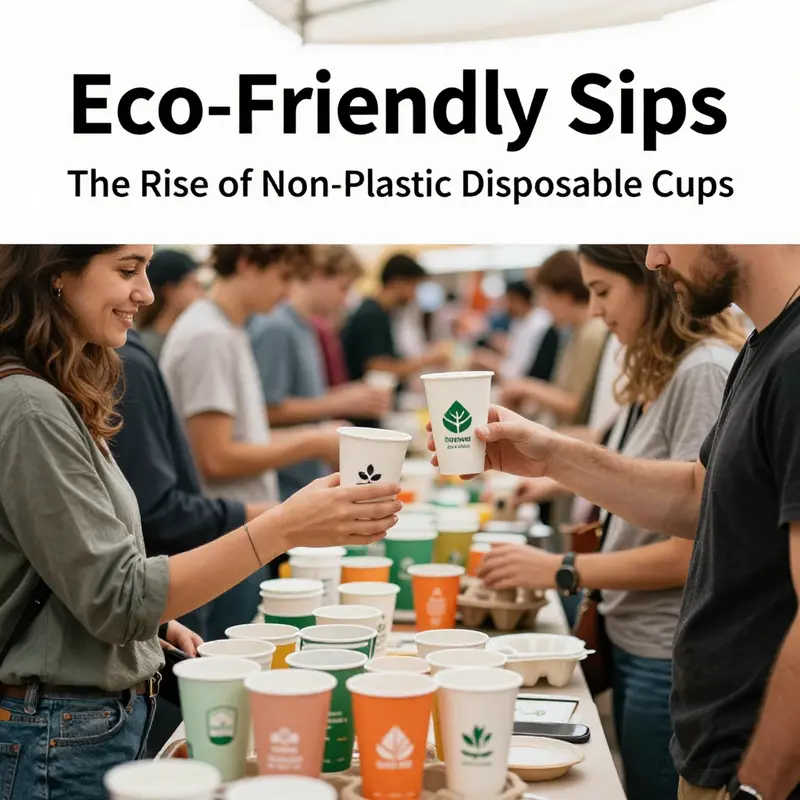
A visible market pivot is underway, and consumers are the catalyst. As awareness of plastic pollution deepens, preferences shift toward disposable cups made from renewable and biodegradable materials. Paper, bagasse, bamboo, and plant-based polymers now compete with traditional plastic. This movement is not only ethical. It is practical. Manufacturers and foodservice operators are redesigning products to match the durability and convenience buyers expect.
Regulatory action and corporate pledges amplify the change. Cities and countries restrict single-use plastics. Large foodservice purchasers commit to reducing plastic waste. Those external pressures intersect with consumer values to increase demand for responsible disposables. The market responds by scaling production and refining materials science. Investment in research and development focuses on coatings, structural strength, and thermal performance. Modern non-plastic cups use water-based or plant-derived linings. They resist leaks and retain heat similarly to older plastic-lined designs. For hot beverages, reinforced walls and double-wall constructions now provide comparable comfort and insulation. For on-the-go meals like soups and broths, designers emphasize rigid rims, secure lids, and high-moisture resistance.
This product evolution matters because function drives adoption. A cup that meets environmental standards but fails in everyday use will not replace plastic at scale. Companies prioritize both sustainability and reliability. They develop compostable linings that satisfy industrial composting standards. Certifications such as BPI and compliance with EN 13432 or ASTM D6868 provide clear proof points. Those credentials reassure procurement teams and consumers alike. Where certification is absent, transparent testing data and clear labeling help close the trust gap.
Market numbers reflect this structural shift. Demand growth is steady and measurable. Analysts project the disposable cups market to expand substantially over the coming years. Growth is strongest in regions with active regulations and consumer engagement. North America, for instance, shows robust early adoption driven by green purchasing by institutions and retailers. As production scales, unit costs fall, making compostable and biodegradable options more competitive with legacy plastics. This cost dynamic fuels wider adoption across smaller cafés and independent restaurants, broadening the market beyond large chains.
Innovation extends beyond materials. Packaging format adapts to new eating habits. Single-use soup cups and sturdy takeout bowls combine convenience with compostability. Designs accommodate soups, noodle dishes, and other liquid foods without compromising structural integrity. These formats respond directly to urban consumers who need hygienic, fast meal solutions. They allow operators to offer takeaway menus that align with sustainability goals while maintaining margins.
Supply chain adaptation is crucial. Raw material sourcing shifts toward renewable feedstocks and recycled inputs. Manufacturers optimize production lines to handle new substrates and coatings. Logistics adjust too, since some biodegradable materials require different storage conditions. The emerging supply network rewards flexibility and scale. Companies that invest early in these capabilities secure a competitive advantage. They can fulfill large procurement contracts from institutions actively replacing plastic disposables.
End-of-life infrastructure remains a limiting factor, however. Industrial composting facilities are not universally available. Municipal systems vary widely in their acceptance of compostable packaging. That inconsistency creates friction for circular solutions. To address it, brands and buyers must align on realistic disposal pathways. Clear consumer messaging and on-site collection programs can redirect compostable waste away from landfills. Without such integration, the environmental promise of certain materials diminishes.
Consumer expectations also shape communication strategies. Buyers increasingly demand transparent labels, clear disposal instructions, and independently verified claims. Marketing that highlights compostability without explaining the required conditions can backfire. A cup labeled compostable should include guidance: whether it requires industrial composting, commercial facilities, or can biodegrade in home compost. Brands that pair credible certifications with practical disposal instructions strengthen trust and drive repeat purchases.
Retail and foodservice procurement teams now weigh total system costs. They assess not only unit price but also waste management expenses and reputational benefits. Many find that investing slightly more per unit pays off through reduced regulatory risk and improved customer loyalty. Public-facing sustainability initiatives, when genuine, enhance brand image and can increase foot traffic among eco-conscious consumers. This makes non-plastic cups a strategic choice, not merely an ethical one.
Design aesthetics contribute, too. Consumers expect packaging to reflect brand values. Natural textures, kraft finishes, and minimalist printing communicate environmental intent. Custom printing remains popular for businesses that want to reinforce brand identity while signaling sustainability. At the same time, technical improvements such as corrugated sleeves or double-wall structures enhance user experience. The result is a product that feels premium and responsible.
Opportunities remain for companies that bridge performance gaps. Continued R&D on water- and heat-resistant coatings, better compostable adhesives, and scalable manufacturing processes will accelerate adoption. Collaboration among manufacturers, waste managers, and regulators can expand composting infrastructure and standardize labeling. Education campaigns that clarify disposal pathways help convert curious buyers into repeat customers.
For businesses evaluating a switch, pilot programs are practical. Small-scale trials allow teams to assess durability, user feedback, and downstream waste handling. They also reveal hidden costs and operational impacts. Successful pilots create data to support broader rollouts and to justify procurement decisions.
The market is also creating space for hybrid solutions. Some products blend recycled fibers with compostable linings. Others pair sturdy takeout bowls with compostable lids. These compromises meet transitional needs while infrastructure catches up. As economies of scale develop, fully compostable and recyclable systems will become the norm rather than the exception.
Consumers are no longer passive. Their purchasing choices influence regulations, corporate commitments, and supply chain investments. That feedback loop ensures that sustainability-minded innovations get resources and attention. It also means that brands must listen closely, iterate quickly, and communicate transparently.
For companies and operators, the takeaway is clear: responsiveness to consumer demand for non-plastic disposable cups is both a market imperative and an opportunity. The winners will be those who combine reliable performance with credible environmental credentials. They will invest in material innovation, partner across the value chain, and educate end users about proper disposal. As that shift gains momentum, the disposable cup becomes not just a container, but a lever for reducing waste and enabling a circular economy.
For broader market data and forecasts, see this detailed industry report: https://www.marketsandmarkets.com/Market-Reports/disposable-cups-market-6898.html
For an example product that aligns with the trends described above, consider this listing for a best-price 8oz double plastic-free single-wall paper cup: https://greendispopack.com/product/best-price-8oz-double-plastic-free-single-wall-paper-cup/
Shaping Policy, Materials, and Markets: How Global Regulation Is Redrawing the Field of Non-Plastic Disposable Cups
Regulatory environments around non-plastic disposable cups are revealing themselves not as a maze of compliance, but as a framework for innovation, lifecycle thinking, and market transformation. As governments confront mounting evidence of plastic pollution, policy is moving from exhortation to action. In this landscape, policy acts as both a guardrail and a driver—ensuring that the shift away from conventional plastics does not merely swap one problem for another, but instead tightens the loop of production, use, and end-of-life stewardship. The result is a narrative in which materials, coatings, and business models are all measured against a shared yardstick: environmental impact across the product’s life from cradle to grave. This is not a single jurisdiction story but a tapestry of approaches that, taken together, shape the options available to businesses, institutions, and consumers who want to reduce waste without compromising functionality.
In the European Union, the Single-Use Plastics (SUP) Directive stands as a decisive turning point. It prohibits the market introduction of single-use plastics where sustainable and affordable alternatives exist, and it specifically targets items like cups and food containers that have shown up repeatedly in litter analyses and waste streams. What makes the SUP directive more than a ban is its deliberate emphasis on alternatives that can be recycled, composted, or otherwise managed at the end of their life. This has created a clear policy signal for materials developers and manufacturers: invest in paper-based and plant-derived options, and design products with end-of-life management in mind. The directive’s environmental criteria require that non-plastic disposables meet robust standards for how they are managed after use, which nudges the industry toward coatings and barriers that can be removed, separated, or decomposed without contaminating recycling streams.
Embedded within this policy backdrop are established standards and certifications that help bridge policy and practice. Paper-based cups, for example, rely on water-based coatings and biodegradable additives that retain performance for hot beverages while enabling composting in controlled facilities. Certification bodies and standards such as EN 13432 and ASTM D6868 provide a language for evaluating industrial compostability, ensuring that products marketed as biodegradable or compostable actually perform in the envisaged end-of-life scenario. Certifications by recognized bodies, including those that validate packaging as compostable, reinforce trust among consumers and institutions that are increasingly requiring sustainable materials for catering and hospitality. This ecosystem of regulation and standardization reduces uncertainty for buyers and helps level the playing field for non-plastic alternatives that meet or exceed environmental criteria.
Beyond Europe, Asia presents a mix of phased regulation and aspirational targets that mirror a regional pattern: push policies, followed by infrastructure development. Hong Kong, for instance, announced the second phase of regulation targeting non-plastic disposable tableware, including plastic cups and takeaway containers, with a clear effective date. The emphasis here is not merely banning but reducing reliance on single-use items by channeling demand toward material sourcing choices, recyclability, and overall lifecycle impact. The regional emphasis on lifecycle considerations reflects a broader understanding that the environmental performance of non-plastic cups hinges not just on the raw material but on coatings, lids, and the ability to integrate these cups into existing waste-management systems. This approach reduces the risk of policy-driven, one-off shifts in supply that could undermine recycling streams or create new forms of waste.
In West Africa, policy action leans toward legislative bans as a primary instrument to curb marine pollution from single-use items. The focus here is to diminish the environmental burden by restricting the most problematic materials in the absence of mature market-based incentives or an established recycling infrastructure. Enforcement challenges and the need for supporting systems—such as collection networks, sorting facilities, and clear labeling—mean that the region’s regulatory journey is closely tied to capacity-building and international cooperation. The West African experience points to a broader lesson: bans can be powerful, but their effectiveness depends on accompanying investments in infrastructure, public awareness, and downstream processing where feasible. Taken together, these regional trajectories illustrate a global trend toward more comprehensive lifecycle assessments. Regulators are not merely checking if a cup can hold a beverage; they are asking how it should be produced, used, recovered, and finally reintegrated into the economy.
Crucially, the regulatory environment pushes a particular design logic. Coatings must be compatible with end-of-life options, whether that means enabling separation in recycling facilities, preserving the integrity of composting streams, or simply ensuring safe disposal in communities with limited waste infrastructure. The emphasis on end-of-life management is a pragmatic acknowledgement that the effectiveness of a non-plastic cup cannot be judged solely by its material composition. It must be evaluated in the context of the entire waste-management system available to its users. This shift in thinking encourages designers to consider coatings, barrier layers, and adhesives with the same seriousness as the cellulose or plant-based cores themselves. In practice, this means more attention to water-based coatings, minimal use of fluorinated barriers, and the potential for coatings that are easier to remove or separate during recycling or composting. It also invites a reevaluation of lids, sleeves, and printing inks, which can contribute to contamination if not properly managed.
Product developers are responding by embracing a broader set of design criteria that align with regulatory expectations. A common outcome is a family of cups that balance hot-beverage performance with end-of-life compatibility. For example, a paper-based cup designed for hot drinks may incorporate a barrier coating that is optimized for curbside composting rather than landfill disposal, or it may use a coating that can be effectively separated during industrial composting. The broader implication is clear: materials increasingly must be chosen not only for their immediate functional properties but for their ability to participate in sustainable waste streams. This is a shift from a linear mindset—make, use, dispose—to a circular or hybrid model that keeps materials circulating longer and reduces leakage into the environment.
Policy, however, does not operate in a vacuum. It interacts with consumer expectations and corporate responsibility movements. The demand for eco-friendly products is now part of a larger conversation about transparency and accountability. Institutions and businesses are increasingly asking suppliers for verifiable lifecycle data, third-party certifications, and assurances that the packaging they use can meet local waste-management realities. This demand, in turn, shapes supplier strategies: investment in more recyclable coatings, simplification of ingredient lists, and the exploration of alternative fibers that perform under practical conditions while remaining compatible with composting or recycling streams. In some cases, this means adopting a design philosophy that prioritizes compatibility with recycling facilities or industrial composters over the cheapest option, recognizing that long-term regulatory and market advantages may outweigh upfront cost differences.
As policymakers continue to refine and expand guidelines, the conversation between regulation and industry will remain iterative. The same directive that bans a problematic plastic cup can spur new coatings, new separations technologies, and new business models in which packaging is designed for reuse or higher-value recycling. This is not merely a compliance exercise; it is a collaborative venture to align product design with waste-management realities, consumer safety, and environmental protection. It is also a reminder that the move away from plastic does not end with a ban. It requires a continuous, data-driven approach to selecting materials, calibrating performance, and building the infrastructure that makes sustainable choices practical for a wide range of users—from small cafés to large institutions.
For readers who want to explore how policy guidance translates into real-world practice, the relationship between regulatory criteria and product design is especially illustrative. Some producers, for instance, are experimenting with the disposable-takeaway-paper-cup-custom-logo-kraft-coffee-cup-with-lid model, where branding and end-of-life performance are integrated from the outset. Such designs illustrate how compliance can coexist with commercial appeal, yielding a product that performs in everyday use while remaining compatible with composting or recycling streams. This kind of alignment helps ensure that the transition to non-plastic cups is not a narrow policy distortion but a holistic upgrade of the packaging ecosystem. As the regulatory environment evolves, it will continue to push the boundaries of what is possible, while inviting stakeholders to participate in a shared goal: reducing environmental harm without compromising convenience, safety, or accessibility.
External resource for further exploration: https://ec.europa.eu/environment/chemicals/sup/
Towards a Circular Beverage Era: Innovations, Infrastructure, and the Promise of Non-Plastic Disposable Cups
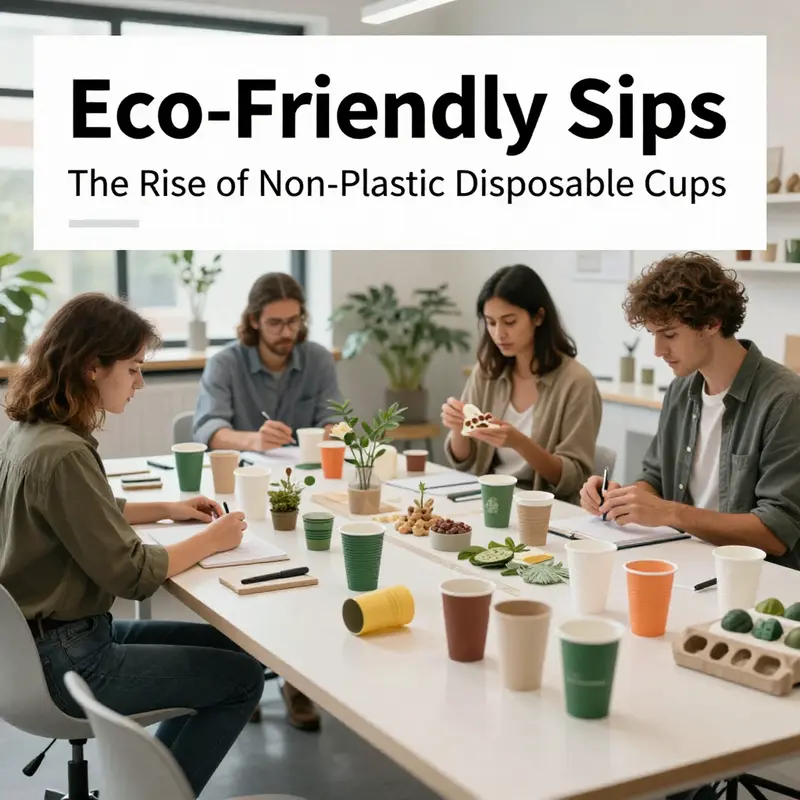
A quiet revolution is unfolding around the humble cup that holds our daily beverages. It is a shift driven less by a single flash of invention and more by a steady recalibration of how we design, manufacture, and dispose of single use packaging. The move away from plastic towards non plastic disposable cups is no longer a niche concern of eco minded vendors; it has become a core facet of broader strategies to reduce waste, lower fossil fuel dependence, and realign consumer behavior with circular economy principles. What feels as a simple choice at the point of purchase paper over plastic or a plant derived alternative over traditional polymer blends cascades into a series of systemic considerations. It touches farming practices, industrial processing, waste collection, consumer education, and the evolving regulatory landscape. The pathway is complex, but it is also increasingly clear. The future of non plastic disposable cups rests on material innovations that do not merely substitute materials but redefine how a cup fits into a closed loop of reuse and recovery. The trajectory is shaped by both science and policy, by consumer expectations and by the practical realities of waste management infrastructure across different regions and cities.
In recent analyses the spotlight has moved beyond conventional paper cups to embrace advanced biodegradable solutions that can perform under realistic serving conditions while remaining true to environmental goals. Plant based polymers such as Polylactic Acid or PLA have emerged as among the most talked about improvements in eco friendly disposables. Derived from renewable resources like cornstarch or sugarcane PLA cups are designed to offer the sought after blend of compostability and functional reliability. Under industrial composting conditions these materials are engineered to break down without leaving microplastic residues, addressing a common concern about biodegradable options that has long nagged the public imagination. This shift toward plant derived materials signals more than a substitution it signals a rethinking of supply chains, from farm to bin, with composting infrastructure positioned as a critical hinge in the entire system.
The momentum around PLA is part of a broader wave of material innovation that also includes bamboo and other natural fibers. Bamboo cups, for instance, bring natural durability and rapid renewability into the conversation. They offer a balance of strength and lightness that can translate into both single use and reusable applications, particularly in contexts where sustainability is not a mere label but a visible design language. The botanical origin of bamboo makes it appealing for venues that want to project a high level of environmental consciousness, especially where aesthetics intersect with function. The appeal extends beyond the surface; bamboo fibers when combined with appropriate coatings and processing techniques can deliver leak resistance and heat tolerance that rival traditional cup designs. The implications for hot beverages are especially important, since many plant based materials face challenges when exposed to heat and humidity. Innovations in coatings and barrier technologies have begun to mitigate these concerns, enabling non plastic cups to stay reliable under typical service conditions.
Beyond the raw materials, the industry is also experimenting with architectural design that preserves function while reducing environmental impact. Engineers and designers are exploring leak resistant structures with integrated lids and straws that minimize the need for additional single use components. The concept is not to create more parts but to integrate performance into the cup itself. Water based coatings are increasingly favored for their lower environmental footprint compared to solvent based alternatives, helping to keep the external surface of the cup compatible with recycling or composting streams. This design philosophy extends to other functional features, including the way lids attach and seal, how seams are reinforced, and how the cup interacts with hot liquids without sacrificing structural integrity. In practice, these design advances translate into cups that perform as well as conventional options in coffee shops and catering events while opening pathways to more responsible end of life outcomes.
The market realities for non plastic disposable cups hinge on more than the availability of materials. A robust future depends on a coordinated ecosystem that can manage end of life with the same seriousness as the creation of the cups themselves. This means scalable access to industrial composting facilities, standardized sorting, and consumer education that clearly communicates how to dispose of compostable products. Without reliable disposal channels, even the most thoughtfully designed cups risk ending up in landfills where materials fail to achieve their anticipated environmental benefits. Public and private sector players are increasingly aligning around circular economy models that emphasize not just the product but the system that surrounds it. In many markets, policymakers are incorporating plastic reduction targets and encouraging the uptake of compostable and biodegradable options as part of broader waste management strategies. The hope is that regulations encourage the rapid emergence of composting infrastructure, pilot programs for new materials, and standardized certifications that give both businesses and consumers confidence in the lifecycle claims of these products.
Education functions as a crucial enabler in this transition. Consumers must understand not only that a cup can be compostable but also under what conditions it will achieve that end of life. The reality is that industrial composting facilities where temperatures and residence times are sufficient to break down plant derived polymers are not uniformly available everywhere. In places with limited composting capacity, the advantages of biodegradable cups can be muted or even negated if the material ends up in a municipal landfill. This underscores the importance of transparent labeling, clear consumer guidance, and a willingness among municipalities and waste handlers to invest in specialized streams for compostable packaging. It also highlights the need for cross sector collaboration among material suppliers, cup manufacturers, restaurant operators, waste management firms, and local governments. The most successful pathways to scale will combine material innovation with pragmatic waste infrastructure planning, ensuring that the environmental virtues of non plastic cups are realized in practice, not just in theory.
From an economic perspective, the transition to plant based and other non plastic cup materials must be cost competitive to achieve broad adoption. Early on, premium pricing and small scale production could have hindered market penetration. Today, as demand grows and production technologies mature, costs are converging with or at least narrowing relative to traditional plastic options. The economics are not solely about raw material costs; they also involve logistics, shelf life, compatibility with existing equipment, and the costs associated with separate waste streams. Coexistence with conventional plastics will likely persist for years, but the pace of change will accelerate as regulatory pressures intensify and consumer preferences tilt toward sustainability. This dynamic creates opportunities for facilities capable of integrating composting, recycling compatible streams, and efficient process flows that minimize waste. It also creates a space for innovative service models, such as catering and retail partnerships that promote compostable cups as part of a broader sustainability program and educational campaigns that highlight the value of proper disposal.
The visual and tactile aspects of non plastic cups also deserve attention. Cup designers are exploring natural textures and finishes that communicate environmental responsibility without compromising readability of labeling or branding. In event contexts and high end retail environments, the appearance of a cup can reinforce a message about care for the environment, which in turn supports consumer willingness to choose non plastic options even when faced with trade offs in cost. This alignment of form and function extends to coatings that are water based and that meet recognized standards for biodegradability. Certification plays a key part here; third party validation helps buyers trust that a given cup meets defined criteria for compostability under industrial conditions. In combination with straightforward disposal practices, these features help ensure that the environmental story of non plastic cups is credible and compelling to consumers who are increasingly screening products for their ecological footprint.
As the industry progresses, collaboration will matter as much as invention. The best pathways to scale will weave together material science, waste management infrastructure, and consumer behavior change. Rather than a single breakthrough, the future will likely hinge on an integrated portfolio of improvements: PLA and other plant derived materials with robust barrier properties, renewed attention to bamboo and other renewables, smarter cup designs that minimize material use without compromising performance, and a waste system that recognizes circular loops as a shared obligation. The practical implication is that non plastic disposable cups will not merely substitute plastics; they will redefine what a single use beverage container can and should do. They will persist in the market because they demonstrate reliability, align with regulatory aims, and support brands and venues that want to demonstrate leadership in sustainability. When these conditions align, non plastic cups can become a standard choice across segments from coffee shops to large scale events, reinforcing a collective commitment to cleaner packaging and more responsible consumption.
To illustrate the relevance of ongoing innovation in everyday settings, consider the moment of serving and the choices presented to operators. A shop that chooses eco friendly options can leverage a range of cup designs and coatings to meet hot and cold beverage needs while signaling a clear environmental stance. Operators can also benefit from partnering with suppliers that provide integrated packaging ecosystems, including eco friendly disposable cups that support branding needs and fulfill logistical requirements for takeaway service. For readers seeking tangible examples of how such partnerships can look in practice, a widely available reference point is the availability of eco friendly printed logo single wall paper cups, which shows how branding, sustainability, and practicality can converge in a single product line. This kind of integration demonstrates how non plastic cups can be embedded in everyday operations without sacrificing customer experience or brand integrity. For readers who want to explore related packaging options in practice, you can learn more through this resource that highlights eco friendly disposable solutions and the branding possibilities they enable. https://greendispopack.com/product/disposable-eco-friendly-printed-logo-single-wall-paper-cup/
The overarching narrative remains one of cautious optimism. The combination of plant based plastics, bamboo derived materials, and advanced coatings points toward a future in which single use cups perform as well as their plastic counterparts while delivering meaningful environmental benefits. Yet optimism is tempered by the recognition that infrastructure and policy must keep pace with innovation. The next frontier is not only new materials but the systems that move those materials from production to composting and, ultimately, to reintegration into the economy. This means more than building more facilities; it means designing logistical networks that enable efficient collection, sorting, and processing. It means sharing data across value chains to identify bottlenecks and opportunities for improvement. It means ensuring that workers along the supply chain have access to the knowledge and tools they need to handle these materials appropriately. The result is a more resilient packaging ecosystem that can adapt to evolving consumer demands while delivering measurable environmental gains.
As the sector advances, it will be essential to maintain a measured perspective. Not every non plastic cup will be perfectly edible of course, and not every material will suit every application. The diversity of plant based options will, in fact, be a strength, allowing service providers to tailor solutions to specific beverage types, service contexts, and regional waste management capabilities. The challenge lies in aligning incentives so that designers, manufacturers, retailers, and waste handlers all benefit from the shift toward non plastic cups. When this alignment happens, the outcome is a packaging system that supports a cleaner landscape, reduces pollution, and still offers a reliable, convenient experience for consumers. The broader implication is a cultural shift in how society views waste and value. If the path is navigated with care, the non plastic cup will stand not as a marginal alternative but as a mainstream choice that embodies a practical, scalable expression of sustainable living.
External reading for a deeper dive into the current landscape and future potential can be found in a concise industry overview that surveys the most talked about advancements in eco friendly disposables. This resource provides context for the material and policy drivers that shape the roadmap ahead and offers a snapshot of where investment and experimentation are most likely to yield tangible results in the near term. https://www.gotcups.com/blog/eco-friendly-alternatives-to-plastic-cups-2025
Final thoughts
The momentum towards non-plastic disposable cups showcases a pivotal shift in consumer behavior and business practices. As the world grapples with plastic pollution, choosing sustainable alternatives is not merely a trend but a necessary step towards environmental stewardship. Businesses that adopt these solutions not only enhance their brand image but also contribute positively to the planet. The insights shared throughout this article illustrate the myriad opportunities available in this shifting landscape. By embracing biodegradable materials, adhering to regulatory standards, and appealing to the growing eco-conscious consumer base, your operation can thrive sustainably. The future of disposable beverage service is bright, and the time to act is now.