
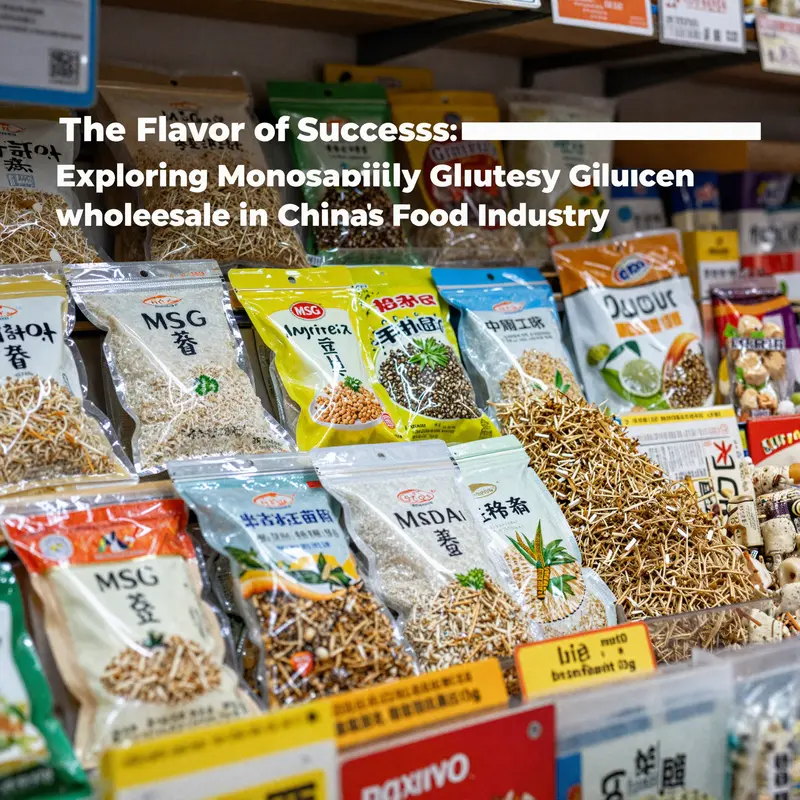
Monosodium glutamate (MSG) has long been a staple in Asian cuisine, and in China, it is a cornerstone ingredient widely utilized across various food products. As the largest global producer and exporter of MSG, China’s market for this flavor enhancer is bustling with opportunities, specifically for businesses ranging from bubble tea shops to catering services. Understanding the market landscape is essential, which sets the stage for our first chapter. Additionally, the importance of health and safety regulations cannot be overstated, ensuring that MSG products are not only flavorful but also safe for consumers. In our second chapter, we will dive deeply into these regulations and what they mean for sellers and consumers alike. Finally, consumer preferences are evolving, and the demand for MSG in food has seen notable shifts. Chapter three will explore these trends, capturing the pulse of consumer sentiment towards MSG-containing foods. Whether you’re part of a restaurant chain, food truck venture, or event planning services, this article will equip you with indispensable insights related to monosodium glutamate wholesale in China.
Umami at Scale: Decoding China’s MSG Wholesale Engine
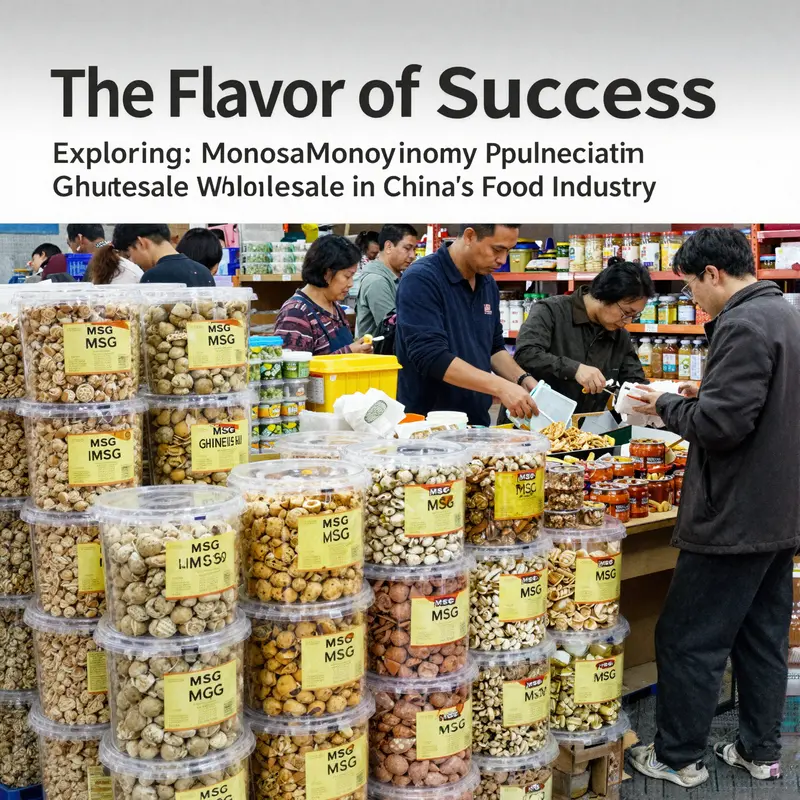
MSG wholesale in China sits at the intersection of industrial scale, regional clustering, and regulatory discipline. The bulk market is driven by the need for stable, cost efficient flavor inputs across millions of dishes and packaged products. Large fermentation plants, proximity to starch feedstocks, and downstream drying and packaging facilities create dense production corridors in several provinces. Buyers from snack makers, instant noodles, soups, and ready meals rely on a small number of integrated suppliers who can deliver consistent purity, traceability, and flexible packaging at scale. The wholesale channel not only moves product but coordinates documentation and compliance, with batch certificates, storage conditions, and transport requirements that align with global trade demands. As consumer expectations tilt toward clean labels and verifiable origins, suppliers compete on transparency as much as price.
Global demand anchors the market, while domestic demand keeps it buoyant. China operates as both a major producer and consumer of MSG, balancing fermentation economics with quality control that meets international certifications. The result is a stable supply backbone for food manufacturers who need to source tonnage on predictable cycles. Geographic clustering reduces lead times, supports just in time procurement, and enables multiple producers to backstop orders. For buyers, the benefit is not only price per kilogram but also risk management through qualified supplier networks, traceability across the supply chain, and the ability to customize blends for specific product lines.
Looking forward, the wholesale model is evolving with cleaner labeling, sustainability reporting, and more rigorous testing. Producers are increasingly documenting environmental performance, water and energy use, and waste handling as part of procurement evaluations. Packaging innovations that protect flavor during transit and simplify labeling for destination markets are becoming a differentiator for suppliers who can align logistics with regulatory requirements. In this shifting landscape, MSG wholesalers must balance competitive pricing with robust quality systems, diversified sourcing, and clear communication about process origin and safety. That combination underpins both domestic resilience and export vitality, ensuring MSG remains a reliable flavor input for markets near and far.
Guardrails of Flavor: The Regulatory Landscape for MSG-Containing Foods in China’s Wholesale Market
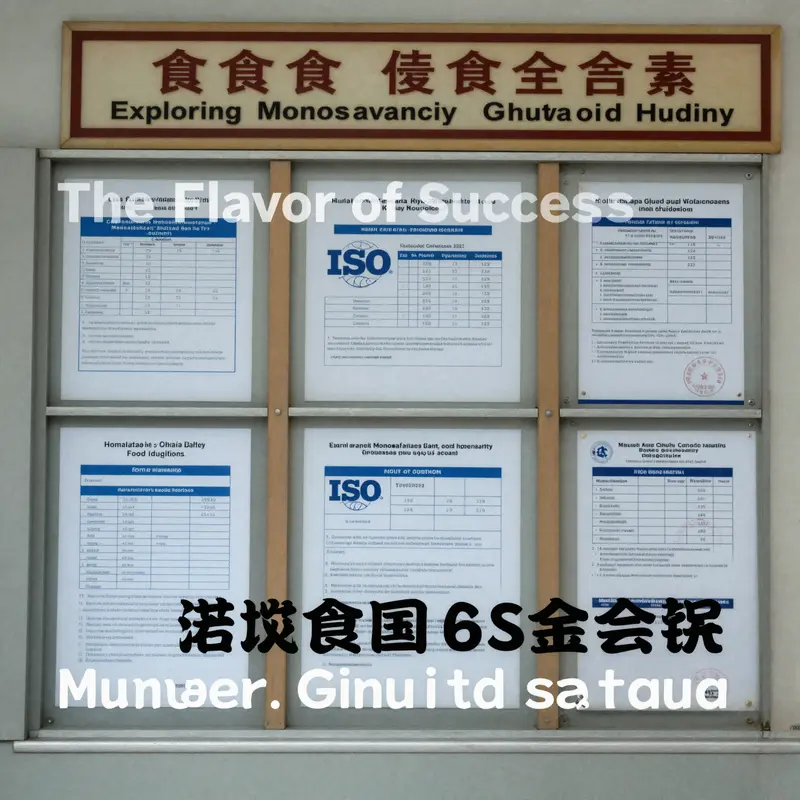
Monosodium glutamate (MSG) occupies a distinctive position in China’s processed-food ecosystem. It is not a niche additive but a well-established component that underpins the flavor profiles of a wide range of products—from savory soups and seasonings to snacks and ready-to-eat meals. Yet behind the familiar savory boost lies a regulatory framework that shapes every link of the wholesale chain, from raw materials to finished goods and their labeling. Understanding this framework is essential for anyone operating in the wholesale market for MSG-containing foods in China, because compliance does not merely prevent penalties; it underpins trust in suppliers, enables smoother cross-border trade, and clarifies the choices consumers can make in a complex marketplace where flavor and safety intersect. The core of this regulatory architecture rests on GB 2760-2014, the Chinese National Food Safety Standard for Food Additives, which governs how MSG can be used, in what quantities, and how products must be presented to the public. This standard is not static; it reflects ongoing risk assessment, evolving science, and the practical realities of mass production where margins of safety must be calibrated against consistent flavor delivery and consumer expectations. In wholesale practice, this translates into concrete requirements that every link in the supply chain must respect if business is to proceed with efficiency and confidence.
MSG’s permitted uses in processed foods are broad enough to accommodate a wide spectrum of modern formulations. The standard allows MSG as a permitted additive in soups, sauces, snacks, and canned goods, among other categories. This permissiveness has sustained its ubiquity in Chinese manufacturing, where producers seek to achieve uniform taste across large production runs and diverse product lines. However, the regulation imposes a clear boundary: a maximum allowable level in many foods is set at 10 g per kilogram. This ceiling is not universal across every product category; rather it serves as a standardized ceiling for broad classes of products where MSG is used to enhance savoriness without overwhelming other flavors or triggering consumer sensitivity concerns. For wholesale buyers, this means that specifications must be precise and that bulk purchases require careful consideration of which product categories are being formulated or repackaged, and what exact MSG content is declared on the label. In practice, manufacturers often aim for levels well below the ceiling to maintain flavor nuance, accommodate dietary restrictions, and align with labeling expectations that emphasize transparency rather than maximal potency.
Labeling is the other hinge on which consumer trust turns. Chinese labeling regulations require that MSG, when added to prepackaged foods, be clearly identified on the ingredient list either by its common name, monosodium glutamate, or by its identification number, E621. This requirement serves a dual purpose. It informs consumers who may wish to avoid certain additives for health, ethical, or personal preference reasons, and it provides a consistent reference point for regulators, retailers, and health inspectors. The insistence on explicit labeling—rather than ambiguous shorthand—helps prevent inadvertent miscommunication across the supply chain, especially in wholesale dynamics where products move quickly through multiple hands, from bulk suppliers to manufacturers, distributors, and retailers. The practice also intersects with broader packaging and consumer-protection rules, reinforcing the idea that flavor-enhancing additives should be traceable and predictable in both their function and their disclosure.
From a safety perspective, MSG has undergone extensive evaluation by both Chinese authorities and international expert bodies. Chinese regulators, aligned with global assessments, have historically concluded that MSG is safe for consumption at typical dietary levels. This consensus is grounded in comprehensive toxicological reviews and exposure assessments that consider typical eating patterns and the cumulative intake from various foods. The Joint FAO/WHO Expert Committee on Food Additives (JECFA) has reached similar conclusions, noting that MSG does not pose neurotoxic or adverse metabolic risks when consumed within established limits. It is important to acknowledge that such conclusions are built on a vast body of research, including studies that examine potential transfer of glutamate through maternal milk or across the placenta. While these studies contribute to a nuanced understanding of exposure in special populations, the overarching finding is that ingested MSG, within the authorized levels, does not significantly elevate glutamate in breast milk nor cross into fetuses at harmful levels. Yet, public dialogue about food additives often latches onto isolated findings, so the regulatory message—consistency, transparency, and adherence to validated limits—remains crucial for wholesale operations that must communicate risk and reassurance to retailers and consumers alike.
The wholesale landscape for MSG-containing foods in China is intertwined with the country’s role as a major producer and exporter of glutamate-related ingredients. Chinese manufacturers and trading entities supply a broad spectrum of products, from MSG powder to finished seasonings and composite flavor blends. In the wholesale channel, buyers often seek high-purity, food-grade MSG powder—frequently marketed with very high purity levels—and a suite of related flavorings and premixes designed for industrial-scale use. The market is characterized by substantial output and an emphasis on compliance, batch traceability, and robust quality management systems. For wholesale buyers, the interplay of purity, price, and certification becomes a daily calculus. Certifications such as ISO, HACCP, or FSSC 22000 are not mere formalities; they are practical signals of rigorous GMP (good manufacturing practice) and hazard analysis and critical control point (HACCP) frameworks that reduce risk across the supply chain. Suppliers that carry these credentials typically appeal to larger food manufacturers and exporters who must demonstrate consistent safety and quality to end markets in Asia, Europe, and beyond. The commercial logic is straightforward: certified suppliers are better positioned to meet the stringent demand for traceability, consistent performance, and reliable delivery that characterize modern wholesale procurement.
Within this regulatory and market context, procurement decisions often extend beyond the additive itself to the broader packaging and labeling ecosystem that accompanies MSG-containing foods. The packaging choice—for bulk shipment and for finished goods intended for retail—can influence both regulatory compliance and consumer perception. Take-away and ready-to-eat formats, including bulk containers and prepackaged meals, demand packaging that protects flavor while maintaining label integrity. In wholesale practice, packaging decisions are not cosmetic; they bear on regulatory compliance, shelf life, and the integrity of allergen and additive disclosures. This is where packaging innovation and regulatory compliance converge in a way that shapes day-to-day operations. As part of a modern supply chain, buyers and suppliers alike must ensure that packaging, labeling, and additive disclosures remain synchronized with regulatory expectations and consumer needs. Within this context, a practical example underscores the point: the industry often relies on standardized take-away and single-use packaging for ready-to-eat meals and for display samples during trade interactions. In the wholesale realm, such packaging choices are carefully selected to balance economic efficiency with safety and transparency. For instance, different food-service packaging solutions may be chosen based on material compatibility with flavoring agents, ease of labeling, and consumer safety considerations.
The alignment between regulatory expectations and packaging realities also has implications for cross-border trade. Export markets frequently demand documentation that substantiates compliance with GB 2760-2014 and related labeling requirements. Buyers who source MSG-containing ingredients or finished products from China may require certificates of analysis, supplier quality assurance statements, and proof of conformity to international safety standards. The wholesale market, therefore, operates at the intersection of domestic safety standards and international expectations. In this environment, the role of educational and transparency-driven communications cannot be overstated. Suppliers increasingly recognize that clear documentation, simple-to-understand ingredient declarations, and accessible safety data sheets shorten the path from factory to foreign ports and retail shelves. The result is a more predictable, efficient flow of products that meet both local regulations and the rapidly evolving demands of overseas markets.
Within this broader narrative, the daily realities of wholesale purchasing are shaped by practical considerations about cost, availability, and delivery reliability. The market for MSG in China is nuanced by the competing pressures of keeping costs competitive while maintaining the high standards required by the GB 2760-2014 framework. Wholesale buyers often negotiate long-term contracts with certified suppliers to secure stable pricing and consistent supply, taking advantage of bulk economics while ensuring that every batch remains within permitted limits and is accompanied by the appropriate labeling. Price dynamics in the bulk market are influenced by purity, packaging, and certification status. In general terms, bulk MSG powder and related flavoring products may be priced in a way that reflects these variables, with higher purity and formal certifications typically correlating with higher entry costs but greater downstream reliability in quality and regulatory compliance. In a market where flavor is inseparable from safety and consumer confidence, the premium attached to certified, traceable sources can be a strategic investment rather than a mere additional cost.
From a consumer-protection standpoint, the transparency of MSG use and labeling remains central. The regulatory system’s emphasis on explicit naming and precise content limits helps demystify what might otherwise be perceived as a hidden risk factor in highly processed foods. When wholesalers and manufacturers adhere to labeling requirements, they reduce the likelihood of misinterpretation by retailers and consumers and lower the chance of regulatory issues at points of sale or in import-clearance processes. The practical upshot is that well-structured compliance programs—encompassing supplier audits, batch-level traceability, and consistent labeling—are not only about avoiding penalties; they are about enabling a stable, predictable marketplace in which flavor-enhancing additives can be produced, packaged, and sold with confidence.
In the day-to-day operations of wholesale trade, this regulatory and market framework encourages a disciplined approach to product development and sourcing. Buyers who understand the GB 2760-2014 standards and the labeling requirements tend to place greater emphasis on supplier certifications, batch documentation, and the consistency of additive declarations across product lines. They also recognize that compliance adds resilience to the supply chain in the face of regulatory scrutiny and shifting consumer expectations. The interplay between regulatory compliance, certification-driven quality management, and transparent labeling thus becomes a strategic asset in the wholesale ecosystem. When manufacturers and traders align with these principles, they are better positioned to serve domestic chefs and food service providers as well as international customers who demand clear additive disclosures and reliable safety assurances. This alignment also supports the broader ambition of expanding access to MSG-containing products through responsible trade practices, clearly articulated through documentation and consistent, consumer-friendly labeling.
As a practical note for practitioners in this space, the journey from raw material to shelf-ready product is a chain of checks and balances. The MSG itself, whether as a powder or as part of a flavor premix, must be produced and handled in ways that respect GMP and HACCP principles. The additive must be compatible with the other ingredients in the formulation and with the packaging materials used for distribution and display. The labeling must reflect the exact content and form in which the MSG appears in the product, and any claims about flavor or aroma must be accurate and supportable. In wholesale procurement, this translates into a careful vetting of suppliers’ certifications, meticulous attention to batch records, and a willingness to demand documentation that demonstrates conformity to GB 2760-2014 and any relevant national or international standards adopted in target markets. The objective is not merely compliance for compliance’s sake; it is the cultivation of a reputation for reliability, safety, and flavor integrity that sustains long-term relationships with retailers, food-service operators, and export partners.
This chapter would be incomplete without acknowledging the practical, everyday choices faced by wholesale buyers when considering MSG-containing foods. The spectrum of options ranges from raw MSG powder intended for direct use in large-scale manufacturing to finished or semi-finished products that already incorporate MSG as part of a broader flavor system. Each option carries different regulatory and labeling implications, and each demands a different approach to supplier evaluation, quality assurance, and documentation. In all cases, the guiding principle remains the same: operate within a framework that ensures safety, preserves flavor, and respects the consumer’s right to clear information about the additives present in the foods they purchase. The wholesale market welcomes this clarity as a driver of trust, efficiency, and consistent quality across a broad and evolving landscape of MSG-containing products.
To bring a concrete, actionable thread into this tapestry, consider the packaging and logistics implications that often accompany wholesale orders. In practice, packaging is more than a container; it is a vehicle for safety, information, and convenience. For example, take-away and ready-to-serve formats frequently rely on standardized, consumer-friendly packaging that also supports clear labeling of additives. A representative packaging approach—designed with both safety and practicality in mind—illustrates how wholesalers and manufacturers integrate regulatory compliance into every stage of the product’s journey. For instance, standardized take-away packaging can be used in conjunction with ready-to-eat meals or flavor premixes that contain MSG, ensuring that labeling remains legible and that the product remains stable during transport and storage. The packaging choice, the labeling accuracy, and the stability considerations all feed back into the regulatory narrative, creating a coherent system where flavor is delivered consistently and consumers are fully informed. In this context, even a seemingly modest packaging decision—such as selecting a disposable kraft paper bowl with a lid for certain product formats—can contribute to a compliance-friendly, risk-aware supply chain. See more about such packaging options here: disposable kraft paper bowl for food package with lid.
Looking ahead, wholesale players in MSG-containing foods will continue to navigate a regulatory terrain that rewards transparency and reliability. The GB 2760-2014 standard remains the central reference point, but it exists within a broader ecosystem of risk assessment, consumer protection, and international trade norms. As markets evolve and scientific discourse advances, regulators may refine permitted levels, update labeling requirements, or introduce new guidelines to reflect emerging evidence. For wholesalers, staying attuned to these shifts is essential. This means cultivating strong relationships with certified suppliers, maintaining thorough documentation, and investing in training that keeps staff abreast of the latest regulatory interpretations. It also means embracing communication that helps retailers and food-service operators explain to customers how MSG is used, why it is permitted at certain levels, and how the product’s safety is assured through tested manufacturing practices and robust quality-control systems.
In sum, the wholesale market for MSG-containing foods in China operates within a carefully defined regulatory lattice. GB 2760-2014 sets the allowable uses and limits, labeling rules ensure transparency, and safety assessments from Chinese authorities and international bodies provide a consensus about risk at typical dietary exposure. The market’s vitality—its ability to supply a broad set of products to domestic and international buyers—depends on the alignment of production practices, packaging choices, and documentation with these standards. For practitioners, success hinges on a disciplined commitment to compliance, a clear communication of additive information to consumers, and a proactive approach to quality assurance that makes flavor both reliable and trustworthy. The flavor story that MSG tells in China is, at its core, a story of safety-first optimization: a shared commitment to delivering savory sensory experiences without compromising the confidence with which people reach for their next meal. As the regulatory landscape continues to mature, wholesale operators who embed these principles into their daily workflows will be best positioned to sustain growth, foster durable partnerships, and support responsible flavor innovation in one of the world’s most dynamic food markets.
External resource: For authoritative information on the standard that governs MSG use in China, see the GB 2760-2014 standard published by the National Health Commission. Access the official documentation here: https://openstd.samr.gov.cn/bzgk/gb/newGbInfo?gbCode=GB%202760-2014.
From Fermentation to Confidence: Navigating China’s MSG Wholesale Market and the New Consumer Ethos
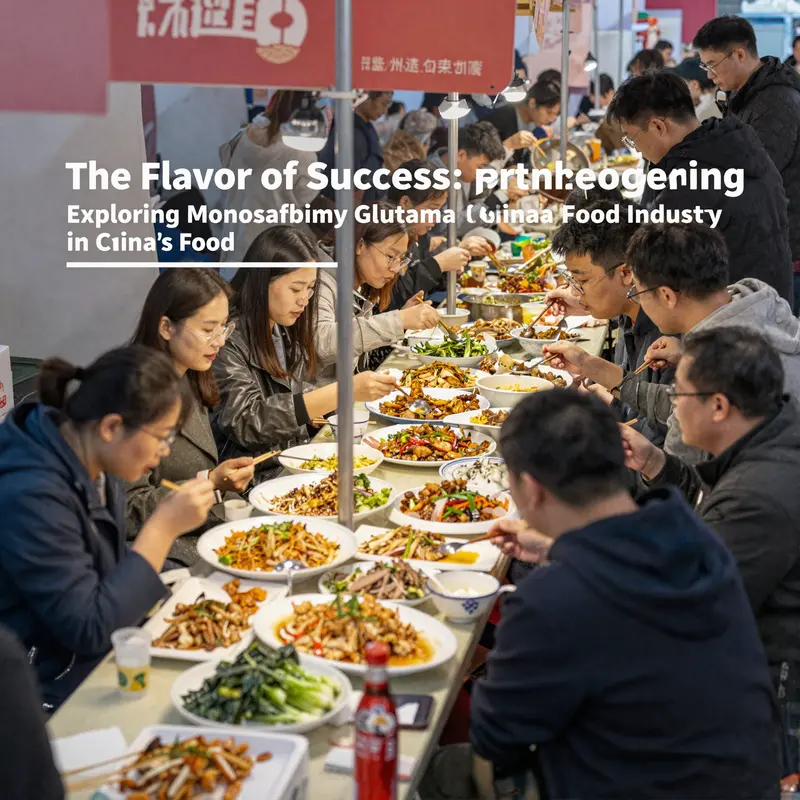
In the large, sprawling landscape of Chinese food production, monosodium glutamate (MSG) sits at a delicate intersection of flavor, safety, and supply chain sophistication. The wholesale ecosystem for MSG and MSG-containing ingredients is not merely a conduit for sweetening, umami, or shelf-stable taste. It is a microcosm of how China’s vast manufacturing base has learned to scale, certify, and communicate in a market that prizes both tradition and modernization. The nation’s status as one of the world’s leading producers and exporters of MSG reflects a broader industrial capacity: a dense network of producers, traders, and processors that can deliver high-purity, food-grade MSG powder, seasoning blends, and composite condiments in bulk to domestic diners, food service operators, and international buyers. Yet the wholesale narrative cannot be fully understood without reading the evolving consumer sensibilities that increasingly shape what gets produced, how it is labeled, and which stories about production methods are compelling enough to win trust.
On one level, the wholesale market remains defined by scale and reliability. Chinese manufacturers and trading companies align with robust quality-management standards to satisfy ubiquitous demand in seasoning, instant meals, snacks, soups, and diverse processed foods. The reference to 99% purity for food-grade MSG and the ability to customize blends for specific applications—such as instant noodles, hot pot base, and pre-made dishes—highlights a market that treats flavor enhancers not as singular ingredients but as components in larger culinary systems. The wholesale price band of approximately per kilogram in the mid-teens to mid-twenties (USD) underscores the economics of bulk procurement, where small margins on bulk orders translate into steady volume, and where buyers look for scalable supply lines that can weather market fluctuations and regional demand patterns. The wholesale space also tends to reward traceability, supplier reliability, and production transparency, which in turn intersects with evolving consumer expectations about how ingredients are sourced and how manufacturing processes unfold behind the scenes.
Yet the wholesale dynamics do not exist in a vacuum. They are tightly braided with a consumer base whose attitudes toward MSG are becoming more nuanced, even as the appetite for flavor remains strong. The latest market analyses point to a paradox that has persisted for years: while MSG has faced persistent health-related skepticism, the overall market for MSG-containing products continues to expand. The paradox is not simply about taste; it is about trust. Consumers are increasingly asking not only whether MSG is present, but how it is produced, what its source materials are, and how the production process aligns with broader ideas about purity, naturalness, and clean labeling. This shift has a clear resonance with the way manufacturers and wholesalers present their offer. The core idea is no longer “what it does” in a dish, but “how it is made, where it comes from, and how confidently it can be trusted.”
A pivotal driver of this evolving trust is the rising demand for natural and minimally processed ingredients. Chinese consumers are increasingly oriented toward the flavor systems of traditional cuisines but expect modern assurances that ingredients are produced in ways that modern science can verify. Fermentation-derived MSG—MSG produced through microbial fermentation rather than traditional chemical synthesis—emerges in consumer discourse as a embodiment of this double aspiration: it is perceived as more natural-sounding, less chemically connected, and more aligned with contemporary health narratives that prize “clean” processing. This perception is not merely a fad; it is anchored in a broader discourse about sustainability, safety, and identity. Market observers have highlighted fermentation-derived MSG as a high-potential segment in the 2025 market landscape, arguing that it harmonizes with a health-forward consumer mindset that seeks products aligned with “purity” and “no additives” language, even within the context of a product category that has historically carried a tag of being fundamentally functional rather than glamorous.
This shift does not erase the friction between health concerns and culinary practice. A revealing data point from 2019 indicates that a large majority of Chinese consumers—around 94%—reported having reduced their salt intake. In this climate, salt and flavor enhancers like MSG are often grouped by consumers as elements to be moderated or avoided. The tension here is instructive: it shows a market split, where part of the population seeks to curb seasoning in the name of health, while another part continues to pursue robust flavor experiences with greater transparency about how those flavors are achieved. For wholesale suppliers, the implication is clear: there is demand for both lower-sodium options and high-quality, naturally produced MSG variants that can be marketed not as a “chemical additive” but as a facilitator of authentic taste within a healthier framework. The challenge is to harmonize sensory expectations with health narratives and to provide a credible story about production that can support labeling, claims, and consumer trust.
The consumer-facing narrative around MSG is thus becoming a story about provenance as much as about potency. Producers and wholesalers who want to thrive in this environment are often those who can articulate how MSG is produced and why fermentation-derived methods may be preferable to conventional chemical synthesis in the eyes of a significant segment of consumers. Fermentation processes, in which micro-organisms metabolize substrates to yield glutamic acid that is subsequently neutralized with sodium to form MSG, are increasingly framed as aligning with natural fermentation traditions, even though the science operates at a commercial scale and under tightly controlled industrial conditions. The public-facing case for fermentation-derived MSG emphasizes cleaner labels, reduced perception of chemical processing, and alignment with modern health narratives. It is not simply a matter of technical superiority; it is about how the market communicates those technicalities in ways that resonate with consumer values. Marketers and supply-chain professionals thus face the double task of maintaining rigorous safety and quality standards while crafting compelling narratives about how a simple flavor enhancer can be produced in ways that modern consumers interpret as more trustworthy or more aligned with natural food systems.
To support wholesale success, many Chinese suppliers pursue certifications and standards designed to reassure buyers across different markets. ISO, HACCP, and FSSC 22000 are not abstract badges; they are practical signals that a factory adheres to documented quality-management systems, hazard analysis, critical control points, and comprehensive food-safety management. In a market where regulation and consumer perception intersect so visibly, such certifications serve as practical bridges between production realities and consumer expectations. They help to ensure not only that MSG arrives at processing facilities in consistent quality but also that the accompanying documentation—origin of raw materials, traceability, storage conditions, and handling protocols—meets the standards expected by food service operators, retailers, and international customers. The emphasis on robust certification complements the broader trend toward greater transparency in the supply chain, a trend that is increasingly nonnegotiable for buyers who must comply with strict labeling and safety standards across multiple jurisdictions.
Beyond certification, the global diffusion of Chinese MSG-containing ingredients also depends on a sophisticated understanding of how end users perceive and use these products. In the domestic market, the consumer’s journey often begins with a simple recognition of umami as a flavor pillar and evolves into an awareness of how flavor enhancers are integrated into a wider food system. Consumers who seek natural or fermentation-derived MSG tend to evaluate products through a lens of production narratives, including mentions of fermentation, purified ingredients, and environmental considerations. They may also weigh product attributes such as purity, absence of contaminants, and the perceived absence of unnecessary additives. For wholesalers, this means that success is increasingly tied to how products are positioned, how much information can be disclosed on packaging, and how effectively a supplier can demonstrate that fermentation-derived MSG does not compromise safety or quality. The marketplace rewards suppliers who can deliver not just robust ingredients but credible, verifiable stories about how those ingredients fit into healthier or more sustainable food systems.
The supply chain reality of MSG in China, particularly in wholesale terms, also points to the critical role of customization and functional integration. Many manufacturers offer not only MSG powder but also seasoned blends and ready-to-use flavor systems that combine MSG with other umami-enhancing components and stabilizers designed for specific product categories. For instance, composite seasonings tailored for instant noodles, hot pot bases, and ready meals reflect a strategic approach to supply-chain efficiency: instead of buyers sourcing multiple items from different suppliers, they can obtain a cohesive flavor system from a single partner. This approach helps maintain consistency, reduce variability, and streamline production lines, all of which are valuable in a market that prizes reliability and speed. At the same time, customization raises questions about transparency and labeling. Consumers and regulators increasingly scrutinize ingredient lists and manufacturing processes. Producers respond by aligning blends with the GB 2760 standard—a core reference in China for food additive use—and by investing in traceability tools that can reliably document how flavors are produced and blended, what raw materials are used, and what steps are taken to prevent cross-contamination. The alignment with GB 2760 is not merely a compliance exercise; it is a strategic posture that signals responsibility and quality to customers who operate across different regulatory environments and who demand assurance with every purchase.
As the consumer and wholesale narratives converge, a central question emerges: how can producers translate the abstract promise of “natural” or “fermentation-derived” MSG into concrete purchase decisions for a wide range of buyers? The answer lies in a combination of clear, transparent communication and tangible evidence. On the communication side, producers can emphasize the connection between fermentation and flavor purity, packaging that clearly communicates production methods, and third-party certifications that reassure buyers about safety and quality. On the evidence side, producers can provide batch-level traceability, detailed origin stories for raw materials, and documentation that demonstrates rigorous control over processing conditions. For many buyers, these elements reduce perceived risk and enable them to integrate MSG products more confidently into their own brands and product formulations. In a market where the consumer is increasingly vigilant about health claims, the authenticity of a production story can be as influential as the technical superiority of the ingredient itself.
The chapter of supply chain realities does not overshadow the immutable fact that taste is still king. Wholesalers and manufacturers recognize that while health narratives and natural labels carry weight, the primary value proposition remains flavor efficiency. MSG’s role as a versatile flavor enhancer—amplifying savory notes, shaping mouthfeel, and stabilizing taste across a spectrum of products—continues to justify bulk procurement. The challenge is to balance the practical demands of mass production with the aspirational expectations of a more health-conscious consumer base. The market’s trajectory suggests a gradual but meaningful reconfiguration: higher-quality, fermentation-derived MSG offerings may command premium positioning, while traditional, well-regulated MSG products remain essential for cost-competitive mainstream items. The two models need not be mutually exclusive; they can exist in a spectrum that reflects consumer segmentation, product category, and regional preferences. In practice, this means that wholesale buyers will increasingly seek suppliers who can offer both reliable conventional MSG and fermentation-derived variants, backed by transparent production stories, rigorous safety records, and robust supply continuity.
Finally, the regulatory frame quietly underpins every meaningful development in this space. The GB 2760 standard anchors the permissible use of food additives in China, guiding how MSG and MSG-containing ingredients can be deployed across a wide range of foods. Producers who go beyond mere compliance—and who demonstrate how their processes meet or exceed safety expectations—create a stronger value proposition for buyers who themselves must navigate multi-jurisdictional requirements. The synergy between regulatory compliance and consumer trust is particularly important in the context of fermentation-derived MSG, where the narrative leans on concepts of naturalness and purity. Wholesalers who can effectively communicate this alignment—through packaging, labeling, and documentation—stand to gain a durable advantage as health-conscious segments expand their horizons without sacrificing culinary satisfaction. In this evolving landscape, the wholesale market for MSG in China becomes less about a single ingredient and more about a holistic ecosystem where flavor, safety, provenance, and transparency reinforce one another, enabling producers and buyers to participate in a shared story of responsible growth.
The long arc of this chapter suggests that the future of MSG in China will be defined not only by production capabilities and price signals but also by how convincingly the industry can translate scientific realities into everyday confidence. Fermentation-derived MSG provides a compelling narrative thread—one that resonates with modern consumer sensibilities without erasing the central role of flavor. Yet it remains essential to balance aspiration with evidence: to prove that “natural” does not come at the cost of safety, that “transparency” can be verified, and that wholesale access remains secure across diverse markets. If the industry can maintain this balance, the MSG story will continue to unfold as a robust, multi-faceted chapter in China’s food economy, contributing to a broader conversation about how modern supply chains can deliver traditional pleasures with greater clarity, accountability, and respect for consumer choice.
External resource for further context on MSG safety and regulatory considerations: https://www.fda.gov/food/food-additives-purity-guidance/monosodium-glutamate
Final thoughts
As we navigate the intricate landscape of monosodium glutamate wholesale in China, the importance of understanding market dynamics, health regulations, and shifting consumer preferences becomes apparent. With MSG remaining a key ingredient for flavor enhancement across many food products, businesses in the food industry must stay informed about both the opportunities and responsibilities that come with sourcing and using MSG. From beverage chains to event planners, the insights shared here empower stakeholders to make informed decisions while ensuring consumer health and satisfaction. Embracing these insights can lead to enhanced offerings and stronger connections with customers in this competitive market.