
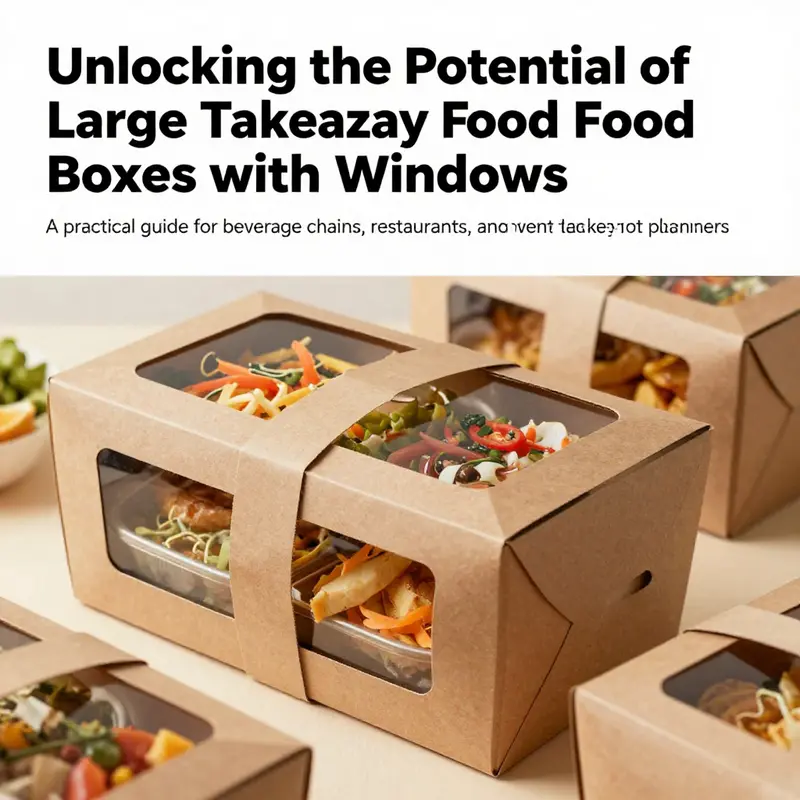
As the demand for food deliveries continues to surge, the importance of quality takeaway packaging has never been clearer. Large takeaway food boxes with windows are ideal for showcasing culinary delights, particularly for businesses like bubble tea shops, restaurants, food trucks, and catering services. This packaging not only protects food during transit but also enhances visibility and appeal, ensuring that customers are attracted to the contents. In this guide, we will explore essential product features, key manufacturing regions in China, strategic procurement advice, and reliable platforms for sourcing these indispensable packaging solutions.
null
null
Windowed Giants: Navigating China’s Core Regions to Scale Large Takeaway Boxes
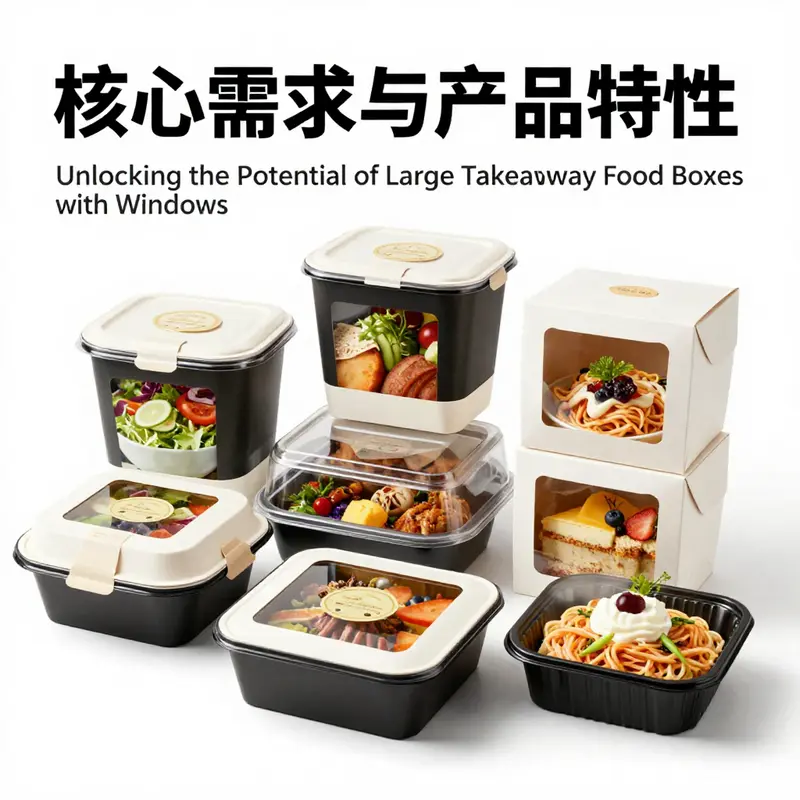
The large takeaway box with a window is more than a vessel for food; it is a careful negotiation between appetite and assurance. Visual appeal matters as soon as a customer glances at a tray; a transparent window invites a promise of freshness, while the container must still protect flavor, texture, and temperature on the journey from kitchen to curbside. In high-volume environments, these boxes shoulder heavy loads, resist leaks, and survive the bumps of urban logistics. The tension between clarity and durability shapes every facet of design—material choice, seal integrity, printing, and the interplay between window area and structural strength. For B2B buyers, the challenge is less about selecting a single feature and more about integrating a coherent system: a reliable supply chain capable of consistent quality, rapid response to demand shifts, and the ability to customize branding without sacrificing performance. This is where regional manufacturing ecosystems become decisive, because scale without sophistication is just a louder version of a familiar problem, and sophisticated scale requires a map of regional strengths that align with the needs of large-format, windowed takeaway packaging.
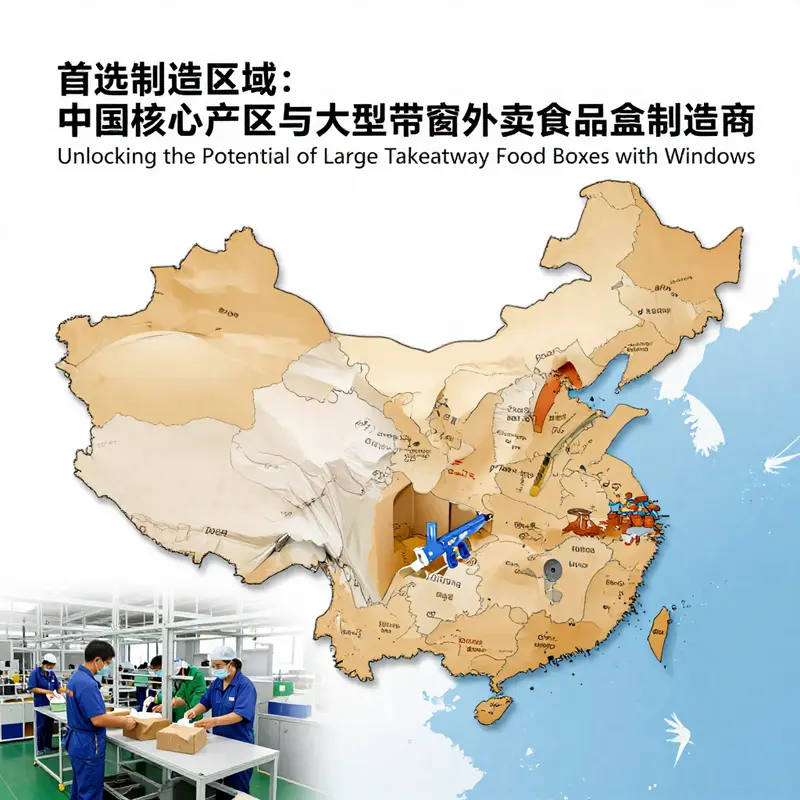
China’s core production zones for large takeaway boxes with windows sit at the intersection of maturity, automation, and export readiness. The Guangdong cluster, anchored by its dense packaging industry and proximity to dynamic consumer markets, operates like a living workshop where digital printing, hot stamping, and high-precision lamination coexist with fast-turnaround prototyping. In this region, manufacturers often offer end-to-end capabilities—from concept and artwork integration to small-batch sampling and mass production. The advantages are not merely geographic. The supply chain in this area has evolved into a tightly synchronized network, where raw materials, converting equipment, and aftermarket components are readily available. The result is a capability that supports complex branding, intricate window designs, and the integration of eco-friendly substrates without delaying delivery schedules. For brands that prize customization and brand storytelling through packaging, Guangdong’s ecosystem reduces the friction between concept and mass production, enabling programs that require either frequent design refreshes or large, consistent runs with minimal lead time.
Beyond Guangdong, automation-driven industrial hubs further down the coast and inland underpin rapid scale, reliability, and cost discipline. In Jiangsu and Anhui, the emphasis often shifts toward integrated manufacturing ecosystems that knit mold design, machine production, and finished goods together in a way that minimizes bottlenecks. These regions leverage automated production lines that maintain consistency even as order volumes rise, reducing oscillations in output quality and enabling predictable timelines. For buyers managing multi-year procurement programs, such capacity stability translates into lower risk: the ability to honor long-term packaging commitments, keep up with periodic demand surges, and respond to seasonal campaigns without renegotiating schedules. The advantage here is not only raw speed but also the discipline that automation imposes—quality metrics become part of a repeatable process rather than a sporadic result of individual operator performance.
Export-oriented platforms and coastal trading channels add another layer to the regional story. Fujian, with its forward-facing logistics posture and multi-language export experience, serves as a flexible conduit for brands aiming at international markets. The strength lies in the ability to manage small-batch trials and rapid adjustments while keeping compliance checks in view. Producers in this corridor are accustomed to handling regulatory expectations across diverse jurisdictions, from Europe to North America, and they commonly align production lines to accommodate certifications such as FDA or LFGB when needed. For brands testing new concepts or piloting regional menus, Fujian-based operations can bridge the gap between prototype refinement and full-scale launch. The regional approach—combining Guangdong’s branding prowess with Jiangsu and Anhui’s automation discipline and Fujian’s export orientation—produces a spectrum of capabilities that no single locale can offer alone.
In this layered geography, one practical question often arises: how do these regions translate strategy into tangible outcomes for large takeaway boxes with windows? The answer lies in several converging threads. First, material science has matured to offer attractive combinations of clarity and barrier performance. Clear window films, laminated structures, and barrier papers can deliver both visibility and resistance to moisture, grease, and mechanical stress. Brands are increasingly prioritizing substrates that align with sustainable goals, choosing biodegradable or recycled content where feasible, and pairing them with adhesives and coatings that meet rigorous food-safety standards. Second, printing and finishing technologies allow high-contrast branding and durable labels that resist wear during transit, while still preserving the integrity of the window. Third, mechanical design, including edge geometry, seal profiles, and venting strategies, ensures that the box remains stable under stacking during rack storage and on delivery bikes or vans. When these elements converge, the resulting packaging not only protects its contents but also communicates a brand’s promise with clarity and confidence.
For buyers navigating supplier selection, the regional mosaic offers a pragmatic framework. In the Guangdong heartland, the emphasis often centers on cadence and customization: faster design-to-production cycles, robust color matching, and the capacity to execute complex window geometries at scale. This is particularly valuable for brands that demand a strong, consistent retail look across thousands of outlets and require tight control over the visual narrative of their meals. In Jiangsu and Anhui, the focus tends to tilt toward mechanical reliability and process control. There, the advantage is the ability to plan long-range production schedules, optimize line utilization, and secure consistent output even as design iterations proliferate. Finally, Fujian’s export-first posture makes it a natural choice for brands with an ambitious international footprint, offering a hands-on understanding of cross-border compliance, multi-language communications, and a portfolio of capabilities that accommodate regional certifications without sacrificing speed.
At the procurement level, the decision framework should balance quality, sustainability, cost, and technical support. Quality control remains non-negotiable: buyers should verify certifications such as ISO 9001 and, where relevant, FSC for fiber sourcing or HACCP-related assurances. The best-performing suppliers demonstrate a track record of rigorous testing—pressure and leak tests for the lid-and-window interface, drop tests for stackability, and compatibility tests with typical fill temperatures used in large meals. Sustainability has moved from aspiration to expectation. Buyers increasingly favor suppliers who document a lifecycle approach to packaging materials, prefer biodegradable or recycled content, and demonstrate alignment with regulatory frameworks like EU EPR rules or equivalent programs in other markets. Yet sustainability must be weighed against total cost, because the lure of the lowest unit price can obscure long-term costs tied to quality issues, returns, or brand damage from inconsistent performance.
Technology and design support often separate aspirational suppliers from dependable partners. A supplier who can offer free prototyping, 3D design files, or packaging optimization advice provides essential value in the early stages of a program. The best collaborations view packaging as a system rather than a one-off product: a windowed box that works well with the liner, lid permeability, stacking geometry, and shelf presentation. The design conversation should also consider branding integration—the ability to reproduce logo fidelity, color accuracy, and texture through a coordinated printing and lamination plan. In markets where customization is a daily requirement, the fastest route from concept to production is paved by a supplier who can demonstrate tangible results in a short cycle, without compromising the integrity of the window or the seals. That is the essence of scale with quality: consistent performance across thousands of batches, with room to adapt to evolving consumer expectations.
If a brand seeks a concrete pathway to align regional capabilities with its packaging strategy, it should view the regional hubs as a spectrum rather than a map of discrete options. The Guangdong cluster offers fast, brand-forward execution. Jiangsu and Anhui provide the backbone of automation and process discipline to sustain long-term commitments. Fujian opens the door to international markets and regulatory agility. The best approach is to start with a clear set of design constraints—window size, seal geometry, material family, printing requirements, and sustainability goals—and then allow the regional ecosystem to propose the most cost-effective configuration that meets those constraints, rather than forcing a one-size-fits-all solution. In practice, this means engaging early with suppliers who can demonstrate a coherent factory workflow: from mold design and die-cutting through lamination, window integration, and final packaging validation. The payoff is a reliable supply chain with predictable lead times, consistent quality, and the flexibility to grow with a brand’s evolving menu and audience.
For brands that want to see a tangible example of how design complexity translates into scalable manufacturing, consider how a single packaging concept—an upscale, transparent window that does not compromise grease resistance—can be realized across different facilities. The same window geometry, the same sealing strategy, and the same print quality should perform identically whether produced in a Guangdong unit or an Anhui site integrating automated lines and batch-controlled processes. That congruence—achieved through standardized specs, rigorous testing, and shared process controls—reduces risk and accelerates time to market. It also creates a reproducible basis for audits, supplier development plans, and long-term sourcing strategies that support a brand’s growth trajectory without constantly requalifying new suppliers. As the market for large windowed takeaway boxes expands, this alignment across regional strengths will become an increasingly decisive factor in choosing partners who can deliver both scale and consistency.
Internal reference for further exploration: customized-design eco-friendly 1300ml kraft soup-salad paper bowl with lid.
External resource for broader context on packaging capabilities and market dynamics: https://www.hongtepack.com
Seeing the Window: Strategic Sourcing for Large Windowed Takeaway Boxes
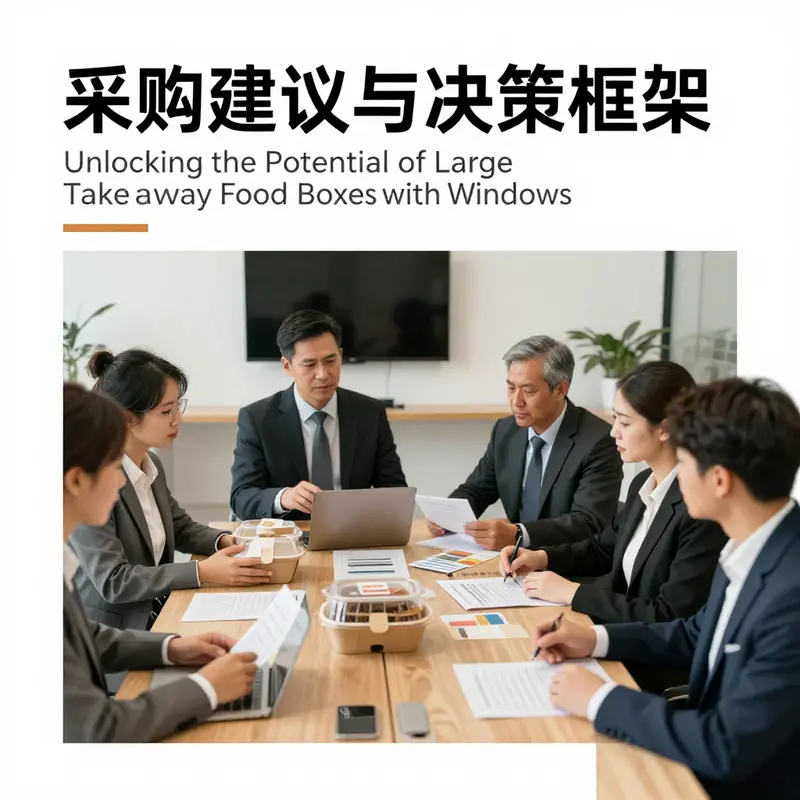
The drive to help meals travel from kitchen to curbside with dignity rests on a deceptively simple hinge: the large takeaway box with a transparent window. When a customer can glimpse a steaming plate of pasta, a vibrant salad, or a glossy slice of cake through clear, food-safe plastic, the decision to grab is made in seconds. But the journey behind that window is complex, especially for B2B buyers tasked with securing supply from manufacturers who can deliver at scale without compromising safety, brand integrity, or margin. In this landscape, a thoughtful, end-to-end sourcing approach becomes a competitive differentiator. The product itself—typically sized around 500ml to 700ml for a full meal—must blend visibility with resilience. The window, usually a PET or PP laminate, has to strike a balance between high transparency and food-contact safety, resisting temperatures encountered in a typical fast-service environment. It cannot haze or warp under heat, and it should avoid leaching while maintaining optical clarity even after repeated refill cycles or rough handling in transit. The container body and its lid must cooperate to form a robust seal that prevents leakage and preserves temperature. A double-layer insulation concept or a tightly engineered seal system—whether a snap-fit, a clip, or a widely enclosed edge—helps extend warmth and keep moisture in check. These features are not cosmetic; they translate directly into customer satisfaction and, ultimately, brand loyalty. If a box fails to hold up in the first mile from the kitchen to the customer, the entire value proposition collapses, regardless of how striking the window looks in marketing images. Against this backdrop, procurement decisions must look beyond the veneer of design and consider the full spectrum of technical, regulatory, and supply-chain risks that accompany mass production in this segment. The choice of region for manufacturing matters as much as the choice of material or the presence of a glossy insert in a brochure. In the current market, three regional clusters stand out for this class of packaging: Guangdong in the south, Zhejiang in the east, and Fujian along the coast. Each brings its own strengths to the table and influences how buyers approach risk, lead times, and customization.
Guangdong remains the anchor for high-end customization and rapid delivery. The province hosts one of the most mature packaging ecosystems in the world, with dense supplier networks capable of supporting complex branding through advanced techniques such as high-precision digital printing and hot stamping. The proximity to major logistics hubs accelerates the flow of goods to market, a crucial advantage for brands with tight launch calendars or frequent seasonal promotions. In practice, a Guangdong supplier can often offer end-to-end services—from concept and graphic design support to prototype development and oriented print finishes—within short cycles. This makes it a natural home for enterprise-level orders that demand both speed and sophistication. The experience of manufacturers in this corridor is also seldom isolated to a single box style; many operate across a spectrum of formats and materials, enabling tighter coupling with a brand’s evolving visual identity while preserving the supply chain’s agility.
By contrast, Zhejiang represents an industrial powerhouse of automation and production efficiency. The region’s value proposition centers on scalable, highly automated production lines designed to stabilize output across large batches. The result is predictable delivery times and consistent quality, even as order quantities scale toward tens or hundreds of thousands. For brands seeking long-term volume commitments and a clear path to reducing total landed cost through process optimization, Zhejiang-based manufacturers offer a compelling combination of speed and reliability. Their integrated ecosystems—mold design, equipment manufacturing, and finished goods assembly—maximize repeatability and minimize the risk of variation between lots. In practical terms, this translates into shorter reaction times when a brand needs to adjust specifications mid-cycle, whether due to regulatory updates, new branding guidelines, or shifts in consumer preferences.
福建省沿海地区则凭借出口导向型的灵活性,成为国际市场扩张的重要枢纽。企业在这一带通常具备更强的外贸经验,熟练处理多语言订单和跨境合规认证,且对小批量试单的友好度较高。对正在进入新市场的品牌而言,福建的制造商提供了一条更为灵活的路径来测试不同设计、材料或包装组合的市场反应。对于那些希望降低初期投入风险、快速试水并逐步扩大覆盖面的买家来说,这样的产能基础具有现实意义。
在采购对话中,风险管理是不可或缺的一部分。透明窗口的稳定性依赖于材料的食品安全等级、迁移量测试以及对热端应用的耐受性评估。采购方应要求第三方检测报告,覆盖总迁移量、重金属、微生物指标等关键参数,并要求出具 CMA 认证的检测机构报告。此外,供应商应当具备食品相关产品生产许可证,以及符合食品接触材料国家标准 GB 4806.1-2016 的资质。这些资质不仅是合规的门槛,也是对长期供货稳定性的背书。在环保与可持续性方面,越来越多的品牌愿意将材料选择与生命周期评估结合起来,优先考虑生物基、可降解或高比例回收材料,以配合日益严格的监管与消费者对企业社会责任的期望。
对成本的考量也需走出价格表的第一层。单价只是总成本的一部分;起订量、运费、包装设计服务费、以及对品牌定制要求的增值服务都会在最终成本结构中叠加。以市场行情为参考,优质大型带窗餐盒在小批量至中等规模采购时的批发价通常在每个 ¥0.9 到 ¥1.5 之间,若采购量突破一万件,降价空间可能进一步扩展至约 ¥0.7 左右。确保支付方式的安全性同样重要,优先考虑支持合规支付与交易保障的平台,同时确保供应商在合同中明确了售后与破损补发条款。
在设计与材料的选择上,透明窗的设计自由度往往与成本和生产复杂度相互制约。一个常见的折中是采用高透光率的 PET/PP 窗板,与主体材料实现良好粘合与热稳定性。若品牌希望在包装上实现更高的视觉冲击力,宜探索印刷与表面处理的组合,如局部镭射、烫金或局部色彩点缀,但前提是这些工艺不会干扰窗板的清晰度或安全性。
从渠道策略看,跨境和国内采购平台都扮演着重要角色。以 阿里巴巴国际站 为例,买家可以直接对接制造工厂、查看企业资质、核验工厂实景以及筛选具有政府抽检合格记录的供应商。对多品牌、多风格的需求,建议以“样品测试+小批量试单”为阶段性目标,在达到对质量和交付的信心后再扩展产能。这一过程不仅是对产品本身的验证,更是对供应商流程、品质控制和项目管理能力的全面评估。
在视觉呈现与品牌对齐方面,设计的把控并非附加项。一个具备全产业链能力的供应商,往往能够在包装结构、材料、印刷与成品一致性之间实现更高的协同。对于寻求强定制能力、以及需要在不同市场之间保持品牌一致性的企业,建立清晰的技术规格和测试标准就显得尤为重要。这包括对样品的耐热、抗压和密封性进行实地测试,以及对样品进行分布式运输模拟,以判断在实际物流链路上可能出现的风险点。
再者,内部设计团队与外部供应商之间的协作应尽可能无缝。某些供应商在包装结构优化方面提供直接的专业建议,帮助品牌在不牺牲稳定性的前提下,实现更轻量化或更高效的堆叠性。这类咨询通常以免费打样、3D 设计或结构优化建议的形式出现,成为减少迭代周期、缩短上市时间的关键环节。
在市场导向方面,购物者对包装的第一眼感受正在成为影响销售的重要因素。因此,尽管价格仍然重要,越来越多的企业愿意为具有可追溯性、材料来源明晰、以及具备生命周期评估的数据支持的包装支付溢价。这一趋势推动供应商更加重视从原材料采购到终端回收的全过程治理,以及对 EPR(扩展生产者责任)等法规要求的合规性。通过对比不同区域的供应商能力,买家可以构建一个多维度的供应商组合,以实现对不同市场与季节性需求的快速响应。
在实践中,合适的采购路径会以一个以数据驱动的评估框架为支撑。一个四维模型可以帮助买家在新供应商评估中保持清晰:产品力、资质与合规、供应链韧性、以及售后服务与定制能力。这些维度结合起来,能在初期筛选、样品测试、以及最终合同签订等关键节点提供量化的决策支持。通过对历史交付时效、仓储能力、以及跨区域物流的综合评估,买家可以更准确地判断潜在风险并制定应对策略。
若要进一步了解设计与材料的具体实践,可以参考行业中的标志性案例和教程式资源,这些资源通常会提供从原材料选择到成品组装的全流程洞见。一个可行的入口是对“ octagonal kraft paper takeaway box”这类设计的案例研究进行分析,看看在实际生产中如何实现结构稳定性与品牌形象的平衡。你可以在此处查看一个相关的设计示例: octagonal kraft paper takeaway box packaging。
在全球贸易和监管环境日益紧密的当下,合规与质量控制应成为采购的基线,而不仅仅是风险缓释的工具。2025 年及以后的监管动态强调了对食品接触材料的严格测试、对产品合规证书的核验,以及对供应链透明度的追求。对于寻求稳定长期合作的品牌而言,选择一个在区域内具有成熟供应链与高质量控制体系的制造商,并通过可验证的测试、证书和第三方检验来支撑采购决策,是实现可持续增长的关键。最终,优质的带窗外卖盒不仅能提升单次交易的成交率,更能在一整条服务链上提升品牌信任度与重复购买率。
外部参考与监管背景
在评估与选型过程中,理解本地监管框架与市场监督机构的最新要求至关重要。相关法规与监管信息可参阅公开资源,以获取对近年来质量监管、抽检实践和合规要求的系统解读。External reference: 天津市市场监管委关于食品相关产品监管工作的答复,链接如下:https://www.tjmarket.gov.cn/xxgk/zwgk/tzgg/202508/t20250807_392385.html
对内部链接的说明:在文中提及设计与材料的复杂性时,提供了一个具体的设计案例入口,帮助读者在实际选型时获得直观对比。请阅读此页面以获得对 octagonal kraft paper takeaway box packaging 的进一步理解与启发。
Using Authoritative Procurement Platforms to Secure High-Quality Large Takeaway Food Boxes with Windows
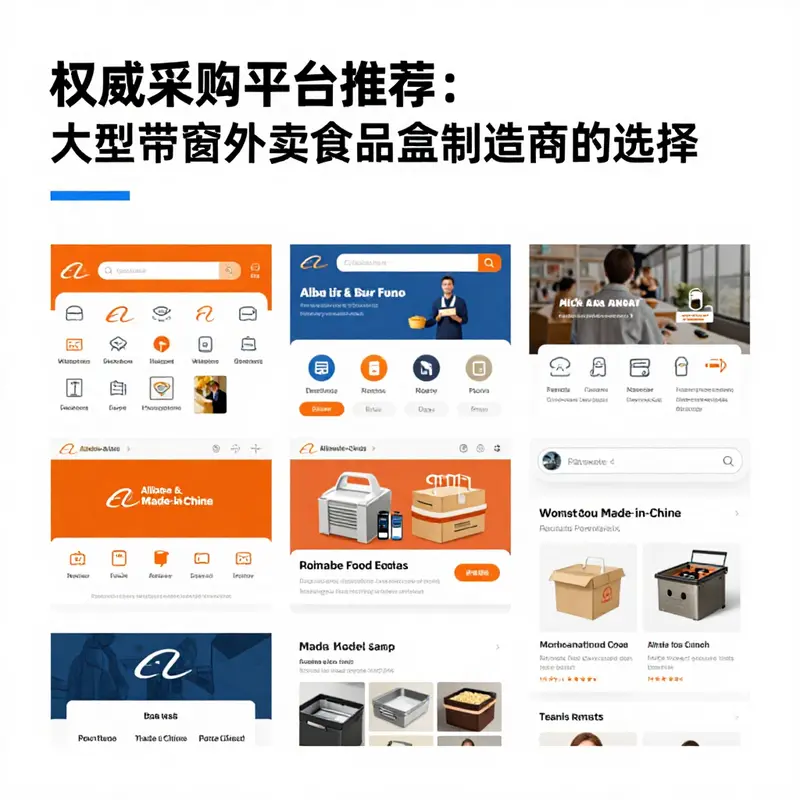
Choosing the right procurement platform is the decisive first step when sourcing large takeaway food boxes with windows. For buyers who need reliable supply, consistent quality, and clear compliance records, an authoritative B2B platform reduces risk and accelerates decision-making. A strong platform should do more than list suppliers. It must enable meaningful verification, support deep supplier discovery, and connect online search with offline validation. This chapter explains how to use these platforms effectively, why a curated marketplace focused on high-end manufacturers matters, and how to translate platform signals into a practical sourcing plan for windowed, leak-resistant food boxes.
Begin by defining the capabilities you need from suppliers. Large takeaway boxes with windows must meet multiple, simultaneous requirements: sturdy structure for transport, secure sealing to prevent spills, a transparent window that showcases the product, printing and branding capabilities, and material compliance for food contact. Specify these requirements in functional terms. For example: “500–700ml capacity; PET or PLA window compatible with compostable lid; double-seam edges for liquid resistance; digital CMYK printing with matte lamination option; compliance with FDA or LFGB.” Having precise specs transforms the platform search from exploratory browsing into a direct qualification exercise.
Not all platforms are equal. A top-tier procurement platform focuses on higher-quality manufacturers, often those servicing global retail chains and food-service brands. Such platforms typically combine online supplier profiling with offline verification events. They attract manufacturers that invest in automation, certifications, and export capabilities. These suppliers are more likely to offer one-stop services: structural design, material options (including compostable alternatives), printing and finishing, and logistics coordination. For buyers prioritizing brand image and operational stability, this concentration of capable vendors is invaluable.
When you land on a supplier profile, evaluate three categories of signals: credentials, capability, and evidence. Credentials include company certifications and third-party attestations. Look for ISO 9001 for quality systems, FSC or equivalent for sustainable paper sourcing, HACCP for food safety processes, and documented tests for migration or heat resistance. Capability covers production scale and technology: automated die-cut machines, digital printing lines, eco-lamination options, and capacity for high-volume runs. Evidence is tangible proof: factory photos, production videos, verifiable client lists, sample reports, and inspection records. Platforms that require suppliers to upload audited information and host verified factory tours reduce the burden of verification for buyers.
Use platform tools to create a short list efficiently. Apply filters for region, export experience, certification, and minimum order quantities. Prioritize suppliers that explicitly list experience manufacturing large capacity boxes with windows, and that indicate window materials. Favor manufacturers who provide sample policies, printing templates, and dielines. A platform that supports direct messaging and document exchange speeds early-stage clarifications. Save supplier pages and collect downloadable files into a single review folder to compare technical drawings, MOQ, lead time, and cost estimates.
Request structured information in the first outreach. Ask for: a) sample availability and lead time; b) complete spec sheet including materials and test results; c) standard MOQ and tiered pricing; d) lead time for tooling and subsequent production runs; e) available printing technologies and color matching protocols; and f) logistics options including FOB, CIF, or DDP. A precise first request forces suppliers to demonstrate readiness, rather than providing vague marketing claims. Platforms that provide templated RFQ forms or allow attachments help standardize replies and accelerate evaluation.
Sampling and testing are non-negotiable. A platform that enables paid sample orders and supports escrow or trade assurance minimizes the financial risk. Insist on full production-equivalent samples rather than mock-ups. Test samples for crush resistance, leak resistance, window adhesion, and seal integrity under temperature variation. Consider testing the window for fogging and clarity after refrigeration. If compostable materials are required, request certification documents for the PLA or fibre used and a disintegration report under standard industrial composting conditions. Document all tests and request a pre-production sample approval step in the purchase agreement.
On-platform verification should be backed by offline options. Many authoritative platforms host trade shows and facilitated factory visits. Attend these events when possible. A showroom visit or a platform-organized audit reveals production flow, cleanliness, and the supplier’s ability to maintain consistent output. For buyers unable to travel, choose platforms that offer third-party inspection services and live video walk-throughs. These services provide real-time verification of production lines and storage conditions, which is particularly important when windowed boxes require clean lamination and secure window sealing.
Negotiate terms with clarity. Use the platform’s messaging or contract tools to record agreed MOQs, lead times, sample acceptance criteria, and penalty clauses for quality non-conformance. Agree on the inspection party and acceptance standards, and specify remedies for defects discovered during pre-shipment inspections. Where possible, stagger orders to include a smaller initial production run followed by larger, sustained shipments. Many high-quality suppliers on curated platforms accept tiered order plans that let buyers validate market performance before committing to full-scale inventory.
Logistics and total landed cost are frequent blind spots. A trusted platform helps you find freight forwarders and consolidators experienced in packaging shipments. Discuss packing density, palletization, and protective measures for the windows during transit. Ask suppliers for net weight, gross weight, and dimensions per carton so your freight quotes are accurate. Platforms focused on higher-end manufacturers often have logistics partnerships that streamline documentation and customs clearance for the materials used, including declaration of compostable plastics or recycled fibre.
Sustainability requirements must be explicit. If you need compostable windows or recycled board, include this in your platform search filters and RFQ. Verify chain-of-custody documentation. For fiber-based boxes, expect supplier claims to be backed by FSC or PEFC certificates. For compostable windows, verify certification from recognized labs. The platform should allow you to search for suppliers listing such credentials. Where possible, request a bill of materials and supplier declarations for each component.
Quality assurance should be embedded into contracts and platform workflows. Schedule inline and final inspections. Use the platform’s recommended inspection partners or a recognized third-party QA firm. Require test reports for seal strength, drop tests, and color fastness for printed surfaces. Insist on photographs and video from inspection points. Integrate these QA checkpoints into payment release milestones when escrow or trade assurance tools are used. That balances supplier cash flow needs with buyer risk control.
Leverage platform value-added services. Many authoritative marketplaces offer design assistance, dieline validation, and printing proofs. If your brand requires sophisticated artwork or specialty finishes, prefer suppliers who can deliver digital proofs and short-run pre-production samples. Some platforms also provide access to tooling services and die-making specialists, simplifying the transition from concept to production. Using a platform’s bundled services reduces coordination errors and shortens lead time.
Finally, build supplier relationships for the long term. Use the platform to monitor supplier performance over multiple orders. Provide structured feedback and establish continuous improvement targets. Top platforms allow buyers to leave verifiable reviews that inform future procurement decisions. For recurring orders, negotiate framework agreements with agreed price bands, capacity reservations, and periodic quality reviews. This stability benefits both buyer and manufacturer.
For buyers seeking a curated environment of high-end manufacturers capable of delivering large windowed takeaway boxes, consider platforms that combine online profiling with offline validation and trade events. These platforms concentrate suppliers who already support global retail chains, invest in automation, and hold key certifications. They reduce the verification burden and provide tools for sample ordering, inspection, and logistics coordination.
For a practical product reference that aligns with these sourcing goals, review the take-away food kraft rectangular salad paper bowl offering available on a supplier site known for disposable kraft solutions: take-away food kraft rectangular salad paper bowl.
For a concrete example of a manufacturer profile and product line that showcases what you should look for on a platform, review this manufacturer’s official site: https://www.hongtepack.com
Final thoughts
In conclusion, the strategic selection of large takeaway food boxes with windows can significantly elevate your food business’s presentation and customer satisfaction. Understanding the unique advantages of these packaging options, the best manufacturing regions in China, and the right procurement strategies will empower your business to succeed in the increasingly competitive food delivery market. By leveraging leading platforms for sourcing, you can ensure that you are investing in the best packaging tailored to your unique needs. Remember, creating an appealing unboxing experience starts with the right packaging choice.