
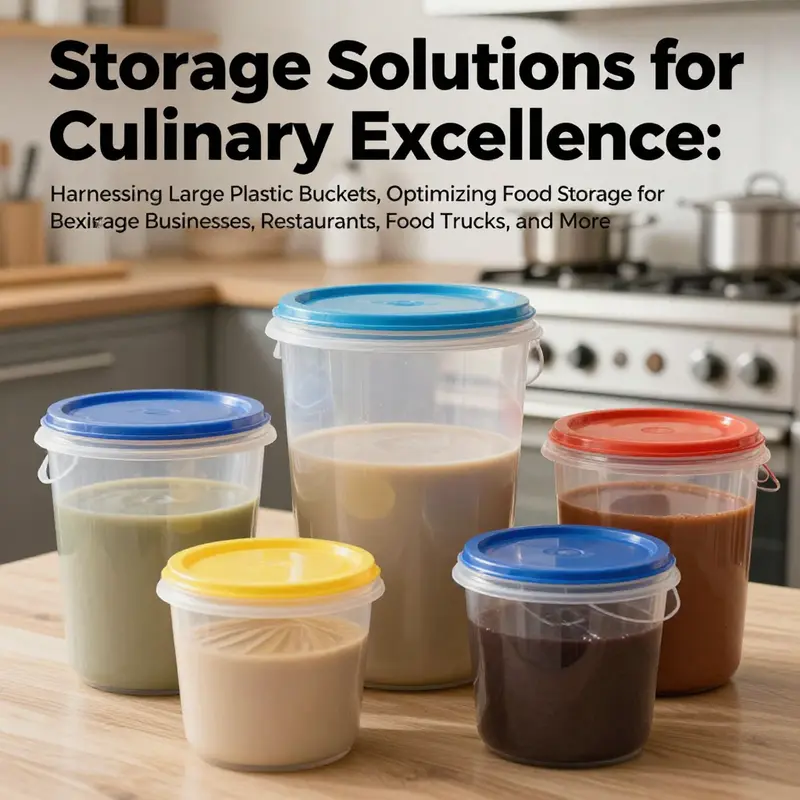
In the fast-evolving food and beverage industry, maintaining food quality and safety is paramount. Large plastic food storage containers with lids offer essential solutions for organizations ranging from bubble tea shops to catering services. These versatile food-grade buckets enhance the organization, preservation, and sanitary aspects of food handling. This article delves into how these storage solutions cater to the unique needs of various industries. The first chapter explores their commercial use, illuminating practical benefits for businesses. The second chapter presents the latest design innovations enhancing efficiency and branding. Finally, the third chapter addresses health and safety standards that ensure compliance and customer peace of mind.
Fortifying Food Flow: The Strategic Role of Large Plastic Storage Buckets with Lids in Commercial Kitchens and Warehouses
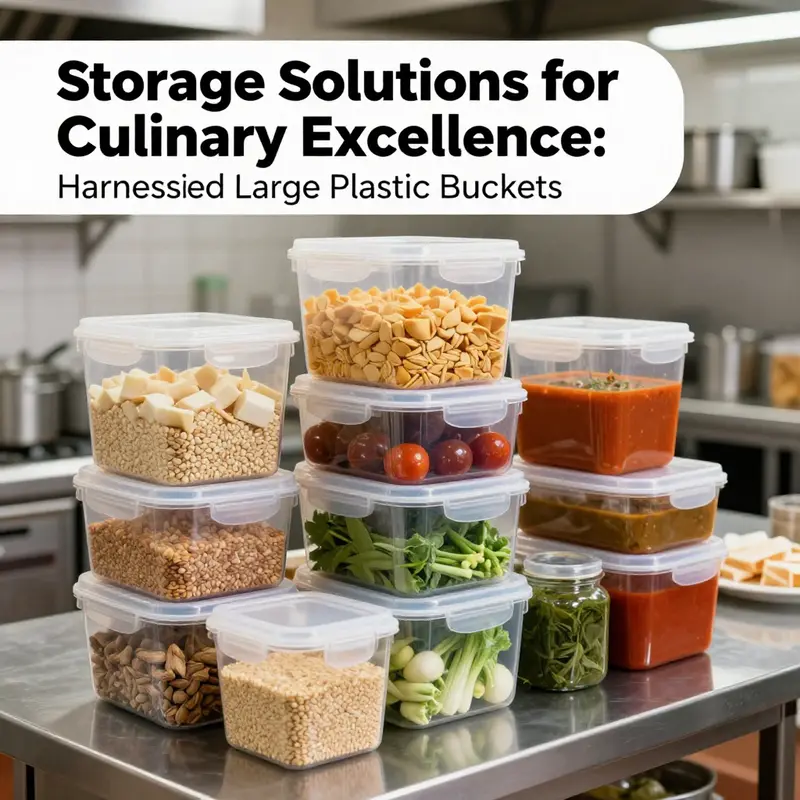
In the orchestration of commercial food operations, large plastic storage containers with lids—often referred to as food-grade storage buckets—occupy a foundational role. They are not merely receptacles but carefully engineered tools that translate the chaos of bulk ingredients, long restock cycles, and varied product streams into a predictable, safe, and efficient workflow. In kitchens, bakeries, catering facilities, and manufacturing sites alike, these containers balance several demands at once: they must be strong enough to withstand daily handling, safe enough to guard against chemical leaching and pest intrusion, and practical enough to integrate with modern inventory systems and hygienic best practices. The material choice—primarily food-grade polypropylene in many commercial models—offers a robust combination of chemical resistance, durability, and recyclability. Such containers contribute to compliance with health regulations while supporting traceability across every stage of food handling. They are designed to ensure that ingredients and finished products remain uncontaminated, dry when needed, and readily accessible for production lines or service stations. When a facility prioritizes batch control and consistency, these buckets become an essential anchor for the entire storage ecosystem. In this sense, the true value lies not only in the capacity to hold bulk quantities but in the confidence they impart to operators who rely on predictable performance day after day. From a distance, the equipment may look simple: a sturdy body and a sealed lid. Yet a closer view reveals a thoughtful convergence of ergonomics, safety, and efficiency. The lids, often featuring dependable locking or gasket-sealed mechanisms, safeguard against moisture ingress, pests, and odor transfer, which is critical when products are stored for extended periods or transported between rooms and facilities. The design often includes integrated handles that balance weight distribution, making it feasible to move tens of kilograms without compromising posture or safety. This is particularly important in busy environments where staff perform repetitive lift-and-course motions throughout a shift. In addition to physical resilience, these containers embody a set of standards that modern operations increasingly require. They are typically certified as food-grade, and many are tested to meet widely recognized regulatory frameworks such as FDA or LFGB in different markets. This certification is more than a label; it is a guarantee that the container itself will not interact with stored substances in a way that could introduce contaminants, alter flavor, or threaten safety. The chemistry behind the material, together with manufacturing controls, offers a level of assurance that is essential in both organic and conventional food systems. The interplay between safety and sustainability is also a defining feature. Food-grade plastic that is recyclable supports a circular approach to waste when containers reach the end of their usable life. Facilities that emphasize responsible sourcing often prefer vendors who can provide documentation of material composition, batch testing, and recycle streams. In the long run, this translates into a more resilient supply chain that can adapt to shifting regulatory expectations and evolving consumer concerns about environmental impact. The practical implications extend beyond compliance alone. In busy commercial environments, where time is money, the correct container choice can shorten handling times, reduce waste, and streamline routine tasks. Bulk ingredients like grains, flours, sugars, syrups, and even oils require a storage solution that not only contains them securely but also supports clean and efficient extraction. The correct design minimizes unnecessary friction during scooping, pouring, or dosing, while the lid design helps maintain product integrity and reduces the risk of moisture migration or pest access. In spaces where humidity, temperature fluctuations, and variable lighting can influence product quality, a well-sealed, sturdy container becomes a bulwark against quality degradation. In practice, this translates to more consistent product quality from batch to batch, which staff can rely on when planning recipes, scheduling production runs, or fulfilling large catering orders. It also reduces the frequency of restocking, as bulk quantities can be stored securely for longer periods, decreasing labor costs associated with recurring handling and movement. The economics of scale come into play here, too. When facilities purchase in bulk, the per-unit cost tends to decline, making the investment in high-capacity, durable storage more attractive for large-scale operations. While price is a consideration, the total cost of ownership matters more: fewer damaged products, less waste from exposure to air or moisture, and lower labor input due to easier stacking, easier transport, and simpler inventory checks. The choice of container often aligns with broader storage strategies, including space optimization and workflow zoning. In warehouses and large kitchens, square or rectangular formats can maximize footprint efficiency, enabling tighter packing against walls or between shelving units. Such configurations may increase usable storage space by a meaningful margin, sometimes reported as up to twenty percent more efficient than round alternatives in dense environments. This is not merely about capacity; it is about how space is leveraged to support a smoother, faster, safer operation. Facilities that are serious about food safety tend to integrate these containers into broader hygiene protocols. Regular cleaning, inspection for cracks or compromised seals, and adherence to labeling standards are part of a disciplined regime that protects both products and personnel. The containers’ smooth surfaces and removable lids simplify cleaning and sanitizing, reducing the risk of crevices where residues can hide. In addition, standardized dimensions and compatible lid systems minimize cross-contamination risks that can arise when a warehouse handles multiple product streams in parallel. The reliability of storage containers also underpins inventory control. Clear visibility of contents—a common feature in many transparent or semi-transparent designs—enables quick identification of stock levels. This clarity speeds up cycle counting and stock rotation, preserving freshness and reducing spoilage. Yet even with high visibility, careful labeling remains essential. Many operations adopt color-coding or color-coded bands on lids to distinguish product families, shelf locations, or hazard categories. This practice aligns with HACCP principles and supports rapid decision-making during busy service periods. When brands and facilities contemplate customization, the conversation often shifts toward how containers can carry company logos or product information without compromising safety or functionality. Customizable bodies and lids are increasingly common in commercial-grade buckets, offering an opportunity to reinforce branding, improve internal traceability, or facilitate direct-to-consumer packaging in certain contexts. This facet underscores a broader trend: containers are not just passive storage solutions but active components of brand experience and process control. The integration of these buckets into the daily rhythm of a commercial operation is what ultimately determines their impact. They link procurement, storage, production, and distribution into a coherent flow. A well-chosen container supports quick, clean transfers from bulk storage to production lines or service counters. It also reduces the risk of errors, since a standardized system minimizes mix-ups between different product lines. In such environments, human error is one of the most persistent threats to quality and safety, and anything that reduces variability—such as uniform container design, reliable lids, and predictable dimensions—delivers measurable dividends. As a result, managers frequently view these large storage buckets as a strategic investment, not merely a purchase item. They are a core element of lean operations, where waste reduction, process reliability, and consistent product quality converge into a stable, scalable platform. The practical benefits extend into sustainability narratives as well. Reusable, durable plastics designed for repeated use can help reduce landfill burden when compared with single-use or disposable packaging in some settings. The exact environmental footprint depends on the material’s lifecycle, maintenance practices, and the facility’s waste management system, but the pathway toward more responsible consumption is clear when these containers are incorporated into a thoughtful procurement and maintenance plan. In sum, large plastic storage buckets with lids function as more than just containers; they are integral to the disciplined, scalable, and compliant operation that modern food businesses require. They enable bulk storage with confidence, support efficient workflows, and contribute to the overall resilience of the supply chain. Their role in commercial contexts is not a marginal convenience but a strategic pillar that sustains quality, safety, and profitability across the organization. External resources and supplier documentation can further illuminate the specifics of material grades, sealing technologies, and lifecycle considerations, helping facilities tailor their choices to unique product mixes and regulatory landscapes. For organizations seeking durable, scalable storage solutions that align with both operational needs and sustainability goals, these buckets offer a compelling combination of capacity, reliability, and ease of use at scale.
Securing Freshness at Scale: Design Innovations in Large Plastic Food Storage Buckets
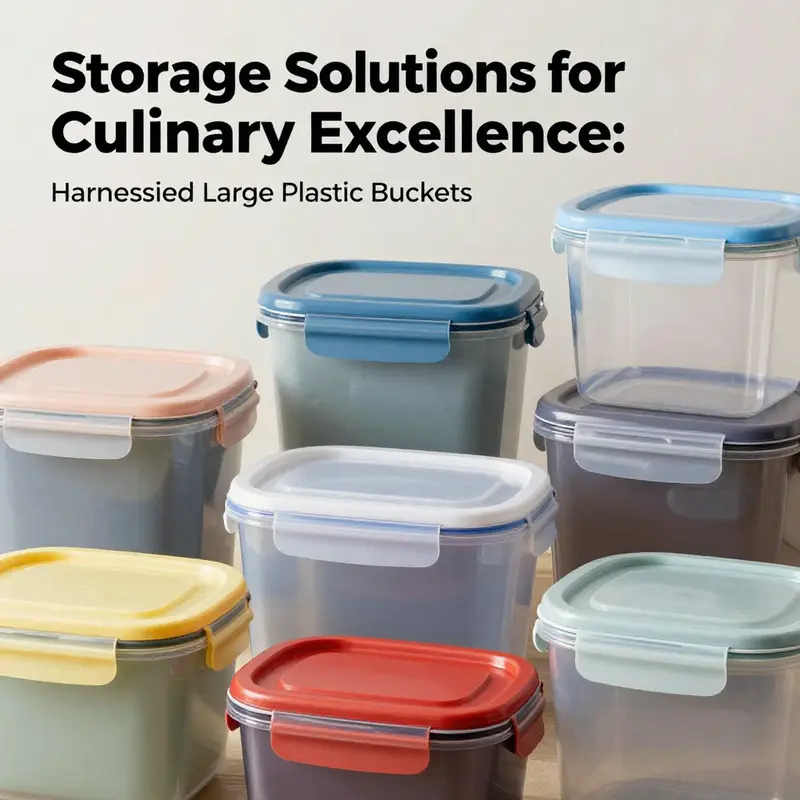
Large plastic food storage containers with lids have long lived as workhorses in kitchens, warehouses, and food-service operations. They are more than simple receptacles; they are integrated systems that influence how people store, protect, and manage large quantities of dry goods. When you step back and consider the space where bulk staples—grains, flours, beans, pet foods, and nonperishable ingredients—meet the daily rhythms of use, you begin to see a story of design that balances ruggedness with practicality. The modern bucket, standing in for a pantry shelf or a backroom inventory, is engineered to do more than hold its contents. It is crafted to secure freshness, resist contamination, and travel efficiently from storage to inventory, a sequence that matters as much as the material itself. This is where the most meaningful innovations emerge: in the way a container’s form, material, seal, and system integration harmonize to keep contents dry, safe, and ready for use, even under demanding conditions.
A central thread in these innovations is the evolution of form factor. Designers have moved toward stackable and nested configurations that optimize both storage and transport. The idea is simple in concept but transformative in practice: if empty buckets can nest with minimal wasted space, warehouses and kitchens free up precious square footage, while the fleet of containers required for bulk storage becomes easier to load, unload, and reorder. A shallow lip on the lid may seem small, yet it can stabilize a stacked column, preventing tipping during handling and ensuring that multiple units remained aligned when they are submerged in a crowded shelving system. The subtle tapering of the walls further contributes to efficiency. When each container narrows slightly toward the base, empty units settle neatly inside one another. The result is a dramatic reduction in space required for both storage and shipping, a factor that resonates with operations seeking to lower warehousing costs without compromising access to contents.
Behind these shape-driven gains lies a portfolio of materials that underwrite safety and longevity. The current generation of large storage buckets commonly uses food-grade plastics such as polypropylene and high-density polyethylene. These polymers offer a robust blend of attributes: chemical resistance to oils and many acids, stability across a range of temperatures, and mechanical toughness that resists cracking or shattering under impact. Importantly, many of these plastics are formulated to be BPA-free, addressing health concerns that have informed consumer expectations for food-contact materials. In practice, this means containers can tolerate the range of environments they encounter—from cool, dry pantries to warm loading bays—without degrading or imparting off-flavors to the stored goods. Durability matters, too: the more resistant a container is to scratches and scuffing, the easier it is to clean, disinfect, and reuse, which in turn reinforces a sustainable approach to bulk storage.
The seal between lid and body is another focal point of design refinement. Robust lids with molded grips, secure locking features, and sometimes metal handles on the rims provide a combination of security and portability. When contents are dry and dense, a reliable seal helps keep out humidity, pests, and contaminants, while still allowing easy opening and closing for day-to-day access. This balance—tight sealing for protection, straightforward operation for routine use—underpins the practical value of these containers in environments where time and reliability matter. The lid design may also contribute to stackability; some configurations are engineered so that the lid’s profile adds stability when containers are stored in tall stacks, reducing the risk of wobble or collapse during busy periods.
A related cohort of innovations centers on modularity and configurability. Businesses and home users alike benefit from systems that can be mixed and matched across a family of containers. When a single storage setup includes different sizes that share compatible lids and seals, inventory management becomes far more straightforward. Integrated dividers—whether removable or adjustable—enable users to segment contents within a single bucket. This is especially useful for organizations that handle multiple dry ingredients or quantities of varying sizes, as it supports hygiene, portion control, and efficient stock rotation. The modular mindset also lends itself to custom branding or labeling schemes, allowing facilities to designate certain sizes for specific products, applications, or departments, thereby reducing cross-contamination risk and simplifying training for staff.
Labeling and transparency are not mere conveniences; they are practical instruments for efficiency and safety. Clear labeling zones and, in some cases, transparent walls or windows help users quickly identify what is stored and how much remains. The ability to see at a glance whether a container is full, partially used, or ready for rotation minimizes labor and reduces waste. When combined with reliable marking systems and durable surface treatments, labeling becomes a durable control measure rather than a fragile add-on. In environments where hygiene is paramount, such as food-preparation facilities or bulk-grocery operations, the ease of sanitization extends not only to the material but to the labeling scheme itself. This attention to visibility supports traceability, which in turn strengthens inventory control and quality assurance programs.
Sustainability has moved from a trendy consideration to a foundational design criterion. Contemporary large storage buckets increasingly embrace reusable and recyclable materials as part of a circular lifecycle. In practice, this means the choice of polymers and processing techniques is guided by end-of-life considerations, making it feasible to recover materials and reconstitute them into new containers rather than consigning them to landfills. Clear labeling on recyclability and compatibility with cleaning processes further empowers users to reuse containers for many years, thereby reducing the environmental footprint of bulk storage. The push toward sustainability also intersects with aesthetics and usability. Transparent or lightly tinted plastics can help users monitor content levels while still presenting a clean, professional appearance in a commercial setting. Simultaneously, designers seek to minimize plastic weight without compromising strength, which contributes to lower energy use in transport and handling—a practical benefit when the containers travel across warehouses, ships, and distribution centers.
The practical implications of these innovations extend across the spectrum of bulk storage needs. For dry goods like grains and flours, moisture control is a constant concern. A secure seal, a sturdy lid, and a body that resists warping all combine to preserve texture and flavor over extended periods. For pet foods and feed, the same principles apply, with the added emphasis on pest deterrence and easy dispensing. For a large-scale kitchen or catering operation, these containers must withstand daily use, be easy to sanitize, and resist staining from oils or aromatics. The material choices and geometry of the containers are tested to perform under such conditions, ensuring that even after repeated cycles of fill, seal, and wash, the containers retain their structural integrity. In many environments, the ability to stack safely also translates into a more predictable workflow. Staff can plan restocking routes with confidence, knowing that containers in the storage towers will remain secure during movement and that the same footprint can accommodate a higher volume when demand spikes.
Cost considerations invariably accompany these design choices. While bulk pricing for large capacities can be favorable, the true value rests in lifecycle costs rather than upfront price alone. A container that lasts longer, resists damage from oils or cleaning agents, and integrates smoothly with a modular system will deliver savings over time. The advantages are not solely monetary; they include reduced risk of product loss due to contamination, better compliance with hygiene standards, and the ability to scale operations with fewer SKU complications. For home users who purchase in bulk for long-term pantry organization or hobby farming, the math is similar: a reusable, sturdy bucket that stacks neatly and cleans easily can dramatically improve space utilization and reduce frequent replacements. In every case, the trend toward better materials, smarter sealing, and more modular configurations reflects a broader shift in how people think about bulk storage as a functional system rather than a simple container.
From an ethical and regulatory perspective, the framing of these innovations is guided by safety standards that govern food-contact materials. Materials intended for storage of edible goods are designed to meet recognized benchmarks that address chemical migration, heat resistance, and cleaning compatibility. The ongoing alignment with such standards helps ensure that performance is not only measured by immediate convenience but also by long-term safety and consumer confidence. In practice, this means ongoing testing and refinement of polymers, coatings, and lid mechanisms. It also means designing with the end user in mind: a system that is intuitive, durable, and capable of accommodating routine cleaning schedules, frequent handling, and the variability of real-world storage conditions. The best designs emerge when engineers collaborate with food producers, distributors, and facility managers to translate broad safety principles into tangible features—features that make daily tasks easier, safer, and more predictable.
Looking ahead, the trajectory of innovation in large plastic storage containers with lids seems likely to incorporate even greater emphasis on lifecycle thinking, ergonomic optimization, and digital compatibility. Ergonomics will drive handle geometry, lid accessibility, and the ease of lifting heavy loads. Lifecycle thinking will push toward materials that not only endure but are easier to recycle or repurpose at the end of their usable life. Digital features, such as RFID-enabled lids or labeling that updates when units are rotated, could streamline inventory visibility in busy facilities. While these developments may still be in early stages for some users, the underlying principles remain clear: containers that protect, perform, and integrate with human workflows will define the next generation of bulk storage.
In sum, the current wave of innovations in large plastic storage buckets with lids centers on making bulk storage safer, more efficient, and more sustainable. By advancing form factors that save space, selecting resilient and safe materials, enhancing seal integrity, enabling modular configurations, and prioritizing clear labeling, manufacturers respond to the real-world demands of homes and facilities that manage food at scale. These design choices are not isolated details; they shape how people interact with staples every day, how products are rotated and preserved, and how organizations align their storage practices with broader goals of safety, efficiency, and environmental responsibility. The result is a more resilient, adaptable system that accommodates growing volumes, reduces waste, and supports consistent performance across diverse storage environments. As the field continues to evolve, the core aim remains constant: to keep contents safe, accessible, and ready for use, while making the logistics of bulk storage smoother, more economical, and better for the planet.
For additional safety and material guidance, readers can consult authoritative resources on food-contact materials. The U.S. Food and Drug Administration offers comprehensive guidelines that inform the standards for plastics used in contact with food, helping manufacturers and users understand the considerations behind what makes a storage solution suitable for long-term, bulk use. External guidance in this area supports ongoing improvements in container design, materials selection, and safety practices that benefit both home kitchens and commercial operations. FDA Food-Contact Materials
Guardians of Freshness: Health Standards, Safe Use, and the Silent Chemistry of Large Plastic Food Storage Buckets
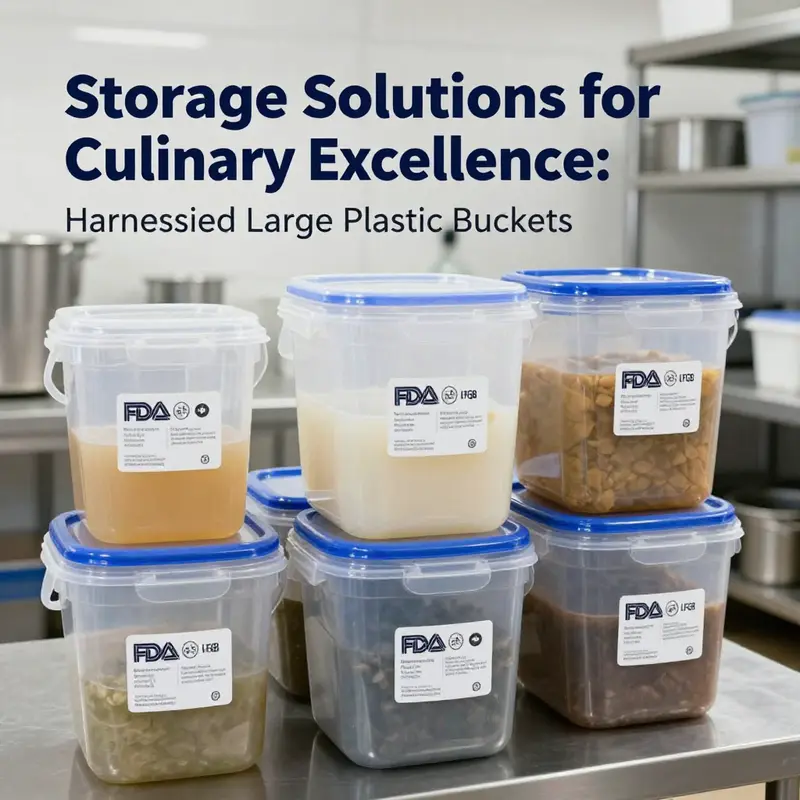
The sturdy, lid-sealed workhorses of modern kitchens and storerooms—large plastic food storage containers with lids—carry more than the promise of organization. They carry the responsibility of keeping foods safe, dry, and free from pests while resisting the everyday bruises of use, from stacking in a crowded pantry to long sits in a back room during peak harvest seasons. When viewed through the lens of health and safety, these buckets become a blend of engineering, chemistry, and practice. They are not mere receptacles; they are interfaces where materials interact with meals, and the choices manufacturers and end users make ripple through daily routines, influencing what we eat, how we store it, and how we think about risk. The chapter that follows moves beyond surface features—the locking lids, the sizes, the stackability—and delves into the standards that govern them, the chemistry that underpins their safety, and the habits that maximize their benefits while minimizing harm. It is a narrative that ties the practical realities of day-to-day storage to the broader frameworks of food-contact safety that shape both product design and consumer behavior.
At the heart of food storage safety is material safety. Plastic is, by design, a family of polymers with a spectrum of additives that impart strength, flexibility, and resilience. The potential concern lies in leaching: the slow migration of chemical constituents from the container into the food. This is not an abstract risk; it sits at the intersection of manufacturing choices, storage conditions, and the nature of the food itself. Heat, acidity, fat content, and time all influence how likely a container is to contribute chemical hitchhikers to what we eat. The most discussed of these substances in the public conversation are endocrine disruptors like bisphenol A (BPA) and a variety of plasticizers that give plastics their flexibility. Regulations around BPA have become a focal point for consumer concern, with certain applications banned or restricted in many jurisdictions, especially for items designed for infants and young children. Yet the broader reality is more nuanced: even when a polymer is marketed as BPA-free, questions can arise about other components that may exhibit similar biological activity. The safest general guidance emphasizes material rigidity and inertness—factors that reduce the likelihood of any migration into food—paired with practical use patterns that minimize exposure risk.
The resin identification codes printed on plastic containers provide a quick map of the chemical family behind a container. For large food storage buckets aimed at repeated use, the most stable and widely accepted families are those identified as Codes 2, 4, and 5—HDPE, LDPE, and PP, respectively. These resins have long track records of resilience in food-contact applications, showing better resistance to cracking, higher chemical stability, and relatively lower tendencies to absorb flavors or odors. In contrast, Code 1 (PET), Code 3 (PVC), and Code 6 (polystyrene) are typically found in products where repeated contact with food, especially hot or acidic foods, is less advisable, due to greater tendencies toward degradation or chemical migration over time. These codes do not tell the full story of safety, but they provide a framework that helps manufacturers and buyers assess risk profiles and expected lifespans. The code system, paired with FDA and EU safety standards, creates a practical map for selecting containers that perform well under the conditions of real-world use.
Even among seemingly similar materials, the micro-architecture of the container matters. A well-designed large plastic storage bucket features a smooth interior, non-porous walls, and a lid that seals snugly without requiring excessive force. A lid that seals poorly or a container with cloudy, etched, or scratched surfaces can harbor microbes in crevices and microgrooves. Microbial persistence is not merely a theoretical concern; it translates to odors, cloudiness, and, ultimately, food spoilage. Scratches can be more than cosmetic; they create microenvironments that trap bacteria and may add to microplastic shedding over time—an outcome no consumer wants in a kitchen storage solution. Warping, odd odors, or a lid that no longer fits with the same precision as when new all signal a degradation of integrity that undermines the goal of safe storage. In many practical terms, the design of a bucket is a first line of defense: a smooth interior surface that’s easy to clean, a lid that locks or seals effectively, and materials that resist both chemical attack from stored foods and physical wear from repeated use.
But design alone cannot guarantee safety. The use environment matters just as much. Heat activation is a commonly overlooked risk factor. The temptation to warm a thick stock of grains or soups directly in a plastic bucket is understandable when bulk storage is part of a kitchen’s routine. Yet the safest approach is to avoid heating or cooking in plastics that are not explicitly labeled as microwave- or dishwasher-safe. Even when a container is marked as safe for cold or room-temperature storage, exposing it to high heat can accelerate leaching and degrade the structural integrity of the walls or the seal. Acidic or citrus-rich foods compound the risk by acting on the surface layer more aggressively than neutral substances. Oil-based foods can create residue that adheres stubbornly to the interior, complicating cleaning and potentially influencing taste transfer over successive uses. These are not theoretical cautions; they are practical guidelines learned from patterns of wear, aging, and chemical interaction observed across kitchens and storage rooms.
In parallel with the chemistry and design are the practical hygiene principles that underpin safe long-term storage. Regular, thorough cleaning with mild detergents, followed by complete rinsing and drying, reduces the baseline microbial load and minimizes odor retention. The interior of a bucket should be wiped down with a clean cloth or sponge, then air-dried. If a container shows cloudiness, deep grooves, or persistent odor that cannot be fully removed, it is a signal that materials may have degraded or that micro-level contamination has become entrenched. In such cases, replacing the container—especially when it is used for high-risk foods like grains intended for long-term storage or pet foods that can attract pests—becomes a prudent choice. The decision to discard and replace is not a sign of failure but a responsible act that reduces the risk of cross-contamination and protects overall pantry safety.
From a regulatory perspective, safety standards function as both a ceiling and a compass. In many jurisdictions, food-contact materials are governed by a constellation of guidelines that hinge on the fundamental premise that the primary purpose of packaging is to preserve food safety, not to become a source of contamination. The U.S. FDA and the European Food Safety Authority, among others, continuously evaluate studies on migration, leaching, and long-term exposure. They articulate limits, testing protocols, and labeling expectations that manufacturers must consider during product development and quality control. These bodies do not merely punish unsafe materials; they shape the development of safer resins, better surface finishes, and clearer guidance to consumers about safe use. They also emphasize the importance of supply chain transparency, including clear labeling about resin type, intended food-contact use, and cautions about heating or aging. For consumers, these standards translate into more predictable performance: a bucket that holds dry grains without odor transfer, a lid that remains reliable after repeated cycles, and materials that resist breakdown over months of use.
The practical implications of these standards extend into household budgeting and pantry organization as well. A well-chosen large plastic storage bucket can simplify a kitchen’s routine: it keeps dry staples dry, reduces pest intrusions, and helps maintain a predictable inventory. Yet a misapplied choice—such as using a container not intended for long-term contact with acidic foods or repeatedly exposed to heat—can undermine those benefits. The balancing act is straightforward in intent but nuanced in practice. It requires attention to material families (HDPE, LDPE, PP), to the presence or absence of solvents or plasticizers that may migrate, and to the care with which containers are used, cleaned, and stored. It also invites consideration of the nature of the stored goods. For non-perishables like dried beans, grains, or pet foods, plastic buckets that emphasize chemical stability and secure sealing can be ideal when maintained correctly. For foods with high acidity or for items stored for particularly long periods, more conservative choices—such as glass or stainless steel—may be recommended by health professionals or food safety guidelines, depending on the context and risk tolerance.
An additional layer of reasoning comes into play when considering life cycle and sustainability. The safety equation intersects with environmental stewardship: durable plastics that endure repeated use reduce the frequency of replacement, but the choice of resin and the container’s end-of-life options also matter. Consumers who reuse containers in diverse ways—storing different pantry staples, transforming them into storage for non-food items, or repurposing them in seasonal shed storage—bring into focus the need for stable, inert surfaces that can be cleaned effectively without compromising integrity. Manufacturers, in turn, face a design challenge: how to offer a product that is robust, easy to clean, and resistant to degradation while ensuring that any additives or coatings that might migrate into food remain within safety standards. These design decisions are not purely technical; they reflect an evolving understanding of how households operate and how food safety supports healthy eating habits over time.
To ground these considerations in lived experience, imagine a typical pantry cycle: bulk storage of dry goods in large containers, a rotating stock method, and a routine of cleaning between uses. The container’s lid, when properly clamped, minimizes air infiltration and moisture fluctuations that can lead to spoilage. Yet lids are movable parts; they are the most common point of failure. If a seal begins to wear or a locking mechanism feels loose, the risk of contamination or infestation increases. The intuitive response is to replace the lid or container, but the safer course is to evaluate the entire system: whether the storage environment remains dry, whether the foods stored inside remain within their shelf-life window, and whether the interior still presents a neutral, non-porous surface. This holistic approach aligns with health guidelines that call for consistent practice, not perfection in a single component.
The chapter’s steady-through-time perspective is essential. Short-term convenience can be tempting, but long-term safety arises from a sequence of informed decisions: choosing materials with proven food-contact safety profiles; avoiding the unnecessary heating of plastics unless specifically labeled; cleaning consistently and thoroughly; inspecting for signs of wear; and replacing containers when deterioration becomes evident. These practices reflect a broader ethic of risk management—one that recognizes that safety in the kitchen is not only a function of regulatory compliance but of daily habits, materials literacy, and ongoing attention to the evolving science of food-contact materials. In this light, large plastic food storage containers with lids emerge as a practical convergence of science, design, and daily discipline. They are not infallible, but with mindful use, they can reliably support safe storage, help reduce waste, and contribute to a well-run pantry or commercial storage operation.
For readers who wish to deepen their understanding, reputable sources catalog the principles that govern material safety in food-contact contexts. They outline how different resins behave under heat and with different food matrices, how migration is measured, and how regulatory agencies translate those findings into user guidance and industry standards. The knowledge is not abstract; it informs a careful approach to selecting containers for specific foods and timeframes, and it clarifies how best to maintain their safety through routine care. If you are evaluating whether a given container is suitable for your needs, consider the resin family, the cleanliness of the interior, the fit of the lid, and the conditions under which you plan to store foods. These factors together determine how effectively such a bucket will protect freshness, minimize spoilage, and reduce the risk of unwanted chemical exposure over time.
As a closing reflection, the safety of large plastic food storage containers with lids rests not on a single certificate or a single measure but on an ecosystem of choices. It is a convergence of material science, regulatory guidance, thoughtful design, and disciplined user practices. It invites a conscious awareness of how everyday storage practices shape the safety of the foods we rely on daily and how a simple bucket can become a trusted ally in creating a safe, orderly, and nourishing kitchen. By embracing resin identification awareness, honoring clean-ability and lid integrity, and respecting the limits of heat and acidity, you participate in a practical form of consumer stewardship. The result is not just better storage—it is a small but meaningful contribution to the safety and quality of the meals that sustain us.
External resource for further reading:
- Plastic Food Container Safety – NIH (PMC): https://www.ncbi.nlm.nih.gov/pmc/articles/PMC10876549/
Final thoughts
Large plastic food storage containers with lids are more than just storage solutions; they are vital tools for enhancing efficiency, ensuring compliance, and preserving food quality in the culinary landscape. From bubble tea shops to corporate catering, these containers provide adaptable and practical options to meet diverse needs. By prioritizing innovative design and adhering to stringent health standards, businesses can not only protect their products but also elevate their service offerings. As you contemplate your storage solutions, consider embracing these versatile buckets to streamline your operations and ensure the highest quality for your customers.