
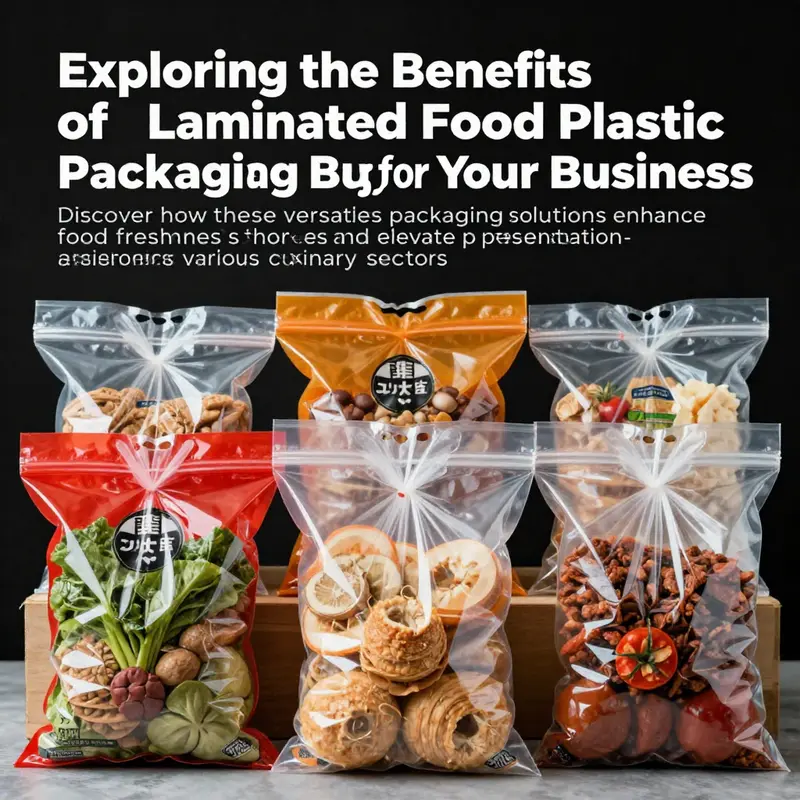
Laminated food plastic packaging bags are revolutionizing the way food products are presented and preserved. These multi-layered bags not only protect against moisture, oxygen, and contaminants but also ensure that culinary delights reach consumers in prime condition. For business owners in bubble tea shops, restaurants, food trucks, and catering services, understanding the myriad applications and advantages of these bags is crucial. Each chapter of this article delves into specific aspects, from types and manufacturing processes to environmental impacts and future trends, providing a comprehensive look at how laminated bags can add value to your operations and meet consumer demands sustainably.
Layered Shields of Freshness: The Architecture and Reach of Laminated Food Packaging Bags
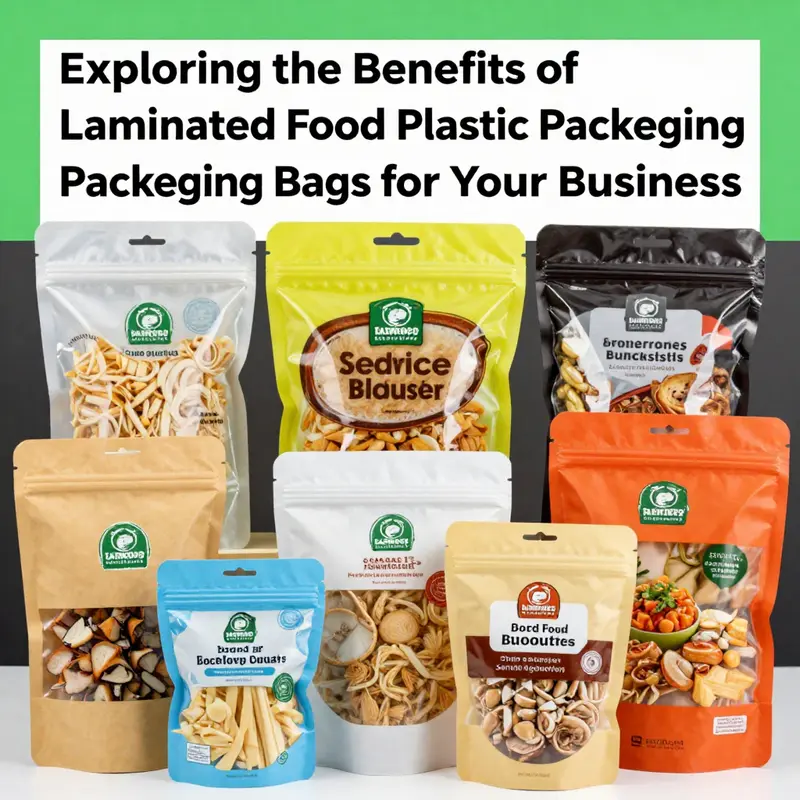
Laminated food packaging bags are more than simple wrappers; they are carefully engineered shields that balance protection, usability, and presentation across the journey from processing plant to pantry. The core idea behind these bags is straightforward, yet powerful: create a barrier that minimizes exposure to moisture, oxygen, light, and odors while remaining adaptable to a wide range of foods and retail formats. The strength of laminated structures lies in their ability to combine materials with complementary properties into a single, cohesive film that performs far better than any of its individual layers. In practice, this means a bag can be clear enough to showcase a product, yet tough enough to resist punctures during transport; it can be heat-sealed reliably and, at the same time, be tuned for easy opening or controlled resealability. The beauty and utility of laminated bags emerge from the deliberate selection and sequence of polyolefins, polyesters, polyamides, metalized films, and even aluminum foils, each chosen to meet the exacting demands of a specific product category and supply chain. The result is a family of packaging options that serve everything from everyday snacks to premium delicacies, all while delivering consistent performance that brands and retailers can trust. In this narrative, the emphasis remains on how the material science of lamination translates into real-world advantages for freshness, shelf life, and brand impression, and how designers and manufacturers translate these advantages into practical formats on the shelf and in the hands of consumers. A laminated bag begins with a broad menu of film materials, each with its own strengths. PET, or polyethylene terephthalate, is a staple in many laminates because it offers clarity and rigidity, which makes product visibility on the shelf an inviting feature. PET’s strength supports the geometry of bags intended to stand upright, where a gusseted bottom provides stability and an appealing stage for the product. Yet PET alone does not guarantee the moisture and aroma control needed for every food category; thus, a thin layer of polyethylene (PE) is typically bonded to PET. PE is the workhorse of sealing technology, providing the dependable heat-seal properties that allow bags to close securely during production and throughout domestic use. This PE layer is also responsible for moisture barriers that keep delicate goods from picking up humidity and staling over time. The pairing of PET and PE thus creates a practical, clear, and economical laminate suitable for dry snacks like crackers, cookies, cereals, and dried fruits. The simple PET+PE structure shows how a well-chosen combination can deliver both aesthetic appeal and functional reliability without overcomplicating the manufacturing chain. For products that demand even greater protection, the laminate architecture grows more intricate. Aluminum foil, when layered between PET and PE, introduces a barrier to light and gases that is difficult to match with polymer films alone. This PET+AL+PE configuration is favored for coffee beans, tea, premium snacks, and other items where light-induced degradation or oxidative processes can erode flavor, aroma, and texture. The aluminum foil is thin enough to preserve a compact form factor while offering a high resistance to permeation, and the surrounding PET and PE layers maintain mechanical integrity and sealability. The trade-off in this case is a modest increase in cost and a slight uptick in rigidity, but the payoff—in longer shelf life, more consistent quality, and clearer printability—can justify the investment for products positioned as premium or time-sensitive. For even more demanding preservation, a multi-layer laminate that combines PET+AL+VMPET+NY+PE rises to the occasion. Here, the structure introduces vacuum metallized PET and nylon, augmenting barrier performance against both moisture and gases while offering puncture resistance that helps the package hold up under rigorous distribution environments. The VMPET serves as an optical barrier with a metallic sheen that enhances shelf presence, while nylon layers contribute toughness that guards against tears and pinholes. This type of laminate suits foods with delicate textures or long travel times, such as gourmet meals, freeze-dried components, or intricate pastries, where keeping every attribute intact—antioxidant integrity, moisture control, and crisp texture—matters to consumer satisfaction and repeat purchase. The versatility of lamination does not stop with metalized stacks; there are other robust combinations designed to meet particular product profiles. Oriented polypropylene, or OPP, when paired with polyamide and polyethylene, forms a structure known for clarity, stiffness, and strong puncture resistance. The OPP+PA+PE laminate is a workhorse for dried or frozen fish and meat products, ready-to-eat meals, and premium vacuum-sealed offerings. The clarity of OPP supports attractive product visibility, while PA adds resistance to tearing, and PE provides the heat-seal capability essential to secure long-lasting barriers during storage and handling. While these material families form the backbone of most laminated film programs, many manufacturers also offer customization options that can tailor barrier properties, heat-sealing temperatures, and printability to exact product requirements. Custom laminates enable brand teams to specify thermal stability, UV resistance, and compliance with global food-safety standards, ensuring that the final package aligns with regulatory expectations and consumer confidence. This is where the functional features converge with consumer-centric design. Across all classes of laminated bags, the fundamental aims remain constant. Moisture-proofing and odor-proofing preserve sensory quality and prevent microbial growth that would otherwise accelerate spoilage. Resealable features such as zippers, valves, or easy-peel openings respond to consumer behavior, enabling portion control and reducing waste. The ability to print high-quality graphics on the outside of the film supports branding and storytelling, which are increasingly important as shoppers assess products based on packaging cues as much as on the product inside. The material choices also influence process efficiency and scalability. Modern lamination lines can bond multiple layers through solvent-free extrusion or solvent-based adhesives, with recipes optimized for adhesives compatibility, layer thickness, and end-use hazards. The result is a flexible supply chain capable of producing millions of units per month while maintaining consistent performance. In practical terms, this translates into a range of package designs. Stand-up pouches use gussets and bottom folds to create a stable package that captures attention on shelves and conducts easy loading through automated filling lines. Zipper pouches add the convenience of reuse, a feature increasingly valued by consumers who want to reseal after tasting or portioning. Tear-notched or perforated bags offer controlled opening without additional tools, enhancing user experience and reducing frustration at the moment of opening. Each design has its place in the market, and the choice among them depends on dimensions such as product density, moisture content, required barrier, and distribution routes. For instance, a bag used for flour or rice in wholesale channels benefits from a robust barrier that keeps moisture ingress low and can tolerate rough handling in transit and storage; a PA/PET/PE configuration may be chosen for its balance of strength, printability, and cost-effectiveness. In contrast, coffee, tea, or premium snacks that require light and oxygen protection on longer journeys might be better served by a PET+AL+PE laminate or a more elaborate PET+AL+VMPET+NY+PE stack that supports lighter packaging while delivering extended shelf life. Beyond raw performance, the conversation about laminated bags also converges with sustainability and end-of-life considerations. The environmental critique aimed at multilayer plastics centers on the inherent challenge of separating distinct polymer layers for recycling, which complicates recycling streams and often limits recycling rates. This has driven ongoing research into mono-material laminates or film architectures designed with end-of-life in mind, as well as advances in recyclable barrier materials and compostable or biodegradable alternatives. While such innovations show promise, they also demand trade-offs in barrier performance, heat-seal reliability, and cost. Consequently, product developers must weigh the immediacy of shelf life and quality against long-term sustainability targets, sometimes choosing a laminate that offers a higher barrier today with a plan to improve recyclability through regional programs or end-of-life innovations in the future. The industry also recognizes that certification and safety standards are not cosmetic add-ons but essential safeguards for consumer trust. Films intended for food contact are typically designed to meet regulatory benchmarks such as Food and Drug Administration guidelines in certain regions or European Union standards, with other jurisdictions adopting parallel frameworks. Compliance is embedded in the core material selection process and followed through by rigorous testing of seal integrity, permeability, and migration safety under expected storage conditions. At the shop-floor level, quality control extends to printability and surface finishing. The printed surface must resist scuffing and fading through handling while remaining legible and true to brand color throughout the product’s journey from factory to consumer. The interplay between graphics and barrier performance can be delicate, so many producers rely on materials that retain their optical properties even after exposure to humidity and light without compromising barrier performance. The result is a family of laminated structures that is both versatile and responsive to market needs, blending aesthetics with function so products stand out visually while maintaining the sensory quality shoppers expect. The practical implications for manufacturers and brand owners are clear. Selecting the right laminate is not a mere material choice; it is a strategic decision that shapes product quality, consumer experience, supply chain resilience, and sustainability outcomes. With expanding demand for convenience, longer shelf life, and better on-shelf presentation, laminated bags occupy a pivotal role in modern food packaging. They enable products to reach consumers at peak freshness, reduce waste, and tell a compelling brand story through the packaging itself. As techniques advance and new materials arrive on the market, the architecture of these bags will continue to evolve, delivering even more nuanced balances of barrier protection, process efficiency, cost management, and environmental responsibility. The challenge and opportunity lie in weaving together performance, aesthetics, and sustainability in a way that respects the realities of global distribution while delighting the consumer who picks up a bag that promises freshness with every tear, rips cleanly open, and reseals without compromise. External resources acknowledge the practical dimensions of these laminated systems and provide detailed specifications for material compositions, barrier performance, and certification readiness, such as the following external reference: https://www.alibaba.com/product-detail/Custom-Laminated-PE-Plastic-Packaging-Bags_1600785457891.html
How Laminated Food Plastic Bags Are Made: From Multilayer Film to Finished Pouch

Laminated food plastic bags begin life as a solution to a simple problem: how to protect food from moisture, oxygen, light, and contamination while keeping costs and weight low. The answer lies in combining films with complementary properties into a single composite structure. This chapter follows that transformation, tracing the essential manufacturing steps and the technical decisions that shape barrier performance, sealability, print quality, and recyclability.
The process opens with material selection. Engineers choose film types based on required barrier properties, heat resistance, and mechanical strength. Common layers include polyester (PET) for stiffness and printability, nylon (PA) for puncture resistance, polyethylene (PE) for heat sealability, oriented polypropylene (OPP) for clarity, and aluminum foil or vacuum metalized PET (VMPET) for light and vapor barriers. Each layer contributes a functional role. A PET outer layer accepts high-quality printing. A metalized layer blocks light and oxygen. A PE inner layer provides a reliable heat seal. The stack-up, or laminate structure, is engineered to meet product needs and processing constraints.
Lamination bonds these films into a single sheet. Several lamination methods exist, each with trade-offs. Solvent-based adhesive lamination uses polymeric adhesives dissolved in solvents. It yields strong bonds across diverse substrates but requires solvent recovery systems and longer drying times. Solventless lamination, often called extrusion lamination, extrudes a molten film such as low-density polyethylene (LDPE) or ethylene-vinyl acetate (EVA) between face and barrier films. This method reduces solvent handling and speeds production. Co-extrusion lamination forms multiple layers in a single die, producing a monolithic film with built-in barrier and sealant layers. Heat-assisted lamination and adhesive gravure coating are also used when precise adhesive weights and patterns are required. The lamination line must maintain rigorous tension control, alignment, and temperature management. Any wrinkle, misalignment, or contamination can compromise downstream printing or sealing.
Surface preparation precedes or accompanies lamination. Corona or plasma treatments increase surface energy of films like PE or PP. This improves ink wetting and adhesive bonding. Proper treatment reduces printing defects and delamination risks. For barrier layers that resist adhesion, such as pure polyethylene or some metallized films, primers or tie layers become necessary. The lamination recipe therefore includes not only films but also adhesives and primers chosen for compatibility and migration safety.
Printing typically follows lamination, though in some setups printing is performed before lamination when specific ink-film interactions are required. Gravure printing is the industry workhorse for high-volume runs. It delivers consistent color, fine detail, and rapid throughput. Digital printing has grown rapidly for shorter runs and variable designs. Digital eliminates the need for engraving cylinders, reducing lead times for custom orders. Both methods require food-contact-safe inks and controlled drying. Dryers, chill rollers, and inline inspection systems ensure registration and color consistency across long runs.
After printing and drying, the wide laminated web is slit to the correct widths. Precision slitting equipment creates parent rolls for converting. Tension control remains critical. Slitting must avoid edge fraying or micro-tears that could propagate into failures at sealing or during filling. Slit rolls are then transferred to form-fill-seal (FFS) or pouch-making machines.
Bag forming and sealing encompass a wide variety of formats. The basic steps are cutting, folding, heat sealing, trimming, and additional converting operations. Stand-up pouches receive a bottom gusset via folding and bottom sealing techniques that allow them to stand on shelves. Side-gusset bags are made by creating folded side seams. Flat-bottom pouches require more complex folding and sealing hardware to achieve the rectangular base favored by retail presentation. Zipper pouches need precise attachment of zipper profiles. Machines apply the zipper strip and use ultrasonic or heat bonding to secure it, followed by final sealing of the pouch. Tear notches are punched or die-cut at nominal positions so consumers can open the bag without tools. For coffee and other products that degas, valve insertion becomes part of the process. Degassing valves are placed during bag formation and sealed in place to allow steam and CO2 to escape while keeping oxygen out.
Sealing performance is the strength of a laminated bag. Sealant layers, usually PE, are engineered for heat-seal temperature range, dwell time, and peel strength. Manufacturers test seal integrity under varying conditions. Peelable seals are used where consumers need to open and reseal the product easily. Conversely, retortable pouches destined for high-temperature sterilization need sealant layers that withstand pressurized cooking cycles. Retort laminates pair barrier layers with heat-resistant sealants and require rigorous process controls on heat-seal temperature and dwell.
Quality control threads through every stage. Inline vision systems inspect print registration, color density, and defects. Bubble detectors, pinhole testers, and vacuum chambers check for micro-perforations and leaks. Oxygen transmission rate (OTR) and water vapor transmission rate (WVTR) are measured in lab conditions to confirm that barrier specifications are met. Accelerated aging and shelf-life tests simulate months of storage in weeks, providing data on flavor retention, moisture migration, and packaging integrity.
Food safety and regulatory compliance guide material choices and adhesives. Inks, adhesives, and films must meet migration limits and food contact regulations in target markets. Manufacturers maintain traceable material certificates and often work under quality systems such as ISO 9001 or food safety standards. Clean-room practices, controlled humidity, and particle control minimize contamination during converting.
Automation and efficiency characterize modern converting lines. High-speed pouch machines can produce thousands of units per hour. Robotic feeders place zippers and valves with precise repeatability. Web-handling systems control tension automatically and compensate for roll diameter changes. This automation reduces labor, increases consistency, and keeps reject rates low.
Sustainability has become a major engineering objective. Traditional laminates, often multi-material composites, are difficult to recycle because layers resist separation. The industry responds with design-for-recyclability strategies. One approach uses mono-material laminates, typically multilayer PE films where different properties are achieved through co-extrusion rather than diverse polymers. These designs allow the pouch to flow into existing PE recycling streams. Another tactic minimizes metallization and foil layers or replaces them with high-barrier monolayer films. Bio-based and compostable films are emerging, though they impose performance and processing trade-offs. Adhesive selection also influences recyclability. Water-based or solventless adhesives compatible with mechanical recycling are preferred where appropriate.
Specialty applications add complexity. High-barrier coffee bags often include a metalized layer and a one-way degassing valve. Frozen food pouches must resist low temperatures and avoid brittle seals. Snack packaging aims for clarity, attractive print, and robust puncture resistance. Each product type changes the laminate recipe and the converting steps.
Finally, collaboration between brand, material suppliers, and converters is essential. Laminate design is an exercise in systems thinking. A change to an adhesive, print varnish, or film supplier can require recalibration of machine settings. Pilot runs validate performance before full-scale production. Proper change control and documentation protect product quality and market reputation.
For a technical, step-by-step overview and deeper detail on lamination equipment and line flows, see this comprehensive industry guide: https://www.packagingdigest.com/packaging-materials/understanding-the-manufacturing-process-of-laminated-plastic-bags
For brands exploring post-laminate choices, including greener alternatives to traditional composite bags, consider options such as compostable bowls and recyclable paperware as part of a broader packaging strategy. One practical example is a biodegradable, eco-friendly take-away round kraft paper bowl that illustrates a different path to food protection while meeting consumer sustainability expectations: https://greendispopack.com/product/biodegradable-eco-friendly-take-away-odm-oem-round-kraft-paper-bowl/
This production chain—from film selection and lamination through printing, slitting, converting, and quality assurance—determines the final bag’s performance. Each decision balances barrier needs, manufacturability, regulatory safety, consumer convenience, and environmental impact. The result is a multilayer solution tailored to preserve food, reduce waste, and deliver value from factory to kitchen shelf.
How Market Forces, Technology, and Sustainability Are Reshaping Laminated Food Plastic Bags
Market forces, technology, and sustainability are tightly interwoven in the laminated food plastic packaging bag sector. Demand for reliable barrier performance remains the fundamental commercial driver. Food manufacturers and retailers require packaging that protects products from moisture, oxygen, light, and contamination. That protection translates into longer shelf life, fewer returns, and better brand reputation. At the same time, buyers expect packaging to deliver convenient features. Resealable zippers, tear notches, and stable stand-up profiles have moved from optional extras to baseline expectations. E-commerce growth has intensified these needs, adding durability and tamper evidence requirements for shipped items.
Consumer expectations are shifting. Shoppers now weigh environmental impact alongside price and convenience. Many buyers demand recyclable or compostable packaging. This change pressures converters and film producers to innovate. Historically, multi-layer laminates combined different polymers and aluminum foil to achieve high barriers. Those structures perform well, but they complicate recycling. The market response has been rapid. Two parallel strategies now define innovation: mono-material laminates and bio-based or compostable films.
Mono-material laminates preserve much of the performance that brands need while enabling mechanical recycling. For example, laminated structures built entirely from PP layers or PE layers allow recyclers to process the material in existing streams. Producers achieve barrier gains by engineering layer thickness, using oriented films, and applying printed coatings. These solutions reduce cross-polymer contamination, improving the value of recovered material. They also simplify sorting at recycling facilities, a practical advantage for large-scale waste management.
Bio-based and compostable films address a different set of concerns. These materials reduce dependency on fossil feedstocks and appeal to eco-conscious consumers. However, they carry trade-offs. Compostable films often need industrial composting conditions to break down, and their barrier properties can lag behind conventional laminates. As a result, brands evaluate compostable options on a case-by-case basis. For shelf-stable items with high oxygen sensitivity, compostables may still struggle to match performance without additional layers or coatings.
Regulation and extended producer responsibility programs are accelerating change. Regions with strict recycling targets, deposit-return systems, or landfill bans push the market toward recyclable formats. In some markets, labeling rules require clear disposal instructions, forcing packagers to rethink material choices and print more explicit messaging. These rules influence design choices, printing methods, and ink selection. Water-based and low-migration inks are increasingly preferred to comply with food-contact and recycling standards.
Printing and customization remain growth areas. Brands use high-resolution graphics and specialty finishes to stand out on crowded shelves. Innovations in gravure, flexographic, and digital printing have improved color fidelity and shortened setup times. Digital printing, in particular, suits short runs and rapid design changes. It also supports personalized and limited-edition packaging, which can create marketing momentum. Yet, premium printing often carries higher costs. Buyers balance visual impact against unit economics, especially for high-volume commodities.
Manufacturing technology advances are lowering those costs. Multi-layer co-extrusion and solvent-free lamination techniques increase throughput while reducing environmental footprint. Solventless adhesive systems minimize volatile emissions and accelerate production. Meanwhile, thinner films and optimized structures reduce raw material usage without sacrificing strength. These engineering gains improve margins and enable more complex product features at scale.
Supply chain dynamics influence market behavior as well. Volatility in resin prices affects material choice and forecasting. When petrochemical costs spike, brands often revisit material specifications and explore alternatives. Sourcing flexibility becomes a competitive advantage. Companies that can switch between mono-material and mixed laminates, or that maintain relationships with multiple film mills, face less disruption. Digital procurement platforms and supplier marketplaces also streamline access to manufacturers and pricing transparency. These tools help procurement teams compare options and secure favorable MOQs.
Private-label and emerging brands are reshaping demand patterns. Private-label buyers want premium-looking packaging but at lower cost. This creates pressure to adopt efficient laminates that support vibrant printing yet remain recyclable. Emerging brands, especially those emphasizing sustainability, push suppliers to offer transparent life-cycle data. They want to show a credible environmental story on packaging. The result is a more segmented market where functional performance, aesthetics, and sustainability intersect.
Across product categories, use cases differ widely. High-moisture and oxygen-sensitive foods like coffee and certain snacks still need high-barrier laminates. Bulk staples such as rice, flour, and pet food benefit from robust, puncture-resistant structures and ergonomic handling features. For refrigerated and frozen goods, temperature stability and seal integrity are critical. Each category drives distinct laminate architectures and testing needs, including vacuum and MAP options. This variability creates room for specialized suppliers who master niche technical requirements.
Investment in testing and certification has become vital. Brands rely on third-party verification to validate barrier performance and recyclability claims. Certifications such as food-contact compliance, compostability standards, and management system audits build trust. Certifications also ease market entry into regions with strict rules. Buyers increasingly request documentation for migration limits, heavy metal content, and adhesive compatibility. Transparent testing practices reduce the risk of costly packaging recalls.
Cost considerations remain central to commercial decisions. Laminated bags must balance unit economics and total cost of ownership. That calculation includes raw materials, printing, converting, freight, and end-of-life handling. For large buyers, even small gains in material efficiency translate into significant savings. Conversely, small brands may accept a premium for packaging that clearly conveys sustainability credentials. Producers who can demonstrate measurable cost and environmental benefits gain an edge.
Environmental trade-offs complicate narrative marketing. A recyclable mono-material bag may appear sustainable, but if local recycling infrastructure does not accept flexible films, the environmental benefit is limited. Similarly, compostable packaging offers promise, yet it may not degrade in landfill conditions. Savvy brands align packaging choices with realistic end-of-life systems. They also invest in consumer education and clear disposal instructions. In many cases, hybrid approaches emerge. Brands pair recyclable pouches with paper-based secondary packaging or emphasize reusable and refillable systems for select product lines. For alternatives in single-use categories, consider exploring compostable paper bowls and other fiber-based options such as a biodegradable eco-friendly take-away kraft paper bowl.
Looking ahead, several technical trends will shape the market. Barrier coatings that maintain recyclability are under development. Thin metalized layers applied by vacuum deposition offer barrier performance with less material than foil. Chemical recycling pathways can handle mixed laminates when mechanical recycling struggles. Active packaging technologies, such as oxygen scavengers embedded in films, extend shelf life without heavy multilayer constructions. Smart packaging elements, like humidity indicators or QR codes linked to supply-chain data, add traceability and consumer engagement.
Business models will evolve in parallel. Brands and converters will deepen collaboration to optimize packaging across the product life cycle. Shared investments in recycling infrastructure or take-back schemes will improve recovery rates for flexible films. Large retailers may require suppliers to meet supplier-specific sustainability thresholds. That buyer-driven pressure will favor suppliers with robust technical capabilities and transparent environmental reporting.
The market for laminated food plastic packaging bags is neither static nor singular. It is a complex ecosystem shaped by barrier science, consumer behavior, policy, and manufacturing economics. Success in this market depends on thoughtful design that balances performance, cost, and environmental responsibility. Suppliers who offer adaptable material platforms, clear testing data, and pragmatic end-of-life solutions will capture growing share. For sourcing and supplier comparisons, including printing and custom options, consult current manufacturer listings available on business platforms.
For a snapshot of supplier capabilities and printing options, see this resource: https://www.made-in-china.com/products/10-Colors-Printing-Food-Packaging-Metal-Laminited-Bag
Rethinking Laminated Food Plastic Bags: Environmental Costs and Practical Paths to Sustainability
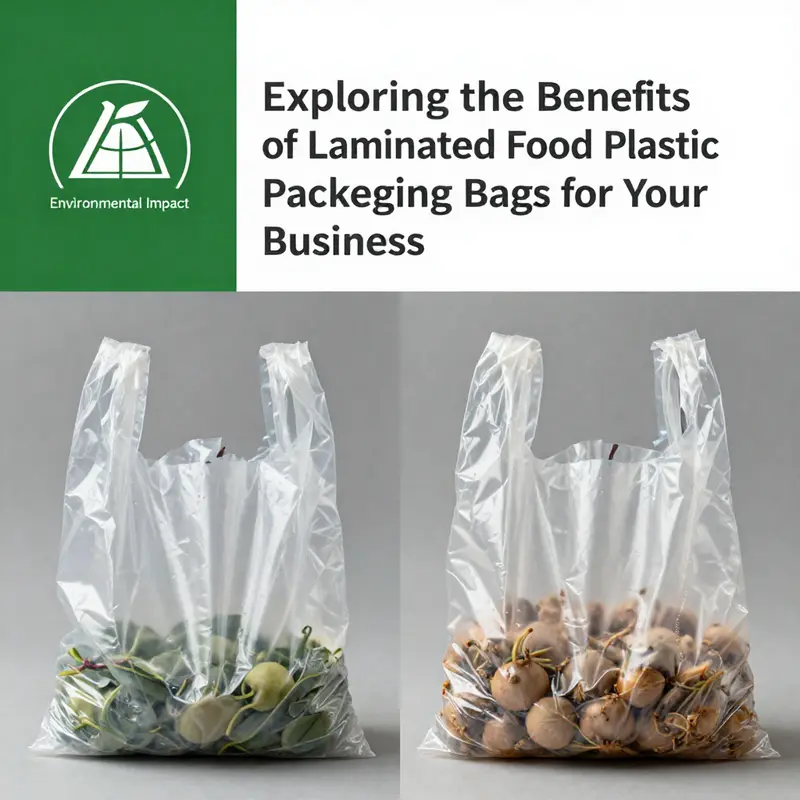
Laminated food plastic bags deliver impressive performance. Their layered films lock out moisture, oxygen, and light. They protect aroma and texture. They reduce food waste by extending shelf life. Yet that functional advantage carries serious environmental consequences. The multi-material construction that creates strong barriers makes end-of-life management difficult. Layers of PE, PET, PA, and metal foil bond together. They cannot be sorted or separated by standard recycling systems. The result is low recovery rates, contaminated waste streams, and a heavy reliance on landfill and incineration.
At the heart of the problem is incompatibility between performance and circularity. Manufacturers combine polymers and metallization to meet shelf-stability, puncture resistance, and high-quality print. Each layer serves a purpose. Still, when those layers are fused into a laminate, they form a composite that resists the mechanical and chemical separation used by recyclers. Even when a package bears a “recyclable” mark, the reality is often bleak. Facilities capable of processing multilayer laminates are scarce and expensive. As a result, consumers and brands face a mismatch between sustainability claims and actual outcomes, which undermines trust and hinders progress toward circular systems.
Production itself adds another environmental burden. Producing polymers and thin metal layers consumes fossil energy and raw materials. Energy-intensive manufacturing raises the carbon footprint of every bag. When disposal involves incineration, additional greenhouse gases are emitted. When packaging fragments, microplastics follow unpredictable paths into soils, rivers, and oceans. Microplastic particles, and the additives they can carry, accumulate in ecosystems and enter food chains. The potential human health consequences of chronic exposure to microplastics and chemical migrants are still under study. Meanwhile, the steady accumulation of persistent plastic waste creates clear ecological harms.
Addressing these challenges demands a layered strategy. It must pair immediate, practical changes with longer-term innovation. At the simplest level, designers can prioritize material simplification. Reducing the number of different polymers in a laminate makes separation easier. Where high barrier performance is essential, shifting toward mono-material structures—single polymer systems engineered to provide the needed protection—offers a clearer recycling pathway. For example, multi-layer PE laminates with modified layer properties can maintain barrier performance while remaining compatible with existing polyethylene recycling streams.
Chemical recycling also has potential, though it is not a silver bullet. Processes such as pyrolysis and depolymerization can recover monomers or fuels from mixed plastic waste. These technologies can accept more complex inputs than mechanical recycling. However, they require significant energy and sophisticated infrastructure. Without robust lifecycle analysis, chemical recycling risks shifting environmental burdens to other stages, such as increased emissions or toxic byproducts. Scaling these technologies responsibly requires careful regulation, transparent accounting, and independent oversight to ensure gains in material recovery do not create new harms.
Compostable and biodegradable laminates attract attention as alternatives. In many cases, these materials offer reduced persistence in the environment. Yet they come with strict caveats. Most commercially available compostable laminates need industrial composting conditions: high temperatures, controlled moisture, and specific microbial communities. Home composting or natural environments rarely provide these conditions, so the expected benefits can fail to materialize. Moreover, if compostables enter conventional recycling streams, they can contaminate recycling batches and lower material quality. Adoption of compostable films must therefore be matched by collection systems, clear labeling, and investment in industrial composting capacity.
Beyond materials, system-level solutions will determine success. Extended Producer Responsibility (EPR) places financial and organizational responsibility for end-of-life management on producers. EPR schemes can fund specialized collection programs, support infrastructure for multilayer processing, and incentivize product redesign. When EPR policies include verifiable performance targets, they encourage manufacturers to choose packaging that aligns with recycling infrastructure. Likewise, deposit-return and targeted take-back programs can divert packaging away from landfills and into recovery processes that are fit for purpose.
Reuse systems present a powerful, but often overlooked, route to reduce waste. Refillable and returnable packaging models remove single-use packaging from the stream entirely. For many applications, reusable containers offer superior environmental profiles once they are used enough times. Implementing reuse requires logistical solutions, such as cleaning infrastructure and reverse logistics, and a cultural shift among consumers and retailers. When reuse models align with supply chains and retail practices, they can dramatically lower the need for complex single-use laminates.
Transparency and accurate labeling matter as well. Consumers must understand what packaging claims mean. Simple, reliable labels that explain how to dispose of a package can reduce contamination in recycling streams. Equally important are performance-based standards for recyclability and compostability claims. Third-party verification and harmonized definitions help prevent greenwashing. They also provide a clearer signal to supply chain actors and investors about which innovations merit scale-up.
Innovation in inks, adhesives, and barrier coatings can also unlock better outcomes. Water-based inks and separable adhesives reduce contamination and make mechanical separation easier. Barrier coatings that can be removed or that are compatible with a given recycling stream help preserve material quality. Collaboration between material scientists, converters, and recyclers is necessary to translate these laboratory advances into scalable industrial processes.
Retailers and brands have levers to influence demand. Choosing packaging based on whole-life impact rather than unit cost shifts the market toward more sustainable options. Where laminated bags remain necessary, companies can invest in post-consumer programs that ensure proper end-of-life handling. Meanwhile, shifting products to alternative formats —bulk bins, paper-based containers with proven recyclability, or refill stations—reduces reliance on complex laminates. For inspiration, businesses exploring compostable or paper-based food containers can review readily available alternatives, such as biodegradable kraft paper bowl options. This helps brands diversify their packaging palette while maintaining functionality and consumer convenience.
Finally, research and public investment must accelerate. Public funding can de-risk promising technologies and guarantee rigorous performance evaluation. Research should compare real-world impacts across disposal pathways, including landfill, incineration, mechanical recycling, chemical recycling, and composting. Policymakers should tie incentives to verifiable environmental outcomes, not to unproven slogans. Data transparency is essential to prevent the false sense of security that comes from vague recyclability claims.
If the industry is to reconcile the benefits of laminated food plastic bags with planetary limits, coordinated action is required. Material redesign, improved collection and processing infrastructure, policy frameworks that align producer incentives, and consumer education must progress together. No single fix will suffice. But through pragmatic redesign, targeted investment, and honest communication about trade-offs, the sector can reduce waste and protect product quality. Progress will look different by geography and by product. Still, the guiding principle should remain the same: design packaging so it can re-enter the economy or the environment without harm. For a detailed assessment of the environmental implications of multilayer laminates, see the Institute for Sustainable Materials report: https://www.ism-research.org/reports/multilayer-laminates-food-packaging-impact-2025
Next-Generation Laminated Food Bags: Sustainable, Smart, and Performance-Driven Innovations
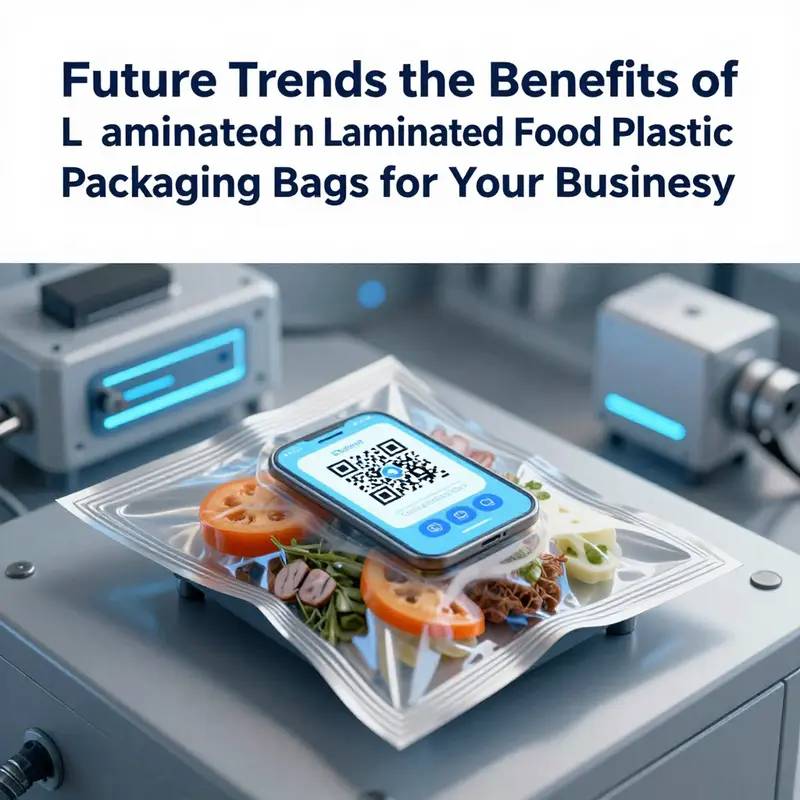
A converging path toward sustainability, intelligence, and higher performance is redefining laminated food plastic packaging bags. The coming decade will not be about a single breakthrough. Instead, incremental advances across materials science, manufacturing, digital integration, and circular value chains will collectively reshape how food is packaged, moved, and experienced. This chapter describes that integrated evolution and how manufacturers, brands, and supply-chain partners can navigate it.
Laminated bags have long balanced competing demands: barrier protection, mechanical strength, printability, and cost. The immediate future adds two nonnegotiable requirements: demonstrable environmental credentials and digital connectivity. These twin pressures push the industry toward new material architectures and new business processes. Materials innovation focuses on two parallel tracks. The first optimizes multilayer constructions to achieve superior barrier performance while enabling easier end-of-life processing. Designers are shifting toward mono-polymer laminates, novel tie layers, and thin metallic or ceramic coatings. Such approaches retain moisture and oxygen resistance and reduce the complexity that historically hindered recycling. The second track explores compostable and bio-based laminates that can meet industrial composting standards or degrade under specific conditions. Where full compostability is not yet viable, hybrid solutions combine recyclable outer films with compostable inner layers, offering graded environmental gains without sacrificing shelf life.
Performance improvements will not merely match existing films. They will surpass them. Enhanced barrier laminates will extend shelf life further, reducing food waste across categories like snacks, dried fruits, grains, and ready meals. Advanced oxygen-scavenging layers and UV-blocking films will protect sensitive nutrients and flavors. At the same time, robust puncture-resistant films will enable lighter overall constructions, lowering material use and transport emissions. These technical gains are frequently paired with targeted print technologies that use less pigment and enable on-demand, short-run customization. Brands will use these capabilities to regionalize messaging and reduce inventory waste, while maintaining the high-resolution graphics that attract consumers on crowded shelves.
Sustainability becomes measurable rather than declarative. Lifecycle thinking will govern packaging decisions. Manufacturers will provide transparent environmental data, including carbon footprints, recyclability ratings, and end-of-life pathways. This is enabled by closer collaboration with recycling organizations and clearer labeling systems. Regulatory frameworks and retailer requirements will accelerate this transparency. More companies will adopt design-for-recycling principles: using compatible polymers in laminated layers, minimizing adhesives and multi-material inserts, and specifying inks and coatings that do not contaminate recycling streams. When true mono-material laminates can meet barrier needs, they will rapidly scale, because simplified sorting and processing sharply improve recycling rates.
Digital technologies will be integrated directly into bag design and logistics. Smart packaging will expand from novelty to utility. NFC tags embedded in pouches will enable instant consumer access to provenance, allergen declarations, and freshness data via smartphones. Blockchain-backed traceability systems will link each bag to immutable supply chain events, improving recall responsiveness and verifying sustainability claims. On the production floor, AI and machine-vision systems will perform automated quality checks that catch seal defects, print misregistration, and barrier inconsistencies in real time. These improvements raise product safety and reduce waste from defective runs.
Automation and smart manufacturing will alter cost structures and capabilities. As more firms adopt MES/ERP integrations, digital twins, and advanced robotics, packaging lines will become more flexible and efficient. This permits faster changeovers for custom runs and shorter lead times for seasonal or promotional packaging. Traceability technologies also enable consumption-based replenishment models. Retailers and co-packers will increasingly rely on data streams from smart packaging to fine-tune inventory, reducing overproduction and markdowns. The net effect is a supply chain that is leaner and more responsive.
Market demand will fragment into specialized niches that call for purpose-built laminates. Heavy-duty bags for wet or oily foods will use grease-resistant, heat-tolerant constructions that tolerate steam and hot-fill processes. Delivery-focused pouches will emphasize thermal integrity and leak resistance. Single-serve and portion-controlled formats will require high-precision seals and ease-of-opening features. Brands will route different product lines to different laminate families, optimizing cost and performance rather than using a one-size-fits-all film.
Business and packaging models will evolve in tandem. Subscription meals, direct-to-consumer grocery, and meal-kit services will prompt packaging that is resealable, reusable, or designed for consumer-initiated recycling. Resealable zippers with high barrier profiles will be standard for many categories. Refill programs and take-back initiatives will broaden, supported by clearer labels and reverse-logistics partnerships. Where compostable single-use options are appropriate, they will be paired with consumer education and local composting solutions. For outlets seeking compostable serving solutions, complementary products such as biodegradable kraft bowls demonstrate the broader shift toward circular disposables; see a representative example of biodegradable options for takeaway service here: biodegradable eco-friendly take-away kraft paper bowl.
Economic realities remain central. High-performance barrier laminates and smart features increase unit costs. The path to adoption involves reducing those costs through scale, process improvement, and material substitution. Early adopters will be high-margin categories where product integrity is mission-critical. Over time, costs will fall, and mid-volume categories will follow. Public policy will play a role, with incentives for recyclable or compostable packaging and penalties for difficult-to-recycle constructions. Policymakers and industry will need to align standards and testing protocols to avoid market confusion.
Collaboration across the value chain will be essential. Brand owners, film producers, converters, resin suppliers, recyclers, and regulators will need to co-develop solutions. Shared testing facilities that simulate real-world storage and disposal conditions will help validate circular designs. Standardized certification schemes will enable quick comparison of environmental claims. Co-investment in recycling infrastructure will create the demand signals necessary to recycle more complex laminates. In markets where infrastructure is lacking, producers must consider end-of-life strategies that are locally appropriate.
Consumer communication will be a new battleground. As packaging becomes smarter and more sustainable, consumers will demand simple, trustworthy signals. Minimalist icons backed by verified data will beat ambiguous buzzwords. QR codes will link to digestible lifecycle summaries and proper disposal instructions. NFC can be used for richer interactions: recipe suggestions, storage tips, and loyalty integrations that incentivize correct disposal. Transparency will build trust and reduce greenwashing accusations.
Design aesthetics will evolve alongside function. Digital printing enables photographic imagery and variable data printing without prohibitive setup costs. Packaging will tell richer stories about origin and handling, while remaining recyclable. Structural design will prioritize convenience and preservation: stand-up pouches with stable bases, resealable closures, and well-placed tear notches. Ergonomics will matter for on-the-go formats and senior consumers. This human-centered approach will coexist with industrial priorities like pack efficiency and pallet optimization.
The future of laminated food plastic packaging bags is not predetermined. It will be shaped by choices across research, regulation, and market preference. Practical innovations—mono-material laminates, standardized recyclability testing, embedded digital credentials, and smarter manufacturing—will combine to create packaging that preserves food better, communicates clearly, and fits into circular systems. For companies in the space, the imperative is clear: invest in materials that balance barrier and end-of-life performance, pilot smart features that add verifiable value, and engage partners to scale recycling and composting solutions. The next generation of laminated bags will do more than protect food. They will protect value, trust, and the planet.
Final thoughts
As businesses in the culinary sector look for methods to stand out, laminated food plastic packaging bags offer an effective solution to enhance product quality and presentation. Understanding the type and applications of these bags, along with their manufacturing processes and market dynamics, empowers businesses to make informed packaging choices. Embracing sustainability while staying attuned to future trends will not only enhance brand reputation but also help meet growing consumer expectations for quality and environmental responsibility.