
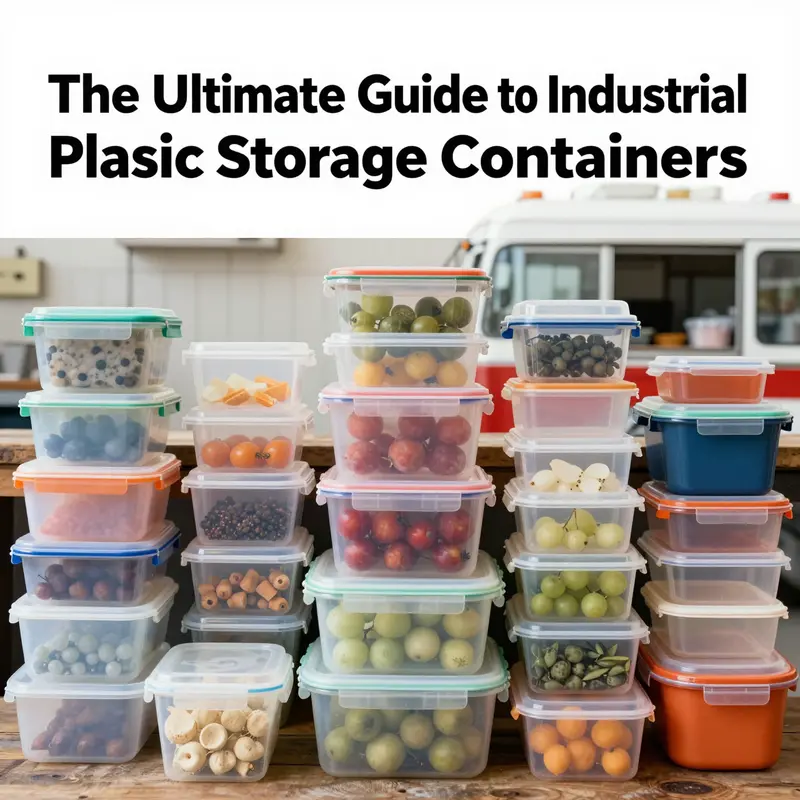
In the culinary and beverage industry, reliable food storage solutions are critical for maintaining quality and safety. Industrial plastic food storage containers stand out as the go-to choice for businesses ranging from bubble tea shops to large catering services. These containers are not only durable and hygienic but also designed to comply with the highest safety standards. This guide will explore their key features that enhance practicality, the diverse applications across various business models, and the compliance requirements that every food service team should know. Each chapter is crafted to equip professionals in the industry with the knowledge they need to make informed decisions about their food storage solutions.
Seamless Shields: How Industrial Plastic Food Storage Containers Fortify Safety, Efficiency, and Scale in the Modern Food Chain
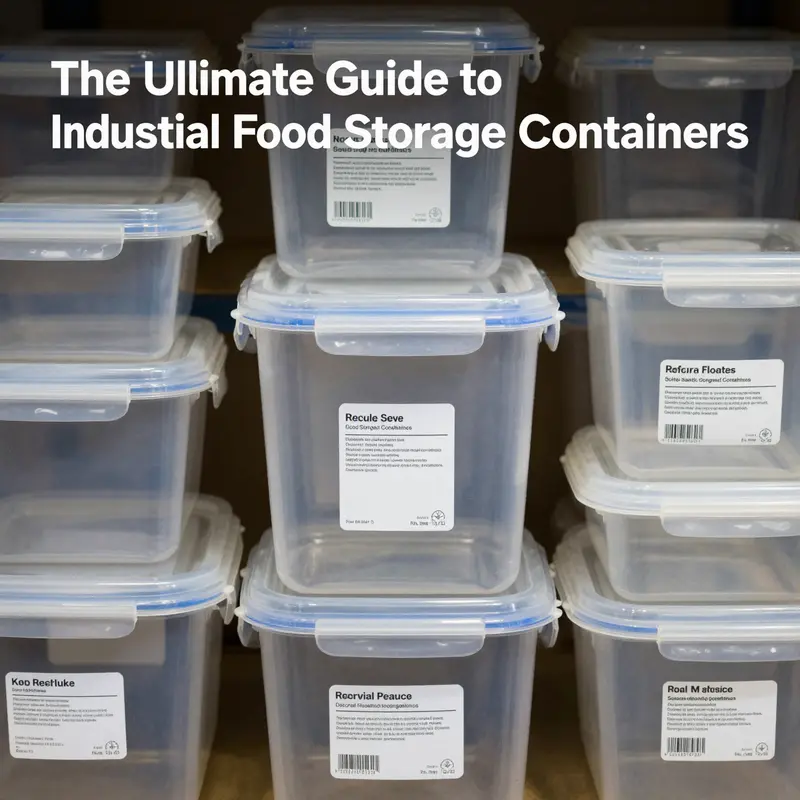
In the orchestration of modern food systems, the container is more than a vessel; it is an active participant in safety, efficiency, and traceability. Industrial plastic food storage containers are engineered to be dependable workhorses in environments that demand hygiene, predictable performance, and swift handling. They protect the quality of products from delicate liquids to dense powders, while aligning with the rigor of high-volume production, cold storage, and long-haul logistics.
Material makeup matters. The most common workhorses are HDPE and LLDPE. Both can be certified as food-grade, but they bring distinct advantages. HDPE offers durability and impact resistance, supporting stable stacking and resisting deformation. LLDPE is prized for toughness and puncture resistance, important during repeated fills, transports, and handling.
A seamless construction minimizes crevices where contaminants can accumulate. Manufacturing processes such as blow molding for small units and rotational molding for larger tanks create a one-piece surface that is easier to clean and less prone to harbor bacteria. A leak-proof exterior and interior reduces downtime and simplifies sanitation.
Sealing systems are essential. Lids with gaskets and threaded closures deliver a reliable seal that remains effective through repeated openings and closings. Some products use two-ring closures to enhance tamper resistance and provide an extra line of defense against leakage. A robust seal helps maintain asepsis, flavor, aroma, and texture during storage and transit.
Durability and lifecycle economics: plastic containers are lightweight and cost-efficient to ship, and they are designed for multiple reuse cycles with straightforward recycling. End-of-life materials can often be recycled into new resins, supporting sustainability goals without compromising safety.
Temperature and chemical resistance: these containers tolerate cold storage down to -40 C and can withstand short-term exposure near 60 C for hot-fill steps. HDPE/LLDPE resist many cleaners and common acids and bases used in food processing, while a seamless interior supports effective clean-in-place or manual cleaning.
Design and integration: sizes range from small 5-liter buckets to large 200-liter drums and beyond, with features like molded handles, built-in spouts, measurement markings, and RFID-enabled tracking. They are designed to stack securely, integrate with automated handling, and enable accurate fill-level measurement along the line.
Compliance and partnership: manufacturers align with FDA guidelines, EU Regulation 1935/2004, and HACCP-based practices. Materials avoid harmful additives such as phthalates and heavy metals, and suppliers offer ISO-certified quality controls and after-sales support. Sustainable sourcing and refurbishment options help facilities meet environmental goals while maintaining safety.
Conclusion: when well designed, industrial plastic storage containers act as active interfaces across the supply chain, supporting sanitation, traceability, and productivity while helping facilities scale with demand.
Seamless, Hygienic, and Scalable: How Industrial Plastic Food Storage Containers Power Safe, Efficient Food Systems
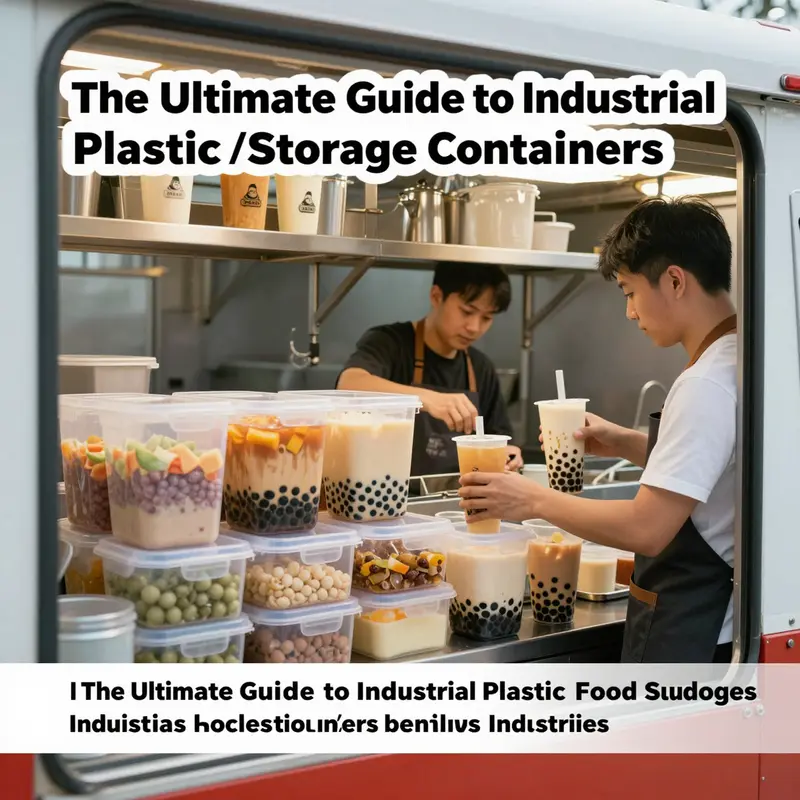
Industrial plastic food storage containers sit at the quiet center of modern food systems. They are not merely vessels; they are deliberate design responses to the twin demands of hygiene and productivity that define contemporary processing, packaging, and logistics. Constructed from food safe polymers such as high density polyethylene, polypropylene, and in some cases PET, these containers are chosen for their nonreactive surfaces, chemical resistance, and resilience under pressure, temperature fluctuations, and rough handling. The most important feature is seamlessness. Through processes like blow molding and rotational molding, manufacturers create containers that lack the welds and crevices that old metal tanks possessed. The absence of joints means fewer places for residue to hide, fewer crevices for bacteria to colonize, and easier cleaning and sanitizing in high throughput environments. It is a practical commitment to food safety that aligns with rigorous regulatory expectations while delivering real world advantages in speed and cost control. In parallel with the seal of the lid, these containers often feature tamper evident closures that guard against contamination during storage or transit. The security of the seal matters not only for product integrity but for consumer trust, especially in sectors where batch traceability and recall readiness are paramount. The combination of seamless construction and secure lids creates a reliable barrier against evaporation, contamination, and spoilage, a foundation that supports long term storage as well as repeated handling along the supply chain. The materials themselves contribute to safety and performance. HDPE and PP are widely used because they resist a broad spectrum of chemicals, withstand impact and long term use, and tolerate temperatures that span freezers to warm rooms. This makes them suitable for diverse operations—from chilled dairy lines to hot fill lines and downstream logistics. PET is sometimes favored for certain volumes and transparency needs, enabling visual inspection of contents without compromising safety. The choice of material is never random; it is guided by the specific properties required for a given product, whether it is a viscous sauce, a delicate liquid, or a dry ingredient that must be kept free from moisture and contamination over extended periods. The design philosophy centers on hygienic integrity and operational efficiency. In many cases, these containers are designed for stacking and integration with automated handling systems. Stackable geometries optimize warehouse square footage and allow for efficient palletization, while standardized dimensions improve compatibility with automated storage and retrieval systems, conveyors, and robotic pickers. When combined with features such as molded handles, molded spouts, and graduated measurement marks, the containers become more than storage bins; they transform into seamless components of a broader logistics architecture. The ability to read contents quickly, measure volumes on the fly, and transfer materials with minimal spillage reduces both waste and the risk of cross contamination. These capabilities are particularly valuable in businesses that handle multiple products across several lines, where accuracy and speed translate directly into throughput and cost savings. As a result, reliability, compliance, and performance have become defining benchmarks for the industry. In the realm of regulatory compliance, the standards that govern industrial plastic food storage containers are not merely formalities. They underpin product safety, protect consumers, and help manufacturers maintain consistency across a complex supply chain. Many containers used in food and pharmaceutical contexts are designed to meet or exceed regulatory frameworks such as the U.S. FDA regulations for food contact materials, European Union Regulation EC No 1935/2004, and HACCP based programs. The emphasis is on food grade virgin materials, avoiding recycled content that could introduce impurities, and ensuring that additives do not compromise purity or safety. A typical specification would emphasize materials that are certified for food contact, free from phthalates and heavy metals, and compatible with cleaning and sanitizing agents that are common in industrial operations. The result is a family of containers that can be trusted to maintain product integrity from the moment of fill to the last mile of distribution. The practical implications of these design decisions show up across industries in tangible ways. In the food processing sector, for instance, plastic storage solutions are preferred for their inert interactions with ingredients such as sauces and syrups. A representative scenario involves a large scale condiments operation that reduces color shifts and flavor degradation by avoiding metal contact that could catalyze oxidation. The switch to FDA compliant HDPE storage vessels eliminates iron interactions that might otherwise alter product appearance and taste, leading to fewer batch recalls and greater consistency. This example underscores a broader truth: stability of product quality over time is closely linked to the material and construction discipline of the container that holds it. In beverages, the appeal is not only hygienic integrity but also resilience against corrosive components found in syrups, malt extracts, and other formulations. Plastic intermediate storage tanks demonstrate a favorable balance of light weight and strength, enabling easier handling and reduced energy consumption in moving material from step to step. A typical deployment may involve 500 liter tanks for syrup storage, where ongoing maintenance costs are significantly reduced and the service life of the equipment extends beyond conventional expectations for metal vessels. When the soil of a warehouse settles into its routine, plastic storage solutions deliver predictable performance with an endurance that translates to fewer downtimes and more reliable production schedules. In the dairy sector, hygiene takes on an intensified form given the criticality of microbial control. The absence of weld seams and internal crevices minimizes sites for bacterial reservoirs, a key advantage under HACCP and GMP regimes. In one case, a dairy cooperative replaced aging stainless steel silos with large rotomolded HDPE tanks. Audits tracking microbial contamination reported zero instances over two years after the transition, a marked improvement over prior periods, and cleaning times were dramatically reduced. This combination of safety and efficiency translates into cleaner facilities, faster changeovers, and improved product safety margins that matter for consumer trust as well as regulatory audits. The pharmaceutical and nutraceutical industries add another layer of discipline. Containers used in these contexts must meet stringent expectations for purity, sterility, and traceability. Plastic storage tanks employed for bulk active pharmaceutical ingredients and dietary supplements are frequently specified to be free of additives and recycled materials that could compromise product integrity. Virgin HDPE tanks with rigorous certification take their place in the supply chain where stability, non leaching properties, and compatibility with cleaning protocols are essential. The objective is to preserve chemical composition, avoid contaminants that could alter efficacy, and maintain sterility across bulk handling and transfer operations. Here the conversation moves beyond simple containment to include considerations of GMP compliance, ISO standards, and internal quality control regimes that align with global distribution networks. In logistics and cold chain contexts, the advantages of plastic containers are most visible in the synergy between lightweight design and rugged reliability. A container that weighs only a fraction of a steel equivalent reduces fuel consumption during transport, lowers handling effort, and adapts readily to automated stacking systems and AGVs in modern warehouses. The self weight advantage is not merely about material savings; it directly influences fuel efficiency, warehouse throughput, and the feasibility of expanding storage capacity without requiring substantial capital outlays. A case study from a national distribution network illustrates this: by standardizing on a family of 200 liter rotomolded bins, the operation achieved a notable uptick in throughput and smoother pallet flows. The containers fit naturally with automated tooling, reducing friction during movement and enabling faster load cycles. In practice this means less vibration, fewer spills, and more predictable performance in high velocity environments. Designers also respond to the need for visibility and control. Transparent or translucent plastics allow operators to perform quick checks of contents, while markings provide reliable measurement references without opening the container. Shipping and cold chain tasks require durability across temperature extremes. With a typical operating range spanning from minus forty degrees Celsius to plus sixty degrees Celsius, the containers withstand the demands of refrigeration, freezing, and ambient storage. The absence of corrosion, rust, or abrasion extends the life of equipment and reduces the frequency of replacements in harsh environments. The modularity and adaptability of these containers are especially relevant as facilities pursue customization and digital integration. Many models now offer options for integrated measurement scales, molded spouts for controlled transfer, and even RFID tagging for inventory management. The RFID capability helps align physical items with digital records, improving traceability, lot management, and stock rotation. It also supports quality control and recalls, where precise unit tracking is essential to isolate affected batches quickly. The broader implications reach into the sustainability narrative that increasingly informs procurement and design decisions. Plastic storage containers contribute to lower weight, reduced energy usage in transit, and longer overall lifespans when properly chosen and maintained. Their recyclability at end of life, though dependent on local programs, adds a dimension of environmental responsibility that resonates with manufacturers and customers alike. In addition, the ability to clean, sanitize, and reuse containers across multiple shifts reduces waste associated with disposable packaging in some segments, while enabling a more circular approach within the supply chain. The continuing evolution in this field lies in balancing compliance with innovation. As industries push for greater automation, sensors, and data connectivity, containers are increasingly treated as smart components rather than passive receptacles. Innovations such as integrated level indicators, flow control features, and data capture points for contamination checks are moving the technology forward while maintaining the essential hygienic and regulatory assurances. Yet the core principle remains constant: the container must protect the product, support efficient operation, and survive the rigors of industrial environments. The practical reality for managers and operators is a disciplined selection process that weighs material chemistry, manufacturing method, and regulatory alignment against use case, volume, and lifecycle cost. The choice between rotational molding and blow molding often reflects the scale and geometry required for a given operation. Rotational molding is favored for larger tanks and seamless tanks with significant wall thickness, while blow molding suits smaller, lighter, more standardized shapes. The resulting performance differences matter in the field, where the right geometry translates into more reliable cleaning, easier handling, and consistent product quality across shifts and facilities. In today paces, the transition to more intelligent and compliant plastic storage systems is not a luxury but a necessity. The modern food producer seeks to reduce variance, minimize waste, and accelerate time to market without compromising safety. Industrial plastic storage containers, with their seamless surfaces, secure lids, robust material choices, and compatibility with automation, offer a practical pathway toward that objective. They enable better shelf-to-shelf and plant-to-plant consistency, help maintain strict hygiene standards across processes, and support the digital transformation driven by modern logistics networks. For procurement teams, the message is clear. Invest in containers whose specifications align with regulatory expectations, whose materials ensure product integrity, and whose geometry supports efficient handling and automation. The returns are measured not only in dollars saved on energy, labor, and waste but also in the reduced risk of contamination, recall incidents, and regulatory noncompliance. As the industry continues to evolve, the role of plastic storage solutions will likely expand further with continued emphasis on safety, sustainability, and supply chain resilience. The story of these containers mirrors the wider trajectory of modern food systems: built on scientific material choices, engineered for hygienic performance, and integrated into networks that value efficiency, traceability, and confidence in every batch. External resource: https://www.cflp.org.cn/research/2025-plastics-tank-industry-report.pdf
Guardians of the Shelf: Navigating Compliance, Standards, and Safety in Industrial Plastic Food Storage Containers
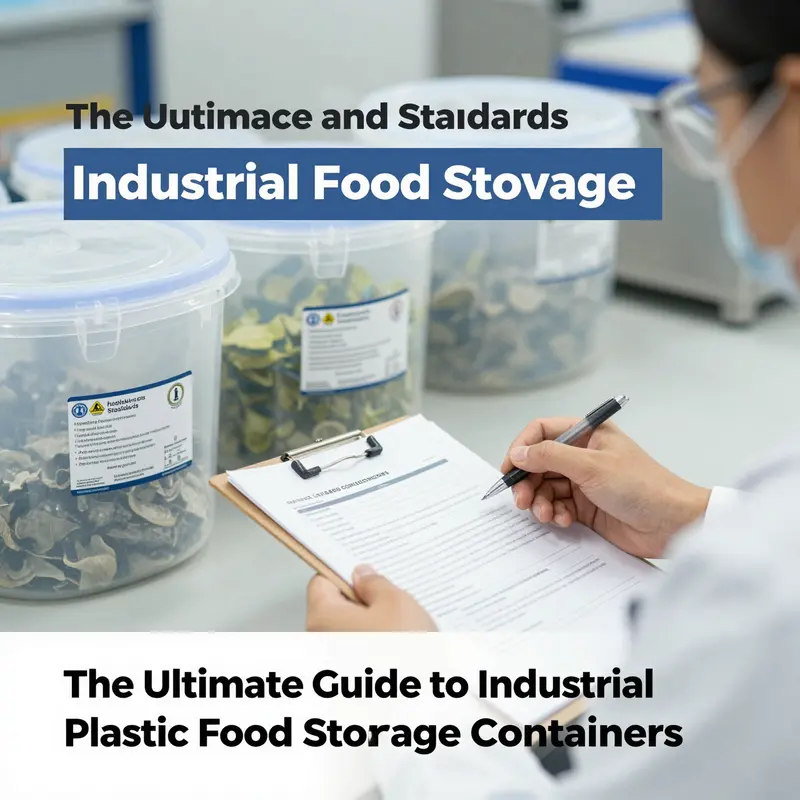
The journey from factory floor to finished product shelf is governed by a network of rules, tests, and expectations that quietly determine how industrial plastic food storage containers perform under pressure. These containers are not mere vessels; they are gateways to food safety, supply chain efficiency, and environmental responsibility. In an era when traceability and hygienic design are non-negotiable, the standards that govern material selection, manufacturing processes, labeling, and performance become the backbone of everyday operations. The seamless, smooth surfaces that many observers associate with quality are, in fact, the fruit of deliberate choices made at the earliest stages—choices about polymers, additives, and manufacturing techniques that minimize contamination risk while maximizing durability, cleanability, and lifecycle value. In this sense, compliance is not a bureaucratic burden but a design principle that shapes how containers protect, preserve, and move food across a global network of factories, warehouses, and trucks.
At the heart of compliance lies material safety. The most widely accepted workhorses for food contact are polypropylene (PP) and specially engineered copolyesters such as Tritan™, both chosen for an interplay of safety, strength, and resilience. PP is lauded for its heat resistance and compatibility with repeated sterilization cycles, making it a practical choice in meal prep, refrigerated storage, and environments where sanitation is a daily requirement. Tritan™, developed as a BPA-free alternative, offers a compelling blend of clarity, toughness, and chemical resistance that is particularly valuable when visibility of contents matters. The decision to favor PP or Tritan is not only about performance; it is about aligning with regulatory expectations for materials intended to contact food. The migration behavior of additives and additives themselves must stay within limits defined by governing bodies, ensuring that substances do not migrate into food in quantities that could pose health risks or alter the product’s safety or sensory attributes. These material considerations are the first, quiet signal of a container’s compliance pedigree.
Regulatory governance for food-contact plastics spans multiple jurisdictions and standards, reflecting the global nature of modern food systems. In the United States, guidance tied to the Food and Drug Administration’s (FDA) framework governs which polymers may contact food and under what conditions migration limits apply. The reference point is often FDA 21 CFR Part 177, which maps permissible polymer types and sets tolerances for substances that might leach into food from packaging materials. In parallel, the European Union relies on Regulation (EC) No 1935/2004 to ensure that materials intended for contact with food do not transfer substances that could endanger health or alter the food’s composition. Beyond these national and regional baselines, international standards bodies such as ISO establish management and performance criteria that support consistent quality across borders. The interplay of these regulations is not a checklist; it is a framework guiding material choices, testing regimes, and production controls that keep safety claims credible across markets.
Beyond the raw materials lie the rigorous tests and performance thresholds that validate a container’s readiness for real-world use. In industrial settings, the design must withstand the practical rigors of daily handling, stacking, and long-duration storage, often in temperatures ranging from cold storage to moderately warm environments. The discussion extends to the structural integrity of closed-head drums and larger storage tanks, where UN testing standards like UN 1A2 or UN 3H1 frequently come into play when packaging solutions are destined for international transport. These standards evaluate pressure resistance, drop impact, and leakproof performance, providing a common language that shippers and manufacturers can rely upon to ensure safety during transit. Even when a container is intended primarily for storage and not for hazardous materials, many facilities operate under UN-compliant handling practices to maintain consistency with broader shipping protocols and to facilitate cross-border use where regulatory expectations are harmonized. The result is a packaging system that not only stores but also protects, from the moment ingredients or finished products leave the line until they arrive at a processing station, warehouse, or retail point.
The surface that customers see—the absence of creases, the smooth interior, the tight lid—embodies a broader truth about compliance: ease of cleaning and maintenance are non-negotiable features. A hygienic surface is defined not just by its cleanliness but by its cleanability. Seamless construction, achieved through blow molding or rotational molding, eliminates welds and joints where residues could accumulate. The absence of seams is not a cosmetic preference; it is a functional safeguard that supports sanitation programs and reduces the risk of contamination. Lids that seal securely and tamper-evident features that confirm integrity help maintain product quality during long storage or transit. Yet even with a seamless exterior, cleaning protocols remain essential. Large 200-liter tanks and other bulk containers require access strategies that balance user-friendly maintenance with the need to minimize contamination risks. In practice, facilities establish routines that include careful pre-cleaning, targeted sanitation steps, and verification tests that confirm surfaces meet microbial standards before the container returns to service. The engineering payoff is a container that supports a pathogen-control mindset, not by itself solving every challenge, but by removing hidden crevices where issues could take root.
A key facet of compliance is the labeling and traceability that enable recall readiness, batch tracking, and quality assurance across the value chain. Labels must convey material identity, surface compatibility, cleaning instructions, and any relevant regulatory markers that reassure buyers about safety. Traceability is more than a record-keeping exercise; it is a practical tool that supports root-cause analysis, helps identify contamination pathways, and accelerates corrective actions when problems arise. In this sense, labeling and data capture are as essential to compliance as physical design. The most robust systems knit together part-level data with batch records, manufacturing lot numbers, and storage histories to create a transparent chain of custody. For facilities managing thousands of containers, digital approaches—such as RFID or barcode-based inventory management—can transform how quickly teams locate, clean, and reassign assets while maintaining stringent safety standards. It is there, in the quiet cadence of daily checks and audits, that compliance moves from theory to practice and begins to shape operational habits that reduce risk and improve quality across every operation.
Sustainability has moved from a peripheral consideration to a central criterion in compliance discourse. A growing chorus of manufacturers and regulators alike emphasizes the importance of recyclable materials and closed-loop strategies that minimize waste and environmental impact. Recyclability becomes a performance metric in its own right, influencing design choices and end-of-life planning. This shift aligns with global imperatives advanced by initiatives such as the New Plastics Economy, which advocate for circular solutions that keep materials in productive use while reducing the burden of single-use plastics. In practical terms, sustainability in compliance means selecting polymers and additives that can be effectively recycled, designing containers for dismantling or easier separation of components, and providing clear guidance on cleaning and decontamination that preserves material integrity for downstream recycling streams. It also means verifying suppliers’ commitments to responsible manufacturing and maintaining documentation that demonstrates a cradle-to-grave perspective for materials, helping customers justify their own compliance posture in markets that increasingly reward circular strategies. For organizations facing pressure to deliver both safety and sustainability, the challenge is not choosing one over the other but integrating them into a single, coherent standard that guides every stage of a container’s life cycle.
A central, ongoing concern in compliance is the relationship between design, production, and quality management systems. Manufacturers pursue certifications and frameworks that signal reliability and consistency to customers who rely on these containers for critical operations. ISO 9001, with its emphasis on quality management principles, provides a formal mechanism for continuous improvement, supplier qualification, and process control. In the food sector, ISO 22000 and allied standards such as HACCP-based programs translate food safety principles into packaging practices, ensuring that the packaging itself supports hazard analysis, critical control points, and preventive controls in the broader production chain. The combination of these management systems with GMP-style governance offers a robust spine for operational discipline. Audits—both internal and supplier-side—verify that manufacturing processes stay within acceptable tolerances, that materials meet declared specifications, and that batch histories align with customer expectations. The net effect is not a static declaration of compliance but a living program that adapts to new risks, evolving regulations, and shifting supply chain dynamics.
The practical implications of these standards surface in everyday decisions about container selection, handling, and maintenance. For storage and processing facilities, compliance translates into choosing containers with sufficient UV stability to withstand exposure in outdoor or sunlit environments, a critical factor when products may sit in warm loading bays or unconditioned spaces for extended periods. It also means anticipating the needs of automated handling systems: stackability, pallet compatibility, and compatibility with pumps, funnels, or sampling equipment designed to minimize human contact and contamination risk. The design language that emerges from compliance considerations—durable, chemically resistant, easy to clean, and clearly labeled—helps ensure that operations can scale without compromising safety or quality. In practice, teams develop and follow standard operating procedures that codify how containers are inspected, cleaned, and returned to service. They establish criteria for when to retire a container, how to document its history, and how to manage the inventory so that risk exposure does not accumulate across the fleet.
Material safety and regulatory alignment are complemented by a governance mindset that treats supply chains as systems of risk and opportunity. Supplier qualification extends beyond the raw materials to the entire ecosystem of components, finishes, and lids. When possible, manufacturers pursue supplier audits that verify adherence to good manufacturing practices, ethical sourcing, and environmental obligations. This comprehensive approach supports not only regulatory compliance but also brand integrity and customer trust, because customers increasingly demand visibility into how packaging is produced, what it contains, and how it can be responsibly disposed of or recycled at end of life. The broader implication is that a compliant container is part of a larger, auditable chain that enables efficiency, reduces recall risk, and supports regulatory acceptance in multiple markets. This is why the most successful facilities treat compliance as a design constraint, not as a later add-on, ensuring that every dimension—from materials and manufacturing to labeling and end-of-life—is harmonized with a shared set of standards.
Within this landscape, it is useful to acknowledge the diversity of packaging ecosystems that share the same regulatory DNA. While industrial plastic storage containers are the main focus, the broader family of packaging solutions shows how different materials and formats must navigate similar safety and sustainability milestones. For instance, there is a recognized need to compare how different packaging formats influence sanitation strategies and cleaning regimens, and how these decisions feed back into regulatory compliance. In this light, one might consider adjacent packaging formats, such as disposable paper-based options, to illustrate the spectrum of disposal and hygiene considerations in a broader procurement strategy. disposable eco-friendly custom paper coffee cups with lid. This link, while pointing to a paper-based alternative, underscores the importance of clear labeling, traceability, and lifecycle thinking across packaging modalities. The point is not to equate formats but to acknowledge that the same principles of safety, regulatory alignment, and environmental responsibility apply across materials and use cases.
As practice evolves, access to authoritative guidance remains indispensable. The regulatory community and industry groups publish reference materials that help organizations interpret requirements, implement best practices, and prepare for audits. In the United States, FDA resources on food-contact materials offer practical guidance on permissible polymers, migration considerations, and how to interpret compliance requirements in the context of specific product categories and processing environments. The EU maintains similar guidance through EFSA and related agencies, while ISO standards provide a bridge across national regulatory regimes, helping manufacturers design and verify packaging that travels across borders without compromising safety. For teams tasked with maintaining compliance, these resources are not relics of past regulation but living documents that inform every phase of product development, supplier selection, and operational practice. The challenge lies in translating guidance into actionable procedures that workers can follow on the line, during audits, and in day-to-day tasks that sustain a culture of safety.
In the end, the conversation about compliance and standards is a conversation about stewardship. It is about safeguarding product integrity, protecting public health, and preserving the environmental value embedded in materials and manufacturing choices. It is about ensuring that every container, regardless of size or scope, serves as a reliable conduit for food safety—from the moment contents are introduced to the container to the moment they are dispatched to restaurants, processors, or distributors. It is about building confidence among customers and regulators alike that the packaging ecosystem, with its stringent checks and continuous improvements, can be trusted to perform under diverse conditions, in diverse markets, and for diverse products. When these standards are lived daily—from the cleanliness of interiors to the fidelity of labeling and the robustness of supplier controls—the result is not just compliance on a page but a measurable elevation in safety, efficiency, and sustainability across the entire supply chain.
External resource: https://www.fda.gov/food/food-contact-materials
Final thoughts
Industrial plastic food storage containers are an indispensable asset for businesses looking to maintain high standards of quality and safety in food preparation and storage. With their robust features, versatility across applications, and stringent compliance with safety regulations, these containers provide the peace of mind every chef and operator seeks. Investing in the right storage solutions not only enhances operational efficiency but also ensures the safety and satisfaction of the customers served. Businesses should prioritize these containers to align with industry best practices and elevate their service standards.