
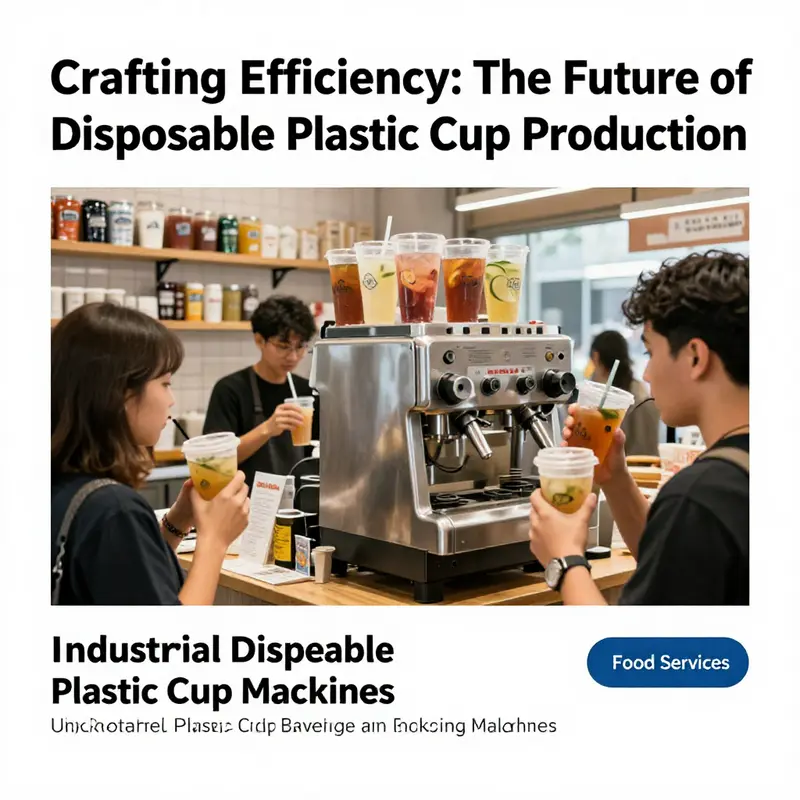
As the demand for disposable plastic cups continues to rise among bubble tea shops, restaurants, food trucks, and catering services, understanding the technology behind their production becomes paramount. Industrial disposable plastic cup making machines are sophisticated tools that not only enhance efficiency but also ensure quality and sustainability. This article delves into the core technologies and components that make these machines essential, introduces leading manufacturers and their product offerings, and explores the latest market trends. Whether you’re in food service or event planning, knowing how these machines work can give you a competitive edge.
Melt, Form, and Flow: Core Technologies Driving Industrial Disposable Plastic Cup Making Machines
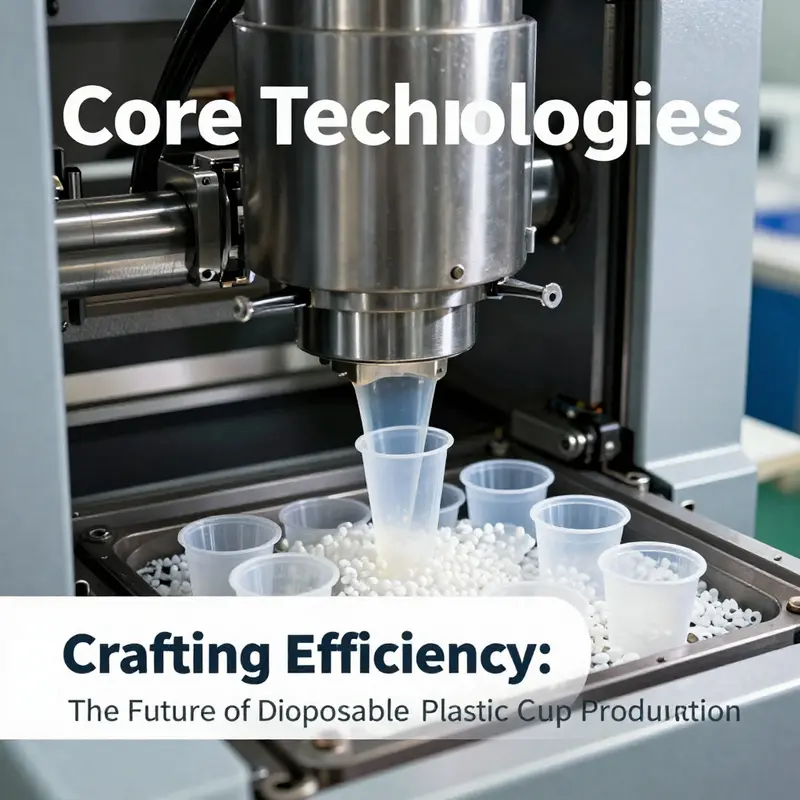
Melt, form, and flow—the trio that underpins modern, high-speed production lines for disposable plastic cups—maps directly onto the everyday objects that millions rely on each day. In the context of an industrial plastic cup making machine, two core technologies stand as the architects of shape, strength, and speed: thermoforming and injection molding. These processes are not merely isolated steps; they are complementary avenues that, when integrated with automated feeding, heating, cooling, cooling, ejection, and intelligent control, deliver a seamless cascade from raw polymer pellet to finished cup. The modern machines that orchestrate this transformation are designed to be robust, hygienic, and adaptable, capable of handling a variety of materials—from conventional polypropylene (PP) and polystyrene (PS) to PET and even newer, more sustainable options such as PLA. The result is a line that can switch between product formats with minimal downtime while maintaining strict tolerances, wall thickness uniformity, and surface quality that meets the demands of the food service industry.
In the realm of thermoforming, a sheet of plastic is first heated until it becomes pliable, then drawn into a mold cavity using vacuum or positive pressure to take on the cup’s distinctive geometry. The advantages are clear: this method is exceptionally well suited to producing clear, lightweight cups with uniform walls at high volumes. The tooling costs can be high, and energy use tends to be significant, but the efficiency of material usage and the ability to mold thin, aesthetically consistent cups make thermoforming a mainstay for beverage containers that emphasize translucence or a slim profile. The process can accommodate large-format runs with relatively low unit costs once the molds are established, and it excels in creating durable, consistently formed cups with razor-thin, uniform walls that optimize the user experience—how a cup feels in the hand and how it behaves when stacked or packed for transport. Yet the method is not without its tradeoffs. The molds required are precisely engineered, and cutting-edge thermoforming lines demand tightly controlled heating profiles and forming pressures. Any deviation in sheet tension or temperature can ripple through the process, affecting wall thickness uniformity or edge quality. This is where the industry’s move toward integrated sensing and real-time feedback becomes pivotal, ensuring that the sheet remains within a tight thermal envelope as it flows through the forming stations.
Injection molding, by contrast, takes a different route to the same destination. Plastic granules are heated to a melt, then forced under high pressure into a precision mold where the material cools and solidifies into the finished cup geometry. The strength of injection molding lies in its ability to deliver exquisite dimensional accuracy and highly repeatable wall thickness, even for complex features or tight tolerances that might challenge other forming methods. For many manufacturers, injection molding provides the backbone for higher-speed production lines that demand peak repeatability and a fast cycle time. Typical speeds in well-optimized lines can approach a few dozen to well over a hundred pieces per minute, depending on wall thickness, resin choice, and mold complexity. The rapid cycle capability supports medium to large-scale production needs and makes it possible to produce cups with consistent geometry across large batches. The tradeoffs here center on mold cost, part complexity, and the necessity for meticulous temperature and pressure control to avoid defects such as flash, sink marks, or porosity in the final component. The choice between thermoforming and injection molding hinges on a host of factors: product shape, required transparency or rigidity, wall thickness, and the economics of mold manufacture versus sheet tooling. In practice, many lines blend both approaches, using thermoforming for straightforward, lightweight forms and injection molding for features that demand higher precision or integrated features like reinforced rims or specialized stacking geometry.
Both technologies thrive when embedded in automated, integrated systems. A modern cup line is more than a single machine; it is a carefully choreographed sequence in which feeding, heating, forming, cooling, and ejection are synchronized by an intelligent control system. The feeding system must reliably supply raw pellets or sheet material with minimal downtime, while the heating or plasticizing unit must maintain a stable temperature profile to prevent material degradation or inconsistent viscosity. The molding unit—whether a thermoforming station or an injection mold—defines the part’s essential geometry, then the cooling system rapidly reduces the material’s temperature to lock in the shape and wall thickness. The ejection system automatically removes the finished cup and hands it off to downstream handling, stacking, or packing equipment. All of these steps are connected by an advanced control layer that monitors temperatures, pressures, motor torques, cycle times, and quality indicators in real time. Modern controls use sensors and software presets to adjust process parameters on the fly, minimizing scrap and maximizing uptime. The result is a line that not only builds cups but also sustains them with consistent performance across long shifts, a crucial capability in high-demand service industries.
From the viewpoint of materials science, the choice of resin interacts closely with process selection. PP and PS are traditional staples for disposable cups because of their balance of clarity, stiffness, chemical resistance, and processability. PET brings higher clarity and barrier properties, which can be advantageous for certain beverage applications. More recent considerations include biodegradable options such as PLA, which, while offering environmental benefits, require careful handling in terms of melt temperature and downstream recycling streams. The manufacturing equipment must be compatible with these materials, not only in the heating and cooling zones but also in the way the components come into contact with food-contact surfaces. Corrosion-resistant stainless steel construction and hygienic design features—such as smooth surfaces, minimized blind cavities, and accessible tooling—are not decorative add-ons but essential design choices that support food safety standards and cleanability.
In practice, automation is the thread that ties thermoforming and injection molding into a cohesive system. Servo-driven drives replace older hydraulic or pneumatic systems in many lines, delivering precise motion control with lower energy consumption and reduced maintenance. Servo technology supports rapid acceleration and deceleration, which translates into smoother handling of sheets and higher throughput without sacrificing the integrity of delicate thin-walled cups. The integration of intelligent control systems enables multi-stage lines—sometimes described in shorthand as “one-out-six,” referring to a single sheet or batch producing six finished cups in parallel through sequential stages—to achieve high efficiency. These multi-out configurations are not only about speed; they also offer redundancy and flexibility, allowing manufacturers to adjust the lineup to demand fluctuations without sacrificing quality. In the same breath, flexible lines can handle a spectrum of materials and shapes, a capability that speaks to the industry’s broader push toward adaptivity and resilience in the face of material price volatility and evolving consumer preferences.
The conversation about core technologies would be incomplete without acknowledging the role of waste management and sustainability. A well-designed cup line incorporates a waste recycling system that captures scrap material generated during trimming, sprues, or defective parts and feeds it back into the material stream where possible. This closed-loop approach reduces feedstock costs and aligns with broader corporate environmental goals. It also drives process decisions, such as mold design that minimizes waste, or the choice of nozzles and gates that reduce flash. In lines that combine thermoforming and injection molding, waste handling can be particularly nuanced, as shaved or reformed scrap from one station can sometimes complement the material requirements of another, provided the polymer’s intrinsic properties and contamination risks are carefully managed. The lifecycle mindset that informs these lines—combining energy-efficient heating profiles, closed-loop cooling, and automated scrap handling—helps manufacturers reduce not only cost but their environmental footprint, a consideration that increasingly guides procurement, design, and operation.
To illustrate the practical implications of these core technologies, consider the interplay of process control, material selection, and equipment topology on overall line performance. A well-tuned thermoforming stage might heat a sheet to the exact softening point, align it with a high-precision forming tool, and apply a vacuum pattern that ensures uniform wall thickness across a broad spectrum of cup sizes. Meanwhile, a coordinated injection-molding station could deliver rims and other reinforcing features with tight tolerances, then eject the cups with minimal deformation. The automation layer would continuously monitor temperatures, vacuum levels, injection pressures, and ejection timing, adjusting the sequence to maintain consistent quality even as raw material batches vary or ambient conditions shift. When such harmony is achieved, the result is not just a factory line but a reliable production ecosystem that can scale from pilot runs to full-scale manufacturing without a wholesale redesign.
Within this ecosystem, the end user—whether a beverage service operator or a packaged foods supplier—benefits from predictable product quality, reduced variance in cup dimensions, and a more stable supply chain. The choice between thermoforming and injection molding becomes less about choosing one technology over another and more about aligning process capabilities with product requirements and cost targets. A line may prioritize thermoforming for high-volume, clear cups where wall thickness uniformity translates into perceived quality, while reserving injection-molded stations for specialty rims or features that demand exact tolerances at speed. In either case, the capacity to integrate feeding, heating, molding, cooling, and ejection under a single intelligent control system offers a clear competitive advantage: it shortens changeover times, reduces downtime, and yields a more consistent finished product across shifting demand cycles.
For readers seeking a practical gateway into the world of automated cup production, a real-world example of how automated lines handle disposable container formats can be found in related packaging discussions. This resource provides a tangible sense of how a line is engineered to cope with the demands of single-use packaging, including the handling of diverse cup formats and lid interfaces. Disposable single-wall paper cup 12oz-16oz kraft coffee cup with lid.
In closing, the core technologies of thermoforming and injection molding sit at the heart of industrial disposable plastic cup making machines, but their true power emerges only when paired with advanced automation, precise controls, and sustainability-minded design. The modern line is less a collection of discrete processes and more a synchronized system—one that can adapt to new materials, meet stringent quality expectations, and operate within demanding production schedules. As manufacturers continue to push for higher speeds, greater accuracy, and lower waste, these core technologies will continue to evolve in tandem with smarter sensors, more versatile tooling, and increasingly energy-efficient architectures. The result is a class of machines that not only meet the immediate need for disposable cups but also align with a broader trajectory toward safer, cleaner, and more sustainable food packaging solutions.
External resource: https://www.alibaba.com/product-detail/Disposable-Plastic-Cup-Making-Machine-Automatic_1600579834767.html
Inside the Cup Factory: The Integrated Architecture of Industrial Disposable Cup Making Machines
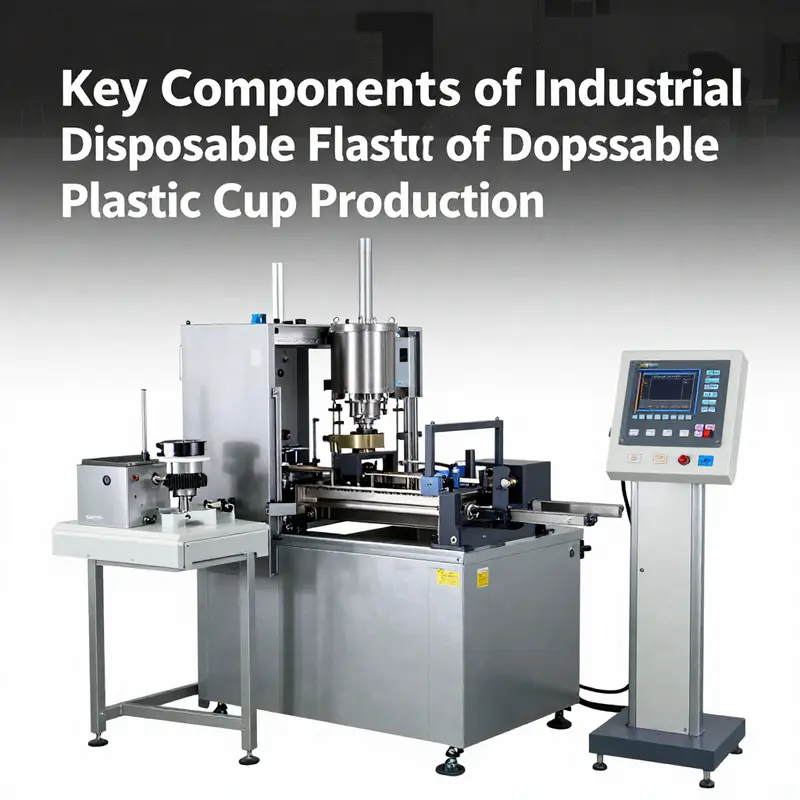
Every disposable cup produced on an industrial line hides a careful sequence of subsystems. Feeding, heating, molding or forming, cooling, ejection, conveyance, and packaging work together as a single synchronized system. The design goal is to deliver identical cups at high speed while controlling material use, dimensional tolerances, and surface finish. The path begins with material feed from a hopper or roll stand, then heating for viscosity and flow, followed by forming in a mold (injection) or by shaping a heated sheet (thermoforming). The mold geometry and wall thickness control are critical for consistency and downstream compatibility with lids and stacking equipment. Cooling solidifies the form, then ejection and trimming remove the part cleanly. A centralized control system, often a PLC with HMI, coordinates temperatures, pressures, clamp forces, and cycle times, while local sensors monitor drift and tool wear. Conveyance and stacking complete the cycle, moving finished parts to packaging with minimal handling. Modern lines also emphasize material versatility and sustainability, supporting plastics like polypropylene and PET, with scrap handling that feeds back into the material stream. The architecture is modular yet tightly integrated, achieving high throughput with predictable quality and opportunities for continuous improvement.
From Makers to Molds: Navigating the Manufacturer Landscape and Product Range in Industrial Disposable Cup Production
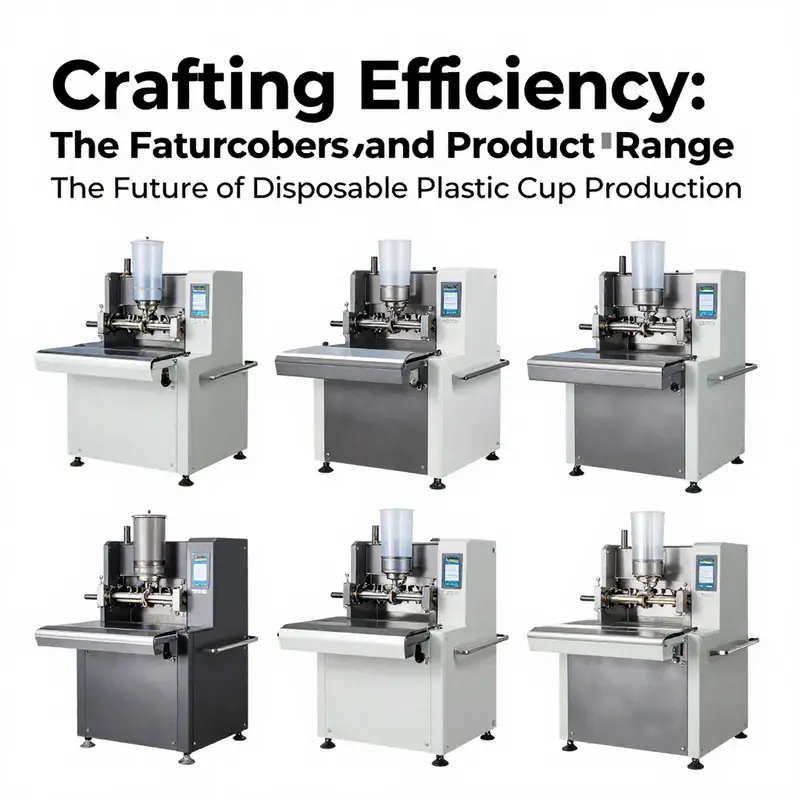
In the clean, humming corridors of modern packaging plants, industrial disposable cup making machines stand as the quiet workhorses behind everyday convenience. They translate a handful of raw thermoplastics into predictable, uniform vessels that hold coffee, yogurt, soups, and ready meals across countless service channels. The machines themselves are a union of three core technologies: injection molding, thermoforming, and a suite of intelligent controls that steer speed, precision, and quality in real time. When you watch a production line in action, you glimpse a choreography of feeding systems delivering plastic granules or sheets, the heating and plasticizing units turning solid inputs into molten streams, and the molding units where the cup geometry is born in a breath of pressure and cooling. Ejection sits on the other end, a steady cadence that keeps the flow continuous. The best lines also include a recycling loop—scrap materials re-enter the process so waste is minimized and costs stay in check. It is this blend of mechanical finesse and software intelligence that makes modern cup production scalable, adaptable, and increasingly sustainable.
The landscape of manufacturers feeding this ecosystem is especially vibrant in the Chinese market, which exports not only finished cups but complete lines that can be tweaked to accommodate different sizes, materials, and end-use requirements. Within this fabric, several players stand out for their breadth of product ranges, their automation capabilities, and their willingness to tailor machines to specific industrial needs. At the heart of these offerings is a common promise: reliability at high speed, compatibility with a spectrum of materials, and a design that accommodates both small-batch experimentation and mass manufacturing. A typical production line, after all, can be configured around one-out, two-out, four-out, or six-out molds, enabling a factory to tailor throughput to demand without sacrificing precision or waste control. The shift toward servo-driven, fully automated lines has accelerated this evolution, and many models now incorporate integrated control systems that monitor temperature, pressure, cycle times, and tool wear through laser sensors and PLCs. These features are not merely conveniences; they are essential for maintaining stringent quality standards across tens of millions of cups a year.
Among the more prominent manufacturers in this space, a number of profiles illustrate both geographic clustering and diversity of capability. In Zhejiang province, for example, several firms emphasize high-speed hydraulic cup-making machines and fully automatic, servo-driven lines. Their catalogs typically stress energy efficiency and automation, with options for new installations or refurbished systems that help startups scale without prohibitive upfront costs. In neighboring Jiangsu and Guangdong, other players highlight integrated forming solutions that blend vacuum or positive pressure forming with extrusion, or complete lines that attach lids and package cups in a single, seamless workflow. These firms often position themselves not just as equipment suppliers but as partners in process optimization, offering OEM or ODM services, customization for branded products, and rapid delivery options to meet tight production ramps. The geographic clustering matters, because proximity helps with service accessibility, spare parts logistics, and ongoing performance tuning as a line ages or as novel materials demand changes.
The product ranges pursued by these manufacturers are as varied as the cups themselves. A substantial portion of the equipment is designed to process common thermoplastics—polypropylene (PP), polystyrene (PS), and polyethylene terephthalate (PET)—but the field is expanding to accommodate newer, more sustainable materials such as polylactic acid (PLA). This shift toward eco-friendly inputs is not merely a novelty; it reflects a broader industry push to align with regulatory and consumer expectations around sustainability. The machines themselves adapt to these materials through adjustments in heating profiles, mold design, and cooling strategies. The result is a family of lines that can produce everything from classic hot-press disposable cups for coffee or tea to specialized, microwave-safe, cold-resistant, or biodegradable variants. In addition to cups, many manufacturers offer lines capable of producing lids, bowls, snack containers, and even meal boxes, often as modular extensions of a core cup-forming system. Some configurations also integrate additional processing stages, such as lid attachment or even inline packaging, creating end-to-end solutions that reduce handling, minimize contamination, and increase overall line efficiency.
In practice, the breadth of a given supplier’s catalog often signals a particular strategic emphasis. Some firms lean into the high-output end of the spectrum, marketing “one-out six” or similar multi-out configurations that yield substantial hourly throughput with tight cycle times. Others emphasize flexibility and customization, promoting lines that can be adapted quickly to new shapes, sizes, or branding requirements. A number of players stress sustainability features—from energy-efficient servo drives to built-in waste recycling streams—recognizing that the total cost of ownership includes not only capital expenditure but ongoing operating costs and environmental footprint. It is common to see a staged approach: a basic, reliable line for initial production, followed by incremental upgrades to servo control, advanced sensors, and process analytics as demand and margins permit. The integration of intelligent control systems—PLCs, laser sensors for dimensional monitoring, and continuous data streams for quality control—has become a differentiator among providers, enabling operators to detect drift before it becomes material waste, and to optimize cycles for the specific resin and cup geometry in use.
Taking a closer look at geography and specialization helps illuminate why these differences matter in practice. In coastal industrial belts, suppliers frequently leverage well-developed supply chains to offer rapid delivery and on-site testing. In inland provinces, the emphasis may be on customization, with longer lead times but deeper collaboration on process development and turnkey line integration. Across most leading factories, the product range includes a menu of cup sizes—ranging from compact 100–150 milliliter formats for cafe samples to 500 milliliters and larger, designed for cold drinks or soups. The equipment is also capable of producing standard shapes such as round bottoms and tapered walls, and can accommodate unique features like double-wall constructions or colored inner linings, which sometimes involve in-line coating or multi-layer molding strategies. The capacity to switch between PP, PET, PS, and PLA without significant retooling is a recurring theme, underscoring the value of material flexibility in a market where customers chase cost, regulatory compliance, and performance under heat or cold.
A representative spectrum of manufacturers, drawn from industry data and marketplace observations, helps anchor these insights. Zhejiang Xinyue Machinery Co., Ltd., for example, offers fully automatic servo-driven lines and high-speed hydraulic cup-making machines that can handle PP and PET, with a clear emphasis on automation and energy efficiency. The firm also markets customization options that address eco-friendly materials, aligning with the PLA trend and future regulatory trajectories. In Dongguan, Tai Zhang Machinery Co., Ltd. presents a broad portfolio that includes vacuum and positive-pressure forming machines, integrated sheet-forming systems for cups and yogurt pots, and high-capacity lines with fast dispatch. Their R&D orientation and OEM/ODM capabilities position them as a versatile partner for brands pursuing design-driven packaging or branded disposable products. Shenzhen Lijiang Automation Technology Co., Ltd. focuses on fully automatic, high-speed hydraulic lines and eco-friendly plastics, with integrated production lines for cups, lids, and packaging. This trio of players exemplifies a common pattern: a robust core forming platform, with configurable attachments and process controls that let customers tailor lines to specific product families and throughput targets while maintaining stringent food-grade and safety standards.
Rui’an Litaimech Co., Ltd. stands out for its servo-controlled, high-output machines and a willingness to offer used machinery with respectable life cycles. For startups or scale-up phases constrained by capital, the option of a robust, lower-cost entry point—paired with a path to upgrade—can be a decisive factor in market adoption. The company’s reach into complete production lines for cups, bowls, and meal boxes reflects a broader trend toward end-to-end packaging ecosystems, where a single supplier can provide a cohesive flow from raw sheet or pellets to finished, ready-to-stack products. Wuxi Weixin Plastic Machinery Factory offers compact, affordable solutions aimed at niche markets and smaller operators. Their value proposition rests on simplicity, cost-effectiveness, and customizable features such as color and logo integration, enabling cafes and convenience stores to experiment with branding while maintaining lean operations.
This variety is not merely about product catalogs; it is about the practical decisions a buyer must make when upgrading or building a line. A buyer weighs throughput against line complexity, the flexibility to switch materials without retooling, and the degree of automation that minimizes manual intervention. With intelligent control systems, operators can monitor temperatures, pressures, and cycle times, and intervene in real time to prevent defects. In this sense, the landscape is not simply about producing cups but about enabling a manufacturing philosophy—one that blends precision engineering, modular design, and data-driven process optimization.
As equipment makers push toward sustainability, the adoption of PLA and other biodegradable inputs continues to accelerate. Lines that can process these materials often feature adjusted heating curves and specialized cooling schemes to prevent deformation or moisture uptake. This evolution dovetails with a broader movement toward smart manufacturing, where the integration of IoT and AI for predictive maintenance and process optimization becomes a standard expectation rather than a luxury. In practice, this means sensors that report wear and tear, software that suggests parameter tweaks, and dashboards that convert millisecond-scale data into actionable insights for line operators and maintenance teams alike. The end result is higher uptime, reduced scrap, and a more predictable supply of cups that meet regulatory and brand requirements.
For buyers seeking reliable suppliers and technical specifics, Alibaba remains a widely used resource, offering verified manufacturers, live chat support, and trade assurance. One emblematic example is a supplier that places a strong emphasis on rapid delivery and customization of high-capacity PP and PET cup machines, signaling how speed to market remains a decisive factor in many packaging deployments. While Alibaba acts as a broad marketplace, potential buyers should balance price with service quality, after-sales support, and the availability of local parts and technicians who can service a machine and train staff on its operation. The market’s current trajectory suggests that buyers will increasingly favor suppliers who combine robust core forming capability with flexible automation options and a track record of adherence to food-grade standards across a range of materials.
For practitioners exploring this space, an internal resource worth checking is a range of end-use packaging examples that illustrate how cup formats align with brand storytelling and convenience. The following example offers a glimpse of the broader ecosystem that surrounds cup production lines: disposable-takeaway-paper-cup-custom-logo-kraft-coffee-cup-with-lid. While it centers on paper cups, the example underscores how branding, lid integration, and end-use considerations influence machine selection, line configuration, and downstream packaging strategies. The same principles apply when translating a cup design into a manufacturable form on a plastics line: branding requirements drive tolerances, surface finishes, and even cycle control strategies, while downstream packaging choices shape the tooling, mold materials, and cooling regimes necessary to deliver consistent, food-safe products.
In sum, the chapter of machine manufacturers and their product ranges reads as a map of capability and intention. It reveals how lines are engineered to align throughput with material flexibility, how automation elevates accuracy and yields, and how sustainability and smart manufacturing are transitioning from aspirational goals to practical imperatives. The leading suppliers position themselves not only as builders of equipment but as collaborators in process development, offering modular configurations, turnkey lines, and ongoing service networks that sustain performance across evolving product families and regulatory landscapes. As the market evolves toward greater material diversity and more intelligent, resilient production ecosystems, buyers who understand the interplay between mold design, material compatibility, and control architecture will be best positioned to select lines that endure through changing demands and shifting sustainability criteria.
External resource: https://www.alibaba.com/product-detail/Zhejiang-Xinyue-Machinery-Co-Ltd_1600453727248.html
Speed, Sustainability, and Smart Control: Navigating Market Trends in Industrial Disposable Plastic Cup Making Machines
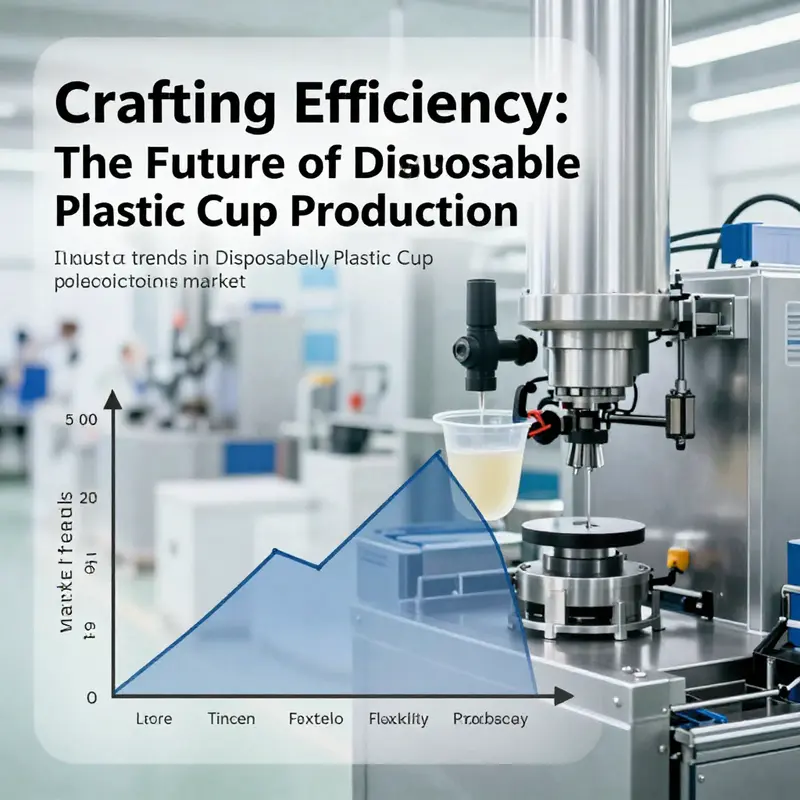
Across modern foodservice and hospitality ecosystems, the demand for reliable, fast, and environmentally conscious packaging has become a defining force. Industrial disposable plastic cup making machines sit at the intersection of demand and capability, translating shifting consumer expectations into scalable manufacturing outcomes. A market that grows with purpose now leans on faster lines, smarter controls, and greater material flexibility. Analysts project a compound annual growth rate of about 4.2% from 2026 to 2033, a signal that the industry is not simply expanding its footprint but refining its efficiency, quality, and adaptability. The drivers are clear: operators in discovered and emerging markets alike require equipment that can deliver high volumes without compromising consistency, while brand owners insist on packaging that supports brand identity, safety, and sustainability. In this context, the most successful machines are those that pair high throughput with intelligent oversight, and that can pivot quickly between products, materials, and design features as market needs evolve.
To understand how these market dynamics shape machine design, it helps to map the core technologies that dominate cup production. Thermoforming remains a workhorse for disposable cups, complemented by vacuum and pressure forming to achieve the delicate balance between thin walls and structural integrity. Yet the ascent of automation has shifted the emphasis toward speed, repeatability, and end-to-end control. High-speed lines employ servo-driven axes, precise motion control, and PLC-based orchestration to coordinate feeding, heating, forming, cooling, and ejection. These systems can run at remarkable paces—up to 30 cycles per minute in some setups—well ahead of older generations that relied on manual intervention or less synchronized subsystems. The result is a production ecosystem where the machine not only shapes plastic but also monitors itself in real time, adjusting parameters to stabilize wall thickness and lid-fit consistency while minimizing scrap. This level of automation is particularly valuable for export-oriented manufacturers facing tight delivery windows and strict quality expectations, where even small gains in cycle time or yield translate into meaningful cost advantages.
Behind the apparent speed, the architecture of the feed and material handling chain matters just as much as the forming station. A robust feeding system ensures a steady stream of pelletized resin or sheet material, with heating units calibrated to deliver the exact viscosity and temperature window for the chosen material. For many producers, materials such as polypropylene (PP), polyethylene terephthalate (PET), polystyrene (PS), high-impact polystyrene (HIPS), and even thermostable variants are in play. The ability to switch between these materials without recalibrating the entire line is a defining feature. Bioplastics like PLA have added another axis to the decision matrix, enabling more sustainable options for brands seeking to balance performance with environmental claims. The versatility of the thermoforming station—its ability to work with sheet stock, and to implement positive or negative pressure forming—gives manufacturers the design latitude to craft cups with a range of rims, textures, and grip features. A clear advantage emerges when lines can accommodate this wider material palette while preserving cycle time, surface finish, and dimensional stability.
The sustainability narrative that accompanies market growth is no longer a peripheral concern; it is a central criterion for both buyers and regulators. Modern machines increasingly incorporate waste recycling subsystems that reclaim scrap from trimming, sprues, and offcuts, feeding it back into the process or reprocessing it into resin pellets for later use. This approach reduces raw material consumption, cuts disposal costs, and supports corporate environmental commitments. Compliance is another non-negotiable dimension. Many buyers now require CE and ISO certifications as a baseline for supplier reliability and process consistency. In practice, this translates into design choices that emphasize operator safety, machine robustness, and traceable quality control data. The intelligent control system becomes a key compliance tool, logging process variables, cycle counts, material lots, and maintenance events so that audits are straightforward and corrective actions are rapid. The modernization trend thus intertwines performance, safety, and sustainability into a single, auditable workflow.
Customization is no longer an optional feature but a core value proposition. Brands seek packaging that is not just functional but also distinctive—colors, sizes, branding textures, and ergonomic shapes that enhance user experience. In response, manufacturers are delivering lines capable of producing a spectrum of cup sizes and wall thicknesses within a single platform or a small family of modular configurations. This capability is essential for producers targeting diverse channels, from daily café use to large outdoor events and logistic distribution. The design emphasis extends to ergonomic cup geometry and creative surface textures that improve grip and consumer perception, as well as to compatibility with accessories such as lids, sleeves, and stacked packaging. The precise control over material thickness—often in the 0.2–1.2 mm range—becomes a practical constraint and a selling point, enabling suppliers to tailor products for specific thermal performance, strength, and cost targets.
Regionally, the landscape is shaped by a mix of mature and emerging markets that drive different optimization priorities. In established manufacturing hubs, continuous improvements in automation yield, energy efficiency, and process stability are central to competitiveness. In emerging economies, the emphasis may lean more toward cost-effectiveness, reliability, and the ability to scale quickly with growing demand. Taiwan and other advanced manufacturing ecosystems have gained attention for their robust support networks and engineering depth, which help buyers select lines that align with long-term service commitments and technical compatibility, including respect for the range of material thicknesses and cycle-time targets that define modern cup production. For operators evaluating suppliers, the selection criteria extend beyond unit price to include the stability of supply chains, the ease of retrofit with upgrade components, and the capacity for ongoing service and spares. These considerations become crucial in high-volume environments where any downtime translates into lost throughput and revenue.
The market is also seeing a convergence between machine capability and packaging design strategy. As brands demand products that perform well in cold drinks and hot beverages alike, material selection and wall geometry must align with specific consumer contexts. PET-based disposables, for example, offer clarity and recyclability that align with environmental and marketing goals, while PP and for some applications PS provide the balance of cost and performance for mass-market cups. The interplay between material science and process engineering is evident in the ability of thermoforming lines to realize designs with flared rims, textured surfaces, and integrated branding features without sacrificing cycle efficiency. In practice, this often means lines that can switch quickly between blank sheets or pre-cut shapes, adjust forming pressures, and maintain dimensional accuracy across a batch run. The result is a manufacturing ecosystem where packaging concepts drive equipment configuration, and where the best machines translate creative design into repeatable, scalable production.
From a practical standpoint, the evaluation of a modern cup-making line today goes beyond raw speed and material compatibility. It involves an integrated view of automation depth, predictive maintenance capabilities, and quality assurance ecosystems. Smart control systems routinely monitor temperature profiles, pressure differentials, cooling rates, and ejection timing, adjusting in real time to ensure consistent wall thickness and cup geometry. This level of monitoring supports not just quality control, but waste reduction and yield optimization, which are critical when margins are tight and demand is volatile. The ability to perform online diagnostics and to calibrate the process on the fly—while maintaining safe operation and minimal operator intervention—translates into lower labor costs and higher output stability. In a market where customers increasingly expect quick delivery and consistent performance, these capabilities become differentiators in technical sales and ongoing customer support.
To connect theory with the day-to-day realities on the factory floor, it helps to consider the practical implications of design choices for a high-speed line. A typical single-stage or multi-stage arrangement might incorporate a feeding system, a heating/plasticizing unit, a molding or forming station, a cooling system, and an ejection mechanism, all under the watchful eye of an intelligent control system. The feedback loop between sensors and actuators creates a machine that can learn to respond to material variation or seasonal shifts in demand with minimal manual tweaking. For operators, this translates into more predictable run times, better process stability, and a clearer path to scalability. It also means that brands can maintain a steady supply of packaging that aligns with evolving consumer expectations for both performance and sustainability. The fascination in this space is not only about pushing more cups per minute, but about shaping a holistic production environment where equipment, process, and product are synchronized for reliability, efficiency, and responsible stewardship of resources. See an example of packaging design trends driving production capabilities in this internal reference: disposable single-wall kraft coffee cup with lid.
As the market continues to evolve, manufacturers, suppliers, and buyers alike must keep their eyes on the balance between speed, flexibility, and sustainability. The modern cup-making line is less a single-purpose device and more a flexible, intelligent platform capable of delivering a portfolio of cup styles with consistent quality. This paradigm shift is evident in the increasing emphasis on modularity, in the ease of upgrading controls and servo systems, and in the integration of recycling loops that support a circular economy. For readers seeking broader perspectives on equipment offerings and performance benchmarks, one can consult industry-facing product listings and third-party reviews that illuminate how these lines translate into real-world throughput and reliability. External resources provide comparable benchmarks and case studies that illustrate how operators achieve sustained performance under demanding production schedules. See a broad external resource for further market and technology context here: https://www.alibaba.com/product-detail/LITAI-Disposable-Plastic-Cup-Making-Machine_1600578595624.html. This reference helps contextualize the balance between speed, control, and material versatility that characterizes the leading-edge equipment discussed above.
Final thoughts
In the booming market for disposable plastic cups, understanding the machinery that produces these essentials is vital for businesses in the beverage and food service sectors. From the advanced technologies employed to the key components of these machines, and the competitive landscape of manufacturers, being informed can help you make better procurement decisions. Embracing the latest trends in automation and sustainability not only enhances operational efficiency but also aligns with consumer demand for environmentally friendly practices. As you explore options for cup production, remember that choosing the right equipment can elevate your service and support your growth.