
In today’s food service environment, from bubble tea shops to catering services, convenience often meets culinary delight. However, as the consumption of hot food in plastic containers becomes commonplace, it is crucial to examine the associated health risks. This article delves into the critical issues surrounding the safety of plastic containers when used for hot food, revealing potential dangers such as chemical migration, microplastic contamination, misleading labels, and the impact of container condition. Each chapter will illuminate these concerns, paving the way for safer practices in food service operations while ensuring the health and satisfaction of customers.
When Heat Meets Plastic: How Hot Food Draws Chemicals and Microplastics into Your Meal
How heat frees chemicals from plastic and what that means for meals served in plastic containers
Eating hot food from a plastic container is not merely an aesthetic or tactile choice. It changes the chemistry at the food–container interface. Heat increases molecular motion inside polymers. Additives that once sat trapped inside the plastic matrix can migrate into nearby food. This migration is driven by physical forces, chemical affinity, and the condition of the container. Understanding this process explains why a steaming curry in a plastic tub is a different exposure scenario than a cold salad in the same container.
At the molecular level, warming any polymer relaxes its structure. Polymer chains become more flexible. Small molecules, such as monomers and plastic additives, gain mobility. These substances move along concentration gradients and dissolve into the adjacent medium. If that medium is hot and fatty, the movement accelerates. Many common plasticizers and stabilizers are lipophilic. They prefer fatty phases over watery ones. When hot oil or fat is present, it behaves like a solvent. This extracts lipophilic additives from the plastic more effectively than water would. In short, oily, acidic, or salty hot foods draw out more chemicals than plain water-based soups.
Laboratory analyses reveal the scale of what happens. Advanced mass spectrometry studies have identified dozens of distinct chemicals migrating from packaging polymers into food simulants under heat. Some compounds appear only after heating, which proves the central role of temperature. The suite of migrating substances often includes phthalates, antioxidant additives, residual monomers, and small degradation products. Certain compounds, such as benzyl butyl phthalate (BBP) and diisobutyl phthalate (DIBP), are repeatedly flagged for their endocrine-disrupting properties. Others, like butylated hydroxytoluene (BHT), act as antioxidants yet carry toxicity concerns when ingested chronically. These chemicals are not inert; they interact with biological systems in subtle ways.
Beyond soluble chemicals, heat can worsen physical shedding from plastics. Surface degradation, embrittlement, and microcracking may form when a container is stressed by heat. That degradation can release microscopic particles—microplastics—into food. Microplastics are not only inert carriers. They can retain and transport absorbed chemicals. They also provoke biological responses. Animal studies show that ingested microplastics can induce inflammation and oxidative stress. One experiment found microplastic particles accumulating within arterial lesions in laboratory animals, suggesting a plausible link between exposure and cardiovascular harm. Although human data remain incomplete, the biological mechanisms observed are concerning and justify caution.
Container condition matters as much as material type. New, intact containers perform differently from ones that are scratched, aged, or warped. Scratches increase surface area and create points of weakness where additives and small molecules can migrate faster. Discoloration and yellowing signal chemical changes in the polymer. Repeated use and dishwashing accelerate degradation. Heat plus wear equals higher migration. Even containers labeled for microwave use are not immune. Studies show that uneven heating, repeated cycles, and aging increase the release of certain additives. A “microwave-safe” label typically indicates the container will not deform under specified conditions, not that it is chemically inert under all scenarios. Treat such labels as limited assurances rather than absolute guarantees.
Not all plastics behave the same. Resins have distinct chemistries and additive packages. Polypropylene (PP, resin code 5) is generally more heat-resistant and is often recommended for short-term reheating. Polyethylene terephthalate (PET, code 1), polystyrene (PS, code 6), and mixtures grouped under code 7 (other) have more problematic histories for high-temperature use. Still, even PP can release small amounts of substances when stressed by heat and fat. The safest route is to minimize contact between hot, fatty foods and any plastic, regardless of its code.
Risk is a function of dose and frequency. Occasional, brief contact between hot food and a high-quality plastic container may result in exposures that are small. However, daily, long-duration contact, or repeated reheating in the same container can cumulatively raise intake of migrating compounds. Vulnerable populations, including pregnant people, infants, and young children, may be more susceptible to endocrine-disrupting effects. Hormone-interfering chemicals can affect development and metabolism at low doses. Over decades, small, repeated exposures may contribute to health risks that are hard to trace back to specific sources.
Practical choices can reduce those exposures without dramatic lifestyle changes. First, favor inert materials when serving or storing hot food. Glass, ceramic, and stainless steel do not carry the same additive packages and do not leach monomers or plasticizers when heated. For takeout or single-use needs, consider inspected paper-based options designed for hot foods. Many heavy-duty paper bowls and containers now come with water- and oil-resistant linings suitable for hot soups and curries. If you must use plastic, only use containers that clearly indicate they are food-grade and microwave-safe, and avoid repeated reheating in these containers. When reheating, transfer food to glass or ceramic, and use brief intervals rather than extended cycles.
Mind the food’s properties. Hot, fatty dishes extract lipophilic chemicals most effectively. Acidic foods can catalyze hydrolysis or chemical breakdown of certain plastics. Very high temperatures accelerate migration for all food types. So allow very hot foods to cool slightly before storing, and avoid storing hot, oily dishes in plastic for more than short periods. When ordering takeout, ask for hot soups and curries in paper or cardboard containers when possible. If only plastic is offered, transfer the food on arrival to a safer material.
Inspect and retire worn plastics. Containers with visible scratches, clouding, warping, or staining should be discarded for hot-food use. Replace lids and seals when they no longer form tight closures. Disposable plastic products intended for one-time use should not be reused for reheating. Repeated cycles of washing and microwaving compound risks. Even dishwasher-safe plastics can degrade over time. Treat that dishwasher-safe label as a functional, not a health, certification.
Regulation and labeling help, but they have limits. A microwave-safe symbol indicates a product meets certain performance tests. It does not guarantee complete chemical inertness across all meals and uses. Testing conditions for labels may not match everyday scenarios: uneven heating, extended storage, or highly fatty foods are sometimes outside the test parameters. Therefore, use labels as one factor among many when choosing containers for hot food.
As a practical alternative for on-the-go meals, consider heavy-duty paper bowls that come with lids and oil-resistant linings. These are designed for soups and hot salads, and many are compostable or recyclable, reducing plastic waste and exposure. For home use, keep a set of glass or stainless-steel containers designated for hot meals. This habit reduces accidental contact between hot foods and plastics, and it removes the uncertainty that follows from label limitations.
One example of a disposable option tailored to hot foods is a reinforced kraft paper bowl with a lid. Such containers are constructed for soups and hot dishes, and they reduce reliance on plastic. If you need a ready-made takeaway solution for hot meals, consider switching to a sturdy paper bowl designed for hot foods.
Finally, the science linking microplastic exposure to measurable harm adds urgency to simple changes. Animal studies reporting inflammation, oxidative stress, and even accumulation of particles within arterial plaques show plausible mechanistic pathways. These studies appear in peer-reviewed outlets and underline the importance of reducing routine exposure. For more detail on microplastic health research, see the environmental health literature summarized by major journals such as Environment International: https://www.sciencedirect.com/journal/environment-international
Adopting a few consistent habits reduces chemical migration risks dramatically. Choose non-reactive containers for hot food. Avoid storing hot, fatty, or acidic dishes in plastic for long. Discard worn plastics. Prefer purpose-designed paper options for single-use needs. These steps protect you now and reduce cumulative exposures over time. They also limit the release of microplastics into food and the environment, helping both personal and public health.
Heat, Plastic, and Microplastics: Tracing the Quiet Contamination of Hot Food in Plastic Containers
Heat has a way of reshaping the ordinary into something charged with unseen risk. When hot food sits in plastic containers, the kitchen ritual of reheating or serving becomes a corridor for chemical and physical exchanges that can extend far beyond taste and texture. The dialogue between a meal and its vessel isn’t merely about containment; it is a complex, dynamic interaction that can influence what we ultimately ingest. This chapter walks through the science behind that interaction, stitching together laboratory findings, everyday observations, and the practical choices people face at the stove, the microwave, and the table. It is not a survey of recipes or brand names, but a careful account of how heat steers the migration of plastic additives and the shedding of microplastics into food. In doing so, it seeks to illuminate why the simple act of reheating or carrying hot meals in plastic might carry consequences that deserve closer attention, especially as takeout culture and busy households rely more on disposable and reusable plastic ware.
When plastic containers are heated, the physical and chemical landscape of the material shifts. The molecules that comprise plastics are not static in warmth; they become more mobile, more likely to migrate from the container into whatever food they touch. The additives that give plastics their particular properties—stability, flexibility, color, and resilience—are the most common culprits in this migration. Substances such as bisphenol A (BPA), various phthalates, and their contemporary substitutes (like BPS and BPF) have been documented for their tendency to move into food streams under heat. These chemicals are classified as endocrine-disrupting compounds, and their potential effects span hormonal systems that regulate reproduction, metabolism, and development. It is not merely a theoretical concern. The pattern of migration increases with temperature, duration of contact, and the age or condition of the container. A container that has endured multiple heating cycles, scratches, or other signs of wear can shed more readily than a pristine, recently manufactured one. The chemistry of heat thus reframes plastic use from a simple, inert vessel into a potential source of exposure that interacts with biology in subtler, more consequential ways than most people expect.
The risk is not just about solitary chemical migration; it is also about the life of the particles themselves. Heat can erode plastic matrices and release microplastic fragments into the food we eat. Those microscopic particles, once ingested, can provoke inflammatory or oxidative stress responses in the body and, though the long-term consequences are still under investigation, they are not aspirationally inert. Even ordinary handling—rinsing, stacking, or stacking and then reheating—can contribute to microplastic ingestion. Contemporary studies have begun to map the patterns of shedding and ingestion in everyday contexts, reminding us that the kitchen is a site where safety standards and consumer habits meet in real time.
In this light, a cross-section of research from recent years paints a troubling but instructive portrait. A 2024 study from Ningxia Medical University, published in Science of the Total Environment, examined disposable plastic takeout containers exposed to boiling water for a brief, practical window of time: fifteen minutes. The leachate from that exposure produced measurable damage to heart tissue in mice, including muscle fiber rupture and mitochondrial swelling. The cardiovascular damage observed in the animal model signals that chemicals released from heated plastics can have direct biological effects, at least in controlled experimental conditions. While extrapolating from mice to humans requires caution, the finding underscores the plausibility that heating times and temperatures encountered in home kitchens or food-service settings can generate biologically relevant exposures. The result adds a crucial piece to the puzzle: heat does not simply accelerate the exchange of color and odor; it can intensify the transfer of harmful compounds that accompany plastic materials into the food chain.
Another line of evidence emerges from the polymer family most commonly used for takeout and disposable containers. A 2021 study from Kingston University investigated polystyrene (PS) containers, widely associated with takeaway meals. The researchers found that hot foods, especially those above 70°C, prompted a release of styrene monomer at levels three to five times higher than when foods are cooler. Styrene is classified by the International Agency for Research on Cancer (IARC) as a Group 2B carcinogen, indicating a potential cancer hazard in humans. Long-term exposure is linked to effects on liver and neurological function in animal models, and while human risk assessments are nuanced, this evidence adds to the body of concern about PS containers and hot foods. It is a reminder that the material’s hazard profile is temperature-dependent and that the common practice of pouring hot liquids into or onto PS-based packaging amplifies risk in a way that is easy to overlook in a busy kitchen.
A growing body of observational research further complicates the picture. A 2026 study conducted across five Chinese cities examined typical takeout containers, with a focus on PS variants and the state of inner surface textures. The scientists found that PS containers, particularly those with rougher inner surfaces, shed higher numbers of microplastic fragments—even when subjected to gentle mechanical stress. And the implications for dietary exposure are not trivial. For individuals who frequently order takeout, the study estimated a weekly microplastic intake through container contact alone in the range of 12 to 203 particles, assuming a consumption pattern of four to seven orders per week. Although the precise health consequences of this level of microplastic exposure remain a matter of ongoing research, the potential for bodily accumulation and localized inflammatory responses is a theme that appears repeatedly across studies. The practical takeaway is disquieting: everyday food practices may be quietly introducing microplastic particles into our meals, beyond the more conspicuous chemical migrations some households monitor.
Complementing these laboratory and quasi-empirical findings, public-health discourse has highlighted the everyday edges of risk. World Food Safety Day in 2025 drew attention to the fact that heating a beverage or food in plastic or in containers that interact with hot liquids can release tiny particles into our drinks and meals. Even routine actions—like pouring hot water into a plastic tea bag, or reheating leftovers in disposable containers—are not guaranteed to be benign. The convergence of temperature, material composition, and container condition makes the kitchen a dynamic risk environment, one that demands both robust science and sensible habits.
From this constellation of findings, experts articulate a coherent set of recommendations aimed at reducing exposure without demanding a total overhaul of daily life. The simplest, most effective strategy for many households is to avoid heating food in plastic containers altogether. When possible, switching to glass, ceramic, or stainless steel vessels for both heating and serving provides a tangible reduction in exposure to migrating additives and microplastics. For situations where plastic use is unavoidable, the emphasis shifts to selecting containers that are clearly labeled for microwave heating and are made from food-grade polymers, such as polypropylene (PP), which is commonly identified as #5. Still, even with microwave-safe labeling, the caveat remains that “microwave-safe” does not guarantee absolute safety in every scenario. The 2023 Environmental Science & Technology insight highlighted that heating conditions such as uneven heating, container aging, or damage can significantly increase chemical migration, signaling that labeling alone is not a full protection.
Beyond the functional material choice, container integrity becomes a practical barometer of safety. Scratches, discoloration, yellowing, or deformations are not cosmetic issues; they signal a structural breakdown that can accelerate chemical leaching. In such cases, replacing the container is prudent, especially when heating is part of routine use. And for items meant to be reused, the logic is straightforward: repeated heating cycles tend to degrade plastic matrices, increasing the probability of both microplastic shedding and additive migration. The prudent path is to limit reuse of single-use packaging and to prefer containers designed for repeated use in hot conditions, ideally made of durable glass or metal with an inert interior surface.
The conversation about safer choices is not merely about personal risk reduction; it intersects with broader material science and environmental considerations. The call to phase out or minimize reliance on conventional plastics for hot foods intersects with sustainability goals, packaging innovation, and consumer education. In this sense, the chapter’s discussion of safer options has a practical dimension. For many households or food-service operations, it may be appealing to explore alternatives like kraft paper-based packaging, which can be designed to be sturdy, heat-resistant, and more amenable to recycling or composting where infrastructure supports it. A concrete example of this kind of approach can be seen in packaging designs like the octagonal paper boxes that balance form and function while reducing the risk spectrum associated with heated plastics. For readers seeking to translate this into practice, exploring safer packaging options such as kraft paper packaging can be a productive step toward reducing risk while maintaining convenience. A representative option in this vein is the use of disposable octagonal boxes for takeout that are designed from paper-based materials and crafted to meet practical needs for hot foods. See the broad range of kraft paper packaging options at this resource: kraft paper packaging options for takeout. This link points to a selection of packaging designs that prioritize safer materials for hot foods and may inspire choices that align with both safety and sustainability goals. kraft paper packaging options for takeout.
The science remains dynamic, and researchers continue to refine our understanding of how heat, polymers, and biology interact in the real world. There is a notable gap between controlled experimental conditions and the full variance of everyday use. Temperature, duration, the composition of the food itself (fats, acids, salts), and the age and condition of the container all interact in ways that can amplify or dampen risk. Public-health messaging thus emphasizes precaution, but it does not advocate for fear. Rather, it encourages informed choices, practical substitutions, and attention to vessel quality. For households balancing the demands of work, school, and caregiving, the risk calculus must weigh not only potential health effects but also accessibility, convenience, and cost. The emerging evidence supports a shift toward safer containers for hot foods, especially when heating is involved. It also supports a candid acknowledgment that even routine practices—such as reheating, transporting, and serving hot meals—bring a measurable exposure that warrants ongoing scrutiny and adaptation.
In closing, the path forward is not to demonize all plastics or to abandon takeout culture, but to reframe the toolkit we use for hot foods. It means choosing materials with more favorable safety profiles for heating, ensuring containers are in good condition, and recognizing when it is prudent to switch to alternatives. It means leveraging safer packaging options like kraft paper-based designs when feasible and mindful handling of plastic containers when they must be used. It also means staying informed through trusted research and translating that knowledge into everyday habits. As the body of evidence grows, the practical message remains consistent: heat magnifies risk, but thoughtful choices can reduce exposure without sacrificing convenience. External investigations, such as those compiled in the broader literature, point toward a more resilient food system where safety and practicality harmonize rather than clash. For readers seeking deeper scientific context, consult the external resource that synthesizes related findings and offers a rigorous appraisal of the interactions between heated plastics and human health: https://www.sciencedirect.com/science/article/pii/S0038092X24003698.
When “Microwave-Safe” Misleads: Hidden Risks of Eating Hot Food from Plastic
Why the label falls short
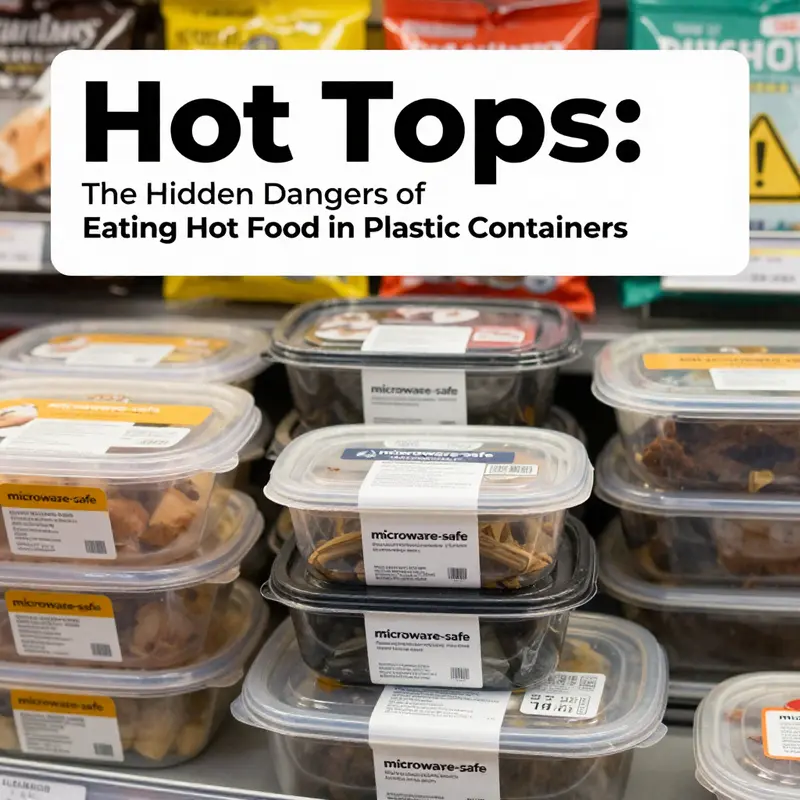
The words that reassure many people—microwave-safe—carry limits that are easy to miss. Those two words describe a container’s ability to survive microwave heating without melting or warping. They do not guarantee that nothing from the plastic will move into food when lunch is heated. Lab tests for that label use controlled conditions. They rarely reflect how people actually reheat meals: high-fat sauces, acidic soups, long heating times, covered containers, repeated reuse, and old, scratched plastic. When those real conditions apply, the risk of chemical migration increases.
Testing protocols typically use water or low-fat simulants and short heating cycles. Manufacturers follow standardized procedures to show a container can withstand microwave energy. That process helps ensure the container will not deform or catch fire. It does not, however, measure what chemicals may leach into hot food under a range of realistic scenarios. Fatty foods and oils dissolve and carry plastic additives more effectively than water. Acidic ingredients can catalyze degradation of polymer chains. Both conditions can make chemicals such as bisphenols and phthalates more likely to transfer into food. A 2023 study found measurable migration of BPS and phthalates into fatty foods from many supposedly microwave-safe plastics, calling attention to the mismatch between lab testing and everyday use. (https://ehp.niehs.nih.gov/doi/10.1289/EHP11234)
How heat, food type, and container condition combine
Heat increases molecular motion and can change the structure of polymers. That means additives and monomers within the plastic have an easier path into surrounding food. The effect is not linear. Short bursts of moderate heating may cause minimal release. Extended heating, high temperatures, or uneven heating create hot spots that accelerate degradation. Fatty and oily foods are particularly effective at extracting lipophilic additives. For example, a creamy curry or a cheese melt heated in a plastic container will expose the food to different chemical interactions than plain broth. Acidic foods like tomato-based sauces also alter polymer stability and may increase leaching.
The container’s physical state matters too. Scratches, cloudiness, yellowing, and warping indicate polymer breakdown. Those surface defects increase the container’s effective surface area and provide paths for chemicals to migrate more rapidly. Repeated washing, especially with abrasive pads, and repeated heating cycles weaken the plastic. A container that was relatively inert when new can become a source of contamination after months of use. Yet many consumers continue to microwave the same containers until visible failure occurs, unaware that chemical migration often precedes visible damage.
The problem with “BPA-free” and safer-sounding labels
The term “BPA-free” sounds like a clear improvement. In practice, it often means BPA was swapped for structurally similar compounds, such as BPS or BPF. Early evidence suggests these substitutes can act in similar ways inside the body. They may also leach from plastics under heat and mix into food. Labels that emphasize individual chemicals can create a false sense of safety. The broader chemical behavior of the polymer and its additives still matters. A container that avoids one chemical may still release other endocrine-active or otherwise harmful substances when heated with oily or acidic meals.
Low-dose, chronic exposure is harder to capture
Regulatory testing typically evaluates acute toxicity and sets migration limits to prevent immediate harm. Those thresholds rarely consider lifelong, low-dose exposure to endocrine-disrupting chemicals. Hormone systems can respond to tiny amounts of certain chemicals, and exposures during critical life stages matter most. Pregnant people, infants, and young children are especially vulnerable to substances that interfere with hormonal signaling. Even when migration levels meet current regulatory limits, emerging science raises concern about cumulative effects from multiple, repeated exposures over years.
This uncertainty is one reason many experts favor precaution. Minimizing avoidable exposures, especially for hot, fatty, or acidic foods, reduces the chance of accumulating small amounts of hormone-active chemicals. Because containers degrade, and because some replacement chemicals behave similarly to the originals, relying solely on a microwave-safe label is not a robust long-term strategy.
Microplastics and particulate release
Heating plastics can cause them to break down into microscopic particles. These microplastics can become suspended in food and be ingested. Research into human health effects of microplastic ingestion is still developing. Early studies point to potential inflammatory responses, oxidative stress, and the possibility of particle accumulation in tissues. When microplastics carry adsorbed chemicals, they may act as a combined vehicle for both particles and chemical contaminants. This dual exposure pathway adds another dimension to the risk of microwaving food in plastic containers, particularly over many years.
What practical steps reduce exposure
A simple, effective habit is to transfer hot food to non-plastic dishes before heating or eating. Glass, ceramic, and stainless steel do not contain the same migrating additives. They withstand heat and do not leach the endocrine-active compounds found in many plastics. If you must use plastic for short-term transport, choose containers clearly marked as food-grade polypropylene (PP, recycling code 5). Even then, avoid reheating fatty or acidic meals in plastic. Do not use single-use plastic bags or thin film wraps for hot food. Those materials are more likely to break down under heat and with fatty contents.
Avoid microwaving plastic lids that fit tightly. Pressure buildup and uneven heating increase polymer stress. If a plastic lid is necessary, vent the container and limit heating time. Use lower power settings when reheating in plastic, and stir food halfway through to reduce hot spots. Replace containers that show wear: cloudiness, scratches, and warping are signals to discard them. Avoid placing plastic directly over high-heat settings on stovetops or under broilers.
Choose better disposable options when convenience is needed. Waterproof paper bowls and similar designs offer single-use convenience without the same plastic additive concerns. For occasions that call for disposable containers, consider sturdy, coated kraft paper bowls that are designed for hot food. They handle oils and soups without immediate breakdown. For example, a good-quality waterproof paper bowl with lid can keep meals hot and reduce contact between food and plastic surfaces. waterproof paper bowl with lid
When the label still matters
Not all microwave-safe plastics behave equally. If you need to use plastic, check for food-grade markings. Containers made from polypropylene (PP, code 5) generally have better heat resistance and fewer plasticizers. Avoid containers labeled PVC or polystyrene for microwave use. Prefer containers sold specifically as reusable, food-safe storage rather than cheap, single-use deli containers. But remember: the label is a starting point, not a warranty. Even the best-marked plastics can degrade with time and use.
Behavioral changes that fit daily life
Shift small routines to reduce frequent exposure. Reheat a single portion in a glass bowl and store leftovers in stainless or glass. Pack lunches in insulated containers that keep food hot without reheating. When ordering takeout, ask for meals to be boxed in non-plastic or paper containers if available. If plastic is unavoidable, transfer the food to a safer container at home. These adjustments take little time and lower the cumulative dose of migrating chemicals.
A precautionary mindset for shared responsibility
Regulators and manufacturers set standards for materials. Those standards lag behind evolving scientific understanding. Consumers, meanwhile, can act immediately. The combined approach of better regulation, improved testing protocols that use realistic food models, and consumer choices will reduce risk across the population. Until testing protocols expand to cover fatty, acidic, and repeated-use scenarios, the sensible response is to treat the microwave-safe mark as limited reassurance. It indicates a container will survive a standard test. It does not mean the container will remain chemically inert under all real-world conditions.
By shifting routine practices—using glass or ceramic for heating, avoiding plastic with fatty foods, and replacing worn containers—people can lower their daily exposure. Small, consistent choices add up. They reduce the invisible transfer of additives that the microwave-safe label does not capture. For anyone who heats food in plastic, combining practical steps with awareness closes the gap between regulatory testing and real-life exposure.
For the detailed study that highlights migration of BPS and phthalates from common microwave-safe containers into fatty foods, see the Environmental Health Perspectives analysis: https://ehp.niehs.nih.gov/doi/10.1289/EHP11234
When Plastic Shows Its Age: Why Container Condition Determines the Safety of Hot Food
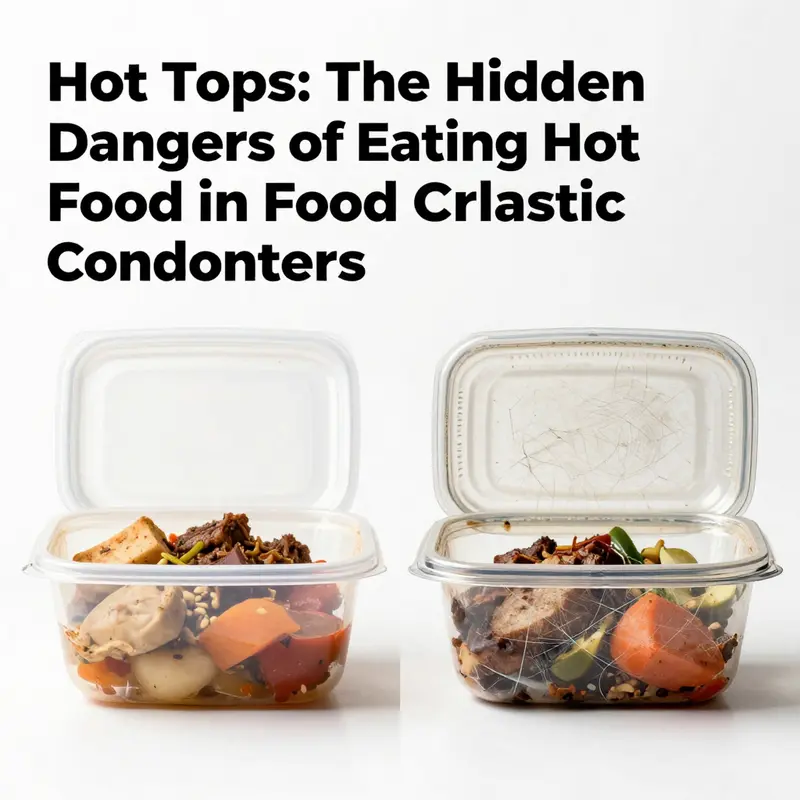
When plastic is damaged, its role as a neutral food holder ends. A bowl or takeaway box that looks tired, yellowed, or scratched does more than look unappealing. Heat acts on damaged plastic, and the combination can send chemicals and particles into your meal. This chapter follows how container condition changes risk. It explains what happens when plastics age. It also gives practical ways to reduce exposure when eating hot food served in plastic containers.
Plastics are not inert. Many contain additives that give flexibility, color, or durability. Heat speeds chemical movement. It also speeds the breakdown of a container’s structure. Scratches, cracks, and warping increase the surface area exposed to food. They create micro-environments where chemicals more easily detach. When hot, fatty, or acidic foods contact these damaged surfaces, migration of compounds becomes more likely. Research links long-term ingestion of some of these additives to hormone disruption, metabolic issues, and cardiovascular harm. Even low-level, repeated exposure matters.
The visible signs of aging matter. Discoloration or yellowing often signals polymer breakdown. Warping or softening shows the material lost its original thermal stability. Tiny scratches accumulate from forks, knives, or scouring pads. Each mark concentrates stress and weakens the polymer chains. Cracks and crazing may be microscopic at first. Over time, they widen and let heat, steam, and oil reach layers beneath the container surface. That lets out additives and lets in environmental contaminants. A container that survives cold storage may fail when used with hot food.
Material type and labeling influence how a container responds to heat. Polypropylene (PP, recycling code 5) has higher heat resistance than many other common plastics. But heat tolerance does not mean permanence. Repeated cycles of heating, cooling, and washing still degrade PP over time. Polyvinyl chloride (PVC) and unidentified plastics are particularly risky when used with hot, greasy, or acidic foods. These materials often contain plasticizers and stabilizers that easily migrate out under heat. Containers labeled as “microwave-safe” are not exempt. That label indicates the container won’t melt or deform under specific conditions. It does not guarantee zero chemical migration. Studies have found migration from containers even when they meet such labels, especially when containers are old or damaged.
Microscopic fragments deserve attention. Heating can cause tiny particles to break off from a container’s surface. These microplastics can mix with the food and be ingested. The long-term health consequences of microplastic ingestion remain under study. Early evidence links them to inflammation and oxidative stress. Microplastics may also carry chemical additives and adsorbed pollutants. When a container shows heavy wear, the chance of particle release rises. That risk is not always obvious. Clear or lightly colored plastics may hide surface crazing until it’s advanced. Cloudiness, a rough feel, or persistent stains are warning signs.
The type of food makes a difference. Hot, oily foods act as solvents for non-polar additives. Acidic foods can accelerate breakdown of some polymers. Sugary or salty foods also influence migration paths by changing the food’s chemical activity. Therefore, even a well-made plastic container may leach more when used with particular foods. Takeaway meals that combine heat with oil and acid create a worst-case scenario for aged plastics. This is why guidelines advise against placing hot soups or oily curries into unknown or damaged plastic containers.
Handling and maintenance shape a container’s lifespan. High-temperature dishwashers and abrasive cleaners speed degradation. Repeated microwave cycles, especially at high power, cause thermal stress. Storing food in a container before it cools will trap heat and condensate in the plastic. Those trapped conditions magnify chemical migration. Regular inspection is essential. If a container develops a permanent odor, deep stains, or changes shape, it should be retired. Treat single-use containers as exactly that. They were not designed for repeated heating and washing.
Practical choices reduce risk while keeping convenience. First, transfer hot food into a safe heat-stable container when possible. Glass, ceramic, and stainless steel resist heat-related chemical release. For takeout, consider moving food into a disposable paper bowl that is waterproof and designed for hot meals. For an example of a practical alternative, consider a disposable 700ml kraft paper bowl designed for takeout that holds soups and hot food without plastic contact. Paper bowls with a proper lining provide a convenient, lower-risk option for single-use situations.
If plastic must be used, choose carefully and use responsibly. Look for food-grade markings and recycling codes. Prefer polypropylene (code 5) and avoid PVC. Follow the manufacturer’s instructions for heating and washing. Do not use plastic containers that lack a clear food-contact approval. Avoid heating fatty or acidic foods in plastic even when labels permit microwave use. Do not reheat food in travel cups or single-use containers intended for cold drinks. When in doubt, transfer the food.
Industry trends reflect these findings. Many food service businesses now move toward safer materials. Lightweight, low-cost plastics maintain appeal for cost and logistics. But consumer awareness is shifting choices toward safer and greener packaging. That change responds to studies showing migration even from containers marketed as safe. Producers are adjusting materials and adding clarifying labels. Still, container condition remains the weak link. A brand-new container performs differently than a reused one that has been microwaved and scraped.
Regulation plays a role but cannot replace careful use. Safety standards set limits on migration and list permitted additives. Those rules assume normal use and reasonably new containers. They rarely cover long-term reuse beyond the intended lifespan. Nor do regulations fully address microplastic release through wear. As a result, individuals need practical habits to reduce exposure. Recycling codes and manufacturer guidance help, but visual inspection and sensible handling are equally important.
Simple daily practices extend safety. Avoid cutting food with metal directly in a plastic container. Clean with mild detergents and soft sponges. Air-dry plastics to reduce trapped moisture. Replace containers once they show any of the telltale signs: discoloration, warping, deep scratches, or persistent odors. Keep a small set of heat-safe glass or stainless containers for reheating or transporting hot meals. For single-use situations, choose compostable or paper-based bowls and cups designed for hot foods.
Pay special attention to takeaway habits. Many people accept hot food in whatever packaging is handed to them. When the container is plastic and the food is hot, ask for alternatives. If none are available, transfer the food into a safer receptacle quickly. For soups and greasy dishes, a lined paper bowl is a cleaner choice for single use. Businesses that offer durable reuse systems often encourage customers to bring their own containers. That approach lowers exposure, but only if the consumer’s containers are in good condition.
Education matters because invisible processes drive risk. Chemical migration is rarely perceptible. No visible smell or taste proves absence. Repeated low-dose exposure builds up over time. Thus, safe habits prevent cumulative risk. Teach household members to recognize signs of container failure. Make replacing worn plastics routine. Establish a simple rule: if a plastic item survives microwave, dishwasher, and daily use, it probably has reached the end of its safe life.
At a systems level, the combination of aging containers and heat reveals a gap. Packaging makers, regulators, and food-service operators must design for real-world use. That includes testing for migration after repeated heating and after simulated wear. Consumers can encourage better practice by demanding clear labeling and by choosing alternatives. Meanwhile, individuals can minimize exposure by choosing appropriate materials, inspecting containers often, and avoiding hot, greasy foods in damaged plastics.
In short, container condition transforms a benign object into a potential source of contamination. Heat is the activating factor. Damage magnifies the effect. The best strategy blends informed selection with routine replacement. When you eat hot food, consider the container’s age, texture, and visible integrity. If any doubt exists, transfer the food to glass, ceramic, stainless steel, or a properly lined paper bowl. These steps reduce your exposure to migrating chemicals and to microplastics. They also align personal habits with emerging scientific understanding about how plastics behave under stress.
For further practical guidance on plasticizers, food contact materials, and safe choices, see the Food Standards Agency’s resource on plasticisers and food safety: https://www.food.gov.uk/advice-and-information/food-safety/plasticisers-and-food-safety
Final thoughts
As the food industry continues to embrace the convenience of plastic containers, understanding the health risks associated with hot food storage is imperative. By recognizing the threats of chemical migration, microplastic contamination, and the limitations of labels, food service operations can adopt safer practices. This not only protects customer health but also enhances brand credibility and trust. Embracing materials recognized for safety, such as glass or stainless steel, alongside educating staff about proper container conditions, will ensure a healthier future for food service businesses and their patrons.