

In the dynamic world of food service, ensuring food safety while maximizing convenience is paramount. As bubble tea shops, restaurants, food trucks, and catering services seek efficient ways to heat food, understanding the implications of using plastic containers becomes critical. The growing concern over both food safety and environmental impact directly affects your operations and customer trust. This guide explores the safety of heating food in plastic containers, the dangers associated with non-microwave safe options, the risk of microplastic contamination, and alternative heating materials. Each chapter will address essential considerations to help your business make informed decisions that protect both your customers and your reputation.
Heating Food in Plastic: Safety, Limits, and Practical Guidance

Heating food in plastic is not universally safe nor universally unsafe. The safety depends on the container, the food, and how you heat it. Look for a microwave-safe label and know that even then limits apply: avoid overheating and extended heating.
Other plastics such as PVC (code 3) and polystyrene (code 6) may pose risks, especially with fatty or acidic foods, so heating in those containers is generally not recommended. Containers labeled PP or PP5 (polypropylene, code 5) are more commonly accepted for microwave use, but still should be used within the manufacturer’s guidelines and replaced if damaged.
Damage, scratches, or warping can increase leaching and micro-surface migration, so discard any container that shows wear. When in doubt, prioritize safety and choose glass or ceramic for reheating. If you must use plastic, minimize heat exposure and time, and avoid heating fatty or acidic foods in non-PP plastics.
Emerging research on microplastics suggests caution, but it does not mean all plastics are unsafe. The practical takeaway is to read packaging, follow the label, and lean toward non-plastic options when the situation calls for higher heat or long heating times.
Heat, Hazard, and Habit: The Hidden Risks of Heating Food in Plastic Containers
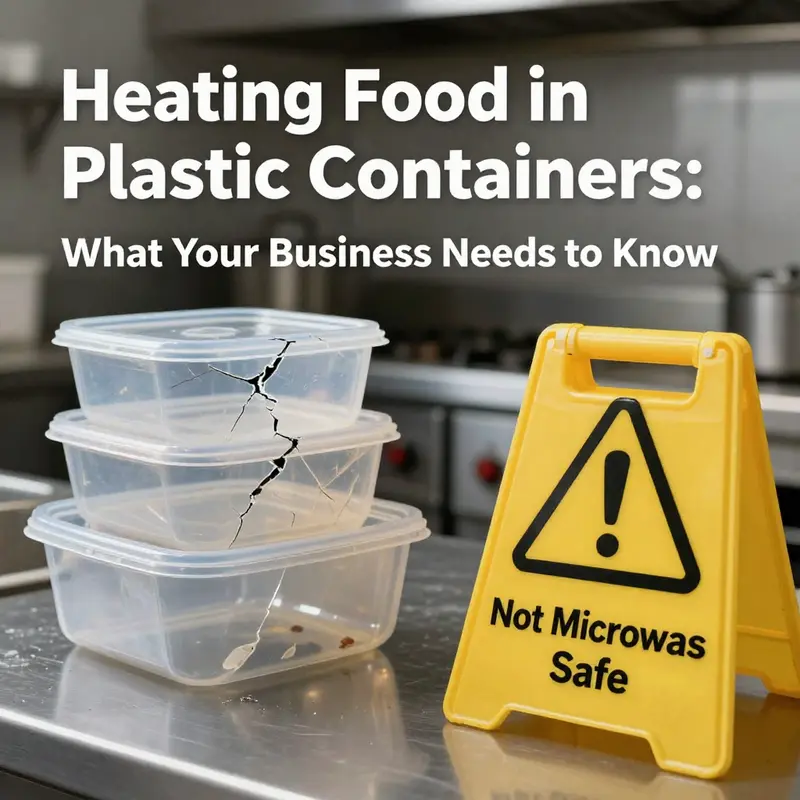
Heating food in plastic can carry health concerns that go beyond taste or convenience. The labeling microwave safe indicates testing under specific conditions, but heat can still cause chemical migration and microplastic release, especially when containers are damaged or heated above recommended temperatures.
Chemistry changes when heat is applied to plastics. Additives such as BPA and phthalates are not inert under microwave conditions. Migration increases as temperature rises, and many studies report measurable levels in foods, with potential endocrine and metabolic effects over time.
Microplastics and nanoplastics add another layer of risk. Some studies suggest that microwaving can release tiny fragments into the food matrix that may accumulate in organs. The practical takeaway is cautious: heating in plastic, even when labeled microwave safe, may carry non negligible risk, particularly with repeated use or worn containers.
Regulatory guidance across regions advises caution. In the United States, the FDA recommends using containers labeled for microwave use and avoiding heating damaged or deformed items. In Europe, authorities also emphasize that while some plastics are labeled microwave safe, alternatives such as glass, ceramic, or stainless steel are often preferable for heating. In China, packaging should meet safety standards and be labeled accordingly before heating.
Tips for safer reheating:
- Inspect containers for cracks, discoloration, or deformation
- Avoid heating fatty or sugary foods in plastic unless the container is explicitly rated for high heat
- When in doubt, transfer to a heat safe vessel such as glass or ceramic
- Use containers designed for repeated heating and proper venting for lids
For households seeking convenience without compromising safety, consider moving toward glass or ceramic for reheating and storage, and reserve plastic for cold servings or cold storage. If you must use plastic, choose items clearly labeled for microwave use, and replace any that show wear. The goal is to minimize exposure to leachable substances and microplastics over time while preserving the benefit of easy reheating.
Heat, Plastics, and Microplastics: Tracing Reheating Risks in Food Containers

Reheating food in plastic containers is a common convenience, but the safety picture is nuanced. The risk depends on the plastic material, the heating level, and how the container is used. Research shows that reheating can push packaging beyond its safe operating range, leading to physical degradation and chemical migration into the food.
Two overlapping mechanisms drive potential exposure. Physical degradation can roughen surfaces, create micro-scratches, and allow microplastics and nanoplastics to detach during heating. Chemical migration involves additives and residual monomers that can diffuse into hot food, particularly when fats or acids are present.
Evidence from laboratory simulations shows that heating plastics with hot water can release micro- and nano-scale particles, and that microwaving can increase particle counts. The majority of particles are nanoscale, which makes them more likely to cross biological barriers than larger fragments.
Polystyrene, commonly used in takeaway packaging, can release styrene when in contact with hot foods. Styrene has been classified by IARC as a Group 2B possible carcinogen, which warrants caution given potential long term exposure.
Health implications include potential entry of microplastics into the bloodstream and deposition in organs in animal studies; translation to humans is not settled, but the convergence of evidence supports careful heating practices.
Practical guidance for consumers includes prioritizing nonplastic and heat stable vessels when reheating, transferring hot meals to glass or ceramic containers, avoiding damaged or aged containers, and limiting heating duration, especially with high fat foods.
Safer packaging options such as kraft paper containers can reduce the risk of leaching and particle shedding when heated. Some disposable kraft paper boxes are designed for hot meals and can serve as a practical alternative to plastic when reheating is part of the process. See examples like disposable kraft paper packaging options and related products for takeout and service use.
From a policy perspective, labeling should be viewed as conditional guidance tied to tested scenarios. The safest approach is to minimize heating in plastics and to favor materials with stable chemistry under heat. The goal is to reduce cumulative exposure from repeated reheating and to support safer packaging design and standards.
Safe Heats, Clean Choices: Embracing Glass and Ceramic Alternatives to Plastic for Heating Food

When you crack open a container of leftovers, the choice of what you heat your food in matters more than most people realize. The question can you heat food up in plastic containers is not a simple yes or no; it hinges on the plastic’s type and whether the container is explicitly designed for microwave use. Official guidance from regulatory bodies stresses the importance of reading packaging labels and sticking to containers marked microwave safe or labeled for microwave use. This is because heating can push plastics beyond their tested limits, and the consequences go beyond warped lids or a faint plastic odor. The risk profile includes chemical leaching, where additives such as phthalates or bisphenol A may migrate into food, especially with repeated heating or high-fat, acidic, or salty meals. While early concerns focused on BPA, newer discussions emphasize a broader class of additives and material interactions that can occur under heat. A growing body of research also points to a more insidious issue: microplastics and nanoplastics released during heating, even from containers marketed as microwave safe. While this field is evolving, the practical implication is clear—minimize reliance on conventional plastics for heating whenever possible, and favor materials with inert behavior under heat.
If you’re planning to heat meals regularly, the safer, more robust path is to gravitate toward materials that remain stable under microwave or oven conditions. Glass and ceramic are prime examples. They are celebrated for their inertness and durability, and they do not rely on the same chemical systems that plastics do, so the risk of chemical migration or particle release is markedly reduced. The difference isn’t merely theoretical. Food stored and reheated in glass or ceramic typically retains its original flavor and texture more faithfully, because these materials do not impart taste or absorb odors over time. Their non-porous surfaces also resist staining and odor uptake, which helps keep leftovers tasting predictably pleasant across multiple reheats. In short, glass and ceramic provide a combination of safety, performance, and ease of maintenance that plastic often cannot match when heat is involved.
From a safety standpoint, glass and ceramic are often described as inert. This means they do not readily react with acidic tomato sauces, citrusy marinades, or fatty oils in the way some plastics can. The surface chemistry of properly manufactured glass and food-grade ceramic is designed to stay put under typical kitchen heating scenarios, including microwaving, reheating in the oven, or simply keeping a dish warm on the table. Of course, not all glass and ceramic products are created equal. Microwave-safe labeling for glass typically signals a product designed to resist the stresses of both microwave radiation and rapid temperature changes. Oven-safe ceramics are often labeled accordingly, and they are intended to withstand the thermal shocks of moving from fridge or freezer to hot oven. The practical takeaway is straightforward: read the labels, follow the manufacturer’s guidelines, and choose containers whose intended use aligns with how you plan to heat and serve the food.
To understand the long-term implications of container choice, consider the heat pathways themselves. Plastics, even those marketed as microwave-safe, begin as polymer matrices with additives that influence flexibility and durability. When heated, some additives can migrate into the food, especially if the container is scratched or worn. Over time, this can contribute to cumulative exposure that worries health watchdogs and researchers alike. Glass, by contrast, forms a dense, non-porous surface that resists chemical migration into foods. Ceramic, when glazed with non-toxic, lead-free glazes, offers a similar stability. The glaze can, however, be a consideration; improper glazing or unacceptable glazes can introduce other concerns, so it’s important to select ceramics that meet recognized food-safety standards and to avoid any dish with visible cracks or crazing, which may harbor bacteria or compromise the surface integrity under heat.
Beyond safety, there are practical performance differences that influence daily cooking and reheating. Glass containers typically tolerate microwave heating well and can often transition from microwave to freezer with minimal risk of cracking or warping. They also can be used in conventional ovens, enabling a seamless path from fridge to oven to table. This versatility minimizes the need to transfer food between vessels, reducing the chance of spills and the risk of introducing contaminants during transfer. Ceramic dishes share many of these advantages, with the added benefit of often better heat retention. A well-chosen ceramic dish can keep a plate of pasta warm longer, which is useful during family meals or meal-prep sessions. Both materials are easier to clean than many plastics; glass and ceramic resist staining and odor buildup, and they can usually be cleaned at high temperatures or in the dishwasher without degrading. This combination of safety, performance, and ease of care makes glass and ceramic compelling options for anyone who reheats meals frequently.
That said, there are important caveats to avoid a false sense of security. Glass can crack or shatter if subjected to sudden, extreme temperature changes, a phenomenon known as thermal shock. While borosilicate glass is more resistant to thermal shock than ordinary soda-lime glass, even it benefits from gradual temperature transitions. Ceramics, while generally robust, can also crack if moved from the cold to the hot too rapidly or subjected to uneven heating. When using either material, it’s wise to preheat the oven gradually or allow a dish to come closer to room temperature before moving it from fridge to oven. If heating in a microwave, venting the lid is important to prevent splattering and to allow steam to escape without pressure buildup. In both cases, avoid metal accents or metal lids that could arc in a microwave and make a mess of the appliance.
For households seeking flexibility beyond glass and ceramic, silicone and stainless steel also offer safe, practical roles in warming and reheating. Silicone is highly versatile, resistant to heat, and can be used in microwaves and freezers. It’s particularly convenient for portioning meals, steaming vegetables in silicone molds, or storing soups in silicone bags that can transition between fridge, freezer, and microwave. Stainless steel, meanwhile, shines for portable meals and complete reheating in the absence of a microwave. It’s durable, dishwasher-friendly, and excellent for hot beverages and meals kept in transit. When looking to minimize plastic exposure, these materials provide a clear path forward: they reduce chemical migration risks and align with sustainable, long-term kitchen practices.
The practical takeaway, then, is to reserve plastic for low-heat tasks or storage where heating isn’t required, and to favor glass or ceramic for any heating scenario. If you still use plastic, choose only containers clearly labeled for microwave use, and replace them promptly if you notice scratches, discoloration, or warping. The safety conversation around heating in plastic is evolving, and while not every container poses an immediate hazard, the precautionary principle favors staying with safer, more stable materials whenever possible. This approach is not only about personal health; it translates into fewer concerns about the integrity of the food container over time, reduced risk of micro- and nanoplastic release during heating, and a simpler, cleaner kitchen routine overall.
For readers curious about alternatives that minimize plastic use without sacrificing convenience, consider kraft paper-based options for cold items or foods that do not require heating in the container itself. These paper-based solutions remain compatible with many reheating workflows when transferred to a microwave-safe dish first, and they support a broader shift toward sustainable packaging. Kraft paper bowls with lids can serve as a practical complement to glass and ceramic, especially for batch reheating or portioning. This approach aligns with a broader move away from synthetic polymers toward materials that are easier to recycle or compost, while still preserving flavor, texture, and safety.
As you balance these considerations, the overarching message is clear: heating food in glass or ceramic is generally safer and more stable than heating in ordinary plastics, particularly when the goal is consistent quality and minimal chemical exposure. The research landscape continues to evolve, but the practical steps—read labels, prefer inert materials, avoid thermal shocks, and consider alternative packaging—provide a reliable framework for healthier, smarter kitchen habits. For those who want to explore more about reducing exposure to chemicals in plastics and how everyday choices shape health risks, a trusted medical resource offers detailed guidance. External perspectives from health authorities emphasize that the safest route is to minimize heating in plastics and to favor glass, ceramic, or other non-plastic options whenever feasible.
External resource: Mayo Clinic – Reduce Exposure to Chemicals in Plastics (https://www.mayoclinic.org/healthy-lifestyle/nutrition-and-healthy-eating/in-depth/plastic-container-alternatives/art-20367549)
Reading the Label to Stay Safe: Heating Food in Plastic Containers Under the Microscope
A quick reheating can be a sentence fragment in a busy day, yet the choice of container turns that moment into a test of safety or risk. The idea that you can heat food in plastic containers is not a simple yes-or-no answer; it depends on the material’s chemistry, the design for heat exposure, and the conditions under which the container is used. Official guidance from regulatory bodies, including the China State Administration for Market Regulation, emphasizes a practical rule of thumb: always read the packaging and look for a clear microwave-safe label. A microwave-safe stamp suggests the container has undergone testing for stability in microwave fields, but it does not guarantee safety in every scenario. The label acts as a signal—a warning light that the container has passed a standardized safety test under certain parameters, typically within specific temperature ranges and exposure times. In practice, this means that if you see a label such as “Microwave Safe” or “For Microwave Use,” you have a documented baseline to work from. If a container lacks this label, the prudent choice is to avoid heating food in it altogether. The governing idea is simple in form, but the implications are substantial: use the right container for the right task, and keep heat exposure within what the packaging was designed to endure.
Beneath that straightforward rule lies a deeper set of risks that have become clearer with recent scientific work. Ordinary plastics—common polymers such as polyethylene (PE) and polypropylene (PP)—can release chemicals when heated, sometimes even at modest temperatures. Substances like various plasticizers and, historically, bisphenol A (BPA) have been topics of concern in the body of toxicology and public health research. When a plastic is heated beyond its tolerance, its molecular structure can loosen its grip on additives, allowing chemicals to migrate into the food. The concern expands beyond immediate exposure. The body of evidence linking certain compounds to liver and kidney stress, hormonal disruption, and developmental effects has prompted a cautious stance toward reheating in non-designated plastics, especially for vulnerable populations such as pregnant people, infants, and those with prolonged exposure.
A newer thread in the literature adds a stark image to the discussion: microplastics and nanoplastics released during heating. A 2025 study conducted by researchers at the Chinese Academy of Sciences and published in Environmental Science & Technology reported that even plastics labeled as microwave-safe can shed microbial-sized particles into heated foods. The polypropylene containers examined in that work released millions of microplastic particles per square centimeter and billions of nanoparticles after a single microwave cycle. While the long-term health implications of inhaling or ingesting these tiny fragments are still under study, the finding shifts the risk calculus in meaningful ways. It shifts the conversation from a binary “safe or unsafe” to a more nuanced framework: any heating of plastics introduces a spectrum of potential exposures, some of which may accumulate over time and across multiple reheating cycles. The practical takeaway is not to panic, but to temper reliance on plastics for heating and to apply the highest precaution when making decisions in the kitchen.
Against that backdrop, the best-practice pattern becomes clearer, even if it requires a shift in habits. First, always seek out containers explicitly labeled as microwave-safe. The label is not a guarantee of perfect inertness; rather, it represents a material and design that have passed a controlled testing regime for microwave exposure. When in doubt, don’t guess—confirm the label before you heat. Second, be mindful of the food you place in plastic, particularly oily or sugary items. Fats and sugars absorb heat more quickly than water, creating higher thermal stress in the plastic and accelerating the migration of potentially harmful substances. In practice, this means that reheating a fatty sauce or a sugary glaze in a plastic container should be avoided whenever possible, or the food should be transferred to a safer vessel before heating.
Third, do not push a microwave-safe plastic beyond its intended purpose. Even containers marketed as safe for reheating have limits. Prolonged high-heat cooking, broiling, or placing steaming-hot food straight from the oven into a plastic container can compromise the integrity of the plastic matrix and hasten degradation. A subtle but meaningful point is that safe handling extends beyond the act of microwaving; it includes the entire chain from storage to serving. If a container shows wear—cracks, warping, deep scratches, or discoloration—the surface area and pathways for chemical migration increase, and the risk of material breakdown rises. In these cases, the conservative choice is to retire the container and switch to a safer option.
Which brings us to the rising recommendation from researchers and toxicologists alike: whenever possible, transfer the food to glass or ceramic before heating. Glass, in particular, is chemically inert under most reheating conditions and does not leach substances or shed microplastics the way some plastics can. It may demand a small adjustment in kitchen habits—prepping containers in advance, washing and drying glassware promptly, and managing reheating times to avoid overheating—but it significantly reduces exposure to potentially reactive compounds. The practical pattern is not to demonize plastic outright, but to reserve it for storage or transport rather than as a universal reheating medium. In kitchens that balance convenience with caution, plastic can still play a role, but it is kept within its tested comfort zone and used judiciously, while glass or ceramic becomes the go-to for reheating.
Beyond the material questions, there is a layer of judgment about how to use the labels and what the labels actually guarantee. Dr. Lena Patel, an environmental toxicologist, has stressed that a label stating microwave-safety does not render a container inert. Some heated plastics can still release biologically active compounds, and the label does not account for every possible combination of food type, fat content, seasoning, and heating duration. The precautionary principle, then, nudges toward safer vessels when feasible. This nuance matters in practice because it reframes safety as a spectrum rather than a binary choice. It invites cooks to consider alternatives more often, particularly for reheating or for meals that will be heated and stored repeatedly.
A further practical guideline that emerges from both science and policy is to avoid reusing single-use plastics for reheating. Containers designed for one-time use are not engineered to withstand repeated heating or multiple cycles of thermal stress. Each heating cycle can weaken the polymer matrix further, opening more pathways for chemical migration and microplastic release. This is not merely a theoretical concern; it translates into everyday choices about how many times a container is used, whether it is cracked or discolored, and how soon it should be replaced. The cumulative effect of these small decisions can shape exposure over months and years, especially for households that rely on microwaving as a primary reheating method.
In sum, the science points to a careful practice: use microwave-safe plastics when necessary, but do not overstate their inertness. When the food itself is prone to high-fat content or high sugar, or when a container shows signs of wear, consider switching to glass or ceramic. The aim is not perfection, but a deliberate risk-reduction strategy that aligns with the best available evidence. The guidance from national standards and international research converges on one clear message: labeling matters, but context matters more. The safest path is a flexible one—recognize the label, respect its limits, and choose the method that minimizes chemical migration and microplastic exposure.
If you want to explore safer options in everyday packaging beyond plastic, you can find more on paper-based alternatives that are designed for take-away use. See this example of disposable paper-based take-away packaging and its lid option, a practical resource for kitchens seeking to minimize plastic exposure without sacrificing convenience. disposable kraft paper bowl with lid. This kind of packaging represents a growing area of choices that can support reheating in a way that reduces reliance on plastics, while still meeting the needs of busy homes and small businesses.
For readers seeking a deeper scientific dive into the broader topic of plastic leaching and safer alternatives, one can consult external scholarly work that synthesizes health considerations and policy guidance. A comprehensive resource from a leading public health institution explains how plastic containers interact with food and what this means for health over time. For further reading, see the Harvard T.H. Chan School of Public Health resource on Plastic Food Containers and Health: https://www.hsph.harvard.edu/health-and-environmental-safety/plastic-food-containers-and-health/.
Final thoughts
Understanding the safe practices for heating food in plastic containers is essential for food service operations. By ensuring the use of microwave-safe containers, being aware of the dangers of non-safe options, and considering alternative materials such as glass and ceramic, your business can protect its customers and enhance its reputation. Adopting best practices and staying informed about potential contaminants will not only improve food safety but also align your operations with sustainable practices. Keeping these insights in mind can lead to a safer and more responsible food service experience.