
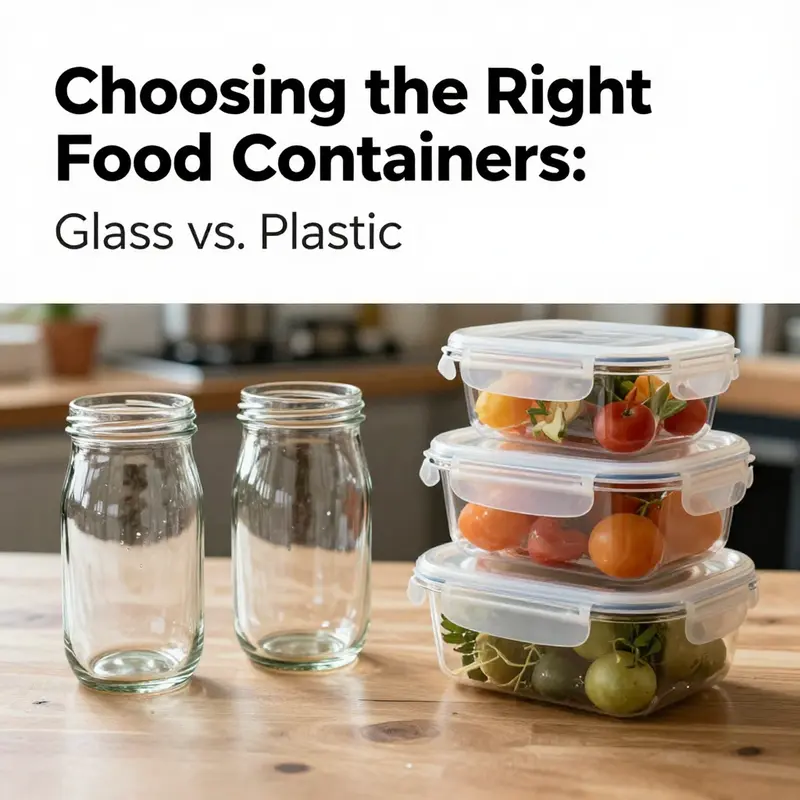
When it comes to food storage solutions, glass and plastic containers both have their merits, yet for businesses in the beverage and restaurant industry, glass containers often stand out as the superior choice. This article delves into the reasons why glass containers are increasingly favored, exploring aspects of safety, temperature tolerance, environmental impact, and cost efficiency. Each chapter will provide insights into these critical factors, helping food professionals make informed decisions for their operations.
Clear, Safe, and Sustainable: Why Glass Containers Outperform Plastic for Everyday Food Storage
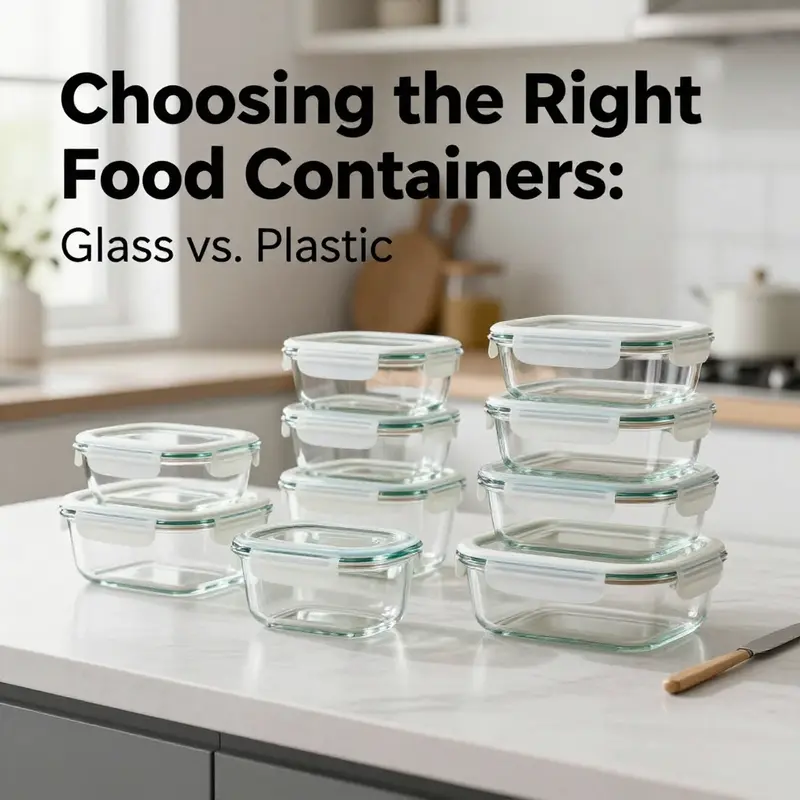
Choosing a container for everyday food storage is more than a matter of looks or convenience. It is a decision that intertwines health, safety, and the rhythms of daily life with the larger questions of waste, resource use, and a kitchen that remains calm and organized. When we compare glass and plastic, the verdict often rests on how these materials interact with food, how they endure heat and handling, and how long they last in daily rotation. Across many households, glass has risen as the more prudent choice when the lens broadens from immediate needs to long-term well-being and environmental responsibility. What makes glass stand out is not only its ability to cradle flavors but its inert nature. Glass is an essentially inert material; it does not react with foods, nor does it shed chemicals into meals when used properly. This characteristic matters most when you store or reheat leftovers, marinate a dish, or portion out ingredients for the week. In contrast, certain plastics have the potential to release substances under heat or with repeated washing. While many plastic products are labeled as safe for cold or moderate use, the nuances of temperature, acidity, and fat content can influence whether any migrants migrate into food from the container’s interior. The essence of the glass argument lies in a cautious, health-centered approach: a container that remains stable and non-reactive over time is a robust ally in home food safety, and its reputation is built on years of practical, everyday experience rather than marketing claims alone.
The temperature spectrum further strengthens glass’s case. High-quality glass, especially borosilicate variants, withstands a wide range of temperatures, allowing direct use from the fridge to the microwave or oven in many cases. It is not simply that glass resists heat; it is that it does so without warping, staining, or releasing additives. A well-made glass container can transition from cold storage to oven-ready meals, then be cleaned in a dishwasher without the warping or persistent odors that sometimes plague plastics after repeated cycles. This versatility translates into fewer gadgets and fewer replacements over time, a practical benefit for households aiming to minimize clutter and optimize budget planning. Of course, tempered by experience, there is a caveat: glass is heavier and more prone to breakage if mishandled. A drop on a hard floor can be jarring, and the risk of chips or cracks remains a reality that careful storage and handling can mitigate. The trade-off is a proven, enduring stability that many families find worth the extra care and attention.
Another argument for glass rests in sealing quality and the durability of freshness. Glass containers frequently pair with tight-sealing lids, often incorporating silicone gaskets or robust locking mechanisms. Those features form a kind of fortress around the food, minimizing air, moisture, and odors that can dull flavors or invite pantry pests. When a seal is reliable, the risk of spices losing their potency or grains absorbing dampness is reduced, and the shelf life of staples such as rice, beans, or dried fruit can be significantly extended. This is especially important for households that batch-cook, portion leftovers, or prepare meals ahead of time for busy days. The visible clarity of glass adds a practical advantage as well. When you store soups, stews, or roasted vegetables in transparent jars or bowls, you can quickly assess color and texture without opening the container, a small but meaningful step toward reducing unnecessary waste and food spoilage.
Cleanliness and long-term hygiene are also notable strengths for glass. The non-porous surface of glass resists the absorption of oils, pigments, and strong aromas that can linger in plastics after repeated use. The ability to thoroughly clean glass, even with hot water and a dishwasher, supports stringent hygiene standards in homes and in professional kitchens alike. Reinforced glass products designed to withstand daily wear and tear tend to offer a surprisingly long service life. The aesthetic appeal of glass—its translucence and the way it frames food with a clean, minimalist look—also contributes to a kitchen’s sense of order and calm. Visual clarity helps families manage portions, monitor freshness, and reduce waste. A well-organized glass set can replace a hodgepodge of mismatched containers, turning a cluttered cabinet into a streamlined system that makes everyday cooking and storage feel simpler.
From an environmental standpoint, glass carries a compelling narrative. Although its upfront cost may be higher, the lifespan of a sturdy glass container can span decades with proper care. Unlike some plastics that degrade in appearance or integrity after a few uses, glass endures, and the material is infinitely recyclable. Each phase of its life—reuse, recycling, and continued use—tends to accumulate environmental benefits over time, especially when considered against the need to replace damaged plastics or to manage the waste associated with disposable or short-lived containers. The long-term perspective matters here: the cumulative resource savings, reduced exposure to additives, and the aesthetic satisfaction of a kitchen that feels cohesive and refined are meaningful benefits that accumulate with steady use.
Yet the plastic option does not vanish from the conversation without acknowledgment. Plastic containers are lightweight, resistant to breaking, and often cheaper at the point of purchase. They can be convenient for transporting meals, picnics, or for households with children who may drop a container and not crack a dish in the process. However, plastics carry caveats. Over time, some plastics fade, become etched by heat or abrasion, or display scratches that harbor residues. Repeated heating can accelerate chemical migration in certain materials, a concern amplified when foods are acidic, fatty, or highly salted. The environmental footprint of plastics—source, production, and end-of-life disposal—also weighs heavily for many households as they consider sustainable living. While many plastics today are made to be more durable and to meet safety standards, they are generally not as inert as glass and may contribute to long-term environmental challenges if not properly managed.
With these trade-offs in mind, many households choose a practical, mixed approach. They reserve glass for storage and reheating of meals that require a stable, non-reactive environment, while using sturdy, well-sealed plastic or polymer-based containers for portable lunches, kid-friendly options, or temporary cold storage. The key is to recognize the strengths and limits of each material and to align choices with cooking habits, storage needs, and cleaning routines. In practice, a common-sense routine emerges: use glass for long-term storage of leftovers and prepped ingredients, especially when reheating is likely or when you want to minimize perceived odor and flavor transfer. Reserve plastic in contexts where the risk of breakage would be problematic—for example, packing lunches for children on outdoor activities or transporting meals in a car. If you do incorporate plastic, seek options that minimize heat exposure, avoid known risky additives, and ensure lids seal tightly to safeguard freshness.
For households navigating these choices, it is also useful to consider alternatives that push beyond a binary comparison. A growing number of kitchens integrate recyclable materials that pair well with glass storage, such as paper-based or other sustainable options for certain meal occasions. For instance, you can explore options like eco-friendly corrugated paper cup with lid for occasions where beverages or light cold foods are involved, and you want to minimize plastic use. While these paper-based choices are not direct substitutes for all glass containers, they embody a broader commitment to reducing plastic dependency and preserving the integrity of food during transport and serving. This broader sustainability mindset aligns with the deeper purpose of the article: to weigh material properties not just by price, but by health implications, functional fit, and the footprint each choice leaves behind.
In sum, the case for glass rests on its safety profile, its heat tolerance, its sealing efficiency, and its enduring aesthetic and environmental benefits. These factors combine to create a practical, trustworthy storage system that supports healthier meals and more mindful consumption. Plastic remains relevant for certain tasks, especially where portability and resilience against impact matter most, but its drawbacks—lower inertness, potential heat-related migration, and environmental impact—make it a less favorable default for everyday storage. The most effective strategy for many households is to tailor container choices to specific uses within a coordinated storage approach: glass where safety, flavor integrity, and long-term reuse matter most; plastic where convenience and durability are at a premium. As cooking, shopping, and storage habits evolve, the aim is not perfection in every circumstance, but a thoughtful, informed balance that keeps food safe, kitchens orderly, and resources in steady supply for the long view.
External resource: BPA and related chemical concerns information from NIEHS
塑料食品容器的利弊解析:便捷背后的健康与环境权衡
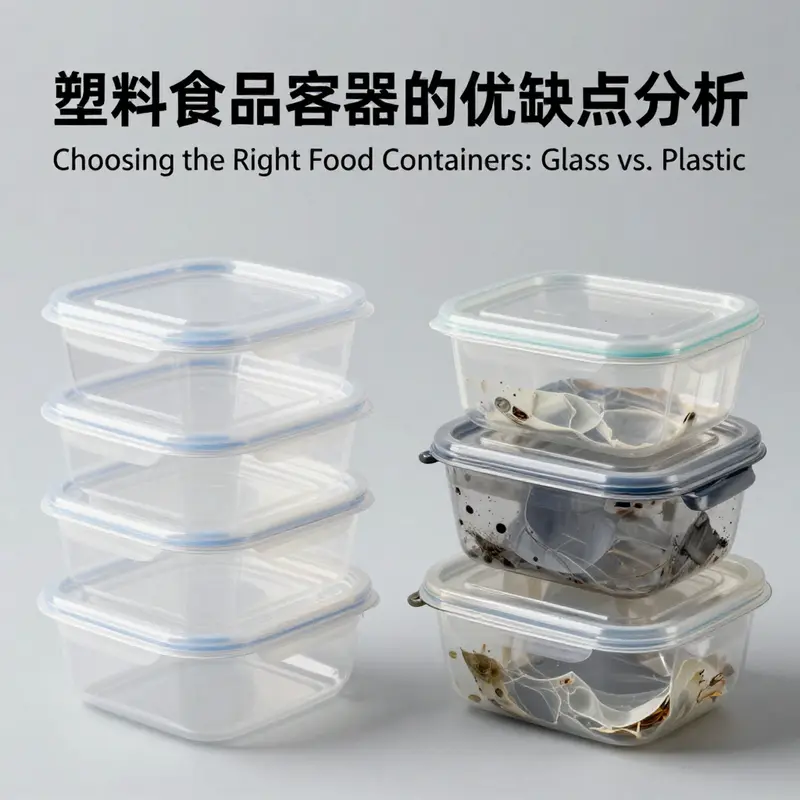
塑料食品容器在家庭和外卖场景中无处不在,其轻便、耐摔和低成本的特性让它们成为许多人日常储存与携带食物的首选。然而,这种看似理想的选择并非没有代价。要在“塑料还是玻璃”的问题上做出明智选择,需要深入理解塑料容器的优点与局限,才能在健康、安全与便利之间找到平衡。
首先,塑料容器的优势明显且实用。塑料本身质量轻,便于携带与搬运,特别适合需要外带、露营或有孩子和老人家庭的场景。相较于玻璃,塑料几乎不会因跌落而碎裂,这一点减少了意外伤害并延长了使用场合。此外,塑料相对廉价,生产成本低,市场上能提供多样化的规格与价格区间,使其成为大众厨房的经济选择。塑料的可塑性强,使厂商能设计出带密封盖、分隔格、注塑成型的复杂结构,满足不同食材分类、便当盒或一次性外卖包装的需求。某些食品级塑料如聚丙烯(PP)和高密度聚乙烯(HDPE)具备良好的化学稳定性,对普通酸碱物质具有抵抗能力,部分类型还具有良好的防潮和阻隔性能,有助于延长某些干货或包装食品的保鲜期。
但是,塑料容器的局限同样值得认真对待。耐热性是一个根本问题:并非所有塑料都能承受高温。少数如聚苯乙烯(PS)只适用于低温环境,而即便是耐热性能较好的聚丙烯,在超过其温度极限时也会变形或释放化学物质。高温加热、洗碗机的高温循环或盛放油脂、酸性食物时,某些塑料制品会发生化学物质迁移,将增塑剂、稳定剂或其它添加剂渗入食物。这类物质中有的已被证实具有内分泌干扰作用,可能影响激素平衡,长期暴露与慢性健康问题相关联。
另一个不可忽视的风险是材料老化与微塑料的产生。塑料在长期使用后会出现划痕、变色、发脆或裂纹。物理磨损和化学降解会导致微小颗粒脱落,这些微塑料可随食物或饮水进入人体。近年来研究逐步揭示微塑料在生态系统与人体内的潜在累积效应,可能与代谢紊乱、炎症反应等生理影响相关联,虽仍需更多长远研究,但已足以提醒我们对塑料容器的使用寿命保持警惕。
环境层面的影响同样严重。绝大多数传统塑料不易降解,随意弃置会造成白色污染,严重影响土壤与水体生态。即使城市回收体系存在,实际回收率在许多地区仍偏低,混合材料或受污染的容器往往难以被有效回收。政策推动可降解材料和回收体系改进固然重要,但在个人层面,减少一次性塑料和延长可重复使用容器寿命,仍是最直接的行动。
质量差异也决定了风险高低。市场上品牌与非品牌产品的质量差距明显。高品质、食品级认证的塑料容器往往在材料选择和添加剂控制上更为严格,而廉价产品可能使用回收混合料或添加不安全的增塑剂。消费者在选择时可参考容器底部的回收代码(如2=HDPE、4=LDPE、5=PP),优先选择食品接触安全性较高的类型,并避免来源不明的廉价制品。
针对这些问题,合理的使用与维护能显著降低风险。例如,不建议将不耐热的塑料容器直接放入微波炉或烤箱;避免用于盛放高温油脂或强酸性食物;当容器出现划痕、变形或异味时应及时更换。洗碗机高温洗涤虽然方便,但对塑料而言会加速老化,专家建议将塑料容器放在洗碗机上层或干脆手洗以延长寿命。此外,将旧的塑料容器转做收纳或非食品用途能延长其使用价值,减少对环境的直接负担。
从替代方案角度看,许多人在追求更高安全性时,会转向玻璃、不锈钢或可降解材质的容器。对于一次性外卖与短期使用,若希望减少塑料污染,可考虑一次性可降解或纸质容器作为替代。若需要稳定防油防水且可回收的纸质外带方案,可参阅一次性牛皮纸碗替代方案以了解可替代的包装选择(https://greendispopack.com/product/disposable-kraft-paper-bowl-for-food-package-with-lid/)。
综合来看,塑料食品容器在便利性和成本上确实有强烈优势,但这并不意味着应无条件接受其所有用途。将塑料容器视为工具而非长期解决方案,并根据用途选择合适材质,是更为理智的态度。短期携带与不经高温加热的场合,优质食品级塑料依然实用且经济;而盛放热食、长期存储或对健康敏感的人群,应优先选择惰性材料如玻璃或不锈钢。与此同时,注意容器的使用年限、避免高温与尖锐划伤,并在弃置时优先回收或改作他用,是减轻塑料负担的可行做法。
参考资料:国家市场监督管理总局关于食品接触材料安全标准的相关说明可供进一步阅读以了解法规与限量要求(https://www.samr.gov.cn/zwgk/ztzl/psjz/xxgk/202512/t20251216_598732.html)。
衡量健康与安全:玻璃与塑料容器的真实风险与选择指南
衡量健康与安全:玻璃与塑料容器的真实风险与选择指南
当讨论“玻璃还是塑料更好”时,健康与安全并非简单的二选一,而是一系列权衡。材料的化学稳定性、制造工艺、使用方式和维护习惯都会决定最终风险。把讨论集中在这几个关键维度上,可以帮助你在实际生活中更明智地选择并安全使用食品容器。
首先,必须正视玻璃并非绝对无害的普遍误解。玻璃的化学惰性是其优点之一,但生产过程中为改善性能或颜色,可能添加金属氧化物。尤其是一些彩色或老式玻璃制品,生产时使用的铅、镉等助剂在遇到酸性液体、高温或长期存放时,会有微量迁移的风险。长期低剂量接触重金属,会在骨骼、肝肾和神经系统中积累,儿童、孕妇与老年人承受的风险更高。因此,选用玻璃时应优先考虑经认证的高硼硅玻璃或明确标注“无重金属添加”的食品容器。高硼硅玻璃在耐热性和化学稳定性上显著优于普通钠钙玻璃,适合短期高温使用且风险更低。
其次,微生物安全是玻璃容器容易被忽视的隐患之一。玻璃表面光滑,但反复使用会出现肉眼看不到的划痕和微裂纹,这些微小缺陷会藏匿食物残渣,成为细菌和霉菌的滋生点。若清洗不到位或晾干不彻底,尤其在高温高湿的环境下,微生物会快速繁殖。与之相比,某些食品级塑料容器采用无缝、易抛光的设计,长期保持光滑表面时反而更易清洁。为降低风险,无论是玻璃还是塑料,都应定期检查表面是否有划痕、变色或异味,并在必要时更换。
第三,物理风险也不可忽视。玻璃易碎的特性在居家环境中带来割伤和误食玻璃碎片的潜在危险。家庭中有儿童或行动不便长者时,塑料的抗摔性明显更安全。塑料掉落后通常不会产生锋利碎片,这在日常生活和外出携带中是重要优势。但应注意,塑料的抗摔并不等同于耐久优良,长期使用的塑料会老化、变脆并产生裂纹,同样需要及时更换以避免卫生问题。
关于化学迁移和塑料的安全性,现代食品级塑料已通过更严格的标准与检测。材料如PET、PP和无双酚A的替代材料(例如安全标签的Tritan)在正常使用条件下,迁移风险低。关键在于使用方式:避免将非耐热塑料反复在高温下加热,避免盛放强酸强碱、有机溶剂或长期暴晒。正确的使用习惯和对材质标识的认知,比单凭“玻璃天然安全”或“塑料有毒”更能保障健康。
环境和可持续性的讨论与健康安全密切相关,但不能完全混为一谈。玻璃生产耗能大、碳排放高,运输成本也更高,这些都会影响其环境成本。塑料在生产与回收链上占优的情形下,若采用可回收或高耐用的食品级塑料并保持长期使用,整体生态足迹可以降低。面对这一现实,选择既安全又可持续的方案,往往不是偏向单一材料,而是考虑使用周期、回收条件和场景匹配。例如,高硼硅玻璃用于短期保存或需要耐高温的场合;食品级塑料用于日常携带、外出饮用或有摔落风险的场景。
实用的建议有助于把理论转为可执行的行动。首先,购买时留意材料标识:玻璃产品应标注为食品级高硼硅或注明无重金属;塑料则应有食品级标志,并明确“不含BPA”或使用已被广泛验证的替代材料。其次,按照用途选择容器:高温烹饪、烤箱或微波用玻璃应优先选耐热玻璃;户外与儿童使用应选择坚固的食品级塑料。第三,清洁与检查同样重要:避免使用强酸强碱清洁剂去腐蚀容器表面;定期检查划痕、裂纹、变色与异味;对疑似受污染或老化的容器果断更换。最后,合理处置废弃容器:将老旧塑料用作非食品用途或按当地回收规范处理;破碎或变质的玻璃应当妥善包装后按回收或废弃流程送往处理点。
健康与安全的核心在于认识到没有绝对安全的材料,只有合适用途与规范使用。玻璃提供了化学惰性和耐高温的优势,但存在重金属迁移、微生物藏匿与破碎风险。现代食品级塑料在合规与正确使用下,能以更低的损耗、更高的便携性与更小的某些环境代价,提供可靠的日常安全性。掌握材料特性、注意使用方法并坚持良好维护,是在玻璃与塑料之间做出负责任选择的关键。
更多关于玻璃重金属迁移的科学分析可参考学术研究: 王小文与陈霞在《食品工业科技》上的综述(2024)。
内部参考:了解适合一次性或短期盛装的纸质环保替代品,可查看这篇关于环保纸碗的产品说明。 (https://greendispopack.com/product/disposable-700ml-kraft-paper-bowl-take-out-octagonal-rectangle-paper-bowl/)
外部资源:王小文, 陈霞. 食品包装材料中重金属迁移研究进展 [J]. 食品工业科技, 2024.
Between Weight and Waste: A Lifecycle Perspective on Glass versus Plastic Food Containers
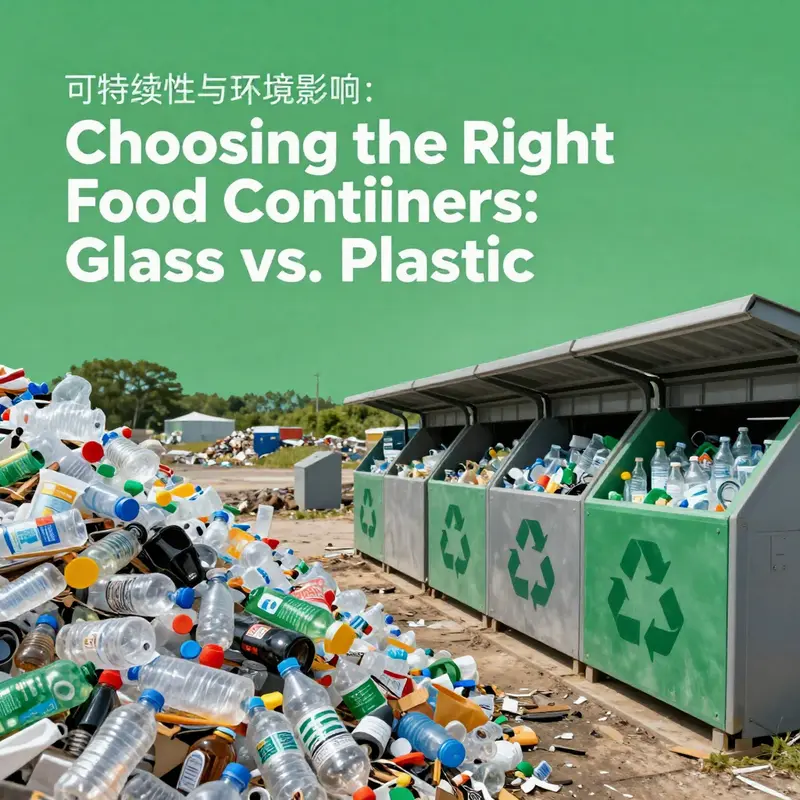
People often ask whether glass or plastic containers are better for storing food. The answer isn’t a simple yes or no. It depends on what you measure. Health and safety are important, yes, but so are how you use the container and how waste is managed after use. In the debate, glass is frequently cast as the safer, purer choice. It is inert, nonreactive, and does not leach harmful substances into food. In theory, that makes glass a clear winner for long-term storage of acidic foods or oils. Yet the larger question is the environmental footprint that accompanies different materials across their lifecycles. The research shows a nuanced picture. Glass may offer health and durability, but its production energy, heavier weight, and transport costs can offset some of those advantages if the container is treated as a one-time, replaceable item. Conversely, plastic often has a lower production energy and lighter weight, which reduces transport emissions in the short term. The problem is the long tail: leakage, microplastics, and the constant demand for virgin plastic feedstock.
From a lifecycle perspective, the most meaningful comparisons emerge when we look beyond a single stage. Glass requires high-temperature melting at mills above 1500°C, consuming large amounts of fossil fuel and emitting significant CO2. Multiple studies estimate that making a glass bottle uses three to four times as much energy as making a similarly sized plastic bottle. The raw materials raise additional concerns: quartz sand, soda ash, and limestone extraction causes land disturbance and water stress in some regions. These inputs are not incidental; they shape local ecosystems and air quality around production sites. Plastic, while powered by petrochemicals, benefits from lighter manufacturing energy. Even so, the pollution story for plastic extends far beyond the factory: microplastics infiltrate soil and oceans for centuries, and the material can persist in the environment long after disposal. In that sense, neither material is innocent. The difference lies in how they are used and disposed of.
Weight becomes a practical determinant in transportation. Heavier glass containers require more fuel per shipment, especially when you move large volumes. A warehouse filled with glass bottles means higher carbon emissions in transit. The difference compounds when packaging is shipped long distances. If your meals travel across regions or countries, the energy penalty of glass grows. Yet there is a counterbalance: glass is durable and reusable. A quality glass container can last for decades with proper care, and for households committed to refill and reuse, the per-use impact declines with each reuse. In daily kitchen life, glass excels because it tolerates oven, microwave, and dishwasher cycles without transferring taste or chemicals. This resilience reduces the need to replace worn containers frequently, which helps offset upfront energy costs. The crucial question is whether your routine supports repeated use instead of one-off disposal. If not, glass may carry a heavier environmental burden than a plastic system designed for reuse and robust recycling.
End-of-life outcomes hinge on local systems. Glass is technically 100% recyclable and can be kept in a loop indefinitely. In practice, however, recycling rates vary. When glass is not recycled, it often ends up in landfills, where it persists for extremely long times. Recycling glass saves natural resources and lowers emissions, but it only achieves its potential if collections and markets for cullet exist. Plastic, by contrast, includes a wide range of polymers with different recycling pathways. PET and some other plastics are recyclable, yet the overall rate remains disappointingly low in many regions. A large portion still escapes into the environment, where microplastics and additives pose risks to wildlife and potentially human health. The take-home message is not that one material is categorically better, but that the environmental advantages depend on system design: reuse infrastructure, reliable collection, and high-quality recycling streams matter more than the material choice alone. A thoughtful consumer recognizes that the path to sustainability lies in aligning personal habits with robust waste management and a well-supported circular economy.
Practically, what should a consumer do? Start with intention: plan to reuse glass containers many times, not as single-use packaging. Invest in sturdy, well-fitting lids and avoid fragile designs that break easily. When using glass, pair it with a local recycling mindset—show up at the right bin, separate the components, and support programs that collect cullet efficiently. For those who cannot rely on a robust reuse cycle, consider plastics with higher recycled content and durable, food-safe plastics designed for long life. But remember the caveat: heating plastic can introduce concerns if the packaging is not rated for high temperatures. In parallel, also explore alternatives that fit a circular economy, such as paper-based or compostable options where appropriate. For example, a biodegradable eco-friendly take-away Kraft paper bowl shows how packaging design can tilt the balance toward reuse and recovery. See the detailed example here: biodegradable eco-friendly take-away Kraft paper bowl.
In discussing these choices, it helps to keep a broader view of how products circulate in real-life systems. A glass container does not exist in isolation; it travels through production plants, warehouses, homes, and recycling streams. Each stage has levers that can swing its environmental accounting. For instance, if a household diligently retires old glassware and continuously replaces it with durable pieces that are kept for decades, the per-unit impact of each use declines dramatically. If a city or region maintains a high-coverage glass recycling program with efficient collection and processing, the environmental payback of glass improves further. Conversely, if a community relies heavily on single-use plastics or faces weak recycling networks, the same glassware could appear less favorable in lifecycle terms. The takeaway is not to declare a universal winner but to design practices that maximize reuse, improve collection of glass cullet, and reduce leakage of plastics into the environment.
The path toward genuinely sustainable packaging is a whole-system challenge. It requires manufacturers to invest in durable, repairable products; retailers to encourage refill and return schemes; and policymakers to align incentives with robust recycling infrastructure. Consumers play a critical role by shaping demand toward items meant for repeated use, supporting take-back programs, and choosing packaging materials that fit local waste-management realities. In situations where reuse is feasible and reliable, glass can outperform other materials over time. In places where reuse is impractical or recycling is unreliable, high-quality plastic with substantial recycled content may hold an advantage. Either way, the most powerful shift comes from reducing the total number of new containers entering the system and increasing the lifecycle of each item.
Sustaining this balance also means recognizing the value of alternatives that move beyond the plastic-glass dichotomy. When a container design prioritizes modularity, easy cleaning, and straightforward end-of-life separation, it makes the circular loop more reachable for households of all sizes. The conversation can widen to include lighter, compostable, or hybrid options in contexts where they genuinely perform better in a local waste stream. The crucial question remains: how can we structure our choices to keep materials out of landfills, minimize energy use in production and transport, and prevent environmental leakage? A practical approach is to couple reuse-focused habits with robust recycling or recovery programs, and to remain open to material options that align with those systems. This is how households can move from a static “glass versus plastic” mindset to a dynamic, lifecycle-informed practice that reflects real-world sustainability.
External reference: https://www.lifecycleinitiative.org
Economics in Focus: Weighing Glass Against Plastic for Long-Term Cost-Effectiveness
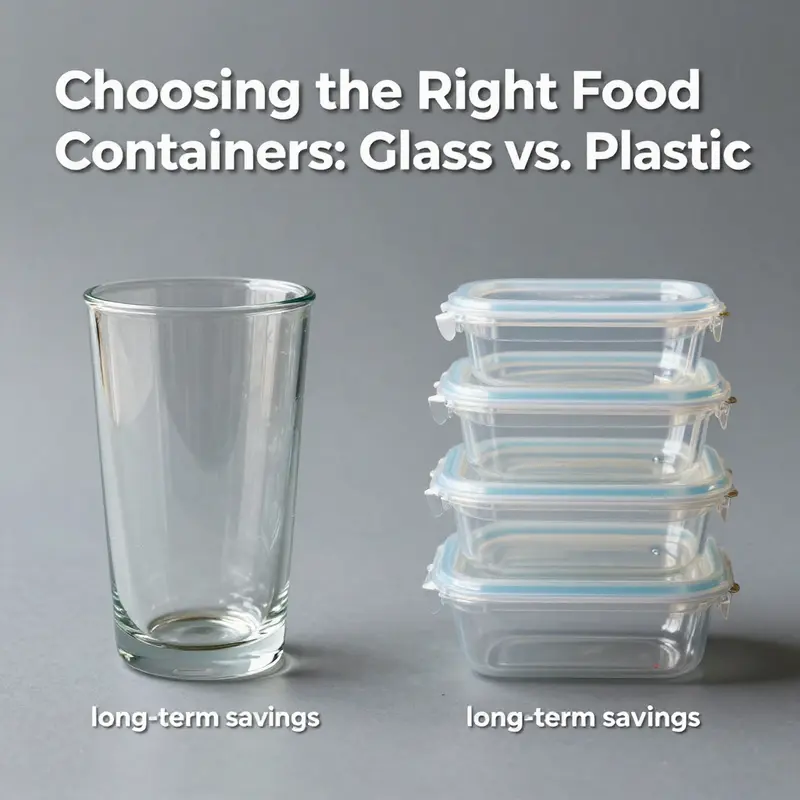
Choosing between glass and plastic containers is more than a matter of intrinsic durability or convenience. It is an economic decision that ripples through a business’s supply chain, pricing, and sustainability commitments, and ultimately affects consumer trust. When we examine cost, we must look beyond the sticker price of an initial purchase and measure what the total cost of ownership (TCO) will be over time. In this context, the economics of glass and plastic diverge in meaningful, sometimes counterintuitive ways. Plastic bottles and tubs often win on the short term because their upfront price is low, their weight reduces transport costs, and their production processes are highly optimized. Glass, by contrast, starts with a higher price tag and heavier shipments, but it can deliver savings over the long haul through durability, reusability, and a cleaner, more stable product experience that supports premium branding. A careful balancing act emerges when brands align packaging choices with product type, distribution scale, and the larger aims of sustainability and regulatory risk mitigation.
The most immediate economic difference lies in initial procurement costs. Plastic packaging benefits from low mold costs, flexible tooling, and a high throughput that keeps unit prices down. The cost of creating a plastic container can be a fraction of that of a comparable glass container, and the entry barrier for new product lines is comparatively low. This dynamic is particularly acute for smaller brands or fast-moving SKUs where rapid iteration and low capital expenditure are essential. In contrast, glass packaging involves a much higher upfront investment. The tooling, molds, and machinery needed to produce glass containers are expensive, and individual units tend to be heavier. In many manufacturing scenarios, the initial cost per container for glass can be several times higher than for plastic, and the lead times for tooling and production runs are longer. The math here matters: if a company tests multiple SKUs or changes formats frequently, the capital outlay required for glass can be a deterrent, even if glass offers longer-term advantages later on.
Logistics and transportation costs amplify the plastics advantage in the short term. Light weight translates into more efficient shipping, lower fuel consumption, and reduced warehouse handling. For mass-market products that move through tight distribution networks, the lighter containers reduce logistics friction and can shave tens of percentages off per-unit transport costs. The flip side is a higher fragility profile for glass; weight is not the only factor, but the risk of breakage remains a meaningful cost factor. Breakage rates for glass during handling and transit can translate into significant post-sale costs, including lost inventory, expedited replacements, and potential damage to brand promises. When a company ships thousands or millions of units, even a small percentage difference in breakage can erode margins. The evidence consistently points to plastic’s logistics edge in scenarios with complex, high-volume distribution systems, especially when temperature-controlled handling is involved. Yet the narrative does not end with transport alone. The end-of-life handling of each container, whether it becomes waste, recycling material, or a reusable asset, also reshapes the true logistics cost over time.
Lifecycle costs illuminate a different pattern. Glass shines when durability and reusability align with a brand’s sustainability posture and consumer expectations. A high-quality glass container can endure years of use with proper care, and its sturdiness supports repeated cleaning at high temperatures in professional or domestic settings. When products are positioned as premium and long-lasting, Glass often carries a reputational and functional premium that justifies a higher initial price. In textiles and cosmetics, for instance, glass bottles are frequently advertised as “recyclable and reusable,” reinforcing a closed-loop narrative that mitigates per-unit environmental costs through reuse and targeted take-back programs. In practice, the lifecycle cost advantage for glass emerges most clearly when a business can sustain return rates, ensure safe sterilization or cleaning cycles, and maintain uniform fill quality across cycles. In tightly managed programs, the initial extra spend on glass is amortized across a much longer usage horizon, and the packaging’s resilience reduces the frequency of replacements, mishandling costs, and the energy intensity associated with frequent repackaging.
Plastic’s lifecycle narrative, by contrast, is defined by its vulnerability to environmental policy shifts and its perception among consumers. A one-off savings from the plastic container can be undercut by costlier waste management, higher regulatory risk, and potential brand penalties for perceived disposability. In many markets, regulators increasingly favor reduced single-use plastics, extended producer responsibility, and recycling incentives that can tilt the long-term economics toward materials with established circularity. In practice, this means a plastic strategy must anticipate potential future costs—upstream material changes, stricter labeling, or mandates on recyclability—that could erode today’s apparent savings. In addition, chemical stability concerns cannot be ignored. Some plastics may interact with contents under heat, or over time, leading to consumer complaints, return rates, or product recalls—incidents that carry substantial costs and erode consumer confidence. Glass, with its inert chemistry, typically sidesteps these questions, safeguarding product integrity and reducing the risk of ingredient migration that can complicate quality control.
Maintenance and replacement costs further shape the economic landscape. Glass is inherently more prone to breakage in handling and consumer use, which can raise maintenance costs and safety considerations. Yet, with stronger packaging design, protective inserts, and improved logistics, breakage can be mitigated. When breakage costs are controlled, glass’s durability in terms of sterilization resistance and chemical inertness yields predictable maintenance economics over time. Plastic, while less prone to shattering and more forgiving in everyday handling, carries its own maintenance challenges. Certain plastics may degrade, discolor, or become brittle with heat and exposure to UV light. Over time, this can necessitate more frequent replacements, quality assurance checks, and consumer complaints that translate into returns or recalls. And while plastics can often be engineered to resist some forms of chemical interaction, certain contents—oil-rich or acidic substances—can cause permeation and flavor or odor transfer, complicating shelf stability and leading to quality-related costs that must be accounted for in long-term financial planning.
From a strategic perspective, the cost calculus must consider the product’s positioning and the consumer’s willingness to pay for sustainability and perceived quality. A premium line that emphasizes clean composition, reusable glass packaging, and a robust take-back or recycling program can command price premiums that offset higher acquisition costs. Conversely, a budget line that relies on low-cost plastics could benefit from rapid turnover but remain vulnerable to regulatory changes and evolving consumer sentiment. In practical terms, the decision often becomes a balancing act: allocate more upfront to glass for high-end, durability-driven products while leveraging plastic for fast-moving, price-competitive SKUs with robust supply chains that can absorb the additional costs of frequent replacements and potential waste management obligations.
The literature and industry analyses converge on a nuanced conclusion: plastic often offers immediate cost efficiency, but glass delivers stronger long-term value when managed as part of a coherent sustainability and product-differentiation strategy. This does not imply a universal superiority for either material; it suggests that the best choice depends on brand positioning, product category, distribution scale, and the company’s ability to optimize the end-to-end system. As a practical guideline, brands should map the total cost of ownership across the entire value chain, from supplier contracts and mold investments to shipping, storage, and end-of-life handling. They should also quantify intangible benefits—consumer trust in reusable glass, reputational gains from sustainable packaging, and alignment with corporate environmental, social, and governance goals. Those intangible returns can be material, especially in markets where sustainability resonates strongly with shoppers and where regulatory landscapes favor extended product life cycles.
For teams exploring how to balance these costs in the real world, consider a hybrid approach: reserve glass for premium lines and critical longevity needs, while using plastic for trial runs, fast turnover, or markets with tight price ceilings. In addition, parallel strategies such as improving packaging design to reduce breakage, investing in robust take-back schemes, and partnering with recycling programs can tilt the TCO toward glass where sustainability and durability are central to the product narrative. And for those who wish to compare packaging formats through a concrete lens, an illustrative reference on the topic of cost and performance in packaging alternatives can be helpful: disposable kraft paper bowls for take-out. This linked resource provides context on how cost, performance, and end-of-life considerations interact in a related packaging domain, offering a useful compass as brands navigate the glass-versus-plastic decision in their own markets.
In sum, the economics of glass and plastic containers are not a simple binary choice. They are a dynamic equation that integrates initial capital, logistics, durability, maintenance, regulatory risk, and the evolving expectations of sustainability-minded consumers. When a company aligns its packaging decisions with its brand story and its distribution realities, glass can emerge as the more economical choice over time—even if the upfront investment is higher—while plastic proves its value in fast-moving, cost-constrained scenarios. The most effective path is a deliberate, data-informed strategy that tracks real-world costs and benefits across the full lifecycle of the product, not merely the first purchase price. This approach allows a brand to remain financially agile while delivering on a narrative of quality, safety, and responsibility that resonates with today’s shoppers.
External reference: https://www.analitika.ru/
Final thoughts
As we have explored, glass food containers not only enhance food safety and quality but also offer significant advantages in terms of sustainability and cost-effectiveness. For businesses in the beverage and food service sectors, investing in glass containers is not only about adhering to health standards but also about making a conscious choice that benefits the environment. Transitioning to glass can lead to better customer satisfaction and a more sustainable operation, positioning your brand as a leader in responsible practices.