
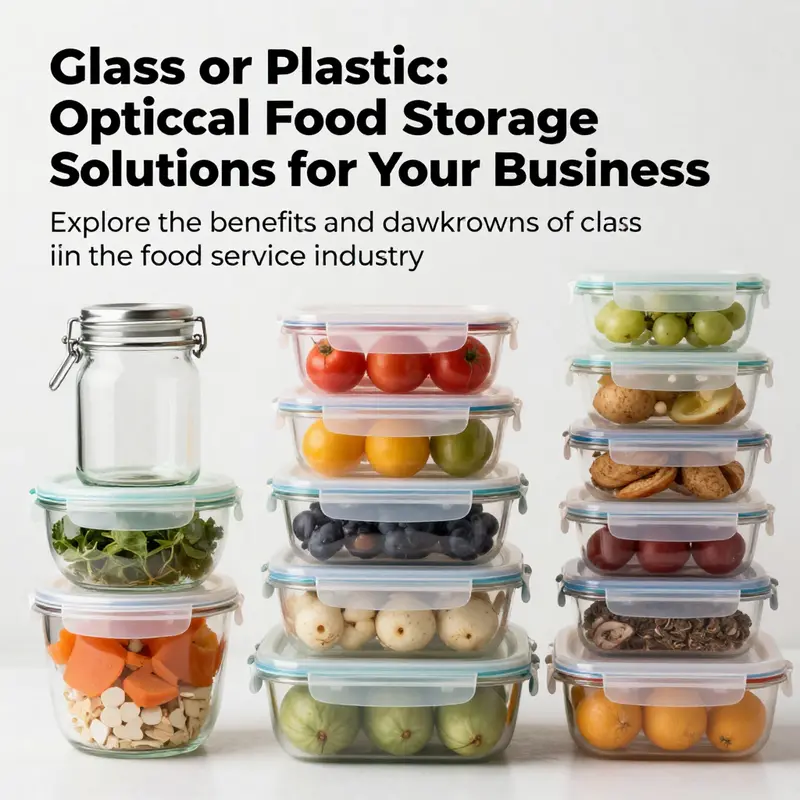
Selecting the right food storage containers can greatly influence the quality and safety of your offerings as a business owner in the food industry. Whether you manage a bustling bubble tea shop, a gourmet restaurant, or a food truck catering to corporate events, understanding the nuances between glass and plastic containers is essential. This decision goes beyond mere aesthetics; it encompasses safety, durability, environmental concerns, and practical usability tailored to your specific needs. In the chapters that follow, each aspect of this choice will be explored in depth. From safety considerations paramount to food service to the longevity and environmental impact of the materials, you will gain insights that help you make informed decisions for your establishment.
Safest by Design: How Glass Outshines Plastic in Everyday Food Storage
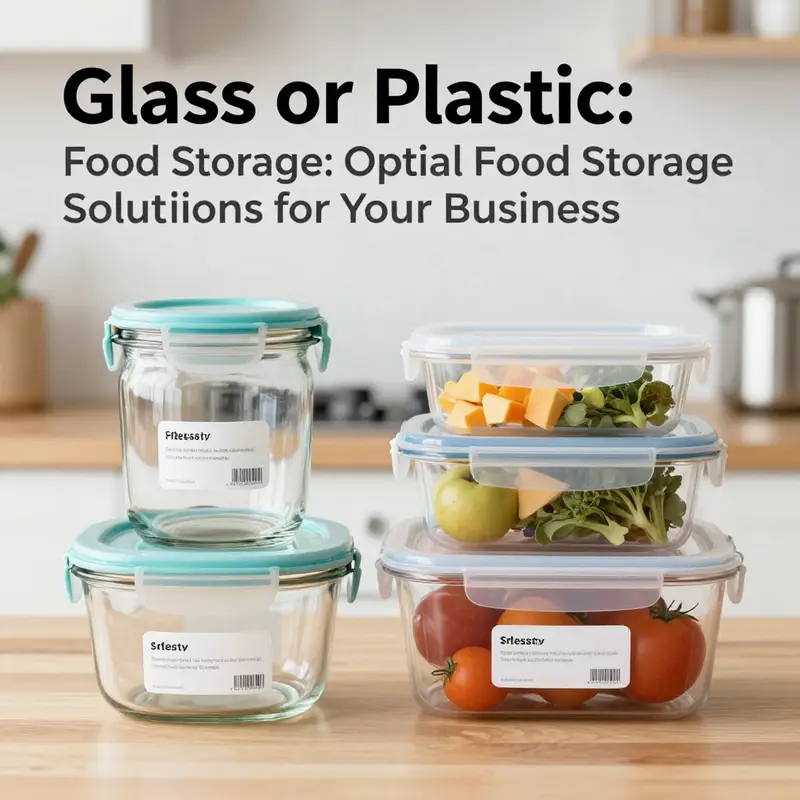
Choosing the right container for food storage is more than a matter of convenience; it is a decision about safety, long-term health, and the footprint we leave on the planet. In the daily hum of kitchen life, a glass jar tucked away on a shelf can seem ordinary, yet it embodies a principle that science increasingly reinforces: chemical stability matters. Glass is chemically inert, a term that sounds abstract but means something concrete for our meals. It does not react with foods, and it does not shed trace substances into what we store, even when warmth, acidity, or oiliness tests the boundaries of a recipe. When tomato sauce, citrus dressings, or fatty leftovers sit in glass, the likelihood of unwanted interactions drops to near zero. It is the idea of a neutral vessel, holding flavors and nutrients without adding or stealing anything from the food itself. This inertness is not merely a theoretical claim; it translates into practical peace of mind for home cooks and families who reheated leftovers in their microwave or stored a week’s worth of soups and sauces in the fridge.
In contrast, plastic containers carry a different risk profile. Plastics are polymer matrices designed to be versatile and affordable, but some contain additives that can migrate into food under certain conditions. The most scrutinized substances—bisphenol A (BPA) and certain phthalates—have raised concerns because they can act as endocrine disruptors in sensitive populations and over long durations of exposure. Even plastics marketed as BPA-free are subject to ongoing scrutiny; studies have shown that substitutes like BPS or BPF may still exhibit hormonally active effects. The U.S. Food and Drug Administration provides a framework for safety under labeled conditions, yet many experts urge caution with repeated heating, aging, and exposure to sunlight and oils. The chemistry is not about a single moment of contact but about a continuum. Every cycle of heating, every day of storage, and every scratch that forms a microchannel through the plastic can become a pathway for components to migrate into the food.
Beyond the chemistry, the safety conversation extends into durability and long-term performance. Over time, plastic containers tend to show wear: cloudy surfaces, scratches, and lingering odors that are stubbornly difficult to remove. These micro-environments can trap microbes, making proper hygienic cleaning more challenging. Glass, particularly borosilicate or tempered soda-lime formulations used in high-quality kitchenware, resists corrosion and keeps its non-porous surface intact through thousands of uses. It does not harbor aromas in the same way, and it maintains clarity through repeated washing. This durability is not merely about resistance to breaking; it is about a stable, predictable surface that minimizes the possibility of contamination from residues that stubbornly cling to imperfect plastics.
Yet safety does not arrive in a vacuum. Glass has its practical trade-offs. It is heavier, and its strength profile makes it more vulnerable to breakage from abrupt temperature changes or accidental impacts. For households with young children or frequent moves, the risk of a shard on the kitchen floor is a real consideration. Plastic wins some points here: lightness, lower cost, and a design that tolerates a degree of rough handling. For everyday lunches, picnics, or children’s snack containers, plastic’s convenience can feel indispensable. The question, then, is not a blanket prohibition of one material but a balancing act: where safety, longevity, and environmental considerations align, glass tends to take precedence.
Heat introduces another layer of nuance. Glass is widely accepted as safe for reheating and can perform reliably in the microwave when it is labeled as microwave-safe, or in the oven when designed for high temperatures. The ability to transfer from fridge to oven with minimal risk of leaching or warping makes glass an attractive option for many households who cook, store, and reheat the same dish. In the context of liquids and acidic or oily foods, glass sealed bottles can offer superior protection against oxygen and light, preserving nutrients like vitamin C for a bit longer than opaque or clear plastics that allow more light or oxygen ingress. The sense of continuity—one container for the whole cooking and storage lifecycle—often tips decisions toward glass.
From an environmental standpoint, the lifecycle story matters. Glass is infinitely recyclable in principle, and the quality of glass is not degraded by repeated recycling. This durability of recycling means that, over a lifetime, glass can contribute to lower resource demand when considered across many reuse cycles and proper recycling streams. Plastics, by contrast, degrade in quality with each recycling pass, and many types are downcycled into materials with lower performance. The energy costs and emissions associated with producing and recycling glass versus certain plastics can differ depending on geography, waste management infrastructure, and consumer behavior. Taken together, the picture painted by life-cycle analyses is that glass often presents a more sustainable path for those who prioritize long-term storage and a lower chemical footprint, especially when tempered or borosilicate glass is used for compatibility with heating and refrigeration.
Despite these advantages, the practical realities of modern life cannot be ignored. A kitchen that uses glass for most long-term storage while reserving plastic for short-term, on-the-go needs can be a pragmatic compromise. The goal is to minimize risk where it matters most—preservation of safety, nutrients, and flavor—while recognizing that certain situations call for portability or budget-minded choices. If a family routinely packs lunches in a car or a backpack, lightweight plastic containers may reduce the chance of dropped containers breaking on the way to school or work. However, for foods that will be reheated, stored for extended periods, or held in the refrigerator, glass remains the safer, more durable option. For those seeking additional guardrails, choosing tempered or borosilicate glass designed for heating and refrigeration can bridge the gap between safety and practicality. Such glass products provide a sturdy core for users who want to minimize chemical exposure while still enjoying the convenience of modern kitchen routines.
The dialogue between glass and plastic must also consider the broader ecosystem of kitchenware and storage practices. Even when plastic performs adequately in the short term, a cautious approach toward long-term safety remains prudent. The inert nature of glass does not merely protect food from external chemicals; it also reduces the risk that reheated leftovers will introduce unintended compounds into the body. In this sense, glass is not just a material choice but a safeguard woven into the everyday act of cooking, storing, and reheating meals. When updated safety research arrives, it tends to reinforce this perspective, framing glass as a gold standard for those who prioritize chemical stability and consistent performance. The practical takeaway for most households is clear: lean toward glass for containers that will see hot foods, acidic sauces, or repeated cycles of storage and heating. For occasional, short-term, on-the-go use, plastic remains a reasonable, accessible option, provided it is used within labeled guidelines and is replaced regularly to mitigate wear and potential migration concerns.
For readers seeking to explore alternatives or to place these choices in a more concrete context, practical options exist that keep sustainability in view without compromising safety. In addition to reusable glass, properly selected containers made from borosilicate or tempered glass can handle the daily rhythms of a busy kitchen. When portability is essential, consider the materials designed for durability and safe reuse, avoiding those that show signs of wear or scratches, which can harbor residues over time. The overarching message remains stable: glass is widely regarded as the safest material for long-term food storage, because its inert nature minimizes chemical leaching and supports reliable reuse across many years. Yet the everyday kitchen is a space of trade-offs, and understanding these trade-offs helps households align their storage habits with their values, whether safety, cost, or environmental impact.
For contexts where portable servingware and consumer convenience intersect, some households still rely on disposable options. One representative example includes disposable kraft paper bowls designed for take-away and salads, which illustrates a broader trend toward single-use packaging in casual settings. See this option here: disposable-kraft-paper-bowl-take-away-kraft-paper-salad-bowl-with-pet-lid. While such containers provide convenience, they do not replace the safety and durability of glass for stored foods intended for later reheating or long-term preservation. They serve a different purpose—short-term transport and consumption—rather than a substitute for durable, reusable storage that can safely hold the same contents across multiple days.
In sum, the safety landscape of food storage favors glass when the goal is long-term reliability, chemical stability, and an environmentally mindful lifecycle. Plastic has its place, especially for lightness and cost in immediate-use situations. The key is understanding the context: what you are storing, how you intend to use the container, and how often you will reheat or reuse it. By prioritizing glass for refrigerated, reheated, or long-term storage and reserving plastic for shorter, portable tasks, households can reduce potential exposure to harmful substances, minimize odor and stain retention, and still maintain a flexible and practical kitchen routine. As research continues to refine our understanding of material safety, the core insight remains consistent: framework matters. When you choose glass with heating and refrigerating in mind, you are selecting a containment system that aligns safety with durability and environmental sensibility.
External resource for deeper context on chemical safety in glass versus plastic storage: External resource
Endurance in the Kitchen: How Glass Outlasts Plastic in the Durability and Longevity of Food Containers
Durability is not just a measure of a container’s surface resilience; it is a gauge of trust in the kitchen where meals travel, heat, and time. When you reach for a storage option, you are not simply choosing a shape or a lid; you are selecting a partner that will meet the daily grind and the long arc of family meals. In this light, durability becomes a defining factor in whether glass or plastic remains the reliable workhorse of a kitchen week after week, year after year. The conversation about longevity begins with a close look at how each material behaves under the ordinary demands of storage, transport, and reheating. Glass, especially in its tempered soda-lime or borosilicate forms, is celebrated for its enduring nature. It resists scratches and stains and does not absorb odors in the way that many plastics do. In practical terms, that translates to containers that retain their smooth feel and their original clarity longer, making them easier to reuse without the telltale signs of previous contents sullying future ones. Plastic, in contrast, carries the baggage of its own durability story. While lightweight and inexpensive, it is more susceptible to warping, cracking, and discoloration. These issues compound over time as repeated washing, temperature fluctuations, and frequent handling begin to wear down the polymer matrix. The difference may appear subtle at first—perhaps a lid seal that becomes wobbly or a container that looks dull after a few months—but over years of use, the gap in resilience becomes evident. This is not solely a matter of aesthetics; it is a practical concern about how long a container will reliably perform its core tasks: keep foods safe, keep odors contained, and hold up to the heat of the microwave or the cool of the freezer without compromising contents or structure. The lifecycles of glass and plastic diverge in meaningful ways. Glass bodies tend to last for decades, with the container maintaining its integrity through repeated cycles of washing and use. The lids, though, are a more variable piece, and they often wear out faster. That is not a flaw of glass alone but a reminder that durability is a system property: the choice of container is really a decision about the entire ensemble, including lids, seals, and compatibility with heating or cooling steps. Plastic lids and bodies, while initially robust for daily tasks, face a more accelerated depreciation curve. The material can warp under heat, become brittle in the cold, or absorb stains and aromas that are nearly impossible to remove completely. Even with advances in formulation—BPA-free and other safety-focused resins—the longevity of plastics in the kitchen remains tied to how they respond to temperature extremes, sunlight, and the acids or oils that make their way into storage. The long-term reliability of glass thus emerges not only from its chemical inertness but from a simple truth our kitchens test every day: glass maintains a stable baseline. It does not gradually release substances into food, nor does it fade from repeated exposure to heat and light in the same way that some plastics do. This stability underpins a durable performance that endures as foods, sauces, and leftovers cycle through the pantry, fridge, and dishwasher. Yet the story is not a monologue of glass against plastic; it is a nuanced dialogue about context and purpose. For high-use scenarios—such as meal prepping for a busy family, long-term storage of dry goods, or storing liquids that might otherwise degrade quickly—the longer, sturdier life of glass becomes a decisive factor. When you factor in the need for containers that resist odor retention and staining, glass often proves superior. The absence of absorbed aromas means leftovers stay fresher-tasting, and the ability to see contents clearly without fogging enhances daily meal planning. In addition, glass’s resistance to scratches protects the container’s interior from microabrasions that could harbor residues over time. These practical benefits accumulate as a form of durability that adds up across years of use. The environmental dimension reinforces the durability argument. A glass container that lasts many years reduces the frequency with which new containers must be produced, purchased, and eventually discarded. Glass is highly recyclable and can be cycled through innumerable lifetimes without losing quality, a feature that complements its physical resilience. In contrast, plastic’s recycling story is more complex. While many plastics can be recycled, the process often yields material with downgraded properties, and not all programs accept mixed plastics. The energy and waste footprint attached to upgrading or replacing plastic pieces over time can offset the apparent savings of a lower upfront cost. The durability conversation becomes even more concrete when we consider heating and thermal shock. Glass is designed to withstand thermal cycles, particularly borosilicate variants intended for heating and refrigeration. With proper handling—placing hot containers on towels or trivets, avoiding sudden temperature changes from oven to cold surface—the risk of cracking remains modest. Plastic, however, confronts a higher risk of thermal shock and deformation when exposed to sudden temperature shifts. The result can be subtle cracks, warping, or a lid that no longer seals as effectively. These factors accumulate, influencing the container’s long-term performance and safety credibility. In this light, expert voices from safety-oriented research emphasize glass’s role as an inert, long-lived storage option. Dr. Sarah Thompson, an Environmental Health Researcher at the Center for Safe Foodware, highlights the benefits of inert materials like glass for long-term, reliable storage. Her perspective aligns with the practical observations of households that keep the same glass containers in circulation for many years, entrusting their meals to a material that resists chemical interaction and photo-oxidative stress. The discussion, however, remains grounded in everyday practice. Glass and plastic both serve purpose, but the question of durability often boils down to a balance of use-case, care, and lifecycle expectations. For liquids and sauces, many households rely on glass-sealed bottles precisely because the barrier properties against oxygen and light help preserve nutrients, particularly vitamin C, over extended storage. In this sense, durability is not merely about surviving a few cycles but about sustaining quality and safety over time. The deeply colored glass that shields contents from UV radiation further reduces degradation, a practical detail that supports longevity in real-life storage. The nuanced conclusion respects the value of plastics for certain scenarios—lightweight convenience, low cost, and short-term use in a busy lifestyle—while foregrounding glass as the more durable, safer, and eco-friendlier choice for most long-term needs. The decision, therefore, rests on context: if daily portability and low upfront cost drive the choice, plastic may be the practical option; if you value multi-year endurance, chemical stability, and a lighter environmental footprint, glass has the edge. To readers exploring sustainability further, a path toward alternatives is worth considering, including packaging options that emphasize compostable or recyclable materials when appropriate. For a focused discussion on eco-conscious alternatives, you can explore biodegradable and durable Kraft-based options in our catalog, such as the biodegradable-eco-friendly-take-away-odm-oem-round-kraft-paper-bowl. biodegradable-eco-friendly-take-away-odm-oem-round-kraft-paper-bowl. While not a direct substitute for glass or plastic containers in every scenario, these alternatives illustrate how durability, reuse, and end-of-life considerations continue to shape modern food packaging. For a broader safety and performance context, researchers at the Center for Safe Foodware provide a comprehensive research summary that situates glass and plastics within a wider material ecosystem. External resource: https://www.safefoodware.org/research/.
Glass, Plastic, and the Kitchen’s Footprint: Assessing Environmental Impact in Food Storage
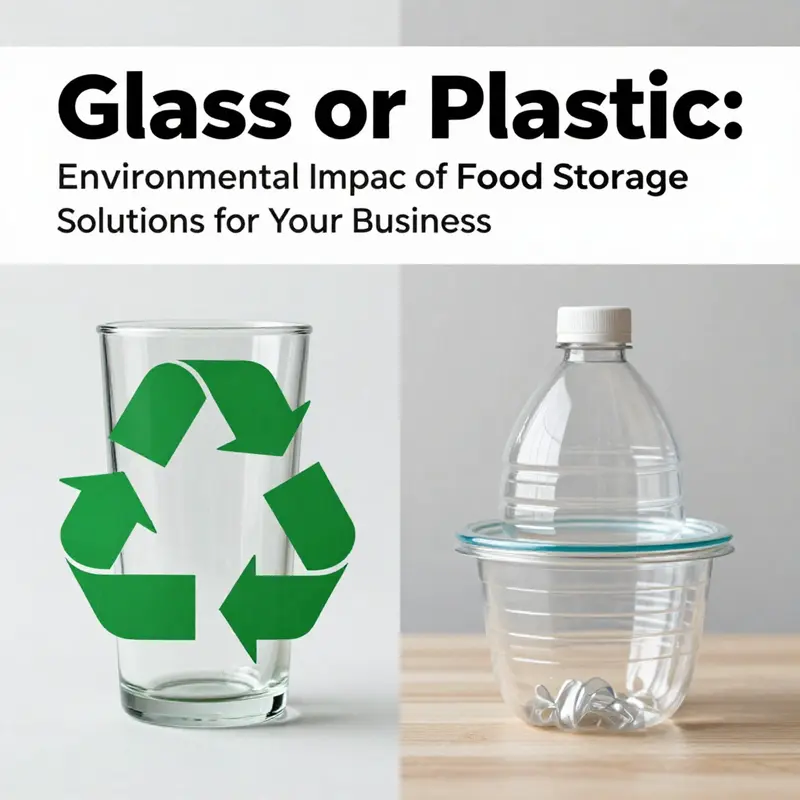
Choosing a container for food storage is more than a simple choice of convenience; it is a decision that ripples through health, waste, and the energy we invest in the things we own. In debates about glass versus plastic, most readers expect a quick verdict. Yet the truth lies in how materials behave from cradle to grave, and how households reuse, recycle, and dispose of them over time. When we examine environmental impact, safety, and practicality in one frame, glass often emerges as the more responsible option for long-term use, even as plastic offers undeniable short-term benefits for daily life.
Plastic containers owe much of their popularity to lightness and low cost. Manufacturing plastic typically uses fossil fuels, and the resulting products are engineered for convenience, from stackable shapes to microwave-friendly plastics. But those same advantages come with environmental costs that accumulate across years and continents. Plastics do not biodegrade; they fragment into microplastics that persist in soils and waterways. The recycling story is uneven at best. Global rates hover at relatively low levels, often under single digits to double digits in some regions, because plastics are frequently contaminated, blended with other materials, or simply not collected or processed efficiently. The broad footprint includes not only the energy to fabricate plastics but also the emissions from transport and the end-of-life stage, where some plastics are burned and release toxic pollutants. In addition, many consumer-grade plastics carry chemical additives such as BPA or phthalates, which raise concerns about health, especially when containers are heated or used repeatedly. These substances can migrate into food under certain conditions, making a long-term health consideration part of the environmental calculus.
Glass, by contrast, is rooted in natural materials—sand, soda ash, limestone—and it is inherently inert. The most compelling environmental argument for glass rests on its recyclability: glass can be recycled in closed loops, repeatedly, without losing quality. A single bottle or jar can become new glass again and again, reducing the demand for virgin raw materials. This closed-loop aspect is a cornerstone of a circular economy. While the energy required to melt glass can be high, the durability of glass means a container can endure decades of use, especially when it is designed for heating and cooling within the kitchen. Glass does not absorb odors or stains in the same way as many plastics, making it easier to reuse for multiple recipes and for stashing leftovers without cross-contamination of flavors. In the long run, durability plus recyclability tends to balance or exceed the initial energy costs of production, especially when households choose tempered or borosilicate variants crafted to withstand heat and temperature swings.
Health and safety considerations are fundamental in the glass-versus-plastic discussion. Glass is non-porous and chemically inert, which means it does not interact with food—no leaching, no uptake of odors, no lingering flavors. In comparison, many plastics can release additives over time, particularly when exposed to heat or sunlight. The health dimension links closely with environmental impact because products that leach chemicals can also signal problematic waste in the broader ecosystem once they reach the landfill or incineration phase. This is not only a matter of taste or convenience; it is a matter of how households steward resources and protect the environment they depend on. An expert in environmental health emphasizes that glass’s chemical stability translates into lower potential harm across the lifecycle, from production through disposal. Such stability helps explain why many households lean toward glass for long-term storage and for foods that are stored or heated.
Still, the kitchen is a space of practical choices. Glass can be heavier and more breakable than plastic, which affects transport, storage, and everyday handling. The weight translates into higher fuel use during shipping, particularly for large batches or when individuals are moving containers from store to home. This is a reminder that no material exists in a vacuum; performance is a function of context, size, and how the product is used. For liquids, glass sealed bottles and jars offer superior protection against oxygen and light, which helps preserve nutrients such as vitamin C in juices and fresh liquids. Deeply colored or opaque glass can further shield contents from UV exposure that accelerates degradation. For dry goods, glass prevents absorption of odors and keeps pantry staples clean for longer, provided containers are well-sealed.
A consideration that often surfaces in households is how to balance reuse and convenience. In a world that prizes quick meals and disposable options, there is a growing awareness of alternatives that blend recyclability with practicality. For events or situations where single-use is unavoidable, recyclable options that minimize harm become attractive. There are also packaging formats that straddle the boundary between home storage and takeout service, such as kraft paper bowls and related containers. For those seeking a recyclable, lower-embodied-energy option for single-use events, consider disposable kraft paper bowls with lids as a practical alternative for serving and storing light meals or sides in a way that reduces the immediate plastic footprint. See this kraft paper bowl for food package with lid for a concrete example of what is available in the market today: disposable kraft paper bowl for food package with lid. This option demonstrates how packaging design can emphasize end-of-life management—recyclability, compostability, or reuse—without sacrificing user experience.
In weighing future steps, it helps to adopt a lifecycle mindset: consider not only the energy used to manufacture each container but how long it lasts, how often it is reused, and how it is disposed of when it finally reaches the end of its useful life. Glass wins on longevity and inertness, especially when paired with careful handling and proper heating capacities. Plastic wins in the realm of lightness, cheap replacements, and compatibility with certain fast-paced households and commercial settings. The optimal choice for many households, however, is to align a preferred container with specific uses while reducing reliance on single-use plastics and embracing a culture of reuse. In practice, this means selecting glass for storage of liquids and acidic or fatty foods where there is heat involved, and using glassware that is designed for heat, like tempered or borosilicate glass, to withstand repeated cycles of oven, microwave, or refrigerator. It also means choosing non-plastic storage options where possible, pairing them with reusable lids and seals to extend life and minimize waste.
The environmental narrative is not a black-and-white verdict but a spectrum of trade-offs, and the most sustainable path often involves mindful consumption and responsible end-of-life management. When households commit to reusable glass containers and to recycling streams that keep glass in circulation, the composite effect on emissions, resource extraction, and waste generation is meaningful. The choice is not just about replacing one material with another; it is about reimagining how we stock, store, and reuse food to fit within a circular economy. The insights from researchers and health scientists reinforce this view, highlighting how material properties intersect with consumer choices to shape environmental outcomes over time. In other words, the environmental impact of storage choices is a product of material science and daily behavior—how we wash, reuse, and dispose of containers, and how governments and communities design recycling systems to keep materials in circulation.
For readers aiming to minimize environmental harm while protecting safety, the takeaway is not a single miracle container but a strategy: favor glass for long-term storage and heating needs, minimize disposable plastics, and support robust recycling infrastructure. When you cannot avoid plastics, seek high-quality, heat-tolerant variants and reuse them where safe, while avoiding overheating and prolonged exposure to sunlight. In the end, thoughtful material selection, combined with responsible disposal and robust recycling, makes the kitchen part of a larger, sustainable system rather than a lone consumer choice.
External reference: To explore the broader literature on chemical leaching from plastics and its environmental implications, see the study from Environmental Science & Technology. https://pubs.acs.org/doi/10.1021/acs.est.0c04376
Balancing Upfront Cost and Long-Term Value: Glass vs. Plastic Food Containers
Cost and affordability are practical concerns when choosing containers for food. They sit at the crossroads of practicality, health, and environmental responsibility. On the surface, plastic containers often appear cheaper, offering light weight, easy stacking, and low upfront prices. The data often show plastic options undercutting glass at the point of purchase. Yet the initial sticker price tells only part of the story. When households compare lifetime value, the conversation shifts. A small difference in upfront cost can compound into a large decision after years of use, cleaning, and replacement. In this light, price becomes a starting point for discussion rather than a final verdict. Plastic may win on the first round, but glass has a different bargain: durability, safety, and environmental benefits over time.
For many shoppers, a typical comparison looks like this: a basic plastic storage option can be found well under six dollars for enough volume for a week of meals, while a tempered or borosilicate glass counterpart, though still affordable, starts higher and requires careful handling. Consumer research often shows the plastic option as the lower cost upfront, while glass carries a premium that reflects resilience and the ability to withstand heat, cold, and repeated washing. The practical implication is that plastic offers an accessible entry point for households with tight budgets, but affordability is only part of the equation when containers are used and reused across months and years. The longer you use a container, the more its initial cost is distributed across cycles, and glass demonstrates a distinctive advantage in that horizon.
Durability is central to the glass versus plastic calculus. High quality glass, especially borosilicate or tempered variants, is designed for repeated heating and cooling, dishwashing, and long term storage, with a lower risk of structural failure than many plastics. A glass container can tolerate many cycles if handled with care and not chipped deeply. In contrast, plastic containers are prone to scratching, warping, odor and color retention, and chemical fatigue over time. Scratches can harbor microbes, odors can linger, and stains can become stubborn. Over repeated use, plastics can become more brittle with micro cracks, especially when heated or cleaned aggressively. These micro cracks are not just cosmetic; they can affect seals, odors, and lifespan. The upshot is that glass often yields a longer horizon of use, translating into a lower cost per cycle when kept for years.
Health and safety considerations also affect the cost picture. Glass is inert and does not leach chemicals in ordinary home use, even with hot contents or leftovers stored in the fridge, reducing long term risk. Plastic may release trace substances over time, particularly when heated or exposed to sunlight, which adds a cost in peace of mind and potential future health concerns. In financial terms, the cost of replacing plastic due to wear or perceived contamination adds to the cumulative price gap.
From an environmental standpoint, the cost equation broadens beyond the cash register. Glass is infinitely recyclable and does not shed microplastics during recycling, though production is energy intensive. Plastic is lighter and cheaper to manufacture but degrades in quality after recycling and contributes to microplastic pollution, with indirect costs to communities. When households value sustainability, glass can appear more economical over the longer horizon, especially for waste conscious households.
Functionality also shapes affordability. Glass containers seal well for liquids, helping nutrient retention when used appropriately, while heavier weight and fragility may drive incidental costs such as protective packaging and careful handling. Plastic offers lightweight convenience, stackable designs, and lower perceived breakage risk, but often with more frequent replacements and issues with odors and stains.
A practical framework helps here: consider how often you use the containers, what you store, and how long you expect to use them. If your routine involves frequent reheating and long term storage, glass especially borosilicate or tempered variants offers strong long term value. For quick short term storage or budget constraints, plastic can deliver essential function at a lower upfront price. Smart purchasing, such as choosing higher quality plastics that resist warping and using glass for long term storage of staples, can balance immediate affordability with long term value.
The trade off is not purely financial. It also involves safety, risk tolerance, and environmental stewardship. A simple cost per use metric can help: divide the purchase price by the estimated cycles. Glass often yields a lower cost per use after several years of service, while plastic tends to have a higher replacement rate. For those prioritizing sustainability and food safety, glass becomes a longer term, lower waste choice.
In the end, the answer depends on how you view cost. If you measure only the initial outlay, plastic seems unbeatable. If you measure total outlay, safety, and environmental consequences, glass often emerges as more economical and responsible. A mixed approach setting glass for long term storage and repeat use meals, plastic for short term transport offers a practical path. The goal is a storage system that minimizes waste and protects safety, while leaving room for improvement as materials science and recycling infrastructure evolve. As you plan purchases, remember that the cost story unfolds with every use, wash, and repurposing decision.
To ground this discussion, consider a practical option for specific needs while you decide on a broader strategy: a low cost disposable behavior substitute for certain uses, such as single use or very short term needs. And for those seeking a broader safety perspective on food contact materials, consult reliable guidance from regulatory bodies and credible sources. The conversation about cost, performance, and safety continues in subsequent chapters, guiding readers toward a choice that matches kitchen reality and long term habits.
Beyond the Box: How Glass and Plastic Shape Safety, Freshness, and Footprint in Everyday Food Storage
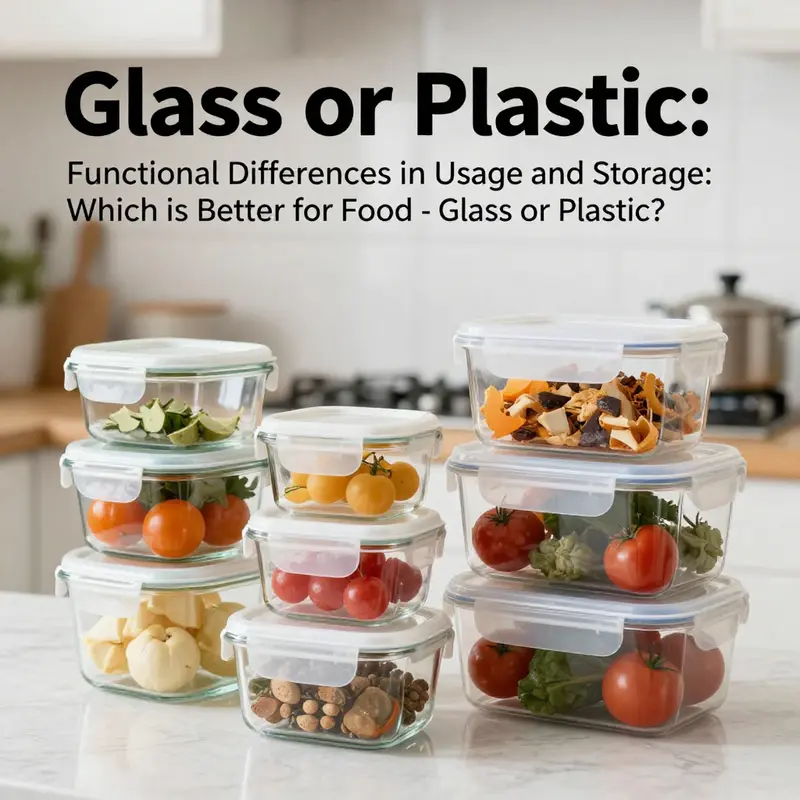
Choosing the right container for food storage is less about a simple binary choice and more about balancing safety, practicality, and the footprint left on the planet. When you open a cupboard or a lunch bag, the container in your hand carries more than just leftovers or a portion of fruit salad; it carries implications for health, daily use, and the environment. The contrast between glass and plastic is not merely about appearance or texture. It is about how each material behaves in real kitchen routines, from the moment you seal a jar of tomato sauce to the way you reheat yesterday’s soup. The conversation, therefore, unfolds along a thread that ties safety to practicality and, ultimately, to the broader goal of reducing unnecessary waste in a busy household. Glass, with its long track record as a storage material, offers a set of functional advantages that align with concerns about chemical exposure and flavor preservation. Plastic, by contrast, often shines in how light and affordable it is, while carrying caveats about heat, wear, and potential chemical migration. Reading the landscape this way helps you make judgments that are consistent across different meals, storage durations, and lifestyles, rather than chasing a one-size-fits-all solution.
Safety and chemical leaching sit at the core of this evaluation. Plastic containers—especially older polycarbonate varieties or products containing additives like phthalates—can degrade under heat or prolonged use. In some cases, such degradation may release compounds into food, raising concerns for regular consumption. Glass, in contrast, is essentially inert; it does not participate in chemical exchanges with food under typical storage and reheating conditions. This inertness is not a marketing claim but a functional reality that translates into measurable peace of mind for many families. When experts describe glass as a high-quality packaging material precisely because it avoids substances released by certain plastics over time, that assessment rests on decades of practical observation and safety testing. The implication is simple: for foods that you heat, chill, or store for extended periods, glass minimizes the unknowns that can accompany repeated exposure to heat and light in plastic.
Durability is the second axis along which these materials diverge. Glass containers resist warping, staining, and clouding far more reliably than most plastics. A well-chosen glass container can survive countless cycles through a microwave, freezer, and dishwasher without losing its seal or clarity. Plastic, meanwhile, offers advantages in weight and flexibility but tends to show wear. Over time, plastic can become cloudy, develop micro-scratches, or warp from repeated exposure to heat. This isn’t just a cosmetic concern; it can affect the container’s seal and, ultimately, its ability to keep food fresh. When you weigh cost against longevity, glass often proves the more economical choice in a kitchen built on routine meal prep, batch storage, and careful shelf planning. The upshot is that durability translates into fewer replacements and, in many households, a calmer level of organization as lids and bases continue to fit snugly across the years.
Barrier properties offer another important dimension. Glass provides an excellent barrier against oxygen and carbon dioxide compared with many plastics. That low permeability matters for preserving flavor, aroma, and nutritional value—especially for leftovers, dry goods, and fermented products where exposure to air can hasten staling or spoilage. Sealed glass bottles or jars can shield contents from light and oxygen more effectively than typical plastic containers, and the impact of these barriers becomes particularly visible in liquids and sensitive ingredients. In the case of beverages or products prone to oxidation, keeping oxygen out means slower nutrient loss and better overall quality over the storage period. This protective function is often the practical reason people favor glass for long-term storage or for items destined for refrigeration.
Environmental considerations add nuance to the decision. Glass is infinitely recyclable without quality loss, a strong argument for its ecological relevance over time. Yet producing glass requires substantial energy and often carries a higher carbon footprint at certain life-cycle stages than some plastics. Modern recycling streams and improvements in glass manufacturing can narrow that gap, especially when communities support robust collection and reuse. Plastics have historically offered lighter weight and lower handling costs, which can translate into lower emissions during transport and daily use. However, many plastics do not recycle indefinitely and degrade in quality with repeated cycles, complicating the narrative around circularity. Taken together, the environmental story favors glass in situations where contamination risk matters and where families commit to proper recycling and careful washing. It also invites a practical approach: use glass as your core, long-term storage solution, and reserve lighter, more portable plastics for incidental, on-the-go needs.
Practical limitations warrant honest budgeting about when each material makes sense. Glass is indeed heavier and more fragile, which can be a downside for children’s lunchboxes, outdoor picnics, or items that travel a lot. It is typically more expensive upfront and requires careful handling. In kitchens where storage space is at a premium, heavier glassware can demand more shelf space and add weight to a packed fridge or pantry. For heating, it is important to choose glass specifically designed for such use—tempered or borosilicate glass that can withstand microwave or oven temperatures without cracking. Plastic is lighter and often cheaper, which makes it appealing for quick daily use, small portions, and travel-friendly packing. Still, its heat tolerance has limits, and many plastics are not recommended for hot foods or long reheating cycles. The middle ground—using glass for most long-term storage, and keeping plastic for short-term, non-heated applications—reflects a practical compromise that respects both safety and convenience.
In shaping a kitchen layout and a routine, it helps to define a core set of glass containers optimized for the tasks you perform most: bulk storage, leftovers, sauces, and meal prep that require freezing or reheating. These containers, chosen for compatibility with your dishwasher and oven or microwave, become the backbone of safe, reliable storage. Plastic, when used, should be limited to items that will not be heated, will be used for shorter periods, or will be carried in situations where breakage would be a serious hazard. When you frame the decision this way, the choice becomes less about allegiance to a material and more about aligning the container’s characteristics with the specific food, the storage timeframe, and the environment in which you operate.
In pursuing a healthier, more sustainable kitchen, it makes sense to shift toward a glass-forward approach while acknowledging practical realities. A thoughtful set of glass containers supports safety, flavor retention, and ease of cleaning. It also aligns with an overarching goal: to minimize the risk of chemical exposure and to extend the usable life of the foods you preserve. For those who still rely on plastic, opt for microwave-safe designs and avoid heating with lids closed or with opaque plastics that are not labeled for high-heat use. And for foods that travel or are enjoyed on the go, consider alternatives to traditional plastic or glass that reduce waste while keeping food secure—such as paper-based or compostable options where appropriate. For occasional on-the-go consumption, alternatives like eco-friendly recyclable pulp cups offer a sustainable option to consider alongside glass and plastic.
As you finalize a storage strategy, remember that the best choice often depends on your habits. If you rehearse meals, batch-cook on Sundays, and stock the fridge for a busy week, glass supports repeatable performance: safe heating, flavor preservation, and a clean slate that resists odor and staining. If your routines require light, portable, budget-conscious options for single-serving meals, plastic may fit those moments—provided you avoid heat exposure and replace worn pieces regularly. The underlying principle is to prioritize glass for situations where safety, durability, and the preservation of nutrients matter most, while allowing plastic to fill gaps where its advantages are genuinely advantageous and its risks well managed. This approach yields a kitchen that is safer, more resilient, and better aligned with a thoughtful, long-term perspective on food storage.
External resource for further reading: https://www.house-digest.com/food-storage-glass-vs-plastic/
Final thoughts
The choice between glass and plastic food storage containers ultimately boils down to your specific business needs and values. While glass containers excel in safety and environmental sustainability, plastic options may offer short-term convenience and a lighter weight for on-the-go applications. Assessing your operational requirements, budget constraints, and eco-conscious goals will help you make an informed decision that reflects your brand’s commitment to quality and care. No matter which option you choose, efficient food storage plays a crucial role in providing memorable customer experiences and maintaining the quality of your culinary creations.