
In today’s health-conscious market, ensuring that your food packaging meets safety standards is more important than ever. With the increasing prevalence of BPA-Free products, particularly Gerber’s plastic food containers, it is vital for beverage chains, restaurants, and food services to understand what this label truly means and how it impacts consumer health. This article will delve into the specifications behind Gerber’s BPA Free standards, highlight the health implications tied to these containers, discuss consumer awareness surrounding these products, and explore the regulatory landscape that surrounds the use of such packaging. Together, we aim to equip your business with the knowledge needed to make safe and informed choices regarding food storage and service.
Beyond BPA-Free: Decoding Plastic Food Container Standards and Safer Storage for Families
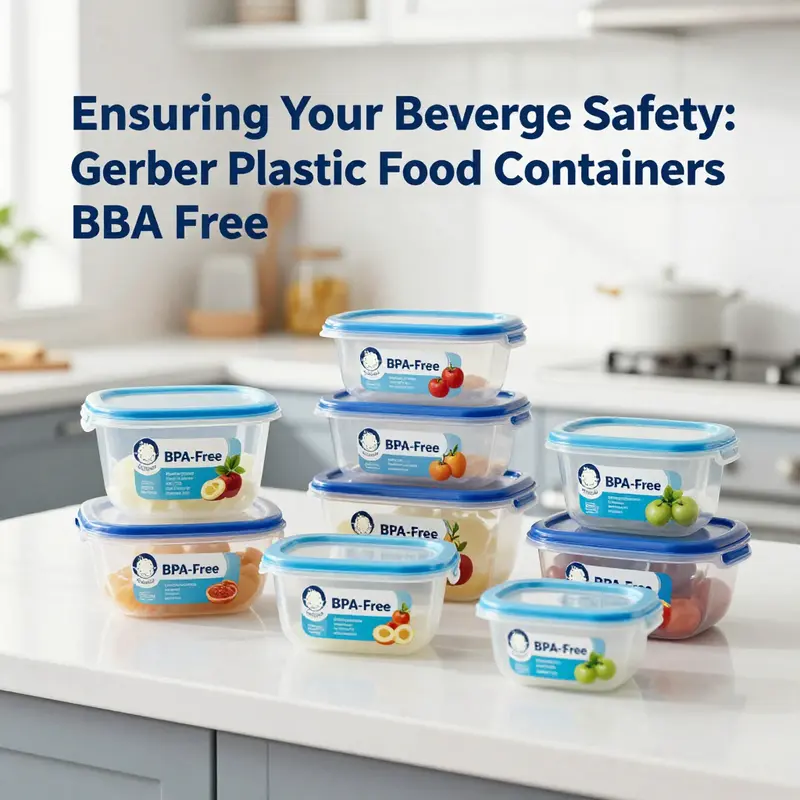
BPA-free labels have become a common shorthand in the world of food storage, yet they rarely tell the full story. A label that simply declares a container is BPA-free can offer some reassurance, but it does not guarantee safety from all endocrine-disrupting chemicals or from the migration of compounds under certain conditions. In examining typical plastic food containers used for infants, toddlers, and family meals, it becomes clear that a more nuanced understanding is essential. The journey from labeling to practical safety starts with recognizing that BPA is only one of several bisphenols that can appear in consumer plastics. When a manufacturer states that a product is BPA-free, the apparent win is that Bisphenol A itself is not directly involved in the material’s chemistry. Yet the substitution trend in plastics research and production often replaces BPA with other bisphenols, such as BPS and BPF. These alternatives have demonstrated estrogenic activities in laboratory studies, raising concerns about their potential effects on metabolism, reproductive health, and neurodevelopment. For families trying to minimize risk, this means that the label is a starting point, not a final guarantee of safety.
The broader picture becomes even more complex when we consider how these chemicals can migrate from containers into food. A growing body of research indicates that even BPA-free products can release hormonally active compounds, especially under real-world usage. An influential study published in Environmental Health Perspectives highlights that more than 95 percent of common plastic products labeled BPA-free still shed substances with estrogenic activity. These substances may be present at trace levels, yet chronic exposure over years—paired with dietary patterns—could contribute to metabolic shifts, fertility considerations, or subtle neurodevelopmental changes in children. This realization nudges consumers away from a binary view of safety toward a spectrum of risk that depends on materials, usage, and exposure context.
The practical implications begin at home with how we use these containers. A separate line of evidence points to the stability of the materials themselves under heat and aggressive cleaning. Researchers and public health observers, including voices from Columbia University’s environmental health community, have emphasized that exposure to high temperatures or strong cleaners can cause even BPA-free plastics to break down, releasing micro-level compounds into food or liquid. The warning is not about a sudden toxic event but about a gradual increase in the likelihood of chemical migration when containers are repeatedly stressed by warm or hot contents, long contact with acidic or oily foods, or frequent dishwasher cycles. In everyday terms, this means that the kitchen becomes a testing ground for the safety promises printed on the packaging.
Regulatory landscapes and policy developments also shape how families should interpret BPA-free claims. Jurisdictions around the world have moved on from simply warning about BPA in baby bottles to establishing more sweeping controls on bisphenols in food contact materials. Canada, the European Union, and China have taken concrete steps to restrict BPA in certain consumer products, particularly items intended for children. The United States and Japan have leaned toward voluntary phase-outs by manufacturers and continued monitoring by regulators. A turning point anticipated by many in the field is the European Commission’s intent, announced for 2025, to implement a comprehensive ban on BPA in food contact materials. In parallel, the Commission has lowered the acceptable daily intake for BPA to a vanishingly small 0.2 nanograms per kilogram of body weight per day. Taken together, these policy shifts signal a global trend: BPA is not the sole focus; the spectrum of bisphenols and the conditions under which they migrate are now central to risk assessment and consumer guidance.
Against this backdrop, the search for safer storage solutions becomes a matter of both materials science and everyday prudence. The market has responded with a proliferation of alternatives and substitutions, but not all are equally safe. The bottom line is that replacing BPA with BPS or BPF does not automatically reduce risk. Research suggests those substitutes may also disrupt endocrine function. This is not a call to abandon plastic containers altogether, but a call to choose with care and to support products that demonstrate independent verification of safety. Third-party certifications—such as NSF certification or recognition by food-safety authorities—provide a meaningful layer of assurance that the materials used are appropriate for contact with food. In practice, this means looking beyond the label to understand what is inside the container. It also means recognizing that some plastics—specifically, container forms designed to cradle meals and liquids for children—may require more cautious handling than others.
For families weighing the risks and benefits, the guidance converges on a few practical pillars. First, seek third-party certifications that confirm the container materials are food-safe. Second, favor materials that have a proven track record for low chemical migration under heat and while in contact with typical food contents. In many cases, this translates to food-grade polypropylene (PP) or other clearly defined, non-silicone-based plastics that are engineered for stability. Importantly, avoid relying solely on the “BPA-free” badge; examine the broader chemical landscape and the specific materials used. Third, be mindful of how household practices influence safety. High-temperature heating, prolonged contact with acidic foods like citrus or tomato sauces, and extended storage of oily or highly fatty foods can increase the rate at which chemicals migrate. The simple caution of not microwaving BPA-free containers for hot meals is not an overcautious recommendation, but a prudent precaution rooted in the chemistry of plastics and the realities of home kitchen use.
From a consumer behavior perspective, translating these insights into everyday practice requires a careful balance of convenience, cost, and health considerations. In households with young children, the instinct to use easy-to-clean, lightweight containers is strong. Yet the strongest lesson of the research landscape is that convenience does not automatically equal safety. A practical approach is to treat BPA-free as one signal among many. When you encounter a BPA-free claim, ask: What else is in this container? What material is it made from, exactly? Is it certified by an independent standard? How will I use it in combination with heat, acidity, or oils? These questions shift the conversation from a marketing label to a disciplined assessment of exposure risk. For families who want to minimize potential exposure further, considering glass or ceramic alternatives for hot or frequently heated meals remains a robust option, especially for items that will be reheated and served to children.
For readers exploring broader packaging choices beyond plastic, a broader ecosystem of eco-friendly options exists. A meaningful example is the growing availability of recyclable pulp-based take-away solutions designed with food safety in mind. These products illustrate how packaging can align with environmental goals while reducing chemical migration concerns. The link below leads to a resource focused on such eco-friendly options and offers a tangible example of how container design and material choice can influence both safety and sustainability. eco-friendly-recyclable-pulp-2-4-cups-coffee-take-away-cup-holder. This kind of resource helps contextualize plastic-free or less-chemical-intensive paths while keeping practical usability front and center in daily routines.
Beyond the lab and the policy brief, the consumer’s practical decisions mesh with ongoing scientific evaluation. The field continues to test how different bisphenols behave under real-world conditions, including repeated microwave heating and long storage durations. While the evidence base matures, a cautious, informed consumer approach remains the best current strategy. Prefer containers with transparent material specifications. When possible, select those with third-party verification and avoid long-term storage of highly acidic or oily foods in plastic containers. For families with daily meal routines that require heating, consider transferring foods into heat-stable glass or ceramic containers before reheating. This reduces the likelihood of chemical migration that might occur with plastic containers under heat.
In communication with caregivers and parents, it helps to emphasize what BPA-free does and does not guarantee. It signals that the primary culprit, BPA, has been left out, but it does not automatically rule out other bisphenols or other migration pathways. The best practice is to pair the BPA-free label with certifications and material knowledge, while applying sensible usage guidelines. That means not using containers as long-term storage vessels for hot or acidic foods, and not relying on them for repeated high-temperature reheating. It also means adopting a mindset that favors safer storage options when feasible, without losing sight of the practical realities of modern life—work, school, travel, and family routines.
To connect this frame with real-world decision-making, consider the following synthesis: evaluate the container’s material composition (look for explicit mentions of polypropylene or other safe plastics, and check for certifications). Treat the label as a starting point. Limit exposure by avoiding high-temperature use and frequent contact with acidic or highly fatty foods. When possible, complement plastic use with glass or other inert alternatives for hot meals or long storage periods. Finally, recognize that regulatory actions may tighten the acceptable limits for BPA and related substances over time, as scientific understanding evolves and public health agencies translate evidence into policy. Keeping abreast of such developments equips families to adjust practices as needed. For readers seeking broader packaging options and consumer-friendly comparisons, the eco-friendly pulp-based option referenced above offers a tangible illustration of how packaging choices can align with both safety and sustainability goals.
External resource: for a regulatory context on bisphenol A in food contact materials, see the European Commission’s official page on BPA restrictions. https://ec.europa.eu/food/safety/chemicals/bisphenol-a_en
Beyond BPA-Free: Understanding Health Implications of Plastic Baby-Food Containers

Labels matter, but they can mislead. A BPA-Free seal suggests safety but does not guarantee it. Many parents seek safer options, yet the reality is nuanced: removing BPA does not eliminate all hazards. Substitutes such as bisphenol S (BPS) and bisphenol F (BPF) can migrate into food and disrupt hormonal signaling. The evidence points to a spectrum of factors that determine risk: the material, how it is used, heating, storage duration, and care over time. A BPA-Free label is a useful signpost, not a guarantee of safety. Practical guidance for caregivers includes minimizing heating of plastics, transferring hot foods to glass or ceramic when possible, avoiding prolonged contact with fatty or acidic foods, inspecting containers for wear, and seeking independent testing or certifications when available.\n\nBeyond individual products, consider alternatives that are inherently inert, such as glass or stainless steel, while recognizing that transition can be gradual. A balanced approach recognizes the potential for migration from plastics under heat or wear and aims to reduce cumulative exposure through mindful use, better product selection, and occasional non-plastic options for meals and snacks. The broader scientific conversation also notes that many BPA-free products still exhibit estrogenic activity in some contexts, underscoring the importance of a holistic view of packaging, including how food is heated, stored, and handled.\n\nIn short, BPA-Free is a meaningful improvement but not a final guarantee of safety. Caregivers can reduce risk by heating carefully, choosing certified products, and staying open to non-plastic solutions when feasible, always aiming to balance practicality with prudence for developing bodies.
Beyond BPA-Free: Understanding Gerber Plastic Baby Food Containers in a Complex Chemical Landscape
The label BPA-free on Gerber plastic baby food containers has become a recognizable sign of safety for many guardians. Yet the reassuring glow of that label can blur a more intricate reality. In the years since regulators pressured manufacturers to remove bisphenol A from certain infant feeding products, families have learned to read labels with a more discerning eye. What begins as a straightforward safety promise often reveals a spectrum of concerns that stretch beyond a single chemical. The broader question becomes not just whether a container is BPA-free, but how the material behaves under real-world use, how it interacts with the foods it stores, and how transparency from brands aligns with independent testing. The conversation about Gerber’s packaging thus sits at the intersection of consumer trust, scientific uncertainty, and practical daily routines that parents juggle every day. In this light, the BPA-free claim is a starting point, not a verdict, and it invites a closer look at what the modern parent needs to know about plastic food containers in general and Gerber’s specific offerings in particular.
Consumer demand for safer packaging has grown in tandem with public concern about endocrine-disrupting chemicals. The public health narrative around BPA has shifted from a narrow factory-floor debate to a broad, daily consideration: what happens when a container stores breast milk, baby formula, or soft foods, and how does heat and handling influence chemical migration? Gerber, with its strong brand recognition in infant nutrition, has responded by labeling its 4oz plastic baby food containers as BPA-free. This strategic labeling aligns with regulatory actions in various jurisdictions, including the U.S. FDA’s earlier relocations away from BPA in baby bottles and sippy cups. Yet labels are not policy documents, and they do not guarantee freedom from all potentially harmful chemicals. For many parents, the challenge is to balance the need for convenience with the precaution that modern science increasingly recommends. The label signals a safer baseline, but the underlying chemistry remains more complex than a single “free from” statement can convey.
To understand the real safety profile of BPA-free containers, one must consider the chemical substitutes that often replace BPA. Researchers have repeatedly found that BPA-free plastics can still release chemicals with estrogenic activity, especially when subjected to heat or abrasion. A landmark study published in Environmental Health Perspectives in 2015 found that more than 95% of tested plastic products labeled BPA-free released estrogenic compounds. Those substances may interfere with metabolism, fertility, or neural development even at tiny doses. This finding unsettles the assumption that a “BPA-free” tag equates to chemical innocence. It also challenges manufacturers and retailers to go beyond a single-chemical narrative and address the cumulative and long-term exposure possibilities that arise from regular use of plastic containers, particularly for daily infant feeding.
In the same vein, researchers warn that real-world use can introduce other risks. Dr. Lena Patel from Columbia University’s environmental health program has highlighted a practical caveat: BPA-free plastics can degrade under heat or with strong cleaning agents. When such degradation occurs, trace chemicals can migrate into food, especially if containers are microwaved, left with acidic contents, or used repeatedly for fatty foods. This emphasizes a central hygiene principle: how you use the container matters almost as much as what it is labeled to be. Families who routinely heat homemade baby foods or leftover meals in plastic containers may be unintentionally increasing the exposure potential, a factor that becomes even more significant when children are in rapid stages of development. The science, therefore, invites a twofold response: be wary of heat exposure and apply a broader standard when evaluating packaging choices.
From a consumer behavior perspective, awareness is shifting beyond the mere presence of a BPA-free label. People want more than a claim; they want evidence. They look for third-party verification such as NSF or FDA-recognized safety certifications, especially for products that directly contact food. They compare materials on several axes: safety, durability, ease of cleaning, and the ability to perform under typical daily routines. This trend reflects a matured consumer market that no longer accepts a single label as sufficient proof of safety. The shift to third-party validation mirrors a broader movement toward transparency and accountability in the packaging industry. It also encourages brands to invest in more robust testing, publish clear safety data, and design products that minimize all potential chemical migration, not just BPA.
Another dimension is the environmental and practical context of use. Even with BPA-free labeling, the lifetime of a plastic baby food container matters. Reuse, stress from detergents, temperature swings, and the mechanical wear of frequent opening and closing all contribute to gradual material breakdown. In many households, plastic containers host a surprising number of cycles. Each cycle may subtly increase the likelihood of microstructural changes that facilitate chemical transfer to food. For families who store leftovers or pre-portion meals, the cumulative exposure becomes a real consideration. That is partly why many nutrition and safety guides advocate a cautious approach to reuse, especially for infants and toddlers, and why some listeners prefer alternative materials when possible. Glass and stainless steel, while heavier and less shatter-resistant, tend to offer more stable barriers against leaching, provided they are used within their own safety parameters—such as not exposing glassware to sudden temperature shocks.
The story of Gerber’s BPA-free plastics thus sits within a broader packaging ecosystem. On one side, the desire for light, portable, and virtually unbreakable containers for travel, daycare, and on-the-go meals supports plastic’s enduring popularity. On the other side, scientific findings about substitution chemicals and migration during heating push consumers toward more conservative use practices and, for some households, toward alternative materials. The consumer’s decision often becomes a balancing act: the convenience of plastic against the unknowns of long-term exposure, against a preference for materials with proven inertness under typical household conditions. The dialogue between researchers, manufacturers, regulators, and parents remains dynamic: new data can shift perceived safety, new regulations can tighten permissible practices, and new product designs can promise safer defaults without sacrificing practicality.
In this evolving landscape, practical guidance helps families navigate daily choices. A core recommendation is to minimize high-heat exposure with plastic containers. Heating foods in a microwave or placing hot liquids directly into plastic containers can promote migration of chemicals into the food. Instead, parents can let foods cool briefly before transferring them into containers or use alternatives designed for heating, such as glass or heat-tolerant stainless steel. For acidic or highly fatty foods, extra caution is warranted. Prolonged storage of such substances in plastic containers can increase the rate at which any accompanying additives migrate into food. While a one-off use may be unlikely to produce measurable risk, the habit of heating or storing in plastic routines grows the exposure across days, weeks, and months. Simple practices—such as cooling foods before storage, using dedicated containers for hot foods, and avoiding long storage times in plastic—can meaningfully reduce cumulative exposure.
The conversation also touches on the reliability of the “BPA-free” banner itself. Consumers who examine labeling learn to look for more nuanced signals: explicit mention of substitutes like BPS or BPF, any language about migration under heat, and whether the product has undergone third-party testing. They may also consider the overall packaging system—how lids seal, how airtight a container is, and how robustly the material resists scratching. The packaging system matters because even the best bottle in the world cannot protect a child if the container’s integrity is compromised by repeated use, rough handling, or aggressive cleaning. This is where the literature points to a broader truth: safety is not a single property but a spectrum of performance across use scenarios. When parents understand this spectrum, they can tailor their choices to their family’s routines and risk tolerance, recognizing that BPA-free is a meaningful standard but not a complete safety guarantee.
From a design and policy perspective, Gerber’s BPA-free strategy invites ongoing refinement. The industry’s next steps include communicating clearly about all potential migration pathways, including substitutes, and presenting independent verification in accessible formats. Manufacturers can strengthen consumer confidence by sharing data from standardized tests that simulate real-world conditions: repeated use, microwaving, dishwashing, and contact with varied food types. The broader public health objective is to reduce overall exposure to estrogenic chemicals from all food-contact materials, not merely to eliminate BPA. In this sense, the Gerber case becomes a teaching example of how modern packaging must address complex chemistry, evolving science, and practical daily habits in a way that is transparent to caregivers.
For families seeking a safer path, exploring alternatives to plastic can be part of a practical strategy. There is a growing range of durable, inert options that perform well across common use cases. One tangible path is turning to flexible yet sturdy materials that have lower migration profiles under heat, while still delivering the convenience that busy households rely on. In this vein, many households consider biodegradable or recyclable paper-based solutions when appropriate. As a concrete example of safer alternative packaging, consider biodegradable eco-friendly take-away kraft paper bowls, which can offer a different environmental and chemical profile than plastic in certain applications. Biodegradable eco-friendly take-away kraft paper bowl provides a link to a manufacturing option that aligns with consumer interests in reducing reliance on traditional plastics for some meals or storage tasks. This is not a wholesale recommendation to abandon all plastics, but rather a practical expansion of the packaging toolkit that families can draw upon to minimize exposure without sacrificing convenience. The goal is to equip parents with options and to encourage transparent labeling so that each family can decide what aligns with their values and routines.
Ultimately, the consumer’s awareness journey reflects a mature market that values transparency, independent testing, and safer design choices. It also acknowledges that a single label cannot capture the full complexity of chemical migration and material performance. Gerber’s BPA-free positioning remains a meaningful step toward safer packaging, yet it sits within a larger framework of evidence and caution. As researchers continue to map how different chemicals migrate under varied conditions, and as manufacturers respond with more robust testing and clearer labeling, caregivers will gain better tools to protect their children. The practical takeaway is simple: treat BPA-free as a baseline, not a guarantee; heat less, store with care, and consider diversification toward safer materials where feasible. In this balanced approach, parents can mitigate risks while preserving the everyday practicality that makes plastic containers indispensable in busy households. When combined with third-party assurances and thoughtful product choices, this mindset helps create a safer, more informed consumer culture around infant nutrition packaging.
For those seeking further reading on the technical aspects and practical implications of BPA-free disposable food containers, see the detailed analysis published in environmental health literature. External resource: Understanding BPA Free Disposable Food Containers: Technical Specifications, Grades, and Practical Applications. https://www.foodsafetynews.com/2026/01/understanding-bpa-free-disposable-food-containers/
Beyond BPA-Free: The Regulatory Landscape that Shapes Baby-Food Plastic Containers
The shift toward BPA-free plastic packaging for infant foods marks a turning point in how brands regulators and families think about safety, convenience, and chemical exposure. In practice the term BPA-free carries a promise it signals that a product is not using bisphenol A, a chemical that has long been associated with adverse hormonal effects. Yet the promise is not a guarantee of safety. The regulatory landscape, the science of substitutes, and the everyday realities of storage and heating create a complex backdrop for any consumer choosing a container for baby food. The story is not just about a label but about the chain of assumptions that starts with manufacturers and ends with the kitchen where a parent heats, stores, and feeds a child. What emerges is a cautious but hopeful picture of progress tempered by the persistent uncertainty surrounding chemical migration from plastics and the ongoing search for safer, more reliable packaging options.
To begin with, the regulatory backdrop has evolved in meaningful but nuanced ways. In the United States the ban on BPA in baby bottles and sippy cups enforced since 2012 marked a watershed moment signaling to manufacturers and consumers alike that certain exposure pathways were no longer acceptable Regulators then turned their attention to the substitutes that emerged to fill the BPA gap. These substitutes, such as BPS and BPF, are structurally similar to BPA and can exhibit estrogenic activity themselves. The concern is not only about the presence of a single chemical but about the broader class of bisphenols that can migrate from plastic into food. High profile research over the past decade has shown that even products labeled BPA-free can release estrogenic compounds—often at trace levels—during typical consumer use. A study published in Environmental Health Perspectives in 2015 found that more than 95 percent of tested plastic products released estrogenic chemicals, regardless of BPA labeling. The finding highlighted a crucial gap between labeling and actual safety, underscoring the need for a broader safety standard that addresses substitutes as rigorously as BPA itself.
Within this regulatory frame, the packaging decisions of infant-food brands reflect a blend of compliance, risk management, and consumer expectations. A leading company that is well into the BPA-free transition represents a broader industry trend rather than an isolated move. The shift aligns with growing demand for safer materials and stricter regional regulations, particularly in markets where authorities push for lower exposure to endocrine-disrupting chemicals. The market dynamic can be read through two lenses: policy and product. Policy-wise, regulators have become more attentive to the entire family of bisphenols and to the potential for chemical migration under real-life conditions, such as heating, acid or fat-rich foods, and prolonged contact with containers. Product-wise, brands respond by substituting BPA with alternatives and by seeking third-party verifications to supplement internal quality control. In many cases this leads to a packaging portfolio that includes a mix of monomeric, polymeric, and barrier materials designed to minimize contact with food while maintaining the shelf life and convenience that families expect.
The broader regulatory narrative is reinforced by market analyses that forecast ongoing investment in safer materials. The Baby Food Packaging Products Market Forecast 2025–2032 points to a rising emphasis on non-toxic, durable options capable of meeting consumer and regulatory expectations. This is not merely a response to public concern but a strategic alignment with a regulatory climate that is increasingly comprehensive. European Union policies add another dimension, often offering a more stringent framework for BPA and related compounds. The EU’s approach demonstrates how regional policy can drive industry-wide changes, setting benchmarks that influence manufacturers who operate across borders. In practice, this can translate into a cautious, precautionary stance toward any materials with potential endocrine-disrupting effects, particularly for products intended for infants and young children.
All of this shapes consumer guidance in practical terms. When families read labels stating BPA-free, the instinct is to trust. But the literature and regulatory commentary remind us that labels are imperfect signals. Independent, third-party certifications can provide a stronger layer of assurance than a brand’s own claims. In a landscape where substitutes remain points of uncertainty, third-party validation serves as an important bridge between industry and consumer trust. While there is no single, universal certification that covers all risk dimensions, certifications that test for migration under thermal conditions, assess the presence of known substitutes, and verify compliance with food-contact safety standards help reduce the information asymmetry between manufacturers and households. The underlying principle is straightforward: ask for independent verification that a container is safe not only in theory but under the conditions of typical household use.
Yet even the most rigorous certification cannot eliminate all risk. A robust consumer approach recognizes that the safety equation depends on how containers are used, not merely what they are labeled to contain. A striking line of recent commentary from a Columbia University environmental health researcher illustrates this point with practical clarity. Dr. Lena Patel notes that even BPA-free plastics may degrade under heat or when exposed to certain cleaners, releasing trace compounds into food. This warning matters for everyday routines, such as heating baby food in a plastic container or cleaning with aggressive cleansers. The takeaway for families is not to abandon BPA-free products; rather, to use them with an informed set of habits. Avoid microwaving in plastic unless the container is explicitly labeled microwave-safe. Do not store highly acidic or oil-rich foods in plastic for extended periods. After heating, let foods cool before sealing and refrigerating. By pairing an informed use protocol with the ongoing regulatory and scientific scrutiny, families can reduce exposure risks without sacrificing the practical benefits that plastic containers offer in busy households.
This nuanced understanding of safety explains why the packaging choice for infant foods often involves a mix of strategies. On one hand, a brand may maintain BPA-free plastics to align with consumer expectations and regulatory signals. On the other hand, it may pursue certifications and testing that verify that substitutes are being managed responsibly and that the material behaves well under routine handling. And on the other hand, there is a growing appetite for alternatives that reduce risk even further, such as glass, porcelain, or stainless steel containers—materials that do not migrate chemicals into food when heated or stored for extended periods. The conversation about safety thus moves beyond a single label and toward a layered approach that considers the complete life cycle of a container, from production to end use.
The consumer-facing guidance that emerges from this layered view is both simple and nuanced. For hot foods or liquids, the case for non-plastic options becomes stronger. Glass, porcelain, and stainless steel tend to be more inert under high temperatures and less prone to chemical migration, making them attractive choices for meals prepared for infants and stored for later consumption. For cold foods and long-term storage, plastic can still play a role, especially when durability, weight, and cost are important considerations. In these cases, selecting containers with verified safety claims, using them within their intended temperature and chemical-use ranges, and avoiding degraded or damaged containers can help minimize risk. The overarching message is not a prohibition of plastic but a disciplined approach to packaging: understand the rules, respect the limitations, and pair product choice with safe usage behavior.
From a consumer behavior perspective, these insights influence daily decision making in subtle but enduring ways. Parents and caregivers who recognize the limits of any single label tend to diversify their container choices. They may keep a selection of glass or stainless-steel containers for hot meals and transfer food to BPA-free plastic only after it has cooled to a moderate temperature. They may also keep a set of BPA-free plastics that are specifically designed for cold foods, with explicit instructions about microwave use. In addition, households are increasingly looking for packaging that reduces the need for plastics altogether, whether through reusable materials or recyclable paper-based alternatives for some applications. The trend toward eco-friendly take-away and storage solutions reflects a broader societal shift toward sustainability, paired with the acknowledged need for caution when handling infant foods.
This is where the value of showing not just telling becomes clear. A consumer’s day-to-day decisions—how to heat, how to store, how to clean, and how long to keep a container—play a decisive role in actual exposure levels. The science provides essential guardrails, but practice determines outcomes. In this sense the regulatory landscape serves as a living guide that evolves with new findings and with the real-world experiences of families. The literature emphasizes that labeling alone cannot guarantee safety; ongoing research into substitutes, migration under different use scenarios, and the performance of packaging under stress is essential for refining guidelines and improving consumer trust. It is a collaborative, iterative process where manufacturers, regulators, researchers, and families all contribute to safer, more predictable use of infant food packaging.
For households seeking alternatives that align with a cautious approach the landscape is not just about avoiding BPA. It is about reducing exposure to a range of potential concerns associated with plastic. A practical pathway involves balancing the convenience of light, durable containers with the desire to minimize chemical migration. One tangible step is to diversify storage materials, especially for hot or fatty foods. When possible, families can opt for glass or stainless steel for reheated meals and consider non-plastic options for primary storage of fresh or warm foods. For families who rely on plastic choosing containers with robust labeling that clearly communicates safe use conditions remains important. In all cases minimizing the duration of contact between hot foods and plastic, avoiding repeated cycles of heating and cooling in the same container, and disposing of containers showing wear or discoloration are prudent strategies.
Another practical dimension of the regulatory landscape is accessible consumer education. Label designers packaging engineers and public health communicators increasingly recognize that a simple BPA-free label is not sufficient. Clear guidance about how and when to use the container, what kinds of foods to avoid storing in certain plastics, and how to properly clean and heat the contents helps families apply scientific findings to daily routines. This knowledge transfer from the lab to the kitchen table depends on transparent communication and trusted sources. When families encounter ambiguous labels or conflicting information turning to independent evaluations and third-party verifications can provide clearer signals about safety. In this sense the regulatory landscape not only constrains manufacturers but also elevates consumer literacy around safe packaging choices.
To illustrate the real world stakes consider heat and long storage researchers highlight. If a container is repeatedly warmed in the microwave or left with acidic or oil-rich foods for extended periods even a BPA-free plastic may release trace chemicals into the meal. While the exact health impact of such exposures remains a topic of ongoing study, the precautionary principle offers a cautious guide: minimize heat exposure minimize storage of high risk foods in plastic and favor inert materials for the most sensitive applications. This approach does not condemn plastic completely but reframes its use in a risk aware framework. It also serves as a reminder that the safest container for the most sensitive uses such as infant feeding may in some circumstances be a material with historically lower associations with migration risk such as glass or stainless steel. The overarching aim of the regulatory landscape is to steer toward packaging that protects the most vulnerable while preserving the practicality that families rely on daily.
For readers who want to explore safer alternatives beyond plastic a practical example is worth noting. A range of eco-friendly biodegradable containers designed for take-away and storage offers options that avoid long-term chemical migration concerns while still addressing the needs of busy households. For instance there are rounds of biodegradable eco-friendly kraft paper bowls designed for take-away and meal prep that can serve as substitutes for certain plastic applications. These products illustrate how packaging design can align with safety goals while still delivering convenience. This is not a universal solution for every use case but it expands the toolkit available to families seeking to reduce exposure risks without sacrificing practicality. If you want more information consider the broader literature and regulatory guidance from public health authorities and independent testing labs.
In keeping with responsible consumption readers can also follow the scientific and regulatory discourse through external research that continues to illuminate the migrating behavior of chemicals from plastics under various conditions. A key external reference that scholars and policymakers have cited over the years is the Environmental Health Perspectives study mentioned earlier which remains a touchstone for understanding the estrogenic potential of so-called BPA-free products when subjected to real-use scenarios. For those who want to dig deeper the study and related discussions provide a critical context for interpreting consumer packaging claims refining safety standards and guiding safer household practices in the years ahead external researchers emphasize that there is no single silver bullet rather ongoing assessment of materials use conditions and cumulative exposure is essential to advancing consumer protection.
Taken together the regulatory landscape and the science of substitutes tell a coherent story. They describe a field in which progress has occurred but with important caveats. The move away from BPA in infant packaging has reduced one clear risk yet it has not eliminated the broader category of chemical migration. The practical implication for families is to adopt a cautious informed approach to packaging choices favoring heat and chemical stability seeking independent verification of safety and using more inert materials for the most sensitive feeding scenarios. The narrative also points toward a broader packaging ecosystem that supports safer more sustainable choices including materials that reduce reliance on plastics for certain meals or storage needs. In this evolving landscape the dialogue between regulators manufacturers researchers and families remains essential guiding the development of packaging that protects health while accommodating the realities of modern life.
External resource for further reading Environmental Health Perspectives Study on Estrogenic Activity in Plastics 2015 Without quoting the exact URL the text emphasizes the relevance of this study to understanding estrogenic migration and safety considerations in BPA-free products
Final thoughts
In conclusion, understanding the standards and health implications of Gerber Plastic Food Containers marked as BPA-Free is crucial for businesses in the food industry. Although these containers present a safer option than traditional plastics, ongoing consumer awareness and regulatory developments are vital for ensuring the utmost safety. As you continue to serve your clients, consider not only the immediate benefits but also the long-term health impacts of your packaging choices. By doing so, you will not only adhere to safety standards but also promote a healthier food environment for everyone.