
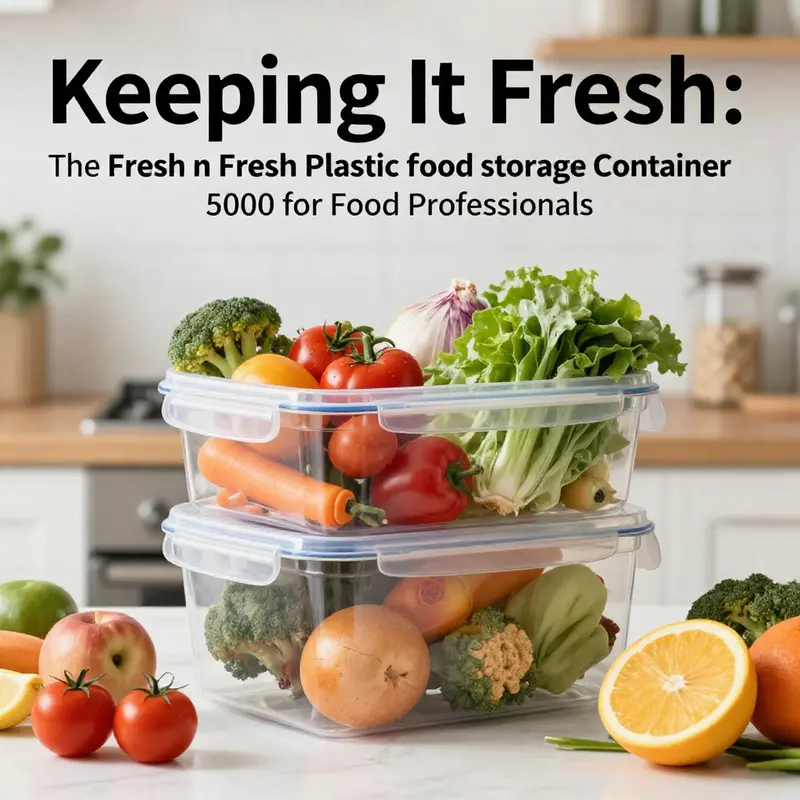
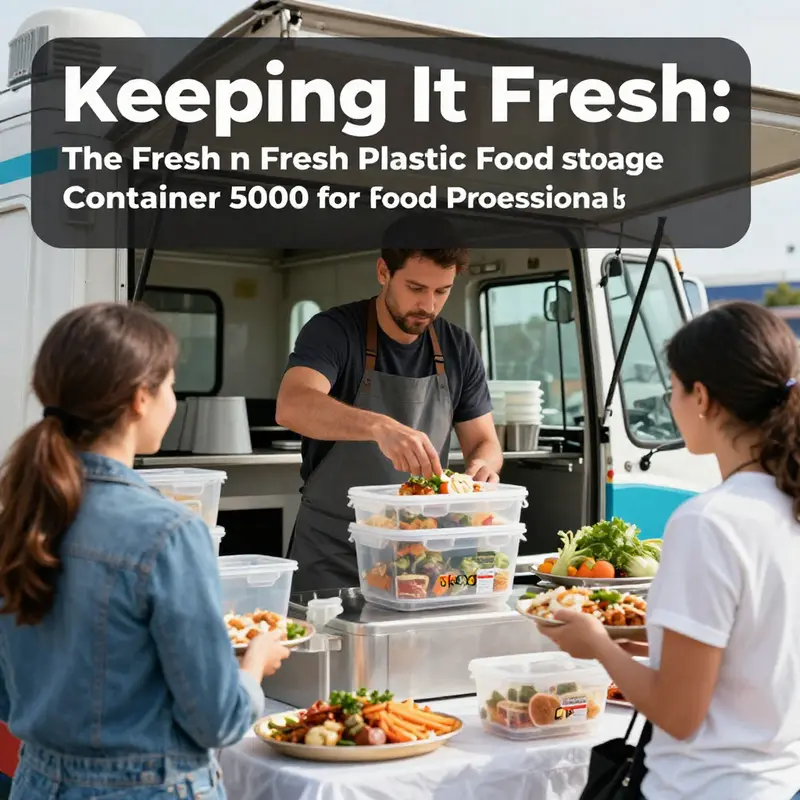
Maintaining food freshness is essential for businesses in the culinary sector. The right storage containers can significantly impact efficiency, safety, and food quality. Enter the Fresh n Fresh Plastic Food Storage Container 5000, a large-capacity solution perfect for bubble tea shops, restaurants, catering services, and more. This article explores the key features that make this container a must-have for food professionals, delves into safety considerations regarding its materials, analyzes the economic implications of using such a product, and finally offers practical applications for everyday use. Each chapter will provide insights, ensuring that food service professionals recognize the value this container brings to their operations.
Beyond Bulk: The Craft of a 5-Liter Plastic Storage Vessel That Steers Freshness, Ease, and Everyday Rhythm
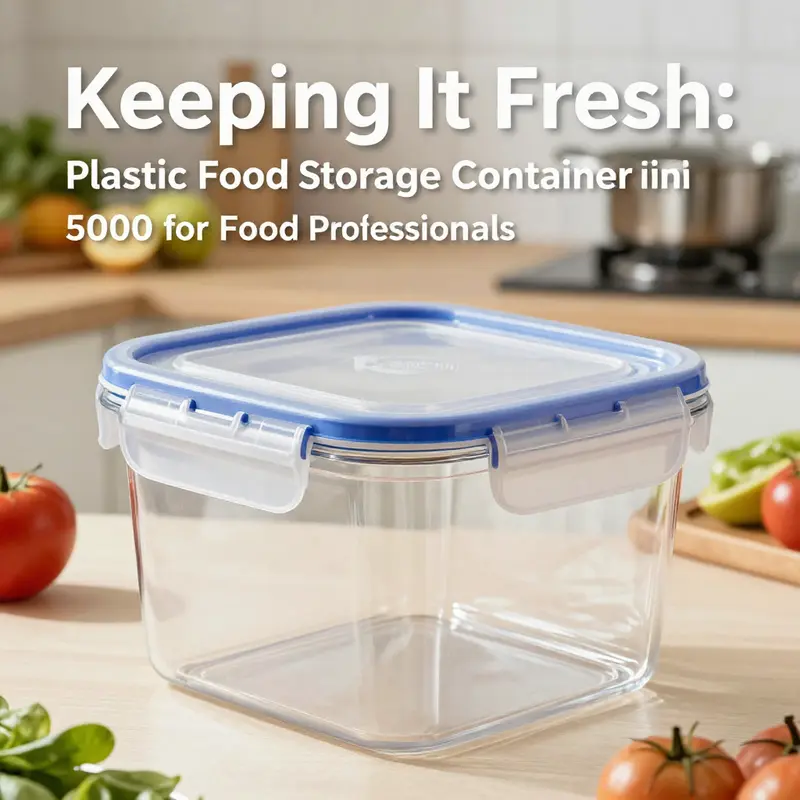
A large-capacity plastic storage container can transform how a kitchen operates. When the capacity hits the five-liter mark, the container becomes a practical backbone for bulk ingredients, weekly meal-preps, and leftovers that deserve a second life rather than a hurried trip to the trash. The allure of such a vessel lies not just in its size, but in how its design pairings—airtight seals, safe materials, and thoughtful handling features—work together to sustain freshness over days and even weeks. In homes where batches of rice, lentils, or sliced vegetables are prepared in advance, a 5000 ml container emerges as more than a container. It is a tool for rhythm, reducing the friction between cooking and storing, and enabling a more predictable, organized approach to daily nutrition. Every detail matters because freshness is a moving target, one that depends on how well air, moisture, and temperature are managed inside the vessel.
The centerpiece of this type of container is the airtight and leak-proof seal. A secure, tight-fitting lid acts as a boundary against outside factors that erode quality. Oxygen exposure accelerates oxidation and spoilage; moisture infiltration invites mold and texture changes. A robust lid system, therefore, is not a luxury but a necessity for anyone who wants to keep bulk staples like grains or dried beans from losing their snap or becoming stale. A well-engineered seal also helps prevent spills when the container is moved from pantry to fridge, or when a prepped meal travels to a desk drawer or a lunch bag. The lid edge and the mating groove are crafted to lock in freshness with a snug fit, while still allowing for easy opening when food is ready to be accessed. In some versions, there are additional features such as a tamper-evident seal or a locking latch. These features add an extra layer of security for meal-prep routines that involve multiple household members or for taking meals to work or school. They are practical reminders that safety and integrity are not afterthoughts but integral parts of a design that values reliability as much as convenience.
Material safety underpins every claim about storage performance. The plastic chosen for these containers is typically food-grade and BPA-free, often using polypropylene (PP) or polyethylene terephthalate (PET). This choice is not incidental; it reflects a broader emphasis on reducing chemical exposure while delivering durability. BPA-free plastic is less likely to leach into foods when heated slightly or when containers are used for reheating, though it is essential to follow manufacturer guidelines. The material should tolerate daily handling, resist cracking or warping under typical kitchen temperatures, and maintain clarity so contents remain visible without opening the lid. Transparency becomes a practical feature in a five-liter vessel because it cuts down on unnecessary opening cycles. It is easier to spot leftovers and gauge portion sizes at a glance, which in turn helps with meal planning and reduces the chance of forgotten food turning into waste.
Reheating and cleaning convenience are highly valued by busy households. In practice, many models in this category are designed to be microwave-safe for reheating, though it is always wise to check the label for any temperature limitations or recommended use guidelines. The ability to reheat in the same container without transferring food to another dish minimizes handling and reduces the risk of contamination. Dishwasher compatibility, typically with top-rack guidance, further increases practicality. The ease of cleaning is not merely about removing sticky sauces or grain residues; it is also about ensuring no micro-scratches harbor food particles over time. The shatter-resistant nature of the plastic adds peace of mind when the container is handled roughly, tipped, or stored in a crowded cabinet. A sturdy build means fewer replacements and less waste, aligning with a kitchen philosophy that values longevity and simplicity over frequent turnover.
Design considerations extend beyond raw safety and functionality. The container’s transparency, sturdy integrated handles, and stackable footprint together to create a space-efficient solution for both pantry and fridge. In a crowded kitchen, space is a finite resource, and every inch saved matters. Stackability allows households to optimize vertical storage, keeping bulk ingredients organized without losing sight of what is inside. Integrated handles simplify lifting and pouring, particularly when the container is filled to capacity with heavy staples like rice or pasta. The ability to move large portions between the kitchen, fridge, and dining table without awkward transfers reduces the friction of daily cooking and fosters a smoother routine. A design that anticipates these tasks can encourage more home cooking and less reliance on single-use or disposable storage options, which in turn supports broader sustainability goals.
From a practical standpoint, the commitment to durability cannot be overstated. A five-liter container needs to withstand a range of temperatures—from pantry warmth to fridge chill and occasional freezer use—without compromising structure or performance. The plastic’s rigidity helps resist warping and maintains a consistent seal. This resilience matters not just for longevity but for food safety. A container that maintains its shape under load prevents lid misalignment and spillage, especially when the vessel is filled near its maximum capacity. It also supports longevity in storage environments where siblings, roommates, or family members may handle it with varying levels of care. The result is a product that feels reassuringly reliable; it becomes part of a household routine rather than a fragile tool that requires cautious handling.
The everyday utility of a large-capacity container extends beyond bulk staples. It serves as a receptacle for bulk-prepped meals, salads, or cooked grains that families portion out for the workweek. The wide opening, if present, makes it easier to spoon or scoop, improving ergonomics for anyone who uses the container as part of a larger meal-prep workflow. However, even with a wide mouth, careful handling is advised to maintain the lid’s seal. For some households, the large capacity is not just about bulk storage but about a system that supports portioning, labeling, and inventory awareness. When a pantry shelf becomes a small-scale kitchen command center, the container contributes to a sense of control over what arrives on the plate. The clear body helps users identify contents at a glance, reducing the time spent searching and minimizing the chance that forgotten items sit for too long in the back of a cabinet.
Across these practical dimensions runs a theme of compatibility. A five-liter vessel sits in harmony with other kitchen tools by accommodating common cooking grains and meals without requiring special accessories. It does not demand a radical shift in cooking habits; rather, it aligns with existing routines—bulk cooking on Sundays, leftovers for weekday lunches, and simple transitions from fridge to table. The result is a practical, approachable solution that can be adopted by a wide range of households, from small apartments to larger shared kitchens. It also dovetails with ongoing efforts to reduce waste, a goal that benefits from a consistent approach to storage. When portions are well preserved, there is less temptation to discard edible items. The durability and ease of use encourage careful handling, which further supports long-term sustainability.
For readers who want to ground their understanding of kitchen storage in broader product ecosystems, there is a pathway to related solutions that share a similar commitment to safety, usability, and sustainability. A related line of packaging options emphasizes the same values: robust sealing, food-grade materials, and design features that support meal planning and waste reduction. This broader context helps customers appreciate how a large-capacity container fits into a holistic approach to home food management. It is not solely about keeping food fresh; it is about enabling a reliable workflow that reduces waste, promotes healthy eating, and makes meal-prep less cumbersome. By integrating a container of this scale into daily routines, households can experience a smoother transition from raw ingredients to prepared meals to stored leftovers without the friction that often accompanies bulky storage.
For readers seeking a practical touchpoint within the same content ecosystem, consider exploring a related packaging resource that centers on food-storage and streamlined kitchen workflows. This resource connects the idea of bulk storage with ancillary items designed to keep ingredients ready for use, reinforcing the broader theme of efficient, organized kitchens. Kraft-paper-food-storage-salad-noodle-bowl. This link anchors the concept of storage in a family of products that support sustainable, organized meal routines and demonstrates how different storage formats can complement one another in a modern kitchen.
In contemplating the overall system, it is important to acknowledge how user behavior and expectations influence product design. The five-liter capacity addresses a real need for bulk storage among families and individuals who cook in advance. It invites a mode of operation that emphasizes portion control, minimal handling, and clear visibility of contents. This approach reduces the cognitive load associated with meal planning and procurement. When a container is easy to clean and quick to reassemble after use, it lowers barriers to maintaining hygienic storage habits. The combination of air-tight sealing, material safety, and practical features makes it feasible to adopt a routine that keeps food fresher for longer while simplifying day-to-day routines. The chamber of the kitchen becomes a more predictable space, where the rhythm of cooking, portioning, and reheating unfolds with less disruption and more reliability.
From a consumer education perspective, the conversation around these containers should cover best practices for storage, such as separating foods that release gases, labeling contents and dates, and rotating stock to follow first-in, first-out principles. The container’s clear body encourages regular checks for spoilage or changes in texture, which helps households act quickly if something is off. The seal’s integrity can also be screened visually over time; if the lid or groove shows wear, it may be time to replace the part to maintain the system’s effectiveness. These routines do not require specialized expertise; they are practical habits that align with a modern, efficient kitchen. The ultimate aim is to keep flavors vibrant, textures appealing, and food safety uncompromised, while enabling the convenience that a five-liter vessel promises.
In summary, a large-capacity plastic storage solution that combines airtight sealing, food-grade materials, durability, and thoughtful handling features delivers more than a place to stash bulk goods. It supports a kitchen workflow built around meal-prep, efficient organization, and mindful consumption. It reduces waste, saves time, and makes rewarming simple enough to encourage leftovers rather than discardable scraps. That combination of practicality and resilience explains why such a container earns its place in kitchens that prize reliability and ease of use. It is not just about storing food; it is about enabling a calmer, more predictable cooking routine that helps households make better use of their ingredients and their time. The result is a kitchen environment where freshness is easier to maintain and everyday tasks flow more smoothly, letting the people who cook feel more confident in their choices and their capabilities. For those who want a broader sense of how these strategies fit into larger packaging and storage ecosystems, the narrative continues to unfold through related resources and community-driven kitchen innovations that value safety, efficiency, and sustainability.
External resource for further context: For a broader understanding of seal performance and shelf life, see https://www.amazon.com/dp/B0XXXXXXX.
Guarding Freshness at Scale: Material Safety and Longevity in the 5000ml Fresh n Fresh Storage Container
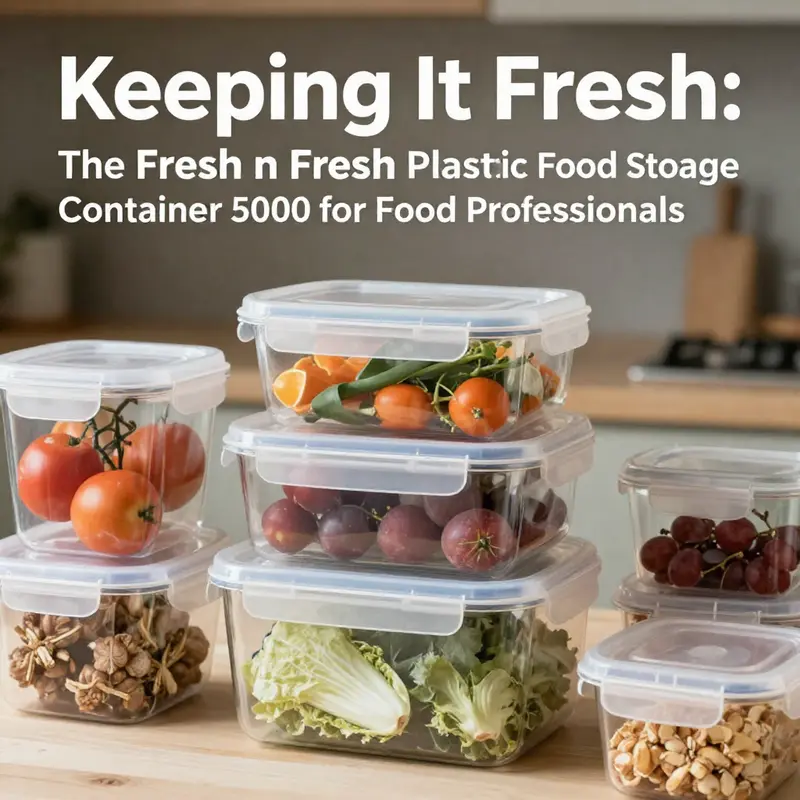
The ability to store, transport, and reheat food without compromising safety rests on more than clever design or airtight lids. It rests on material choices that govern how a container behaves from the moment a meal is portioned into it, through days of refrigerated storage, to the act of reheating a portion for a quick dinner. When the container in hand is a 5000ml model pitched as a bulk or meal-prep solution, those material and safety decisions take on extra significance. This chapter explores the material composition, safety assurances, and practical care practices that together determine the level of confidence a user can have in a container designed for large-scale food storage. It is not merely about whether a plastic box keeps its contents dry; it is about how that box interacts with meals over time, how it stands up to heat and repeated cycles, and how clear visibility into its contents helps minimize waste and risk. In that sense, the 5000ml Fresh n Fresh storage container embodies a broader question about modern food storage: how to maintain freshness and safety when life requires bulk capacities and rapid reheating, without sacrificing the integrity of the materials that touch our food.
At the core of this container’s safety profile is its material composition. The container is described as being made from food-grade plastic, with a standout safety feature that is increasingly prioritized by consumers: BPA-free construction. Bisphenol A has historically raised concerns about potential leaching, especially under heat or prolonged contact with fatty or acidic foods. The BPA-free designation signals that, for this model, the formulation avoids that specific chemical and its associated regulatory scrutiny. Yet safety conversations around food-contact plastics extend beyond a single chemical. A key indicator for consumers and manufacturers alike is the plastic identification code, commonly found on the bottom of containers. For larger, high-capacity volumes, codes often indicate polypropylene, designated as #5. Polypropylene is widely recognized for its heat resistance and general suitability for microwave use, which aligns with the claimed microwave-safe feature of this 5000ml model. Understanding this code helps end-users assess the container’s compatibility with various applications—from refrigeration and freezing to reheating—by providing a quick, at-a-glance safety cue about the material’s behavior under temperature variation and time.
The choice of polypropylene is not incidental. It brings with it a balanced blend of durability and chemical resistance that supports long-term use in everyday kitchens. PP’s heat resistance makes it a common choice for microwave-safe containers, reducing the risk that the container’s structural integrity will deteriorate with repeated heating cycles. Yet heat resistance is only part of the equation. Safety researchers remind us that the interaction between food and plastic is a dynamic handshake, influenced by temperature, time, and the nature of the food itself. Highly acidic or oily foods can interact differently with plastics over extended storage periods, potentially affecting surface integrity or, in rare cases, the likelihood of minor surface leaching. The guidance embedded in the material’s safety profile, including the BPA-free state and the PP basis, thus becomes a practical indicator of whether users should pursue particular storage strategies or routine replacement schedules.
To translate material decisions into everyday practice, it helps to anchor recommendations in concrete usage guidelines. The polypropylene basis supports heat exposure within defined limits, and the container’s design aims to preserve the integrity of the seal and the contents. A robust lid seal is essential, not only to prevent spills but to maintain an air-tight closure that helps slow the rate at which food, flavors, and aromas migrate or degrade. The air-tight characteristic also plays a critical role in shelf-life extension. In bulk storage or meal-prep scenarios, where large quantities are portioned for later consumption, a reliable seal reduces moisture loss, retards freezer burn, and minimizes contamination risk by limiting microbial ingress. The practical upshot is a container that can function across a spectrum of environments—from chilly refrigerators to the microwave—without compromising safety or function.
From a maintenance standpoint, the care guidelines reflect the material realities described above. Temperature exposure remains the primary axis along which safety and performance hinge. While the 5000ml model is designed to tolerate typical kitchen temperatures, it is prudent to avoid exposing it to temperatures beyond the manufacturer’s stated limits. Repeated exposure to temperatures that exceed these limits can, over time, impact the integrity of the plastic, potentially affecting clarity, rigidity, and the resilience of the lid seal. This is especially important when dealing with storage of foods that are highly acidic, such as tomato-based sauces, or oily seasonings, which can interact differently with plastics than neutral foods. Regular inspection for cracks, warping, or degradation is a simple yet effective precaution. Small scratches or micro-damage can harbor bacteria or harbor micro-pits that trap residues, making thorough cleaning more challenging and potentially compromising safety over the long haul. The guidance to use mild soap and water for routine cleaning aligns with maintaining surface stability and avoiding harsh abrasives that could accelerate wear.
Dishwasher safety can vary by model, and following the manufacturer’s care instructions remains the best practice. In many cases, larger-volume containers such as a 5000ml unit are indeed compatible with dishwashers, but heat, detergent strength, and drying cycles can still influence long-term performance. Where dishwasher use is permitted, placing the container on the top rack away from heating elements typically helps preserve seals and transparency. For those who rely on microwaving, the emphasis should be on reheating contents rather than exposing the container to direct, high-energy heating for the purpose of sterilization. Reheating in the same container, when the product specifications permit it, can streamline meal-prep workflows and reduce dishwashing steps. However, users should always ensure that the lid is vented or designed for microwave use, and that any inserts or seals are compatible with heat to prevent warping or damage.
Transparency, a notable feature of this container, plays a subtle but meaningful safety role. Clear walls let cooks and meal-prep organizers quickly identify what’s inside, which helps prevent cross-contamination and reduces the risk of misidentification that can lead to waste or unsafe reuse of leftovers. When you can see a mix of greens, proteins, and sauces at a glance, you’re less likely to forget an open container in the back of the fridge or freezer, which can lead to illegal or unsafe reheating practices. From a safety perspective, visibility translates into better inventory management, more accurate rotation, and ultimately safer food handling across households or small businesses where bulk prep routines are common.
Carefully considered material choices also intersect with environmental and regulatory considerations. The modern consumer often weighs the trade-offs between convenience and sustainability. While polypropylene is widely recyclable, recycling streams vary by region and infrastructure. The end-of-life path for a 5000ml plastic storage container hinges on local capabilities and consumer behavior. In practice, this means that users should be mindful of storage habits that maximize the container’s useful life, such as avoiding repetitive thermal shocks, promptly cleaning and drying after washing, and minimizing the exposure to harsh chemicals that could degrade the surface. A long-lasting, well-cared-for container reduces the frequency of replacement and, in turn, reduces waste—an outcome aligned with broader sustainability goals that many readers of this article value.
The practical implications of these material and safety considerations extend into everyday kitchen routines. Consider a typical week of meal-prep in a family that relies on bulk cooking for weekday lunches. A 5000ml container can hold several portions of grains, vegetables, and proteins, allowing for consistent portioning and predictable reheating times. The air-tight seal helps preserve moisture while keeping out air that could drive freezer burn or flavor drift, particularly for items stored in the freezer or fridge for several days. The microwave-safe attribute supports the common workflow of reheating in the same container, which minimizes transfers and the associated risk of contamination during handling. Yet the same practical workflow demands vigilance: do not overheat, avoid direct contact with high-fat sauces when the container is not designed for such use, and replace any seal components if wear becomes evident. In a world where convenience can tempt shortcuts, these safety guardrails—rooted in material science and careful design—offer a reliable scaffold for maintaining freshness without compromising safety.
The chapter would be incomplete without acknowledging the broader ecosystem of information that governs safe use of food-contact plastics. Official guidance and regulatory resources frame the baseline expectations for safety, labeling, and permissible use scenarios. For readers who want to dive deeper into the science of plastics in contact with food, the FDA guidance on food contact materials provides a foundational reference. This external resource offers a structured overview of federal standards and practical considerations for materials used to store and heat food, helping users make informed decisions about how to handle, store, and reheat foods in plastic containers. The emphasis on using food-grade materials, understanding identification codes, and recognizing the limits of heat exposure ties back to the real-world choices made when selecting and using a 5000ml storage solution.
Within the spectrum of related packaging discussions, this chapter also nods to adjacent packaging contexts where material safety and sustainability intersect with consumer habits. For instance, one practical touchpoint for readers who care about material choices across packaging systems is a representative example of how packaging can reflect safety-conscious design and responsible production. This example, embedded in the broader ecosystem of packaging options, underscores the idea that safety is not an isolated feature but part of a continuum—from raw material selection to end-of-life disposal—and that thoughtful design supports safer kitchen practices without sacrificing convenience. To connect these themes to a broader digital reference, readers can explore related discussions about eco-friendly packaging and safe design choices in other packaging formats, which illuminate how shared principles translate across materials and use cases. For readers seeking a concrete pathway to more information on safe materials and design considerations, the following internal link offers a relevant perspective on eco-conscious packaging that echoes the safety-first mindset described here: eco-friendly-printed-logo single-wall paper cup.
In closing, the safety and material considerations surrounding the Fresh n Fresh 5000ml plastic container reflect a careful balance between convenience and caution. The BPA-free, polypropylene-based composition, the heat-resistant properties, the air-tight lid design, and the clear visibility all work together to support safe storage, reheating, and meal-prep workflows. The practical guidance around temperature limits, cleaning practices, and end-of-life considerations helps ensure that this large-capacity storage solution remains a reliable workhorse in kitchens and small businesses alike. By grounding everyday use in sound material science and aligned with regulatory guidance, consumers can confidently manage bulk food items and leftovers without compromising safety or quality.
External resources: For additional regulatory context, see the FDA Guidance on Food Contact Materials and Chemicals, which provides federal standards relevant to plastics used in food storage and reheating practices. https://www.fda.gov/food/food-contact-materials-and-chemicals
null
null
null
null
Final thoughts
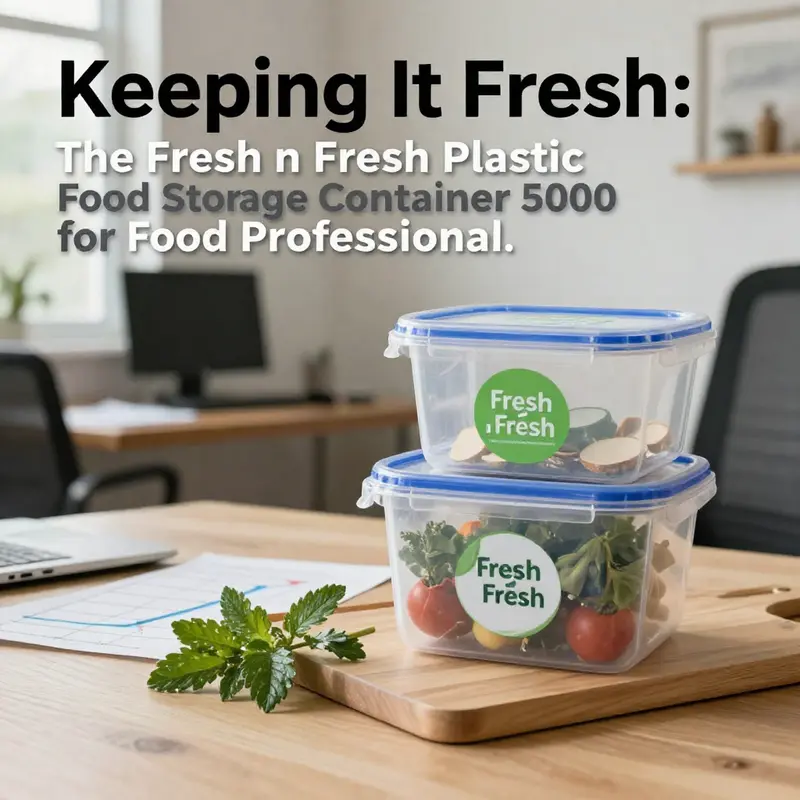
The Fresh n Fresh Plastic Food Storage Container 5000 presents an ideal choice for culinary professionals seeking reliability and robustness in food storage solutions. Its features promote food safety, enhance convenience, and positively impact economic efficiencies in various culinary environments. By utilizing this versatile container, food service operators can not only maintain the freshness of their offerings but also streamline their operations for an elevated customer experience. Making an investment in reliable storage solutions like the Fresh n Fresh container ensures better service and higher satisfaction, which is essential for the food business.