
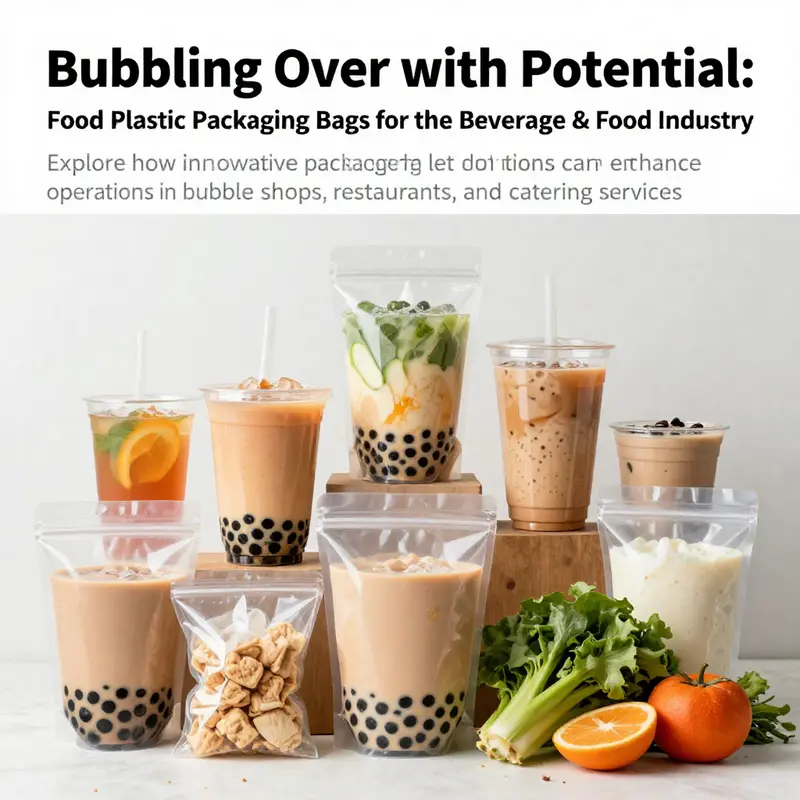
Food plastic packaging bags have become essential tools for businesses in the beverage and food sectors, catering to unique operational needs while prioritizing convenience and safety. These durable and versatile bags not only protect products, but also enhance branding opportunities and maintain product freshness. From bubble tea shops to large food chains, the right choice in packaging can elevate service quality and customer satisfaction. This article delves into the diverse applications of food plastic packaging bags, their material composition and technical properties, and the economic dynamics that influence supplier choices, offering a comprehensive view that empowers businesses to make informed decisions.
Beyond the Seal: How Food Plastic Packaging Bags Shape Freshness, Safety, and the Modern Food System
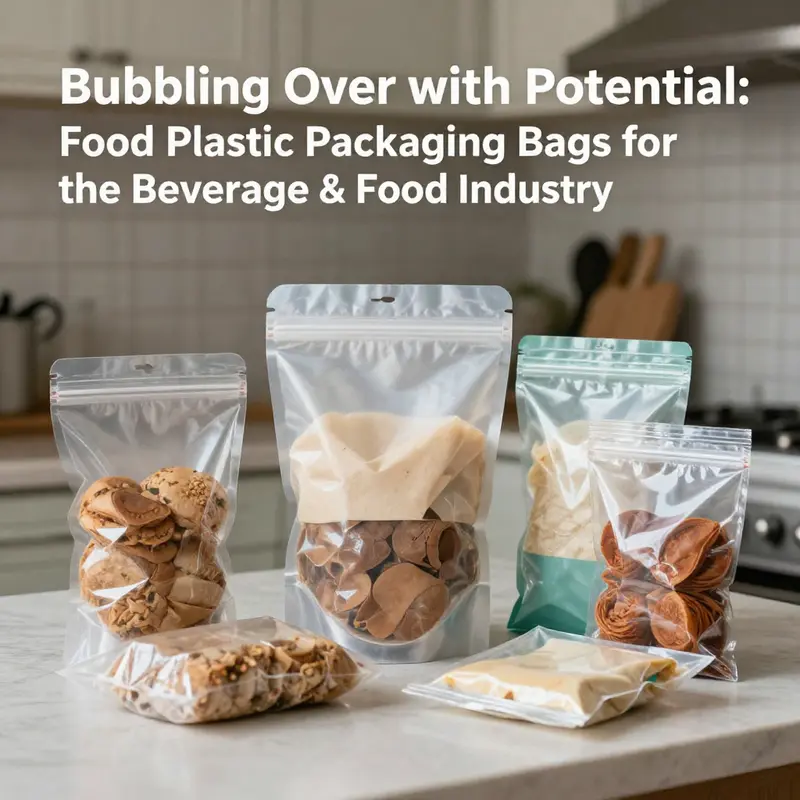
In the world of food packaging, plastic bags do more than hold contents. They define the pace at which products travel from producer to consumer, influence how long foods stay fresh, and set the bar for safety, convenience, and waste. The variety of bags used across food industries mirrors the diversity of foods themselves. From tiny stand up pouches that cradle coffee beans to back side sealed freezer bags that guard meat and seafood through months of freezing, these flexible enclosures are engineered to meet exacting performance targets. They balance multiple forces at once: barrier properties against air and moisture, mechanical strength, heat and cold resistance, and compatibility with a chain of custody that includes storage, transit, display, and end of life. Behind every design choice lies a careful calculation about product type, storage condition, and consumer behavior, as well as a nod to regulatory compliance and sustainability goals. The result is not a single, one size fits all solution but a spectrum of bags that adapt to the product and the market while keeping safety at the forefront. The materials used, the multilayer structures engineered into laminates, and the features layered into the bag all tell a story about the food it contains and the journey it takes to reach the table. In many cases, those stories are written in the language of polymers and laminates: PET, PE, LDPE, and layered films that combine PET, aluminum foil, and PE to form high barrier structures. The choice of materials is guided by the product’s risk profile, including susceptibility to oxidation, moisture migration, or aromas that can drift and degrade over time. For consumer goods, clarity becomes a strategic asset too, because a transparent bag invites consumer inspection while showcasing the product inside. Yet transparency must be balanced with barrier performance, as light can accelerate photooxidation, particularly for oils and coffee. The most effective packaging blends visibility with protection, using laminate stacks that resist punctures, assaults from moisture vapor, and the rigors of shipment and shelving. This blending act extends beyond the bag’s inner walls. It touches the design of closures, zippers, and resealable features that invite repeated use without sacrificing freshness. It shapes how products are displayed on shelves, how easily a consumer can open a package, and how reliably the contents stay contained during handling and transit. All of that adds up to a packaging system that must be robust enough for industrial use yet simple enough for a family kitchen. In practice, the market has embraced a spectrum of packaging formats and configurations, each tuned to a distinct category of food. There are stand up pouches that offer a stable base and a slim profile for shelf display, with reinforced zippers that seal in aroma and moisture while letting consumers reseal after opening. There are large, tear-notched bags intended for liquids and semi liquids such as soups and sauces, designed to minimize leaks and splashes while preserving the product’s integrity. There are back side sealed bags meant for freezing, whose multi-layer films resist the shattering effects of ice crystals and the dryness of long term storage. And there are more specialized forms such as quad seal or three side seal configurations that maximize volume efficiency for bulk dry goods and nonstandard shapes. The design logic behind these formats rests on a few core pillars: barrier performance, mechanical durability, processing compatibility, and consumer usability. The barrier performance must resist air intrusion, water vapor, and light exposure where appropriate, especially in products high in fats or oils that are prone to oxidation. The mechanical durability must withstand pinching, creasing, and occasional punctures during handling, while maintaining seal integrity. Processing compatibility guides how the bag can be formed, filled, and sealed on existing equipment, ensuring that production lines remain efficient without expensive retrofits. Consumer usability brings in convenience and control, such as resealability for portion control, transparency for product visibility, and tear notches for easy opening without tools. Together, these elements shape a family of packaging solutions that can be tailored to the life cycle of a product, from production and distribution to retail display and consumer consumption. The choice of materials is not incidental. The industry relies on virgin resins that meet food safety standards, ensuring direct contact with food is appropriate and safe. Polyethylene, in many forms, provides ductility and moisture resistance, while PET contributes stiffness and a robust barrier to gases and aromas. Laminated films—often in multi-layer stacks like PET/AL/PE or PET/PEARLIZED BOPP/PE—bring enhanced barrier protection against air, light, and moisture with thicknesses that can be tuned to the product. Yet the same layering that delivers protection also complicates recycling and waste management. The industry is increasingly aware of end of life and environmental impact, and this awareness informs both material selection and packaging design. In some markets, there is a push to reduce multilayer complexity, favoring materials that are easier to recycle or reuse, even if that means compromising slightly on barrier performance. At the same time, other applications rely on sophisticated laminates to extend shelf life for high value items such as premium coffee and gourmet snacks, where aroma retention and flavor stability justify the additional material complexity. Even within the same product family, customization remains a driving force. Suppliers offer a spectrum of customizations, from size and thickness to print designs and closure types, enabling brands to differentiate on shelf and improve consumer recognition. The conversation around customization is tightly linked to supply chain dynamics. In practice, manufacturers and brand owners seek reliable, scalable, and predictable solutions. The ability to mass produce custom bags at a feasible cost hinges on a precise understanding of quantities, production timelines, and minimum order quantities. The data points in the industry indicate that MOQs often start in the thousands of pieces, with per piece pricing tied to size, material composition, and feature set. The economics of packaging must align with product value and expected sales velocity; otherwise, the same bag design risks becoming a costly constraint rather than a strategic asset. This alignment is also evident in the regulatory landscape. Food contact materials are subject to safety standards that vary by region but share core commitments: the materials must be inert in the ways that could contaminate food, migration must stay within acceptable limits, and labeling must communicate handling and storage guidance. In many jurisdictions, compliance with standards such as FDA and USDA requirements is essential for direct contact with food. Compliance is not a static milestone but a continuous discipline, adapting to evolving scientific knowledge and shifting regulatory expectations. For brands and manufacturers, this means ongoing testing, documentation, and supplier qualification—even as product lines evolve. The packaging bag thus sits at the intersection of product protection and consumer experience. In retail and grocery settings, resealable bags for dry goods make it possible to reduce waste and preserve quality between uses. The barrier properties preserve aroma and texture over extended periods, while the option to reseal helps travelers and families manage portions and freshness. In the meat and seafood sector, specialized bags function under more demanding conditions. The ability to withstand extreme cold, maintain moisture, and prevent freezer burn is a core requirement here. Bag designs may include enhanced seal integrity, thicker film layers, and barrier systems that resist moisture migration and oxygen infiltration. This is particularly important for preserving texture and flavor during long storage times. For ready to eat and takeaway sectors, the emphasis shifts toward leak-proof performance, hygienic handling, and product visibility. Large top or side openings, robust seams, and multilayer laminates ensure that liquids are contained and that the packaging remains sanitary throughout handling and display. Tear notches and easy-open features improve convenience for single servings and on-the-go consumption. Premium and specialty packaging represents a different calculus. Here, the focus is on preserving aromas, flavors, and textures during extended storage. High barrier films reduce oxidation and moisture migration, while inert atmospheres or vacuum sealing further extend shelf life. The aesthetics of packaging also take on greater importance, with clear graphics, branding, and premium finishes that communicate quality and value. Such designs often leverage high-performance laminates and, at times, materials like nylon or other tough polymers to achieve the necessary mechanical robustness for demanding applications. These advanced features seldom operate in isolation; they are supported by digital traceability and anti-counterfeit labels. Modern packaging design integrates smart features that track product conditions, verify authenticity, and provide supply chain transparency. QR codes, for example, can link to product information, usage instructions, or recycling guidance, turning the bag into a conduit for consumer education as well as brand protection. The broader implications extend to sustainability and circular economy models. The industry recognizes that only a fraction of plastic packaging is effectively recycled globally, and this reality drives innovation. Circular systems explore reusable or returnable packaging in specific contexts, aiming to reduce waste while maintaining safety and convenience. Urban pilots and academic collaborations are testing new models for reusable takeaway containers and closed-loop systems that suit consumer habits and business models. In parallel, designers and engineers are exploring packaging solutions that are easier to recycle or compost, or that use recycled content while still preserving essential performance characteristics. These approaches sometimes require rethinking adhesives, lamination strategies, and the separation of layers at end of life. The tension here is real: more complex laminates can deliver superior barrier performance and product quality, but they can complicate recycling or increase waste if the materials cannot be recovered. The challenge is to select the right balance for each product and market, guided by life cycle thinking and consumer expectations. As the industry evolves, the role of material science becomes more prominent. Developments in high barrier films, improved heat sealing technologies, and optimized lamination architectures continue to push the envelope of what plastic packaging can achieve for food products. These advances support longer shelf life, safer storage, and better protection against the rigors of distribution. At the same time, attention to sustainability prompts continued optimization of packaging weight, material choices, and end of life. The aim is not just to meet safety and performance criteria but to align with consumer and regulatory expectations around recyclability, reuse, and responsible waste management. The conversation thus moves beyond the bag as a passive container to view packaging as a strategic asset in product storytelling, consumer experience, and environmental stewardship. In practice, these conversations touch every stage of production and distribution. Suppliers provide clear specifications for the materials used, the sealing technologies, and the printed designs. Buyers consider how a bag will function in real world conditions, including temperature fluctuations, stacking during transport, and shelf life targets. Manufacturers optimize processing parameters to ensure consistent performance across large production runs, while retailers value packaging that enhances display, protects product integrity, and minimizes waste. The net effect is a flexible, adaptive ecosystem where packaging bags support a wide array of foods, environments, and consumer behaviors. When the design goals are clear and the supply chain is aligned, plastic packaging bags can deliver reliable performance at scale. They can help preserve taste and texture, minimize spoilage, and enable convenient, on-demand consumption. They can also support branding and consumer engagement through graphics and messaging while offering data-rich features that improve traceability and quality control. Ultimately, the diverse applications of food plastic packaging bags reflect a mature dialogue between material science, manufacturing capability, regulatory compliance, consumer expectations, and sustainability imperatives. In that dialogue, the bag is not merely a container but a critical interface that makes safe, enjoyable food experiences possible in a complex, interconnected world. For readers who want to explore concrete examples of how packaging solutions align with product needs and lifecycle considerations, the broader literature and supplier resources offer wide-ranging insights, from lightweight, transparent LDPE bags for fresh produce to rugged, multi-layer laminates designed to protect high-value foods in rigorous supply chains. In the end, every choice—from material selection to closure design and end-of-life strategy—contributes to a simple, but powerful outcome: delivering high-quality food to plates while respecting safety, convenience, and the planet. As markets continue to demand more from packaging, the enduring lesson is clear. Effective plastic packaging bags succeed not only by their barrier performance or their seal integrity but by how well they integrate into a system that respects product integrity, consumer experience, and environmental responsibility. This integration will continue to drive innovation, collaboration, and responsible practice across the food supply chain. For those exploring sustainable paths, the conversation is shifting toward flexibility and adaptability, with packaging that can evolve as new materials, processes, and recycling technologies emerge. Engagement with suppliers that offer customizable, scalable solutions remains essential for brands seeking to balance performance with responsible stewardship. The journey of food plastic packaging bags is ongoing, and the trajectory promises to expand the toolbox available to food producers, retailers, and consumers alike. That expansion will be visible in the next wave of standards, in new laminate formulations that optimize barrier properties while supporting recyclability, and in smarter packaging ecosystems that connect physical goods with digital traceability and consumer education. In sum, the diverse applications discussed here reveal a packaging landscape that is as dynamic as the foods it protects, with each development offering a new way to preserve freshness, ensure safety, and delight the shopper while advancing environmental responsibility. Where this path leads next will depend on continued collaboration among material scientists, manufacturers, policymakers, and consumers who expect packaging to perform, protect, and respect the world around them. Internal reference to sustainable and practical packaging choices can be found in discussions of kraft paper packaging alternatives and their role in broader packaging strategies, including eco friendly disposal considerations and lifecycle thinking. For readers seeking a deeper technical baseline and design considerations, the take away packaging overview provides useful context and examples to ground future discussions. disposable octagonal kraft paper packaging. External resource: https://www.plasticpackaging.com/technical-overview-takeaway-food-bags/.
Resins, Barriers, and Breakthroughs: The Material Science Behind Food Plastic Packaging Bags
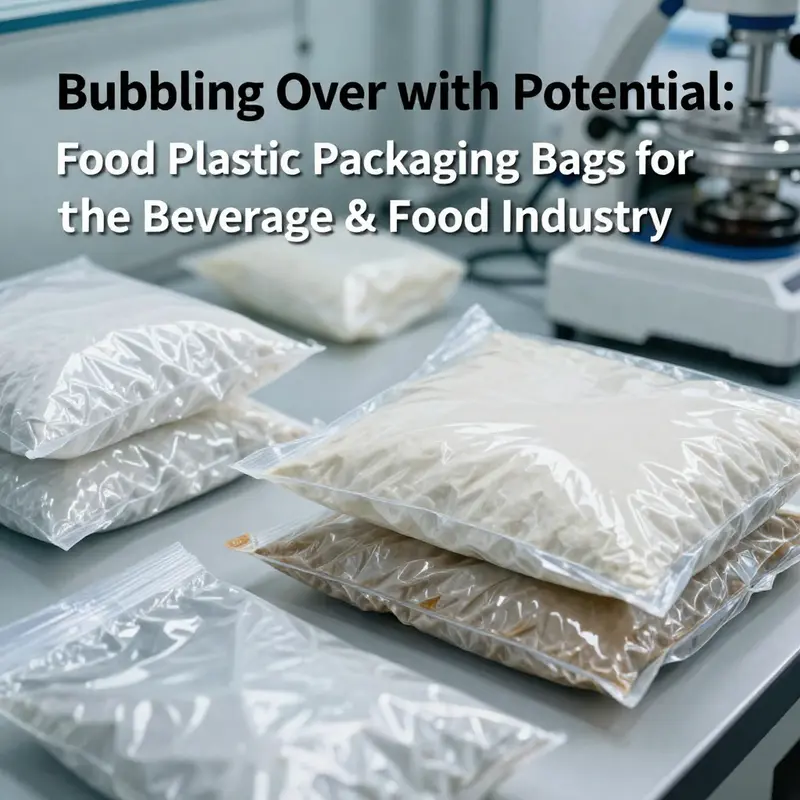
Material choices in food packaging bags do more than merely hold products; they shape safety, shelf life, performance during transport, and even the environmental footprint of a packaging system. In the world of food contact plastics, the polyolefins—primarily LDPE, LLDPE, and HDPE—stand out for their combination of safety, processability, and cost efficiency. These polymers are derived from petroleum-based feedstocks but are selected and engineered to meet strict safety standards, provide reliable moisture barriers, and adapt to a wide range of formats from simple flat bags to sophisticated stand-up pouches and multi-layer laminates. The material family centers on a balance between flexibility, sealability, stiffness, and barrier performance, and the nuanced differences among LDPE, LLDPE, and HDPE guide decisions about how a bag will perform in real-world conditions.
LDPE, with its characteristic softness and ductility, is the quintessential material for applications that require gentle handling, tight seals, and clear visibility. Its sealing behavior is excellent, which makes LDPE a natural choice for fresh produce bags, snack wraps, and many freezer applications where a tight, reliable seal helps preserve moisture and aroma. Yet LDPE’s strength and stiffness lag behind HDPE as the temperature or load increases; it can be more susceptible to puncture under stress. The clarity of LDPE is good but not exceptional, and while it can be quite flexible, it generally does not offer the rigid feel or the high gas barrier of thicker polymers. These traits make LDPE a versatile backbone for many single- or low-gram weight bags, where flexibility and cost are paramount and barrier demands are moderate.
HDPE, by contrast, trades a higher degree of pliability for significantly greater stiffness, puncture resistance, and chemical resilience. It forms the backbone of heavier-duty bags designed for dry goods, bulk packaging, and applications where the integrity of the bag under rough handling matters. HDPE’s barrier against moisture and gases is superior to LDPE, which helps extend shelf life for products that are sensitive to humidity or oxygen ingress. It also tolerates higher temperatures much better, supporting hot-fill or pasteurization processes that LDPE would struggle with. However, its reduced flexibility relative to LDPE can limit certain designs, and HDPE bags can be heavier and less amenable to ultra-thin profiles that some consumers associate with premium or transparent packaging.
LLDPE sits between LDPE and HDPE in a fundamental way: it blends toughness with flexibility. The linear structure of LLDPE yields excellent puncture and tear resistance while maintaining good sealability and clarity. This combination makes LLDPE a popular choice for heavy-load or high-stress packaging scenarios, including frozen foods and high-volume flexible wraps where the bag must withstand stacking, bending, and long-distance transit without compromising integrity. LLDPE’s balance of strength and pliancy also helps in creating films with superior tear resistance, enabling wider machine tolerances during manufacturing and more forgiving handling by consumers in retail environments.
In practice, many food packaging configurations do not rely on a single resin but instead on multi-layer laminates that stack the strengths of several materials. The result is a family of barrier-enabled structures that often combine layers of PE with barrier materials such as aluminum foil, ethylene vinyl alcohol (EVOH), or other polyesters. These laminates can form PET/AL/PE, PET/PE, or other complex configurations that optimize the protection of oxygen, moisture, and light, while accommodating recyclability and machinability requirements. For example, a stand-up pouch might employ a PET layer for stiffness and printability, a barrier layer like EVOH to limit oxygen transmission, and a PE outer sealant and seal layer to enable robust heat sealing. The precise arrangement depends on product needs—whether the emphasis is on long-term freshness for coffee and dry goods, or moisture control for nuts and snacks, or a combination of barrier properties for frozen goods.
Additives play a critical supporting role in determining performance without altering the fundamental resin chemistry. Antioxidants stabilize the resin against oxidation during processing and storage, helping to maintain clarity and strength. Slip agents reduce internal friction during extrusion and winding, easing handling on high-speed packaging lines. Anti-static agents help with automation and reduce dust and particle formation, which is especially important for cleanroom or food-preparation environments. Each additive must be carefully selected and employed within regulatory limits to avoid migration or sensory impact on the packaged food. The layering approach also extends to barrier-enhancing insertions: metalized films, EVOH, or liquid-crystal polymers can be incorporated to dramatically reduce oxygen permeability, while thin metalized films may improve light barriers, preserving product aroma and appearance.
Environmentally conscious directions have pushed researchers and manufacturers to explore biodegradable and compostable variants, typically based on polylactic acid (PLA) or starch-based polymers. These alternatives address consumer demand for reduced environmental impact but introduce trade-offs, particularly in heat resistance and shelf life. Biodegradable layers may not match the long-term barrier performance of conventional PE/EVOH laminates, and they can be more sensitive to high-temperature processing. In doing so, designers must consider the entire lifecycle of the package—from material sourcing and production to disposal or composting facilities available in a given region. The push toward sustainability also raises questions about recycling pathways for multi-layer laminates, which can complicate post-consumer collection and processing.
Turning to the technical properties that truly define performance, moisture resistance is a baseline strength of all PE types. PE films present formidable resistance to water vapor, contributing to extended freshness for perishable and semi-perishable foods. The chemical resistance of PE polymers is robust against many acids and bases encountered in food processing and storage, making them suitable for a variety of products from acidic fruit preserves to mildly alkaline marinades. The thermal stability of these materials, however, is bounded by their temperature limits: LDPE generally holds up to about 80–100°C, while HDPE can tolerate roughly 110–120°C. These ranges are important because direct flame exposure is never advised, and the integrity of the seal can degrade if temperatures exceed the material’s processing or end-use capabilities. Sealing is a critical property: LDPE and LLDPE films exhibit excellent heat-sealing behavior, enabling reliable, consumer-friendly closures such as zip seals or simple hot-seal edges that are strong enough for repeated opening and closing in other contexts. The reliability of seals across a spectrum of temperatures and pressures is essential for the closable bags used in fresh produce, snacks, and frozen goods.
Recyclability is another central property that touches design, manufacturing, and post-consumption fate. Most PE-based bags are recyclable within designated programs, typically categorized in recycling streams like #4 for LDPE and #2 for HDPE. Yet real-world recyclability is constrained by contamination, inconsistent sorting, and the practical need for compatible recycling infrastructure in different regions. This means that even though a bag can, in principle, be recycled, the system around it may not always permit efficient processing. As a result, manufacturers often seek to maximize recyclability by limiting the variety of polymers in any given product, selecting single-resin or simple multi-layer structures that can be domestically or regionally recycled where facilities exist. Beyond recycling, regulatory frameworks require clear labeling of food-use materials and minimal risk of substance migration into food. The migration risk depends on the resin type, the presence of barrier layers, and the nature of the food itself, particularly its fat and acid content, which can interact with packaging materials over time. In practice, compliance with food contact regulations—such as those established by authorities in the United States and Europe—means rigorously tested materials, transparent labeling, and adherence to migration limits.
From a processing and manufacturing standpoint, the film and bag design process emphasizes thermal processing, extrusion, lamination, and printing that must be compatible with the end-use application. The extrusion of LDPE, LLDPE, and HDPE into thin films requires precise control of temperature, pressure, and cooling to achieve uniform thickness and consistent seal performance. Blown-film processes create the flexible, conformable sheets that become bags; the subsequent lamination or co-extrusion of layers enables the creation of barrier-rich structures that keep oxygen and moisture at bay while maintaining the flexibility essential for consumer handling. Printing, if employed, must be compatible with the film’s surface energy to ensure adhesion and durability of graphics, which adds another layer of complexity in duty cycles and line speeds. In the case of multi-layer laminates, adhesion between layers is critical: poor interlayer bonding can lead to delamination, compromised barrier performance, and product waste. Each step—from resin selection to final sealing—must be optimized for the product type, storage conditions, and expected distribution channel.
The broader supply landscape, as reflected in industry data, highlights the scale and variability of packaging options. For some products, stand-up pouches with high-quality laminates are favored to balance shelf life, product visibility, and portion control. For others, clear LDPE bags deliver transparency and easy inspection at the point of sale, with sufficient resilience for distribution networks that include cold storage. The choice between lamination configurations, the presence or absence of barrier layers, and the degree of printability all hinge on product requirements, cost considerations, and the capacity of downstream recycling or disposal streams. In this context, the integration of design, materials science, regulatory compliance, and sustainability forms a complex but coherent framework that guides packaging developers toward solutions that meet safety standards, preserve product quality, and respond to evolving consumer expectations about environmental responsibility.
To illustrate how these decisions play out in practice, consider the role of barrier systems in preserving the integrity of oxygen-sensitive foods or moisture-rich items. Laminates may incorporate EVOH or aluminum to create a formidable barrier against oxygen ingress, dramatically extending shelf life for products like coffee or dried foods. In contrast, beverages or products with low moisture sensitivity might rely on simpler two-layer structures where PET adds stiffness and printability, while PE provides the heat-seal interface. The overall objective is a packaging system that not only preserves the product but also remains functional across the retail and home environments—delivering the right balance of protection, usability, and cost. In this sense, material composition becomes a decisive factor in shape, volume, shelf life, and even consumer perception, because the tactile feel, clarity, and sealing reliability subtly influence a buyer’s confidence in the product’s freshness and safety.
As consumer awareness of packaging sustainability grows, many professionals look beyond the standard polyolefin bag to understand how to integrate recyclable or even compostable options without sacrificing performance. The dialogue around environmental responsibility is diverse and evolving; it invites ongoing research into new barrier polymers, more compatible bioplastics, and smarter laminate architectures that reduce overall material use while meeting rigorous safety standards. The challenge is not merely to substitute one material for another but to redesign the packaging system as a holistic product that harmonizes safety, shelf life, consumer convenience, and end-of-life outcomes. In the meantime, a practical pathway for many producers remains to optimize existing PE-based films through careful selection of resin grades, barrier layers, and additives that deliver the required performance with the least environmental burden, all within compliant regulatory bounds.
For readers seeking broader context on eco-friendly packaging options beyond plastics, this example of sustainable alternatives in adjacent packaging categories offers a useful reference point. eco-friendly-recyclable-pulp-2-4-cups-coffee-take-away-cup-holder.
External resource: to understand the regulatory framework governing food contact materials, refer to the official guidelines provided by the U.S. Food and Drug Administration at https://www.fda.gov/food/food-contact-materials
Shifting Currents: Economics, Regulation, and Supplier Strategy in Food Plastic Packaging Bags
The story of food plastic packaging bags sits at the intersection of macroeconomics, consumer behavior, regulation, and manufacturing technology. Demand is shaped by convenience and protection, while costs are framed by raw materials, energy, and logistics. Analysts project global demand for food plastic bags to rise as e-commerce and prepared foods expand, with price sensitivity and performance needs driving a move toward higher-value laminates and smarter packaging formats. The economics rests on a triad: cost efficiency, barrier performance, and adaptability to automation.
Supply dynamics reflect not only price but risk management, quality controls, and regulatory compliance. Traditional bag producers face a shift toward differentiated products—multilayer laminates with improved barriers, resealable features, and enhanced printing—requiring capital investment and specialized capabilities. Regions differ: some markets prize lightweight, low-cost solutions, others favor sustainability, recyclability, and end-of-life clarity. Policy instruments such as bans, fees, or recycling mandates shape demand and suppliers’ roadmaps.
The buyer-supplier relationship is evolving. Brands seek not only bags but packaging ecosystems: co-development, testing, and scale-ready manufacturing. Suppliers compete on design flexibility, lead times, and traceability, as well as the ability to deliver consistent performance across cold chains, freezers, and ambient storage. Regulatory readiness and safety standards remain a shared responsibility in global supply chains.
Sustainability and circularity initiatives are increasingly strategic, not cosmetic. Companies invest in barrier films and recyclable or compostable alternatives where infrastructure supports them, while balancing cost, supply reliability, and consumer acceptance. In mature markets, there is emphasis on recycling streams and design-for-recycling, whereas in fast-growing regions the focus may align with affordability and access to basic protective packaging. The economics of scale, digitalization (online marketplaces, CAD-for-manufacture tools, and real-time quality control), and long-term contracts help reduce risk and unlock performance benefits.
The practical takeaway for entrants and incumbents is clear: align product capability with customer needs, manage total cost of ownership, and build resilient partnerships. Those who can couple material science with process control and provide timely, scalable solutions while advancing sustainability have a competitive edge. The landscape remains dynamic, requiring ongoing attention to policy shifts, market segmentation, and evolving consumer expectations.
Final thoughts
Food plastic packaging bags offer significant advantages for businesses in the beverage and food sectors, and understanding their applications, material properties, and economic dynamics can guide businesses in making smarter choices. As the demand for effective food packaging continues to rise, staying informed about these essential tools will pave the way for improved operational efficiency, customer satisfaction, and brand enhancement. Evaluate your packaging needs today to ensure your products are presented perfectly and stored safely for your customers.