
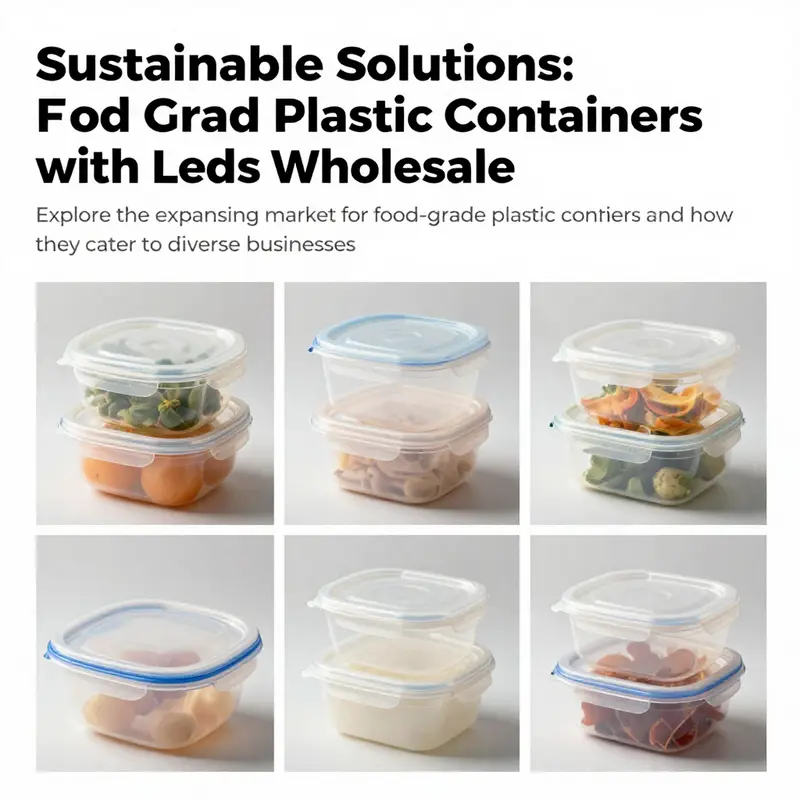
The demand for food-grade plastic containers with lids is surging among diverse sectors such as bubble tea shops, restaurants, food trucks, and catering services. Understanding the current trends, reliable suppliers, and strict regulations ensures that your business stays competitive and compliant. In this overview, we will dive into the latest market trends shaping food-grade plastic containers, highlight trustworthy suppliers, and outline the regulations and safety standards that protect both consumers and businesses. By the end of this article, you’ll have a comprehensive understanding of the essential factors vital for making informed purchasing decisions in wholesale containers.
Sealing the Deal: Global Trends, Materials, and Compliance in Wholesale Food-Grade Plastic Containers with Lids
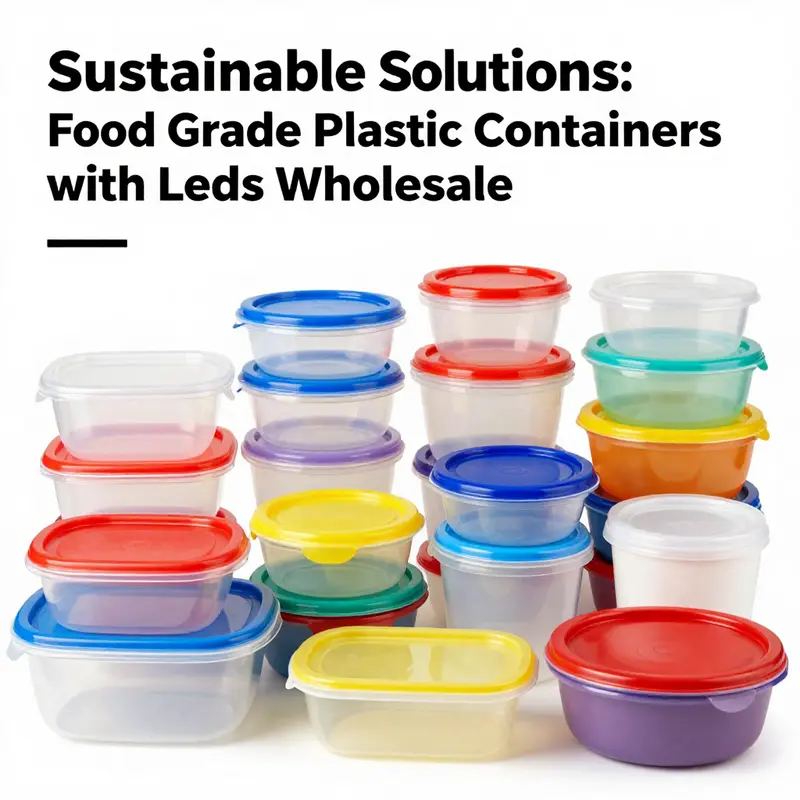
A market that touches every kitchen and every storefront is now evolving with a steady cadence that blends scale with sophistication. The global appetite for food-grade plastic containers with lids—designed to keep contents fresh, safe, and visually accessible—has moved beyond simple utilitarian needs into a complex ecosystem shaped by consumer expectations, logistical realities, and a tightening web of safety standards. The latest market signals suggest a trajectory that is not just about bigger volumes but about smarter materials, smarter processes, and smarter risk management for wholesale buyers who rely on consistent supply, predictable quality, and compliant performance across borders. In 2025 the market was already measured in the trillions of dollars in terms of related packaging activity, with projections pointing to a substantial rise through the mid- to late-2030s. Those figures reflect more than consumer appetite; they reflect the integration of packaged foods into everyday routines, the acceleration of ready-to-eat and ready-to-assemble meals, and the omnipresent push from retailers and food service providers to standardize packaging that can withstand transit, storage, and varying climates while preserving taste, texture, and safety. For buyers and suppliers alike, the core story remains stable: lids matter, seals matter, and the right combination of material, design, and governance can transform a simple container into a reliable link in a broader supply chain that spans kitchens, warehouses, and storefronts across the globe.
The regional currents behind this expansion are real and instructive. In particular, the Chinese market for disposable plastic food packaging containers has shown robust growth, propelled by a widening food ecosystem that includes an increasing share of ready-to-eat and pre-packaged meals, along with expanding cold chain logistics. This combination sustains demand for containers that are not only affordable in bulk but also engineered for durability and barrier performance. Yet the wholesale arena remains European, American, and Southeast Asian in its demand dynamics as well. In these regions, the emphasis often centers on regulatory clarity, traceable supply chains, and the ability to source in large quantities with tight lead times. In practical terms, buyers look for suppliers who can meet large orders—often down to a minimum order quantity that is feasible for distributors and food processors—while maintaining consistent quality across tens of thousands of units. Such expectations have fostered a marketplace where the competitive edge goes beyond price alone and into reliability, standardized fittings, and the ability to customize containers without sacrificing mass production efficiency.
A dominant driver behind these trends is the rise of convenience foods. Consumers increasingly favor meals that can be prepared or portioned quickly without compromising safety or freshness. In response, manufacturers and retailers demand packaging that supports not only portion control but also traceability and easy display. Clear containers, for example, enable retailers to showcase contents at a glance, which can improve shelf appeal and reduce handling time. For home kitchens, the ability to see contents quickly translates into easier organization and less waste, and for a food service operation, it translates into faster service and consistent portioning. The demand for airtight, shatterproof designs that resist leakage and protect against contamination has only grown as online grocery shopping and meal kits become entrenched in consumer routines. This combination of visibility, resilience, and hygiene is increasingly recognized as a baseline expectation among wholesale buyers who supply restaurants, caterers, and grocery chains with standardized packaging options.
Alongside functionality, the market is steering toward sustainability without compromising performance. The conversation around materials now frequently centers on mono-material designs that facilitate recycling, lightweighting strategies that reduce environmental footprints, and the ongoing exploration of bio-based or biodegradable alternatives. In practice, this translates into products engineered to maintain structural integrity and barrier properties while using simpler material constructs. High-barrier, heat-sealable, and lightweight options—often built from polypropylene and polyethylene in mono-material configurations—are becoming more prevalent, enabling longer shelf life for contents and lower transportation costs due to reduced weight. At the same time, brands and manufacturers are scrutinizing the end-of-life implications of their packaging through recyclability metrics and waste-management considerations. Although bio-based plastics and compostable variants are progressing, they still occupy a smaller share of the market due to cost and performance trade-offs. The wholesale channel, therefore, tends to favor materials that strike a careful balance: strong seals, clear visibility, compatibility with freezing and microwaving where applicable, and recycling friendliness that minimizes downstream liabilities for buyers and custodians of the supply chain.
Technology and material science are quietly changing the beat of this market as well. The push toward safer, more efficient packaging aligns with standards and testing regimes designed to curb the use of substances that could migrate into food. Among the notable shifts is the adoption of more sophisticated multi-layer co-extruded structures that improve barrier properties and enable lighter, thinner walls without sacrificing strength. These advances support the transition to high-performance PP/PE containers that can be heated, cooled, and stored with reduced material load. In parallel, regulatory ecosystems are tightening expectations. Standards that govern packaging for food contact—whether at the national level, regional, or international—emphasize rigorous testing for migration of substances, compliance with resin safety classifications, and verification through supplier certifications and third-party audits. For wholesale buyers, this means more due diligence in supplier selection and ongoing quality assurance programs. The result is a market where material choice carries implications not only for performance and cost but also for risk management, liability, and brand trust across a global customer base.
In this landscape, the competitive structure is evolving as well. Market consolidation is visible, with larger players leveraging economies of scale to offer consistent, scalable solutions. Yet there remains substantial opportunity for smaller, more specialized manufacturers and distributors that can pair advanced design with reliable production through streamlined supply chains. In wholesale terms, differentiation often centers on seal quality, ergonomics, microwave compatibility, and aesthetic appeal, alongside the ability to deliver predictable quantities on a just-in-time basis. The wholesale dynamic is squarely B2B: buyers such as food processors, restaurants, caterers, and retail chains depend on a narrow window of lead times, minimal disruption, and uniformity across regional distribution centers. The pursuit of reliability thus intersects with the pursuit of cost efficiency, as carriers and suppliers negotiate the balance between price and performance for bulk orders that can span continents.
From a procurement perspective, flexibility in manufacturing and packaging design is increasingly critical. The modern wholesale buyer demands options that extend beyond a single size or lid type. OEM and ODM capabilities—whether in lid geometry, reseal performance, venting features, or container shape—allow food-service operators and distributors to tailor packaging to specific product lines without sacrificing the advantages of mass production. The capacity to customize at scale is often tied to long-term supplier relationships, quality agreements, and the ability to implement track-and-trace mechanisms that assure provenance and compliance. In practice, these considerations shape a buyer’s vendor selection process in meaningful ways: they seek partners who can deliver a broad family of containers and lids, who can accommodate seasonal demand shifts, and who can sustain consistent quality with low defect rates while keeping total cost of ownership competitive.
The regulatory ecosystem remains a critical compass for wholesale decision-making. In the United States and the European Union, the governance of food-contact materials emphasizes that containers must be formed from resins deemed safe for food contact and that products should withstand intended use conditions without releasing harmful substances. A parallel emphasis exists in international standards, where testing for migration, heat stability, and chemical resistance is standard practice. For wholesale buyers, the practical upshot is the need for clear supplier certifications, documented testing results, and traceable materials declarations. Audits and third-party verifications have become routine expectations in the supply chain, not only to comply with regulations but to mitigate the liabilities that could arise from mislabeling or noncompliance. In a market where billions of units flow across borders, such due diligence is essential for maintaining consumer confidence, reducing recalls, and protecting brand equity.
To translate these trends into actionable strategies, buyers should approach supplier assessment with a balanced lens. Start with material science: demand evidence of barrier performance, chemical resistance, and temperature tolerance that align with the product’s shelf life and storage conditions. Emphasize compatibility with industrial cleaning and washing workflows that may occur in food service or retail settings, and verify that the chosen materials are appropriate for freezing, reheating, or microwave use if such functions are required. The need for airtight and leak-resistant lids cannot be overstated; the lid design is a determining factor in food safety, contamination prevention, and customer satisfaction. In practice, this means requesting seal-test data, long-term fatigue testing results, and independent verification of seal integrity under representative handling and transport conditions. Buyers should also evaluate the compatibility of containers with display and storage systems used across warehouses and retail floors, ensuring that stackability, nestability, and breakage resistance align with logistical realities.
The importance of visibility and assortment cannot be ignored. Clear containers remain a strategic option for retailers and food-service operators who prioritize visual inspection and rapid product identification. An overall packaging strategy that pairs clear or semi-clear containers with a standardized lid system can streamline operations and reduce training costs for staff at multiple locations. In addition to function, the market has shown a rising interest in customization that respects both aesthetics and performance. The wholesale channel increasingly values the ability to offer a range of lid geometries, sealing mechanisms, and ergonomically shaped containers that improve grip and ease of use in fast-paced environments. A flexible, scalable approach to manufacturing—one that can support a mix of sizes, lid styles, and surface finishes—will help buyers maintain a competitive edge without inviting supply chain fragility.
For readers seeking a concrete example of how packaging choices can align with broader market trends, consider the broader landscape of lid-and-container combinations that accommodate both display and durability. A prominent facet of this landscape is the emphasis on easy-to-clean designs and robust seal performance in high-use environments. The wholesale decision to standardize on a family of containers with compatible lids can yield significant gains in efficiency, particularly for food processors and retailers that operate multiple distribution centers. The pursuit of a reliable, scalable supply chain—coupled with clear regulatory compliance—now defines a practical benchmark for success in this sector. In addition, the market is increasingly supportive of cross-material experimentation, with designers exploring how polypropylene, PET, and HDPE can be blended or substituted to achieve the desired balance of strength, clarity, and recyclability. This experimentation is not a reckless gamble but a carefully calibrated strategy to address evolving consumer preferences, regulatory requirements, and sustainability goals.
Within this evolving framework, suppliers based in major manufacturing hubs offer compelling capabilities for wholesale buyers. Prices and minimum order quantities can be favorable for bulk procurement, while the breadth of materials—ranging from standard polypropylene and PET to HDPE and other resistant plastics—allows buyers to tailor packaging to a specific product category, climatic exposure, and distribution channel. The practical takeaway for wholesalers is the importance of vetting suppliers’ capabilities across a spectrum of criteria: material safety data, compliance certifications, proof of testing for migration under real-use conditions, and evidence of consistent performance across large production runs. The goal is not merely to secure low unit costs but to secure a robust, auditable supply chain that minimizes the risk of disruption and noncompliance.
To illustrate how these elements come together in the broader content ecosystem, consider how a wholesale buyer might explore alternative packaging formats that still fit within the container-with-lid paradigm. A strong approach is to assess the potential for mono-material or simplified two-material systems that enhance recyclability and reduce end-of-life complexity. The idea is to retain essential performance traits—airtight seals, impact resistance, and clarity where needed—while removing material complexity that can complicate recycling streams. This balanced approach often yields long-term cost advantages through improved recycling rates, easier waste management, and lower liabilities associated with noncompliant packaging. It also aligns with consumer expectations for responsible packaging choices and with regulatory pushes to reduce packaging waste and to improve end-of-life outcomes.
In this narrative, the wholesale market is not a static arena but a dynamic ecosystem where material science, regulatory compliance, and logistical discipline converge. When sourcing at scale, buyers increasingly favor suppliers that can demonstrate not just capacity but reliability: the ability to deliver in fixed lead times, the consistency of product specs from batch to batch, and proactive transparency about testing, certifications, and supply-chain governance. The payoff is a packaging solution that protects product integrity, supports efficient operations, and aligns with a growing corporate emphasis on sustainability and governance. Against this backdrop, the broader article moves from macro trends to practical implementation, turning attention to how buyers can navigate the sourcing landscape with confidence and clarity.
For readers who want to explore packaging options that complement the plastic container paradigm, consider this related example: kraft paper bowls with lids provide a tangible alternative for certain segments of the market that prioritize eco-friendly materials or specific display needs. These items illustrate how packaging ecosystems can offer complementary choices that still retain essential properties such as seal integrity and ease of use. If you want to see a representative example of such options in practice, you can explore a dedicated product page that highlights disposability, lid compatibility, and packaging efficiency. This kind of content underscores the broader theme: even as plastic containers with lids drive much of the wholesale demand, packaging ecosystems continue to diversify in response to consumer values, retailer requirements, and regulatory expectations. kraft paper bowls with lids.
The broader lesson for stakeholders across the supply chain is clear: successful wholesale performance hinges on a combination of technical excellence, regulatory diligence, and operational agility. Building a sourcing strategy around high-quality materials with proven safety profiles, coupled with a supply network that can scale and adapt to shifting demand, is essential. It also means embedding transparency into every stage of the process—from raw material sourcing and resin safety classification to supplier audits, batch testing results, and recall readiness planning. In a market where volumes are large and margins can be sensitive to disruption, the cost of complacency is measured in recalls, product withdrawals, and damaged relationships with retailers and end consumers. Conversely, the dividends of disciplined sourcing—consistent product performance, higher consumer trust, and resilient logistics—offer a durable competitive advantage that supports long-term growth and profitability in wholesale channels.
External resource for broader regulatory context: FDA packaging guidelines and food-contact substance safety considerations can provide a foundational reference as you navigate supplier qualifications and compliance checks. https://www.fda.gov/food/packaging-food-contact-substances
From Factory Floors to Store Shelves: Major Suppliers Shaping the Wholesale Market for Food-Grade Plastic Containers with Lids
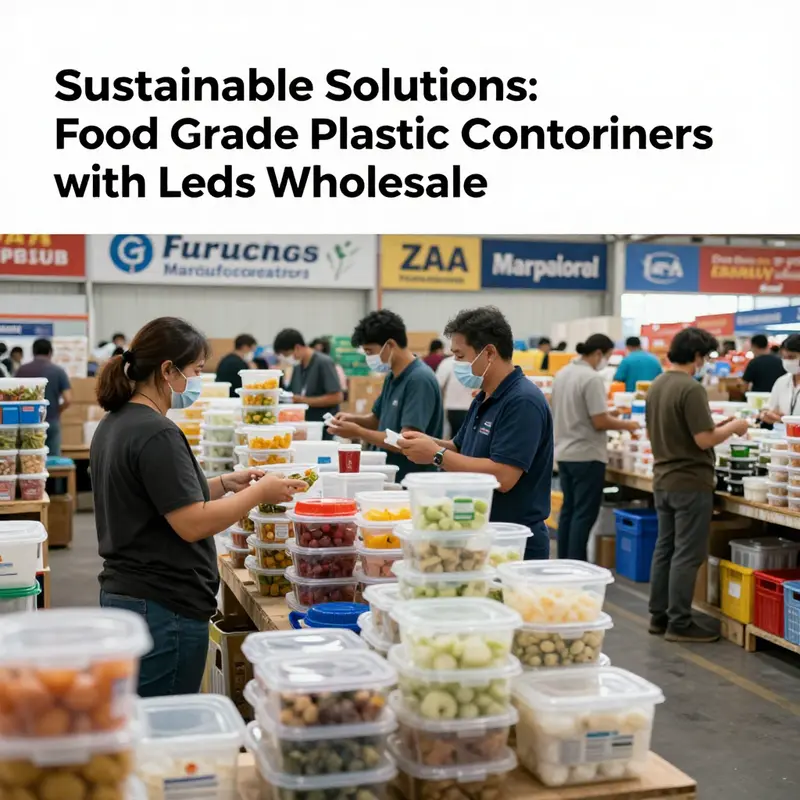
The wholesale market for food-grade plastic containers with lids sits at a crossroads where efficiency, safety, and sustainability converge. Demand travels in waves from diverse channels: large-scale food service operations that need dependable, leak-proof solutions; meal-prep services seeking uniform packaging that preserves freshness; and home retailers that prioritize practicality and recyclability. In this landscape, buyers pursue not only a container that can withstand daily use but also assurances about safety, compatibility with a broad range of foods, and predictable lead times. This is why the supplier base matters as much as the product itself. The most influential players are those who can translate a simple plastic box into a reliable logistics asset for a business, offering consistent quality, scalable production, and a clear path to compliance across different regulatory environments. The wholesale ecosystem rewards manufacturers who combine robust engineering with transparent testing and dependable delivery networks because food safety and shelf life depend on both the material and the way it is manufactured, treated, and shipped.
Trends shaping this market are as much about how packaging performs as they are about the materials themselves. A clear thread runs through the industry: the push toward materials that provide durability and heat resistance while minimizing environmental impact. In practice, this means shifting away from single purpose polymers toward resins that offer broad compatibility with cold and warm foods, resistance to impacts, and suitability for stackability. The emphasis on airtightness and shatter resistance has intensified, especially for portion-controlled meals and grab-and-go offerings, where a compromised seal can undermine food safety and spoilage control. Buyers increasingly look for containers with tight-sealing lids and robust closures that resist condensation and leaks during transport, storage, and retail display. Alongside durability, there is a growing appetite for clarity in packaging. Transparent containers enable quick visual inspection of contents, a feature that supports efficient inventory checks in kitchens, retailers, and catering operations and that can also enhance product presentation on shelves. Clear designs therefore remain a strategic asset, particularly for retailers that rely on visible quality as a trust signal for customers.
Material choices have evolved beyond the traditional, to include blends and alternative formats that balance performance with sustainability. A notable shift is the adoption of more resilient, reusable, and recyclable plastics that respond to consumer demand for eco-friendly options without compromising performance. In practice, suppliers describe a portfolio that includes clear and opaque options, with a growing emphasis on resins that perform well in refrigeration and freezing, resist cracking in cold storage, and maintain clarity when heated briefly or run through pasteurization-like processes. At the same time, the market recognizes the importance of compatibility with a broad spectrum of foods, from acidic sauces to fatty products, and from frozen items to ready-to-serve meals. To meet these needs, manufacturers invest in stringent testing and certifications that demonstrate safe contact with food under typical usage conditions. This testing often covers migration of additives, surface residues, and the stability of colorants under temperature cycling. Buyers can therefore pursue a service level that encompasses not only a container’s physical attributes but a documented chain of safety that aligns with cross-border requirements.
Customization has moved from nice-to-have to essential in many segments of the wholesale market. OEM and ODM capabilities allow buyers to tailor containers to brand identity, packaging formats, and specific operational needs. For example, some manufacturers offer a library of lid designs and stacking geometries that optimize warehouse space, while others provide color options, labeling compatibility, and even smart manufacturing features such as tamper-evident closures. The result is a packaging ecosystem that can be tuned to a buyer’s exact requirements, from the dimensions of a clamshell to the aperture size of a leak-resistant lid. The scale of these fulfillment programs matters too. Large-scale producers can often meet the daily throughput demands of major distributors, while also offering smaller minimum order quantities for smaller retailers or regional distributors who are testing new lines. In practice, this combination—strong capacity, flexible MOQs, and a willingness to collaborate on packaging solutions—helps shape a reliable supply chain where reliability translates into predictable business performance.
In examining who the major suppliers are in wholesale terms, three archetypes stand out, each representing distinct strengths within the global packaging ecosystem. The first is a specialist in silicone and plastic kitchenware, a company whose breadth spans household items to promotional gifts, with a well-documented export footprint that extends to dozens of markets. This type of supplier is valued for its integrated quality controls and its ability to manage a broad assortment of container formats, including the plastic food storage options that form the backbone of many catering and retail programs. The second archetype is a packaging-focused firm that has carved out a niche around containers for bakery and snack applications, including biscuit and related packaging solutions. This kind of producer tends to emphasize fast response, reliable reorders, and a dynamic product mix that can accommodate seasonal demand and promotional campaigns. The third archetype is a large, scale-oriented manufacturer operating on a substantial footprint, with facilities that cover tens of thousands of square meters and a staff with extensive experience in production planning and logistics. This type of supplier frequently delivers high on-time performance and robust delivery schedules, supported by a mature quality assurance regime and a well-developed distribution network.
Together, these archetypes illustrate the spectrum of capacity and service that buyers seek in a wholesale market that spans multiple continents and regulatory environments. While each falls into a distinct category, the underlying commonalities are clear: a commitment to safety and quality, a track record of meeting large and variable orders, and an ability to coordinate across supply chains in ways that minimize risk for customers. In practical terms, this means the most effective suppliers offer a consolidated value proposition. They provide the material science that informs lid compatibility and seal integrity, the process discipline that ensures uniform wall thickness and lid closure performance, and the logistical fluency to guarantee timely deliveries to factories, distribution centers, and retail partners around the world. The result is a packaging partner that can scale with a buyer’s growth while maintaining the assurances that end users expect when handling food—the assurance that every container not only looks the part but performs safely under a wide range of conditions.
A crucial dimension in evaluating these suppliers is the breadth of material options they can deploy. Buyers look for a portfolio that includes polypropylene and polystyrene for everyday cold or cool temperature uses, polyethylene for impact resistance, and clear PET for visibility without sacrificing color retention or rigidity. Some suppliers also extend their resin mix to include BPA-free copolymers and more advanced clear polymers that tolerate high-frequency cycles of washing or sanitizing in commercial kitchens. The ability to mix and match resins with precise wall thickness tolerances, sealed lid geometries, and consistent dimensional stability becomes a differentiator when a buyer is planning a multi-year packaging program. In this context, suppliers who can articulate the trade-offs between stiffness, clarity, and heat resistance, while aligning those traits with regulatory requirements, tend to win preference among procurement teams that value long-term predictability.
Beyond material science, regulatory alignment remains a nonnegotiable factor in wholesale packaging decisions. The global market is shaped by strict food contact safety standards, and buyers cannot afford to source containers that lack verifiable certifications. In the United States, the Food and Drug Administration sets the baseline for what resins and additives can be used in containers intended for contact with food. In Europe, a combination of regulations and harmonized standards governs how packaging materials are evaluated for safety and migration potential. International standards such as ISO frameworks also provide a common reference point for testing methodologies, allowing buyers to compare suppliers with a consistent yardstick. For procurement teams, the path to compliance typically involves requesting supplier certifications, audit reports, and documentation detailing testing protocols and results. In practice, this material risk management translates to fewer recalls, lower liability exposure, and more stable relationships with customers who expect packaging that keeps foods safe from production line to plate.
To navigate this landscape effectively, buyers often rely on the extensive networks that large Asian-based manufacturers have built through years of export activity. The ability to export to multiple regions—Europe, the Americas, and diverse Asia-Pacific markets—creates a robust supply chain that can absorb currency fluctuations, regional shifts in demand, and occasional production delays. These firms frequently operate on platforms that connect buyers with producers, where MOQs can be as modest as a few thousand units for some formats and as high as tens of thousands for flagship container lines. The advantage of such scale is not only cost efficiency but also the capacity to standardize packaging across a customer’s entire portfolio, ensuring uniform seals, consistent dimensions, and common labeling formats that simplify downstream logistics and shelf presentation. Yet scale must be balanced with quality systems that sustain performance across batches. Reputable suppliers emphasize robust quality control, traceable batch records, and clear metrics on defect rates, all of which reassure retailers and food-service operators who depend on consistent packaging performance.
While there is a clear emphasis on plastic, the market also recognizes the value of offering complementary packaging options. Some buyers explore paper-based or hybrid solutions for certain product lines, particularly where sustainability criteria are top of mind or where brand positioning calls for more natural aesthetics. For instance, consider a disposable takeaway paper cup with a lid that supports a brand’s message around compostability or recycle-friendly design. The inclusion of such paper-based options in a supplier’s catalog demonstrates a capacity for cross-category packaging programs, enabling buyers to consolidate sourcing for diverse packaging materials under one supplier ecosystem. This integrated approach helps streamline procurement, reduce supplier management overhead, and foster a more resilient supply chain that can adapt to shifting consumer preferences or regulatory expectations. A representative example of this broader packaging conversation is the availability of paper-based takeaway products that can be customized with logos and branding to align with a retailer’s corporate identity, while continuing to operate alongside plastic containers in the same supply network. For reference and possible context on this alternative packaging track, readers can explore a related offering such as the disposable takeaway paper cup with logo customization that is described in the linked post on a sustainable packaging portfolio.
In practice, buyers should approach supplier evaluation as a multi-layered process. Start with compliance and technical capability: confirm that a supplier can meet the necessary food-contact standards and has a track record of testing that demonstrates migration limits and safety under real-world conditions. Next, assess production reliability and scalability: request lead times, capacity plans, and evidence of on-time delivery performance. Then examine material performance and compatibility: solicit data on clarity, impact resistance, temperature tolerance, and chemical resistance to a broad spectrum of common food items. Finally, consider lifecycle and sustainability commitments: ask about recyclability, end-of-life options, and any steps toward reducing the environmental footprint across the packaging program. By integrating these dimensions into a single due-diligence framework, buyers can select suppliers who not only deliver the right container at the right price but also support a stable, safe, and future-ready packaging program.
As buyers think about the broader packaging ecosystem, the decision to source from major suppliers becomes a question of how well a partner can grow with a business. In a wholesale setting, that growth translates into standardized formats that can be produced at scale, consistent with regulatory expectations, and delivered on a timetable that aligns with seasonal demand and promotional campaigns. It also means choosing partners who can translate feedback from kitchens, warehouses, and retailers into product refinements, whether that means revising lid geometry for improved sealing, adjusting the wall thickness for better stacking, or selecting a resin that offers clearer optics while remaining within permissible safety thresholds. The most successful collaborations happen when both sides invest in continuous improvement, sharing performance data, and co-developing solutions that reduce waste, enhance shelf life, and improve handling in cold or hot environments. In the end, the wholesale market for food-grade plastic containers with lids rewards suppliers who combine technical rigor with practical logistics, a customer-focused approach to customization, and a compliance-first mindset that reduces risk for every link in the supply chain.
For readers who want to explore adjacent packaging formats that complement plastic containers, there is a relevant resource that illustrates how packaging suppliers diversify their offerings while maintaining a consistent standard of quality. The example highlights the value of cross-category packaging programs, including paper-based solutions, which can be integrated with plastic packaging to deliver a holistic packaging strategy. You can learn more about these sustainable options here: disposable-takeaway-paper-cup-custom-logo-kraft-coffee-cup-with-lid.
Ultimately, the wholesale market for food-grade plastic containers with lids rests on a simple, durable premise: safety, performance, and reliability must be inseparable from scale and service. The major suppliers who win in this arena do so not just by offering a wide catalog of containers but by proving their capacity to deliver consistently under pressure, with a clear compliance story, and with the flexibility to adapt packaging programs to a brand’s evolving needs. As regulations evolve and consumer expectations shift toward more responsible packaging choices, the best partners become navigators of a changing landscape—helping buyers translate a packaging idea into a supply chain asset that preserves food quality, protects brand integrity, and strengthens the business’s competitive position.
External resource: https://www.fda.gov/food/food-contact-substances-fcs
Guardrails of Safety: Navigating Regulations and Compliance for Wholesale Food-Grade Plastic Containers with Lids
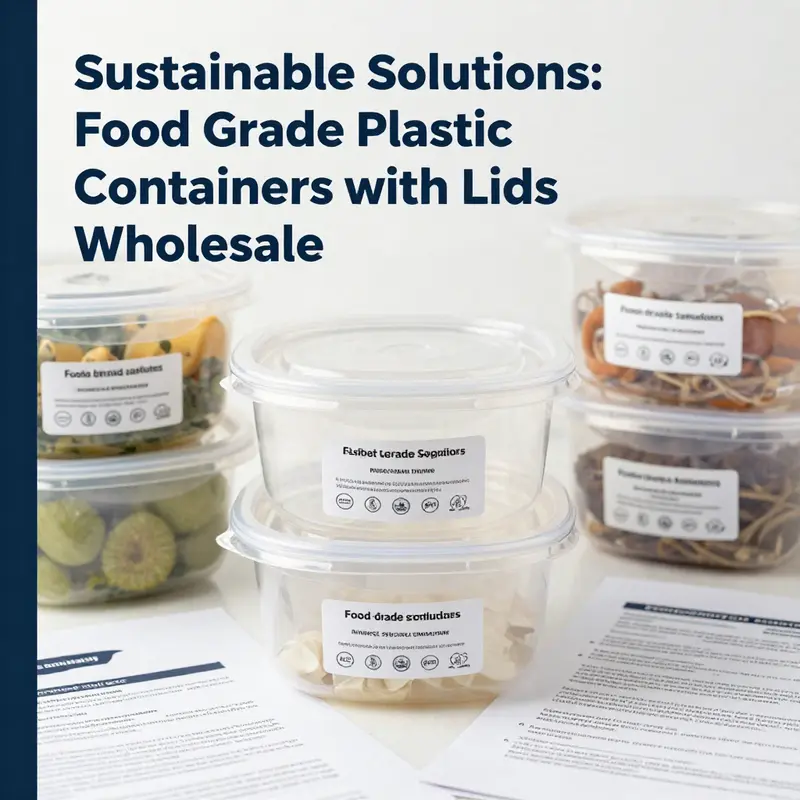
Across the wholesale landscape, food-grade plastic containers with lids operate at the intersection of convenience, durability, and public health. Buyers in bulk must move beyond price and appearance to demand verifiable assurance that every batch will perform consistently under real-world use while remaining inert in contact with a broad spectrum of foods. This is not merely a matter of meeting a standard once; it is a discipline of ongoing verification, documentation, and risk management that tightens the integrity of the entire supply chain. When a retailer, food service operator, or meal-prep business orders tens of thousands of containers, the stakes are high. A lapse in safety testing or a misinterpretation of regulatory language can create liabilities, disrupt operations, and compromise consumer trust. In this context, understanding the regulatory landscape—and how suppliers demonstrate compliance—is essential for wholesale success and long-term sustainability.
At the core of regulatory attention are two converging tracks: the United States framework anchored by the FDA and the European Union framework anchored by Regulation (EC) No 1935/2004, with its contemporary updates and specific migration limits. The two regions approach the same essential objective—protecting human health by ensuring that materials intended for food contact do not release substances that could endanger consumers. While these regimes share a common aim, they differ in emphasis, testing regimes, labeling expectations, and the precise thresholds for migration. For wholesale buyers, recognizing these nuances matters because it informs supplier selection, batch validation, and the design choices that ultimately determine whether a container can be marketed for a given region or for multiple markets without costly redesigns. The starting point is to understand that the market-access question hinges on compliance documentation, robust testing, and clear usage guidelines that reflect the resin chemistry, the lid materials, and the conditions in which the container will operate.
In the United States, the FDA governs materials that come into contact with food through Title 21 of the Code of Federal Regulations. Materials such as polypropylene (PP), polyethylene terephthalate (PET), and polystyrene (PS) must come from resins approved for food contact. The focus extends beyond simply selecting an ingredient that seems inert. It encompasses the prevention of chemical leaching, especially under stress conditions such as microwaving, hot-fill processes, or extended storage. Wholesale suppliers must provide proof that each resin is suitable for its intended use and that additives, colorants, and surface treatments will not migrate into food at harmful levels. For buyers, securing this assurance means requiring Certificates of Compliance (CoC) and Material Safety Data Sheets (MSDS) for every lot, accompanied by batch-specific test results and supplier declarations of conformity. These documents are not decorative—they are the legal and operational backbone that underpins a compliant wholesale transaction.
On the European front, Regulation (EC) No 1935/2004 sets the high-level safety requirements for materials intended to come into contact with food. The regulation emphasizes general safety, ensuring that materials do not transfer constituents to food in quantities that could endanger health. It is complemented by specific migration limits defined under Regulation (EU) No 10/2011, which translate safety into measurable, enforceable thresholds. For wholesale buyers, the practical implication is a demand for stability of performance across a broad range of temperatures, foods, and contact durations. Substances with potential to migrate must be tested under validated conditions to confirm that they stay within permitted limits. Labeling considerations also come into play, signaling to downstream users the containers’ suitability for food contact and any restrictions—such as microwave suitability or hot-fill caution. The regulatory architecture, thus, creates a comprehensive framework that shapes design choices, production controls, and the information a supplier must disclose to maintain market access across jurisdictions.
For wholesale purchasers, the diligence does not stop at regulatory compliance. It extends into a structured approach to certification, testing, and documentation that confirms a supplier’s competence and reliability. Third-party verification serves as an anchor in a market where products flow through varied channels, from distributors to frontline kitchens. Reputable manufacturers frequently engage accredited laboratories to perform migration testing, heat resistance assessments, and chemical compatibility studies that mirror real-world use. The outcomes of these tests—limits achieved, conditions tested, and the exact materials evaluated—are critical for risk management. They provide the evidence that a batch will not fail under expected use, whether it is stored in a cool cabinet, heated in a microwave, or subjected to repeated washing in a sanitation cycle. Wholesale buyers should look for a clear chain of custody and traceability that links the test results to specific lots, production runs, and supplier lot numbers. This chain of custody is essential for recall readiness and for defending against any future regulatory inquiries.
Beyond testing, the documentation format matters. CoCs, MSDSes, and similar records should be readily accessible and clearly aligned with the product’s intended use. CoCs demonstrate that the resin and additives have met applicable standards and that the supplier has vetted the materials for food-contact safety. MSDS documents provide hazard communication details, including potential risks during handling, storage, and disposal. In a wholesale setting, where containers may travel across borders and through multiple distributors, the efficiency of documentation can determine the speed of market entry and the ability to resolve regulatory questions without delay. In practice, this means suppliers should provide ready access to testing certificates, migration data, and certifications such as ISO 22000 or FSSC 22000 that reflect a mature food safety management system. While not all wholesale suppliers pursue every certification, the presence of recognized food-safety frameworks signals a disciplined approach to risk reduction and continuous improvement.
One practical implication for wholesale buyers is the need for precise labeling that communicates the container’s intended use and any limitations. The EU regime, for instance, supports explicit labeling to guide end users about microwave suitability, hot-fill compatibility, or dishwasher-resistance expectations. In the United States, while labeling requirements may be less prescriptive in some contexts, marketers still must ensure that claims such as “food contact safe” or “microwave safe” are accurate and substantiated by testing. The labeling ecosystem, therefore, is not a cosmetic feature; it functions as a risk-mitigation tool that reduces misapplication, avoids consumer confusion, and supports post-market vigilance.
A crucial element in the wholesale decision calculus is the practical reality of resin selection and its migration profile. Polypropylene, PET, and PS each present distinct advantages and challenges. PP is widely favored for its chemical resistance and relatively high heat tolerance, but its performance is contingent on additives and stabilizers. PET offers good clarity and barrier properties but requires careful assessment of its compatibility with certain foods or condiments that may interact with the polymer. PS, while inexpensive and easy to process, can have migration concerns that require precise testing, especially for extended cold storage versus hot-fill scenarios. In all cases, wholesale buyers should insist on resin documentation that details the base polymer, the additives, and the exact grade used. For those operating in markets with strict migration limits, reclaiming a supplier’s full material certificate chain—reagent lists and resin lot numbers—becomes essential to demonstrate traceability and accountability across the entire supply chain.
A further dimension of risk management involves the structural characteristics of the containers themselves, especially when lids are part of the packaging system. Airtight designs, shatter resistance, and seal integrity are all features that influence food safety by reducing exposure to air and contaminants and by maintaining moisture and oil containment. The materials chosen for lids—whether silicone seals, elastomeric gaskets, or thermoplastic closures—must be compatible with the base resin under typical use conditions. Compatibility testing should cover repeated opening and closing cycles, exposure to detergents and sanitizers, and temperature fluctuations. Wholesale buyers should verify that the lid materials do not introduce contaminants or migration phenomena that could undermine the safety profile of the container. This becomes particularly salient when the product is used for high-risk foods or extended shelf life, where any marginal migration could accumulate to measurable levels over time.
The landscape of regulatory compliance also intersects with broader quality-management and operational standards. ISO 22000 and FSSC 22000, while not substitutes for chemical-specific regulations, provide a structured framework for managing hazards across the supply chain, including prerequisite programs, traceability, supplier management, and continual improvement. For wholesale operations, alignment with these standards signals a mature approach to safety culture and process control. It does not erase the need for resin-specific testing and regulatory conformity, but it complements them by creating a robust system for preventing contamination, ensuring accountability, and verifying staff competence in handling and quality checks. Buyers who value resilience in supply chains will often prioritize suppliers who demonstrate a combination of regulatory compliance with recognized food-safety-management certifications and clear, auditable processes for supplier verification and batch release.
In practice, the wholesale procurement journey for food-grade plastic containers with lids becomes a careful balance of regulatory clarity, proven test results, and transparent documentation. It is not enough to specify a preferred resin type; buyers must confirm that the supplier has validated that resin through migration testing appropriate to the product’s intended use and that the results are traceable to the exact lot destined for sale. It is not enough to rely on broad assurances of safety; buyers must obtain CoCs and MSDS, ideally augmented by third-party test reports that corroborate the supplier’s internal data. It is not enough to rely on labeling alone; buyers must ensure that the labeling has been validated against the actual performance of the container in realistic use scenarios. In this context, the wholesale decision becomes an exercise in risk governance: channel the best available testing, demand comprehensive documentation, and insist on explicit, region-specific usage guidance that aligns with the destination markets.
At the point of supplier selection, one practical approach is to request a structured proof package that includes: (1) a material specification sheet with the base resin, grade, and additives; (2) migration testing data under multiple conditions that reflect typical temperature and contact times; (3) CoCs and MSDS for each component of the container and lid; (4) evidence of adherence to recognized food-safety-management systems; and (5) clear labeling and usage guidelines that translate into real-world handling, microwaving, and storage practices. Wholesale buyers should also consider establishing clear batch-release criteria, such as requiring a certificate that ties a given shipment to test results and regulatory conformance. This approach reduces the risk of unexpected regulatory questions after delivery and provides a defensible trail should a market authority request documentation.
Finally, the practical realities of cross-border wholesale commerce underscore the importance of clear communication and expectations about regional allowances. The United States and the European Union do not uniformly apply every standard, and some materials may be subject to additional country-specific requirements or temporary restrictions. In some cases, substances banned or restricted in one jurisdiction may still appear in permissible levels in another, provided the test data supports it. Wholesale buyers should cultivate a rigorous due-diligence posture, recognizing that documentation, testing, and accurate labeling are not optional add-ons but integral parts of a compliant and resilient supply chain. This holistic approach—combining regulatory literacy, robust testing, rigorous documentation, and transparent supplier performance—serves as the foundation for sustainable growth in the market for food-grade plastic containers with lids.
For readers seeking a concrete reference point in the wholesale packaging landscape, consider the wholesale take-away coffee cups with lids page as a practical example of how suppliers communicate capability, scope, and compliance in a retail-to-wholesale context. This page illustrates how bulk suppliers present evidence of conformity, usage guidance, and product performance in a format that is accessible to buyers who manage large inventories and complex regulatory needs. Wholesale take-away coffee cups with lids.
In sum, regulations and safety standards for food-grade plastic containers with lids wholesale are not static checklists. They are dynamic, context-specific requirements that emerge from fundamental concerns about food safety, consumer protection, and market integrity. The best wholesale partners are those who translate regulatory language into tangible, auditable processes that hold up under scrutiny from regulators, customers, and end users alike. They provide not just containers, but confidence—confidence that every lid sealing a meal, every batch stored, and every service moment upholds the highest standards of safety and trust. For ongoing reference, the FDA’s guidance on food contact materials remains a valuable external resource that informs the broader regulatory picture and reinforces the importance of evidence-driven compliance in wholesale packaging.
External reference: FDA guidance on food contact materials for further regulatory context: https://www.fda.gov/food/food-contact-materials
Final thoughts
Understanding the intricate relationship between market trends, reliable suppliers, and stringent safety regulations is essential for businesses in food service sectors. By investing in high-quality food-grade plastic containers, you not only enhance your operational efficiencies but also align with consumer demands for safety and sustainability. Remember, making informed choices about where to source your containers can significantly impact your brand’s reputation and customer loyalty. Stay informed and stay ahead by embracing these insights.