
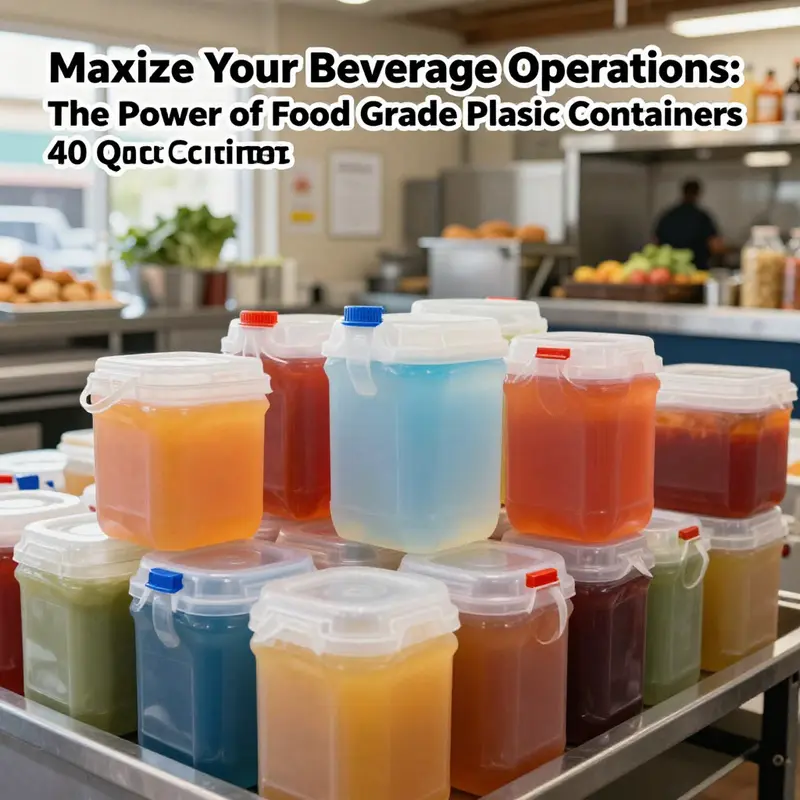
Food-grade plastic 40-quart containers with lids present an exceptional storage solution for various businesses in the beverage and food industry. Their high-capacity design and robust composition make them ideal for storing everything from tapioca pearls in bubble tea shops to bulk ingredients in restaurants. As we explore the material composition, practical applications, and safety regulations associated with these containers, you will gain a comprehensive understanding of how to leverage them effectively in helping streamline operations, ensuring safety, and enhancing the freshness of your products.
Inside the Plastic: How PET and Polypropylene Shape 40-Quart Food-Grade Containers
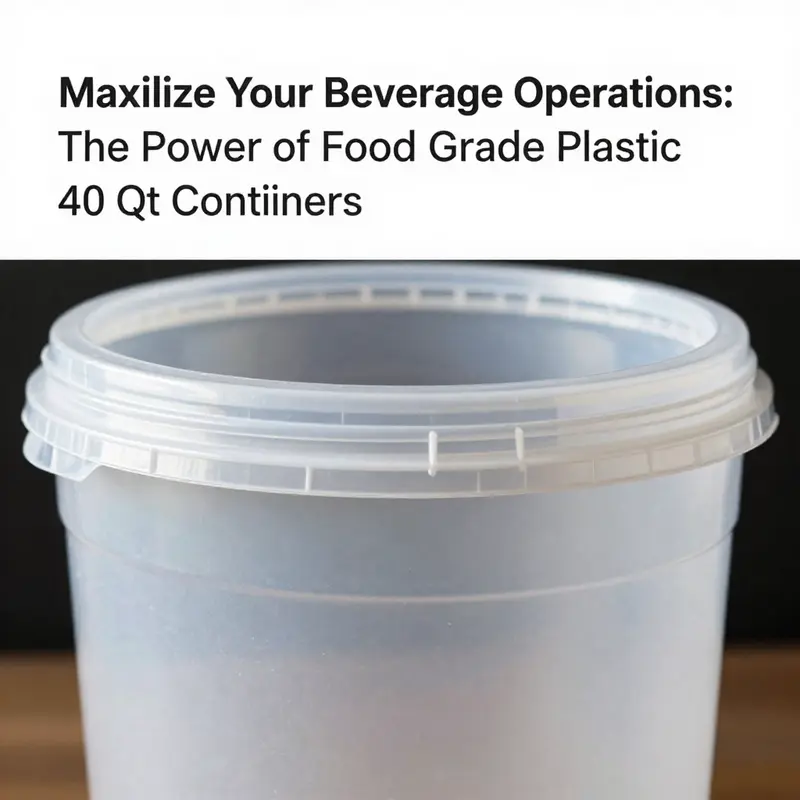
Material identity is the foundation of performance for any food-grade 40-quart container. The resin chosen for body and lid determines durability, chemical stability, stackability, and long-term food safety. When you select a large-capacity container for bulk pantry goods, catering, or commercial storage, you are really choosing a combination of material science and design. Two polymers dominate this category: polyethylene terephthalate (PET) and polypropylene (PP). Each brings a distinct balance of strength, clarity, thermal behavior, and regulatory acceptance. This chapter explains what those materials are, why they are chosen, how they behave in real use, and what practical trade-offs you should expect from a food-grade 40-qt container with a lid.
Plastic selection starts with the intended use. A 40-quart vessel is large enough for several kilograms of dry goods. It must resist impact, hold its shape under stacked weight, and keep pests and moisture out. Manufacturers typically use either PET or PP for the container body, sometimes complemented by high-density polyethylene (HDPE) or gasket materials for seals. PET and PP differ in molecular structure, which produces different physical properties. The molecular backbone of PET contains ester groups, which give the material rigidity and clarity. Polypropylene is a semi-crystalline polyolefin with a hydrocarbon backbone, which gives it toughness, heat resistance, and chemical inertness. These fundamental differences drive design decisions for everything from wall thickness to lid type.
PET is prized for its clarity and tensile strength. In contexts where you want a transparent or semi-transparent side panel to quickly identify contents, PET is an excellent choice. It resists impact better than many amorphous plastics, and it offers good barrier properties against gases. For dry goods like rice, flour, or pet food, PET’s low permeability helps slow stale odors and oxidation. It is also compatible with direct food contact regulations. PET is often used in bottles and clear food containers because it can be thermoformed or blow-molded into shapes that deliver structural strength with relatively thin walls. For a 40-quart container, PET allows designers to create rigid, stackable shells while keeping weight reasonable.
Polypropylene is the other widely used resin. It is inherently opaque or translucent, though it can be made clearer through modification. PP stands out for its fatigue resistance and resistance to chemical attack. That makes it ideal for lids, hinges, and snap-fit closures. Polypropylene tolerates higher temperatures than many other common food-grade plastics. This heat tolerance translates to better performance in warm environments or during sterilization cycles, when permitted. It also resists cracking under repeated flexing. For heavy-duty use—warehouses, catering operations, or transport—PP components provide durability and long service life.
Heat resistance and temperature limits are important in practice. Neither PET nor PP should be exposed to direct oven heat. PET has a glass transition temperature and starts to deform at temperatures common in dishwashers when set to high heat cycles. Polypropylene resists higher temperatures but will still warp if exposed to prolonged, extreme heat. Most manufacturers mark their containers as dishwasher-safe when used on the top rack only. The practical implication: if you need to sanitize or clean thoroughly, cool to warm water and mild detergents are best. Avoid boiling water or autoclaving unless the product specifically states it can tolerate such processing.
Food-safety compliance is non-negotiable. Both PET and PP are well-established as food-contact safe when produced under appropriate standards. In the U.S., materials intended to contact food must comply with FDA food-contact regulations. In the EU, the Food Contact Materials Regulation sets similar obligations. Besides the base polymer, compliance depends on additives, colorants, and processing aids. Food-grade formulations avoid non-intentionally added substances that can migrate into food. Manufacturers will typically certify compliance and provide documentation. For buyers, the practical step is to verify labeling: “food grade,” “FDA compliant,” or an explicit reference to applicable standards. If you use containers to store food for resale or for vulnerable populations, retention of compliance documentation is wise.
Additives shape many functional traits. UV stabilizers prevent sun-exposed containers from becoming brittle. Antioxidants protect the polymer chain during high-temperature processing. Slip and anti-block agents ease molding and handling. Colorants give opacity, but they can also hide contents. When clarity matters, PET is often uncolored. For opaque applications where UV protection is needed, PP with an ultraviolet absorber is common. Importantly, food-contact grade additive packages are formulated to minimize migration and meet regulatory criteria. Certificates of analysis or declarations of conformity typically list major additives and their compliance status.
Seals and lids are where material meets design intent. A tight, leak-resistant closure is critical for long-term freshness. In many 40-quart containers, the lid is designed as an interlocking or snap-fit assembly. Polypropylene commonly serves as the lid material because its flexural properties enable reliable snaps and living hinges. In other systems, a gasket of food-grade silicone or thermoplastic elastomer (TPE) enhances the seal. Silicone gaskets provide excellent sealing against moisture and pests. They also tolerate repeated cycles and temperature variations. When evaluating lids, look for features such as recessed rims that accept a gasket, integrated latches for mechanical retention, or double-seal designs that combine friction fit with an elastic gasket.
Stackability and load-bearing matter for storage and transport. Material properties directly affect how containers stack. PET’s rigidity allows neat stacking without bulging, provided wall thickness is sufficient. PP lids often incorporate ribs to distribute load and prevent deformation under stacked weight. To ensure stability, designs may include anti-slip pads or recesses that mate between lids and container bases. Over time, plastic can creep under constant load. Higher crystalline content and appropriate reinforcing ribs reduce creep. For long-term storage when containers are consistently stacked, choose heavier-duty configurations with thicker walls and reinforced lids.
Barrier performance is not merely academic. Oxygen transmission rate (OTR) and water vapor transmission rate (WVTR) influence the shelf life of dry goods. PET typically offers better oxygen barrier properties than PP, which is why it is favored for applications where oxidative rancidity is a concern. For many dry bulk items stored in typical home or commercial settings, both PET and PP perform adequately, but if you expect prolonged storage in variable humidity, consider PET or use additional barrier liners or oxygen absorbers. For wet or highly oily foodstuffs, the chemical compatibility of the plastic and seal is critical. PP’s chemical resistance makes it better for fatty or slightly acidic foods.
Cleaning, maintenance, and lifespan are practical concerns for users. Repeated cleaning cycles, UV exposure, mechanical abrasion, and loading stress all age plastic. PET can develop crazing or micro-cracks over time when scratched by abrasive cleaning pads. Those micro-cracks can trap bacteria, so inspect containers regularly. PP tolerates more mechanical abuse but may gradually yellow under UV exposure. For both materials, replace containers that show structural damage, persistent odors, or compromised seals. Use mild detergents and avoid abrasive pads. If lids include gaskets, remove them and clean beneath regularly. Silicone gaskets are usually dishwasher-safe and easy to sanitize, but check manufacturer guidance.
Environmental considerations and end-of-life options are increasingly part of procurement decisions. PET and PP are both recyclable in many municipal systems. PET has a well-established recycling stream, often identified by resin identification code 1. PP carries code 5 and has growing recycling capacity, though it is less commonly collected in some areas. When reuse is the goal, a durable container made of PP or PET reduces single-use waste. If recycling is the end-of-life plan, rinse residues to reduce contamination in the recyclable stream. Where possible, choose containers produced with recycled content, and verify whether the item itself is accepted by local recycling programs.
Perceived safety concerns often center on bisphenol A (BPA) or other plasticizers. PET and PP do not require BPA in their formulations. Reputable food-grade suppliers avoid controversial plasticizers that pose migration risks. Still, the presence of additives or recycled feedstocks can raise questions. If you need the highest level of assurance, request declarations from the manufacturer that list both the base resin and any additives. For sensitive applications, materials certified to recognized food-contact standards can provide extra peace of mind.
Design cues influenced by material composition are easy to spot. Thinner, clearer walls generally indicate PET. Thick, slightly opaque shells or lids with flexible snaps point toward PP. Reinforcing ribs and interlocking lid geometries reveal an intent to maximize load capacity. Gaskets and double-wall lid edges signal attention to airtight performance. A well-designed 40-qt container balances these features: a rigid PET or PP body, a resilient PP lid with a gasket or positive-locking mechanism, and molded handles sized for ergonomic lifting.
Choosing between PET and PP for a 40-quart container depends on priorities. If visibility and oxygen barrier matter, PET is attractive. If repeated toughness, chemical resistance, and higher heat tolerance matter, PP becomes preferable. Many premium designs combine materials. For example, a PET body with a PP lid leverages the clarity of PET and the flexibility of PP. Other hybrid approaches use HDPE for bases where impact resistance is prioritized. When hybrid materials are used, manufacturers usually ensure compatibility at seams and joints to avoid stress concentration and to preserve food safety.
Practical selection advice boils down to fit-for-purpose questions. Will the container be stored in sunlight or a hot warehouse? Choose PP or use UV-stabilized formulations. Do you need to see contents at a glance? Favor PET or translucent options. Is the container expected to endure repeated mechanical handling and rough transport? Look for thicker walls, reinforced lids, and PP components. Is long-term shelf life of dry goods your main concern? Consider PET or supplementary barrier liners. Always confirm food-contact certifications and ask for documentation if the application has regulatory consequences.
Finally, small details often make the biggest difference in daily use. Integrated labeling areas, stack alignment features, and ergonomic handles are low-tech but high-impact. Materials influence whether those features can be molded into a single piece or require additional components. For instance, a living hinge molded in PP simplifies lid attachment. Clear panels molded in PET remove the need for external labels. Choosing a container built with thoughtful material selection reduces operational friction and extends usable life.
For technical reference on regulatory definitions and safe food-contact materials, consult the appropriate food-safety authority guidance. The U.S. Food and Drug Administration provides detailed information on food-contact substances and compliance criteria at https://www.fda.gov/food/packaging-food-contact-substances-fcs/food-contact-substances-fcs/.
If you are interested in alternative packaging that combines fiber-based shells with PET lids, review designs such as the kraft paper bowl with PET lid for ideas on how hybrid materials are brought together to meet food-service needs. https://greendispopack.com/product/custom-disposable-kraft-paper-bowl-take-away-kraft-paper-salad-bowl-with-pet-lid/
Material choice is not merely a technicality. It defines how a 40-quart food-grade container will perform under load, protect contents, age over time, and comply with food-safety rules. Understanding the differences between PET and PP helps you choose a container that fits your storage, handling, and regulatory needs. With the right material and a well-engineered lid, a large plastic container can be a reliable workhorse for both home and commercial food storage.
How 40‑Quart Food‑Grade Plastic Containers Transform Bulk Storage: Practical Uses and Smart Practices
Practical Uses and Smart Practices
Food-grade plastic 40-quart containers with lids serve as a foundational tool for household and commercial storage. Their size, material, and design converge to solve recurring problems around bulk food management, organization, and safety. This chapter examines how these containers deliver real benefits in everyday use. It also offers practical guidance on selecting, using, and maintaining them to get the best performance and longest service life.
When the goal is storing large quantities of dry goods, a 40-quart container hits a sweet spot. It holds enough rice, flour, or pet food to reduce shopping frequency. It also remains manageable to lift and move when equipped with molded handles. For home cooks who batch-cook or prepare multiple meals at once, a single container can hold several portions of cooked grains or sauces. The airtight lid protects flavors and slows staling. For bakers, 40-quart tubs store sacks of flour or bulk mixes in a way that keeps them clean and dry. The thick walls and reinforced corners resist dents and cracking during normal handling.
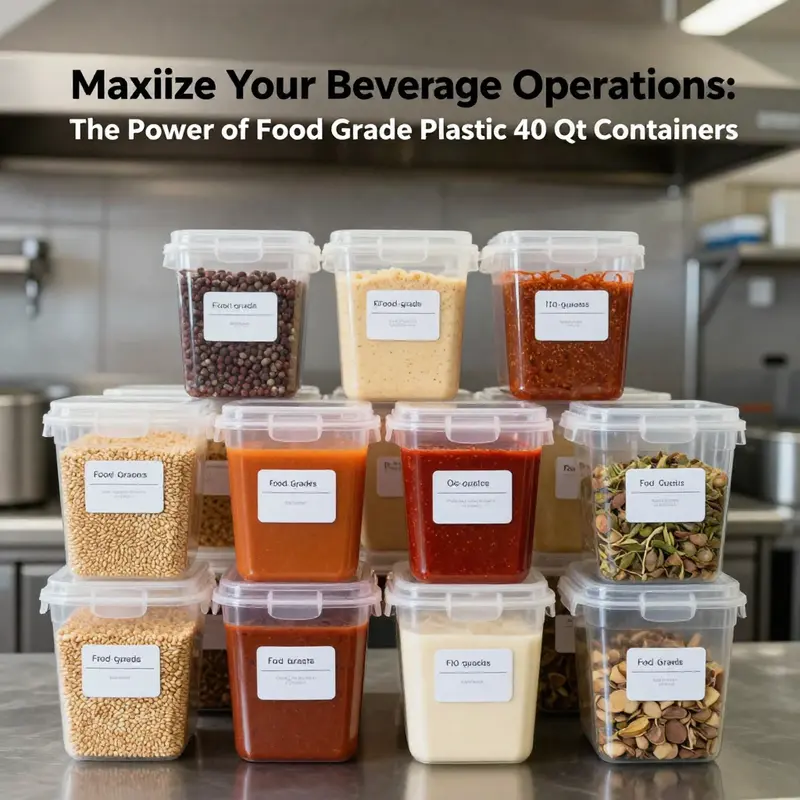
In a pantry or basement, the containers’ flat, rectangular shape enhances space efficiency. Shelves that once wasted vertical space suddenly become organized stacks. Interlocking lids and slightly recessed bases prevent sliding. That stability matters when containers stack several high. In a typical home pantry, stacking reduces clutter and makes each item accessible. Clear or white plastic options let users identify contents at a glance. When clarity is insufficient, a simple label on the lid or a clear panel taped to the front removes ambiguity. Many commercial kitchens adopt a similar approach, but with a stronger emphasis on labeling to meet sanitation protocols.
Restaurants, catering services, and food-production facilities value these tubs for reasons beyond volume. They streamline ingredient staging during rush periods. A 40-quart container of prepped sauce or chopped vegetables sits ready for rapid finishing. Durability matters under repeated use; HDPE and polypropylene resist the knocks of busy kitchens. These materials also comply with food-contact regulations when certified food-safe. Using labeled, stackable containers keeps counts accurate and reduces cross-contamination risks. For mobile catering, secure lids and gasketed closures prevent leaks during transport. Choosing units with positive-lock lids or a snap-fit design minimizes accident-related spills.
Emergency preparedness is another strong use case. Stored correctly, dry staples inside food-grade plastic tubs stay uncontaminated and free from pests. A 40-quart container stores a family’s grains and beans for weeks or months, depending on diet and rotation practices. The same tub can hold emergency medical supplies or water containers. The robust construction resists crushing when stacked under shelter or in storage. Freezer compatibility in some models adds versatility. Users can freeze prepared foods or bulk portions without needing many smaller containers. However, it’s important to leave headspace for expansion when freezing liquids or moist foods.
A key feature to consider is the lid seal. Airtight, leak-resistant lids protect against moisture and pests. Look for lids with gasket seals, or lids that compress evenly around the rim. Interlocking lids without gaskets still offer good protection for dry items. For wet or semi-liquid foods, choose models with a true gasket and a latch mechanism to assure a leak-proof closure. When transporting liquids, secure lids with a secondary strap or place the container inside a secondary tray. Even the best lids can be compromised if the rim is nicked or warped, so inspect lids and rims regularly.
Stacking and modular organization go hand in hand. The rectangular profile of many 40-quart units allows them to nest or stack with minimal wasted volume. In a supply closet or storeroom, plan stacks with heavier items on the bottom and lighter ones above. Reinforced lids are essential for multi-level stacking. For mobile storage—on carts or open shelving—choose containers that interlock for lateral stability. A smart stacking plan reduces the number of trips to retrieve items and helps maintain an orderly inventory.
Material choices matter. High-density polyethylene (HDPE) offers excellent impact resistance and chemical stability. Polypropylene (PP) provides higher temperature tolerance and stiffness. Both plastics, when certified food-grade, meet regulatory criteria for direct food contact. They are intrinsically resistant to many common food acids and oils, which reduces the risk of odor retention and staining. Still, prolonged exposure to extreme heat causes deformation. Avoid placing these containers in ovens or on high-heat surfaces. When sterilizing or sanitizing, follow manufacturer guidelines to prevent warping from hot water or powerful chemical agents.
Cleaning and sanitation are straightforward when you choose the right routine. Most food-grade 40-quart containers are dishwasher safe on the top rack. Manual washing with warm, soapy water followed by a thorough rinse removes residues effectively. For stubborn oils or odors, a baking soda paste or diluted white vinegar soak can refresh the interior. Avoid using abrasive pads that scratch the plastic. Scratches can trap food particles and harbor bacteria over time. Dry lids and rims completely before stacking to prevent mold growth in cool, dark storage.
Labeling and rotation are simple practices that extend shelf life and reduce waste. Always label contents with a date and brief description. Place labels on lids and sides for visibility from any storage angle. For long-term dry storage, follow a first-in, first-out rotation. When using containers for meal prep, portion out meals into meal-sized containers before freezing or refrigerating. That preserves freshness and prevents unnecessary thawing and refreezing.
Transport considerations are practical but essential. Thick-walled 40-quart tubs resist impacts during handling, but lids can pop if overloaded or if items shift. When moving full containers, lift using the molded handles and keep the container level. Use carts with guard rails in commercial settings. For multi-container loads, secure stacks with bungee straps or cargo netting when in transit. Where regulations require, use tamper-evident seals on lids to comply with food safety standards during delivery.
Beyond food storage, these containers shine in multi-use environments. In workshops, they store nonfood materials that still need protection from dust and moisture. For event planning, they transport linens, utensils, and supplies. In gardening, they temporarily hold potting mix or harvests. Because they are made from durable plastics, they tolerate a variety of uses that would damage cardboard or thin bins.
Selecting the right container means weighing features against needs. Consider whether you need transparency, stacking interlocks, a gasketed lid, or reinforced handles. Think about the storage environment: will the tub sit on a warehouse pallet, a garage shelf, or a kitchen counter? Also evaluate cleaning routines and frequency of use. Investing in higher-quality containers often pays off through longevity, fewer replacements, and better protection of contents.
Sustainability considerations often come up. While these containers are reusable and reduce single-use packaging, their production relies on plastic materials. Prioritize units that are BPA-free and made from recyclable resins. When a tub reaches end-of-life, recycle it according to local guidelines. Reusing and repurposing containers extends their useful lifespan and multiplies their environmental value.
Practical accessories and small upgrades improve everyday performance. Clear adhesive labels or erasable marker panels simplify content identification. Stack spacers and shelf liners protect lids and bottoms when stacking many containers. Secondary liners—food-grade Mylar bags or inner liners—add an extra barrier for long-term grain storage. A simple lid wrench or pry tool facilitates safe lid removal without bending the rim.
Successful implementation requires a few behavioral adjustments. Establishing a labeling habit and a rotation schedule yields immediate reductions in waste. Inspect lids, seals, and rims monthly for damage. Replace cracked lids promptly; a compromised seal undermines the whole container concept. Train household members or staff on lifting techniques and stacking patterns to avoid accidents.
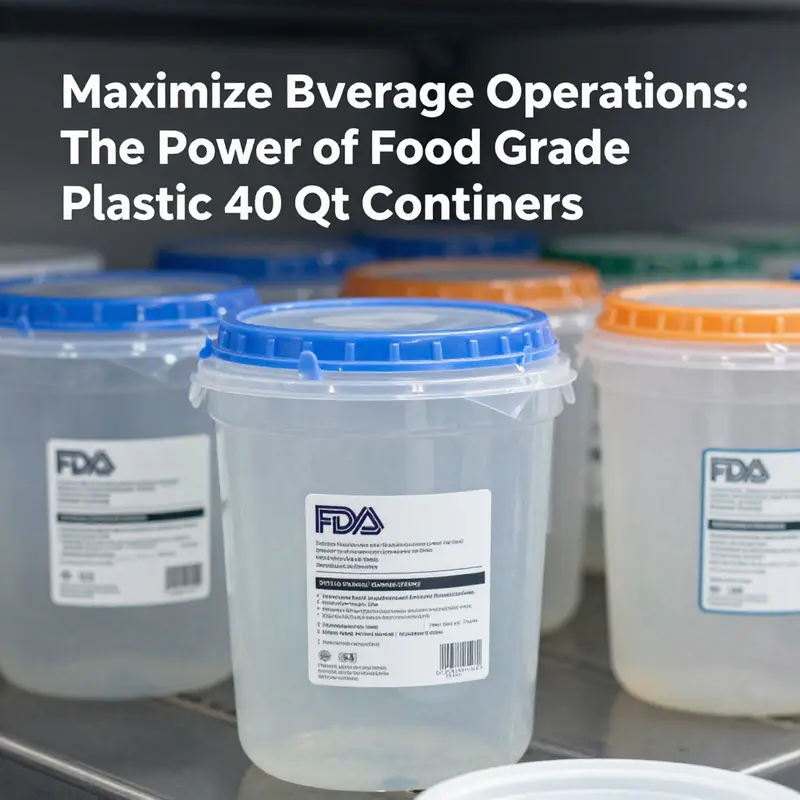
A final operational note covers legal and safety compliance. Always confirm that a container is explicitly labeled food-grade and compliant with local and national food-contact regulations. Certification and material information are often molded into the product base or included on the packaging. Storing medicines, volatile chemicals, or nonfood materials in containers that also hold food increases contamination risk and violates best practices.
For complementary solutions in single-use and compostable packaging, explore available disposable food bowls and lids for events where reuse is impractical. For instance, businesses looking to combine reusable bulk containers with disposable single-use options might reference the selection of disposable kraft paper bowls with lids for take-away service or catering support. A useful product example is the disposable kraft paper bowl for food packaging, which pairs well with bulk storage strategies when portioning food for off-site service.
For authoritative guidance on material safety and regulatory compliance, consult the U.S. Food and Drug Administration resource on food-grade plastics. The FDA provides clear guidance on acceptable materials and safe storage practices: https://www.fda.gov/food/food-contact-materials/food-grade-plastic-containers-safe-storage-emergencies
These containers are more than bins. They form the backbone of efficient bulk storage systems. When chosen and used wisely, 40-quart food-grade plastic containers with lids reduce waste, protect food quality, and simplify both home and commercial operations. They reward investment with reliability, versatility, and measurable time savings.
null
null
Final thoughts
Opting for food-grade plastic 40-quart containers significantly enhances the operational efficiency and safety protocols of beverage and food services. Their strong material composition ensures longevity, while their versatile applications cater to diverse storage needs. Coupled with stringent safety regulations, these containers are not just practical choices; they embody a commitment to quality and safety in food and beverage storage. Equip your business with this essential storage solution and experience the positive impact on your daily operations.