
The interaction of technology and delivery services has significantly altered the landscape of food service, yet challenges persist. A striking incident in Miami, where a food delivery driver was caught stealing packages, highlights the potential vulnerabilities in this growing industry. The incident raises critical questions, notably about the legal consequences, the influence on consumer trust, and the proactive measures businesses can employ to mitigate theft. This article delves into the event’s nuances, dividing the discussion into four key chapters, each shedding light on a different aspect of this troubling phenomenon.
Behind the Doorbell Ring: A Miami Case Study on How a Food-Delivery Driver Became a Package Thief
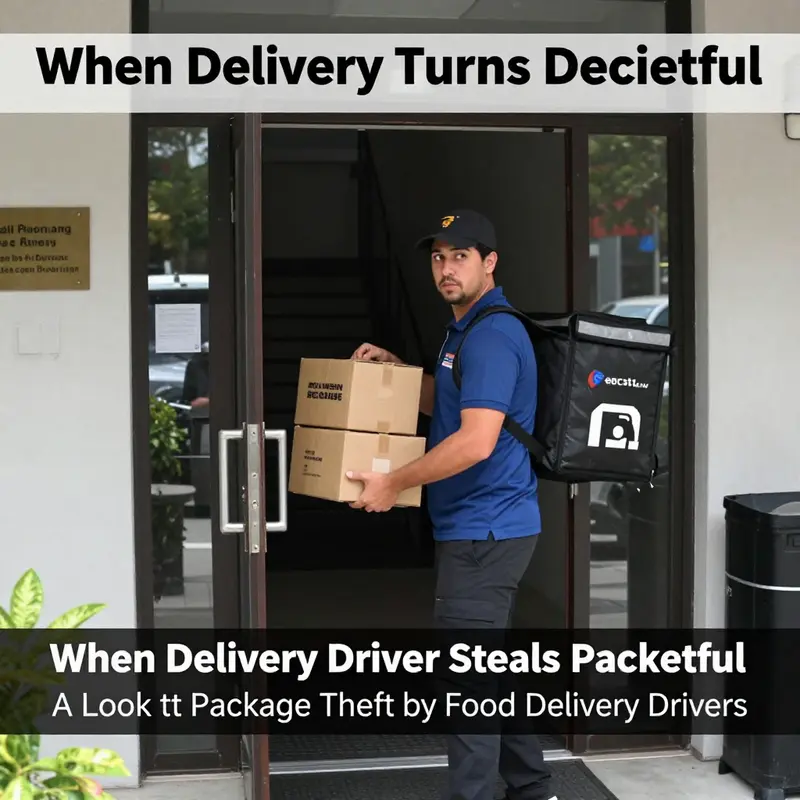
A single, silent moment captured on surveillance footage can reveal a vulnerability that resonates far beyond one address. In Miami, a routine delivery unfolded into something far more troubling when a food-delivery driver returned to the same building after completing a drop-off and proceeded to take several packages from a secure area. The video, shared widely online, shows the driver acting as if he were finishing a normal task, only to pivot at the entrance and make an unauthorised pickup. In the minutes that followed, those packages disappeared into his vehicle and the driver drove away. The incident, dated around mid-December 2025, quickly became a focal point in discussions about the safety of parcel exchanges in shared buildings and the trust that underpins modern food delivery.
What unfolded in that moment is more than a single act of theft. It is a case study in how access can be misused in the friction points between service providers, residents, and the built environment where packages accumulate. The suspect, described by authorities as a delivery driver for a prominent food-delivery platform, was soon in custody on charges tied to the stolen items, with the arrest tied closely to the visual evidence captured by surveillance cameras. The value of what was taken ran into the hundreds of dollars, including electronics, clothing, and personal items from different residents. It is a reminder that the risks of porch piracy do not end at the porch; they extend into shared entries, parcel rooms, and the routines that structure daily life in apartment buildings and condominiums.
The arrest underscores a fundamental challenge facing the logistics of modern deliveries: how to verify who picks up a package after it is marked as delivered, and how to safeguard items once they are inside a secure locker or lobby area. The security tape left little ambiguity about the sequence. The driver completed a delivery, then returned, entered a gated or controlled-access point, and removed multiple packages. Investigators linked the vehicle seen in the footage to the suspect and traced the movement of the stolen goods through the building’s access points. This is precisely why many law enforcement reports rely on video evidence as a cornerstone of cases involving alleged theft by individuals who have legitimate access to delivery spaces. The footage did not merely confirm the act; it connected it to a specific person at a precise moment in a controlled environment.
The broader implications extend past the immediate victims. Residents suddenly face a heightened sense of vulnerability. The packages left near the entrance or inside a parcel locker area are not just commodities; they can contain electronics, clothing, and other personal treasures that hold meaning beyond their price tags. When a delivery driver—someone trusted to handle food, and by extension other items—violates that trust, it reshapes how people think about who belongs in the delivery ecosystem. The incident became a catalyst for conversations among tenants, property managers, and service providers about where security should live: in the locks, in the cameras, or in the processes that govern the hand-off from courier to recipient.
From a security-design perspective, the case highlights vulnerabilities that have grown more acute as apartment complexes expand their dependence on shared parcel lockers and central delivery hubs. In many buildings, residents rely on secure locker rooms or entrance-controlled spaces to keep packages safe between delivery and pickup. But as the Miami incident shows, these spaces can become opportunities if not properly monitored. The footage suggests moments when a person with legitimate access appears to engage in activity that bypasses the intended flow of hand-off—an unsettling contradiction to the public-facing narrative of convenience that parcel lockers help create. As e-commerce continues to surge, so does the volume of parcel-traffic passing through these shared spaces, and with it, the temptation for someone to exploit the system if oversight is lax.
Industry observers note that while the vast majority of drivers perform their duties with integrity, there is a non-negligible risk associated with any role that sits at the intersection of access, timing, and delivery. This incident has spurred calls for tighter accountability—more rigorous background checks, more frequent audits of driver behavior, and more robust monitoring protocols for locker access and lobby areas. It is not simply a matter of catching a thief; it is a matter of preventing a single lapse from cascading into a broader loss. Security professionals point to a layered approach: cameras that cover all entry points, lighting that reduces blind spots, and real-time alerts when unusual sequences occur, such as a driver returning to a building after a delivery without an accompanying customer pickup. These measures, when combined, create a proactive rather than reactive defense against theft that leverages both technology and policy.
The incident also spotlights a tension at the heart of the modern delivery economy: the reliance on third-party personnel whose work is essential to customer experience yet who operate within a framework that sometimes lacks granular, real-time oversight. Innovations in data sharing between delivery platforms and property managers could strengthen oversight, but they must be balanced with privacy and legal considerations. In practical terms, this means clearer protocols for what constitutes a legitimate locker hand-off, better logging of locker usage, and perhaps even real-time verification steps when a driver accesses secure spaces. The goal is not to surveil every move but to create a transparent trail that discourages and detects deviations before they become losses.
Packaging design itself can contribute to security in meaningful, subtle ways. The community of building managers and packaging specialists has long debated whether certain features—tamper-evident seals, trackable barcodes, or hold-at-location options—can deter theft without sacrificing convenience. In the wake of this case, some observers have begun to discuss how packaging choices influence the delivery experience in shared spaces. For example, a poster-child example of how design choices matter may be seen in the context of take-away packaging that travels with the driver rather than staying at a collection point. To illustrate the broader packaging ecosystem in which these deliveries are embedded, consider the realm of disposable take-away packaging, including options like disposable, logo-branded cups and bowls that accompany meals. The presence of such packaging in a doorway or hallway can become a visual cue for opportunistic theft if not properly secured. In this light, even discussions about packaging aesthetics carry real security implications. disposable take-away paper cup with custom logo offers a concrete example of how branding and design can intersect with everyday delivery rituals, reminding stakeholders that the packaging itself is part of the security equation and not just an afterthought.
The public response to the Miami case has included questions about the balance between trust and verification. Residents want to trust that the people delivering their meals, groceries, and packages are acting responsibly. Managers want to preserve the seamless experience they have promised residents. Law enforcement wants to ensure that the system can distinguish between a single bad actor and a systemic weakness. The arrest report, released through official channels, confirms that authorities are pursuing both the individual and the institutional factors that allowed the act to occur. It is a reminder that the consequences of a theft reach into the reputations of the companies involved and the sense of safety in neighborhoods that increasingly depend on doorstep conveniences.
In practical terms, the Miami incident has translated into renewed discussions about who bears responsibility when a theft occurs. Is the delivery company accountable for ensuring that all hands-off points are secure? Do property managers owe residents an enriched security protocol that includes more frequent patrols or smarter sensor systems? How should residents respond when a driver’s access becomes a potential liability? These questions do not have simple answers, but they do point toward a shift in the culture surrounding delivery: accountability, not merely compliance. Solutions will likely require a combination of policy clarifications, technology investments, and community practices that emphasize vigilance without eroding the sense of service and trust that underpins daily life in apartment complexes.
The narrative of this Miami incident is not just about a single bad actor. It is a reminder of the fragility and resilience of the delivery ecosystem. It underscores that security cannot rely solely on the integrity of individuals; it depends on layered protections that align process, people, and packaging in a coherent system. It also emphasizes the role of residents as participants in security—not merely as passive recipients of a service but as engaged stakeholders who help define what acceptable risk looks like in their buildings. In that sense, the case serves as a prompt for ongoing dialogue among residents, property managers, courier companies, and municipal authorities about how best to preserve convenience while reducing vulnerability. It invites readers to imagine a future where doorbell cameras, smart lockers, and transparent auditing work in harmony to maintain the trust that makes a seamless delivery possible, even in dense urban settings.
External resources and official documentation continue to shape the evolving response. For those seeking the formal details of the arrest and the investigation, the Miami Police Department’s press materials provide a clear account of the timeline and the evidence that tied the suspect to the stolen packages. These documents are essential for understanding the case in its full legal and procedural context, and they help illuminate how such incidents are pursued in practice as part of a broader effort to safeguard residents and their belongings.
External resource: https://www.miamipolice.org/news/press-releases/2025/12/delivery-driver-arrested-for-stolen-packages
Deliveries at the Edge of Law: The Legal Fallout When a Food Delivery Driver Steals Packages

When a food delivery driver steals packages, the act sits at the sharp edge of a commercial system built on trust, speed, and the assumption that the goods pass from one hand to another without incident. This chapter does not rehash a single sensational incident; instead, it threads together the legal logic that courts apply when a courier crosses from service into crime. The starting point is the core concept of theft as defined by criminal codes in many jurisdictions, where the element of taking is paired with unlawful intent and the absence of rightful ownership. In the context of a delivery driver, the goods are customers’ property in transit, not the driver’s, and the delivery chain hinges on the expectation that the package will move through a controlled handoff rather than become a source of personal gain. Legal responses to such acts are not uniform, but they share common features: they depend on value, repetition, intent, and the surrounding circumstances that illuminate the offender’s mindset and the real-world impact of the theft on a business and its customers.
A crucial question in many legal systems is whether the act qualifies as theft because the item was, at the moment of taking, not legally owned by the thief. The research materials that anchor this analysis emphasize a Chinese legal framework, where theft is frequently charged when the stolen goods meet a threshold of value or when a driver commits multiple thefts within a defined period. The principle is straightforward in its outcome: a driver who takes goods that belong to someone else, without permission, can be charged with theft. What makes the scenario more complex is how the law assesses the value and the pattern of conduct. In practice, prosecutors look at whether the total value across repeated incidents crosses a “relatively large amount” threshold, a term that can translate into a local standard of several thousand yuan but may vary by jurisdiction. However, the text notes a broader criterion: three thefts within two years can trigger criminal liability even if each individual item is small in value. The essence is deterrence and public trust: repeated, even small-scale thefts undermine the integrity of the entire delivery ecosystem and justify criminal intervention regardless of the per-item value.
This dual criterion—value and repetition—frames both the immediate case and the longer arc of enforcement. When a driver is caught in the act or when surveillance confirms that a pattern emerged, prosecutors can rely on Article 264 of the People’s Republic of China Criminal Law as the backbone of criminal liability for theft. If the goods are deemed to have been stolen under a relatively large amount or as part of a pattern of multiple thefts, a conviction can lead to imprisonment, detention, or criminal detention, paired with a financial penalty. The literature emphasizes that the range of penalties can extend with aggravating circumstances or significantly greater sums involved, even reaching life imprisonment in extreme cases. The emphasis on potential severity is not merely punitive; it reflects an effort to preserve confidence in the delivery process and to deter others from exploiting the same security gaps. This is a consequential reality for drivers who might otherwise rationalize a small theft as a victimless act—the law treats such acts as breaches with potentially lifelong consequences.
A distinguishing feature in these cases is the relationship, or the lack thereof, between the driver and the goods. Since the packages belong to customers or the receiving businesses, and not to the driver, the act is typically framed as theft rather than embezzlement. The distinction matters because embezzlement involves misappropriating property entrusted to one’s care in a fiduciary context. Courts generally note that when a courier takes goods that are not yet owned by the driver, the act does not meet the criteria for embezzlement; instead, it is unauthorized taking. The jurisprudence, as summarized in the interpretation notes, underscores this boundary: “In cargo transactions, if someone steals goods, it generally constitutes theft rather than embezzlement.” While the exact labels may vary by jurisdiction, the practical effect is clear: the act is a crime of taking, not a misappropriation of company property that would pivot on the driver’s fiduciary duties to their employer.
The consequences of a theft conviction extend beyond the courtroom. Employers face immediate internal actions, including termination and potential civil liability. Civil consequences may include damages for the company’s losses or for breach of contract if the driver’s role included handling goods in transit. Courts increasingly recognize that even small thefts, when repeated, can cause substantial financial and reputational harm to the business, to customers, and to the broader logistics network. This is why civil remedies and employment consequences often accompany criminal charges. The result is a multi-front response: criminal accountability for the individual, civil redress for the harmed party, and corporate discipline that reinforces the integrity of the delivery system. The fabric of trust—between the customer, the courier, the employer, and the recipient—depends on robust enforcement of standards and visible consequences for violations.
Penalties in theft cases can be severe when the value is substantial or when a pattern is evident. The literature emphasizes that for those deemed to have stolen a relatively large amount or who have engaged in multiple thefts, imprisonment of up to three years may be ordered, with the possibility of longer terms for aggravated circumstances. Detention or criminal detention can accompany fines, and sentences can extend to life imprisonment in the most extreme cases. These ranges illustrate the spectrum of potential outcomes from a single event to a sustained pattern of offending. Importantly, the system assigns full criminal liability to individuals aged 16 or older, while those aged 14 to 16 may still face prosecution for serious crimes, albeit with typically reduced penalties. This emphasis on age reflects the balancing of accountability with developmental considerations, recognizing that the maturity of a offender can influence both their wrongdoing and their prospects for rehabilitation.
One practical dimension often overlooked in popular reporting is how law enforcement and the judiciary interpret and apply these standards in real cases. Official case law databases may not always reveal a clear set of precedent entries for delivery-driver theft, but prosecutorial and court practice indicates a growing willingness to apply criminal law to repeat offenses and to treat delivery-related thefts with the seriousness they deserve. Prosecutors, for instance, have stressed that “even small thefts can cross legal red lines when repeated,” a warning that echoes in the courtroom as well as in corporate boardrooms. Courts thus interpret the totality of the conduct—the driver’s intent, the frequency, the value involved, and the impact on victims—as a composite picture that determines the charge, the severity of the penalty, and the follow-through in civil and administrative sanctions.
From a practical vantage point, the enforcement process relies heavily on evidence. Surveillance footage, delivery records, and the chain-of-custody of goods all come into play. A case built on multiple incidents may leverage a chronology that demonstrates a pattern of behavior, which can be more persuasive than a single, isolated act. The presence of surveillance in building lobbies, hallway cameras, and courier check-ins can establish the moment of theft, the identity of the offender, and the proximity to where the goods were delivered. This evidentiary framework helps translate the abstract statutory thresholds—value, repetition—into concrete proof that a court can evaluate. It also reinforces a corporate imperative: to invest in security measures that minimize opportunities for theft and to develop consistent procedures for reporting, auditing, and responding to suspected misconduct.
For customers and employers, these legal dynamics carry a set of practical implications. When a driver is accused or convicted of theft, the employer’s response is twofold: it should deter future occurrences and protect the legitimate interests of customers. Termination of employment is common, but many organizations also pursue civil restitution or pursue breaches of contract in civil courts. The public narrative of such cases can erode trust in a delivery platform, especially if the incident appears to reveal systemic vulnerabilities. This is why many companies invest in training that emphasizes ethical conduct, secure handoffs, and the safeguarding of goods during transit. It is also why robust background checks, periodic audits, and technology-enabled monitoring are part of the broader risk management strategy in the modern logistics ecosystem. The same logic underpins packaging decisions. A delivery system’s integrity depends not only on the behavior of the courier but also on how goods are protected during transit and how handoffs are monitored. The packaging you choose matters because it indirectly signals a commitment to secure handling—from the moment the item is picked up to its final receipt. Consider the packaging standards that support secure delivery and efficient returns, such as a disposable octagonal box – restaurant food kraft paper packaging, which illustrates how thoughtful design can complement human discretion in reducing loss and protecting value. disposable-octagonal-box-restaurant-food-kraft-paper-packaging
In the broader social and regulatory context, the legal framework around theft by delivery personnel also intersects with labor law, corporate governance, and consumer protection. The voice of prosecutors, echoed in regional statements, underscores a public policy aim: to deter small, incremental greed that can collectively undermine trust in commerce. The legal architecture seeks to ensure that a delivery system remains reliable, predictable, and fair for all participants—from the driver who earns a wage to the customer who expects their goods intact and on time. This is not merely a matter of city or country-specific statutes but a reflection of how societies value property rights and the security of everyday exchanges. The evolving nature of enforcement signals that even isolated incidents can catalyze broader reforms in how delivery networks are supervised, how data is used to monitor compliance, and how consequences for violations are communicated.
As this chapter threads through the specifics of theft law, it remains tethered to the everyday experience of customers, drivers, and companies. The tension between rapid delivery and rigorous safeguarding is not easily resolved, but the law provides clear guardrails. A driver who commits theft, especially when done repeatedly or on a scale that meets the threshold of a “relatively large amount,” faces a trajectory that can include criminal charges, civil liability, job loss, and a lasting stain on their record. The reliability of the entire delivery ecosystem depends on the willingness of all stakeholders—couriers, employers, and customers—to uphold the rules that govern possession, transfer, and ownership during transit. The narrative is not merely about punishment; it is about preserving trust in a system that thrives on predictability and integrity, where a single act of theft can cascade into broader questions about safety, accountability, and the social contract that underwrites the commerce of everyday life.
External reference for deeper understanding of theft standards and their interpretation in official contexts: https://www.court.gov.cn/zixun/xiangqing/398577.html
Distrust on the Doorstep: The Fallout of Delivery Driver Theft on Consumer Confidence in Food Delivery
A surveillance clip from a Miami building on December 18, 2025, captured a startling moment in the modern food economy. After delivering meals, a driver returned to the building and walked away with several parcels that were not theirs to take. By December 19, authorities had arrested the driver on suspicion of theft. This incident, while singular in its sequence, speaks to a broader truth about mobile food delivery services: trust travels with the package, but it can be compromised by the very people who are supposed to safeguard it. In an industry that markets speed, convenience, and seamless handoffs, a single breach of conduct by a driver can ripple through consumer perception, brand reputation, and future usage. The event is not just a local blip; it underscores how the physical act of delivery intersects with digital promises of reliability and safety. When a driver’s actions deviate from the expected path, customers are forced to reevaluate the entire chain, from order placement to arrival, and even the packaging that encases their food.
Trust, in the context of mobile food delivery apps, rests on several interlocking pillars. Consumers expect that the food they order will be prepared and handled under reasonable safety and hygiene standards, that it will reach them intact and as described, and that the person delivering it is a reliable and accountable part of a controlled process. When any link in that chain falters—when a driver steps away with items not belonging to them—these pillars begin to wobble. The psychology of trust in this space is practical as well as emotional: customers want verification that the order they paid for is the one that arrives, that no tampering has occurred, and that the delivery experience is traceable and transparent. In the wake of theft, the feeling of safety surrounding a simple purchase can give way to a cautious, even anxious, consumer mindset. This is not merely about material loss; it is about the sense that the entire system, which promised reliability, is suddenly vulnerable to human lapses and, potentially, organizational gaps.
From a consumer standpoint, trust is a dynamic calculation. It weighs the visible signals a platform provides—live tracking, driver ratings, delivery notes, timestamps, and photo proofs of handoff—with the more covert signals of risk, such as the possibility that someone with access to parcels might abuse that access. An incident like the Miami case intensifies the perceived likelihood of misdelivery or theft, reshaping expectations for future orders. Consumers may begin to question whether the order they placed is the order that arrives, whether the packaging remains intact, and whether they can rely on a frictionless, private, and safe handoff at the door. The impact is not limited to those who were directly affected. Even customers far from that building can feel a heightened sense of vulnerability when they hear about theft, because the incident feeds a narrative that trust is fragile and hard to guarantee in real time.
The consequences for platforms are multi-layered. On the surface, a theft incident triggers customer service inquiries, investigations, and potential refunds for affected customers. But beyond that, there is a reputational cost that can outlast the specific case. Incidents like these create a perception of lax controls, especially if they are followed by delayed communication, unclear accountability, or inconsistent remediation. In a competitive market, repeated events or a perception of weak controls can push customers toward rival services that are able to articulate clearer safeguards and faster responses. The intangible costs—loss of goodwill, reduced willingness to try new features or services, and hesitancy to join the platform for a first-time order—shape long-term outcomes for platform sustainability. The chain reaction can extend to merchants who depend on the platform to deliver consistent quality, as intermittent trust can lead to higher contested dispute rates, more chargebacks, and a tighter scrutiny of orders that touch the most vulnerable parts of the delivery process.
What can be learned from the incident, beyond the immediate legal and investigative response, is the imperative to design the delivery experience around verification and accountability. Consumers respond positively when they feel they can see the journey of their food in a transparent, verifiable way. Real-time tracking that shows precise driver location, paired with time-stamped handoffs and, where appropriate, driver identity confirmation, helps restore a sense of control for customers. A robust delivery verification feature, such as photo proof at the moment of drop-off, reduces ambiguity about whether the order actually reached the intended recipient and remains untouched on the doorstep. When a package is handed to a customer, a clear, auditable record of that moment can ease anxiety and reinforce trust in the platform’s commitment to safeguarding customer property and safety. The design of this verification system matters as much as the technology itself; it signals to customers that the platform takes responsibility for the integrity of each delivery and that there is a reliable way to contest or confirm a delivery event if something seems off.
Another crucial element is the physical integrity of the packaging itself. For a delivery to inspire confidence, the packaging must support tamper resistance and easy inspection at the moment of receipt. Thoughtful packaging design can deter opportunistic theft by making it harder for someone other than the intended recipient to access the contents, while still remaining user-friendly for customers who need to open and enjoy their meal. Packaging that communicates tamper evidence, coupled with a transparent delivery process, reassures customers that the product they ordered is the product they receive. A practical approach to this is to align packaging choices with the principles of security, hygiene, and sustainability. In discussions of delivery trust, packaging is no longer a mere container; it becomes a component of the trust system itself. When a customer observes a well-designed, tamper-evident package, their confidence in both the product and the delivery experience increases because the path from kitchen to door is visibly safeguarded. This principle ties directly into broader ongoing efforts to improve the physical and digital reliability of the delivery chain.
To illustrate the tangible value of packaging considerations in building trust, consider packaging innovations that combine durability with clear indications of integrity. A packaging solution that uses a distinctive seal or a tamper-evident closure, for example, can provide an immediate, intuitive cue to customers: what is inside has not been accessed since it left the kitchen. The impact of such features becomes especially salient in a climate where theft incidents are highly publicized. By reducing uncertainty at the moment of delivery, these measures help restore customer confidence and encourage continued usage even after a troubling incident. In practice, platforms might pair these packaging designs with process changes, such as requiring a two-step handoff or a post-delivery confirmation by the recipient. The combination of packaging that communicates integrity and a delivery process that documents that integrity creates a more trustworthy overall experience. In this sense, the physical design of the package and the digital discipline surrounding the handoff work in concert to sustain consumer trust.
A concrete way to connect the theory with practice is to consider a packaging option that embodies these principles. For readers who want to explore tangible packaging choices that support tamper evidence and streamlined usage, one such option is a disposable octagonal box made from kraft paper packaging. This approach, and similar technologies, reflects an industry trend toward durable, recyclable materials that also convey a clear signal about the handling of the contents. See the discussion of this type of packaging at the linked resource, which provides a sense of how packaging design can align with the goals of safety and trust in delivery ecosystems. disposable-octagonal-box-restaurant-food-kraft-paper-packaging
Beyond packaging and verification technology, organizational safeguards are essential. Effective risk management in this space requires more than reactive investigations after a theft; it demands proactive measures that reduce the opportunity for theft and increase accountability. This includes rigorous driver screening, regular training focused on ethics and privacy, and continuous monitoring of delivery workflows. It also means establishing clear protocols for incident reporting, rapid response, and remediation. When a theft occurs, customers expect not only a swift resolution but a transparent account of what happened, what data were reviewed, and what changes will be implemented to prevent a recurrence. The goal is not to cast drivers as villains but to create a culture of accountability that aligns incentives with customer safety and satisfaction. In this regard, technology alone cannot replace human judgment and organizational discipline; rather, it should be used to reinforce a culture of trust and a track record of responsible stewardship.
From a consumer research perspective, trust in mobile food delivery apps is a multi-dimensional construct that blends perceived food safety with delivery integrity and with perceived platform accountability. The literature emphasizes that trust and food safety are central barriers to continued use of these services. When theft enters the equation, it amplifies concerns about order authenticity, hygiene, and the security of the delivery process itself. These concerns can erode the willingness of existing customers to place repeat orders and can deter potential new users who weigh the risks associated with online purchases of meals. The takeaway for practitioners is clear: maintaining consumer trust requires a holistic approach that integrates transparent delivery verification, robust safeguarding of physical packages, responsive consumer support, and clear communication about steps taken to prevent recurrence. The ultimate aim is to restore and sustain a sense of reliability at the moment of delivery, not merely to reduce the frequency of theft.
For researchers and practitioners seeking a theoretical frame for these observations, the body of work on consumer trust in mobile food delivery apps offers valuable guidance. A widely cited study by Gupta in 2021 highlights trust and food safety as pivotal determinants of continued usage. The study argues that trust is built through verifiable processes, visible safety practices, and reliable service delivery, while concerns about food safety and integrity can deter users from returning to the platform. This evidence underscores what incident-driven narratives do not: trust is not a static attribute but a dynamic evaluation shaped by ongoing experiences, communications from the platform, and the perceived likelihood that safeguards will hold in future orders. For readers who want to dive deeper into this theoretical basis, the external resource provides a detailed examination of how trust operates within mobile food delivery contexts and why food safety remains central to user retention. https://www.sciencedirect.com/science/article/pii/S235286482100097X
In linking these threads back to the Miami incident, the larger message becomes evident. Incidents of theft at the doorstep reveal vulnerabilities that extend beyond a single misdeed. They illuminate how trust travels through multiple channels—digital signals like live tracking and photo proofs, physical signals like packaging and handoff, and organizational signals like accountability and responsiveness. When one link in this chain is compromised, the entire chain appears less reliable to customers. The path to restoration lies in designing delivery systems that make the path of food from kitchen to door as transparent, verifiable, and accountable as possible. It requires investment in technology that records and communicates each step, packaging choices that reinforce safety and tamper evidence, and organizational practices that ensure swift, honest remediation whenever lapses occur. Only through this integrated approach can platforms hope to turn a moment of breach into a reaffirmation of trust for both current users and those who might consider joining the service in the future.
As this chapter sits within a broader examination of the risks and resilience of food delivery ecosystems, it emphasizes that trust is the currency of sustained use. A single theft can threaten that currency, but the right combination of verification, packaging integrity, and accountable governance can restore it. The ongoing challenge for platforms is to translate these safeguards into everyday experiences that feel effortless to customers while being robust enough to deter abuse. If customers feel protected, not only will they continue to rely on the service for convenient meals, but they will also be more likely to recommend it to others, helping to stabilize growth in a market that prizes speed but cannot afford to ignore reliability and safety. The Miami case is a reminder that trust is earned in the smallest moments of a delivery as much as in the large promises presented in the app interface and marketing materials.
Safer Hands, Secured Deliveries: Building a Layered Shield Against Package Theft in Food Delivery
A recent incident in Miami, where a delivery driver was caught on surveillance after completing a routine drop, underscores a risk that lurks in plain sight. It is not just a single misdeed but a pattern that emerges when several conditions align: high foot traffic, multiunit buildings with shared hallways, and the late hours that can blur the line between service and opportunity. The episode illustrates how a momentary lapse, a routine byproduct of busy days, or a perceived lack of supervision can create a gap big enough for theft to occur. To understand how to close that gap, it helps to view prevention as a layered responsibility. It requires the attention of customers, the vigilance of drivers, and the support of institutions that manage the spaces where deliveries happen. In this sense, the issue moves beyond good manners and into the realm of practical system design. A well designed delivery ecosystem reduces the window of opportunity for theft, and, crucially, it preserves trust between customers, couriers, and the platforms that connect them.
The first layer in this defense is simple in concept but often hard in execution: ensure that someone is present when the package arrives. The most effective deterrent to theft is the immediate handoff. When a recipient or a trusted resident is available, the driver can leave nothing unattended and can confirm the moment of delivery in real time. The consequence of this practice goes beyond safety; it also removes ambiguity. Theft often thrives in ambiguity—the uncertainty about whether someone is watching, or the lack of a clear point of contact at the delivery site. Real world behavior supports this view: the shorter the time the package spends unattended, the lower the chance that a curious passerby or a determined opportunist will act. Customers should be prepared for delivery with a charged phone, a ready notification channel, and a plan for where the package should go if no one is available at the moment of arrival. The logistics of timing become part of personal security when the clock matters as much as the door.
Yet even with perfect timing, risk persists. The rise of dense living environments, especially in college towns and apartment complexes, means more frequent opportunities for unauthorized access and for packages to vanish from communal spaces. This is where the second layer of protection—distinctive packaging—can make a tangible difference. A delivery that looks uniquely identifiable reduces confusion and makes a thief think twice. A personalized sticker or a distinctive bag can help a recipient recognize their item instantly, even after it has been moved from the initial drop point. Distinct packaging serves as a visible signal that the item is not just another anonymous parcel but a targeted delivery that belongs to a specific person. It also creates a storehouse of data for post incident investigations; a unique identifier can help authorities and platforms trace the locus of tampering or misdelivered items. For customers and property managers, this concept translates into practical choices: opting for packaging that bears a recognizable, client-specific mark or color scheme, and encouraging drivers to document the packaging condition before leaving it in place. If a thief sees a package marked with a clear owner signal or a branded accent that stands out from generic shipments, the perceived reward diminishes because the payoff becomes uncertain and easily traceable.
To complement distinctive packaging, the third layer urges a shift toward controlled drop off points. The default should be to avoid leaving food in common hallways or public spaces where it cannot be securely retrieved. Instead, customers can request that the driver place the order in a secure location. Front doors, private porches, or building lockers with controlled access are preferable choices. When a delivery is left in a secure spot, it is protected not only by the physical confinement of the space but also by documentation that confirms the exact site of placement. This approach requires clear communication channels between the customer and the delivery平台, as well as a reliable mechanism for the renter or resident to retrieve the item promptly. In many complexes, this means coordinating with front desk staff or building management to create a designated lock box or secure parcel locker that can be accessed with a one time code. The security logic here mirrors that of traditional parcels: the tighter the access control, the lower the probability of theft. A small adjustment in where a package is placed can yield a disproportionately large drop in risk.
Technology, unsurprisingly, plays a central role in tightening the net. The fourth layer is real time tracking and timely notifications. Modern delivery apps offer live updates that alert recipients as an order travels from preparation to dispatch and finally to arrival. The moment a package is out for delivery, a push notification prompts the recipient to position themselves for a swift handover. When combined with a secure drop off location, real time visibility becomes a powerful deterrent. Thieves who rely on a silent clock are confronted with the knowledge that a parcel may already be in transit to a secured locker or locked porch; this reduces the temptation to intervene in the process. For users, enabling these features is not a luxury but a practical habit. A charged device, acknowledgement of the alert, and a quick confirmation after retrieval turn a fragile moment into a well managed sequence that minimizes unattended time.
If a theft does occur, the response must be swift and well organized. The fifth layer involves reporting and accountability. Customers should report missing items to both the delivery platform and local authorities when appropriate. Platforms are increasingly providing in app options to file a complaint or log a theft incident, creating a searchable trail that can support investigations and even inform algorithmic adjustments to prevent future losses. Community awareness also matters. Sharing details in campus forums or neighborhood groups can alert others about suspicious activity and potentially deter repeat incidents. The social dimension matters because theft is not merely an economic transaction bottled up in a single event; it becomes a pattern when enough people observe the same behaviors and take no action. Building a culture that refuses to normalize theft requires both formal channels and informal networks to stay engaged.
A coordinated institutional response completes the strategic framework. Universities, housing authorities, and corporate campuses have a role in creating an environment where deliveries can be retrieved securely. This can involve installing cameras in high traffic delivery zones, increasing security patrols during peak delivery hours, and establishing centralized pickup points that are monitored by staff. The idea is not to stigmatize delivery workers but to create predictable, accountable spaces that minimize opportunities for mischief. When security measures are visible and consistent, both customers and drivers gain a shared sense of safety. The result is a system that supports routine operations rather than one that rests on fragile goodwill. Institutions can also work with the platforms to craft policies that encourage responsible delivery practices. These policies might include structured handoffs, verification steps for high risk locations, and clear guidelines for what constitutes a secure drop off.
Finally, the chapter considers the perspective and responsibilities of the drivers themselves. The sixth layer emphasizes practical safeguards for those who carry and deliver meals. Drivers benefit from using sealed, insulated delivery baskets with locks or tamper proof seals. Such measures make it harder for a third party to interfere with a package once it has been handed off. They should avoid leaving multiple orders unattended and strive to deliver directly to the customer whenever possible. The ethical frame here is straightforward: drivers are trusted agents in a chain that spans kitchens, apps, and living spaces. Their behavior directly affects the integrity of the entire delivery experience. When drivers can see a clearly marked drop off point, and when they are empowered to insist on a direct handover, they assume a central role in preventing theft. Training programs that reinforce these practices and provide clear escalation paths for challenging situations can transform a high risk moment into a routine, secure exchange.
A practical shift in packaging and logistics can be supported by the wider ecosystem of suppliers who supply the tools of the trade. In the spirit of practical design, consider the idea of distinctive, durable packaging that signals ownership and origin without sacrificing speed or reliability. For instance, some customers and property managers explore customized packaging options that add a layer of identity to each delivery. This can range from distinctive color schemes to subtle branding elements that remain unobtrusive but unmistakable. In this vein, packaging choices can become a subtle ally in security. For readers exploring concrete options, a relevant example is the use of customized design eco friendly kraft paper bowls with lids that carry distinctive identifiers, helping distinguish the contents at a glance and deterring casual misplacement or misappropriation. See this example to understand how customization and sustainability can align with security goals: customized design eco-friendly kraft paper bowl with lid.
The path forward is not about blaming drivers or customers for isolated incidents. It is about constructing a chain of protections that can adapt to different environments and scales. A layered approach recognizes that no single intervention will eliminate theft entirely, but a combination of timing, visibility, secure spaces, and clear accountability can dramatically shrink the opportunities for wrongdoing. The Miami incident thus serves as a case study in how real world dynamics require practical, end to end safeguards. It is a reminder that the delivery experience is a shared responsibility—a system that works when each participant understands their role and is equipped to fulfill it.
Looking ahead, this integrated framework can inform both policy and practice. For platforms, it favors investments in secure handoff processes, better mapping of high risk delivery zones, and incentives for property managers to adopt protective measures. For customers, it translates into simple habits that reduce risk and speed up retrieval. For drivers, it reinforces professional standards that protect both the integrity of the delivery and their own safety and livelihoods. When these strands come together, the delivery environment becomes less about chance and more about resilient design. The outcome is a service that preserves trust and dignity for all involved, even in the busiest hours and in the most challenging buildings. In the end, a safer delivery ecosystem reflects a broader commitment to community safety, mutual respect, and the shared work of keeping everyday life running—one doorstep at a time.
Final thoughts
The incident involving a food delivery driver in Miami serves as a cautionary tale for the entire food service industry, drawing attention to vulnerabilities present within the delivery chain. Legal repercussions, consumer trust erosion, and the theft’s ramifications cannot be underestimated. As business owners and event planners, we must adopt stringent measures to safeguard our interests and maintain consumer confidence. By investing in the right security protocols and establishing reliable supplier relationships, businesses can significantly mitigate the risk of theft and protect both their assets and their clientele.