
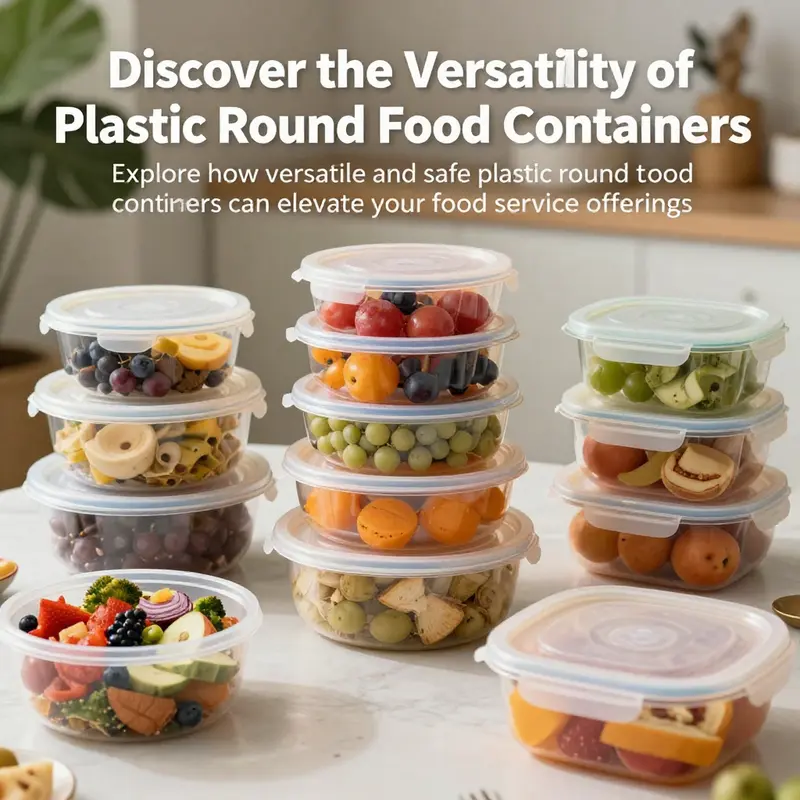
Plastic round food containers have become indispensable for food service industries, including bubble tea shops, restaurants, and catering services. Their adaptability in various settings—from food storage to takeout—makes them a popular choice among professionals. In this article, we will explore the different types and applications of these versatile containers, analyze market supply and pricing trends that impact procurement, and delve into the essential material characteristics and safety standards, ensuring that you have all the knowledge to make informed decisions. Each chapter aims to give a comprehensive view of how these containers can meet your needs in practicality, cost efficiency, and safety.
Circular Cylinders of Convenience: The Roles, Designs, and Impacts of Plastic Round Food Containers
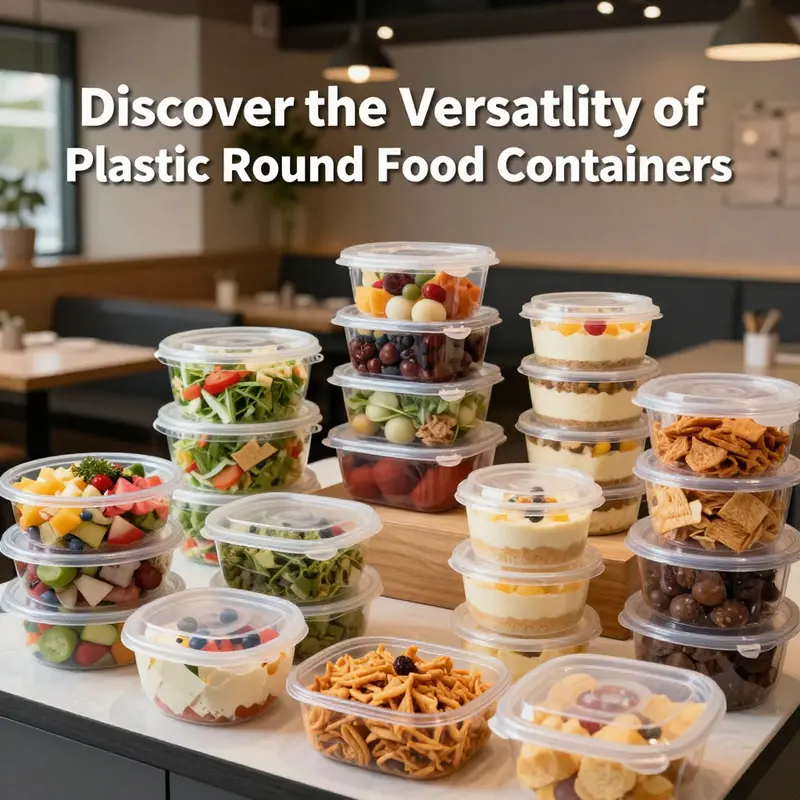
Plastic round food containers occupy a surprisingly central place in how modern societies store, transport, and present food. Their round form, simple geometry, and resilient material choices have shaped everyday routines—from the quiet efficiency of a home kitchen to the bustling precision of large-scale food service and logistics networks. The round container is not a mere vessel; it is a practical decision fixed in geometry. The circular base enables stable stacking, whether on a pantry shelf, in a refrigerator, or within a stack of delivery boxes. It allows lids to seal in a complete circumference, reducing the risk of leaks and spoilage when the container is tipped or jostled during transport. In many designs, the round profile also promotes uniform heat and moisture distribution during reheating, a seemingly small consideration that matters greatly for maintaining texture and flavor. The ubiquitous nature of these containers emerges not from a single feature but from an integration of material science, ergonomic design, and lifecycle thinking that makes them adaptable across uses, from dry storage to wet coatings, from single-serve portions to industrial batch packaging.
At the core of most plastic round food containers are food-grade plastics such as polypropylene, polyethylene, and in some cases PET. These materials are chosen for a combination of safety, durability, and performance in contact with food. PP offers a strong balance of rigidity and pliability, a high resistance to heat, and good chemical stability. PE variants—particularly high-density and low-density grades—provide excellent moisture barriers and impact resistance while remaining widely workable in mass production. PET, when used, contributes to clarity that is prized for product visibility and quality assessment during display and retail. The common thread across these materials is a commitment to food safety: the plastics must resist leaching, be compatible with the temperatures they will encounter, and be labelable as food-grade under regulatory oversight. In many markets, this means compliance with standards that emphasize chemical stability, migration limits, and labeling for consumer confidence. Importantly, the discussion of material choices cannot ignore the way a container’s interior surfaces interact with food. Smooth walls reduce the risk of food particles clinging and crevices that harbor residues. The way a container is cleaned—whether by hand or in dishwasher cycles—determines its longevity and the extent to which odors or flavors linger across cycles. This interplay of surface chemistry, cleaning, and reuse cycles becomes a practical determinant of a container’s total cost of ownership and environmental footprint.
One of the most striking features of plastic round containers is their versatility across settings. In homes, these round boxes are used for everything from storing chopped vegetables to prepped meals. They offer a straightforward path to reducing waste when families prepare meals in advance and portion out servings for the week. In commercial kitchens, the same round geometry translates into speed and efficiency: uniform sizing simplifies inventory management, expedites stacking on shelves and in coolers, and enables consistent portioning during meal-prep operations. In the retail and food-service supply chain, round containers are employed not only for storage but also for display and merchandise protection. Transparent variants allow customers to see contents clearly, a visual cue that can influence perceived freshness and quality. The flexibility extends further to the realm of food transport—whether for grab-and-go lunches, catering, or catering-to-go services—where secure lids and reliable seals minimize the risk of leakage during transit. While the rectangular and square formats sometimes dominate space optimization in shipping, round containers prevail in many subcategories precisely because their geometry lends itself to uniform sealing and efficient stacking with minimal gaps. The tradeoff between packing density and protective performance is often resolved through a combination of lid design, ribbing, and the choice of a sealing gasket that can withstand repeated opening and closing without degrading.
The spectrum of storage and packaging containers reflects a layered approach to performance. Storage containers emphasize tight seals, long-term preservation, and resilience to temperature fluctuations. Their lids frequently implement snap-fit mechanisms and gasketed seals that create airtight environments, slowing oxidation and moisture migration. This is particularly valuable for fruits, vegetables, and prepared meals where maintaining freshness, texture, and aroma is a daily concern. For perishable items, venting options on certain lids can accommodate the release of gases produced by ripening or fermentation. Venting must be carefully balanced: too much venting can compromise the seal, while too little can lead to pressure buildup during microwave heating or rapid temperature changes. In any case, round containers chosen for storage tend to excel at reusability. Durable plastics, when cleaned properly, can withstand repeated cycles without losing shape or sealing integrity. The ease of cleaning is a practical advantage that reduces the risk of odor absorption and cross-contamination, issues that can plague containers with more complex geometries or deeper grooves. These considerations are not merely cosmetic; they influence how households and food-service operators manage inventories, reduce waste, and maintain hygiene standards over time.
Packaging containers for fresh produce, particularly berries and small fruits, illustrate the tension between visibility, protection, and sustainability. These rounds are often translucent, enabling shoppers and handlers to assess quality quickly. The perforations or vented lids that accompany some designs support airflow, which helps reduce moisture buildup and spoilage during short-term storage or transport. Yet this package type is frequently optimized for cost efficiency, given its high-volume use and relatively short life span. The materials chosen for these packaging rounds are designed to balance lightness with barrier properties; the goal is to keep the produce visually appealing while minimizing material use and waste. In the supply chain, the round form also supports streamlined handling: trays can be nested, stacked, and moved with minimal effort, maximizing throughput along conveyors and in cold storage. The environmental conversation around these packaging rounds is robust. While many such containers are intended for single-use, there is growing demand for versions designed for reuse or for compatibility with recycling streams. The push toward recyclability or compostability shapes what grades of plastic are used, how lids are engineered, and how labeling communicates disposal options to consumers. In practice, this means designers must weigh the technical feasibility of recycling or composting against the performance needs of the packaging and the realities of waste management infrastructure in different regions.
Leak-proof rounds represent another important segment. The practical need here is straightforward: prevent juice leakage when fruits are sliced, when the container is filled with fruit segments, or when containers must survive bumpy journeys to customers or cafeterias. The seals and locking mechanisms employed in these designs are meticulously engineered to maintain integrity under varying pressures and temperatures. The resulting containers permit more confident transport of liquids, sauces, or moist foods, reducing the culinary and logistical headaches associated with spills. However, the higher performance seals typically involve slightly higher material costs and more precise manufacturing tolerances. In combination with leak resistance, the gasket materials themselves must be food-safe, resilient to repeated microwaving if the product is intended for heating, and compatible with easy cleaning cycles. The broader implication for service operators is straightforward: leak-proof designs can dramatically lower waste and improve customer satisfaction when used for deli-style portions, pre-cut fruit, or ready-to-eat snacks for travel. From a lifecycle perspective, their environmental impact hinges not only on their reusability but also on the ability to recover and recycle the materials after their service life ends.
Divided round containers bring another dimension to the table: internal organization. By incorporating compartments, they enable portion control, flavor separation, and more aesthetic meal presentation. Consumers and professionals alike value the ability to keep different components separate—think of rice, vegetables, and a protein in one container without cross-flavor mingling. The durability of the walls and the clarity of the dividers help maintain neat presentation, which is a nontrivial driver of consumer appeal in ready-to-eat and meal-kit formats. Divided rounds are especially well-suited for catering, school meal programs, and subscription-based food services, where consistency and ease of use can translate into real-world savings in labor and time. The internal geometry, while seemingly simple, has to manage a balancing act: generous compartment size without making the lid overly bulky, slim walls that still resist puncture or deformation, and a sealing system that accommodates all compartments without compromising airtightness for the entire package. Given these constraints, manufacturers often resort to modular design strategies that preserve the round silhouette while integrating multi-compartment capabilities with minimal material overhead. The end result is a versatile product class that elegantly aligns with the growing demand for structured, balanced meals.
Industrial or hard plastic round containers are designed for durability and rigorous handling in warehouse, processing, and storage environments. These rounds typically employ stiff polypropylene or HDPE for high impact resistance, chemical stability, and moisture impermeability. Their ruggedness makes them suitable for storage in environments where containers may be stacked, transported by automated systems, or subjected to rough handling. In industrial settings, clarity is sometimes secondary to toughness, as the priority is to protect contents against environmental exposure and accidental damage. Yet even in these contexts, the round form delivers practical advantages: stable stacking reduces the risk of collapse, while uniform bases contribute to predictable palletization and space optimization. These containers are often designed to tolerate repeated cycles of washing or sanitizing in industrial facilities, so surface finish and edge geometry are carefully engineered to minimize wear. The lifecycle considerations here differ from consumer-grade products. While consumer containers are pulled by convenience, industrial rounds are evaluated on long service life, reliability under demanding conditions, and compatibility with large-scale cleaning regimes. They may be used to store bulk ingredients, intermediate products, or finished goods in dry or minimally moist conditions, where chemical resistance and structural integrity become the primary performance metrics. Across each of these subtypes, the underlying material science remains consistent: food-grade plastics, when properly specified and processed, provide a safe, durable, and economical path for handling a wide array of foods across contexts.
As the conversation about plastic round containers evolves, sustainability and environmental responsibility increasingly shape design choices. In response, manufacturers explore bio-based alternatives and materials with improved recyclability. Biodegradable or compostable variants are often proposed for single-use applications to mitigate waste burdens, but they come with their own set of challenges. The compatibility of these materials with existing recycling streams, the quality of the recycled material, and the consumer behavior around disposal all influence their real-world impact. Designers also consider the end-of-life pathway early in the product development cycle. Recyclability hinges on homogenous material streams and feasible separation processes, while biodegradability or compostability depends on the availability of industrial facilities capable of processing the material under appropriate conditions. The trade-offs are nuanced. A container made from a single plastic grade that is widely recycled can minimize contamination and improve overall recovery rates. Conversely, mixed-material designs may hinder recycling but could offer performance advantages in sealing and heat resistance. In practice, many manufacturers pursue a pragmatic compromise: they use widely recyclable plastics with robust sealing and heat tolerance, while offering optional versions that incorporate a higher recycled-content or that are marketed as compostable in regions where composting infrastructure exists. Consumers play a critical role in this ecosystem by choosing products with clear labeling about materials and disposal routes, thereby enabling more accurate sorting in municipal programs. The design logic remains: achieve the right balance between performance, safety, and environmental stewardship without compromising the core advantages that make plastic round containers so indispensable.
If one step remains in linking design to demand, it is the decision-making framework that guides procurement and production. The prices of plastic round containers range widely, reflecting differences in capacity, material choice, wall thickness, sealing technology, and the scale of production. Smaller, simpler rounds tend to be affordable in bulk, while specialized designs with leak-proof lids, venting features, or internal dividers command higher unit costs. This spectrum matters for buyers in kitchens, retail outlets, and logistics hubs because it translates into tradeoffs between upfront cost, durability, and lifecycle expenses. A cost-conscious buyer may prioritize a container that can withstand dozens of reuse cycles, efficient cleaning, and compatible recycling streams. A buyer focused on food safety and presentation might favor clearer, more resistant materials with proven heat tolerance and reliable sealing mechanisms, even if the price per unit is higher. Across markets, the geographic and regulatory context also shapes choices. Regions with extensive recycling infrastructure may favor containers designed for easy material separation, while markets with strong demand for ready-to-heat meals may prioritize microwave-safe performance and resealability. These considerations illuminate why plastic round containers have endured and diversified: they are adaptable to a wide array of needs, from domestic kitchens seeking organization to global supply chains seeking reliability, hygiene, and cost-efficiency. They do not exist in isolation; they interface with consumer behavior, environmental policy, and ongoing advances in polymer science and manufacturing technology.
In closing, the story of plastic round food containers is a story about how simple geometry, robust materials, and thoughtful engineering converge to solve real-world problems. The round form is not an aesthetic afterthought; it is a functional backbone that informs stacking, sealing, visibility, and usability. The material choices reflect a culture of safety and performance, while evolving sustainability considerations push designers toward innovation in recyclability and lifecycle thinking. For professionals seeking to optimize a packaging system, the key is to align container type with the intended use—storage, display, leak prevention, multi-compartment organization, or industrial durability—while remaining mindful of regulatory compliance, cleanliness, and end-of-life realities. When these factors are balanced, plastic round containers can deliver consistent quality, convenient handling, and responsible packaging performance across homes, businesses, and the broader economy.
External reference: Industrial hard plastic round containers on ThomasNet
Round Dynamics: Supply, Prices, and the Green Pivot in China’s Plastic Round Food Container Market
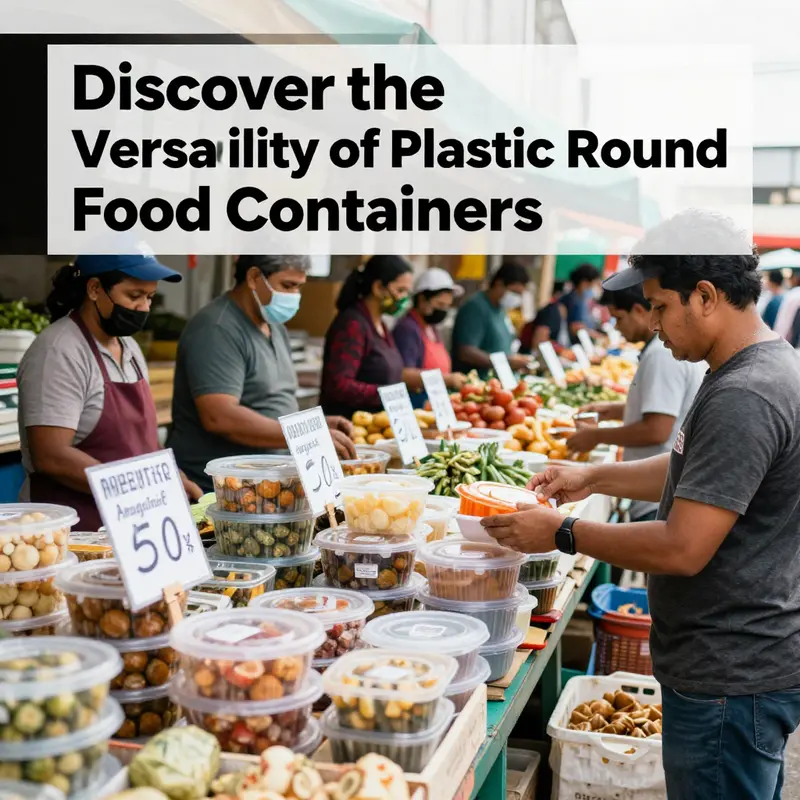
This chapter examines how supply, pricing, and the green transition shape the market for plastic round food containers in China. It traces production capacity, resin costs, and regulatory priorities, and explains how efficiency, differentiation, and sustainability interact with demand from food service, retail, and home use. The discussion highlights the two-tier supply structure along the eastern coast, the role of polypropylene and polyethylene in cost formation, and the pass-through of resin shifts to downstream buyers. It also covers how safety and environmental standards are influencing material choices, the widening price ladder as buyers seek higher performance, and how green credentials are becoming a factor in total cost of ownership. The chapter emphasizes that price is evolving from a simple unit-cost focus to a lifecycle perspective, where compliance, efficiency, and circularity credentials contribute to value. It concludes with the outlook that scale, reliability, and responsible materials will define competitiveness as the market moves toward greener, safer packaging solutions.
Rounding Safety: Materials, Heat, and Standards Shaping Plastic Round Food Containers
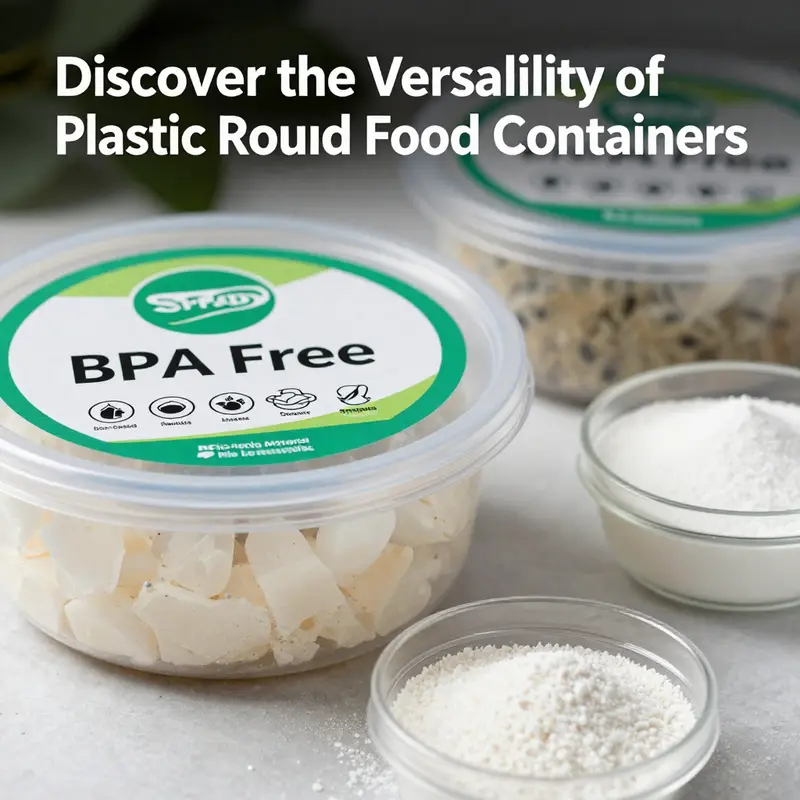
Plastic round food containers are ubiquitous in homes and food-service. They are typically made from polymers such as PP, PET, and HDPE, each offering a mix of rigidity, clarity, barrier properties, and heat tolerance. PP provides good heat resistance and chemical stability; PET offers clarity and stiffness; HDPE provides impact resistance and toughness. When used for food contact, these polymers are supported by safety frameworks from authorities like FDA and EFSA, including migration testing and labeling requirements. BPA-free labeling is common, while substitutes like BPS or BPF are being evaluated for safety and performance. Practical performance factors—clarity for content visibility, leak resistance from well-sealed lids, and stackability for storage—drive container design. Temperature limits mean many containers are not suitable for full oven use; heating guidance on labels should be followed. Larger formats used in foodservice emphasize durability and migration limits under refrigeration and storage conditions. Sustainability considerations include biobased options such as PLA, though these often require special disposal conditions and may have different barrier properties. Consumers should read food-contact labeling, respect heat-use indications, and choose containers appropriate for their food type and reheating plans. In short, safe use of round plastic containers rests on appropriate material choice, correct labeling, and adherence to recommended heat and storage conditions.
Final thoughts
In conclusion, plastic round food containers are a practical and versatile choice for any food service operation. They cater to a variety of applications, from food storage to serving, and their market availability ensures that businesses can find options tailored to their needs. Understanding the pricing trends and material safety standards allows you, as a professional in the industry, to make informed choices that prioritize both functionality and consumer safety. By embracing these containers, you can enhance your service offerings while meeting the expectations of your clientele.