
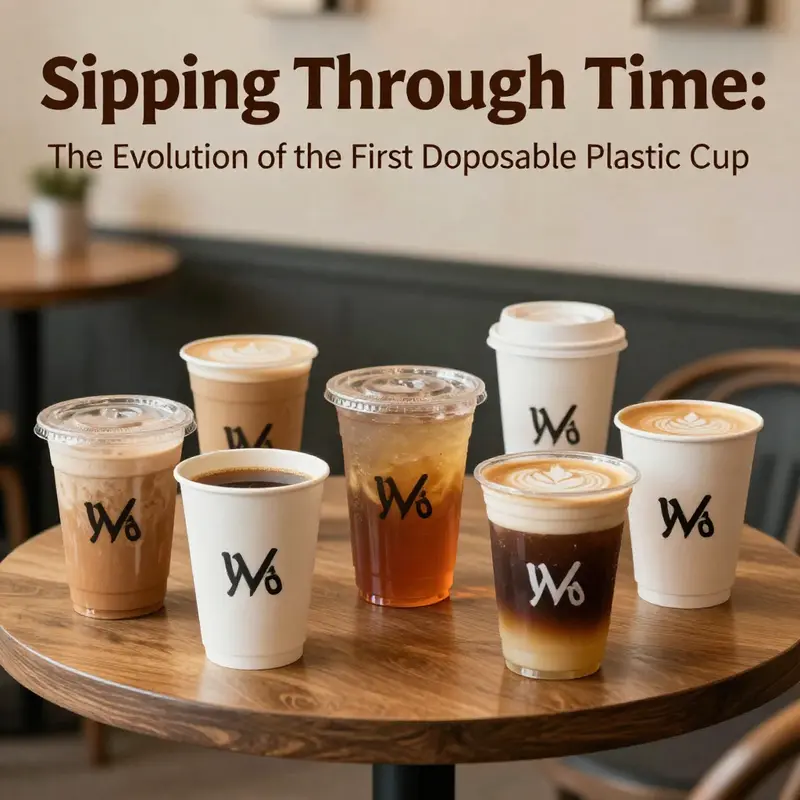
The introduction of disposable plastic cups in the 1960s marked a pivotal moment in beverage service. This innovation not only streamlined the way drinks were served across various industry sectors but also set the stage for a debate on sustainability. As bubble tea shops, beverage chains, restaurants, food trucks, catering services, event planners, and corporate procurement teams navigate this landscape, understanding the historical development, material choices, economic impacts, and environmental concerns surrounding these cups is essential. Each chapter will delve deeper into these aspects, providing valuable insights that equip businesses to make informed decisions regarding their beverage service solutions.
From Polymer Promise to Portable Convenience: Tracing the First Disposable Plastic Cup
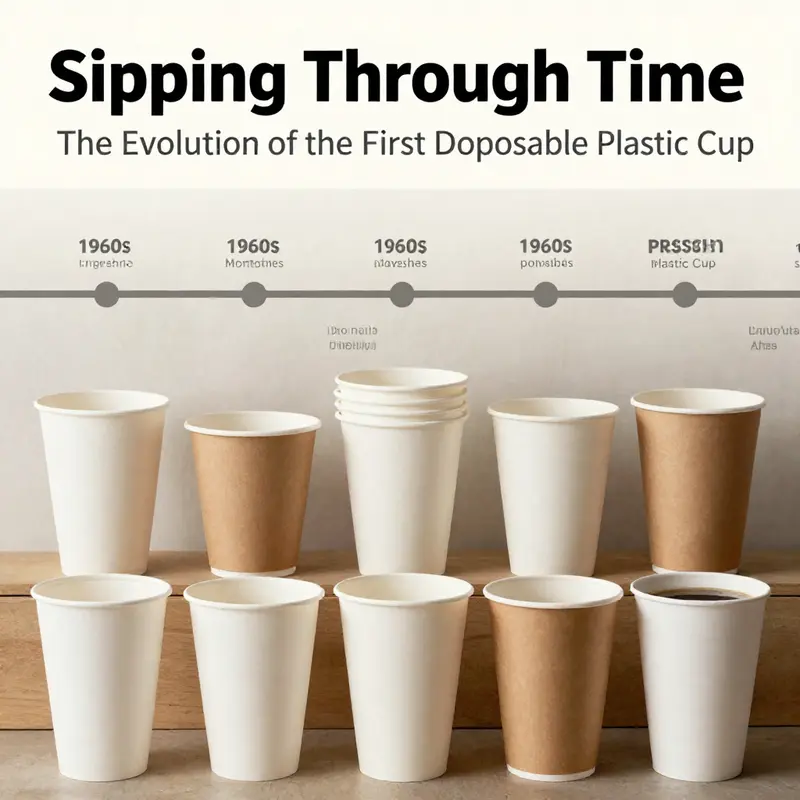
The story of the first disposable plastic cup is inseparable from the broader arc of synthetic plastics and the rise of a consumer culture that prized convenience as a daily virtue. Long before plastics entered kitchens and event spaces, humans relied on a mix of clay, wood, metal, or plant fibers to perform the simple task of holding a drink. The term disposable, in its modern sense, emerges only after years of experimentation with durable yet cheap materials that could be produced at scale. In this sense, the disposable plastic cup did not appear out of thin air; it was the result of a deliberate search for a container that could survive the rigors of mass distribution, transit, and quick service, while remaining light enough to be carried by curious, on-the-go crowds. The mid-twentieth century became the crucible for that search, when a series of breakthroughs in polymers opened possibilities that older materials simply could not offer: form stability, heat resistance, clarity, and a cost profile that made single-use cups an appealing option for millions of meals and beverages consumed away from home. The leap from a fragile paper sleeve to a sturdy plastic cup was not instantaneous, but it was rapid enough to redefine how people drank on the street, at car parks, or in the queue for a late-night snack. In a sense, the disposable plastic cup crystallized a new social habit: the expectation that a clean, convenient vessel could be obtained, used once, and discarded, without the burden of heavy cleanup or the need to reuse a fragile option. What followed was a cascade of choices about materials, manufacturing methods, and end-of-life options that would shape the environmental conversation for decades to come. The chapter that follows moves along the timeline of synthetic plastics, from the earliest fully synthetic materials to the practical, mass-produced cups that became a ubiquitous feature of modern consumer life, all while keeping the central thread in view: the tension between convenience and responsibility that still defines packaging today. The development of synthetic polymers began with a daring leap that would eventually enable a plastics-based solution to the cup problem. In 1907, a chemist produced Bakelite, the first truly synthetic plastic, made from phenol and formaldehyde. Bakelite did not look or behave like the plastics we know today; it was hard, heat resistant, and nonporous, but it opened the door to a wider world of resin chemistry. This was not a direct route to a disposable cup, but it established a key principle: plastics could be engineered to achieve specific performance criteria at scale. As the decades unfolded, other polymers emerged and expanded the palette of possible applications. A major breakthrough arrived in 1933 with polyethylene, a simple yet remarkably versatile material that could be produced in large quantities and molded into forms suitable for packaging. Polyethylene’s durability, chemical resistance, and processability made it an ideal backbone for containers that could survive the rough handling of distribution networks. While polyethylene initially found its niche in industrial contexts, its properties suggested broader use in consumer goods, including drinking vessels that could withstand everyday abuse and the occasional tumble on a shelf or in a cart. The real turning point, however, came in the postwar era when polymer chemistry matured enough to tailor materials for specific temperatures, textures, and costs. By the 1950s and 1960s, polypropylene and polyethylene terephthalate joined the scene as part of a growing family of plastics designed for food contact, packaging, and consumer convenience. Polypropylene, for instance, could endure heat much more than earlier plastics, a quality that made it feasible to craft cups capable of handling hot beverages without warping or leaking. Its heat resistance—up to roughly 130°C in many formulations—meant that a cup could be microwaved or used for hot drinks without compromising its structure. This particular property made polypropylene an attractive option for coffee and tea service in fast-food settings, department store kiosks, and large-scale events where speed and reliability mattered as much as price. Meanwhile, polystyrene—often seen in its crystal-clear, stiff form—was another cornerstone material in early disposable cups. Identified by the recycling code #6, polystyrene offered rigidity and clarity that made cups feel clean and modern, a quality that appealed to consumers who equated transparency with hygienic assurance. Yet the combination of low cost and straightforward manufacturing also meant that polystyrene cups could be produced at scale with relative ease, cementing their place in the discarding economy that accompanied abundant consumer choice. The emergence of these plastics did not occur in a vacuum. The mid-century push toward mass production techniques—molding, extrusion, and automation—enabled cups to be manufactured quickly, standardized for compatibility with vending machines and quick-service outlets, and distributed globally with minimal logistical friction. A notable pattern in this period was the move from purely rigid, transparent materials to blends and formulations that could offer a spectrum of performance characteristics. The industry gravitated toward polymers that balanced clarity, barrier properties, and safety for hot and cold beverages alike. The result was a class of disposable cups that could be used for a wide range of drinks and circumstances, from cold sodas to hot coffees and even frozen treats in some settings, all without the fear of immediate deformation or leakage. The practical reality of these early cups is often overlooked in popular retellings that focus on a single iconic design. In truth, the disposable plastic cup emerged through a confluence of material science, industrial design, and the logistics of modern commerce. Production lines grew efficient enough to ensure uniformity in thickness, rim geometry, and sealing surfaces, reducing the chances of slippage or breakage during handling. The uniformity mattered, because cup systems depended on interoperability with lids, machines, and stacking configurations that required predictable dimensions. The result was a family of cups that could be stacked, boxed, and loaded with beverages in a way that kept costs predictable and service times short. As these cups proliferated in restaurants, vending stalls, airports, and stadiums, a broader culture of on-the-go consumption took shape. People began to measure convenience not only by how quickly a drink could be obtained, but by how consistently a cup could perform under varied temperatures, how easily it could be transported, and how neatly it could be disposed of after use. The early decades also reveal a tension that critics would later intensify: the sense that disposable cups were a triumph of efficiency but a potential trap for the environment. The standardizing of crisper plastics, the legibility of recycling codes, and the ability to mass-produce millions of cups meant a rapid increase in production volumes. These volumes translated into a familiar lifecycle: raw materials extracted, polymers synthesized, cups molded, beverages poured, cups used and discarded, and waste managed by municipalities with limited recycling capabilities in many regions. Yet even within this cycle, the seeds of sustainability discussions began to germinate. The early disposable cup era did not fully anticipate the environmental consequences that would emerge a few decades later, but it did plant the seeds for ongoing debates about reuse, recyclability, and the ultimate fate of mass-produced packaging. The planned obsolescence of convenience would become a recurring theme as policymakers, educators, and industry stakeholders grappled with the question of whether there could be a more responsible model for disposables without sacrificing the benefits that plastic cups delivered in terms of hygiene, reliability, and user experience. In the 1990s, the balance began to tilt toward widespread adoption of disposable cups in fast-food chains, beverage outlets, and large events where the speed of service and the hygienic perception of disposables carried significant value. The argument for plastic cups gained momentum not merely because of their mechanical performance but because their production and distribution systems could be scaled to meet surging demand. Plastic cups offered an attractive combination of lightness and durability that paper or ceramic alternatives could only approximate in certain contexts. Their low production costs, compatibility with standard lids and machines, and the permissive handling of hot and cold liquids made them a staple of the convenience economy and a defining feature of the modern food-service landscape. However, the environmental footprint of single-use plastics began commanding more attention as researchers and policymakers mapped out the lifecycle of a cup—from raw materials to end of life. The life cycle assessment of a typical disposable cup often places the environmental burden squarely on the plastic’s production and its ultimate disposal, with CO2 emissions in a broad range that has been estimated to be on the order of dozens to over a hundred grams of CO2 per cup, depending on the material, thickness, and usage pattern. These numbers reflect not just energy consumed but the emissions associated with raw material extraction, polymerization, molding, transport, and waste management or recovery. People began to ask whether the same convenience could be achieved with less environmental cost, and whether the cup could be rooted in approaches that favored reuse or recovery rather than one-off disposal. In many places, this shift took the form of questioning the lifecycle and seeking alternatives that could cut emissions, reduce waste, and preserve consumer convenience at the same time. The conversation soon broadened to include circular economy ideas: can cups be designed for multiple uses, can lids and cups be cleaned and reused in organized systems, and can materials be recycled into new cups or other products with minimal loss of performance? These questions did not cancel the momentous convenience that disposable plastic cups provided, but they did compel the industry to look for policies, technologies, and business models that could reconcile demand with responsibility. A notable thread in this evolving discourse has been the exploration of alternative polymers and bioplastics, such as those derived from renewable resources that could be compostable or biodegradable under the right conditions. Polylactic acid, derived from plant starch, emerged as a prominent example of an eco-friendly variant that could be used in some cup designs. While PLA and related materials do offer environmental benefits under certain waste-management regimes, they also come with trade-offs related to heat resistance, compostability standards, and the realities of recycling infrastructure. The net effect of these developments has been to create a broader spectrum of disposables that challenge the old dichotomy between plastic cups and their alternatives. The modern marketplace now encompasses cups made from PP, PET, and PS, along with eco-friendly variants that attempt to close the loop through recycling or composting. In parallel, the packaging industry has experimented with design features that aim to reduce waste, such as thinner walls where feasible, lids that seal more securely, and better stacking to minimize space in transport and storage. Yet the central tension remains: how to maintain high levels of hygiene and convenience while minimizing environmental impact. To illustrate how this tension plays out in today’s market, consider the broader packaging ecosystem in which these cups exist. The same period that saw the rise of disposable plastic cups also witnessed a proliferation of disposable, single-use packaging across food service and retail. Paper-based bowls, biodegradable alternatives, and recyclable plastics share the stage with traditional plastics as producers and retailers seek to diversify their offerings in response to consumer demand for cleaner, more sustainable options. This is not a simple binary story of good versus bad materials; it is a narrative of compatibility and trade-offs, where material choice affects heat tolerance, stackability, permeability, cost, and end-of-life options. It is also a reminder that the modern disposable cup is the product of many incremental improvements rather than a single “aha” moment. The modern aisle is full of choices that would have been unimaginable a few decades earlier: cups engineered for microwave safety, cups with thinner walls to reduce material use, and even cups designed for improved assembly in automated lines. At the same time, the social expectation that beverages be available in durable, clean, and portable vessels persists, and so the cup remains a focal point of discussions about sustainable packaging. Within this context, it is instructive to consider how the disposable cup has interacted with other packaging formats. While plastic cups captured a large share of the demand in food service, other materials have carved out niches by emphasizing compostability, recyclability, or reusability. The shift toward reusable cup systems, as seen in some regions, demonstrates how communities are experimenting with demand management and waste reduction without sacrificing the advantages of a hygienic serving vessel. These initiatives show that the conversation around the first disposable plastic cup is not only about material properties but about how societies organize consumption, disposal, and resource recovery at scale. In this broader arc, the chapter on the historical development of the first disposable plastic cup invites reflection on the delicate balance between convenience and environmental stewardship. The cup’s journey—from a mid-century idea in a laboratory to a ubiquitous item on a fast-food tray and a carry-on at outdoor gatherings—mirrors a larger transition in how people think about objects in daily life. It challenges us to ask how to reconcile an enduring appetite for accessible, safe, clean beverages with the imperative to reduce pollution, conserve energy, and promote reuse. One practical sign of this evolving mindset is the diversification of disposables beyond rigid plastics toward papers, bioplastics, and hybrid designs that combine performance with a lower ecological footprint. Counterbalancing this progress is the ongoing need for robust waste management, better recycling streams, and consumer education about how to dispose of these products responsibly. The discussion is no longer about choosing the best single material but about designing a system in which packaging materials can be recovered, reprocessed, or repurposed with minimal environmental cost. As we move forward in this article, the historical lens remains essential. It helps illuminate why certain materials dominated the market for decades, and why the persistent push for sustainability continues to reshape the options available to manufacturers, retailers, and consumers alike. It also underscores the importance of design foresight: if the first disposable plastic cup had been conceived with channels for end-of-life recovery built in from the start, the ecological consequences might have followed a different arc. Yet history does not permit the luxury of hindsight alone. It offers a powerful reminder that innovation is not only a matter of finding better plastics but of rethinking consumption patterns, waste streams, and the social rituals that accompany the simple act of pouring a drink into a cup. In this sense, the first disposable plastic cup is less a single object than a symbol of how material science, industrial organization, and cultural expectations converge to shape everyday life. It is a testament to the ingenuity of mid-century engineers and designers who sought to make beverage service easier, faster, and more scalable, and it remains a touchstone for ongoing debates about how to maintain that convenience in a world that increasingly values resilience, recyclability, and responsibility. For readers who want to connect this historical arc to practical realities of today, consider a sample of contemporary packaging options that emphasize flexibility and eco-conscious design. The field has grown to include a range of single-use and reusable solutions, with ongoing experiments aimed at improving heat tolerance, barrier properties, and end-of-life outcomes. The conversation about the first disposable plastic cup thus continues to evolve as researchers, policymakers, and industry players explore how to preserve the accessibility and cleanliness that cups provide while reducing ecological costs. As this chapter has shown, the cup’s journey is a continuous dialogue between material science and consumer culture, a dialogue that will likely intensify as new materials, recycling technologies, and social norms emerge. For readers seeking a concrete example of current disposables in the marketplace—one that illustrates how paper-based and other materials are being integrated alongside traditional plastics—consider this example of a disposable takeaway cup with lid, which demonstrates how paper-based options now compete in environments that once favored plastics: disposable takeaway paper cup with lid. This link points to a real-world catalog entry that highlights the ongoing shift toward customizable, single-use cups that prioritize both utility and brand expression, a trend that coexists with ongoing efforts to improve end-of-life outcomes for all disposables. External reading: for a broader historical overview of how disposable cups rose in prominence and how public discourse framed their environmental footprint, see https://www.bbc.com/news/world-48462733.
Shaping the Sip: Materials Behind the First Disposable Plastic Cup and the Enduring Reach of Single-Use Packaging
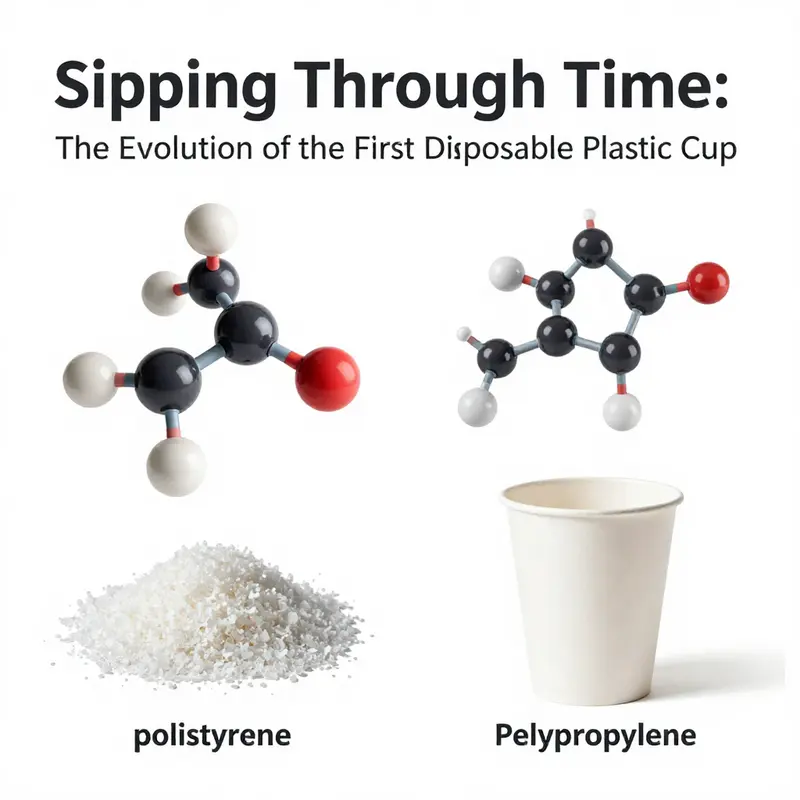
In the mid-20th century, a quiet shift began to transform how people drank on the move. The first disposable plastic cup emerged not as a mere curiosity but as a solution born from polymer science, industrial scale, and a growing appetite for convenience. It was a product of a particular moment when manufacturers sought lighter, cheaper, and more versatile containers that could withstand repeated handling, mass distribution, and the rigors of vending machines and fast-service environments. Though the concept of single-use containers stretches back to antiquity, the modern disposable cup crystallized in a different era, when modern plastics offered new possibilities for consumer culture. The story of this cup centers on two materials that defined its early form and its enduring legacy: polystyrene and polypropylene. These two polymers, often identified by their recycling codes, #6 for PS and #5 for PP, became the backbone of an industry designed to deliver beverages quickly, cleanly, and at a scale not previously imagined. Their selection was not an accident of fashion but a deliberate balance of properties that made mass production feasible while addressing the demands of cold and hot beverages, safety and usability, and cost efficiency for the many mouths served each day. The result was a cup that could be molded, stacked, slotted into vending machines, and carried around in crowded spaces with a simplicity that few other materials could match at the time. The early cups were typically molded from polystyrene, chosen for its clarity when needed, its rigidity that preserved a neat, upright profile, and its relative ease of fabrication. The visual appeal of PS—its transparency and crisp edges—made it especially well-suited for cold beverages, where consumers often expect to see the color and consistency of their drink through a clear, sturdy vessel. The insulation properties of PS also contributed to the user experience by reducing perceived heat transfer, at least enough to make a cold drink more refreshing in a crowded store or on a park bench. Yet the very traits that made PS so attractive came with limitations. PS is relatively brittle compared with some other plastics, and it can crack under stress or temperature shifts. A cup might endure the dents of a crowded tray line, but a drop or a sudden jolt could expose its vulnerabilities. Moreover, PS has historically faced challenges in recycling streams. In many recycling systems, PS is not as readily processed as other plastics, and it often ends up as waste in landfills or less controlled disposal streams. The result is a double-edged history: immediate benefits in cost and performance, tempered by environmental considerations that would come to shape the industry’s longer arc. As the decades rolled on, polypropylene began to assume a growing share of the disposable cup market. PP offered a different set of attributes that complemented PS while extending the functional envelope of single-use drinkware. It is a tougher material, with greater impact resistance and more flexible behavior under stress. The higher heat resistance of PP—capable of withstanding temperatures well above ambient conditions—made it suitable for a broader range of beverages, including hot drinks that previously demanded other packaging solutions. The fact that PP could better resist deformation without cracking meant cups and lids could be designed as a cohesive system, providing a more reliable experience for customers who expected their coffee or tea to stay contained, even during rough handling or a bumpy ride. In practice, PP’s advantages translated into several tangible outcomes for food-service operations. Cups molded from PP could be used with hot liquids without the risk of early deformation. They could be paired with PP lids or other closures designed to seal in warmth, reduce spill risk, and simplify staff workflows in busy service lines. The material’s resilience also made it a practical choice for microwavable applications, enabling some disposable cups to move from a cold drink in a take-away bag to a warmed beverage at a customer’s table, though guidance around reheating is always essential for safety and quality. The convergence of PS’s clarity and rigidity with PP’s resilience created a versatile, efficient system that could be scaled up to meet mass-market demand. That combination underpinned not only the cups themselves but the lids, the wraps, and the entire ecosystem of single-use beverage packaging. The result was a packaging standard that facilitated fast service, predictable costs, and a uniform user experience across thousands of outlets and events. The economic logic was powerful: plastics offered low unit costs, rapid molding cycles, and the ability to tailor properties to specific use cases, all of which aligned with the growing consumer expectations for convenience and consistency. The plastics revolution in this space, however, did not unfold in a vacuum. It unfolded within a broader conversation about resource use, waste, and the environmental footprint of disposable packaging. The codes associated with these materials, notably PS with recycling code #6 and PP with code #5, signal different treatment streams in modern waste management infrastructure. For PS, recycling rates have historically varied and, in many regions, remained lower than those for more widely recycled plastics. The brittleness that characterizes PS under certain conditions, combined with a sometimes limited recycling infrastructure for this material, has reinforced a cautionary tale about its long-term sustainability. By contrast, PP has enjoyed broader recycling attention, reflecting both its thermal stability and its compatibility with existing recycling processes in several jurisdictions. This reality did not by itself resolve the question of whether disposable cups should be ubiquitous in daily life; rather, it framed the problem, guiding manufacturers and policymakers toward answers that integrated practical performance with evolving environmental frameworks. The early dominance of PS and PP in disposable cups anchored a mentality of convenience that quickly spread to other single-use containers. Cups, lids, and associated packaging became almost a language of rapid consumption, enabling grab-and-go options at diners, vending machines, airports, stadiums, and countless other venues. The design mindset behind these materials emphasized a balance: a light footprint in weight and cost, a robust performance in handling and temperature tolerance, and a degree of safety and predictability that consumers could rely on in crowded, high-turnover spaces. Yet as the decades progressed, the environmental dimensions of single-use packaging rose to the forefront of public discourse and policy. The mass deployment of PS- and PP-based cups created an avalanche of waste streams that challenged existing recycling systems and waste-management capacities. The environmental concerns surrounding disposable cups—ranging from litter and resource depletion to the energy demands of production and end-of-life processing—invited a broad examination of packaging choices. In response, researchers and manufacturers explored alternatives designed to reduce environmental impact while preserving consumer convenience. Biodegradable and compostable materials, as well as recycling-optimized plastics and even paper-based options, entered the conversation as potential pathways toward reducing the environmental footprint of beverage packaging. This shift did not imply a wholesale rejection of PS and PP; rather, it signaled a more nuanced view of how materials can be optimized across the lifecycle, including how cups are designed, produced, used, and ultimately disposed of. In this context, the material choices of the first disposable plastic cup echo into contemporary packaging debates. The materials that gave rise to a new era of rapid-service drinking also helped educators, policymakers, and designers to articulate the need for improved recycling streams, clearer labeling, and more efficient manufacturing practices. The conversation around PS and PP has, therefore, become a gateway to broader inquiries about how single-use items can be reimagined—without sacrificing the benefits that users have long valued: portability, speed, and reliability. Industry guides and standards documents from food-contact material authorities emphasize this complexity. They outline the properties that matter for safety and performance, and they point toward the broader implications of material choice for recyclability, food safety, and environmental stewardship. These resources do not simply catalog technical specifications; they frame how manufacturers navigate the trade-offs that define modern packaging. To understand the legacy of the first disposable plastic cup is to recognize a turning point in consumer behavior and industrial practice. The switch from traditional, reusable cups toward a system built on lightweight, single-use plastics reflected a culture that valued speed and convenience in equal measure with safety and cost. It also foreshadowed the ongoing dialogue about sustainability that would come to shape the packaging industry in the ensuing decades. The conversation has since evolved to consider not only the functional demands of cold and hot beverages but also the entire cradle-to-grave narrative of containers. In that context, even as PS and PP continue to be used in various forms—often in combination with lids or other closures—the industry increasingly considers end-of-life options, from recycling and thermal recovery to the pursuit of alternative materials that better align with evolving environmental goals. The idea is to preserve the practical benefits that fans of disposable cups appreciate while reducing the ecological costs that come with mass, short-lived packaging. The shift is gradual and ongoing, and it invites readers to reflect on how the materials that once defined a consumer staple can evolve to meet the new standards of sustainability without sacrificing the efficiencies that allowed the modern beverage service to flourish. For readers exploring the broader landscape of packaging choices, a related line of discussion turns to paper-based options that have, in many contexts, offered a different balance of performance and end-of-life outcomes. In particular, a range of single-wall cups with lids have been developed to address environmental concerns, offering an example of how packaging design can be tailored to align with sustainability goals while preserving the ease of use. See the detailed catalog entry for disposable single-wall paper cups with lids, which demonstrates how a similar end-use scenario can be served using a different material framework: disposable-single-wall-paper-cup-12oz-16oz-kraft-coffee-cup-with-lid. This reference underscores that, even as plastics dominated early on, the packaging world continually tests new configurations to meet shifting expectations from both consumers and regulators. The conversation about single-use beverage containers remains dynamic. It is not merely a matter of choosing a material with the right hardness or heat tolerance; it is about designing systems that maximize reuse where feasible, support responsible end-of-life processing, and still deliver the on-the-go convenience that has become a hallmark of contemporary consumption. The story of the first disposable plastic cup, rooted in PS and PP, thus serves as a lens into a broader narrative: how materials, technologies, and social priorities interact to shape everyday objects. It reminds us that the cups we take for granted are not just passive shells for a drink but outcomes of complex trade-offs among performance, cost, convenience, and the evolving responsibility we bear for the resources we consume. As the industry continues to experiment with composites, coatings, and alternative polymers, the basic insight remains clear. The cups of the early era showed how a simple shape—curved walls and a circular rim—could become a platform for a vast array of uses, from cold refreshment to hot beverages, from vending machines to busy concessions. They demonstrated that the material properties of PS and PP could be orchestrated to deliver a reliable experience across environments, often under pressure and demand. The lasting impact is evident in the way modern packaging designers approach both function and lifecycle. They ask not only what a cup can do in a given moment, but how its production, use, and disposal fit into a broader system of resource stewardship. The legacy of these materials continues to influence choices in lab testing, supply-chain strategy, and municipal recycling policies. They remind us that the simplest objects—the cups that cradle a drink for a few minutes—are also participants in a global conversation about sustainability, technology, and the way we live our daily rituals. External resources expand this view, offering guidelines that illuminate the safety and performance criteria for food-contact materials across a spectrum of packaging options. For a comprehensive overview, consider consulting industry guidance that maps the food-contact use of plastics and their end-of-life pathways. External resource: https://www.plasticseurope.org/en/industries/food-and-beverage/food-contact-materials/
From Convenience to Economic Drive: The First Disposable Plastic Cup and the Transformation of the Beverage Industry
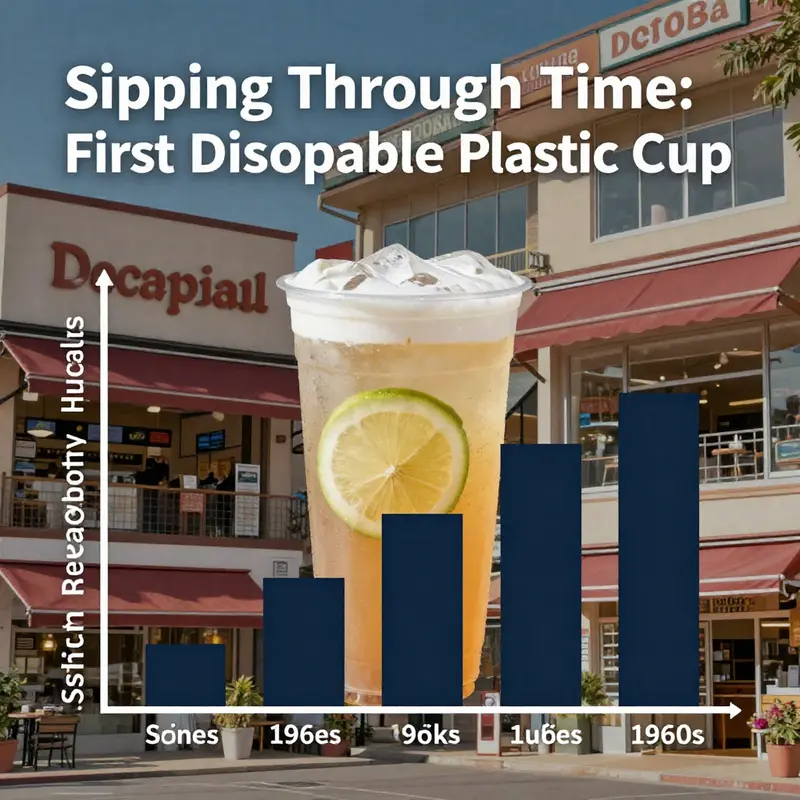
The mid twentieth century gave rise to a small, unassuming object that would quietly alter the shape of modern consumption: the disposable plastic cup. Born out of advances in polymer science, the first dependable single use cups emerged in the 1960s as engineers sought a container that could resist leaks, tolerate heat, and endure the rough handling of busy service environments. The move from heavier, fragile offerings to lightweight, durable plastics opened a window to what many years later would be called the era of rapid takeout and on‑the‑go consumption. Polypropylene and polystyrene, two materials whose properties could be precisely engineered for performance and cost, became the enabling levers. Cups that could hold hot coffee or tea, or keep a cold beverage sealed in transit, were no longer a luxury but a standard of operation for many food service businesses. In the unfolding economic logic of the period, the disposable cup was not merely a commodity; it was a logistical instrument that could be produced, stocked, and deployed at scale with remarkable predictability. The result was a transformation in how beverages moved from the counter to the consumer, faster and more reliably than ever before.
This shift carried immediate and visible economic consequences. The production costs of a disposable cup are dramatically lower per unit when manufactured at scale, and the sheer lightness of the package reduces shipping and handling costs along the supply chain. In busy service environments, the cup offered a dramatic reduction in the labor costs tied to washing and returning reusable containers, a saving that would become a central pillar of profitability for quick service formats and large event organizers. The design also minimized breakage losses; a shattered ceramic or glass cup demands replacement, adds clean‑up time, and risks injury to staff. In contrast, a plastic cup, once manufactured, can withstand the daily grind of handling, stacking, and rapid service with far fewer interruptions. It is not an exaggeration to describe these advantages as the catalyst for a new cycle of growth in the beverage sector, especially where reliability and speed are the core requirements of day‑to‑day operations.
The economic ripple effects extended well beyond the four walls of a single shop. The ability to deliver beverages quickly, with consistent quality and predictable costs, enabled a broader ecosystem of takeout and delivery. As consumer demand for convenience grew, companies scaled up their menus, experimented with new formats, and diversified offerings that could be consumed away from the store. The takeaway model, once a marginal option, became mainstream, and the disposable cup became a standard instrument of that model. The impact was not purely financial. It reshaped how brands presented beverages, how nearly every urban consumer experienced a cup in transit, and how service points orchestrated the choreography of lines, prep, and pickup. Small changes in packaging could ripple through pricing, labor scheduling, and inventory management, creating a new set of business rules for a rapidly evolving market.
With the march of mass distribution came a surge in scale. It is not merely the aggregate volume of cups that matters, but the structure of the supply chain that supports them. Global supply networks learned to forecast demand with more precision, so factories could run uninterrupted shifts and maintain the tight tolerances required for hygienic packaging. The material choice—whether a polyolefin thermoplastic or another compatible polymer—carried implications for heat resistance, seal strength, and moisture barriers. Cups designed to withstand hot liquids required superior heat resistance without deforming, a characteristic that elevated the acceptability of disposable options for hot beverages. As plastics technology matured, the industry moved from single‑use convenience toward more resilient use cases that could tolerate microwaving and longer transit times. While the early advantages were clearly economic, they also introduced a set of externalities that would gradually demand attention from policymakers, business leaders, and consumers alike.
In one of the most telling pictures of scale, hundreds of billions of cups would eventually move through markets worldwide in the ensuing decades. A striking illustration of scale is the prospect of volume alone driving down per‑cup cost, while streamlined logistics trimmed the marginal costs of delivery and storage. Yet even as the economics favored disposables in the short run, the long arc began to reveal a cost structure that was not captured by price per cup alone. There were systemic waste concerns, fluctuations in recycling infrastructure, and growing scrutiny of the environmental footprint embedded in the linear take‑make‑dispose model. The market responded with a flurry of innovations aimed at reducing waste, improving recyclability, and rethinking the lifecycle of a beverage container. These developments would not erase the foundational economic benefits of the disposable cup, but they would eventually reframe how the industry balanced efficiency with responsibility.
The breadth of adoption also underscored a cultural shift in how people consumed beverages. Coffee shops, convenience stores, and micro‑retailers became the listening posts of a new urban habit: quick service, consistent portioning, and predictable formats. The disposable cup enabled not just a product but a service experience—clean counters, rapid turnover, and the sense that a consumer could order, receive, and move on with minimal friction. In this sense, the cup did more than hold liquid; it facilitated a new rhythm of urban life. The economic narrative, thus, extended beyond cost savings to include the ways in which packaging helped define the tempo of cities, the layout of storefronts, and the expectations of customers who valued speed as much as quality.
As the industry embraced this new tool, the supply chain grew more complex and more optimized. By supporting standard sizes and modular accessories such as lids, sleeves, and compatible vessels, the disposable cup became part of an integrated system that promised consistent performance across a wide range of contexts. The economics of scale translated into predictable budgeting for operators who might be juggling a hundred orders per hour in a busy downtown corridor or managing a festival with tens of thousands of attendees. For managers, the cup was a unit of measure—an index of labor requirements, packaging waste, and revenue generation. The financial logic of disposables—low unit costs, high throughput, and reduced labor intensity—made a compelling case for their initial adoption and continued dominance in many menus and service formats.
Yet the economic story did not unfold in a vacuum. The same advantages that fed rapid expansion also created new pressures. The mass deployment of single‑use cups placed a burden on waste streams and municipal recycling systems. The sheer volume—think of billions of cups moving through cities and towns—translated into a waste management challenge that required new logistics, sorting capacity, and end‑of‑life processing. The environmental costs, not always visible in short‑term financial statements, gradually emerged as a material consideration for operators, regulators, and consumers alike. This tension between efficiency and sustainability would become a central thread in the industry’s evolution, nudging players toward alternatives that could retain the benefits of disposables while reducing the ecological footprint.
Amid this tension, there began to appear a clear signal: the economic model anchored in linear disposables was increasingly challenged by regulatory attention, shifting consumer preferences, and the growing viability of circular systems. The conversation moved from whether single‑use cups were acceptable to how to design, use, and recover them in ways that closed the loop. This was not merely a matter of technology. It was a question of systems design, governance, and incentives—how to align the interests of producers, retailers, waste managers, and the public in a shared objective of better environmental performance without sacrificing the speed and convenience that customers had come to expect. In this context, policy pilots and guidance began to appear, laying out pathways for reusable cup systems to scale in real urban environments. The emergence of formal guidance, including pilot implementation frameworks, signaled a turning point from a focus on disposable convenience to a concerted effort to build circular alternatives that could compete on environmental metrics while delivering economic value.
A practical illustration of how this thinking translates into action can be seen in the newer approaches to reuse programs. When a city or region experiments with reusable cup systems, the economics shift from per‑cup profit margins to per‑cycle sustainability gains. Even with conservative reuse rates, say in the range of twenty to forty uses per cup, the lifecycle emissions and the energy intensity associated with producing and transporting new cups are markedly reduced. In these analyses, the benefits compound as programs mature and scale. Packagers and operators report meaningful reductions in packaging waste, lower fossil fuel inputs, and, over time, measurable savings in operating costs through more efficient wash, return, and refill logistics. The overarching finding is that reusable systems, when implemented effectively, can outperform disposable options across key environmental indicators while still delivering the same service quality that customers expect. In other words, the long‑term economics begin to tilt toward circularity, not as a niche approach but as a viable pathway that aligns profitability with responsibility.
Despite these positive signals, the transition is neither simple nor immediate. The first disposable cup, with its surface simplicity and low cost, created an appetite for convenience that can be difficult to recalibrate. The industry must contend with entrenched practices, consumer habits, and the sheer inertia of established supply chains. The design of cup systems—whether for hot or cold beverages—must balance functional requirements, user experience, and end‑of‑life outcomes. Reusable systems require reliable wash infrastructure, standardized collection and return loops, and robust branding that invites trust and participation from customers. These elements do not merely affect the environmental profile; they influence the economics of a program, including capital expenditures, operating costs, and the yield of a given reuse cycle. In many markets, pilots and phased rollouts are essential to learning, adjusting, and optimizing the configuration of cups, lids, sleeves, and the logistics that carry them from consumer to facility and back again.
The story of the first disposable plastic cup, then, is a story of transformation. It is a record of how a simple object catalyzed a global beverage economy characterized by speed, scale, and customization. It is also a reminder that the same engine of cost efficiency that fueled growth can, when pursued without regard to end‑of‑life outcomes, generate long‑term tensions between economic and environmental objectives. The latest research makes a careful, almost prescient point: even modest reuse rates, implemented at scale, can yield superior greenhouse gas performance and reduced fossil energy consumption relative to disposable systems. When these circular approaches are embedded within regulatory guidance, industry standards, and consumer engagement strategies, the economic case strengthens. The challenge, then, is to reconcile the irresistible impulse toward convenience with the necessity of stewardship. The cup is no longer merely a container; it has become a point of intersection where business models, urban systems, and everyday behavior converge.
This is why current market analyses emphasize not just the volume of cups produced and sold, but the trajectories of reuse, recycling, and redesign. As markets evolve, the industry is learning how to preserve the benefits of disposables—the reliability, the speed, and the cost advantages—while gradually migrating toward systems that keep materials circulating. The future may well be defined by a blended ecosystem in which disposables function efficiently within a broader circular framework, or where reusables prove their worth at scale through intelligent service design, lifecycle thinking, and supportive policy ecosystems. In short, the economics of the first disposable plastic cup did not end with its initial success; it laid the groundwork for a lasting conversation about value, waste, and the economic logic that can sustain a beverage economy in a world of finite resources.
For readers seeking a concrete anchor to the current scale and direction of the market, one practical reference is a wholesale source that demonstrates how the sector has organized its capacity around large‑volume takeout packaging. The link below points toward a wholesale supply option that highlights the kinds of packages operators rely on for high‑volume beverage service, illustrating how the economics translate into real world purchasing decisions. wholesale take-away 8oz-12oz disposable coffee paper cup with lids.
As the industry looks ahead, the question will be whether the default assumption of single use can be reconciled with the mounting imperative to reduce waste and greenhouse gas emissions. The answer will not come from a single technology or a single policy. It will emerge from a continuum of design choices, policy supports, and consumer participation that together redefine what counts as value in a beverage economy. The evolving narrative invites operators to weigh speed and affordability against the durability of reusable systems, and it invites policymakers to craft pathways that make circular choices feasible and attractive at scale. In this sense, the first disposable cup did not merely flip a switch in a factory; it helped illuminate a future where the economics of the beverage industry are measured not only by the price of a cup, but by the lifecycle of the materials, the efficiency of the system, and the degree to which a city, a retailer, and a consumer share responsibility for the waste they generate.
External resource: https://www.linkedin.com/pulse/current-state-disposable-beverage-cups-market-2026/
A Cup That Sparked a Century of Convenience—and a Century of Questions: The First Disposable Plastic Cup and the Environmental Wake-Up
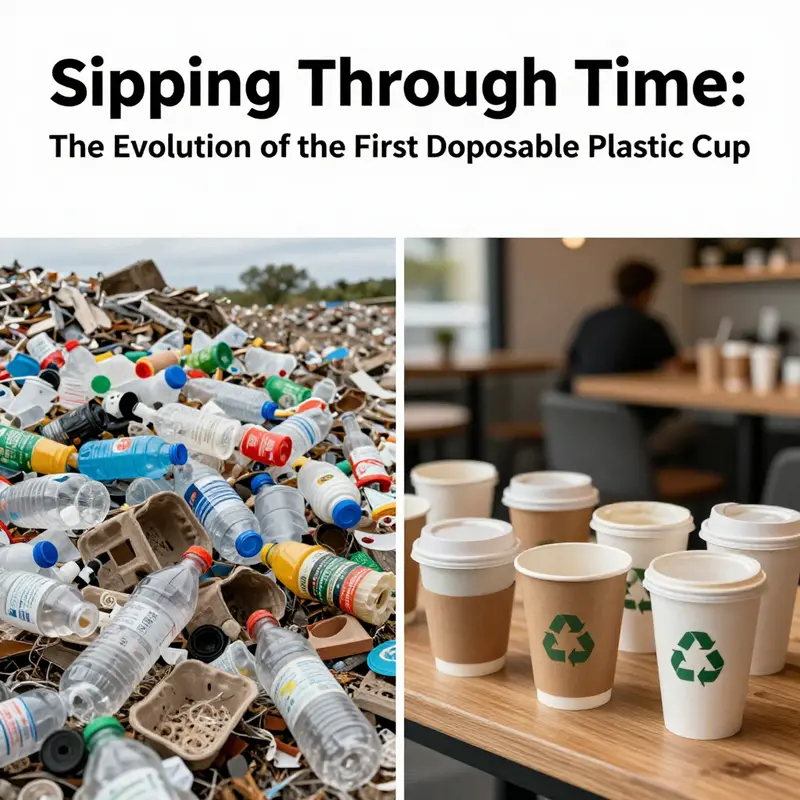
The moment when a disposable plastic cup first found its place in the hands of a hurried, thirsty public did more than introduce a new kind of container. It marked a turning point in how modern societies balance convenience, hygiene, and scale. In the 1960s, two plastics—polypropylene and polystyrene—began to dominate the field of single-use cup design. These materials offered a blend of lightness, rigidity, and resistance to heat that paper cups struggled to deliver. The era’s most recognizable innovations were not tied to a single brand or kiosk but to a broader system: vending machines, fast-food outlets, and large public events that demanded quick, clean, repeatable service. A cup designed for the rigors of a vending machine or a high-volume counter could withstand stacking, transport, and the occasional rough handling, all while delivering a predictable user experience. In this sense, the first disposable plastic cup was not merely a container; it was a catalyst for a culture of immediate gratification, a culture that prizes speed, consistency, and the quiet assurance that a drink will be ready when the customer is ready to take it.
The early plastic cup relied on polystyrene’s clarity, stiffness, and low cost. It offered a crisp, glass-like appearance that could hold cold drinks without collapsing under the chill of ice and condensation, and it provided enough rigidity to resist deformation during vending or tipping. Over time, polypropylene began to gain prominence, particularly because of its higher heat resistance. By tolerating temperatures up to roughly 130°C, PP cups became fit for hot beverages like coffee and tea, even in the bustling rhythm of a drive-thru or an airport lounge. This shift broadened the everyday possibilities of disposable cups: from chilled sodas to hot beverages to soups and even frozen desserts in certain contexts. The material science behind these choices mattered because it directly affected user safety and experience: a cup that stays intact when hot liquids are poured, a cup that prevents leaks at the margins of a take-away order, a cup that can be stacked efficiently for shipping and storage. In those early decades, the match between material properties and commercial needs helped standardize a disposable plastic cup as a reliable, mass-produced object rather than a bespoke innovation.
Yet with convenience came a new set of questions that would persist for decades. The 1960s through the 1980s saw the rapid growth of disposable cups in settings where hygiene was essential and reuse was impractical. The appeal of a product that could be discarded after a single use—without much concern for cleaning, drying, or storage—was a defining feature of modern consumer culture. The economic logic was straightforward: lower labor costs, faster turnover, and consistent quality across millions of servings. In a crowded marketplace, a cup that performed predictably at scale became a strategic advantage for manufacturers and retailers alike. The result was not merely a better cup but a new standard of service that reshaped how people drank on the go. The cups were small, but their impact was disproportionately large. They enabled a fast rhythm of consumption that aligned with growing consumer mobility, urbanization, and the globalization of foodservice networks.
In parallel, the environmental implications of such mass-produced containers began to surface as a new field of inquiry. The very traits that made disposable plastic cups attractive—their light weight, their resilience, and their compatibility with automated dispensing—also made them difficult to manage at end of life. As societies accumulated more single-use waste, researchers started to quantify not just litter on streets and beaches but the broader lifecycle footprint of these cups. In particular, life cycle considerations highlighted the global warming potential of materials used in cups, the energy required to produce them, and the challenges of collection and processing after use. The discourse shifted from a purely functional assessment of cups to a more holistic view of sustainability. The question moved from whether a cup could perform to whether a cup should perform, given the consequences for land, water, and air across entire value chains.
As awareness grew, so did the spectrum of possible responses. Some responses emphasized efficiency and recycling streams—improving collection, separation, and processing to ensure that cups could be diverted from landfills. Others pursued material substitution: switching from conventional petrochemical-based plastics to materials with lower perceived environmental burdens or those that could claim better end-of-life outcomes. Innovations began to explore coatings and composites, aiming to retain barrier properties for beverages while making the waste easier to manage. Cardboard-based containers with polymer coatings, for instance, were examined for their potential to reduce overall environmental impact, though this approach introduced its own recycling and composting questions. Simultaneously, new bioplastics started to appear on the horizon, with polylactic acid (PLA) and related formulations positioned as possible paths toward lower emissions in production and breakdown under industrial composting conditions. Still, the story was not straightforward: the ecological advantages of a given material often hinged on how and where the waste was treated after use. In other words, a greener material could be less effective if the supporting waste infrastructure was absent or underdeveloped.
The evolving landscape of disposable cup innovation thus became a study in systems thinking. It was not enough to design a cup that could withstand heat or survive a rough day in a vending machine. Designers and engineers had to anticipate how cups would travel through the complex networks of production facilities, distribution centers, retailers, and households, and how those journeys would culminate in a final resting place—either in a recycling stream, an industrial composting facility, or a conventional landfill. This broader perspective underscored the essential truth: environmental performance is not a property of a cup in isolation but a function of the entire chain that encircles it. With that realization came both optimism and caution. Optimism, because smarter materials and smarter systems could reduce the footprint of a widely used product; caution, because the benefits of greener materials could vanish if they were not supported by robust end-of-life infrastructure, clear labeling, and consumer participation.
The dialogue around innovation in disposable cups has thus evolved into a conversation about material science aligned with practical waste management. When researchers compare different cup materials—whether carton-based with barrier coatings or plastics like PP and PLA—the picture that emerges is nuanced. PLA-based formulations can lower carbon emissions during production and decomposition when industrial composting is available and well-utilized. In contrast, conventional plastics can have higher residual greenhouse gas contributions if they persist in landfills or if their recycling streams are not designed to capture them efficiently. These insights are not merely academic. They exert real influence on policy choices, corporate strategy, and consumer expectations. They also illuminate a core challenge: the success of a greener cup is inseparable from the strength of the systems that collect, sort, and treat used cups after their brief moment of use. Without those systems, even the most promising materials may fail to deliver meaningful environmental benefits.
The contemporary narrative of disposable cups, therefore, is not a simple story of more sustainable plastics versus old plastics. It is a narrative of integration: material science, manufacturing excellence, waste management, regulatory frameworks, and consumer behavior all interacting as a single system. In that integrated view, environmental foresight studies have shown that firms driving these innovations often belong to larger economic groups, maintain ongoing R&D programs, and rely on public support to test and scale new designs. Yet several barriers persist. A lack of organizational flexibility can slow experimental shifts within established companies. A lack of receptivity from customers can dampen demand for new, often more expensive or unfamiliar materials. And the persistent challenge of developing and financing end-of-life infrastructure can limit the practical adoption of novel cup designs. Taken together, these insights emphasize that progress hinges on multiple levers: technical breakthroughs, adaptive business models, policy incentives, and a shared cultural shift toward longer-term thinking about waste and resource use.
Acknowledging these complexities does not negate the benefits that innovation can deliver. A cup designed with smarter materials and smarter packaging might reduce emissions, cut energy use, or divert more waste from landfills. It could also reduce the risks associated with spills, improve customer experience, and support more efficient supply chains. But the path to such benefits requires more than clever chemistry. It requires coordination across industries, clear standards for end-of-life treatment, and a public narrative that connects daily choices—like the cup a person picks up at a coffee shop—with global outcomes. It requires, in short, a systems approach that links product design to waste management, consumer education to policy reform, and corporate strategy to community infrastructure.
As we reflect on the evolution spurred by the first disposable cup, it becomes clear that the chapter is still being written. The cup that began as a simple vessel for a hot or cold beverage evolved into a symbol of modern systems thinking: an artifact of convenience whose life after use exposes the interdependencies of manufacturing, recycling, and social responsibility. The journey from single-use ease to sustainable design is not a straight line but a field of trade-offs, where the advantages of one material may be offset by the labor or energy costs of processing it later. In that tension lies opportunity. Designers now explore coatings that enable better recyclability, or bioplastics that promise lower emissions without demanding new waste streams that do not yet exist. They test carton-based designs and refine the balance between barrier performance and compostability. They imagine labeling schemes that clearly guide consumers to the right recycling or composting stream, reducing misdirection in the flow that often leads to contamination and inefficiency.
The broader lesson invites a measured optimism. The first disposable cup did more than fill a niche; it reframed how society thinks about consumption and waste. It prompted questions that were rarely considered in earlier eras: What is the true cost of convenience? How can we decouple growth in consumption from growth in waste? What social and economic infrastructures must accompany new materials to ensure that their benefits are realized without creating new burdens? The answers are not universal or static. They differ by region, by policy environment, by consumer education, and by the capacity of industries to adapt. Yet the trajectory is recognizable: better materials, better data on environmental impact, and better systems for end-of-life management together create a path toward services and products that align with a more sustainable future. This is not a rejection of plastic cups but a reimagining of their role within a circular economy—one that seeks to pair the undeniable advantages of convenience with a responsibility to manage resources wisely.
For readers who want to explore practical examples of eco-conscious options in the broader disposable packaging landscape, consider the growing category of eco-friendly disposable cups with lids. These designs illustrate how the industry is attempting to marry user-friendly presentation with clearer end-of-life pathways, from improved materials to packaging that guides recycling. eco-friendly disposable cups with lids
The story does not end with an asterisk placed at the foot of the page. It continues in research labs, in policy briefings, and in the daily choices of consumers who increasingly expect products to perform well and waste to be managed responsibly. The first disposable cup became a symbol of modern life, a small object with outsized implications. Its legacy invites us to reframe material decisions as part of a larger commitment to sustainability, public health, and the resilience of communities in the face of growing environmental challenges. The next chapters will take up the thread from this turning point, examining how innovations in materials, recycling, and waste governance are converging to shape a future where convenience no longer comes at the price of ecological health. In that sense, the cup’s journey is not finished; it is evolving, reinterpreting itself in every reuse, every recycling program, and every policy discussion that seeks to align human appetites with planetary boundaries.
External reference for further reading on lifecycle impacts and material comparisons: https://www.sciencedirect.com/science/article/pii/S0956053X22001458
Final thoughts
Reflecting on the journey of the disposable plastic cup reveals not only its immediate benefits for convenience and cost but also the ongoing challenge of environmental responsibility it presents today. As businesses across the beverage industry adapt, embracing eco-friendly alternatives while acknowledging the historical significance of plastic cups can guide them toward a more sustainable future. The first disposable plastic cup paved the way for innovation, and understanding its impact will empower businesses to make choices that align with both service excellence and ecological stewardship.