
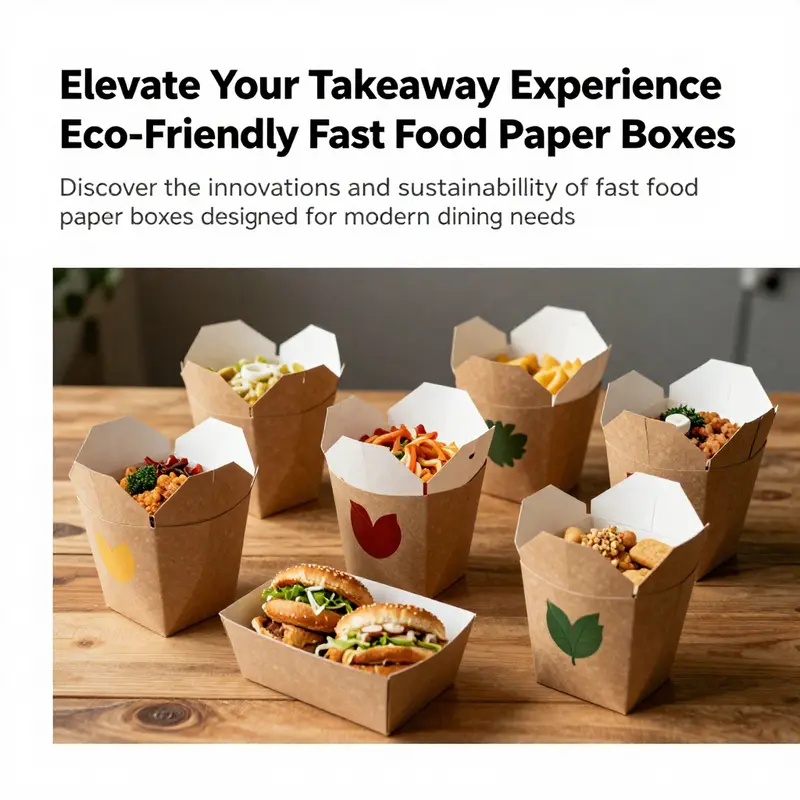
Fast food paper boxes have gained traction as a vital component in the takeaway packaging landscape, particularly for industries like bubble tea shops, restaurants, food trucks, catering services, and event planners. Understanding their significance goes beyond basic utility—it delves into innovations that enhance functionality, commitment to sustainability, and customization trends elevating brand identity. As market demand flourishes for eco-friendly packaging, businesses have access to reliable global suppliers who meet modern needs while complying with environmental regulations. Join us as we explore these dimensions in detail, guiding you to make informed packaging decisions that align with your operational goals.
Smarter, Greener, and Stackable: The Next Era of Fast-Food Paper Boxes for Takeaway
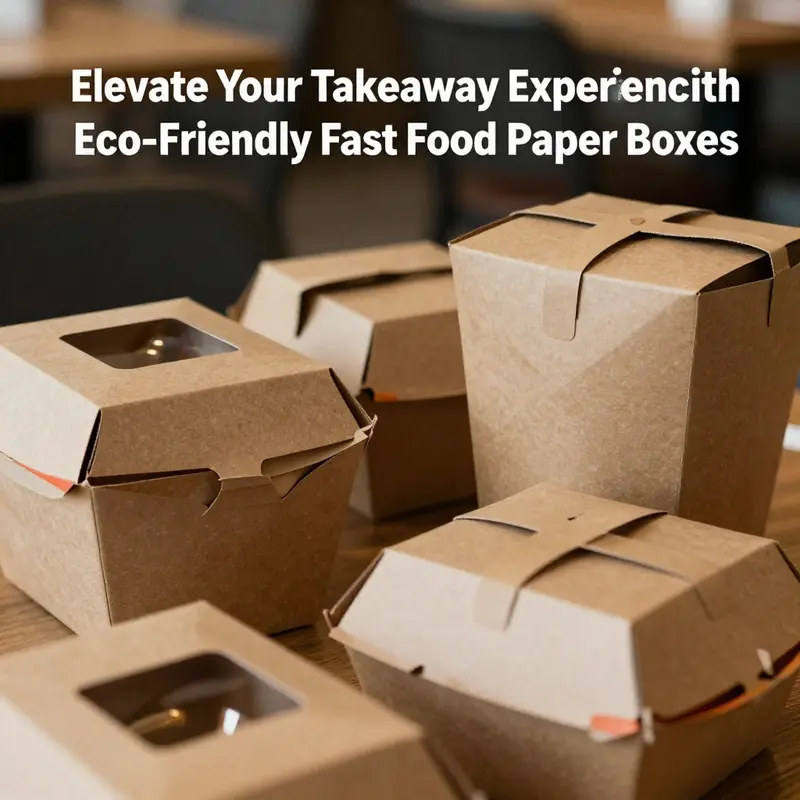
The fast-food takeaway packaging landscape is not merely about keeping food intact and hot. It is a living record of how brands balance convenience, sustainability, and presentation in a single, disposable object. As consumer expectations tighten and regulations tighten further, the pace of innovation accelerates in ways that go beyond a fancier lid or a brighter print. Packages are becoming social and environmental statements as much as practical tools. The shift toward recyclable kraft paper boxes marks a deliberate turn away from plastic-dominated solutions toward materials that are renewable, recyclable, and increasingly capable of performing in demanding real-world conditions. This evolution is unfolding at several levels at once: material science, functional design, branding potential, and the strict requirements of food safety and waste management. Each advance is not a stand-alone improvement but a thread in a larger fabric that yields better outcomes for restaurants, delivery services, and diners alike.
At the core of these advances is a return to the basics of sustainability. Kraft paper, sourced responsibly and treated to be food-grade, offers a renewable alternative to many plastics. When produced under certifications such as the Forest Stewardship Council (FSC), the raw material carries a traceable chain of custody that reassures brands and customers about responsible sourcing. In regions facing stringent waste regulations, especially where Extended Producer Responsibility (EPR) frameworks apply, this alignment with local policy becomes a business necessity. In practical terms, kraft paper boxes enable a lifecycle that can end in recycling streams or industrial composting facilities, reducing the long-term footprint of takeaway while maintaining the convenience that customers expect in a busy day. This is not mere rhetoric; it is embedded in manufacturing practices and the way suppliers present options to buyers who must meet environmental claims with verifiable data.
The most visible material innovations center on coatings and coatings-compatibility. The need to contain oils, sauces, and soups without compromising the box’s structural integrity drives the integration of liquid-resistant barriers. Polylactic acid (PLA) and polyethylene (PE) coatings have become standard in many recent designs. PLA, derived from renewable resources, offers a compostability pathway that aligns with municipal or industrial composting facilities in many locales. PE provides robust moisture and grease resistance, particularly valuable for greasy items like fried chicken, burgers with juicy toppings, or noodles with glossy sauces. The challenge is to balance barrier performance with end-of-life outcomes. Where PLA provides compostability, the infrastructure must exist to process it correctly; where PE is used, the supplier must provide clear labeling and guidance on disposal. The result is a family of boxes that keep food from leaking while keeping options open for waste management. In practice, this means a box that arrives at a restaurant or on a rider’s bike with confidence that it will perform during transit and still behave well after the meal has been enjoyed.
Design thinking has moved well beyond simple box shapes to address real-world operational needs. The push toward stackable, space-saving designs is more than a warehouse convenience; it translates into cost savings, reduced carbon emissions from transport, and better scalability for growing brands. In some cases, stackable configurations cut storage space requirements by a significant margin, with estimates around a one-third reduction compared to non-stackable variants. Fewer pallets and less warehouse rack space mean lower warehousing costs and more agile logistics, which is crucial for platforms that handle high daily volumes. The emphasis on modularity also means a single product line can accommodate multiple meal sizes and types, from compact salads to hearty noodle bowls, without compromising performance or aesthetics. These design principles extend to structural reinforcements that prevent collapse under heavy items, and to carefully tuned thicknesses that deliver rigidity without prohibitive weight.
Practical features address both the diner’s experience and the courier’s grip. Many boxes now incorporate insulation layers that help keep hot items hot and cold items cold, with internal barriers that reduce heat transfer to the hand. The idea is simple but powerful: a better hand-feel translates to improved user experience, especially when customers carry meals over longer distances. Some configurations use double-wall constructions or liner materials that resist moisture while remaining compatible with the recyclable cycle. For items that require heat retention without compromising safety, lids—whether full, partial, or optional—offer a controlled and leak-resistant option. In addition, the inclusion of transparent windows carved from clear film lets customers glimpse the food inside, enhancing anticipation and perceived value. This small design flourish can elevate the perceived freshness without sacrificing the box’s recyclability or structural integrity.
Variations in size, shape, and function further extend the utility of fast-food paper boxes. The range commonly extends from compact 300 milliliter variants up to expansive 3000 milliliter configurations, enabling a single packaging family to cover salads, soups, noodles, and complete meal sets. Such versatility matters in omnichannel operations where dine-in, takeout, and delivery each demand slightly different presentation and handling characteristics. A well-conceived box can serve as both a serving container and a transport vessel, with clear labeling directing whether it is microwave-safe or suitable for brief reheating. When brands design with multiple use cases in mind, they minimize waste by providing a container that fits a variety of meals and temperatures, rather than pushing customers toward multiple packaging formats.
Branding and customization have emerged as central levers for value and differentiation. Modern boxes support high-resolution printing, color fidelity, and tactile accents that reinforce a brand’s voice. UV coatings, embossing, and precise color matching transform packaging from a mere carrier into a mobile billboard and a tactile experience. In a crowded market, packaging becomes a memory cue, a reason to choose one menu over another, and a signal of quality. The ability to tailor packaging with logos, artwork, and color schemes means a box can carry a brand’s personality as it travels from kitchen to customer. The appeal is twofold: it strengthens identity while delivering a premium feel that can justify a higher price point or foster stronger loyalty.
Of course, customization and branding must be balanced with practical considerations, including procurement logistics. Suppliers increasingly offer low minimum order quantities and generous sample services, enabling operators to validate quality and performance before committing to a larger purchase. This approach reduces the risk of mismatched expectations between what is promised and what arrives on the packing line. For instance, a supplier might offer samples for a modest fee to demonstrate a coating’s resistance, print quality, or suitability for a particular food item. Bulk discounts and flexible MOQs make it feasible for small independents to test new packaging concepts without tying up capital. The result is a more dynamic market where even small operators can experiment with innovative designs and, if successful, scale up quickly.
Beyond performance and aesthetics, regulatory compliance remains a defining constraint—and a driver of innovation. A growing share of manufacturers aligns with international food-safety standards, ensuring that packaging materials in direct contact with hot or acidic foods meet stringent hygiene requirements. Where the option exists, plant-based lids and compostable liners reinforce the value proposition of a truly green package. As environmental policy evolves, packaging must demonstrate traceability, safety, and end-of-life stewardship. In markets that enforce EPR, the packaging ecosystem increasingly favors materials that can be responsibly collected, sorted, and recycled. This integration of policy, safety, and design is not a vague aspiration; it shapes decisions at the factory floor and in the boardroom, guiding material selection, coating chemistry, and the geometry of the box itself.
The industry’s scale also matters for resilience and reliability. Some manufacturers report daily production capacities well above 200,000 units, illustrating how packaging supply chains are adapting to brisk demand. For operators, reliability translates into predictable lead times, consistent quality, and fewer abrupt stockouts that jeopardize promotions or peak periods. A robust supply base is essential when a restaurant or delivery platform launches a new menu item that demands a fresh packaging solution. In addition, the structure of the market—where platforms connect buyers with verified manufacturers—helps ensure that standards are maintained and that repeat purchases meet the same expectations for performance and branding. The shift toward online marketplaces has not only broadened access to materials but has also increased visibility around certifications, test results, and production practices, allowing buyers to compare options with greater confidence.
One practical implication of this innovation cycle is the emergence of a shared vocabulary around what counts as a truly sustainable packaging solution. It is no longer enough to claim that a box is recyclable; brands must demonstrate a credible path to recycling, including the presence of FSC-certified pulp, appropriate barrier coatings that do not render the box non-recyclable, and a labeling system that clearly communicates disposal intent. Some designs are explicitly labeled as suitable for municipal or industrial composting, while others emphasize recyclability within standard paper streams. The most forward-looking packaging blends both aspects: a recyclable container with a barrier coating that degrades under controlled composting conditions when such facilities exist. For the brands that pursue this route, the packaging becomes an instrument for communicating responsibility, rather than merely a means of transport.
As the narrative around packaging innovation continues to unfold, it is worth noting how the supply ecosystem supports experimentation and speed to market. Platforms that connect buyers with manufacturers play a crucial role in enabling small and mid-sized enterprises to pilot new concepts. They offer visibility into MOQs, sample costs, customization options, and lead times. This democratization of access means more brands can test novel shapes, coatings, or branding strategies without prohibitive upfront costs. It also encourages manufacturers to invest in flexible tooling and scalable processes that can accommodate both high-volume runs and limited-edition designs. The result is a packaging landscape that is not only greener and more durable but also more responsive to changing consumer tastes and operational realities.
For readers seeking a concrete example of how this ecosystem translates into market-ready solutions, consider the evolving category of octagonal and uniquely shaped takeaway containers. These designs extend the concept of a protection-and-presentation package beyond the familiar rectangular box and invite a more efficient use of space in transport and storage. They illustrate how form can enhance function without sacrificing recyclability or safety. The moment you observe a box that carries a brand’s story while performing under heat and humidity, you see the convergence of material science, graphic design, and logistics in one portable object. In this sense, the rapid evolution of fast-food paper boxes is not a niche topic but a reflection of broader shifts in how we think about materials, waste, and the value of a well-crafted customer experience on the go.
Internal link for further reading: disposable octagonal box restaurant kraft paper packaging.
External reference: https://www.alibaba.com/product-detail/Eco-Friendly-Recyclable-Kraft-Paper-Takeaway_1600789771777.html
Beyond the Box: How Eco-Friendly Kraft Packaging Is Redefining Takeaway in the Fast-Food Era
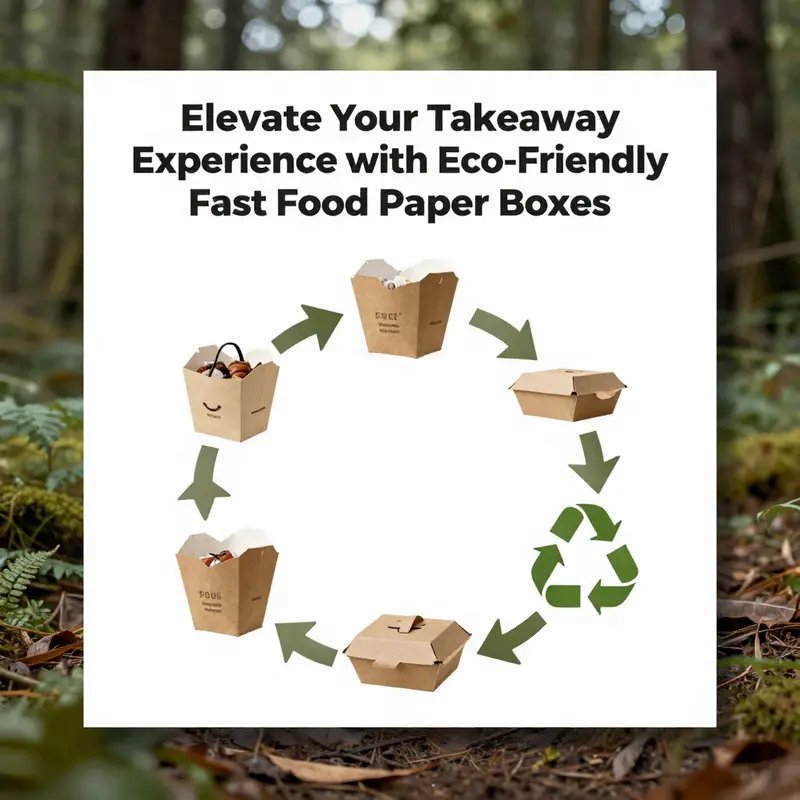
Packaging has always been a backstage player in the fast food experience, quietly doing the heavy lifting of keeping food intact, preserving warmth, and guiding the customer from counter to curb without a spill. In recent years, however, packaging has stepped into the spotlight as a strategic asset that can shape perceptions of quality, responsibility, and trust. The move toward fast food paper boxes for takeaway rests on a simple yet powerful idea: the container matters as much as the contents, and sustainability matters as much as speed. This shift is driven not by a single trend but by a convergence of consumer expectations, regulatory pressures, and material innovations that together are redefining what a box can do. Kraft paper, once a humble component of the packaging landscape, has become a default choice for many operators who want a transparent, durable, and recyclable solution without sacrificing performance. It is not merely a wrapper; it is a signal that a brand takes its environmental footprint seriously while delivering a reliable, satisfying customer experience.
The environmental imperative has a clear and practical logic. Consumers increasingly equate packaging choices with a broader corporate ethos. When a takeout order arrives in a box made from food-grade kraft paper that is recyclable or biodegradable, the visible commitment to sustainability can boost a brand’s credibility. This becomes especially important in markets with strict or evolving environmental regulations that reward responsible packaging through incentives or penalties. For operators, the material choice is not just about compliance; it is about aligning operations with a circular economy mindset. Kraft paper boxes can be designed to break down more readily at the end of their life than traditional plastics, reducing the long-term burden on landfills and waterways. In theory and in many practical cases, this translates into a smaller carbon footprint across sourcing, production, distribution, and disposal stages.
The material science behind these boxes matters as much as the aesthetics. Modern kraft paper boxes are crafted from renewable fibers that are often certified by institutions such as the Forest Stewardship Council, which helps ensure responsibly sourced raw materials. The recyclability and biodegradability of these boxes are not marketing slogans; they reflect tangible design choices that can streamline waste management for restaurants and municipalities alike. The packaging is engineered to meet the realities of busy kitchens and crowded carryouts. A liquid-resistant coating, frequently applied to the inner surface of the box, prevents leakage when sauces, soups, or greasy items are packed. This feature represents a significant advance over earlier generations of paper packaging, which could struggle with moisture without turning soft or failing altogether. The coating choices—ranging from food-grade linings to compostable layers—are integral to extending usability while preserving safety and quality.
Another practical advantage lies in the design itself. Modern fast food paper boxes often embrace a design logic that emphasizes stackability and space efficiency. Stackable formats reduce storage needs for both the restaurant and the delivery fleet, translating into tangible logistics savings. When a kitchen can stock packaging in a compact, uniform stack, it can reorganize prep space to improve workflow, minimize waste, and shorten the path from preparation to pickup. The same efficiency translates to the transport phase, where lighter, well-fitted boxes can contribute to better vehicle load optimization and lower fuel consumption per order. The environmental benefits of design efficiency, therefore, cascade through the supply chain, reinforcing sustainability beyond the box itself.
The aesthetic and functional features of these boxes work in concert to enhance the consumer experience. Some boxes incorporate transparent windows that reveal the food’s appearance, helping customers assess freshness and presentation before unwrapping. While a window can be a selling point for appetite appeal, it also poses considerations about moisture resistance and structural integrity. The market has responded with reinforced designs that maintain shape even with heavier items like fried chicken or stacked burgers. Insulation layers, sometimes integrated with a thin PE or PLA layer, provide a degree of heat protection for hands during transit. This keeps the experience comfortable for customers while maintaining the sensory cues that drive appetite—steam, aroma, and the visual appeal of a well-arranged meal.
Customization is another axis where these boxes excel. Operators frequently want to maintain a distinctive brand identity even as they adopt sustainable packaging. With options for logos, color printing, UV coatings, and even embossed textures, kraft boxes can become a portable brand message. Packaging becomes a surface for storytelling—an overt display of a restaurant’s commitment to quality, cleanliness, and environmental stewardship. Importantly, suppliers have adapted to varying demand levels by offering low minimum order quantities and flexible sample programs. A business just testing a new box format can order a modest batch to evaluate fit, strength, and customer reception before committing to larger volumes. This balance between flexibility and consistency supports experimentation while limiting risk.
The economics of sustainability is often framed in terms of lifecycle costs rather than upfront price alone. While plastic containers might appear cheaper at the counter, the total cost of ownership for paper-based boxes can be competitive when waste handling, recyclability, and potential regulatory compliance are factored in. In many cases, the stewardship of materials and the reliability of supply are the silent operators that keep a takeaway business running smoothly. Manufacturers report daily production capacities that exceed hundreds of thousands of units, underscoring not only the reliability of supply but also the scalability of sustainable packaging in a high-demand environment. For operators, this translates into predictable procurement, reduced risk of stockouts, and the reassurance that a brand can consistently meet customer demand without compromising environmental commitments.
Of course, the adaptability of kraft paper boxes extends beyond simple meals. They accommodate a spectrum of formats—from salads and noodles to soups and full meal sets. The variety of sizes, often from a few hundred milliliters to several liters, ensures that portion control and presentation are preserved across diverse menus. For venues that blend takeout with dine-in service, the option to pair foldable lids or secure closures can enhance leak resistance and keep items secure during delivery. The compatibility with microwave heating, when labeled for such use, offers additional convenience for customers who prefer reheating food at home rather than wasting leftovers in inappropriate packaging. These functional nuances reflect a packaging ecosystem tuned to real-world use.
What does sustainable packaging look like in practice for a modern fast food operation? It begins with a thoughtful supplier evaluation process. Restaurants and caterers are increasingly looking for materials that carry credible certifications, clear end-of-life guidance, and transparent testing data. While the boxes themselves provide the visible benefit of recyclability and compostability in appropriate facilities, the true value lies in the packaging’s integration with the broader sustainability program. This includes how boxes are manufactured, how inks and coatings are applied, and how lids or liners align with local waste streams. When a brand communicates its packaging approach clearly—through labeling, social media, and in-store signage—it helps customers make conscious choices without sacrificing convenience.
In terms of regulatory alignment, the packaging sector has become more attuned to Extended Producer Responsibility frameworks and similar policies that hold brands accountable for post-consumer waste. Compliance is not merely a financial burden; it is a signal of a brand’s maturity in managing environmental impact. For operators, partnering with suppliers who understand these frameworks can simplify regulatory readiness and ensure that packaging choices meet both current and upcoming requirements. This is especially relevant for markets with strict food safety standards, where packaging must not only be sustainable but also meet stringent safety criteria for direct contact with food. The result is a packaging ecosystem that respects the health and safety of consumers while reducing the ecological footprint of meals eaten on the go.
The eventual goal for any takeaway operation is a packaging solution that disappears into the circular economy rather than adding to the mountains of waste. Kraft paper boxes, with their combination of renewable materials, recyclability, and evolving coatings, embody that aspiration. They enable brands to communicate a tangible commitment to the environment while delivering a consistently reliable experience. As we look ahead, the pace of material innovation and design optimization promises even more efficient, resilient, and attractive packaging options. The challenge remains translating these advancements into everyday practice: selecting the right size, choosing the appropriate coating, ensuring compatibility with branding goals, and maintaining supply chain reliability under peak demand. In that sense, the box is not just a protective shell; it is an integrative element of a sustainable food system that values people, planet, and the performance of the business.
For readers exploring concrete pathways to adopt this approach, consider the potential of exploring specific packaging families that combine eco-friendly materials with thoughtful design features. A representative example of such a family is a disposable octagonal box crafted from kraft paper with optional window and lid configurations. This design demonstrates how sustainability and presentation can coexist without compromise, offering a practical template for operators aiming to elevate their takeaway experience while staying aligned with environmental goals. disposable-octagonal-box-restaurant-food-kraft-paper-packaging.
The journey toward greener fast food packaging is ongoing, driven by consumer demand, policy landscapes, and continuous material innovation. It requires a balance of performance, cost, and end-of-life considerations. The boxes must perform under heat, moisture, and rough handling; they must present food attractively; and they must be recoverable by recycling or composting streams. When these conditions are met, the packaging does more than protect food; it reinforces a brand’s commitment to sustainability and adds a layer of trust for customers who increasingly evaluate a company by the footprints it leaves behind. As operators pilot different formats and suppliers refine coatings and finishes, a shared outcome emerges: takeaway experiences that are better for people and the planet without compromising speed, convenience, or flavor. External resources and supplier information can guide these decisions, helping teams compare options, verify certifications, and plan scalable rollouts that align with both business goals and environmental responsibilities. For further reference on industry-wide materials and standards, an external resource offers additional context on biodegradable and recyclable kraft paper takeout solutions: https://www.alibaba.com/product-detail/Eco-Friendly-Recyclable-Kraft-Paper-Takeaway_1600789771777.html
Brand on the Box: How Customization Elevates Sustainability, Identity, and Customer Experience in Takeaway Paper Packaging
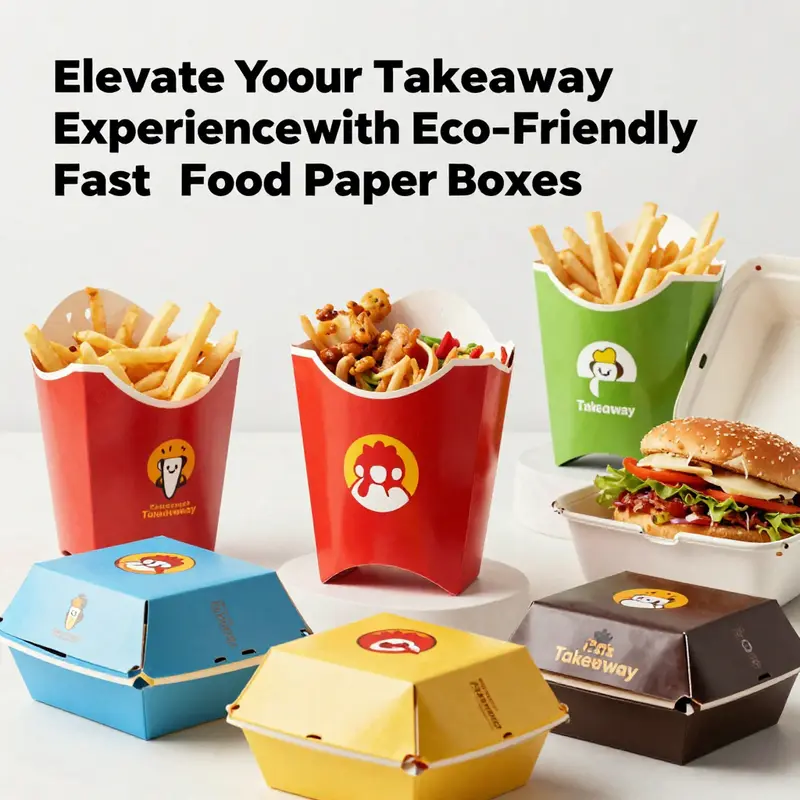
The box is no longer merely a vessel for a meal. In the fast food world, the takeaway container has become a portable storefront, a canvas for brand storytelling, and a tangible promise about how a business treats the planet. The shift toward customization in fast food paper boxes for takeaway is not simply about making packages look different. It is about shaping how customers perceive a brand, how they feel as they carry hot, greasy, or delicate foods, and how the packaging aligns with a company’s stated values. When a box carries a logo, a color story, and a message about sustainability, it does more than protect content; it communicates a stance. It tells a consumer that the brand cares about design, about the materials that end up in landfills, and about the experience of opening and disposing of the packaging. That understanding is now central to competitive success in a crowded market, where the difference between competing meals often comes down to the moment the customer first engages with the brand through packaging.
Sustainability sits at the core of this evolution. Modern buyers want packaging that reflects an ethical posture as much as it delivers performance. They expect materials that come from renewable sources, that are recyclable where possible, or that can break down in composting facilities when discarded properly. Certification matters here. A paper box’s credibility increases when it bears recognizable assurances of responsible sourcing and responsible production. In practice, this translates into boxes made from kraft paper that is certified by forest stewardship standards and produced with attention to the environmental footprint of every layer. Brands seeking to demonstrate accountability choose suppliers who can show certifications such as FSC for responsibly sourced raw materials and third-party attestations that the production process minimizes waste and emissions. This emphasis on sustainability is not a trend alone but a response to broader regulatory and market expectations, including Extended Producer Responsibility frameworks in places like Germany, which push producers to consider end-of-life outcomes in packaging design.
Beyond the raw material, customization has expanded into the realm of coatings, liners, and structural design. Insulation layers, often composed of sustainable coatings or biobased films, help keep hot food from making hands uncomfortably warm, while greaseproof layers prevent leakage and maintain the presentation of the food. The choice between a plastic-inspired lining and a compostable alternative can be decisive for a brand that wants to claim a truly eco-friendly stance. The decision is rarely about aesthetics alone. It involves durability, food safety, and the practical realities of recycling and composting infrastructure in a given market. In regions with robust municipal recycling systems, a recyclable kraft box may be the best path. In other markets, a compostable option that performs reliably during transport and storage might be more compelling, even if it requires consumer participation in proper disposal.
The consumer experience is amplified when design and function come together. A window on the box, for instance, allows shoppers to glimpse the quality of the food inside, enhancing expectations and willingness to purchase. The window must be carefully chosen to protect the contents and not compromise the box’s strength or its recyclability. The size spectrum—from compact 300ml portions to large 3000ml family sets—enables brands to tailor packaging to specific meals, from salads and soups to complete takeaway combinations. The aim is seamless usability: the box should be easy to open, easy to carry, and easy to store, with handles or grip features that reduce the risk of spills when customers are juggling bags and heat.
Customization also extends to branding effects. Surfaces can bear bold logos, brand colors, and artwork through techniques such as UV coating or embossing. When a brand invests in tactile finishing and interior print, the package becomes a portable advertisement with a higher chance of recall. Yet the visual identity is only part of the story. The functional design—such as inner lids, dividers, or modular shapes that stabilize stacked items—contributes to an elevated user experience. A well-branded box that ships securely and presents food attractively creates a positive association that can translate into repeat purchases and word-of-mouth recommendations. In this sense, customization is a strategic investment in customer satisfaction as much as a branding exercise.
Economies of scale shape how customization translates into price and access. Large-volume orders unlock meaningful cost savings, enabling brands to maintain brand consistency across stores or delivery partners without sacrificing margins. A typical pricing dynamic shows substantial savings as order quantities climb, with unit costs dropping significantly for tens of thousands of pieces. This scaling makes it feasible for both large fast food chains and smaller locales to offer uniform, branded packaging that aligns with corporate sustainability goals. The practical takeaway is clear: the more a brand commits to a standardized, aesthetically cohesive box, the more it can invest in higher-quality materials, better coatings, and more intricate branding without compromising profitability.
The early experiments with sample programs illustrate another important aspect of customization: the ability to test and iterate. Suppliers often provide affordable or even free samples to help brands assess the look, feel, and performance of a box before committing to a full run. It is a crucial step for testing print quality, color accuracy, coating performance, and barrier properties under real-world conditions. In a market where first impressions matter, a smooth tactile finish, a clean print, and a reliable seal can be the difference between a customer choosing one brand over another in a crowded lineup.
In parallel with material and design innovations, the supply chain for customizable packaging has become more accessible. Digital printing and short-run production enable brands to experiment with limited editions or seasonal campaigns without tying up large sums in inventory. The ability to customize not just the exterior but also the interior messaging—care instructions, recyclable symbols, or even QR codes linking to sustainability stories—gives brands a richer storytelling toolkit. It also offers a path to audience segmentation: a box can carry different designs in different neighborhoods or for different product lines while maintaining a consistent brand backbone.
As a practical framework, consider how a brand might align its box design with a sustainability narrative. The outer carton could showcase a bold color story and a prominent FSC certification mark, signaling responsible sourcing. A thin, compostable liner could be used for grease resistance, preserving both function and end-of-life potential. An optional inner lid might be designed for secure transport of hot items, while a window that reveals the food could be made from a biodegradable film that does not compromise recyclability. The packaging then becomes a three-dimensional extension of the brand’s values: beauty in the presentation, honesty about materials, and clarity about disposal expectations. This is increasingly how consumers judge the legitimacy of a brand’s commitment to sustainability, not merely the box’s appearance on shelf or in a photo.
The broader market context reinforces this shift toward thoughtful customization. Platforms that connect buyers with manufacturers, and suppliers that offer flexible MOQs, empower small and mid-sized brands to access high-quality, customized packaging. The same dynamics that enable a startup to pilot a limited run also enable a regional chain to refresh its look across dozens or hundreds of locations. In environments with complex regulatory overlays—such as Germany’s EPR or similar frameworks elsewhere—design decisions must anticipate end-of-life obligations. That means choosing materials that fit recycling streams, labeling that communicates compostability, and production processes that minimize waste. When a box system is designed with these realities in mind, customization becomes not just a marketing tool but a responsible operational strategy.
To illustrate how these ideas translate into tangible options, a recent example demonstrates the kind of packaging that blends branding, sustainability, and practicality. It features a customizable design built on eco-friendly Kraft paper with optional window and branding possibilities, offering volumes from modest to substantial and a range of internal configurations to support different foods. The power of this approach lies in its flexibility: a brand can adapt a single box family to multiple menu formats, seasons, and markets, without sacrificing consistency in look or function. It also makes it possible to tell a comprehensive sustainability story with a single packaging line, rather than a scattering of disparate solutions. For readers exploring this space, the example underscores a simple truth: the best takeaway packaging elevates the entire dining experience by marrying form, function, and values in a single, portable asset.
For brands seeking inspiration and tangible exemplars of customization, it is helpful to consider a direct engagement path that preserves control over the design while remaining cost-efficient. A practical route is to examine existing customizable options that emphasize eco-friendly materials, branding capacity, and functional features such as internal lids or window variants. A logical next step is to view a real-world case study of a box family designed for multiple food formats, with attention to insulation performance, leak resistance, and consumer-facing disposal guidance. The goal is not to imitate a competitor but to learn how the balance of materials, print, and structure creates a predictable, scalable experience that customers come to recognize and trust. In this sense, customization becomes a strategic advantage rather than a mere decoration.
For readers who want to explore a concrete example of customized packaging online, consider examining a resource that highlights a design approach to eco-friendly, branded takeaway boxes. You can read about a customizable, eco-friendly option here: customized-design-eco-friendly-1300ml-kraft-soup-salad-paper-bowl-with-lid. This example demonstrates how branding, sustainability, and utility can converge in a single product, offering a blueprint for brands that want packaging to do more than hold a meal.
As the market continues to evolve, the future of customization in takeaway boxes will likely hinge on further refining materials to maximize recyclability, expanding the palette of packaging shapes to better suit diverse menus, and weaving in digital storytelling elements that reinforce a brand’s sustainability narrative. The coming years may bring more modular designs that allow brands to tailor configuration to meal type, more precise coatings that resist grease without hindering compostability, and more sophisticated branding options that remain accessible through scalable production. The overarching aim remains constant: to deliver packaging that supports the meal, enhances the consumer experience, and faithfully communicates a brand’s commitment to people and the planet.
External resource: https://www.alibaba.com/product-detail/Eco-Friendly-Recyclable-Kraft-Paper-Takeaway_1600789771777.html
Rising Demand for Eco-Friendly Takeaway Boxes: How Paper Packaging Is Redefining the Catering Experience
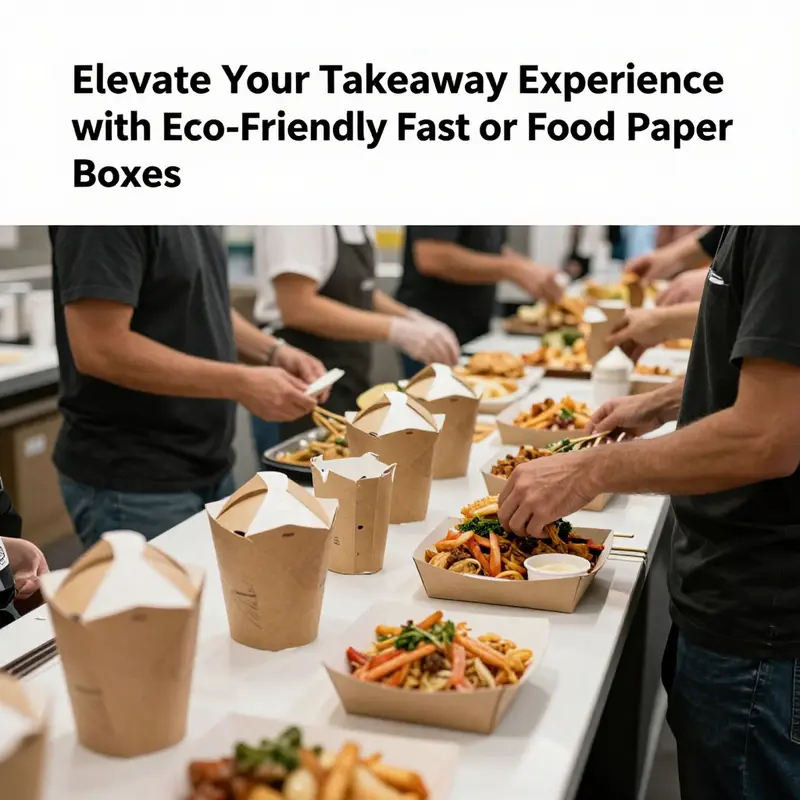
A single takeaway box can carry more than a meal; it carries the story of a brand, its values, and its promise to customers to deliver convenience without compromising the planet. The market for fast food paper boxes designed for takeaway is expanding in tandem with the broader shift toward on-the-go dining and the rapid growth of food delivery services. Consumers increasingly expect meals that are easy to transport, visually appealing, and, above all, kinder to the environment. This convergence of convenience and sustainability is not just a trend; it is reshaping operational decisions for caterers, quick-service restaurants, delis, and event organizers who rely on packaging that can travel, perform, and still look good on a customer’s kitchen counter or in a carry bag. The result is a packaging ecosystem that prioritizes resilience, branding, and responsible sourcing as core competencies of modern food service.
A first glance at market dynamics reveals a robust trajectory. The global food delivery boxes market is forecast to reach about USD 91.77 billion by 2034, driven by a surge in home-delivery occasions, meal kits, and health-conscious offerings that demand lightweight, functional containers. The expected compound annual growth rate of roughly 14.76 percent from 2026 to 2034 underscores how rapidly operators are integrating packaging as a strategic lever, not a mere afterthought. Beneath this growth lies a triad of factors: the proliferation of meal kits and bento-inspired formats, the desire for packaging that preserves freshness and temperature, and the rising premium placed on sustainable materials that align with consumer values and regulatory expectations.
Delving deeper into subsegments, the paper takeout container market—an essential slice of the broader packaging landscape—was valued at about US$14.55 billion in 2024 and is projected to climb toward US$27.29 billion by 2034. This expansion mirrors both established fast food venues and the influx of new players into the meal-delivery arena, many of whom prioritize eco-friendly, lightweight, and highly functional packaging as a core component of their value proposition. For operators, this signals an opportunity to differentiate through packaging that performs reliably under greasy or heavy fillings, while still enabling smooth handling, efficient stacking, and cost-conscious waste management. The numbers also reflect the maturing supply chain for paper-based packaging, where manufacturers continually optimize processes to keep pace with rising demand and to introduce features that enhance user experience.
Technological progress sits at the heart of these trends. Modern paper container making machines can produce an array of customized trays, bowls, cups, and sealed boxes, all with options for printing and sealing. This technology enables scale without sacrificing customization. Operators can select formats that fit specific menus, from compact 300 ml portions to generous 3000 ml meal sets, and adapt designs to accommodate salads, noodles, soups, fried items, and multi-component meals. The ability to print branding directly onto the container, even at relatively modest production volumes, supports longer-term brand recognition and helps shops stand out in crowded marketplaces where the packaging itself becomes a touchpoint with the customer.
Sustainability sits at the core of why these boxes matter. Kraft paper, sourced through responsible supply chains, offers a renewable, recyclable, and biodegradable alternative to many plastic-based options. Certifications such as FSC signal that the raw materials come from forests managed with ecological considerations in mind. For operators, the choice of packaging is increasingly a compliance and risk-management decision as well. Regulations in various jurisdictions, including extended producer responsibility schemes, incentivize companies to design for reuse, recycling, or composting wherever possible. In communities where municipal or industrial composting facilities are available, a large portion of paper-based packaging can break down more quickly and with fewer residual plastics, aligning consumer expectations with infrastructure capabilities. The emphasis on compostability does not imply fragility; many products are engineered with heat resistance, grease barriers, and moisture control, extending their usefulness from kitchen to curbside pickup and beyond.
Design features further extend the utility of these boxes. Insulated or lined interiors help shield hands from heat when carrying hot items, while grease-resistant coatings reduce leakage and preserve contents during transit. Some models include transparent windows that invite customers to glimpse the presentation inside, a small yet meaningful marketing cue that can influence purchase decisions at the point of sale. The choice between interior liners—PE or compostable PLA—reflects trade-offs among performance, cost, and end-of-life considerations. As a result, operators can tailor packaging to a meal’s specific characteristics, balancing the desire for improved heat retention with the need for recycling and composting where these options exist. A comprehensive packaging strategy thus integrates material science, manufacturing technology, and local waste-management realities.
Customization remains a central value proposition for packaging suppliers. From logos and color branding to embossed textures and UV coatings, fast-food paper boxes offer meaningful ways to reinforce brand identity at the moment of takeaway. For many operators, this is not just about aesthetics; it is about creating a cohesive brand experience that resonates with customers who later share their meals on social platforms. The ability to offer personalized solutions is often coupled with logistical conveniences. Suppliers frequently advertise low minimum order quantities, sometimes as low as a few hundred or several hundred pieces, enabling startups and smaller outlets to test concepts without committing to large inventories. Sample services are also common as a risk-management tool; one supplier may offer samples for a nominal fee, while others provide discounts on bulk orders. These incentives help businesses experiment with sizes, shapes, and branding before placing larger commitments.
From an operational perspective, the supply chain behind takeaway boxes is characterized by reliability and scale. Some manufacturers report daily production capacities exceeding 200,000 units, a testament to the efficiency gains achievable through automation and streamlined logistics. For businesses, this translates into predictable lead times, the flexibility to scale during peak periods, and the confidence that packaging will keep pace with demand. In such a market, the total cost of ownership becomes a function of several intertwined factors: unit price, delivery lead times, MOQs, branding customization, and end-of-life considerations. Operators must evaluate these factors in concert with their menu strategy, marketing goals, and waste-management capabilities to select packaging that optimizes both customer satisfaction and operational efficiency.
A practical implication of these dynamics is the way packaging supports branding and sustainability together. Fast-service operators that foreground environmental responsibility can leverage FSC-certified materials, compostable liners, and transparent labeling to reassure customers about the environmental footprint of their meals. This is particularly important in markets where regulators push for reduced plastic use and more robust waste sorting. Packaging design becomes a form of environmental storytelling—one that signals to diners that the brand takes stewardship seriously while maintaining the speed and convenience customers expect. In this context, the packaging choice is not merely a container; it is an extension of the company’s promise to deliver quality, value, and responsibility in every order.
To illustrate how the packaging landscape translates into tangible options, consider a common takeaway scenario. A meal with a hot, greasy filling benefits from a reinforced container with a moisture barrier and a tight seal. A box in the 700–1300 ml range can accommodate a substantial main course and sides, while a 300 ml option serves lighter items or sauces. For presentations that rely on a window, a clear film insert lets customers view the contents without compromising the barrier properties during transit. In addition, a 2000–3000 ml family-size option can manage multiple items, including soups and salads, in one package. The key is to align the container’s form with the menu’s structure and the delivery method. For operators exploring these options, a representative packaging family often emerges—one that balances portability, durability, and brand messaging. As a practical case in point, the disposable octagonal box represents a versatile choice for distinct menu lines and can be explored in more detail through packaging suppliers that specialize in kraft paper packaging. For example, you can learn about disposable octagonal boxes designed for restaurant use and kraft paper packaging with a focus on sustainability and branding through dedicated product listings such as the disposable octagonal box for restaurant food and kraft paper packaging. disposable-octagonal-box-restaurant-food-kraft-paper-packaging.
The broader message for catering operators is clear. Growth in demand for takeaway packaging is being driven by both macro trends in food delivery and micro choices around sustainability and brand differentiation. The market signals a shift toward packaging that can withstand the rigors of daily use, carry heavy or greasy meals, and still convey a brand’s story with clarity and style. This shift is supported by data that show expanding markets and increasing willingness among consumers to pay for packaging that aligns with their values. For managers and procurement teams, the challenge is to navigate a landscape of options without sacrificing performance or price discipline. This means prioritizing supplier reliability, material quality, and end-of-life options when evaluating packaging proposals. It is not enough to chase novelty; the box must perform, protect, and reflect a responsible ethos that resonates with today’s environmentally aware customer base. In this sense, paper-based packaging is not merely a substitute for plastic—it is a strategic asset that enables a more sustainable and brand-forward approach to fast-casual meals and catered events.
Ultimately, the market trajectory suggests continued expansion as the delivery economy matures, consumer expectations evolve, and regulatory frameworks tighten around plastic use. Operators who integrate packaging early into their menu design and branding strategies stand to benefit from improved customer perception, smoother logistics, and a clearer path to circular waste systems. The packaging ecosystem is becoming a collaborative space where brands, material scientists, and waste-management experts align to deliver solutions that are as functional as they are responsible. As a result, the takeaway box emerges as more than a container; it becomes a conduit for efficiency, storytelling, and sustainability across the catering spectrum. Instead of viewing packaging as a cost center, many operators now see it as a core component of customer experience and a lever for long-term value creation in the fast-paced world of takeaway dining.
For readers seeking practical references to supplier options, it can be helpful to explore a range of packaging choices that emphasize eco-friendly kraft materials and customizable branding. One example of a packaging option that merges disposability with branding and sustainability is described in supplier catalogs that offer kraft paper packaging with windows and reinforced walls. These options are designed to accommodate heavy meals while supporting a clear, brand-centric presentation at the point of sale. They also reflect the broader industry shift toward sustainable practices that do not compromise usability or customer delight.
External resource for further reading: https://www.marketsandmarkets.com/Market-Reports/food-delivery-boxes-market-4581.html
null
null
Final thoughts
As the demand for convenient, eco-friendly, and customizable packaging continues to rise, fast food paper boxes represent a practical solution. By embracing innovations and sustainability while recognizing market trends, you can align your brand with broader consumer expectations and operational requirements. Engaging with reliable global suppliers will enable your business to deliver not just food, but a superior dining experience that resonates with environmentally conscious consumers. Let the evolution of takeaway packaging enhance your service and set you apart in a competitive landscape.