
As the demand for sustainable practices escalates, the eco-friendly food packaging market is seeing unprecedented growth. With a projection to reach USD 425.12 billion by 2032, driven by consumer awareness and regulatory pressures, businesses in the food service sector are feeling the ripple effects of this change. In this landscape, bubble tea shops, beverage chains, restaurants, food trucks, and catering services are not just adapting; they are innovating to meet the expectations of a growing eco-conscious consumer base. Each chapter will delve into critical aspects of this market, including market dynamics, technological innovations, economic impacts, geopolitical influences, and societal implications, painting a holistic picture of how eco-friendly packaging strategies can enhance operational efficiency and customer satisfaction.
Shaping the Future of Food Packaging: Market Dynamics, Consumer Pressure, and Regulatory Drive in Eco-Friendly Solutions
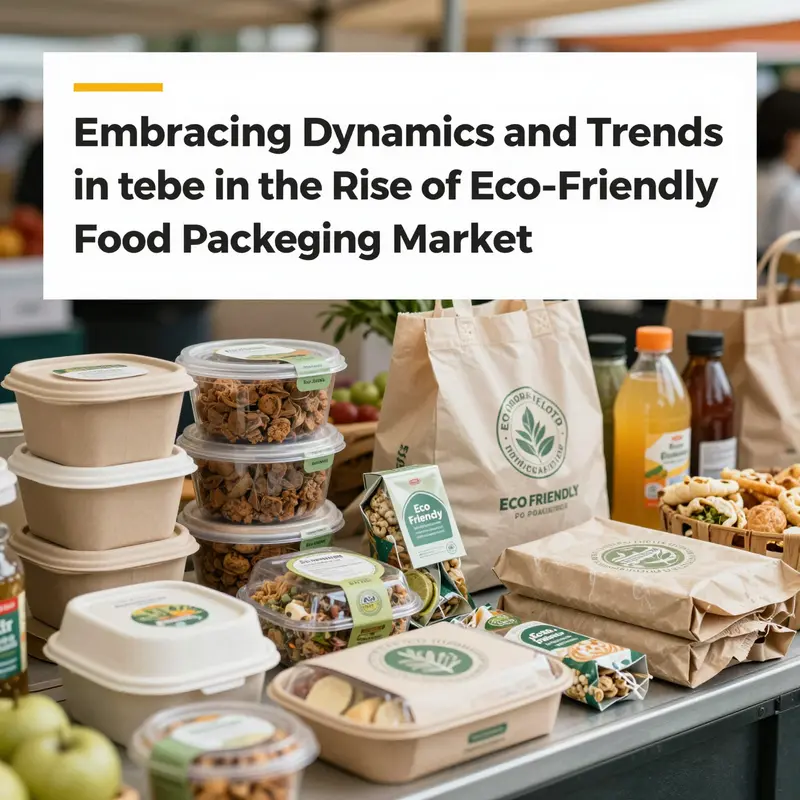
The eco-friendly food packaging market is not merely expanding; it is evolving into a complex system where environmental stewardship, policy design, and consumer behavior co-create the contours of the industry. At its core lies a simple idea with broad implications: packaging should protect what it contains while respecting the limits of the planet. Yet translating that idea into scalable reality requires more than a favorable mood or a single technological breakthrough. It demands a continuous alignment of three powerful engines—conscious consumers, robust regulation, and material science innovation—that together push companies to rethink packaging from end to end. When viewed through this integrated lens, the market emerges as a living mosaic of choices, constraints, and opportunities that shape every decision from raw material selection to end-of-life strategies and beyond into the realm of circular economy design.
Consumer awareness sits at the heart of this transformation. Across regions, consumers are increasingly aware of plastic pollution and its intimate links to ecosystems and human health. This awareness translates into durable shifts in demand: clarity about product origins, transparency about what the packaging is made from, and confidence that disposal will be handled responsibly. Companies perceive these shifts not merely as reputational concerns but as signals that brand value is increasingly tethered to environmental performance. In practical terms, this means brands are more willing to invest in packaging that reduces plastic usage, favors renewable or recycled inputs, and enables easier sorting and recycling. It also means a growing receptivity to innovations that extend shelf life or maintain product integrity with less material—because the trade-off between safety, convenience, and sustainability now receives more deliberate scrutiny from the consumer audience. The result is a marketplace where the consumer’s preference for eco-friendly options becomes a testing ground for supplier capabilities, supply chain agility, and the viability of novel materials under real-world conditions.
Regulatory pressures act as a powerful accelerant, often tipping the scales in favor of sustainable packaging when market forces alone would suffice. Governments around the world have moved beyond exhortation to mandate behavior through bans on specific single-use plastics, mandatory recycling targets, and broader stewardship obligations that place responsibility for end-of-life management squarely on producers. Extended producer responsibility schemes, landfill taxes, and performance-based standards push the entire value chain toward more circular models. In this environment, packaging design is no longer a peripheral concern but a strategic component of compliance and financial performance. Companies must consider not only the functional properties of packaging—barrier performance, strength, and consumer appeal—but also how those properties align with recyclability, compostability, and the possibility of product-to-material loops. The regulatory landscape thus acts as both a framework and a catalyst, compelling innovation while ensuring that the incentives for sustainable design remain aligned with public goods.
Advancements in material science underpin the feasibility of ambitious sustainability goals. The market is benefiting from a spectrum of material pathways that collectively broaden the toolkit available to brand owners and manufacturers. Plant-based bioplastics, derived from renewable resources such as starches, cellulose, or other biosources, are expanding the options for films, trays, and cutlery. These materials can offer lower carbon footprints relative to conventional petrochemical plastics and, when properly designed, can fit into existing recycling streams or composting infrastructure. At the same time, researchers are refining barrier properties, heat resistance, and process compatibility to close gaps that once made bioplastics appear costlier or less capable for demanding applications. Not all applications are suitable for bioplastics, but for many, particularly where a product’s life cycle is short or composting infrastructure is accessible, these materials offer tangible advantages.
Alongside bioplastics, smart packaging is moving from novelty toward normalcy in many segments. Embedding sensors and indicators enables real-time monitoring of temperature, freshness, and tampering, providing a powerful tool for reducing waste and enhancing safety. The data generated by smart packaging can illuminate supply chain inefficiencies, reveal spoilage points, and support more precise demand planning. While the upfront costs of smart features must be weighed against the value of reduced waste and improved product protection, the trend is clear: packaging is becoming a source of verifiable information, not merely a passive container. This shift dovetails with consumer expectations for greater transparency and brands’ ambitions to differentiate through responsible, verifiable performance.
Another compelling trajectory is the push toward circular economy models. Designers increasingly aim to close the loop by enabling reuse, recycling, or composting of packaging materials. This approach reframes packaging from a disposable afterthought to a resource in a system that returns materials to productive use. Realizing circularity, however, requires concerted actions across the value chain: designing for recyclability, ensuring compatibility with preexisting recycling streams, and investing in collection and sorting infrastructure. It also demands a shared understanding of what constitutes “recyclable” in diverse waste-management contexts and a willingness to adopt standardized labeling and testing protocols that help consumers make informed disposal choices. When these pieces align, packaging can become a durable asset rather than a one-way commodity, a shift that has meaningful economic and environmental payoffs.
Market projections across these dynamics reaffirm the momentum behind eco-friendly packaging. Historical and current assessments place the global market in the hundreds of billions of dollars, with substantial growth anticipated through the next decade. One widely cited forecast pegged the market value at roughly USD 227.985 billion in 2024, with an expected rise to approximately USD 425.12 billion by 2032, driven by a compound annual growth rate (CAGR) around 8.1% during 2024–2032. Other projections, referencing different starting points or time horizons, similarly indicate robust expansion—evidence of a sector that is not simply recovering pre-crisis demand but rethinking the fundamentals of packaging itself. These figures reflect more than consumer appetite; they signal a broad alignment of policy, industry strategy, and consumer behavior around sustainability as a core business imperative.
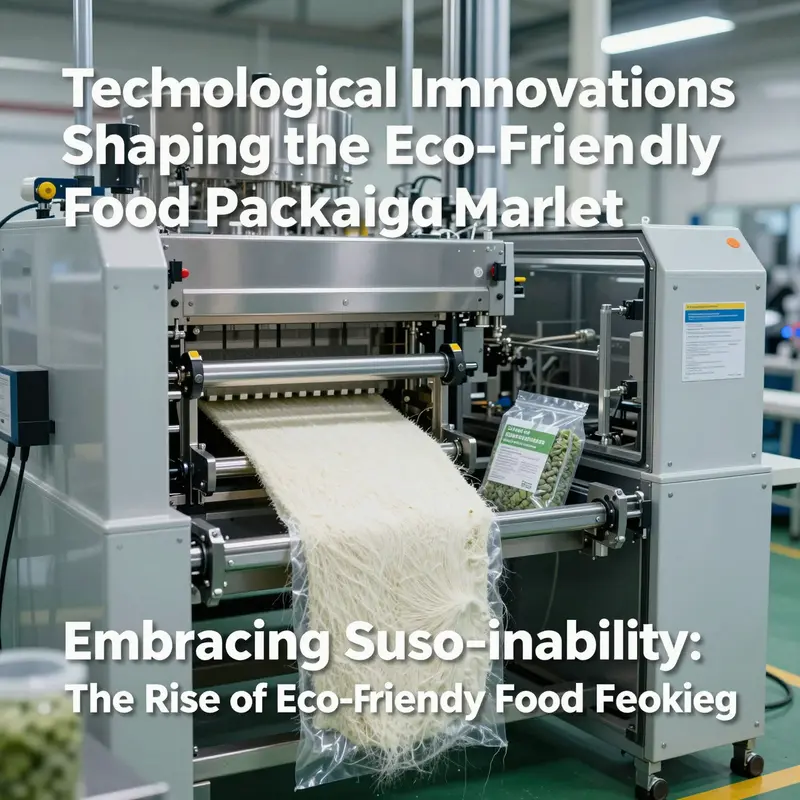
Emerging technological trends are sharpening the market’s trajectory. Bioplastics, smart packaging, and circularity form a triptych of innovation that is expanding both capability and scale. Yet the path to widespread adoption remains nuanced. Bioplastics must prove that their environmental benefits persist across production, use, and end-of-life stages, with clear advantages in cost and performance relative to conventional plastics in various applications. Smart packaging must demonstrate measurable improvements in safety, shelf life, and waste reduction in real-world logistics. Circular models require reliable collection systems, standardized recycling streams, and clear labeling to prevent contamination and uncertainty in end markets. The success of eco-friendly packaging thus depends on seamless integration: materials that perform as needed, systems that can handle new compositions at scale, and policies that reward rather than penalize early-stage adoption. In this integrated landscape, even modest improvements in recyclability, compostability, or data-driven traceability can unlock compounding benefits across the value chain.
These changes have practical implications for every actor within the ecosystem. Manufacturers must balance performance with sustainability, often pursuing multi-material designs that maximize barrier properties while preserving end-of-life options. Retailers and foodservice operators face the task of selecting packaging solutions that align with consumer values and logistical realities, from storage conditions to waste streams. Regulators seek to balance environmental goals with practical considerations of food safety and cost, recognizing that workable, scalable solutions require investment in infrastructure and harmonized standards. Consumers, for their part, can shape demand through preference signals and conscientious disposal practices, reinforcing the market’s incentive structure toward sustainable choices. The interplay among these forces creates a dynamic where results are highly sensitive to policy clarity, investment in materials science, and improvements in waste-management networks.
In summarizing the momentum, it is clear that the eco-friendly packaging market is less a single product category than a systemic shift in how packaging is conceived, designed, and disposed. The convergence of heightened consumer expectations, stringent regulatory regimes, and rapid material-science advances is reframing cost structures, supply chain configurations, and brand narratives. What emerges is a landscape where sustainability is increasingly embedded in strategy, not treated as a separate initiative. While challenges remain—scale, cost parity, and diverse regional waste-management capabilities—the trajectory is unmistakable: eco-friendly packaging is becoming the default, driven by a shared recognition that responsible packaging underpins resilient business, healthier ecosystems, and transparent markets. For stakeholders who align with this trajectory, opportunities extend beyond compliance or differentiation; they offer a pathway to rebuild trust, unlock efficiency gains, and participate in a broader, more resilient economy.
For a deeper understanding of the current market landscape and future outlook, including detailed analysis of regional dynamics and technological innovations, you can consult the external resource: https://www.marketresearchfuture.com/reports/eco-friendly-food-packaging-market-2368
null
null
Greening Global Trade: The Economic Ripple Effect of Eco-Friendly Food Packaging
The eco-friendly food packaging market is no longer a peripheral niche of the sustainability agenda; it sits at the core of how economies, industries, and borders operate in a progressively low-carbon, resource-conscious world. The sector’s growth metrics—valued at approximately USD 227.985 billion in 2024 and projected to rise to about USD 425.12 billion by 2032, with a compound annual growth rate (CAGR) around 8.1%—signal more than rising demand. They indicate a structural realignment of global trade flows, production footprints, and investment priorities. As consumer awareness, regulatory expectations, and corporate sustainability commitments intensify, the market for eco-friendly packaging becomes a critical determinant of how goods move, how price signals are priced, and which countries emerge as pivotal nodes in green supply chains. In this sense, the chapter that follows does more than map market dynamics; it traces how those dynamics reshape the international trading landscape and, by extension, the competitiveness of national economies.
The transformation of trade patterns is not accidental. It stems from a confluence of tighter environmental standards—particularly in the United States and the European Union—that ban or restrict single-use plastics and mandate recyclability, compostability, or otherwise lower the environmental footprint of packaging. This regulatory shift alters the calculus of what is acceptable on supermarket shelves and in warehouse aisles, nudging brands and manufacturers toward materials that can be credibly certified as sustainable. It also creates a demand surge for compliant, renewable packaging solutions that align with circular economy principles. In practical terms, this means growth opportunities for producers of biodegradable films, compostable containers, and plant-based packaging derived from sugarcane bagasse, bamboo, or cellulose. The market’s forward march toward sustainability has become a catalyst for new export opportunities and deeper integration into green value chains. For instance, a disposable octagonal box with kraft paper packaging, widely used in take-out contexts, illustrates how traditional packaging formats can be reinvented to satisfy both functional and environmental requirements. This kind of robust, standards-aligned packaging solution is increasingly adopted across food service and retail channels, reinforcing the pattern of cross-border supplier specialization that underpins modern trade networks. You can explore practical options like this through industry-focused packaging suppliers, whose offerings are often tailored to regulatory and consumer expectations while remaining economically viable in competitive markets.
The geographic dimension of this shift is equally telling. Countries that generate abundant agricultural waste or abundant cellulosic resources—often in Southeast Asia and other lean-regions—are positioned to become key raw-material hubs for bio-based packaging. As producers in these regions scale up bio-based inputs and improve processing efficiencies, their export revenue from packaging materials rises. This reorientation is more than a trade story; it is a technology and capability story. It involves investments in processing facilities, standards development, and quality assurance that can ripple through supplier networks and trading partners. In this environment, trade is less about exporting finished goods alone and more about exporting the know-how, materials, and certification systems that allow other economies to shift their own supply chains toward greener practices. The consequence is a redefinition of comparative advantage: nations with robust biomass resources, advanced bio-plastic technologies, or efficient recycling ecosystems increasingly claim a larger share of global packaging demand. The ripple effects extend to logistics, financing, and risk management as firms seek to diversify suppliers and build resilience against policy shifts and market volatility.
Tariffs and trade barriers add a countervailing force that can either accelerate reform or complicate it. The literature and market analyses indicate that tariffs on imported eco-friendly packaging materials or their components can raise costs, especially for SMEs that do not enjoy scale economies. Protectionist measures can distort trade flows, dampen innovation, and slow the broader transformation toward a circular economy. A hypothetical but plausible scenario illustrates the risk: if a country imposes high tariffs on imported bioplastics from major suppliers such as Brazil or India, the domestic alternatives—though potentially less environmentally friendly or more expensive—may appear comparatively more attractive. Such dynamics would undermine both cost-efficiency and environmental progress, creating an uneven playing field that slows the global transition to sustainable packaging. In contrast, policy coherence that rewards green investment, fosters standards compatibility, and reduces non-tariff barriers can accelerate technology transfer and cross-border collaboration. The net effect is a more fluid global trade system, where countries align incentives to support green manufacturing while maintaining competitive consumer prices.
These macro policy and market signals reverberate through the broader trade ecosystem in ways that extend beyond raw material flows. The market’s projected growth, often cited as a CAGR in the vicinity of 7.2% when projected through 2025–2032 and the broader horizon suggesting a reach toward USD 442.5 billion by 2033, points to intensifying cross-border collaboration and technology transfer. Even when estimates diverge in exact figures, the trajectory remains clear: sustained investment in R&D, scaling of green manufacturing capacity, and the rapid adoption of recyclable and compostable packaging formats will increasingly anchor international commerce. This, in turn, reshapes bargaining power among suppliers, manufacturers, and retailers. Economies that cultivate testing facilities, certification regimes, and standardized packaging criteria stand to gain both from export earnings and from improved access to global markets that demand high sustainability credentials.
The economic implications extend to supply chain design and market competitiveness. Firms are compelled to rethink sourcing, production location decisions, and logistics strategies to minimize carbon footprints while preserving cost competitiveness. The cross-border flow of green technologies—such as advanced compostable polymers, bio-based coatings, and recycling-ready packaging architectures—becomes a strategic asset. Partnerships across borders, once framed mainly by price and reliability, increasingly hinge on green credentials and circularity performance. In this sense, the eco-friendly packaging market acts as a catalyst for regional specialization and for the formation of green corridors that strengthen economic ties between environmentally progressive nations and those seeking to modernize their packaging industries. The result is not merely a shift in where goods are made, but a reconfiguration of how value is created, shared, and captured within the global economy.
From a policy perspective, the alignment of environmental objectives with trade policy is essential. Coordinated regulatory frameworks, shared standards for recyclability, and mutual recognition of certification schemes can reduce friction and accelerate the adoption of sustainable packaging across borders. Governments that couple fiscal incentives with predictable regulatory regimes are better positioned to attract investment in green packaging infrastructure, facilitate technology transfer, and support SMEs in scaling sustainable production. Consumers, meanwhile, increasingly reward brands that demonstrate credible sustainability stories, driving corporate decisions that dovetail with national trade interests. In such an ecosystem, the line between environmental stewardship and economic strategy blurs in a productive way, yielding a low-carbon economy that remains globally competitive.
For further context on market size, share, and growth trends that inform these dynamics, analysts often reference credible external data sources. One comprehensive resource, for example, aggregates global market estimates and growth trajectories to illuminate how policy, consumer sentiment, and industry innovation intersect in the eco-friendly packaging sector. External resource: https://www.statista.com/statistics/1469845/global-eco-friendly-food-packaging-market-size-share-growth/ .
Internal link note: practitioners seeking concrete packaging options aligned with these trade realities can explore practical formats like the octagonal Kraft paper packaging solution referenced earlier. A representative example is provided here for context and planning considerations: disposable octagonal box with kraft paper packaging. This kind of packaging demonstrates how traditional designs can be adapted to meet recyclability and compostability criteria while remaining cost-effective across extended supply chains. Importantly, such options illustrate how the supply side of the eco-friendly packaging market supports export-oriented growth by supplying ready-to-use, standards-compliant formats that manufacturers can deploy quickly as regulations tighten and consumer demand intensifies. In sum, the economic impact of eco-friendly packaging on global trade is best understood as an evolving mosaic of policy alignment, material innovation, cross-border collaboration, and strategic investment that together redefine what is traded, how it is produced, and at what price it moves across continents.
Borders, Tariffs, and Tethers: Geopolitics Stirring the Eco-Friendly Food Packaging Market
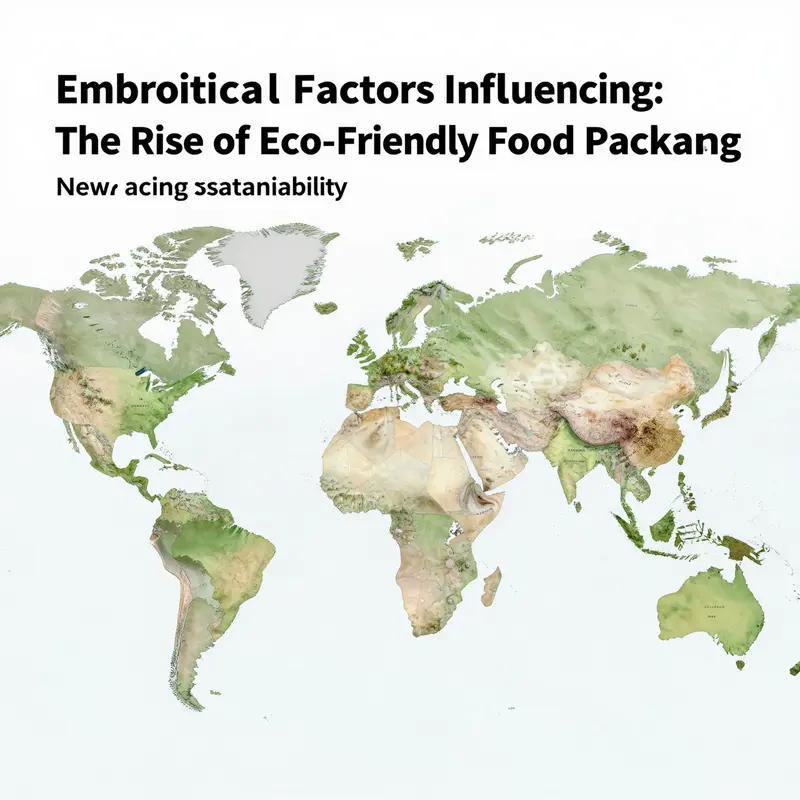
Across the globe, a quiet yet powerful shift is underway in how food moves from producer to plate. The eco friendly food packaging market is expanding rapidly, propelled by a rising tide of environmental awareness and strict rules around plastic waste. Yet beneath the surface of demand numbers and material innovations lies a network of geopolitical dynamics that subtly shape what is produced, where it is sourced, and how quickly new solutions reach shelves. While geopolitics does not single-handedly drive consumer adoption, it often acts as a set of invisible levers—nudging costs, shaping supply chains, and accelerating or delaying regulatory harmonization. In this sense, the market is less a product of headlines about wars and treaties and more a practical theater where policy alignment, trade realities, and international cooperation determine the tempo of sustainable packaging adoption. The recent market landscape, with its substantial growth trajectory from a valuation of roughly 228 billion dollars in 2024 to an anticipated herd of hundreds of billions by the next decade, reflects not only shopper preference but an ecosystem that responds to risk, leverage, and policy direction. Those forces are tightly interwoven with what happens at borders and within treaty rooms, even when the core driver seems to be consumer consciousness and regulatory ambition.
Trade policy is among the most immediate conduits through which geopolitics filters into packaging realities. Tariffs and non-tariff barriers on inputs such as recycled polymers, cellulose derivatives, and bio-based resins can alter the price and availability of sustainable packaging components. When tariff regimes tighten or shift with changing alliances or sanctions, manufacturers must reassess their sourcing maps. They may retrace steps to more localized supply chains, diversify feedstock to reduce exposure, or accelerate the development of alternative materials that bypass troubled corridors. Such recalibrations affect both speed to market and the overall cost architecture of eco friendly packaging. They also encourage closer collaboration with regional suppliers who share risk tolerance and regulatory expectations, reinforcing a multipronged approach to supply resilience. The result is a sector that remains nimble, with firms layering procurement strategies to cushion shocks from geopolitical oscillations rather than relying on a single global supply stream.
Supply chain disruptions, a recurring consequence of geopolitical tension, further illustrate the indirect but material reach of geopolitics. Conflicts or political instability can interrupt the movement of substrates such as cellulose pulp, starch-based materials, or bio-based resins from key mills and refineries. Even when final packaging materials are produced in distant regions, disruptions upstream can alter lead times, incite factory downtime, and push unit costs higher in a market that already operates on tight margin cycles. Shocks propagate through every link—from farmers and forestry operators to converters and logistics networks—amplifying the incentive for end users to diversify manufacturing footprints. In practical terms, this means more emphasis on regional packaging hubs, greater inventory buffers for critical components, and a willingness to reengineer products to accommodate alternative feedstocks with similar performance.
International agreements, drawn to combat climate change and promote sustainable development, also steer corporate behavior around packaging. When countries align their standards with climate commitments, packaging regulations often follow suit to ensure compliance and market access. Rules around recyclability, compostability, labeling, and life cycle assessment become enshrined in law and policy. The United Nations climate framework and related accords create a permissive environment for stricter national standards, which in turn elevate demand for more sustainable packaging formats. Programs that incentivize circular economy practices, such as extended producer responsibility, contribute to a regulatory climate where eco friendly packaging is not merely preferred but required. Companies in this space therefore need to anticipate policy trajectories across multiple jurisdictions, harmonizing product design with international expectations while maintaining the flexibility to adapt to local contexts.
Regulatory compliance emerges as a critical axis where geopolitics and markets intersect. As nations seek to attract investment and maintain competitive parity, they often adopt or adapt standards that mirror international benchmarks. This convergence encourages manufacturers to invest in sustainable packaging solutions well before formal mandates arrive, yielding a forward-leaning posture that supports both compliance and competitive advantage. Yet the path to compliance is rarely linear. It involves navigating divergent timelines, incentives, and enforcement practices across regions. Some markets push for rapid adoption of recyclable packaging with clearly defined end-of-life pathways, while others emphasize gradual integration, pilot programs, and consumer education. Businesses that can synchronize product development with these varying timelines gain the advantage of being familiar with multiple regulatory playbooks and capable of adjusting formulations, finishes, and packaging formats without sacrificing performance.
Against this backdrop, the industry recognizes the value of adaptable packaging formats that can weather supply volatility and policy drift. Designers and manufacturers explore modular systems that permit shifts in materials or structure without compromising shelf life or user experience. The drive toward standardization in certain parameters—such as barrier properties, seal integrity, and compostability credentials—offers a pragmatic route for cross-border trade and regional manufacturing. In practice, this means embracing formats and components that can be produced at scale, sourced from diverse regions, and accepted by a broad swath of end markets. It also invites a heavier emphasis on traceability, certification, and transparency, so buyers can navigate a patchwork of regulatory expectations with confidence. For example, formats like recyclable and compostable paper-based bowls and lids are increasingly favored in regions pursuing aggressive plastic waste reduction, with companies seeking universal design principles that translate into easier recycling streams and lower contamination risk. In the realm of practical implementation, the industry leans on adaptable packaging configurations that can be sourced across geographies without sacrificing performance and aesthetics. See an example of a versatile disposable packaging format here: disposable-octagonal-box-restaurant-food-kraft-paper-packaging.
The regional dimension also matter: Europe pursues a robust regulatory cadence tied to the Green Deal and circular economy action plans; North America emphasizes a mix of state and federal standards with evolving labeling and material requirements; and Asia, as a major manufacturing hub, balances scale with shifting policy boundaries around waste management and material safety. Each region exercises influence through procurement preferences, public investment in recycling infrastructure, and the signaling effect of regulatory timing on corporate risk management. This triad of regional drivers creates a dynamic market where innovators must anticipate not only what is demanded today but what regulators are likely to require next year or the year after. In this climate, corporations increasingly view geopolitics as a strategic lens for investment decisions, deciding where to locate R&D labs, where to pilot new materials, and how to structure supplier contracts that can absorb unexpected policy shifts.
The ripple effects of geopolitics also shape the economics of eco friendly packaging in subtler ways. When global tensions constrain the availability of feedstocks or elevate freight costs, brands may adjust packaging footprints or reduce material intensity, turning to lighter, thinner, or more efficiently processed formats that still meet safety and performance standards. This balancing act sometimes leads to trade-offs between recyclability and barrier protection, prompting collaboration across supply chains to align on best practices and measurement standards. The result is a more resilient industry, albeit one that requires careful coordination among growers, mills, converters, and retailers to keep products affordable and sustainable.
From a strategic standpoint, geopolitical awareness becomes a core capability rather than a peripheral concern. Companies that monitor policy developments, diversify sourcing networks, and invest in flexible manufacturing can mitigate risk while seizing opportunities created by stricter environmental norms. As markets converge toward common sustainability goals, the ability to adapt packaging design to shifting regulatory landscapes becomes a differentiator. In turn, stakeholders—from suppliers to retailers to consumers—benefit from greater predictability in product performance, life cycle considerations, and end-of-life outcomes. The market thus evolves as a concerted response to a global policy environment, not merely a reaction to consumer sentiment.
For readers seeking broader context on how regulatory and environmental trends intersect with market dynamics, a comprehensive external resource provides deeper insight into consumer expectations and policy trajectories across Europe. This perspective complements the chapter’s focus on geopolitics by linking policy direction with consumer-facing implications and industry responses. See the McKinsey analysis on sustainable packaging and European consumer behavior for a broader lens on how policy and market forces align to shape packaging choices: https://www.mckinsey.com/industries/consumer-packaged-goods/our-insights/sustainable-packaging-2025-european-consumers.
In sum, geopolitics influences the eco friendly packaging market not as its primary engine but as a pervasive supply and demand shaper. Trade policy, supply chain resilience, international climate agreements, and regulatory convergence collectively set the stage on which consumer demand plays out. The market’s growth is a testament to a global recognition that sustainability and safety can coexist with efficiency and scale, albeit within a framework that must negotiate policy harmonization and geopolitical risk. The capacity to manage these tensions—with adaptable materials, diversified sourcing, and proactive regulatory intelligence—will determine which players lead in a world where borders, tariffs, and treaties increasingly inform the daily realities of packaging design, manufacture, and use.
null
null
Final thoughts
The eco-friendly food packaging market is not just a trend; it represents a significant evolution in how the food industry operates. As consumer preferences shift towards sustainability and environmental responsibility, businesses have the opportunity to align with these values by adopting eco-friendly packaging solutions. By understanding the dynamics of market growth, technological advancements, economic impacts, geopolitical influences, and evolving societal preferences, food service businesses can navigate the complexities of this shift. Embracing these sustainable practices not only enhances brand reputation but also contributes to broader environmental goals, making it a win-win for operators and consumers alike.