
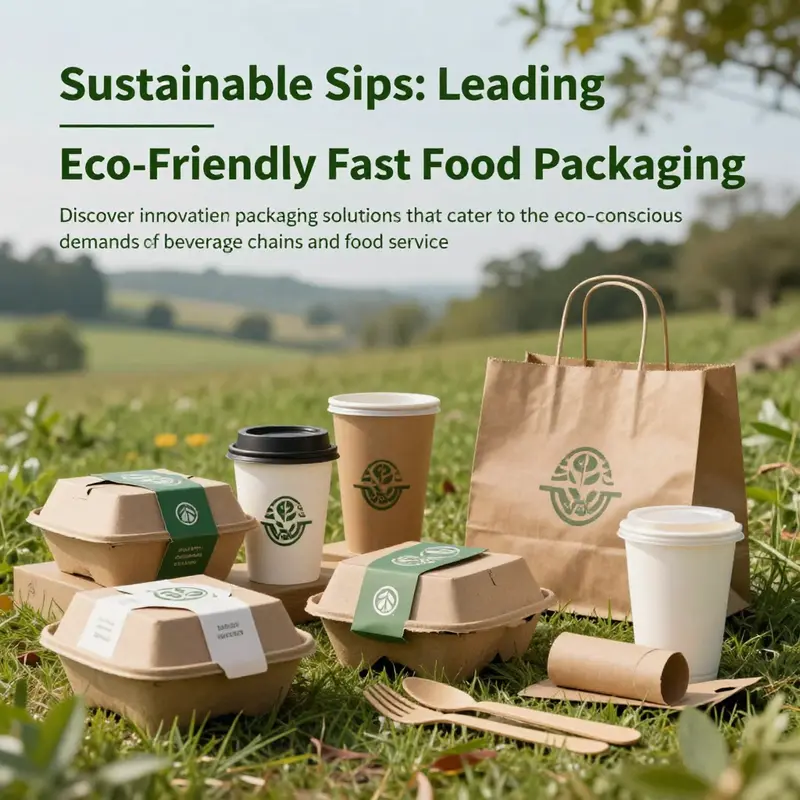
With the increasing emphasis on sustainability, the fast food industry is witnessing a remarkable shift towards eco-friendly packaging. Beverage shops, restaurants, food trucks, and catering services are exploring alternatives that not only safeguard our environment but also enhance their brand appeal. The chapters ahead will delve into three pivotal aspects: material technology driving these innovations, the design innovations enhancing consumer experience, and the compliance and economic incentives making eco-friendly packaging viable for businesses. As we navigate through these sections, it becomes clear how adopting sustainable practices not only meets the rising consumer demands but also positions businesses as forward-thinking leaders in their respective markets.
From Kraft to Keeps-Crisp: The Materials Driving Eco-Friendly Fast-Food Packaging
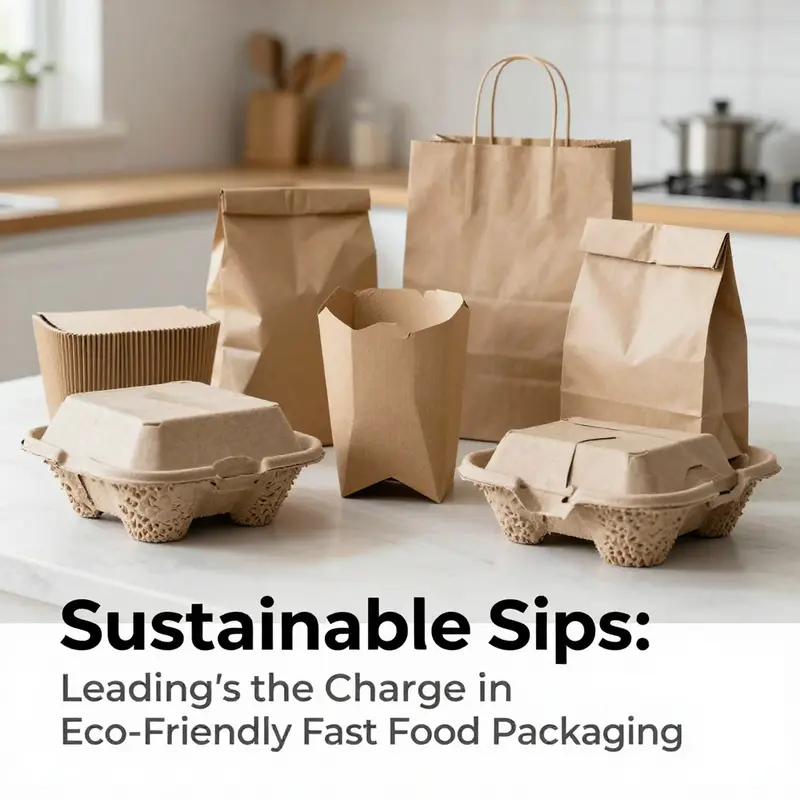
A shift is unfolding in the world of quick-service meals, driven not by fashion but by a realignment of priorities around waste and resource use. Material technology in eco-friendly fast food packaging is answering a practical demand: how to protect a hot, greasy burger or a freshly loaded slice of pizza while lowering the environmental impact of the wrapper, box, or sleeve. The answer rests on smarter base materials, smarter structures, and smarter surface treatments that together create packaging that stands up to the rigors of delivery, keeps foods at desirable temperatures, and can be recycled or composted after use. This is not a single invention but a family of intersecting solutions that balance performance with responsibility. In practice, the choices start with what the package is made from and extend into how that material is formed, treated, and certified for reuse in a circular economy. The goal is to replace habitual dependence on plastics with materials that behave like plastics when needed but leave far less a footprint when their job is done. The result is a takeout experience that feels reliable and modern, even as it signals a brand’s commitment to sustainability.
The foundation of this transition lies in base materials that are both renewable and functional. Kraft paper, usually sourced from responsibly managed forests and certified by forestry standards, remains a front-runner for many eco-friendly lines. Its light yet sturdy character makes it suitable for a variety of fast-food formats, from wrap sleeves to lunch boxes. Corrugated cardboard also plays a crucial role, providing structural integrity through layered construction. When designed properly, corrugated boxes can outperform traditional paper boxes in resisting crushing and deformation during transport. The layered, hollow fluting acts as a shock absorber, protecting food contents as they traverse streets and sidewalks, into kitchens, and through crowded carry-out lobbies. In some applications, this structural advantage translates into a box that is up to two times stronger than a basic cardboard alternative, a meaningful gain when you’re delivering heavy or bulky items like multi-burger sets or thick-crust pizza slices. On the surface, it might seem that sturdiness would come at the expense of weight or cost, but advances in foam- or glue-free constructions, along with optimized flute sizes, keep weight low and performance high. These choices are guided by a simple truth: a container that fails in transit creates waste and disappoints customers, while a well-engineered box preserves integrity with minimal resource use.
Moisture management and grease resistance are equally essential. The greasy sheen of fries or the oil in a chicken wing is a common challenge for fast-food packaging. To keep foods crisp and containers intact, manufacturers are turning to moisture-resistant layers and specialized coatings that act as barriers without hampering recyclability. Craft paper layers, engineered to resist moisture, combine with surface treatments that deter grease migration. Sometimes embossing or a light coating is employed to control surface tension, reducing the likelihood of juices wicking through the material. The aim is not to replicate the impermeability of a plastic film but to create a packaging surface that performs well enough for takeout and stays visually appealing through the journey from kitchen to customer. The result is a box or bowl that maintains its shape and appearance, even when it carries hot or oily content, while remaining accessible to recycling streams where appropriate. This balance is critical; misaligned barriers can trap food residues, complicating disposal. The best designs anticipate this and avoid multilayer stacks that defeat recyclability, opting instead for configurations that can be sorted and processed in conventional systems.
In the realm of sustainable plastics, plant-based polymers have emerged as a compelling alternative for specific applications. Polymers such as polylactic acid (PLA) and bio-based polyesters, along with starch blends, offer plastic-like barrier properties and heat resistance while remaining compatible with industrial composting streams. When used judiciously, these materials deliver the familiar look and feel of conventional plastics but with a shorter residence time in the environment. The trade-offs are nuanced: while some compostable plastics can degrade in industrial facilities, their compatibility with local waste management infrastructure varies. This reality has pushed many producers to design packaging with end-of-life in mind, ensuring that the chosen material aligns with the recycling or composting capabilities of the target communities. The broader implication is clear: material selection is not just about what a package can do today, but about how it will be handled tomorrow. A thoughtfully chosen material can simplify the customer experience and support a retailer’s sustainability claims by enabling proper disposal pathways.
Certifications and compliance form the backbone of consumer trust in eco-friendly packaging. Standards such as the Forest Stewardship Council (FSC) for responsibly sourced paper and the German Extended Producer Responsibility (EPR Germany) framework help retailers verify that packaging aligns with global environmental expectations. Certifications function as a bridge between production realities and consumer assurances. They communicate that the materials used have met stringent criteria for sourcing, manufacturing, and end-of-life handling. Beyond FSC and EPR, additional certifications focused on food safety and recyclability provide a comprehensive picture of a packaging system’s credibility. Doors open when brands can demonstrate that their choices meet international guidelines, and retailers gain confidence that the packaging will perform safely in kitchens, during transit, and in recycling streams. When brands align with recognized standards, they reduce the risk of negative environmental narratives and position themselves to participate in extended producer responsibility programs that cover the full life cycle of their packaging.
The practical implications of these material choices extend into the daily realities of kitchens and delivery fleets. Real-world performance is the ultimate test: a box that withstands the rigors of urban delivery, keeps oil from leaking beyond the container walls, and occupies minimal space in storage, all while remaining cost-competitive. It is not enough to boast about a “green” material in theory. A packaging solution must prove itself in high-volume operations, where time is money and consistency is essential. In this context, innovations such as leak-proof disposable kraft-liner boxes and moisture-control inner liners have shifted the baseline expectations for fast food packaging. A well-designed solution can reduce the frequency of substitution by culinary and delivery staff, minimize returns due to soggy or crushed items, and lower overall waste by improving the efficiency of disposal and recycling. The cumulative effect is not simply a more sustainable wrapper; it is a more reliable system that aligns with the operational demands of busy kitchens while supporting a brand’s environmental commitments.
Beyond raw materials and performance, the aesthetic dimension of packaging matters. Brands increasingly leverage the tactile quality of paper-based materials and the design flexibility they offer. Custom die cuts and embossing enable logos, textures, and brand motifs to become part of the packaging itself, enhancing visibility and recall without sacrificing recyclability. This interactive design layer allows brands to deliver a premium, individualized experience while maintaining a clear environmental message. The packaging becomes a canvas for storytelling: it signals that the business cares about where materials come from, how they are made, and what happens after use. The result is packaging that communicates values as well as function, encouraging consumers to extend their attention to the entire lifecycle of the product.
The story of material technology is also a story about accessibility and scalability. Suppliers have responded to diverse business needs by offering customization and scalable production options that fit a range of budgets and orders. For startups and small-to-medium enterprises, the cost per unit can be modest when orders are designed for efficiency and mass production. In some cases, the economics of scale enable packaging that costs just a few cents per piece at sizeable MOQs, alongside samples and flexible terms that allow smaller players to test fit and performance before committing to large orders. Such price dynamics broaden the adoption of eco-friendly solutions, moving sustainability from a niche specification to a standard operational capability across many fast-service brands.
As the conversation about packing materials evolves, one can observe a convergence of durability, moisture management, compostability, and regulatory alignment. The most successful packaging systems tend to be those that integrate these aspects into a cohesive design rather than treating them as separate features. A well-considered structure will use corrugated or rigid paperboard for strength, moisture-resistant layers to preserve food quality, and plant-based plastics only where necessary for barrier performance in a way that still enables end-of-life processing within the local waste infrastructure. The packaging then becomes a trusted partner for both the kitchen and the consumer, delivering reliability in delivery environments while remaining compatible with recycling or composting channels. In this integrated approach, the material technology is not just about the box; it is about the entire experience of takeout—from the moment the order is placed to the moment the last bite is enjoyed and the packaging is disposed of in a responsible manner.
For readers seeking concrete examples of how these technologies come together in current market offerings, consider formats that combine robust corrugated construction with grease-resistant inner layers and clean, easily separable components designed for recycling. The trend is toward systems that are straightforward to disassemble and process at end of life, reducing contamination in recycling streams and promoting higher recovery rates. In practice, this means designing packaging that uses a simple set of materials in compatible ways, rather than a composite of many difficult-to-separate layers. When packaging is designed with end-of-life in mind, it becomes a facilitator of sustainable behavior rather than an obstacle. A crucial element in this design ethos is the ongoing collaboration among material scientists, packaging engineers, regulatory bodies, and the brands themselves, all working toward a shared objective: to deliver fast, flavorful experiences without leaving a lasting environmental footprint.
Within this collaborative landscape, brands increasingly look to suppliers who can offer not only materials but a pathway to certification and compliance. The ability to source FSC-certified paper and to align with EPR Germany or similar frameworks becomes a practical differentiator. It signals that a business is serious about supply chain transparency and responsible stewardship. This alignment also enables easier participation in take-back and recycling programs that may be offered by municipalities or packaging manufacturers, further closing the loop on waste diversion. In a marketplace where packaging choices communicate a brand’s values, the assurance that those choices are grounded in verifiable standards helps maintain trust with customers who are paying attention to the lifecycle of their purchases.
Among the notable signals of a thriving eco-packaging ecosystem is the rise of customizable, biodegradable cardboard packaging with scalable options for brands of all sizes. Such solutions enable a brand to articulate its environmental commitments without compromising on performance. They support fast-service operations by providing reliable, containerized protection during transit and by simplifying storage and retrieval in kitchens. At the same time, they offer a clear pathway to responsible disposal, reinforcing the message that the business prioritizes the health of the planet as part of its everyday operation. The combination of durable structure, moisture control, compostable or recyclable materials, and accessible certifications creates a compelling value proposition for brands seeking to modernize their packaging while maintaining a strong, credible environmental narrative. And as consumer expectations continue to evolve, the demand for material technology that can deliver both reliability and responsibility will likely increase, driving ongoing innovation and collaboration across the packaging ecosystem.
For readers who want to explore specific examples of how these principles translate into real-world products, the landscape includes options that integrate robust structural design with tailored surface features and end-of-life considerations. Such options illustrate how a box or bowl can perform exceptionally in a fast-food context while also fitting into recycling or composting streams in many regions. The ongoing dialogue among designers, manufacturers, and regulatory bodies will continue to refine these solutions, pushing material science toward ever-better balance points between utility and sustainability. The chapter thus centers on a simple premise: when material technology is thoughtfully aligned with the realities of fast-food operations and waste management, sustainable packaging becomes an enabler of customer satisfaction, brand integrity, and environmental stewardship.
To ground this discussion in a concrete, real-world framing, imagine formats that blend the strength of corrugated cardboard with the efficiency of a well-engineered inner liner. Consider how moisture-resistant layers preserve crispness in greasy foods and how plant-based plastics can provide a reliable barrier when needed, without complicating end-of-life processing. This is not theoretical abstraction; it is the fabric of today’s eco-friendly fast food packaging. The future holds further refinements—more precise barrier chemistries, smarter coatings that respond to humidity, and even better alignment with regional waste-management capabilities. Yet the core trajectory remains clear: packaging that is robust, visually engaging, and responsibly sourced, designed to function effectively in a high-volume, high-turnaround service model while supporting a circular economy.
For researchers and practitioners looking to connect practical deployment with verifiable credibility, the information landscape is increasingly navigable. Brands can source materials that are not only durable and moisture-resistant but also certified and traceable, ensuring they meet both safety standards and environmental expectations. The synthesis of material science and supply chain discipline is what makes eco-friendly fast food packaging a viable, scalable solution rather than a niche experiment. It is a field where ongoing collaboration yields tangible benefits—from reduced waste handling costs to improved customer loyalty built on visible sustainability commitments. As the sector continues to evolve, the most successful packaging systems will be those that integrate performance with responsibility in a way that is transparent and measurable, while still delivering the quick, convenient experience customers expect.
Internal link reference: The trend toward rugged, stylish, yet sustainable packaging is visible in formats like octagonal kraft paper boxes, which you can explore in depth here: octagonal kraft paper packaging.
External reference: For additional context on market-ready, supply-chain-ready eco-friendly packaging options and further technical detail, see the following external listing that demonstrates the breadth of customization and certifications available in this space: https://www.alibaba.com/product-detail/Custom-Chicken-Wing-Burger-Boxes-Eco-friendly_1600589437681.html
Delivering Sustainability: Design Innovations That Reframe Eco-Friendly Fast Food Packaging
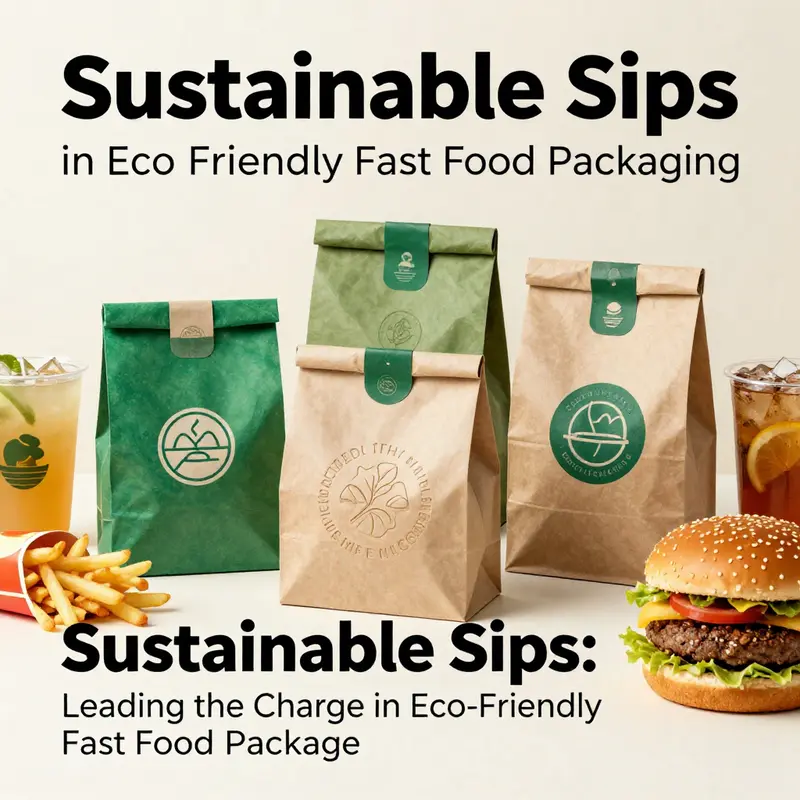
Packaging decisions in fast food are not just about keeping contents intact; they are about shaping the footprint of a service model that moves quickly while promising steadier stewardship of resources. In recent years, design innovations have moved from isolated material shifts to a holistic approach that integrates performance, end-of-life outcomes, and the nuances of urban logistics. The result is a suite of packaging concepts that can withstand the rigors of rapid delivery, yet remain gentle on the planet. Designers and engineers are asking the same questions a restaurant manager asks during a rush hour: Will this container carry a hot meal without leaking? Will it hold its shape in a crowded bag? Will it require special handling at the end of its life? And crucially, can it be made from renewable resources and recycled or composted after use? The answers are increasingly affirmative as new materials, layered structures, and smart design practices converge to deliver more sustainable outcomes without sacrificing user experience or operational reliability.
Biodegradable and compostable materials have moved from novelty to common practice in the sector. Plant-based plastics such as polylactic acid (PLA) derived from cornstarch offer a way to replace conventional fossil-fuel plastics in certain applications, provided that waste streams are managed to allow industrial composting. Other materials, including bagasse from sugarcane, bamboo, and high-content recycled paper, provide a similar or better barrier profile for grease and moisture while contributing to a lower carbon profile when produced with careful life-cycle thinking. The shift toward these materials is not simply about substituting one box for another; it is about reimagining how packaging interacts with the entire supply chain. For instance, the grease-rich boundaries of fried items demand absorptive surfaces that prevent sogginess while avoiding coatings that hinder recyclability. In many designs, a compostable liner or a moisture-resistant wrap made from renewable fibers serves this function, enabling robust performance for takeout without creating a post-use burden that conventional paper cannot solve.
Structural design has become a core axis of eco-friendly packaging improvement. Insulated packaging made from renewable fibers keeps hot foods hot and cold items distinct during transit, reducing the temptation to add plastic liners or foam inserts that would otherwise complicate disposal. This instinct toward insulation extends to lid and seam configurations that minimize heat and moisture exchange at the wrong moments. Meanwhile, advances in barrier coatings, once the exclusive domain of multi-layer plastics, have made their way into mono-material formats that can be separated and recovered more easily at end of life. Vacuum-sealing technologies, though familiar from food preservation, are now adapted to single-use containers in ways that slow oxidation and slow microbial growth while still allowing efficient mechanical recycling or composting. The net effect is a packaging system that acts like a well-tuned part of the meal’s journey, reducing spoilage, waste, and the additional resources that would otherwise be required to deliver a fresher, safer product to the consumer.
Designers are also embracing smart design principles that prioritize end-of-life compatibility without compromising on function. The industry is gradually adopting mono-material strategies where a single material type—such as corrugated cardboard or a compostable kraft fiber—forms the majority of the package. This simplification minimizes cross-contamination risks in recycling streams and lowers the burden on waste management infrastructure. At the same time, digital printing and minimalist labeling reduce ink usage and allow more of the surface to contribute to the packaging’s base performance and branding simultaneously. In practice, this means logos and textures can be embossed or die-cut into the surface in ways that create a sense of premium packaging without additional synthetics or brightly colored inks. The tactile quality of embossed features can reinforce brand identity while keeping the end-of-life options clear and straightforward, a combination that often resonates with consumers who want both quality and responsibility in the products they choose to take away.
The logistics and distribution context cannot be ignored in a genuine evaluation of innovation. A stunningly durable box matters only if it endures the realities of a city-wide delivery circuit: multiple drops, sudden temperature shifts, and stacked volumes in crowded kitchens and couriers’ vans. This is where the interaction between packaging design and supply chain operations is critical. Corrugated cardboard construction, for example, provides notable strength for heavier items such as burgers and pizzas, reducing the risk of crushing that would otherwise compromise customer satisfaction. A layered approach that combines rigidity with moisture resistance addresses the double pressure of grease permeation and mechanical abrasion. In addition, the adoption of efficient fold patterns enhances flat-pack storage in kitchens and reduces the space needed for transport, lowering the energy costs associated with distribution. When these factors are optimized together, the packaging becomes not just a protective shell but a practical tool that improves delivery reliability, reduces returns, and lowers waste across the entire system.
Beyond raw materials and structure, the integration of design with aesthetics and brand storytelling is increasingly important. With careful die cuts, embossing, and texture, fast food brands can achieve a visible identity that differentiates itself from generic cartons while still staying within circular economy constraints. These features are not superficial bells and whistles; they can indicate a product’s performance characteristics and end-of-life expectations to the consumer. A textured surface, for instance, can communicate moisture resistance or grease repellency, while a crisp line or sealed seam can signal leak-proof performance. The result is packaging that feels premium yet remains recyclable or compostable, a combination that aligns with consumer expectations around both quality and sustainability. This balance between form and function is essential because it helps strengthen brand loyalty in a market where customers increasingly calibrate their choices to environmental impact as much as taste and price.
Market-facing considerations also drive material choices and production philosophies. Consumer demand for sustainable packaging has led to certifications that provide credibility and a common language for retailers and kitchens alike. Forest Stewardship Council (FSC) certification signals that the raw materials come from responsibly managed forests, while extended producer responsibility (EPR) frameworks in varied jurisdictions—such as Germany—define who bears responsibility for end-of-life management and recovery. These standards help ensure that what looks good on a shelf also performs responsibly in the waste stream. For businesses seeking scalable solutions, supplier ecosystems are increasingly able to offer customizable, biodegradable packaging options at competitive costs, along with transparent information about compostability and recycling compatibility. This transparency is critical because it helps operators plan inventory, educate staff, and communicate with customers about how to dispose of the packaging after use, reinforcing a shared commitment to sustainability across the value chain.
Cost and scalability are essential considerations in the transition toward eco-friendly options. While sustainable packaging often carries a premium over conventional plastics, the gap is narrowing as economies of scale and improved process efficiencies accumulate. Some producers offer competitive pricing and flexible order quantities that make pilot programs feasible for small-to-medium enterprises. The real challenge lies in forecasting demand, aligning packaging with menu formats, and coordinating with waste management systems so that the end of life is as straightforward as the choice to use it. Operational teams must be trained to assemble, seal, and store these new formats without sacrificing speed. Where feasible, drop-in replacements that preserve the logistics logic of existing operations are preferred, because they minimize disruptions to kitchen workflows and delivery timings. In many cases, the most successful programs balance a high-performance, compostable option for direct-to-consumer orders with a separate, reusable or recyclable solution for dine-in or bulk orders, thereby reducing the moderation required for a single system across multiple channels.
From a design ethics perspective, the shift toward sustainable fast food packaging is as much about responsibility as it is about performance. The packaging becomes a visible assertion of a brand’s values. When a consumer learns that a container is made from renewable fibers, or that it can be recycled in municipal streams, that information strengthens trust and fosters long-term loyalty. The challenge is to communicate this information without clutter—no over-claiming, no misleading symbols, and no vague statements that confuse customers about end-of-life options. The best designs offer clear cues about compostability or recyclability, supported by appropriate certifications and end-of-life guidance printed on the packaging itself. In this sense, packaging evolves into a conversation with the consumer: a reliable, tangible reminder that every meal carries implications beyond taste and convenience.
An illustrative example of the practical implications of design choices can be seen in a particular shape and material system that blends strength, moisture management, and recyclability. A practical example is an octagonal kraft paper packaging solution that merges a disciplined geometry with reinforced panels and a grease-resistant interior. Such a configuration reduces the footprint of the container while preserving the experience of a robust, spill-resistant package that remains friendly to recycling streams. The geometry matters because it contributes to stacking efficiency in bags and boxes, reduces empty space during load, and makes handling more predictable for drivers and customers. The interior surface can employ a moisture barrier that resist oil and grease without adding extraneous plastics, further supporting compostability under appropriate waste-stream conditions. When paired with a simple, legible labeling system that avoids excessive inks, such a design can serve as a practical demonstration of how thoughtful packaging decisions translate into meaningful environmental outcomes. For brands exploring this path, a practical next step is to examine the options for customizing die cuts and embossing—features that can elevate perception without compromising recyclability. See this example of a packaging approach that combines structural integrity with sustainability: octagonal kraft paper packaging.
Looking ahead, the convergence of materials science, digital fabrication, and logistics optimization promises to continue reshaping fast food packaging. Researchers are examining how to calibrate insulation, moisture management, and barrier functions in monocular material systems that support simple, closed-loop recycling. As life-cycle analysis methods become more accessible, operators can compare alternative packaging configurations not only on purchase price but on environmental impact across raw-material production, transport, use, and end-of-life processing. The goal is not a single winner but a portfolio of validated options that can be matched to different menu formats, climate zones, and waste-management infrastructure. In this sense, eco-friendly fast food packaging becomes a design discipline that evolves with the supply chain rather than a static substitute for conventional cartons. The emerging models aim to deliver food with speed and reliability while ensuring the packaging itself is a resource that can be reimagined as feedstock for future cycles rather than a stray element of waste. This vision aligns closely with the broader pursuit of circular design, where materials flow through multiple life cycles and brand narratives grow stronger because they are anchored in tangible, measurable sustainability outcomes.
External resource: Eco-Design for Food Packaging Innovations
Compliance-Driven Economics: Navigating Rules, Costs, and Value in Eco-Friendly Fast Food Packaging
The packaging decisions that accompany a modern fast-food operation are rarely isolated engineering choices. They sit at the intersection of policy, consumer expectations, and the economics of scale. In this space, compliance is no longer a back-office checkbox; it is a strategic driver that reshapes what materials are chosen, how products are designed, and how supply chains are organized to meet both regulatory mandates and market demand. The global push to move away from single-use plastics has crystallized into a framework where recyclability, compostability, or reusability are no longer optional features but baseline requirements. The European Union’s Single-Use Plastics Directive has become a reference point, shaping procurement language, supplier certification demands, and the way restaurants communicate environmental responsibility to customers. In practice, this regulatory environment compels fast-food operators to adopt packaging solutions that can withstand the rigors of busy kitchens, protect food quality during transit, and support end-of-life pathways that align with local waste-management infrastructure. The result is a packaging ecosystem designed to be both responsible and reliable, a combination that increasingly defines competitive advantage in a crowded market.
This regulatory climate elevates the role of third-party certifications as practical assurances of how packaging is sourced and how it behaves after disposal. FSC certification remains a cornerstone for paper-based materials, signaling that the fiber used in boxes and sleeves originates from forests managed with transparent stewardship and credible chain-of-custody practices. Such certification matters not only for sustainability reporting but also for downstream relationships with retailers who demand verifiable environmental commitments from their suppliers. Equally important is OK Compost INDUSTRIAL certification, which provides a recognized pathway for compostability under industrial facilities. While curbside composting can be inconsistent across regions, OK Compost INDUSTRIAL helps ensure that packaging designed to be composted will actually break down when processed in facilities that can accommodate bioplastics and other compostable formulations. These certifications, together with the growing emphasis on Extended Producer Responsibility (EPR) programs, establish a governance framework for packaging that keeps end-of-life outcomes from being purely accidental, and instead ties them to a credible, auditable process.
The regulatory dimension is complemented by a parallel market narrative: sustainability offers a competitive edge when it translates into tangible economics. The upfront cost of eco-friendly packaging—driven by renewable feedstocks, recycled fibers, or specialized coatings—can be higher than traditional plastics. Yet the long-run economics often tell a different story. When packaging is designed to be recyclable or compostable, waste disposal fees decline or become more predictable, which can reduce operating expenses in markets where waste-management charges are a meaningful line item. Brand differentiation is not merely cosmetic; it can drive higher perceived value and customer loyalty, particularly among segments that view environmental stewardship as integral to brand trust. In environments where price competition is intense, sustainability becomes a value proposition that helps justify price parity or even premium positioning by signaling quality, responsibility, and forward-thinking governance. The impact of these dynamics is visible in the growth trajectory of the eco-friendly packaging market, which reached approximately USD 227.985 billion in 2024 and is projected to expand to around USD 425.12 billion by 2032, a CAGR near 8.1%. The magnitude matters because it signals a durable opportunity for operators to invest in packaging ecosystems that can scale across multiple outlets and geographies while maintaining compliance and performance.
This growth pattern is not accidental. It reflects a convergence of material science advances and procurement discipline that is reconfiguring what is possible in fast-food packaging. Corrugated cardboard, once seen as a simple protective shell, now serves as a structural backbone for heavy or bulky items such as multi-item burgers or stacked pizzas. Its layered construction distributes weight, resists crushing during transit, and preserves the integrity of the brand’s presentation on arrival. For items where grease and moisture threaten box performance, moisture-resistant craft paper layers provide a crucial edge. They help preserve crispness for fried items and prevent external surfaces from becoming slick with oil, a practical benefit that reduces the likelihood of mishandling during delivery. These materials respond to a real-world need: boxes and sleeves that endure the journey from kitchen to customer while maintaining appearance and function after exposure to heat, moisture, and grease.
The packaging design narrative has also matured into a branding language that does not sacrifice recyclability for aesthetics. Innovative features such as customizable die cuts and embossing enable brands to imprint logos and textures directly onto the packaging surface. This design strategy enhances visual appeal and tactile quality—an important cue in digital-era consumer behavior where unboxing and first impressions matter. It also helps differentiate a brand in a marketplace crowded with uniform options, giving restaurants a way to reinforce identity and values without resorting to non-recyclable motifs. The balance achieved here is delicate but increasingly achievable: customers perceive a premium experience, while the packaging remains compatible with recycling streams and composting facilities where applicable. This synthesis of durability and design is a practical embodiment of compliance in action, where a well-constructed, on-brand package is also an effective environmental choice.
In evaluating real-world performance, a standout category is the oil- and leak-proof disposable kraft paper lunch box. Engineered specifically for fast-food takeout, these boxes combine a lightweight footprint with a protective interior lining designed to resist leakage while preserving the exterior’s look. The practical benefits are clear: the packaging protects food quality, reduces cross-contamination risks, and minimizes mess in transit—factors that influence customer satisfaction and the likelihood of repeat business. They also align with waste-management realities: many facilities can process kraft-based packaging within established recycling streams or industrial composting programs, depending on regional capabilities and certifications. This alignment between performance, end-of-life outcomes, and regulatory expectations makes such options particularly attractive for operators seeking to expand takeout throughput without sacrificing sustainability commitments.
The compliance narrative would be incomplete without a strategic view of supplier capabilities and procurement governance. In many markets, the conversation begins with a supplier network that can provide custom printed biodegradable cardboard packaging at scale, with pricing models that reward long-term commitments and consistent order volumes. The economics become more favorable when procurement teams leverage integrated supply chains, enabling more predictable lead times, uniform quality assurance, and a smoother path to seasonal promotions or menu changes. The supply chain discipline around eco-friendly packaging is not inherently about sacrificing speed; rather, it is about aligning speed with responsible practices and end-of-life considerations. Firms that excel in this space often adopt a lifecycle mindset: they track material sourcing, manufacturing processes, distribution, and post-consumer handling to identify where improvements can be made and how to quantify the environmental benefits of each packaging choice.
To illustrate how this alignment translates into concrete options, consider the practical packaging choices that can meet both regulatory and performance demands. A simple, durable outer box made of corrugated cardboard can carry heavy items without collapsing while remaining widely recyclable. Inside, oil- and grease-resistant layers can keep contents clean, preserving both taste and texture. The ability to customize packaging through branded die cuts or embossed textures adds value without compromising recyclability. Such combinations underscore a critical point: sustainable packaging is increasingly a system property, not a single material decision. The system must coordinate the chosen materials, the manufacturing process, the end-of-life pathway, and the customer experience so that every link in the chain reinforces the others.
As a practical touchstone for sourcing teams navigating this landscape, one may explore options for customizable cardboard packaging that are designed to be both cost-effective and compliant. A representative example of packaging options with strong durability and sustainability attributes can be found on supplier pages that showcase recyclable and compostable designs, including round and octagonal forms that are easy to stack and store in high-volume kitchens. For instance, a practical example of packaging options that balance durability and sustainability can be explored through this page: disposable-octagonal-box-restaurant-food-kraft-paper-packaging.
The procurement journey is further enriched by insights into regional manufacturing dynamics. In hubs where production is concentrated, such as in large-scale manufacturing ecosystems, integrated supply chains can yield meaningful efficiency gains. When design, production, and distribution operations are closely coordinated in a single geographic region, lead times can be 15–20 percent shorter than more dispersed arrangements. This improvement translates into faster menu iterations, more reliable rollouts of sustainability initiatives across outlets, and reduced risk of stockouts or last-minute packaging substitutions that could undermine both compliance and customer experience. Importantly, this operational efficiency does not come at the expense of environmental performance. With robust certifications, traceability, and quality controls, suppliers can deliver packaging that meets or exceeds regulatory standards while also meeting the performance thresholds that fast-food operations rely on for daily service.
The economics of eco-friendly packaging thus hinge on a multicloud of factors: upfront material costs, end-of-life savings, brand value, and supply-chain resilience. A prudent strategy recognizes that sustainability is not a one-off capital expenditure; rather, it is a long-term investment that pays dividends through waste reduction, improved service reliability, and stronger consumer loyalty. This is particularly relevant as the market for eco-friendly packaging expands and as more operators commit to transparent sustainability reporting and public accountability. The path forward involves a mix of core, easily recyclable formats and a cautious, phased expansion into more advanced materials and branding capabilities as the waste-management infrastructure matures and as certification regimes evolve. Such a staged approach helps balance risk and reward, ensuring that businesses can scale their packaging programs in step with regulatory progress and consumer adoption.
In the broader procurement literature, the strategic sourcing of eco-friendly packaging emphasizes the alignment of supplier capabilities with lifecycle thinking. This approach encourages organizations to assess risk, ensure supply chain transparency, and pursue efficiencies without compromising environmental outcomes. The emphasis on governance and data-driven decision-making equips procurement teams to negotiate price-to-value tradeoffs, secure credible end-of-life pathways, and design packaging that remains adaptable to changing policy landscapes. The overarching objective is not merely to reduce plastic usage but to enable a packaging ecosystem that supports growth, reduces waste, and communicates a credible, consistent narrative of responsibility to customers and investors alike. This is the essence of compliance-forward economics: it translates rules into reliable performance, costs into value, and environmental stewardship into a sustainable competitive edge.
For practitioners seeking practical cues on how to navigate procurement with confidence, the literature suggests several actionable levers. Prioritize formats that deliver core performance with recyclable or compostable end-of-life options, set clear certification expectations with suppliers, and establish a governance framework that tracks end-of-life outcomes alongside traditional cost and quality metrics. In this way, packaging decisions become an intrinsic part of the business strategy rather than a peripheral expense. The objective is a packaging program that can withstand the busy tempo of fast-food service while upholding a credible environmental reputation. Suppliers should provide scalable, customizable options with robust testing and transparent certifications, and procurement teams should approach negotiations with a clear value proposition that pairs cost control with environmental accountability.
As industry practitioners reflect on the path ahead, it becomes evident that the sustainability journey is iterative. Standards will evolve, consumer expectations will shift, and materials science will continue to unlock new performance envelopes for eco-friendly options. The strongest programs are those that embed flexibility, rigorous governance, and transparent communication about end-of-life outcomes. They also capitalize on incremental improvements—ranging from optimized coatings to enhance heat resistance, to smarter packaging geometries that maximize space in delivery vehicles—without sacrificing recyclability. The integrated approach—combining compliance discipline with economic prudence and a relentless focus on value creation—positions eco-friendly fast food packaging not merely as a compliance obligation but as a durable, scalable component of modern restaurant operations. The market dynamics, regulatory environment, and supplier innovations together ensure that sustainable packaging can be a driver of responsible growth and competitive advantage as the industry continues to scale and innovate.
External resource: For deeper procurement insights and practical strategies to optimize supplier relationships and lifecycle thinking in eco-friendly packaging, see this external resource: Strategic Sourcing of Eco-Friendly Food Packaging: Supplier Insights & Procurement Optimization
Final thoughts
Incorporating eco-friendly packaging into your food service operations presents a unique opportunity for businesses to stand out in a competitive market. The material advancements ensure that packaging meets functional demands without compromising environmental principles. Innovative designs foster greater consumer engagement, enhancing brand loyalty. Meanwhile, compliance with sustainability regulations and cost-effective options make eco-friendly packaging economically viable. By embracing these changes, your business not only supports a healthier planet, but also aligns with the values of modern consumers, paving the way for a prosperous, sustainable future.