
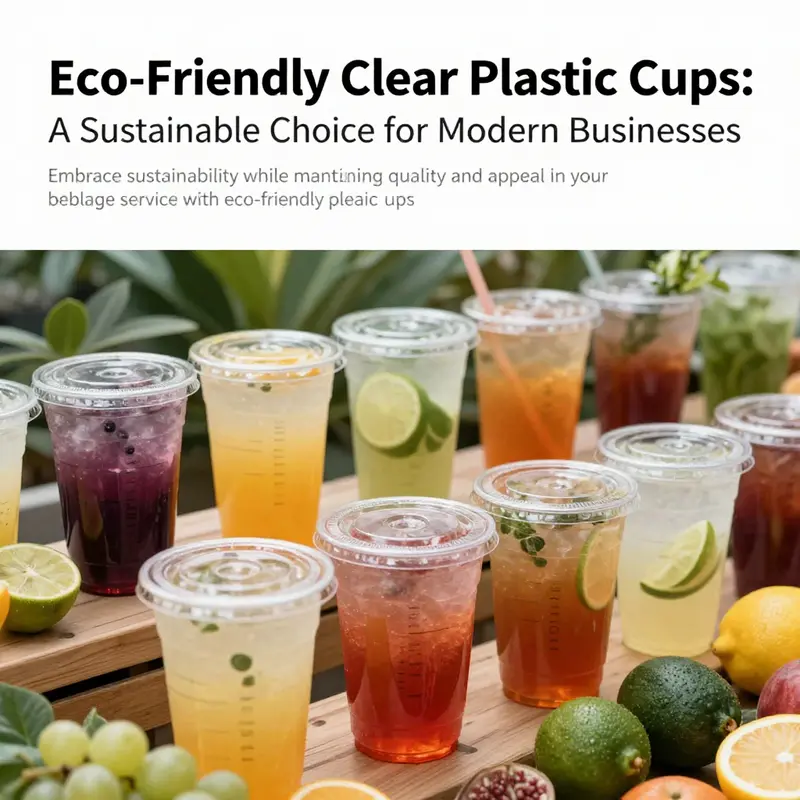
As the demand for sustainable practices continues to rise, eco-friendly clear plastic cups have emerged as a key solution for businesses aiming to reduce their environmental footprint. These innovative cups, made from materials like PLA and rPET, provide the durability and clarity associated with traditional plastics while being kinder to the planet. In this exploration, we will uncover the importance of material innovation, delve into market trends, explore production challenges, and examine the regulatory landscape surrounding these eco-conscious options, equipping bubble tea shops, restaurants, food trucks, catering services, event planners, and corporate procurement teams with insights necessary for informed decision-making.
Clear Pathways to Sustainability: Material Innovation in Eco-Friendly Clear Plastic Cups
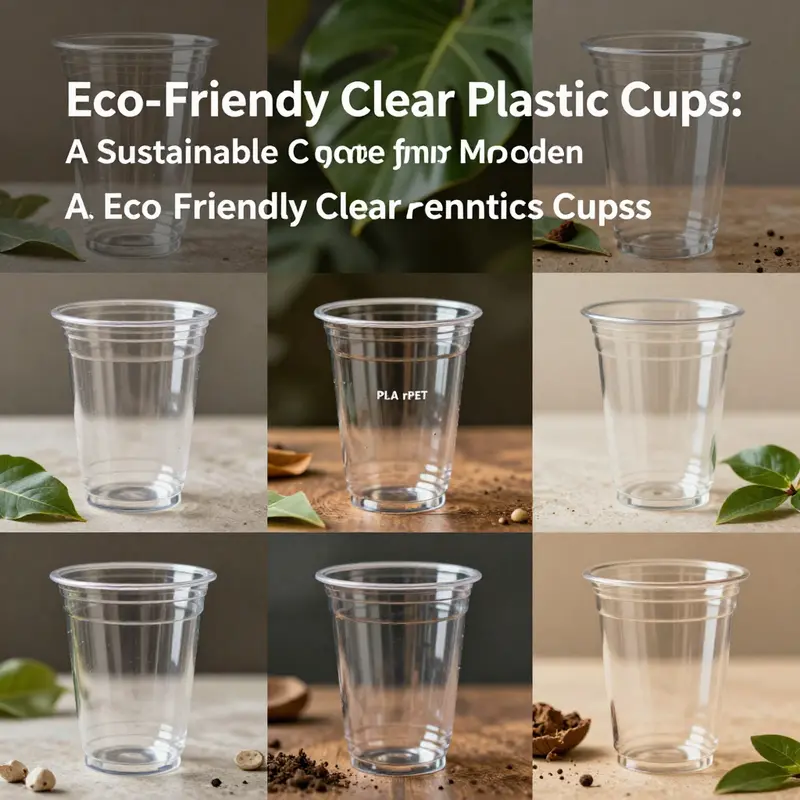
Across the foodservice and beverage landscape, a quiet revolution is underway: substituting conventional single-use plastics with materials engineered for sustainability while preserving clarity and performance. The new generation of eco-friendly clear cups is not just about swapping polymers; it is about rethinking design, production, use, and end of life. Key threads include renewable feedstocks, improved end-of-life pathways, and designs that reduce environmental impact while keeping strength and clarity. Consumers increasingly connect a product to its broader ecological footprint, and demand cups that fit a circular economy mindset. This convergence of materials science, manufacturing, and waste management infrastructure is reshaping the meaning of eco-friendly in everyday drinkware.
Biopolymers such as polylactic acid (PLA) sit at the core of this shift. PLA is derived from renewable resources, often cornstarch, and can offer high transparency and sufficient rigidity for cold beverages while presenting a compostability profile that aligns with industrial waste streams. Commercially compostable PLA cups can break down into carbon dioxide, water, and biomass under controlled conditions. This is appealing for venues that host frequent events or operate on a model of waste streams that can be directed to composting. However, home composting is seldom effective for PLA, and natural environments do not reliably accelerate its breakdown. A system-level approach is needed: dedicated composting infrastructure, proper sorting, and consumer participation.
Beyond PLA, a broader family of sustainable options is emerging through material blends and renewables. Bamboo fiber, which grows rapidly and often with minimal pesticide use, is increasingly used with bioplastic binders to create cups that blend natural strength with clear aesthetics. Blends can deliver robust rigidity and a tactile feel associated with premium products, while the bioplastic binder helps maintain the transparent look. The environmental calculus here is layered: bamboo represents a renewable resource with favorable growth; the end-of-life behavior depends on the binder and processing facility. Some blends are recyclable or compostable, depending on the waste stream available in a given market. For manufacturers, the challenge is to optimize performance, energy use, and downstream pathways; for buyers, it is to choose suppliers who can articulate end-of-life stories and point to credible certifications.
Innovation in design also expands the sustainability envelope. Double-wall construction can provide insulation and structural stability, reducing the need for external sleeves or secondary packaging. A well-designed double-wall cup helps keep beverages at target temperatures, supporting cold and hot-service scenarios without extraneous materials. In both cases, the goal is to preserve clarity and durability while enabling features such as easy stacking and compatibility with standard lid systems. The result is a product that performs in busy settings while remaining responsible from a waste-management perspective.
Lifecycle thinking is central to these developments. Brands use lifecycle analysis to compare material routes such as PLA versus recycled PET or bamboo-bioplastic blends, considering energy use, greenhouse gas outputs, and end-of-life options. The circular economy mindset invites considering how cups can be recovered, sorted, and reintegrated into new products. This may involve designing for easier separability from lids, or providing standardized packaging that supports mechanical or chemical recycling. Achieving true circularity requires collaboration across supply chains and with consumers, along with transparent labeling and credible certifications that guide disposal choices.
Market dynamics are shaped by consumer culture and service design. Cups convey brand values and aesthetics, and material choices signal responsibility or premium quality. Clear cups offer visual appeal while signaling sustainable intent. Cafes, caterers, and event organizers face a balance: deliver the clarity customers expect while aligning with local waste capacities. The best practices come from listening to supply chains and end users, documenting material choices, demonstrating performance, and giving customers clear disposal instructions. The cup thus becomes a visible element of a broader sustainability strategy.
The packaging ecosystem shows how eco-friendly clear cups can fit with other packaging decisions. An ecosystem approach recognizes that cup, lid, sleeve, and transport packaging share responsibility for total impact. In some contexts, cups designed for recyclable or compostable streams can be paired with lids and labeling that clarify disposal routes. Aligning incentives across brands, manufacturers, distributors, and waste processors creates conditions for real progress and can help address cost concerns. As materials improve and production scales, costs can stabilize or decline over the life of a program. For institutions and brands, the payoff extends beyond a single event: it supports a durable shift toward responsible packaging.
In closing, sustainable clear cups require more than a greener polymer. They demand an integrated approach that combines material choice, product design, consumer education, and waste infrastructure. The most compelling options mix renewable and recyclable or compostable materials with designs that maximize clarity and durability while enabling practical end-of-life pathways. This is not a movement to eliminate plastic, but to use it smarter—ensuring what remains is collected and reintegrated into new products. The future depends on collaboration among scientists, manufacturers, waste managers, policymakers, and consumers. With coordinated effort, clear cups can be aesthetically pleasing while contributing to a healthier planet, one lifecycle at a time.
Seeing Through Sustainability: The Evolution of Eco-Friendly Clear Plastic Cups in Modern Hospitality
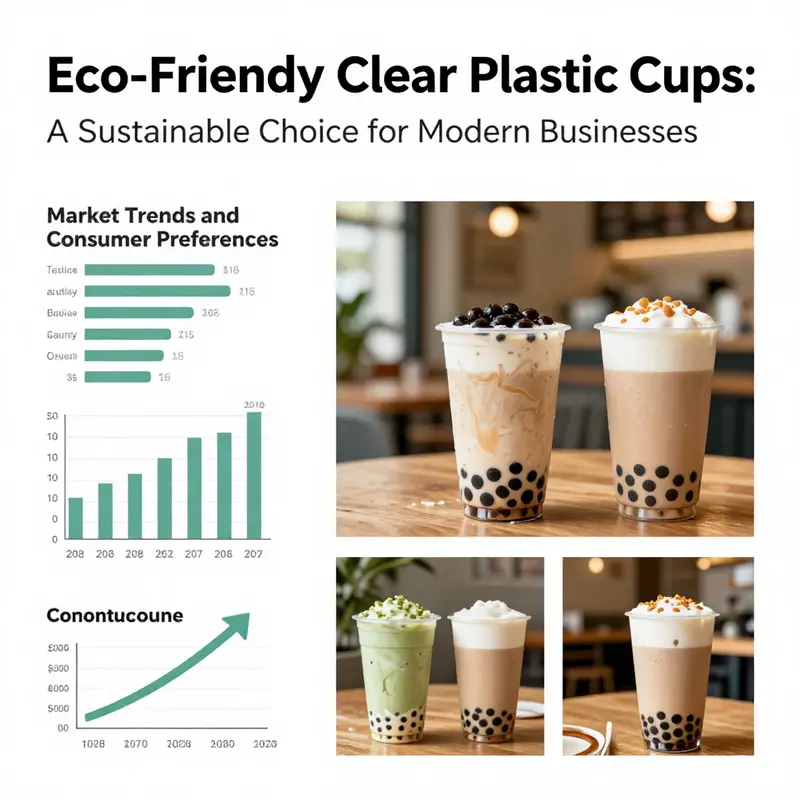
Clear plastic cups have long been a staple in the service industry, prized for their clarity, durability, and user-friendly design. Yet in a marketplace increasingly focused on waste reduction and credible sustainability narratives, these familiar vessels are being reimagined. The chapter that follows traces how eco-friendly clear plastic cups are evolving beyond mere disposables to become integral parts of responsible hospitality. The shift is not simply about substituting one material for another; it is a broader meditation on lifecycle thinking, on how cups look, perform, and end their days in a system that aims to minimize harm while preserving the simple pleasures of a cold beverage.
To understand the current trajectory, one must begin with materials. The most widely discussed options for eco-friendly clear cups sit at the intersection of plant-based biology and recycled feedstock. Polylactic acid, or PLA, derived from renewable resources such as cornstarch, offers a pathway to compostability under industrial conditions. The appeal is clear: it preserves the familiar look and feel of traditional clear plastic while introducing a more optimistic end-of-life scenario. At the same time, recycled PET, or rPET, provides an avenue to reuse existing plastics, reducing virgin resin demand and narrowing the cradle-to-grave footprint. These materials symbolize a spectrum of strategies within which producers and operators can choose paths aligned with their local waste infrastructure and corporate values. The commercially meaningful nuance is that compostable PLA cups, where industrial facilities exist to process them, can close the loop in zero-waste initiatives. But the practical reality remains that not all communities can manage compostable streams efficiently, which elevates the importance of clear labeling, consumer education, and proper waste separation. In other words, the environmental virtue of a cup is inseparable from the system that receives it after use.
Beyond material selection, design and performance are critical to the sustainability narrative. A prominent feature in modern eco-friendly clear cups is advanced insulation—often realized through double-wall construction that traps air or, in some designs, foam insulation. This arrangement not only helps keep hot beverages hot and cold beverages cold, but it also reduces external condensation, which translates into drier hands and a more comfortable drinking experience. The envelope of a cup thus becomes a practical promise: you can handle a steaming beverage without the sleeve and without extra waste from disposable napkins or coasters. The emphasis on clarity remains central—consumers expect the vibrant hue of a beverage to shine through, so manufacturers invest in materials and manufacturing processes that minimize haziness and support crack resistance. The result is a product that can perform in bustling environments—cafés, event venues, and take-out stations—without sacrificing the visual appeal that customers associate with quality service. In such contexts, the cup brandishes its environmental credentials not merely through the material choice but through how it performs across temperatures, time in transit, and the frequently chaotic rhythms of a busy service floor.
The story of production is also a story of scale and reliability. The global supply chain for disposable drinkware remains deeply anchored in regional clusters that offer automation, efficiency, and rapid turnaround. In particular, large manufacturing hubs in East Asia provide capabilities for high-volume thermoforming and injection molding, enabling tens of millions of units to roll off lines monthly. The practical implication for businesses is straightforward: scalability matters when sustainability goals require not just a handful of specialty items but continuous availability for menus that rotate seasonally or events that spike demand. Timelines that commonly fall within a few weeks—often 15 to 30 days—become a critical planning parameter for operators who must align procurement with promotions, catering schedules, and inventory turnover. The result is a virtuous circle: as the demand for greener cups grows, the supply chain responds with more efficient production, more consistent quality, and improved standardization across batches. This is especially important for brands that seek to customize cups with logos or branding elements. Custom printing, whether through flexography or silk screen, is now more accessible and can be integrated into the sourcing process without sacrificing environmental aims. The overarching message is that sustainability and customization can advance together rather than compete for scarce resources or time.
In practice, the market is balancing multiple realities. On one side are the aspirational claims of “no plastic” or “recyclable” packaging, which resonate across diverse consumer groups and usage occasions. These attributes are particularly resonant in foodservice and event settings, where the demand for responsible choices is high. On the other side lies the practical assessment of end-of-life pathways. The rise of compostable cups—compatible with industrial composting facilities—speaks to a future where dining establishments can participate in waste-minimization loops, especially in green cafes, zero-waste initiatives, and eco-conscious events. Yet, because not all municipalities collect compostables in the same way, clear guidance and standardized labeling become essential. Operators benefit from suppliers who can provide transparent information about the cup’s material composition, recommended disposal method, and any applicable certifications. In this light, the reliability of the supply chain hinges not only on speed and price but on the confidence that a product will perform as promised and actually reach its intended end-of-life channel. Certifications such as FDA compliance, ISO 9001, and EU standards, together with environmental safeguards like REACH and RoHS, emerge as the infrastructure that supports this confidence. When a cup carries these marks, it signals that safety has been considered alongside sustainability, a combination increasingly required by institutions and large operators who must uphold rigorous regulatory expectations while meeting environmental commitments.
The consumer experience remains at the heart of the transition. The aesthetic of a clear cup—its transparency, its gloss, its sense of purity—matters as much as its environmental posture. Yet consumers are discerning; they want evidence that the product aligns with stated values. No longer is “green” enough as a marketing banner. Instead, shoppers and operators alike seek a coherent story that connects the cup’s material choices to real-world outcomes: reduced plastic waste when facilities can process compostables; clarified recycling streams when cups are made from high-quality recycled resin; consistent performance across a full menu of beverages; and branding opportunities that do not compromise recyclability or compostability. In this atmosphere, the interplay of design, material science, and supply-chain integrity becomes a narrative arc that businesses must communicate clearly. For example, a venue that hosts a diverse crowd—coffee lovers, bubble tea aficionados, and craft cocktail fans—benefits from cups that maintain clarity under a range of temperatures, offer a comfortable grip, and are compatible with branding strategies that emphasize sustainability in both concept and practice. The message to customers is not simply that the cup is green; it is that the entire service model—from sourcing to disposal—embodies responsibility and transparency. As the industry moves toward more sophisticated materials and smarter waste management, the cup remains a visible, measurable indicator of a brand’s environmental intent.
Customization and branding advance hand in hand with sustainability. Suppliers now offer flexible printing options that accommodate logos, multi-color artwork, and even seasonal graphics on clear cups, all while preserving the performance characteristics that customers rely on. The ability to tailor cups to a venue’s identity strengthens the association between the brand and responsible practice. It is a reminder that sustainability does not require sacrificing aesthetic impact or consumer engagement. Rather, it invites brands to think of every touchpoint as an opportunity to reinforce a commitment to the environment. In this spirit, the industry has begun to recognize that the clarity of the cup can be used to tell a story—about renewable feedstocks, about recyclability, about expertly designed insulation that reduces waste from temperature-controlled beverages. Even as some brands explore eco-friendly printed logo options on paper cups for certain applications, the broader trend toward clear, compostable, or recyclable plastic options continues to drive innovation. For readers curious about how branding intersects with eco-friendly drinkware, one example of a related path can be found at the eco-friendly printed logo single-wall paper cup with lid. This point underscores a broader truth: the market is increasingly asking manufacturers to deliver not only materials that minimize harm but also design languages that communicate care and accountability through every feature of a cup.
The future of eco-friendly clear plastic cups is likely to be shaped by three intertwined trajectories. First, ongoing material innovation will seek to improve compostability and recyclability without sacrificing clarity or thermal performance. Researchers and manufacturers are exploring blends and new biopolymers that can deliver clear aesthetics while fitting into existing waste streams. Second, the procurement and supply-chain landscape will continue to prioritize traceability and certification. Operators will demand assurances about raw materials, manufacturing practices, and end-of-life handling, because the consequences of noncompliant supply chains are not merely economic; they can undermine public trust. Third, consumer education will gain a more formal place in the packaging ecosystem. Labels that clearly communicate disposal requirements, along with visible indicators of a cup’s environmental credentials, will become standard, reducing mismanaged waste and helping both households and businesses participate more effectively in sustainability programs. Taken together, these currents suggest a future where the choice of a clear cup is not merely a matter of preference. It becomes a purposeful act that aligns with broader environmental goals.
For readers seeking a deeper, more technical understanding of the broader sustainability landscape that informs these developments, consider the broader research literature that ties environmental performance to production methods, material choice, and policy frameworks. A detailed analysis can be found in the ScienceDirect article cited in the literature—a resource that delves into the evolving dynamics of environmental impact, policy constraints, and market forces shaping modern packaging choices. As the regulatory and consumer environment continues to evolve, the practice of choosing eco-friendly clear cups will increasingly involve an integrated assessment of materials, design, end-of-life options, and supply-chain reliability. In hospitality and events, where first impressions matter as much as lifecycle outcomes, the cup will remain a small but influential stage on which sustainability and style perform in tandem, a transparent symbol of how modern service can be both delightful and responsible.
From Fields to Freezer Lines: Navigating Production and Supply Chains for Eco-Friendly Clear Plastic Cups
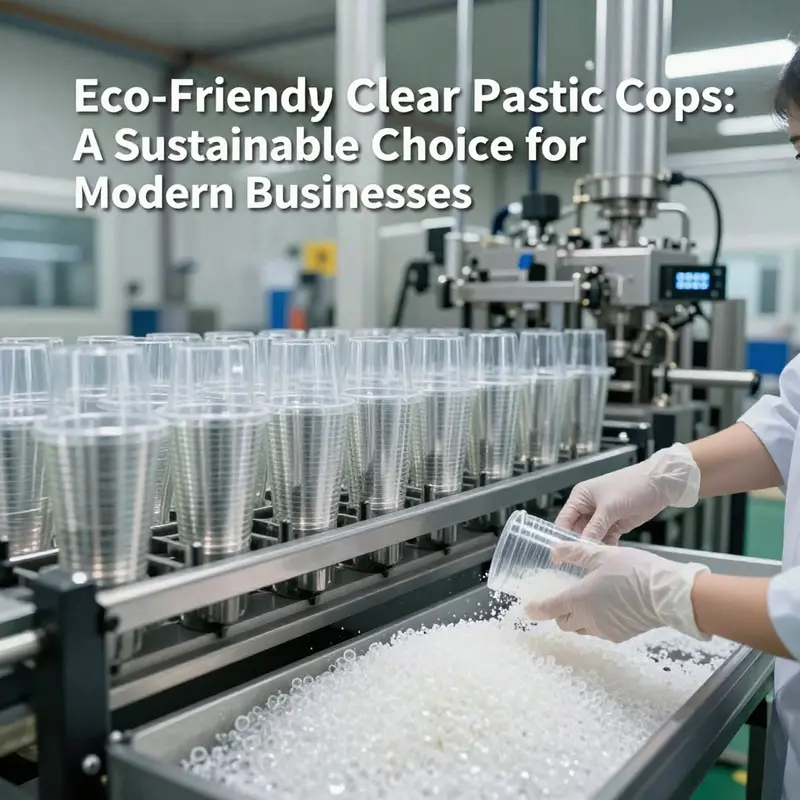
Clear plastic cups that are marketed as eco-friendly carry a promise that goes beyond what meets the eye. They are not merely transparent vessels for beverages; they are a statement about how modern packaging can align performance with responsibility. To understand why these cups matter, it helps to trace their journey from the raw materials that feed their chemistry to the fold of a consumer’s recycling bin. The path is not a straight line, and the choices made at each stage shape the true environmental footprint of the final product. In this chapter, we explore the production realities, the supply chain dynamics, and the larger system of standards, recycling, and policy that together determine whether an eco-friendly cup actually delivers on its green claims. It is a story of tradeoffs, innovations, and collaboration across actors who might never meet at the point of sale but are collectively responsible for what happens to a cup after it leaves a table top.
At the heart of eco-friendly clear cups is material choice. Polylactic acid, or PLA, has become a common bio-based polymer because it is derived from renewable resources such as corn or sugarcane rather than from petroleum. Yet the allure of renewable origins does not automatically translate to lower energy use or less water consumption in every case. PLA production still requires substantial energy input and water, and its end-of-life behavior is a defining difference from traditional plastics. PLA is compostable under industrial conditions, meaning it needs specialized facilities that maintain high temperatures and specific moisture levels to achieve effective degradation. When diverted to home composting or natural environments, the material may persist longer than expected. This nuance illustrates a broader truth: the environmental performance of bio-based polymers is inseparable from the systems that manage their waste. It is not enough to claim a plant-based origin; the entire lifecycle—from feedstock cultivation to end-of-life processing—must align with credible standards.
In many markets, another pathway has gained momentum: the use of recycled PET or other recycled-content plastics. Recycled materials can lower virgin resource demand, reduce fossil carbon emissions, and close a portion of material loops. However, relying on post-consumer PET also presents challenges. The downstream processing must ensure high clarity and crack resistance, which are essential for consumer perception of quality in a clear cup. The process of cleaning and reprocessing PET at scale requires rigorous contamination control and standardized sorting streams. Without consistent collection and effective separation, the advantages of recycled content can be eroded by impurities or inconsistent color and clarity. The material choice thus emerges as a balancing act: a balance between renewable sourcing, energy intensity, compostability capabilities, recycling realities, and the perceived performance of the cup when cold beverages, wine, or juice are poured into it.
These performance considerations interact closely with the realities of global supply chains. The supply of bio-based feedstocks is subject to weather, policy decisions, and agricultural markets. Corn and sugarcane crops respond to climate variability, fertilization regimes, and macro-level policy incentives. In recent years, even where automated production lines have modernized factories in key regions, the upstream risk remains: crop yields, price volatility, and policy shifts can all ripple through to manufacturing costs and output. The result is a delicate choreography where plant-based polymers and recycled materials must integrate with energy supply, water availability, and logistics networks. When one link in the chain tightens—say, a spike in agricultural prices or a disruption in packaging waste collection—the consequence can be felt downstream as longer lead times or higher unit costs. This is not merely a matter of procurement; it is a test of resilience for entire business models built around sustainable packaging.
Transparency across the supply chain becomes essential in this context. With consumers increasingly wary of greenwashing, brand owners and manufacturers face pressure to demonstrate credible sourcing, material certifications, and real-world waste outcomes. A robust traceability system helps ensure that the bio-based or recycled content in a cup is genuinely what it claims to be and that refineries or composting facilities meet recognized standards. Certifications such as OK Compost or other biobased standards act as signposts in a landscape that can otherwise be murky. They offer a mechanism to verify that a material has the intended end-of-life behavior and that the supply chain has not cross-contaminated streams with non-compostable additives or non-recyclable resins. Yet certifications alone do not guarantee sustainability. They must be complemented by operational realities—tight control over feedstock diversity, careful auditing of suppliers, and continual improvements in processing efficiency.
An emerging facet of supply chain strategy is the adoption of closed-loop or take-back programs. The idea is straightforward in principle: after use, the cups are collected through dedicated channels and then reprocessed into new cups or other products, reducing demand on virgin resources. In practice, building such loops requires an extensive network of collection points, clear consumer guidance, and efficient reverse logistics. It also hinges on the economics of collection and processing. If the cost of gathering used cups or the energy required to clean and reprocess them exceeds the value of the recovered material, the loop becomes financially tenuous. This is where cross-industry collaboration matters. Beverage service providers, waste management firms, and packaging manufacturers must share data, align incentives, and invest in infrastructure that makes collection both convenient for users and profitable for operators.
Another layer of complexity is the environmental impact assessment itself. A cup that is compostable in a facility might still carry a significant carbon footprint if the energy used in production comes from fossil sources, or if the cultivation of feedstock requires high water usage or land-use changes with biodiversity implications. Conversely, a cup containing a higher recycled content might reduce virgin material demand but require intensive energy for decontamination and sorting. Therefore, a holistic evaluation is needed—one that accounts for feedstock sourcing, processing energy, transportation emissions, and end-of-life handling. In practice, this means that companies must select suppliers who can provide transparent life-cycle data and who participate in credible third-party verifications. The goal is not to chase a single metric of “greenness” but to optimize the entire system so that the sum of all stages yields a practical reduction in environmental impact compared with conventional petroleum-derived cups.
The regional dimension of supply chains also informs production decisions. In some markets, industrial composting infrastructure is more developed, while in others, certified recycling streams may be the prevailing option. Local policy can influence these outcomes dramatically. Extended producer responsibility schemes, subsidies for certified compostable materials, or mandates that favor recycled content can steer investment toward facilities and technologies that align with strategic sustainability goals. Conversely, policy uncertainty or inconsistent regulations can deter investment, leaving manufacturers to navigate a patchwork of standards that complicates cross-border supply chains. The result is a landscape where the best choice in a given region may be different from the optimal choice elsewhere, underscoring the importance of flexible, modular production capabilities that can adapt to shifting conditions.
Inside the factory walls, process optimization becomes a driver of both cost efficiency and environmental performance. Automation and inline quality control help reduce waste and ensure product consistency. When lines are well-tuned, scrap rates drop, and the need for rework diminishes. In the case of bio-based polymers, precise extrusion temperatures, residence times, and moisture control matter greatly. Even small deviations can alter crystallinity, clarity, and break strength. Manufacturers are increasingly adopting real-time analytics to monitor feedstock blend ratios, moisture content, and cooling profiles. These tools enable faster responses to supply shocks and help maintain the performance that customers expect from a clear cup—the high clarity that makes beverages appealing and the rigidity that prevents collapse under typical handling. Yet technology alone cannot resolve deeper systemic issues. The broader challenge remains: aligning the economics of sustainable materials with the realities of feedstock markets and the logistics of global distribution.
Beyond the plant and the warehouse, consumer behavior and waste infrastructure shape outcomes in meaningful ways. The best materials and the cleanest production processes cannot deliver environmental benefits if the end-of-life system cannot collect and process used cups effectively. In the United Kingdom and other markets, for example, the gap between potential recycling capacity and actual recovery rates has been a persistent hurdle. Public participation remains a critical lever; if consumers do not sort properly or if collection points are not conveniently located, the chance of material diversion to proper channels declines. This reality has prompted a wave of innovations in labeling, packaging instructions, and consumer education aimed at making recycling and composting easier and more intuitive. It also reinforces the idea that the journey of an eco-friendly cup does not end at the point of purchase. It continues through consumer habits, municipal programs, and the cascading effects of policy that shape what can be recycled or composted within a given jurisdiction.
To navigate these intertwined challenges, many producers increasingly emphasize traceability and collaboration. They seek to establish a clear, auditable chain from feedstock farm to final product to recycling facility. This chain of custody helps guard against greenwashing and builds trust with customers who are scrutinizing every claim about sustainability. Collaboration spans suppliers of bio-based resins, recyclers, waste handlers, and even branding agencies that enable sustainable customization without compromising the clean, transparent look that defines these cups. Speaking to the design side, the ability to offer customization—such as logos or branding—within an eco-friendly framework demonstrates how sustainability can coexist with value creation. For instance, some suppliers are able to offer eco-friendly branding options on single-wall cups, combining environmental stewardship with brand communication. See eco-friendly printed-logo single-wall cup options for such capabilities. This points to a broader trend: packaging ecosystems that reward performance while encouraging responsible waste management and consumer participation.
The roadmap ahead is not a single path, but a portfolio of approaches tailored to regional realities and evolving technologies. Innovations in biocatalysis, advanced catalysts for controlled degradation, and improved barrier properties for clear polymers hold promise for enhancing both usability and end-of-life outcomes. Cross-industry partnerships can accelerate the scale needed to make circular models practical, while policy signals can create a predictable environment in which investment pays off. The ultimate objective is clear: to reduce the environmental footprint of clear plastic cups without sacrificing the clarity, rigidity, and low-cost characteristics that make them indispensable in foods, beverages, and events. This requires persistence, rigorous assessment, and a willingness to balance competing pressures—from feedstock supply and processing energy to consumer behavior and municipal waste systems.
As the lifecycle conversation matures, it becomes apparent that credibility rests on more than a single, centralized claim. It rests on a coherent system in which each stakeholder—farmers, resin producers, converters, packagers, distributors, and waste managers—plays a defined role with measurable accountability. A cup is not a standalone artifact; it is a node in an intricate network that links agriculture, chemistry, manufacturing, logistics, and civic responsibility. When that network functions with transparency and integrity, eco-friendly clear cups can genuinely reduce dependence on virgin fossil resources, lower lifecycle emissions, and support recycling or composting streams that keep materials circulating rather than piling up in landfills. The transition requires patience and discipline, but the payoff is a packaging economy that better respects planetary boundaries while still meeting the practical demands of modern foodservice and consumer culture.
External resource: For a broader, external perspective on material grades, performance, and industrial uses of eco-friendly cups in the UK, see Understanding Eco Friendly Plastic Cups UK: Material Grades, Performance, and Industrial Uses. https://www.sustainablepackaging.org.uk/eco-friendly-plastic-cups-uk-material-grades-performance
null
null
Final thoughts
Eco-friendly clear plastic cups offer an array of benefits that align with the evolving standards of sustainability and eco-consciousness. For bubble tea shops, restaurants, food trucks, and other beverage services, adopting these cups not only enhances brand reputation but also meets consumer demand for environmentally responsible options. As you navigate the various market trends, consumer preferences, production challenges, and regulatory landscapes, integrating these sustainable products into your offerings can significantly contribute to reducing your environmental footprint while still providing the quality and aesthetic demanded by today’s consumers.