
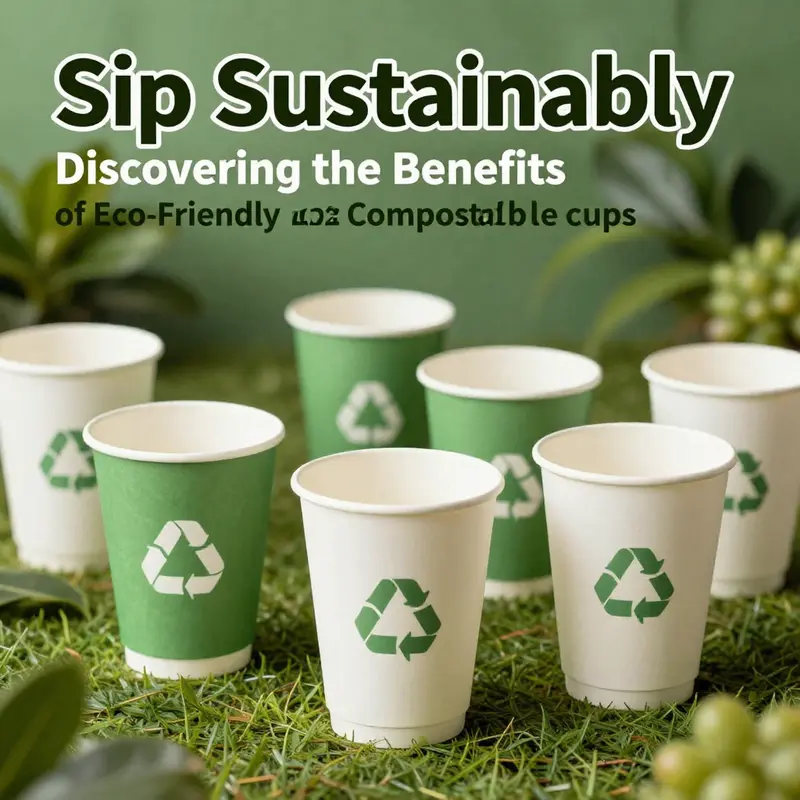
The increasing demand for environmentally friendly products has led to the rise of eco-friendly 12oz compostable paper cups as a go-to solution for beverage shops, restaurants, and catering services. Made from renewable materials and designed to minimize landfill waste, these cups are not just a trend but a necessary evolution in our consumption practices. This article will explore the sustainable features of these cups, delve into market trends and pricing strategies, examine the manufacturing processes involved, and consider their usage and overall environmental impact. Each chapter aims to equip beverage chains and event planners with the insights needed to make informed, eco-conscious choices that support their business objectives and sustainability commitments.
Brewing a Greener Tomorrow: The Sustainable Mechanics of 12oz Compostable Paper Cups
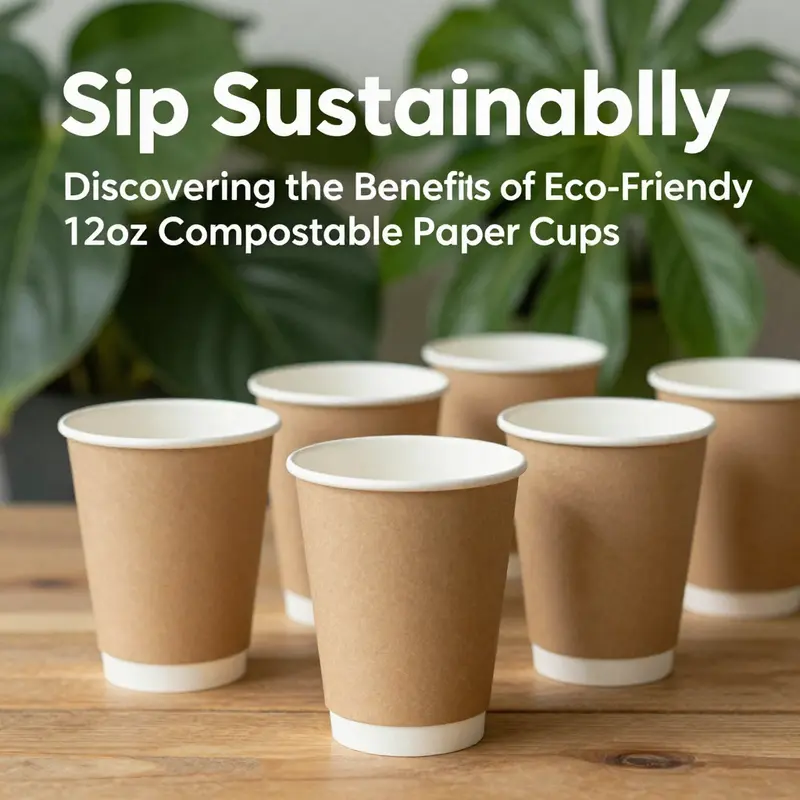
Every day, millions of people reach for a cup that seems simple and disposable, yet the choice behind that cup carries a thread through the broader story of our relationship with waste, materials, and energy. When a 12oz cup is designed with sustainability in mind, it becomes more than a vessel for coffee or tea; it becomes a link in a system that prioritizes renewable resources, responsible production, and end-of-life solutions. The shift from traditional plastics and non-recyclable papers to compostable cups reflects a candid acknowledgment that what powers a product should not outlive our ability to manage its aftermath. In this light, the sustainable features of eco-friendly 12oz compostable paper cups reveal a careful balance between performance, materials science, and the practical realities of how waste is managed in the real world. The end goal is not merely a greener footprint on a single product, but a design ethic that supports a circular economy, where the cup is part of a lifecycle that eventually returns to the soil, energy, and nutrients of the systems that sustain us.
At the heart of these cups lies material composition that intentionally leans on renewables rather than fossil fuels. They are typically crafted from responsibly sourced wood pulp, sometimes supplemented by other plant-based fibers like agricultural byproducts. This focus on renewable input reduces the demand for virgin fossil resources and helps lower the embodied energy tied to manufacturing. The outer shell and interior are often coated with plant-based materials such as polylactic acid, or PLA, which is derived from cornstarch or other starchy sources. This coating marks a meaningful departure from conventional, petroleum-based polyethylene (PE) coatings that have historically driven the plastic footprint of single-use cups. While PLA is not perfect in every scenario, it offers a pathway to biodegradability and compostability under the right conditions, aligning with facilities designed to handle such materials. The contrast is not simply about replaceable ingredients; it is about enabling a different end-of-life trajectory that can, under appropriate infrastructure, transform the cup into water, carbon dioxide, and biomass rather than persistent litter.
The design choices embedded in these cups further support sustainable outcomes without sacrificing user experience. A common feature is a double-wall construction that provides insulation, allowing a hot beverage to be held comfortably without excessive heat transfer to the fingers. This design reduces the need for thicker walls or additional materials while delivering a reliable thermal barrier. The result is a cup that remains light enough for easy handling and stackability, which, in turn, contributes to lower transportation energy and space requirements during distribution. Some cups incorporate subtle ripple textures or smooth exterior finishes that enhance grip and user comfort, while maintaining a lean material balance that suits mass production. The lightweight nature of these cups matters beyond comfort; it translates into smaller carbon footprints during shipping and fewer emissions in logistics, which compounds the environmental advantage as volumes scale.
An important thread in the sustainability narrative is the role of coatings. Plant-based PLA coatings are designed to be compatible with industrial composting streams, where high temperatures and controlled conditions help break the cup down into its constituent parts. This is distinct from PE-coated or non-coated cups that may complicate waste sorting or require more complex recycling streams. The shift toward PLA is not a universal green light for all facilities, but it does reflect a growing alignment between material choices and composting technologies. In facilities equipped to handle compostable products, the cups can break down in a matter of months, contributing to a faster rotation of materials back into the ecosystem. The caveat lies in the need for appropriate end-of-life infrastructure: industrial composting facilities that accept compostable paper products, clear labeling so consumers know how to dispose of them properly, and supply chains that minimize contamination. When these conditions are met, the environmental benefits become more tangible and measurable, reinforcing the idea that sustainability is a system attribute rather than a single product feature.
From a lifecycle perspective, the use of renewable materials and the potential for compostability collectively reduce the long-term environmental burden compared with conventional single-use plastics. Importantly, the overall footprint depends on a chain of decisions from sourcing and farming practices to manufacturing energy intensity and the efficiency of end-of-life processing. Responsible sourcing contributes to lower deforestation pressures and promotes forest stewardship, while energy-efficient production processes reduce greenhouse gas emissions and air pollutants. In turn, this encourages suppliers to pursue cleaner energy mixes and innovative manufacturing techniques that further trim the cradle-to-grave impact. The elegance of these cups lies in their potential to harmonize performance with responsibility: a cup that keeps beverages hot and hands comfortable, yet also aligns with the pace and practices of a circular economy.
Customization offers a complementary dimension to sustainability by enabling brands to communicate a commitment to the environment without compromising the product’s eco-friendly core. Many manufacturers provide options to add branding, messaging, and design features that emphasize sustainability while preserving the cup’s compostable structure. Thoughtful customization can promote consumer awareness around proper disposal, the importance of industrial composting, and the broader story of responsible consumption. When designed with care, the branding itself becomes an educational touchpoint, guiding users toward the right waste streams and reinforcing a shared responsibility for the environment. The ability to customize without weakening the ecological integrity of the cup showcases how sustainability and market needs can converge rather than compete.
Beyond materials and design, the broader sustainability calculus includes supply chain considerations, manufacturing energy sources, and the potential for reduced downstream waste through efficient packaging and logistics. Because compostable cups are often lighter than their plastic counterparts and designed for stackable bulk handling, they can contribute to lower fuel consumption during distribution. This effect multiplies when you consider the possibility of consolidating shipments and optimizing route planning, which can yield measurable reductions in carbon emissions over large scales of operation. In addition, many producers emphasize responsible sourcing, working with suppliers who adhere to sustainable forestry practices and transparent supply chains. The net impact rests on a mosaic of improvements across the lifecycle, reinforcing the idea that no single feature is a silver bullet, but a constellation of choices that, together, steer toward a more sustainable routine.
For buyers considering bulk procurement, the economic and environmental math can still be compelling. While compostable cups may carry different price points than conventional cups, the cost structure often reflects the value of renewable inputs, reduced plastic contamination in recycling streams, and the potential for easier waste management in facilities designed for compostable materials. When buyers plan for end-of-life processing and partner with venues or waste operators that prioritize composting, the overall lifecycle costs can tilt in favor of sustainability, especially as consumer demand for responsible practices continues to rise. Procurement decisions that balance price with the availability of compatible waste streams can help ensure that the environmental advantages translate into real-world outcomes rather than theoretical benefits. The conversation around value, then, extends beyond sticker price to encompass waste handling, facility readiness, and the empowerment of consumers to participate meaningfully in composting programs.
It is worth noting that the pathway to optimal environmental performance is not uniform everywhere. Industrial composting infrastructure varies by region, and not all facilities accept every type of compostable cup material. Labels and certifications can play a critical role in guiding waste handlers and consumers. Clear, credible certification signals help ensure that a cup will actually break down in the intended setting, rather than lingering in landfills or contaminating recycling streams. As a result, the most sustainable choice emerges when product design, facility capabilities, and consumer behavior are aligned in a shared commitment to responsible waste management. In this sense, the 12oz compostable cup becomes a tool for systemic improvement rather than a standalone solution. The real test is in how well it fits within the local waste ecosystem and how effectively brands and venues communicate disposal expectations to customers.
For readers seeking a practical path to sourcing, many suppliers offer bulk options with customizable features that preserve sustainability. The emphasis remains on materials that are renewable, coatings that favor composting pathways, and packaging that minimizes additional environmental load. A thoughtful approach to procurement considers not only the cup’s performance in a hot beverage service but also how it integrates with the region’s composting capabilities, whether that means institutional facilities or municipal programs designed to accept compostable paper products. When a business commits to a coherent waste strategy—one that includes staff training, clear labeling, and consumer education—the cup ceases to be a disposable artifact and instead becomes a visible artifact of responsible practice. In this way, the cup supports a broader cultural shift toward sustainability, encouraging people to think about what happens after the last sip and to participate in systems that transform waste into new beginnings.
As with any practical product, the conversation around eco-friendly 12oz compostable paper cups benefits from real-world examples and accessible options. Bulk buyers often seek straightforward pathways to procurement that do not sacrifice environmental aims. For instance, wholesale take-away cups with lids, designed for hot beverages, illustrate how a cohesive package can deliver reliability in service while maintaining compostable integrity. Such options may be presented in catalogs or supplier portals with detailed material disclosures, production certifications, and disposal guidelines that help cafes, restaurants, and events align their operations with composting workflows. The interplay between design, materials, and end-of-life infrastructure becomes a practical framework that businesses can apply to their daily decisions and brand storytelling.
In practice, consumers wield influence through their disposal choices and their expectations about sustainability. When a cup clearly communicates its compostable credentials and is supported by accessible disposal options, customers are more likely to participate in the intended end-of-life path. This behavioral component, often overlooked, is essential to translating product innovation into measurable environmental benefit. The story of the eco-friendly 12oz compostable paper cup, therefore, is not only about the materials and the engineering inside the walls of a factory; it is about whether the user understands and participates in the system that makes composting possible. Clear labeling, education, and consistent messaging across venues—coffee shops, airports, conferences, and events—create a shared language that empowers decisions at the moment of disposal. In that sense, the cup becomes a conduit for environmental stewardship, rather than a mere plastic-like substitute.
From a strategic perspective, practitioners in hospitality and retail can pursue a set of guiding principles when evaluating compostable cup options. First, prioritize renewables in the fiber input and favor plant-based coatings that are compatible with industrial composting streams. Second, assess the design for heat management and user comfort while avoiding unnecessary material heft. Third, verify certifications and ensure end-of-life infrastructure is available to accept compostable products in the local waste stream. Fourth, consider the branding opportunity as a channel for environmental education, turning a disposable item into a conversation starter about sustainability. Fifth, engage waste management partners early in the procurement process to understand facility capabilities and ensure that disposal instructions align with local programs. When these principles are applied coherently, the result is not a single improved product, but a more resilient practice—a way of doing business that respects material choices, worker well-being, and the communities that manage waste after the last drop is sipped.
For readers who want a concrete path to exploring options in bulk, there are practical sources to consult that balance sustainability with scalability. A supplier directory that highlights disposable cups with compostable coatings and clear disposal guidance can simplify decision making. Additionally, a sample order that tests comfort, performance, and compostability in a real-service environment can provide invaluable insights into how the cup behaves under different beverage temperatures, pouring rates, and handling conditions. Importantly, the experience should include feedback from waste operators to confirm that the chosen materials are indeed accepted in the local composting stream and do not complicate the separation of organics and recyclables.
In sum, the sustainable features of eco-friendly 12oz compostable paper cups reflect a deliberate synthesis of material science, thoughtful design, and practical waste management. They aim to deliver hot-beverage performance and consumer comfort while steering toward a circular lifecycle in which resources are used responsibly, waste is minimized, and end-of-life pathways are clear and actionable. This synthesis is not merely technical; it is cultural. It invites brands, venue operators, and everyday consumers to participate in a more intentional approach to consumption—one in which the cup a person chooses is a symbol of a broader commitment to sustainability that extends beyond the moment of use and into the future of how we manage materials in a changing world. For those who want to explore practical procurement paths that align with these principles, consider a wholesale option that emphasizes both quantity and responsible disposal, such as wholesale take-away cups with lids designed for hot beverages. This approach keeps the action close to where people actually consume, while reinforcing the critical message that disposability and responsibility can coexist when the system is designed with care.
Internal resource note: for readers exploring bulk procurement and branding in a sustainability-focused package, a relevant supplier page offers a practical example of how wholesale cups with lids can be integrated into service workflows while maintaining compostable integrity. Wholesale take-away 8oz–12oz paper cups with lids.
External resource reference: for a detailed industry listing and product specifications in the broader market, see the external reference at Alibaba that outlines eco-friendly compostable cup options. https://www.alibaba.com/product-detail/Eco-Friendly-Disposable-12oz-Paper-Coffee-Cup-Disposable_1600483593725.html
Brewing Change: Market Trends and Pricing Dynamics of 12oz Compostable Cups
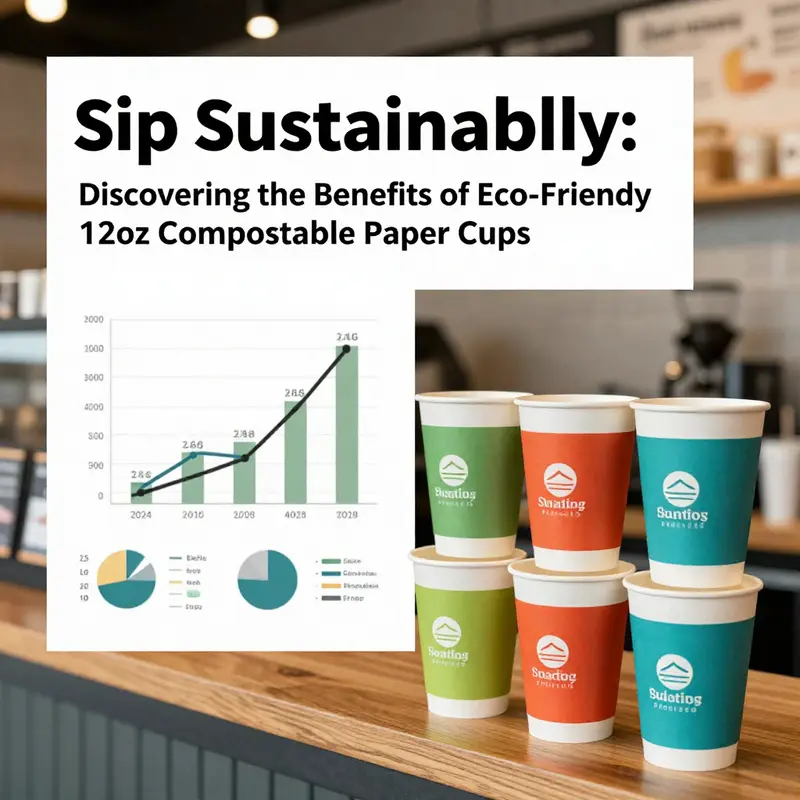
Every coffee cup is more than a vessel; it is a signal about what a business values and how it envisions its environmental footprint. The market for eco-friendly 12oz compostable paper cups has matured from a niche alternative into a mainstream option for cafes, event organizers, and food-service operations that want to align their beverage service with greener practices. This shift is not driven by a single factor but by a convergence of consumer expectations, policy developments, and the steady ascent of sustainable packaging as a standard operating practice. The cups themselves are typically crafted from renewable fibers such as kraft paper and are coated with a plant-based PLA (polylactic acid) layer rather than traditional petroleum-based polymers. They are designed to be compostable in industrial facilities, and many come with a double-wall construction that provides insulation and a more comfortable grip for hot drinks. Taken together, these features are not merely technical details; they set the stage for how the market perceives value, how pricing is formed, and how the ecosystem of suppliers, distributors, and end users interacts.
From a macro perspective, the global compostable packaging market is forecast to expand meaningfully over the next several years, with single-serve coffee cups among the fastest-growing segments. Regulators in various regions have begun signaling stricter packaging requirements and diversion targets, pushing brands to seek solutions that can satisfy waste-management infrastructure without compromising user experience. In practical terms, this means a growing demand for cups that are both effective in hot-beverage service and compatible with certified composting streams. For operators, the appeal lies in balancing performance and sustainability while keeping the total cost of ownership reasonable. The reality is that pricing mirrors this balancing act. The base material cost for the pulp and the PLA coating, the efficiency of the converting process, and the level of insulation provided by double-wall designs all contribute to the final unit price. Yet volume remains the most powerful determinant of cost efficiency, and the market has responded with competitive tiering that rewards bulk purchasing without sacrificing customization potential.
In this context, the price spectrum for 12oz compostable cups becomes a practical window into market dynamics. At wholesale levels, the most competitive configurations—those using standard PLA-coated ripple or double-wall designs—can land around the neighborhood of roughly 0.18 USD per cup for large-volume orders such as 50,000 pieces or more. This price point reflects not only the raw materials and coating but also the efficiencies baked into high-capacity production runs. It is important to note that this baseline can vary with the coating type; some suppliers offer options with different PLA formulations or ribbed textures that influence manufacturing yield and, in turn, unit costs. For smaller quantities or when customization is required—whether it is brand-printing, color variation, or a special sleeve design—the unit price can rise to roughly 0.30–0.40 USD. These range figures are not mere theoretical benchmarks; they are frequently cited by distributors and buyers navigating the procurement process.
Several factors can tilt the total price beyond the base per-unit cost. Lids, for instance, are a common add-on in the hot-drink segment and can elevate the overall cost per cup depending on whether the lids are plain or printed, flat or dome-shaped, or designed to fit a specific cup diameter. Sleeves, used for added insulation and grip comfort, contribute to the landed price through material costs and packaging considerations. The chosen coating—PLA versus a more traditional polyethylene alternative—also affects pricing because some PLA formulations may command tighter processing controls or different curing cycles in the converting plants. Beyond a per-unit basis, shipping costs and logistics play a decisive role, especially for buyers who are not buying in the largest volumes or who require rapid replenishment. Freight terms, lead times, and the proximity of suppliers can add a meaningful premium or savings depending on the geographic footprint of the buyer and the supplier network.
A crucial implication of these dynamics is the way buyers approach procurement strategy. For large-volume buyers seeking consistency and predictable budgeting, engaging with a supplier that can guarantee MOQs in the 50,000-piece range or higher often yields the most favorable unit economics. Conversely, smaller cafes or event organizers who need flexibility may prioritize customization capabilities, branding opportunities, and reliable delivery windows, even if it means accepting a higher per-unit price. The market’s structure is such that both paths are viable; they simply operate at different ends of the pricing spectrum. As volumes increase, the incremental cost of adding more cups tends to fall, thanks to economies of scale and more efficient production planning. This is not an abstract truth; it is reflected in the practical pricing narratives buyers encounter when negotiating with suppliers who offer bulk programs and standardized PLA-coated variants.
Intimately linked to pricing is the topic of branding and product presentation. The rise of customization—logos, color schemes, and even texture—has become a meaningful differentiator for venues aiming to reinforce their environmental commitments. The ripple textures and double-wall insulation are not cosmetic features alone; they influence consumer perception of value and can justify pricing variants that accommodate branding needs. For retailers and food-service operators, the ability to match packaging aesthetics with in-house design language strengthens brand coherence and helps justify the often-premium price point associated with sustainable alternatives. This alignment between form, function, and affordability is central to the ongoing acceptance of compostable cups in a market historically dominated by plastics and conventional paper options.
From a supply-chain perspective, the sourcing and production of these cups are increasingly integrated with broader sustainability commitments. Materials such as recycled content or alternative plant-based fibers are entering discussions around next-generation packaging, offering potential pathways to further cost efficiencies and performance improvements. The drive toward more efficient coatings and faster conversion lines contributes to a lower cost per unit at scale, even as some input costs may fluctuate due to feedstock markets. In practice, the market is witnessing a continuous push to optimize both raw-material selection and manufacturing throughput. The result is a pricing landscape that, while still sensitive to macroeconomic shifts, shows a tendency toward stabilization as suppliers expand capacity and streamline operations. In some regions, this stabilization is accompanied by a gradual narrowing of the premium charged for compostable options, reflecting greater acceptance and more mature logistics networks.
For buyers who need real-time pricing intelligence, digital marketplaces and supplier portals increasingly provide visibility into current quotes and MOQs. The ability to compare options—PLA-coated versus alternative coatings, single-wall versus double-wall, and different sleeve configurations—helps organizations calibrate their packaging choices to strategic goals. In many cases, practitioners discover that the decision is not simply about the lowest price but about long-term value: reliability of supply, compatibility with waste-management infrastructure, and alignment with corporate sustainability targets. A practical takeaway is that early-stage procurement should consider not only unit cost but also the total cost of ownership, including branding opportunities, disposal considerations, and potential savings from higher guest satisfaction and repeat business.
For readers who want a concrete sense of procurement options, consider a wholesale take-away program that offers a range of 8oz–12oz disposable coffee cups with lids. This kind of catalog entry reflects the industry’s demand for versatility in a compact format. See the detailed product page, which presents a typical configuration: a 12oz cup with an optional lid, offered at scale and designed to support hot-beverage service in a sustainable packaging frame. The page provides a practical reference point for understanding how pricing scales with order size and how additional features influence the final quote. You can explore this option here: Wholesale take-away 8oz-12oz disposable coffee paper cup with lids.
The supplier landscape for these cups is broad, spanning regional manufacturers to global distributors that aggregate orders from multiple mills and converting plants. Real-time pricing and MOQs are common features on major B2B platforms, where buyers can request quotes, review coating types, and compare delivery timelines. While the digital marketplace accelerates access, it also introduces pricing variability that buyers must manage through careful specification. The ultimate goal is to strike a procurement balance: secure a stable supply at a predictable price while retaining the flexibility to adapt to demand fluctuations, seasonal surges, and shifts in waste-management practices.
Beyond the immediate economics, the environmental narrative surrounding compostable cups continues to strengthen. Communities and facilities are increasingly oriented toward diverting beverage waste from landfills, and the acceptance criteria for industrial composting facilities are gradually clarified and standardized. In turn, this reduces the risk of mis-sorted waste and increases the likelihood that cups will actually contribute to closed-loop waste streams. The broader context—where packaging choices are part of a company’s climate strategy and consumer trust story—amplifies the premium associated with sustainable cups and supports a more favorable pricing dynamic for suppliers who can demonstrate credible environmental credentials. In this light, a well-managed program can transform packaging cost into a strategic investment, yielding reputational benefits and potential market advantages that extend beyond the cost line.
From an information design standpoint, buyers should remain mindful of the trade-offs embedded in coating choices. A plant-based PLA coating offers biodegradability advantages but can involve trade-offs related to composting facility compatibility and composting timelines. Some facilities may require specific industrial conditions to achieve optimal breakdown, while others may be able to receive certain PLA-coated products with broader acceptance. Understanding the end-of-life pathway is as important as understanding the initial cost. In markets where composting infrastructure is robust, the premium for PLA-coated cups may be relatively modest, reflecting the efficiency of the supply chain and the high demand for sustainable packaging. In regions where composting capacity is uneven or under development, buyers may encounter more price tension as suppliers weigh the risk of misaligned waste streams against the desire to meet rising demand for eco-friendly options. This is not merely a regional phenomenon; it is a transnational consideration that shapes how manufacturers price and allocate capacity across different geographies.
To the reader navigating this landscape, the essential takeaway is that pricing is becoming more nuanced, and the value proposition is expanding beyond the cup itself. Buyers should evaluate not only the per-unit price but also the consistency of supply, the clarity of composting certifications, and the alignment of packaging with waste-management realities. This holistic view helps ensure that a sustainability initiative remains credible from a consumer-facing perspective and economically sustainable in practice. The trend toward more competitive pricing in the near term is plausible, given ongoing investments in material science, process optimization, and scale-driven efficiency. Yet the pace and magnitude of price adjustments will continue to be moderated by feedstock costs, energy prices, logistics reliability, and the evolving regulatory environment geared toward circular economy principles.
External resource for further reading on supplier pricing and availability: https://www.alibaba.com/product-detail/Eco-Friendly-Disposable-12oz-Compostable-Paper-Coffee_1600797177577.html?spm=a2700.190735.0.0.6a5d4f3bWZVwJv
For ongoing updates on procurement options and latest patterns in consumer demand, readers may also explore adjacent packaging categories and supplier showcases on the same platform that hosts a wide array of compostable cups, lids, and sleeves. While you evaluate options, keep an eye on the broader shift toward truly home- versus industrial-compostable solutions, as this distinction will increasingly influence customer education, waste-stream partnerships, and, ultimately, price realization over the long run. The market is not just about reducing harm; it is about building a resilient, traceable, and environmentally responsible packaging system that can scale with demand while maintaining trusted performance in fast-paced service environments.
Brewing a Greener Cup: Inside the Manufacturing Journey of 12oz Compostable Paper Cups
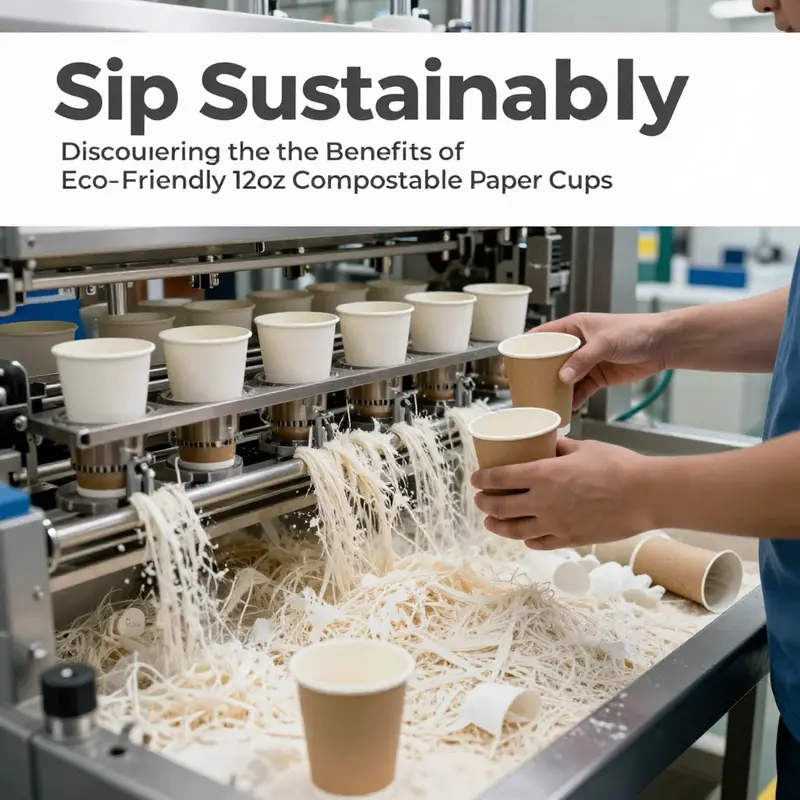
The journey of a 12oz compostable paper cup begins not with a single ingredient but with a careful choreography of renewables, precision engineering, and a commitment to waste reduction that extends from forest to facility to landfill-free end-of-life. In the bustling world of hot beverages, these cups offer a practical bridge between consumer convenience and environmental responsibility. They are designed to serve the most common cafe order—coffee or tea—while minimizing the environmental footprint associated with traditional single-use cups. The core idea is straightforward: replace petroleum-based linings with plant-based alternatives, favor renewable fibers over virgin plastics, and craft a product that can return to the cycle of nature through industrial composting. Yet the surface simplicity of a disposable cup belies a cascade of decisions at the material, process, and systems levels that determine whether the cup actually contributes to a cleaner cycle or merely delays waste. Reading the manufacture of such a cup as a cohesive story reveals how every stage—from raw pulp to finished cup—embodies a policy of restraint and responsibility as much as a design for usability and branding.
At the heart of the cup’s sustainability is its primary material: the paperboard structure. Mill-grade paperboard used for these cups is selected for its strength, stiffness, and heat tolerance. It is often sourced with recycled content, which helps close the loop by diverting post-consumer or post-industrial waste into the production stream. The fibers in this board are engineered to withstand the rigors of hot beverages for several minutes without sagging or leaking. The emphasis on fiber quality translates into a thinner, more uniform sheet, allowing designers to minimize material use without sacrificing performance. This, in turn, reduces the energy footprint of each sheet produced and lowers transport weight—every gram saved compounds when scaled to tens of thousands of cups. The choice of fiber also informs the cup’s ultimate disposal path. In this context, the presence of recycled content is a signal that the product participates in a broader circular economy, provided the downstream composting system can accommodate it.
A defining feature that sets these cups apart from conventional paper cups is the coating. Traditional paper cups rely on a polyethylene or similar petroleum-based lining to repel liquid and resist heat. That lining complicates compostability, often rendering the cups non-compostable in standard facilities and leaving a plastics residue in the compost stream. The plant-based alternative favored in eco-friendly designs is a coating derived from polylactic acid, or PLA. PLA coatings are derived from renewable resources, typically cornstarch or other starches, and they can be fully composted in industrial facilities that reach the temperature and microbial conditions required to break down such polymers. PLA-coated cups thus align with industrial composting streams that operate at 50 to 70 degrees Celsius for several weeks, a setting that accelerates the breakdown of the coating while the paper fibers break down in tandem. This coating choice is not merely a technical substitution; it is an intentional shift in the material system toward a more sustainable lifecycle. It also frames the packaging decision with a caveat: industrial composting is not universal, and some municipal programs or backyard setups may not be equipped to process PLA-coated cups. The result is a product that shines in the right infrastructure while still demanding awareness of local composting capabilities.
In addition to the paperboard and PLA, many eco-friendly cup designs implement a double-wall construction. This feature layers a second wall around the inner cup, creating a vacuum-like air gap that provides superior thermal insulation. The benefit is twofold: it keeps hot beverages from scalding the user’s fingers while reducing the need for a separate sleeve or insulation accessory. For venues that serve busy crowds, this design can simplify service and improve the customer experience by maintaining heat and minimizing the risk of spills. The double-wall approach, when executed with precision, also supports a slimmer overall profile, which can lower material use per cup without compromising strength. The presence of an inner and outer wall, each coated with PLA, requires careful alignment and bonding to prevent delamination or leakage. Quality control at this stage focuses on wall thickness consistency, seam integrity, and the effectiveness of the coating in resisting seepage under high-temperature conditions.
The manufacturing sequence itself unfolds like a finely tuned assembly line. It begins with cutting, where high-speed die-cutting machines carve the blank shapes from large sheets of coated paperboard. The tolerances at this stage are tight; even a small deviation can create misalignment during forming and affect the seal between the cup and its coating. After cutting, the blanks are formed into cylindrical shapes around a mold using heat and pressure. This forming step is crucial because it defines the cup’s structural integrity and its ability to hold liquids without deformation under the stress of hot beverages. Any inconsistencies in the forming process can lead to surface irregularities that compromise barrier performance or create weak points that initiate leaks.
Coating follows forming, and here the application method matters as much as the material itself. PLA can be applied via extrusion or spray coating, a choice that influences coating uniformity, thickness control, and downstream adhesion to the paperboard. The goal is a uniform, leak-proof barrier that doesn’t crack or peel under thermal stress. The coating must adhere well to the surface and maintain its integrity through the cup’s lifetime, from the moment hot liquid is poured to the moment the cup is placed in an industrial composting stream for breakdown. The coating process also has to account for potential migration of coating components into the beverage; adherence to food-contact safety standards, such as those endorsed by regulatory bodies like the FDA or LFGB, becomes a central concern during this phase.
For cups designed to slow heat transfer more effectively, a double-wall assembly adds another layer of complexity. An additional layer of paperstock is formed into a second wall, with an air gap that functions as insulation. The interconnection between inner and outer walls must be precise to prevent heat from transferring to the outer surface too quickly and to ensure the cup remains comfortable to hold even when the beverage is steaming. The assembly line then guides the two-wall structure through bonding and curing steps, with final checks that confirm the seam strength and wall alignment. A well-executed double-wall cup balances grip, insulation, and recyclability, while still remaining compatible with standard cup dispensers and lids used by cafes and event organizers.
Quality control, a non-negotiable part of scalable production, moves from the bench to the line with a suite of tests. Thickness measurements ensure the board’s uniformity, a critical factor in both heat resistance and barrier performance. Seal integrity tests simulate the stress of pouring hot liquids, revealing any weaknesses where the coating or the bonding between layers may fail. Temperature resistance tests confirm that the cup can withstand typical beverage temperatures without collapsing or deforming. The balance of these checks is essential: too strict a tolerance can slow production and raise costs, while too lenient a standard can compromise safety or performance. After passing inspection, the cups are cooled, stacked, and packaged for distribution. The packaging itself is typically designed to minimize waste and protect the cups from damage during transit, with materials that are—like the cups themselves—intended to be compatible with composting streams or recycling where appropriate.
Sourcing and customization form another layer of complexity and opportunity. In major production hubs around coastal ports, many manufacturers operate with in-house printing and packaging lines. This capability enables branding and customization while preserving efficiency and scale. The ability to print logos, slogans, or color schemes directly onto the cup or its sleeve reduces the need for secondary packaging and supports brand consistency across large volumes. Importantly, suppliers that claim readiness for food contact adhere to international safety standards, such as the FDA for U.S. markets and LFGB for German-speaking regions, ensuring that materials and coatings are appropriate for direct contact with hot beverages. This assurance is critical for cafes, restaurants, and event organizers seeking to align with sustainability claims without compromising safety or taste.
For businesses seeking bulk procurement, sourcing platforms provide access to a wide range of options. One practical route is to collaborate with verified suppliers that can commit to lead times typically ranging from about 15 to 25 days after sample approval. This cadence matters for seasonal promotions, pop-up events, or large conferences where demand can surge suddenly. The economics of scaling come into play here: wholesale pricing often features a range depending on coating type (PLA versus traditional PE), the degree of customization, and the total order size. A bulk program might begin with tens of thousands of cups and scale to hundreds of thousands or millions over time, with costs per cup decreasing as volume increases. The decision to choose PLA-coated cups over PE-coated variants is not merely a price calculation. It reflects a broader environmental choice that supports composting infrastructure and aligns with consumer expectations for products that reduce plastics in the waste stream.
The value proposition for these cups is most vividly seen in the everyday choices of cafes and event organizers who want to communicate a green ethos without sacrificing performance. A hot beverage demands a cup that can hold its shape under heat, resist leaking, and provide comfortable handling. The double-wall design answers the insulation need, while the PLA coating ensures that the cup can be composted rather than piling up in landfills. The ability to customize adds another dimension, helping a brand tell a sustainability story with tangible, usable packaging. The economics matter too. When wholesale pricing dips into the sub-cent per cup range for very large orders, the calculator becomes straightforward: a small but meaningful reduction in packaging waste can create a measurable difference in a business’s overall environmental footprint and customer perception. The real leverage comes when two conditions converge: a reliable composting stream that can process the material, and a consumer base that understands and supports the end-of-life path of the cup.
Behind the science and the numbers lies a broader system—an ecosystem of suppliers, mills, coatings producers, and composting facilities—that makes the green cup possible at scale. The proximity of manufacturing clusters to major ports is not incidental; it reduces transport emissions, shortens lead times, and enhances the ability to coordinate logistics with plant-based coatings and printing operations. This proximity also means that innovations in barrier coatings,board formulations, and adhesive technologies can be tested and implemented rapidly, allowing for iterative improvements without disrupting supply. In practice, the best-performing cups emerge from suppliers who can harmonize material science with robust process controls, a culture of safety, and a commitment to transparent environmental reporting. In an industry still evolving toward universal compostability, credibility comes from standard-compliant materials, tested interactions between coating and board, and honest communication about the cups’ end-of-life options.
For readers who want to see how the pieces fit into a larger procurement picture, consider the practical path from specification to plate. A cafe or institution begins with a sustainability brief: a target for compostable cup usage, a set of technical requirements for heat resistance and leak proof performance, and a preference for plant-based coatings. The supplier then translates that brief into a bill of materials, a set of process parameters, and a production schedule that aligns with the venue’s event calendar. The supplier’s ability to offer branding and packaging options minimizes the need for additional waste streams, while the availability of wholesale pricing and lead times helps planners forecast demand accurately. In this way, the cup becomes not just a disposable object but a tool of brand storytelling—and a tangible element of a broader commitment to sustainable operations.
As with any material designed to bridge convenience and responsibility, the ultimate test lies in end-of-life behavior. If the industrial composting infrastructure is available and accessible, the PLA-coated cup can be broken down into organic matter that supports soil health rather than accumulating as plastic fragments. But if the infrastructure is absent or inconsistent, the cup risks falling into a misaligned waste stream. This reality underscores the importance of consumer education and municipal investment in composting facilities, as well as the responsibility of brands and suppliers to be explicit about the cups’ disposal pathways. The modern coffee-to-go culture can be compatible with a circular economy when each link in the chain—from fiber selection, through polymer coating, to composting acceptance—is designed with end-of-life in mind.
For those who want to explore bulk options or speak to a supplier about customization and volume pricing, documentation from reputable sources indicates real-world conditions such as lead times and MOQs. As a practical note, wholesale options often start at tens of thousands of cups, with cost-per-unit decreasing as volumes rise. The difference between coatings—PLA versus traditional plastic liners—often appears in the pricing structure, shaping the decision not solely on cost but on how customers will dispose of the cups and how the cups will perform under typical serving conditions. The practical takeaway is that the move toward compostable cups is not a single purchase decision but a strategic shift in packaging philosophy, aligned with a broader ambition to reduce single-use plastics and to systematize greener choices across the hospitality and events sectors.
In sum, the manufacturing journey from renewable fibers to a compostable, heat-safe cup is an integrated process that reflects careful material selection, precise forming and coating, robust quality controls, and a clear eye toward end-of-life outcomes. It is a story of engineering that respects both consumer needs and ecological limits. The goal is not to create a perfect product in a vacuum but to contribute to a practical, scalable solution that cafes, restaurants, and event organizers can adopt widely. When done well, these cups offer a reliable, branded experience that keeps beverages hot, hands comfortable, and waste streams on track toward composting rather than accumulation. They are small, everyday artifacts that reveal a larger commitment to sustainable design and responsible consumption, one cup at a time. For those exploring bulk procurement, the pathway to a sustainable program can begin with a purchase decision that balances performance, cost, and end-of-life considerations, guided by supplier capabilities and clear disclosures about compostability in targeted facilities. And if you want to see a concrete example of the kind of wholesale options that can support large-scale adoption, you can explore a supplier page that specializes in bulk coffee cups with lids, which can streamline branding and fulfillment for high-volume customers: Wholesale take-away 8oz-12oz disposable coffee paper cup with lids. For an external reference that captures manufacturing dynamics and pricing implications in bulk, a widely cited supplier guide provides context on how these cups are produced and priced at scale: https://www.alibaba.com/product-detail/Bulk-12-oz-Paper-Cups-Supplier-Guide_1600734988875.html.
From Sip to Soil: The Usage, Design, and Environmental Footprint of 12oz Compostable Paper Cups
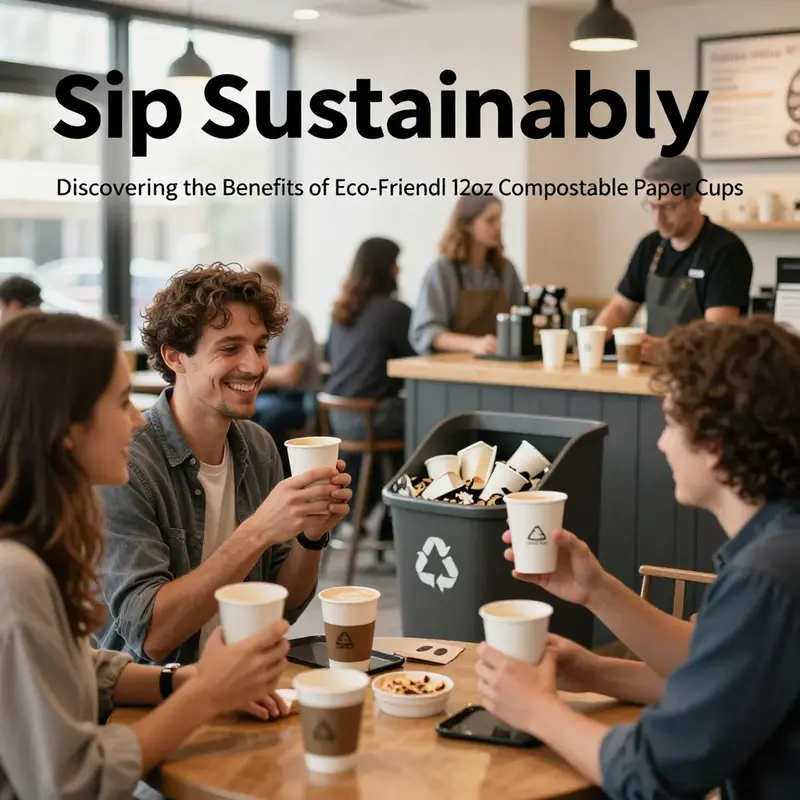
Across the bustle of cafes, office break rooms, and street-food stalls, a simple cup has quietly become a fulcrum for sustainable practice. The 12oz compostable paper cup is not merely a vessel for a hot coffee or a cool tea; it is a node in a broader system that seeks to balance consumer convenience with ecological accountability. In daily use, these cups are chosen not only for their ability to hold beverages at a comfortable temperature but also for what they promise beyond the last sip: a path from usage to responsible end-of-life that, in principle, minimizes the drag on finite resources and reduces the accumulation of waste in landfills and the environment. The conversation around these cups centers on two intertwined questions: how they perform in real-world settings and how their materials and disposal routes affect the planet over the lifecycle of a typical service day or event.
To begin with, the practical design of a 12oz compostable cup is guided by the needs of hot beverages, on-the-go service, and branding compatibility. Many cups in this category are fashioned from renewable paper pulp, with coatings that diverge from traditional petroleum-based chemistries. Instead of a polyethylene (PE) lining, which has long served as a moisture and grease barrier in conventional cups, compostable variants commonly use plant-based polymers such as polylactic acid (PLA) derived from corn starch. This shift is not merely a material swap; it signals a transition to a system where the cup is intended to be participating in industrial composting streams rather than ending life as a persistent piece of plastic. The result is a cup that can maintain warmth and grip, while also aligning with facilities designed to process compostable packaging. The double-wall construction often seen in these cups adds another layer of value: it keeps beverages hot longer while protecting hands from heat, improving user comfort and safety during service, pickup, and transport. In practical terms, this insulation supports customer experience without forcing a trade-off against environmental responsibility. The accessibility of a well-sealed, spill-resistant experience is further enhanced by a compatible lid, frequently made from the same compostable family of materials. A lid that fits snugly reduces the likelihood of spills during transit, which is particularly valuable for takeout orders, food trucks, and busy shop counters where movement and vibration are common.
The chain of decisions that leads a cup from production to disposal also intersects with branding and customer perception. Brands increasingly understand that packaging can communicate values as strongly as the product inside. For businesses seeking to underscore their sustainability commitments, these cups offer an appealing platform for full-color printing and logos on the exterior. When coupled with lids, sleeves, and ripple textures that improve grip and heat management, the packaging becomes a cohesive, branded experience rather than a disposable afterthought. The broader implications of such packaging choices extend into the logistics and procurement strategies that define a business’s day-to-day operations. For proprietors, that often means analyzing supply chain reliability, lead times for bulk orders, and the ability to source cups that meet both performance and environmental criteria. In this context, wholesale availability and pricing come into play, shaping decisions about scale and the feasibility of integrating compostable cups into regular offerings. For bulk buyers exploring widely used configurations, wholesale take-away options for 8oz to 12oz disposable coffee paper cups with lids emerge as practical, scalable solutions that fit a broad spectrum of service models. wholesale take-away 8oz-12oz disposable coffee paper cup with lids serves as an example of how suppliers respond to the demand for reliability, uniformity, and branding flexibility without compromising environmental commitments. This connective tissue between design, logistics, and sustainability reflects a broader trend toward packaging that can be integrated into a broader environmental program without sacrificing convenience or customer experience.
A central question in the usage narrative is not only how well these cups perform, but how their performance aligns with an environmental objective. The materials and coatings used in compostable cups are selected for their compatibility with industrial composting streams, where controlled conditions—temperature, moisture, and microbial activity—facilitate the breakdown of organic components into water, carbon dioxide, and organic matter. When properly directed to certified facilities, the plant-based coatings decompose in a matter of months, a timeline that starkly contrasts with the centuries-long persistence of conventional plastics. This potential environmental benefit, however, hinges on a crucial condition: the cups must actually enter a composting process that is designed to handle them. In practice, this means robust consumer education and clear facility guidelines at the point of disposal. The success of the program rests on a shared understanding among businesses, waste haulers, and consumers that compostable cups are compostable only in the right infrastructure. Misalignment—such as sending these cups to a general landfill or attempting to recycle them in systems not equipped for biopolymers—can erode the environmental promise.
The lifecycle perspective also points toward the embodied energy and water requirements of cup production. Even as renewable materials reduce reliance on fossil fuels, the journey from tree pulp or agricultural residues to a finished cup consumes energy, water, and chemical inputs. Sustainable forestry practices, responsible sourcing, and efficient manufacturing processes can measurably reduce these inputs, but they do not vanish. In markets where producers commit to lower-impact operations, the overall ecological footprint improves, echoing the idea that sustainability is rarely a single switch but a spectrum of incremental improvements. The broader supply chain implications are equally meaningful. When a café or event organizer opts for compostable cups, they commit to a system that may require different dealing with waste streams, storage for compostable packaging, and alignment with local facilities. This alignment is often a collaborative exercise with waste management providers and municipal programs, and it can influence the timing of takeout service, inventory planning, and even the design of digital communications for customers about disposal.
The environmental impact narrative is inseparable from the social dimension of consumer education. The best cup, even when crafted from renewable materials and designed for industrial composting, will not fulfill its promise if the end user is unsure how to dispose of it. Signage at the point of service, clear guidance on packaging inserts, and partnerships with composting facilities can amplify the effectiveness of compostable cups. In many communities, the presence of local composting infrastructure is a rare but growing advantage, enabling a smoother transition from cup to compost. In others, the absence of accessible facilities means that the cup may languish in a landfill, where the intended benefits are not realized. This reality underscores the need for transparent communication about disposal and for ongoing collaboration among brands, retailers, and waste processors to extend the life cycle’s environmental benefits beyond the initial purchase.
A nuanced appreciation of the environmental footprint also involves acknowledging some limits. Compostable cups are not a universal solution; they are most effective when the entire system—from materials to disposal—works in concert. The conceptual advantage rests on substituting fossil-fuel-derived barriers with biopolymers and on redirecting waste from landfill to composting streams. Yet if a facility cannot process the cup or if confusion reigns among customers about where to dispose of it, the cup’s end-of-life impact can default to the same negative outcome as conventional packaging. The literature and field guidance emphasize education, facility certification, and consumer participation as essential drivers of real environmental gains. In parallel, the design space remains open for innovations that can further minimize energy and water demands in production, improve composting efficiency in facilities, and expand the compatibility of cups with a broader range of hot and cold beverages. The trajectory points toward a future where compostable packaging is seamlessly integrated into everyday life, reducing the ecological cost of our most common beverages.
From a procurement perspective, the choice to adopt compostable 12oz cups also reflects a strategic alignment with broader sustainability goals. The decision is rarely about a single metric—price, performance, or appearance alone—but about a composite value proposition. A café might appreciate competitive wholesale pricing that enables scale, a restaurant group may value consistent branding across locations, and an event organizer might demand reliable supply and straightforward disposal options for large audiences. Price ranges can vary with coating type, volume, and customization. For instance, bulk purchases and long-run contracts often unlock lower per-unit costs, helping decision-makers justify the transition from traditional single-use alternatives to compostable options. In this broader narrative, the cup becomes more than a container; it is a link between the business’s mission and the daily act of serving a customer. The opportunity lies in converting this ritual into a contribution to a more sustainable economy, where packaging is a manageable part of the waste stream rather than a perpetual headline.
The chapter’s threads—usage, materials, disposal, and lifecycle—converge to offer a practical syndrome for businesses seeking to navigate the compostable cup landscape. The cups’ double-wall design, the tap of plant-based coatings, and the availability of lids optimized for on-the-go consumption combine to create a packaging option that integrates seamlessly into busy service environments. Yet without aligned disposal streams, consumer education, and continuous improvement in production practices, the environmental promise may falter. The responsible path is to view compostable cups as a component of a broader environmental program: a program that includes selecting renewable materials where feasible, prioritizing facilities that can handle compostable packaging, and engaging customers in a conversation about disposal. It is a path shaped by collaboration—between suppliers, waste management entities, retailers, and customers—and it requires ongoing attention to standards, certifications, and emerging best practices.
For readers who want to explore certifications and standards that validate compostability claims, a reliable external resource provides authoritative guidance. The Biodegradable Products Institute (BPI) maintains criteria and verification processes that help ensure claims about compostability are credible and consistent across markets. Understanding these standards can empower buyers to make informed decisions about suppliers, coatings, and sourcing practices that genuinely contribute to waste reduction rather than creating new forms of confusion or misrouting in the waste stream. As more facilities and municipalities adapt to industrial composting, the potential for these cups to deliver on their ecological promise grows, provided the ecosystem supporting them remains robust and well understood.
In sum, the 12oz compostable paper cup embodies a delicate compromise and a hopeful aspiration. It offers a concrete alternative to traditional plastics and non-compostable papers, anchored in renewable materials and plant-based coatings. It supports hot and cold beverages through design that emphasizes heat retention and safe handling, while endorsing a pathway toward end-of-life processing that can, under the right conditions, close the loop in a meaningful way. The real value emerges not from a single feature but from the alignment of product design, consumer behavior, waste-management infrastructure, and transparent supplier practices. When these elements align, the act of sipping a drink can become part of a broader, regenerative cycle rather than a straightforward consumption event that ends in waste. The cup, in this sense, becomes a small but visible artifact of a society moving toward more sustainable packaging norms, one where compostability under proper facilities is recognized not as a marginal experiment but as a practical, scalable option for everyday life.
External resource: For standards and verification of compostability claims, see the Biodegradable Products Institute (BPI) at https://www.bpiworld.org/.
Final thoughts
The shift towards using eco-friendly 12oz compostable paper cups is more than just a response to consumer demand; it is a significant step towards sustainability in the beverage industry. By understanding their sustainable features, staying informed about market trends, appreciating the manufacturing processes, and recognizing their environmental impact, businesses can align their operations with eco-conscious practices. As customers increasingly choose brands that prioritize sustainability, adopting compostable products can enhance your brand reputation while contributing positively to the planet. Now is the perfect time to make the change and offer your customers an eco-friendly alternative that they can feel good about.