
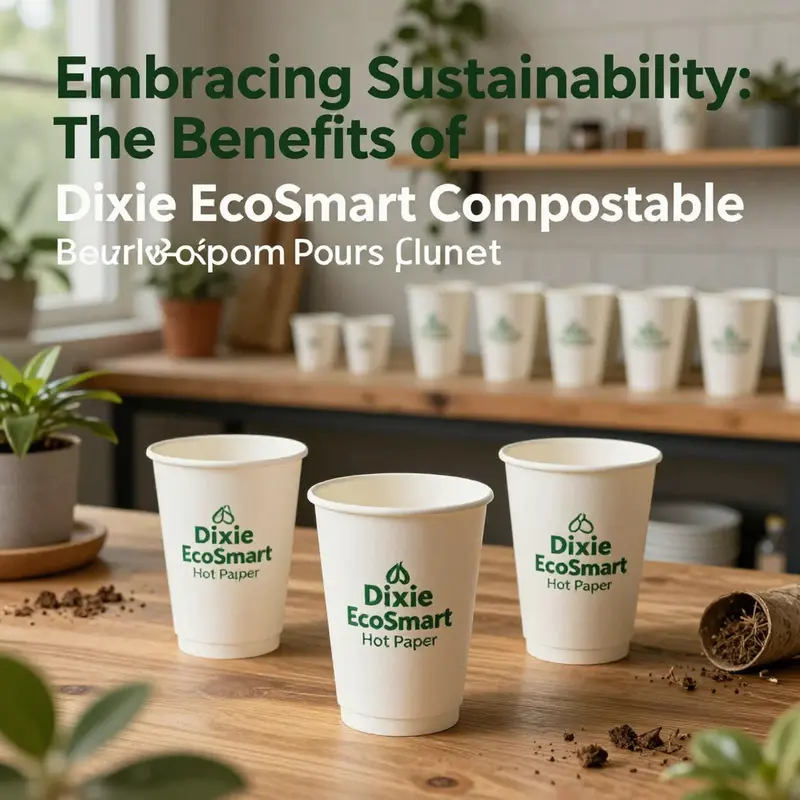
Sustainability in the beverage industry is more than just a trend; it’s a commitment to our environment and future generations. Businesses ranging from bubble tea shops to catering services are increasingly seeking eco-friendly packaging solutions. Here, we delve into Dixie EcoSmart Compostable Hot Paper Cups, a product made from recycled materials that supports both hot and cold beverages. This article explores their material composition, compliance with compostability standards, economic impact, market trends, and environmental benefits—all aimed at making informed choices for your business while supporting sustainability goals. We’ll guide you through how these cups can enhance your operations and meet consumer expectations for sustainable practices.
Smart, Sustainable Cups: Sustainability and Material Composition of Compostable Hot Paper Cups
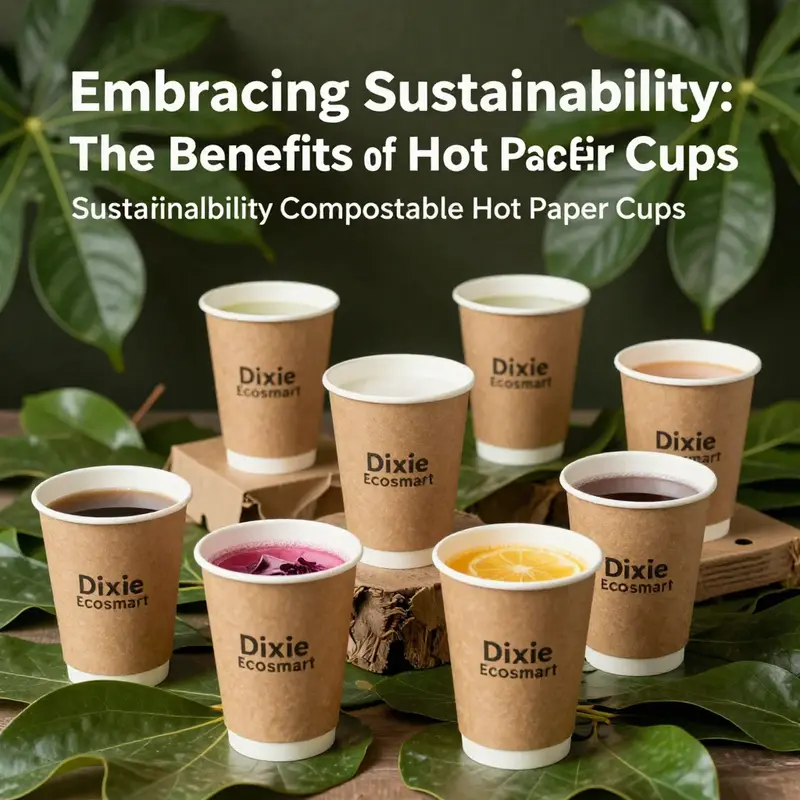
A shift is unfolding in the world of beverage service, where the simplest act of handing a cup to a customer is becoming a decision point for sustainability. In many cafes, quick-service restaurants, and event spaces, the cup has moved from a disposable afterthought to a deliberate component of a broader environmental strategy. The category now embraces a lineage of materials designed to minimize both resource extraction and waste, while still delivering reliable performance for hot and cold beverages. A central thread in this story is the embrace of kraft paper made from recycled fibers. This choice matters beyond the surface appeal of a natural-looking material. Kraft paper derived from 100% recycled content reduces the demand for virgin wood pulp, lowers energy use in some stages of production, and diverts post-consumer waste from landfills. The result is a cup that can be stocked with a clear responsibility narrative, which resonates with operators who are balancing guest experience, cost, and sustainability goals. The practical upshot is not merely a smaller footprint; it is the potential for a closed-loop mentality in which packaging choices align with a business’s broader commitments to the environment and the communities it serves. In daily operations, this alignment often translates into a single product line that can handle both hot and cold beverages without requiring separate inventories, a factor that improves efficiency while keeping carbon accounting cleaner and more straightforward for staff and management alike.
The material composition itself is purposefully straightforward: a base material of 100% recycled fiber on a kraft paper substrate creates a sturdy, heat-tolerant structure. Kraft paper is prized in part for its strength, texture, and natural appearance, but its value here is not only aesthetic. The ability to reuse and repurpose fibers through recycling loops helps reduce the pressure on virgin pulp mills and the forests that feed them. When a cup is produced entirely from recycled content, the upstream material extraction footprint is lowered, partially offsetting emissions associated with manufacturing and transport. This is especially meaningful in high-volume environments where a steady supply of cups is essential. The design choice to use kraft, with its characteristic warm tone and tactile feel, also signals a certain environmental intention to customers and staff, reinforcing the perception that the product is chosen with care for the planet.
From an end-of-life perspective, the conversation often centers on two pathways: recycling and composting. The concept that a cup can be both recyclable and compostable is not inherently intuitive, but it reflects a concerted effort to address the long tail of disposable packaging. In practice, recyclable means the cup can be reprocessed into new materials within established recycling streams, while compostable indicates that the cup will break down into organic matter in a facility designed to handle bioplastics and paper fibers. The coexistence of these pathways requires careful infrastructure and clear labeling so that users know how to dispose of cups correctly. The point is not to promise home compostability, but to recognize that in modern waste systems, industrial composting facilities, paired with recycling streams where applicable, create opportunities for diverting a significant portion of disposable cups from landfills. This dual approach underscores the importance of partnerships across the supply chain—from material suppliers and converters to waste management facilities and end users who commit to proper disposal.
The sustainability features embedded in these cups extend beyond recycled content and end-of-life options. By choosing a packaging solution built on post-consumer fibers, businesses support a circular economy that emphasizes resource stewardship. The reduction in virgin fiber not only conserves trees but also lowers the energy and water inputs associated with pulping processes. Moreover, the compostability facet connects the product to industrial facilities that can convert organic material into usable compost, thereby returning nutrients to soils and supporting agricultural systems. This is not an abstract ideal; it is a practical framework that helps reduce long-term environmental impact while maintaining the performance demands of hot beverages. A practical benefit often cited by operators is operational efficiency: a single cup format that works for both hot and cold drinks reduces the complexity of inventory management, lowers the risk of mismatched sizes, and simplifies training for front-line staff. Simplified operations can translate into better service speed and a sharper customer experience, particularly in high-traffic settings where every minute matters.
Yet, a thoughtful procurement approach must acknowledge the nuanced realities of compostability. Certifications and standards matter because they provide a benchmark for performance and end-of-life behavior. Standards bodies such as the Biodegradable Products Institute and various ASTM specifications define what it means for a product to be compostable and under what conditions decomposition should occur. In practice, the claim that a cup is compostable hinges on processing in certified industrial facilities rather than home compost piles. The presence of recycled content does not automatically guarantee compostability, and conversely, a cup labeled as compostable may still be recyclable depending on the local waste streams and facility capabilities. For operators, this means that the decision to adopt a compostable, recycled-fiber cup should be accompanied by due diligence—verification of certifications, alignment with local composting infrastructure, and clear disposal guidance for customers. The result is a packaging choice that is not just about materials but about a system: how cups are produced, how waste is managed, and how customers participate in responsible disposal.
The environmental narrative around these cups is complemented by a broader market reality: consumers increasingly expect packaging choices to reflect environmental responsibility. In many markets, customers are willing to support businesses that demonstrate concrete steps toward reducing waste and dependence on virgin materials. Labels and marketing that honestly communicate recycled content, dual end-of-life options, and the operational benefits of standardized cup formats can influence purchasing decisions and brand perception. In other words, the material composition and end-of-life pathways are not only technical details; they are signals about a business’s commitment to sustainability in everyday operations. For business leaders, the challenge lies in translating the science and the standards into a coherent operational plan that aligns procurement, training, facility capabilities, and customer communication. The aim is to create a seamless experience where sustainability is evident in every cup handed to a guest, without complicating the service or compromising performance.
To illustrate how these concepts look in practice, consider how a kitchen or café might evaluate a supplier’s offering. The decision framework would examine recycled content levels, the substrate’s strength and heat tolerance, and the reliability of the composting pathway for industrial facilities. It would also incorporate life-cycle thinking: what is the total energy footprint from raw material extraction through manufacturing, distribution, use, and end-of-life processing? In this context, a cup that reliably performs with hot liquids while maintaining structural integrity in the face of moisture and heat flux embodies more than convenience; it embodies a commitment to resource stewardship. It is a tangible link between a business’s everyday operations and the larger social imperative to reduce waste and foster a more circular economy. For operators who want to explore these dynamics further, a practical example exists in the market where suppliers position cups as eco-friendly options for take-away and dine-in service. The product category is not merely about disposal methods but about a holistic approach to packaging that aligns with evolving consumer expectations and municipal waste infrastructure. This alignment is not a static goal; it evolves as recycling and composting capabilities expand and as new standards refine what it means to be truly sustainable.
For readers who want to see a real-world representation of these principles in one accessible product family, a useful reference point is a supplier offering eco-friendly, custom paper coffee cups with lids. These cups illustrate how an integrated approach—recycled content, clear end-of-life pathways, and a single, versatile cup format—can support both hot and cold beverage service while maintaining practicality for staff and convenience for customers. The linked example demonstrates how suppliers present this combination of performance and responsibility in a way that is easy to source, easy to store, and easy to dispose of correctly. This is not merely marketing; it is a practical blueprint for businesses seeking to scale sustainable packaging across menus and locations. eco-friendly custom paper coffee cups with lids.
As the industry continues to refine its understanding of compostability, it becomes clear that no single attribute tells the full sustainability story. The best outcomes arise when recycled content, compostability, and operational practicality co-exist in a thoughtful packaging architecture. Such an approach aligns with the broader goals of reducing virgin material demand, supporting efficient waste streams, and offering a consistent guest experience. In the end, the choice of a recycled-fiber, kraft-based cup that can be recycled or composted within appropriate facilities is not just a material preference; it is a strategic decision that reflects how a business wants to intersect with a changing waste landscape. It signals to customers that sustainability is integrated into the everyday function of serving beverages, not relegated to occasional corporate messaging. As the chapter that follows will explore, this integration of material science, waste management, and consumer expectations is at the heart of modern packaging design—an approach that seeks to marry form, function, and responsibility in a single, practical product.
External resource: https://www.dixie.com/products/dixie-ecosmart-recycled-hot-cold-cups
Reading the Footprint: How Compostable Hot Paper Cups Align with Standards and Circular Goals
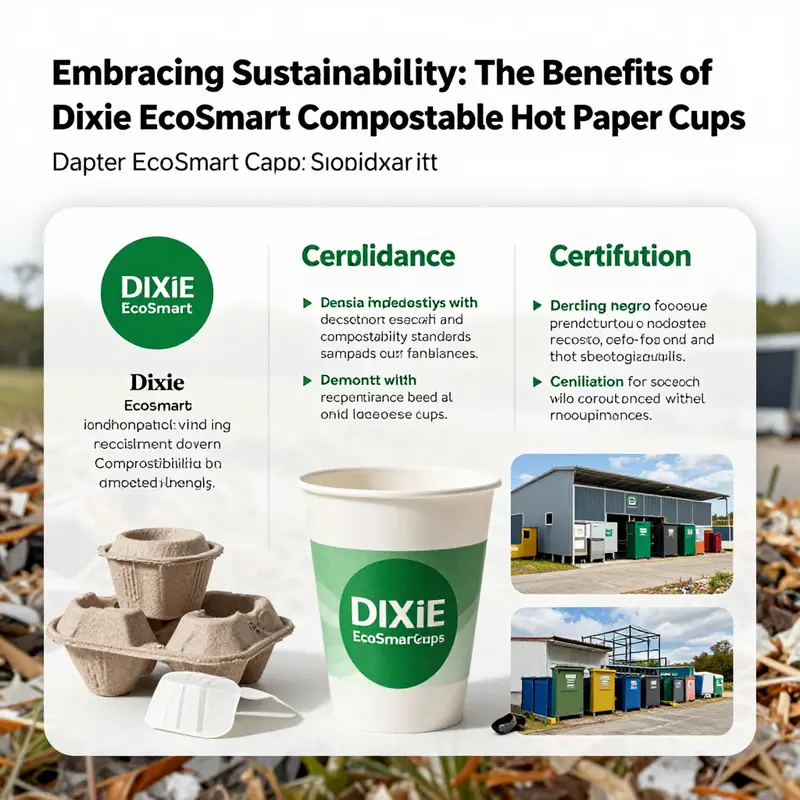
As businesses seek to turn their beverage service from a line item in waste streams to a signal of responsibility, compostable hot paper cups sit at the intersection of practicality and sustainability. The narrative surrounding these cups has moved beyond a single virtue—being convenient for hot drinks—toward a more nuanced conversation about how materials behave across the full lifecycle. A core part of that conversation is the role of third party certification and recognized standards. When a cup is labeled as compostable, that claim carries weight only if it is backed by a credible standard and verified in a manufacturing context that respects the conditions of the intended end-of-life pathway. In practice, this means evaluating whether a cup is designed to break down in an industrial composting facility within a defined timeframe, and whether the resulting residue is non-toxic and non-damaging to downstream processes. It also means recognizing that compostability is not a blanket directive for every composting scenario; home composting, curbside composting, or industrial facilities each present different realities that can affect outcomes. The power of standards is that they define expectations in a way that people across the supply chain—farmers, facility operators, waste haulers, restaurant staff, and policymakers—can act on with confidence.
A practical frame for understanding these products is to distinguish material origin from end-of-life behavior. A cup may be produced from post-consumer recycled fiber, which supports a circular approach by diverting waste from landfills and feeding the recycling loop. Yet the same cup’s capacity to biodegrade in a composting stream rests on separate design choices, including the coatings, liners, and binding agents used to hold the structure together and to keep it moisture-resistant under hot liquids. When a cup is certified under an industry standard such as ASTM D6400, the certification confirms that the item will disintegrate and biodegrade under the specific conditions defined by that standard, typically in an industrial-scale composting facility within a limited period. The standard also stipulates that metals or other toxic residues will not accumulate in the finished compost, ensuring compatibility with soil and plant growth cycles. In parallel, a certification program that attests to biobased content—such as USDA Biobased certifications—helps stakeholders understand the renewable origin of the materials involved, which can be meaningful for procurement decisions aligned with broader carbon or resource-use goals. Taken together, these elements form a robust framework for evaluating whether a cup truly supports a circular-economy narrative rather than merely shifting waste elsewhere.
From a design and supply perspective, the implications of certification extend into every phase of product selection and deployment. Hot cups must perform under heat, resisting deformation and leakage for the duration of a typical beverage service. They must also provide reliable barrier properties, enough stiffness to withstand handling, and compatibility with common cup lids and sleeve systems. A compostable cup’s performance cannot be divorced from its end-of-life story. If a facility cannot accept compostables or if the local waste stream does not reach a facility capable of processing these items, the environmental benefit may be limited or delayed. For businesses, this underscores the importance of aligning procurement with the waste-management realities of the service areas they operate in. It also suggests a practical path: prioritize products that carry clear, third-party confirmation of compostability in industrial facilities, while educating customers and staff about correct disposal practices. Misconceptions often arise when a product is assumed to be compostable simply because it is marketed as green or because it is derived from recycled content. In truth, the certification acts as a verifiable bridge between what the cup is made from and what happens to it after it leaves the table.
Communication about compostability is not just about claims; it is about actionable labeling and consistent consumer guidance. Clear on-pack instructions can reduce contamination and improve the performance of composting streams. The labeling may indicate that the item is certified compostable under ASTM D6400 and that it should be processed in appropriate facilities. In complex urban systems and mixed-waste contexts, this kind transparency helps waste staff distinguish compostables from non-compostables, enabling more efficient processing and reducing the risk of cross-contamination. For foodservice operators, it is equally important to consider what the broader packaging family looks like when scaled across menus and venues. A cohesive assortment—cups, lids, sleeves, and related accessories—should ideally share compatible certifications so that a single waste stream can be redirected with minimal guesswork. The objective is not to perfect a single cup in isolation but to ensure the entire service pathway—production, use, collection, and processing—speaks to the same sustainability standard.
In the field, the practical choices hinge on a mix of materials science, facility capabilities, and waste-management partnerships. A cup built from recycled fibers carries the virtue of resource conservation and reduces reliance on virgin pulp, which can be aligned with broader sustainability goals in a hospitality program or a corporate campus. Yet the impact is maximized when the materials are matched with appropriate end-of-life infrastructure. This means engaging with composting facilities that accept certified compostables and ensuring that staff and customers understand how to separate streams correctly. It also means staying informed about evolving standards and certifications, because the landscape is dynamic. As new facilities come online and as certification schemes refine their criteria, buyers may revisit their portfolio of suppliers, proportioning more or less recycled content or adjusting coatings to optimize compostability without sacrificing performance in hot-drink service. The goal is a practical balance: maintain product reliability for busy service periods while advancing waste diversion in a way that aligns with local and regional capabilities.
For those who need a concrete sense of how this translates into procurement and operations, a careful due-diligence process is essential. Request up-to-date certification documentation from suppliers, verify that the products meet recognized standards for compostability, and confirm that the intended end-of-life pathway—industrial composting, not home composting—matches the waste-management environment of the business. Consider the whole life-cycle cost: the price of bags, the logistics of collecting compostables, potential changes in tipping fees, and the broader value proposition of a packaging program that communicates environmental responsibility to customers. In practice, this often means choosing a family of cups that is certified for industrial composting and that can be anchored by a clear waste-education plan at the point of use. It also means recognizing that certification is not the end of the story; it is the evidence that a product is designed to function responsibly within a defined system. The most successful programs treat certification as a component of a broader sustainability strategy—one that includes vendor collaboration, staff training, customer engagement, and ongoing measurement of waste diversion outcomes.
To anchor these reflections with a reference point in the broader literature and industry practice, it is helpful to explore official product documentation and certification details offered by the manufacturers and certifying bodies. The essential takeaway is that compostability claims carry real significance when they are anchored in recognized standards and supported by transparent documentation. For practitioners seeking further reading on the topic, a detailed external resource provides a comprehensive view of how these cups are positioned within the industry’s composting framework. This overview helps translate the certification language into practical procurement decisions and waste-stream planning, reinforcing the idea that true sustainability emerges when material choice, facility capabilities, and consumer behavior align. For readers who want to examine the certification landscape in greater depth, see the official documentation linked here: https://www.ecoproducts.com/products/dixie-ecosmart-recycled-fiber-hot-cold-cups
Within the broader conversation about disposable packaging, an internal example from the supplier ecosystem can illuminate how branding and design decisions intersect with sustainability goals. A representative product line in the same family demonstrates how branding can be integrated with functional packaging features while maintaining stewardship of the waste stream. This example, one among many in the ecosystem of take-away solutions, illustrates how customization and sustainability can be pursued in tandem without compromising performance in demanding service environments. For readers who want to explore related options in the same supplier network, a practical touchpoint is to view a customizable, branded option that serves as a proof of concept for how design freedom can coexist with responsible end-of-life management. Access to such examples underscores a central point: responsible packaging choices are as much about the system into which products are introduced as they are about the products themselves. The synergy of material science, standardization, and waste infrastructure determines the real-world impact of compostable hot cups on a business’s environmental footprint; it is a path that invites ongoing learning and collaboration across the supply chain.
In closing, the story of compostable hot paper cups is not simply about meeting a criterion for a single item. It is about embracing a standards-driven approach that aligns product design, procurement discipline, and waste-management capabilities with the realities of contemporary consumer behavior. By prioritizing certified compostability, recycled-content materials, and transparent communication about disposal, organizations can craft beverage experiences that feel both convenient and responsible. The end result is a packaging program that supports a circular economy while remaining practical for daily use in busy service environments. As standards evolve and facilities expand their capacity to process certified compostables, the potential for meaningful waste diversion grows. For those who want to deepen their understanding and keep pace with industry developments, the linked external resource offers a detailed map of how compostable cups fit into the broader composting landscape, and how certification translates into real-world outcomes. See the external reference for further certification context: https://www.ecoproducts.com/products/dixie-ecosmart-recycled-fiber-hot-cold-cups
For practitioners seeking concrete demonstrations of related procurement opportunities, consider reviewing one of the following internal examples that illustrate how disposable, take-away packaging can be integrated into a sustainability-focused program while still supporting customization and brand expression: custom-logo kraft coffee cup with lid. This link provides context on how a branded take-away cup can be configured in a way that respects end-of-life considerations without compromising the customer-facing priorities of a hospitality operation.
Dixie EcoSmart Compostable Hot Paper Cups: Economic Impact on Eco-Friendly Packaging
A new chapter in the economics of takeout is written in the language of compostability. Across dinner shifts, cafe lines, and office break rooms, the shift from conventional, plastic-lined paper to cups designed for industrial composting is more than a sustainability slogan. It is a business decision that folds cost, risk, customer perception, and regulatory readiness into a single, evolving equation. When a kitchen switches to compostable hot paper cups, the immediate difference is visible in the ledger and in the serving line. The cups themselves tend to carry a higher unit cost than traditional alternatives, a consequence of using renewable feedstocks, specialized coatings, and manufacturing processes that support compostability rather than durability for reuse. Yet this price premium is not a permanent ceiling. As demand expands, supply chains mature, and production scales up, the gap narrows. The economics of such packaging are moving toward a more balanced equation where environmental benefits and market expectations converge with business performance. In this convergence lies a strategic opportunity for brands seeking to align profit with purpose, especially in segments where customers increasingly equate sustainability with trust and quality.
From the outset, the lifecycle of these cups starts with renewable inputs. Wood pulp and plant-based coatings like polylactic acid (PLA) displace fossil-fuel–dependent materials, reducing embedded greenhouse gas emissions across the manufacturing chain. This shift is not merely about swapping materials; it is about rethinking product design for end-of-life outcomes. The goal is to ensure that once a cup has fulfilled its role in conveying a hot beverage, it can re-enter the waste system as a valuable feedstock rather than becoming another layer of landfill. In practice, that means products that are certified to meet industrial compostability standards and are processed in facilities equipped to handle such streams. The distinction between a cup that is technically recyclable and one that is truly compostable at scale matters, because it affects how waste streams are managed, how sorting programs are run, and how cities invest in infrastructure. The lifecycle thinking thus links material choice to municipal budgeting, waste management practice, and the long-run resilience of the packaging ecosystem.
Economically, the initial premium for compostable cups is often justified by several intertwined benefits. First, there is brand differentiation. In markets where consumers demand visible environmental stewardship, offering compostable packaging can translate into greater customer loyalty and willingness to pay a premium for a café experience that aligns with personal values. Second, regulatory landscapes are increasingly pointed toward compostable or otherwise sustainable packaging for takeout services. In regions with stricter rules, early adoption can reduce compliance risk and preempt penalties, while also positioning a brand as a partner to local governments pursuing cleaner waste streams. Third, the potential for certifications and partnerships with waste-management programs creates marketing and operational leverage. When a business can point to third-party validation and local collaboration, it strengthens its competitive position against operators with uncertain post-consumer outcomes.
A fourth lever is risk management. Traditional packaging with plastics and waterproof linings inherits the risk of becoming part of a problem that extends far beyond the dining table: persistent waste in the environment. Compostable cups, if correctly sourced and disposed of, can substantially reduce that risk profile by feeding into a circular flow where organic waste becomes compost used to enrich soils. This circularity does not happen automatically, however. It requires a functioning composting ecosystem—industrial facilities that can process the material, curbside or on-site sorting practices, and clear communication with customers about proper disposal. The economic benefits, then, are maximized when a business contends with these operational realities rather than assuming a perfect end-of-life path. Companies that invest in clear labeling, staff training, and customer education tend to see higher recycling and composting rates, which in turn improves waste diversion metrics, reduces landfill costs, and strengthens the business case for sustainable packaging in the long run.
The market dynamics behind compostable cups are also shifting. Scale matters, and as more brands commit to compostable options, suppliers achieve greater production efficiency, lower per-unit costs, and a broader selection of designs that meet both functional and aesthetic expectations. This scaling effect reduces the total cost of ownership for eco-friendly packaging over time, particularly when compared with the lifecycle costs of single-use plastics, where hidden expenses accrue through waste management burdens, environmental penalties, and brand reputational costs. The infrastructure side of the equation—availability of composting facilities, clarity on accepted materials, and consumers’ disposal habits—plays a decisive role in whether the economic benefits materialize in a given market. When cities and campuses invest in sorting programs and industrial composting capacity, the value proposition of compostable cups improves, and the financial case becomes more robust for hospitality operators who want to differentiate themselves with sustainability without compromising service efficiency.
For operators, the practical implications extend into procurement, inventory management, and supply-chain resilience. Compostable cups must be sourced in reliable, scalable quantities, with clear certifications that verify compostability under industrial conditions. The production process itself benefits from standardized testing and predictable performance in hot beverage service, ensuring that a cup can withstand the thermal and mechanical stresses of a busy service line without leaks or collapse. That reliability reduces waste, minimizes guest complaints, and lowers the cost of returns or replacements. It also creates a more stable planning environment for operators who need to forecast demand across peak times and promotional periods. The adoption narrative is not simply about the material; it is about how the entire service experience, from kitchen to consumer, remains seamless and trustworthy while integrated into a broader sustainability strategy.
From a policy perspective, there is a strategic incentive for early adoption. Businesses that align with compostable packaging can benefit from incentives, partnerships, and recognition programs that support green procurement practices. These advantages often translate into indirect savings—through favorable supplier terms, access to sustainability-focused financing, or eligibility for certifications that help distinguish brands in a crowded marketplace. Moreover, early adopters contribute data and learnings that help improve the packaging ecosystem. Their experience—how well composting programs work, what operational adjustments are needed, and how customers respond—feeds into industry benchmarks and helps shape more efficient standards. In this sense, the economic impact of compostable cups extends beyond the balance sheet; it informs policy design, waste-management efficiency, and the evolution of sustainable packaging as a business capability rather than a peripheral concern.
To illustrate how this translates into real-world choices, consider the design philosophy behind these cups. The emphasis is on material simplicity and end-of-life clarity. A baseline resource like wood pulp serves as a renewable foundation, while coatings derived from plant-based polymers enable the hot-beverage barrier without introducing petrochemical components that complicate composting. Such design decisions reduce the environmental footprint while supporting a credible composting pathway. And yet, even with a compelling lifecycle and a favorable market trajectory, brands must manage the human dimension of disposal. Customer education, clear labeling on cups and lids, and visible signage in-store can dramatically improve the rate at which waste streams are directed toward composting rather than contamination. In practice, every point of contact—ordering, pickup, and disposal—becomes a miniature data-collection opportunity. Each interaction informs operators about consumer behavior and helps optimize both the logistics and the communications around compostable packaging.
The economic calculus is also enriched by the marketing value of green branding. In a marketplace where consumers increasingly expect sustainability as part of the value proposition, operators can leverage compostable packaging to reinforce a broader narrative about community responsibility, local sourcing, and environmental stewardship. This narrative does not stand alone; it intertwines with product quality, service reliability, and price sensitivity. A well-executed sustainability story can reinforce customer loyalty, justify a prudent premium, and differentiate a brand in a crowded field of options that all claim similar taste and convenience. The challenge remains to balance this narrative with practical realities: ensuring that composting streams are well-supported, keeping costs under control, and avoiding the temptation to fragment sourcing across incompatible materials. When all these elements converge, the business case for compostable hot paper cups strengthens, not just as a virtue signal but as a financially meaningful part of a modern, responsible operating model.
For readers exploring concrete opportunities in this space, a practical touchstone is the availability of turnkey options that align with eco-friendly branding while offering straightforward procurement paths. A related resource that highlights how green packaging choices can be embedded in takeout operations is the eco-friendly-printed-logo-single-wall-paper-cup option, which provides a ready-made example of how a brand’s identity can be carried through to its disposable cupware. See the linked page here: eco-friendly-printed-logo-single-wall-paper-cup.
Looking ahead, the momentum behind compostable hot cups will likely continue, supported by continued improvements in materials science, manufacturing efficiency, and waste-management infrastructure. The economic impact will hinge on two intertwined factors: the ability of operators to manage costs through scale and the reliability of end-of-life pathways that keep compostable packaging out of landfills and into productive soil. As markets mature, the premium for sustainability may shrink, but the premium for trust and responsibility—delivered through thoughtful packaging design, transparent disposal guidance, and evidence of real environmental benefit—will persist. In that landscape, Dixie EcoSmart compostable hot paper cups become more than a packaging choice; they become a signal that a business is committed to aligning operational excellence with environmental stewardship. For a broader market context that frames these dynamics within the global packaging space, see the Global Compostable Packaging Market Report 2024.
null
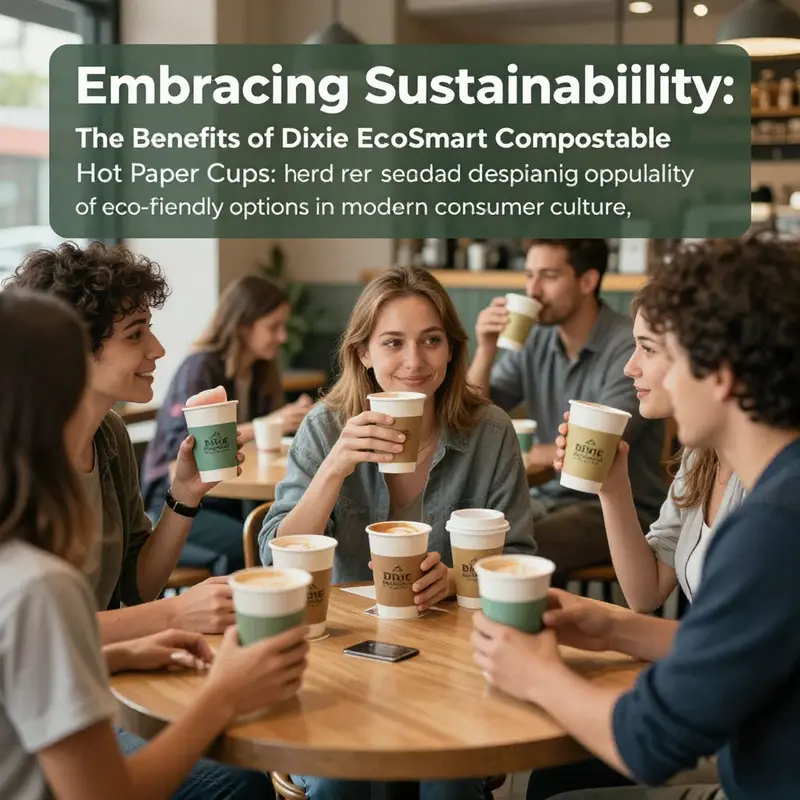
null
EcoSmart Compostable Hot Paper Cups: Tracing Environmental Benefits Through a Full Life-Cycle Lens
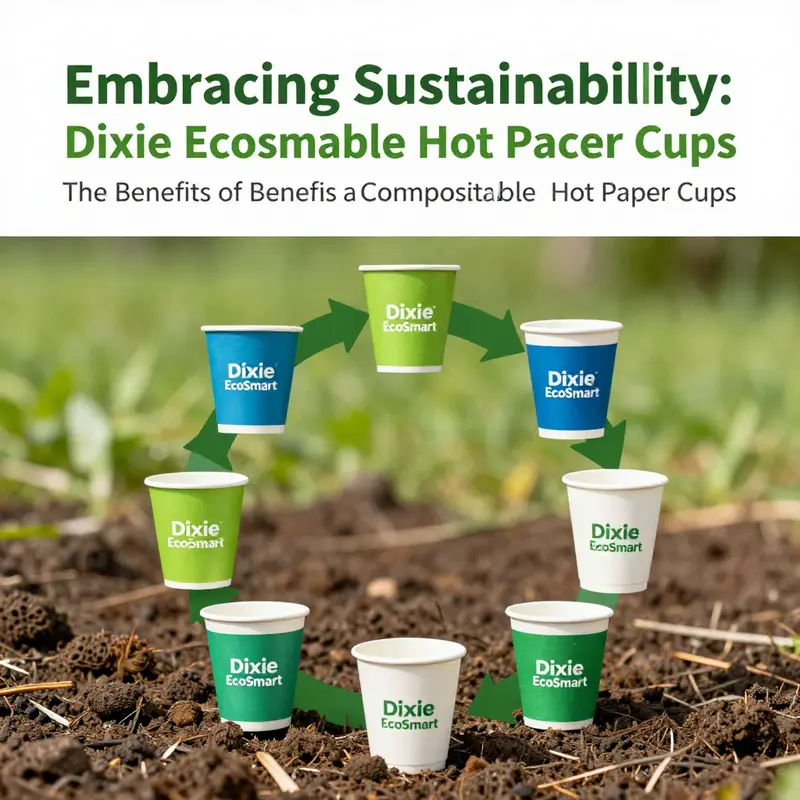
Choosing a disposable cup is more than selecting a vessel for a drink. It is a decision that echoes across a supply chain, a waste system, and the broader conversation about resource use. In the case of EcoSmart compostable hot paper cups, the story unfolds across a life cycle that begins with sourcing, traverses through manufacture and distribution, and ends in a sophisticated end-of-life landscape that can include industrial composting. This framing matters because the environmental benefits claimed for any disposable cup depend not only on its material makeup but on how the product is produced, used, and finally managed after its use. The understanding that underpins EcoSmart’s approach is that compostable cups can be part of a zero-waste strategy, but only when facilities, consumer behavior, and product performance align with standardized criteria such as the Biodegradable Products Institute standards or ASTM D6400. These standards set the bar for compostability in industrial facilities and help ensure that a product truly contributes to a composting stream rather than becoming contamination in recycling or landfilling. Through this lens, the EcoSmart line emerges as a nuanced option that blends recycled content with a compostability pathway, even as it emphasizes the benefits of using post-consumer materials in the first place.
From the outset, the environmental narrative of these cups centers on sustainable sourcing. The cups are described as 100% post-consumer recycled fiber, a material choice that reduces the demand for virgin wood pulp and, by extension, the need for logging and the energy-intensive processes associated with virgin pulping. When a beverage comes in a cup designed around recycled fibers, the lifecycle begins with a lower footprint in material extraction. Forest ecosystems are protected not merely by shrinking harvesting but by diminishing the associated energy use and chemical load that come with virgin pulp production. This is an important distinction for businesses seeking to minimize their impact without compromising the customer experience. The fiber itself is a reclaim from post-consumer streams, which helps close the loop by turning everyday packaging waste into a functional product instead of relegating it to landfills. The result is a tangible reduction in the upstream environmental demands placed on ecosystems and communities that supply raw materials.
Beyond sourcing, the manufacturing stage of EcoSmart cups contributes to energy and water efficiency when compared with processes that rely on virgin fibers. Recycling fibers typically consume less energy and water than virgin fiber production, particularly when the supply chain efficiently channels post-consumer waste into new product streams. While the exact figures depend on regional factors—such as the energy mix in the manufacturing plant and the efficiency of pulping lines—the overall pattern is consistent: recycled-content cup production can lower greenhouse gas emissions and conserve precious water resources. This victory in efficiency is not just a statistic; it translates into real-world reductions in emissions during production and a lighter burden on local water systems, which often shoulder the brunt of industrial processing.
Waste diversion sits at the heart of the EcoSmart proposition. By leveraging a recycled fiber base, these cups actively divert material away from landfills. Yet the end-of-life story is more complex than simply recycling or landfill disposal. The end-of-life options for EcoSmart cups include industrial compostability, which aligns with the ambitions of many organizations pursuing zero-waste goals. In practice, industrial composting can transform used cups into compost that returns nutrients to the soil rather than contributing to long-term waste accumulation. This feature is especially compelling for operations that have access to robust composting infrastructure, where the cup can decompose in a controlled setting. However, the interplay of compostability with local infrastructure means that success hinges on facility availability and consumer adherence to disposal guidance. The ideal outcome is a streamlined separation of cups from traditional recycling streams and a composting path that recognizes the product’s material composition.
Another essential strand in the environmental benefits narrative is performance. Disposable cups must reliably hold hot beverages without leaking or losing integrity. EcoSmart cups are described as maintaining high performance for both hot and cold drinks, a critical factor for businesses that depend on consistent customer satisfaction. Performance matters because durability often correlates with proper end-of-life handling: cups that degrade too quickly or that fail during use can undermine a sustainability program, generate waste, or push customers toward different disposal habits. A cup that performs well in hot conditions, while still being feasible to compost after use, demonstrates how environmental goals and consumer experience can align without compromise.
To illuminate the life-cycle assessment that underpins these claims, a structured view of the major stages helps. Material sourcing focuses on the shift from virgin pulp to post-consumer recycled fiber. This shift reduces the ecological burden associated with raw material extraction and processing and signals a move toward more circular materials management. In manufacturing, the energy and water intensity are typically lower for recycled-fiber cups, though the exact savings depend on factory design, energy sources, and water recycling capabilities. Distribution logistics then enter the equation: heavier or denser products can alter transport energy use, but the recycled content and optimized production runs often offset some of that weight with fewer upstream impacts. In the usage phase, the cups’ disposability means a relatively small environmental load relative to their manufacturing; however, consumer behavior can magnify or dampen those impacts. For instance, high contamination rates can jeopardize recycling streams or composting facilities, undermining the intended benefits. End-of-life analysis introduces the key real-world variable: industrial compostability. If a community or business has access to certified composting facilities and clear disposal guidance for customers, the cups can be diverted from landfills and introduced into soil-building compost. If not, the intended benefits may not be realized, emphasizing the need for coordinated waste-management strategies alongside product selection.
The lifecycle story is not merely a theoretical exercise. It is a practical framework that helps operators—restaurants, cafés, universities, and corporate cafeterias—align procurement with waste infrastructure and with consumer education. In practice, adopting EcoSmart compostable cups means more than choosing a single item; it means joining a system that expects composting facilities to accept the material and for customers to dispose of it correctly. That is why these cups are often presented as part of broader sustainability programs that include composting, recycling, and waste-reduction initiatives. The real-world impact, in turn, depends on how well these systems work together. When customers are informed and facilities are capable, the end-of-life phase can realize the full environmental advantage promised by the lifecycle assessment.
For readers who want to connect this material to a broader packaging ecosystem, consider a related line of takeaway options that couples disposable cups with compatible lids and packaging in a kraft paper family. One practical path is to explore takeaway kraft coffee cups with lids, a product family that shares the same emphasis on fiber-based materials and sustainable design while addressing the full range of takeout needs. This linked option demonstrates how a single material platform can expand into a cohesive, circular packaging strategy across multiple formats and use cases. takeaway kraft coffee cups with lids
The broader takeaway is that EcoSmart’s compostable hot paper cups embody a thoughtful attempt to reconcile the tension between high-performance, consumer-friendly disposables and the realities of waste infrastructure. The lifecycle lens reveals both opportunities and dependencies: compelling reductions in virgin material use and energy consumption, alongside a required alignment with composting facilities and consumer disposal behavior. This is not a guarantee of universal, immediate end-of-life success in every market, but it is a credible pathway for organizations that can optimize the waste-management context around their beverage service. When facilities and education align with the product’s design, the environmental benefits can be realized as a tangible, scalable contribution to circular economy goals.
In closing, the EcoSmart compostable hot paper cup illustrates a principled approach to sustainability that integrates material stewardship with end-of-life responsibility. It invites businesses to expand their sustainability toolkit beyond a single product line and to view disposables as components of a broader system—one that requires collaboration among manufacturers, waste-management providers, and customers. By focusing on post-consumer recycling potential, lower-energy manufacturing, and the feasibility of industrial composting, this packaging option offers a compelling case for organizations looking to elevate their environmental performance while meeting the practical demands of hot beverage service. The lifecycle assessment that supports these claims is not a mere academic exercise; it is a practical roadmap for building packaging choices that are better aligned with the goals of resource conservation, waste reduction, and soil health. External resource: https://www.dixie.com/products/dixie-ecosmart-recycled-fiber-cups
Final thoughts
Dixie EcoSmart Compostable Hot Paper Cups provide a meaningful solution for businesses seeking to meet consumer demands for sustainability while maintaining quality. By integrating these eco-friendly cups into your operations, you not only contribute to a healthier planet but also appeal to the conscientious consumers of today. Understanding their material composition, compliance with regulations, economic impacts, market trends, and environmental benefits offers a comprehensive view of why these cups are the ideal choice for modern beverage providers. Let’s move towards a more sustainable future through informed packaging solutions.