
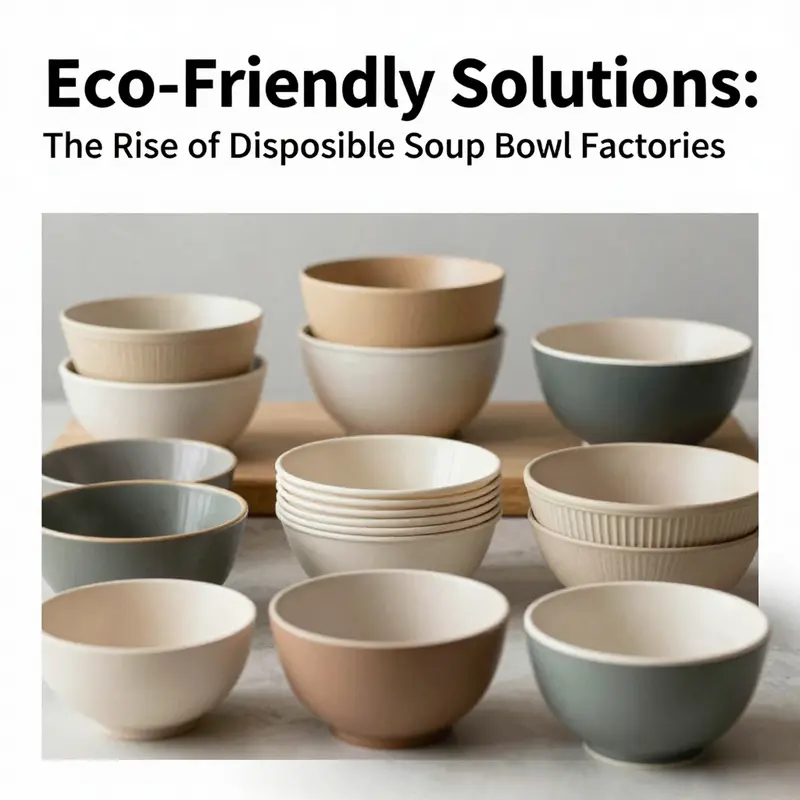
As the global palate evolves, so does the demand for sustainable and efficient packaging solutions. The disposable soup bowl factory stands at the intersection of innovation and practicality, offering eco-conscious products for a diverse clientele—including bubble tea shops, restaurants, food trucks, catering services, event planners, and corporate procurement teams. This article dives into the sustainable innovations that these factories are embracing, the advanced manufacturing technologies they employ, and the significant market trends shaping their economic impact. Each chapter provides valuable insights that reinforce the importance of choosing sustainable solutions in the food service sector, ensuring not only operational success but also a commitment to environmental responsibility.
From Plant to Plate: How Sustainable Innovations Are Redefining the Disposable Soup Bowl Factory
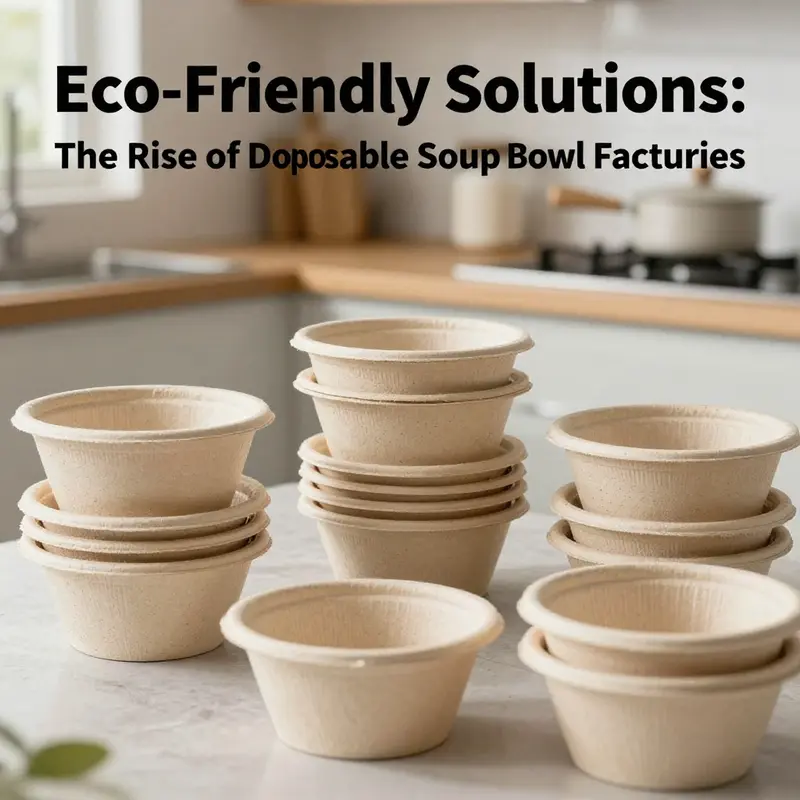
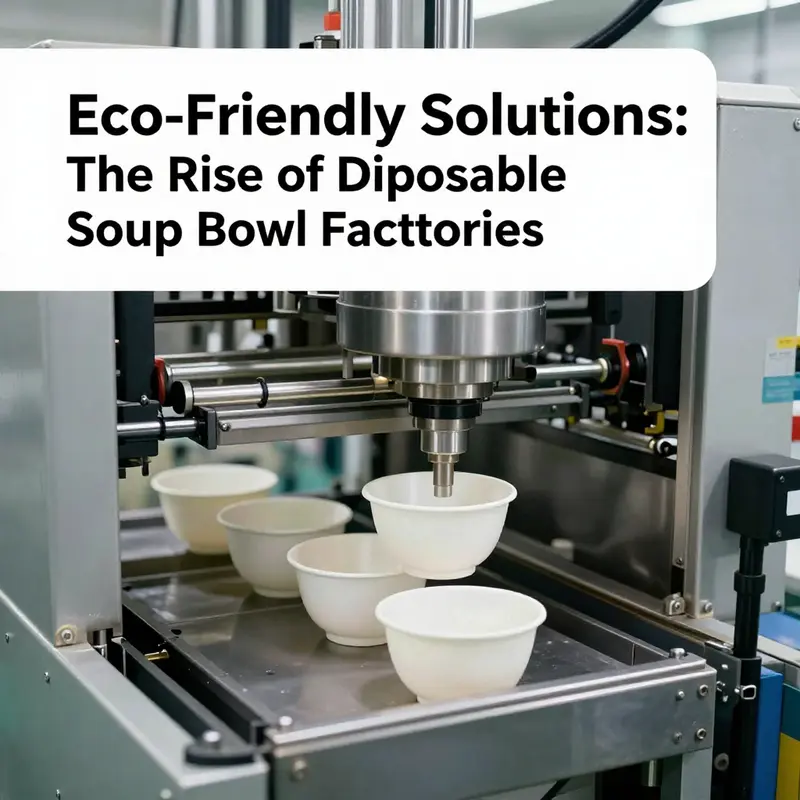
The factory floor hums with a quiet intensity as machines whirr and conveyors glide, not with the noise of waste, but with the language of stewardship. In this space, sustainability is not a marketing line but a daily discipline that shapes every decision from raw material sourcing to end-of-life disposal. The narrative of the disposable soup bowl has shifted from a singular reliance on petrochemical plastics toward a thoughtful choreography of renewable inputs, responsible processing, and visibly greener packaging ecosystems. At the heart of this transformation lies a set of material choices that honor the culinary occasions these bowls serve while recognizing the planet’s limits. Biobased fibers and fibers-derived compounds, such as bamboo, sugarcane bagasse, and recycled paper pulp, are moving from fringe experiments into mainstream production. They are chosen not merely for their biodegradability or compostability but for their compatibility with modern service environments where heat, leak resistance, and hygiene must coexist with ecological accountability. The shift toward these materials reduces landfill footprint and trims the carbon intensity of both production and disposal, a balance that has become the industry’s north star as brands seek tangible demonstrations of environmental responsibility to accompany flavor, texture, and durability. The advantage is not a single victory but a cascade of benefits: lower weight for easier handling and transport, lighter end-of-life processing for compost facilities, and a resilience that survives the demands of hot soups and microwaves without compromising form. The result is a durable, leak-proof bowl that retains its insulating properties while meeting increasingly strict criteria for sustainability, from cradle to grave. Within this landscape, the factory’s approach to high molecular density molding represents a crucial technical hinge. This process enables bowls that resist deformation under heat and pressure while maintaining a compact profile for storage and shipping. The density of the molded material translates to integrity: fewer micro-leaks, reduced seepage, and a steadier stance against the spurt of a rising broth during transit. The performance gains are not accidental but the product of precise polymer blend management, controlled hygroscopic behavior, and surface finishing that minimizes moisture migration. What this means for food service operations is a calmer, safer experience for customers and staff alike. A bowl that holds heat more consistently reduces the risk of spills when soups are kept in warming stations or carried to the table. It also helps maintain a comfortable temperature for the diner, extending the shelf and service life of hot offerings in ways that plastic alternatives often struggle to achieve. But durability and heat tolerance must be paired with responsible consumption. The modern disposable bowl is designed for a lifecycle that recognizes the realities of reuse where possible and efficient end-of-life processing when disposal is unavoidable. In practice, this entails materials that can be composted in industrial facilities or, at minimum, readily accepted by recycling streams compatible with fiber-based packaging. The environmental calculation expands beyond the factory gate to include the downstream system that handles post-consumer waste. Here, the advantage of plant-based and recycled-content inputs becomes clearer: these inputs tend to integrate more smoothly with composting and recycling infrastructures, reducing contamination and improving the efficiency of material recovery. The lifecycle logic also emphasizes resource stewardship within the plant itself. Water usage in pulping is tightly monitored, and when possible, closed-loop systems reclaim process waters for multiple stages of production. The shift toward renewable energy sources—solar panels that collect daylight across roof surfaces, wind energy partnerships for off-site power, and efficient on-site generation—further lowers the footprint of every batch produced. Energy efficiency is not an afterthought but a design parameter that informs equipment selection, maintenance scheduling, and plant layout. The overarching aim is to minimize energy and water intensity per unit of product while sustaining the performance metrics customers expect. In tandem with energy and water stewardship, waste handling receives equal focus. Production waste is captured and routed to recycling streams rather than landfills, and offcuts from molding are diverted into secondary applications where feasible. This closed-loop stance reduces raw material demand and aligns with broader circular economy principles. The environmental advantages extend into the packaging and branding layer, where customization options offer brands a way to communicate their green commitments as part of the product experience. Logos, colors, and patterns can be embedded into the exterior presentation without compromising recyclability or compostability. On the design side, the choice of materials and finishes supports a clean separation of components at end of life, making it easier for facilities to divert packaging to appropriate processing streams rather than contaminate recycling streams. A company deeply attuned to sustainability can weave its green ethics into the whole consumer journey, creating a narrative that resonates with restaurants, catering outfits, food trucks, and even home users who value responsible disposal. The customization dimension also extends to size options and lid designs, enabling operators to tailor packages to menu formats, portion sizes, and service styles while maintaining a consistent environmental message. In practice, this means offering a spectrum of bowl capacities, from compact single-serve servings to larger bundle configurations, and pairing each with lids that secure contents during transport and yet remain easy to recycle separately. The ability to match lid design with branding strengthens market presence for high-volume operations and events where visual identity matters as much as functionality. When a brand envisions a cohesive green story across all packaging touchpoints, the opportunity to integrate a design that communicates responsibility becomes compelling. To illustrate this, consider the design options that align with a brand’s eco-values, including textures, color palettes, and surface finishes that reflect recycled-content stories without sacrificing performance or safety. The result is a package that signals care for the environment with every angle and fold. Operational reliability forms another pillar of this sustainable trajectory. Clients value bulk-buying arrangements not only for cost efficiency but for predictable, timely delivery that supports large-scale food service operations. The factory’s supply chain is structured to deliver within a 7 to 15 day window after order confirmation, a timeframe that balances production flexibility with the needs of large events and steady restaurant operations. This reliability matters, because sustainability without supply security yields frustration and waste. It matters even more when a business aims to standardize its eco-packaging across multiple service formats, from dine-in to takeout to catering, all within a single procurement framework. The integration of sustainable materials, efficient processes, and responsive logistics creates a virtuous circle: as demand for green packaging rises, investments in greener inputs and smarter manufacturing yield measurable dividends in both cost and environmental impact. The chapter’s focus on innovation does not overlook consumer expectations. In recent years, consumer preferences have shifted toward packaging that offers a clear environmental story, ease of disposal, and strong hygiene guarantees. The material science behind the bowls supports these expectations by delivering products that are not only biodegradable or compostable but also capable of withstanding hot liquids. The compatibility with microwaving to 220°F (105°C) expands the bowl’s usability across service contexts, enabling hot soups to be reheated in microwaves without compromising safety. This capability is particularly valuable for institutions that rely on microwaving as a convenience or to support quick service at off-peak hours. Yet this performance must be balanced with a responsible end-of-life pathway. The sustainability equation now includes certified compostability standards and end-of-life logistics that minimize contamination and maximize recovery. The factory’s approach reflects a broader trend in the industry: the demand for packaging that performs under heat and taming of moisture, while also aligning with green procurement criteria and waste-diversion targets. This alignment matters not only for regulatory compliance but for brand integrity. Companies seeking to tell a credible sustainability story are increasingly aware that packaging is part of a larger environmental narrative. That awareness shapes decisions about where to source materials, how to minimize energy use, and how to communicate green values to customers without sacrificing product performance. It also nudges the development of partnerships across suppliers, waste processors, and recycling networks to ensure that the product’s environmental gains are realized in practice, not just in theory. The internal design dialogue plays a crucial role here. A key principle is modularity in design, allowing customers to adapt bowls to evolving menu formats without abandoning a green platform. For instance, customizable lids can be tailored for different service scenarios, and branding elements can be layered into packaging graphics while keeping liner materials and printing processes compatible with recycling or composting streams. This approach empowers brands to preserve a consistent environmental message across all touchpoints while offering the flexibility demanded by a dynamic food service market. In turn, this flexibility nurtures long-term partnerships with operators who manage diverse service contexts and require reliable, scalable packaging solutions. The choice to move toward sustainable inputs also interacts with regulatory and certification dynamics. Facility teams monitor evolving standards for compostability, recyclability, and compost facility compatibility, ensuring that the product remains aligned with accepted benchmarks in sustainable packaging. Certifications help remove ambiguity for customers and permit operators to communicate a credible green stance to their patrons. The cumulative impact of these innovations extends beyond the factory floor. As more operators adopt eco-friendly bowls, the market for compostable packaging and recycler-friendly designs expands, driving economies of scale, reducing per-unit costs, and incentivizing further research into alternative materials and processing methods. The ongoing dialogue between material science, manufacturing efficiency, and end-of-life processing forms a feedback loop that continually raises the bar for what is possible in disposable service ware. For readers and practitioners seeking deeper guidance on the standards and best practices guiding these shifts, the Sustainable Packaging Coalition provides a comprehensive framework and resources that illuminate paths toward more responsible packaging solutions: https://www.packagingcoalition.org/sustainable-packaging-resources. Within the narrative of this chapter, the disposable soup bowl factory emerges not as a simple producer of single-use vessels but as a platform for sustainable innovation. It demonstrates that performance, aesthetics, and responsibility can coexist without compromise. Brands that invest in greener inputs, smarter manufacturing, and robust end-of-life systems can tell a story that resonates with today’s environmentally conscious consumers while still delivering the reliability and hygiene demanded by food service operations. The practical takeaway is clear: sustainability in this space is not a single choice but an integrated program that touches material science, process engineering, design thinking, and supply chain discipline. It is the alignment of these elements that enables a factory to deliver leakers and heat retention that meet the needs of a high-volume market, while respecting the planet’s boundaries and the future of sustainable packaging. This is not a trend confined to niche markets; it is a systemic shift that redefines what disposable service ware can be in a world that increasingly values circularity, transparency, and responsible innovation. For operators, the message is equally practical: embrace a packaging ecosystem that communicates your green commitments, supports your service model, and remains adaptable across changing menus and events. The chapter thus closes not with a final verdict but with an invitation to observe and participate in a continually evolving field where material choice, process efficiency, and strategic partnerships converge to transform the unassuming bowl into a credible instrument of environmental stewardship. As the industry continues to refine materials, optimize energy and water use, and elevate end-of-life performance, the disposable soup bowl factory stands as a tangible example of how design, manufacturing, and sustainability can be interwoven to create value for businesses, customers, and the planet alike. External resource: https://www.packagingcoalition.org/sustainable-packaging-resources
null
null
From Convenience to Responsibility: How Market Forces Shape the Disposable Soup Bowl Ecosystem
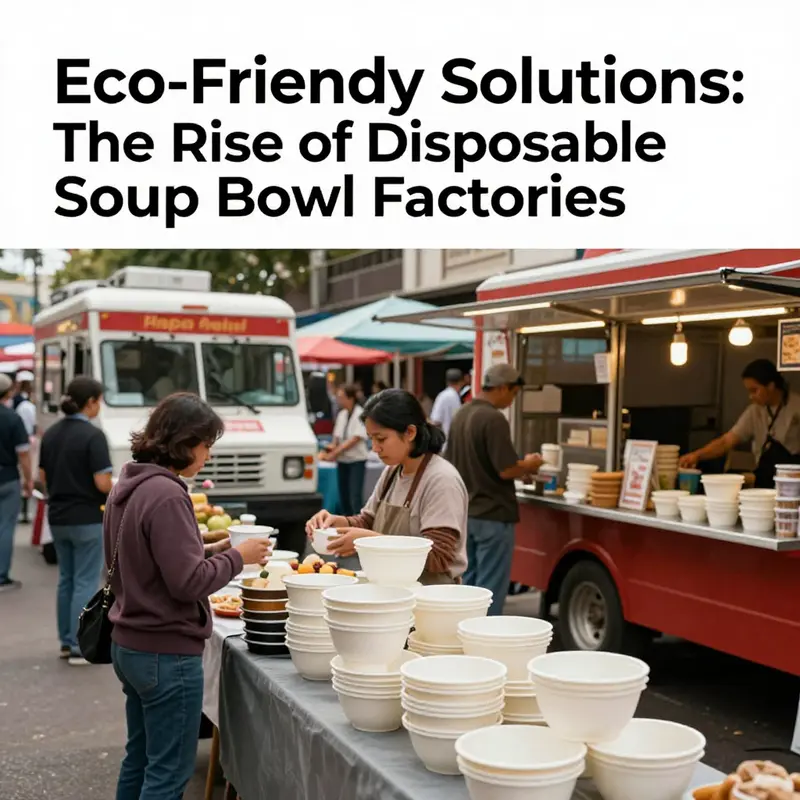
The disposable soup bowl factory sits at a crossroads where convenience, hygiene, and responsibility intersect. In Europe, a market once dominated by low-cost, single-use solutions is undergoing a fundamental shift. The latest data paints a clear picture: the disposable soup bowl market in Europe is not only growing, but evolving in how it is conceived, sourced, and valued. As of 2024, the market is valued at about USD 4.5 billion, a figure that signals scale and impact across restaurants, catering companies, food trucks, and the wider takeout ecosystem. Yet the narrative behind that number is less about volume alone than about the direction of demand. Buyers increasingly seek containers that perform under heat, resist oil and moisture, and, perhaps most importantly, align with stringent environmental standards. The trajectory points toward a future where the economic viability of a bowl is inseparable from its environmental footprint and its ability to fit into a circular or at least more sustainable lifecycle.
This pivot is driven by two converging trends. First, the rise of fast-casual dining and expansive food-delivery networks has intensified the need for reliable, scalable packaging. Operators prefer containers that protect contents during transit, are stackable for storage, and are compatible with the quick turnover demanded by modern service formats. Second, consumers themselves are increasingly aware of plastic pollution and the consequences of disposable packaging. The public discourse about waste and its environmental cost has moved packaging choices from a purely cost-driven decision to a strategic component of brand ethics and regulatory compliance. In this way, the market is less about a single product and more about an ecosystem that supports sustainable consumption patterns while preserving the operational efficiencies that food service entities rely on.
The push toward eco-friendly materials is a core engine behind this evolution. Producers are shifting away from traditional petroleum-based plastics toward materials that come from renewable inputs or are easier to recover in waste streams. Bagasse, the fiber left after sugar extraction, is a standout in this shift. Its natural stiffness and moisture resistance make it a credible substitute for many thermoforming applications. Bamboo, a rapidly renewable resource, offers similar benefits, especially when combined with barrier coatings that protect against oil and water ingress. Paperboard with plant-based coatings provides a moisture barrier while remaining biodegradable, and molded fiber—made from recycled paper—continues to gain traction as a compostable option with robust structural integrity. Polylactic acid (PLA), a bioplastic derived from cornstarch, adds another layer of performance, delivering compostability alongside reasonably good high-temperature resistance. Taken together, these materials are reshaping the performance profiles of disposable bowls, enabling them to withstand the rigors of hot soups, oily broths, and even reheating in microwaves when needed.
What matters in practice is not a single material but a portfolio of options that can be matched to the use case. For example, some applications require a high-temperature tolerance that supports reheating or hot-cupboard transfers, while others prioritize ultra-thin, lightweight options for cold soups and salads. The durability and leak resistance of these containers are critical, particularly for delivery and catering scenarios where mishaps during transit can undermine a brand’s reputation. The ability to withstand temperatures up to about 200°F (93°C) in many formulations, and in some cases up to 220°F (105°C) for microwavable variants, translates into meaningful operational advantages. It reduces the risk of leakage, protects the integrity of the contents, and broadens the use cases for a single packaging solution—from steaming bowls at a casual eatery to reheating meals in a customer’s kitchen. These performance standards also align with consumer expectations for safety and reliability, reinforcing the role of packaging as a practical partner to food service.
Crucially, market players are pursuing third-party certifications that validate compostability and safety. Certifications from bodies such as the Biodegradable Products Institute (BPI) and compliance with standards like ASTM D6400 for industrial compostability have become meaningful signals to buyers who must report to regulators and to customers who demand traceable sustainability. The presence of these certifications does more than prove a product’s environmental credentials; it also streamlines procurement for large operators who must demonstrate due diligence in their supply chains and compliance with corporate sustainability goals. In a sense, certifications convert environmental aspiration into a verifiable, risk-adjusted attribute of a product line.
Manufacturing dynamics underpin the market’s evolution as much as material chemistry does. In the current global landscape, a growing share of production activity concentrates in hubs that combine scale, automation, and precision engineering. China remains a central node in this network, with critical regions such as Henan, Zhejiang, and Zhengzhou serving as engines of capacity and efficiency. The appeal of these hubs lies in a combination of cost-effectiveness, a mature supplier ecosystem, and the ability to deploy automated systems that convert raw materials into high-volume, stackable, leak-resistant bowls with consistently reliable quality. The sourcing logic is practical and strategic: manufacturers benefit from vertically integrated ecosystems that bring together resin supply, forming machinery, and downstream packaging capabilities under one umbrella. This alignment reduces lead times, lowers unit costs, and supports the reputational reliability that international buyers demand. Importantly, the capacity to achieve ISO 9001-certified quality control processes in these settings provides a rigorous framework for operational stability, long-term efficiency, and traceability across batches.
The geographic concentration of production does not imply a closed system; rather, it reflects a global sourcing strategy that often pairs Chinese capabilities with European and North American demand. As the EU and North America continue to account for a sizable portion of global consumption, buyers seek partners who can deliver predictable supply while adhering to rigorous environmental and safety standards. The emphasis on automation—servo-driven forming molds, programmable logic controllers, and other advanced manufacturing technologies—allows factories to scale production without sacrificing precision. It also enables more consistent lifecycles for the bowls, ensuring reproducibility across large orders and a smoother relationship between supplier and customer. In this dynamic, the economics of scale are complemented by a shared commitment to quality, compliance, and sustainability.
The financial dimension of this ecosystem is compelling. With a market in the billions of dollars, the growth trajectory is driven not only by volume but by the amortization of investment in sophisticated molding technologies and barrier coatings that extend performance. The outsourcing and manufacturing strategy surrounding disposable bowls is inherently tied to logistics and lead times. Buyers often rely on bulk purchasing to secure favorable pricing and to stabilize supply, particularly in peak seasons for takeout and catering. Typical delivery windows—often within 7 to 15 days after order confirmation—reflect a balance between production velocity and the realities of global supply chains. This reliability matters. In a market where brand promise is inseparable from the packaging that carries a hot meal, predictable lead times can be the difference between a successful rollout and a missed window for a major event or promotion.
Beyond pure logistics, the economic impact of the disposable bowl sector is felt through the alignment of packaging choices with environmental regulations and corporate goals. As regulators tighten rules around single-use plastics and encourage compostable or recyclable alternatives, manufacturers that can demonstrate cradle-to-grave responsibility gain a distinct competitive advantage. The market’s forward trajectory suggests that more buyers will seek packaging that can be integrated into regional waste management systems, whether through municipal composting programs or brand-led take-back and recycling initiatives. In practice, this means packaging designers and producers must think not only about the bowl itself but about its end-of-life pathway—the ease with which the consumer can responsibly dispose of it, and the ease with which waste streams can be directed toward composting or recovery.
The customization dimension adds a strategic layer to how manufacturers and buyers approach the market. Clients can request size variations, lid designs, and packaging branding that align with their identity while preserving the ecological advantages of these materials. Customization supports market differentiation in a crowded field where the visual language of packaging helps convey sustainability and quality. For example, a walk-through of an eco-conscious food concept might hinge on a packaging suite that communicates recyclability and compostability, as well as a cohesive brand story across bowls, lids, and labeled packaging. This alignment reinforces consumer trust and can translate into premium pricing or higher order volumes for operators who want to signal a commitment to responsible sourcing. In practice, the packaging design conversation often centers on better barrier properties, user-friendly sealing solutions, and branding opportunities that do not compromise recyclability or compostability.
As markets evolve, the role of certifications and standardization becomes more pronounced. Compliance with international standards and the attainment of recognized certifications become strategic assets that reduce procurement risk for global buyers. These elements help harmonize expectations across regions, smoothing cross-border sourcing and enabling manufacturers to scale with greater confidence. In this sense, the disposable soup bowl is not merely a disposable container but a portable technology—one that embodies performance, safety, and sustainability in a single, cost-effective package.
The practical implications for operators are tangible. A durable, heat-tolerant bowl opens new avenues for menu creativity and service models. Operators can confidently present piping-hot soups in takeout formats, knowing the container will resist oil and moisture and maintain integrity during transit. For those experimenting with the boundaries of private-label or customized packaging, the ability to weave brand aesthetics into a sustainable container helps build consumer loyalty and repeat business. And for the supply chain manager, the combination of reliable lead times and scalable production reduces the volatility that often accompanies packaging procurement in a volatile market. In short, the market is moving toward a packaging paradigm in which sustainability and performance are not optional add-ons but givens that shape every procurement decision.
To explore a practical avenue for brands seeking to balance design with sustainability, consider the broader ecosystem of kraft-based options that are often integrated into product lines. The disposable kraft paper bowl for food package with lid represents a straightforward path to marrying form and function in a way that respects environmental considerations while delivering reliable service. Its simple, sturdy profile resonates with operators seeking to streamline inventories and standardize packaging across multiple service formats. By foregrounding a material approach that emphasizes renewability and end-of-life manageability, brands align themselves with consumer expectations and regulatory trends without sacrificing the reliability that customers rely on during busy service periods. disposable kraft paper bowl for food package with lid
The conversation about market dynamics would be incomplete without acknowledging the external landscape that frames these choices. Global demand is robust, particularly among EU and North American markets, where strategic sourcing of bowl-making machinery and raw materials has become essential to profitability and scale. The emphasis on automated systems, high-throughput production lines, and standardized quality control processes underpins the confidence of buyers who must meet diverse regulatory and consumer expectations. As this ecosystem matures, partnerships between equipment suppliers, material providers, and packaging manufacturers are likely to become more collaborative, with shared investments in process improvements, waste reduction, and end-of-life solutions. In such a setting, factories are not just manufacturing facilities; they are nodes in a broader sustainability network that ties together material science, engineering excellence, and conscientious consumerism.
As part of this network, the literature and market analysis emphasize the importance of keeping pace with environmental policy and consumer expectations. The market’s growth is not a simple arithmetic progression but a signal that operators, policymakers, and researchers are converging on a shared goal: packaging that performs under real-world conditions while minimizing environmental impact. This convergence will continue to drive research into barrier technologies, compostable coatings, and alternative feedstocks. It will also spur innovations in logistics, including smarter packaging that reduces waste and improves efficiency in the delivery pipeline. The result will be a more resilient system, in which single-use bowls contribute to a sustainable continuum rather than becoming a disposable afterthought.
For those who want to situate these trends within a broader global context, it is worth noting that the market’s resilience and growth are being monitored by industry analysts and researchers who track regulatory developments, consumer sentiment, and technological advances. The overarching message from these analyses is that the disposable bowl segment is not a niche; it is a critical component of the modern food service economy. Its evolution reflects a broader shift toward materials science that supports sustainability without compromising safety or performance. As manufacturers invest in process automation, barrier performance, and end-of-life solutions, the market will continue to mature, offering operators an expanding menu of options that align with both business objectives and societal expectations.
External reference: https://www.marketresearchfuture.com/reports/europe-disposable-bowls-market-1578
Final thoughts
As businesses increasingly seek to align with consumer values centered around sustainability, disposable soup bowl factories present a compelling solution. By embracing innovations in materials and technologies, these factories not only meet the growing demand for eco-friendly packaging but also contribute positively to the economic landscape of the food service industry. From food trucks to catering services, integrating sustainable disposable soup bowls into operations can enhance brand reputation and drive customer loyalty. The commitment to quality, hygiene, and environmental friendliness positions these factories as essential partners in the evolution of responsible food service.