
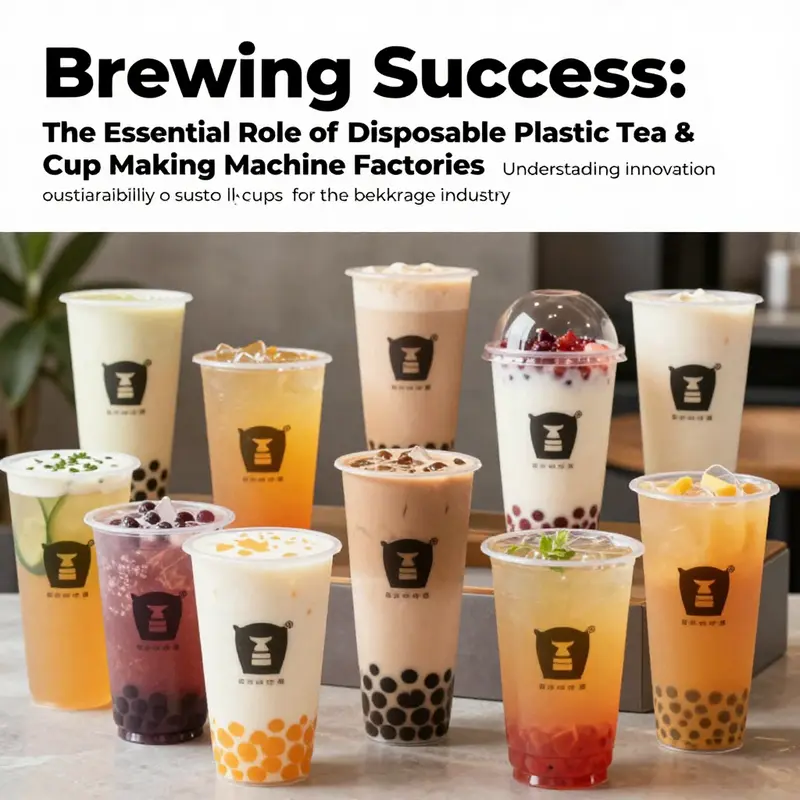
The world of beverages, particularly bubble tea and specialty drinks, depends heavily on the reliable supply of disposable plastic tea cups. This vital link in the chain is made possible through specialized factories dedicated to manufacturing these cups. As consumer demands evolve and sustainability becomes increasingly prioritized, the role of disposable plastic tea cup making machine factories expands beyond mere production. In the chapters to follow, a deeper exploration will uncover how technological innovations enhance production, the economic impact on global and local markets, and the environmental considerations that shape sustainable practices among cup manufacturers. Each of these facets interconnects to paint a comprehensive picture of how these factories contribute significantly to the beverage industry’s efficiency and ecological footprint.
The Engine Behind the Cup: How Disposable Plastic Tea Cup Making Machines Drive Scale, Speed, and Sustainability
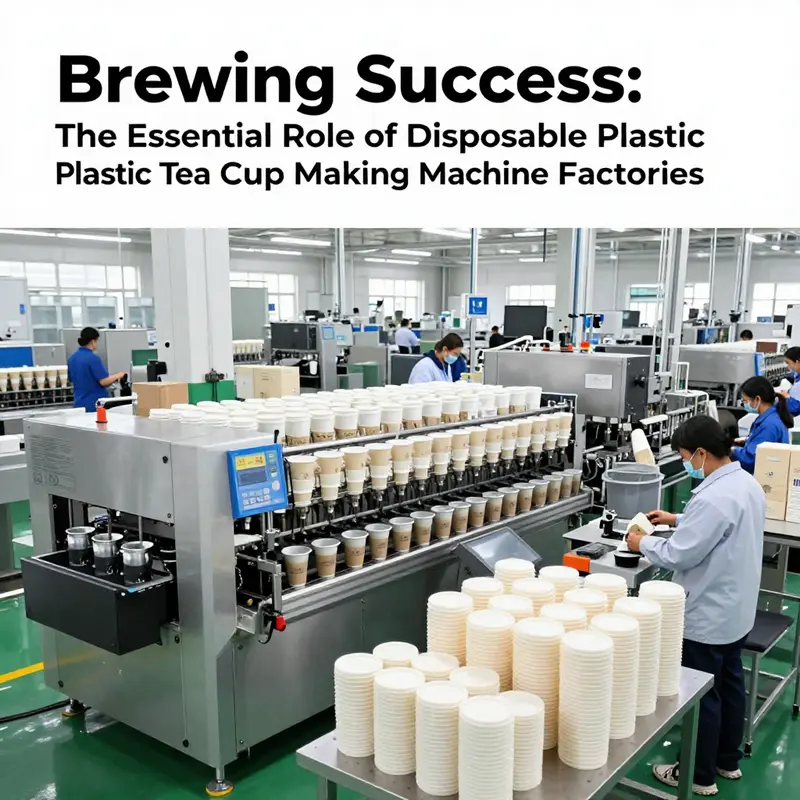
Beneath every disposable tea cup used in a cafe, at a festival, or in a doorstep delivery, there is a choreography of heat, pressure, and precision. The factories that produce these cups and the machines that shape them sit at the intersection of materials science, automation engineering, and environmental responsibility. They turn flat thermoplastic sheets into hollow vessels with reliability that customers rarely see but rely on. This chapter explores how these machines operate, what capabilities define modern lines, and why the industry cares about speed, safety, and adaptability alongside sustainability.
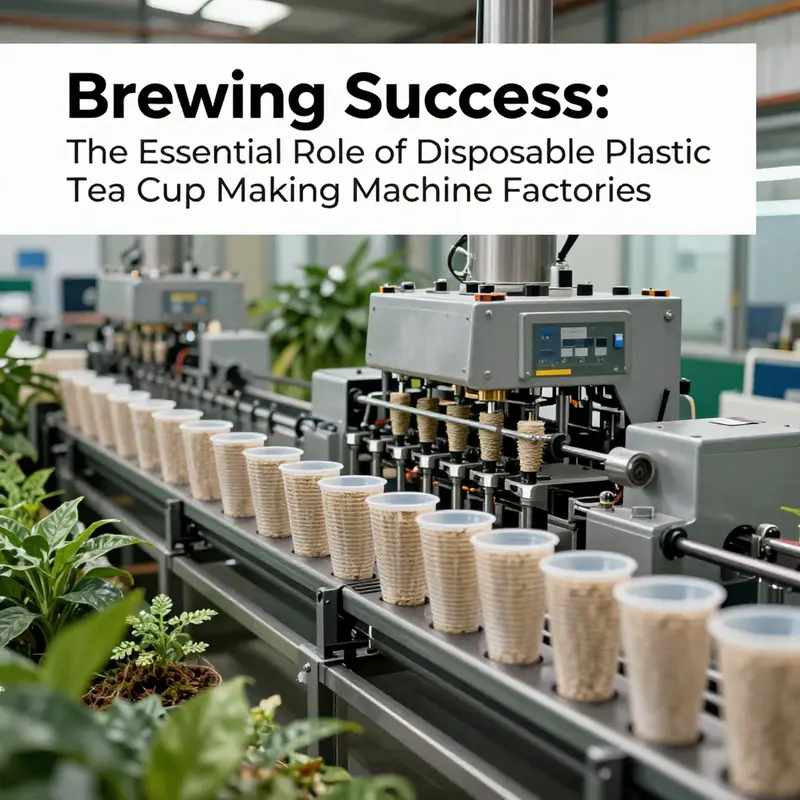
Thermoforming stands at the core of most disposable cup production. A heated sheet of plastic such as polypropylene, polystyrene, or polyethylene terephthalate softens to a pliable state. A forming tool then defines the cup geometry, while vacuum or mechanical pressure draws the sheet into the mold. Modern lines are designed for high throughput, with cycling rates that reach several tens of cycles per minute in the best configurations. This speed reflects the coordination of heating, platen motion, mold temperature, and post forming steps like trimming and edge finishing.
Automation and control reduce waste and raise consistency. Programmable logic controllers, sensors, and feedback loops monitor temperatures, cycle times, vacuum strength, and motor currents. When readings stray from targets, the system can adjust in real time to maintain wall thickness and rim integrity while minimizing scrap.
Material versatility is also central. Traditional options such as polypropylene and polystyrene remain common for performance and cost, while PET offers clarity and recyclability in some streams. Increasingly, lines are designed to handle a range of thicknesses from about 0.2 to 1.2 millimeters, enabling compact cups through to sturdier designs. Many lines can switch between materials with minimal retooling, enabling seasonality and regional demand to be served without a full equipment overhaul.
Modularity and automation underpin scalability. Feeding systems present pre cut sheets to the forming station with limited operator intervention, and automation continues through trimming, stacking, quality checks, and packaging. A single line can produce a family of cup sizes and rim diameters on a shared platform. The ability to tune geometry, finish, and branding without rebuilding the line is a practical competitive edge.
Quality control has moved from manual inspection to predictive, data driven monitoring. AI driven checks may monitor wall consistency, rim integrity, and surface finish. When defects are detected, the system can tweak forming pressure, adjust temperature bands, or reroute cycles to protect yield and uptime.
Safety, hygiene, and regulatory compliance are essential. Food contact lines use stainless steel, smooth welds, and cleanable surfaces. Documentation and certifications matter, including CE and ISO marks, and operators benefit from clear safety interlocks and easy access for cleaning.
Sustainability remains a strategic lens. Manufacturers explore bioplastics and recycled content while optimizing energy use and reducing waste. Heat recovery, lean trimming, and efficient drive systems help cut energy and material losses. Lines are designed to integrate with recycling streams or compostables as markets evolve, supporting brands that seek cleaner end of life options.
The value of these machines is measured not just by speed but by adaptability. A line that can switch cup geometries, base strengths, or branding themes without a full retooling offers resilience in volatile markets. Procurement decisions, supplier networks, and service availability all influence uptime and total cost of ownership.
People make the difference. Engineers tune the line, operators run it with discipline, and buyers balance many tradeoffs to choose the best match. The resulting ecosystem is a scalable, reliable platform that enables cafes and retailers to deliver convenient, hygienic beverages with confidence.
As sustainability narratives grow, customers expect not only performance but responsibility. Manufacturers increasingly align process choices with greener packaging and evolving regulations, building a supply chain that can flex between speed, cost, and environmental goals.
Molding the Future: Advanced Machines at the Heart of Disposable Tea Cup Production
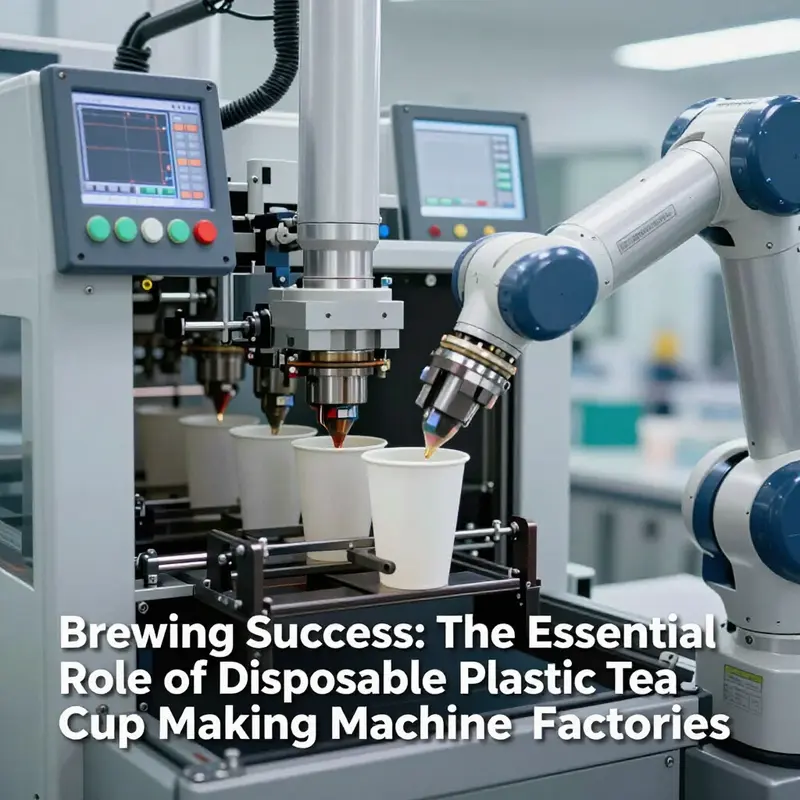
The manufacturing floor that shapes the disposable tea cup is no longer a quiet echo of metal and steam. It has become a living ecosystem where automation, data streams, and modular design converge to push the boundaries of what a single-use cup can be. Factories that produce these cups are transitioning from pressed analogs of old workflows to digitized, interconnected systems. In this environment, Industry 4.0 practices are not a luxury but a baseline expectation. Real-time monitoring, predictive maintenance, and smart control software weave through every corner of the line, turning machine behavior into actionable intelligence. Operators who once read gauges and clocked cycles now rely on dashboards that translate heat, pressure, temperature, and flow into a single narrative of efficiency. The result is a stable, auditable, and responsive process that can meet both the brisk demands of large-scale brands and the nuanced requirements of small cafes seeking consistent quality with a specific cup geometry. This shift is changing the very definition of a reliable cup line, moving it from a pure throughput machine to a responsive system capable of adjusting to design changes, material shifts, and seasonal demand without sacrificing speed or safety.
Across the industry, the better lines deliver not just speed but precision. Modern configurations routinely produce between four hundred and six hundred leak-proof, hot-drink-ready cups per hour. That rate sits beside enhancements in seam integrity, wall thickness uniformity, and leak testing, all of which minimize post-production waste and customer complaints. The cups leave the forming station with tighter tolerances, which reduces the need for downstream rework and rejections—a crucial factor when margins are tight and end-users expect consistent performance, whether the cups are used for hot tea or iced beverages. The emphasis on precision has a direct influence on material usage; smarter lines optimize the amount of plastic in each cup, striking a balance between rigidity and weight while maintaining heat resistance and a comfortable hand feel. In practice, this means fewer pieces discarded due to minor defects and more predictable costs in the procurement cycle, even when raw material prices swing.
One of the most striking shifts in capability is the widening of material compatibility. The latest generation of equipment can process a spectrum of plastics, including PET, PS, PVC, and HIPS, enabling manufacturers to tailor product lines to different markets and regulatory environments. This versatility is not merely about closing the loop with suppliers; it is about product flexibility—an essential feature when a single factory supports multiple brands, each with its own packaging aesthetics and performance criteria. The ability to switch among materials without a costly rebuild means new cup designs can be tested and released with shorter lead times. It also opens doors to alternate price points and end-use specifications, from beverage-service contexts that demand transparency in barrier properties to packaging ecosystems where recyclability and municipal guidelines shape material choices. Thermoforming remains at the core of these capabilities, with both vacuum and pressure forming enabling a range of geometries and sizes. In these lines, heated PP sheets are drawn into precise molds, producing cups whose geometry ranges from classic cylindrical profiles to more specialized shapes that optimize stacking, stacking stability in cartons, or grip ergonomics for hot beverages. The geometry itself becomes a strategic variable, linked to downstream filling lines, lid compatibility, and branding opportunities, all of which hinge on the reliability of the forming station and the repeatability of the mold-set.
A quiet but pervasive trend is modular machine design. Rather than a single monolithic unit, modern lines are built from modular blocks that can be swapped, upgraded, or reconfigured with minimal downtime. This approach reduces the cost of expansion and allows factories to retool for new cup sizes or branding campaigns in a matter of hours rather than weeks. Changeovers—historically a source of slowdowns—have become controlled, predictable events guided by standardized procedures and digitized recipe management. Operators can recall a design profile for a new batch, adjust process parameters through an interface, and monitor results in real time as the line self-balances. The practical effect is resilience: as consumer preferences shift or as seasonal promotions demand different cup profiles, the same line can accommodate these needs without inviting disruption to overall throughput. It also enables regional customization—factories serving diverse markets can configure lines to produce region-specific sizes and shapes, aligning manufacturing with local beverage sizes and branding needs without sprawling capital investments.
Behind the visible advances in forming and modularity lies a deeper transformation: automation and real-time data integration across the entire production stack. The most forward-looking factories integrate smart controls that orchestrate multiple stages—from sheet feeding and heating to forming, trimming, and quality checks—through centralized software ecosystems. The PLCs, sensors, and control software speak the language of continuous improvement. Data streams from forming stations reveal wall thickness distributions, mold temperatures, and cycle timing, while downstream stations report on seam integrity, finish quality, and leak tests. When deviations occur, the system can automatically adjust parameters or trigger a diagnostic protocol to prevent defect propagation. Predictive maintenance, driven by vibration analysis, temperature trends, and tool wear metrics, reduces surprise downtime and extends the life of expensive forming tools and seals. In practice, this means fewer unplanned stoppages, shorter maintenance windows, and more stable production calendars. AI-enabled quality control is emerging as a staple on some lines, providing a probabilistic assessment of cup quality in near real time and flagging subtle anomalies that human inspectors might miss. The net effect is a production environment where quality is built into the process, not merely inspected at the end.
Sustainability sits at the heart of these innovations as well. An increasing share of lines is designed to handle eco-friendly or recycled feedstocks, and some manufacturers experiment with bioplastics such as PLA while maintaining compatibility with conventional materials where markets permit. The trend reflects growing consumer and regulatory pressures to reduce environmental impact, not by compromising performance but by rethinking material paths and energy use. The newer lines emphasize low energy consumption, shorter cycle times that reduce overall energy per cup, and closed-loop cooling strategies that reclaim heat and minimize waste. Lightweight cups that still provide structural integrity are a key design objective, allowing more cups to be produced per kilowatt-hour and reducing the downstream carbon footprint when transported in bulk. Observers recognize that sustainability is not a single feature but a system property—an amalgam of material choice, process efficiency, and waste management practices that collectively define the environmental profile of a given cup line.
Customizability remains a driving force in the equipment landscape. A central appeal of modern machines is the ease with which they can be adapted to reflect regional preferences, branding specifics, and regulatory constraints. This often translates to modular tooling suites that enable quick swaps between cup diameters, wall thicknesses, and sealing configurations. It also extends to lineage compatibility: lines are designed to integrate with lid formation, folding, or attachment options, so a single platform can support end-to-end cup systems without costly reconfiguration. As a result, small and mid-sized enterprises—once discouraged by the need to own multiple specialized lines—now pursue flexible configurations that can grow with their portfolios. In practice, this fosters a more dynamic market where designers and brand owners can prototype new cup concepts, test market responses, and scale production rapidly when a design demonstrates strong consumer appeal.
For readers who are tracking the broader packaging ecosystem, the evolution of cup machinery is inextricably linked to adjacent packaging choices. As brands weigh the merits of plastic versus paper and hybrid solutions, the ability to produce leak-proof, hot-drink-ready cups with predictable performance becomes a strategic advantage. Even as some operators diversify into sustainable alternatives, the core technical challenge remains: forming reliable, safe, and recyclable cups at scale. The resulting market reality is a spectrum of capabilities, where some lines emphasize ultra-high throughput and extreme precision, while others highlight ecological compatibility and modular adaptation. Buyers, auditors, and designers are increasingly looking for a balanced combination of certifications, process visibility, and the flexibility to align with evolving regulatory and consumer expectations. In this context, factory audits, sample production runs, and detailed technical specifications are essential steps before committing to a particular line, since the most effective machines are those that harmonize throughput, quality, adaptability, and sustainability within the constraints of a given operation.
For practitioners and decision-makers exploring these technologies, there is a practical takeaway that extends beyond the shop floor. The integration of automation, real-time monitoring, and modular design is not simply about faster production. It is about building a learning organization where data informs every decision—from material selection and geometry to energy usage and waste management. The most successful plants cultivate a feedback loop in which process parameters, product performance, and environmental metrics are continuously measured, analyzed, and acted upon. When a line proves capable of producing hundreds of consistently shaped cups per hour under a controlled energy budget, with options to retool for new designs in hours rather than weeks, it becomes not just a supplier of cups but a platform for packaging innovation. And as digital twins of these lines grow more accurate, planners can simulate new cup formats, foresee bottlenecks, and plan capital investments with greater confidence.
To connect this technological trajectory with tangible choices, consider the evolving landscape of packaging options that accompany cup production. For brands seeking to pilot eco-inspired designs or to reach markets with strict compostability or recyclability requirements, modular lines and smart process controls provide a path to experimentation without sacrificing reliability. For instance, the adoption of an option like a disposable takeaway paper cup with lid can be a strategic adjunct for brands testing new service formats or branding concepts in a controlled environment, while continuing to rely on established plastic cup lines for core volumes. This kind of hybrid packaging strategy, supported by capable forming lines, enables a smoother transition toward sustainability without abrupt disruptions to supply chains. See for yourself how such packaging options align with broader product strategies and manufacturing capabilities, under the umbrella of adaptable, data-driven production. disposable takeaway paper cup with lid.
For a broader view of market dynamics and the direction of automation, material science, and scale in the plastic cup making machinery sector, broader industry analyses offer valuable context. They chart how these advanced lines are evolving in response to demand patterns, regulatory changes, and sustainability imperatives, providing a roadmap for investment and benchmarking. A comprehensive external resource that outlines these trends, including growth projections and technology adoption, can be found here: https://www.marketsandmarkets.com/MarketReports/plastic-cup-making-machines-market-1957.html.
From Local Assembly Lines to Global Shelves: The Economic Footprint of Disposable Plastic Tea Cup Machinery
The disposable plastic tea cup is more than a single use item; it is a node in a global network of labor, supply chains, and capital investment that hinges on dedicated machine factories. In regions where thermoforming and cup production clusters have grown, these facilities act as employment engines and catalysts for ancillary industries. The economic footprint unfolds in layers: on the factory floor, operations teams keep lines running; in the service and logistics ecosystem, warehousing, maintenance, and spare parts supply follow the rhythm of production.\n\nBeyond direct jobs, local suppliers of resins, films, liners, and tooling become more viable, while mold makers, automation software developers, and packaging service firms build complementary capabilities. This creates a localized economic spine that supports nearby communities even as demand for single use cups remains steady.\n\nInfrastructure often follows these footprints. Roads, utilities, and rail connections expand to meet throughput, and municipal planning begins to factor in shift schedules, downtime, and energy use. In policy friendly regions, governments see these factories as vehicles for technology transfer and industrial modernization, not just output.\n\nGlobally, the appeal of reliable, low-cost packaging grows with the consumption of beverages on the go. High speed lines driven by servo feeding and PLC controls form the backbone of modern cup production, enabling mass outputs that serve fast food, coffee shops, and retailers. The economics hinge on utilization, maintenance costs, energy intensity, and the ability to diversify product ranges.\n\nCapacity to switch materials or cup designs with minimal downtime adds resilience. Some facilities experiment with recyclable polymers or bioplastics, while others tailor lines to different thicknesses and multi material streams. This adaptability translates into competitive advantage for producers able to respond to seasonal demand or brand campaigns without long idle periods.\n\nGlobally, competition and sustainability imperatives shape investment. Companies are pressured to improve line efficiency, cut scrap, and demonstrate energy stewardship. The result is a packaging economy where equipment makers, component suppliers, and end users share the benefits of higher throughput, lower costs, and better traceability, while compliance with safety and hygiene standards remains a non negotiable baseline.
Brewing a Greener Path: Environmental Realities and Innovations in Disposable Plastic Tea Cup Machinery
Factories that manufacture disposable plastic tea cups sit at a crossroads where appetite for convenience intersects with growing concerns about resource use and pollution. The very materials that enable light, stackable, and low-cost cups—polypropylene and polystyrene—are derived from fossil fuels and carry embedded risks whenever waste streams are mismanaged. In the best-case scenario, these factories operate within tightly controlled systems that minimize energy use, reclaim heat, and reuse scraps. In practice, however, the scale of production and the sheer speed of thermoforming and blow molding lines push energy intensity to significant levels. The resulting carbon footprint and waste challenges ripple through the supply chain, prompting brands and manufacturers alike to rethink every stage of the cup’s life, from resin selection to end-of-life disposition. Material choice shapes environmental outcomes as much as process selection, for PP and PS offer durability and heat resistance, but they also lock producers into cyclical material streams that rely on virgin resins unless recapture systems are in place. The life cycle assessment of a disposable tea cup reveals that even modest improvements in wall thickness or lid compatibility can cut material use and energy demand proportionally. Designers and engineers increasingly weigh the trade-offs between rigidity, heat tolerance, and recyclability. Where possible, some facilities are experimenting with recycled polymer inputs, such as rPP and rPS, to close the loop, though quality and contamination concerns require careful sorting, cleaning, and extrusion controls. The broader aim is to move toward materials that retain performance while enhancing recyclability, which also reduces the environmental footprint per unit produced. Energy is the other major axis of impact. Thermoforming and blow molding stages demand large thermal inputs, sometimes with limited opportunities for heat recapture in older lines. Modern plants pursue energy efficiency through faster cycle rates paired with smarter cooling, better insulation, and variable-speed drives that align power use with actual output. Even small gains in equipment efficiency translate into noticeable reductions when multiplied across millions of cups. The integration of intelligent control systems helps operators monitor energy metrics in real time, enabling adjustments that prevent overheating, unnecessary preheating, or idle periods. When coupled with proactive maintenance, these systems reduce unplanned downtime that otherwise manifests as energy waste and material scrap. End-of-life considerations loom large. The abundant production of single-use cups contributes to landfill mass and litter if collection and recycling channels are weak. In a mature circular economy, closed-loop recycling streams are established to collect post-consumer cups, clean them, and reprocess them into feedstock for new cups or other products. But this ideal requires separate collection, robust sorting technologies, and consistent resin quality. In practice, most cups end up far from closed loops, underscoring the need for design for recyclability: uniform resin type, clearly identifiable recycling codes, easy separation of lids and sleeves, and the ability to withstand typical beverage temperatures without compromising integrity in the recycling process. These design choices, though subtle, determine whether a cup contributes to waste or becomes raw material for a new item. Across the industry, sustainable manufacturing practices are no longer niche experiments. They are part of a broader operational philosophy. Production efficiency becomes a sustainability tactic when it reduces waste, cuts energy use, and lowers emissions. Factories that optimize sheet utilization and scrap recovery minimize raw material losses, while energy-efficient machinery and better process control slash carbon footprints. The use of recycled plastics in new cups demonstrates commitment to circularity, but it also raises challenges in color control, odor management, and regulatory compliance. In some environments, blending rPP and virgin resin may be the best balance of performance, cost, and sustainability, provided that process controls maintain product safety and consumer acceptance. For facilities aiming to align with green certifications, documenting traceability, material provenance, and waste diversion metrics becomes essential, not optional. Biodegradable alternatives, notably plant-based polymers such as polylactic acid, appear as attractive options for those seeking compostability and reduced fossil fuel dependence. Yet PLA and similar bioplastics face hurdles that keep them from universal adoption in hot beverage cups: heat resistance, mechanical strength under hot liquids, and the economics of mass production. Some trials show promise for heat-stable blends or multilayer structures that preserve barrier properties while enabling compostability, but scale and cost remain limiting factors. Consequently, many manufacturers regard bioplastics as a supplementary path rather than a complete replacement for conventional plastics. The ongoing research in material science, coupled with consumer and regulatory dynamics, will determine how quickly such alternatives gain widespread footing in high-volume cup production. Looking ahead, the industry eyeing sustainability is increasingly embracing the concept of reusable cup systems. Automated cup-making technology can support larger, more durable designs that withstand repeated washing and extended lifetimes without compromising hygiene or safety. In practice, this translates into a reimagining of product design, where the aim is to reduce overall resource consumption per beverage served by encouraging reuse rather than disposal. Regulatory frameworks and brand mandates that favor reuse, refill, and return schemes can accelerate this transition, while still requiring cost-effective manufacturing and reliable performance. The tension between single-use convenience and reusable durability will shape investment decisions in machinery, automation, and supplier partnerships for years to come. Regulatory pressures and consumer expectations are converging to push the sector toward clearer labels, better recyclability, and more transparent supply chains. Compliance regimes increasingly demand traceability from resin source through final product, as well as scrupulous waste management reporting. For incumbents, meeting these demands means integrating data collection into daily operations, from resin weigh stations to waste disposal logs. At the same time, public and private sector incentives encourage energy audits, efficiency upgrades, and the adoption of quieter, cleaner production lines. The most successful factories view regulation not as a constraint but as a driver for innovation, pushing them to optimize equations of performance, cost, and environmental responsibility in tandem. Within this evolving landscape, the practical path for factories rests on a mix of preventative maintenance, smarter design, and supply chain collaboration. Predictive maintenance minimizes unplanned outages that cause energy spikes and material waste. When machines are stopped only for routine checks rather than unexpected failures, heat losses are reduced and cycle times stay predictable. Collaboration with material suppliers helps ensure resin quality and recyclability are aligned with process capabilities. And collaboration with waste collectors and recyclers can close the loop, enabling post-consumer cups to re-enter production streams more efficiently. The net effect is a system where environmental performance is not an afterthought but a core performance metric integrated into every batch, every shift, and every line. This systems thinking—linking design, manufacturing, and end-of-life recovery—defines the new baseline for sustainable cup manufacturing. For those exploring concrete avenues of greener packaging design, one example centers on eco-friendly recyclable pulp take-away cup holders designed to sit alongside traditional cups in mixed-material environments. eco-friendly recyclable pulp take-away cup holder. For deeper, global market perspectives on sustainable packaging, see the Sustainable Plastic Packaging Market report. (External resource) https://www.researchandmarkets.com/reports/598432/sustainable-plastic-packaging-market-global-industry-trends
Final thoughts
Disposable plastic tea cup making machine factories are not merely producers of cups; they are integral to the broader beverage industry ecosystem. By understanding their role, innovations, and the economic and environmental challenges they face, businesses can align themselves with suppliers that not only offer quality but also share a commitment to sustainability. As the demand for eco-friendly solutions grows, these factories are in a unique position to adapt and thrive. Engaging with them can lead to better products and practices that resonate with today’s environmentally conscious consumer base.