
Disposable plastic Solo cups have become synonymous with gatherings, from vibrant parties to casual get-togethers. Their durability, practicality, and distinctive design make them an easy choice for beverage service across various sectors, including bubble tea shops, restaurants, food trucks, and event planning. However, as these cups continue to be a household staple, they also represent the complexities tied to environmental sustainability, economic considerations, and cultural significance in social settings. In this article, we will delve into the environmental impact of disposable plastic Solo cups, examine the economic aspects surrounding their market, and highlight their cultural role in social gatherings, providing a holistic view that informs better decision-making for businesses in the food and beverage industry.
From Red Cup to Rising Tide: The Hidden Footprint of Disposable Plastic Solo Cups
The familiar red Solo cup is more than a symbol of casual gatherings and carefree toasts. It is a workhorse of modern hospitality, a thin shield between a drink and a moment of social ease. Yet behind the unmistakable color lies a complex story about materials, energy, waste, and the long tail of a product designed for single-use. In the language of environmental impact, the disposable plastic Solo cup is a small unit with a disproportionately large footprint, a reminder that what we reach for in the moment of celebration can carry consequences we may not immediately see. This chapter follows that footprint from cradle to grave, tracing not only the physical path of the cup but the broader system that shapes its fate—from the fossil-fueled chemistry that creates its resin to the recycling realities, littered landscapes, and the quiet but real health and ecological considerations that accompany any material designed to vanish after a short moment of use. It is a narrative about the tension between convenience and stewardship, a conversation that asks readers to weigh moments of instant gratification against the slow, substantial costs that accumulate when millions of such cups are used and discarded each day.
The most common disposable Solo cups are rooted in two plastics: polystyrene (PS) and polypropylene (PP). Each resin comes with its own set of advantages and drawbacks, but both are tethered to fossil fuels and energy-intensive manufacturing processes. Polystyrene, with its lightness and clear, rigid quality, has long been favored for beverages because it resists cracking and feels sturdy in the hand even when filled. Polypropylene, by contrast, offers flexibility and heat resistance that can suit hot drinks and varied temperatures, though it can be less rigid and more prone to deformation under pressure. The production of these materials is not merely about molding resin into a cup; it is the conversion of raw hydrocarbons into a supply chain that moves through polymerization, resin compounding, extrusion, molding, quality checks, and packaging for bulk distribution. The energy requirements at each stage accumulate, and with petrochemical feedstocks as the foundational input, the greenhouse gas emissions associated with this lifecycle are a persistent concern. When we consider the entire lifecycle, from extraction to end-of-life, the carbon imprint of disposable cups grows beyond the cup itself, expanding into the energy footprint of the facilities, the transportation fleets that haul them to venues, and the packaging that surrounds them in bulk lots. In many ways, the red cup stands as a symbol of a larger industrial system that prizes speed, uniformity, and low unit cost, often at the expense of longer-term environmental accounting.
A critical challenge in evaluating the environmental impact lies in end-of-life dynamics. The vast majority of disposable cups—whether PS or PP—are not recycled in practice, despite the existence of recycling streams for certain plastics. Official metrics from the Environmental Protection Agency illustrate a disconcerting reality: only a minority of plastic ever produced is ultimately recycled, with estimates capturing a figure around 9 percent for plastics in the broad sense. This figure underscores a paradox at the heart of disposable culture: the widespread ability to batch these cups for disposal does not translate into commensurate recycling rates. In the real world, a significant portion of discarded cups end up in landfills, incinerators, or, worse, as litter that migrates into streets, waterways, and natural habitats. The cumulative effect of this end-of-life pattern is a long-tail environmental burden. When a cup takes its last breath in a landfill or is burned in an incinerator, its material does not simply disappear; it lingers, contributing to long-lasting pollution that can persist for decades and, in some settings, centuries.
Deeper into the lifecycle, the issue morphs into a chemical and ecological puzzle. Even when some cups are disposed of properly, the degradation process is not clean or neutral. The infrastructure of degradation means that polystyrene and polypropylene can fragment into microplastics—tiny particles that pervade oceans, soils, and potentially human environments. Studies in various contexts note that microplastic fragments can be detected in water, sediments, and even blood, prompting concerns about exposure pathways that were previously unforeseen. The general statement that plastic will simply fade away is false; it transforms, fragments, and travels, with the potential to accumulate in ecosystems and bioaccumulate through food webs. A provocative observation from comparative degradation research emphasizes that degradation data are highly product-specific. The behavior of a PP cup with attention to additive packages, stabilization technology, and any biobased blends will differ from another cup’s trajectory. This nuance matters because it challenges the temptation to apply a one-size-fits-all conclusion about “how long it lasts” or “how quickly it breaks down.” In practice, the cup we pick up for a 15-minute beverage can contribute to environmental persistence that outlives the moment of use by a factor of centuries, especially when mismanaged in the environment.
Beyond the physics of materials, the ecological consequences of widespread disposable cup use stretch into biodiversity and ecosystem services. Plastic pollution is not a neutral input in an environment; it is a form of intrusion that disrupts habitats, harms wildlife, and reduces the resilience of ecosystems. Birds and marine life encounter cups and their fragments as snares, ingestibles, or entanglement hazards. Terrestrial and aquatic food chains can absorb microplastics and associated chemicals, with potential consequences for organism health, reproduction, and population dynamics. The global scale of consumption amplifies these risks; even a single use in a festival, a stadium, or a backyard party reverberates through a system that is already stressed by multiple pressures, including climate anomalies, invasive species, and habitat fragmentation. In this sense, the red cup becomes a symbol not only of a party trick or a convenience item but of the broader costs that accompany mass-produced, single-use plastics when the waste system and the natural environment must absorb what remains after the party ends.
Health considerations, while often discussed in consumer terms, are a practical lens through which to view the risks associated with disposable cups, especially when heat is involved. BPA (bisphenol A) has historically attracted attention as a chemical of concern in some plastics, particularly polycarbonates and other resin systems; while many brands now market “BPA-free” products, the broader landscape of chemical additives may still pose health questions. Phthalates and other plasticizers have also raised concerns as potential endocrine disruptors, with evolving research suggesting that replacement additives in BPA-free or otherwise modified plastics can carry their own hazards under certain conditions, such as high temperatures or prolonged contact with liquids. The health discourse is not static; it reflects ongoing inquiries into how materials interact with stored beverages, how heat accelerates leaching, and how repeated use or improper cleaning can alter risk profiles. While most disposable cups are intended for single use and not subjected to repeated high-heat exposure, the specter of chemical leaching looms in conversations about safety, consumer behavior, and risk management for venues that serve hot beverages or carefully calibrated cocktail settings.
This constellation of material choice, production energy, end-of-life management, and ecological and health considerations frames a broader question about sustainable practice. If a culture of convenience continues to normalize single-use cups, a parallel conversation emerges about alternatives that reduce environmental burden without sacrificing practical benefits. Reusables—stainless steel, glass, or durable plastics designed for repeated cleaning—offer a different trajectory. Their upfront energy and materials costs are higher, but the long-term impacts can be substantially lower when measured not just in per-use cost but in lifetime emissions, waste generation, and resource depletion. Similarly, compostable or biodegradable cups promise a more friendly end-of-life profile, but only if composting infrastructure exists and if the product’s industrial composting conditions are met. In many places, home composting or curbside programs are not designed to handle the scale of such materials; thus, a compostable label does not automatically translate into lower environmental impact. The most robust insight from the lifecycle perspective is that a holistic approach—considering material choice, design for recycling, end-of-life infrastructure, consumer behavior, and policy support—will determine whether a disposable cup’s footprint remains a localized inconvenience or becomes a measurable pressure on planetary boundaries.
The data that shapes this chapter come from a mix of lifecycle studies, regulatory assessments, and field observations. A salient reference point is the EPA’s Plastics Waste Management framework, which documents the volume of plastic waste generated, the rates of recycling, and the pathways through which plastics enter the environment. This framework is not merely a catalog of numbers; it is a lens for understanding where the biggest wins can occur. In many contexts, gains come not from a single technology but from a combination of improved design (reducing material use or enabling easier recycling), expanded recycling and composting infrastructure, and shifts in consumer norms toward reuse and responsibility. The pathway from a crowded party scene to a cleaner, more resilient environment passes through choices made at the point of sale, the waste streams that cities and campuses invest in, and the everyday decisions of households. The chapter’s argument is not to demonize a familiar product but to illuminate how our social rituals intersect with material reality, and to spark conversations about what sustainable celebration could look like if we harmonize convenience with care.
To anchor this exploration with a concrete note on alternatives and practical steps, consider the possibility of moving toward more sustainable options in event settings and everyday usage. Some organizers opt for durable serveware that can be washed and reused, a choice that significantly reduces waste and, over time, lowers the per-event environmental cost. Others explore recyclable or compostable options that align with local waste streams and infrastructure. The key is alignment: product design that minimizes resource use, packaging that simplifies recovery, and waste management systems that can actually capture the material after use. Even within a culture that prizes quick cleanup and low upfront costs, there is room for strategic shifts—toward products and practices that honor both social enjoyment and environmental stewardship. This is not a call for restraint that stifles sociability; rather, it is an invitation to reimagine how gatherings are hosted, how supplies are chosen, and how waste is handled so that celebrations leave a lighter footprint than they did before.
For readers seeking practical directions amid these big ideas, it helps to view alternatives as a spectrum rather than a binary choice. On one end lies the traditional single-use cup, prized for cost and simplicity. On the other lies a spectrum of reusables, from stainless steel tumblers to durable, dishwasher-safe plastic cups designed for multiple cycles. In between, there are recyclable and compostable options that depend heavily on local waste infrastructure. Each option brings its own trade-offs: the energy costs of washing and the water use of reusables; the logistics of coordinating waste streams for recyclables; the availability and reliability of composting facilities for compostables. A district or institution that aims for lower environmental impact may pursue a hybrid strategy: promote reusables for venues that can support washing cycles and invest in clear labeling for recyclable and compostable streams; encourage the use of eco-friendly paper or plant-based alternatives where feasible; and implement education and signage to ensure proper disposal. All of these choices require planning, investment, and a willingness to measure outcomes rather than rely on perception alone. Yet the potential payoff is meaningful: reduced waste generation, less litter, and a more transparent alignment between the celebration’s social energy and the environmental responsibility that accompanies it.
In sum, the environmental footprint of disposable plastic Solo cups is a multi-faceted topic that extends beyond the moment a drink is poured. It encompasses the energy and materials that create the cup, the pathways and rates at which cups are recovered or discarded, the long tail of degradation and microplastic formation, the ecological and health implications of chemical exposure, and the social and policy contexts that shape waste management. Understanding these connections is not about assigning blame for a single product but about recognizing how everyday choices contribute to larger environmental patterns. It invites a more deliberate approach to how we plan events, purchase supplies, and design waste systems—an approach that respects both human sociability and the integrity of the environments we inhabit. And as readers move through the rest of this article, they will encounter a set of practical prompts aimed at translating these insights into tangible practices, from smarter procurement decisions to community-level efforts that reduce reliance on disposable cups while preserving the ease and joy of shared experiences.
In the spirit of concrete action, consider this practical pivot: when planning a gathering, ask whether a portion of the budget could be redirected toward durable serveware for future events or toward partnerships with venues that support robust reuse programs. If consumption of disposable cups is unavoidable, ensure the chosen option aligns with local recycling or composting capabilities, and advocate for clearer labeling and better collection infrastructure. While the path to a less wasteful culture does not hinge on one universal solution, it benefits greatly from thoughtful, system-wide choices that integrate product design, waste management, and consumer behavior. Through such integrated planning, communities can reduce the environmental burden of celebrations without sacrificing the spontaneity, connection, and joy that gatherings foster. The challenge is not merely technical; it is cultural, economic, and political as well, requiring collaboration among manufacturers, waste managers, policymakers, and everyday people who want to celebrate with care.
For readers who wish to explore concrete alternatives further, there are resources that illustrate how companies and institutions are experimenting with eco-friendly options and how waste streams can be optimized to respond to a more circular economy. One avenue is to examine products designed with enhanced recyclability or compostability, or those crafted to be part of a local, well-managed recovery infrastructure. The transition toward more sustainable choices does not imply giving up the social rituals that cups support; it implies rethinking how those rituals are sustained in a way that respects planetary boundaries. In the end, the red cup’s story is not just about a beverage container. It is about the forces that shape consumption, the systems that manage waste, and the everyday decisions that determine whether a celebration leaves a cleaner, healthier world for the next generation to raise a toast in.
To connect this discussion to practical pathways, consider the role of product labeling and consumer education in shaping disposal behavior. Clear guidance on whether a cup is recyclable in a given locale, whether it should be placed in a composting stream, or whether it is better to choose a reusable option at the outset can influence how mass audiences handle waste. Additionally, partnerships between event organizers and waste management services can streamline the process, turning a chaotic post-event cleanup into an efficient, learnable practice that reduces contamination and increases recovery rates. In places where municipal systems are supported by strong recycling and composting networks, even a moderate shift away from disposables can translate into measurable improvements over time. The ethical dimension—minimizing harm to ecosystems and communities while still providing spaces for social connection—rests on our willingness to invest in better systems and better choices.
With these reflections in mind, the environmental impact of disposable plastic Solo cups becomes less a line item and more a narrative arc about how societies choose to package sociability. It invites readers to see beyond the moment of the toast and to consider the long arc of material use, waste, and recovery. It is a call to align the convenience of a familiar party staple with the responsibility owed to waterways, soils, and living beings that share our planet. By embracing a more informed, systems-aware approach, communities can enjoy gatherings while contributing to a healthier, more sustainable environmental trajectory. The path forward may require compromise and experimentation, but it also offers opportunities for creativity—redesigned events, smarter supply chains, and a cultural shift that treats celebrations as occasions to honor both human connection and the integrity of the world we all depend on.
For readers who want to explore related sustainable options, see the discussion on eco-friendly alternatives such as disposable-eco-friendly-cold-beverage-cup-paper-cup-with-lid, which points toward plant-based and recyclable designs that complement a broader strategy of reducing single-use waste while preserving practical convenience. disposable-eco-friendly-cold-beverage-cup-paper-cup-with-lid as a reference point for how some markets are framing the shift toward more responsible beverage containers. In addition, the literature on plastics waste management, including core EPA analyses, provides foundational context for understanding what a more effective waste landscape might entail for future policy and practice. External resources at the EPA’s Plastics Waste Management pages offer indicators of where improvements can be implemented and how progress can be tracked over time. EPA Plastics Waste Management
From Low-Cost Vessels to Policy Pressures: The Economic Currents Behind Disposable Plastic Cups
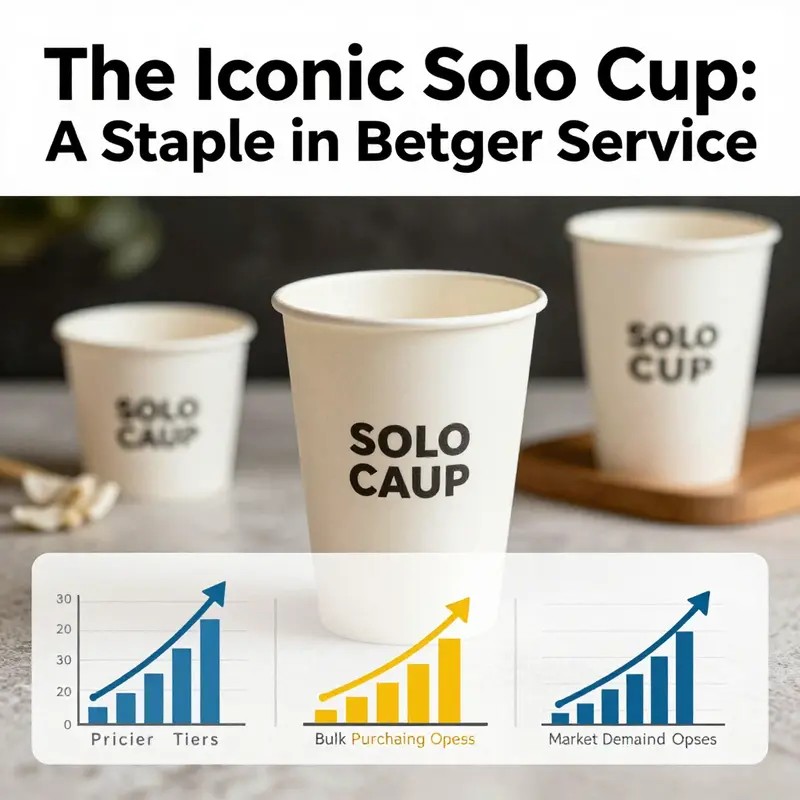
The economics of disposable plastic cups sits at the intersection of mass production, consumer demand, and policy dynamics that shape how inexpensive, single use vessels move through hospitality, events, and everyday life. In 2024, the global disposable cups market stood at about 17.40 billion USD, a figure that reflects their ubiquity across restaurants, catering operations, festivals, and dormitory life. Projections point toward a robust, if evolving, demand, with estimates suggesting the market will reach roughly 22.14 billion USD by 2030 and a compound annual growth rate near 5.6 percent. These numbers are not merely abstract; they map onto the way venues plan events, how vendors price beverages, and how supply chains allocate capacity for large scale service. The appeal of these cups lies in a sum of practical virtues: durability in transit, a predictable shape and size, and a price point that makes them attractive for one time use at scale. for operators who must balance speed, cleanliness, and cost, the math often tips in favor of a low unit cost that compounds into sizable annual spend when events are frequent or large in scale. The gravity of this math becomes especially clear when one considers the consumer environment in which these cups are deployed: high-traffic venues, seasonal fairs, college campus events, backyard barbecues, and quick service settings where the tempo of service is as important as the beverages themselves.
The day to day functioning of these vessels rests on a design that users often take for granted. Polystyrene, a lightweight and shatter resistant material, has long provided the clarity and strength needed for beverages of all kinds. The practical design choices that accompany this material extend beyond the container wall to its base geometry and grip features. A squared base with four vertical grips is a hallmark of certain variants in this family of cups. This configuration improves stability when the cup is carried through crowded spaces or set on uneven surfaces during events. The result is a cup that feels secure in a server’s hand and forgiving when bumped by elbows, trays, or stray streamers at a party. Yet beneath this everyday utility lies an important economic truth: design choices that enhance usability also influence waste, disposal, and end-of-life costs. A more stable cup reduces spillage and waste during service, potentially lowering the downstream costs associated with cleanup and lost product. Conversely, any shift toward stronger or more protective coatings to improve durability can nudge manufacturing costs upward in ways that ripple through wholesale pricing and retail distribution.
The financial ladder that supports disposable cups is, at its core, a ladder of scale. Mass production enables the per-unit price to stay stubbornly low even as input costs swing. This has long been the core appeal for event planners and food service operators who face unpredictable demand surges. The same scale advantage that makes bulk purchases attractive also shapes distribution channels, with bulk packs often organized in hundreds or thousands of units to minimize handling costs and simplify inventory for large venues. The economics of bulk purchasing dovetail with the logistics of warehousing and transport; pallets laden with thousands of cups reduce handling time, fuel consumption per unit, and the administrative overhead tied to stock management. In practice, the price transparency of bulk packaging helps buyers forecast costs with greater confidence, an advantage that remains important when margins are tight or when beverage offerings span both alcoholic and non-alcoholic categories where consumption patterns can shift dramatically from one event to the next.
Policy is the other major axis along which the economics of these cups move. Governments around the world have begun to regulate single use plastics with increasing intensity. Bans, taxes, and outright restrictions can elevate the cost of production and complicate the supply chain. The financial implications are not only about compliance fees; they propagate through the price structure via procurement contracts, supplier negotiations, and the premium needed to source alternative materials that meet new regulatory standards. When regulations drive producers to adopt recycled content, certified sustainable inputs, or traceable supply chains, per unit costs rise at the factory level. In turn, distributors and retailers must decide how much of those increased costs to pass along to customers, and how much of the burden to absorb as a strategic concession to keep sales volumes stable. The cost of compliance is often amplified for companies that rely heavily on virgin resins, as any sourcing hurdles or delays directly affect production schedules and the ability to meet large orders on time.
The regulatory landscape also accelerates the exploration of alternatives. While one can still find vast quantities of conventional plastic cups in bulk, researchers and manufacturers are increasingly testing and introducing materials that promise lower environmental footprints or easier end-of-life management. Bioplastics, paper coatings that enable compostability, and various compostable polymers have emerged as viable paths, each with its own set of cost structures, performance characteristics, and regulatory implications. These developments are not purely technical; they reshape competitive dynamics by offering differentiated products that appeal to municipalities, institutions, and consumers who increasingly value sustainability alongside performance. In some respects, this shift opens economic opportunities for suppliers who can scale up alternative materials, secure stable supply chains, and navigate the evolving requirements of waste management systems while maintaining the reliability that buyers expect from a disposable cup.
The economic story is also colored by the broader push toward a circular economy. The idea that packaging should be designed with end-of-life considerations in mind has gained traction in policy circles, corporate governance, and consumer expectations. Extended producer responsibility schemes, which require manufacturers to finance or manage the post-consumer phase of their products, add a layer of cost that is not borne by the recycling or waste management sector alone. Carbon pricing mechanisms and more stringent recycling targets further embed costs into the lifecycle of disposable cups, particularly for products that are widely used and disposed of in high volumes. In environments where recycling rates are solid and collection systems robust, the financial outlook for traditional cups can be tempered by high reclamation yields. In places where recycling infrastructure remains immature, the economic burden grows, potentially pressuring prices upward as companies attempt to offset losses from waste and contamination.
From the buyer side, there is a clear tension between the allure of low upfront costs and the reality of end-of-life externalities. The affordability of a cup that costs a fraction of a dollar to produce is a compelling argument for hospitality operators who must serve drink after drink in quick succession. Yet the cumulative impact of millions of cups entering waste streams has become a political liability in some jurisdictions, prompting policymakers to scrutinize packaging choices more closely. When producers internalize externalities through pricing mechanisms, aided by policy instruments, the perceived gap between a low price and a responsible option begins to narrow. This is not simply a matter of moral calculus; it is a practical budgeting exercise for customers who must weigh upfront procurement against long-term costs associated with waste management, potential contamination of recycling streams, and the reputational value that institutions gain from choosing more sustainable packaging options.
Supply chain dynamics reinforce the economic picture. The global nature of plastic cup production means that shifts in feedstock costs, transportation rates, and political stability in supplier regions can ripple through to pricing and delivery timelines. The shift toward more sustainable inputs may require longer supplier qualification cycles, new testing protocols, and certifications that add overhead during the initial adoption phase. For large operators who rely on predictable deliveries, even small delays can lead to forced substitutions, stockouts, or last-minute procurement at elevated costs. In the end, the economic resilience of a cup system depends not only on the per-unit price but also on the reliability of supply, the predictability of lead times, and the ability to scale procurement alongside demand spikes.
The channel architecture through which these cups move—from manufacturer to distributor to venue—amplifies cost considerations. Bulk packaging reduces handling and transport costs when orders are large enough to justify a full pallet or container shipment. But for smaller operators or for events in regions with fragmented distribution networks, the same bulk packing can introduce storage challenges and higher carrying costs. E-commerce channels, which have grown in importance for event organizers and micro-venues alike, offer convenient ordering and predictable delivery windows, yet often at a premium compared with traditional wholesale routes. The balance between convenience and price is an ongoing negotiation in a market where speed and reliability are valued as much as raw material efficiency.
Yet even within this picture of competitive pricing and policy pressures, a simple paradox emerges. Disposable cups remain economically attractive not only because they are cheap to produce but because their value proposition is reinforced by speed and sanitation. In high-volume contexts, washing and reusing a cup is often impractical or unsafe due to wear, heat exposure, and contamination risks. The result is a steady demand for single-use cups that align with efficiency, hygiene, and the ability to service large crowds quickly. It is here that the tension between economic efficiency and environmental responsibility becomes most acute. The industry must navigate not only what customers want now but what they will demand in a future where environmental accounting is more explicit and where public policy explicitly assigns costs to wasteful outcomes. The conversation thus moves beyond the balance sheet of a single quarter to longer horizons in which adopted materials, waste-management infrastructure, and consumer attitudes interact in complex ways.
In this evolving context, some buyers are turning to demonstrated alternatives that pair familiar performance with improved sustainability credentials. The idea is not to eliminate disposables overnight, but to diversify the packaging portfolio in a way that preserves the benefits of fast service while reducing environmental impact. For those curious about the spectrum of options, consider an ecosystem that includes recyclable pulp cups, papers with compostable linings, and coatings designed to enable more efficient separation in recycling streams. The strategic value lies in choosing a mix that aligns with local waste management capabilities, regulatory requirements, and the preferences of a venue’s patrons. The explicit choice to blend traditional cups with greener options can be a responsible hedge against policy risk and evolving consumer expectations, while still preserving the scale advantages that have long made disposable cups economically viable.
The economics of this market are thus a continuous negotiation among price, policy, performance, and perception. The bulk price that makes these cups attractive in a festival, stadium, or campus setting competes with the growing willingness of buyers to invest in packaging choices that signal environmental stewardship. The outcome of this negotiation will vary by region, by the maturity of waste systems, and by the willingness of customers to pay a premium for sustainably sourced alternatives. It is a dynamic in which the base economics of a low-cost vessel do not vanish but are reinterpreted through the lens of environmental accountability, circular economy incentives, and eventual changes in consumer behavior. As a result, the future of disposable plastic cups will likely hinge on a delicate balance: maintaining the operational advantages that come from mass production while integrating the externalities of use into pricing and product development.
For readers seeking a broader, data-driven view of the market dynamics that inform these shifts, see the Global Disposable Cups Market Industry Report 2025 2035. In the meantime, the practical implications for operators, distributors, and policy analysts are clear. The cups that fill cups and carts today carry with them the weight of policy choices, the realities of supply chains, and the evolving expectations of a public that increasingly questions the true cost of convenience. The economic currents are real, and they are shaping decisions at every node of the supply chain, from raw material sourcing to end-of-life logistics. The trajectory may be modest in percentage terms, but its cumulative effect on prices, availability, and sustainability commitments will define how and where these ubiquitous vessels continue to circulate in the years ahead.
Internal reference note: for a look at complementary packaging options and sustainable alternatives that are influencing purchasing choices in related sectors, see eco-friendly recyclable pulp cup holder. This perspective helps illustrate how suppliers are expanding beyond traditional plastics to address market demand for lower environmental impact while preserving performance and cost competitiveness.
External resource: For a comprehensive market forecast and regional analysis, refer to https://www.researchandmarkets.com/reports/598942/global-disposable-cups-market-industry-report-2025-2035
The Quiet Economy of Celebration: How Disposable Plastic Cups Shape Everyday Gatherings

In the gentle glow of string lights and the steady murmur of conversation, a simple sight tends to anchor the entire scene: a tray or stack of disposable plastic cups. Their presence is not merely utilitarian; it is a signal that a gathering is meant to be relaxed, inclusive, and temporarily set apart from the careful rituals of daily life. These cups carry with them a quiet promise—that hospitality can be swift, that guests can pour themselves a drink and move through the space with minimal friction, and that the next moment of connection is just a few inches of plastic away. They have become, in many social settings, a small but telling hinge between spontaneity and sociability, a practical tool that helps people lean into the moment rather than slow down to manage logistics. The cups’ practicality does more than keep beverages circulating; it nudges social dynamics toward informality and ease, shaping how conversations unfold, how games begin, and how celebrations expand without premeditated formality.
Part of that cultural magic lies in what the cup is designed to do. It is intentionally lightweight, shatter-resistant, and inexpensive, which means hosts can offer drinks to a broad crowd without worrying about breakages or the burden of cleanup afterward. This is not merely about convenience; it is a cultural decision about how time is valued in casual spaces. When a party runs late or when a community gathers for a spontaneous weekend barbecue, the presence of disposable cups signals a willingness to prioritize hospitality, speed, and shared experience over ceremonial precision. In a world where planning lengthy, multi-course occasions can become a barrier to participation, the humble disposable cup becomes a democratizing instrument, allowing people from different backgrounds to mingle with ease and to contribute to the moment without the weight of formal expectations.
Design features have a quiet but concrete influence on these social rhythms. A classic attribute is the squared base paired with a set of vertical grips. This geometry is not merely a branding flourish; it makes the cup easier to hold when hands are full, and it stabilizes the vessel during movement across uneven surfaces or while someone shifts position to join a crowd. In crowds, where conversations move from one group to another and where people lean in to hear a story or a joke, the grip design reduces the awkwardness that can accompany tipping or fumbling. The simple geometry—square base, four grips—becomes a social amplifier, helping people keep hold of a shared moment even as the scene becomes more animated. The cup’s durability, though lightweight, also speaks to a cultural preference for practicality over fragility. It is a vessel designed for motion: people standing, walking, dancing, and cheering without the constant worry of accidental breakage.
Aesthetics also play a role in how these cups function as social equipment. The iconic red hue—briefly described here not as a marketing cue but as a social cue—signals, at a glance, a casual, party-ready atmosphere. Color and design matter because they become visual shorthand for mood and expectation. When a host decorates with bright patterns, metallic glitters, or seasonal motifs, the cup is not just a container; it is a participant in the celebration, a canvas that reinforces the sense of belonging within a group. Even when patterns are simple, the cups contribute to a shared decorative vocabulary that guests read almost unconsciously. In this sense, the cup performs identity work, helping attendees feel part of something larger than themselves while still allowing room for individual expression—the way someone scribbles a name, a team logo, or a playful slogan on a disposable cup in a moment of spontaneity.
The cultural significance of these cups is also tied to how they circulate within the social economy of events. In many contexts, they arrive in bulk, stacked in boxes or on a tray, ready to be distributed to guests as they arrive. Their availability signals a certain host confidence: the event will be vibrant, informal, and capable of absorbing a larger crowd without the friction of rigid seating plans or elaborate service. This economy extends beyond the immediate gathering to the broader rhythms of social life. People coordinate in markets, at venues, and through informal networks where bulk buying reduces per-unit cost and ensures that even modest celebrations can scale up. The result is a social fabric in which the ability to host—whether a backyard barbecue, a block party, or a campus gathering—depends not on pristine catering but on practical, easy-to-manage resources that can be deployed quickly and equitably.
The democratization of celebration is not merely an economic outcome; it is a social one. Because these cups are inexpensive and widely available, they function as a common denominator across diverse groups. They make a shared social ritual accessible to neighbors, students, families, and colleagues who might otherwise feel excluded by more formal arrangements. In this sense, disposable cups help to flatten social hierarchies in casual settings. The act of grabbing a cup becomes a shared gesture, a way for people to participate without needing permission or a special invitation. That inclusivity is a core part of the cultural appeal. It fosters an atmosphere in which the focus shifts from who is hosting or what the budget is to what moment is being created—the laughter around a party game, the clinking of glasses during a toast, the quick chat that springboards from a shared beverage to a shared memory. The cups, in their simplicity, reinforce a social ethic that favors participation, movement, and spontaneity over ceremony and control.
This dynamic is reinforced by the practical realities of event logistics. For hosts, the cups free up mental bandwidth. Not having to coordinate glassware for every guest removes a layer of logistical planning that can become a bottleneck at scale. The time saved on cleanup is not only a convenience; it becomes a social resource. Hosts can allocate more energy to making people feel welcome, improvising food stations, or orchestrating informal activities that draw guests together. In turn, guests experience less anxiety about etiquette and more freedom to contribute to the evening in unstructured ways—sharing plates, initiating conversations, or organizing a quick round of a party game. The result is a social environment that rewards adaptability, resilience, and a certain lightness of spirit that is hard to cultivate in more formal contexts.
The cultural narrative surrounding disposable cups is also shaped by broader societal concerns about waste, hygiene, and environmental responsibility. The very practice of single-use consumption sits at a crossroads between convenience and sustainability. For some, the cups symbolize the speed and mobility that modern life often demands; for others, they embody a paradox—the ease of celebration paired with the responsibility to manage waste responsibly. In many communities, hosts will navigate this tension by offering recycling options, promoting reuse where feasible, or featuring alternatives that appear in the same event ecosystem. The conversation surrounding disposables thus becomes part of a larger dialogue about consumption patterns, waste reduction, and the shifting priorities of contemporary rituals. It is not a simple tale of acceptability or rejection but a nuanced negotiation about how to enjoy shared moments while respecting the ecological footprint of those moments.
From a design and material perspective, the cups have also become a talking point in the broader story of consumer culture. They illustrate how a single-use item can embed efficiency, safety, and sociability into a compact form. The material choice—lightweight, clear, and shatter-resistant—facilitates a certain transparency of exchange: beverages are easy to see and assess, which reduces hesitation or snobbery around what is being served. Clear visibility helps people judge portion sizes, which can influence how conversations flow across a gathering. The cup also embodies a form of resilience in the social world: it endures the unpredictable rhythms of a party, from the clamor of a toast to the quiet, reflective pauses between conversations. In that sense, the disposable cup is less a disposable object than a social instrument, designed to keep pace with the tempo of human interaction.
Within the supply chains that bring these cups to tables, there is a parallel story about trust, reliability, and regional access. They are produced in bulk, packaged for wholesale and retail distribution, and distributed through channels that ensure availability across wide geographies. The predictable presence of these cups on shelves and in online catalogs supports a social expectation: at events, there will be a dependable, familiar vessel that reduces friction and keeps the focus on people and moments rather than logistics. This reliability matters in urban centers and suburban neighborhoods alike, where gatherings can range from casual house parties to organized campus events. The cups’ ubiquity—across North America, Western Europe, and beyond—functions as a quiet one-size-fits-many social technology. It speaks to a shared assumption about what a good gathering looks like: accessible, easy, and capable of accommodating a wide range of beverages, from sodas and iced tea to lemonade and cocktails, all without requiring guests to manage glassware or bring their own cups.
In considering alternatives, many people are drawn to options that promise lower environmental impact while retaining the same practical benefits. The symbolic value of disposables as a social tool remains powerful, but the ethical calculus grows more complex as environmental awareness increases. Some hosts weigh recyclable or compostable options, while others incorporate a blend of disposables and reusables, especially for larger events where cleanup challenges might be more pronounced. The idea is not to force a single path but to offer a spectrum of choices that align with the event’s scale, the guests’ preferences, and the host’s values. In this evolving landscape, the cup remains a flexible instrument, adaptable to various strategies for waste reduction and sustainability without sacrificing the social ease that makes casual gatherings so inviting.
To illustrate how these considerations translate into lived experiences, imagine a neighborhood block party where a small crew coordinates games, food stations, and a few impromptu performances. The cups are distributed at entry points, a welcoming gesture that signals, almost invisibly, that anyone who attends is entitled to a moment of refreshment and connection. People move from table to table, exchanging stories, jokes, and ideas while balancing a drink in one hand and a conversation in the other. The stability of the cup under casual wind and the light glide of ice clinking against the sides become small but meaningful details that keep the evening flowing. The social fabric here is not built on grand gestures but on a steady rhythm of shared moments—a toast here, a story there, a quick disruption from a child running by with an outstretched grin. The cup’s presence makes this rhythm possible; it is the everyday technology of sociability, quietly ubiquitous, quietly essential.
Even as we reflect on the cultural significance of disposable cups, it is worth acknowledging how this simple object travels beyond the party scene. It appears in sports viewing rooms, picnics in the park, student unions after exams, and family reunions where generations come together with a casual, unstructured vibe. In each setting, the same basic function—containment, ease of use, and minimal cleanup—helps attendees remain present, engaged, and willing to participate. The universal appeal lies not in novelty but in reliability. People know what to expect; they know how to handle them; they know the moment they are a part of. That predictability is a form of social trust that underwrites spontaneous sociability and makes possible a great range of informal gatherings, from the most intimate to the most sprawling.
The chapter’s thread—comfort with ease, inclusivity through accessibility, and a design that supports human movement—points toward a broader understanding of how everyday objects become social technologies. The cup is a small package with outsized social influence. It reduces the cognitive load of hosting, lowers the barrier to guest participation, and enables communities to come together with minimal friction. It also invites reflection on the ethics of consumption in public spaces: how we choose to celebrate, how we manage waste, and how we balance speed and memory in our shared moments. The cultural significance of disposable cups, then, is neither superficial nor trivial. It is a window into how contemporary societies negotiate the pace of life, the boundaries of hospitality, and the enduring human impulse to gather, connect, and revel in the ordinary but meaningful act of sharing a drink.
For readers curious about the broader shift toward more sustainable beverage-solution options while preserving social ease, one can explore avenues that blend convenience with responsible design. The landscape is not monolithic, and the choices available reflect varying values, climates, and event scales. Within this landscape, the cup remains a flexible anchor point—an artifact of informal sociability that continues to adapt as communities imagine new ways to gather, celebrate, and remember.
External perspective can further illuminate how different regions conceptualize disposable vessels within their own social rituals. See a broader global overview of disposable cups and their industrial context in this resource: https://www.vietnamindustry.gov.vn/plastic-cups-overview (Published January 20, 2026).
As a concrete option in the ongoing dialogue about sustainability, some hosts pair the familiar, inexpensive cup with greener choices that still deliver the same social benefits. An example in the market is the emergence of eco-friendly reusable or recyclable alternatives that maintain the ease of use and the positive social dynamics of large gatherings. These options aim to preserve the democratic nature of casual celebrations while reducing waste and environmental impact. The tension between immediacy and responsibility is real, but so too is the possibility of balancing both by selecting materials and processes that align with venue capabilities and guest expectations. The goal remains simple: to keep people engaged, comfortable, and willing to participate in shared moments that become memories, not litter. The cup, in this sense, is less a disposable artifact than a stepping-stone to communal experiences that endure beyond the night’s end.
Internal link for further context on alternatives: eco-friendly recyclable pulp cups. This contextual bridge highlights how a social practice can evolve without sacrificing the core utility that makes casual gatherings possible: quick access to beverages, easy cleanup, and an atmosphere of unstructured welcome.
Final thoughts
Disposable plastic Solo cups are much more than simple containers; they embody environmental challenges, economic realities, and cultural connections quintessential to social gatherings. As businesses look for ways to satisfy practical needs while addressing sustainability, understanding these aspects becomes crucial. Organizations, from bubble tea shops to catering services, have the opportunity to make informed choices that balance convenience with conscientious consumption. Looking ahead, the challenge will be to effectively innovate and adapt, ensuring that these iconic cups continue to serve without compromising the environment or losing their place in our communal experiences.